


A driveway can feel like an afterthought until its path, planting, and lighting start working together.
I find the most successful layouts make the route easy to follow while giving shrubs and flowers enough room to grow without crowding the edges.
Soft, well-placed lights can bring out the shape of a planted border and help people see where to walk or turn after dark.
The balance matters, since lights that are too bright or plants that spill into the driveway can make the whole entrance feel less considered.
I’d save the ideas that suit your driveway’s width and existing plants, then adapt the spacing and fixtures to fit how your household uses the space.
Use Curved Brick Paths to Shape the Garden

A gently curving brick path gives a garden a softer layout than a straight walkway. The changing line also lets planted borders sit close to the route without making it feel like a corridor.
This approach works well in cottage-style gardens and along a driveway or side yard. Choose paving with a steady, nonslip surface, and leave enough width for people to pass comfortably.
Use Recessed Lights Along the Walkway
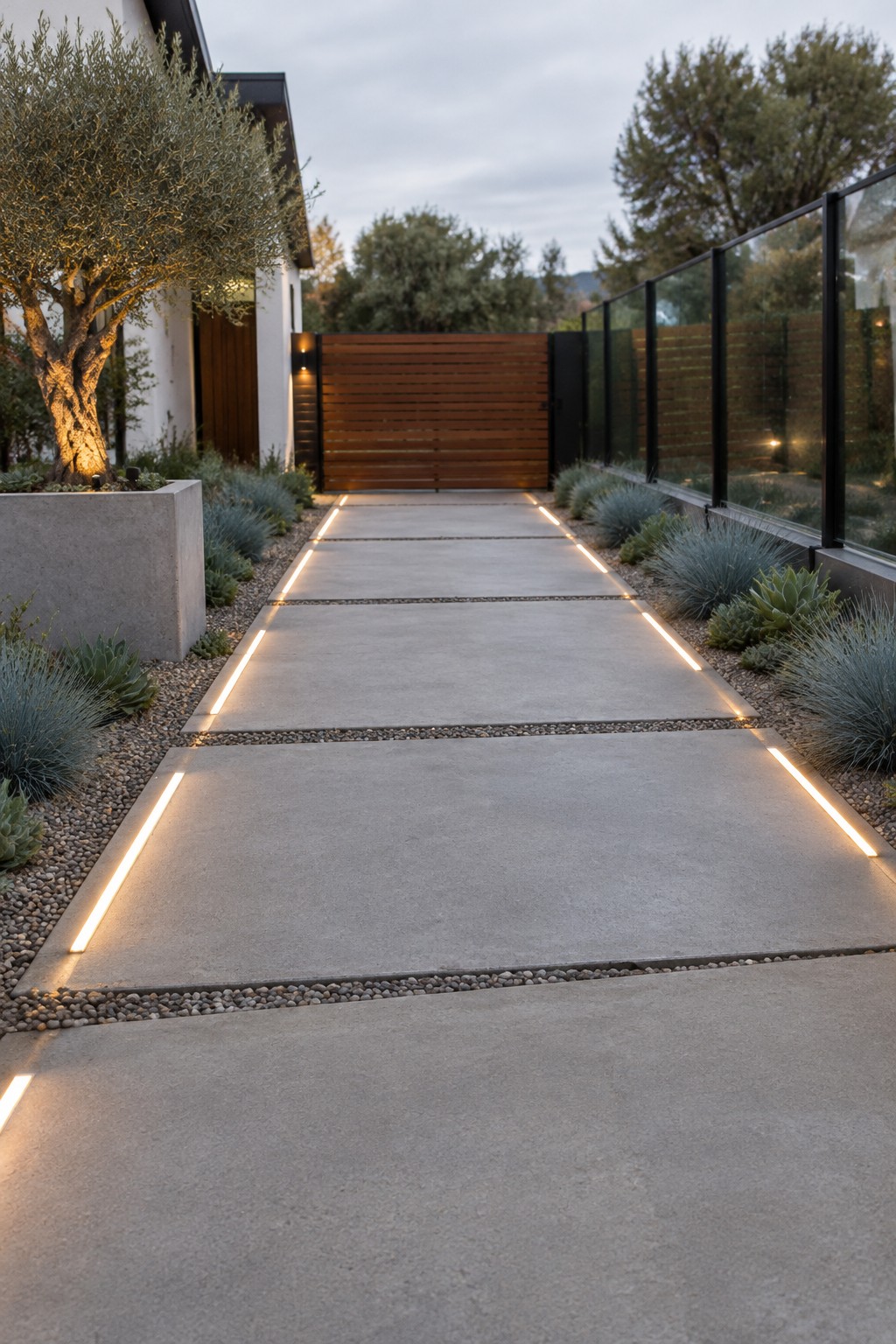
Lights set into the edges of a garden path make the route easy to follow after dark without taking up space along the planting beds. Here, the slim warm strips suit the simple concrete paving and keep attention on the path itself.
This approach works well for a straight walkway leading to a gate or front entrance. Choose outdoor-rated fixtures and space them evenly, taking care that the light is comfortable to walk beside rather than glaring.
Use Subtle Lights Along Planted Driveway Edges

Small path lights can help make a gravel driveway easier to follow after dark without taking over the garden. Set among low planting, they mark the edge while keeping the overall look natural.
Place lights at steady intervals along the border, and aim them toward the path rather than into the house or a neighbor’s yard. Low fixtures work well beside gravel and stone paths, especially when plants are kept trimmed so the light stays visible.
Use a Curved Driveway to Guide the Planting
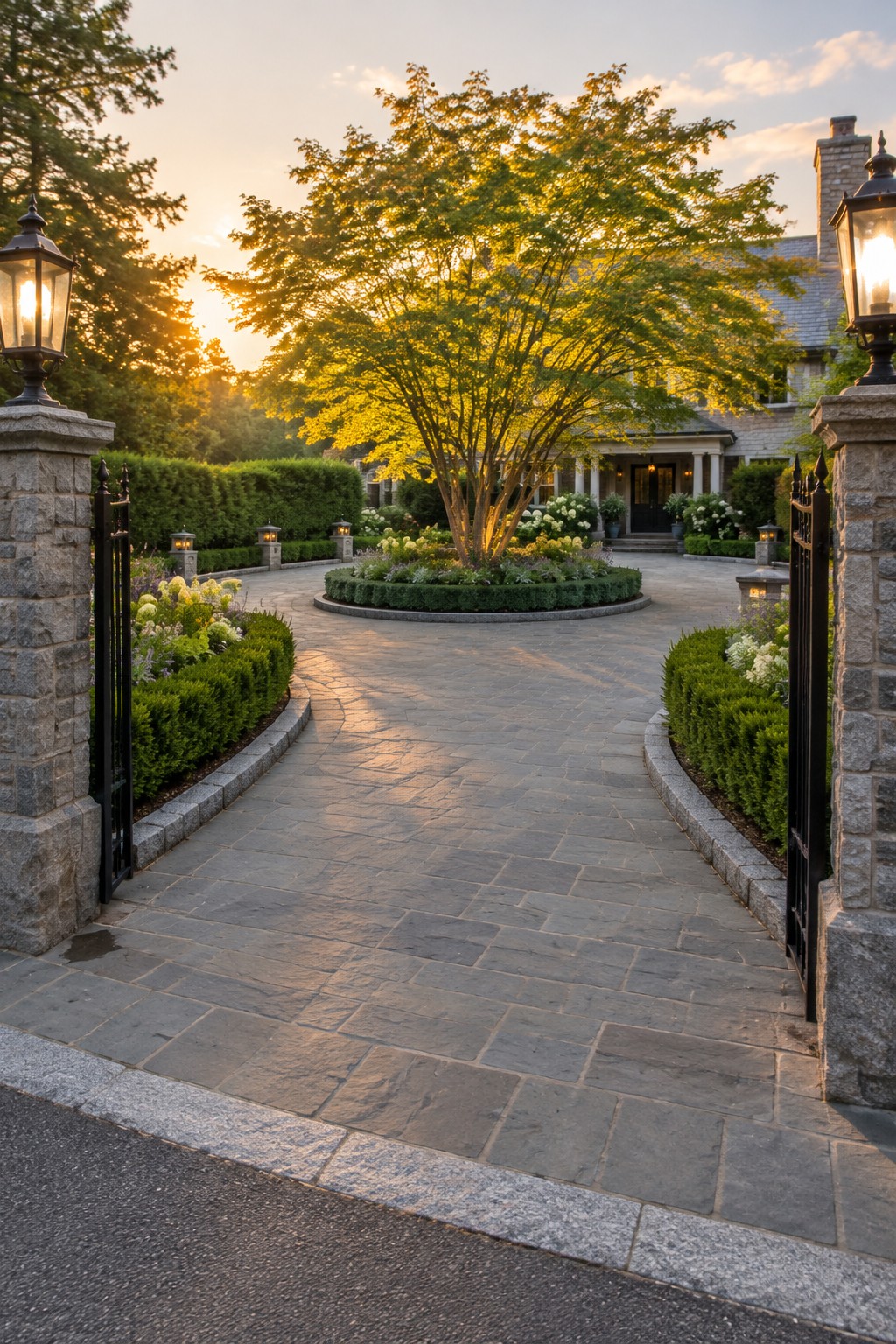
A gently curving driveway gives planted borders a more natural shape than a straight approach. Here, the paving leads toward a round garden bed, while low edging keeps the plants from spreading onto the drive.
This layout suits a front garden with enough room for a gradual turn. Place low lights along the path or at the border so the route stays clear after dark, and keep shrubs trimmed away from the paving.
Repeat Lantern Posts Along the Garden Path

Evenly spaced lantern posts can make a gravel drive or garden path easier to follow after dark. Here, the posts mark the edge of the route while the planted border keeps the lighting tucked into the landscape.
For a similar look, place low-voltage lanterns at steady intervals and keep them just outside the driving or walking surface. This works especially well along a winding path, where the posts help show its direction without needing bright overhead lights.
Use Low Planters to Guide the Driveway Edge

Raised planting beds can mark the edge of a driveway without making it feel boxed in. Here, a long concrete planter follows the paved approach, while small ground lights pick out the plants after dark.
This approach works well beside a modern home, especially where a straight driveway needs a softer border. Keep the planter low enough to preserve sightlines, and choose plants that stay tidy near the paving.
Use Low Garden Walls to Define the Driveway
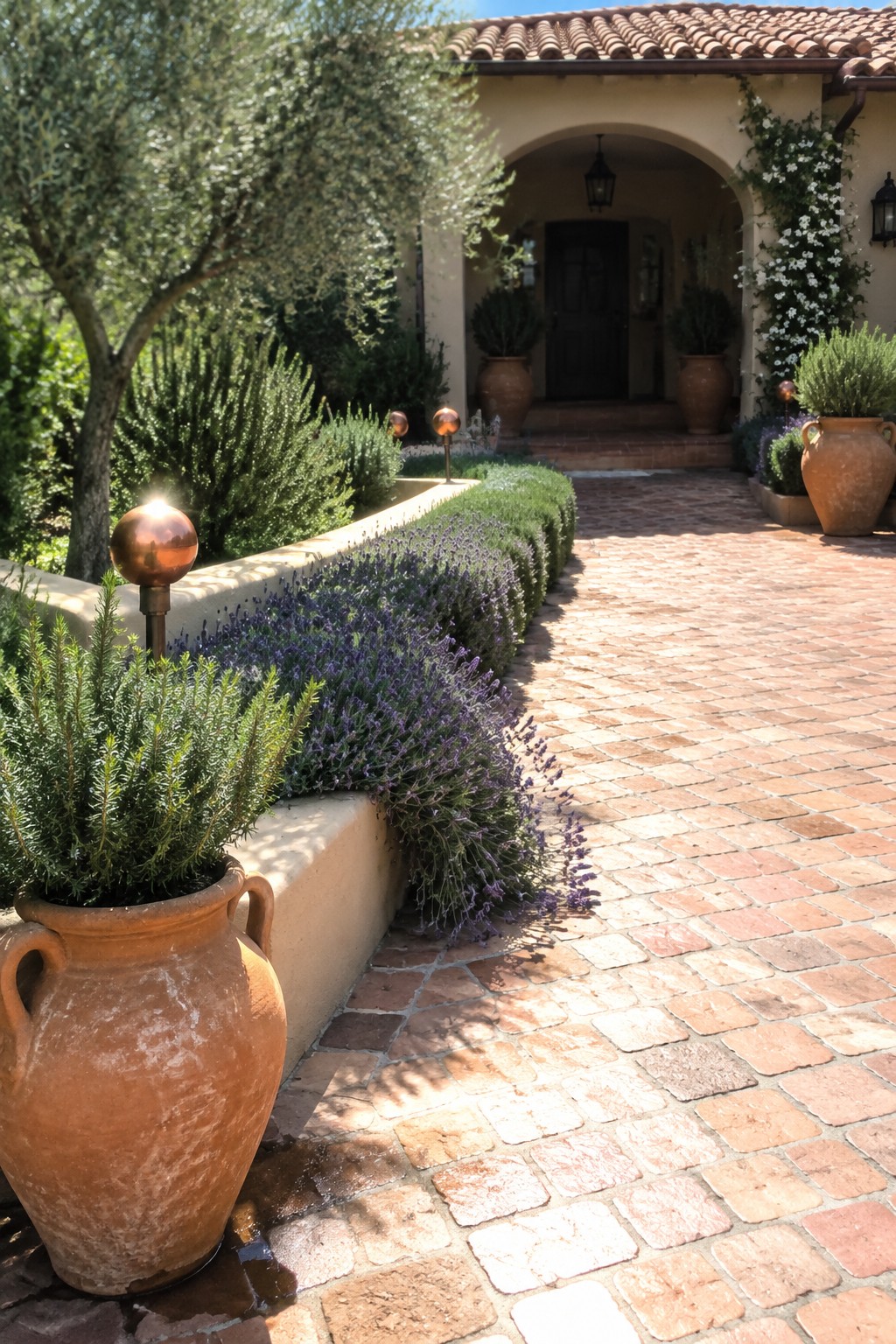
A low wall can give a planted driveway a clear edge without making it feel boxed in. Here, the curved wall holds back a border of lavender and helps keep the brick paving separate from the garden.
This approach works well along a gently curving drive or entry path, especially where plants might otherwise spill onto the paving. Keep the wall low enough to leave the planting visible, and choose a finish that suits the house.
Use Planting Beds to Define the Driveway

A planted border can make a wide driveway feel more considered without adding much hardscape. Here, long paving strips sit beside grass and low plantings, while small lights pick out the edges after dark.
This layout works well for modern homes with room for separated paving lanes. Keep plants low near the drive so they don’t block access, and use lighting sparingly to guide the way without creating glare.
Use Stone Edging to Define a Garden Path

A simple stone edge gives a garden path a clear line without making it feel separate from the planting. Here, uneven stones mark the boundary between the gravel and the flower bed, while keeping the route easy to follow.
This approach works well along a driveway or garden walk, especially where planting tends to spill onto the path. Choose sturdy stones that sit securely, and keep the edge low enough to mow or maintain comfortably.
Use Large Paving Slabs for a Garden Path
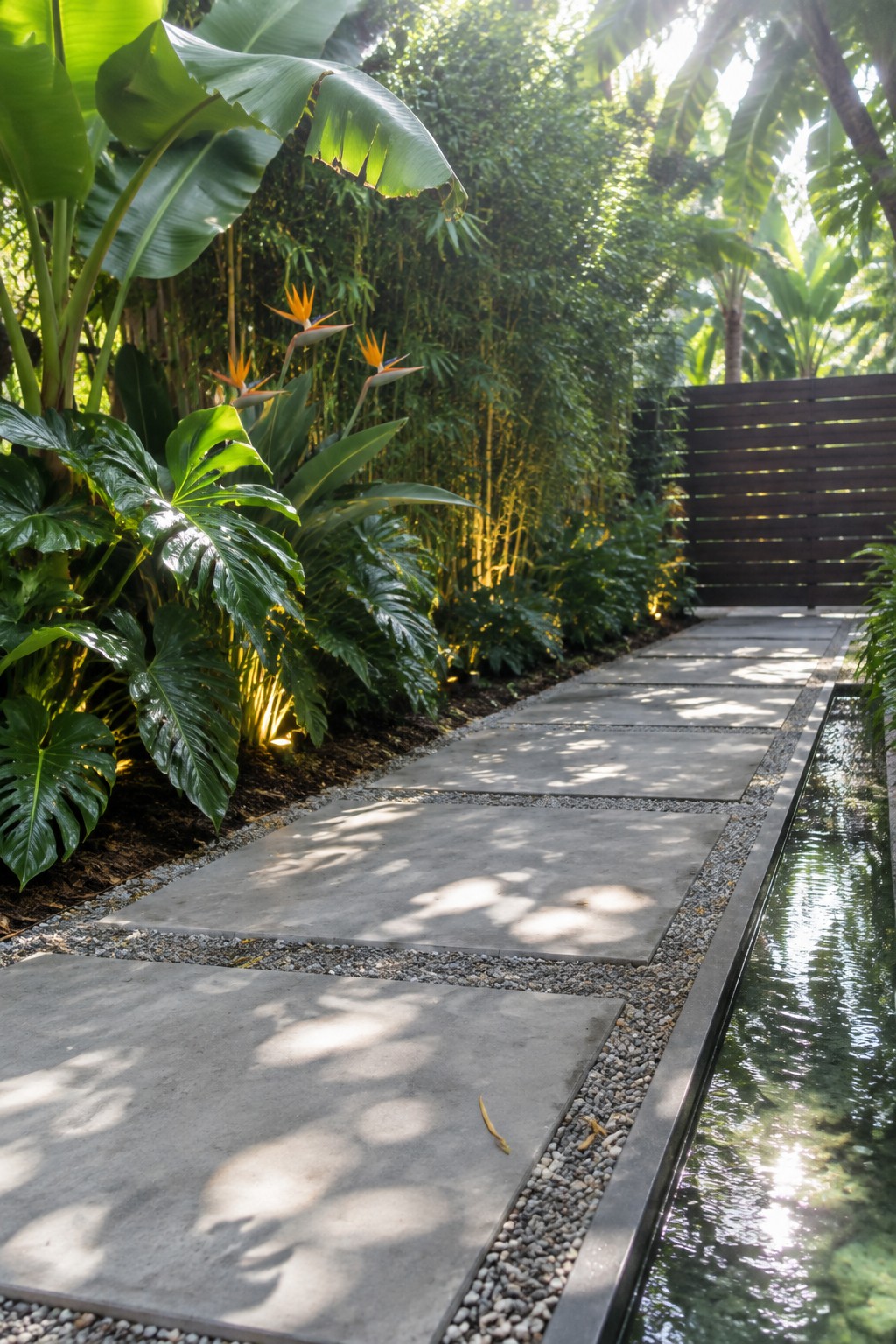
Large concrete slabs make a garden path feel clear and easy to follow, while narrow gravel joints break up the hard surface. This simple layout works especially well in a lush garden where smaller paving stones could get lost among the plants.
Use the slabs to create a comfortable walking route, and keep the gaps even so the path feels intentional. A narrow planted or gravel border can help define the edges, but leave enough room for water to drain.
Use a Brick Path Beside Layered Garden Beds
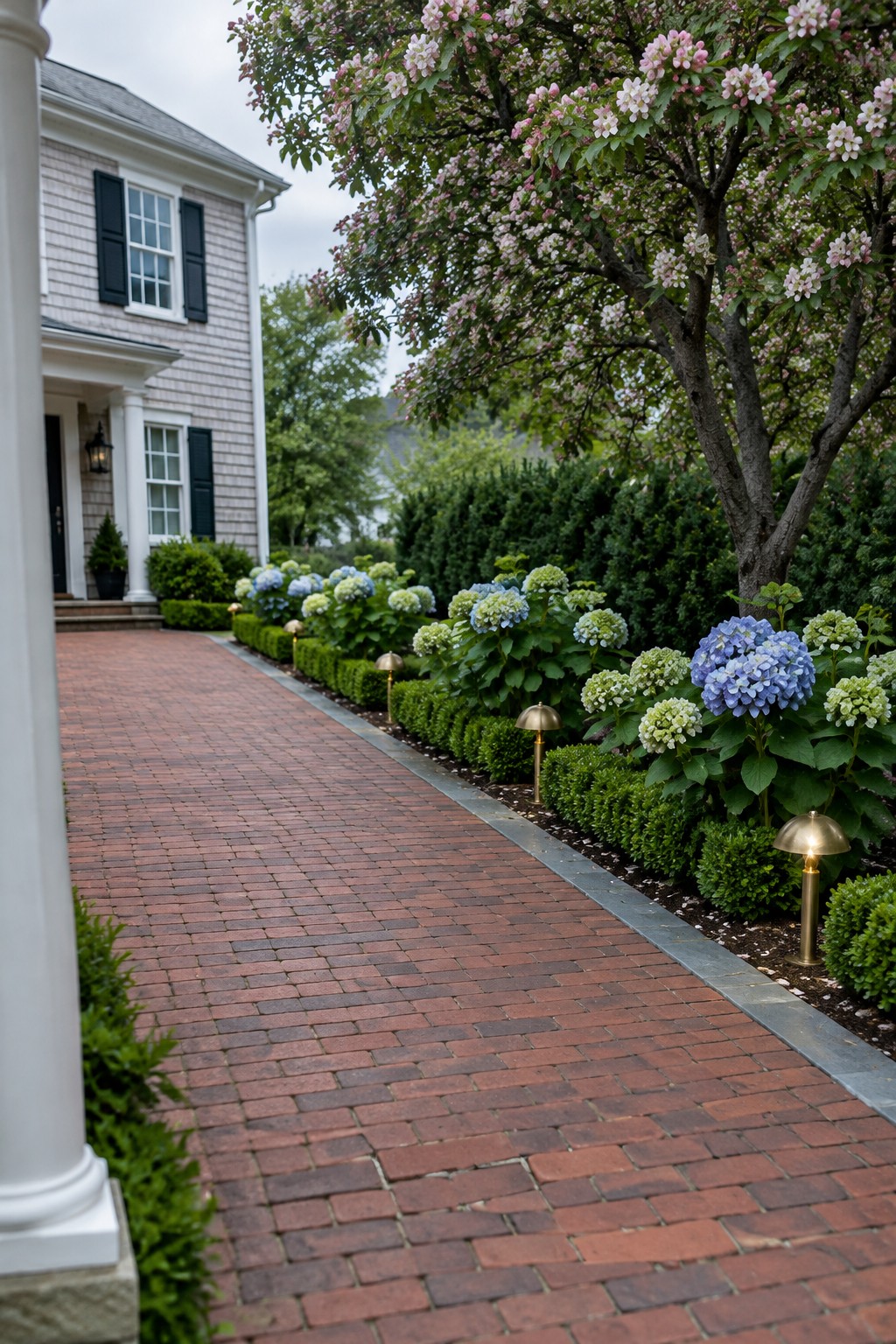
A brick path can feel like part of the garden when a planted border runs alongside it. Here, hydrangeas and clipped shrubs soften the hard edge while keeping the walkway clearly defined.
This approach works well on a front walk where you want an orderly route without making the planting feel too formal. Leave enough room for plants to mature, and keep them trimmed back from the bricks so the path stays easy to use.
Use Garden Lights to Mark the Driveway Edge

Low lights tucked into the planted border help make a gravel driveway easier to follow after dark. They also show where the path ends and the garden begins without needing a tall, formal row of fixtures.
This approach suits a winding driveway with room for planting along its edges. Keep the lights low and space them evenly, so they guide the way without shining directly into drivers’ eyes.
Use Stepping Stones to Shape a Garden Path

A stepping-stone path gives a garden a clear route without covering the ground in solid paving. The gaps between the stones leave room for gravel and planting, so the path feels at home among the greenery.
This approach works well on a gentle slope or in a woodland-style garden. Set the stones at a comfortable walking distance and make sure they sit firmly and level, especially where the path may get damp.
Use Low Garden Walls to Separate the Driveway

A low stone wall gives a planted driveway edge a clear shape without making the garden feel closed off. Here, the wall keeps the gravel bed in place and gives the driveway lights a consistent line to follow.
This approach works well where a driveway curves past a planting bed or needs a tidy boundary. Choose durable blocks that suit the house, and keep the wall low enough that it does not block views or make the drive feel narrow.
Repeat Lantern Posts Along a Garden Path
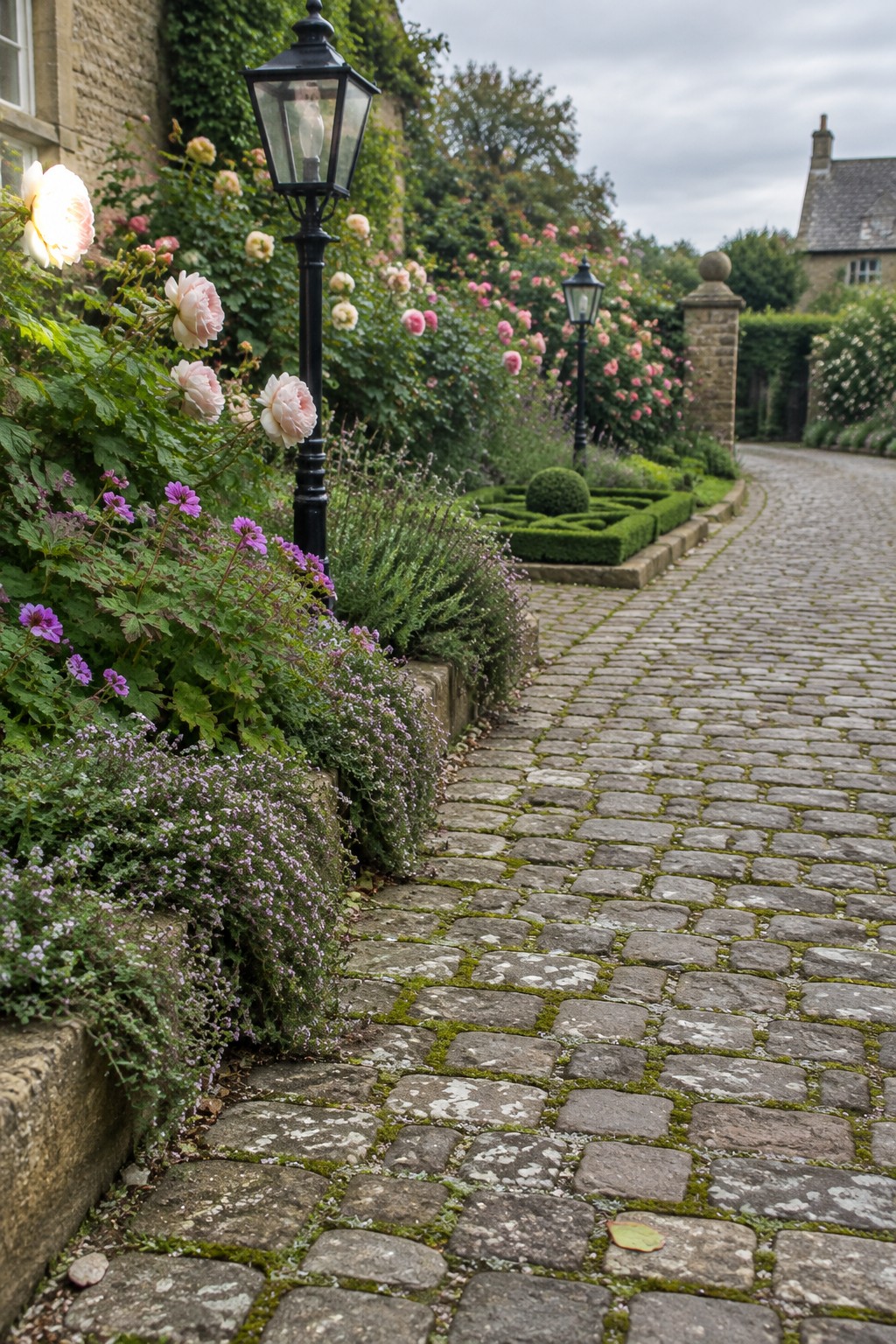
Lantern posts can give a garden path a steady rhythm while making the route easier to follow after dark. Here, their dark finish stands out against the flowering border without competing with the plants.
Use matching posts at regular intervals along a path or driveway, keeping them far enough from the edge to avoid getting in the way. This approach suits traditional homes and works best when the fixtures are scaled to the width of the route.
Use Cobblestones for a Garden Driveway
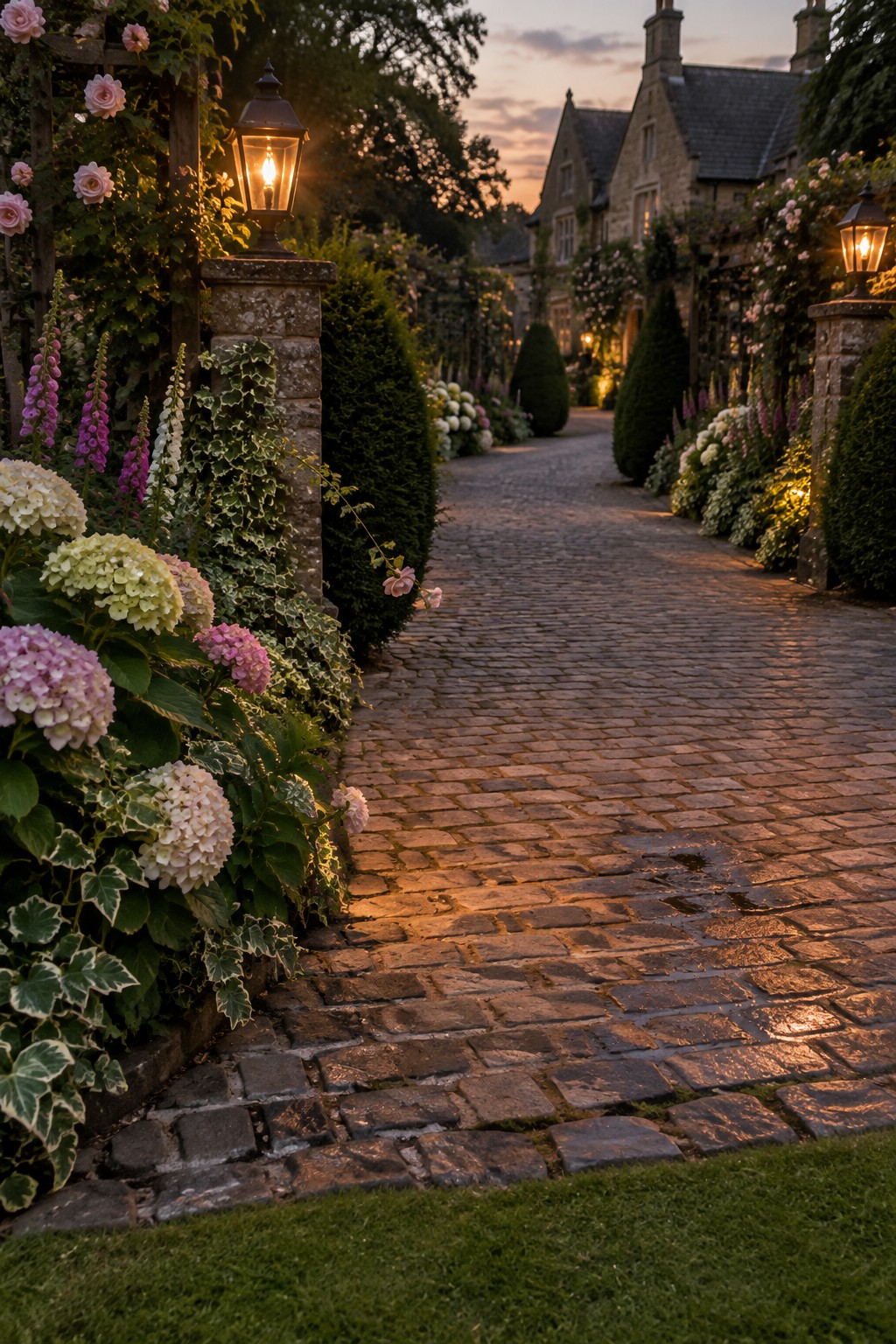
A cobblestone driveway gives a garden route a traditional look and a surface that feels more interesting than plain paving. Here, the irregular stones work well beside dense planting, while their uneven texture helps the path feel connected to the garden.
This approach suits older homes and cottage-style gardens. Choose stones with a fairly even surface for easier walking and driving, and make sure the base and drainage are properly prepared so the paving stays level.
Add Low Lights Along a Planted Path

Small, low-level lights make a garden path easier to follow after dark without overpowering the planting. Set beside the paving, they pick out the route while letting the flowers and foliage remain the main feature.
Space the fixtures at regular intervals along the path edge, and aim them down so they light the ground rather than shining into people’s eyes. This approach suits a walkway bordered by planting beds, especially where the path leads to a front door.
Use Path Lights to Highlight Planted Edges
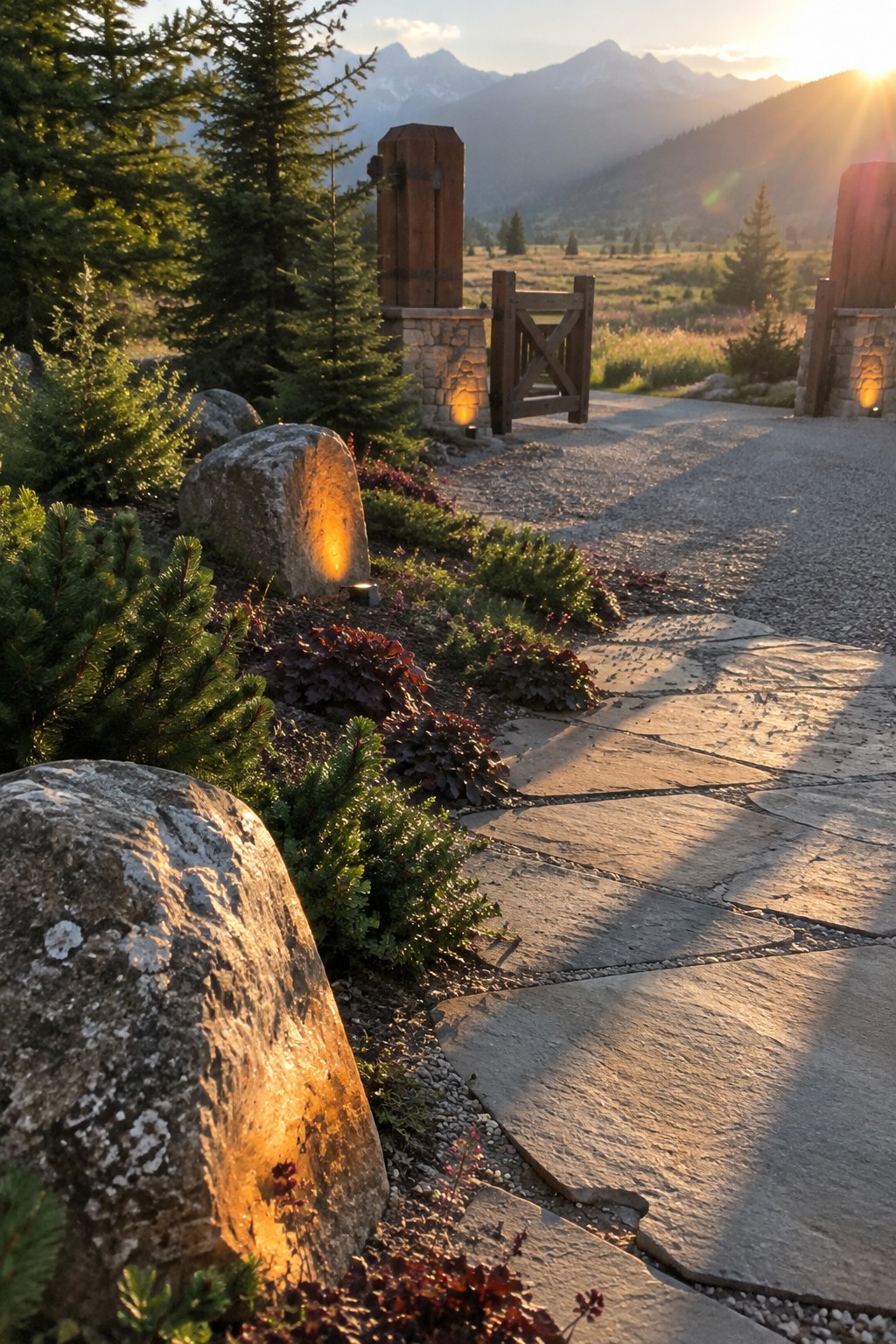
Small, low lights can make a garden path easier to follow after dark while showing off the planting beside it. Here, warm fixtures pick out the stone walkway and nearby shrubs without overpowering the garden.
Place lights close to the path edge, aiming them down rather than into people’s eyes. This works well along a driveway or garden walk, especially where paving meets planted beds. Space the fixtures evenly so the route stays clear without making the border feel crowded.
Use Grass-Filled Pavers for a Garden Driveway
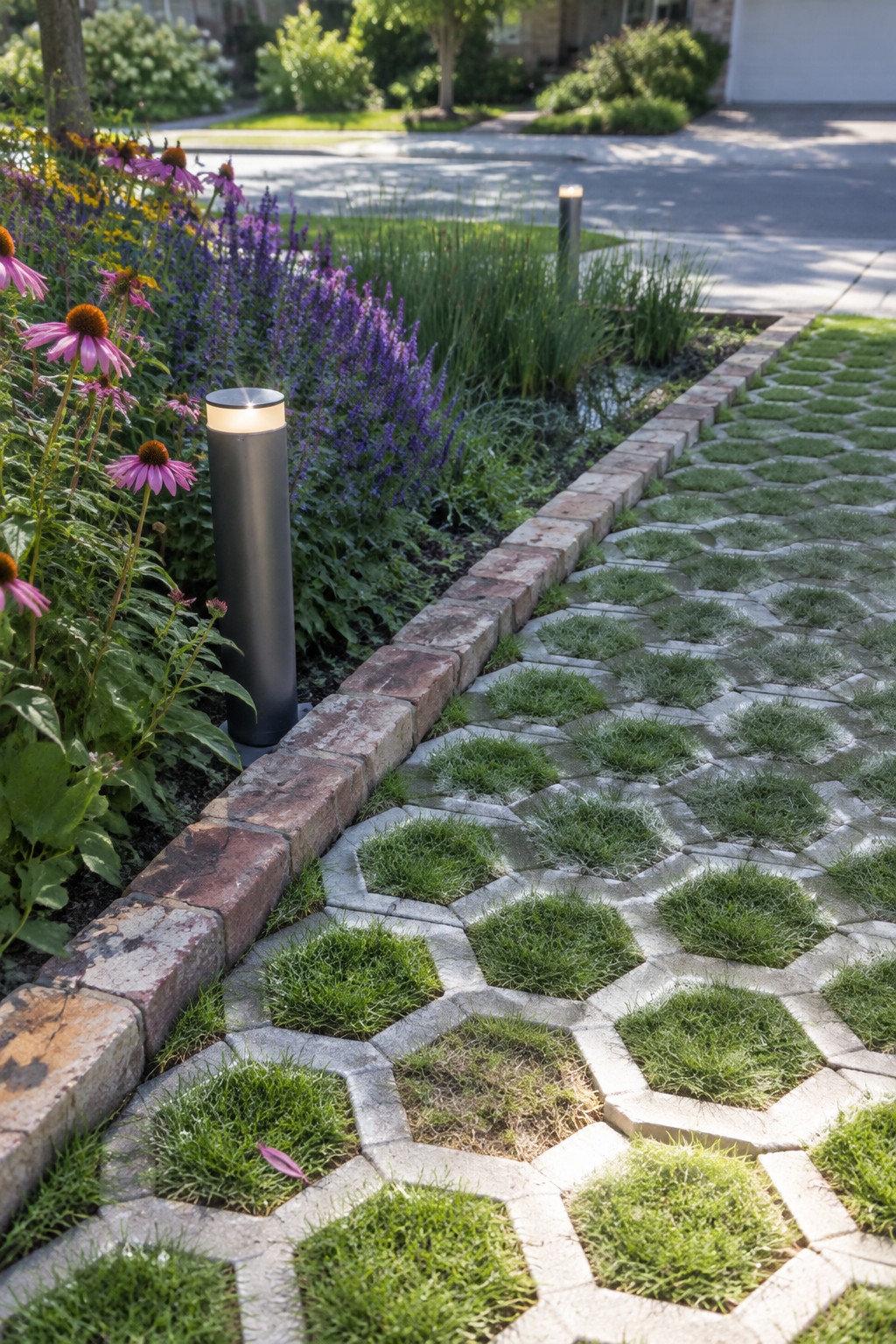
Grass growing between stone pavers gives a driveway a softer, more garden-like feel than a fully paved surface. The open joints also break up a large expanse of hardscape.
This approach works well for a driveway or path with enough sun for grass to grow. Choose sturdy pavers and leave enough space between them for planting, while keeping the surface even and easy to walk or drive on.
Frequently Asked Questions
Q: How bright should driveway lights be if I want to show off the planted borders?
A: Keep the light soft enough that you can still see the plants, not just bright spots on the ground. Low path lights or shielded fixtures help highlight the border without shining into the house or drivers’ eyes.
Q: Will low lights get hidden by flowers and shrubs?
A: They can, especially once plants fill out in summer. Place fixtures just beyond the thickest growth, and leave a little room around each one so the light can spread.
Q: What’s an easy way to avoid a messy mix of lights?
A: Choose one main style and repeat it along the drive, then use a few smaller accent lights near standout plants. Keeping the color temperature similar helps the whole garden feel calm after dark.
Q: Can I use solar lights along a shaded driveway?
A: Solar lights need a sunny spot to charge, so dense tree cover may leave them dim by evening. Wired low-voltage lights are a steadier choice for shady borders.
