


Driveway lights can improve the approach to a home without adding fixtures that interrupt the paving or compete with the facade.
I find they work best when their spacing follows the way cars and people actually move through the entry, rather than simply filling the edges with light.
The finish and beam matter too, since glare or a mismatched trim can make an otherwise considered driveway feel busy after dark.
These ideas show different ways to keep the lighting low and integrated, and I’d save the ones that suit your paving and test their placement before settling on a layout.
A subtle ground-level glow can make the whole arrival feel clearer.
Use Recessed Lights Along the Driveway

Recessed lights set flush into a driveway make it easier to see the edges without adding posts or bulky fixtures. They suit a clean-lined home, and the light stays close to the ground rather than competing with the front of the house.
Space the fixtures evenly along the drive, and choose ones rated for vehicle traffic and outdoor use. A few warm lights can be enough; too many may create glare or make the driveway feel overly bright.
Recessed Lights Along a Garden Path
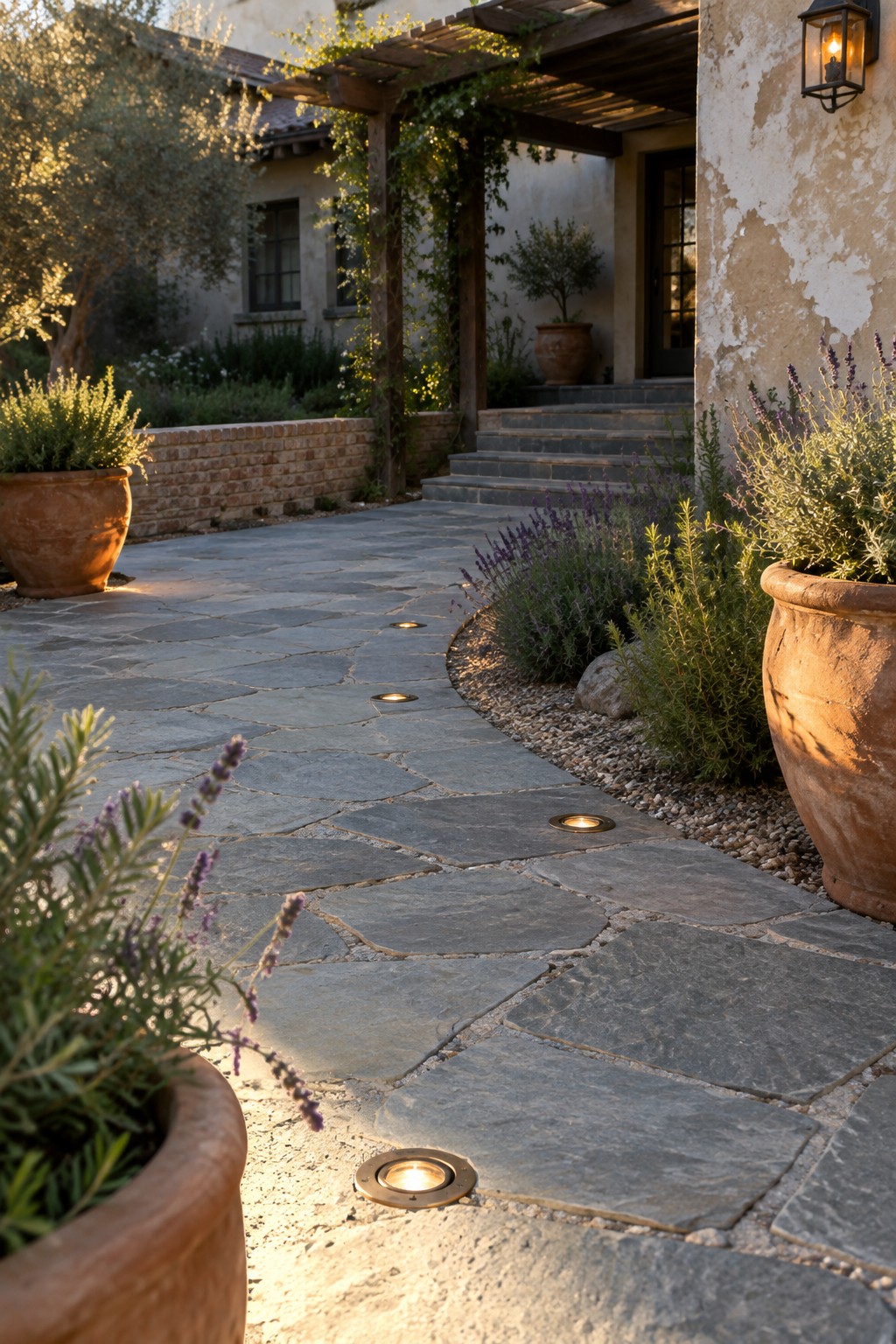
Recessed ground lights are a practical way to make a garden path easier to follow after dark without adding tall fixtures along its edges. Set into the paving, they keep the surface clear and let the path remain the main feature.
Space the lights evenly and choose a warm, shielded option to reduce glare. This approach works well on stone walkways leading to a front door, but placement matters: keep fixtures out of awkward footfall spots and use products rated for outdoor ground installation.
Use Recessed Lights Between Driveway Strips

Recessed lights set into the concrete bands of a grass-strip driveway can make the route easier to follow after dark without adding visible fixtures. The lights sit flush with the ground, so the simple pattern of paving and lawn stays clear.
This approach suits a modern home with a straight driveway and works especially well where the path leads directly to a garage. Choose fixtures rated for outdoor use and space them evenly; glare or overly bright lights can distract from the clean layout.
Use Recessed Lights Along the Driveway

Recessed lights set directly into a driveway can mark the route without adding tall fixtures or cluttering the ground-level view. Here, small square lights sit within broad concrete slabs, so the path stays easy to see while the surface remains the main feature.
This approach works well for a modern home with a long, straight driveway. Space the lights evenly and choose fixtures rated for vehicles, since lights in a driveway need to stand up to regular use.
Use Recessed Lights Along a Stone Path

Recessed lights can make a stone path easier to follow after dark without adding tall fixtures along the route. Set into the paving, they keep the walkway clear and let the stone remain the main feature.
This approach works well on garden paths and driveway walkways, especially where people pass through regularly. Space the lights evenly and choose fittings made for outdoor use so they hold up to rain and foot traffic.
Use Recessed Lights Along a Garden Path
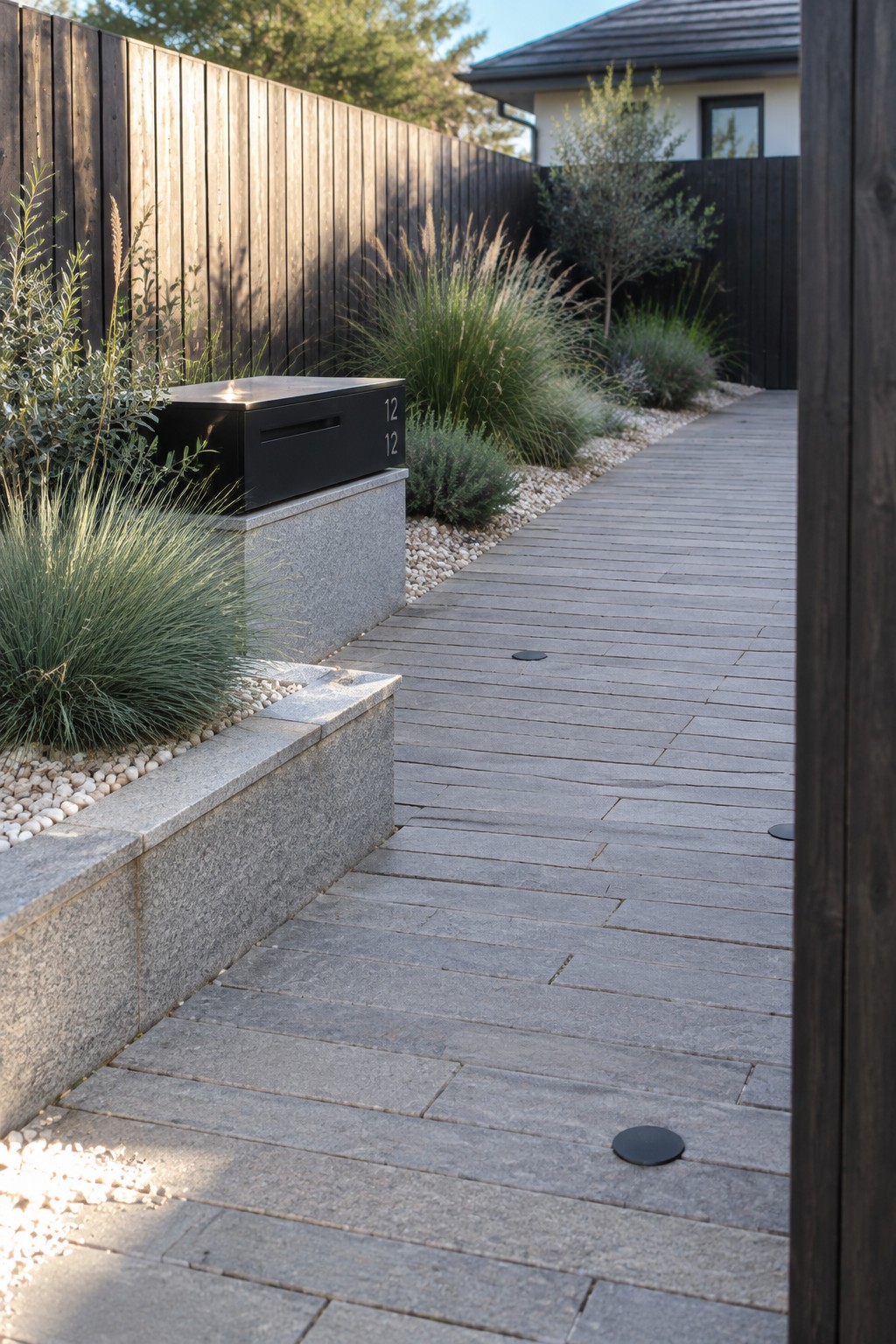
Recessed lights set into a path can help people find their way without adding tall fixtures that interrupt the planting. Keeping the lights flush with the paving gives the walkway a clean, simple look.
This approach works well on paths leading to a front door or through a narrow side yard. Choose fixtures rated for outdoor use and place them where they mark the route without creating glare underfoot.
Add Lighting Between Large Driveway Slabs

Recessed lights set into the gaps between driveway slabs make the route to the garage easier to follow after dark. The light stays close to the ground, so it marks the edges without adding posts or fixtures that interrupt the paving.
This approach works well with large concrete or stone slabs separated by narrow gravel joints. Choose outdoor-rated fixtures and plan for proper drainage, since water can collect in low spots. Keep the light warm and subtle so it guides the way without shining into the house.
Use Recessed Lights Along a Brick Driveway
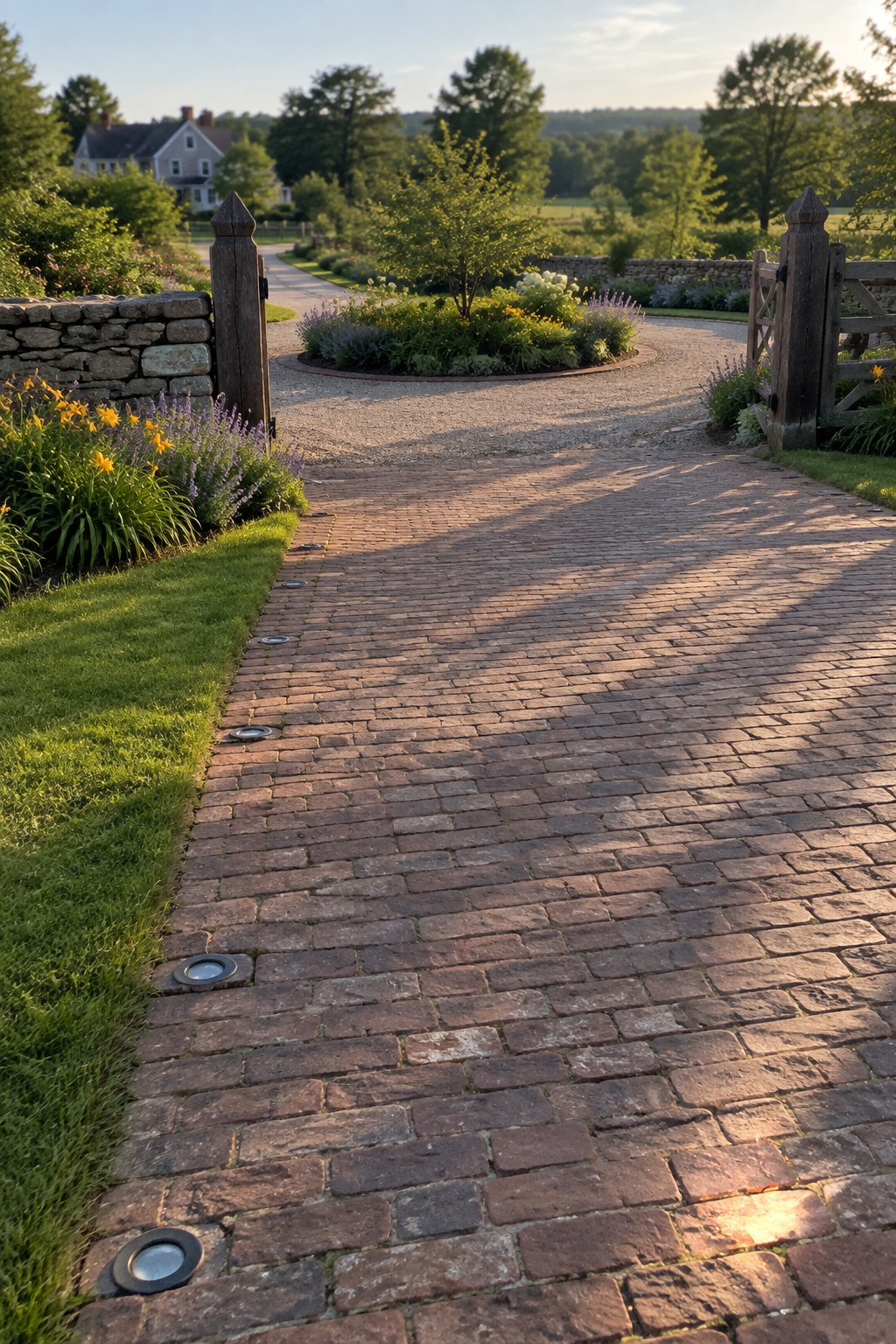
Recessed lights set into the edge of a brick driveway can guide the way without adding posts or fixtures that stick up. They keep the surface clear, which suits a traditional brick entrance where a tidy, low-profile look matters.
Place the lights just inside the driveway edge and space them evenly so the route is easy to follow after dark. Choose fittings rated for outdoor ground use, and check that they sit flush with the paving to avoid catching tires or feet.
Use Recessed Lights Between Large Driveway Slabs

Recessed lights set into the gaps between large concrete slabs give a driveway a clear path after dark without adding fixtures that stick up from the ground. The lights also pick out the slab layout, so the paving feels considered rather than like one broad expanse of concrete.
This approach works well for a modern home with a straight or gently curving drive. Place the lights at regular intervals, and choose fittings rated for outdoor use that can handle foot traffic and vehicles.
Use Recessed Lights Along Garden Steps

Recessed lights set into the edges of stone steps make a garden path easier to use after dark without adding fixtures that stick out into the walkway. The small pools of light mark each change in level while keeping the stonework as the main feature.
This approach works well on steps that climb through a planted garden, especially where uneven risers could be hard to see. Place the lights consistently and choose weather-rated fixtures made for outdoor use.
Use Recessed Lights Along the Driveway Edge

Recessed lights set into the driveway edge can mark the route without adding fixtures that stick up into the yard. This approach keeps the paving clear and gives drivers a subtle guide toward the garage.
Place the lights along one or both borders, especially where the driveway meets planting beds or changes direction. Choose fixtures rated for vehicle loads, and space them evenly so the guidance feels consistent rather than spotty.
Use Recessed Lights Along a Driveway
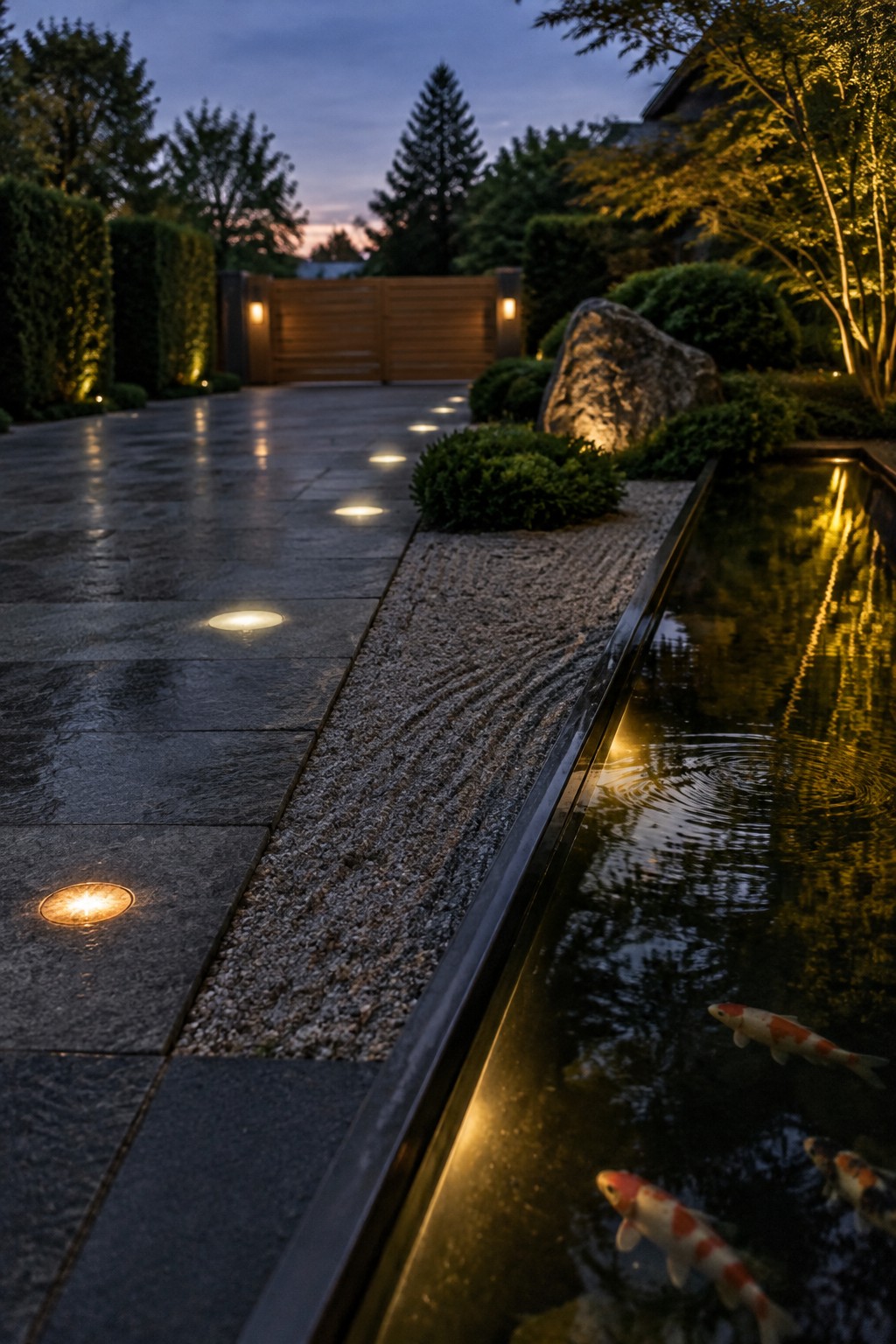
Recessed lights can mark the edge of a driveway without adding posts or fixtures that get in the way. Set into the paving, they keep the surface clear and make the route easier to follow after dark. The spacing here gives a useful guide without making the lights feel crowded.
This approach works well on a long, straight drive, especially when the fixtures are rated for vehicle loads and outdoor use. Keep them evenly spaced and aim for a gentle glow rather than bright spots that could distract drivers.
Use Recessed Lights Along a Stone Walkway

Small recessed lights set into the paving can make a stone path easier to follow after dark without adding tall fixtures along the edges. The low profile suits an informal walkway, where the stonework is already a strong feature.
Space the lights along the route rather than crowding them together, and choose fittings rated for outdoor use and foot traffic. This approach works well for paths leading to a front door or connecting a driveway to the house.
Use Recessed Lighting to Trace a Curved Driveway

A light set flush into the paving can follow a driveway’s curve without adding posts or fixtures that get in the way. Here, the narrow illuminated line makes the bend easier to read after dark while keeping the surface looking uncluttered.
This approach works especially well around a circular drive or central planting bed. Choose fittings rated for outdoor use and install them evenly, so the line stays consistent and the lights remain comfortable to look at.
Use Recessed Lights Between Driveway Slabs

Recessed lights set into the joints between large driveway slabs make the route easy to follow after dark without adding fixtures that stick up from the ground. The narrow, warm lines suit a modern home and keep the lighting built into the paving.
For a similar look, place the lights consistently along the slab seams and choose fittings rated for outdoor use and vehicle traffic. A gravel or textured surface can make the light stand out, but keep the joints even so the driveway remains practical to walk and drive on.
Frequently Asked Questions
Q: Will recessed driveway lights be bright enough to guide cars at night?
A: They work best as subtle markers, not as the driveway’s only light source. Space them along the edges or near curves, and add brighter lighting by the garage or entry if you need more visibility.
Q: Can I install them in an existing driveway?
A: It’s possible, but cutting into finished concrete or pavers takes careful planning and may leave visible repairs. If you’re already redoing the driveway, that’s usually the easiest time to add the lights and wiring.
Q: Do recessed lights get damaged by cars?
A: Choose fixtures rated for in-ground use and able to handle vehicle traffic. Set them flush with the surface so tires and snowplows don’t catch on them.
Q: How do I keep dirt and water from affecting the lights?
A: Clear away leaves and grit now and then, especially around the lens. Good drainage matters too, since water that sits around a fixture can lead to trouble.
