

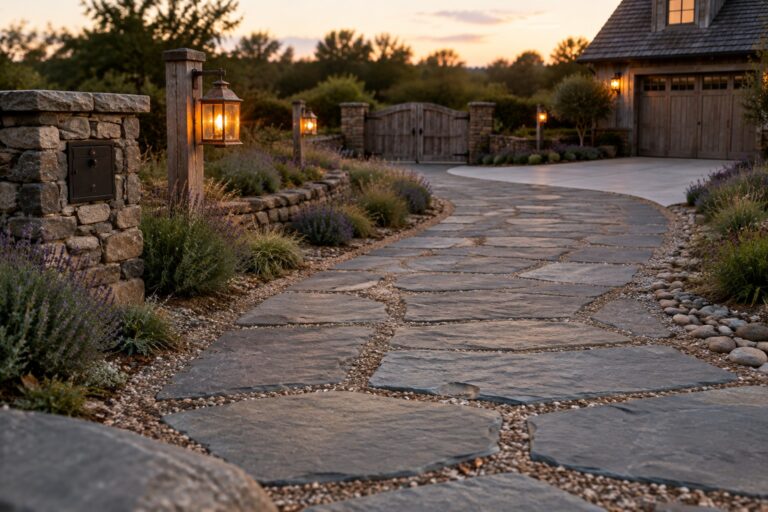
A stone driveway makes a strong first impression, but its uneven color and texture can disappear once the sun goes down.
I find that low, well-placed lighting works best when it guides the way without flattening the character of the stone.
Warm light along an edge or near an entry can bring out the surface while making the approach easier to navigate.
The key is choosing fixtures and spacing that suit the driveway’s shape, rather than crowding it with bright points of light.
I’d save a few of these approaches to test against the stone, planting, and exterior details of a real home.
Use Gravel Joints Between Large Stone Pavers
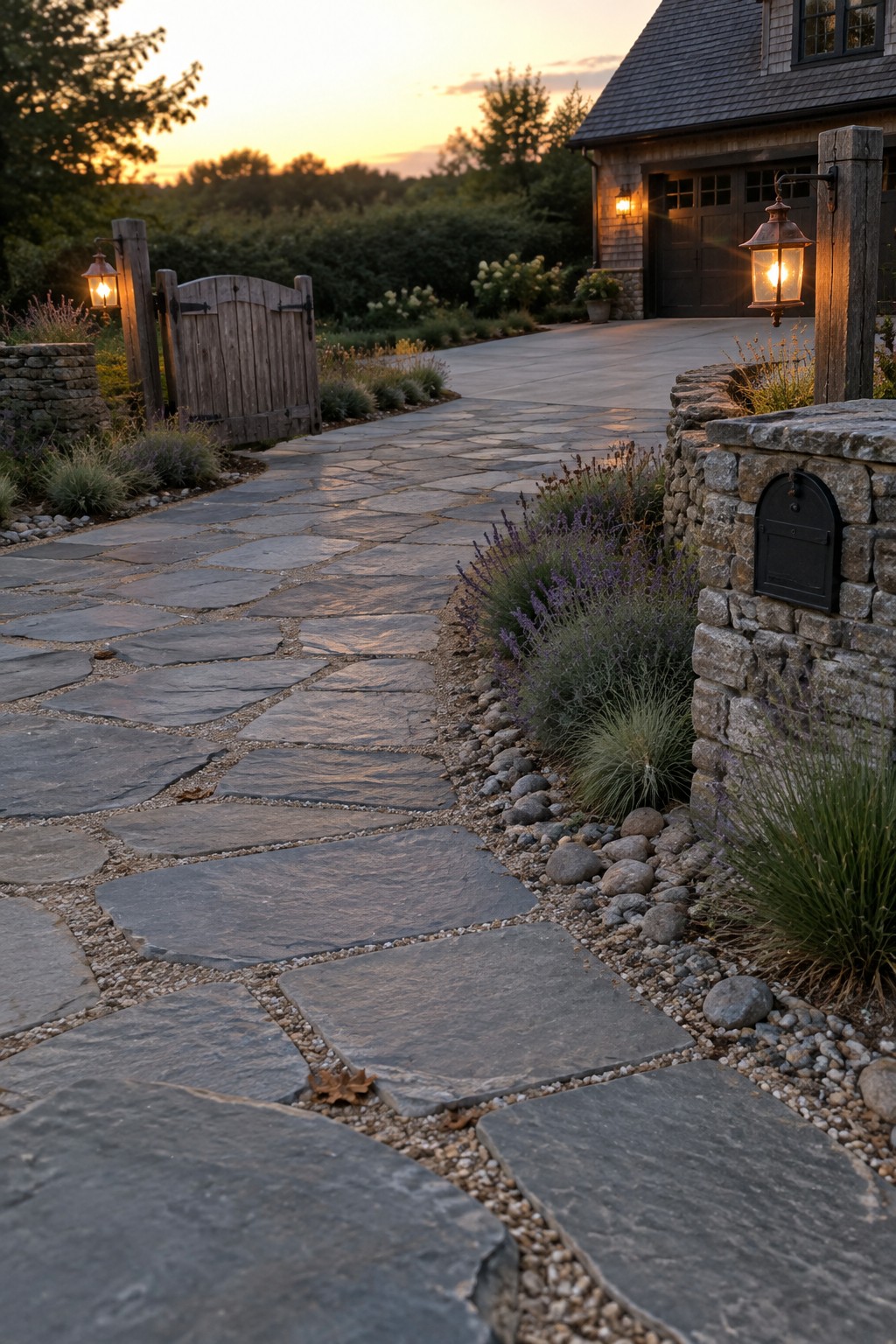
Gravel-filled joints let large stone pavers feel more at home in a rustic driveway. The small stones bring out the uneven edges and natural surface, while giving rainwater a place to drain instead of leaving a broad, solid paved area.
This approach works well on a gently sloped driveway or garden approach. Choose a stable gravel that suits the pavers, and keep the gaps wide enough to fill neatly without making the walking surface awkward.
Use Stone Paths With Narrow Planting Joints
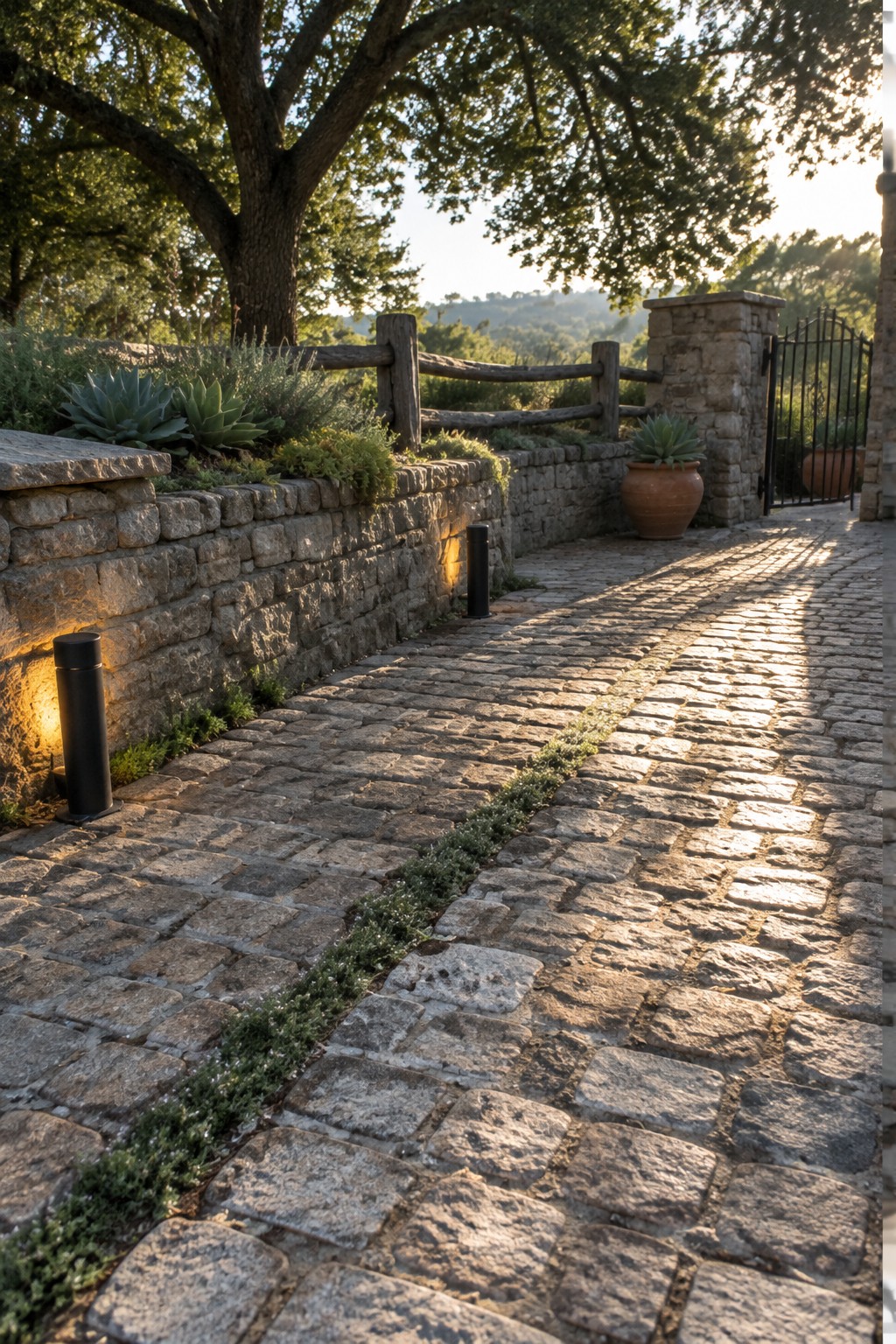
A stone path can feel less formal when small plants grow in the joints between pavers. The green strips break up the hard surface without hiding the natural variation in the stone.
This approach works well on garden paths and rustic driveways, especially where foot or vehicle traffic stays light. Choose low-growing plants that can handle occasional trampling, and keep them out of the main wheel tracks if the path needs to support regular driving.
Add Lighting Between Stone Pavers
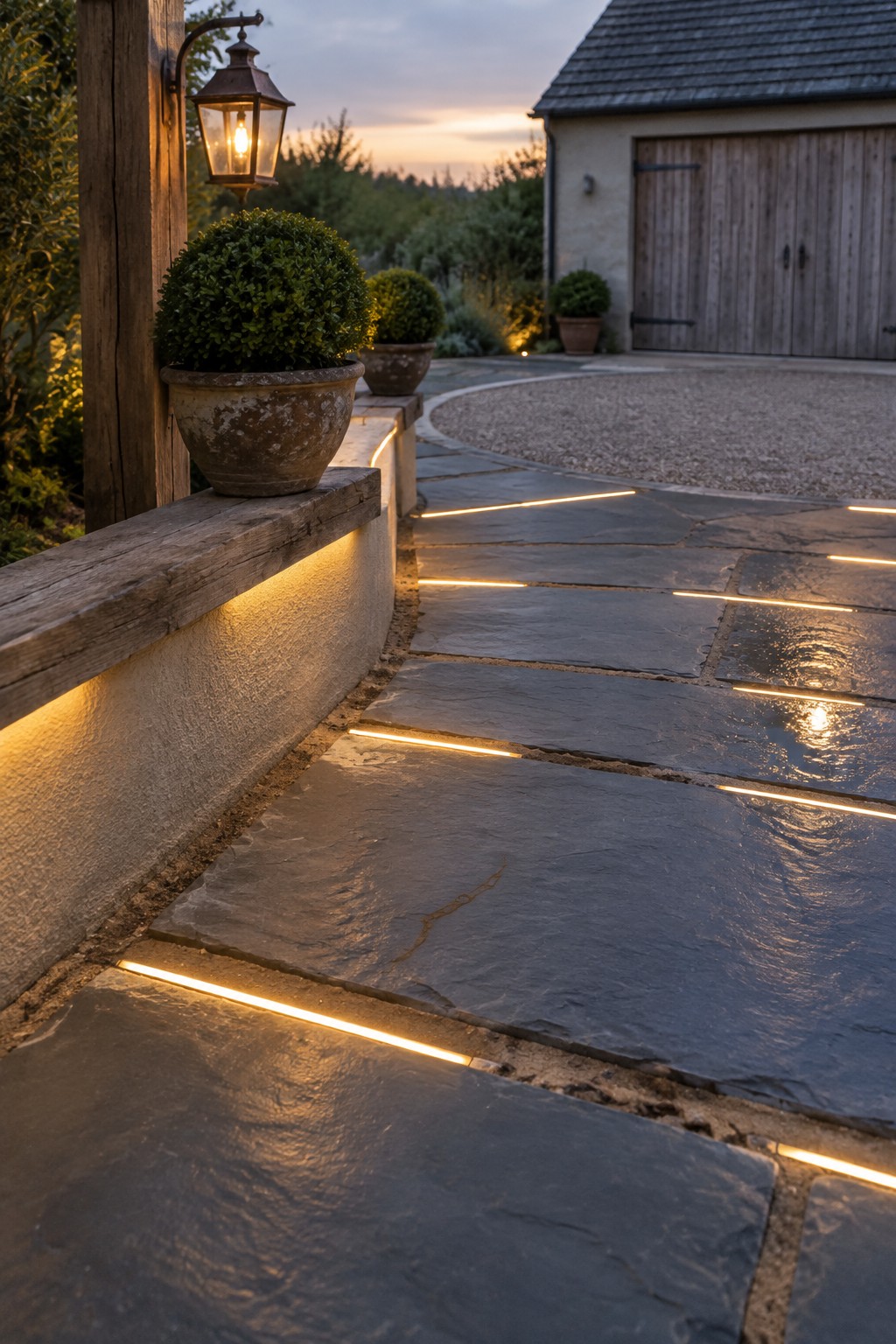
Narrow lights set between stone pavers make a driveway easier to follow after dark while showing off the stone’s natural texture. The light works best when it is warm and low, rather than bright enough to wash out the surface.
For a similar look, use discreet, outdoor-rated fixtures along a curved drive or a path leading to the house. Space them out so the route feels clear, and choose fixtures designed to handle foot traffic and weather.
Use Stone Edging to Define a Gravel Driveway

A gravel drive can feel more finished when large stones mark its edges. The border helps keep loose gravel in place and gives the path a clear shape, while the uneven stone faces add natural texture.
This approach works well for a country home or a garden path with a relaxed look. Set the stones securely and keep them low enough that they do not become a tripping hazard. Small lanterns along the route can help make the edge easier to see after dark.
Add Recessed Lights Along a Stone Driveway

Small recessed lights set into the paving make a stone driveway easier to use after dark while showing off the texture of the surface. Because the fixtures sit nearly flush with the stones, they keep the path clear and let the paving remain the main feature.
Space them along the route rather than placing them too close together, and choose fixtures rated for outdoor use and vehicle loads. This approach suits a driveway or garden path where low, discreet lighting is more practical than bright overhead lights.
Use Low Lights Along the Stone Driveway

Small recessed lights set into the edge of a stone drive can make the surface easier to follow after dark. Because the fixtures sit low, they show the changes in the stone without competing with it.
Place them along a walkway or driveway edge, spacing them far enough apart to avoid a runway effect. Choose fixtures rated for outdoor use, and make sure their placement will not interfere with snow clearing or vehicle tires.
Use Low Path Lights Along a Stone Walkway
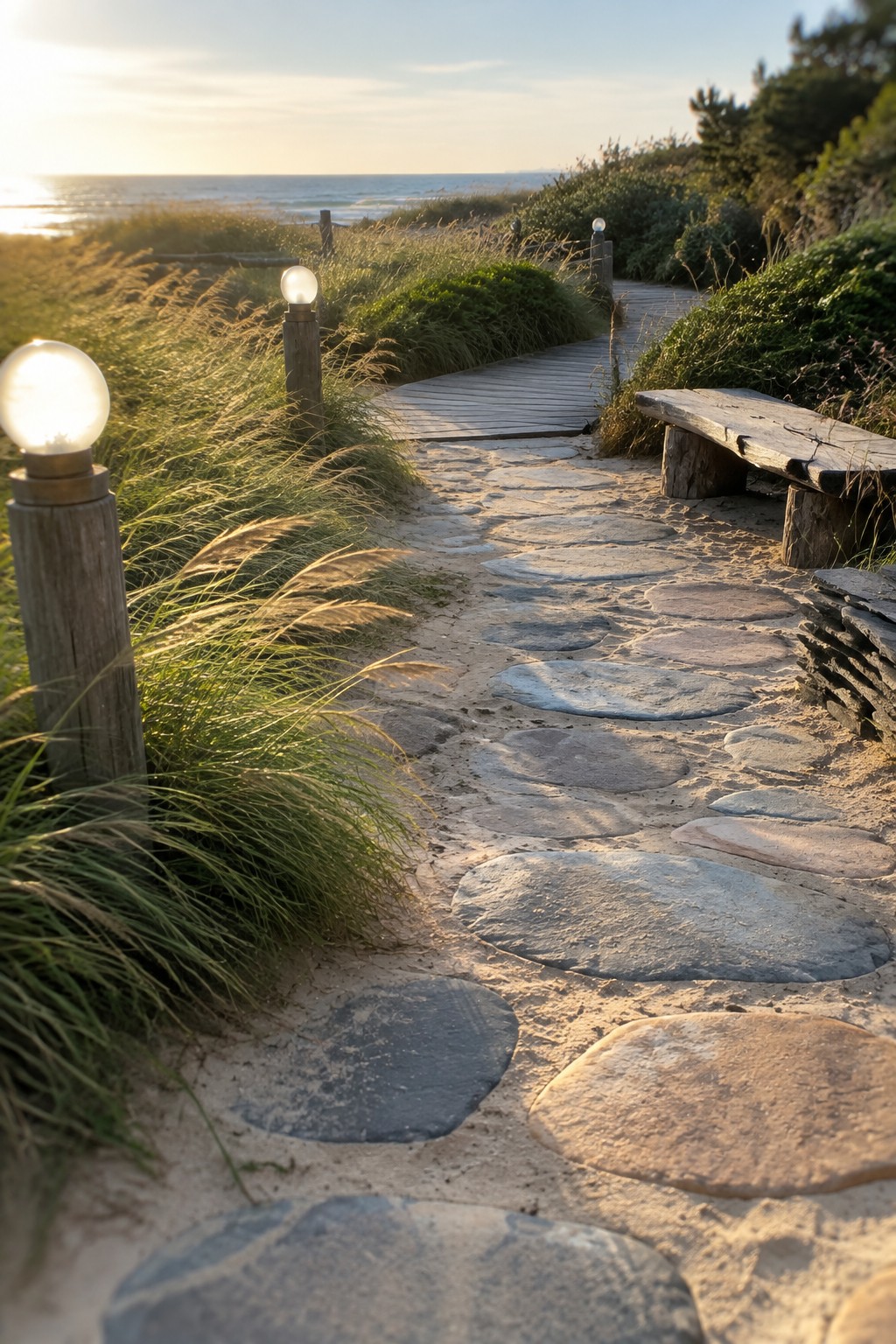
Small lights set beside a stone path help show the texture and shape of the paving after dark. The low placement keeps the fixtures from taking over, while giving people a clearer view of where to step.
For a driveway or garden path, place lights along the edges rather than in the walking line. Space them evenly, and aim for a soft glow that makes the stones visible without shining into nearby windows.
Light Stone Steps From the Side
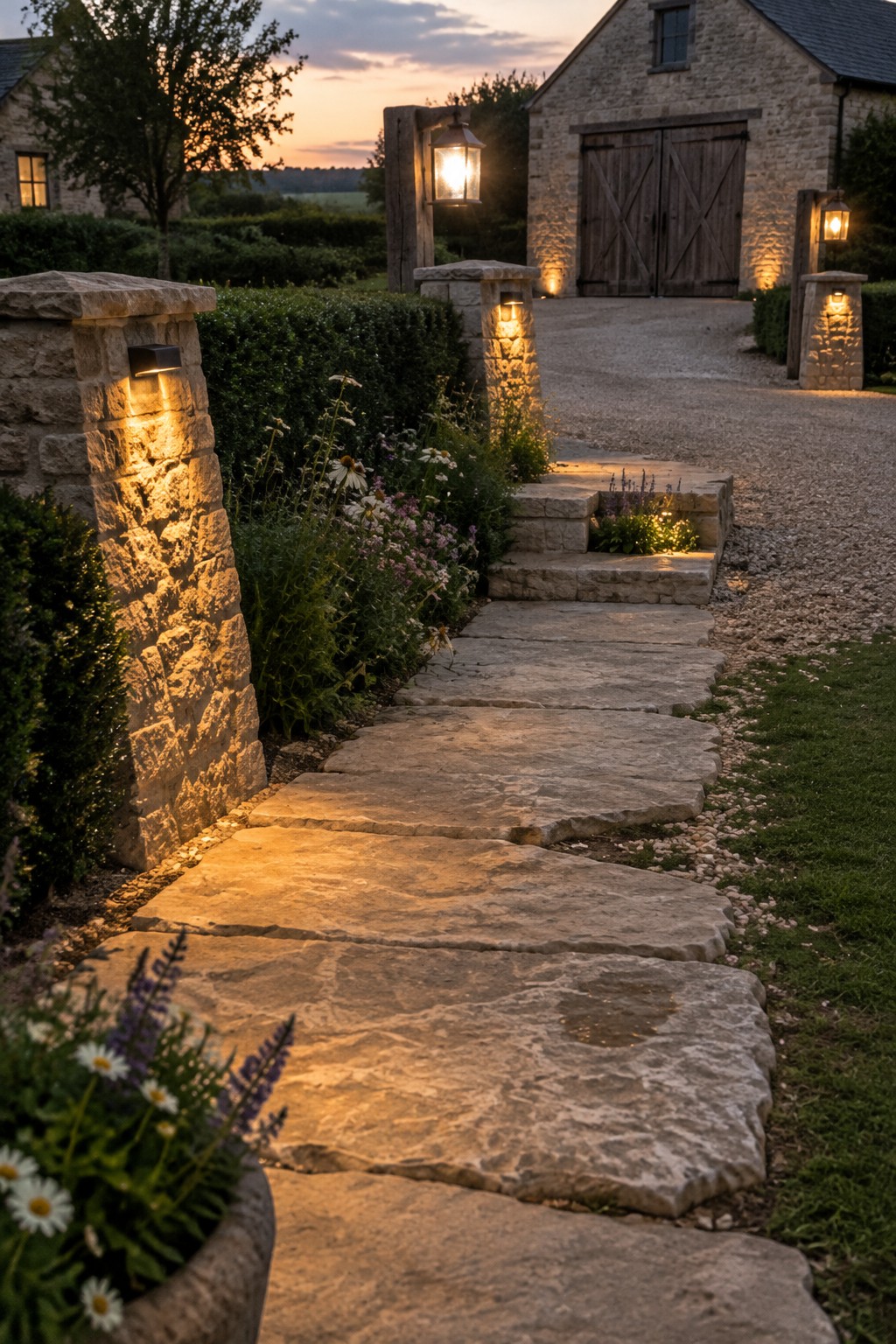
Low lights built into stone posts can show the texture of a path without making the whole driveway feel brightly lit. The light skims across the uneven stone steps here, so their natural surface stays easy to see after dark.
This approach works well along a sloped or winding entrance where people need to spot changes in level. Keep the fixtures low and space them along the route, rather than placing too many close together.
Use Recessed Lighting Along a Stone Path
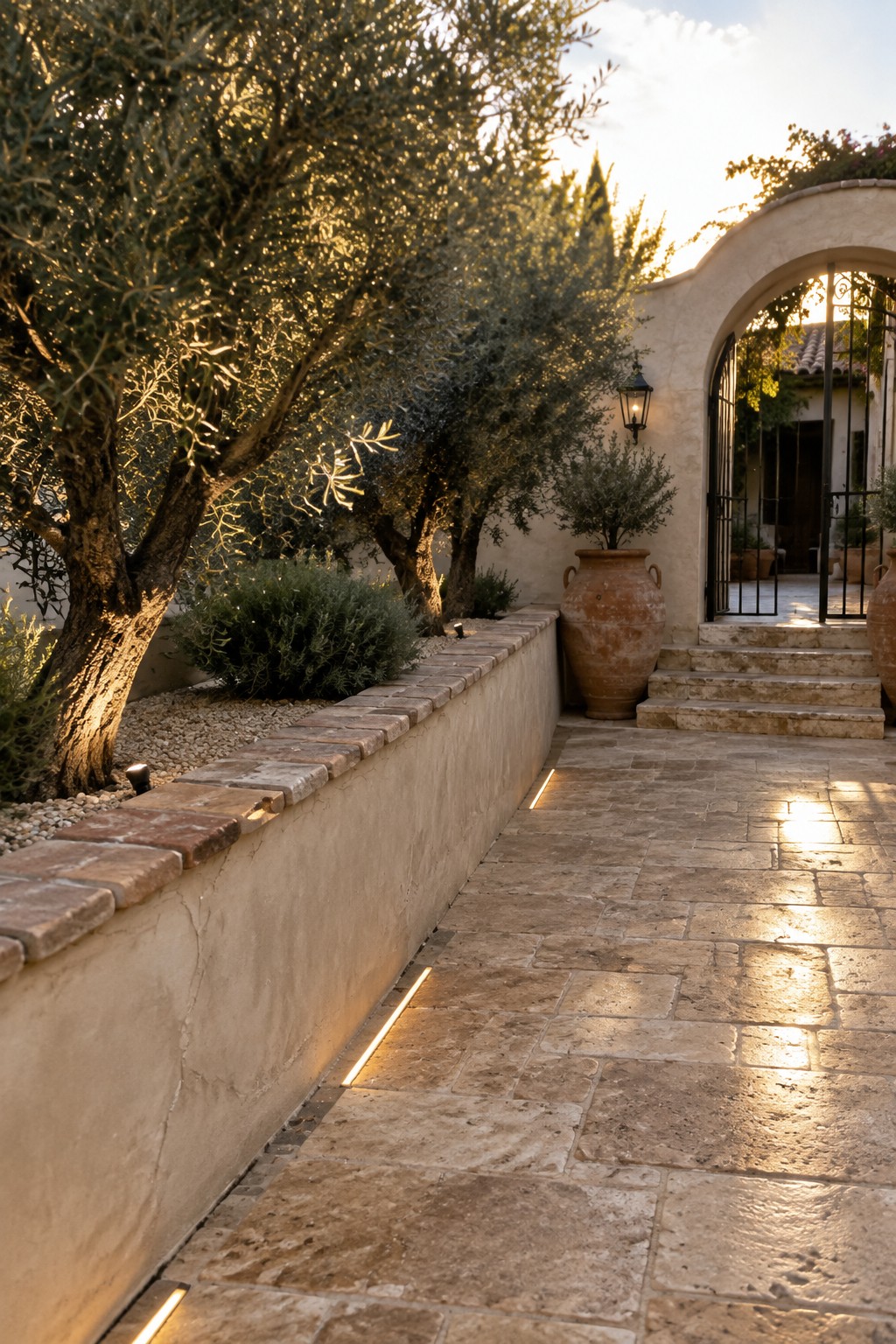
Lighting set into the edge of a stone path helps show the surface after dark without adding tall fixtures that interrupt the walkway. The slim lights beside the paving make this approach especially useful where the path runs close to a garden wall.
Use outdoor-rated fixtures designed for ground installation, and place them where they guide people rather than shine directly into their eyes. Keep the light level modest so the stone’s texture stays visible without making the path feel overly bright.
Use Stone Gate Pillars to Hold Driveway Lights
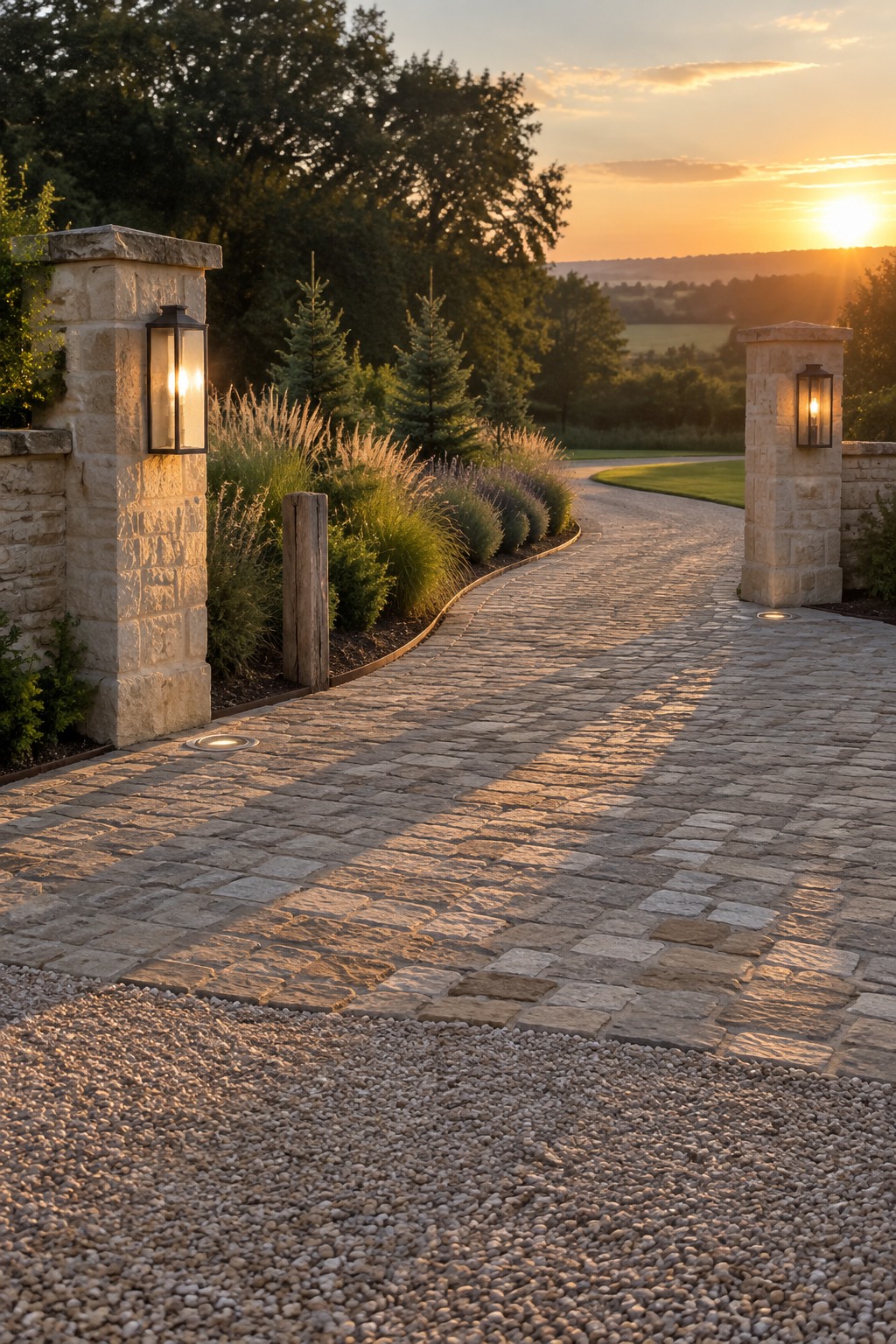
Stone pillars at the driveway entrance give lanterns a sturdy place to sit and make the start of the drive easy to see after dark. The masonry also suits a rustic setting, where a simple fixture looks more at home than a sleek modern post light.
This approach works well at a gated or open driveway entrance, especially when the pillars match nearby stonework. Choose lanterns with a warm, shielded bulb, and keep them high enough to light the entry without shining directly toward drivers.
Use Low Path Lights Along a Garden Walk
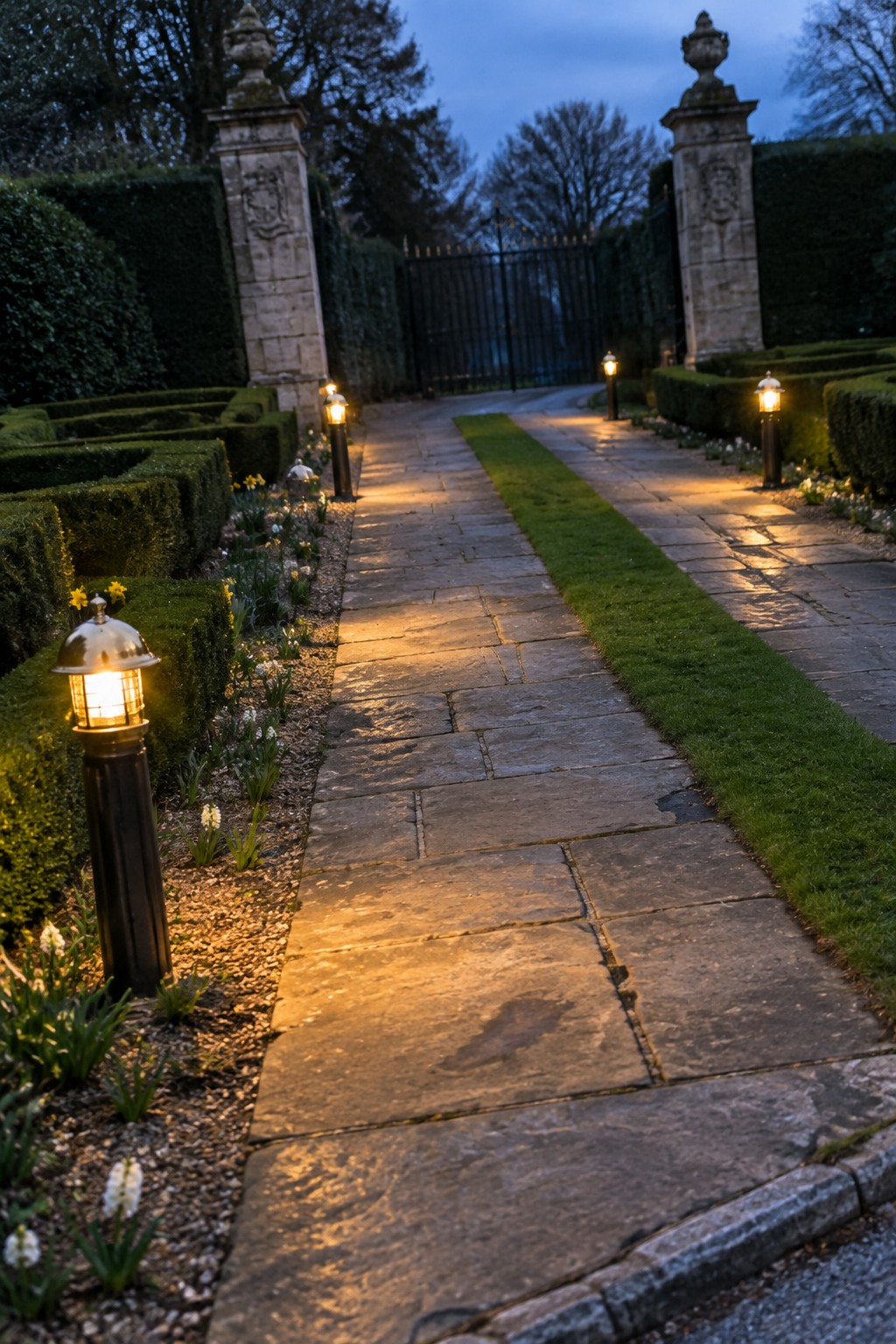
Low path lights make a stone walkway easier to follow after dark while bringing out the texture of the paving. Spacing them along the edges gives the light a steady rhythm without needing bright fixtures.
This approach works well for garden paths leading to a gate or entrance. Choose shielded, low fixtures and place them just beyond the paving so they light the route without getting in the way.
Use Linear Lighting Along a Stone Driveway
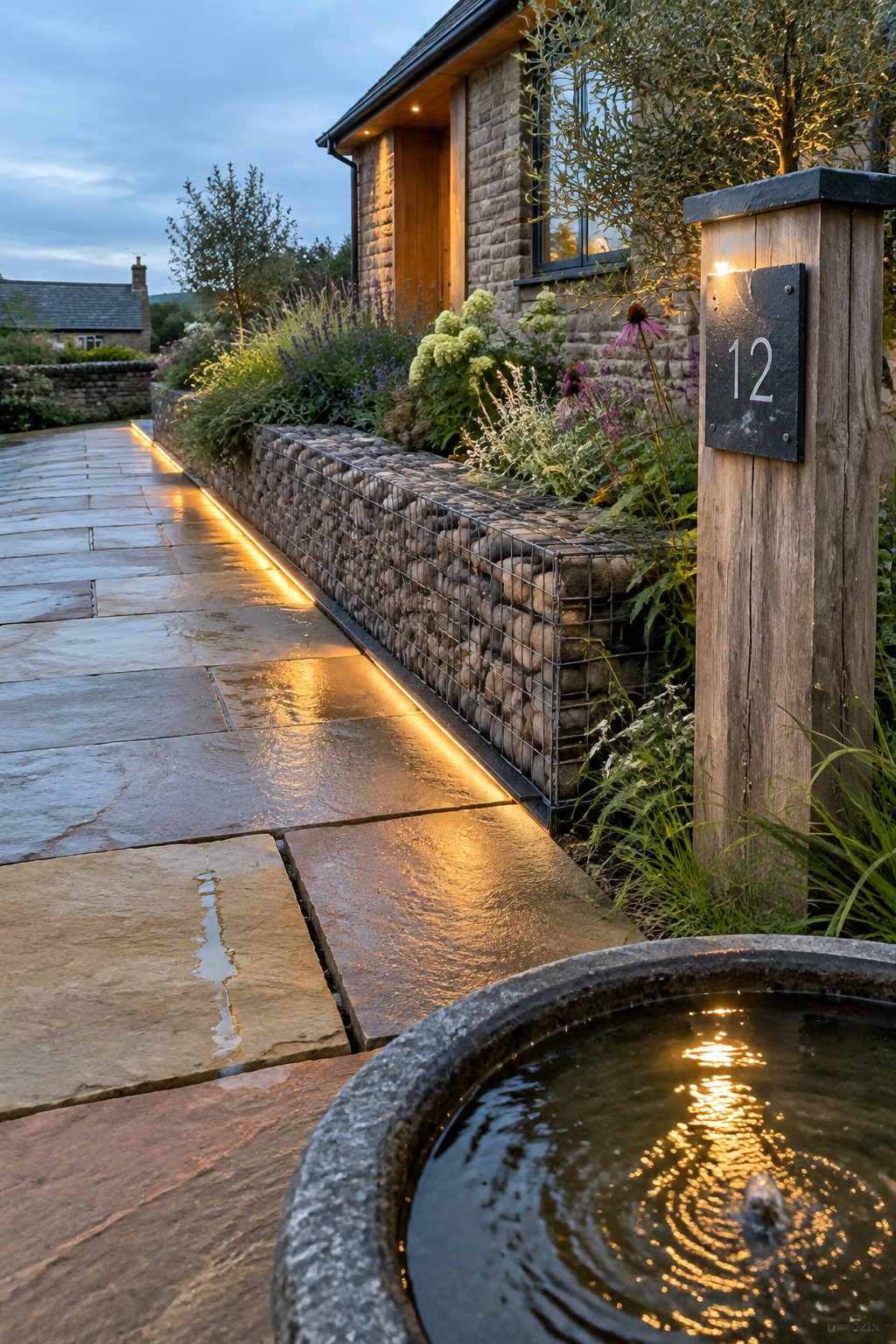
A slim strip of light set along the edge of a stone drive or path can make the paving easier to follow after dark. It also catches the uneven surface of the stone, so the texture stays visible instead of disappearing in low light.
This works well where a driveway meets a garden bed or retaining wall. Choose a low-profile, outdoor-rated fixture and keep the light warm and shielded; a bright strip can be harsh and show every bit of glare on wet paving.
Use Bollard Lights Along a Stone Drive
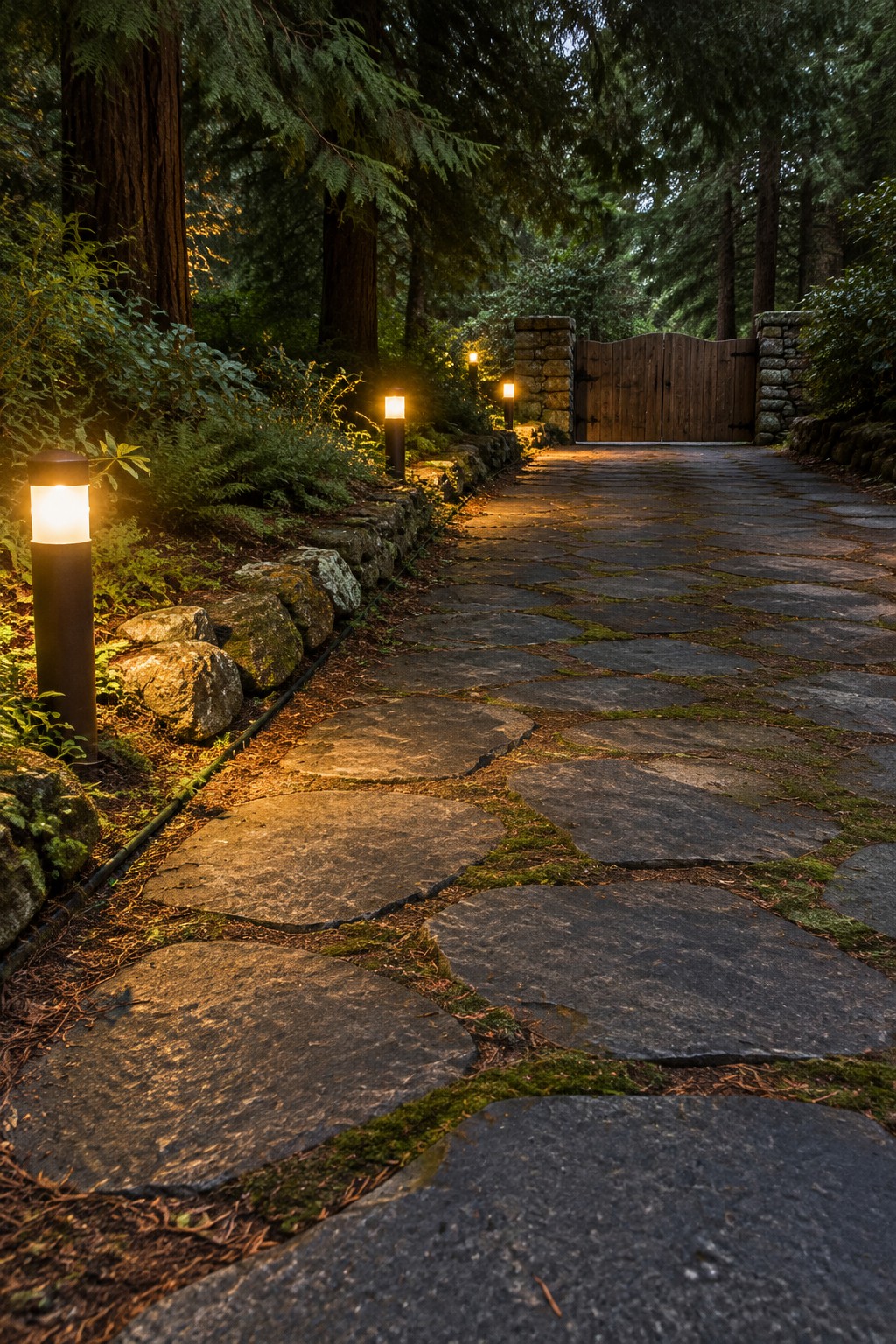
Low bollard lights can make a stone driveway easier to follow after dark while bringing out the uneven texture of the paving. Spacing them along one edge gives the light a clear direction without covering the stones in bright glare.
This approach works well on winding drives and garden paths, especially where trees or planting make overhead lighting impractical. Keep the fixtures low and set them back from vehicle tires so they light the route without getting in the way.
Use Inlaid Lights to Mark a Brick Entry Path

Small recessed lights set into a brick path can make an entry easier to follow after dark without adding fixtures along the edges. The light catches the uneven surface, so the brick’s natural variation remains visible.
This approach works well on a straight walkway leading to a front door. Space the lights evenly and choose fixtures rated for outdoor use, set flush with the paving so they do not become a tripping point.
Use Warm Wall Lights Along a Stone Driveway

Wall-mounted lights on stone gate pillars make the driveway easier to follow after dark while showing off the uneven stone surface. Keeping the fixtures close to the entrance gives the light a clear purpose instead of scattering it across the yard.
This approach suits a rustic driveway with stone posts or a low wall at the entrance. Choose shielded fixtures that direct light down toward the paving, and space them so the path is easy to see without creating bright glare.
Frequently Asked Questions
Q: Where should I place lights to show off the texture of a stone driveway?
A: Place low lights along the edges and aim them across the stones rather than straight down. The grazing light brings out bumps, seams, and color changes without washing out the surface.
Q: Are solar lights bright enough for a rustic stone driveway?
A: They can work well for marking the driveway’s edges, especially in sunny spots. For a brighter, more reliable path after dark, use wired low-voltage lights for the main route and save solar lights for accents.
Q: How far apart should driveway lights be?
A: Space them so their pools of light overlap slightly, with no dark gaps along the driving path. Try a few at night before setting the full row, since irregular stone edges can make evenly spaced lights look uneven.
Q: What kind of fixtures suit a rustic stone driveway?
A: Choose simple, low-profile fixtures in finishes like bronze, dark metal, or weathered copper. They sit quietly against natural stone and are less likely to compete with its texture.
