


Driveway and garage lighting shapes how a home looks from the street, but it also matters when I’m pulling in after dark or finding the front path safely.
A well-placed light can pick out the entry and make the facade feel more balanced, while glare or uneven coverage can make the approach harder to use.
I’d start by thinking about where people walk and drive, then choose fixtures that suit the home’s materials and scale.
Some options are simple enough to test without changing the whole exterior.
The ideas ahead offer practical ways to make the home’s entrance clearer and more comfortable after sunset.
Use Low-Profile Lights Along the Driveway

A slim strip of light along a driveway edge makes the route easier to follow after dark without adding bulky fixtures. It also helps define where the paving ends and the planting bed begins.
This approach works well on long driveways and beside a front walk. Choose outdoor-rated lights made for ground contact, and keep them set back enough to avoid damage from tires, shovels, or edging tools. The image shows warm lights set into the border beside a gravel drive.
Use Recessed Lights Along the Driveway
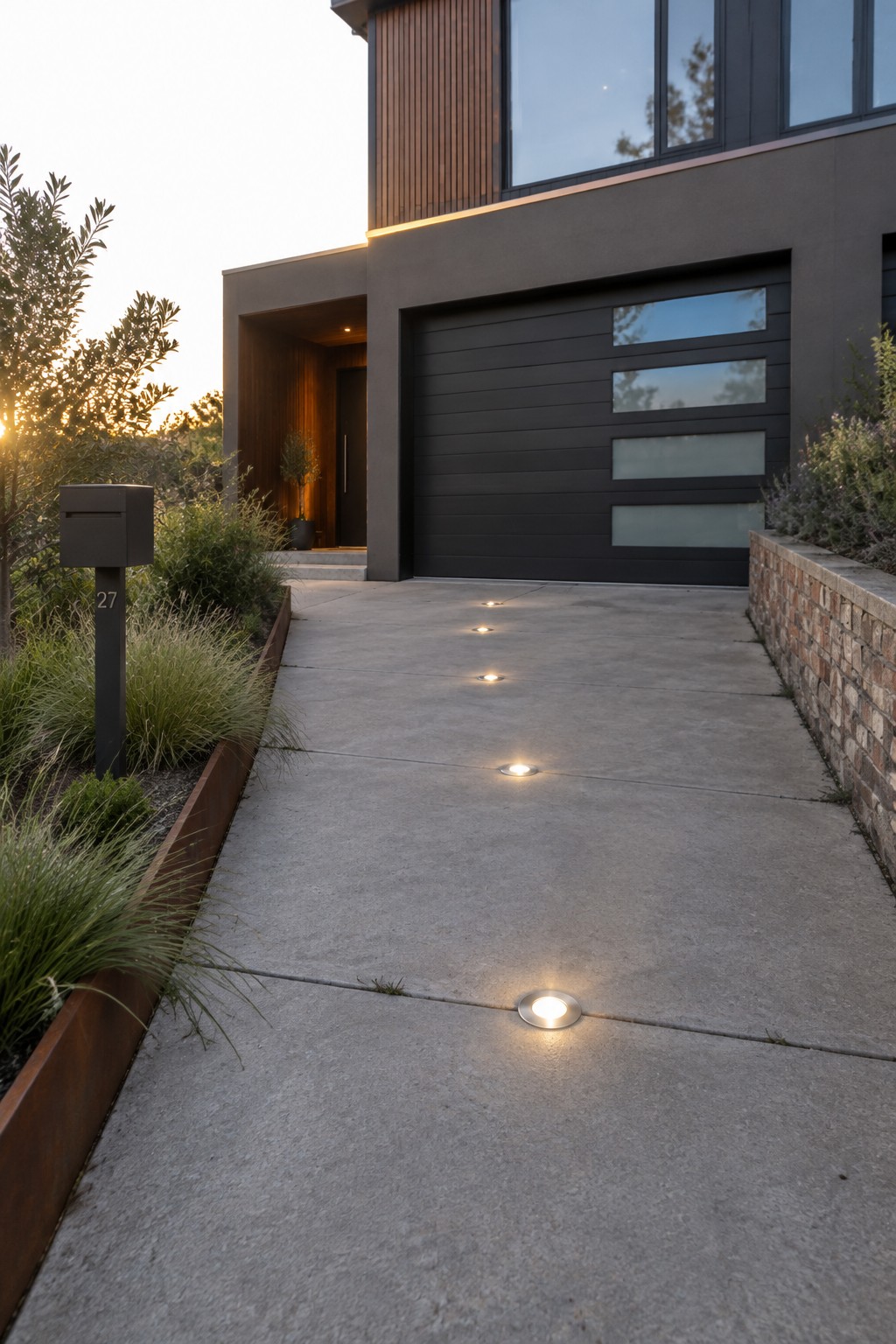
Recessed driveway lights make it easier to see the route to the garage after dark without adding bulky fixtures along the edges. Set into the concrete, they keep the path clear while marking its direction.
Space the lights evenly and choose fixtures rated for outdoor use and vehicle traffic. They work especially well on long or gently sloped driveways, but avoid placing them where tires will repeatedly cross unless they’re made for that load.
Use Low Path Lights Along the Driveway
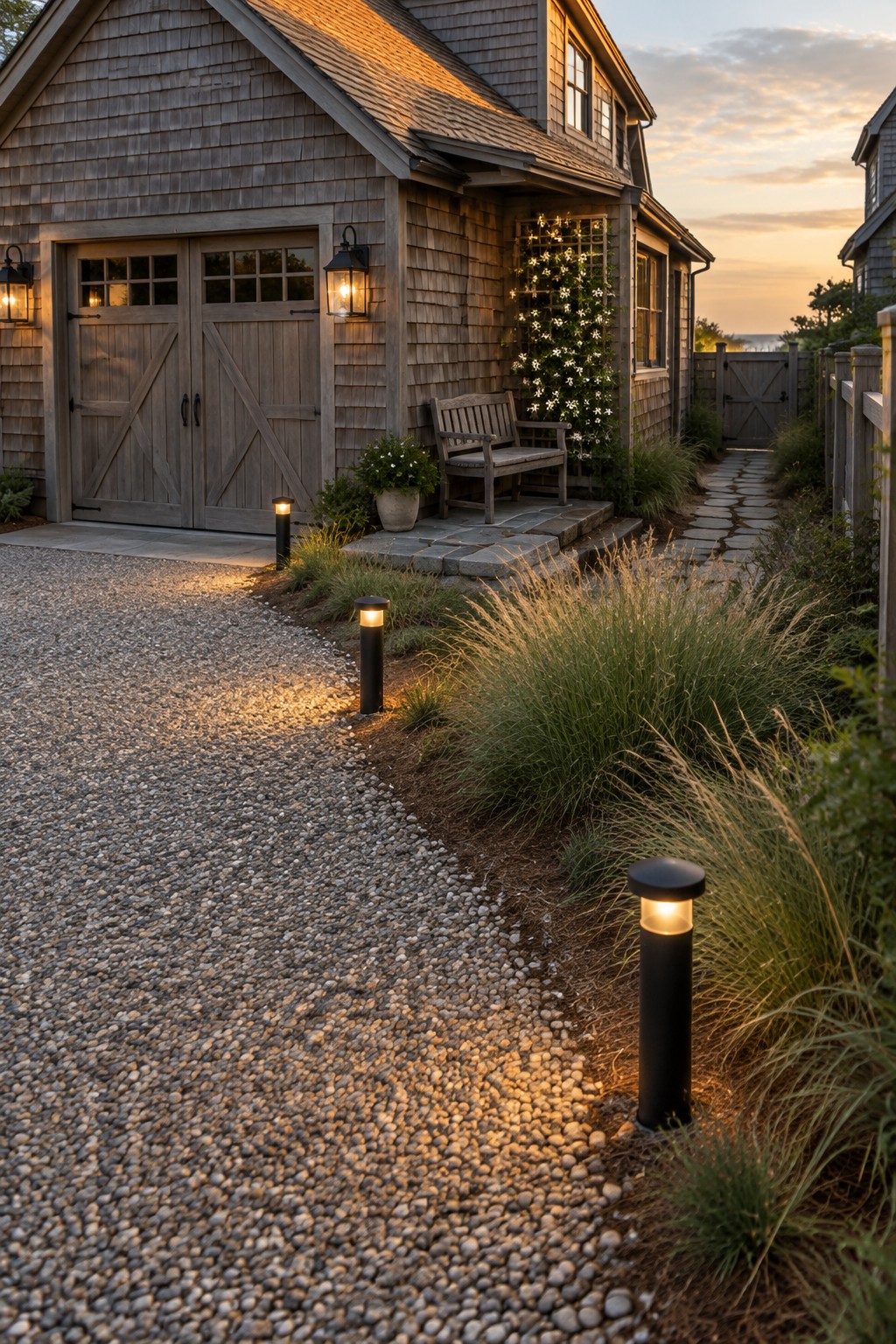
Low, shielded path lights make a gravel driveway easier to follow after dark without flooding the whole yard with light. Spacing them along the edge also helps define where the drive ends and the planting begins.
This approach works well for gravel or stone drives, especially near a garage or side entrance. Keep the fixtures low and space them evenly so the route stays clear without creating bright spots or glare.
Add Lighting Along the Driveway

Thin strips of lighting set into a driveway make the route to the garage easier to follow after dark. They also keep fixtures out of the way, which is useful when cars and people share the same entrance.
For a similar look, use outdoor-rated linear lights designed for installation in paving, and plan their placement before the driveway is finished. Keep the glow low and even so it guides drivers without shining into the house or neighbors’ windows.
Use Warm Lights Along the Garage Wall

Wall lanterns and small ground-level lights can make a garage entry easier to navigate after dark. Here, the lanterns beside the arched doors work with low lights near the driveway edge, so the entrance is lit from more than one height.
For a similar effect, place fixtures where they help people see the garage doors and the route to the entrance. Choose warm bulbs and shielded fixtures to reduce glare, especially near a pale wall or reflective driveway.
Add Lights To The Entry Steps

Built-in step lights help make a front entry easier to use after dark. Placed low in the stone riser, they illuminate the walking surface without putting a bright fixture at eye level.
This approach works well on raised entries and short stairways. Choose fixtures rated for outdoor use, and space them so the steps are lit evenly without glare.
Run LED Strips Along the Driveway Edges

A narrow strip of lighting built into the driveway edges makes the route to the garage easy to follow after dark. It also keeps the light source low, so the driveway stays clear of bulky fixtures.
This approach works well for a modern home with a straight, defined driveway. Choose outdoor-rated strips made for ground installation, and plan for drainage and access to the wiring before the paving goes in.
Add Step Lights Along the Garage

Small recessed lights set into the driveway edge can make the route to the garage easier to see without adding tall fixtures. The low placement keeps the brick paving clear while marking the edge at night.
Use this approach where a driveway meets a garage or front steps, and space the lights evenly so the path is easy to follow. Choose outdoor-rated fixtures and aim them downward to limit glare.
Use Linear Lights To Mark the Driveway

Long, narrow lights set into the driveway make the route to the garage easy to follow after dark. They also keep the lighting low and unobtrusive, which suits a modern home.
For a similar effect, place outdoor-rated LED strips in straight lines along the main driving path. Make sure they are flush with the surface and choose a warm color temperature so the light is clear without being harsh.
Use Driveway Lights to Mark Wide Paving Slabs

Small recessed lights along the edge of a driveway can help define large concrete slabs after dark. They make the route to the garage easier to follow without putting tall fixtures in the way.
Place the lights in the gravel joints or beside the paving, keeping their spacing even and their glow aimed low. This approach suits modern homes with broad, simple driveways; avoid overly bright bulbs that can cause glare.
Use Wall Lights To Highlight Garage Doors

Warm lights mounted beside the garage doors make the entry easier to see after dark and bring out the texture of the wood. Placing the fixtures low on the wall keeps the light close to the doors and nearby driveway.
Use this approach on a garage with a broad, simple facade, where a few well-placed lights can cover the main entry without cluttering it. Choose weather-rated fixtures and aim them down to limit glare.
Use Linear Lights To Mark the Driveway

A narrow line of light along each driveway edge makes the route to the garage easy to follow after dark. It also gives a clean, consistent look without putting bulky fixtures in the way.
For a similar effect, use outdoor-rated LED strips or recessed linear lights designed for paving, and make sure they can handle water and foot traffic. Keep the light warm and low-glare so it guides drivers without shining into nearby windows.
Use Landscape Lights To Guide the Driveway
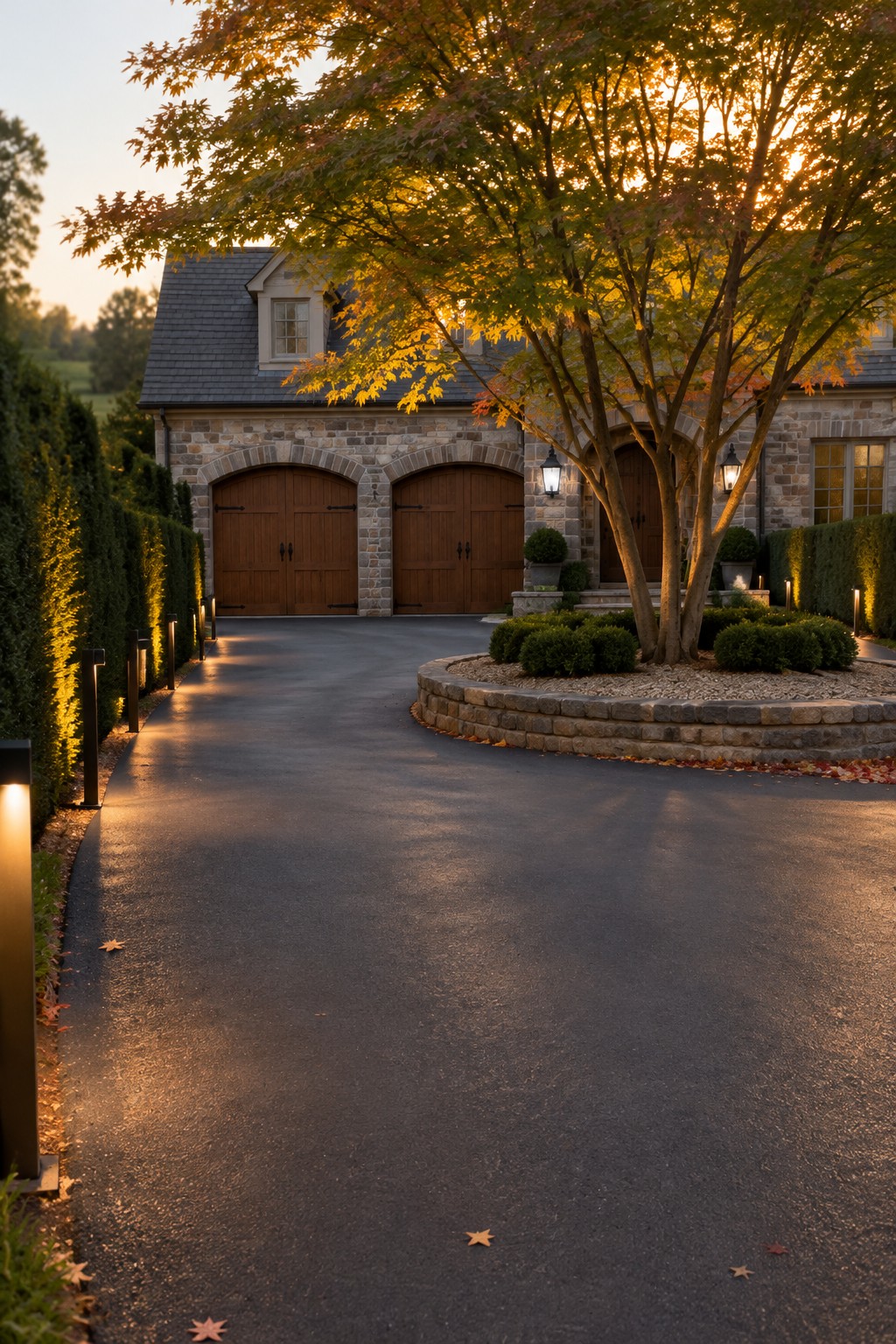
Low lights tucked beside the driveway can make the route to the garage easier to follow after dark. They also help define the edge of the paving without putting bright fixtures in the way.
Space them evenly along the drive, keeping the light low and aimed where people walk or turn. This approach works well for longer driveways and homes with planted borders; avoid placing fixtures where car tires or snow clearing could damage them.
Add In-Ground Lights Along the Driveway
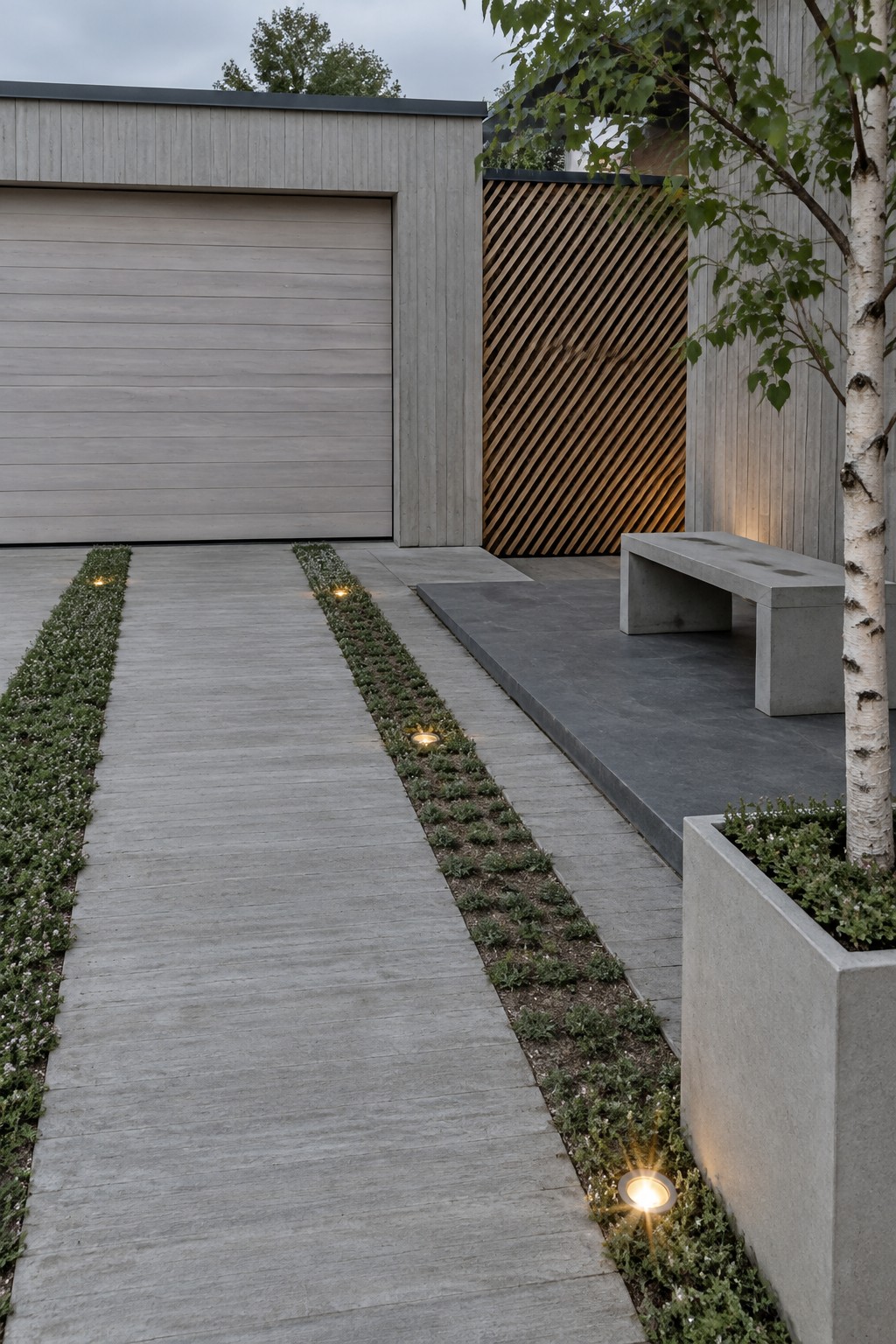
Small in-ground lights can make a long driveway easier to follow after dark without putting tall fixtures in the way. Set into narrow planting strips, they mark the edges while keeping the paved surface clear.
Space the lights evenly and aim for a warm, gentle glow rather than bright pools of light. This approach works especially well beside wide driveways or modern homes, but make sure the fixtures are rated for outdoor use and positioned where cars won’t run over them.
Use In-Ground Lights to Mark the Entry Path

Small recessed lights set into the paving can help people follow the route from the driveway to the front door after dark. They keep the walkway clear, while their glow picks out the stone surface without needing tall fixtures.
Place them along the main walking route, especially near steps or a change in direction. Choose a warm, low-glare light and space the fixtures far enough apart that the path is easy to read without looking overly bright.
Use Low Lights To Mark the Entry Path

Low lights set into short stone pillars can make an entry path easier to follow after dark. They keep the light close to the ground, where it helps people see changes in level without shining directly into their eyes.
This approach works well beside a gravel drive or a path made of stone steps. Space the lights evenly and aim them toward the walking surface, rather than toward the house or passing cars.
Use Linear Lights to Define the Driveway

Recessed linear lights can make a wide driveway easier to follow after dark without adding fixtures that stick up from the pavement. They also give the approach a clear edge, which is especially useful when the garage sits at the end of a broad paved area.
Place the strips where they’ll guide cars and foot traffic, and choose a durable outdoor-rated system designed for vehicles to drive over. Keep the light warm and restrained so it helps with visibility without creating glare.
Frequently Asked Questions
Q: How bright should driveway lights be?
A: Aim for enough light to see the driveway edges, steps, and obstacles without making the whole area feel like a parking lot. A few well-placed fixtures usually work better than one harsh floodlight.
Q: Are motion-sensor lights a good choice for a garage?
A: Yes, especially near the garage door or a side entrance you use after dark. Set the sensor to cover the approach without picking up every passing car or movement on the street.
Q: Can solar lights work along a driveway?
A: They can, as long as the spots get plenty of direct sun during the day. If part of your driveway stays shaded, wired or low-voltage lights will give you more reliable light at night.
Q: What color light looks best outside a garage?
A: Warm white tends to feel welcoming and makes an entry less stark. Choose a neutral white if you need clearer visibility for tasks like unloading tools or finding something in the garage.
