


A driveway sets the tone for a rural home before anyone reaches the front door, and its lighting can make the approach feel both safer and more welcoming after dark.
I find that the best fixtures work with the home’s materials and the shape of the drive instead of competing with them.
Lantern-style lights, simple posts, and low pathway fixtures can each suit a country setting, but spacing and brightness matter just as much as style.
Too much light can flatten the landscape, while a few well-placed pools of illumination help define the route and bring out the home’s character.
I’d save the ideas that feel practical for your own approach, then adapt their finishes and placement to fit the house and surrounding land.
Use Lanterns Along the Driveway
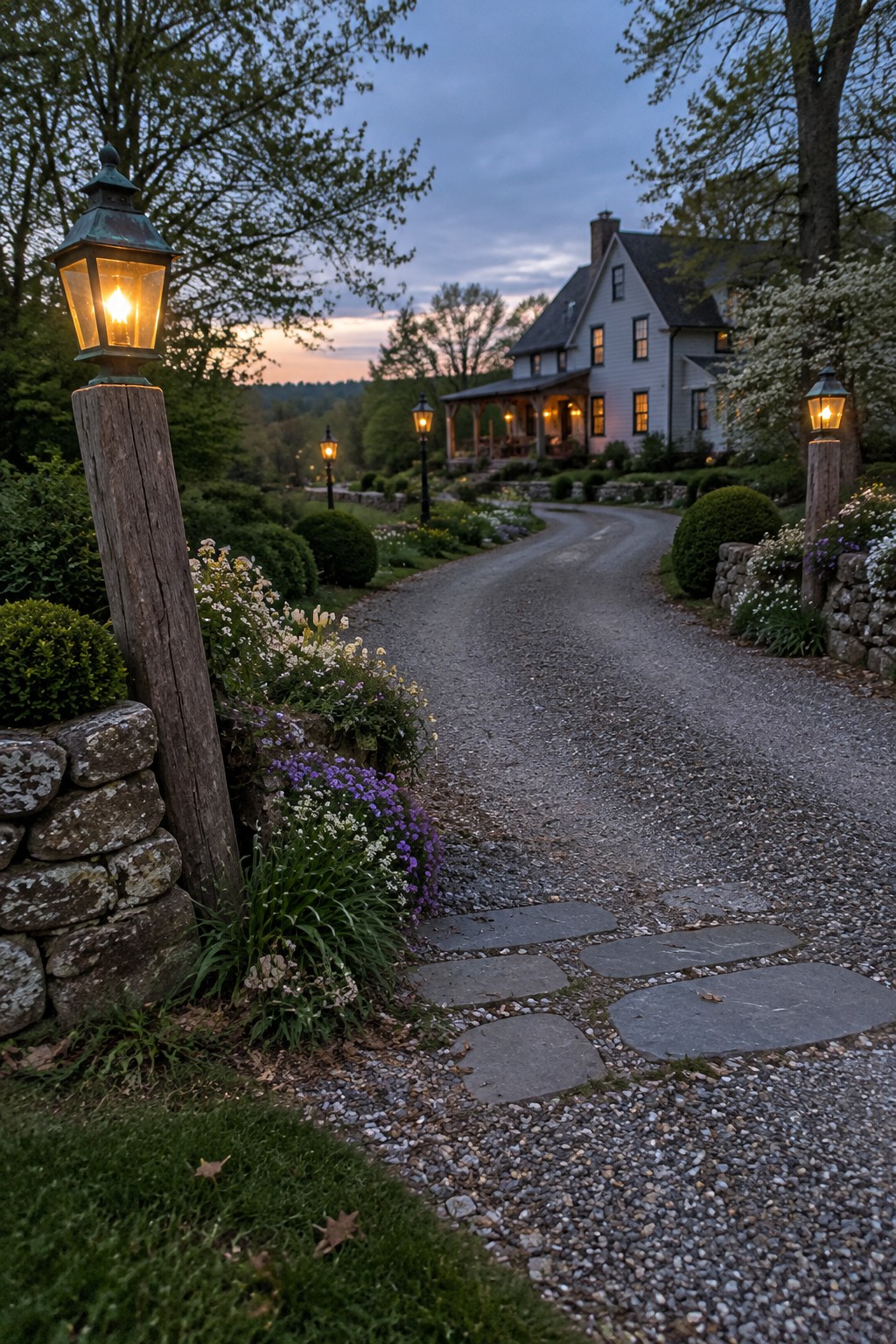
A gently curving gravel drive can feel easier to follow when lanterns mark its edges. The warm light gives guests a clear route toward the house without needing bright fixtures everywhere.
Place lights at turns and near the entrance, keeping their height and spacing fairly consistent. Traditional lantern-style fixtures suit country homes especially well, but make sure they light the path without shining directly into windows or drivers’ eyes.
Use Gravel Paths To Guide The Driveway

A gravel path can give a country driveway a clear route to the house without making the approach feel too formal. It suits rural homes especially well, and simple timber edging helps keep the path tidy.
Use a firm, compacted gravel base so the surface is easier to walk and maintain. Low path lights can help mark the route after dark, but space them evenly and keep the light directed down.
Use Lanterns Along a Country Driveway
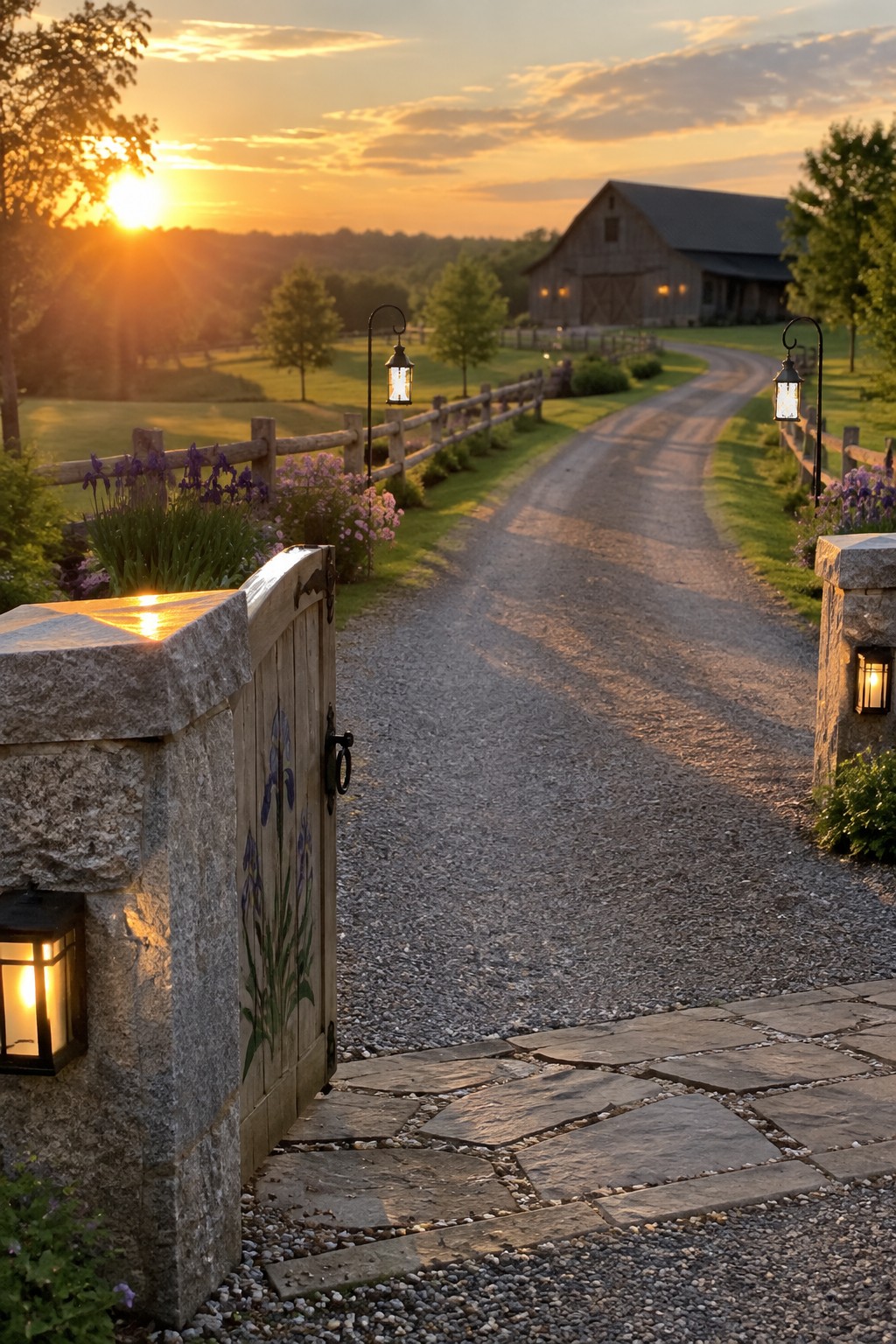
Lanterns placed along a driveway make the entrance easier to follow after dark and suit a rural home better than bright, uniform lighting. Here, simple lantern posts mark the gravel drive without taking attention away from the property.
Space the lights along the edges of the drive, especially near a gate or bend where visitors need a clearer view. Choose fixtures that can handle outdoor weather, and keep their brightness modest so the path stays easy on the eyes.
Use Path Lights Along A Curved Driveway

Small, low path lights make a curved driveway easier to follow after dark without overpowering a country home. Spacing them along the edge gives the route a steady line, while keeping the fixtures close to the ground keeps the look simple.
This approach works well on gravel or paved drives, especially where the path bends toward the house. Leave even gaps between lights and aim them down toward the surface so they guide people without shining into windows.
Use Low Lights Along the Driveway Edge
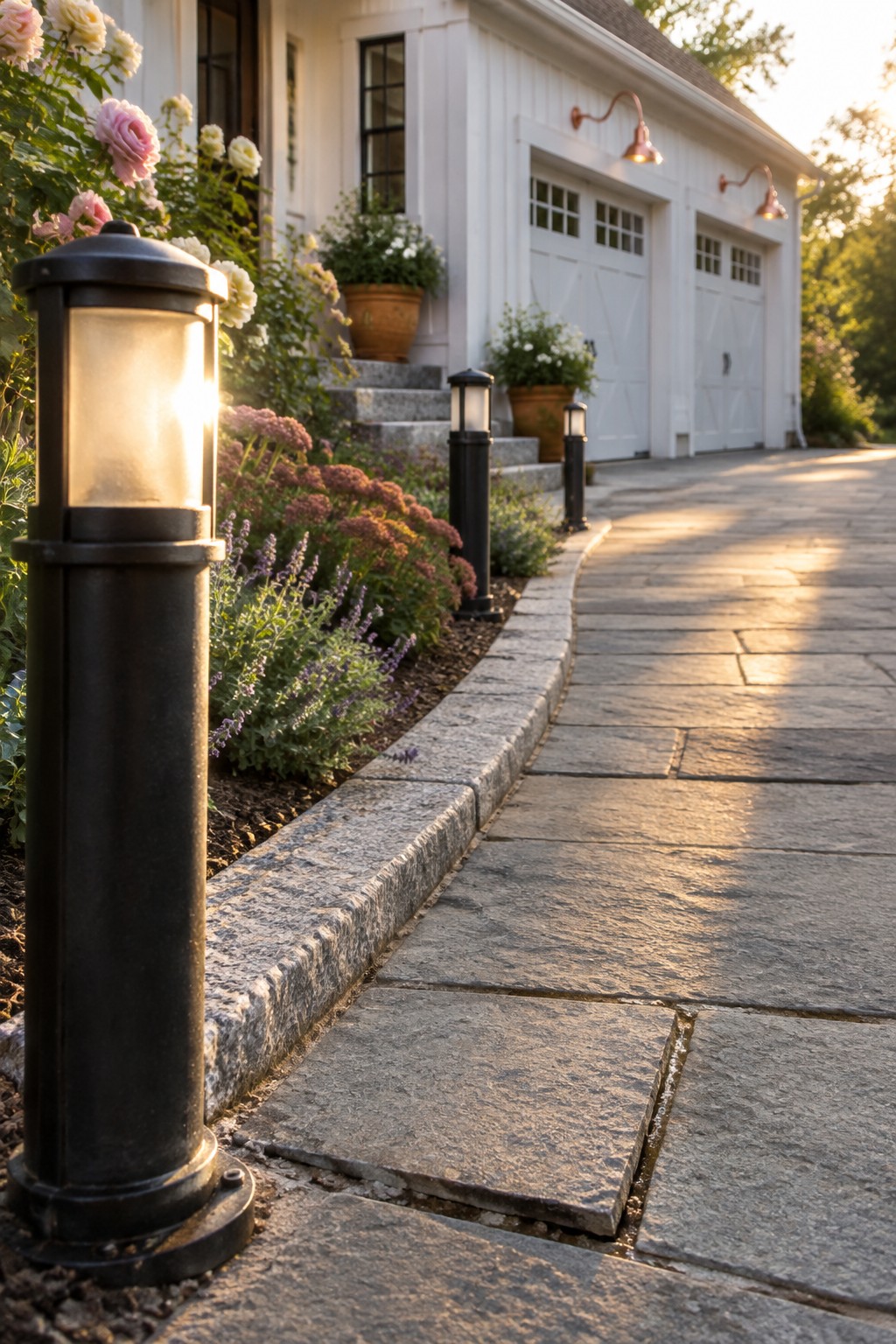
Low bollard lights can mark the edge of a driveway without blocking the view of the house. Their simple shape suits a country-style setting, and placing them beside the planting bed helps drivers see where the paved surface ends.
Set the lights far enough apart to guide the way without making the driveway feel crowded. This approach works well along a curved or stone-paved drive, especially when the fixtures are kept low and consistent.
Mark the Driveway Entrance With Lanterns
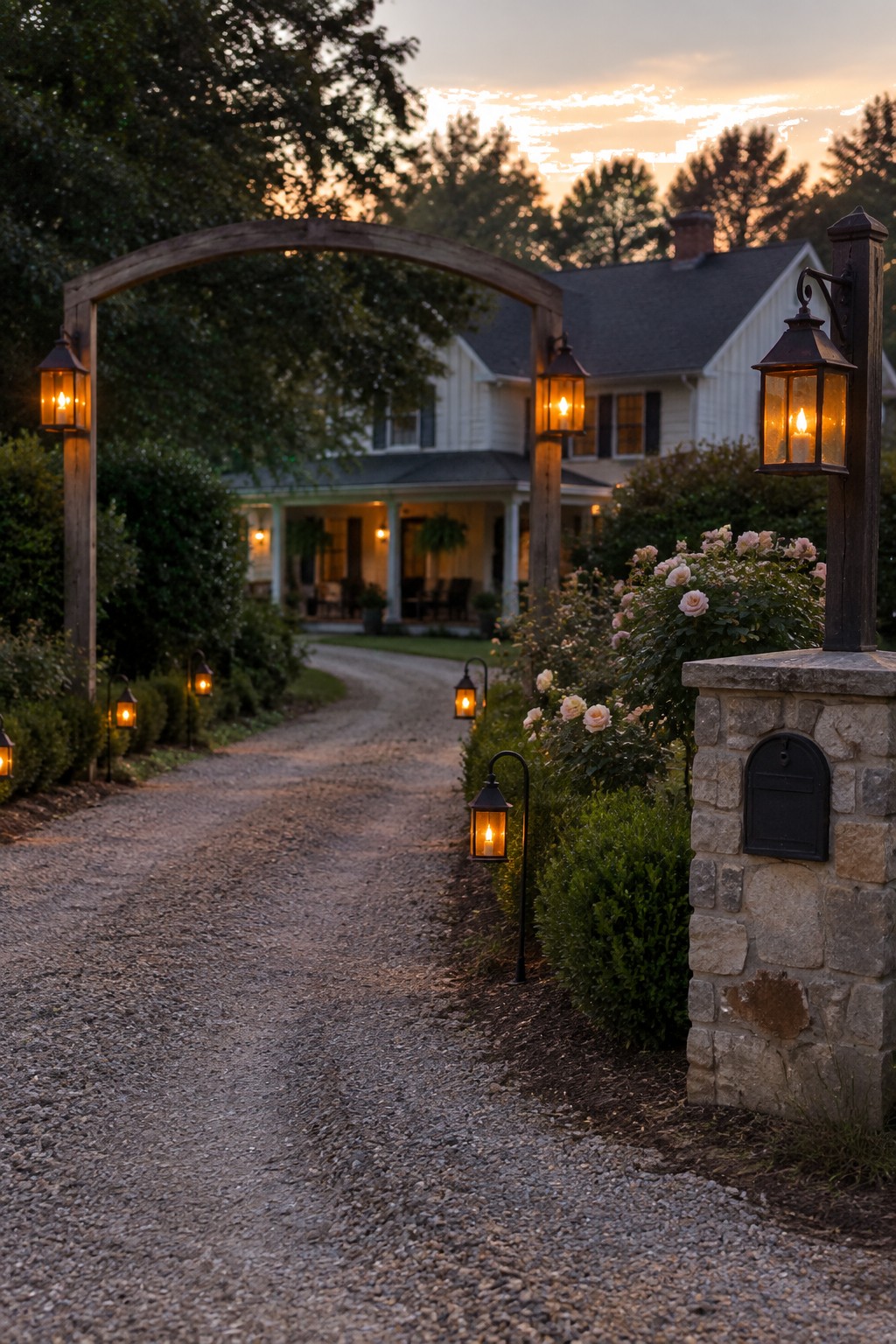
Lanterns at the entrance help make a long country driveway easier to recognize after dark. Hanging them from a simple wooden arch gives the entry a clear starting point without making it feel too formal.
This approach suits homes with gravel drives and a traditional style. Use warm bulbs and sturdy, weather-resistant fixtures, and keep the lanterns high enough that vehicles can pass comfortably.
Add Low Lights Along a Stone Driveway

Low lights built into the stone edging help mark the driveway without relying only on tall fixtures. They make the route easier to follow after dark, while keeping the lighting close to the ground.
This approach works well for a long gravel or paved drive with defined edges. Space the lights evenly and keep them shielded so they guide the way without shining into the house or drivers’ eyes.
Use Low Lights Along a Curved Drive

Small lanterns placed along the edge of a curving drive make the route easier to follow after dark. Their warm glow suits a country home, and the low placement keeps the lighting connected to the garden rather than making it feel like a row of streetlights.
Space the lights evenly beside the path, keeping them clear of car tires and overhanging plants. A few well-placed fixtures are usually enough to mark the curve without lighting every inch of the driveway.
Add Lanterns to Stone Gateposts

A lantern at each entrance post is an easy way to mark where a country drive begins. The stone supports give the lights a sturdy base, while matching fixtures make the entrance feel considered without needing a row of lights along the whole drive.
This approach suits gravel drives and homes with traditional stonework. Choose lanterns that cast light down toward the gate and path, and keep their size in proportion to the posts.
Add Lanterns Along a Stone Border

Lanterns placed along a stone edging make a driveway easier to follow after dark while keeping the lighting in step with a country home. The low stone wall gives the lights a clear line to follow without making the approach feel too formal.
This works well beside a gravel or paved drive, especially near a garden bed. Keep the lanterns spaced evenly and use warm bulbs; too many bright fixtures can make the path feel cluttered.
Use a Pebble Path to Lead to the Entry
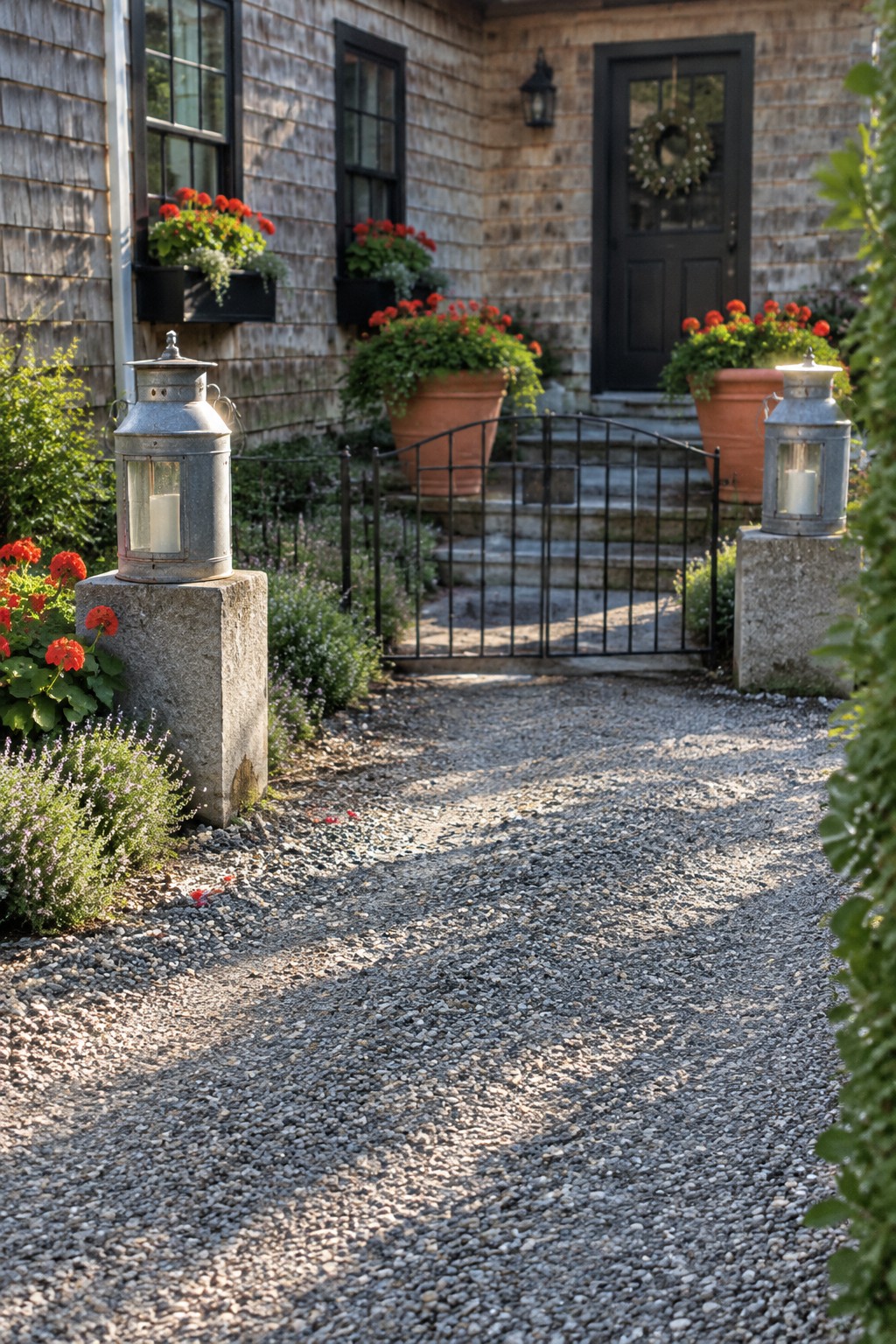
A pebble path gives a country home a relaxed, established look while making the route to the front door easy to follow. Its uneven, natural surface suits an older home especially well.
For a similar approach, use compacted gravel or small rounded stones on a path that gets regular foot traffic, and add a firm edge to keep the material in place. Lanterns on short stone posts can mark the entrance, but keep the walking surface even enough to avoid a tripping hazard.
Light a Stone Driveway With Low Path Lights

Low lights placed along a stone driveway help guide the way after dark without overpowering a country setting. Their short height keeps the view open, while the irregular stone surface gives the path a natural, established feel.
Space the lights along one edge of the drive, keeping them far enough apart to avoid a runway effect. This approach works well on a winding route through a wooded yard, but choose fixtures that can handle rain and keep glare out of drivers’ eyes.
Mark a Brick-Edged Driveway With Low Lights

Low path lights can make a country driveway easier to follow after dark, especially where it curves beside a garden bed. Here, the brick edging helps define the route, while small lights show where the paved drive meets the planting.
Use a few low fixtures along bends or less visible edges rather than lining every inch of the driveway. Keep them far enough from the pavement that cars will not clip them, and choose a warm, shielded light that stays comfortable to look at.
Use a Rose-Covered Arbor at the Driveway Entrance

A garden arbor can mark the start of a country driveway and make the entrance feel like part of the landscape. Climbing roses give a simple wooden structure a softer, more established look.
This idea suits a gravel drive leading to a cottage, garage, or rural home. Keep the opening wide enough for vehicles, and use sturdy posts that can support mature vines. Low lights on nearby stone pillars can help mark the entrance after dark.
Use String Lights to Mark the Driveway

A strand of string lights can give a country driveway a gentle guide toward the house. Here, the lights hang between mature trees, making the approach feel connected to the home without adding more fixtures along the ground.
This works especially well on a long gravel drive or near a broad entry where trees or posts can support the wire. Hang the strand high enough to keep it clear of vehicles, and use outdoor-rated lights and fittings.
Use Wooden Posts for Driveway Lanterns
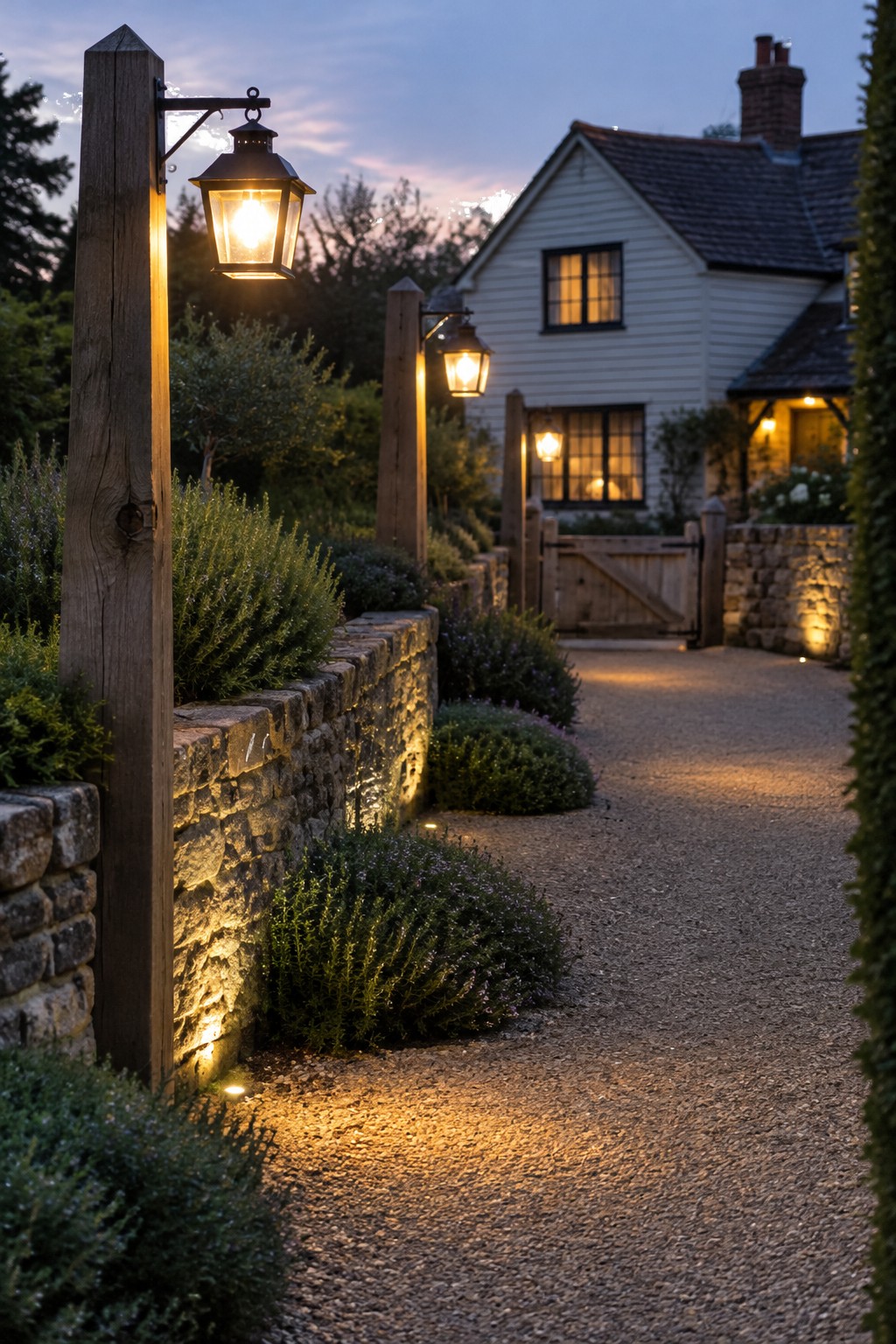
Wooden posts give driveway lanterns a simple country look and make it easy to light a long approach. The lanterns can mark the way to the entrance without needing fixtures attached to the house.
Set the posts at even intervals along one side of the drive, or use them to mark a turn or gate. Choose sturdy, weather-resistant wood, and keep the lanterns high enough to light the path without shining into nearby windows.
Light a Driveway Island With Uplights
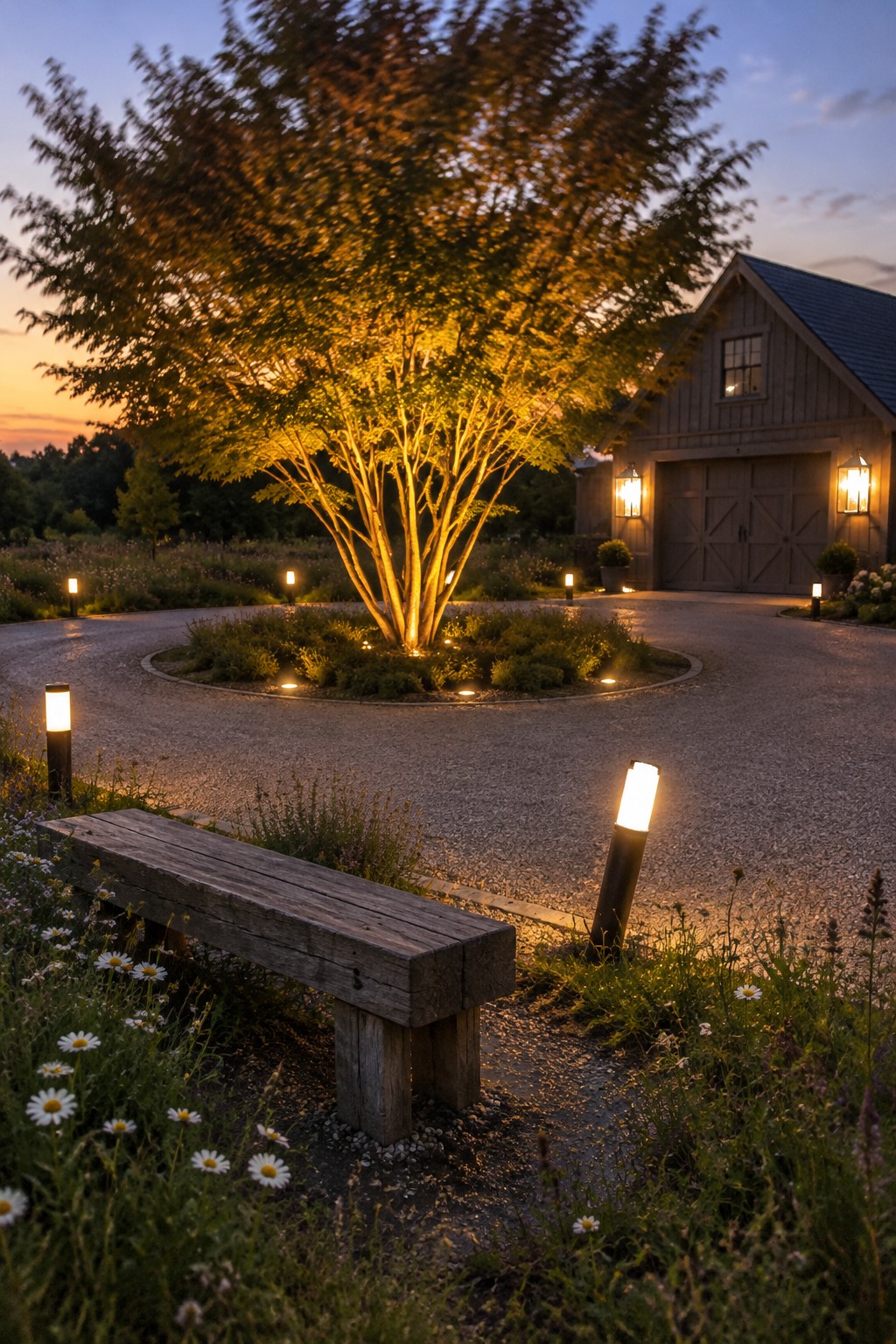
Lighting a tree from below makes a driveway island easy to notice after dark. The warm light on the trunks and lower branches gives the center of a circular drive a clear focal point without relying on rows of brighter fixtures.
Use a few shielded landscape uplights around the base of a mature tree, aimed into the canopy rather than toward drivers’ eyes. This works especially well in a circular or wide turning area, but keep the fixtures and planting bed outside the driving path.
Frequently Asked Questions
Q: How far apart should I place lights along a country driveway?
A: Space them far enough apart to mark the route without making the driveway look like an airport runway. Try a few lights first, especially near bends, gates, and changes in elevation, then adjust after seeing how the spacing looks at night.
Q: Are solar lights bright enough for a long rural driveway?
A: They can work well along shorter stretches that get plenty of sun, but performance may dip in shaded spots or during cloudy weather. For a long approach, low-voltage wired lights offer steadier illumination.
Q: What kind of lighting looks right with a farmhouse or cottage?
A: Lantern-style fixtures, simple post lights, and warm-toned bulbs usually suit a rural home without looking too polished. Keep the light aimed down so it guides the way without shining into windows or across the road.
Q: How can I light a gravel driveway without running wires everywhere?
A: Use solar path lights along the edges, or place a few low-voltage fixtures near the entrance and key turns. Avoid putting lights where tires or snowplows are likely to hit them.
