


A well-lit driveway can make a home feel easier to find at night, but the way light falls across trees and planting matters just as much as brightness.
I find that a few carefully aimed spots often look better than lighting every feature, especially when the beams reveal texture without shining into windows or drivers’ eyes.
The best placements work with the landscape’s shape, drawing attention to a tree’s branching form or a shrub’s outline while keeping paths and edges easy to read.
Small changes in angle and spacing can make the whole approach feel more considered.
I’d start by testing a couple of positions after dark before committing to a full layout.
These ideas offer practical ways to highlight driveway plantings and landscape features while keeping the lighting comfortable and useful.
Spotlight Trees Along the Driveway
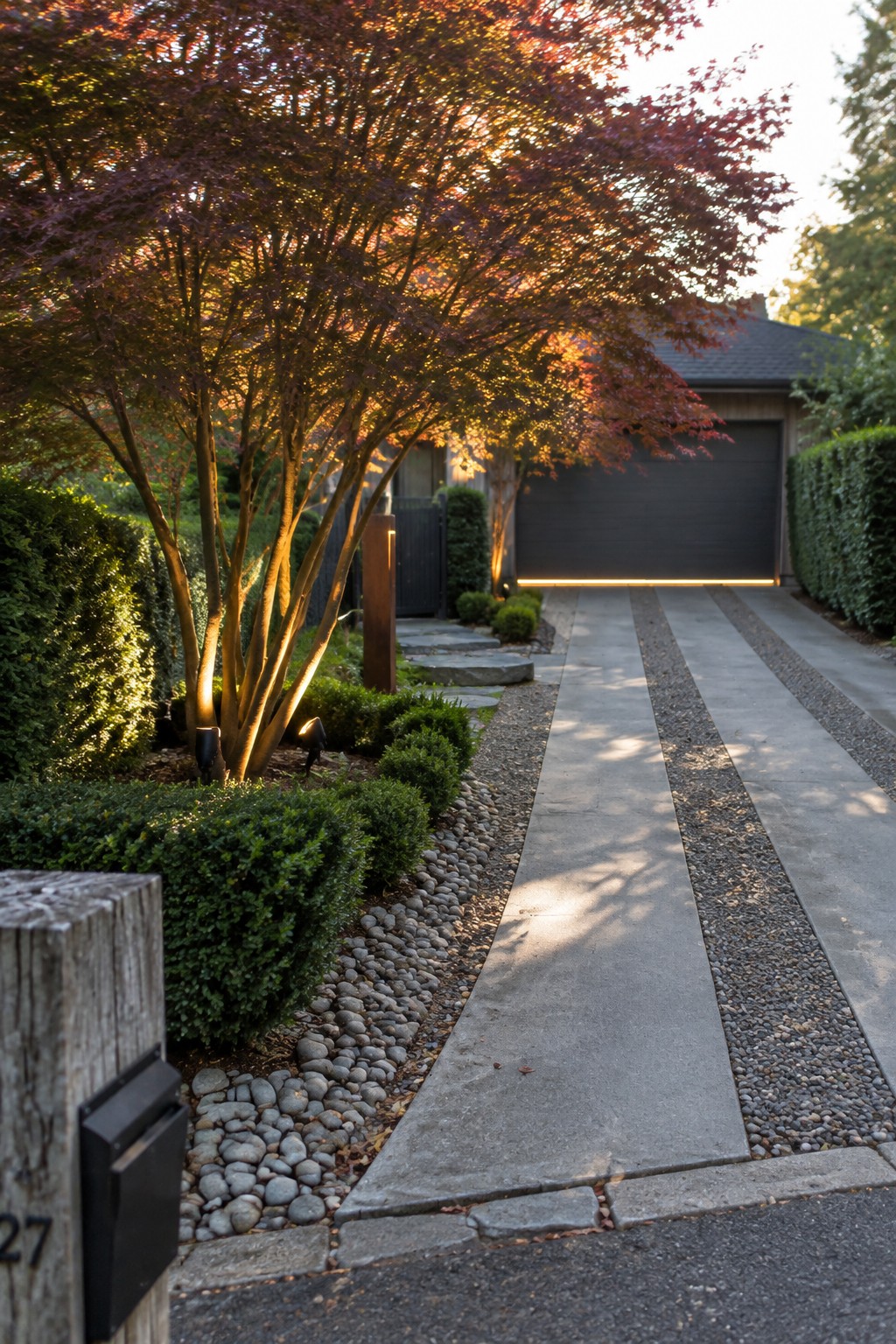
Focused uplighting can make a driveway’s trees part of the approach after dark. A few ground-level spotlights aimed at the trunks highlight their shape and let the canopy show against the house, without needing to light every part of the yard.
Place the fixtures near the base of each tree and angle them away from drivers’ eyes. This works especially well along a planted driveway edge, but keep beams narrow and low enough to avoid glare and light spilling into nearby windows.
Use Focused Lights to Highlight a Garden Tree
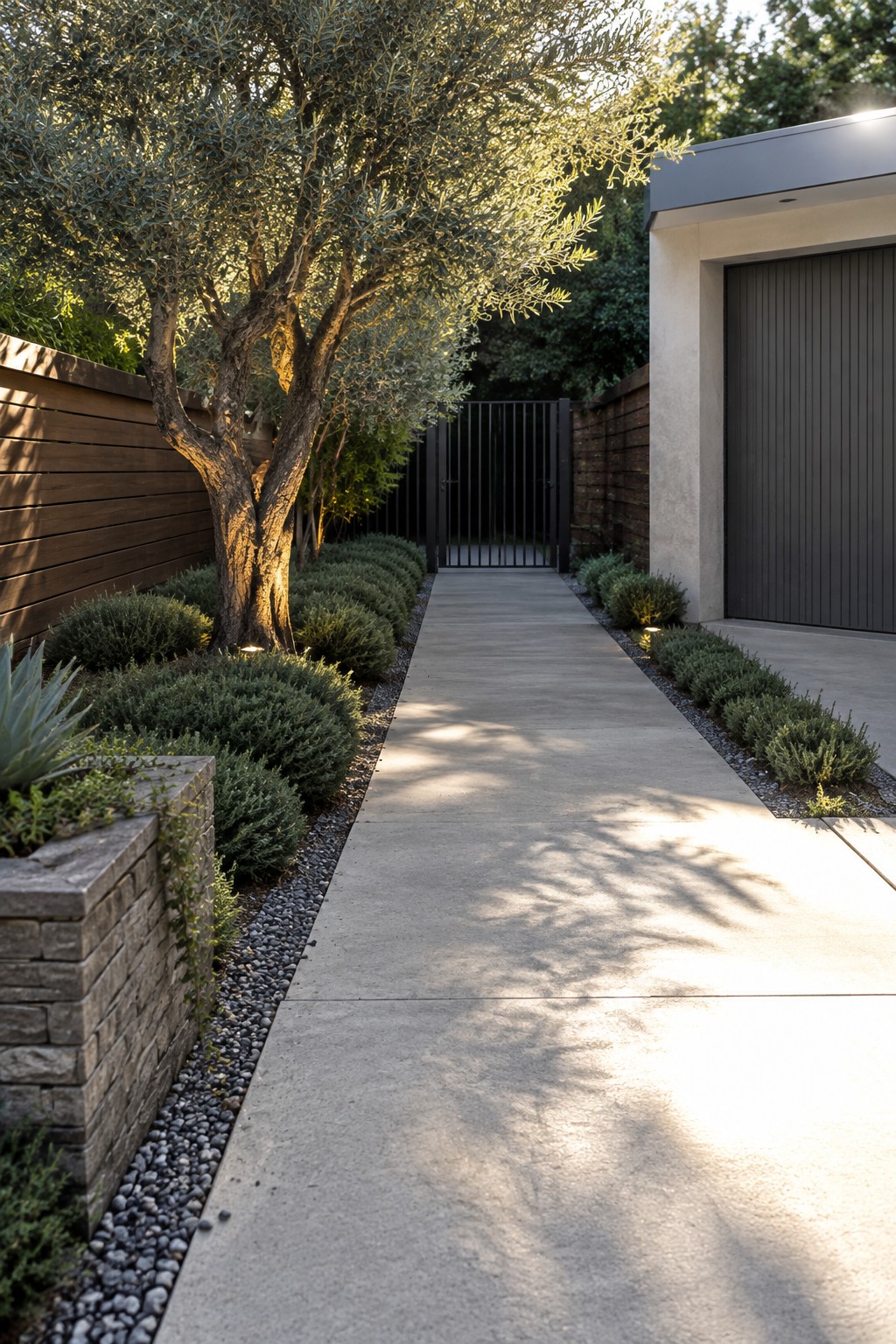
A well-placed spotlight can make a mature tree a clear focal point along a driveway. Aim light toward the trunk and lower branches so the tree’s shape stands out after dark without lighting the whole yard.
This approach works especially well near an entrance or gate, where a tree can help mark the way. Use a shielded, low-voltage fixture and angle it carefully to avoid glare toward the house or passing drivers.
Use Lighting to Highlight Garden Paths
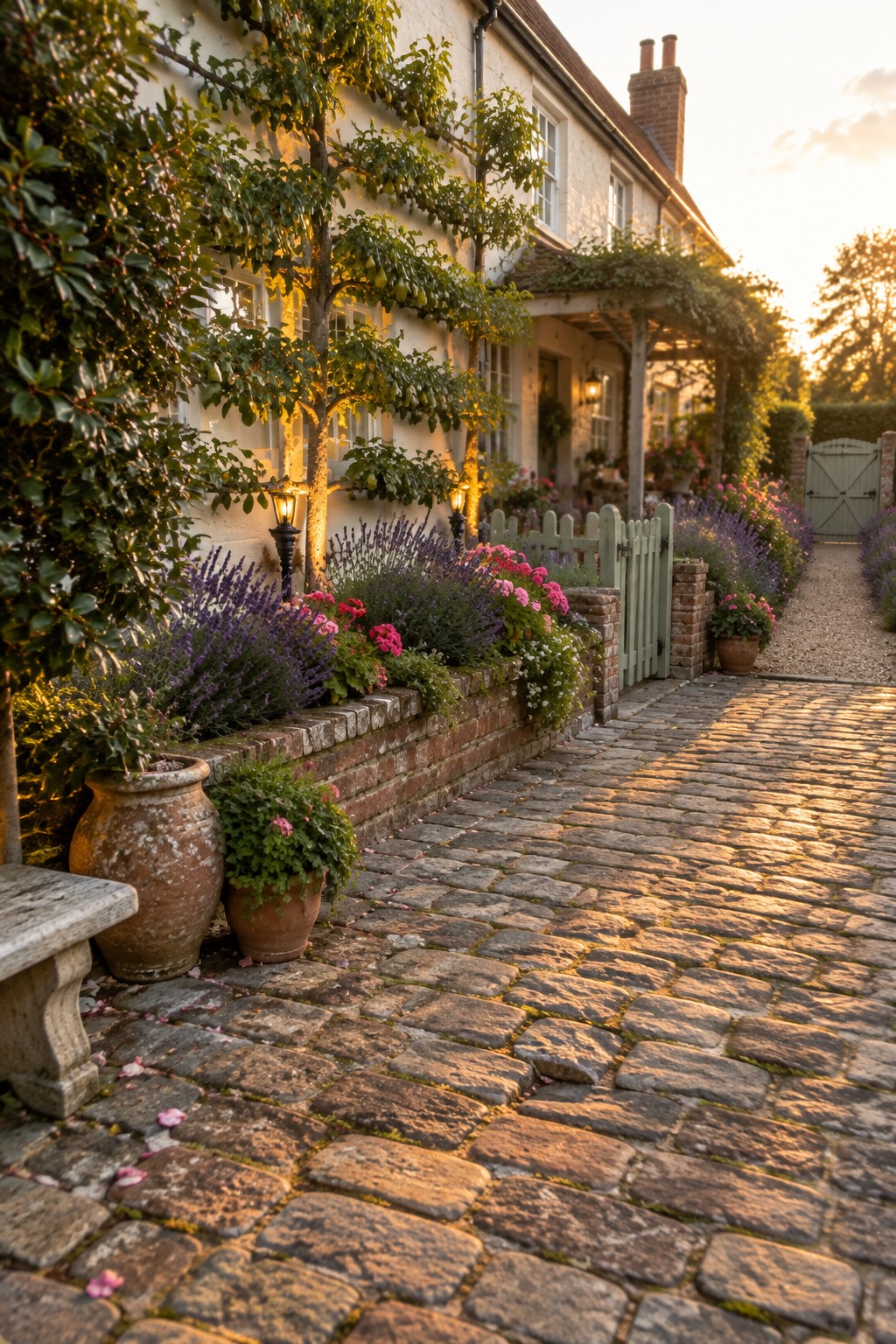
Focused lights can make a garden path easier to follow after dark while drawing attention to nearby planting. Here, small fixtures pick out a brick-edged flower bed beside the cobbled walkway.
Place low lights along the path or aim them toward a tree or shrub you want to feature. Keep the beam on the plants and paving, not in visitors’ eyes, and leave some areas unlit so the whole garden stays comfortable at night.
Use Uplighting to Highlight Garden Trees
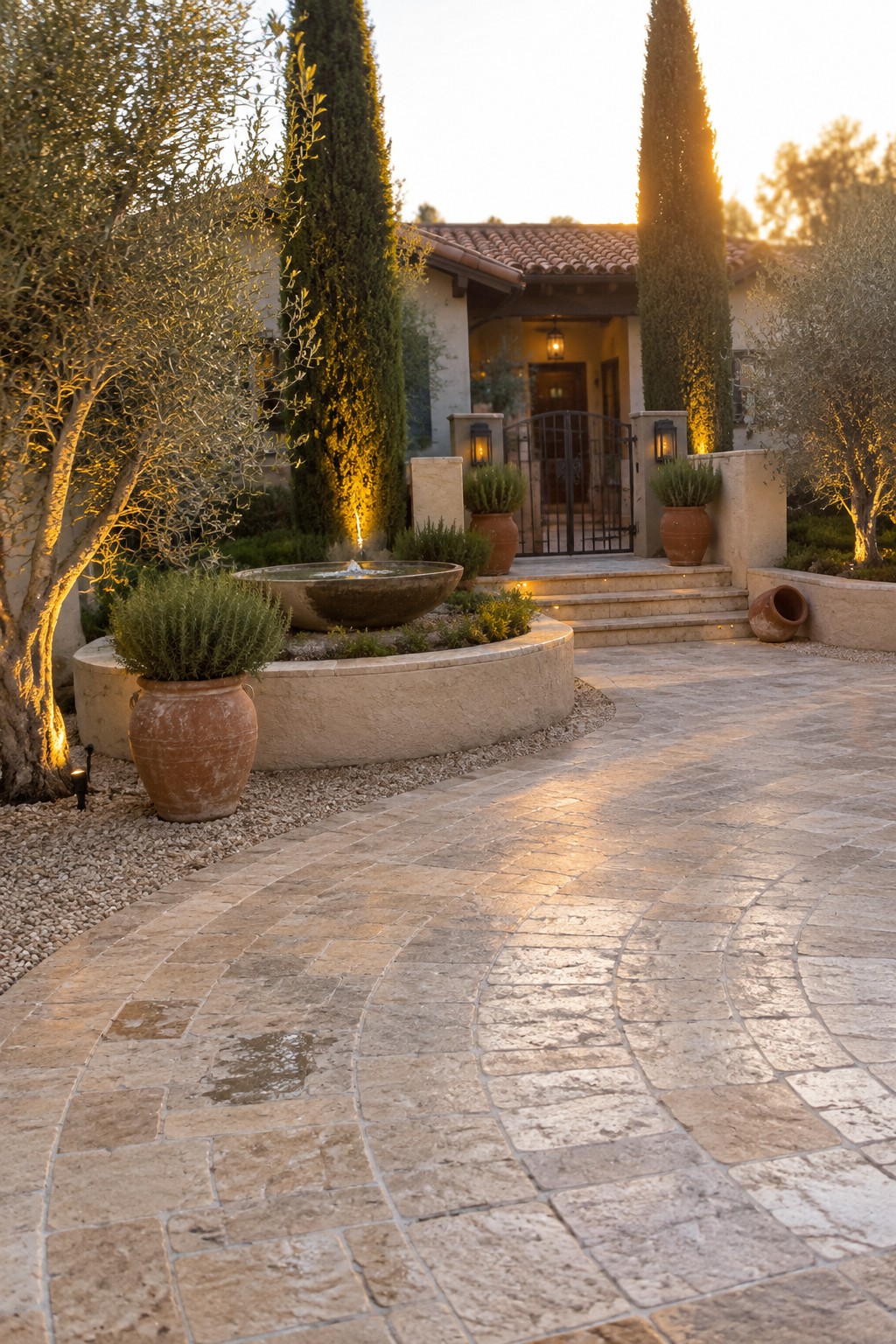
Focused uplights can make trees and shrubs stand out after dark while helping define the edges of a driveway. Here, small ground lights pick out the trunks of tall evergreens and a nearby tree, giving the planting more presence without lighting every part of the yard.
Place fixtures at the base of a few trees or shrubs, aiming the beams into the foliage rather than toward the house or driveway. Keep the spacing selective so the plants remain the focus and the light does not create glare.
Use Focused Lights to Pick Out Landscape Plantings

Focused spotlights can help the planting along a driveway stand out after dark without lighting the whole yard. Aim them at a few key features, such as the grasses beside the stone edging, rather than spreading light evenly everywhere.
Place each fixture low and angle it away from the road so it highlights the plants without shining into drivers’ eyes. This approach works well along gravel drives and garden paths, especially when the plants and fixtures are kept clear of the walking and driving areas.
Light Trees Along a Garden Path

Focused spotlights can make a garden path easier to follow after dark while drawing attention to nearby trees. Here, light picks out the trunk and leaves beside the stepping stones, giving the route a clear visual guide.
Use a few low, shielded fixtures aimed up into tree canopies along a winding path. Leave some sections dimmer so the light stays comfortable and doesn’t shine directly into the house or a visitor’s eyes.
Light Trees Along the Driveway

Focused uplights can make a driveway’s trees stand out after dark without lighting the whole yard. Aim them into the branches of one or two feature trees, so their shape and blossoms remain visible from the drive.
This works especially well along a curved gravel driveway, where the trees help mark the route. Keep the beams on the plants rather than in drivers’ eyes, and use warm, low-level fixtures for a softer effect.
Use Low Lights Along the Planting Bed

A few focused lights tucked into a planting bed can highlight a tree and nearby shrubs without lighting the whole driveway. This approach keeps attention on the landscape and leaves the paved area comfortable to use after dark.
Place fixtures near the features you want to show, aiming them up through the foliage rather than toward the house or the driver’s eyes. Here, slim lights sit among low plantings beside the path, a layout that suits modern entryways with gravel or stone beds.
Use Uplights to Bring Out a Garden Wall
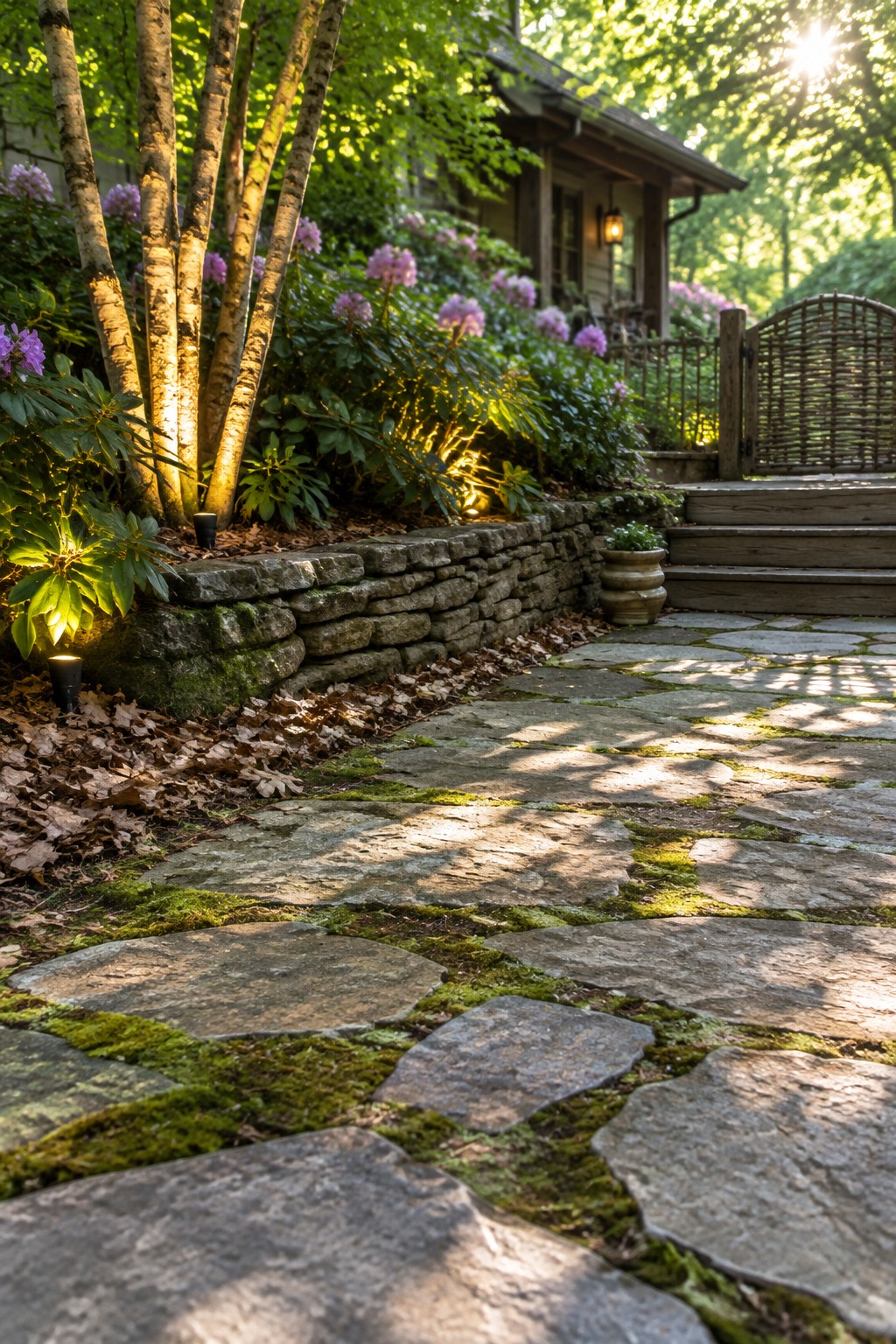
Focused uplights can make a stone retaining wall and nearby planting easier to notice after dark. The light also picks up the wall’s uneven surface, so the hardscape feels like part of the garden rather than just an edge.
Place low-voltage fixtures at the base of the wall and aim them upward, keeping the beam on the stone and away from paths and windows. This works well along a driveway or garden walk, but avoid placing lights so close together that the wall looks overly bright.
Use Low Lights to Pick Out Entry Plantings
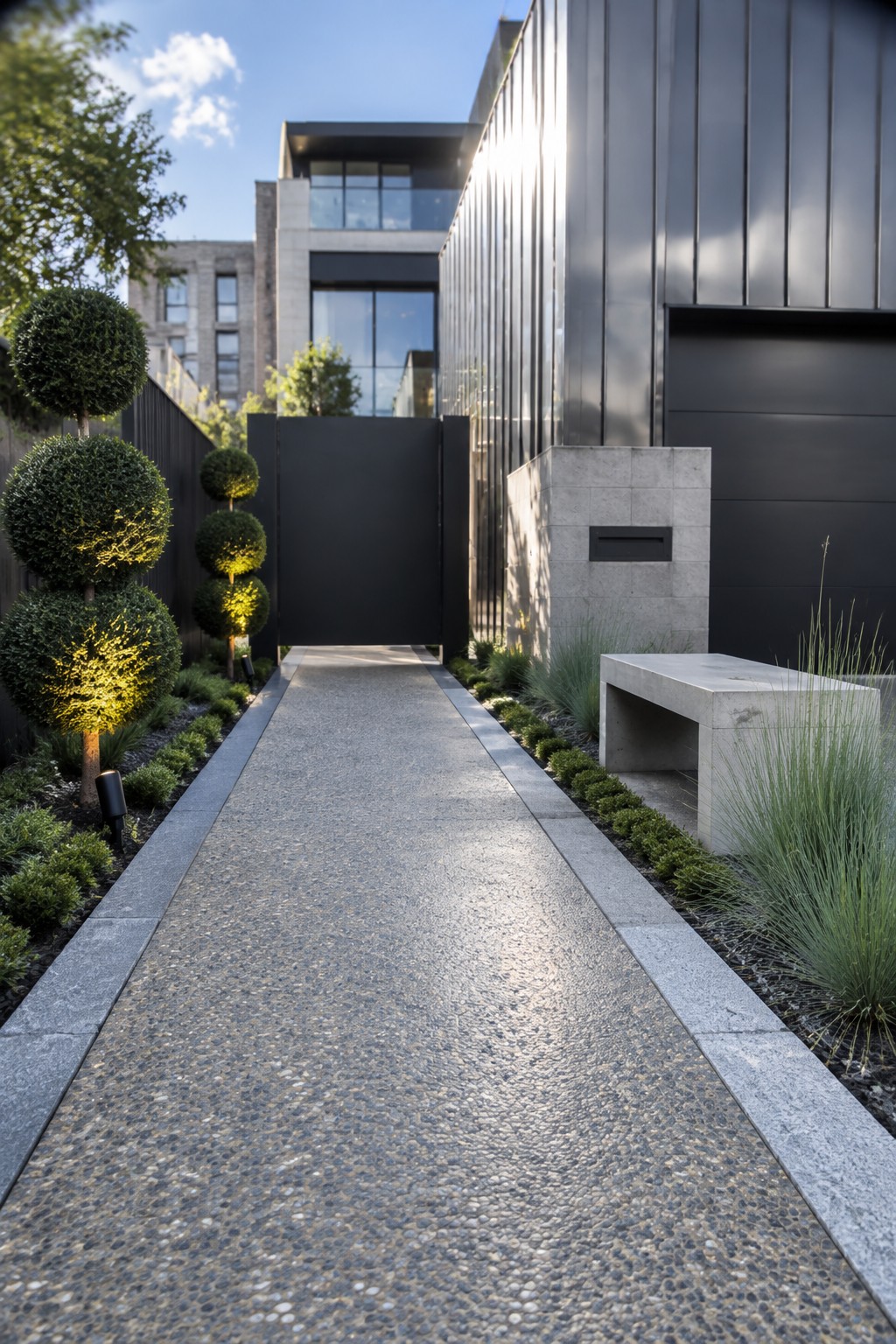
Small, focused lights can make clipped shrubs and grasses easier to notice along a front path after dark. The light brings out the shape of each planting without needing to brighten the whole garden.
Place fixtures low among the plants and aim them at the foliage, not toward the house or walkway. This works well beside a narrow entry path, where a few carefully placed lights can mark the route without creating glare.
Use Small Spotlights to Highlight Agave
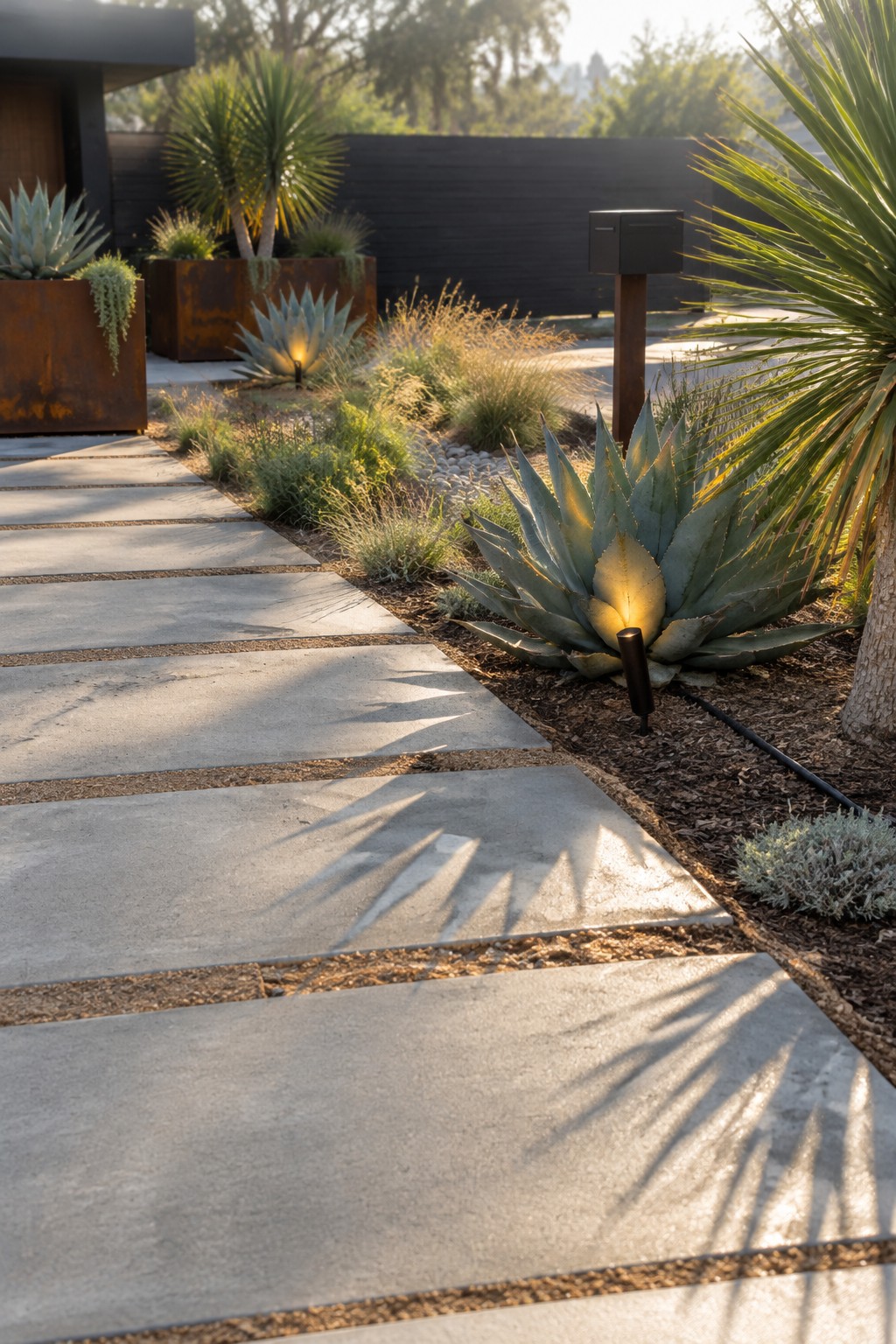
Focused lights can make a bold plant stand out after dark without lighting the whole yard. Aim a small spotlight toward an agave’s leaves to bring out their shape and give the planting bed a clear focal point.
Place the fixture low and angle it away from the path so it highlights the plant without shining into anyone’s eyes. This works well for sculptural plants beside a driveway or entry, but keep the light modest so it does not overpower nearby plantings.
Use Low Spotlights to Bring Out Layered Plantings

Focused ground lights can make a layered garden easier to enjoy after dark. Aim them up through a few trees and shrubs rather than spreading light across the whole bed; the different heights give the planting more shape without needing many fixtures.
This approach works well beside a driveway, where it can highlight greenery while keeping the path itself clear. Use shielded fixtures and angle them away from drivers’ eyes. A few well-placed lights are usually enough.
Highlight Trees Beside a Gravel Drive
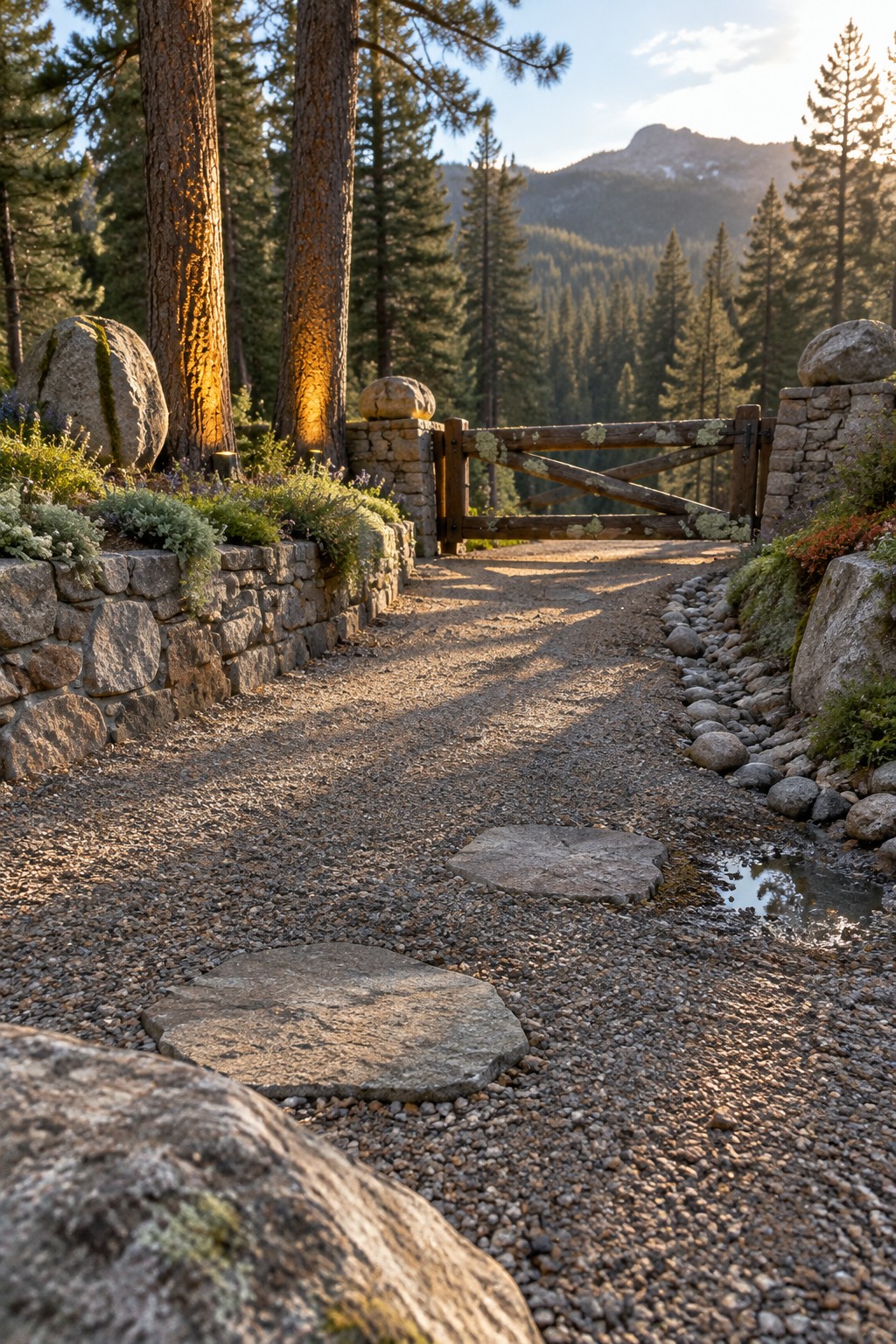
Focused lights can make trees along a driveway easier to notice after dark while giving the route a clear edge. Aim a narrow beam at a trunk or lower branches rather than lighting the whole area.
This works well on a wooded property where a gravel drive passes through mature trees. Keep fixtures low and shielded so the light stays on the trees and does not shine into drivers’ eyes.
Use Ground Lights to Guide the Entry Path
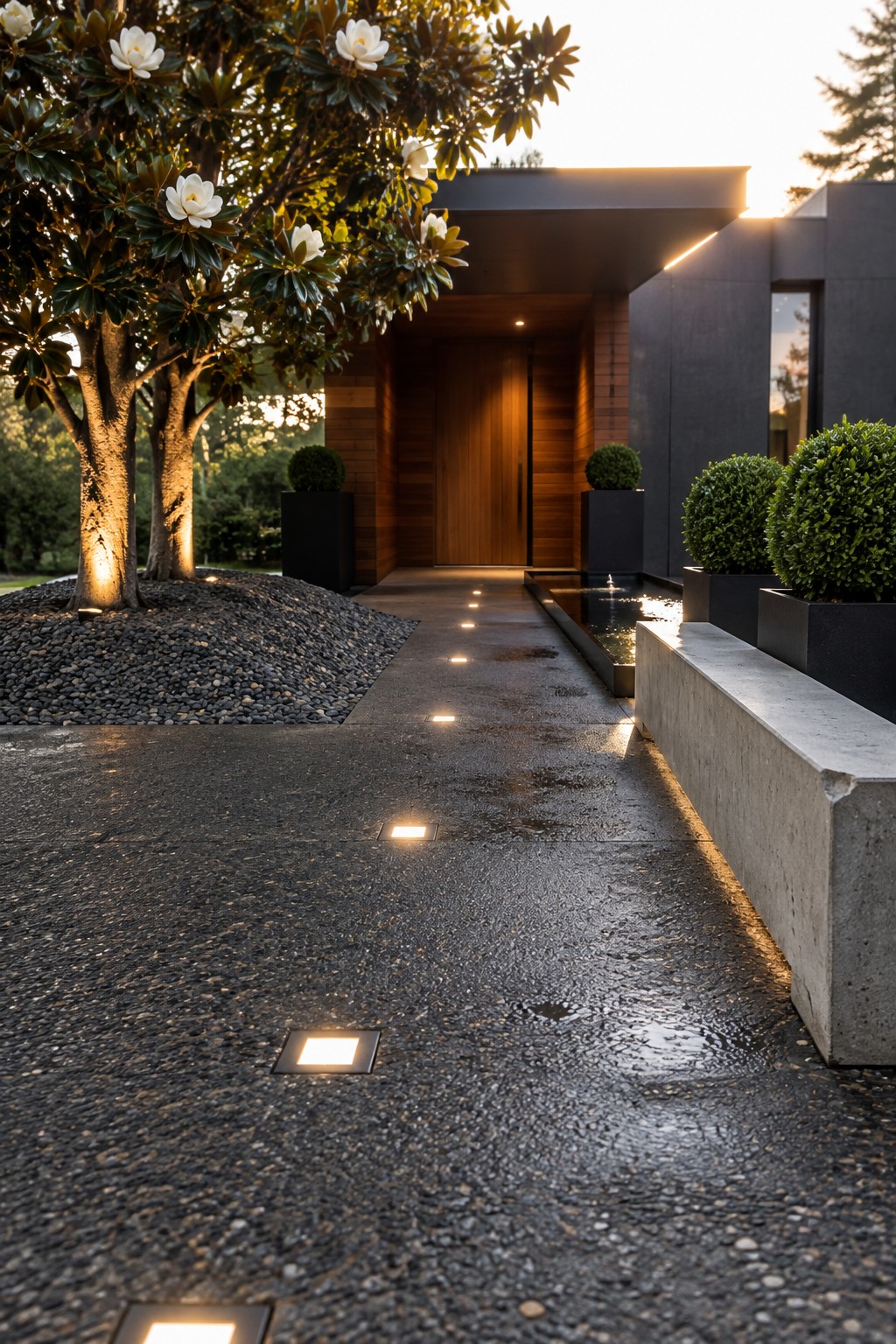
Small recessed lights set into the walkway make the route to the front door easy to follow after dark. They also keep the light low, so it marks the path without taking attention away from nearby trees and shrubs.
This works well along a straight entry walk, especially where the paving gets slippery when wet. Space the fixtures evenly and aim for a gentle glow rather than a bright, runway-like effect.
Use Low Spotlights Along a Planting Bed

Low spotlights set into the edge of a planting bed can pick out grasses and nearby trees without lighting the whole yard. The light stays close to the plants, so the driveway edge remains easy to see after dark.
Place fixtures where they can graze taller grasses or shine upward at a tree trunk, and aim them away from the driveway and neighboring windows. This approach works well beside a path or drive, especially when you want a few clear points of light rather than a bright, evenly lit border.
Use Spotlights to Mark a Driveway’s Edge
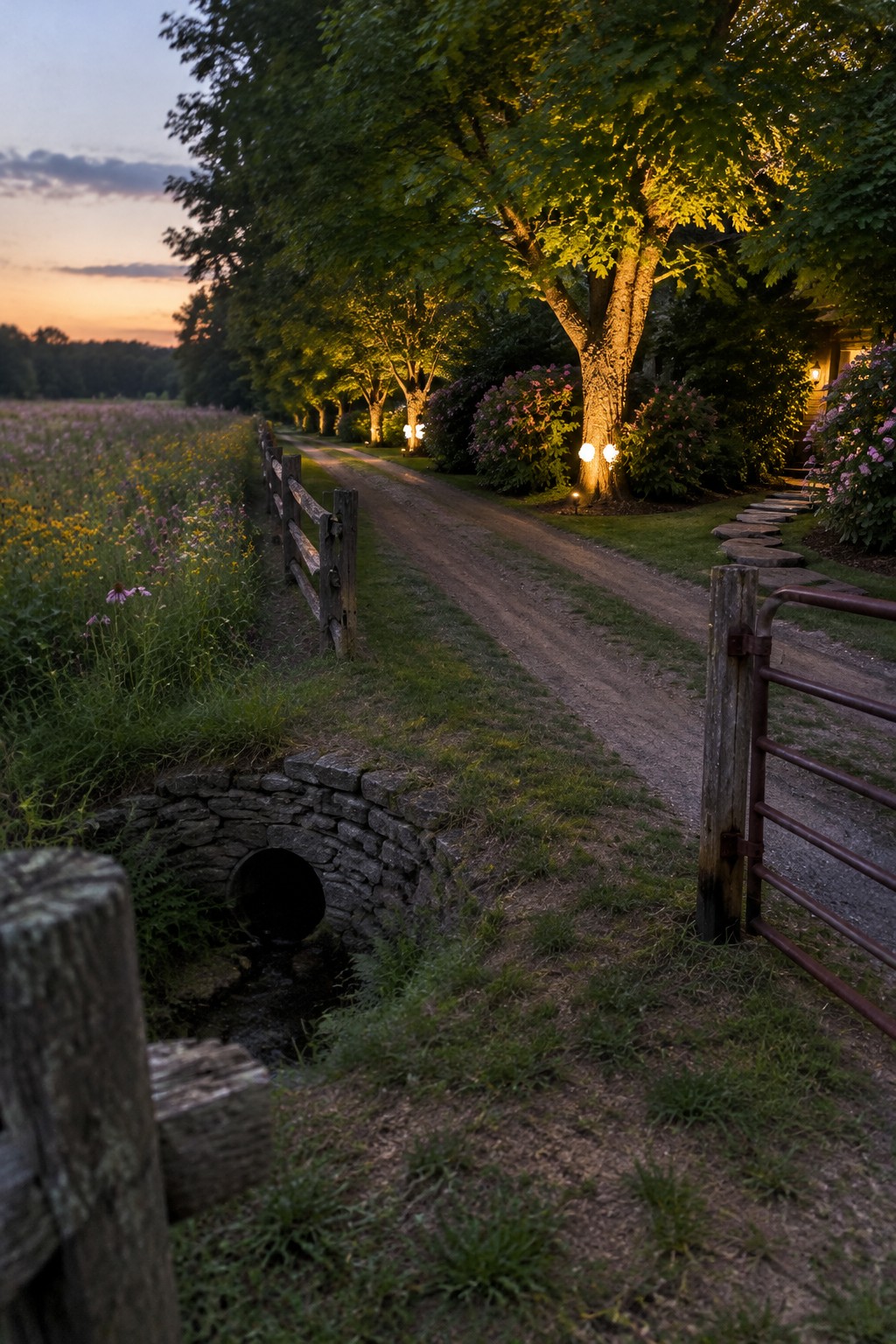
Focused lights at the base of trees can help define a driveway after dark without lining it with bright fixtures. Here, the warm beams pick out the tree trunks, making the route easier to follow while keeping the lighting concentrated on the landscape.
This approach works well along a long, tree-lined drive. Aim each spotlight upward at the trunk or lower branches, and leave enough space between fixtures so the path stays softly lit rather than becoming overly bright.
Use a Narrow Water Channel Beside the Drive
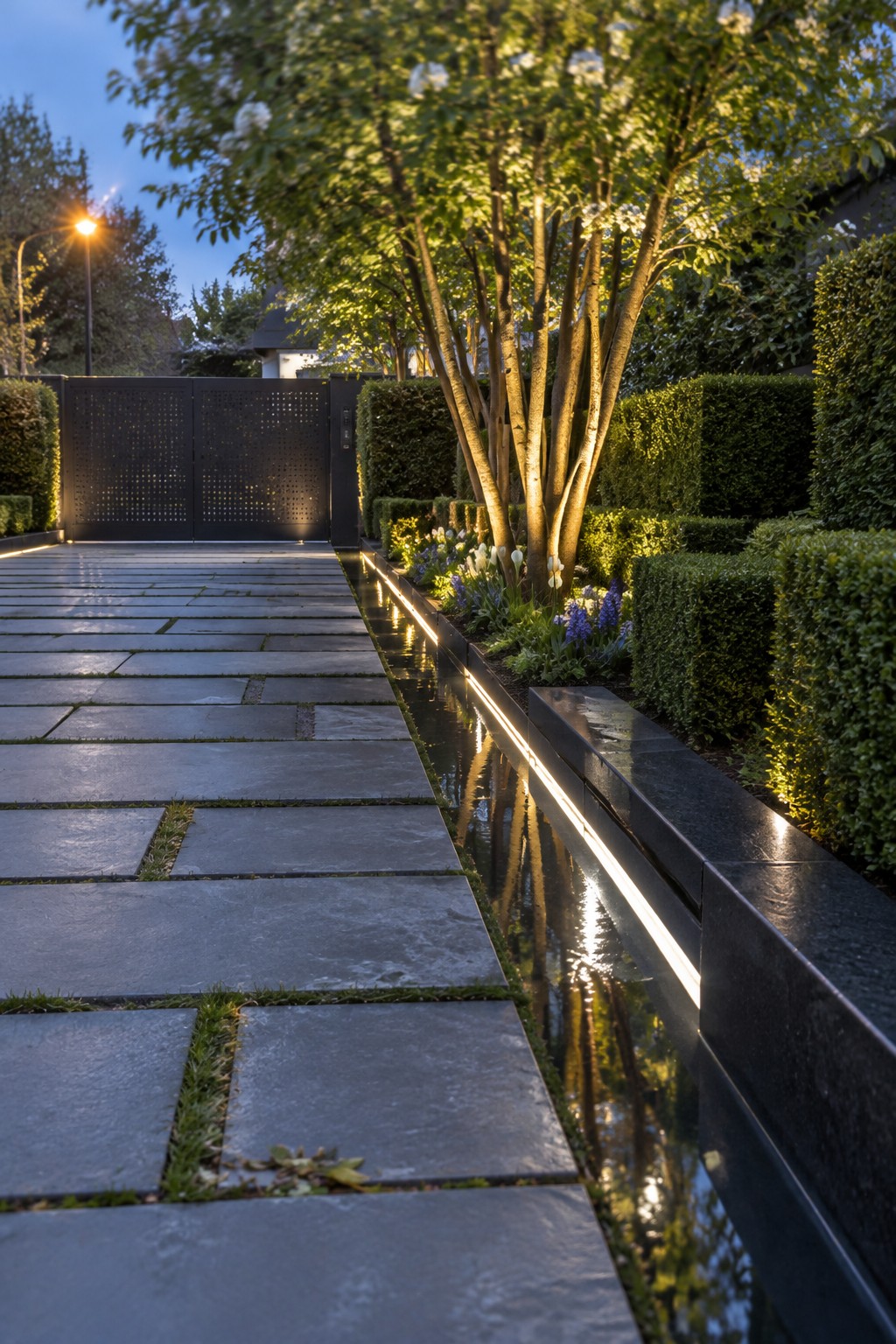
A slim reflecting channel can make a driveway edge feel intentional while giving focused landscape lighting something to catch. Here, the light runs along the water beside the stone paving, and reflections carry its glow toward the trees.
This idea suits a formal entry where there is room to keep the channel straight and easy to maintain. Use discreet, low-voltage fixtures along one edge, and plan for safe drainage and regular cleaning so leaves do not collect in the water.
Frequently Asked Questions
Q: How far should I place a spotlight from a tree trunk?
A: Start a few feet from the trunk and aim the beam upward through the branches. Step back toward the driveway to check that the light shows the tree’s shape without shining straight into your eyes.
Q: What kind of light works best for shrubs beside the driveway?
A: Use a softer, wider beam aimed across the foliage rather than a narrow beam pointed at one spot. That brings out the shrubs’ texture without making them look harsh or washed out.
Q: How can I keep landscape spotlights from blinding drivers?
A: Aim each fixture away from the road and shield the bulb so the beam stays on the tree or feature. Check the view from a car at the driveway entrance, then adjust any light that feels glaring.
Q: Should I leave driveway spotlights on all night?
A: A timer or dusk-to-dawn sensor can keep the lights from running longer than needed. A few well-aimed lights are usually more useful than lighting every feature all night.
