

A driveway can feel unsafe after dark when its edges, turns, and approach to the house disappear into shadow.
I find that good lighting works best when it helps people see where they are going without washing out the facade or shining into nearby windows.
The right mix of fixtures can make the entry clearer while giving the front of the home a more settled look at night.
Some setups are simple, while others use layered light to cover wider areas.
I’d look for ideas that suit the driveway’s shape, the home’s exterior, and the amount of light the space actually needs.
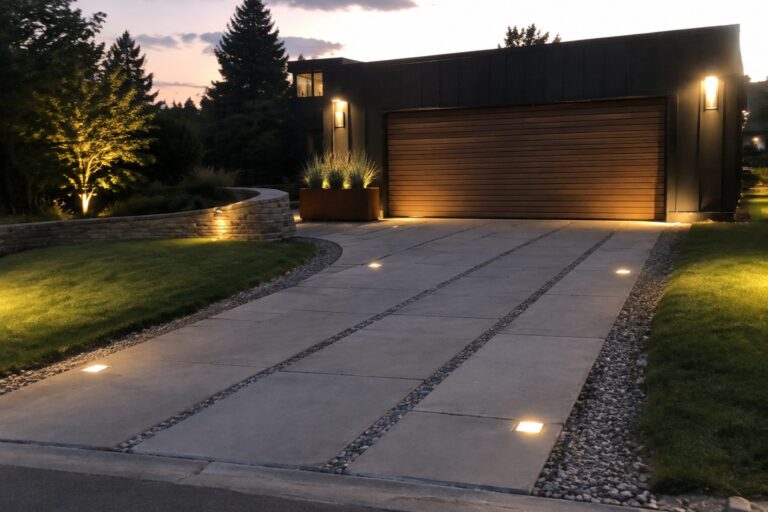
Use Recessed Lights Along the Driveway

Recessed driveway lights can mark the edges of a wide drive and make it easier to follow after dark. Set into the paving, they provide broad, low-level guidance without adding tall fixtures that can get in the way.
Space them evenly along the sides, and choose a warm, shielded fitting to limit glare. This approach works well with large concrete slabs, but plan the wiring and drainage before the paving goes in.
Use Driveway Lights to Mark the Path

A few well-placed driveway flood lights can help make a long approach easier to follow after dark. Aim them along the route rather than straight at the house, so the driveway is clear without harsh glare.
This approach suits a curved gravel drive or a large front yard. Mount fixtures on the garage or nearby trees, and angle the beams toward the ground to keep the light useful and comfortable.
Use Broad Lighting To Cover The Driveway
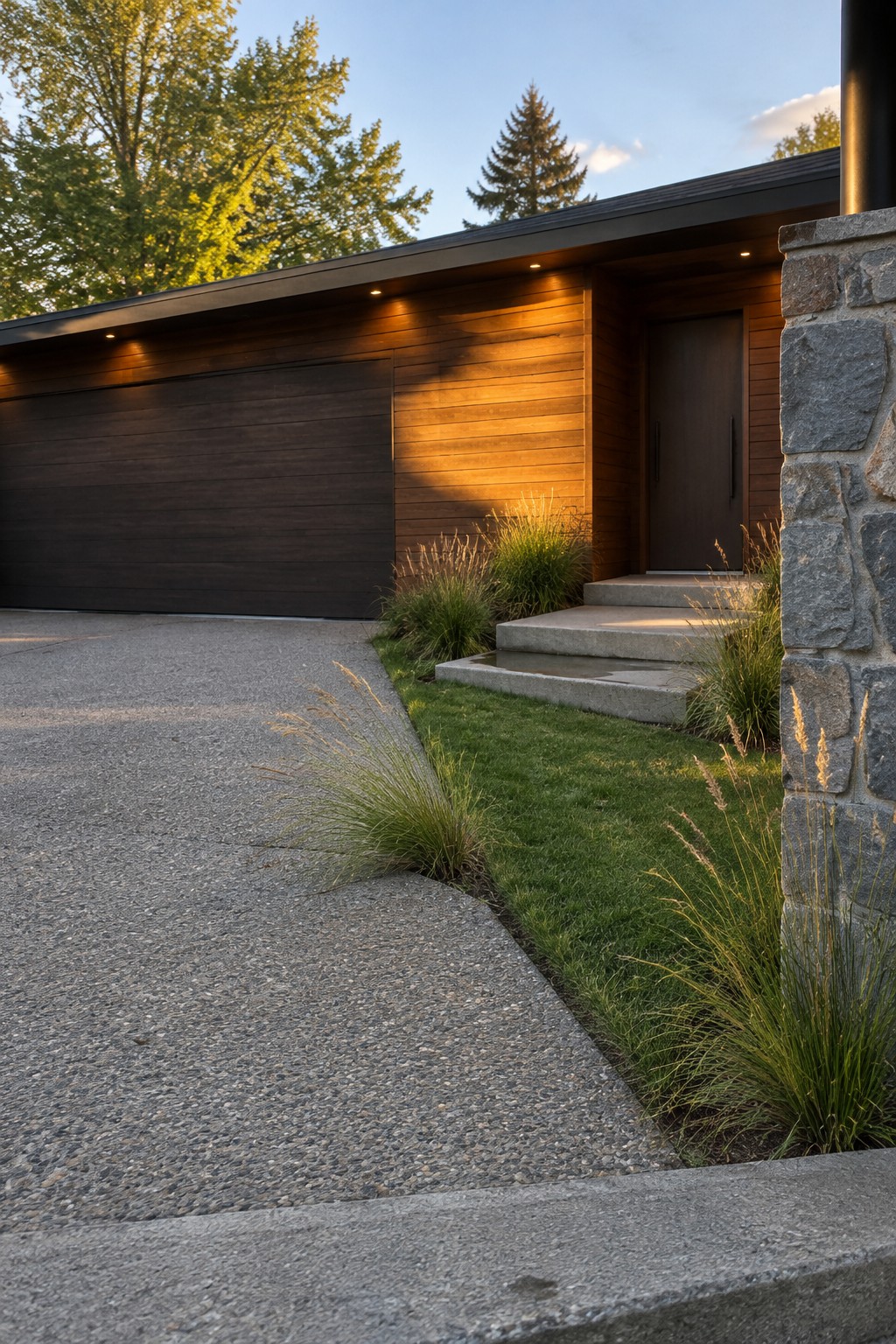
A wide beam can make a driveway easier to use after dark by illuminating the driving surface and the approach to the front door. It works especially well when the light is aimed across the full width of the drive rather than at one small patch.
Place fixtures high enough to spread light evenly, and angle them away from the house and nearby windows to reduce glare. A low, modern exterior can suit discreet soffit lights that keep the source out of the way.
Use Wide Lighting To Make A Driveway Safer
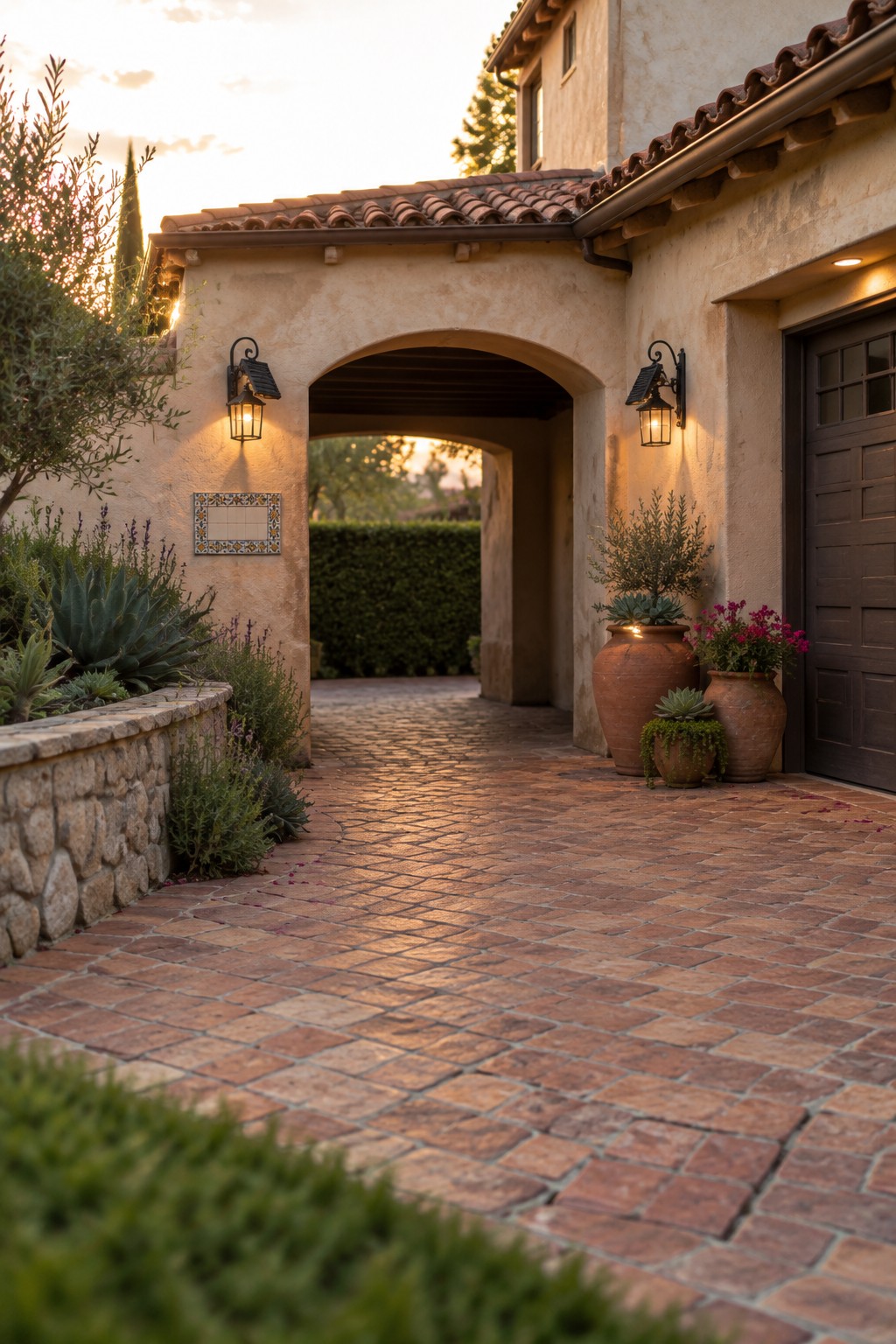
Broad driveway lighting can help people see the full approach, not just a small spot near the door. For a home with a covered entry passage, lights placed to reach across the paving and doorway can make the route easier to use after dark.
Aim flood lights along the driveway rather than directly toward the house or a neighbor’s windows. Choose fixtures with adjustable beams, and place them high enough to cover a wide area without creating glare.
Use Low Lights to Guide a Gravel Driveway
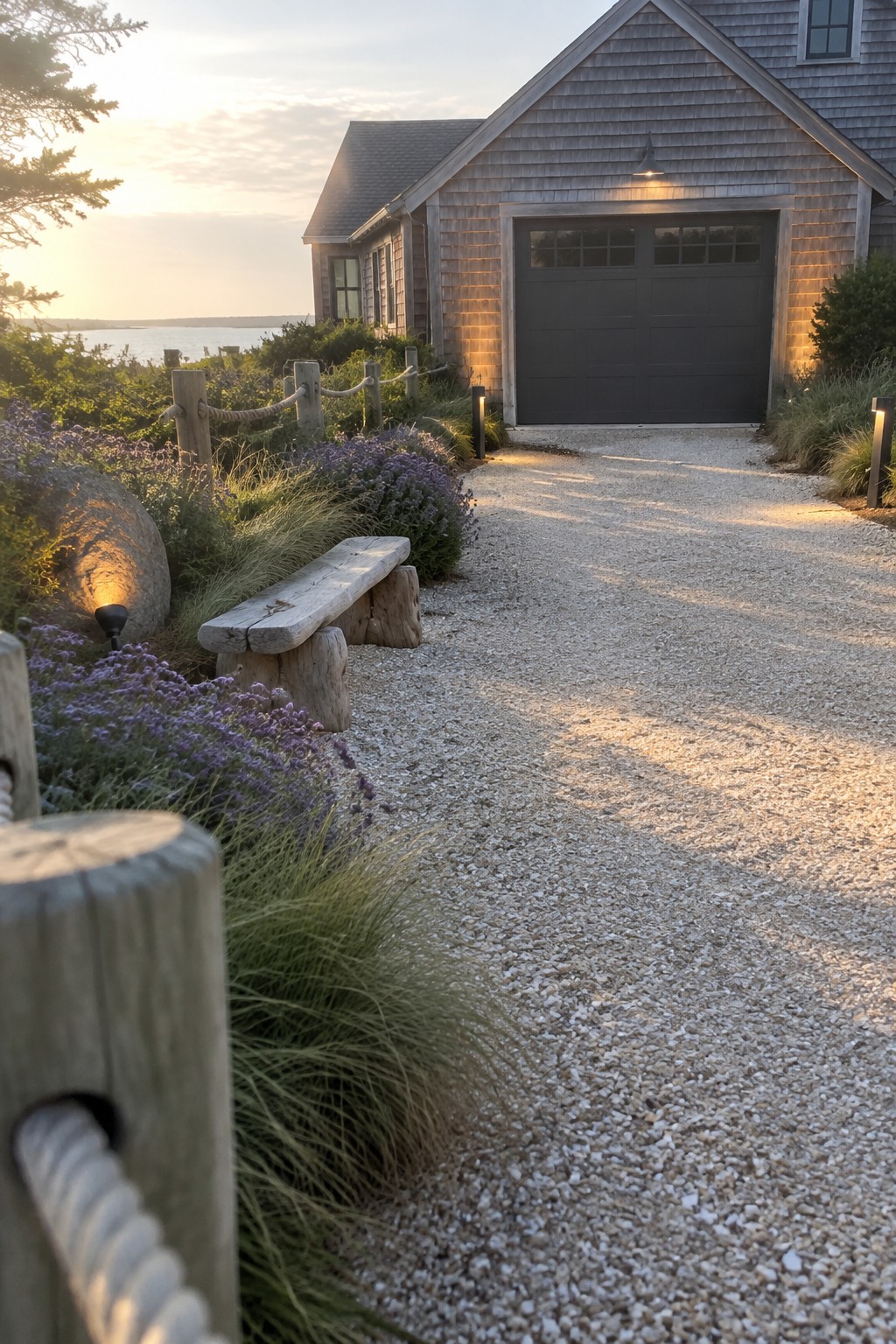
Low path lights can help mark the edges of a gravel driveway without flooding the whole area with light. Here, short fixtures sit beside the drive and make its route easier to follow after dark.
Space the lights along the driveway edges, especially near bends or changes in width. Shielded, downward-facing fixtures help limit glare, and a warm color temperature suits homes with a natural, coastal style.
Use Traditional Lanterns to Light the Driveway Entrance

Lantern-style lights at the driveway entrance can help drivers see where to turn while giving the approach a more finished look. Their height also lets the light reach across the entrance rather than staying close to the ground.
This approach suits a traditional home, especially when the fixtures sit on sturdy gateposts. Choose shielded lights that direct illumination onto the drive, and keep them aimed away from nearby windows and the road.
Use Wall Washers Along the Entry Drive

For a modern home, lighting the long exterior wall can help illuminate the approach without relying only on bright fixtures at ground level. Warm recessed lights cast a broad wash down the stone, making the wall and nearby paving easier to see.
Use this approach along a driveway or entry walk that runs beside the house. Space the fixtures evenly and aim them to spread light across the surface, rather than creating harsh bright spots.
Use Step Lights Along a Sloped Driveway

Low lights built into the retaining edge can make a sloped stone driveway easier to follow after dark. They mark changes in level without shining directly into drivers’ eyes, which is often more useful than adding bright lights across the whole surface.
Place fixtures along the driveway’s side edges and near steps or turns, spacing them so the route stays clear without creating glare. Choose outdoor-rated lights and keep plants from covering them as they grow.
Use Low Path Lights to Mark a Garden Walk
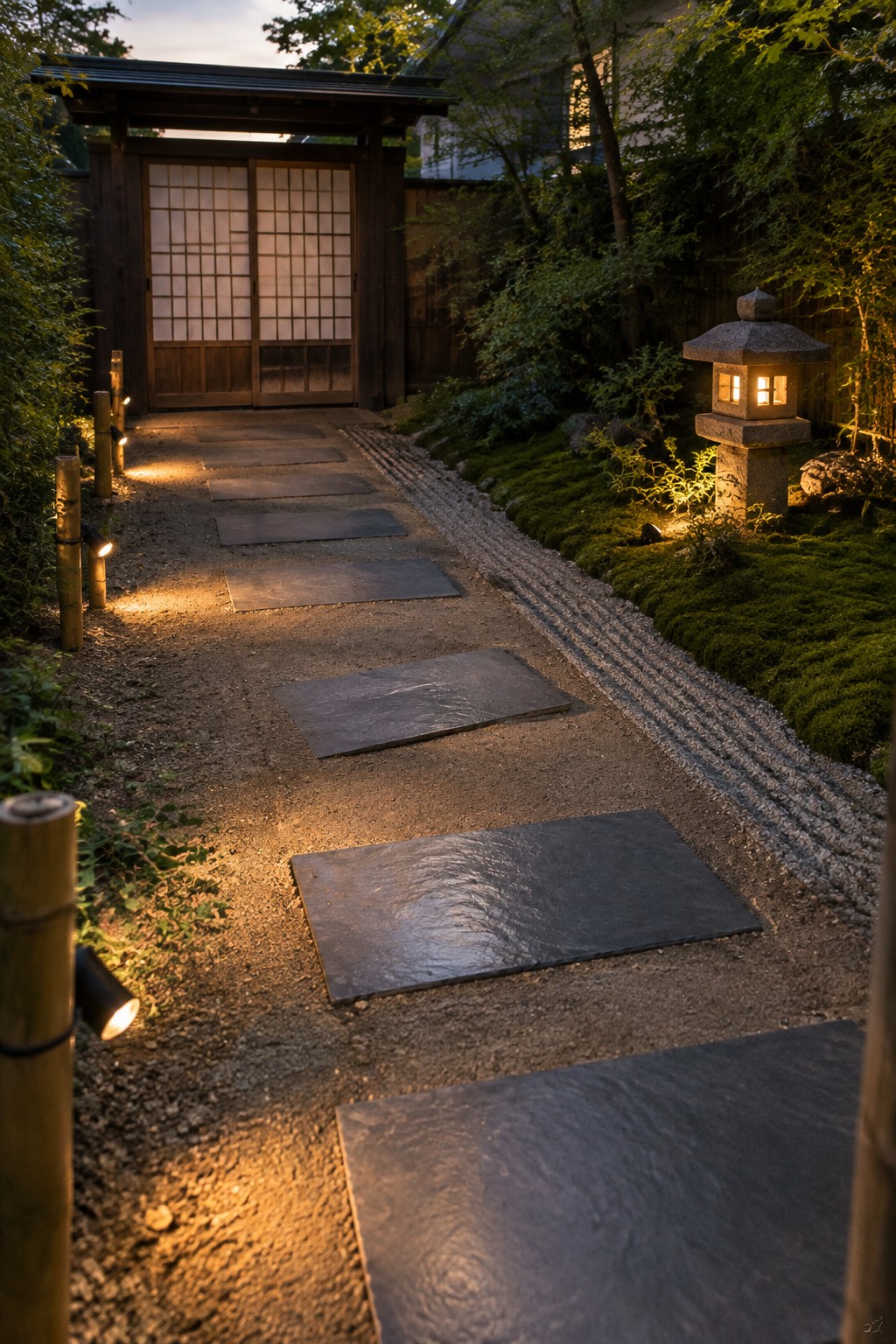
Low, shielded lights can help people follow a garden path after dark without lighting up the whole yard. For broad coverage, space them along the route and aim them down at the walking surface. The warm pools of light here show how the approach can stay easy to see.
This setup works well along gravel or stone paths leading to an entry. Keep fixtures low and avoid placing them where they shine directly into someone’s eyes.
Use Warm Wall Lights Along the Driveway
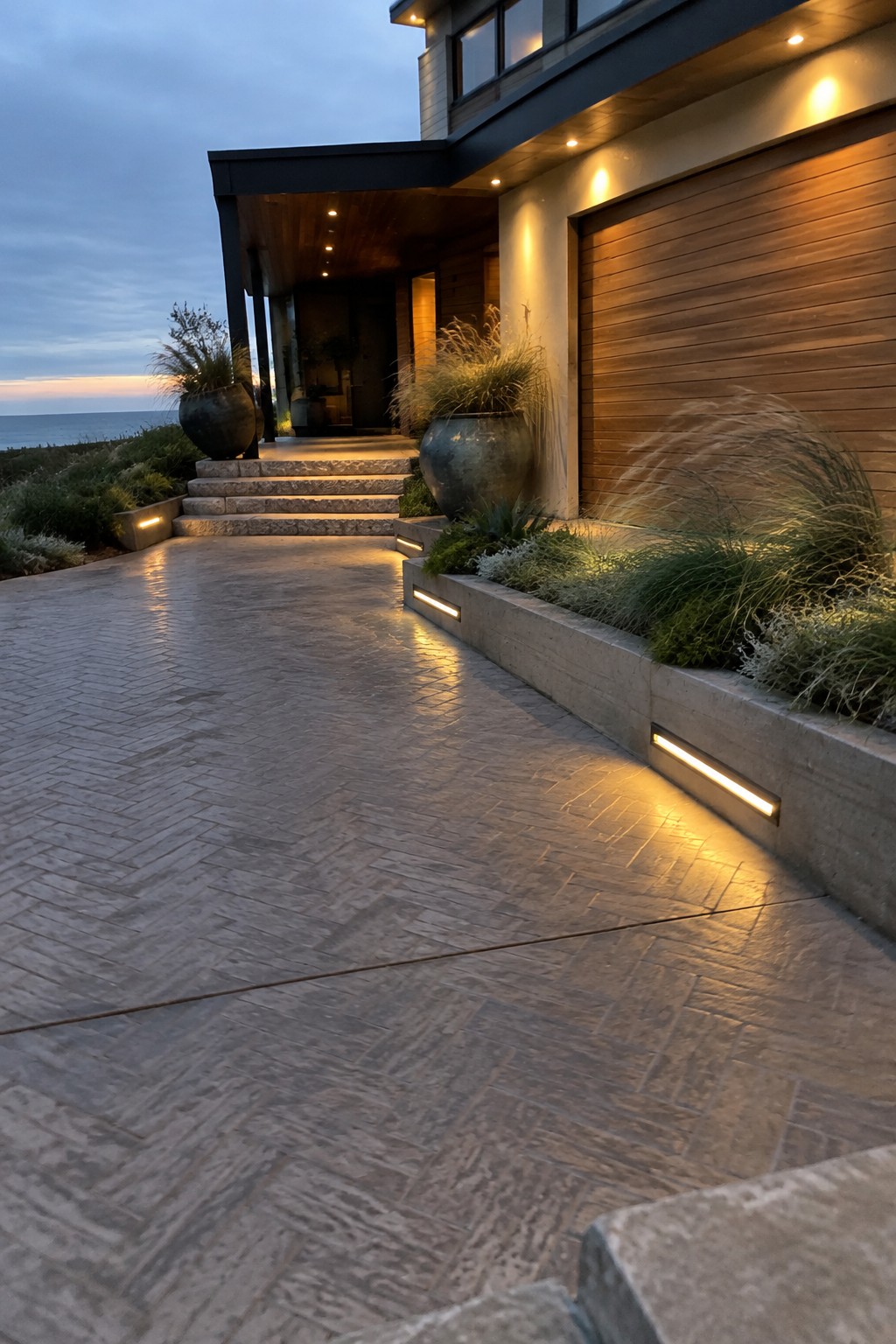
Warm fixtures set into the low retaining wall can spread light across a wide driveway without putting bright lamps at eye level. This approach also makes the edge of the paved area easier to see after dark.
It works well beside a long wall or raised planting bed. Space the fixtures evenly and aim them down toward the paving, so the light guides movement without shining into the house or a neighbor’s yard.
Use Post Lights to Illuminate the Driveway Entrance

Post-mounted lights can make a driveway entrance easier to find after dark while giving the approach a clear starting point. Here, lamps fixed to tall wooden posts light the gravel drive without relying on fixtures attached to the barn.
This approach works well for rural properties or long drives where the entrance is set apart from the house. Place lights where drivers need to see the turn or gate, and aim them down toward the ground to limit glare.
Use Uplights to Spread Light Across the Driveway
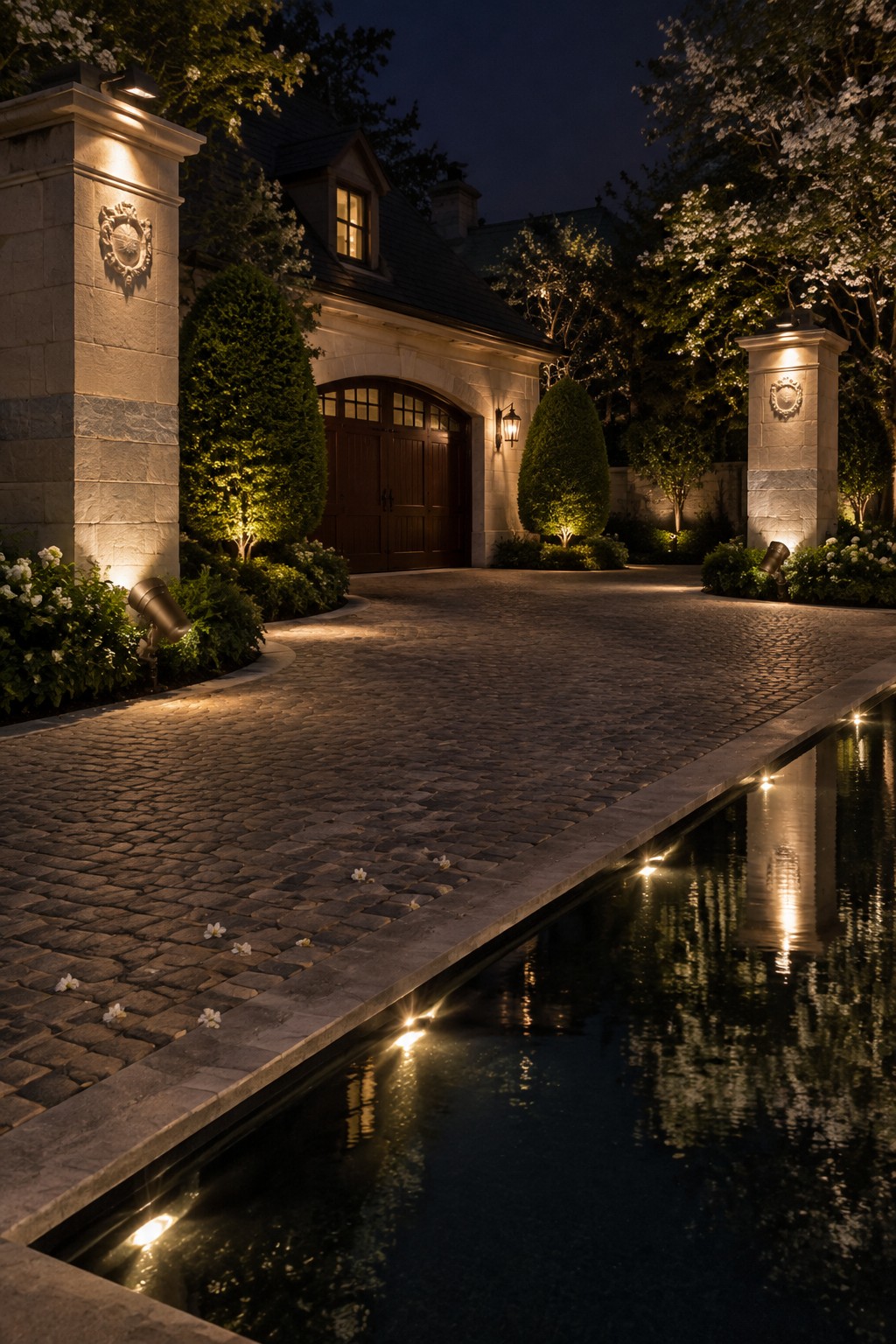
Broad-beam uplights can brighten a driveway without relying on a row of small path lights. Here, ground fixtures wash the stone entrance and nearby gate pillars with light, helping the wider paved area feel easier to navigate after dark.
For a similar effect, aim shielded floodlights across the driveway from its edges, rather than pointing them toward drivers or neighboring windows. This approach suits broad entrances, especially when a wall or planting bed offers a discreet place to mount the fixtures.
Use Overhead Lights to Spread Driveway Illumination

A light mounted above the driveway can cover a broad area without filling the pavement with fixtures. Here, a single overhead light works alongside small recessed lights, giving the approach both general illumination and clear path markers.
This setup is useful for a long, narrow driveway or one leading to a garage. Place the overhead fixture where it can light the driving area evenly, and use lower lights only where extra guidance is helpful. Check that the beam does not shine into nearby windows.
Use Landscape Flood Lights to Light a Courtyard Drive

Broad flood lights can help illuminate a large paved area without relying on a row of small fixtures alone. In a courtyard, aim them across the open stone paving so people can see the walking surface and move around safely.
Place fixtures on walls or at the edges of the space, and direct the beams away from doors and windows to limit glare. Choose weather-rated lights with adjustable heads so you can cover the paving without shining directly into the home.
Use Facade Lights to Illuminate a Wide Driveway
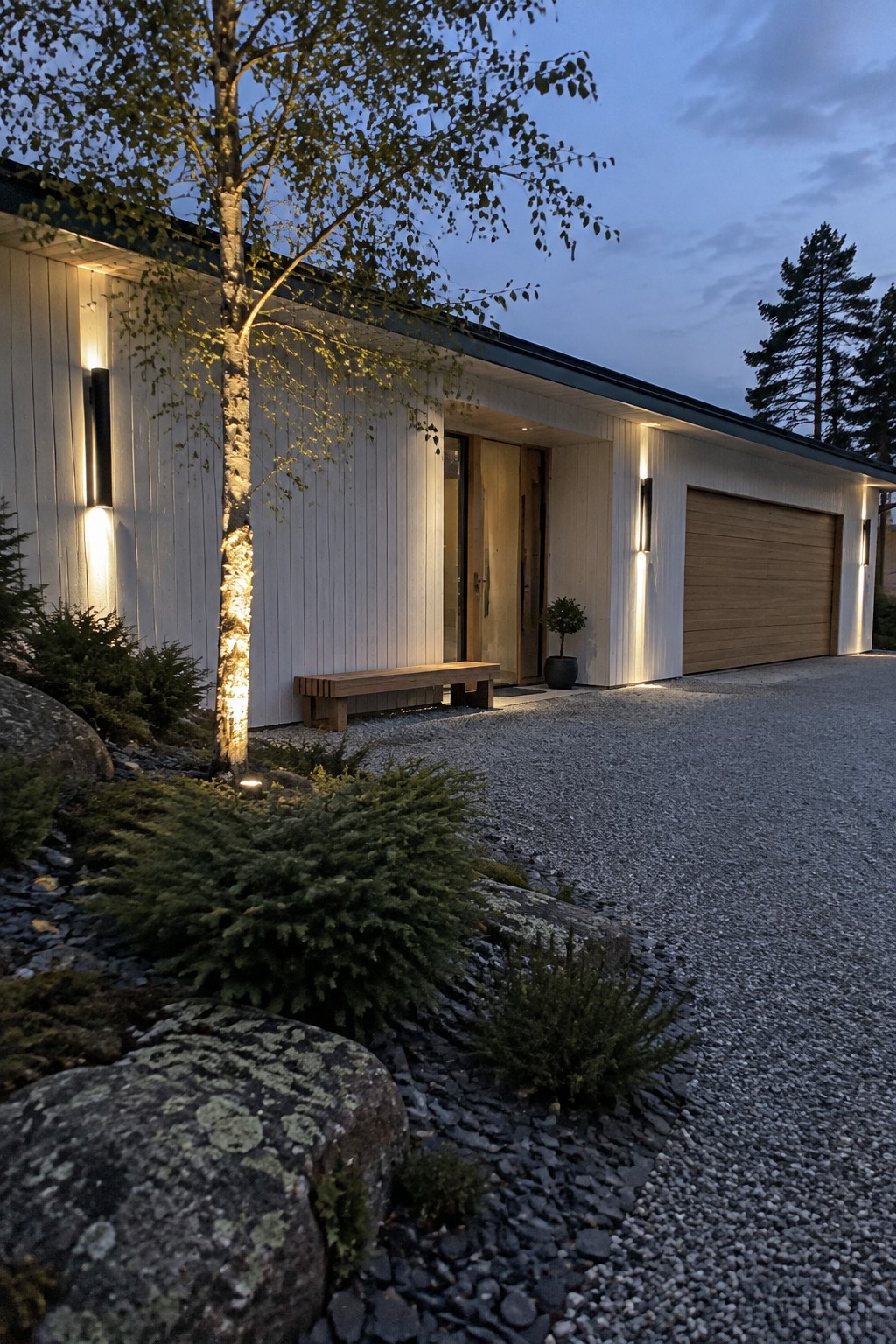
Wall-mounted lights can spread useful illumination across a driveway while keeping the fixtures off the ground and out of the way. On a long exterior wall, placing them at intervals helps avoid dark patches and makes the approach to the garage easier to see.
Choose shielded fixtures and aim the light toward the driveway rather than toward the street or nearby windows. This approach suits homes with a broad, simple facade, especially when you want the lighting to work for both the garage approach and the front entrance.
Use Bollard Lights to Mark the Driveway Edge
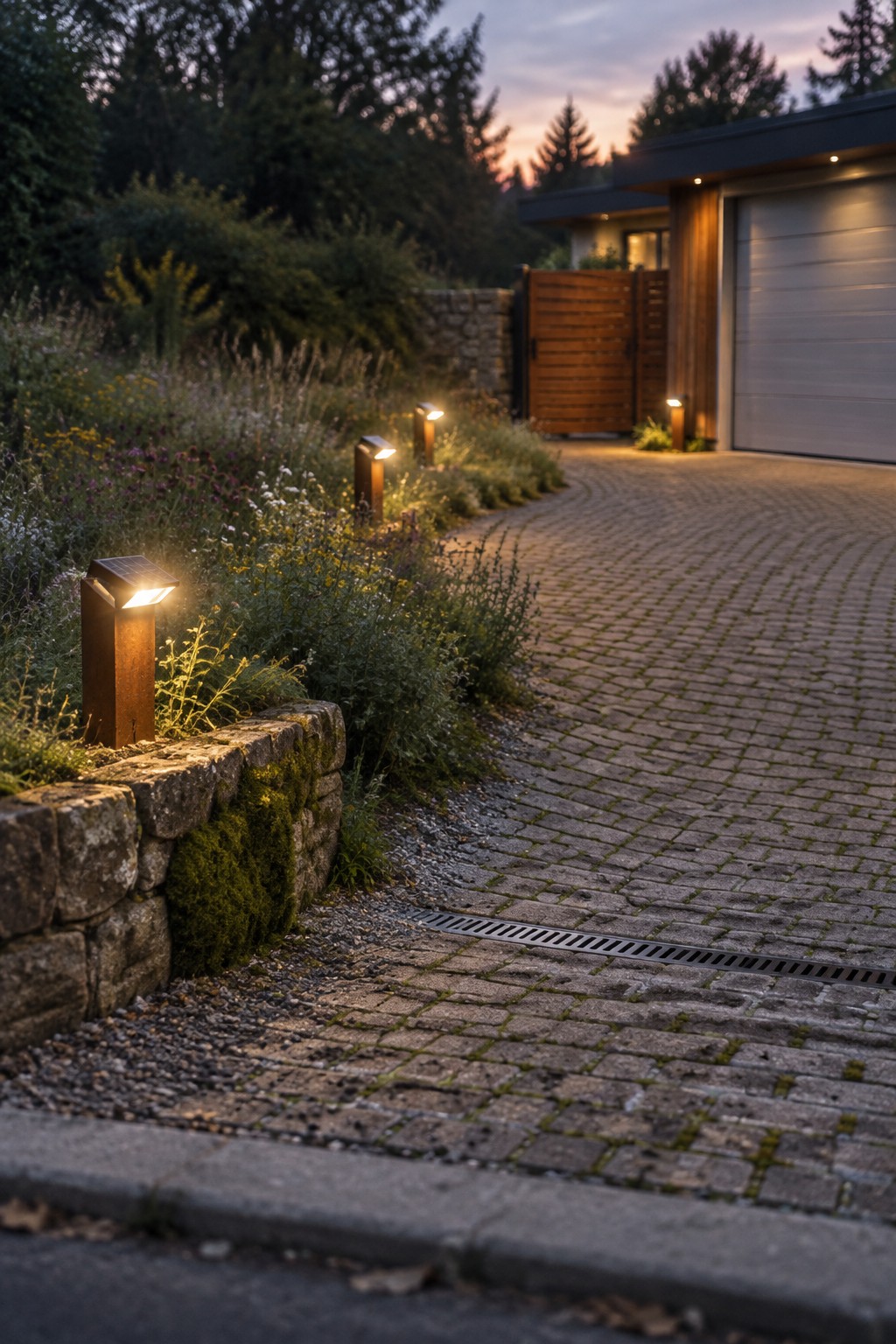
Low bollard lights can help define the edge of a driveway without needing a bright fixture overhead. Their downward-facing light makes the route easier to follow while keeping much of the illumination close to the ground.
Place them along the planting bed beside the drive, spacing them evenly so the path stays clear after dark. This approach works especially well where a driveway curves or meets a garden, but keep the lights out of the way of cars and choose fixtures made for outdoor use.
Frequently Asked Questions
Q: How high should I mount driveway flood lights?
A: Mount them high enough to spread light across the driveway, but aim them down so they don’t shine into nearby windows or drivers’ eyes. A little adjustment after dark can make a big difference.
Q: Are motion-sensor flood lights a good choice for a driveway?
A: Yes, they can light the way when someone arrives without keeping the lights on all night. Position the sensor to catch cars and people approaching, rather than movement from the street or passing branches.
Q: What color light works best for a driveway?
A: Warm or neutral white usually feels comfortable while still making the driveway easy to see. Cooler white can look brighter, but it may feel harsh if you use several powerful fixtures.
Q: Can solar flood lights handle a large driveway?
A: They can work well near an entrance or along a smaller driveway, especially where wiring is difficult. For broad, dependable coverage, wired lights are usually a better fit.
