

I’ve noticed that the way a driveway meets the surrounding plants often sets the tone for the whole property before anyone even reaches the front door.
When I think about what actually holds up in real weather and daily use, simple edging and layered planting tend to outperform anything too fussy.
Some setups look fine on paper but fall short once cars start pulling in regularly.
The best layouts guide the eye without blocking access or creating maintenance headaches later on.
Small choices like ground cover near the edges can make a driveway feel more settled into the landscape over the seasons.
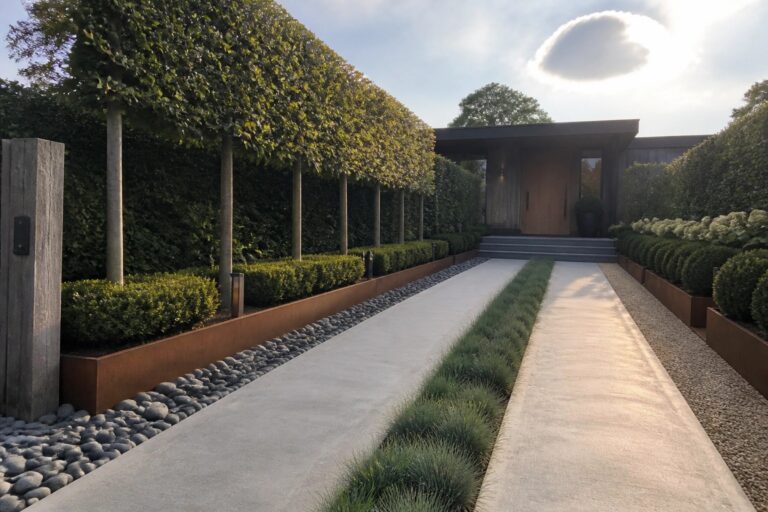
Line the Driveway With Metal Planting Beds

Raised metal beds give a driveway a clean edge that holds up over time. They keep the planting contained in straight lines, which works especially well when you have a long approach and want the path to feel intentional rather than overgrown.
This setup suits homes with modern or simple architecture. Choose a neutral metal tone so it blends with the hardscape, and stick to one or two plant shapes so the beds do not compete with the house itself.
Curved Planting Beds Along Driveways
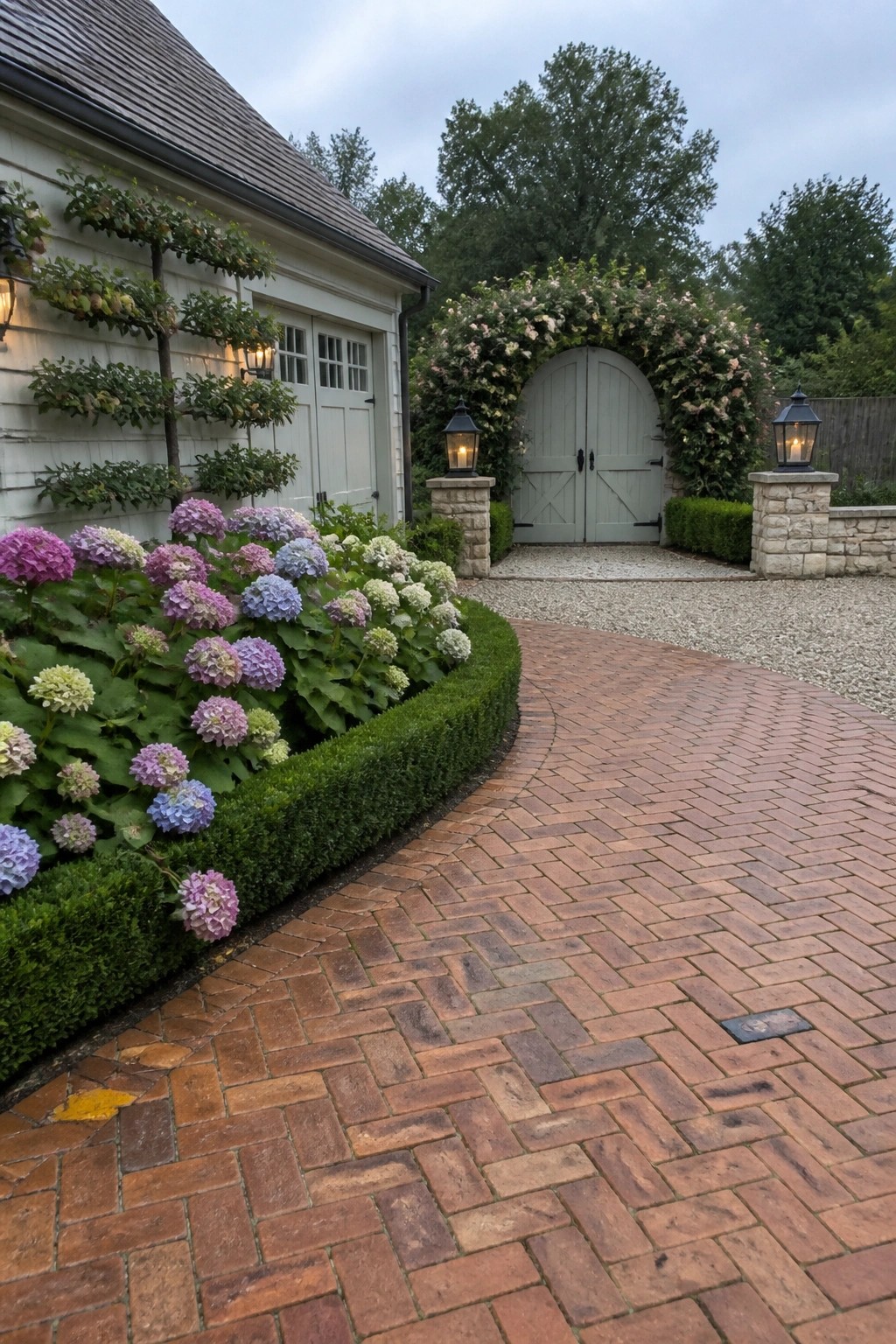
A curved bed gives the driveway a softer edge than a straight line ever could. The flowers spill forward just enough to break up the hard surface without getting in the way of cars or foot traffic.
This works best on homes where the drive has a bit of width to spare. Keep the hedge low so sight lines stay open, and choose plants that bloom in big clusters so the color carries through the season.
Gravel Edging Along the Driveway

Gravel edging gives a driveway a softer edge without turning it into a full garden bed. The loose material breaks up the hard surface of the paving while still keeping the drive functional and easy to maintain.
This works best on homes with simple stucco exteriors where you want planting to feel connected rather than boxed in. Use a few large pots along the edge so the gravel does not read as empty space.
Define The Driveway With A Circular Hedge
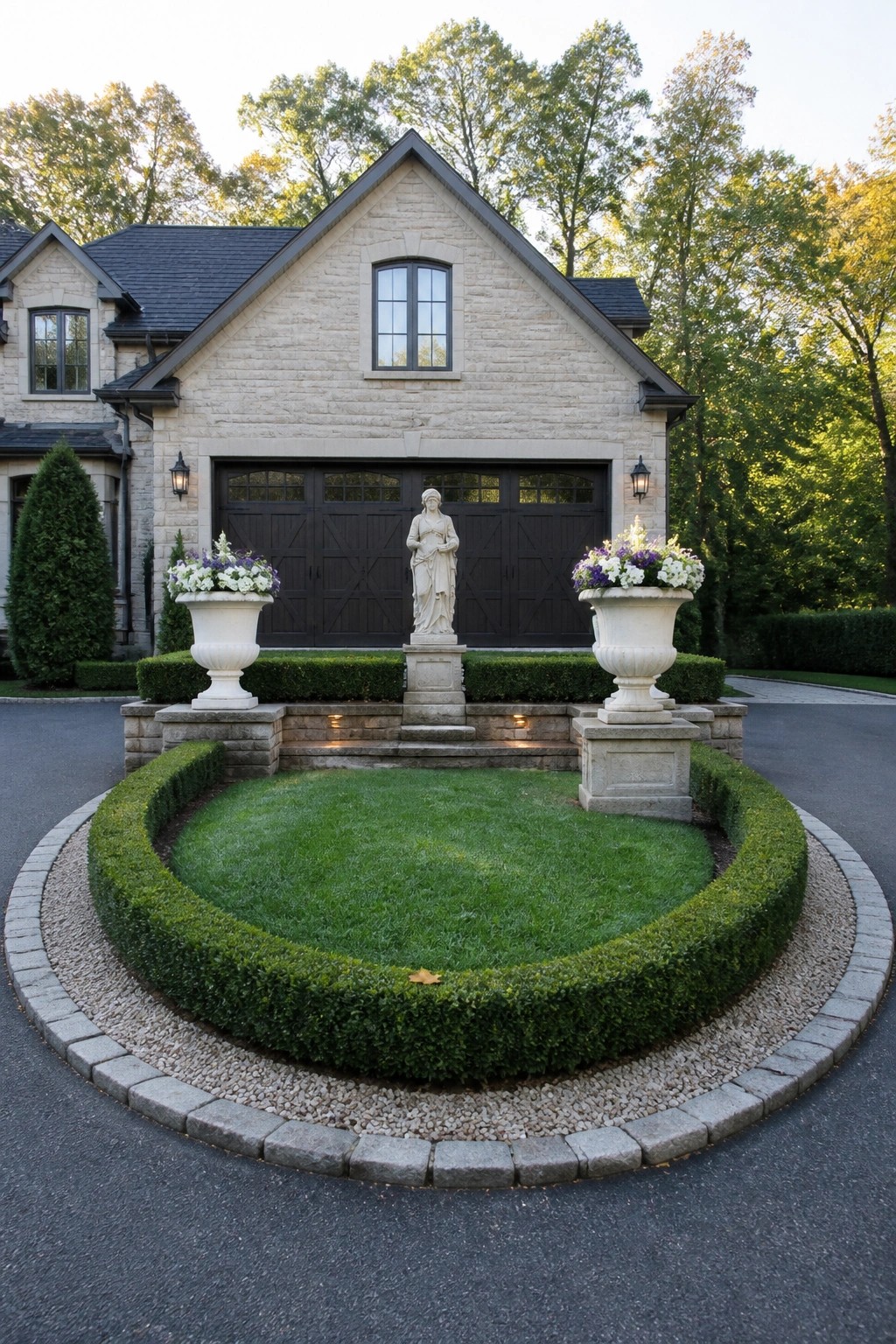
A circular hedge gives the area right in front of the garage a clear shape and keeps the whole approach from feeling too open or flat. The low boxwood edge creates a simple boundary that makes the space look more finished and balanced with the house.
This works best on homes with a centered garage and enough room for the curve to sit comfortably. Use gravel or stone to hold the outer edge so the shape stays clean over time, and keep the planting low enough that it does not block the view of the door.
Natural Edging For A Gravel Driveway

Gravel works well on a driveway when the edges stay low and simple. Wood logs and rope lines hold the surface in place without creating a hard border that fights the woods around it.
This setup suits homes set among trees where you want the entrance to feel quiet rather than built up. Use weathered wood so it blends in over time and keep the posts spaced so the rope stays in the background.
Stepping Stones In Gravel Create A Simple Path

Stepping stones set into gravel give a path that feels relaxed and easy to walk on. The stones keep your feet out of the loose material while the gravel handles drainage and looks natural next to grasses and shrubs.
This approach suits homes with long drive edges or side entries where a full paved surface would feel too formal. Space the stones so they sit level and leave room for low plants to soften the edges without crowding the walk.
Accent Driveway Shrubs With Low Lights

Low lights tucked at the base of shrubs give a driveway a clean, finished look once the sun goes down. The glow outlines the plants without flooding the whole area, so the path feels guided rather than lit up like a parking lot.
This setup works best on homes with a narrow planting strip right beside the drive. Use warm, low-wattage fixtures and shrubs that keep a tight shape, and check that the lights sit low enough not to shine into windows or passing cars.
Stone Pavers Set In Gravel

Large stone pavers laid in gravel give a walkway that feels steady and simple at the same time. The flat slabs stand out just enough to guide the way while the gravel keeps the whole thing from looking too rigid or finished.
This approach works well on homes with a side or front entry that has some width to spare. Line the pavers up evenly, leave room for a few low plants or a small water detail along one edge, and keep the gravel raked smooth so it stays neat over time.
Add a Grass Strip Down the Center of a Stone Drive

A grass strip running through the middle of a cobblestone drive breaks up the hard surface and keeps the path from feeling too solid. It lets a bit of green run right into the entrance without needing extra beds or borders.
This works best on longer drives or rural properties where you want the landscaping to feel settled. Keep the strip wide enough for easy mowing and choose stones that sit level so the grass does not get damaged by tires.
Stepping Stones in Gravel Driveways

A stone path set into gravel gives a clear route without covering the whole driveway in solid paving. It keeps the surface loose and simple while still guiding people toward the door.
This works best on homes with modern lines where you want planting to stay visible on both sides. Space the stones evenly for easy walking and pick gravel that stays put in wet weather.
Border Brick Paths With Potted Lavender

Lavender in big stone pots gives a brick driveway path a soft edge without taking up much space. The purple flowers add color and scent right where you walk, and the low herbs along the sides keep the hard surface from feeling too plain.
This works well on homes with warm tones and Mediterranean details. Place matching pots at the start of the path and let the planting stay simple so the lavender stays the focus.
Driveway Pavers With Edge Lighting

This setup runs low lights right along the sides of the pavers so the path stays visible and looks neat after dark. The glow comes from under the stone edges instead of from separate lamps, which keeps the surface clean and easy to walk or drive on.
It suits homes with straight, simple driveways where you want light without adding clutter. Use it on modern or updated properties, keep the joints between pavers narrow, and stick to one or two large planters along the side so the lighting stays the main feature.
Let The Driveway Take A Gentle Curve
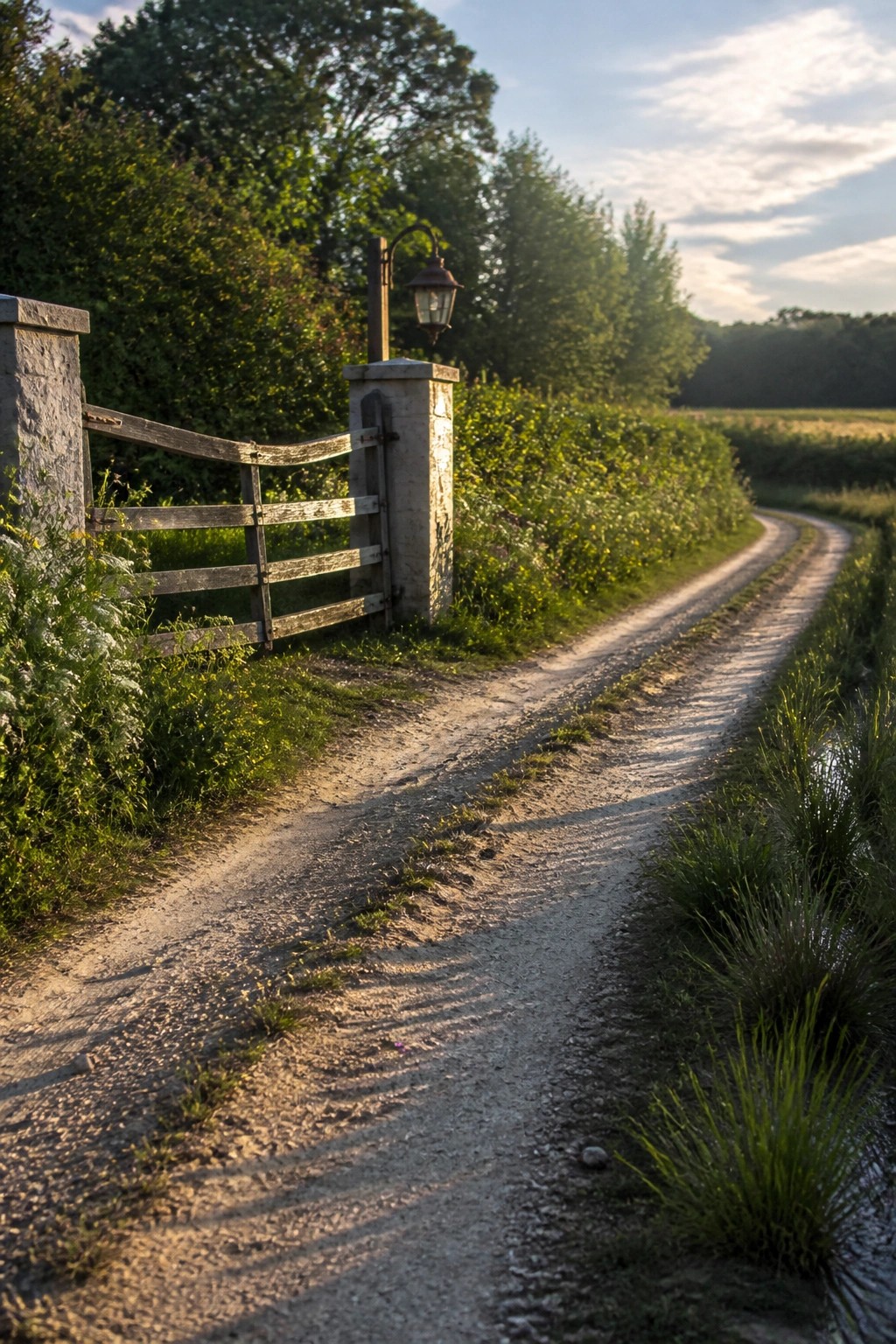
A curving driveway softens the whole approach to a house. Instead of cutting straight through the yard, it lets the surrounding plantings feel more settled and less forced into place.
This works well on properties with room to spare. Keep the edges loose with grasses and shrubs that can spill over a little, and use a simple gate to mark the start without turning it into a formal statement.
Edge Gravel Driveways With Grasses
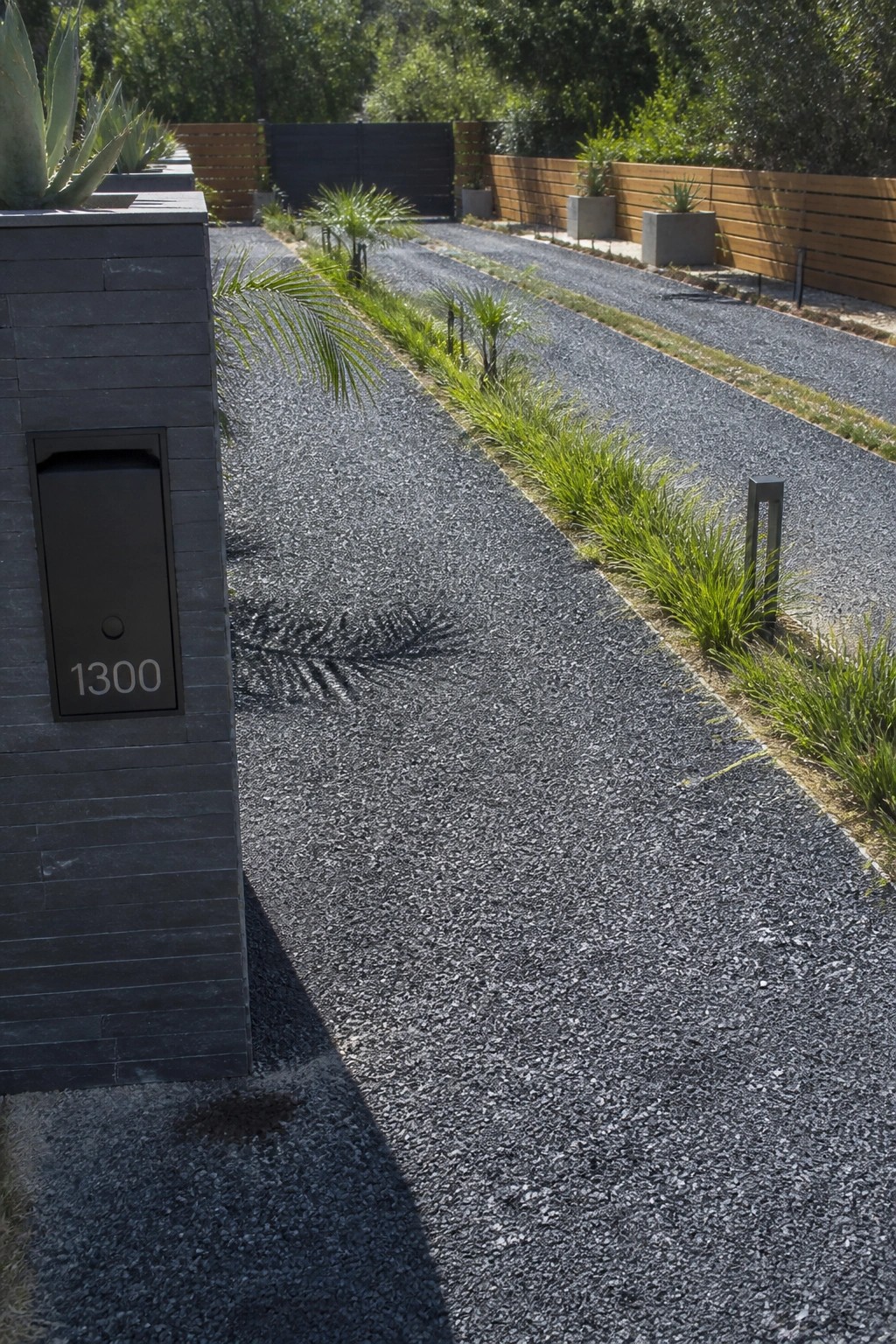
A narrow strip of ornamental grasses along both sides of a gravel driveway adds a soft line without making the whole area feel formal. The grasses break up the hard surface and give the space a bit of movement that stays low to the ground.
This approach works best on straight or gently curving driveways in drier climates where you want low water use. Keep the grass band narrow so it does not eat into the usable width, and choose varieties that stay upright rather than flopping over the gravel.
Gabion Walls Along Sloped Driveways
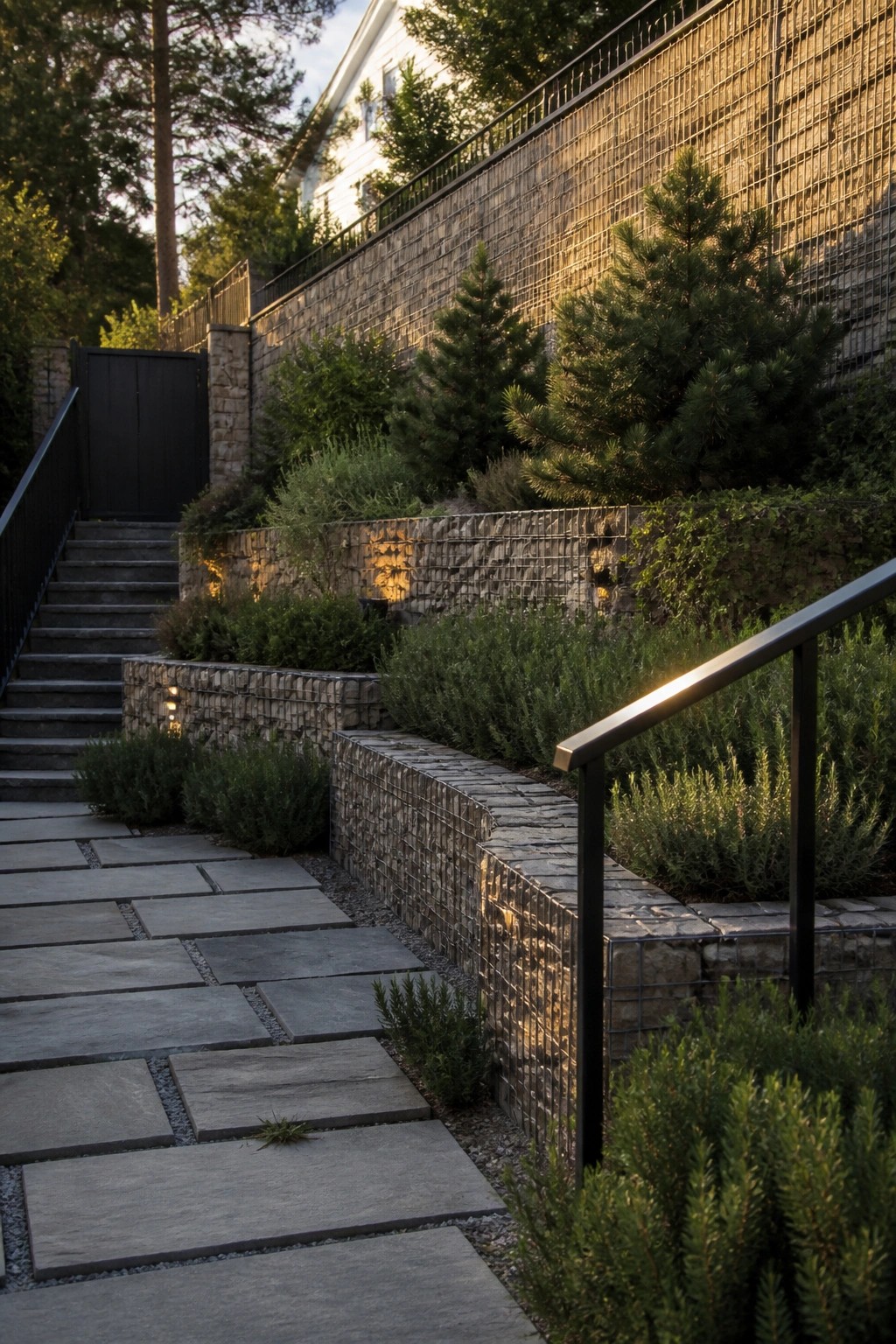
Gabion walls give a solid edge when a driveway sits on a slope. The wire cages hold the soil in place while still letting plants root through and spill over the top. This keeps the hard edge from feeling too harsh.
They work best on properties with noticeable grade changes. Tuck low shrubs and ground cover into the gaps between the stones. Just check that the mesh is heavy enough to handle the weight and drainage in your area.
Edge Your Driveway With Large Potted Plants
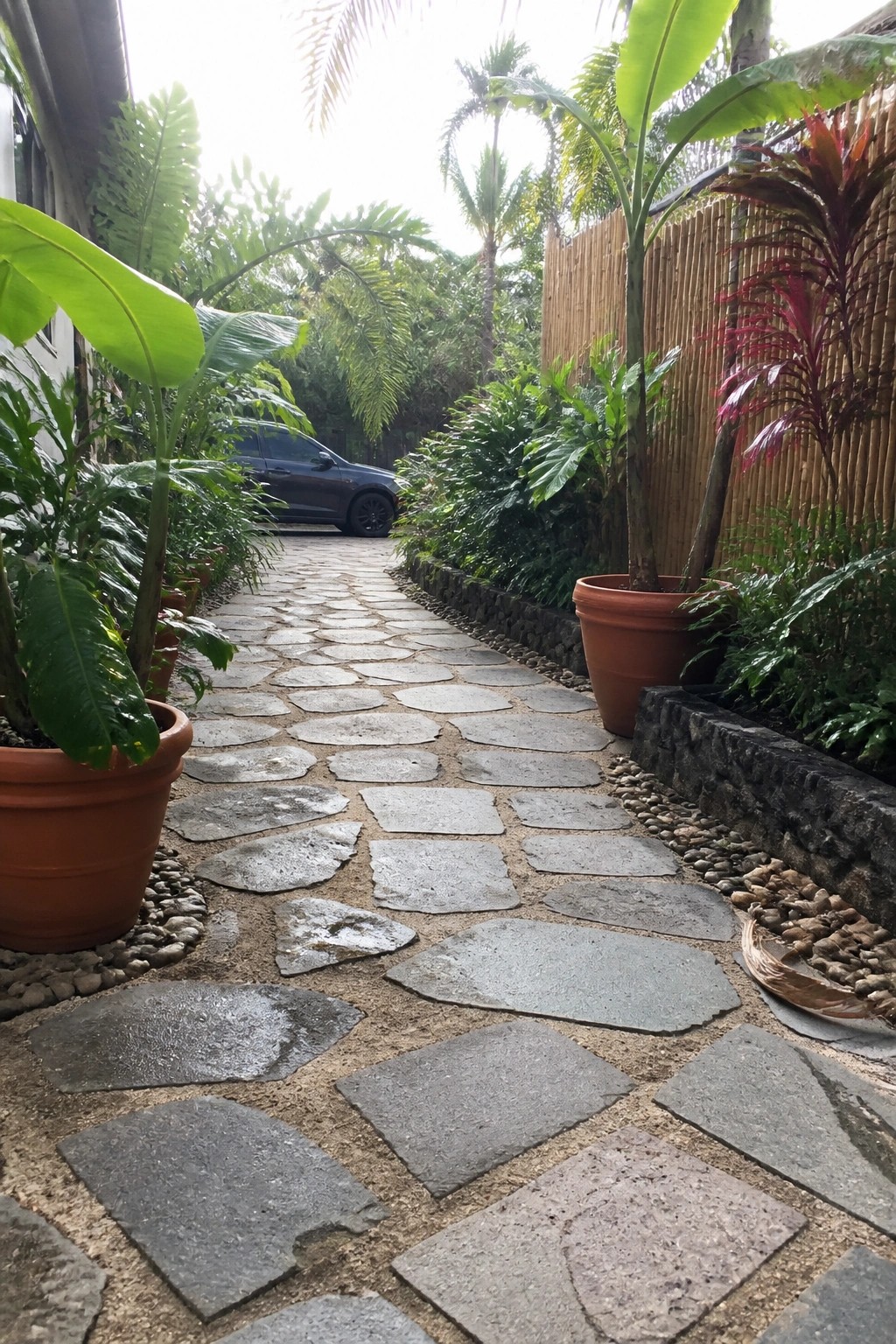
Large pots give you a simple way to add height and greenery right along a stone path without digging up the ground. The containers let you use bigger plants that would otherwise need more root space, and they keep the look full even in spots where soil beds would be too narrow or too close to pavement.
This approach works best on side driveways or entry paths where you want flexibility. You can swap plants with the seasons, move pots for maintenance, or change the style later without major work. Just make sure the pots are heavy enough to stay stable and choose ones that match the climate so the plants stay healthy.
Let Grass Grow Between Driveway Pavers
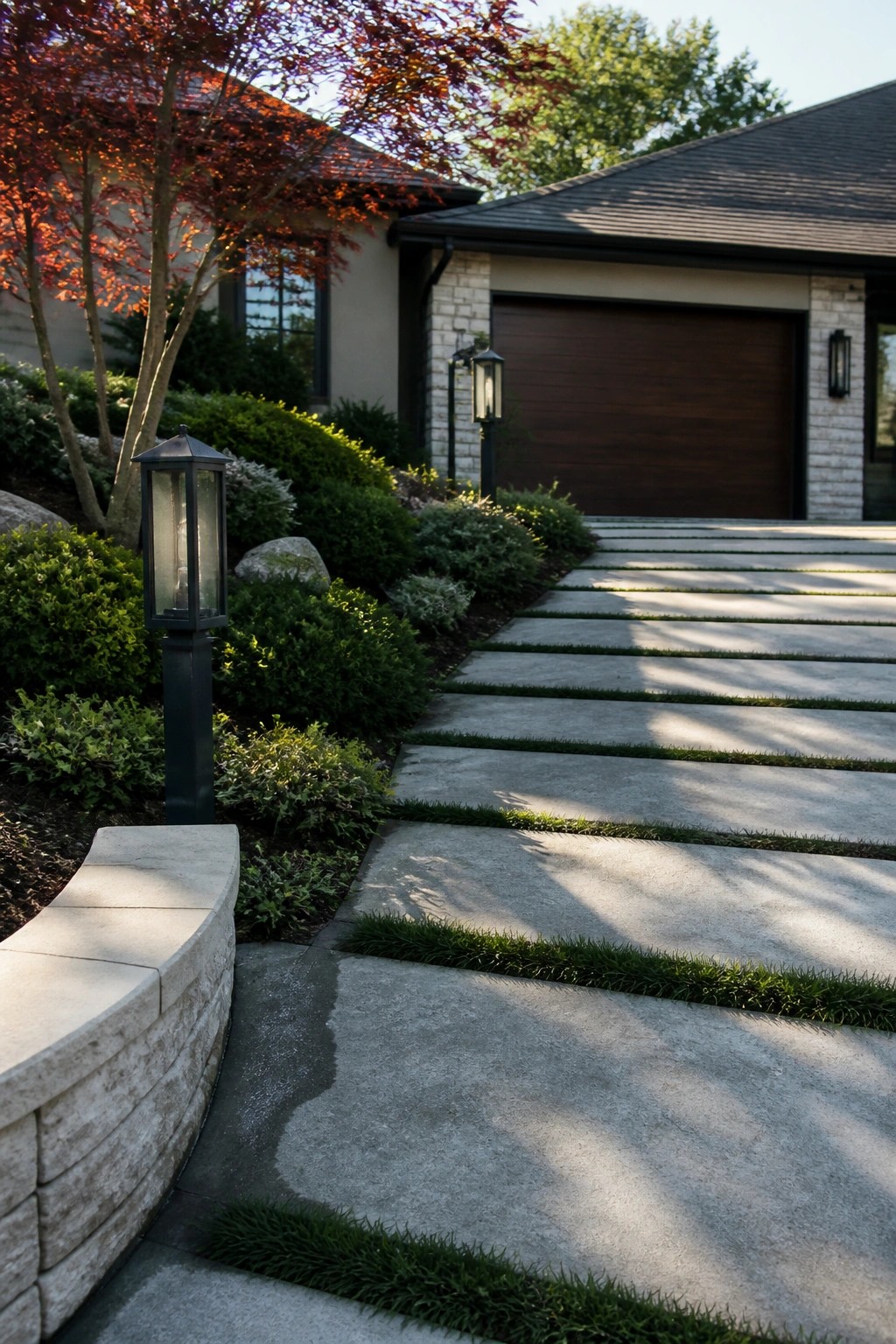
A driveway made of separate concrete slabs with grass filling the gaps feels softer than a solid slab of pavement. The strips of green break up the hard surface and let the path blend into the beds along the sides without looking like two separate zones.
This setup works best on homes where the driveway sits close to the garden and you want something that still handles cars but does not read as purely functional. Keep the gaps wide enough for the grass to stay healthy and choose a low-growing variety that can handle some foot traffic.
Add Low Lighting Along Tall Hedges

Low lighting tucked into planting beds can make a long driveway feel more defined after dark. It brings out the height and shape of the hedges without needing bright overhead fixtures.
This works best on properties with structured or formal plantings. Keep the lights small and aimed low so they graze the foliage and mark the edges of the path without shining into the road.
Frequently Asked Questions
Q: How do I stop plants from crowding the edges where I park? A: Stick with lower growing options like creeping thyme or compact boxwoods right along the sides. Trim them back every few months to leave clear space for doors and tires. This keeps things looking full without turning into an obstacle course.
Q: What if my soil stays wet most of the year? A: Swap in plants that handle moisture like ferns or certain grasses instead of anything that needs sharp drainage. Add a thin layer of gravel under new plantings to help excess water move away from roots. You will see fewer issues with rot or yellowing leaves that way.
Q: Do I have to replace everything if one season looks off? A: No need to rip it all out. Just swap in a couple of seasonal pots or quick fillers like annuals to refresh bare spots. Most of the structure stays put while you tweak the details over time.
