

I have noticed over the years that a driveway often shows wear faster than other parts of the exterior once heavy trucks or frequent deliveries start using it.
The base preparation and gravel type end up mattering more than the initial look when the goal is keeping the surface level without constant repairs.
Some options simply outlast others under real conditions.
I usually pay attention to how the edges meet the lawn and the house because those spots tend to reveal whether the driveway was planned for long term traffic.
A couple of the more layered builds seem worth trying on a side section first before committing to the full length.
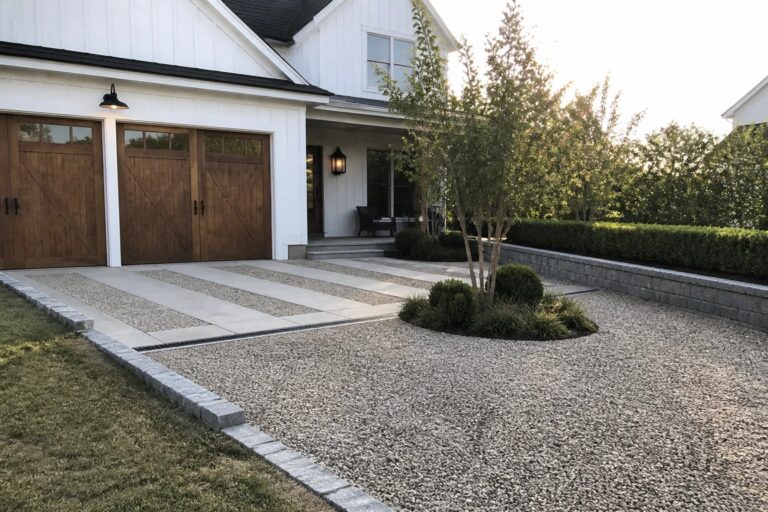
Gravel Driveways With Built In Drainage

A linear drain grate set into the gravel keeps water from pooling across the surface during heavy rain. This setup works especially well on flat or low lying driveways where runoff can turn the gravel soft and uneven over time.
Place the grate across the main traffic area so it catches flow before it spreads. Stone edging along the sides helps contain the gravel and gives the whole driveway a cleaner, more finished look that still handles daily use.
Gravel With Brick Edging Handles Daily Traffic
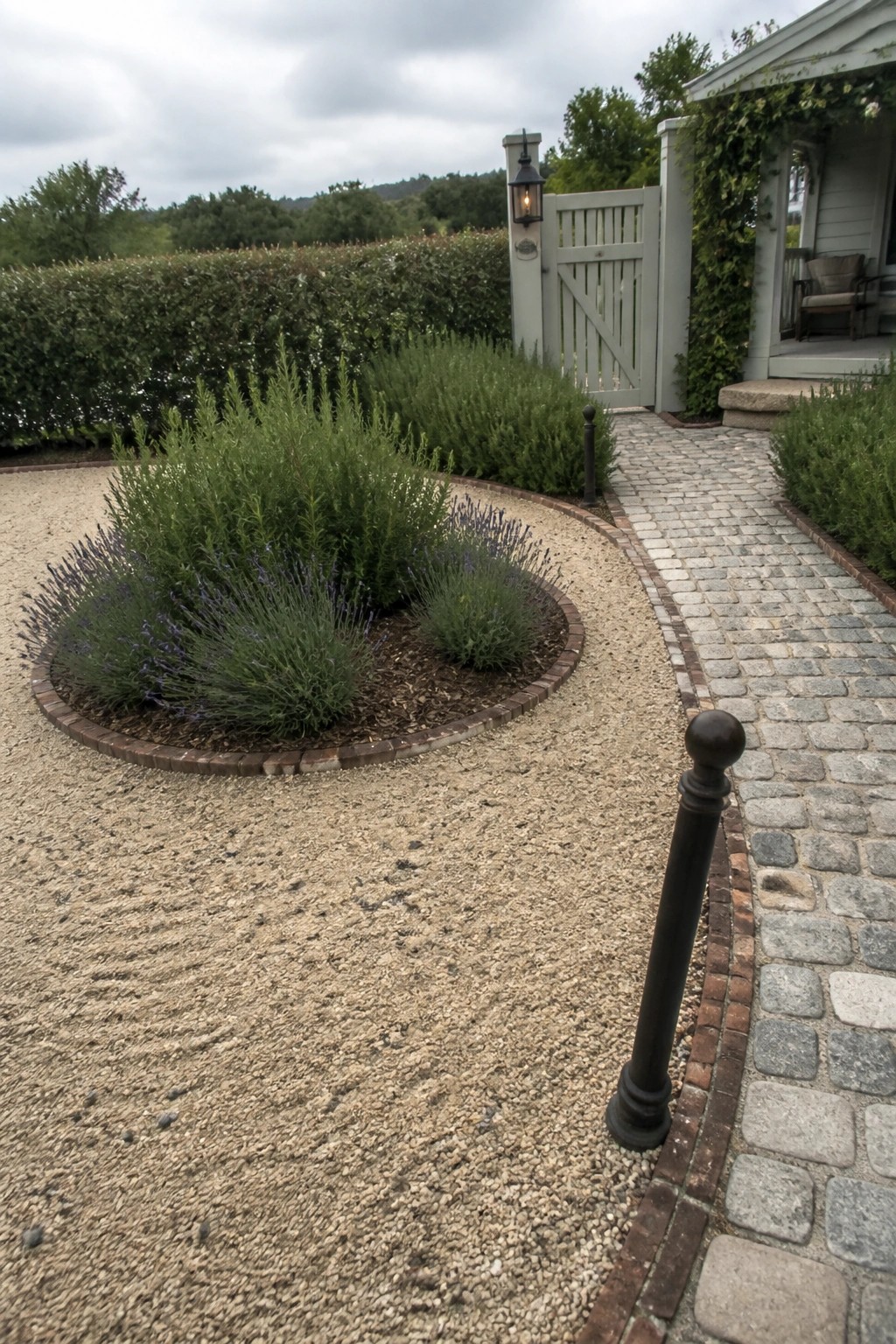
Gravel stands up well under regular car traffic when it has a solid border to hold it in place. The brick edging around the planting areas keeps everything neat and stops the surface from shifting or washing away during rain.
This approach suits homes with longer driveways or side entries where a paved look would feel too formal. Stick with low shrubs in the beds so roots do not push against the border over time.
Pavers Set in Gravel for Entry Walkways

Large concrete pavers placed directly into gravel give an entry path real staying power. The setup handles regular foot traffic without sinking or shifting, and the gravel helps with drainage so water does not pool on the surface. It also keeps the look simple and ties the house to the surrounding landscape without needing constant upkeep.
This approach works best on homes where the front path sees steady use but does not carry heavy vehicles every day. Keep the pavers large and evenly spaced, and choose a gravel size that stays put underfoot. Add a border of low plants or edging to hold the gravel in place over time.
Timber Edging For Gravel Driveways
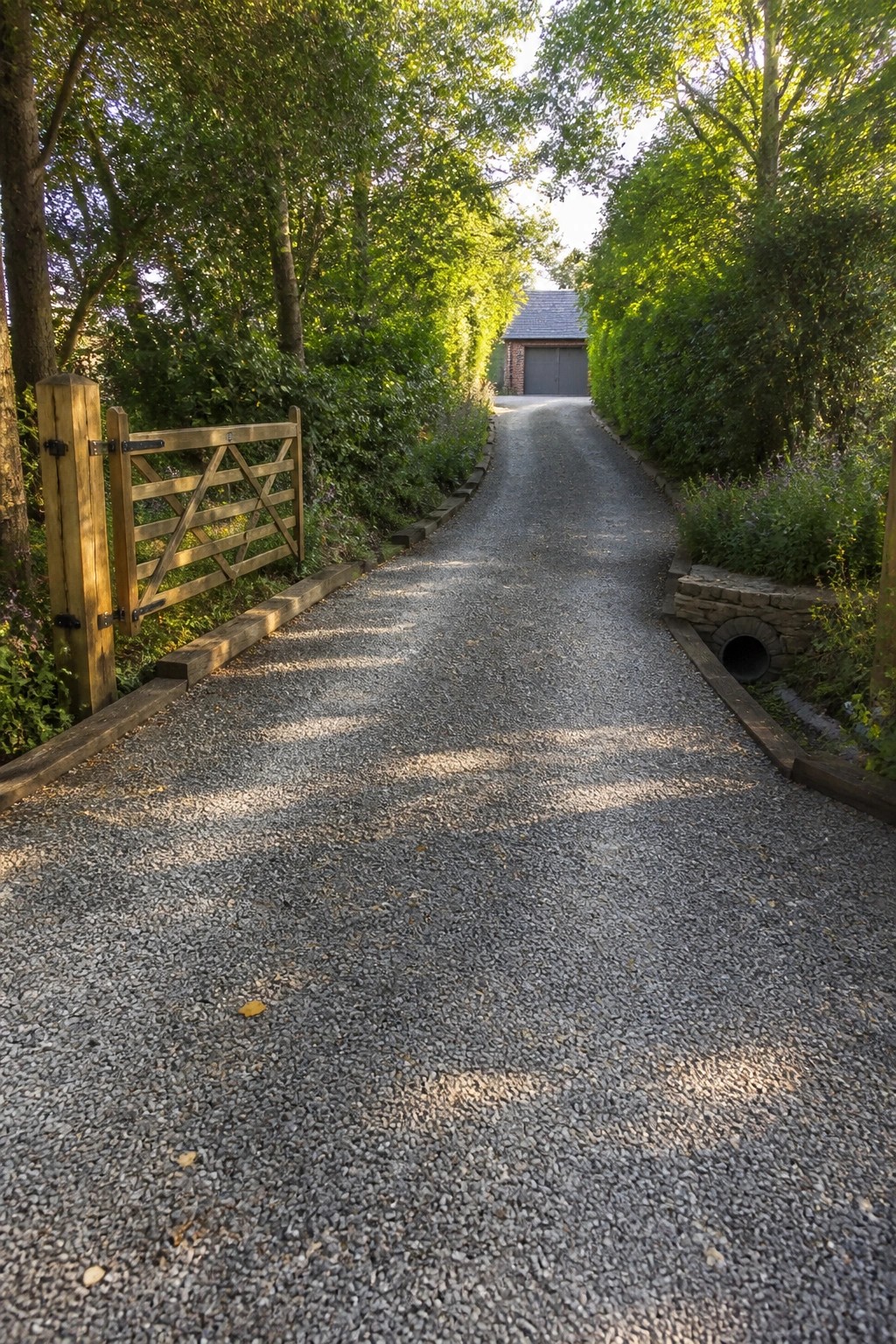
Gravel driveways hold up better when the edges are held in place. Timber edging keeps the stones from spreading out into grass or beds and gives the whole thing a finished look without much fuss.
This setup works best on properties with some space and a natural setting. It pairs well with a basic wooden gate and needs only occasional checks to stay straight after heavy use or winter weather.
Concrete Strips In Gravel Driveways

Gravel works well for driveways but can shift or rut over time with regular use. Adding concrete strips across the surface gives it more stability without losing the loose gravel look.
This setup suits homes with moderate slopes or daily vehicle traffic. The strips keep the gravel in place and make walking or driving easier while the rest of the surface still drains well and blends into the landscape.
Gravel Driveways With Stone Edging
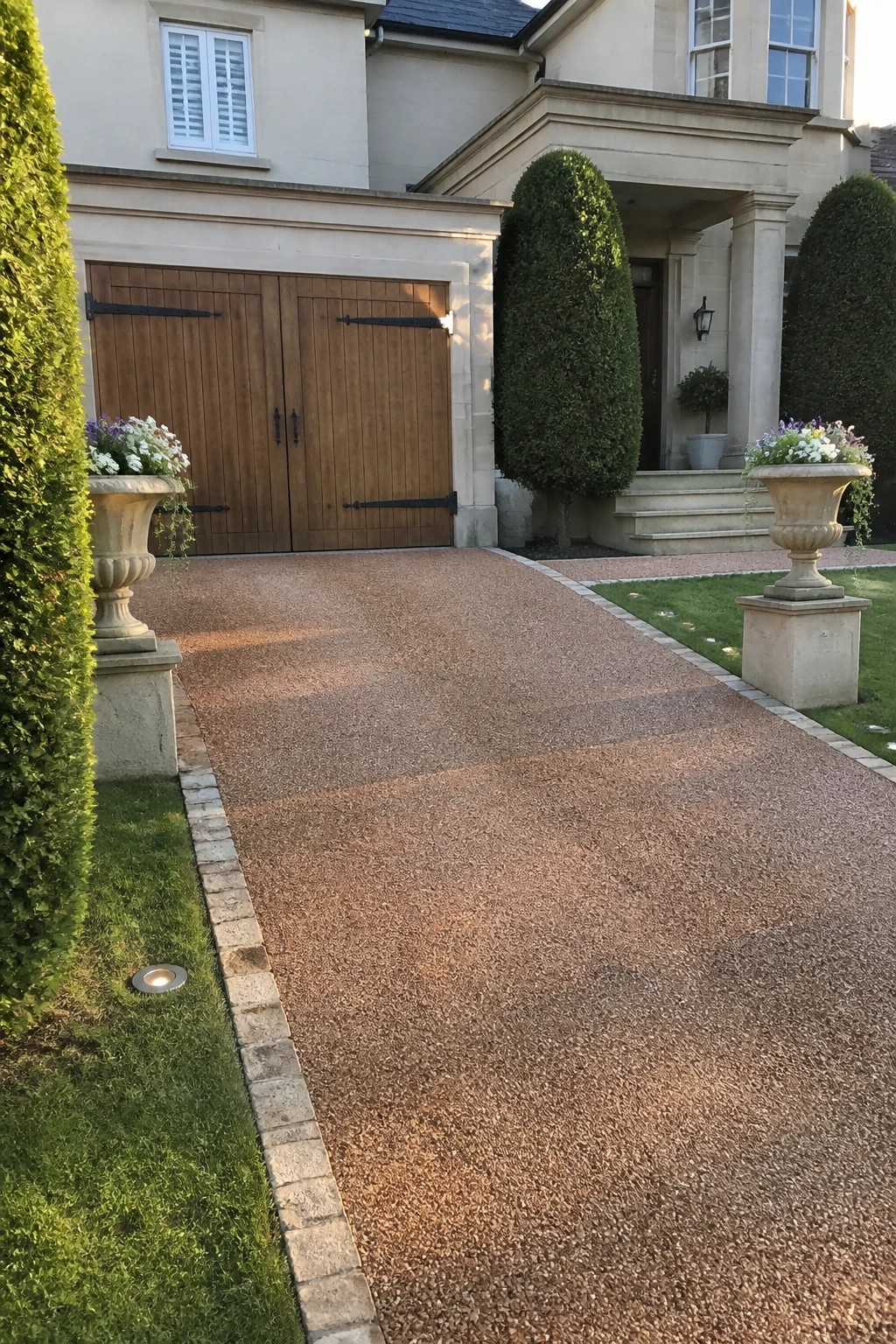
Gravel driveways hold up well under daily use when they have a solid border to contain the surface. The edging keeps the material from drifting into grass or beds, which cuts down on extra maintenance over time.
This approach works best on homes with longer or wider driveways that see regular car traffic. A simple brick or stone edge gives enough structure without adding much cost or changing the overall look.
Using Stabilization Grids in Gravel Driveways
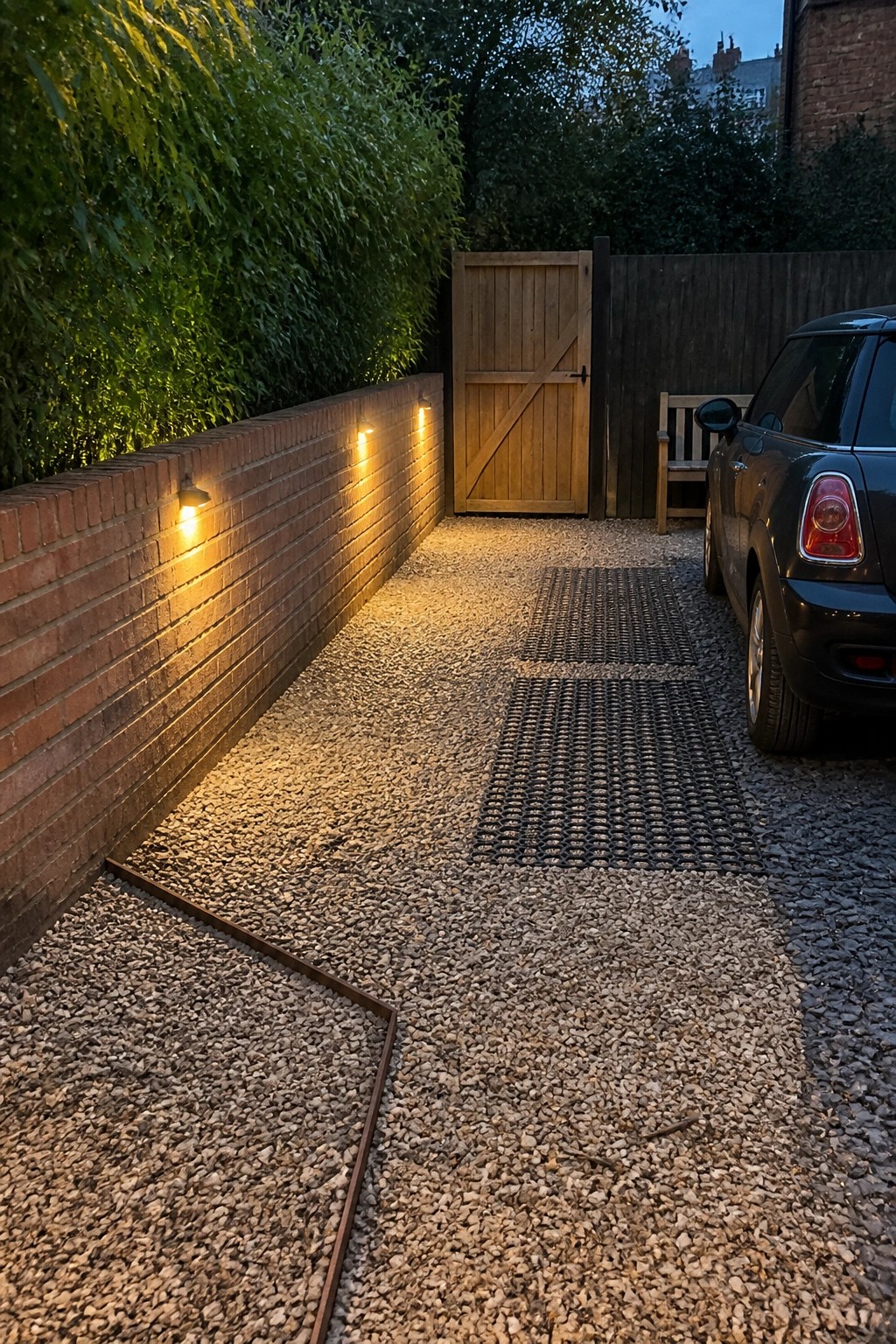
Gravel driveways can shift and rut under regular car traffic, but adding plastic grid mats underneath solves most of that problem. The grids hold the stones in place so the surface stays even and drains well even after heavy use.
These grids work best on smaller residential driveways or side paths where you need something tougher than loose gravel but do not want to pour concrete. Just lay them over a compacted base, fill with gravel, and the surface holds up without constant raking or topping up.
Timber Steps In Gravel Driveways
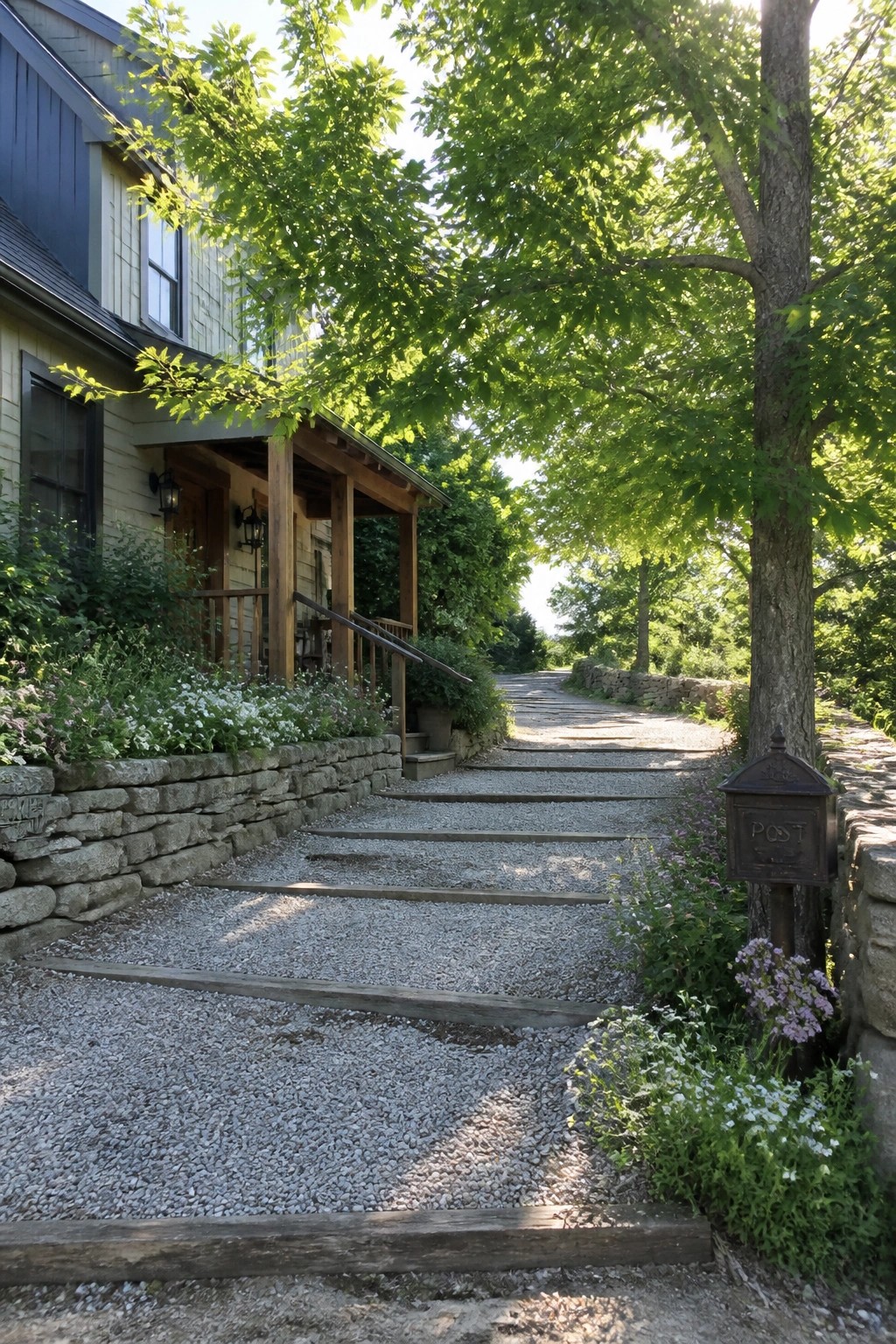
Many homes with sloped entries use timber beams to create steps inside a gravel driveway. The wood keeps the gravel from sliding down the hill and gives better traction for cars and foot traffic.
This setup works well on properties where the land drops away from the road. Pressure-treated timbers hold up to weather and weight, though they need checking every few years for wear.
Gravel Paths That Stand Up to Daily Traffic
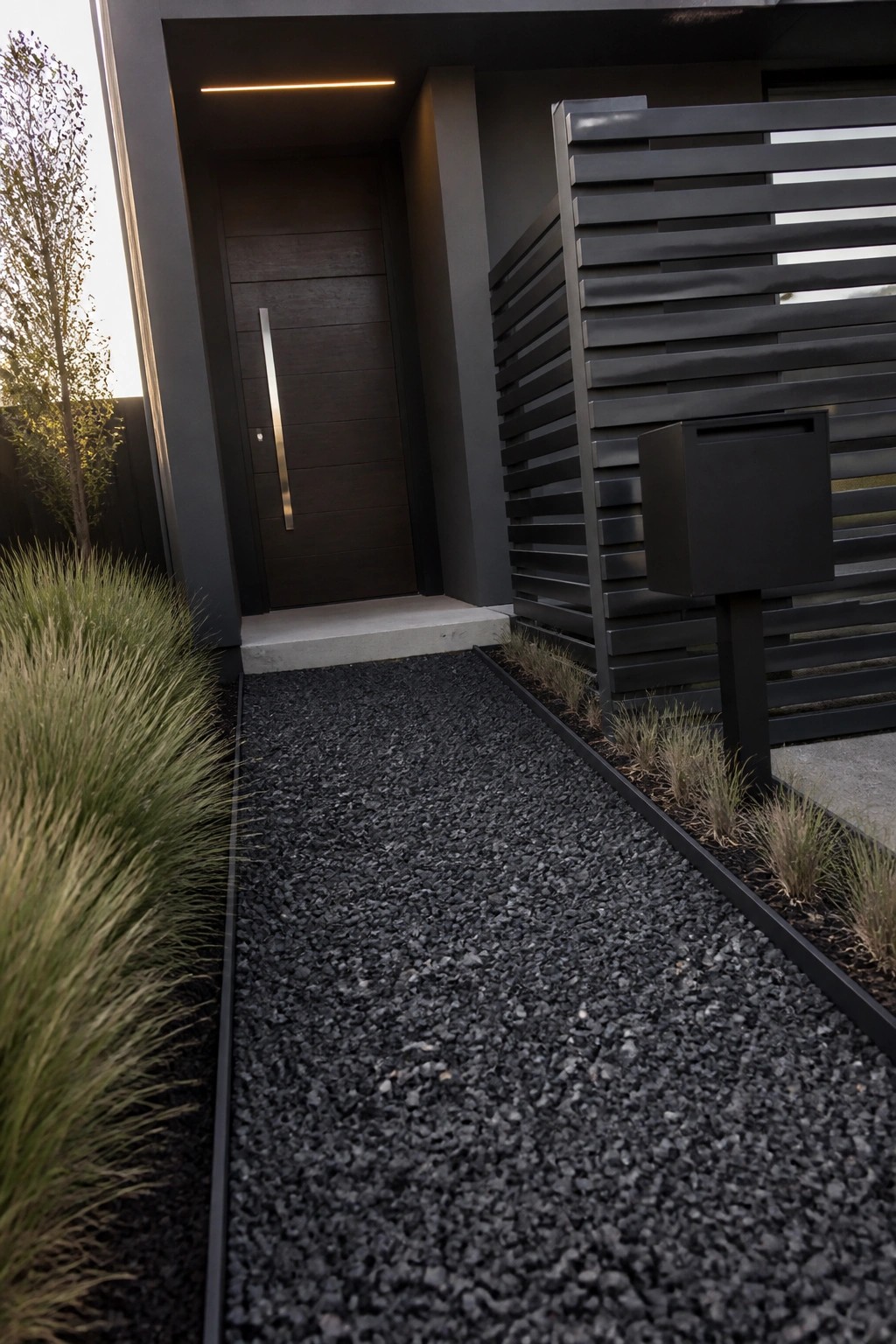
Gravel makes a solid choice for front entry paths because it handles foot traffic and light vehicle use without cracking or shifting much over time. The dark color also blends nicely with modern dark siding and trim, giving the approach a clean, low-key look that does not show wear quickly.
It works best on homes where the walkway stays narrow and straight, like the one edged with simple metal borders here. Just be sure to lay a good compacted base underneath so the gravel stays level even after heavy rain or repeated use.
Gravel That Reaches the Front Steps

Gravel works well when it runs right up to the house entry instead of stopping short. It gives a simple surface that drains easily and holds up under regular car and foot traffic without cracking or needing much upkeep.
This setup suits homes with a casual or Mediterranean feel where the goal is to keep things low maintenance. Just make sure the gravel layer sits deep enough and has a solid base so it does not shift or sink over time.
Grid Pavers For Durable Gravel Driveways

A grid paver system gives gravel driveways the structure they need to handle regular car traffic without washing out or developing ruts. The honeycomb layout locks the stones in place while still letting some grass grow through, which helps with drainage.
This approach suits homes where the driveway sees daily use but the owners still want a softer surface than solid concrete. It works best on fairly level ground and needs a solid base underneath to stay flat over time.
Gravel Driveways With Stone Edging
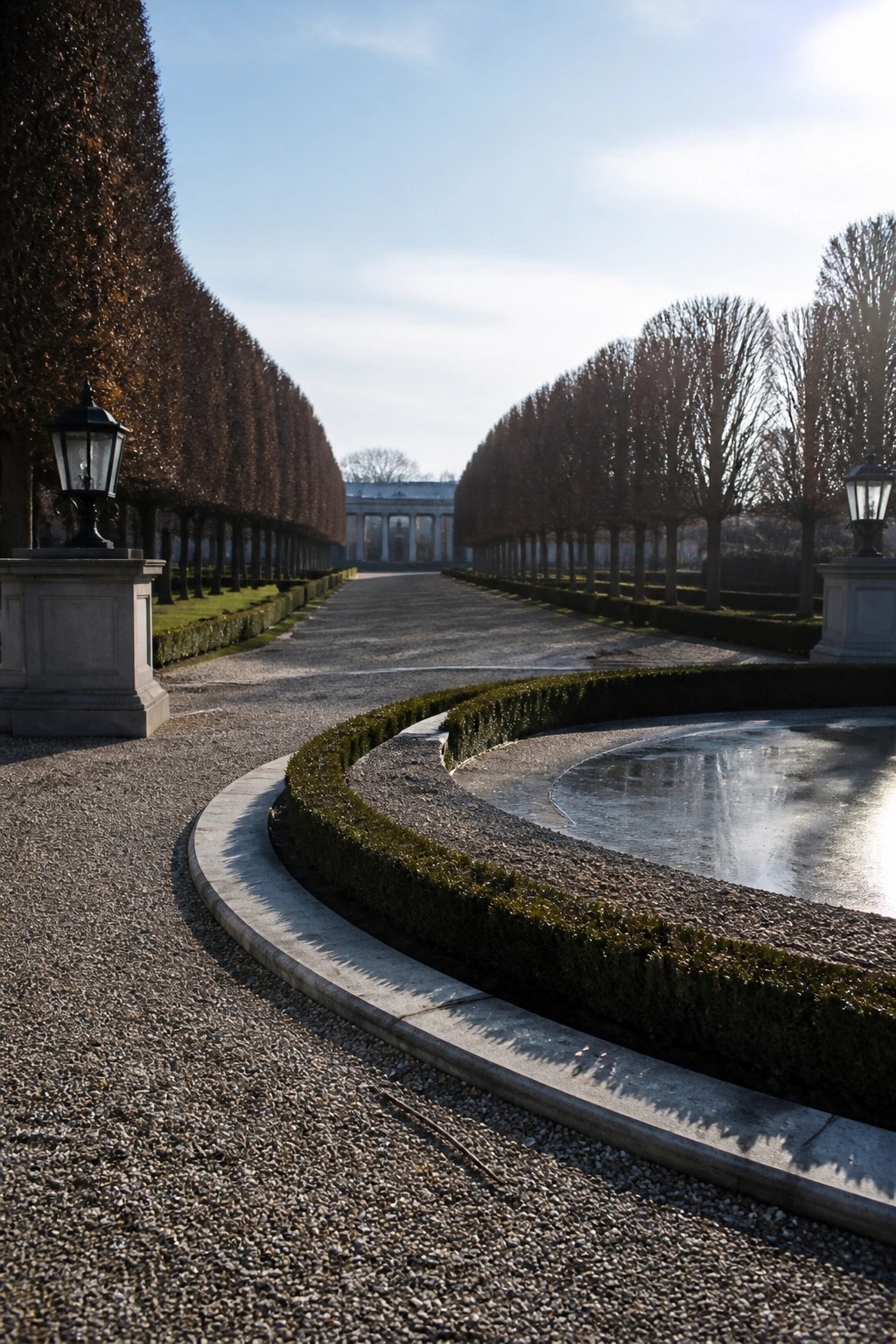
Gravel works well for driveways that see regular traffic because it drains quickly and stays firm under weight. A low stone edge along the sides keeps the gravel from scattering into the grass or garden beds and gives the whole surface a finished look that lasts.
This approach suits homes with straight or gently curving drives where you want clear separation between the path and planting. Set the edging a bit higher than the gravel so it holds everything in place even after heavy rain or repeated use.
Timber Edging For Gravel Driveways
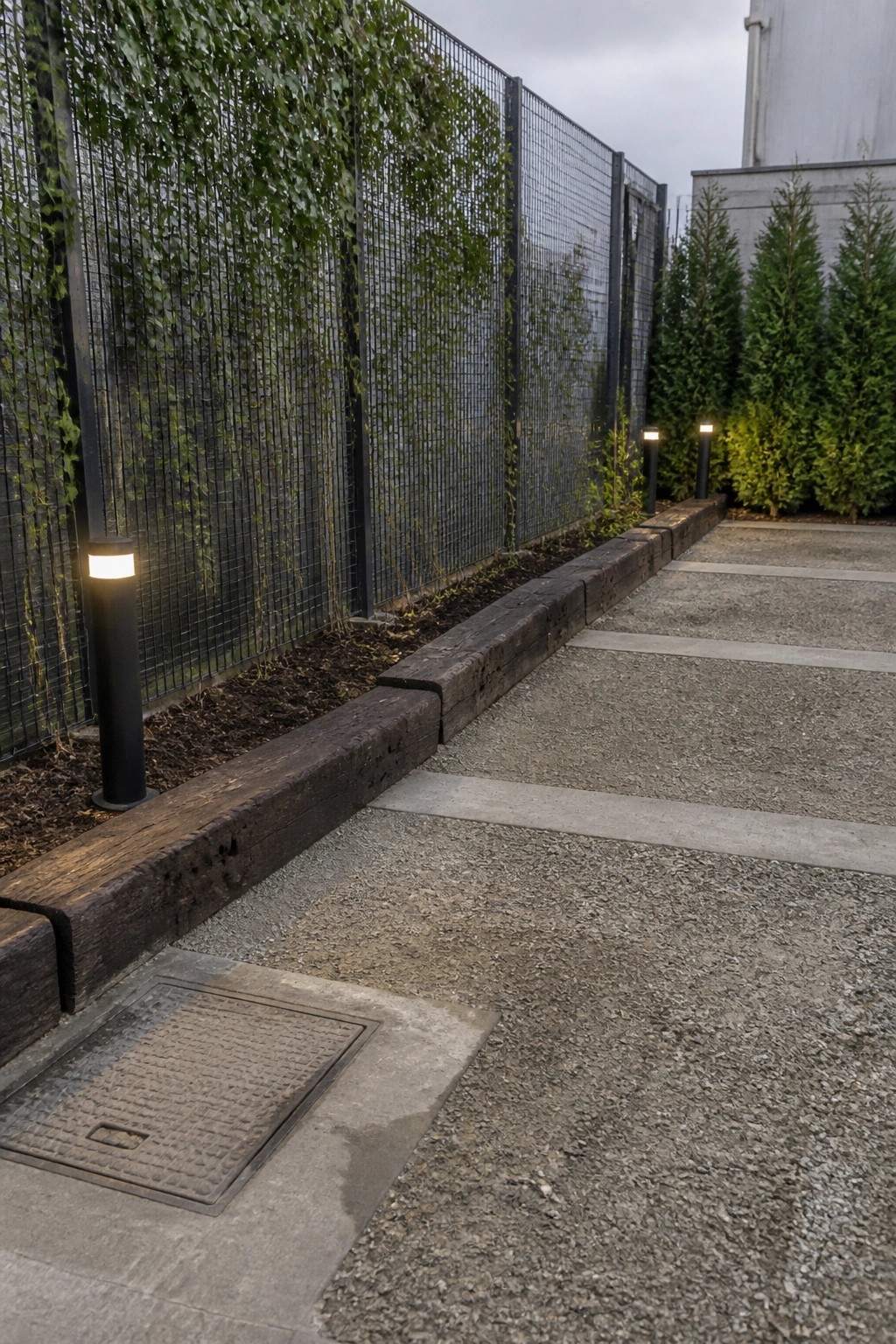
Thick timber beams make a simple border that keeps gravel from drifting into beds or across walkways. The wood sits low to the ground and handles the weight of vehicles without shifting much over time.
This style suits homes that already use gravel for the main drive and want a low-cost way to contain it. Treated wood holds up best when set on a gravel base, and it pairs well with narrow planting strips along fences or walls.
Stepping Stones Over Gravel

Stepping stones set into gravel give a path that stays firm underfoot even with daily traffic. The stones handle the wear while the gravel layer lets water drain and keeps the surface from turning muddy.
This setup works well on side entries or front walks where a full paved surface feels too heavy. It suits older homes or any spot that needs a simple fix without major excavation. Keep the stones large and level so the gravel does not shift too much around the edges.
Log Edging for Gravel Driveways
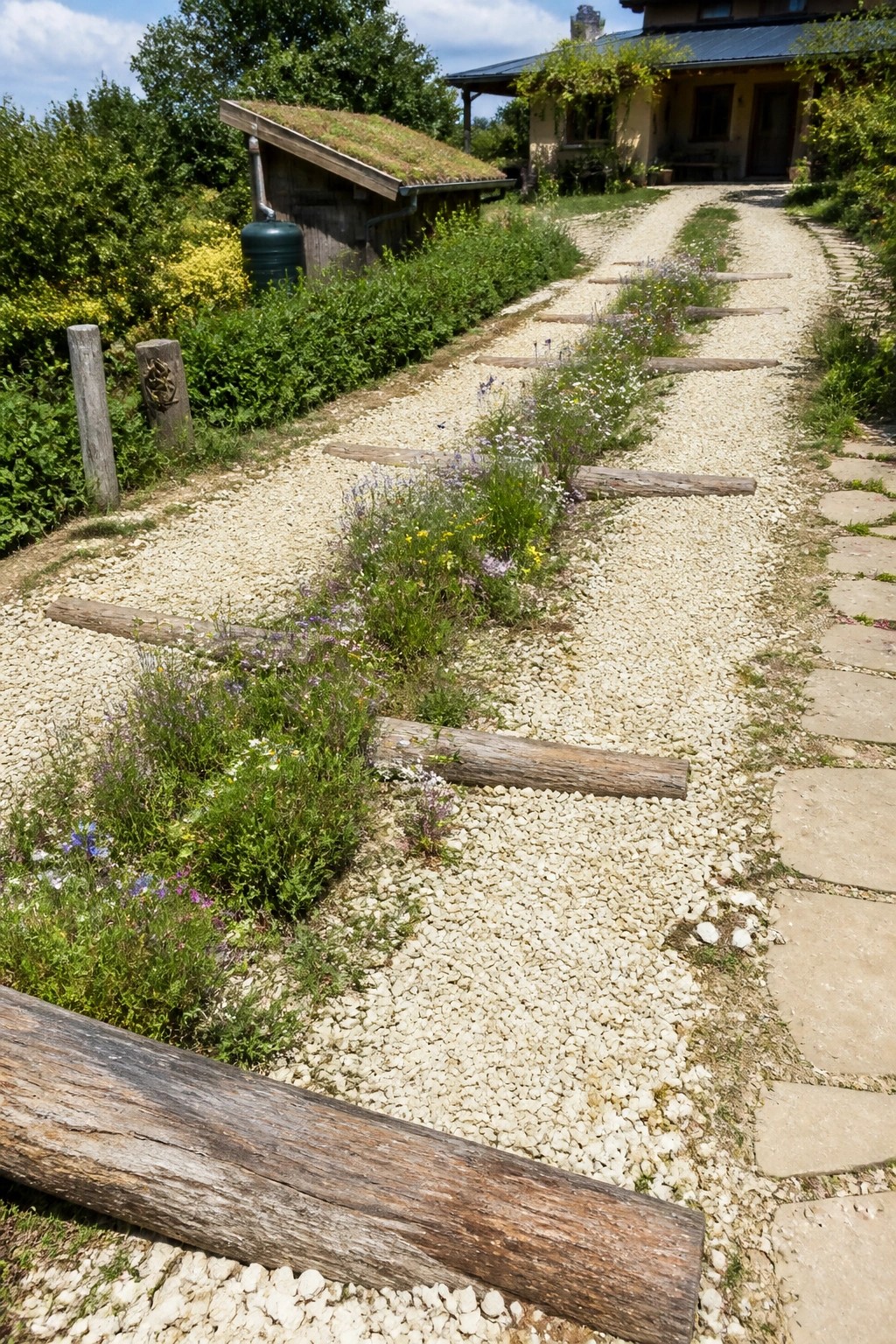
Wood logs make a simple border that keeps gravel from drifting into planted areas. They give the driveway a settled look and let you run flowers or low shrubs right up to the edge without constant cleanup.
This setup suits homes with long driveways that pass through garden zones. Use thick untreated logs set partway into the ground so they stay put, and check them every couple of years for rot.
Gravel Between Pavers Handles Heavy Use
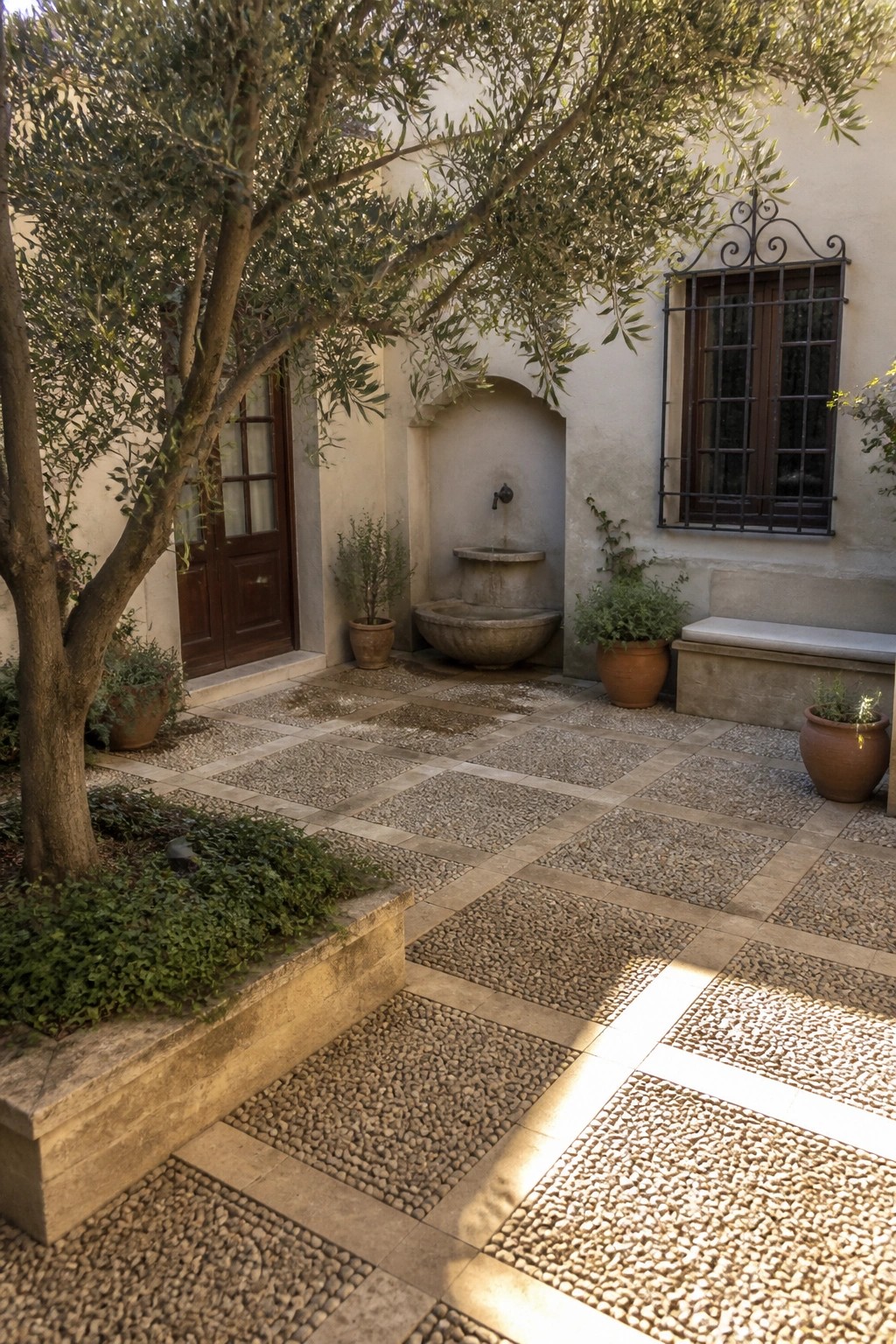
This layout puts stone pavers down in a grid and fills the gaps with gravel. The pavers keep the surface stable under regular foot traffic or light vehicle use, while the gravel fills in the rest and helps with drainage.
It works well in a courtyard, side entry, or any spot that sees more wear than a simple gravel path can handle. Keep the paver spacing even and use a compacting gravel so the whole thing stays level over time.
Concrete Strips In Gravel Driveways

Many homeowners add concrete strips down the middle of a gravel driveway to keep the surface stable under regular car traffic. The strips give tires a solid path so the gravel does not shift or rut as quickly over time.
This approach suits homes that see daily use and works especially well when the rest of the driveway stays gravel for drainage and cost. Stone pillars at the edges help tie the look together without adding extra paving.
Gravel Walkways With Metal Dividers
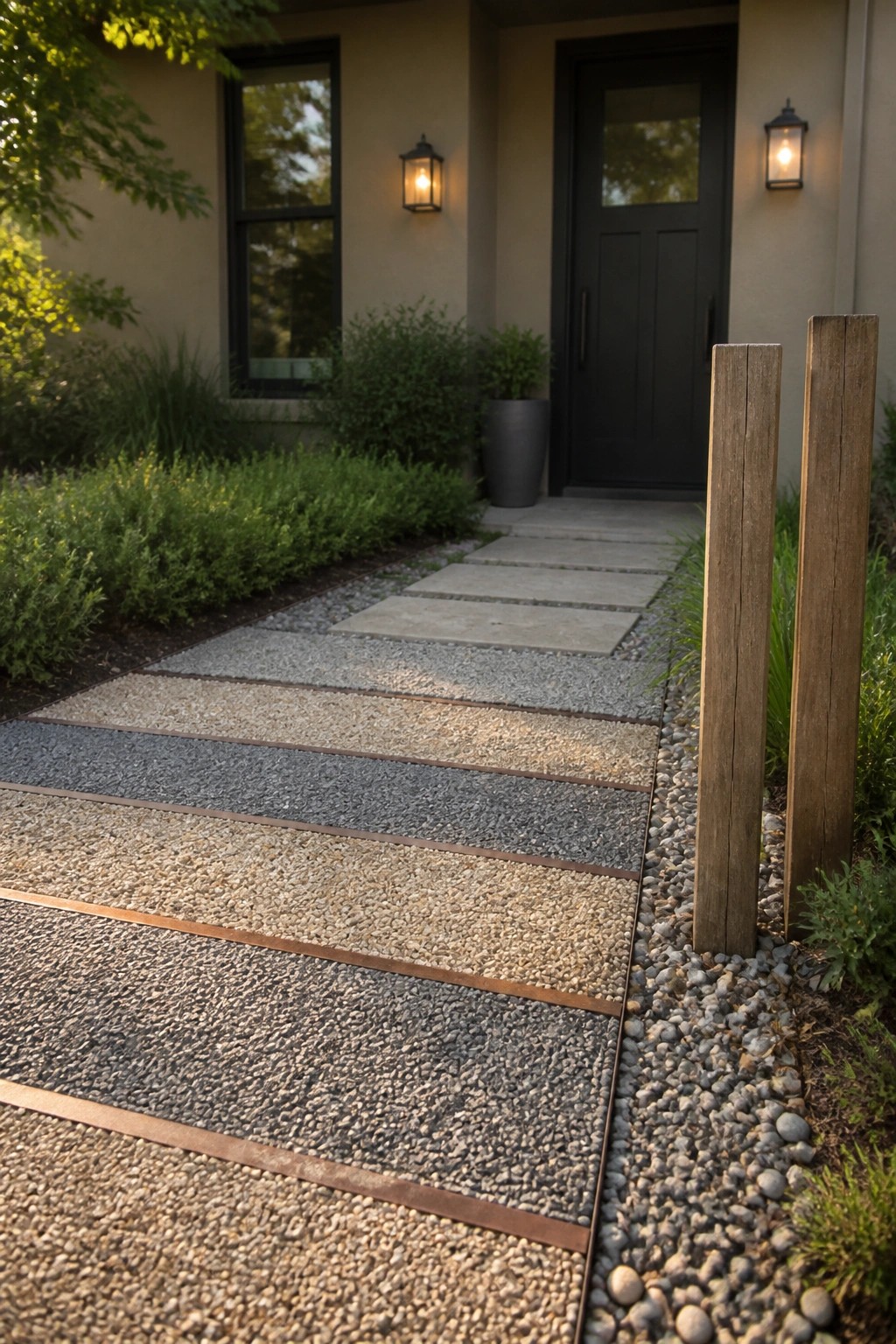
Breaking a gravel path into sections with thin metal strips helps keep the material in place even with daily foot traffic. The dividers stop the gravel from drifting and mixing, so the path stays looking neat without constant raking or topping up.
This setup works well on homes where the front walk gets regular use. It also lets you combine different gravel sizes or tones while keeping each section contained, which holds up better than a single loose layer.
Gravel Driveways With Grid Pavers

Gravel works well for driveways, but it can shift and rut under regular traffic. Adding a layer of concrete grid pavers keeps the surface stable while still letting water drain through. The grids lock the gravel in place so the driveway stays even and easier to maintain over time.
This approach suits homes with modern or simple exteriors where you want the look of gravel without constant regrading. It works best on entries that see daily car use or occasional heavier loads. Just make sure the base is properly compacted before laying the grids so they stay level.
Frequently Asked Questions
Q: What keeps the gravel from spreading out under daily truck traffic?
A: A solid base layer of crushed stone locks everything in place. Add edging boards or stones along the sides to contain it. This setup handles the weight without constant raking.
Q: How do I deal with ruts forming after a wet winter?
A: Top off the low spots with fresh gravel and compact it down firmly. Mixing in some larger stones helps it stay put better over time.
Q: Does the driveway need extra drainage if it sees heavy use?
A: Yes, slope the surface slightly so water runs off to the sides. Install a French drain along the lowest edge if puddles tend to collect.
