

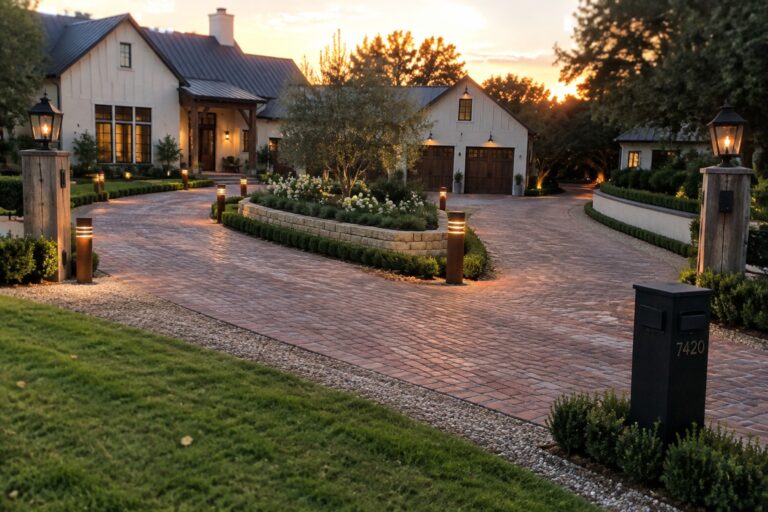
A U-shaped driveway can make a home’s entrance feel welcoming, but its broad curve and central island can be tricky to light evenly.
I find that the best plans help drivers see the edges clearly without making the front of the house feel overly bright.
Low path lights, well-placed lanterns, and subtle accents near trees or planting beds can guide the way while bringing out the shape of the approach.
The fixture style matters too, since it should sit comfortably with the home’s facade, paving, and entry.
I’d start with ideas that balance safe visibility and a calm look, then adapt the spacing and brightness to the driveway itself.
Use Low Lights Along the Driveway

Low, warm lights can make a U-shaped driveway easier to follow after dark without shining directly into drivers’ eyes. Short bollard lights work especially well around a planted center island, where they help show the curve of the drive.
Keep the fixtures low and space them evenly along the edges or at key turns. Choose shielded lights with a soft glow, and avoid placing them where cars might clip them.
Install Recessed Lights Beside Driveway Stepping Stones

Small recessed lights can make a U-shaped driveway easier to follow after dark without putting bright fixtures in the way. Set beside the stepping stones, they mark the route clearly and keep the light close to the ground.
Space the fixtures evenly along the turns and entrance, and choose a warm, shielded beam to reduce glare. Check that each light is rated for outdoor use and suited to the driveway surface.
Use Low Lighting Along Curved Driveway Edges
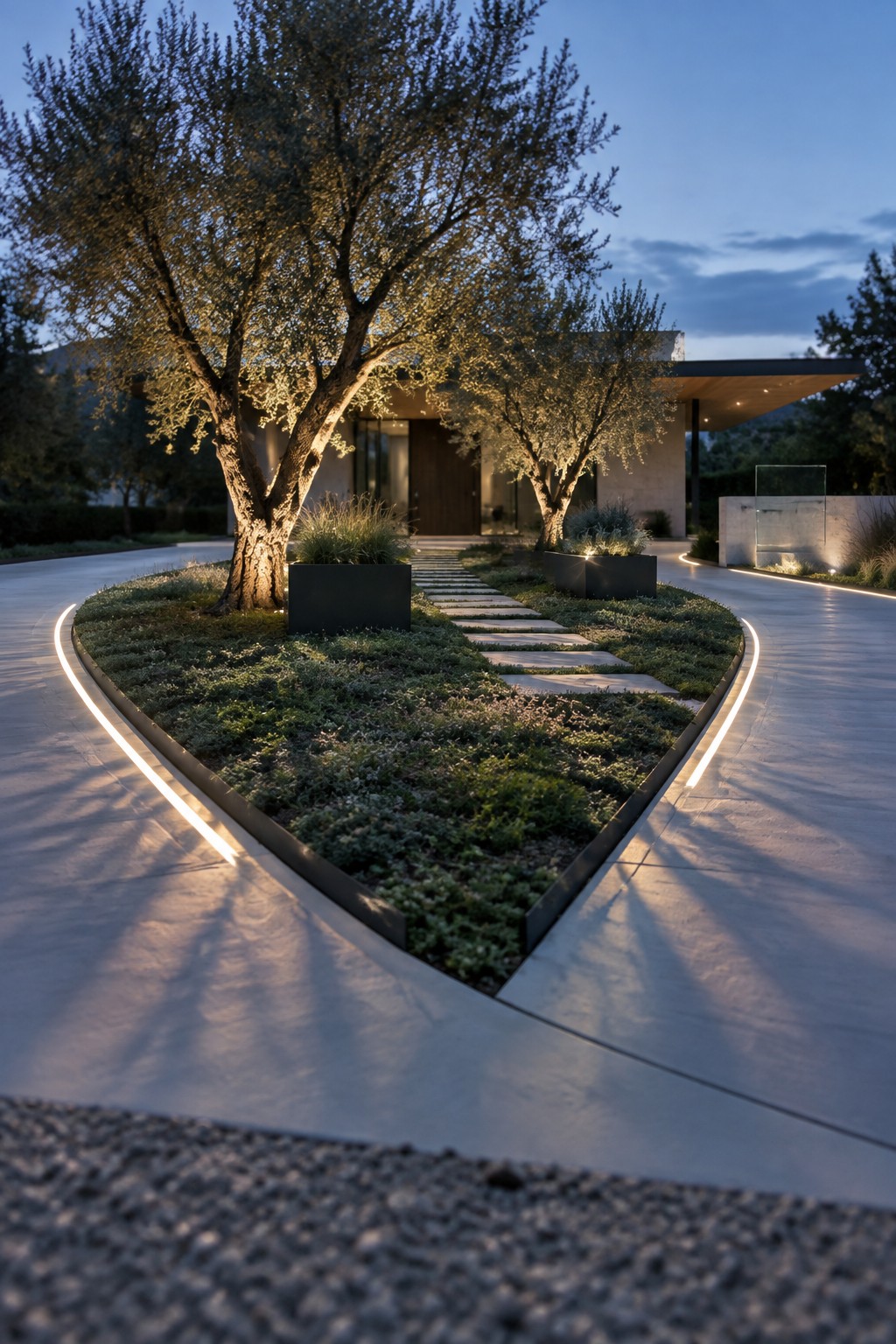
A narrow strip of lighting along a driveway’s curves can make a U-shaped layout easier to follow after dark. It marks the edge clearly without relying on tall fixtures that can interrupt the view.
For a similar effect, use a continuous low-voltage LED strip or closely spaced ground lights along the inside edges of the drive. Keep the light even and subdued, and choose weather-rated fixtures made for ground contact.
Space Low Lights Along Brick Driveway Edges

A U-shaped driveway can feel easier to navigate when the edges are clearly marked. Low lights set along the paving help drivers follow the curve and see where the drive meets the garden, without putting bright fixtures at eye level.
Place fixtures at regular intervals, especially near bends and entrances, and aim them down toward the surface. Warm, modest lighting suits a brick driveway and keeps the route useful without making the whole yard too bright.
Use Lanterns to Mark the Driveway Entrance

Lanterns at the entrance help drivers spot where a curved driveway begins, especially after dark. Matching fixtures on stone posts make the entry easy to recognize without needing bright overhead lighting.
This approach suits a garden-style driveway where the entrance posts can sit safely outside the turning path. Choose shielded bulbs and a warm, steady light so drivers can see the edge clearly without glare.
Mount Matching Lanterns on Brick Entrance Pillars
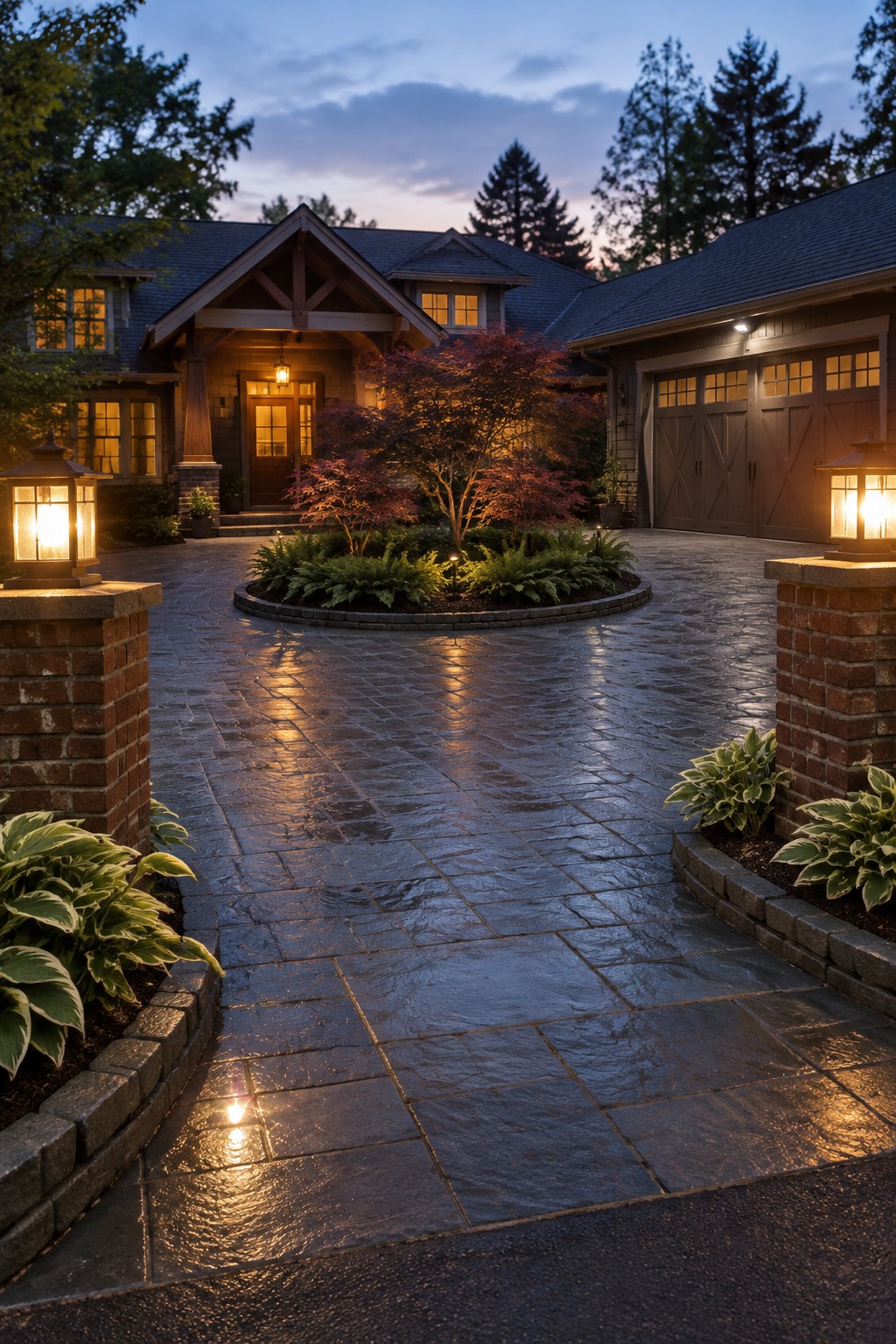
Lantern-style lights on brick pillars make the entrance to a U-shaped driveway easy to spot after dark. Their height helps drivers see where to turn without relying only on small lights set close to the ground.
Use a matching pair at the driveway opening, and keep the light aimed down or enclosed so it does not shine into nearby windows. Warm bulbs can make the entrance feel welcoming while still helping with visibility.
Use Recessed Lights Along Paver Joints

Small lights set between large driveway pavers can guide the way without placing fixtures in the driving path. The narrow gravel joints make the paving pattern easy to follow, while the low lights mark the route after dark.
This approach works well for a wide U-shaped driveway with a central island or other planted area. Keep lights spaced evenly and low to the ground so they help drivers navigate without glare.
Use Strip Lighting Along Raised Edges

A low strip light tucked beneath a raised planter edge can guide drivers along a driveway without putting bright fixtures at eye level. It also makes the change in level easier to see after dark.
This works well where a driveway curves around a planter or separates into distinct zones. Choose outdoor-rated, warm-toned lighting and keep the strip set back so it marks the edge without shining directly into drivers’ eyes.
Use Lanterns to Light the Driveway Turn

Lantern-style lights can make a curved driveway easier to follow after dark. Taller fixtures near the bend give drivers a clear marker, while smaller path lights can guide the edge without flooding the whole area with light.
This approach suits brick or stone driveways, especially where planting beds sit close to the pavement. Place the taller lights where the route changes direction, and keep them outside the driving path so they do not get in the way.
Highlight the Inner Curve Around a Planted Island

Low lights can make a U-shaped driveway easier to follow after dark, especially where the drive bends around a planted island. Here, small fixtures mark the curve without competing with the landscaping.
Place lights along the inside edge of the bend, keeping them far enough apart to guide drivers without creating a row of glare. Shielded fixtures work well near the ground, and warm bulbs help the route stay easy on the eyes.
Add Lights Between Driveway Slabs

Small recessed lights set into the joints between concrete slabs make a U-shaped driveway easier to follow after dark. They mark the path without adding tall fixtures that can get in the way or interrupt the clean look of the paving.
Place the lights at regular intervals and keep them low and shielded so they guide drivers without shining into nearby windows. This approach works especially well when the driveway has long, broad pavers with grass strips between them.
Pair Entrance Pillar Lanterns With Smaller Curve Lights

Lanterns at the entrance can make a U-shaped driveway easier to spot after dark. Their height also helps mark the turn without filling the whole drive with bright light.
Place matching lanterns on sturdy pillars at the entrance, then use smaller fixtures farther along the curve if needed. Aim the light down toward the paving, and keep it low enough to avoid glare for drivers.
Define Driveway Bends and Approaches With Shielded Lights

Low lights along the driveway edges help make a U-shaped layout easier to follow after dark. In this example, the lights mark the curves and entrance without competing with the stone paving.
Place fixtures where the driveway bends or approaches the house, keeping their spacing even. Low, shielded lights are a practical choice because they guide drivers without shining directly into their eyes.
Mark a Curved Driveway With Ground Lights
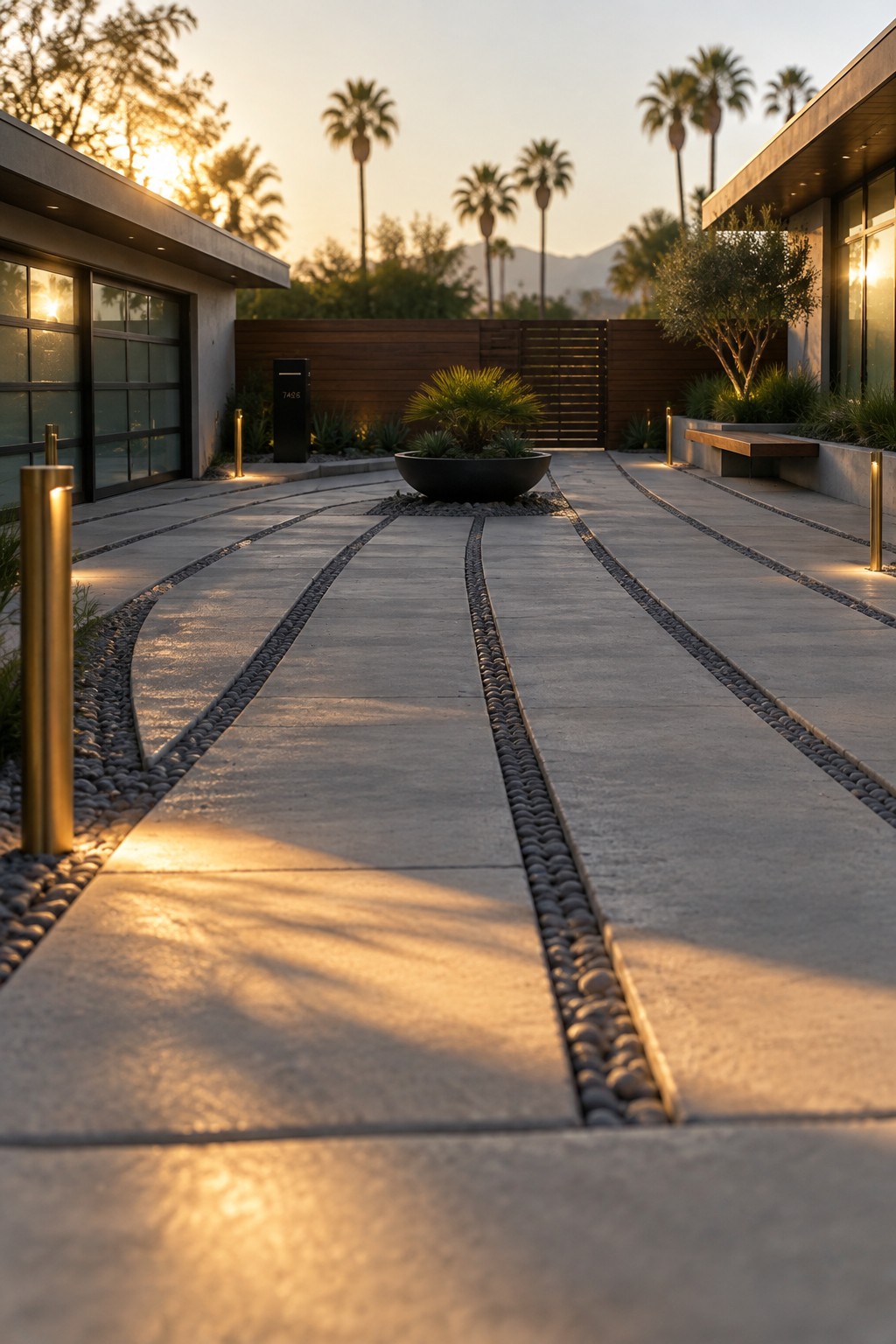
Low lights placed along the driveway edges can make a curved layout easier to follow after dark. They show where the paved surface ends without putting bright fixtures at eye level.
Space the lights evenly along the curves, and keep them low enough that drivers can see the path without glare. This approach works well with broad pavers and narrow pebble joints, but leave enough room around each fixture for easy maintenance.
Guide the Driveway With a Stone Path
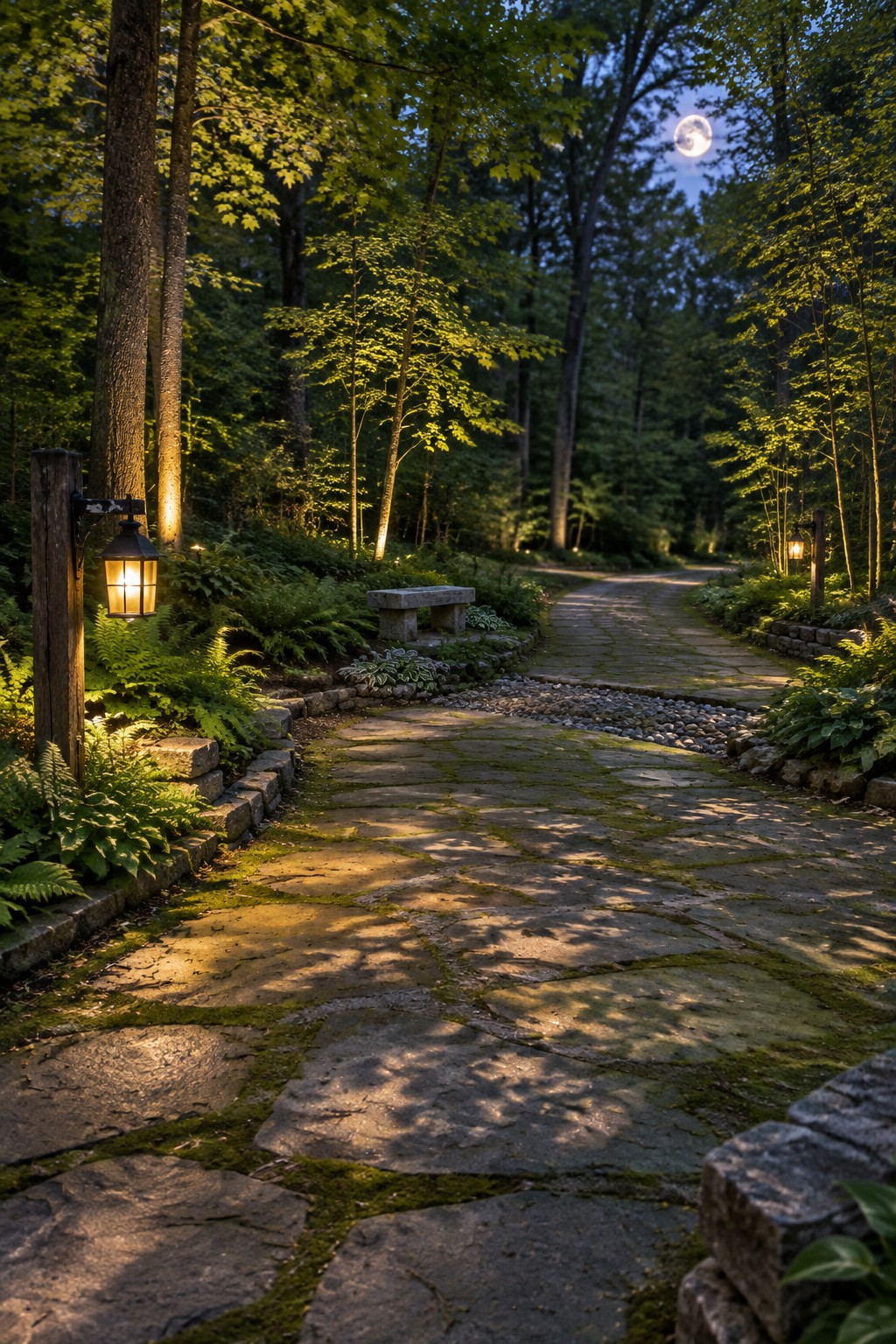
A stone path can help organize a curved driveway and make the route easier to follow after dark. Low lanterns beside the paving provide gentle guidance without needing bright lights across the whole drive.
This approach works well for a driveway with a bend or a landscaped edge. Place fixtures where the path changes direction, and keep them low enough that they light the ground without shining into drivers’ eyes.
Mount Lanterns on Stone Gateposts at the Entrance
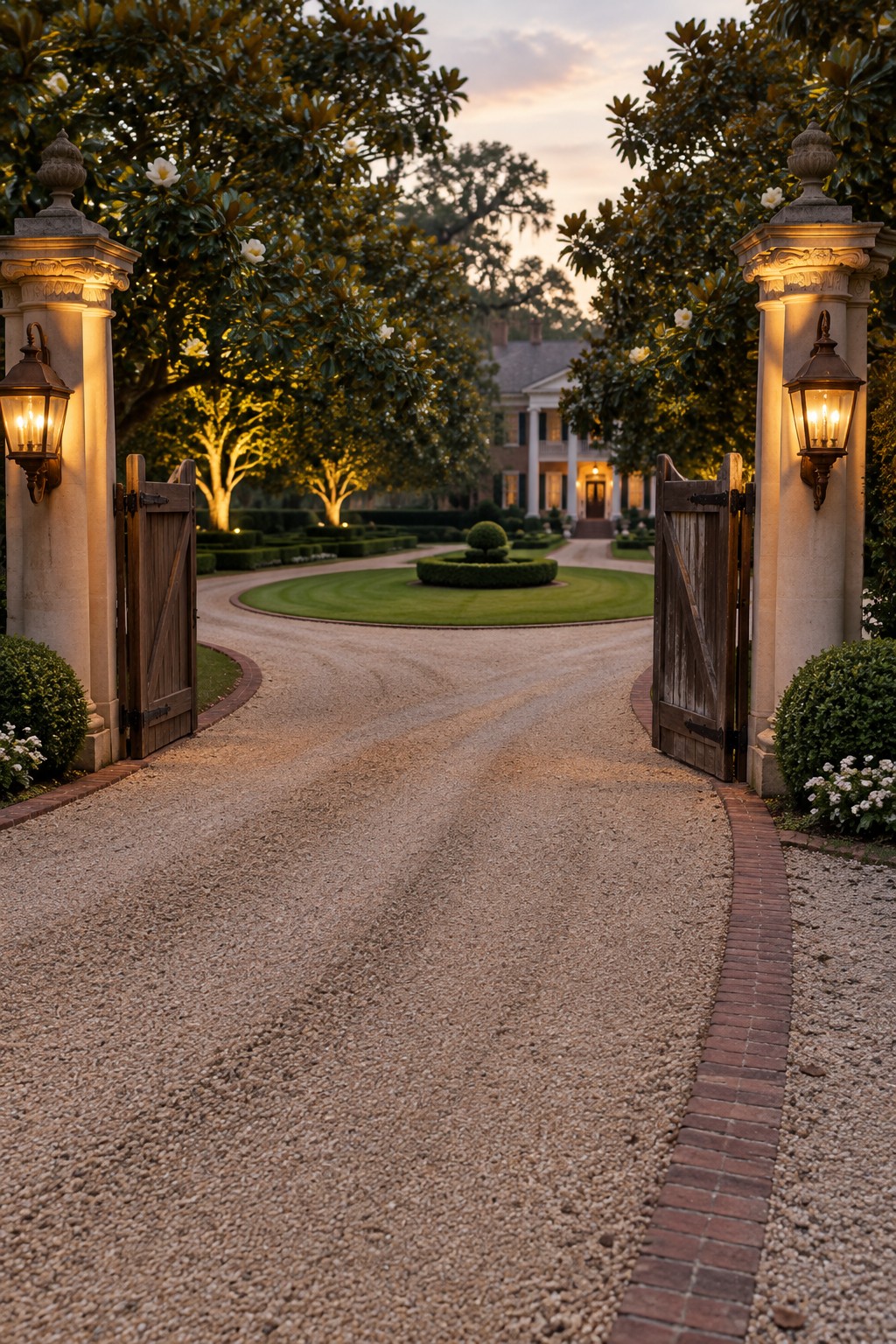
Lanterns at the driveway entrance make the start of a curved drive easy to spot after dark. Here, wall-mounted lights on the stone gateposts mark both sides without taking up space along the gravel.
For a U-shaped driveway, use matching fixtures at the entrance and aim them toward the drive, not directly into drivers’ eyes. Keep the bulbs warm and choose lanterns sized to suit the posts so the light feels useful rather than glaring.
Add Recessed Lights Along Raised Garden Edges

Low lights built into raised garden edges can guide the way around a U-shaped driveway without adding tall fixtures to the planting beds. Here, small recessed lights sit near the paving and shine across the path, making the edge easier to see after dark.
This approach works well where retaining walls or raised planters border a driveway. Space the fixtures evenly and aim them down or across the pavers to limit glare. Keep plants trimmed back so they do not hide the lights.
Add a Water Feature Beside the Driveway

A narrow water feature can give a curved driveway a clear edge and make the approach feel more considered. Here, low lights along the raised border also help show where the paved route bends.
For a similar look, place the feature beside the walking or driving path, leaving enough room for cars to turn and people to pass safely. Keep the edge lighting low and continuous so it guides the route without shining into the house.
Use Bollard Lights to Guide the Driveway Curve

Low bollard lights can make a curved driveway easier to follow after dark without lighting up the whole yard. Spacing them along the edges gives drivers a steady visual guide, while keeping the fixtures low helps reduce glare.
For a U-shaped driveway, place lights along both sides of the curve and keep their spacing consistent. Choose a warm, shielded light and check that fixtures do not obstruct the turning path or shine toward nearby windows.
Use Wall Lights to Define the Driveway

Lights mounted on the entrance walls help make a U-shaped driveway easier to follow after dark. Their warm glow also marks the route toward the front door without adding fixtures along the driving surface.
Place the lights where drivers can see them as they enter and turn, and aim them to avoid glare. This approach suits homes with entrance pillars or walls; keep the fixtures evenly spaced for a clear visual guide.
Frequently Asked Questions
Q: How do I light the inside curve of a U-shaped driveway without making it look cluttered?
A: Keep the inner curve simple with a few low path lights spaced evenly along the edge. That gives drivers a clear guide without competing with lights along the outer driveway.
Q: Are solar lights bright enough for a U-shaped driveway?
A: They can work well for marking borders and walkways, especially where the driveway gets plenty of sun. For the entrance or turning areas, wired or low-voltage lights usually give more reliable illumination.
Q: Where should I put lights so drivers can see the driveway entrance?
A: Place a light on each side of the entrance, aimed toward the driveway rather than at approaching drivers. If the entrance leads into a tight turn, add a low light near the curve to make the route easier to follow.
Q: Can I use the same lights along the whole driveway?
A: Yes, repeating one style helps the layout feel calm and intentional. Vary the spacing slightly where the driveway bends or splits so those spots stand out.
