

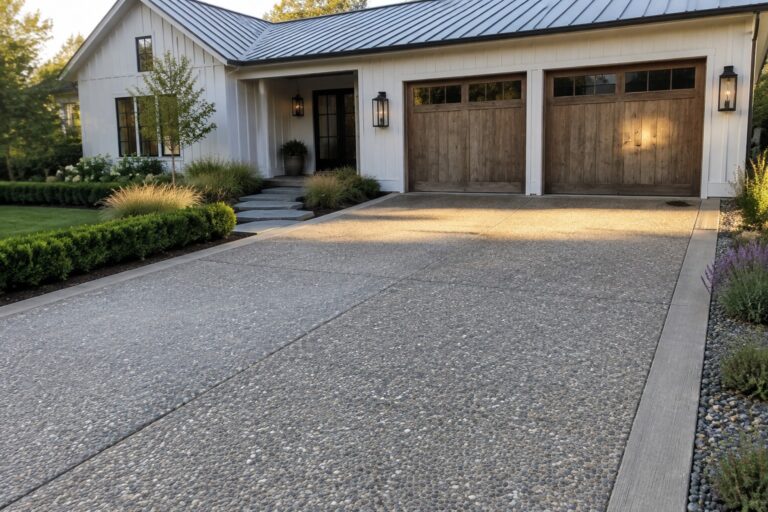
A driveway is one of the first parts of a home people notice, so its finish can shape the whole approach to the facade.
Exposed aggregate adds texture and brings out the natural color of the stone, but the right mix and pattern still need to suit the house and its surroundings.
I’d pay attention to how the surface looks beside the entry, planting, and exterior materials, since those details can make a driveway feel connected rather than added on.
A simple finish can be practical and understated, while a stronger aggregate contrast can give the approach more definition.
The best ideas are the ones that make sense for your home and are easy to adapt to the space you have.
Exposed Aggregate Makes a Practical Driveway Finish
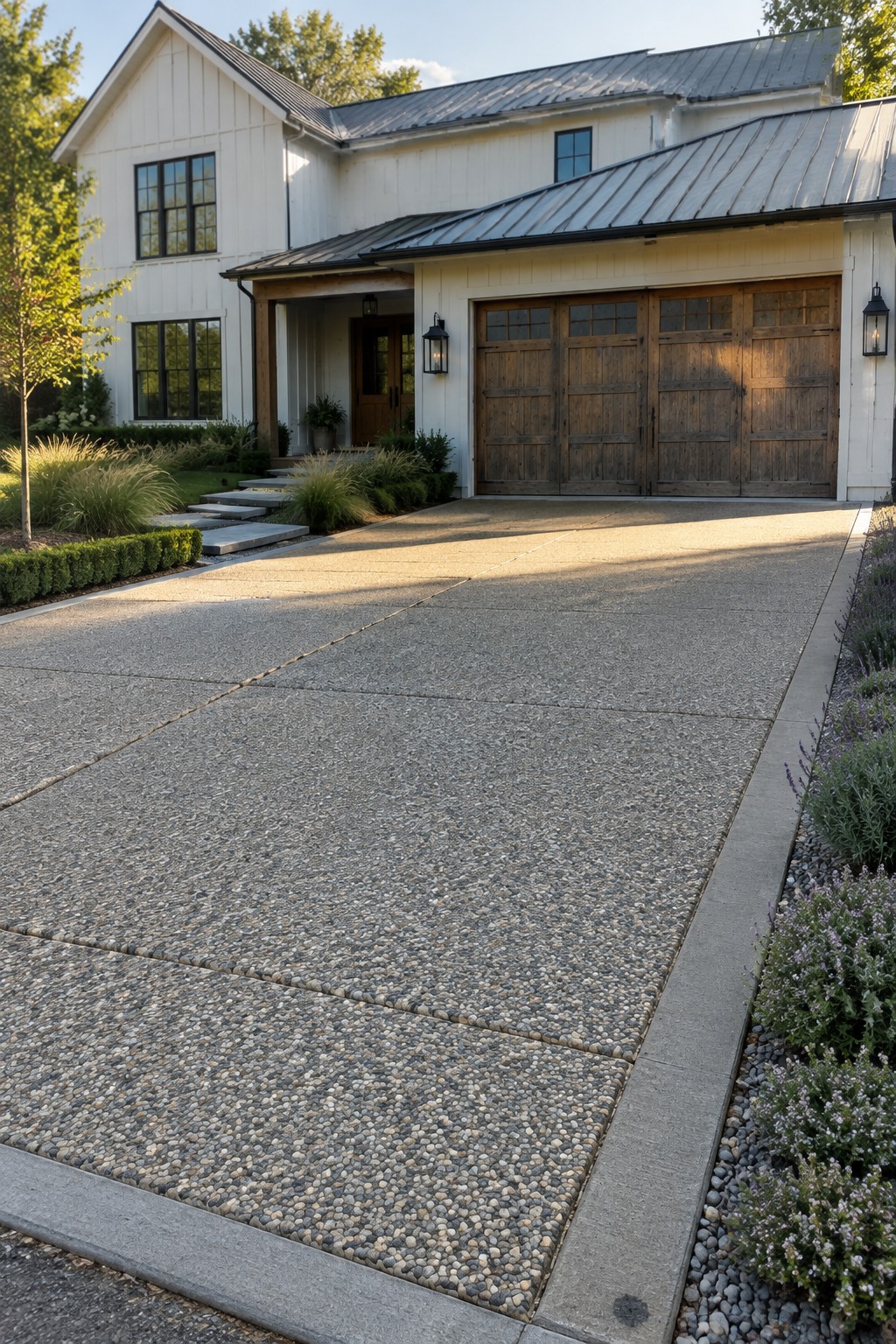
Exposed aggregate gives a concrete driveway a textured surface that stands apart from plain, smooth concrete. The small stones add visual interest while creating a finish that suits a range of home styles.
Use it across the main driveway, and keep the edges simple so the surface remains the focus. A restrained border can help define the driveway, but avoid adding too many competing materials.
Use Exposed Aggregate For A Defined Driveway Path
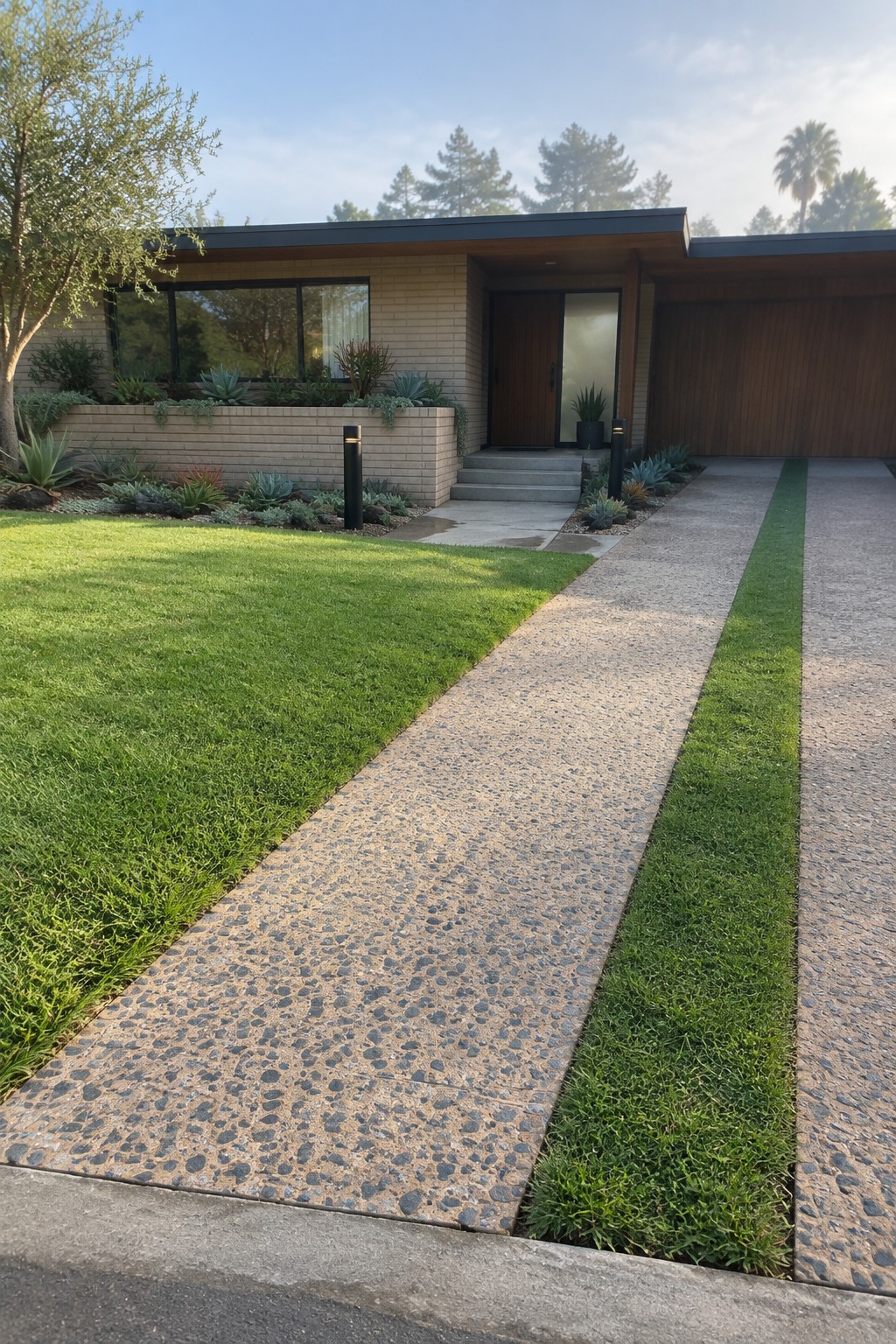
Exposed aggregate can make a concrete driveway feel more considered without adding a complicated pattern. The small stones give the surface texture, while a narrow strip of grass separates the two driving lanes and makes the route to the house easy to read.
This layout works well on a modern home where a broad, uninterrupted slab might feel too plain. Keep the grass strip wide enough to maintain easily, and choose an aggregate blend that suits the house exterior. A textured finish can be less slippery than smooth concrete, though it still needs proper drainage.
Use Exposed Aggregate for a Natural-Looking Driveway
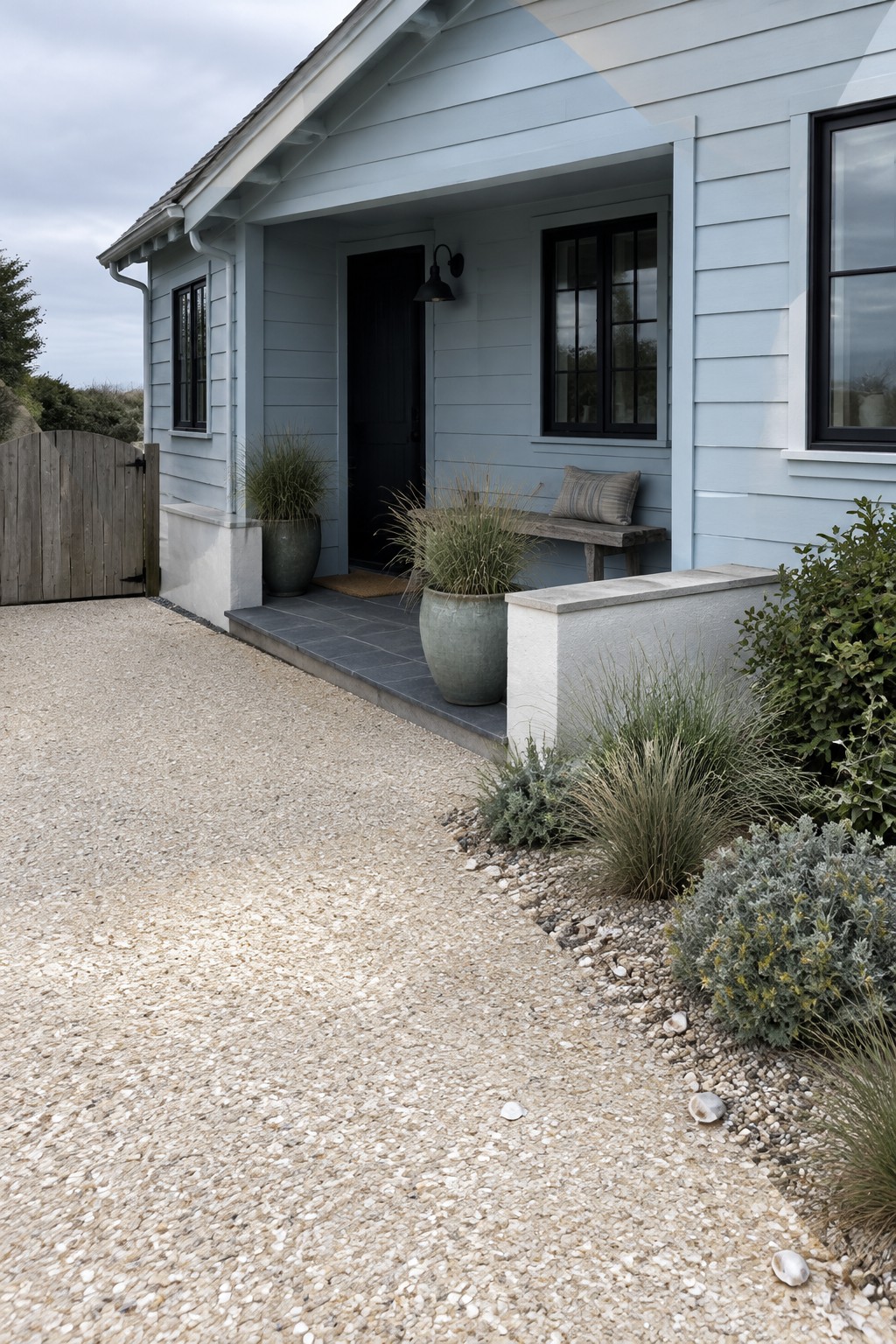
Exposed aggregate gives a driveway a textured, stone-like finish that suits a relaxed coastal-style home. Its mix of small stones looks less stark than plain concrete and works especially well beside simple siding and restrained planting.
For a similar effect, choose aggregate colors that fit the house and nearby materials. Keep the finish consistent across the main driveway area, and consider a smoother border if you want a clear edge. Make sure the surface is sealed and finished with enough texture for good traction.
Choose Exposed Aggregate for a Practical Driveway Finish
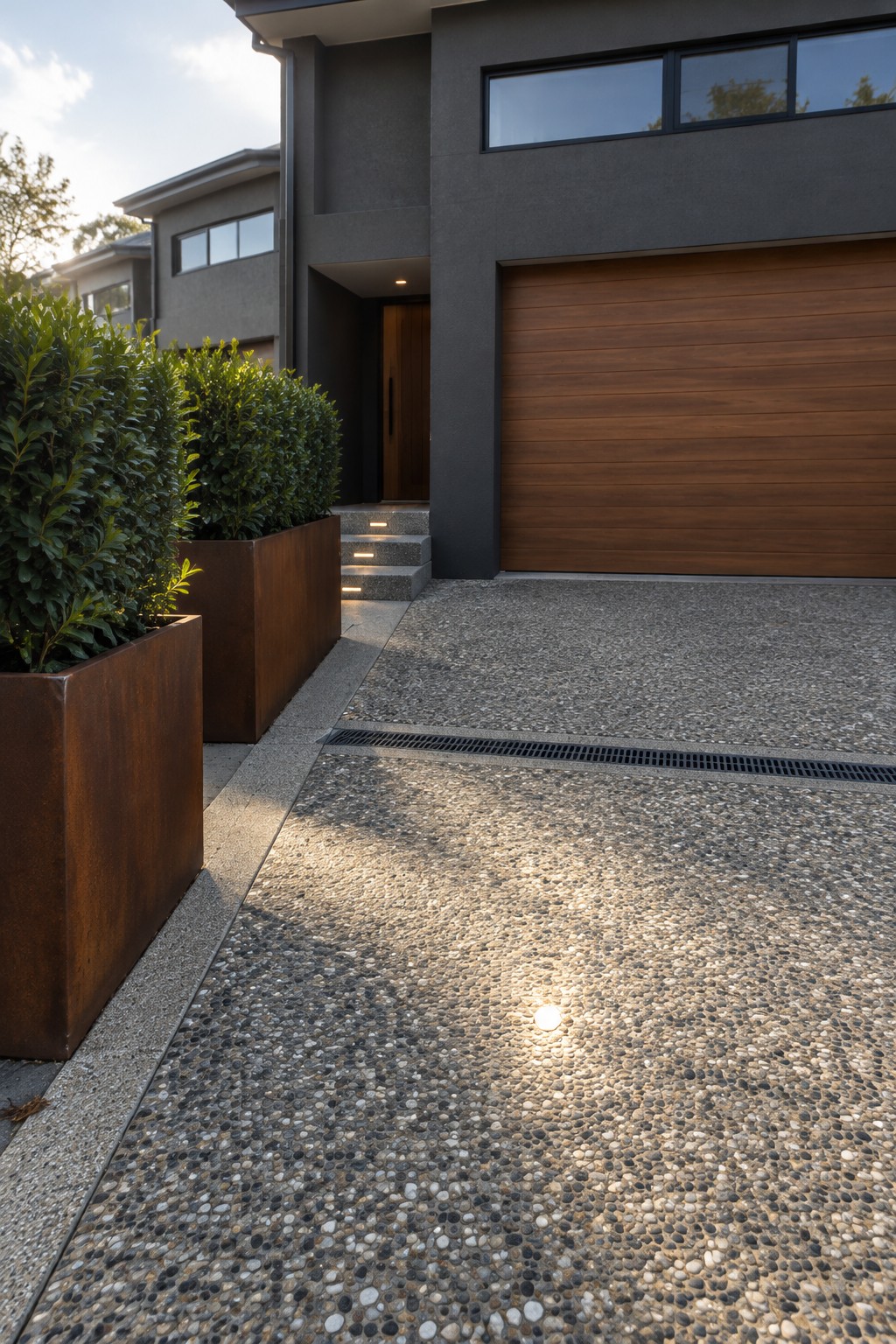
Exposed aggregate gives a concrete driveway a textured surface that feels less plain than a smooth pour. The mix of visible stones adds pattern, while the finish suits modern homes without competing with the facade.
It works especially well on broad driveways, where the texture has room to show. Ask your contractor to confirm the aggregate and sealer options, since they affect the final color and how easy the surface is to maintain.
Use Exposed Aggregate for a Circular Driveway Detail

A simple circular inset gives an exposed aggregate driveway a clear focal point without changing the finish across the whole surface. The ring of contrasting stone around the center makes the detail easy to notice and helps break up a broad expanse of concrete.
This idea works well in a spacious front drive, especially when there is room to turn around the circle. Keep the border simple and choose a finish that complements the aggregate, so the design feels connected rather than busy.
Use Exposed Aggregate To Lead The Way To The Entry

An exposed aggregate driveway can include large concrete pavers to make the route to the front door easy to follow. The change in texture gives the path a clear edge without needing a separate border.
This approach suits homes where the driveway also serves as the main walkway. Keep the pavers wide enough for comfortable steps, and use a finish that provides good grip when wet.
Use Exposed Aggregate to Define the Driveway
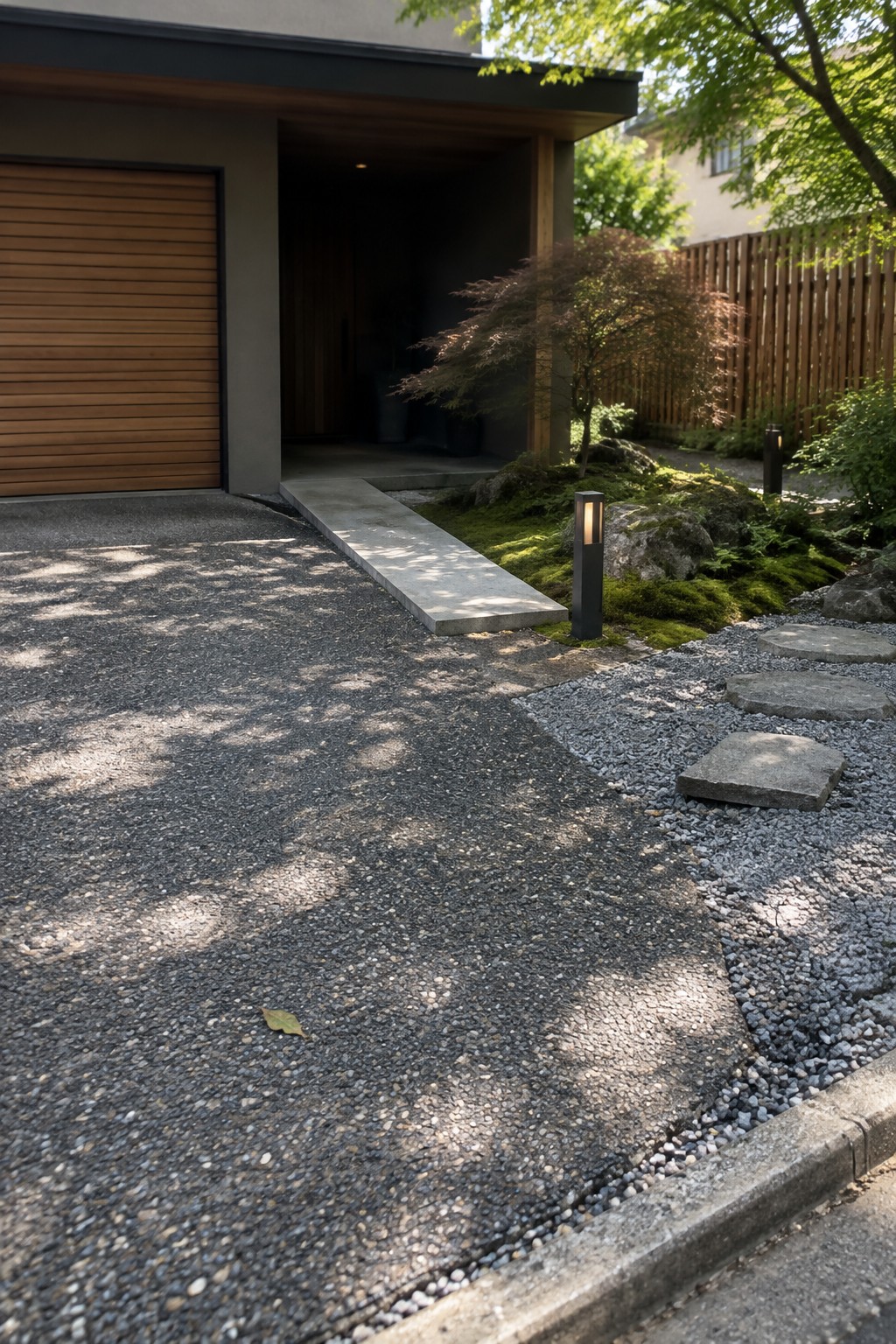
Exposed aggregate gives a driveway a textured, varied finish that feels more natural than a plain concrete slab. Here, the dark surface helps mark out the main parking area while the lighter gravel along its edge creates a clear boundary.
This finish works well for a modern home where a simple driveway needs a little visual interest. Use a clean edge where the aggregate meets gravel or planting, and keep the surface sealed and maintained to help it hold up to regular use.
Use Pebble-Finish Concrete for a Garden Path

A pebble-finish concrete path is a useful way to bring exposed aggregate into a home’s outdoor design. The small stones give the surface texture and a more natural look than plain concrete, which suits a cottage-style garden.
This finish works well on a curved path leading to an entry or through a planting bed. Keep the route wide enough for comfortable walking, and choose aggregate colors that sit well with nearby stonework.
Use Exposed Aggregate for a Welcoming Entry Path
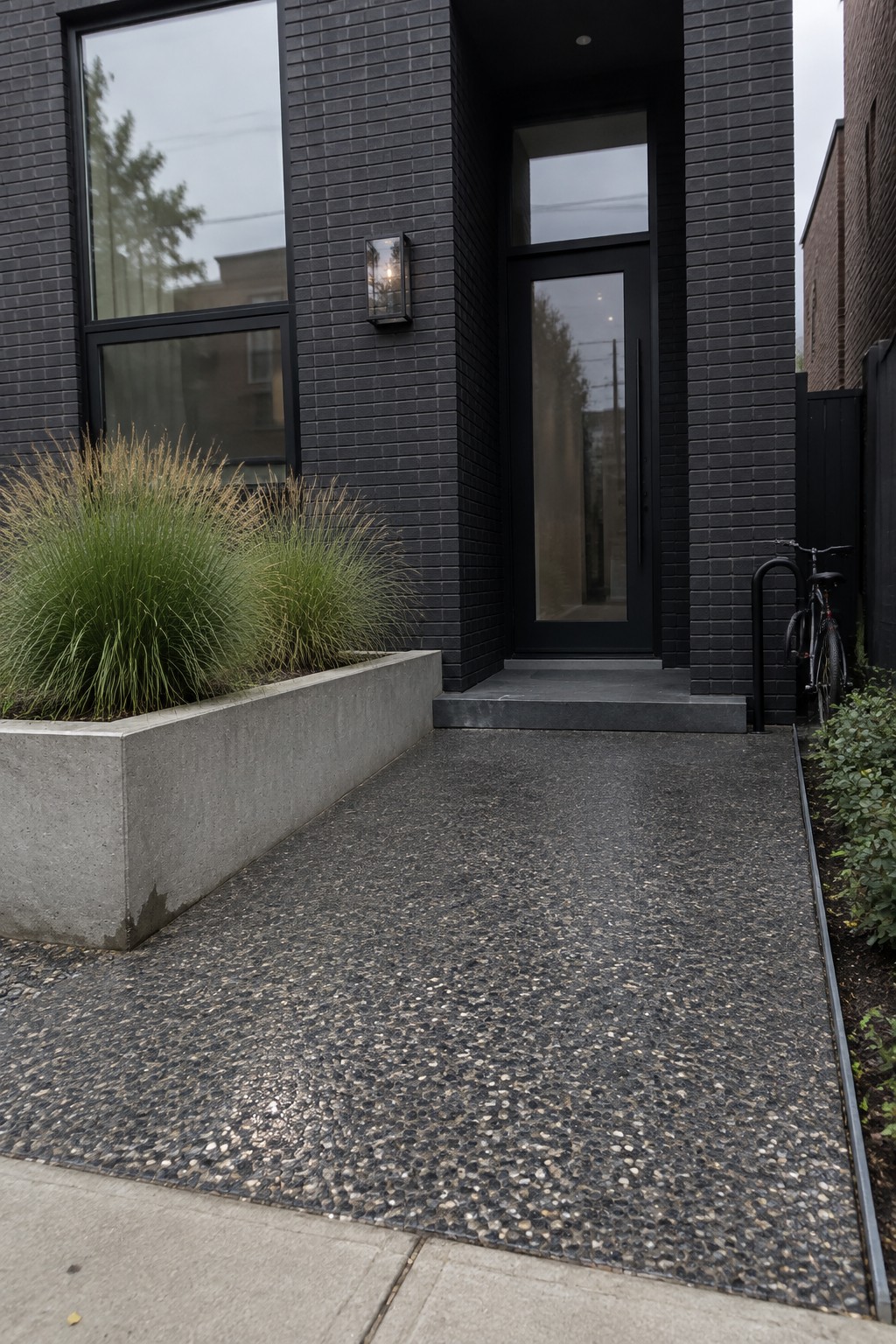
Exposed aggregate can make the path to a front door feel like a clear part of the home’s design. Its small, visible stones add texture to concrete, while the dark finish suits a modern brick exterior.
This finish works well for a straight entry walk or a wider approach to the door. Choose a stone blend that complements the brick, and make sure the surface is finished for good grip when wet.
Break Up a Concrete Driveway With Aggregate Bands

Exposed aggregate works well for a long driveway because its pebbled surface gives the concrete more texture and helps broad areas feel less plain. Smooth concrete strips running across the drive add a simple rhythm without changing the overall layout.
This approach suits modern homes and sloped or stepped entries where a clear route to the door is useful. Keep the bands wide enough for comfortable walking, and choose a restrained color contrast so the surface still feels cohesive.
Let a Gravel Path Lead to the Front Door
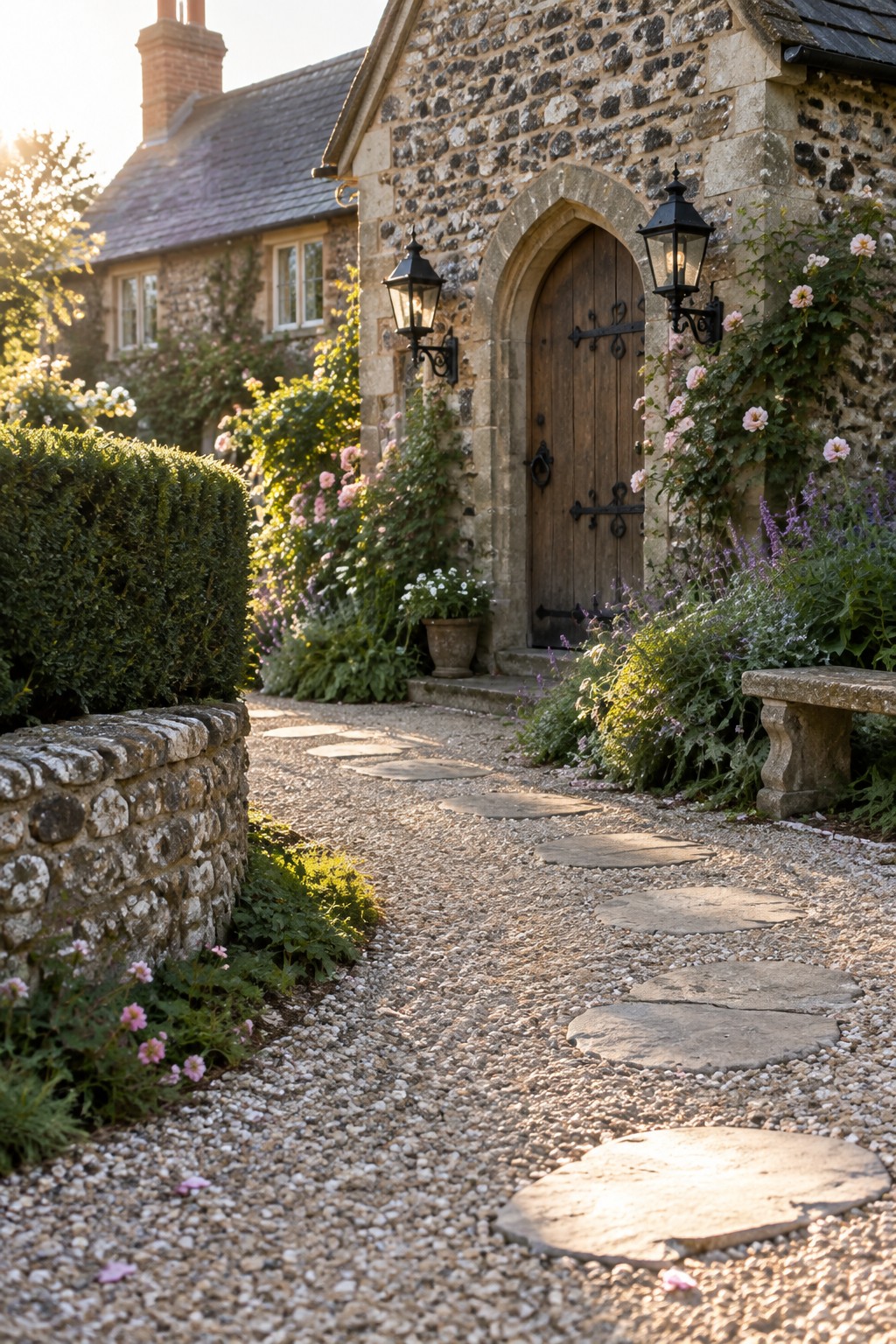
A gravel path with stepping stones is a simple way to make a front entry feel clear and easy to reach. The stones give you a steadier walking surface, while the gravel fills the space between them.
This approach works well for cottage-style homes and gardens, especially where a wide paved walk would feel out of place. Keep the stones spaced comfortably for a natural stride, and use compacted gravel so the path stays easier to walk on and maintain.
Use Exposed Aggregate to Set Apart Driveway Sections
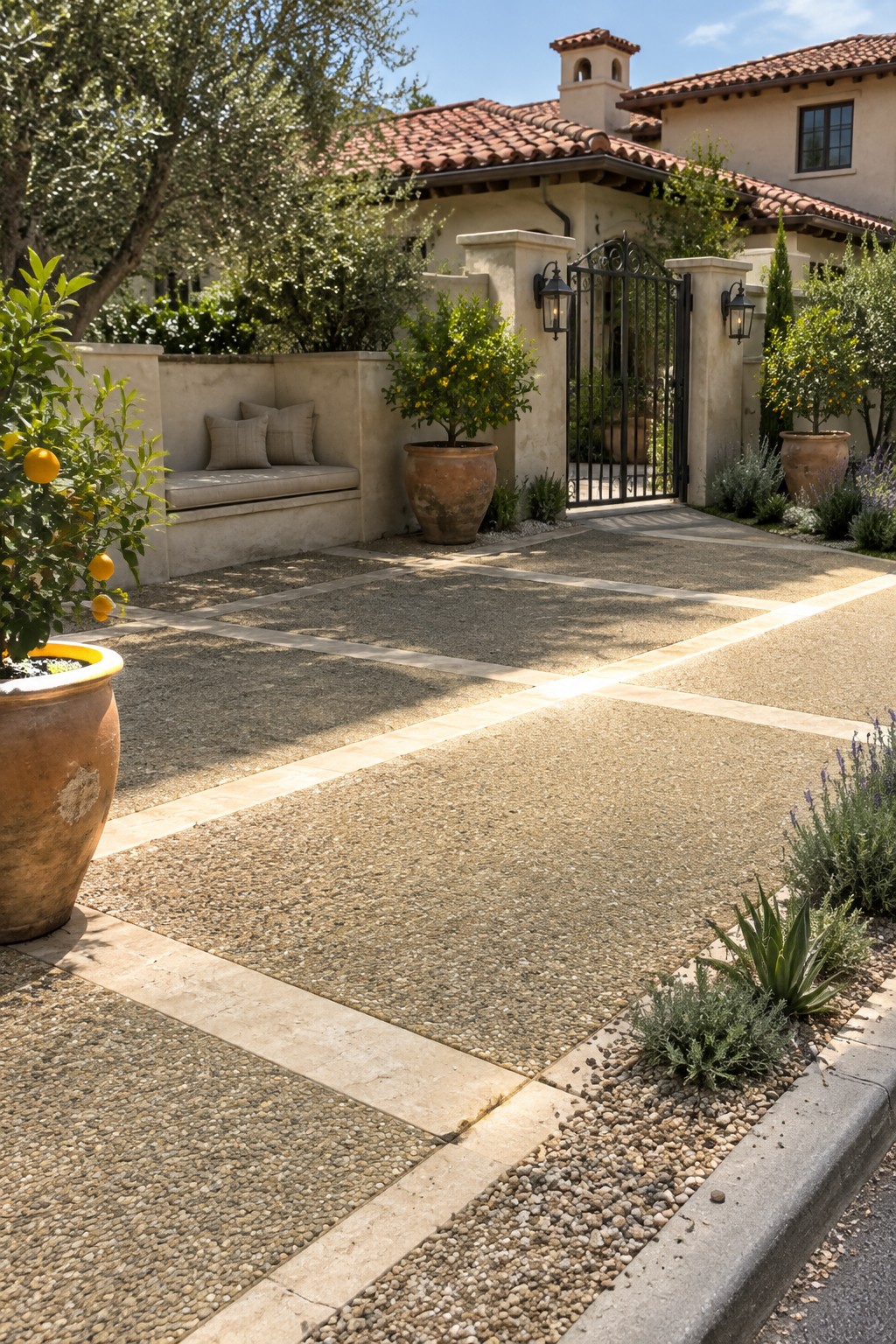
Exposed aggregate can make a broad driveway feel more considered without relying on a complicated pattern. Here, pale stone bands divide the pebble-finish surface into clear sections, giving the paving a neat, intentional look.
For a similar effect, keep the bands simple and use a contrasting stone or concrete finish. This approach suits a wide driveway or entrance court, but the main surface should remain even and easy to drive or walk across.
Use Pebble-Finish Concrete for a Curving Driveway
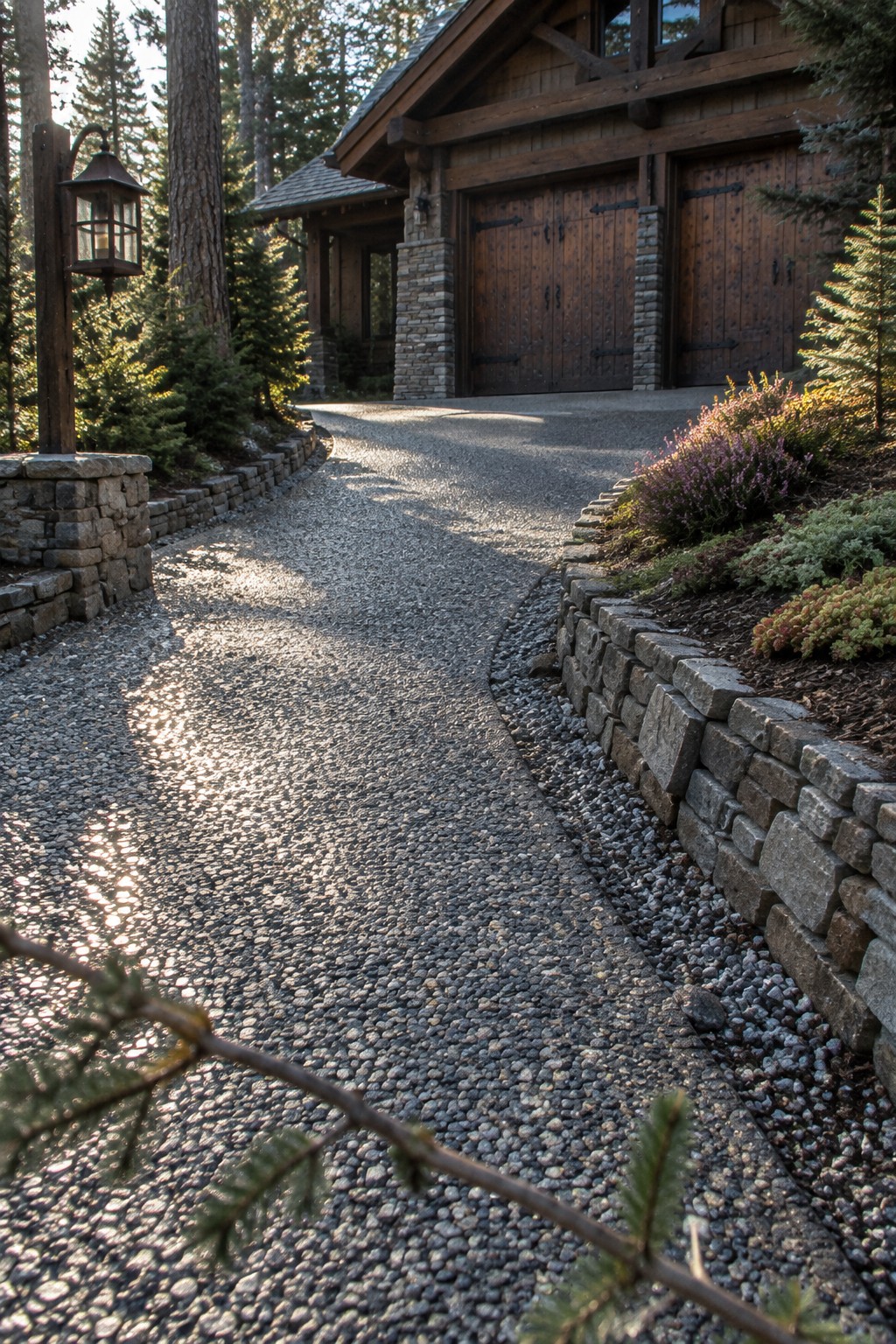
A gently curving exposed-aggregate driveway can make the approach to a home feel more natural than a straight run. The small stones give the concrete a textured finish, while the bend adds interest without needing a complicated pattern.
This approach works especially well on wooded or sloped lots, where a curve can follow the shape of the land. Keep the curve broad enough for cars to turn comfortably, and use simple stone edging to help hold the driveway’s shape.
Add a Circular Detail to an Exposed Aggregate Driveway

A round inset can break up a broad exposed aggregate driveway without changing its practical, textured finish. Here, a circular stone pattern gives the open paving a clear focal point near the entry.
Use a simple circle where a driveway has enough room to show it off, such as in a wide approach or turning area. Keep the inset flush with the surrounding surface so it remains easy to drive and walk across.
Use Pebble-Finish Concrete for a Front Walk
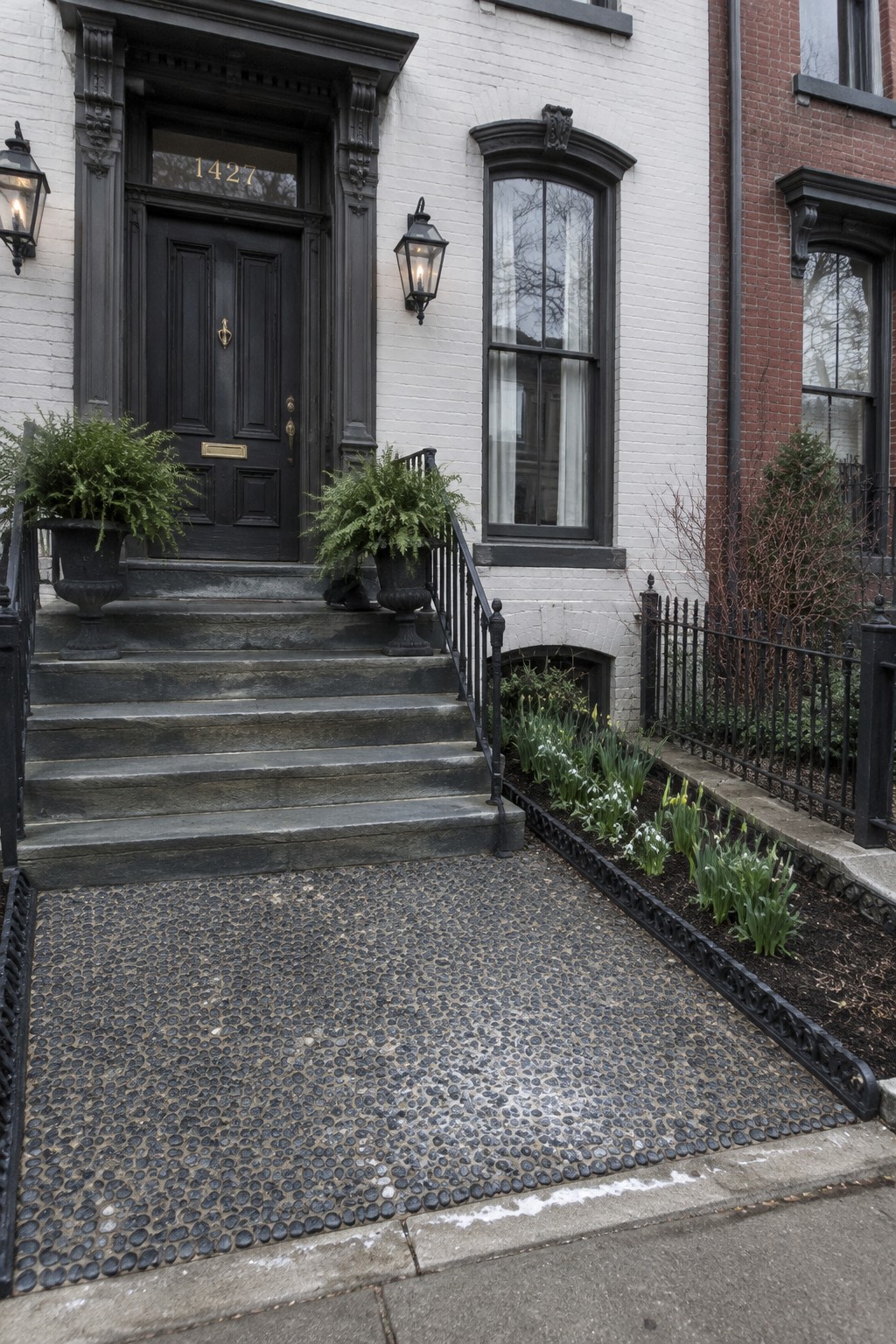
A pebble-finish concrete walk gives a front entry a sturdy, textured approach. Its small stones add grip and a more varied look than a plain poured surface, while the concrete keeps the path firm underfoot.
This finish works well for a straight walk or a wider approach leading to the steps. Keep the surface even and the joints well placed so it stays comfortable to walk on and easier to maintain.
Use Exposed Aggregate to Shape a Curved Driveway
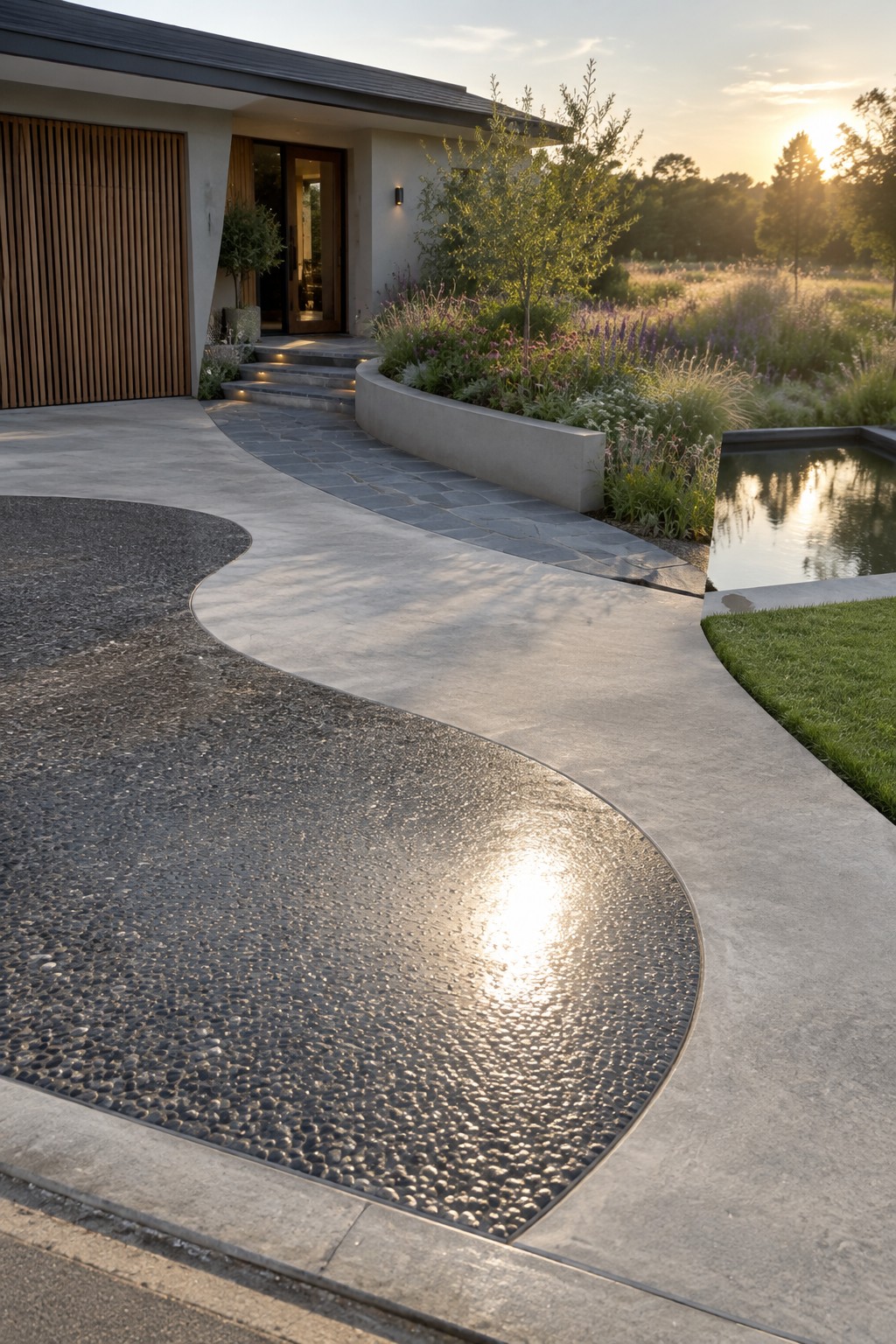
A curved driveway can feel more considered than a straight strip of paving, especially when exposed aggregate gives it a clear, textured surface. Here, the dark pebble finish follows a broad curve beside the smoother concrete, making the change in shape easy to see.
This approach works well for a home with room for a sweeping drive or turning area. Keep the curve wide enough for cars to move comfortably, and use a clean edge where the aggregate meets other paving so the shape stays tidy.
Frequently Asked Questions
Q: Is exposed aggregate too rough to walk on barefoot?
A: It can feel rougher than a smooth finish, especially if the stones are large or sharp. Ask to see a sample and run your hand over it before choosing the aggregate size.
Q: Will exposed aggregate get slippery when it rains?
A: Its textured surface usually offers more grip than smooth concrete, but it can still get slick if algae or grime builds up. A quick rinse and occasional scrubbing help keep the surface safer.
Q: Can I use exposed aggregate just for a border or accent?
A: Yes. Pairing an aggregate band with a smoother concrete center adds texture without covering the whole driveway in stone.
Q: How do I keep the stones from looking dull?
A: Clean the driveway gently and avoid harsh cleaners that could damage the surface. A compatible concrete sealer can bring out the stone color, though you’ll need to reapply it as it wears.
