


A driveway shapes the first impression of a home, so its pattern and color can matter as much as the front entry or the planting along the walk.
Imprinted concrete can suggest natural stone without the uneven surface or upkeep that often comes with individual pavers.
I find the best designs are the ones that suit the house’s exterior and still feel practical for daily parking and turning.
Subtle texture, a restrained color blend, or a clear border can make the surface feel considered rather than busy.
Some of these approaches are worth saving as a starting point, then adapting to your home’s facade, scale, and surroundings.
Use Stone-Look Concrete for a Welcoming Driveway

Imprinted concrete can give a driveway the irregular look of stone without requiring individual pavers. The broad, varied pattern here suits a traditional home and gives the entrance a more finished feel.
This approach works well on a driveway or front walk where you want one continuous surface. Choose a stone pattern and color that fit the house, and make sure the installer includes control joints to help manage cracking.
Use Stone-Look Concrete for a Welcoming Driveway
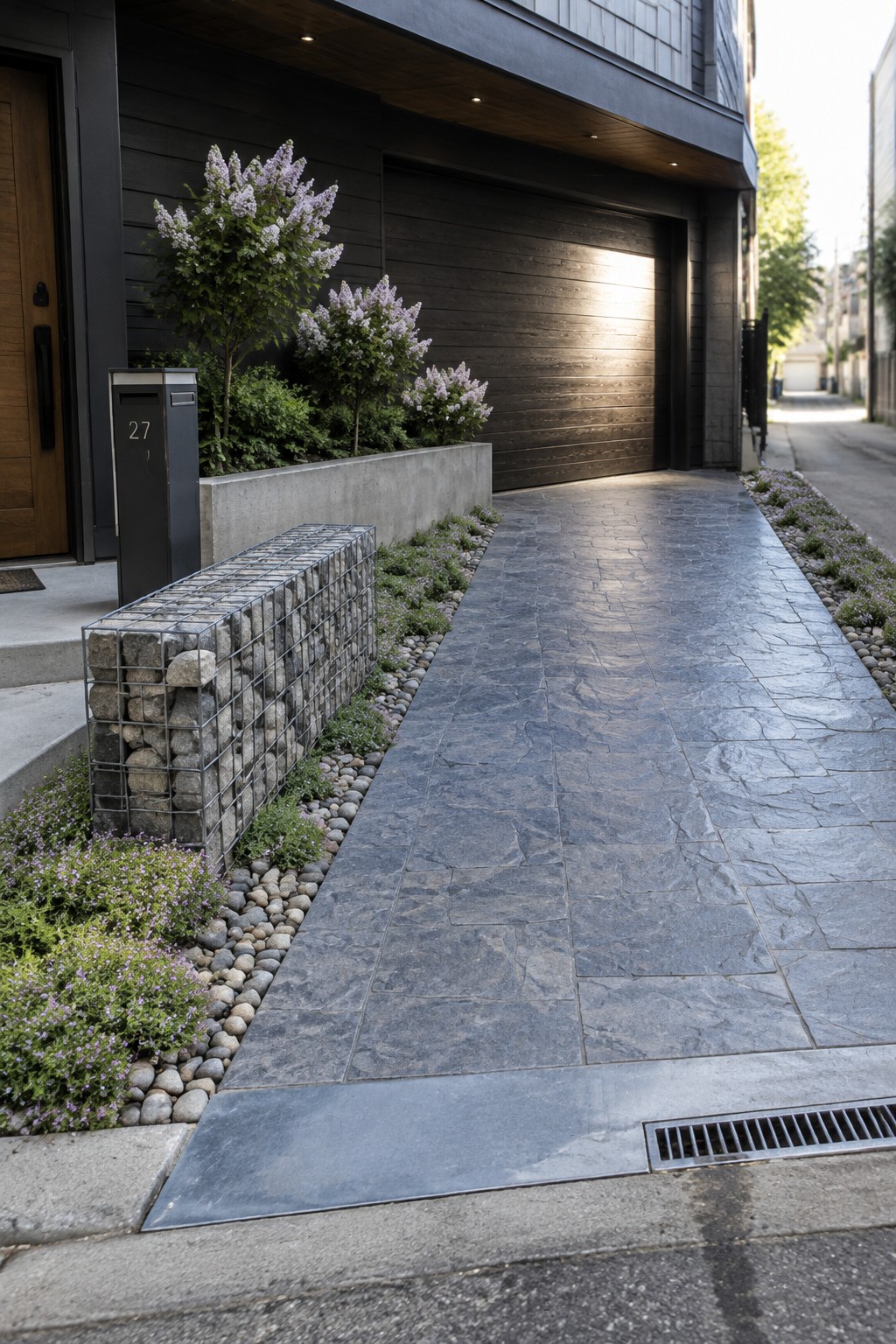
Imprinted concrete can give a driveway the uneven, natural look of stone without requiring individual pavers. The varied slate-like pattern here keeps a long approach from looking like one plain slab.
This finish suits homes where the driveway also serves as the main path to the entrance. Choose a pattern and color that work with the house, and make sure the surface is sealed and graded to drain properly.
Use Stone-Look Concrete for a Curved Driveway
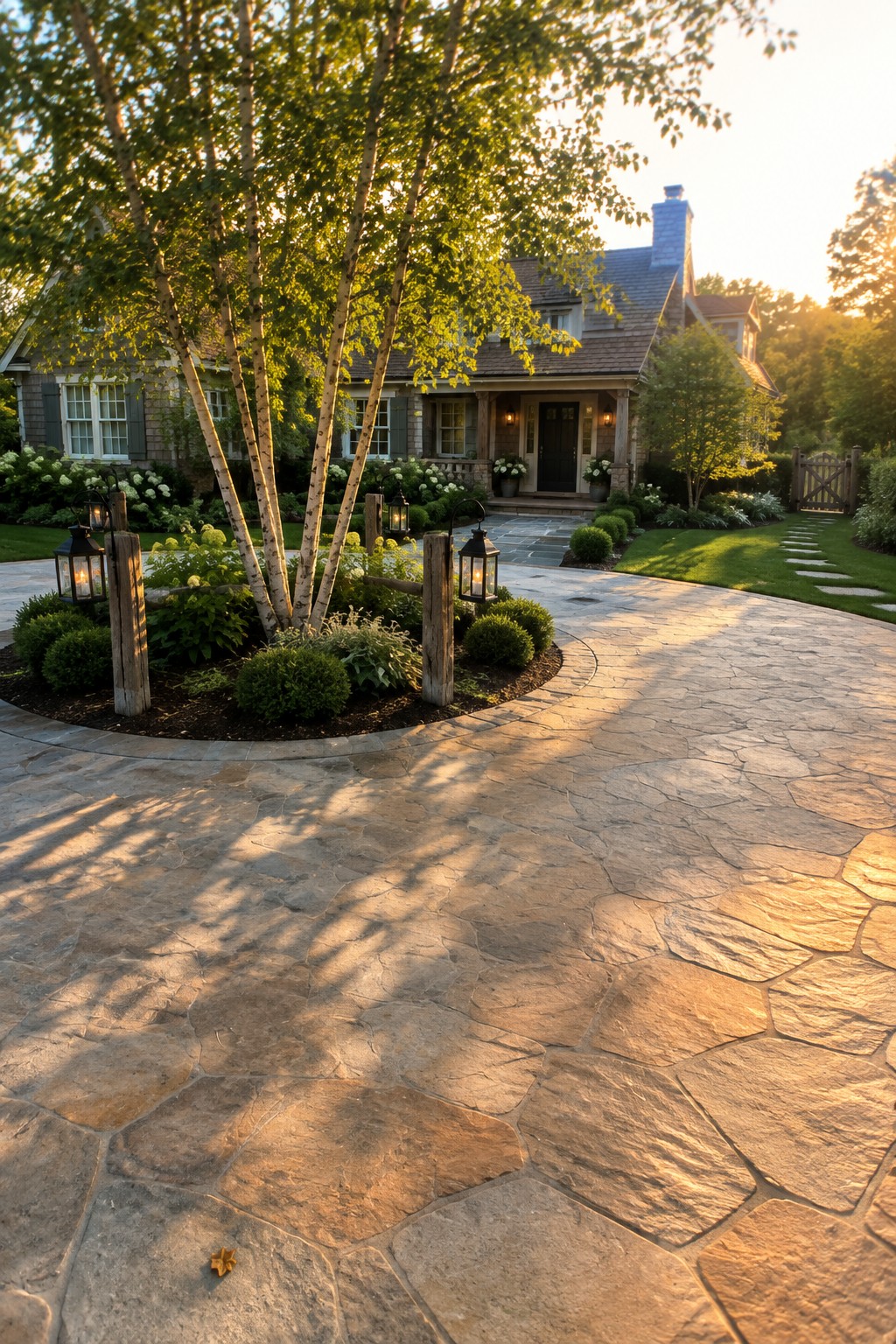
Imprinted concrete can give a driveway the irregular look of natural stone without requiring individual pavers. A curved layout, like the one shown here, also helps the surface feel more connected to the garden than a straight strip of paving.
This approach suits homes with winding entrances or rounded planting beds. Choose a stone pattern and color that work with the house, and make sure the surface has a practical finish for grip and drainage.
Use Large Stone-Look Slabs for a Welcoming Entry
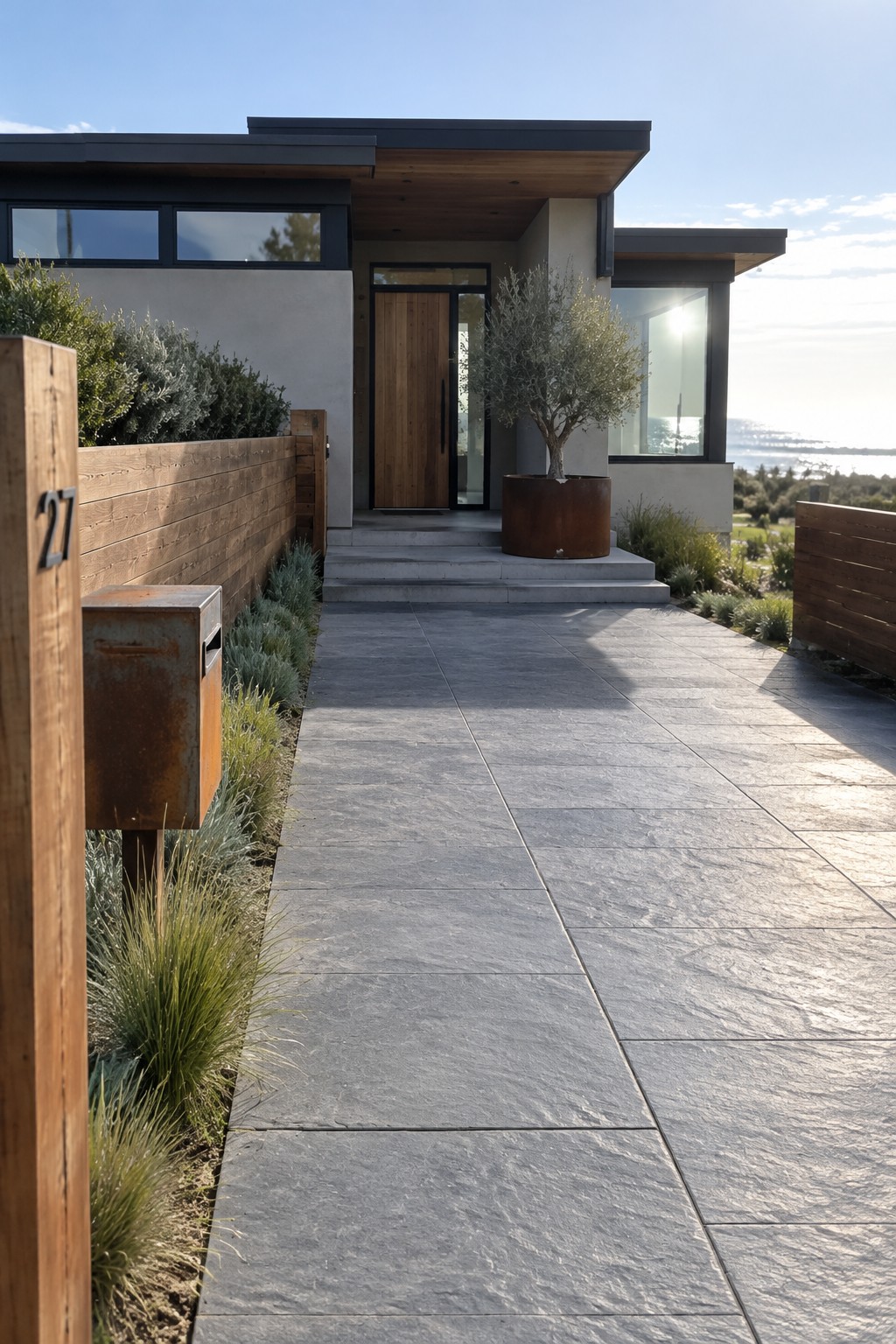
Large concrete slabs with a stone-like finish make an entry path feel tidy and substantial. Their broad surface also gives a driveway or walkway a calmer look than a busy pattern of small pavers.
This approach suits modern homes and works well where a path leads directly to the front door. Choose a muted gray tone and a subtle texture for a natural stone effect, and make sure the slabs have a slip-resistant finish.
Use Irregular Stone-Look Concrete for a Garden Path
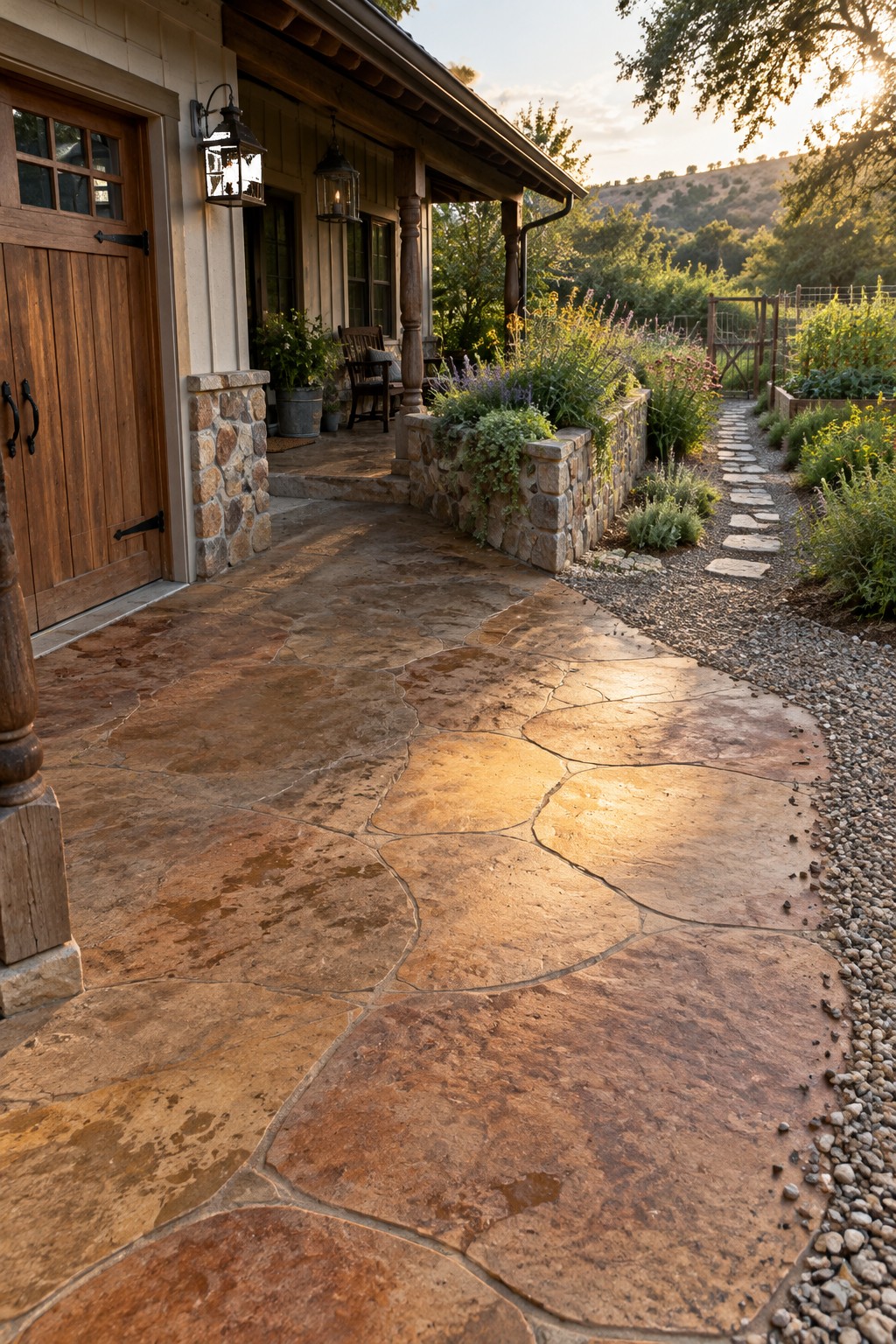
Imprinted concrete can give a path the look of large, irregular stone slabs without the shifting joints that sometimes come with individual pavers. The broad shapes suit a country-style garden and make the route feel like part of the landscape.
Use this finish for a walkway beside the house or through planting beds, and choose a warm, varied color rather than a uniform gray. Keep the edges neat so the path stays easy to follow and maintain.
Use Stone-Look Concrete for a Welcoming Front Walk
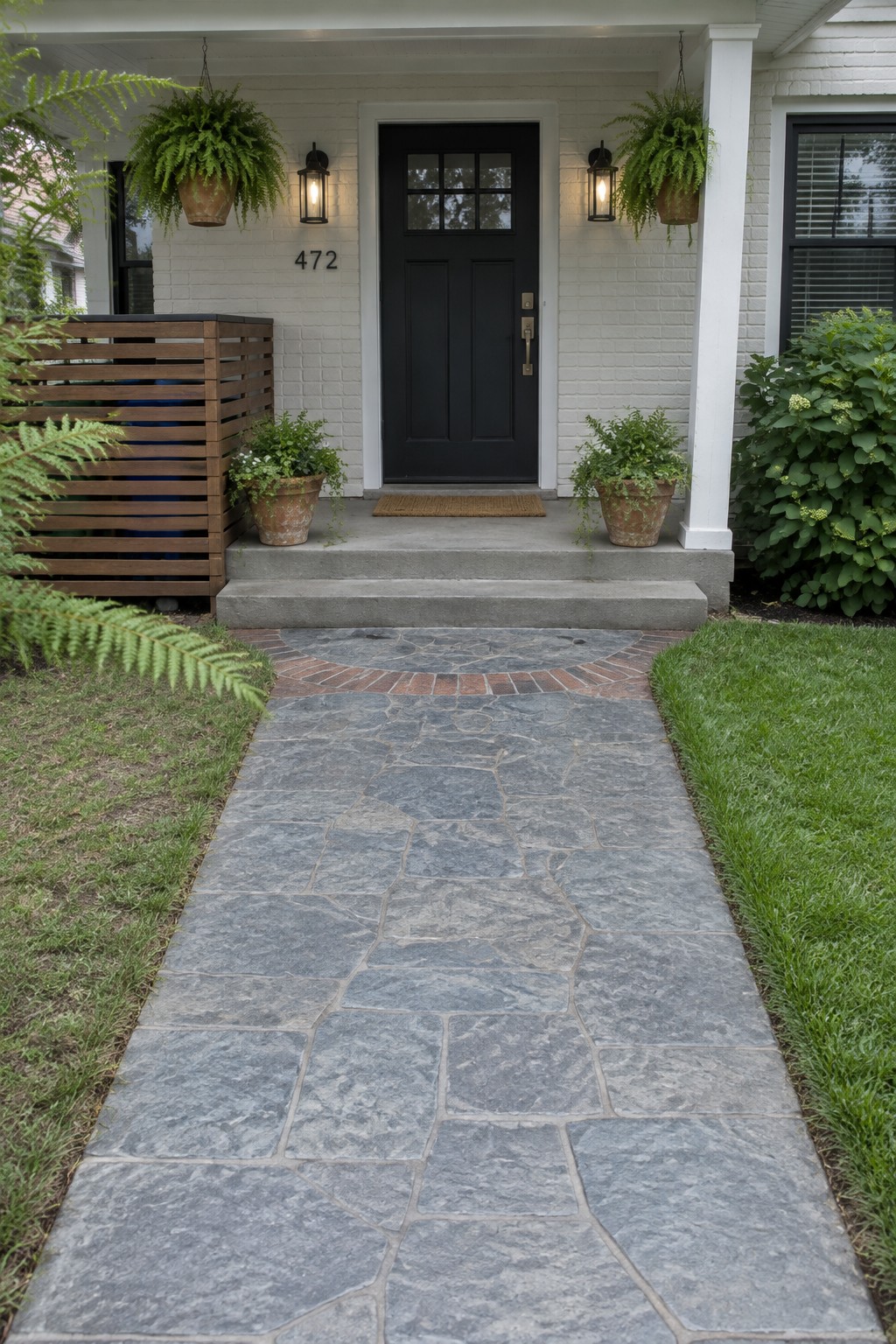
Imprinted concrete can give a front walk the look of irregular stone without the uneven joints and shifting pieces that can come with individual pavers. The gray, stone-like pattern here suits a traditional entry and gives the path a clear route to the door.
This approach works well for a walkway leading to a porch or front steps. Choose a pattern and color that complement the house, and keep the surface gently textured so it remains practical to walk on.
Use Stone-Look Concrete Around an Entry
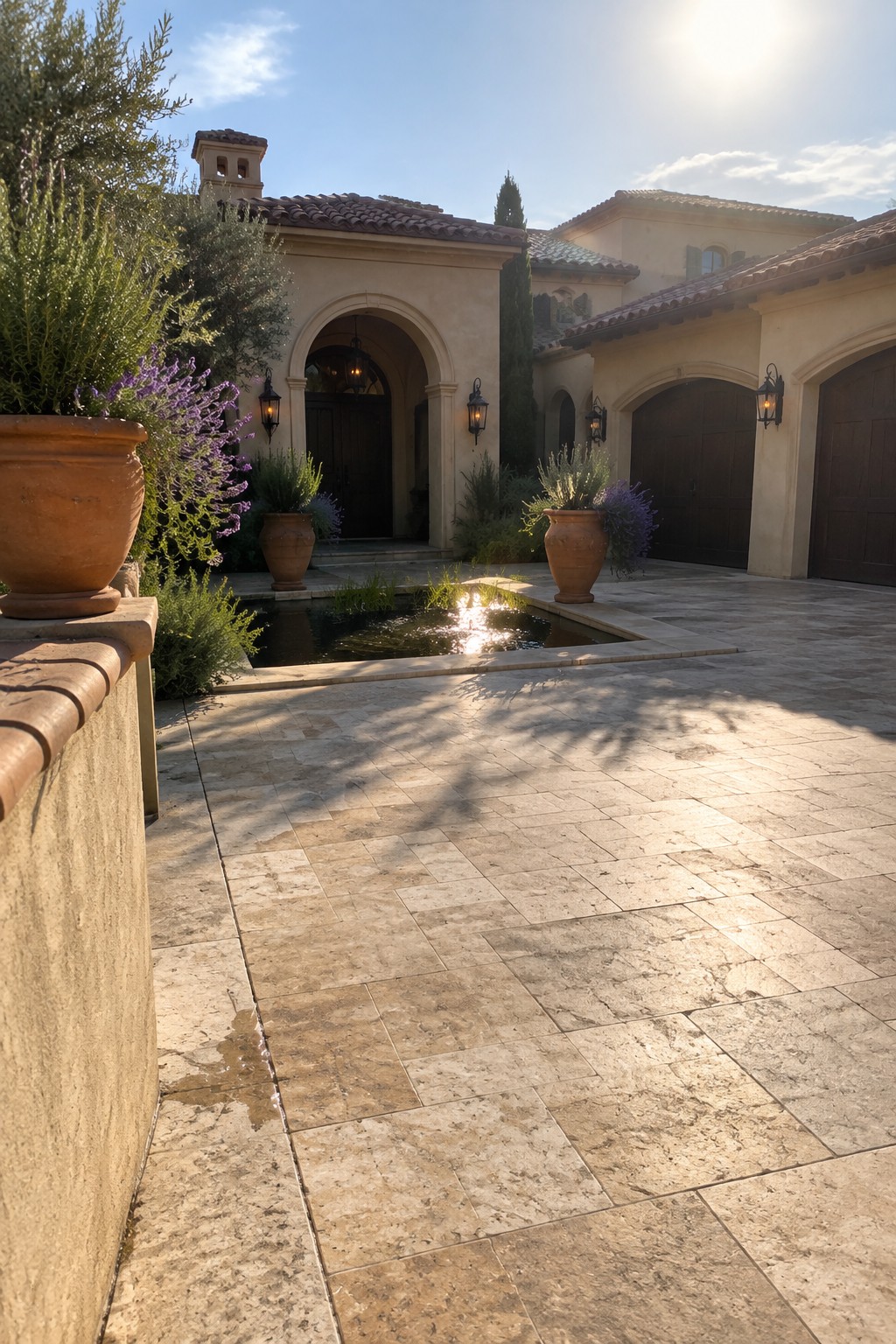
Imprinted concrete can bring the look of natural stone to an entry courtyard without the uneven joints of individual pavers. A warm, varied surface suits a traditional home and gives the approach a consistent finish.
This idea works well where the driveway leads into a courtyard or paved entry area. Choose a pattern and color that complement the house, and make sure the surface has enough texture for traction when wet.
Use Stone-Look Concrete for a Clean Driveway Edge
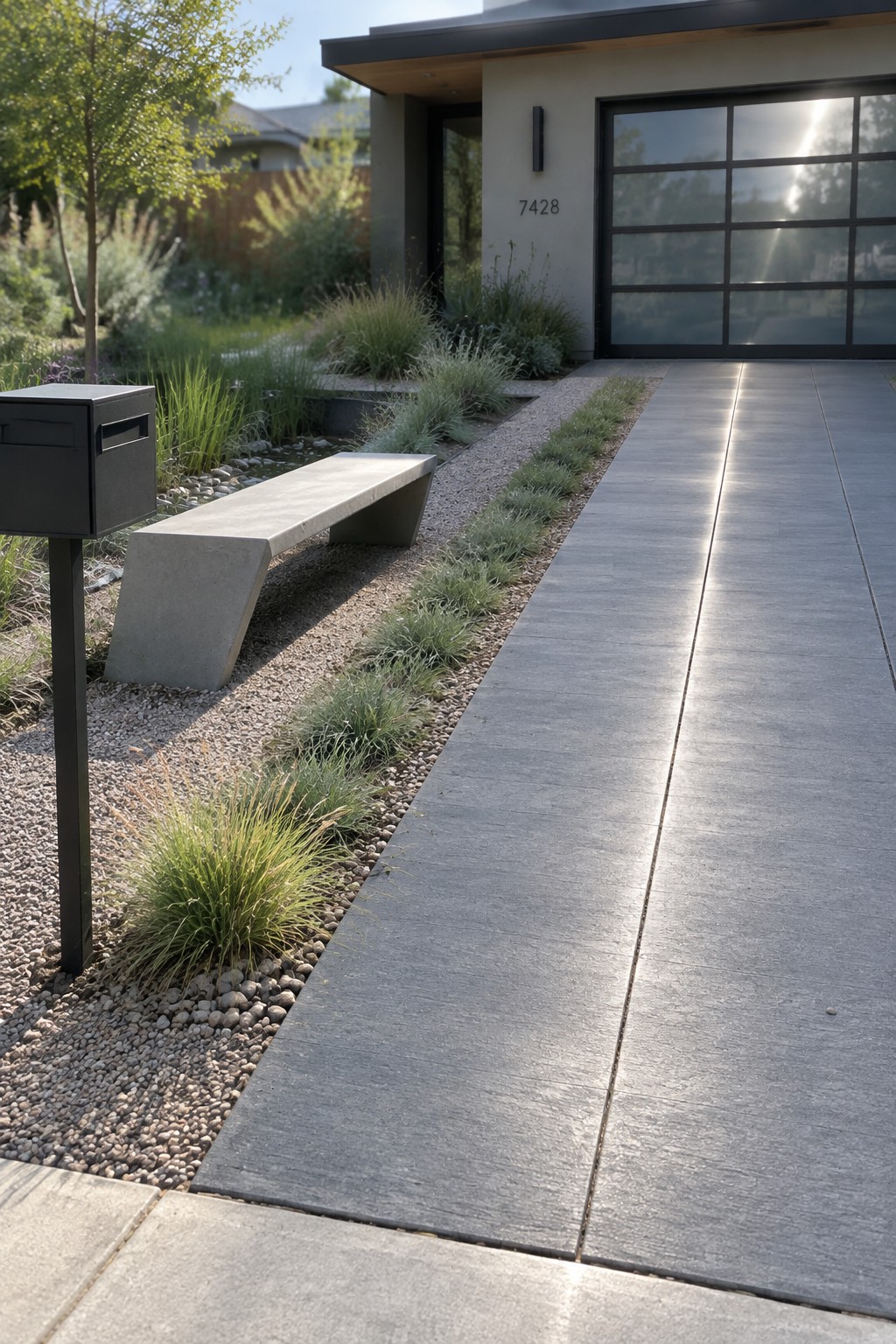
Stone-look concrete can give a driveway a more finished feel than plain poured concrete, while keeping the surface practical for daily use. Here, the large gray slabs make a clear edge beside the gravel planting strip.
This approach works well for modern homes where a simple, orderly entrance suits the architecture. Choose a restrained stone texture, and make sure the joints and finish are suited to vehicles and outdoor conditions.
Choose Imprinted Concrete for a Curving Driveway
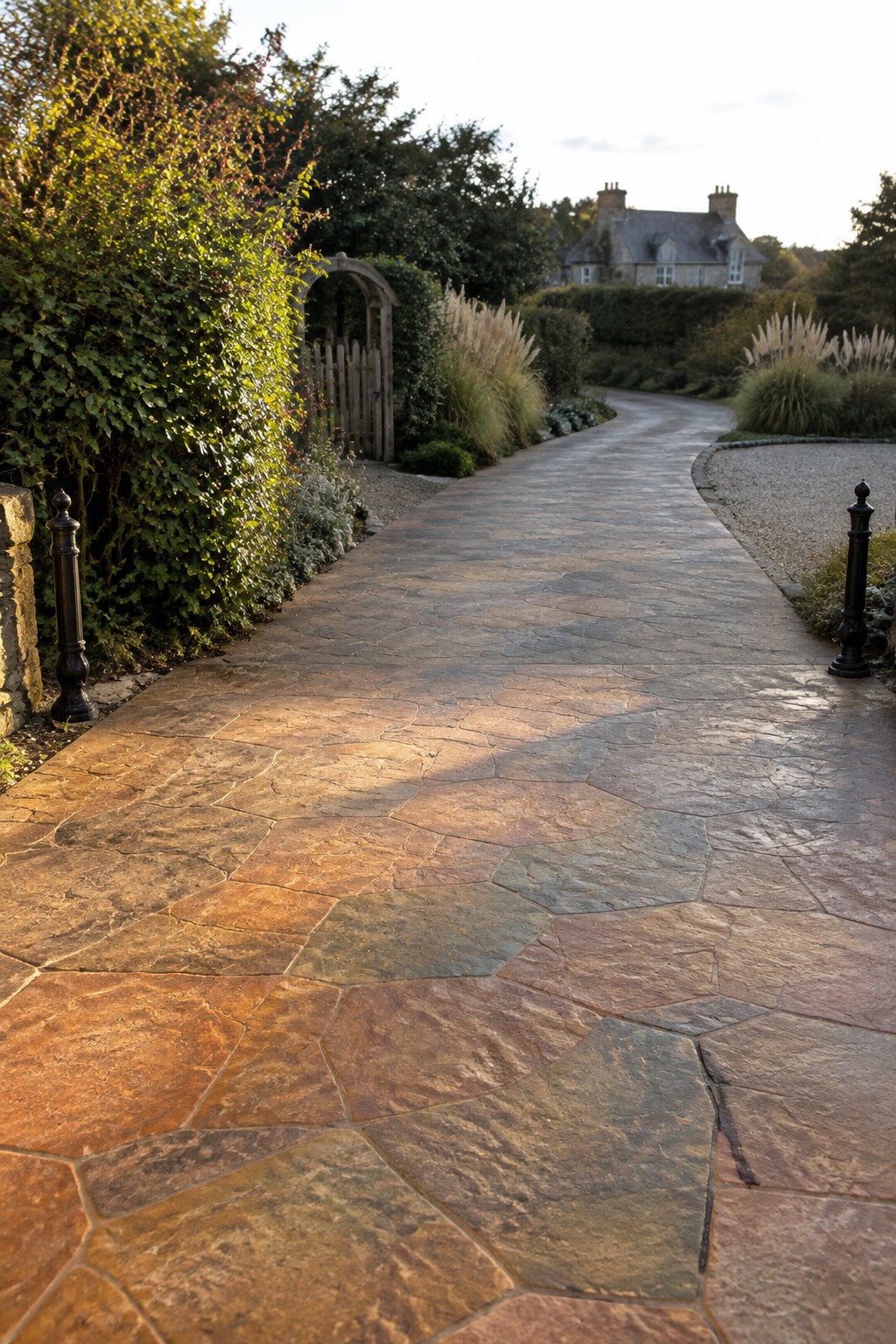
A curved driveway can make the approach to a home feel less severe than a straight run. Irregular stone-like patterns give the broad paved surface a more natural look while keeping it practical for everyday use.
This layout suits homes with enough room for a gentle bend, especially where a path needs to follow the garden. Keep the curve wide enough for cars to turn comfortably, and choose a pattern that remains easy to maintain.
Use Stone-Look Concrete for a Side Garden Path
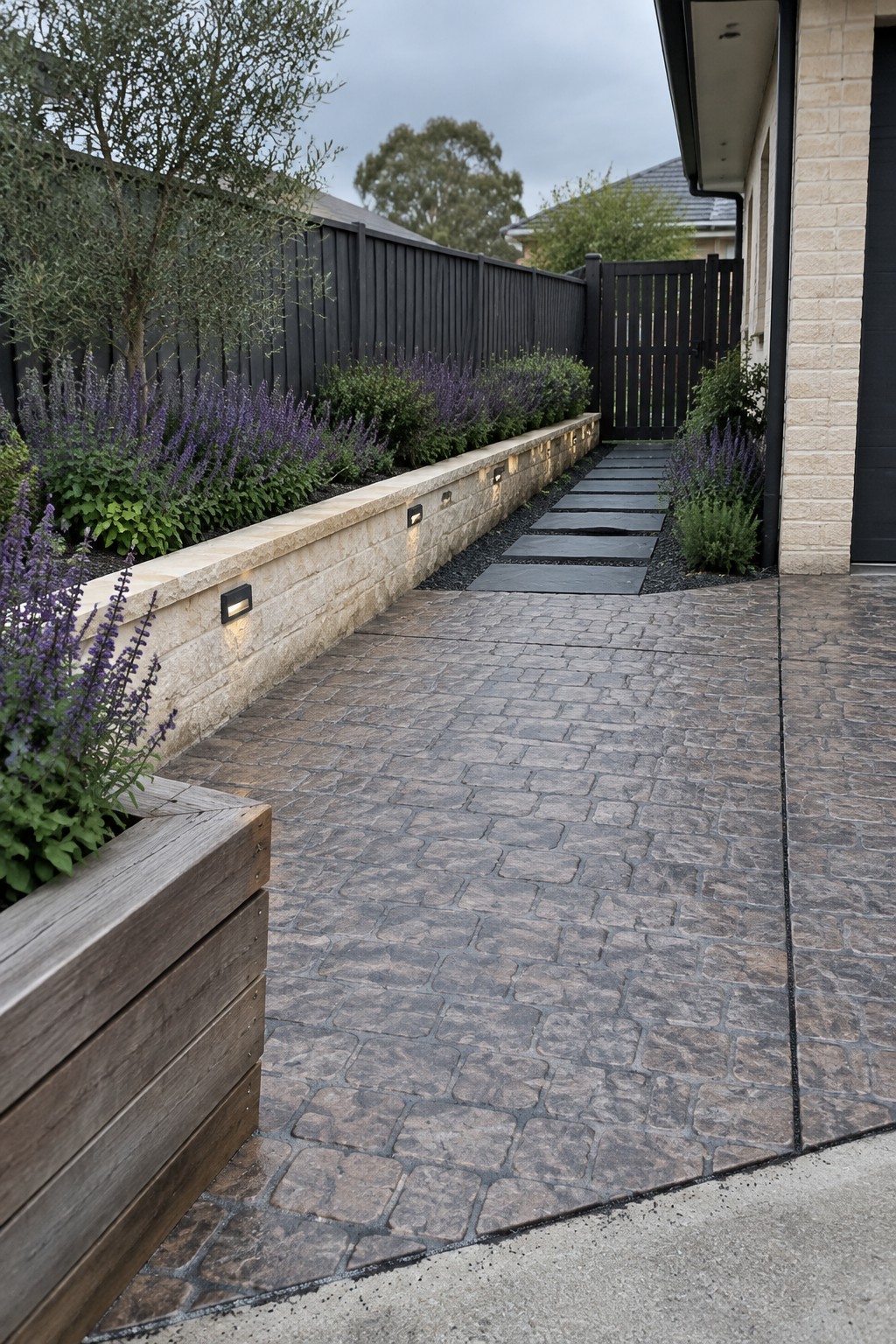
Imprinted concrete can give a narrow side path the look of individual stone slabs without the shifting gaps of loose paving. Here, broad gray step stones sit in dark gravel, making the route to the gate easy to follow.
This approach works well where a side yard is too tight for a wide walkway. Keep the slabs large enough for comfortable steps, and choose a finish that relates to the nearby driveway or patio so the hardscaping feels connected.
Use Stone-Look Concrete for a Welcoming Entry
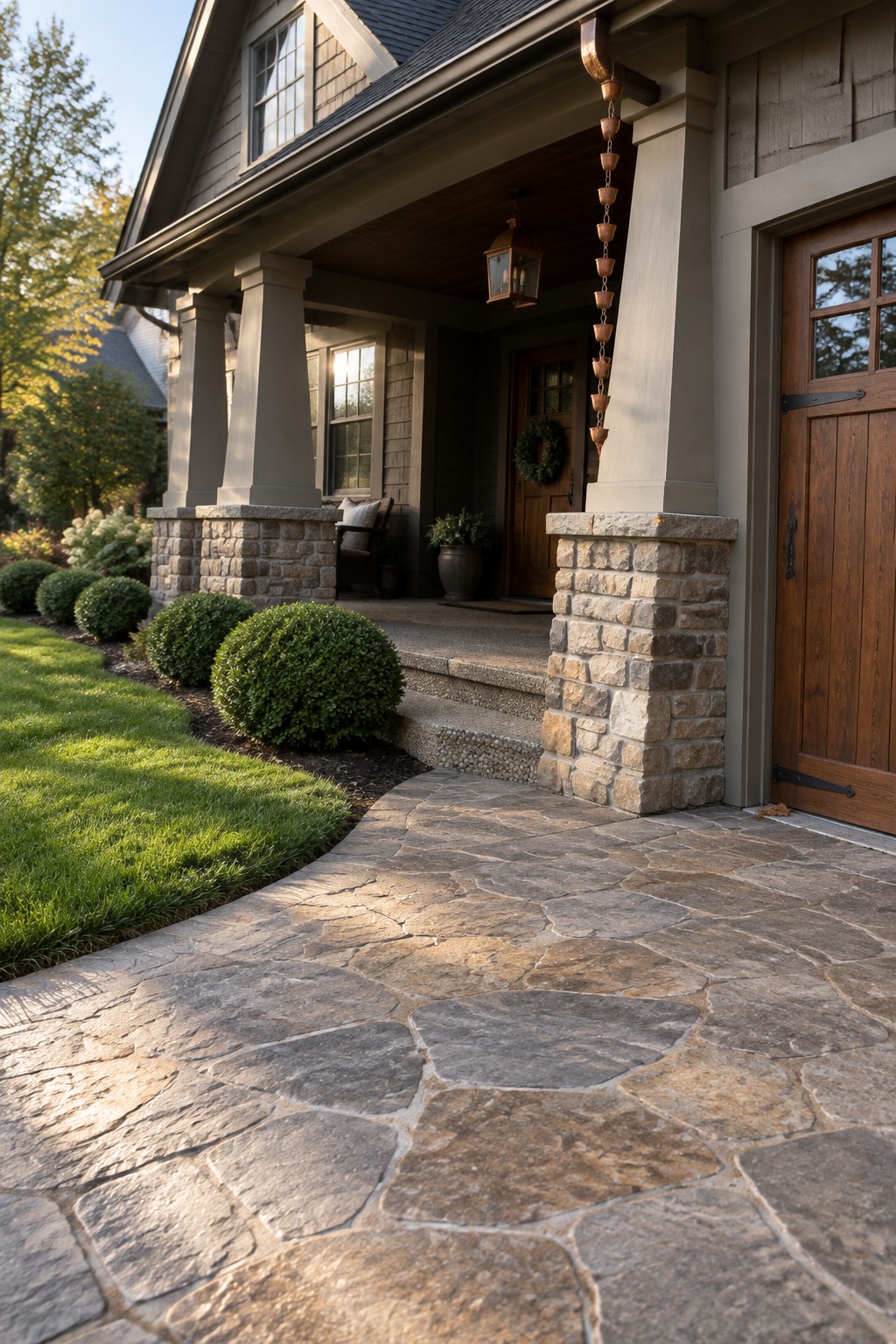
An entry paved with imprinted concrete can give a home the look of natural stone without needing individual pieces fitted together. The irregular shapes and varied earth tones make the approach feel established and suit a traditional house.
This idea works well where a driveway or front walk leads directly to a porch. Keep the pattern and colors fairly consistent across the approach, and choose a finish with enough texture to provide a sure footing.
Use Stone-Look Concrete for a Neat Front Walk
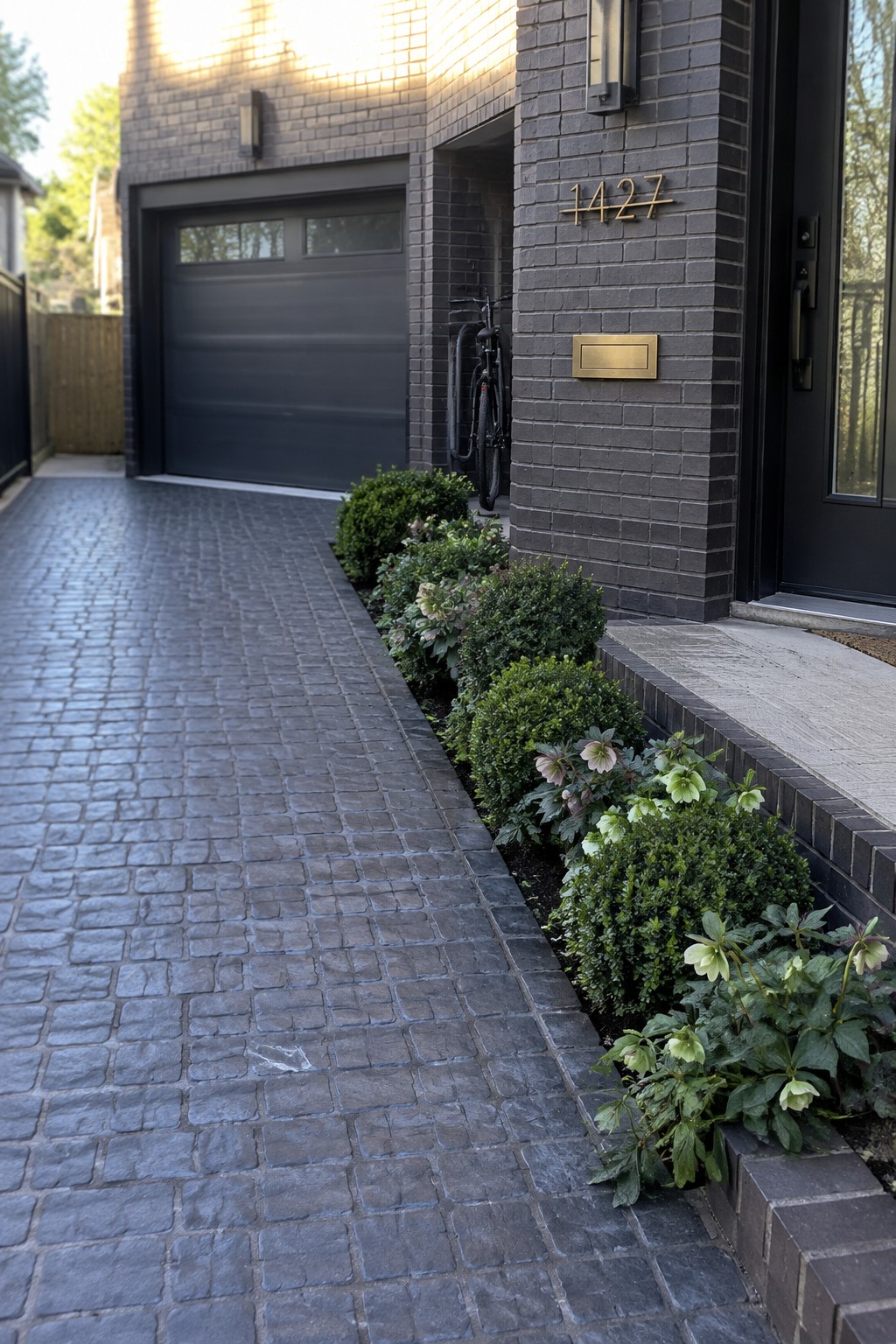
Imprinted concrete can give a front walk the look of individual stone pavers without the shifting joints that often need attention. Here, the textured paving carries the same dark tone as the house, so the approach feels connected to the entrance.
This idea works well for a narrow walk or driveway leading to a modern home. Choose a stone pattern with enough texture to look natural, and make sure the surface is sealed and slip-resistant.
Use Stone-Look Concrete for Garden Steps
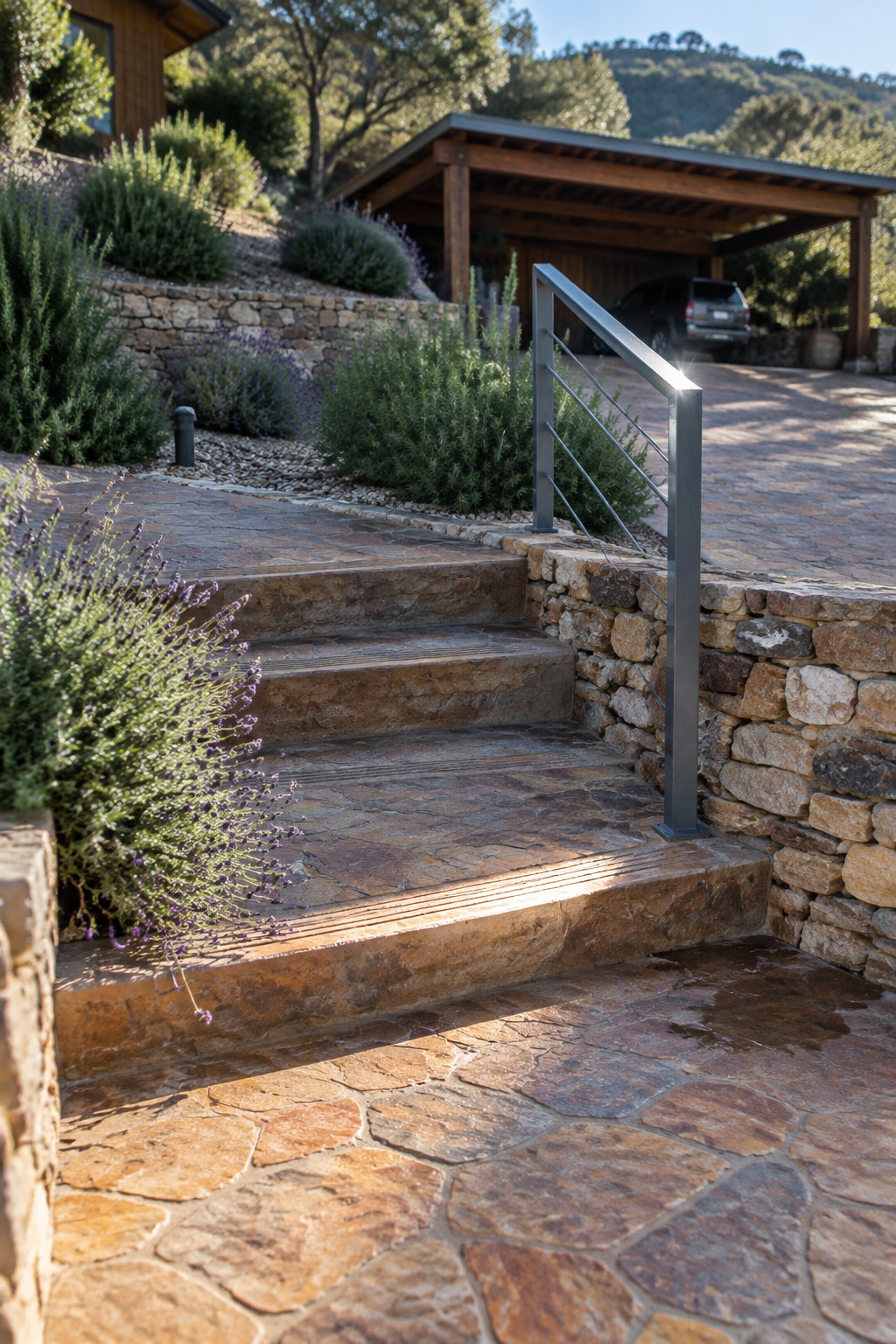
Stone-look concrete can carry the same surface from a driveway or path onto garden steps, so the transition feels intentional rather than like a separate feature. The irregular stone pattern also gives the broad treads a more natural look.
This approach works well on sloped yards where steps connect a drive or entry to planted areas. Keep the finish consistent across the treads and nearby paving, and choose a texture that provides good grip.
Choose Large Stone-Look Slabs for a Modern Approach
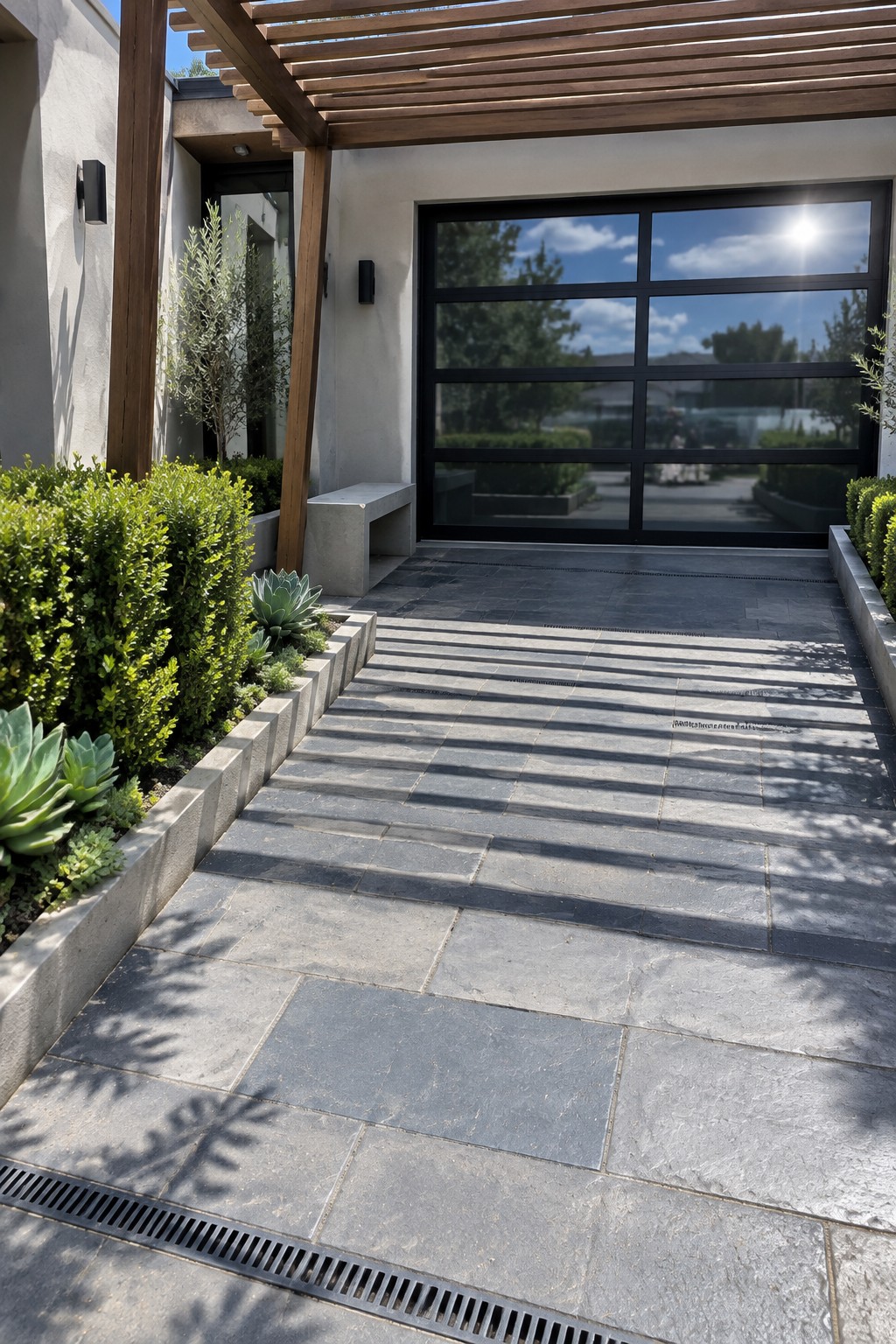
Large concrete slabs with a stone-like surface give a driveway approach a clean, orderly look without the fuss of small pavers. The broad format suits modern homes, and the subtle variation in the gray finish keeps the paving from looking too uniform.
For a similar effect, use larger imprinted sections across the main drive and keep the joints straight and consistent. A darker border or narrow linear drain can help define the edge, but avoid too many competing patterns.
Choose Stone-Look Concrete for a Classic Driveway
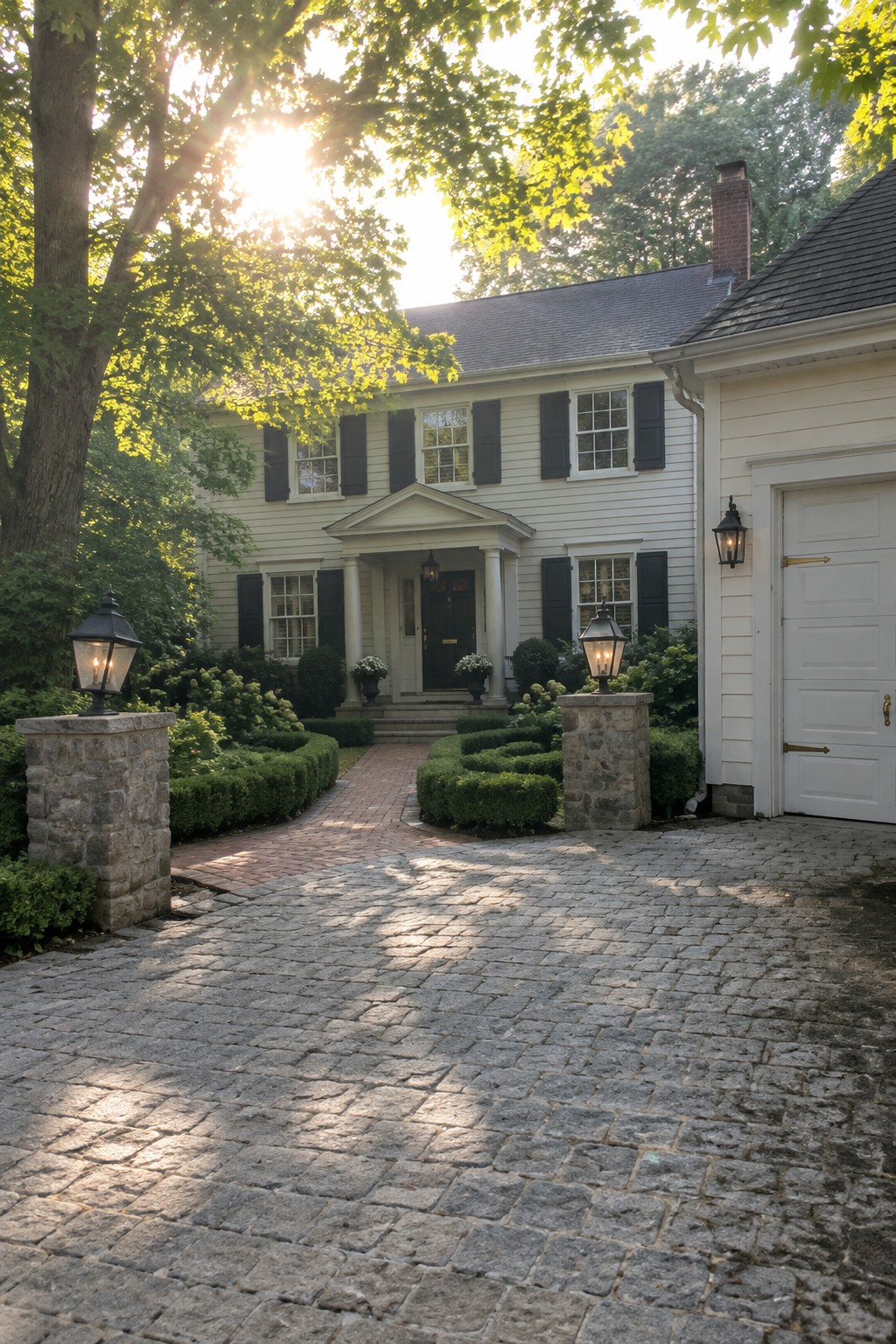
Imprinted concrete can give a driveway the look of old stone paving without the uneven joints that can collect weeds. A muted, varied stone pattern suits a traditional home and makes the approach feel connected to the house.
For a similar effect, choose a pattern and color that work with the exterior rather than competing with it. A broad driveway is a good place to use this finish, but make sure the installer plans the pattern carefully so it looks natural across the whole surface.
Choose a Textured Concrete Driveway

Imprinted concrete can give a driveway the uneven, stone-like character of individual slabs without the shifting joints between real stones. Here, broad sections and varied gray-brown tones suit a modern mountain home while keeping the surface visually simple.
This approach works well for driveways where a smooth, continuous surface is practical but plain concrete feels too stark. Choose a restrained color mix, and make sure the texture is suitable for vehicle traffic and provides enough grip when wet.
Define the Driveway With a Curved Stone-Look Edge

A curved border can give a stone-look concrete driveway a more natural shape than a straight edge. Here, the cobbled surface meets a narrow band of small stones, making the transition to the lawn feel deliberate.
This approach works well where a driveway or front walk curves around a planting bed. Keep the border wide enough to stay visible, and choose edging materials that sit securely so they do not spill onto the concrete.
Use Imprinted Concrete for a Broad, Stone-Like Drive
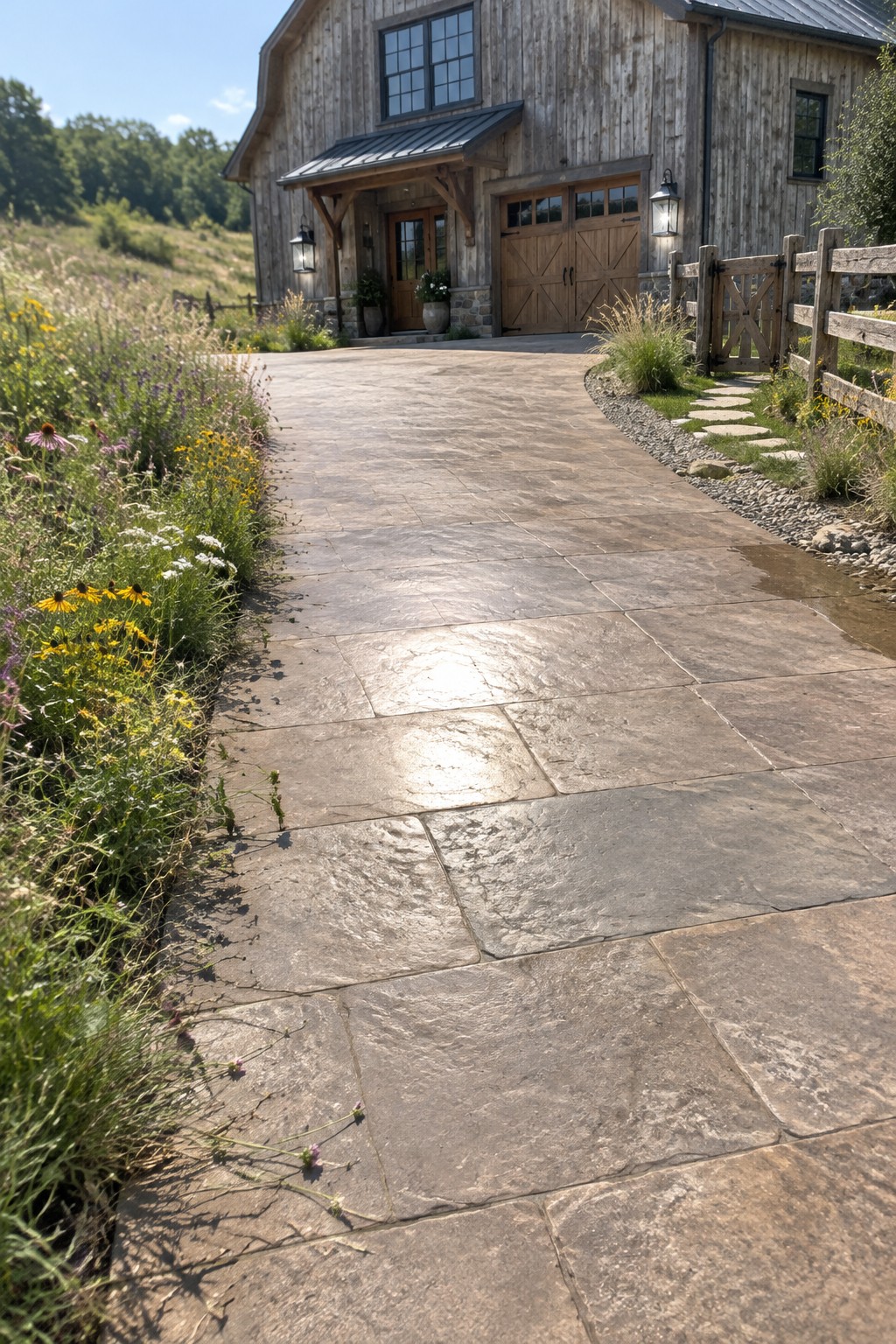
Large imprinted concrete sections give a driveway the look of laid stone without lots of small joints. The textured surface suits a country-style home, and the broad layout makes the approach feel orderly.
Use this idea for a long driveway or front approach where you want a continuous surface. Choose a natural stone shade and make sure the concrete has a suitable finish for traction, especially where it may get wet.
Frequently Asked Questions
Q: Will imprinted concrete still look natural on a wide driveway?
A: It can, especially with a pattern that varies in shape and a few well-placed color tones. A border or different pattern near the garage can also break up a large surface without making it look busy.
Q: Does a stone-like concrete driveway get slippery when it rains?
A: A textured stamp usually gives tires and shoes more grip than a smooth finish. Ask the installer to avoid an overly slick sealer, and test a small sample if the driveway slopes steeply.
Q: Can cracks be repaired without ruining the pattern?
A: Small cracks can often be filled and tinted to blend with the surrounding concrete, though the repair may still show up close. Proper base preparation and control joints help reduce the chance of cracks in the first place.
Q: How do I keep the color from fading?
A: Clean off dirt and stains with a gentle wash, and reseal the surface when the finish starts to look worn. Skip harsh deicers, which can damage the sealer and leave the color looking patchy.
