

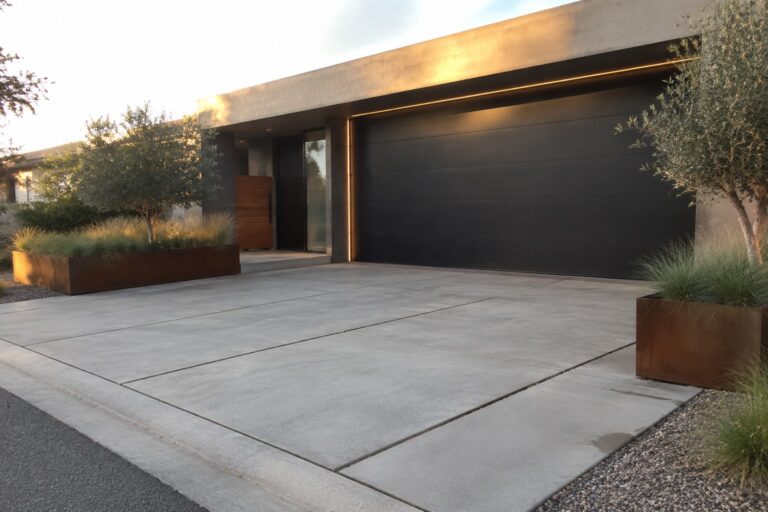
A concrete driveway shapes the first impression of a home, so its lines and edges matter as much as its surface.
I find that a simple layout often works best when it connects naturally to the entry, facade, and surrounding planting.
Long, uninterrupted lines can make a small approach feel more open, while thoughtful joints and borders keep a broad drive from looking stark.
I’d pay close attention to how each design handles the transition from pavement to lawn or path, since that detail can change the whole feel of the frontage.
These ideas offer practical ways to bring a cleaner look to a driveway without losing sight of how it needs to work every day.
Keep Concrete Driveways Simple
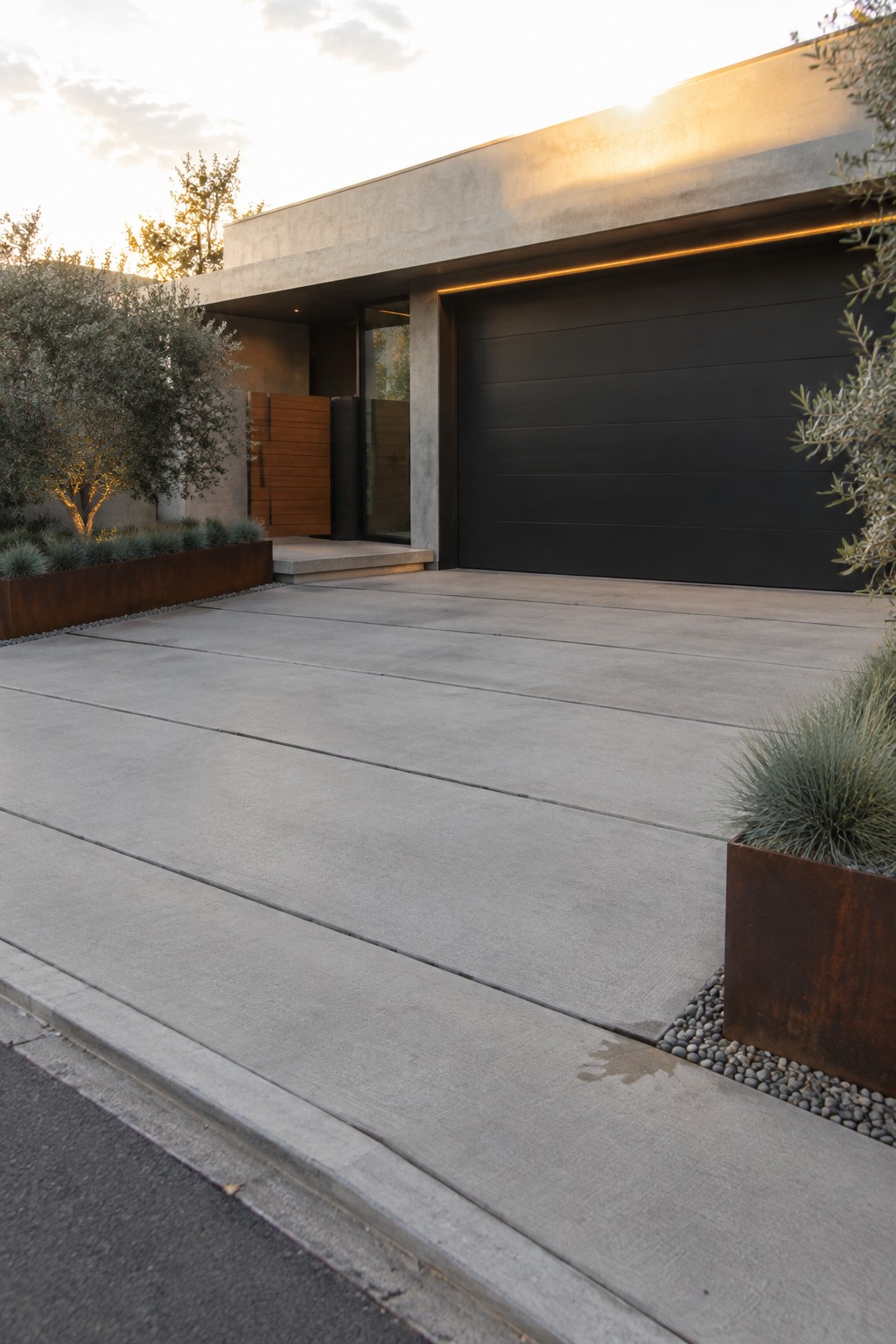
A broad concrete driveway can make a modern home feel neat and easy to approach. Large sections with straight joints keep the surface orderly without adding a busy pattern.
This approach suits homes with clean, simple architecture. Use a restrained joint layout and a consistent finish, and keep the joints aligned where possible so the driveway reads as one calm surface.
Keep Concrete Driveways Simple

A plain concrete driveway can make a modern home feel neat and orderly. The uninterrupted surface here lets the wood garage door stand out without adding another strong pattern.
This approach suits homes with simple lines and works especially well when the driveway has a clear, direct shape. Choose a concrete finish that offers enough grip, and keep joints straight and unobtrusive.
Keep Concrete Driveway Lines Simple

A clean driveway can feel more considered when the concrete is laid in broad, straight sections. Here, narrow strips of planting separate the slabs, giving the layout a clear rhythm without adding curves or extra borders.
This approach suits modern homes and works best when the joints stay consistent from the street to the entry. Keep the planting low and contained so it does not spill over the concrete or interrupt the simple lines.
Use Concrete to Create a Simple Garden Path
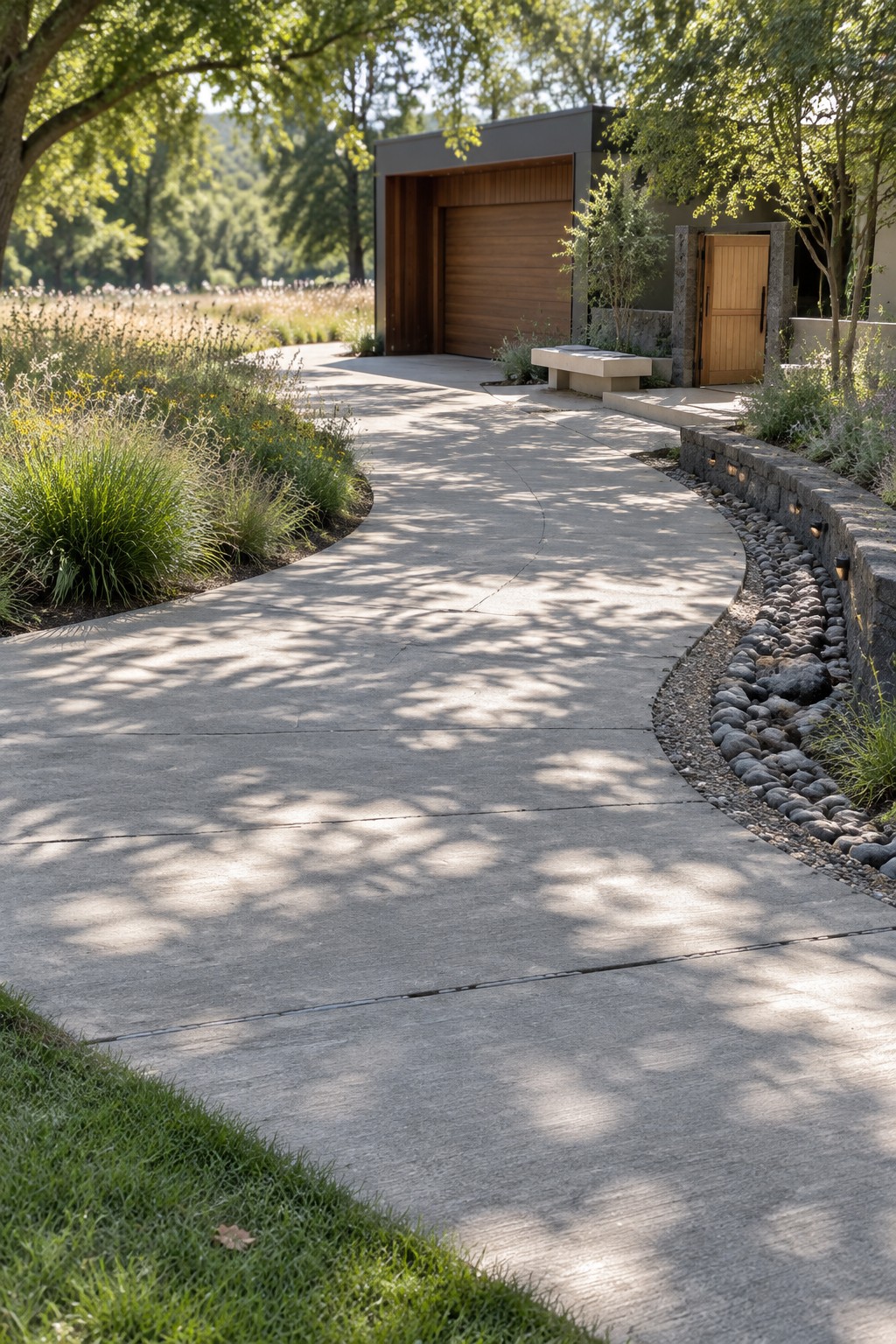
A broad concrete path can make a garden feel easier to navigate without adding a lot of visual fuss. Its clean surface also gives planting beds a clear edge, while a gentle curve keeps the route from feeling too rigid.
This approach works well in yards where you want a direct, durable walkway between the drive and an entrance. Keep the joints simple and the path wide enough to walk comfortably; low planting along the edges helps define the route without crowding it.
Use Large Concrete Slabs for a Clean Driveway
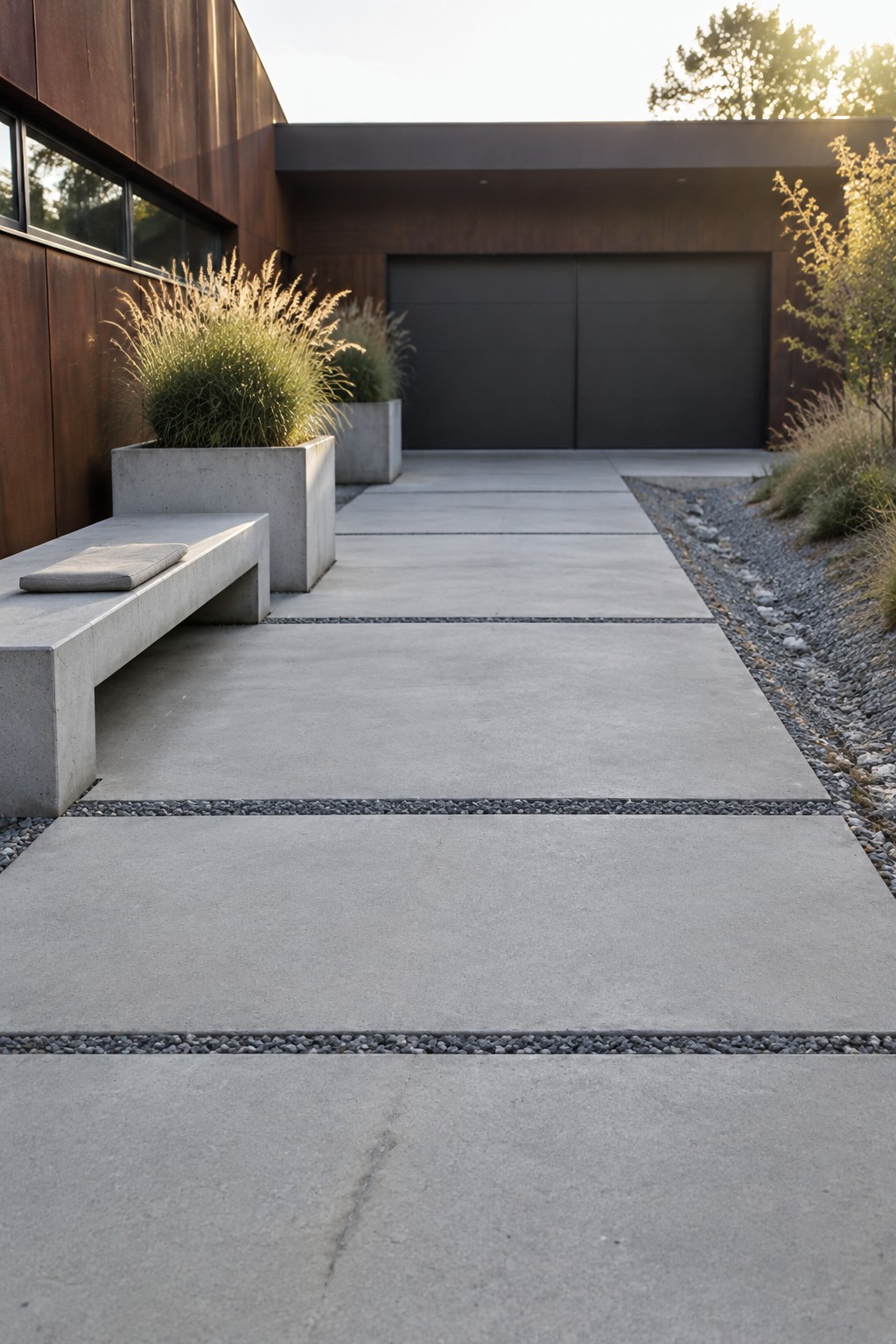
Large concrete slabs make a driveway feel calm and orderly. Narrow gravel joints give the surface a little separation without breaking up its simple lines.
This approach suits modern homes and works well for a front walk or driveway. Keep the joints consistent, and make sure the slabs are sized for the space so they don’t feel cramped.
Use One Clean Line Through the Driveway

A single straight joint can give a concrete driveway a neat, uninterrupted look. It adds just enough structure without breaking the surface into a busy grid.
This approach suits a modern home and works best when the driveway is wide enough to read as one continuous plane. Keep the joint aligned with the approach to the garage, and use a restrained finish so the concrete remains the main feature.
Use Concrete Slabs For A Clean Driveway

Large concrete slabs make a driveway feel simple and orderly, especially when the joints stay straight and the surface is left uncluttered. A narrow strip of loose stone along the edge can define the paving without interrupting its clean lines.
This approach suits modern homes and works well in a front entry where you want a clear route to the door. Keep the slab layout consistent, and use gravel sparingly so the driveway remains the main feature.
Let the Concrete Driveway Stay Uninterrupted

A broad, plain concrete driveway suits a modern home because it keeps the approach simple and lets the house’s clean lines stand out. The smooth surface here has no contrasting bands or busy pattern to break it up.
This approach works well for contemporary facades and modestly landscaped front yards. Keep joints and edges neat, and plan drainage before pouring so the uncluttered surface stays practical as well as simple.
Use Concrete Slabs for a Simple Approach
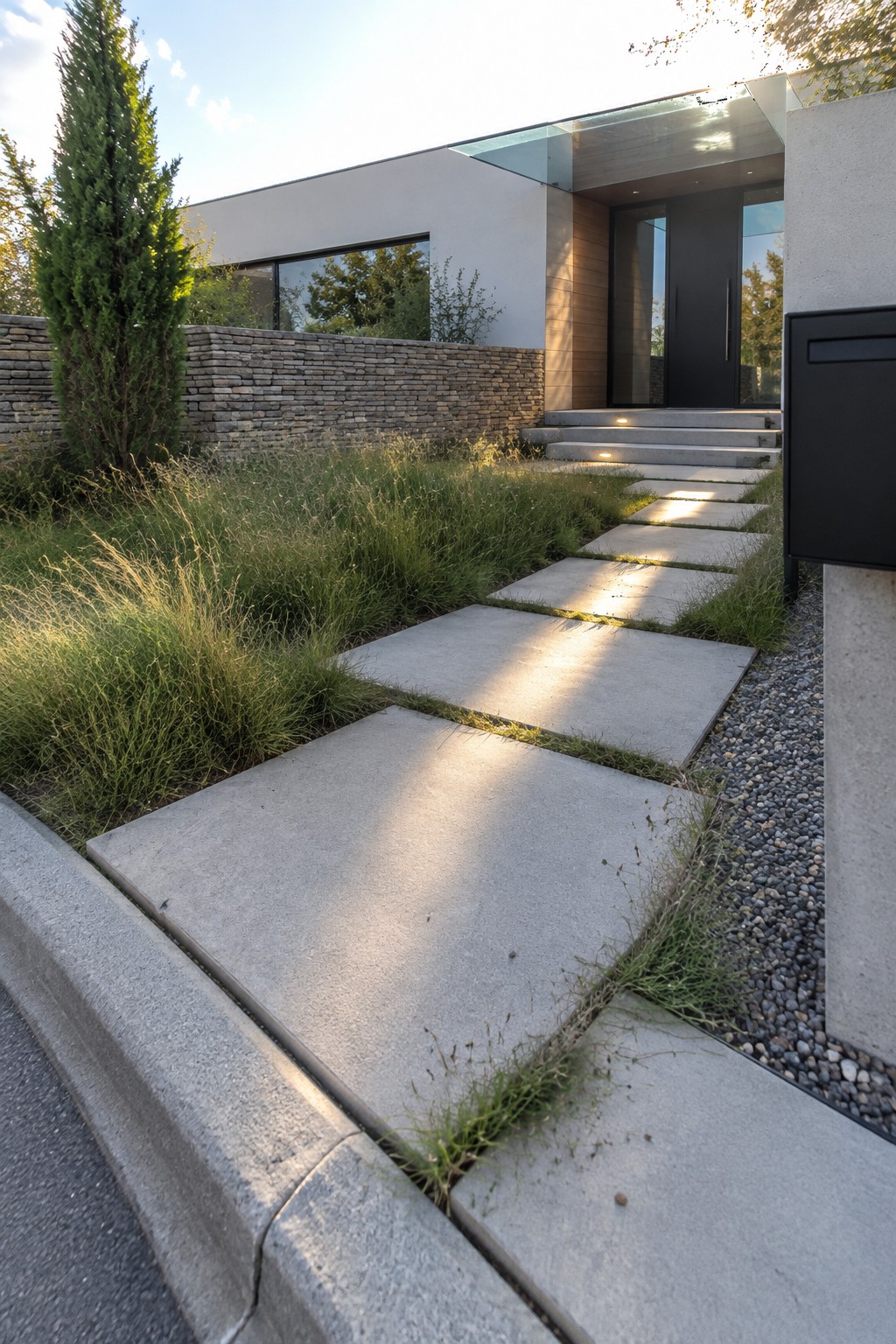
Large concrete slabs make a driveway or entry path feel orderly without needing a lot of extra detail. The broad surfaces keep the route clear, while narrow gaps let grass grow through and break up the concrete.
This approach works well for a modern home where you want a direct path to the front door. Keep the slabs consistent in size and leave enough room between them for easy walking. The path should feel practical, not like a series of awkward steps.
Use a Long Concrete Slab for a Clean Approach

A broad concrete slab makes a driveway or entry approach feel simple and easy to follow. Keeping the surface mostly uninterrupted lets its natural texture show, while a single narrow joint gives the paving a little structure.
This approach suits modern homes where a tidy path to the front door matters. Use a durable outdoor concrete finish, and keep joints straight and restrained so they don’t break up the surface.
Use Gravel Between Concrete Driveway Strips

Long concrete strips set into gravel give a driveway a clear, orderly layout without paving the whole surface. The repeated bands suit a modern home and keep the approach from looking like one large slab.
This works best on a fairly wide, straight driveway where the strips can run cleanly toward the garage. Choose a gravel size that stays put underfoot and keep the strip widths consistent for a tidy result.
Carry Clean Lines From the Driveway to the Entry

A simple concrete driveway looks especially tidy when its lines continue toward the front door. Large poured sections with narrow gravel joints keep the surface orderly while giving water a place to drain.
For a similar look, carry the same concrete finish along the approach to the entry, and keep the joints straight and consistent. This suits modern homes with restrained materials. Plan the layout before pouring, since uneven spacing can make the clean lines feel less deliberate.
Add Wood Strips Between Concrete Slabs
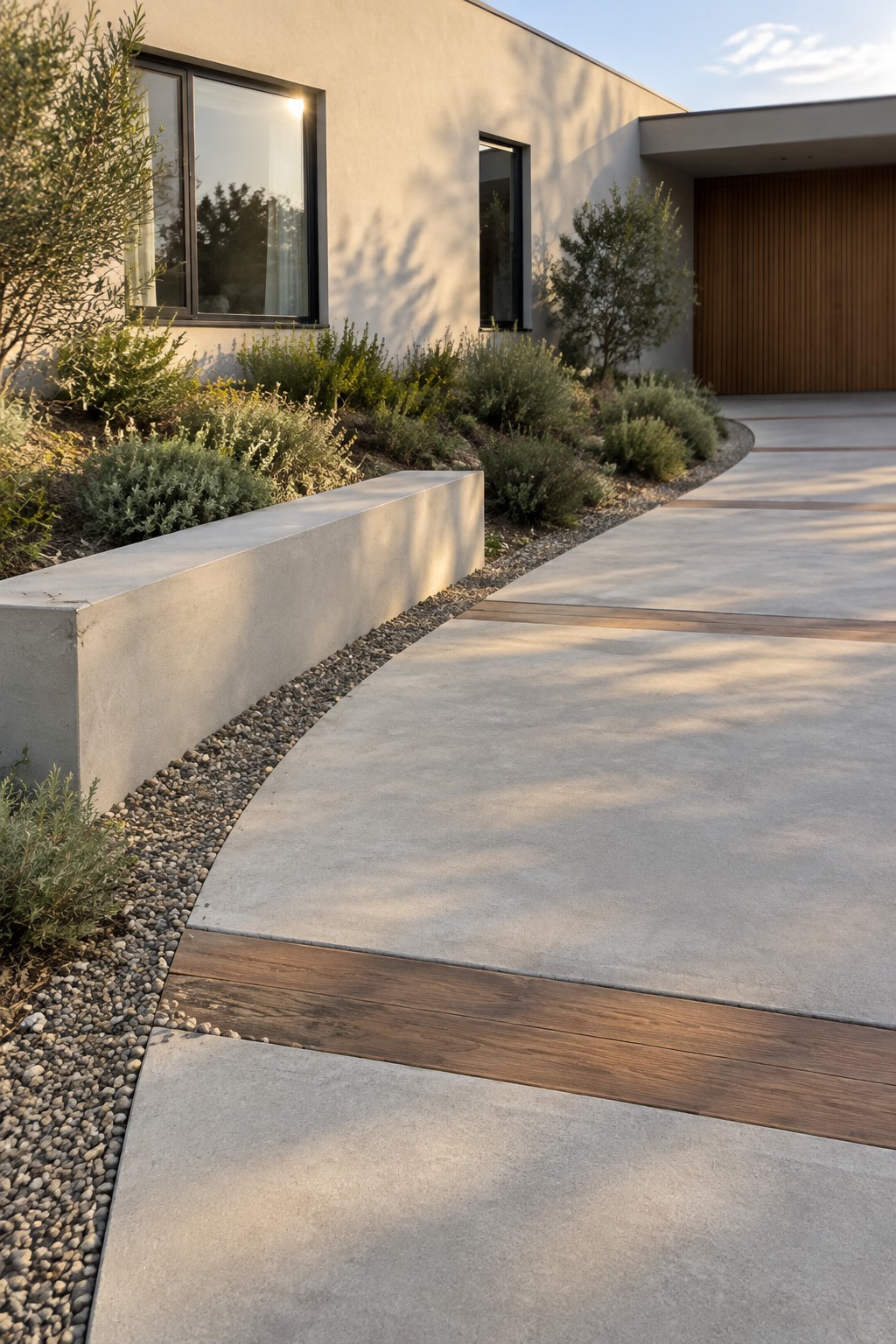
Wood insets break up a broad concrete driveway without interrupting its clean layout. The long, simple bands bring a different texture to the paving while keeping the overall approach neat.
Use narrow, durable wood insets across large concrete sections, and keep them level with the surface so they do not catch wheels or collect debris. This works especially well on a modern home where a small material contrast is enough.
Use Broad Concrete Slabs for a Clear Approach
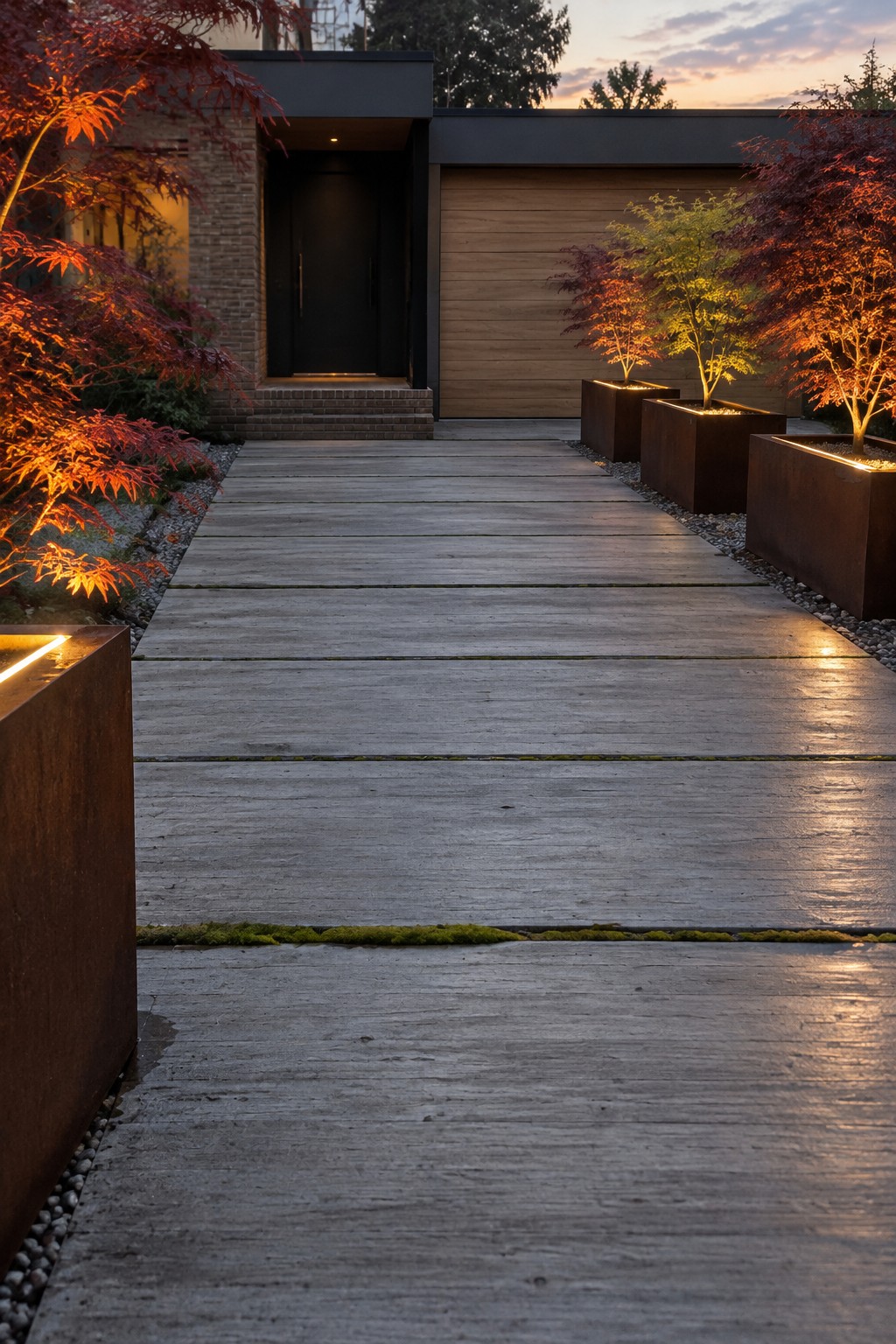
Large concrete slabs make a driveway or front walk feel simple and easy to follow. The long, uninterrupted surfaces here keep the approach from looking busy, while narrow joints give the concrete a little definition.
This idea suits modern homes and works well for a path leading straight to the entry. Leave the joints modest and consistent, and consider a slim strip of gravel or moss between slabs if you want a softer edge without breaking up the overall line.
Use Concrete Slabs to Connect the Driveway and Entry
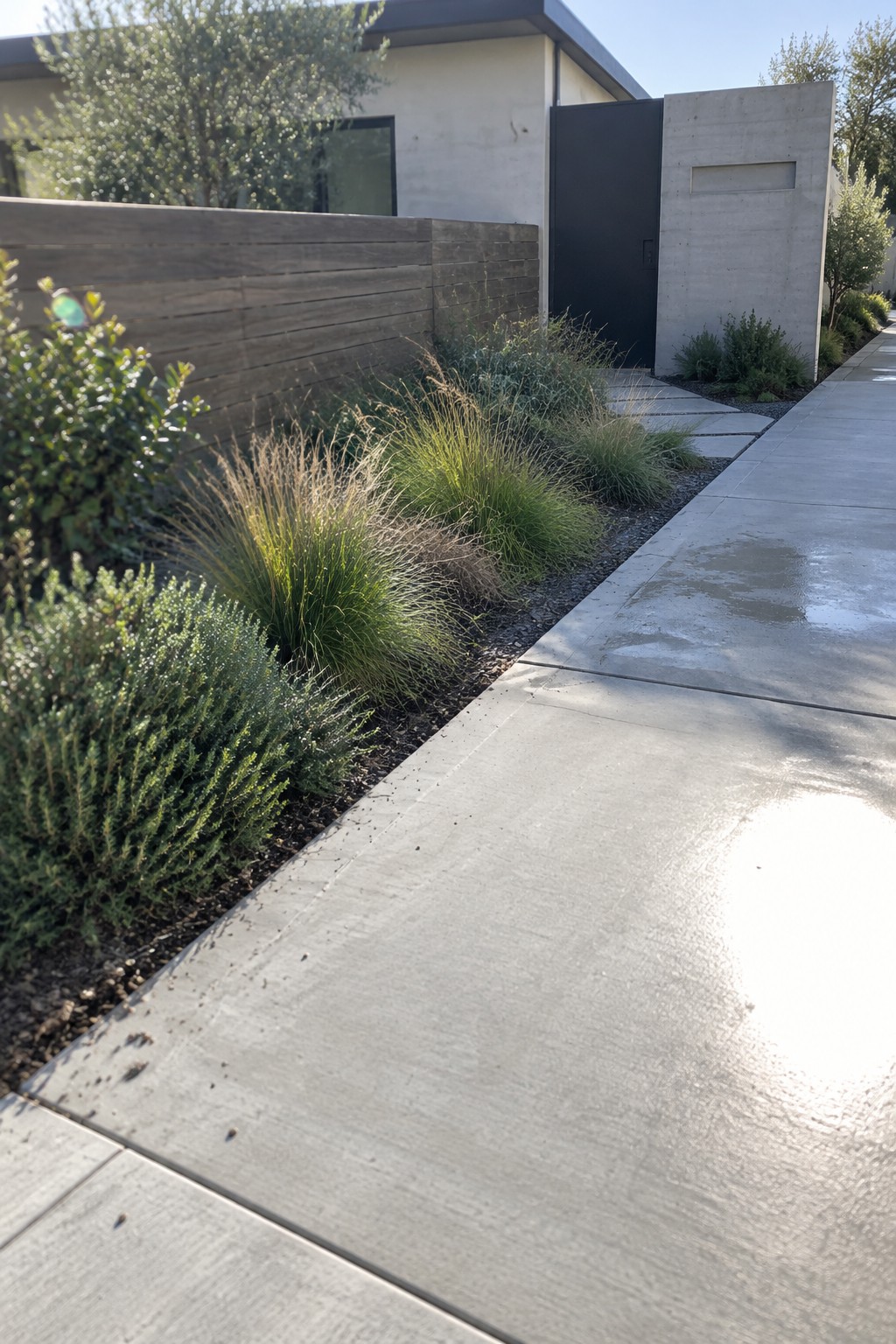
Large concrete slabs can make the route to a front door feel clear and orderly. Here, separate slabs lead from the main pavement to the gate, while their simple shape keeps the approach from looking busy.
This works well when a driveway or walkway runs alongside a planted bed. Keep the joints consistent and leave enough room for comfortable steps. A few gaps can help define the path, but too many can make it feel choppy.
Curve a Concrete Driveway Around a Planting Bed
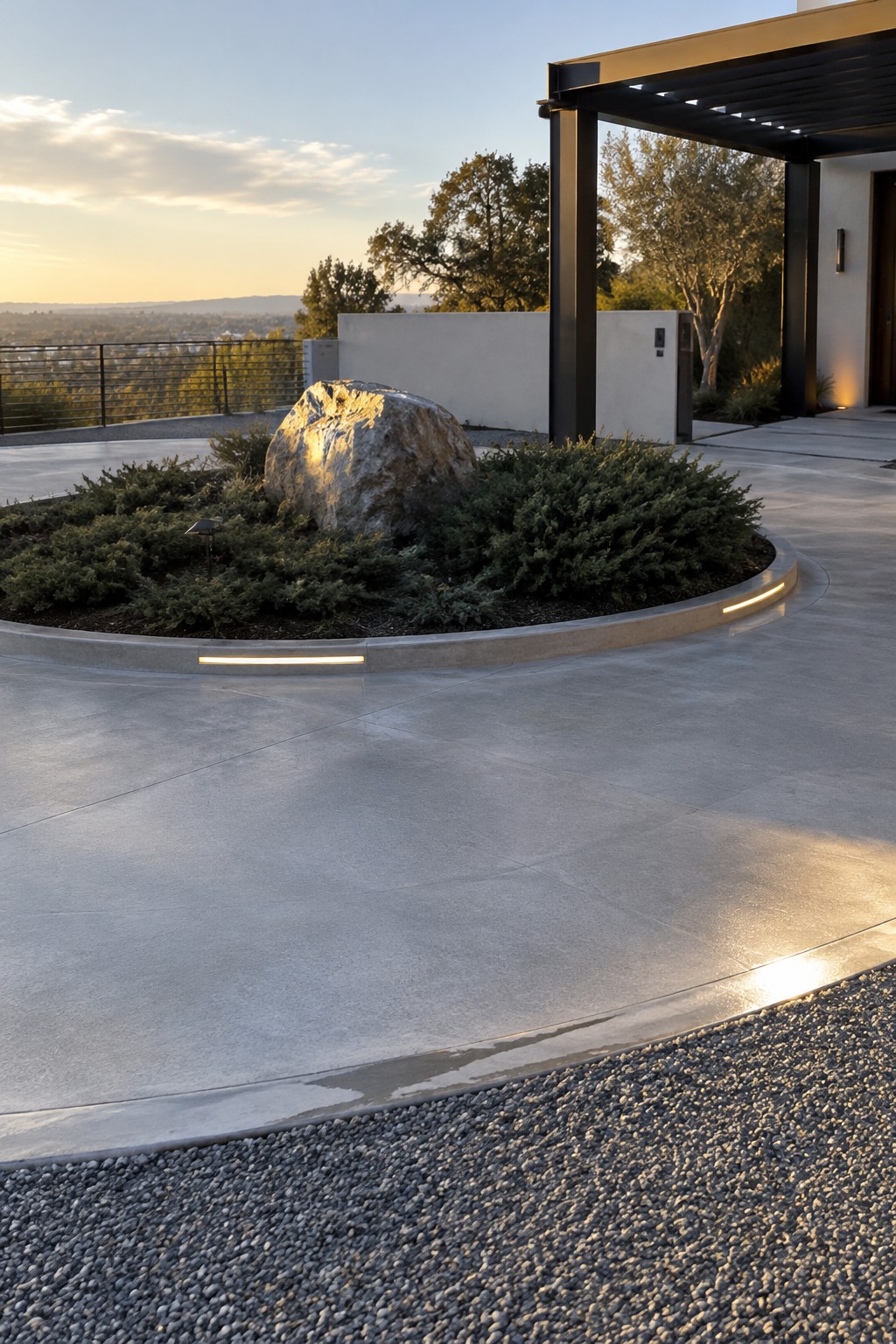
A curved concrete drive can keep a broad paved area from feeling like one unbroken sheet. Here, the rounded edge follows a planted island, giving the driveway a clear line while leaving room for low shrubs and a feature boulder.
This approach works well where a driveway needs to turn toward the entry or circle a garden bed. Keep the concrete joints simple and the bed’s edge smooth so the curve feels intentional rather than fussy.
Use Concrete Strips to Guide the Approach

Long concrete bands set into gravel create a clear route to the front door without paving the entire driveway. The open gravel keeps the surface visually light, while the straight strips give the approach a simple, orderly feel.
This layout suits a modern home and works well where a full concrete drive would feel too broad. Keep the strips wide enough for comfortable walking and driving, and make sure the gravel base is stable so the bands stay level over time.
Keep the Planting Strip Narrow
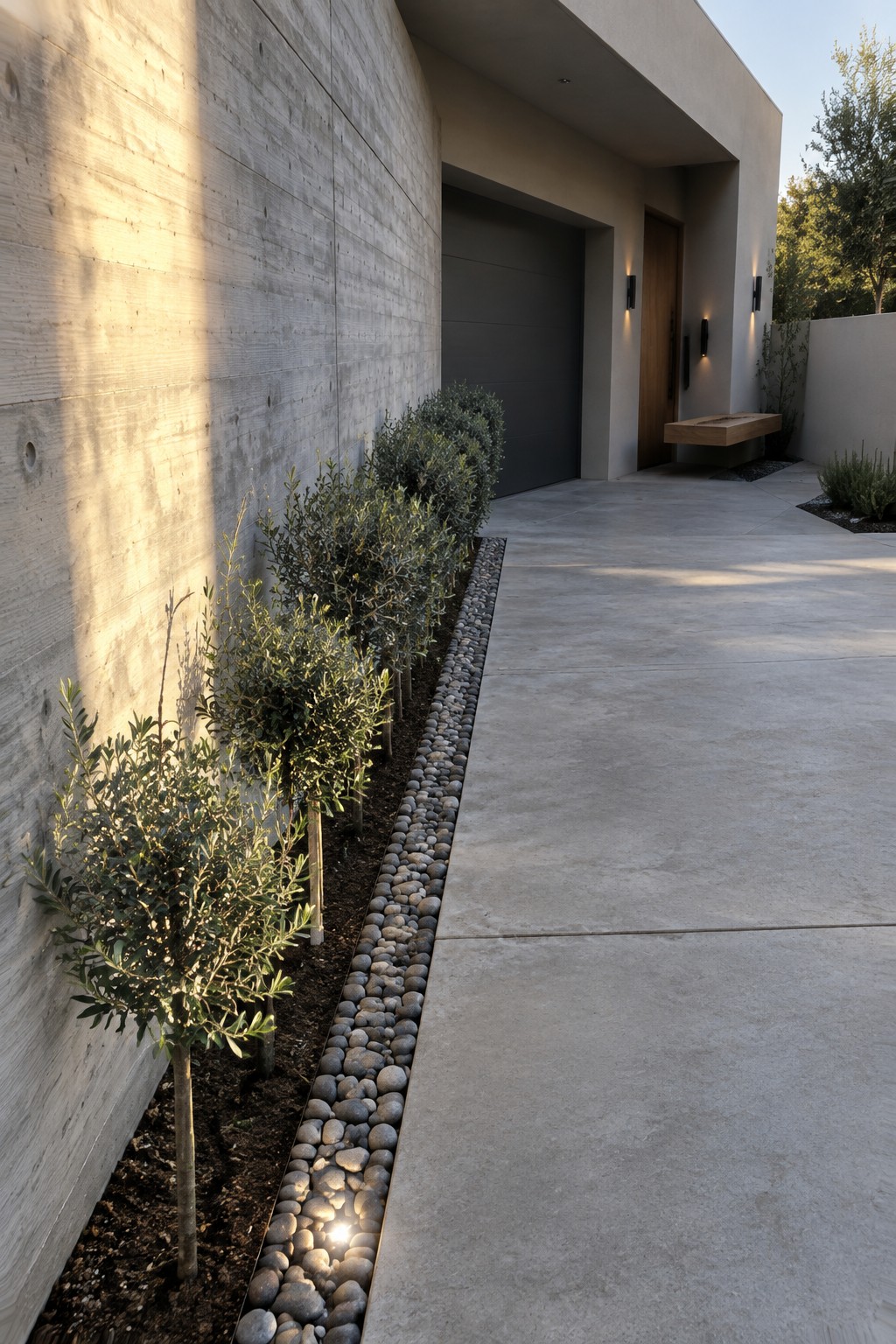
A slim planting bed can run alongside a concrete driveway without breaking up its clean, open surface. In this entry, small trees sit in a narrow strip edged with smooth stones, giving the plants a clear boundary while leaving plenty of room for the drive.
This approach suits modern homes where a full garden bed would make the driveway feel crowded. Keep the planting low and the edging neat, and check that the bed does not narrow the usable driving or walking area.
Use Grass Joints Between Concrete Slabs
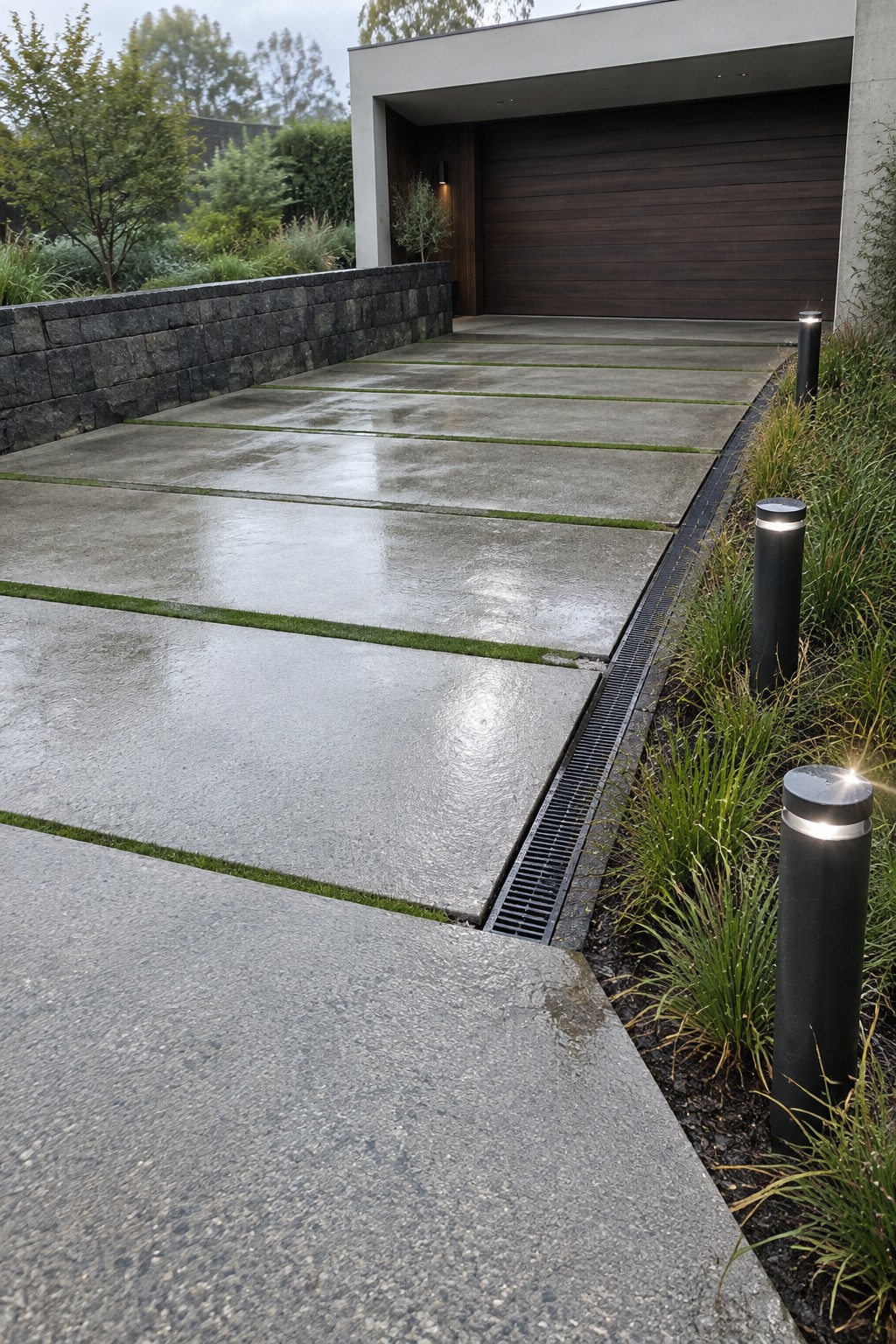
Wide concrete slabs separated by narrow grass joints give a driveway a clear, orderly rhythm without making it feel like one unbroken stretch of pavement. The green lines also bring a little planting into a space that needs to stay practical for cars.
This approach suits a modern home with a straight driveway and enough room for broad slabs. Keep the joints narrow and consistent, and plan for drainage and easy trimming so the grass stays neat.
Frequently Asked Questions
Q: Will a minimalist concrete driveway still need control joints?
A: Yes. Joints help manage cracking, even when you want the surface to look uninterrupted. Ask your contractor to plan straight, evenly spaced joints that follow the driveway’s layout.
Q: How do I keep a concrete driveway from looking too plain?
A: A subtle broom finish or a light gray tint can add texture without breaking up the clean lines. Keep the color and finish simple so the driveway still feels calm and uncluttered.
Q: Can I park on a new concrete driveway right away?
A: Give it time to cure before driving on it. Follow your contractor’s guidance, and keep cars off the surface for at least several days.
Q: What helps prevent stains from ruining the minimalist look?
A: Clean oil and leaf stains soon after they appear, and rinse the surface regularly. A penetrating sealer can make cleanup easier without adding a glossy finish.
