

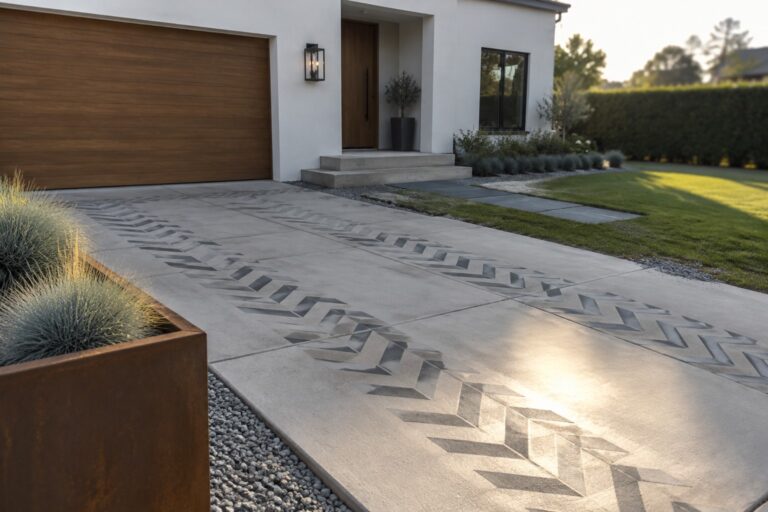
A driveway is often the first part of a home visitors notice, so its surface can shape the way the whole exterior feels.
Stenciled patterns add character to concrete without requiring a major change to the driveway’s layout or materials.
I’d look closely at how a pattern works with the home’s facade, entry, and surrounding paths before choosing one.
Subtle borders can define the approach, while larger motifs make the driveway a more noticeable feature.
These ideas offer practical details to adapt to your home, from pattern scale to color and placement.
Stenciled Patterns Add Interest to a Concrete Driveway
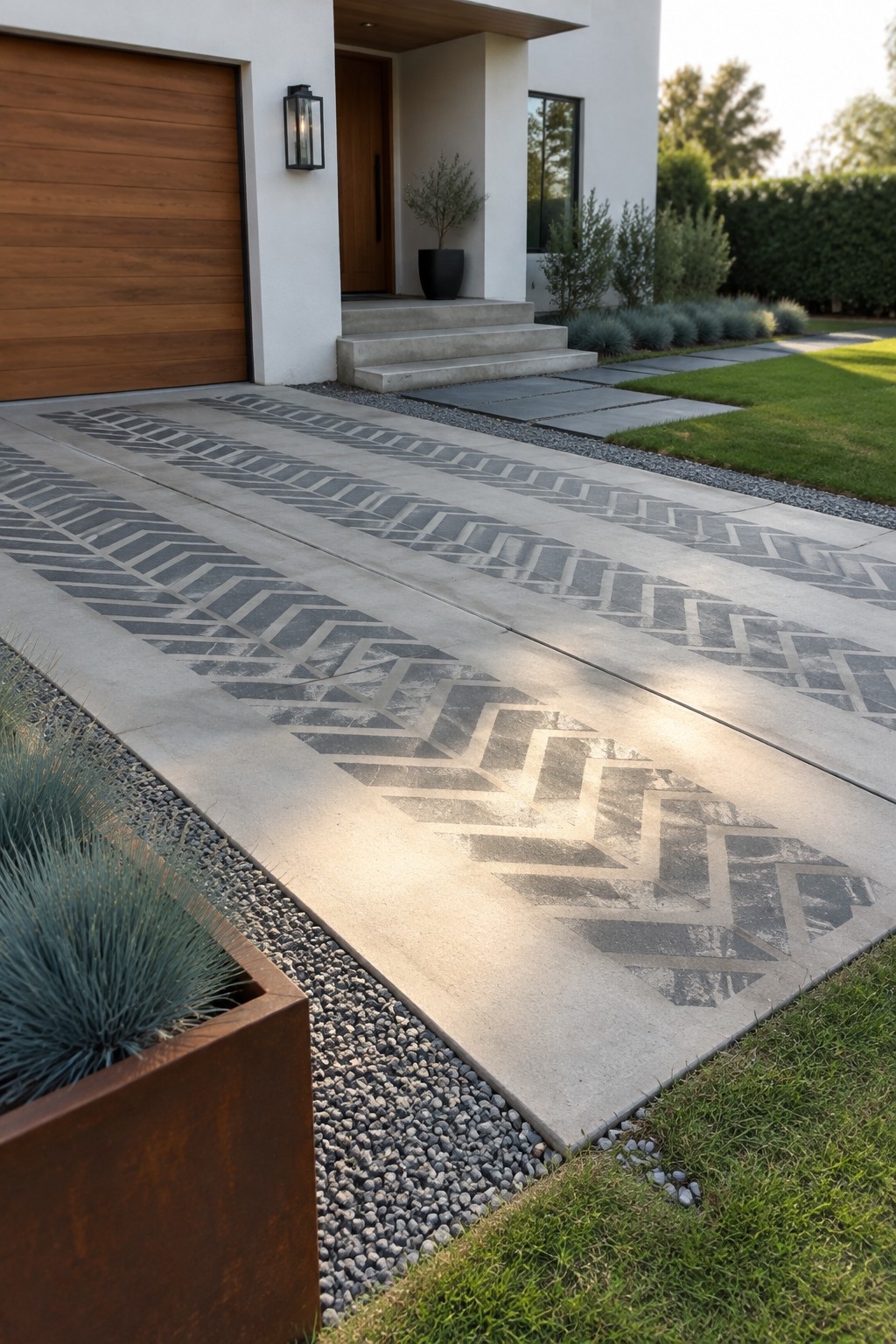
A stenciled pattern is a simple way to give a plain concrete driveway more character without changing its practical surface. Here, dark geometric bands break up the light-colored paving and make the driveway feel more considered.
This approach works well on a wide, uncomplicated driveway where the pattern has room to read clearly. Keep the design restrained, and test the color and stencil scale on a small area first so the finished surface doesn’t feel too busy.
Add a Compass Rose to the Driveway
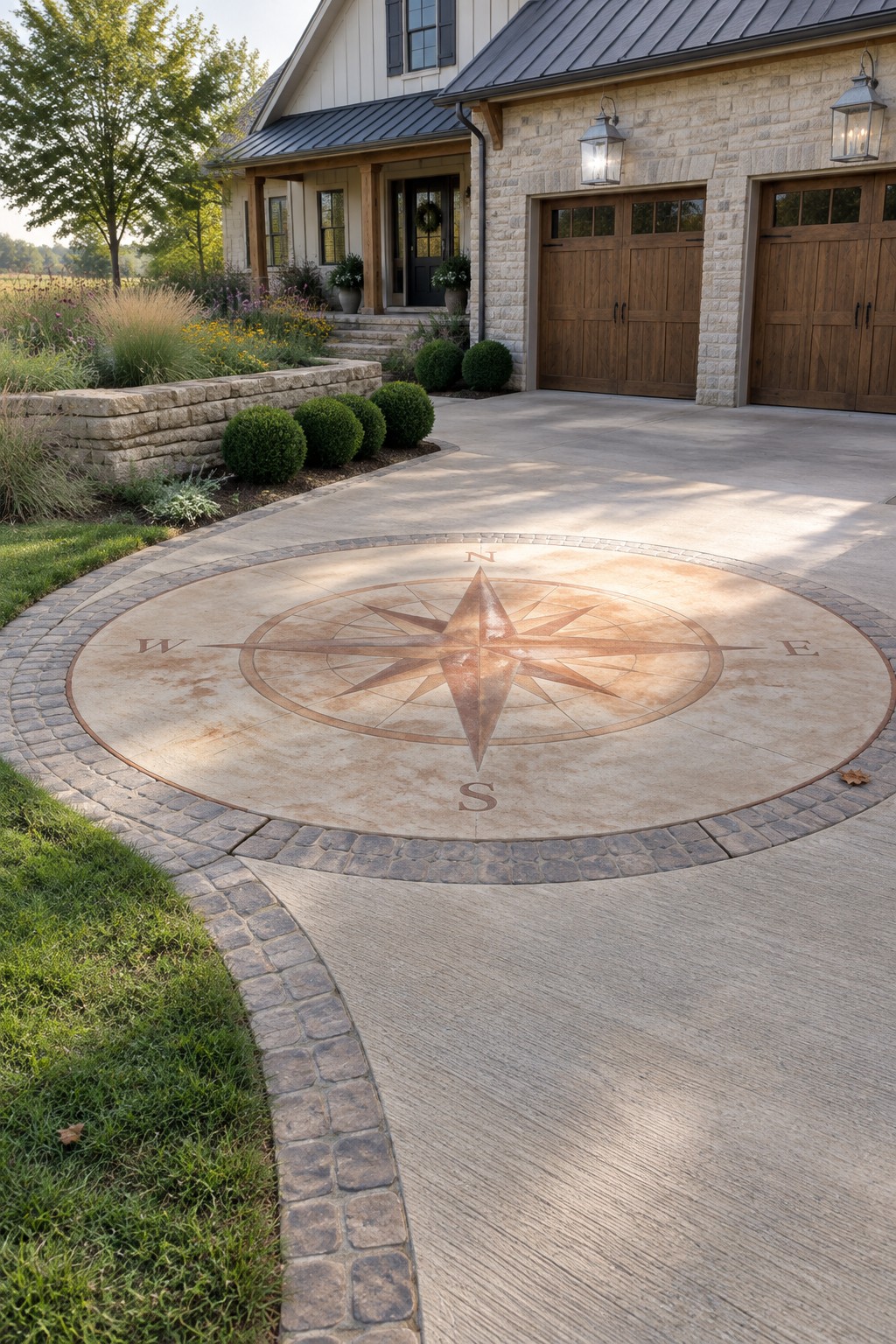
A compass rose stencil turns a plain concrete driveway into a decorative feature, giving the entrance a clear focal point without covering the whole surface. The large circular design here shows how a single motif can make an otherwise simple driveway feel considered.
This idea works best where there is enough open, flat space for the pattern to read clearly. Choose muted colors that suit the home, and make sure the stencil is scaled to the driveway so the design does not feel crowded.
Use Stenciled Waves on a Concrete Walkway
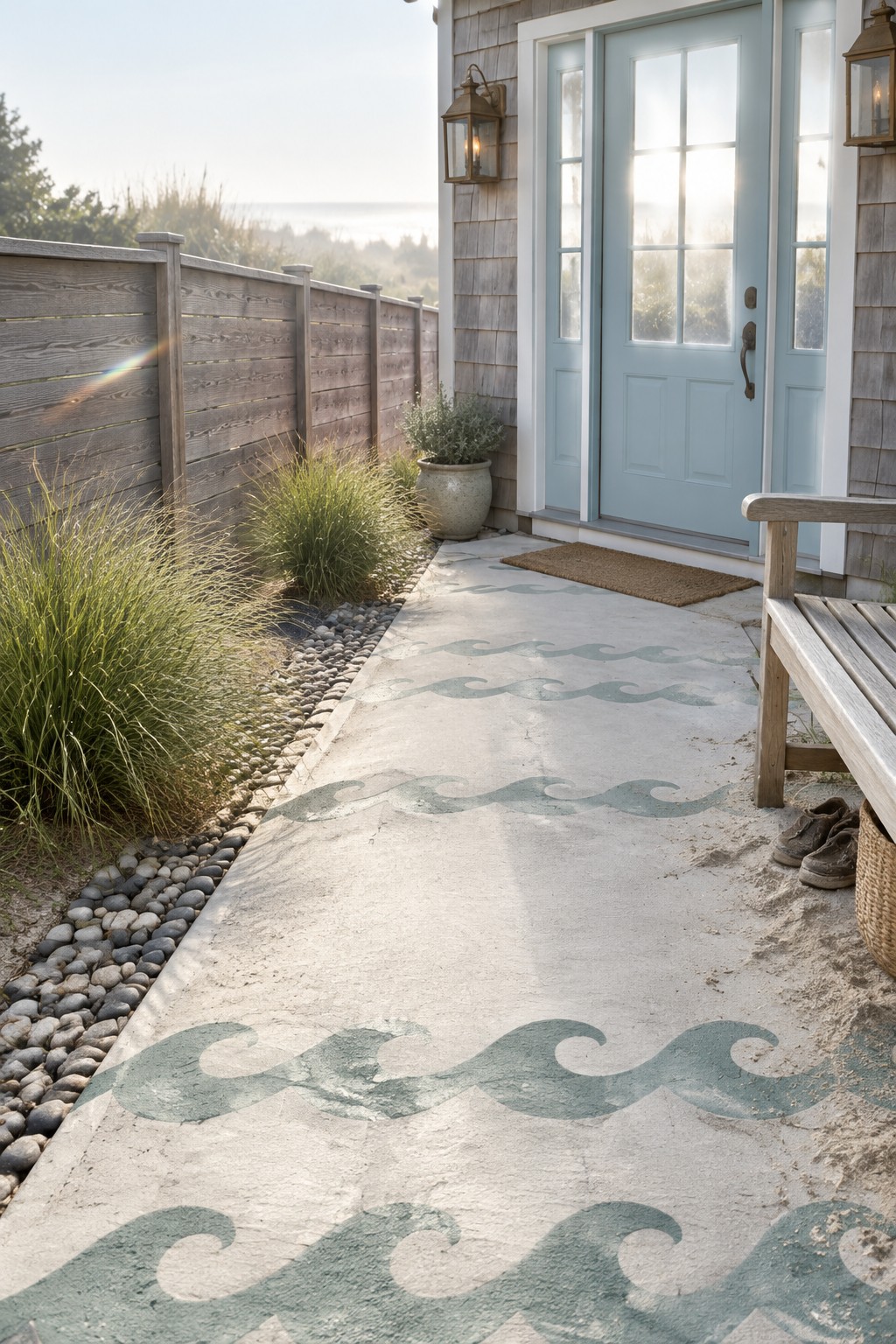
Stenciled waves can give a plain concrete walkway a simple coastal look without changing its surface or layout. The repeating pattern adds interest along the route to the door, while a muted color keeps it from taking over.
This idea works well on a front path or driveway apron, especially at a coastal or cottage-style home. Use an exterior-rated stencil and concrete paint, and make sure the surface is clean and dry before starting. A busy pattern can look out of place on a narrow path, so keep the design fairly open.
Use a Compass Rose as a Driveway Stencil
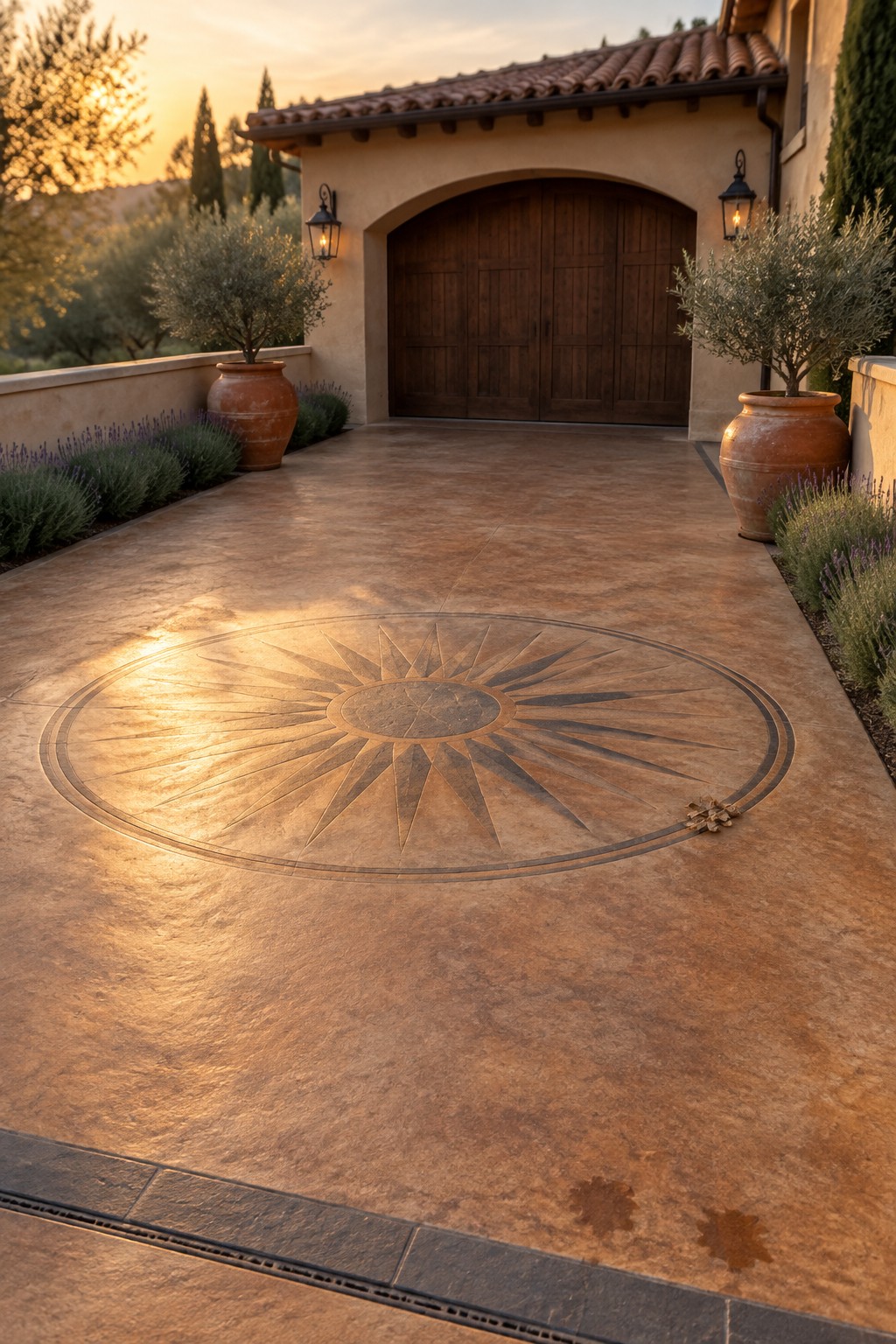
A large compass rose gives a concrete driveway a decorative focal point without covering the whole surface in pattern. Set into the warm-toned concrete, it feels at home beside traditional stucco and tile-roof architecture.
This kind of stencil works best on a broad, open driveway where the design has room to read clearly. Keep the surrounding concrete fairly simple, and plan the placement before staining so the pattern sits where cars and foot traffic will not obscure it.
Use Repeating Starbursts on a Pebble-Style Driveway
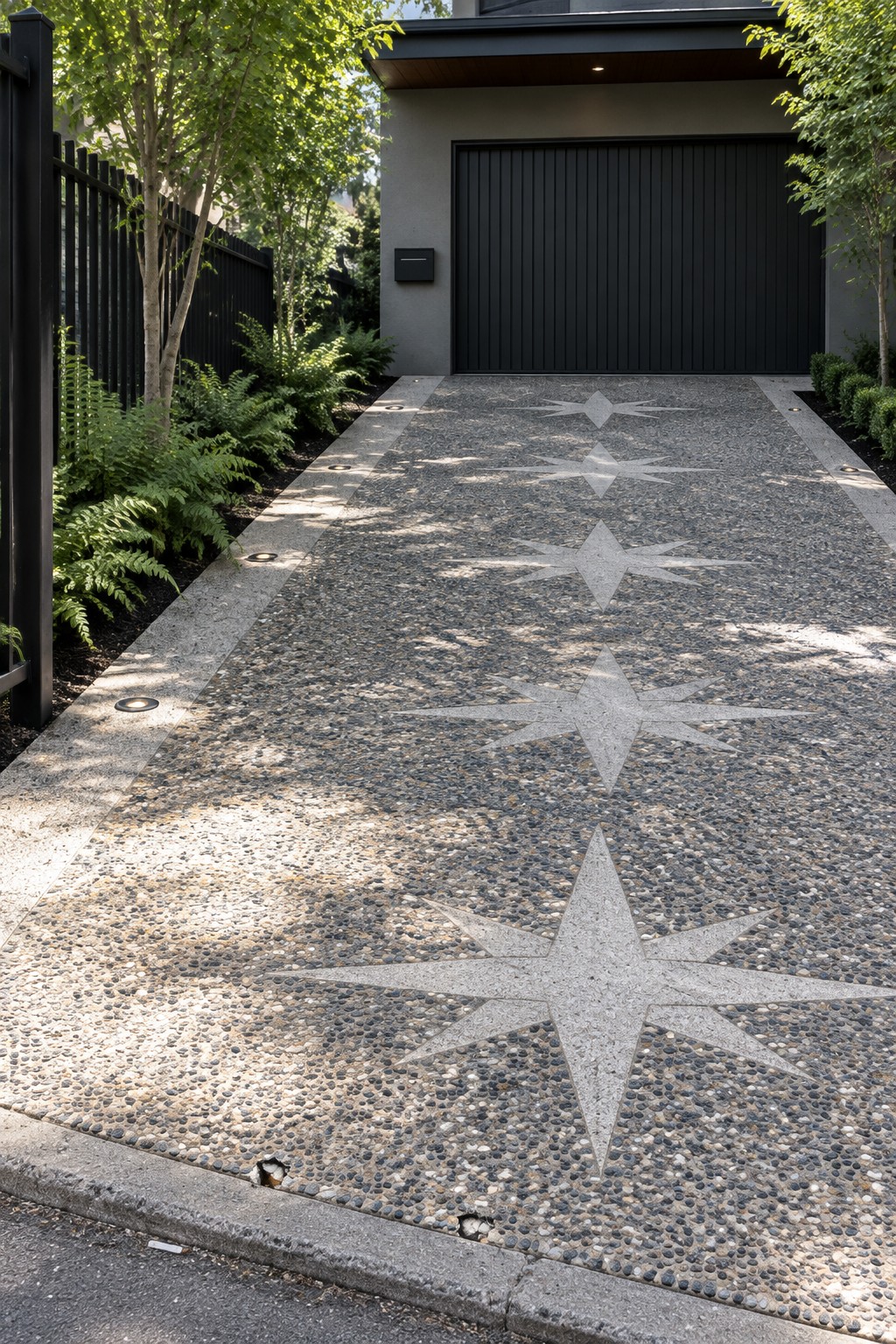
Repeating starburst stencils give a concrete driveway a clear pattern without covering every inch of the surface. Here, the pale shapes stand out against the darker pebble finish and help make a plain drive feel more considered.
This idea works best on a broad, fairly open driveway where the pattern has room to repeat. Keep the stencil color close to the concrete border so it feels connected to the rest of the finish, and space the motifs evenly.
Use a Stenciled Border Along a Concrete Driveway
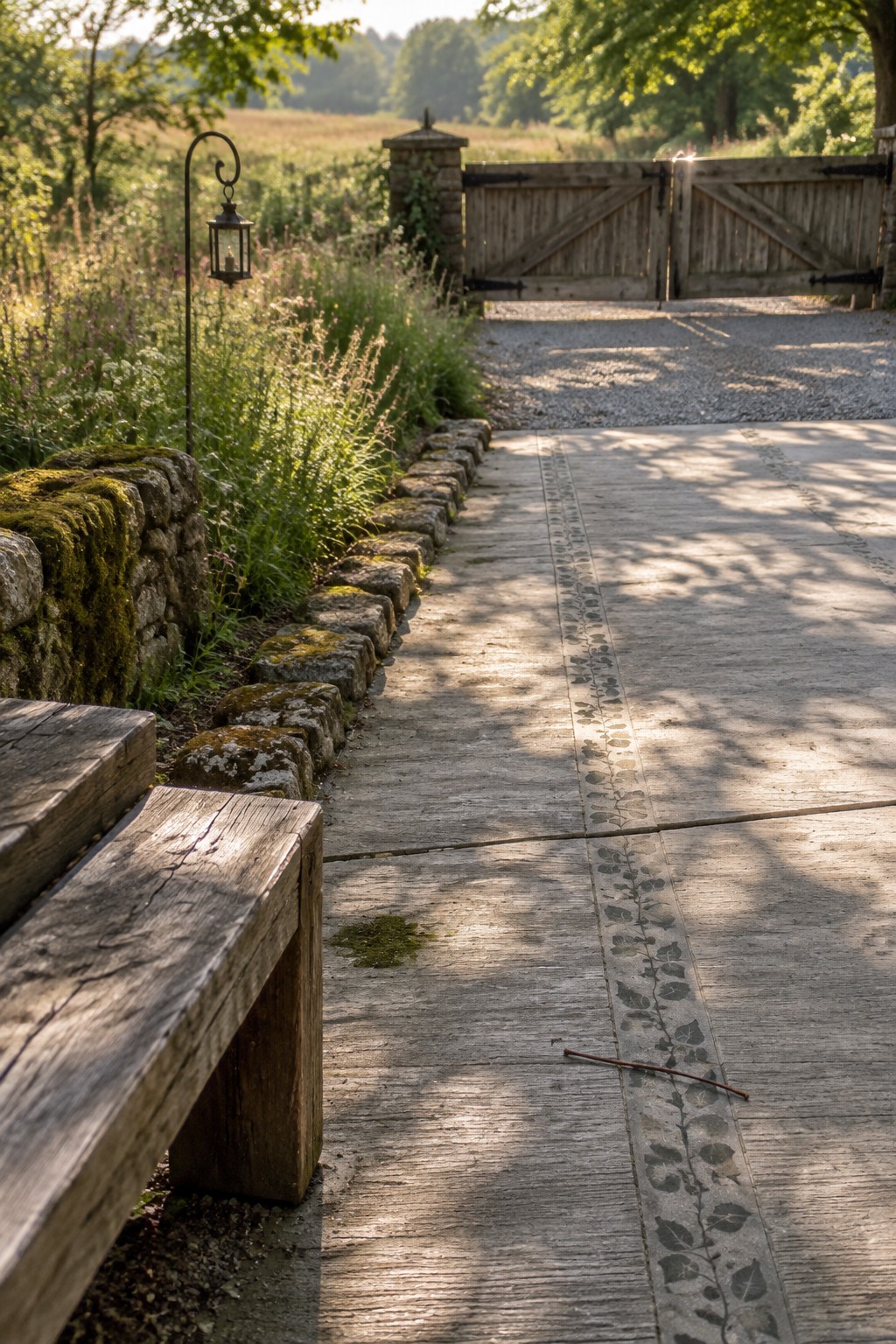
A narrow stenciled border can give a plain concrete driveway a finished look without covering the whole surface. A leafy pattern, like the one running along this walkway, adds detail while leaving the main concrete area simple.
This idea works well on a driveway or entry path where you want a little decoration without making the surface feel busy. Keep the border narrow and choose a pattern that suits the home’s style. Check that the stencil and finish are rated for outdoor use and regular foot or vehicle traffic.
Use Large Stencils to Break Up a Concrete Driveway
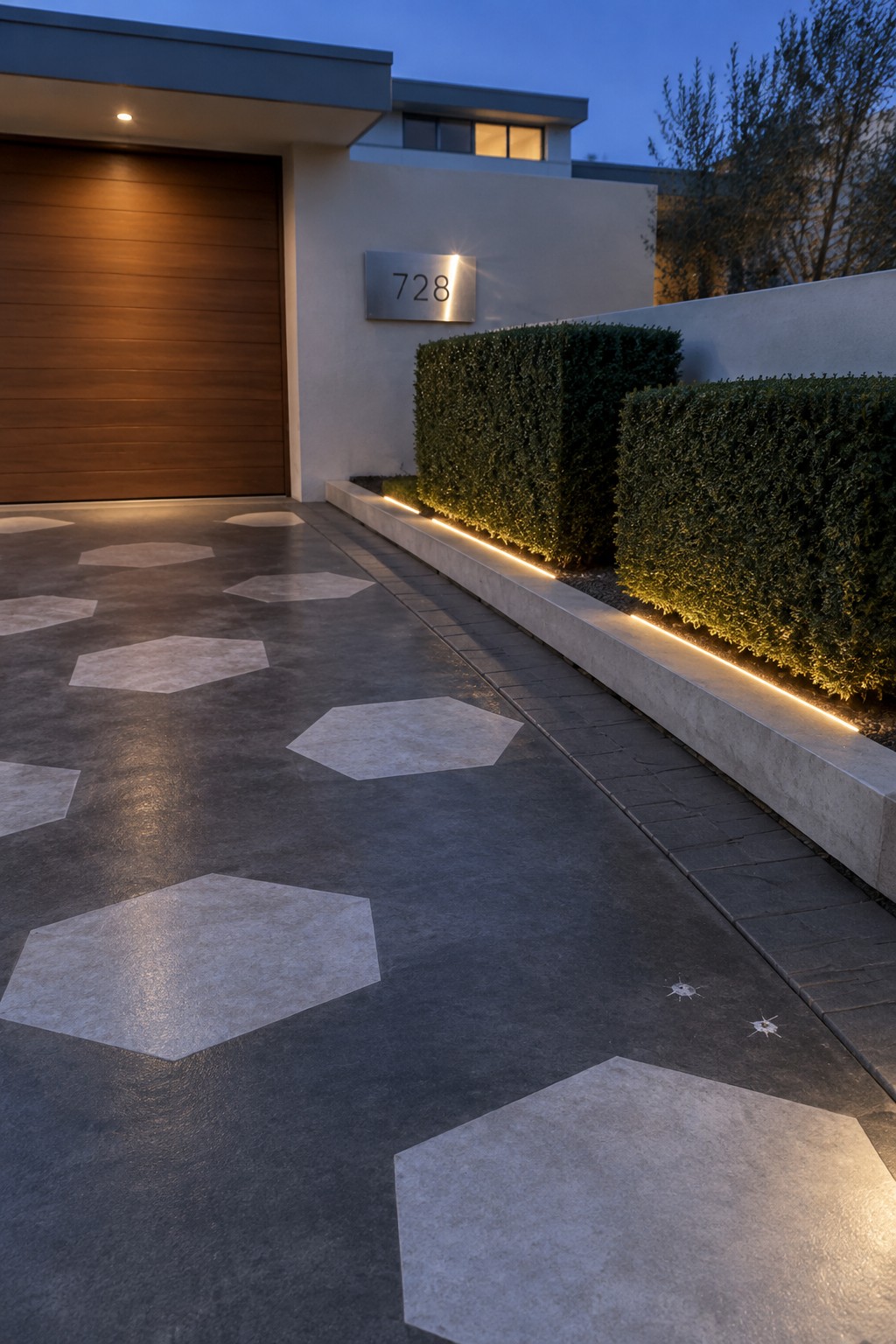
Large pale hexagons give a plain concrete driveway a clear pattern without covering the whole surface. Leaving dark concrete between the shapes keeps the design from becoming too busy.
This approach works well on a broad driveway where smaller motifs might get lost. Use a stencil and a contrasting concrete stain, and plan the spacing before you start so the pattern looks even across the surface.
Use Patterned Concrete to Define a Driveway
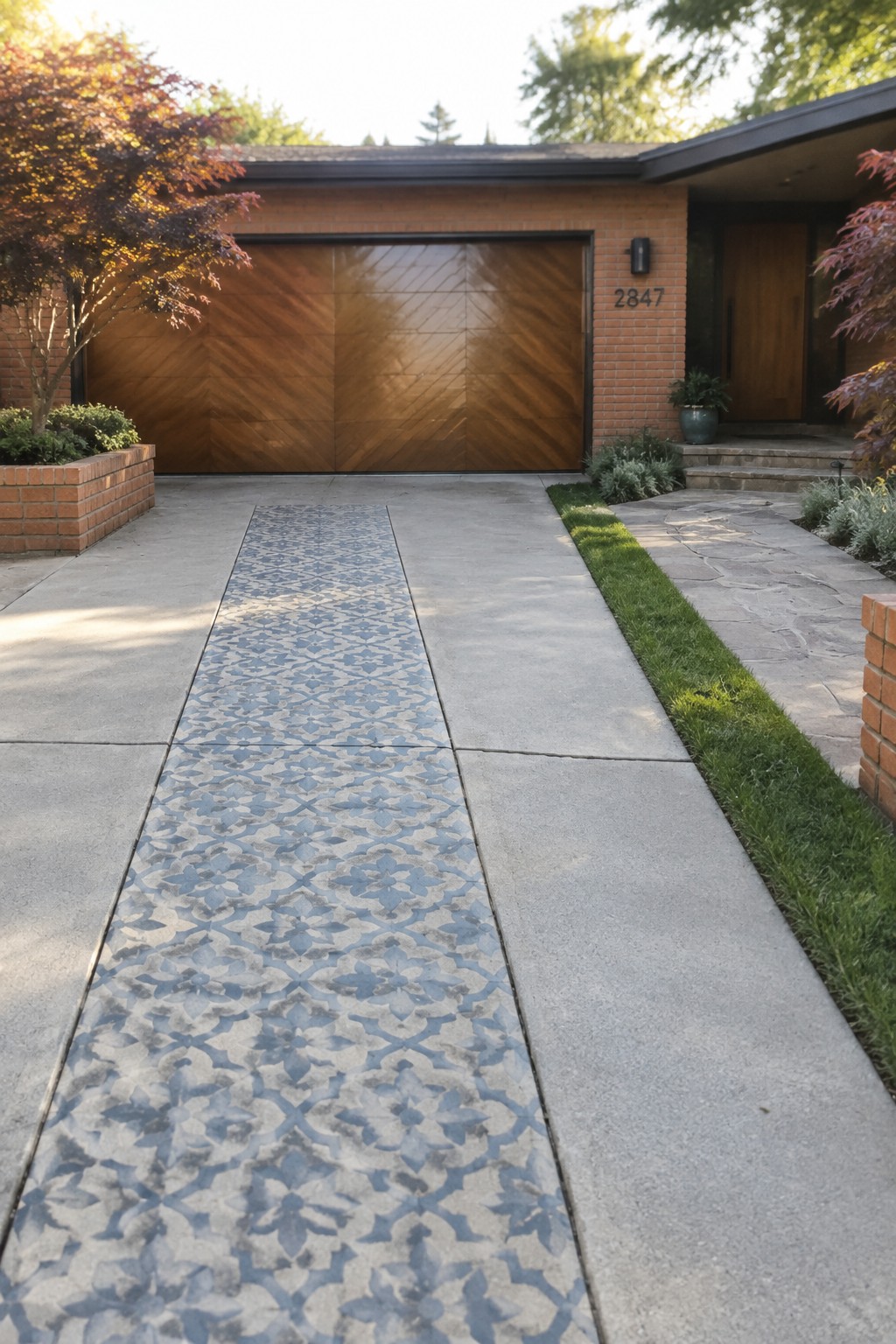
A stenciled strip can give a concrete driveway a more finished look without covering the whole surface. Here, a blue-and-white pattern marks the center of the drive and adds interest to an otherwise plain expanse of concrete.
This approach works well on long driveways or walkways where a narrow band can guide the eye toward the entrance. Choose a pattern and color that suit the home, and keep the surrounding concrete simple so the stencil stays easy to notice.
Use a Repeating Circle Pattern on a Concrete Walkway
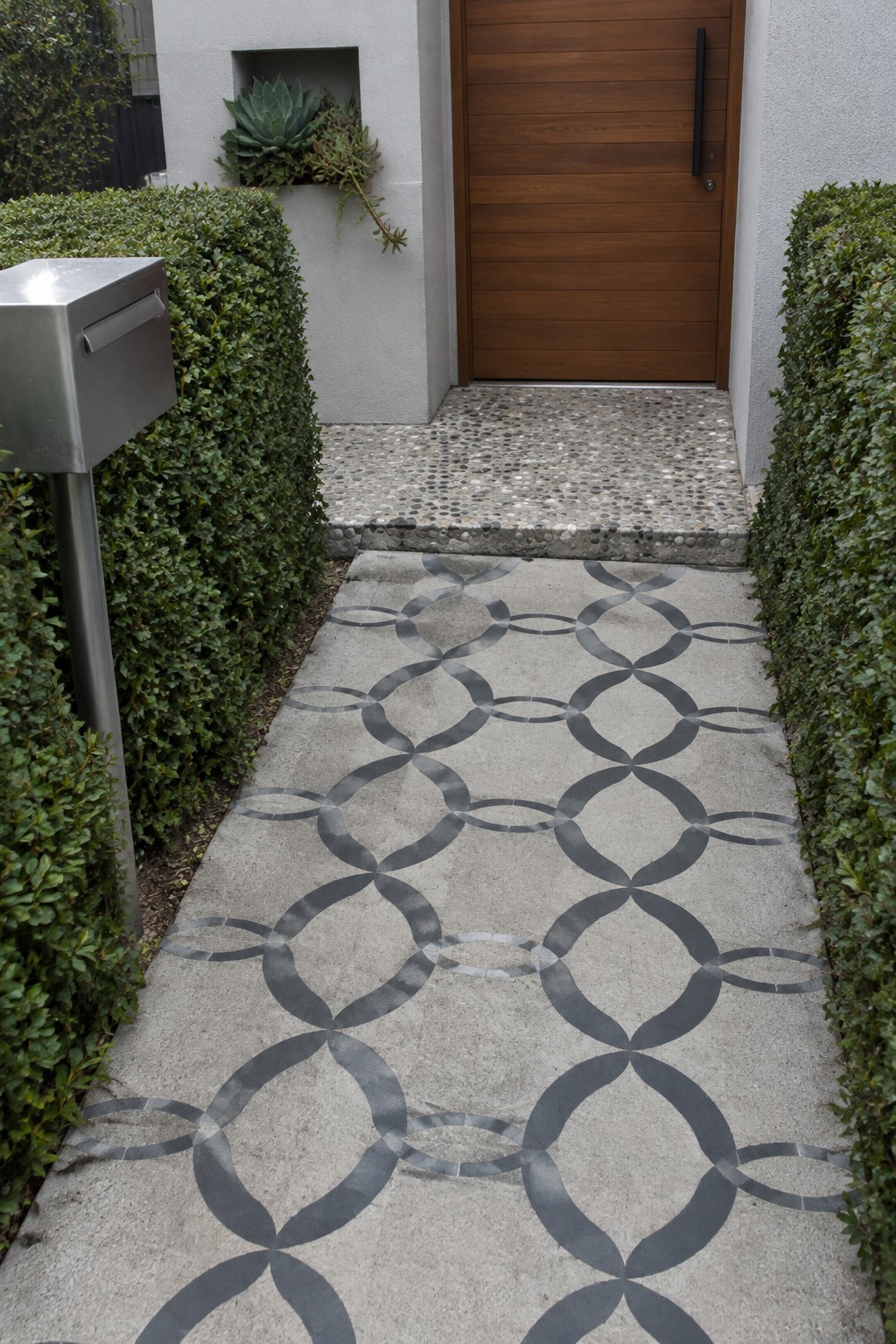
A repeating circle stencil gives a plain concrete walkway a clear pattern without covering the whole surface. The open spaces between the dark shapes keep the path from looking too busy, while the repetition helps guide the eye toward the entry.
This approach works well on a front path where a full decorative surface might feel like too much. Choose a stencil sized to the walkway and check that the pattern lines up before applying it. The circles shown here could also be adapted to a driveway, though larger areas may call for a wider repeat.
Use a Compass Design to Mark the Driveway
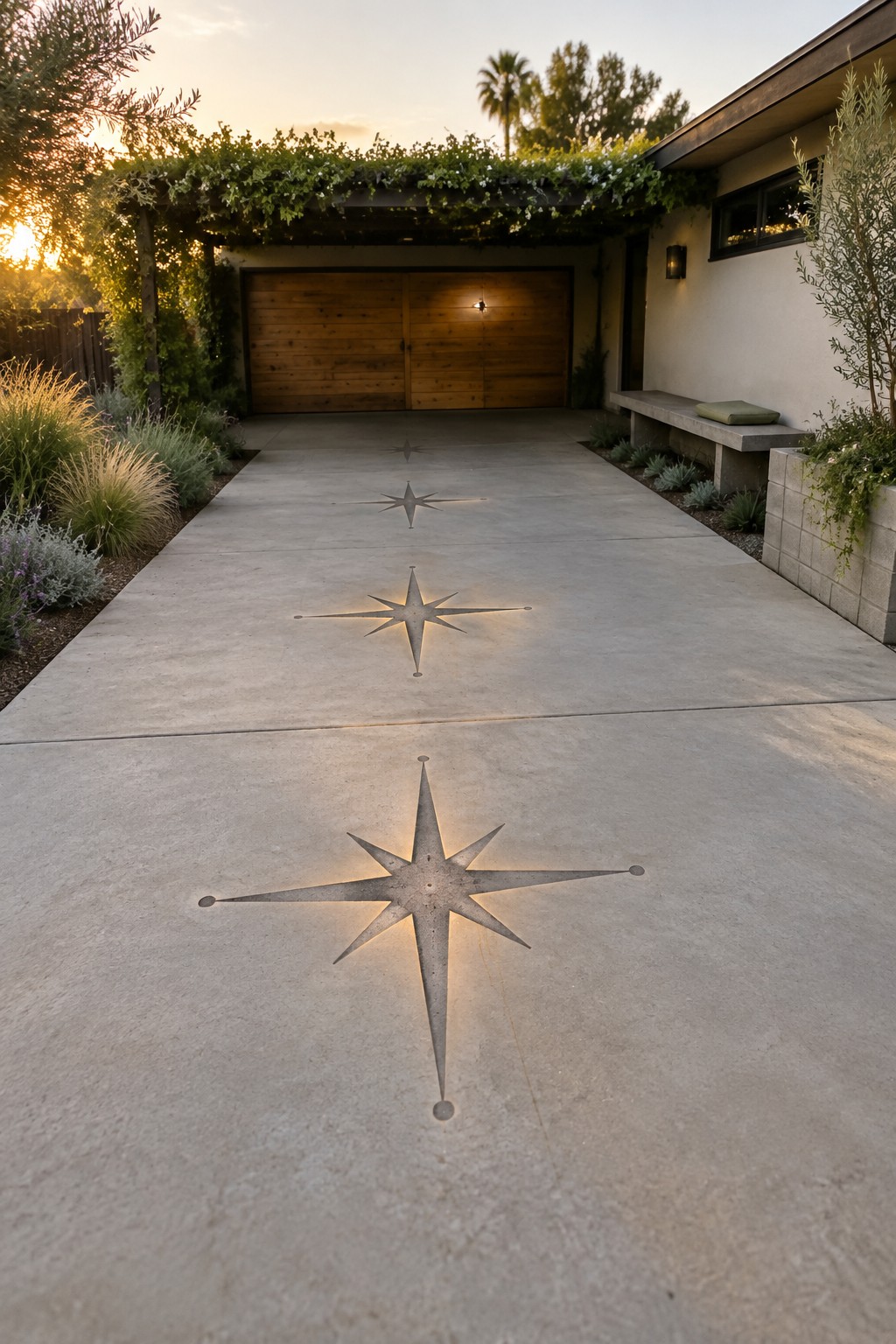
A compass stencil gives a plain concrete driveway a clear focal point without covering the whole surface. Repeating the design at different sizes can carry the pattern from the garage toward the street while leaving plenty of open concrete.
This idea suits a long, simple driveway where a single motif might otherwise feel too small. Plan the spacing before pouring or finishing the concrete, and keep the stencil crisp so the design stays easy to read.
Use Stenciled Concrete on a Garden Path
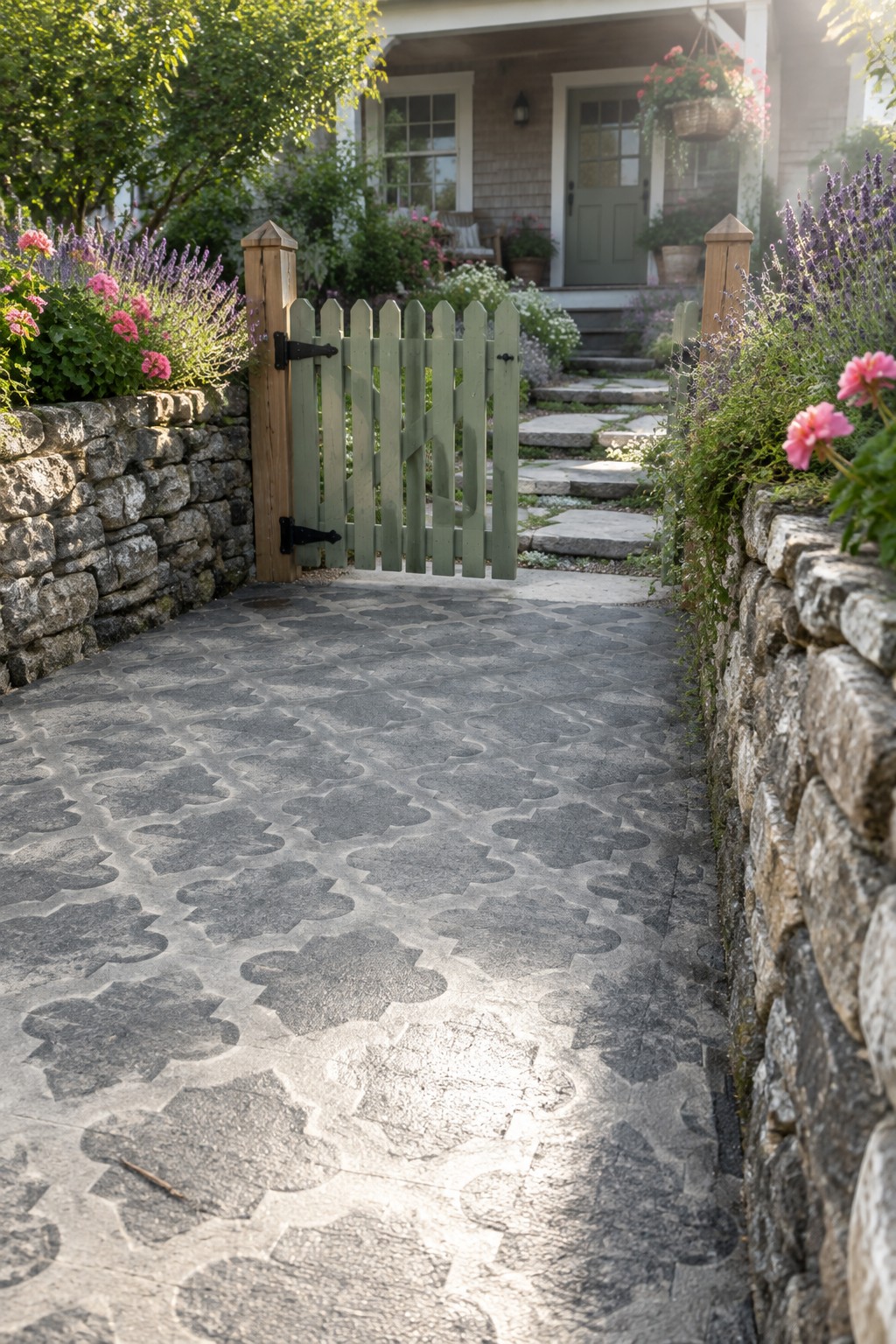
A repeating stencil can give a concrete path the look of laid stone without the cost or uneven surface of individual pavers. The patterned finish adds interest to a simple route and suits a cottage-style garden.
This approach works well for paths leading to a front door or through a planted yard. Keep the pattern easy to follow, and choose a color contrast that still lets the path feel connected to its surroundings.
Use Patterned Concrete for a Welcoming Entry Path
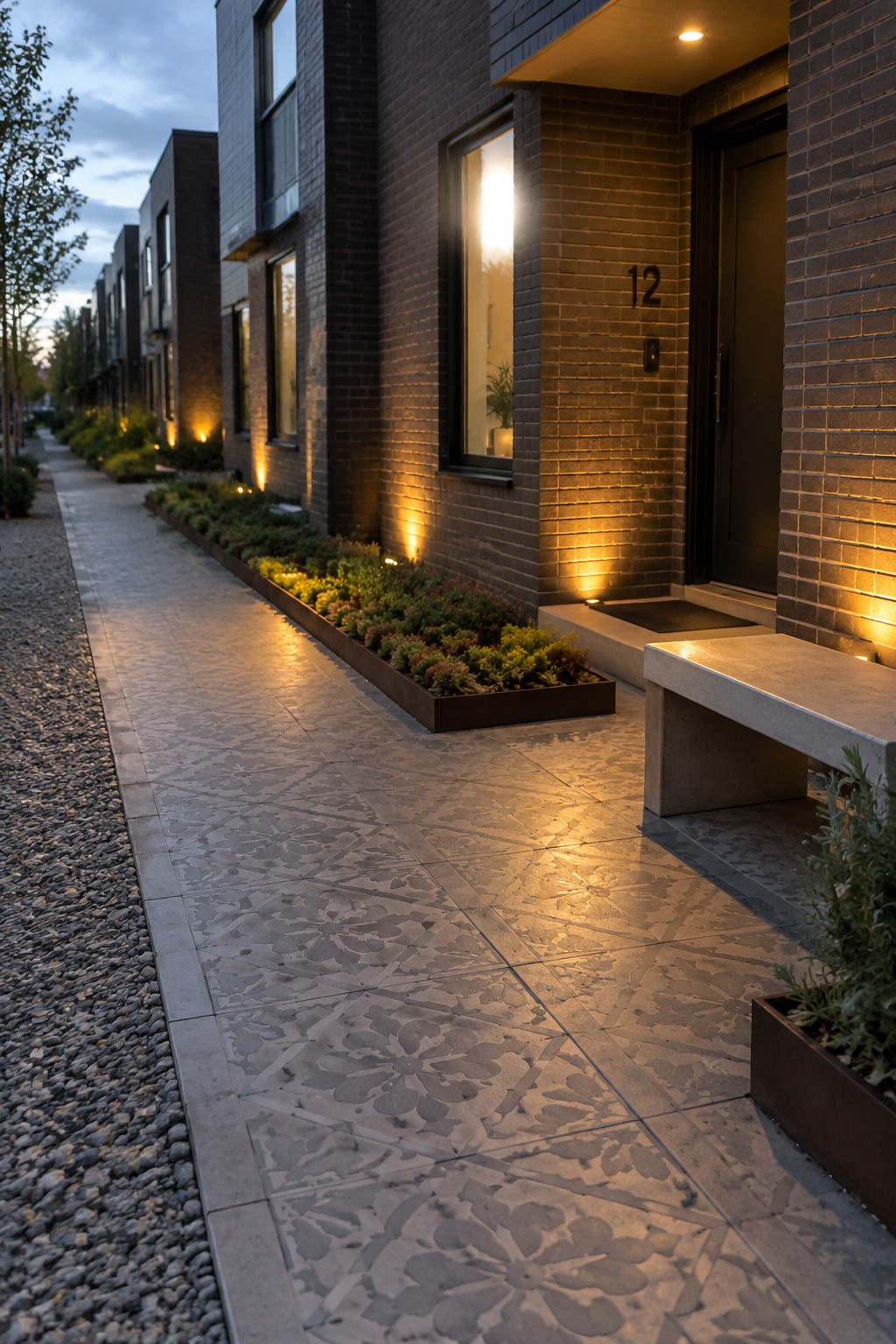
A decorative concrete path can give a home’s entrance a little more character without changing the basic layout. The floral tile pattern shown here makes the walkway feel distinct from plain paving, while still keeping it practical for everyday use.
This idea works well on a front approach where a path leads directly to the door. Choose a stencil pattern that suits the home, and keep the colors fairly restrained so the surface stays easy to live with.
Use Leaf Stencils to Add Pattern to a Concrete Driveway
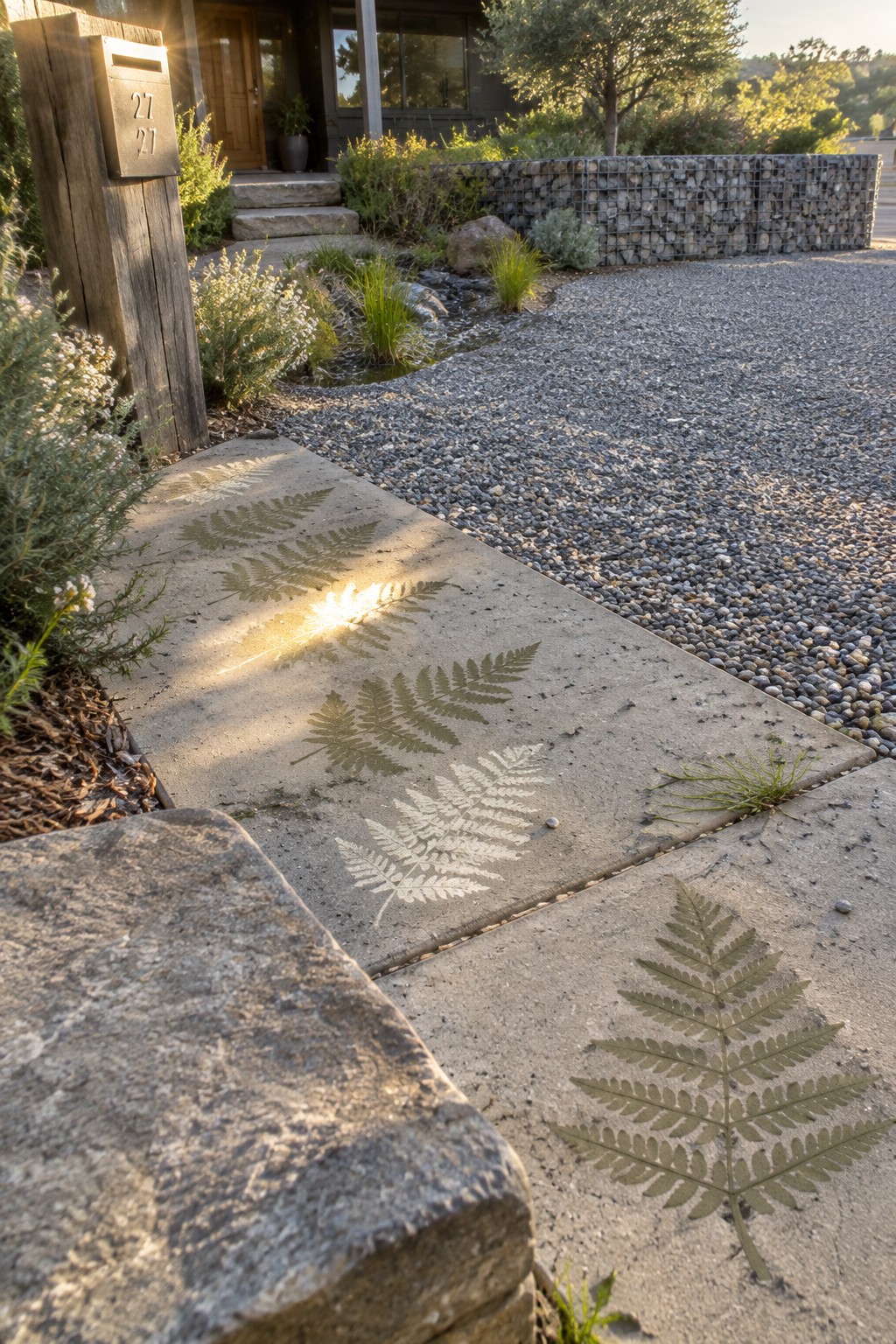
Stenciled leaves give plain concrete a more finished look without changing the driveway’s practical surface. The fern shapes here add a garden-inspired pattern that feels right at a home with natural landscaping.
For a similar effect, use a few large leaf stencils across the concrete rather than covering every inch. Muted colors keep the pattern easy to live with, and a test patch can help you check how the stencil looks before committing.
Use a Fleur-De-Lis Stencil on an Entry Walkway
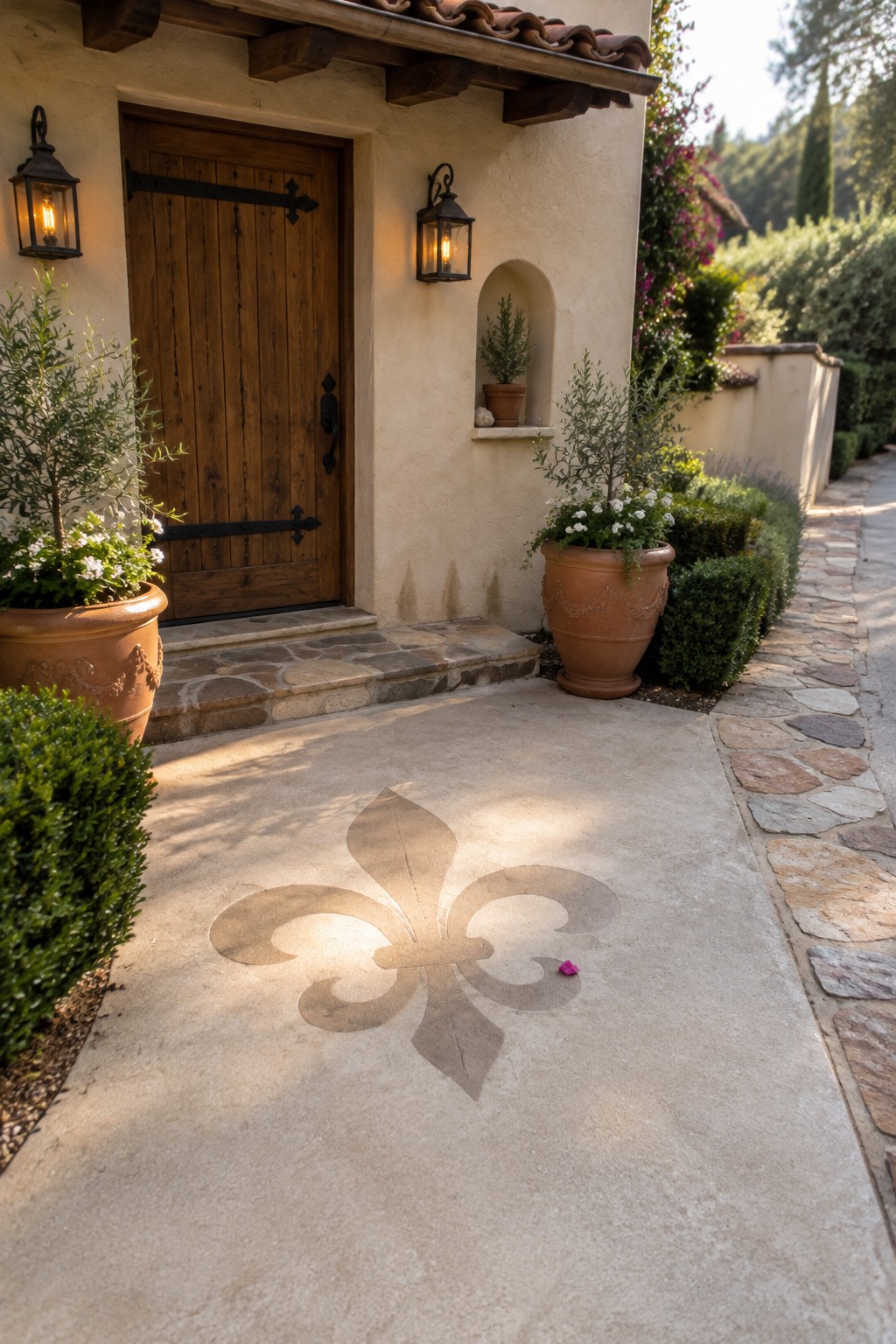
A small stenciled motif can give a plain concrete entry path a more finished look without covering the whole surface. A fleur-de-lis is a good fit for a traditional home, and its larger scale makes the pattern easy to notice.
Use one design near the front door or repeat smaller motifs along a longer walk. Keep the stencil color close to the concrete for a subtle effect, and make sure the surface is sealed so the pattern holds up to foot traffic.
Use Zigzag Bands to Break Up a Concrete Driveway
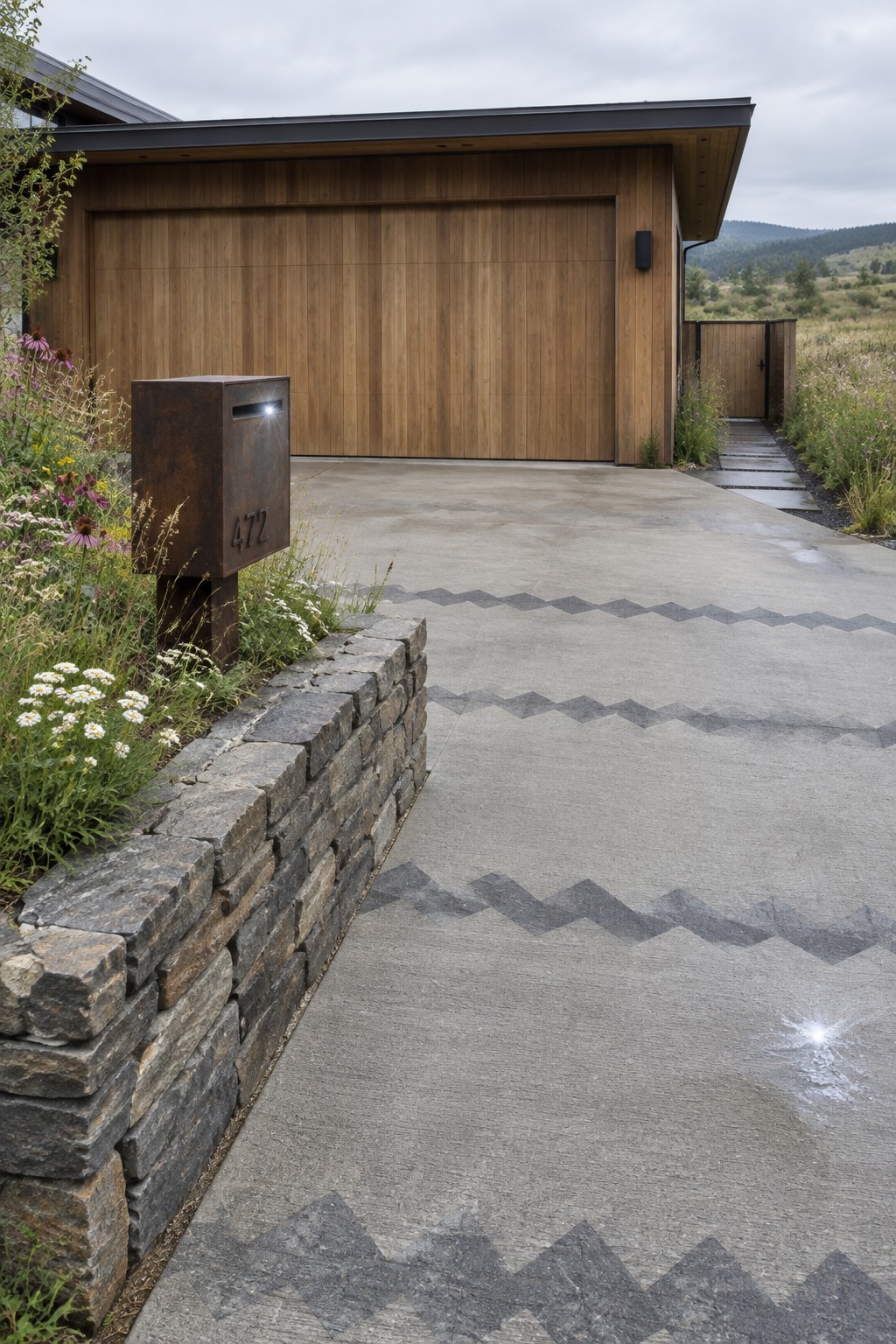
Stenciled zigzag bands give a broad concrete driveway a little pattern without covering the whole surface. The dark gray lines stand out against the lighter concrete and make a plain drive feel more considered.
This approach works well on a wide, simple driveway where a small amount of decoration can go a long way. Keep the bands spaced apart, and choose a stencil pattern that suits the home’s style.
Use Geometric Stencils on a Concrete Driveway
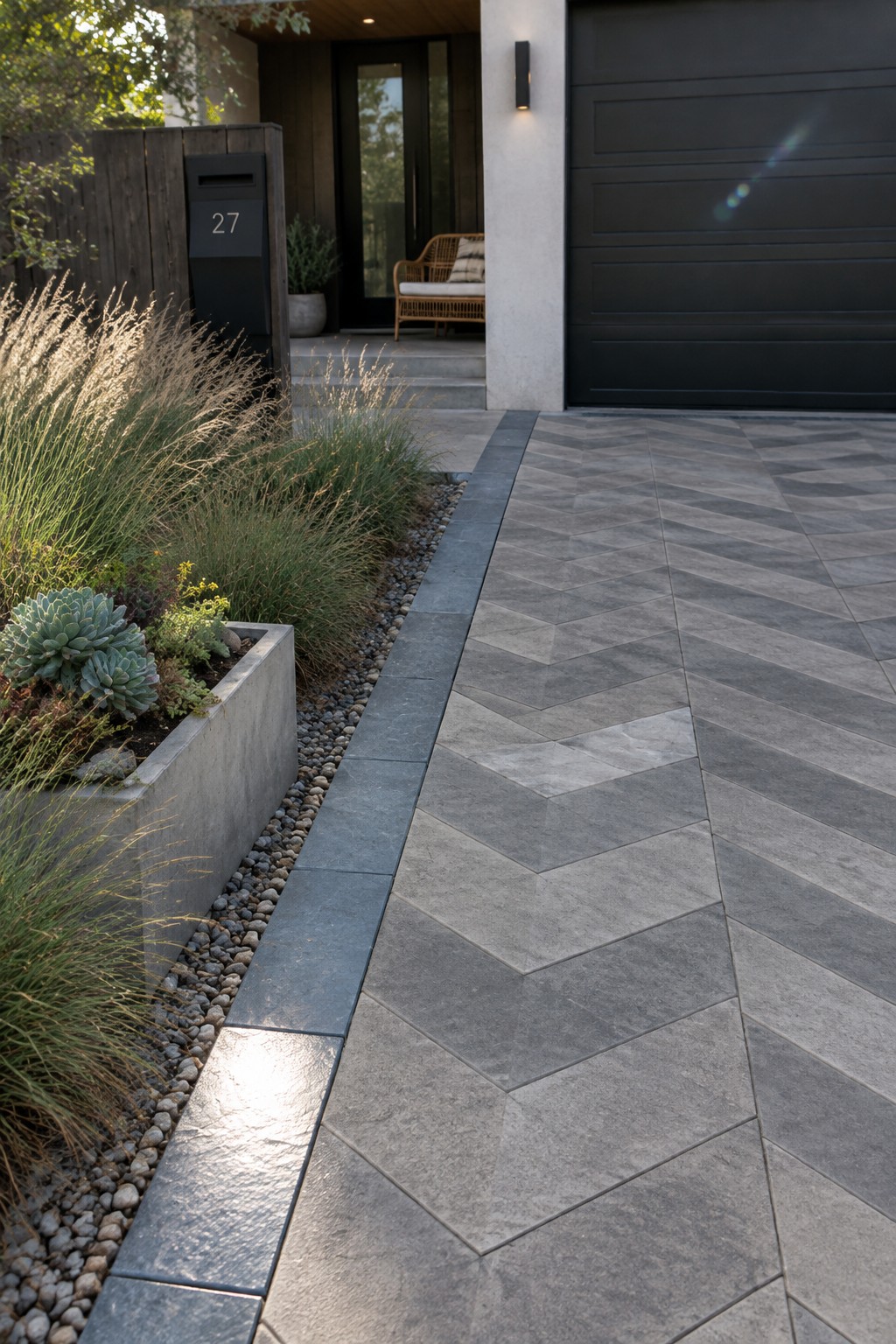
Stenciled geometric patterns can make a concrete driveway feel more finished without adding another material. A repeating angular design gives a broad paved area some visual interest while keeping the surface practical for everyday use.
This approach suits a modern home, especially when the pattern stays simple and the colors remain close to the concrete’s natural tones. Try the design on a driveway or entry path, and make sure the stencil scale works with the size of the paving so the pattern doesn’t look crowded.
Use an Ornamental Medallion on a Concrete Driveway
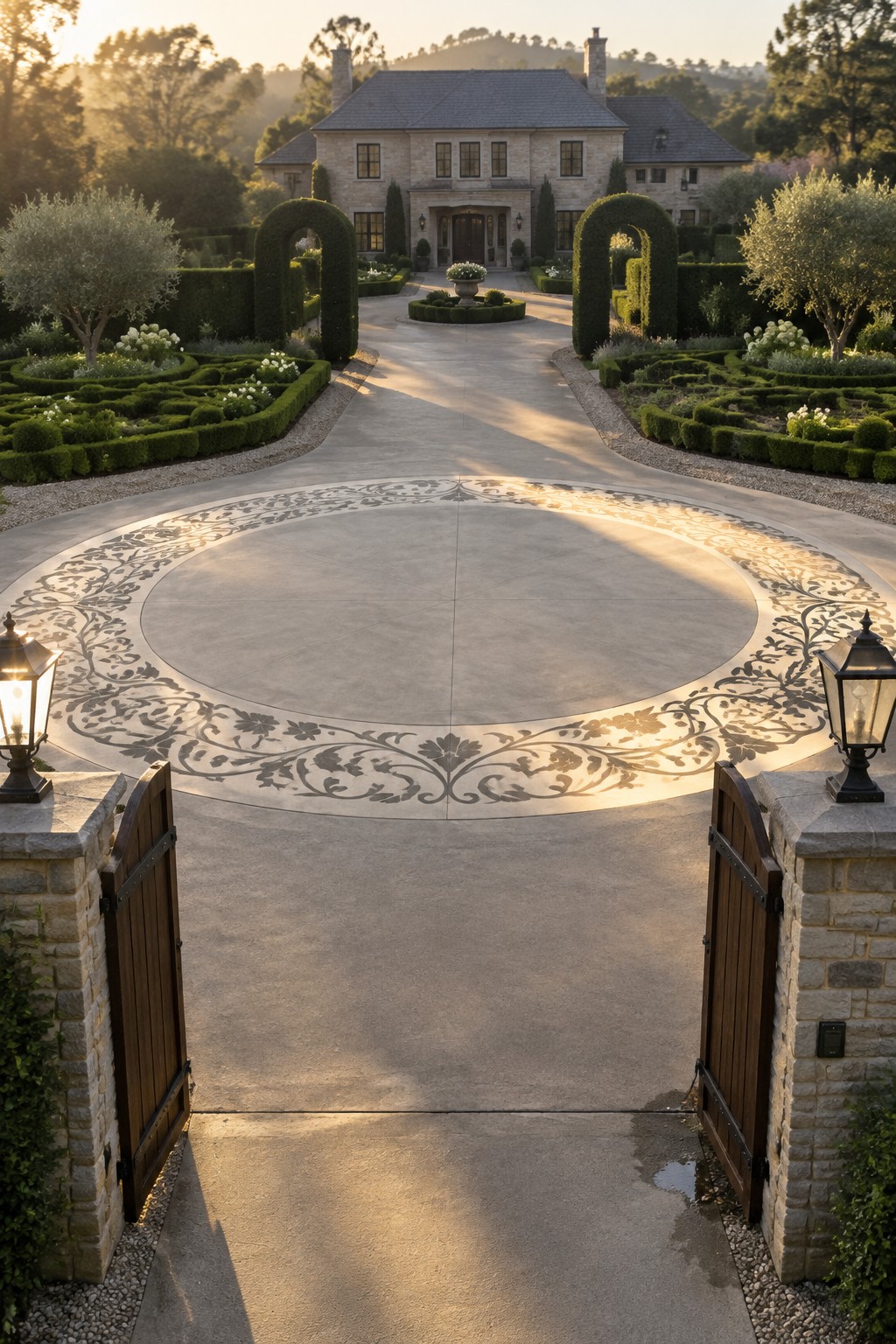
A large stenciled medallion gives a broad concrete driveway a clear focal point without covering the whole surface in pattern. The open center keeps the design from feeling too busy, while the decorative border makes the entry feel considered.
This approach works well on a spacious, fairly level driveway where the pattern can be seen from the gate. Choose a stencil with enough detail to stand out, but keep the colors close to the concrete so the design stays easy to live with.
Use Oversized Circles to Mark a Concrete Path
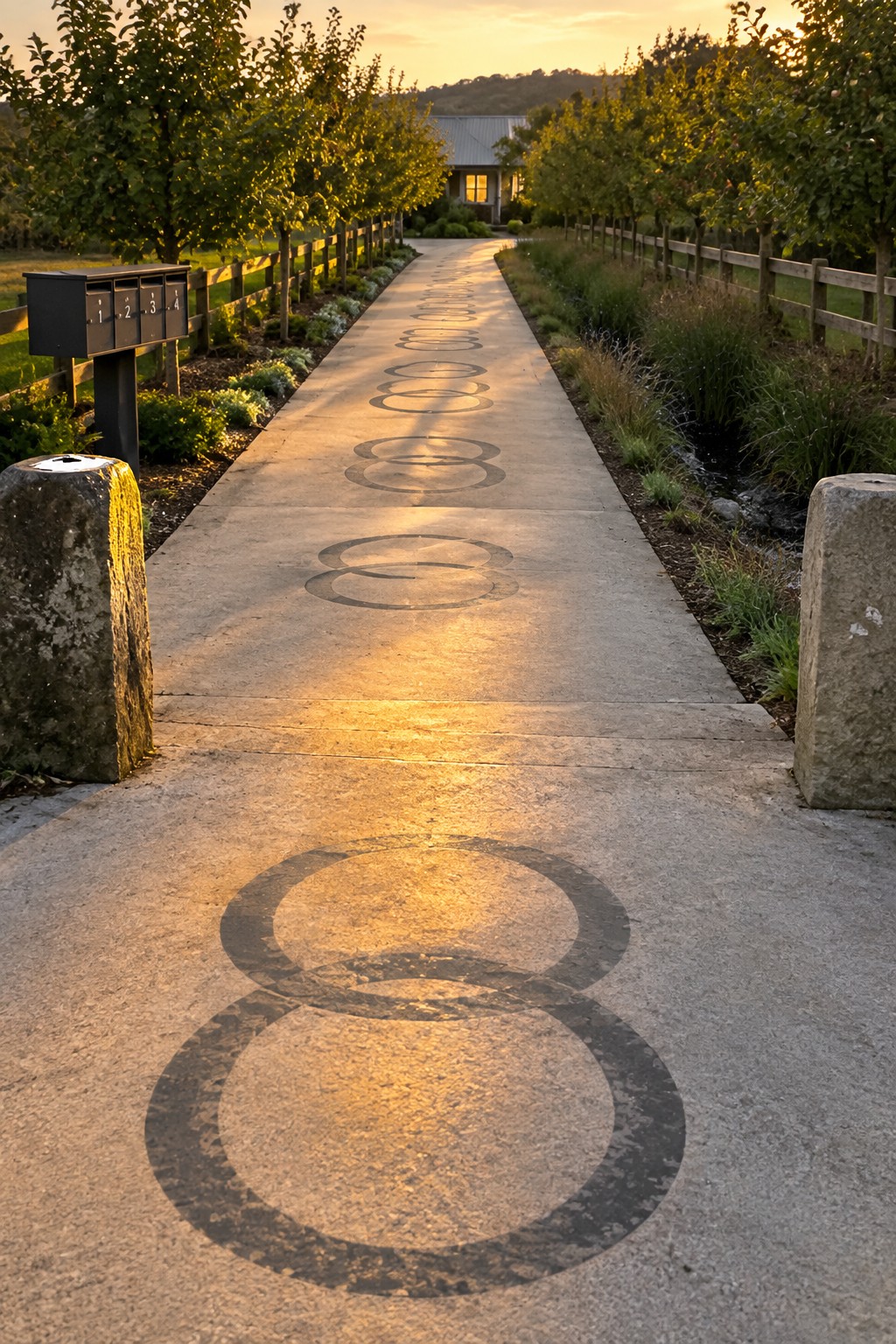
Circular stencils can give a plain concrete path a clear pattern without covering the whole surface. The large rings here are spaced along the walkway, so the concrete still shows through and the design stays easy to follow.
This idea works on a garden path or a long approach to the front door. Keep the circles far enough apart to avoid a crowded look, and plan their spacing before the concrete is finished.
Use a Geometric Strip to Define the Driveway
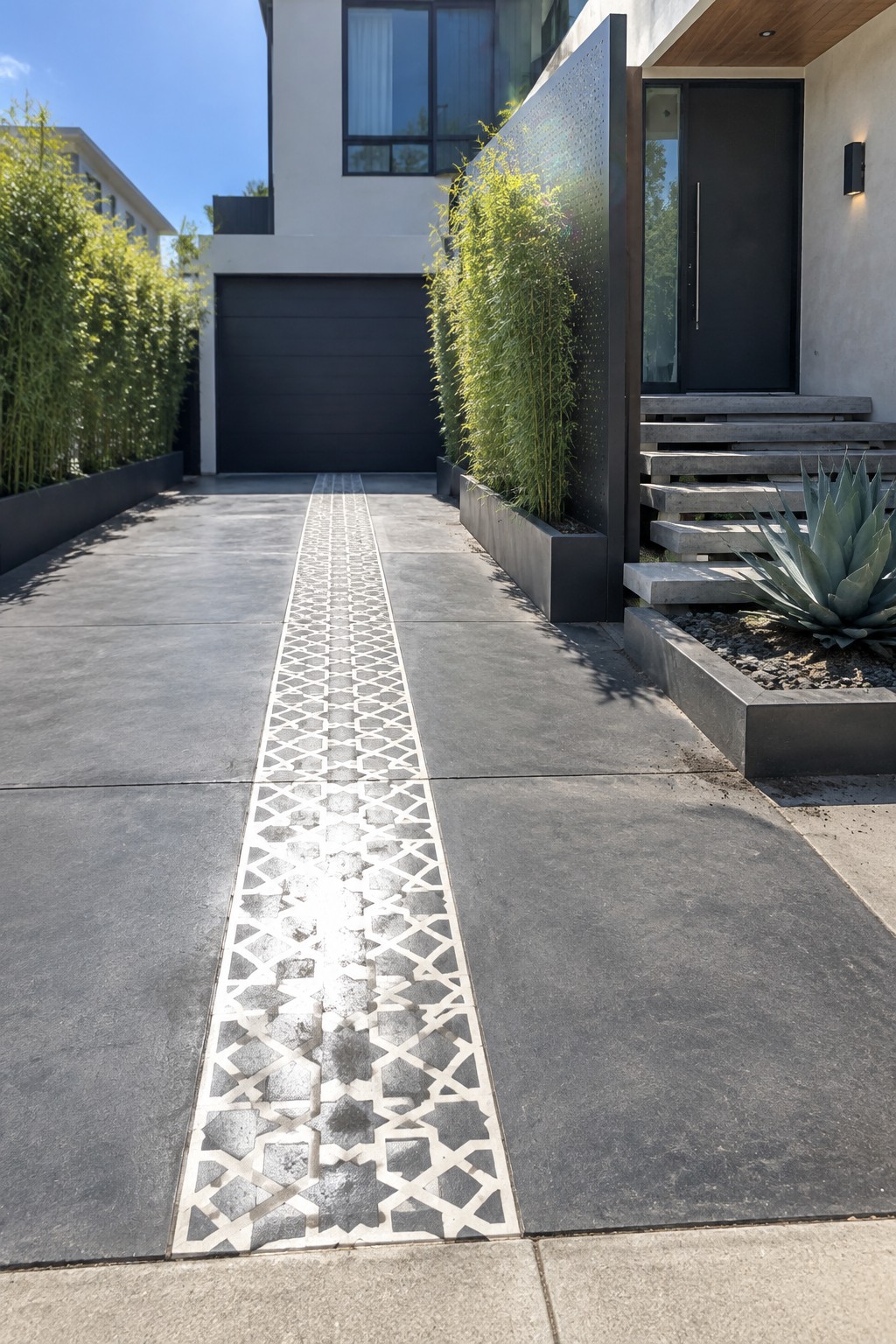
A patterned strip running through a concrete driveway gives a long, plain surface a clear point of interest. Here, the white geometric stencil creates a path-like line without covering the whole driveway, so the surrounding gray concrete still feels open.
This approach works well on a modern home where a simple pattern can echo the clean architecture. Keep the strip narrow enough to leave room for vehicles, and choose a pattern with good contrast so it stays easy to see.
Use Decorative Concrete to Mark the Entry Path
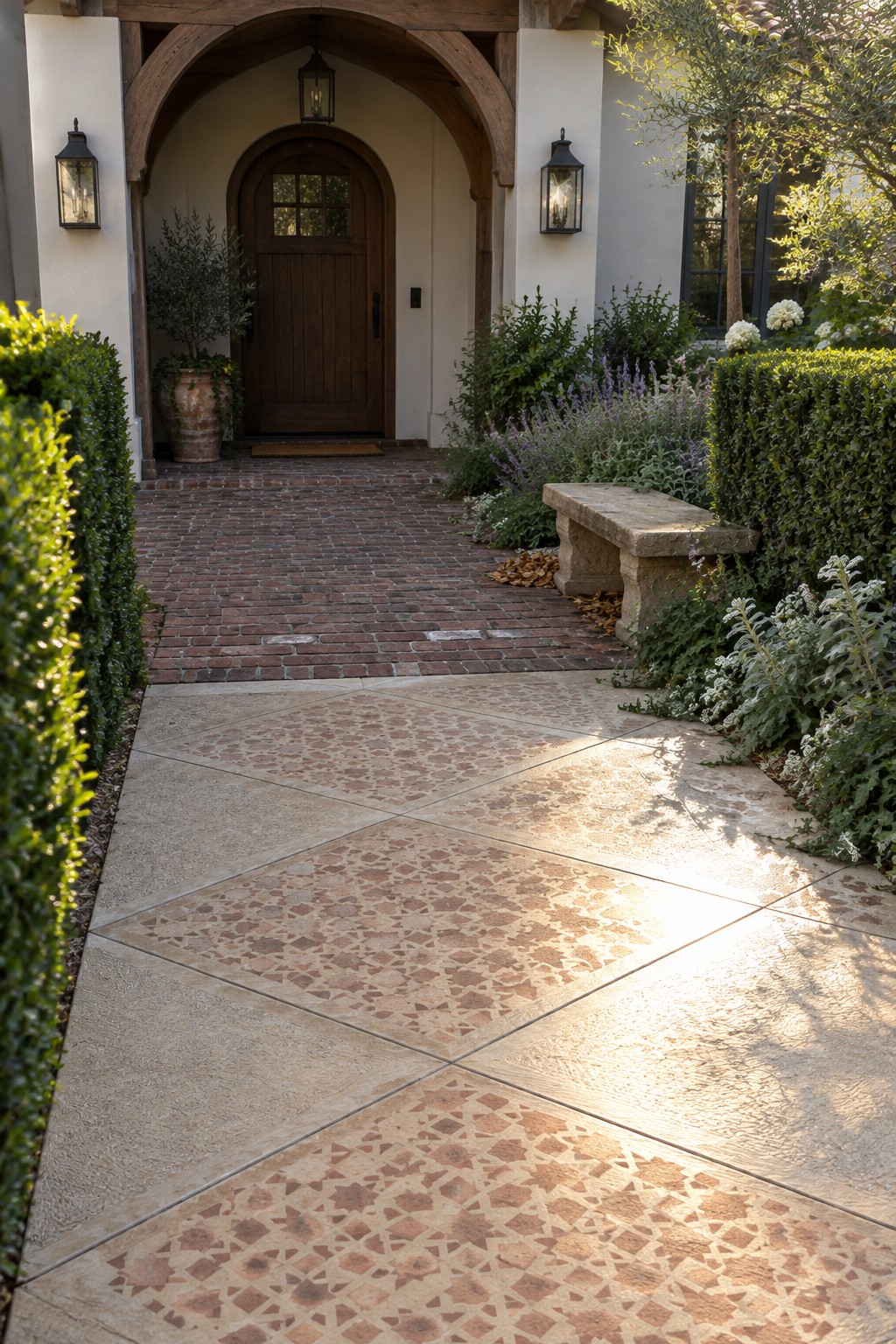
A patterned concrete path can make the walk to the front door feel considered without covering the whole driveway in decoration. The inset tile-like designs here break up broad concrete sections and give the entry route a clear, welcoming look.
Use a stencil or stamped pattern inside larger plain borders to keep the design from feeling too busy. This approach suits front walks and short driveways, especially where the home already has traditional details. Choose a pattern and color that won’t compete with the brick or stone nearby.
Use a Shell Pattern to Lead the Way
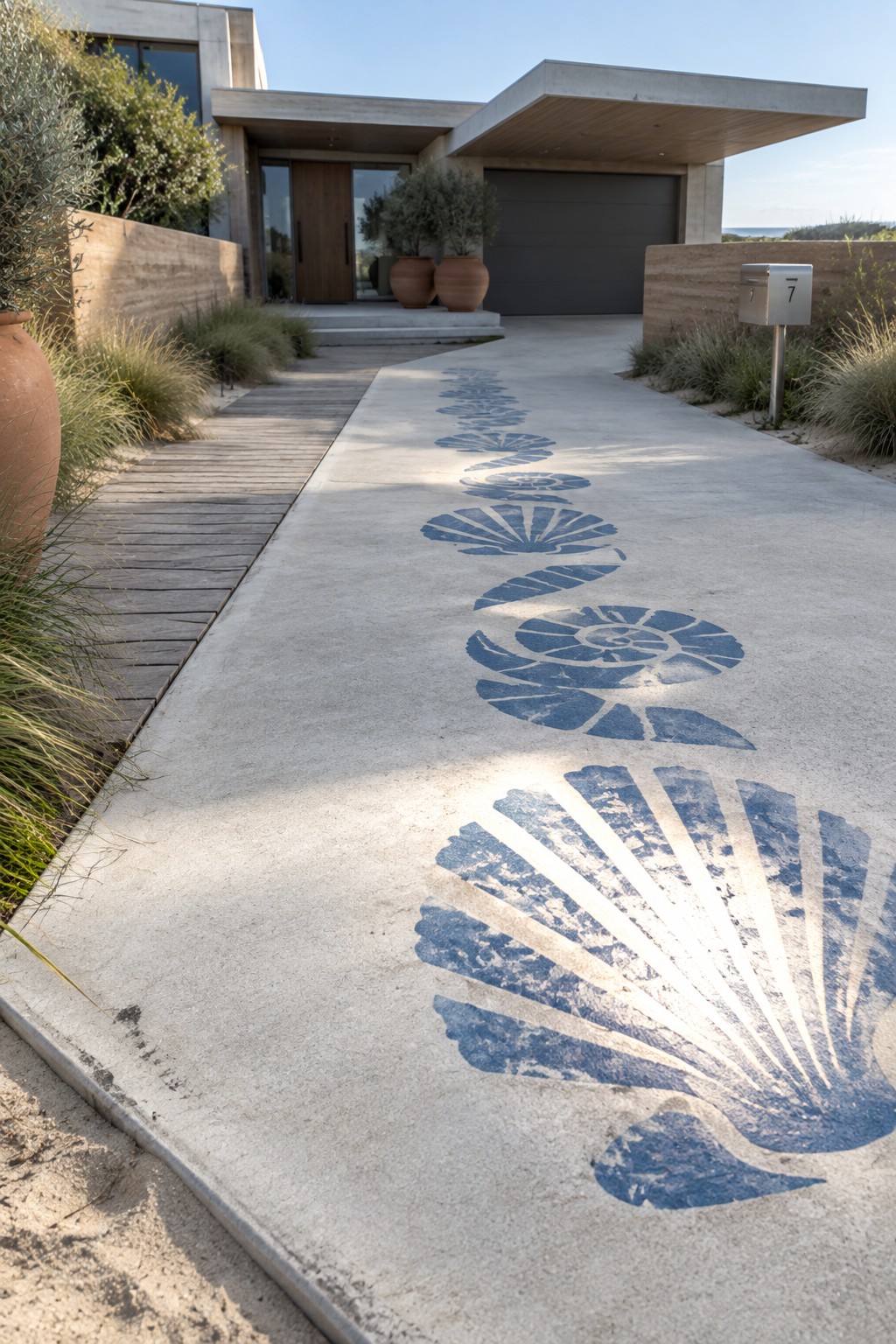
A series of shell stencils can turn a plain concrete driveway into a path with a clear direction. The blue pattern adds interest without covering the whole surface, so the concrete still shows through.
This approach works well on a long driveway or entry walk where a repeated design can guide visitors toward the door. Keep the stencils spaced along the main route, and choose a durable, slip-resistant finish for outdoor use.
Frequently Asked Questions
Q: Will a stenciled pattern make my driveway slippery when it rains?
A: It can if the sealer leaves a glossy, slick surface. Ask for a slip-resistant sealer, especially if the driveway slopes or gets a lot of rain.
Q: Can I stencil over an existing concrete driveway?
A: Yes, if the concrete is sound and the surface is clean. Cracks, flaking, and deep stains may still show through, so repair problem areas before adding the pattern.
Q: How do I keep the pattern from looking too busy?
A: Choose a simple repeat and use one or two colors that work with your home’s exterior. A subtle border can add detail without covering the whole driveway in competing shapes.
Q: Will the design fade from cars and weather?
A: Sun, tires, and winter wear can dull the finish over time. A fresh coat of compatible sealer every few years can help protect the color and pattern.
