

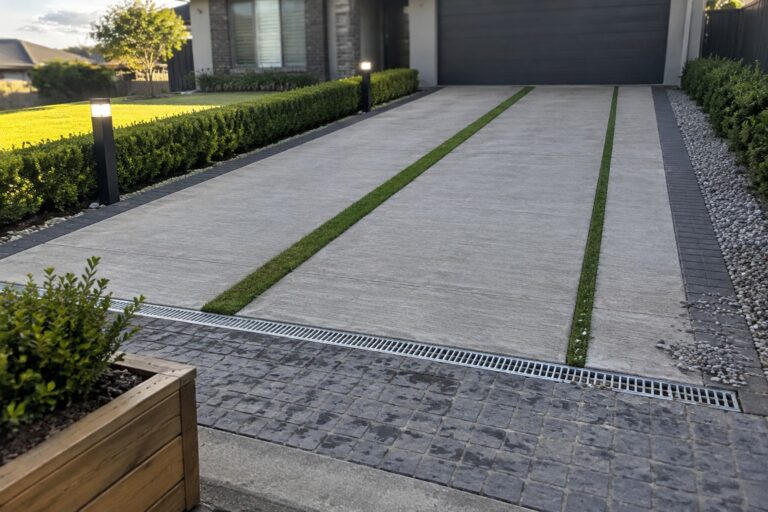
A worn concrete driveway can make the whole front of a home feel tired, even when the entry and landscaping are in good shape.
I find that the best fixes start with the slab’s condition and how the driveway meets the house, walkway, and street.
Some updates change the surface color or texture, while others add definition with borders or planting nearby.
The practical choice depends on drainage, cracking, and how much maintenance you want to take on.
I’d save the ideas that work with the existing concrete rather than covering up problems that need repair first.
Add a Gravel Border Along the Driveway
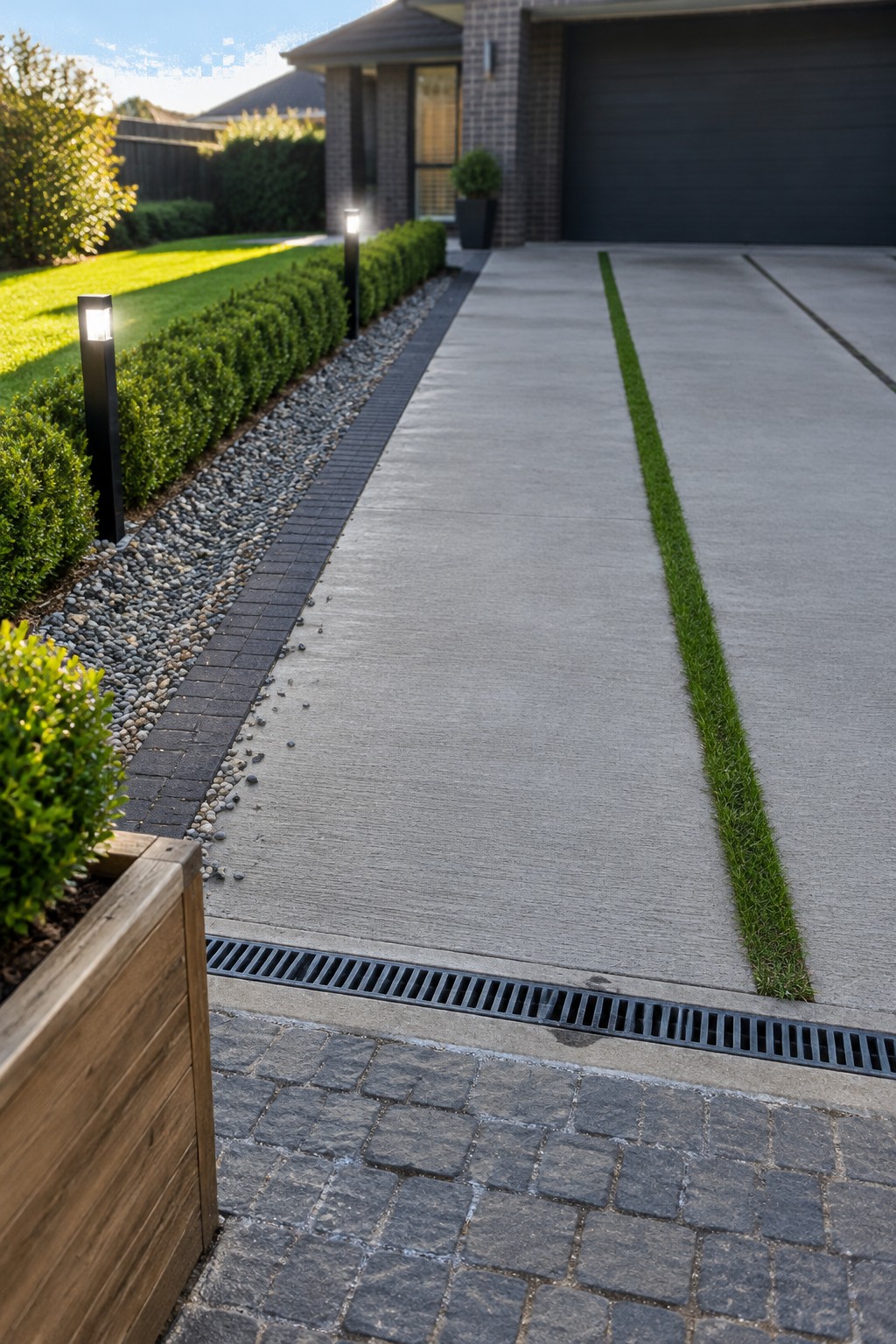
A narrow gravel strip can give an existing concrete driveway a cleaner edge and help separate it from nearby planting. It also provides a place for water to drain instead of letting soil and mulch spill onto the slab.
To use this idea, leave enough room beside the concrete for a shallow gravel bed, and add a firm edging so the stones stay in place. This works especially well beside a straight driveway, where the border can follow the slab without complicated cuts.
Add a Pebble Strip to a Concrete Driveway
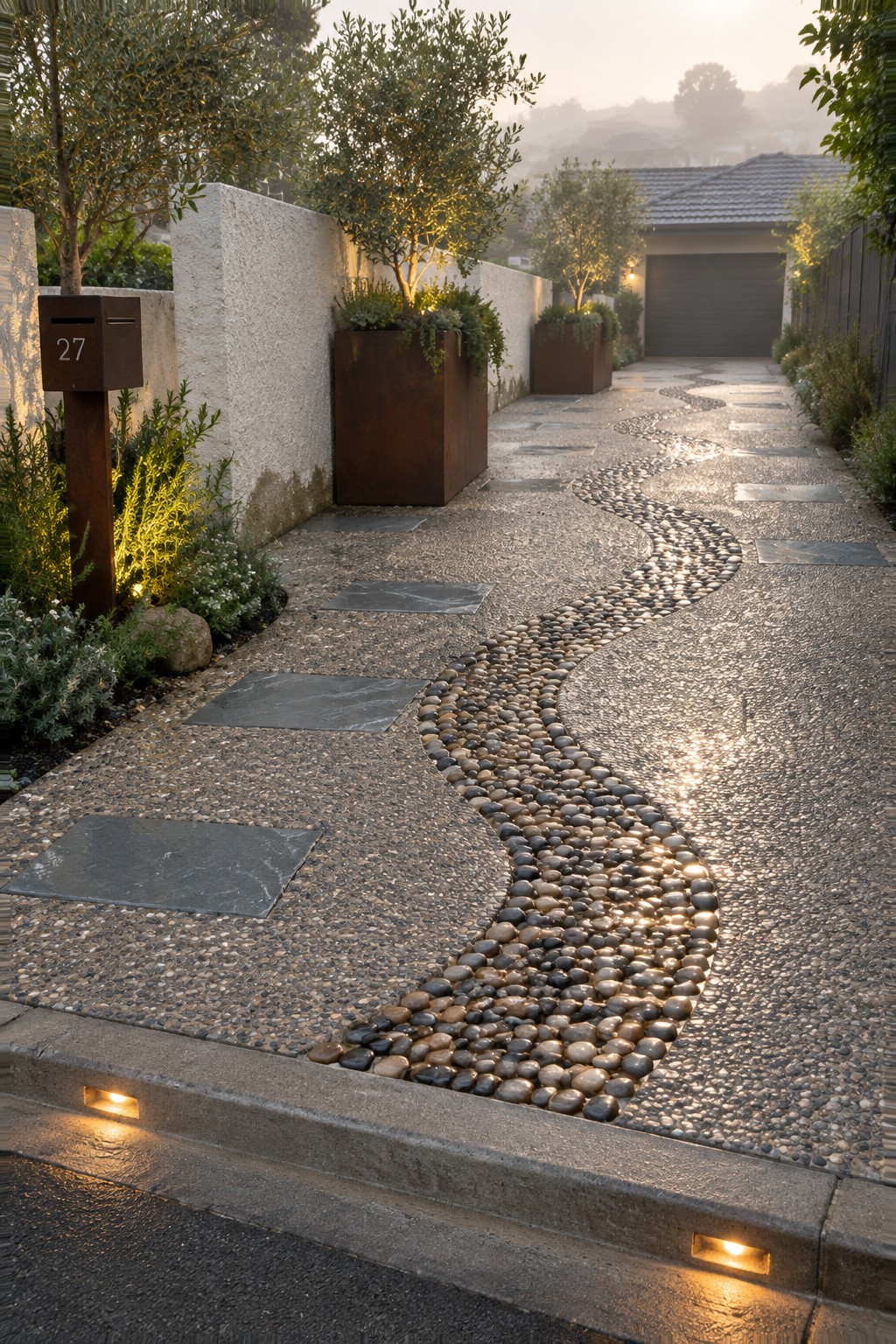
A winding strip of smooth pebbles can break up the broad surface of an existing concrete driveway and give it a more custom look. It works especially well beside simple concrete sections, where the change in texture is easy to see.
For a DIY update, cut or form a curved channel in the slab, then set the pebbles in a suitable mortar or concrete mix. Keep the strip fairly narrow and make sure its edges are secure so the stones stay in place under foot and vehicle traffic.
Add a Contrasting Border to a Concrete Driveway
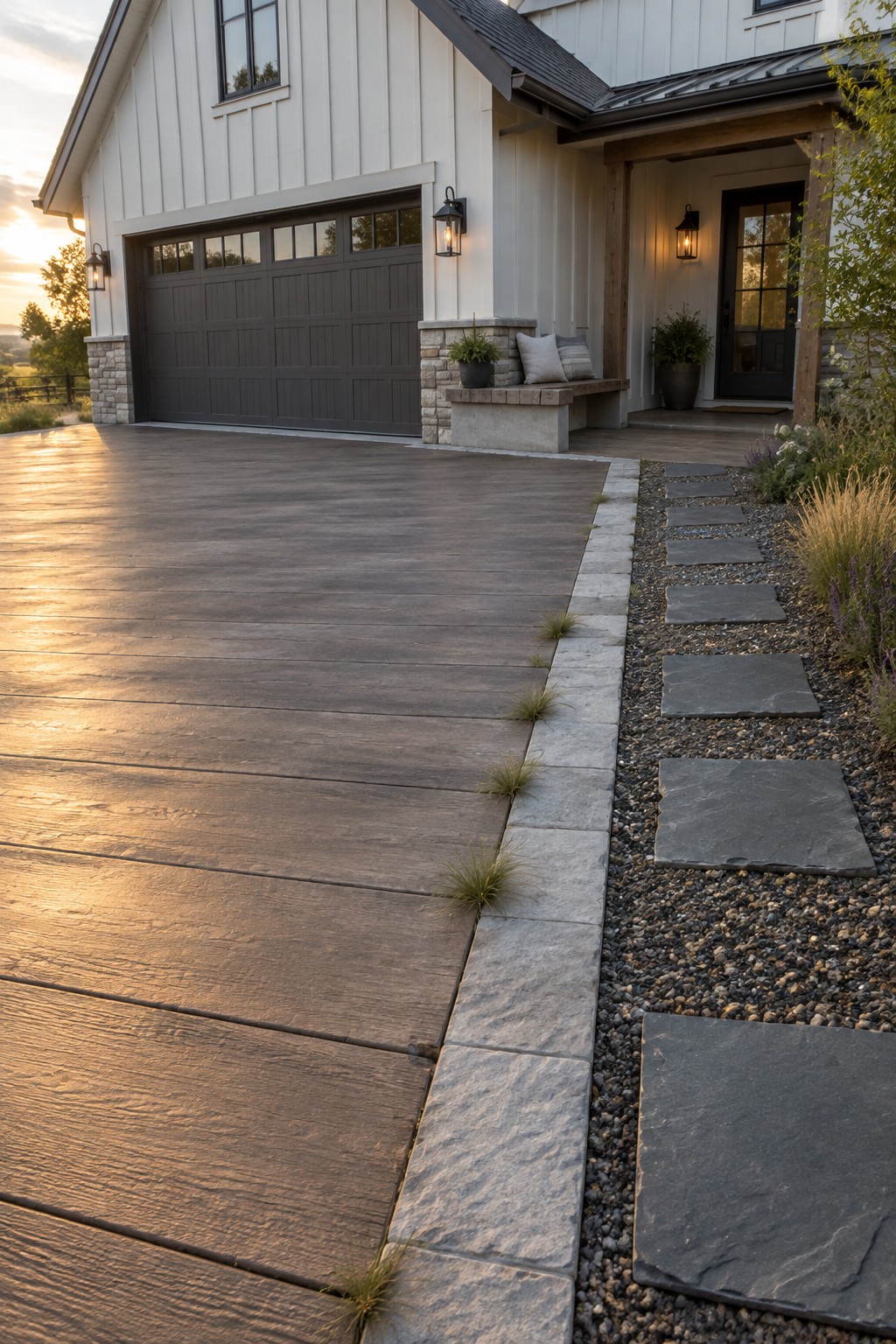
A narrow stone border can make an existing concrete driveway look more finished without replacing the slab. Here, the pale edging gives the darker concrete a clean outline and separates it from the gravel path.
For a similar update, add pavers or stone along one or both sides of the driveway. Keep the border level with the slab so it is easy to walk and drive over, and choose a material that suits the house.
Use Curved Paver Bands to Dress Up a Concrete Driveway
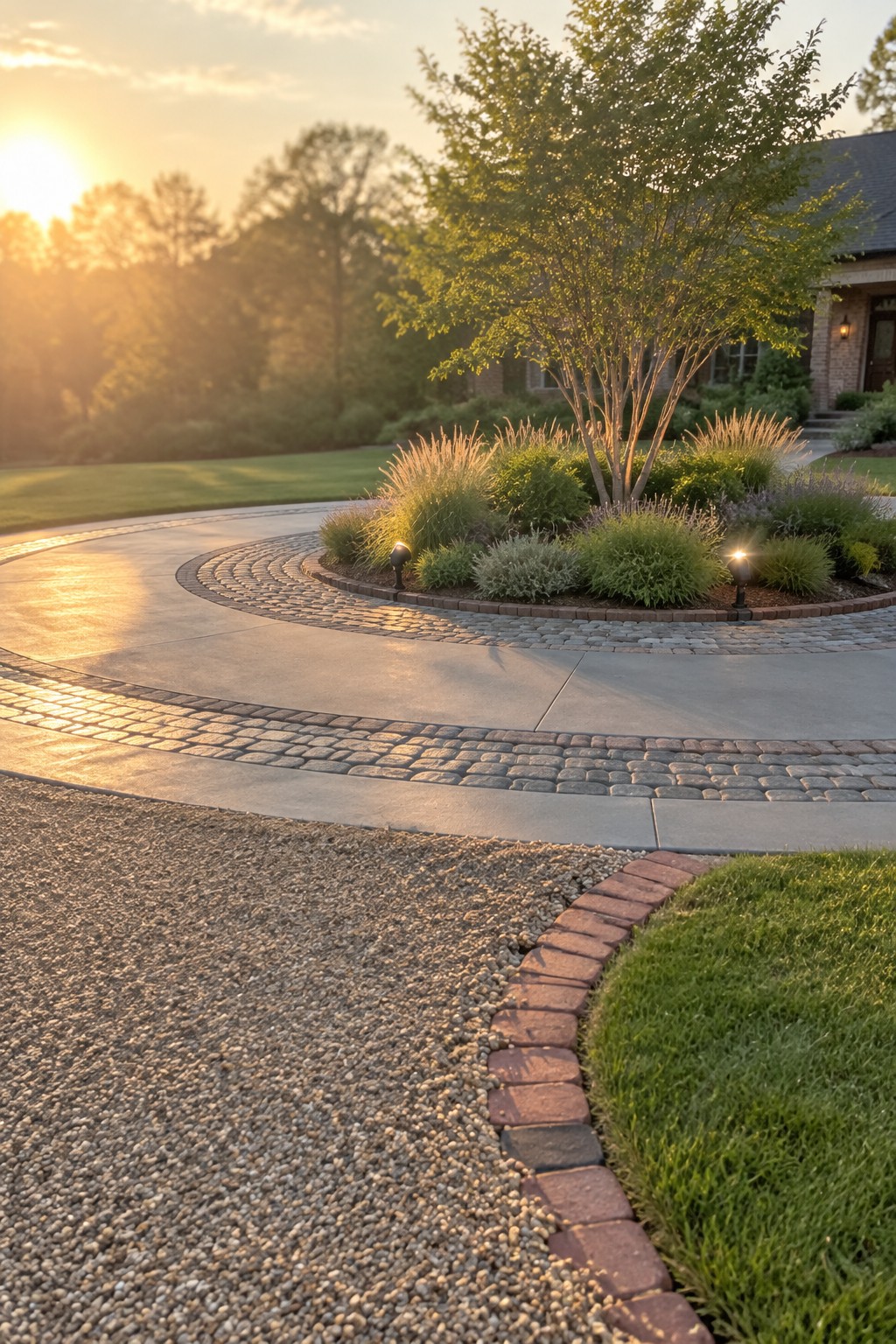
A plain concrete driveway can look more finished with a curved band of pavers around a planted island. The rounded edge breaks up a wide slab and gives the driveway a clearer shape without replacing all the concrete.
For an existing driveway, use pavers as a border or accent strip where the slab is sound, and plan the curve before cutting or setting anything in place. A small planting bed can work well at a driveway entrance, but keep the band level and wide enough to hold up to regular vehicle traffic.
Choose Large Concrete Slabs for a Coastal Walkway
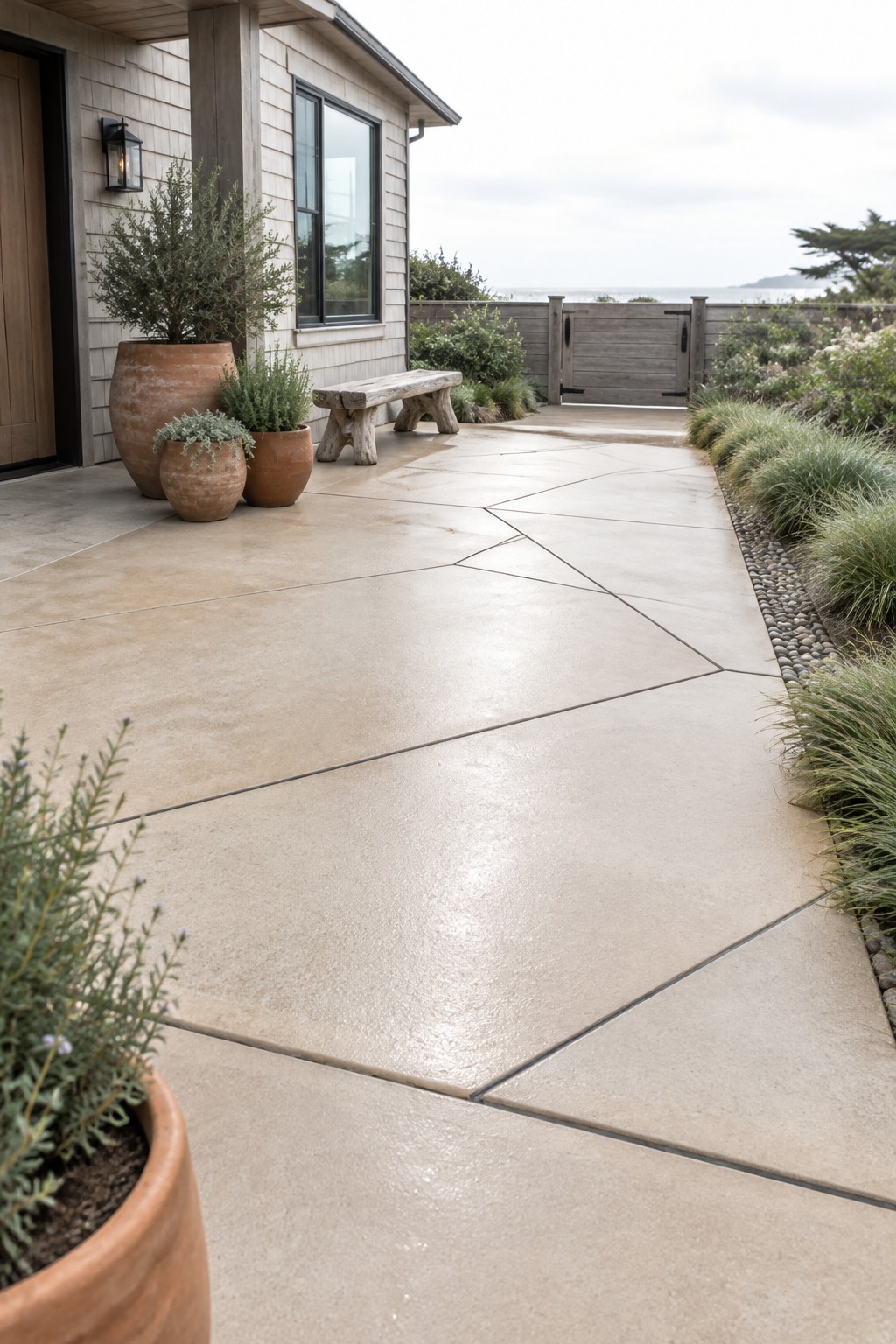
Large concrete panels give a walkway a clean, easy-to-follow layout while keeping the surface practical for everyday use. The broad slabs shown here have simple angled joints, which add a little pattern without making the path feel busy.
This approach can also work on an existing driveway if the slab is sound. You can refresh its look with a suitable concrete resurfacing finish and carefully planned control joints, but check drainage and surface condition first.
Add Planting Strips Between Concrete Slabs
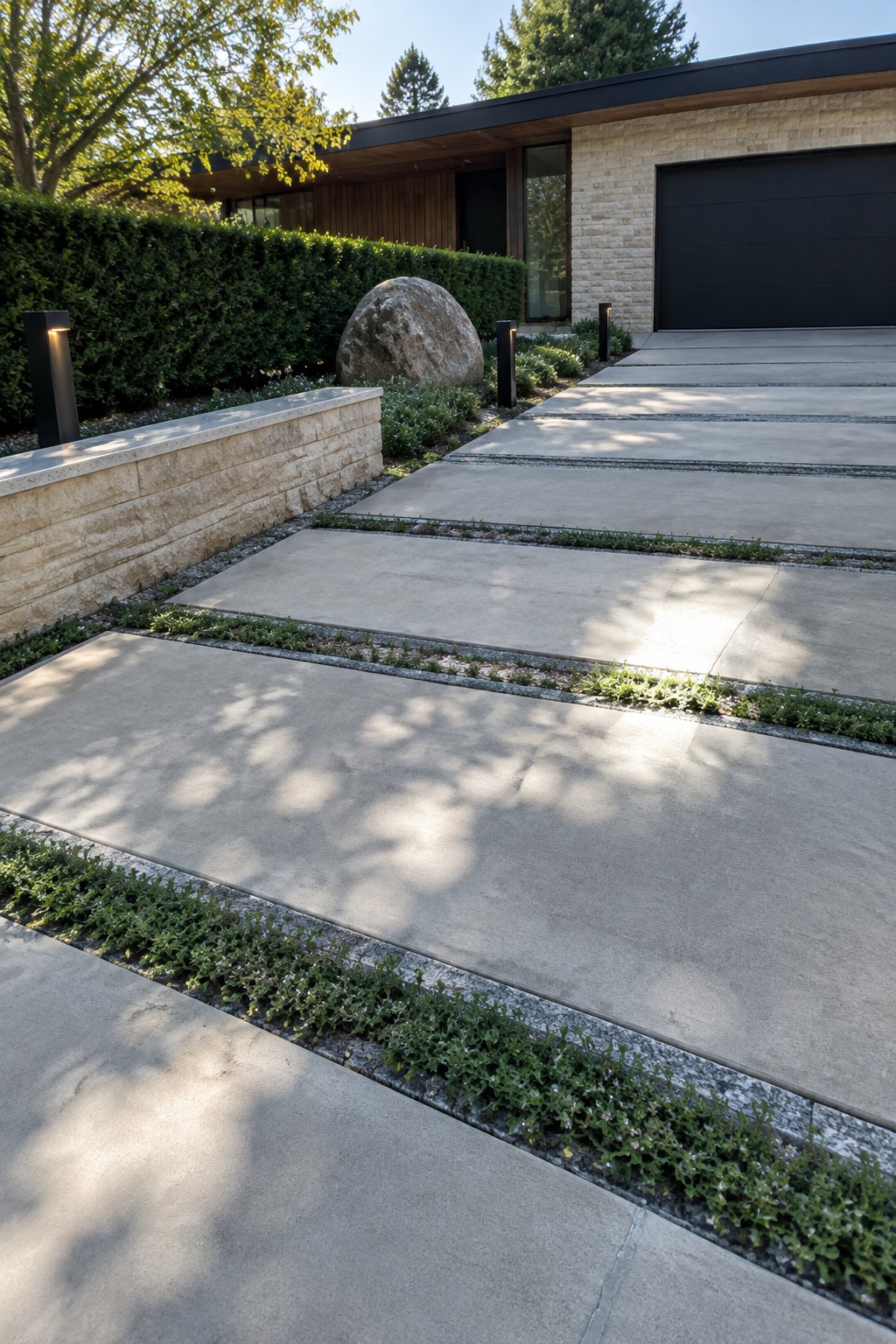
Planting narrow strips between large concrete driveway slabs is a practical way to break up an expanse of pavement. Low-growing ground cover gives the joints a softer edge while keeping the broad, easy-to-use slab layout.
For a similar look, leave consistent gaps between the slabs and choose tough, low plants that can handle your local climate. Keep the strips narrow enough that they do not interfere with parking or walking, and make sure the driveway still drains properly.
Add Geometric Inlays to a Concrete Walkway
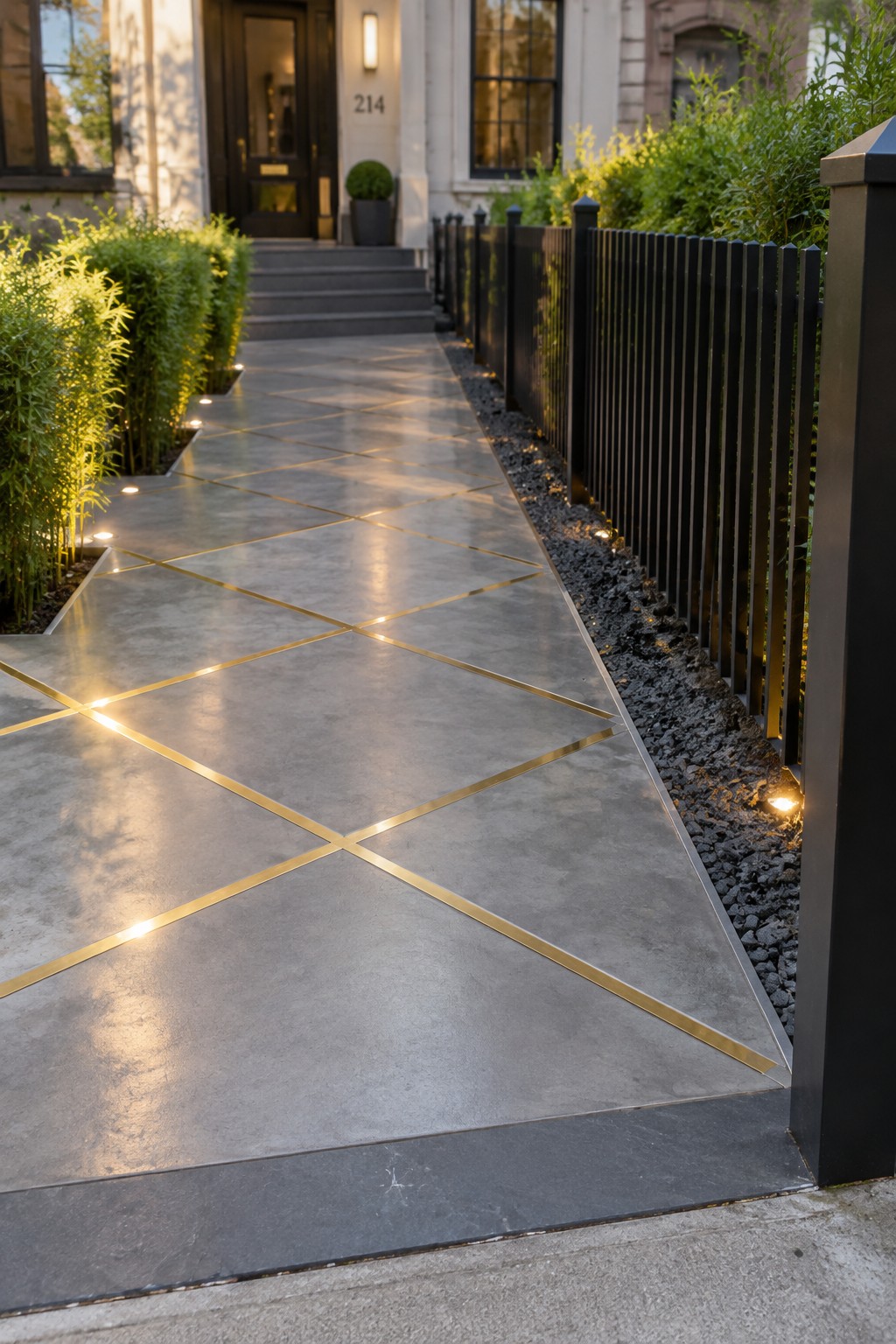
Gold-colored strips set into a concrete surface can give a plain path a more finished look. The straight lines form a simple geometric pattern, adding interest without changing the walkway’s basic material.
For a similar idea on an existing slab, use narrow metal inlays or durable exterior-rated strips and plan the pattern before cutting. Keep the surface even so the inlays do not catch shoes or create a tripping hazard.
Add a Pebble Channel Beside a Concrete Walkway
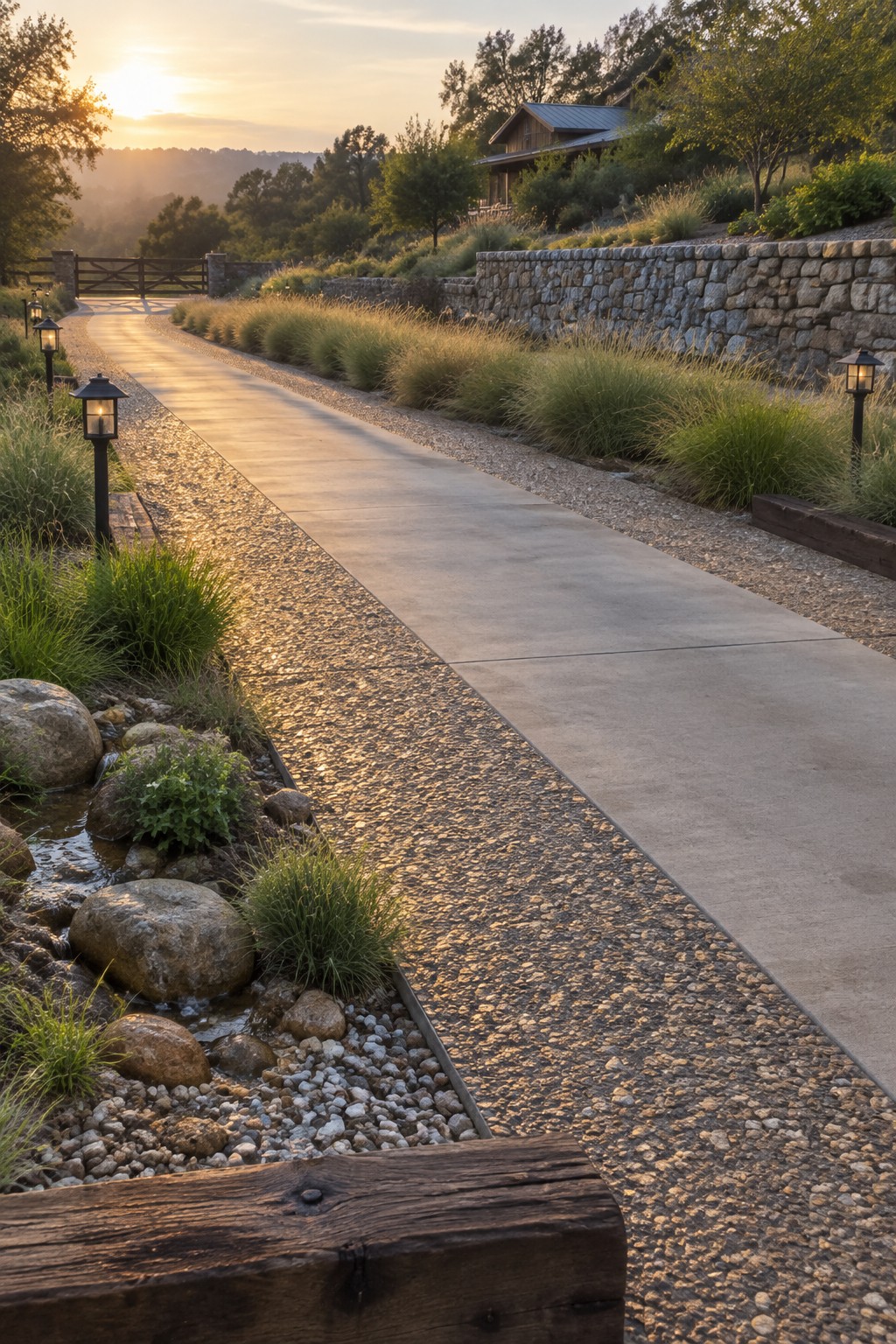
A narrow pebble channel can give a concrete path a cleaner edge while making room for a small drainage feature. Here, the stones sit between the path and a shallow stream, so the hard surface feels connected to the landscape without needing a complicated pattern.
For a driveway, use a similar strip along one or both slab edges, choosing gravel that suits the concrete color. Keep it contained with discreet edging, and make sure water can flow where it needs to rather than collecting beside the slab.
Add Decorative Tile Inlays to a Concrete Driveway
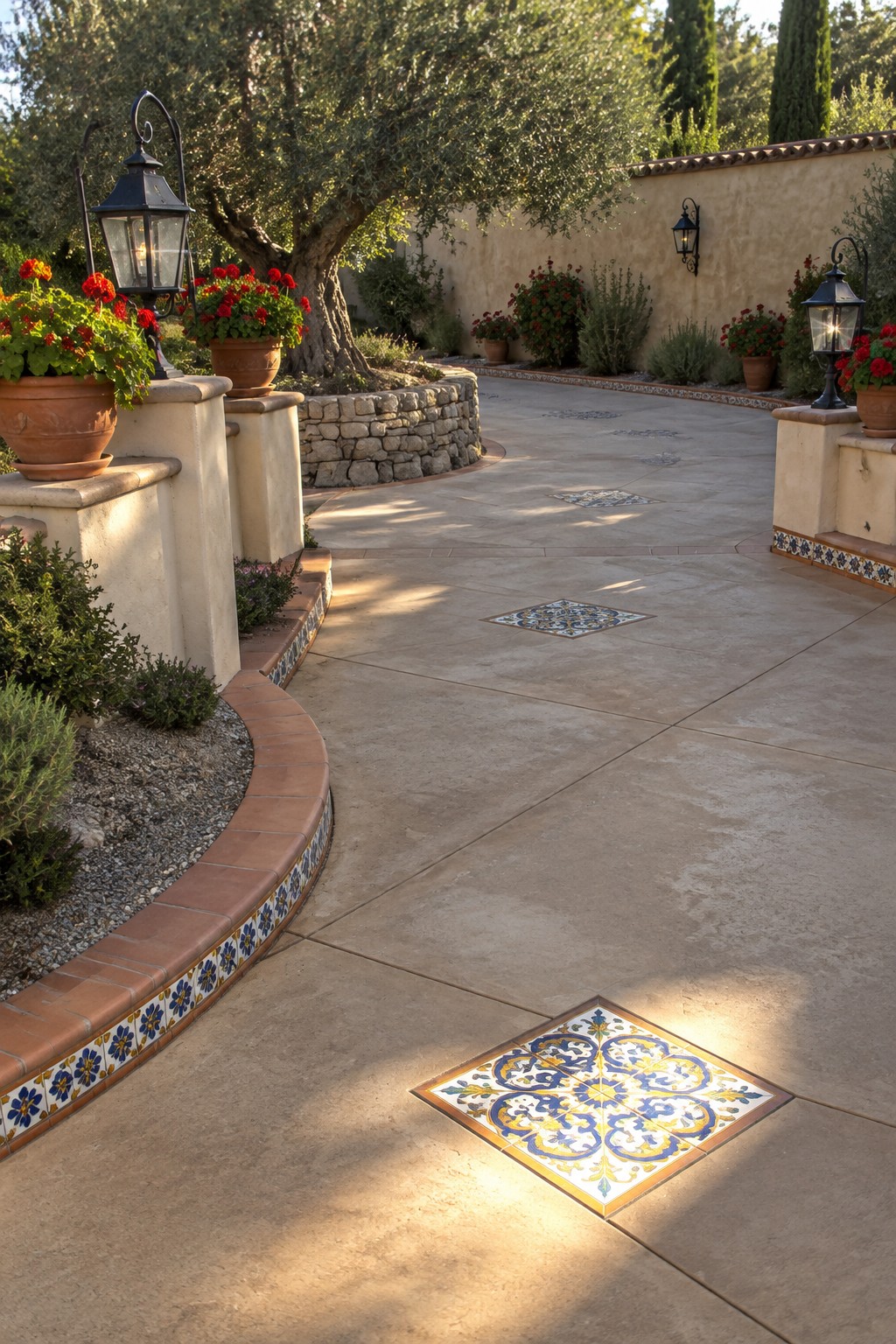
Decorative tile inlays can make a plain concrete driveway feel more considered without replacing the slab. A few patterned sections break up the broad surface and give the paving a clear point of interest.
For a similar look, set outdoor-rated tiles into the concrete where they won’t interfere with driving or walking. Smaller inlays can work well along a driveway or courtyard, but choose tiles rated for exterior use and make sure they’re installed flush with the surrounding surface.
Add Wood Strips Between Concrete Slabs
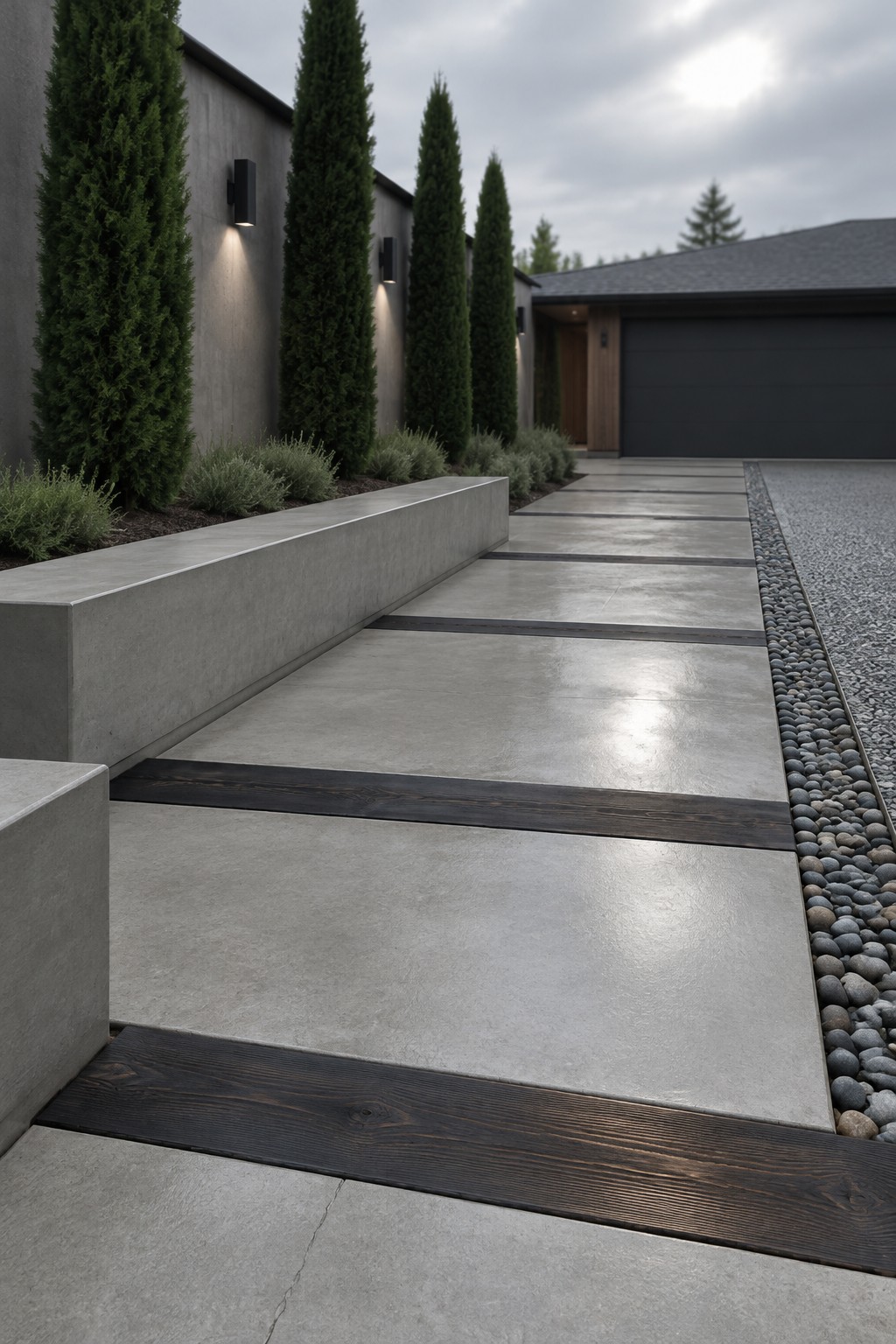
Breaking up a concrete driveway with narrow wood strips gives large slabs a more finished look. The dark bands add a clear rhythm to the surface and can make a plain slab feel more thoughtfully laid out.
Use exterior-rated wood, and plan for regular sealing since driveway joints face rain, sun, and vehicle traffic. This detail works best when the strips sit flush with the concrete and the joints are spaced evenly.
Use a Herringbone Pattern for a Concrete Walkway
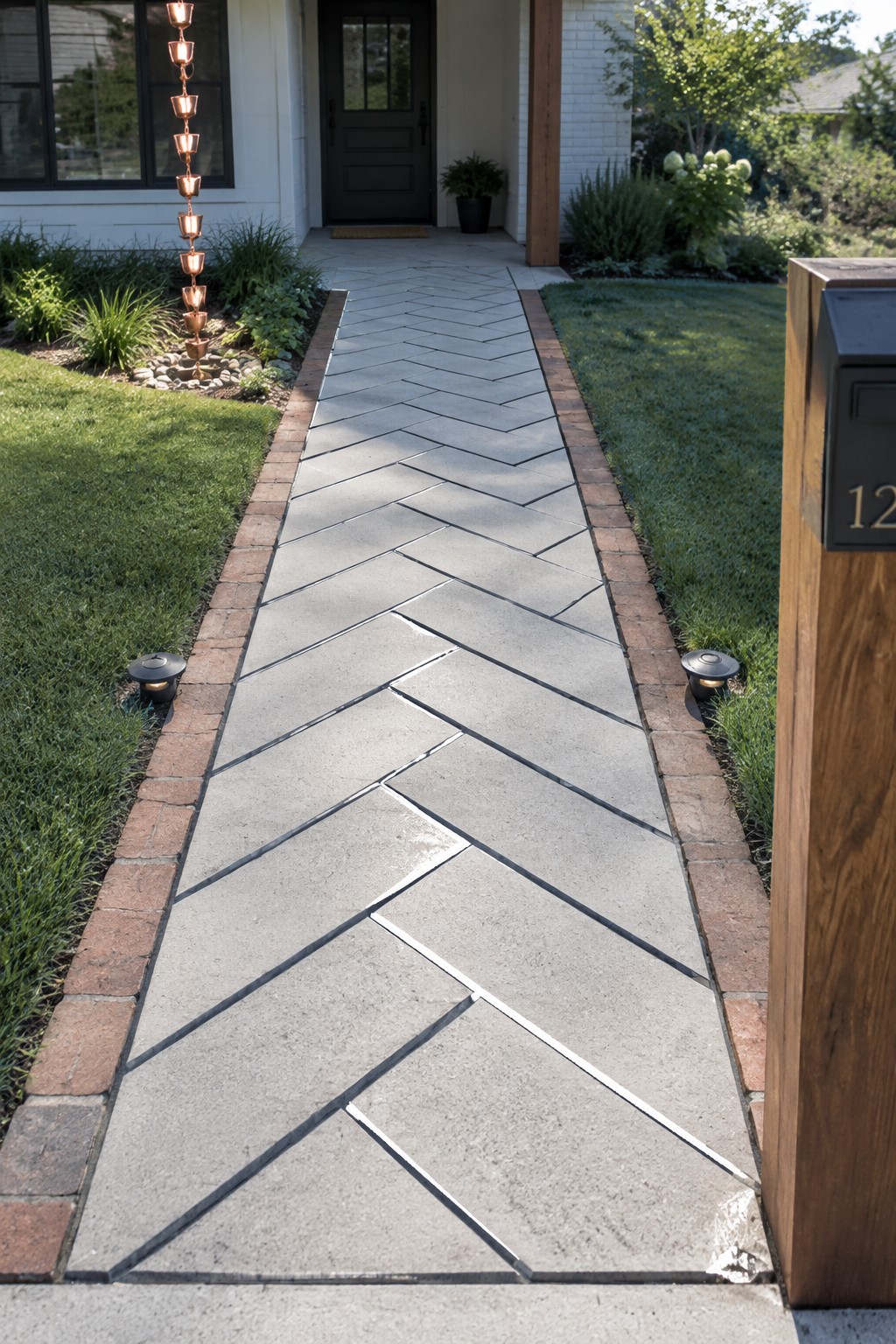
A herringbone layout gives a plain concrete path more interest without changing the material. The angled joints make a narrow walkway feel less ordinary, while simple brick edging gives the pattern a tidy boundary.
This approach can work for a front walk or a driveway apron, especially where the existing slab is sound but looks dated. Plan the pattern before cutting or adding joints, and keep the lines consistent so the finished surface stays neat and practical.
Use Large Slabs to Make a Concrete Walkway
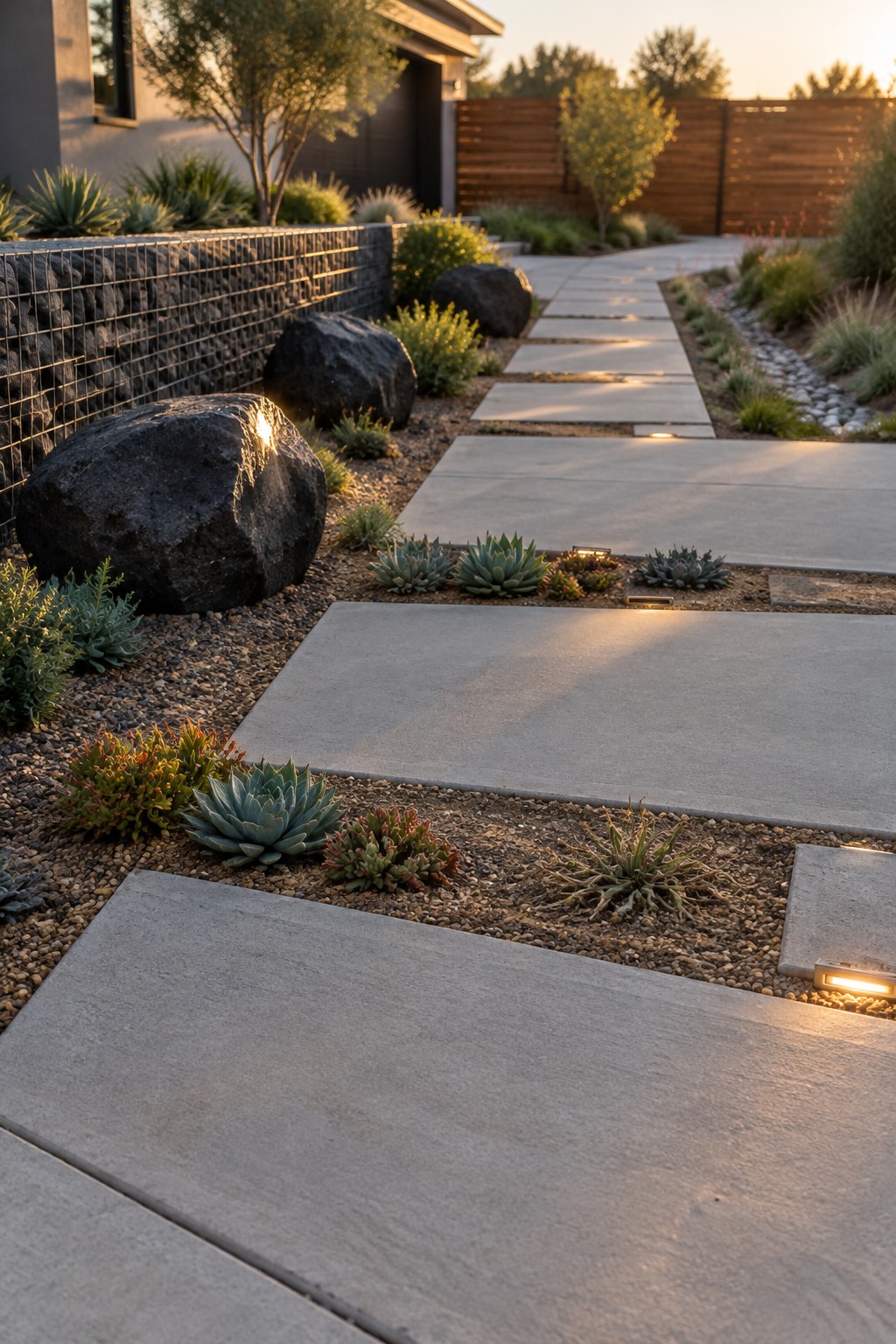
Large concrete slabs create a simple, steady route through a front yard, and the wide surfaces are practical for everyday foot traffic. Their clean lines also suit a modern home without needing a complicated pattern.
For an existing driveway, consider extending the same slab style into a path or entry area so the hardscape feels connected. Leave even joints, and check that the slabs sit level so they are comfortable to walk on.
Let Groundcover Grow Between Concrete Slabs
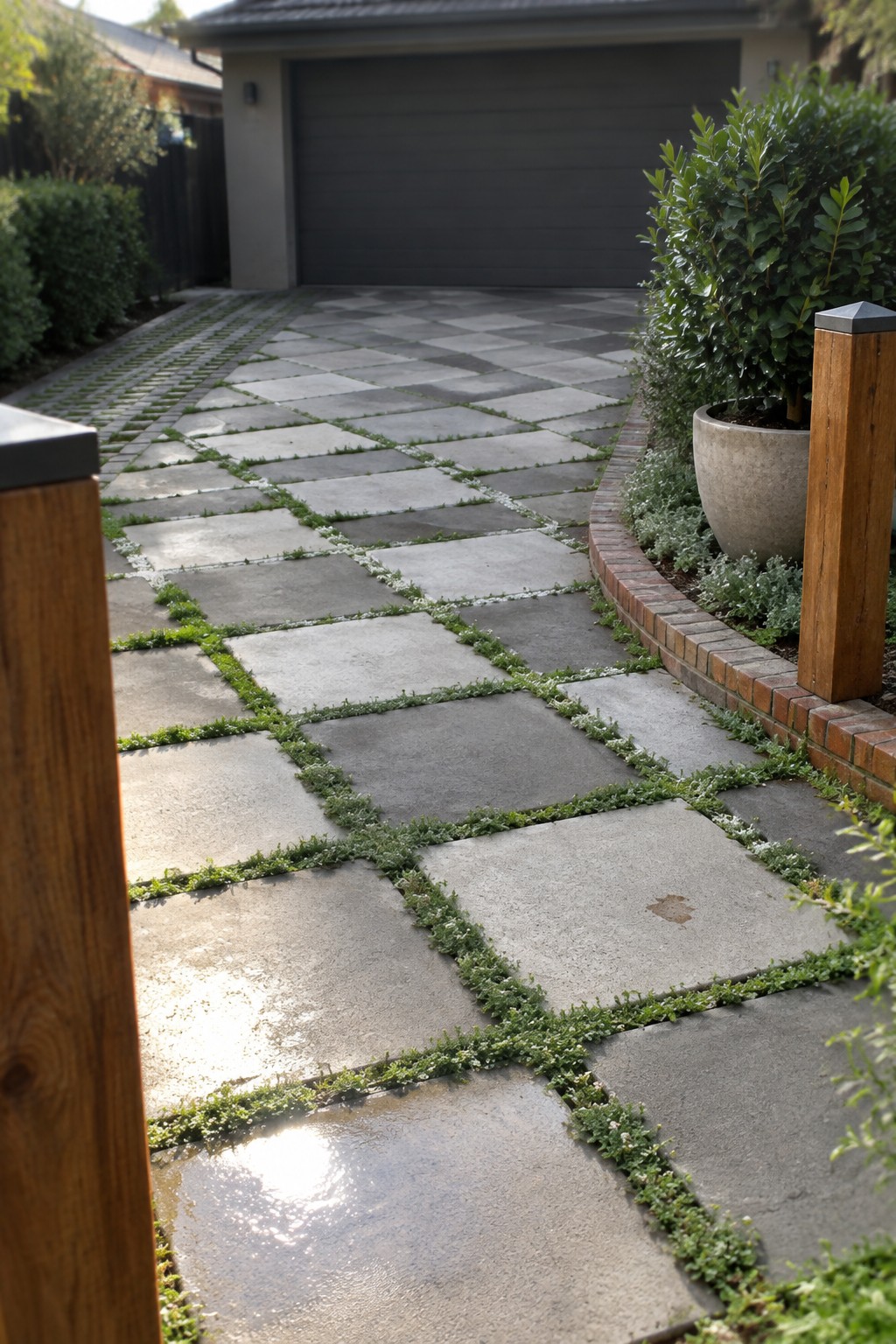
Leaving narrow joints between concrete slabs gives a driveway or walkway a softer, more garden-like feel than a solid paved surface. Low-growing plants fill the gaps and help break up the broad expanse of concrete.
For this look, choose tough groundcover that stays low and can handle foot traffic, then keep it trimmed so the slabs remain easy to walk on. It works best where you are comfortable with a more relaxed finish rather than perfectly tidy joints.
Use Concrete Slabs for a Garden Path
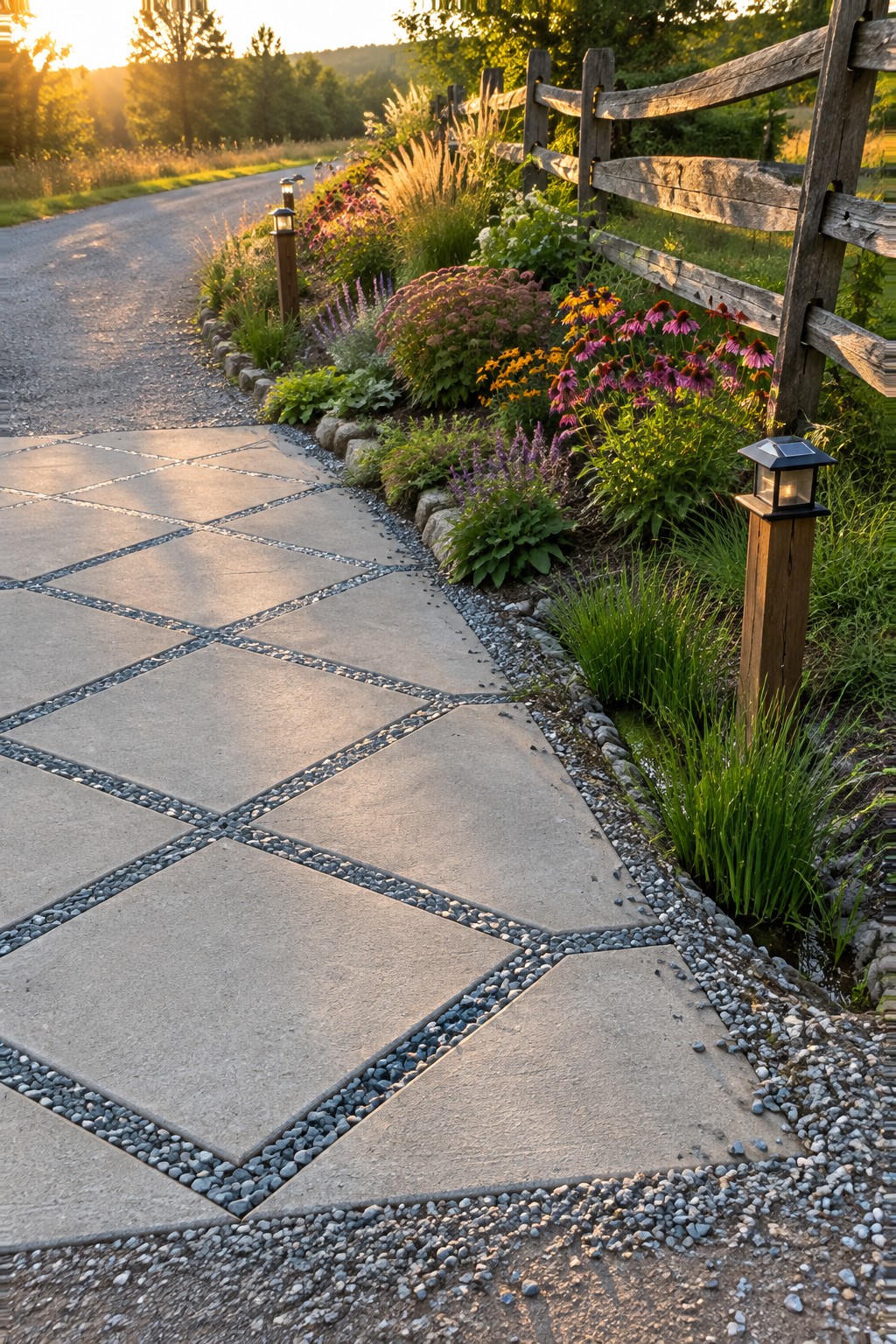
Large concrete slabs can make a garden path feel more considered than a plain poured strip. Narrow pebble joints break up the surface and give rainwater somewhere to drain.
This approach works well for a curving walkway beside planting beds. For an existing slab, you could borrow the look by adding a pebble-filled border along one edge, taking care to keep the stones contained and the walking surface even.
Use a Boardwalk-Style Concrete Path
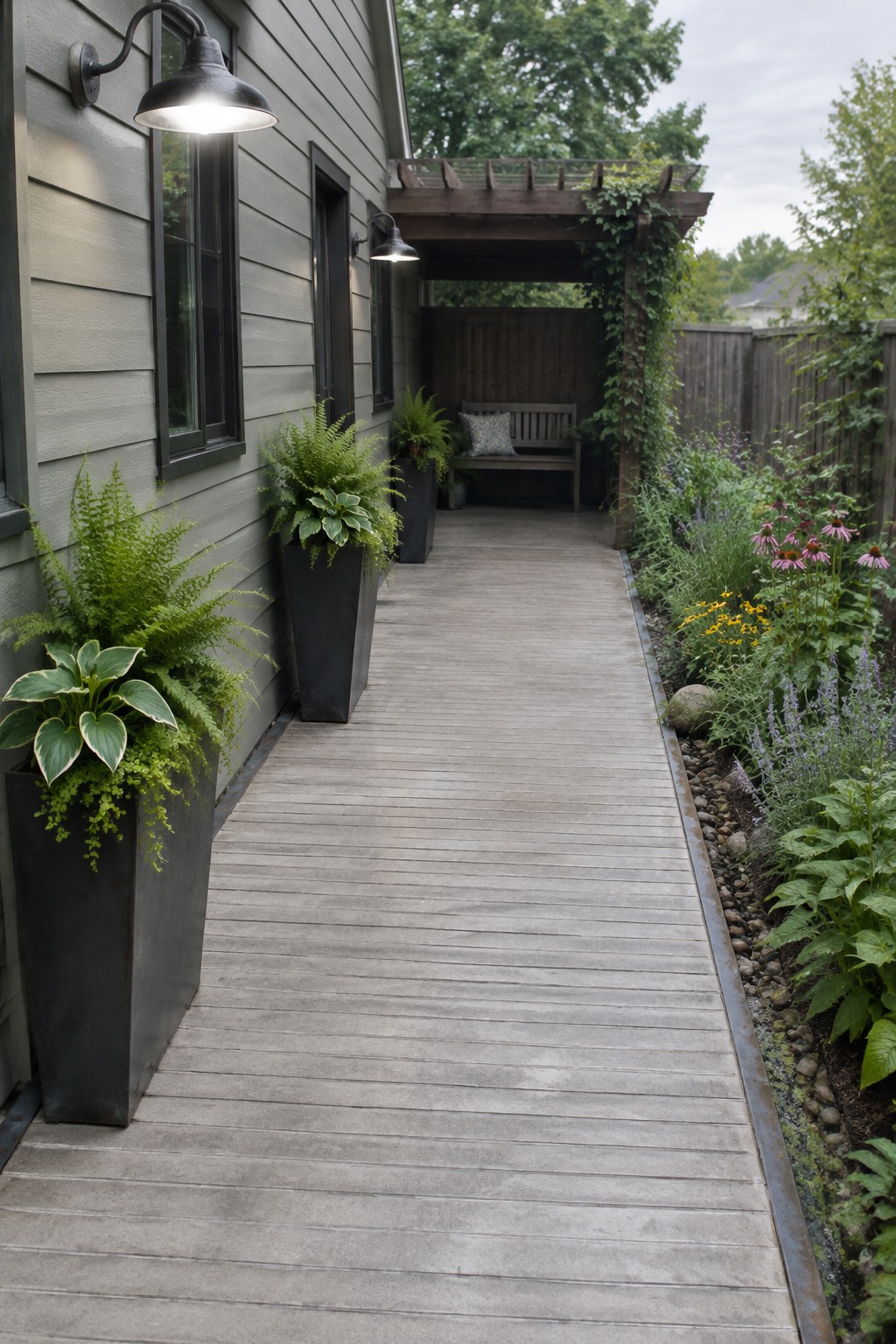
A narrow concrete path can feel more like a finished garden walkway when it has the look of closely spaced boards. The long, straight layout keeps the route clear, while the plank-like lines give a plain surface a little more character.
This idea works well beside a house where a path gets regular foot traffic. For an existing slab, score shallow lines across the surface or use a concrete overlay made for decorative texturing. Keep the grooves even and avoid making them deep enough to collect water.
Frequently Asked Questions
Q: Can I resurface my driveway if it has a few cracks?
A: Small, stable cracks can often be repaired before you apply a resurfacing product. If the slab shifts, sinks, or has wide cracks that keep growing, resurfacing may not last, so fix the underlying problem first.
Q: Do I need to pressure-wash the concrete before painting or staining it?
A: Yes. Remove dirt, oil, loose paint, and other residue, then let the slab dry fully. A coating may peel if you apply it over grime or damp concrete.
Q: How can I make a slippery concrete driveway safer?
A: Add a slip-resistant additive to a compatible sealer, or choose a textured finish. Test a small area first, since some coatings can change how the driveway looks.
Q: Can I use regular paint on my concrete driveway?
A: Regular wall paint usually wears off quickly under tires and weather. Choose a product made for concrete floors or driveways, and follow its prep and curing instructions before parking on it.
