


A driveway shapes the first impression of a home, so its pattern and proportions matter as much as the concrete itself.
Geometric lines can give the approach a clear rhythm, whether they echo the facade or add contrast to a simpler exterior.
I’d pay close attention to how the joints divide the surface, since a pattern that looks balanced on paper can feel busy across a wide driveway.
The strongest designs also account for practical details like parking space, drainage, and the path to the front entry.
Some of these ideas could be adapted with a simpler layout or finish to suit a real home.
Use Large Concrete Slabs for a Clean Driveway Layout
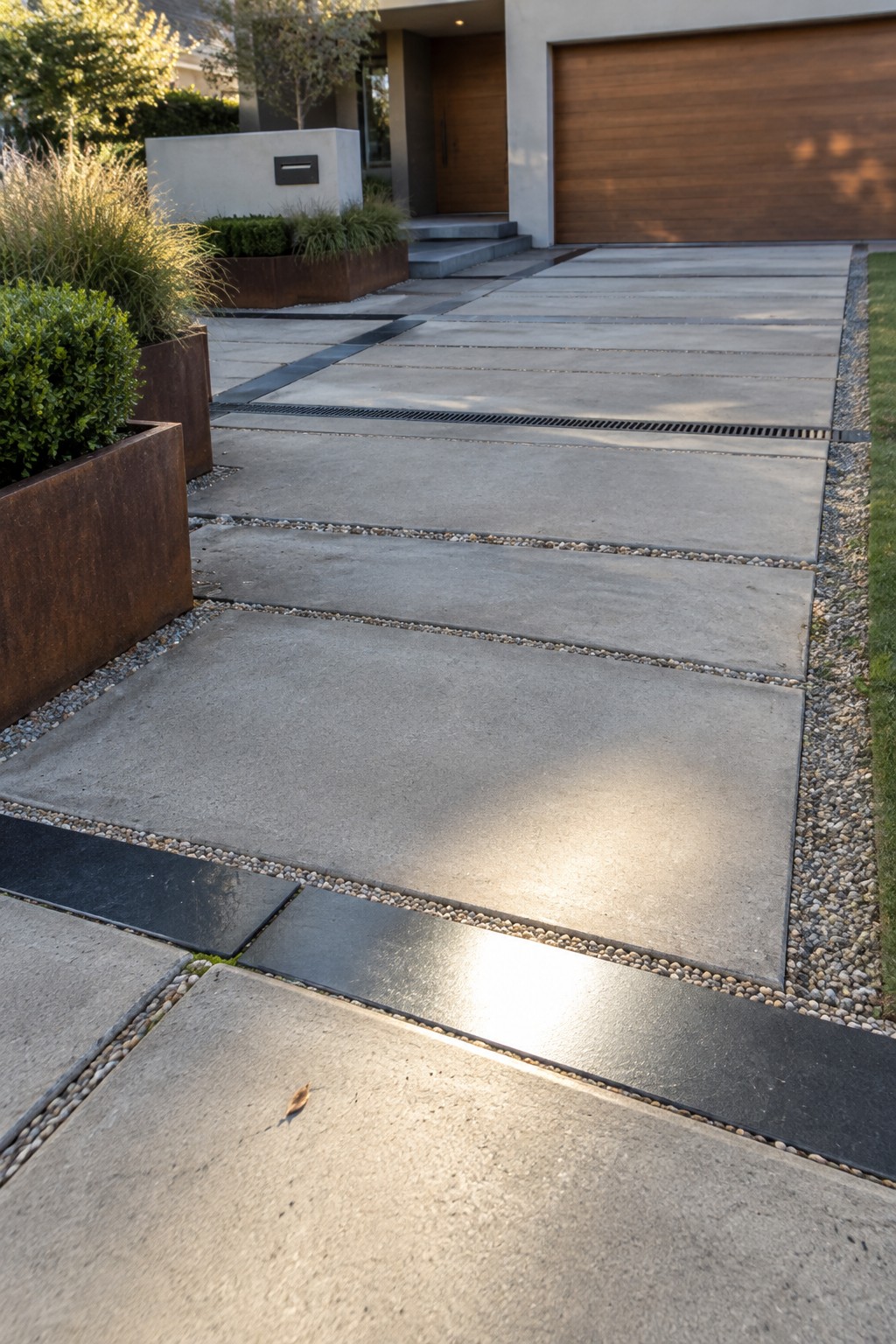
Large concrete slabs create a simple geometric pattern that suits a modern driveway. Narrow bands of gravel between the slabs give each section a clear edge without making the surface feel busy.
This approach works well for a long, straight drive leading to a contemporary home. Plan the slab sizes and joints before pouring, and make sure the driveway slopes toward a suitable drain.
Use Geometric Lines to Give a Concrete Driveway Direction

Long concrete slabs can make a driveway feel more considered than a standard grid. Here, the angled joints form a repeating pattern that adds movement while keeping the surface simple.
This layout works well in front of a modern home, especially where the driveway is wide enough for the pattern to read clearly. Keep the joints consistent and make sure the cuts suit the slab size so the design feels intentional rather than busy.
Use Geometric Concrete Slabs for a Modern Driveway

Large concrete slabs set in a regular grid make a driveway feel tidy and intentional. Leaving strips of grass between them breaks up the hard surface while keeping the strong geometric pattern.
This layout works well for modern homes and can suit a front yard where a full concrete driveway would feel too solid. Keep the slab sizes and spacing consistent, and choose grass that can handle occasional foot or vehicle traffic.
Use Geometric Concrete Slabs for a Simple Walkway
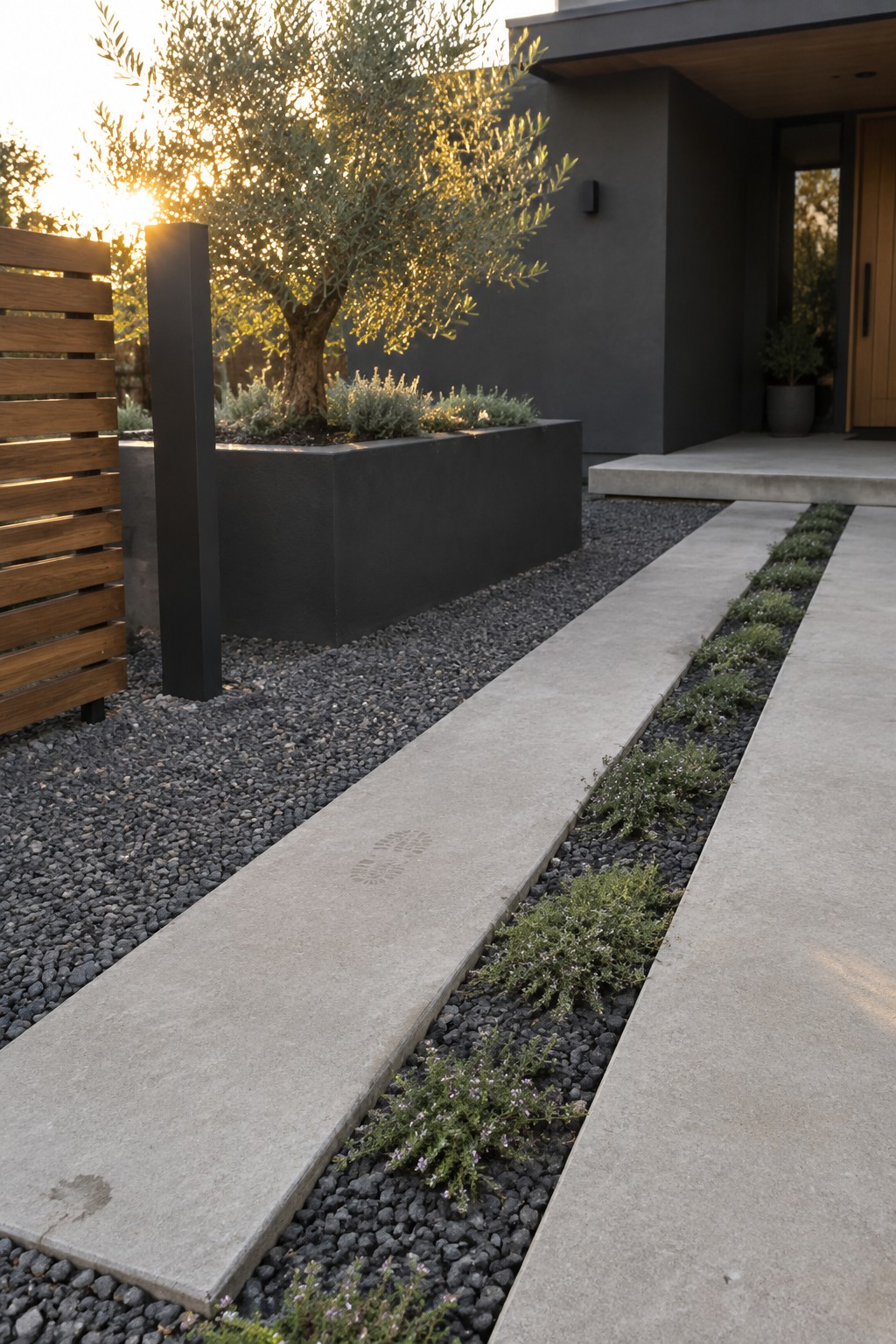
Long concrete slabs set in a straight line make a walkway feel orderly and easy to follow. The narrow planting strip between them breaks up the hard surface without taking away from the clean layout.
This approach works well near a modern home, especially where a wide path would feel too heavy. Keep the gaps even and choose low-growing plants that won’t spill over the edges and narrow the walking space.
Use Joint Lines to Organize a Concrete Driveway

A concrete driveway can feel more considered when its seams form part of the design. Here, large rectangular slabs and dark drainage channels give the paving a clear pattern without adding extra materials.
This approach suits modern homes where a simple, orderly surface fits the architecture. Plan the joints and drainage together, so water has a clear route and the lines look intentional rather than scattered.
Use a Circular Planting Bed to Break Up Concrete

A round planting bed can give a broad concrete driveway a clear focal point without changing the driveway layout. Its curved stone edge also offers a simple contrast to the straight joints often used in modern concrete paving.
This works best where there is enough room for cars to pass comfortably around the bed. Keep the planting low and trim, and leave a clear margin between the stone border and the drive so the feature stays practical.
Use Stepped Concrete Levels to Shape the Driveway

Stepped concrete levels can give a driveway a clear path while making a sloped entrance easier to manage. The staggered edges add interest without relying on extra colors or busy patterns.
This approach works best where the driveway meets a raised entry or planted slope. Keep the steps wide and consistent, and use lighting along the edges so the changes in level are easy to see.
Use Angular Concrete Slabs for a Modern Driveway
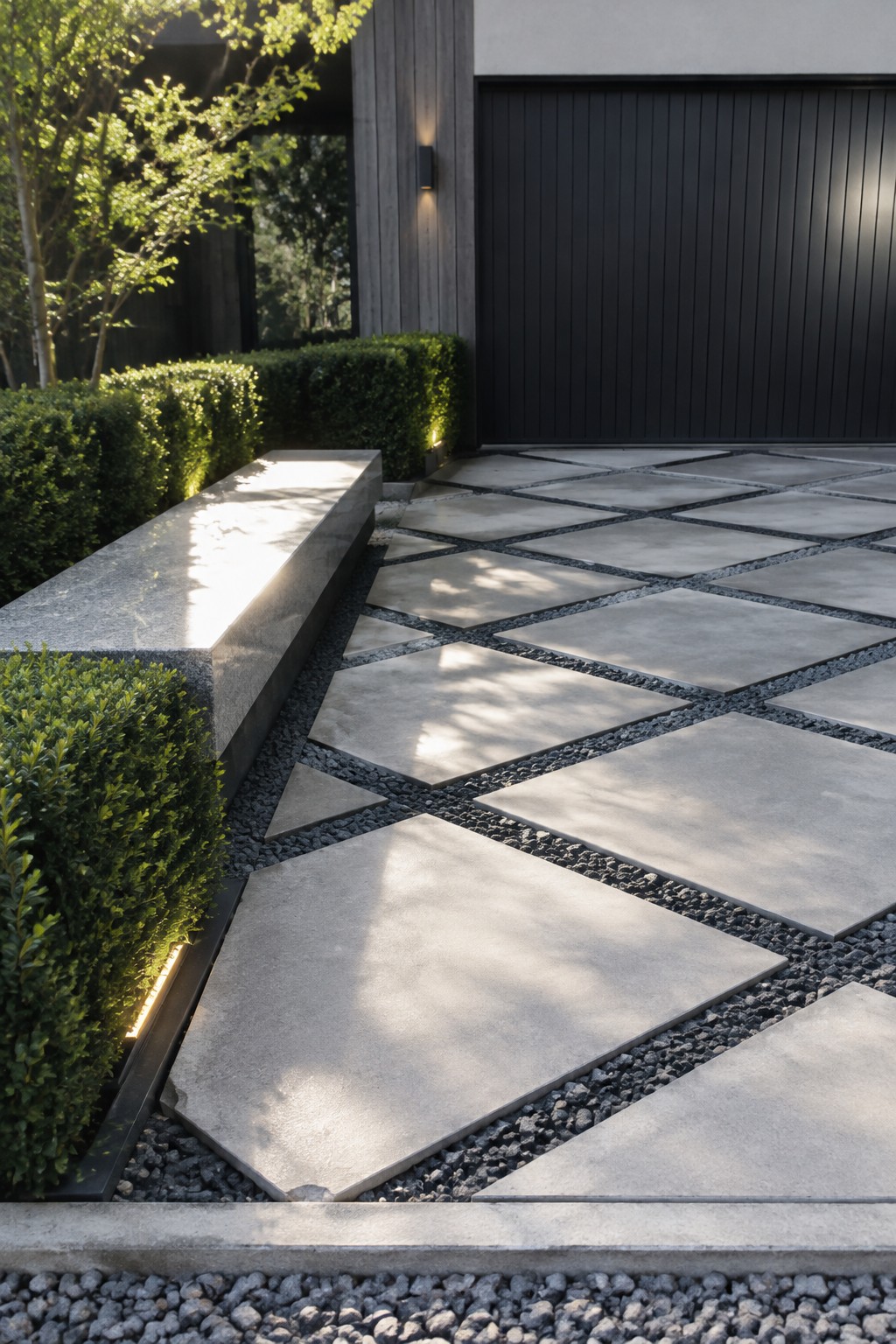
Large concrete slabs cut into different angles give this driveway a more relaxed look than a strict grid. The dark gravel joints make the slab shapes easy to see without adding another paving material.
This layout suits a modern home and can work well in a driveway or entry court. Keep the gaps consistent and choose slabs thick enough for vehicle traffic, especially where smaller pieces meet the main driving area.
Use Hexagonal Pavers to Break Up a Concrete Driveway
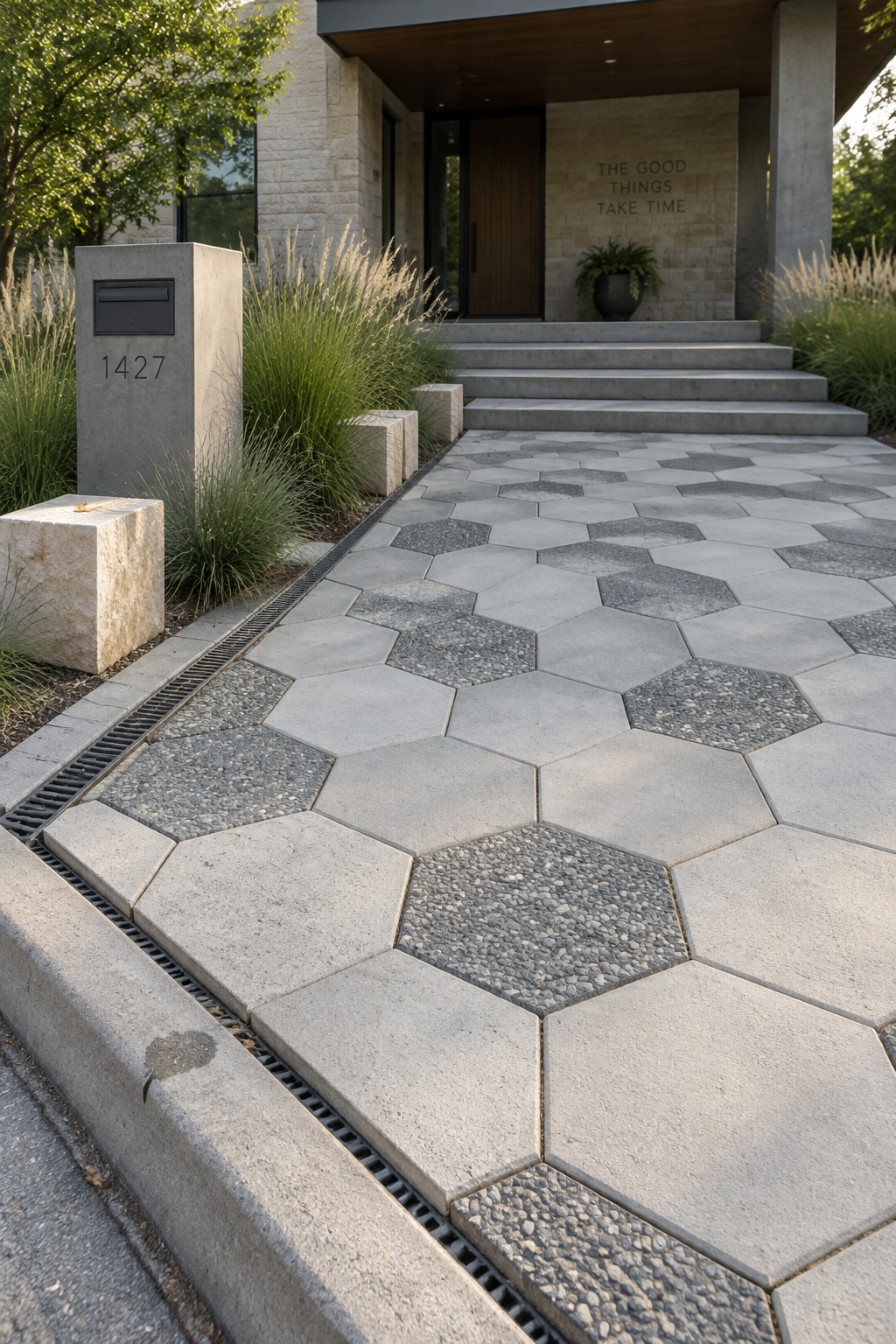
Hexagonal pavers can give a driveway a clear geometric pattern without making the whole surface feel busy. Here, pale concrete shapes alternate with darker aggregate-filled sections, so the pattern is easy to see while the colors stay simple.
This approach works well on a wide driveway or entry path where the shapes have room to read clearly. Keep the palette restrained, and check that the pavers provide a safe, even surface for walking and driving.
Use Narrow Planting Strips to Break Up a Concrete Driveway

A narrow planting strip between concrete slabs is a simple way to keep a driveway from reading as one large paved area. Here, the straight bands of concrete give the layout a clear direction, while the grasses add a softer edge.
This approach works well for a modern home where a clean-lined driveway still needs some greenery. Choose compact, drought-tolerant plants that won’t spread across the slabs, and leave enough room for easy maintenance.
Use Grass Joints to Break Up a Concrete Driveway

Narrow strips of grass between concrete slabs give a driveway a clear geometric pattern without making it feel like one large paved surface. The repeated lines add visual interest and help define the direction of the approach.
This layout works well for a modern home with simple exterior materials. Leave enough space between slabs for grass to grow, and keep the joints consistent so the pattern stays tidy.
Use Gravel Channels to Define Concrete Walkways
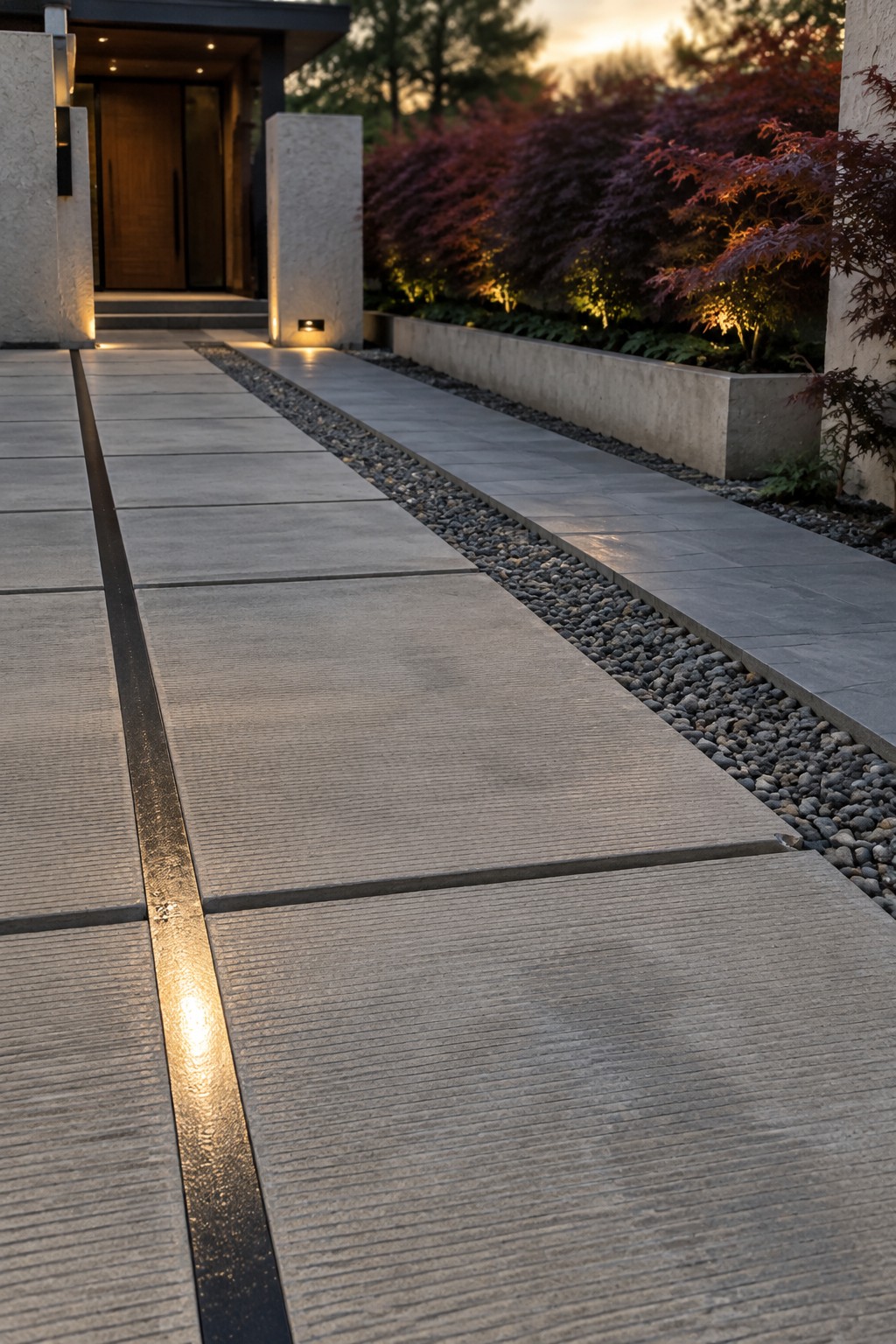
Gravel channels can give a concrete walkway a clear direction without making the layout feel busy. Here, the narrow strips of stone separate large rectangular slabs and make their geometric arrangement easy to read.
This approach works well near a modern home, especially where a broad path leads to the front door. Keep the gravel channels consistent in width, and choose slabs with a simple finish so the pattern stays neat.
Use Gravel-Filled Concrete Grids for a Driveway

A concrete grid filled with gravel breaks a wide paved area into smaller sections, so it feels less like one solid slab. The open joints also let some water drain through instead of sending it all across the surface.
This layout can work well for a driveway or parking area, especially where a firm surface is still needed. Choose sturdy grid units and compact the gravel properly, or the openings may become uneven with regular vehicle use.
Use Stepping Slabs to Shape a Modern Approach
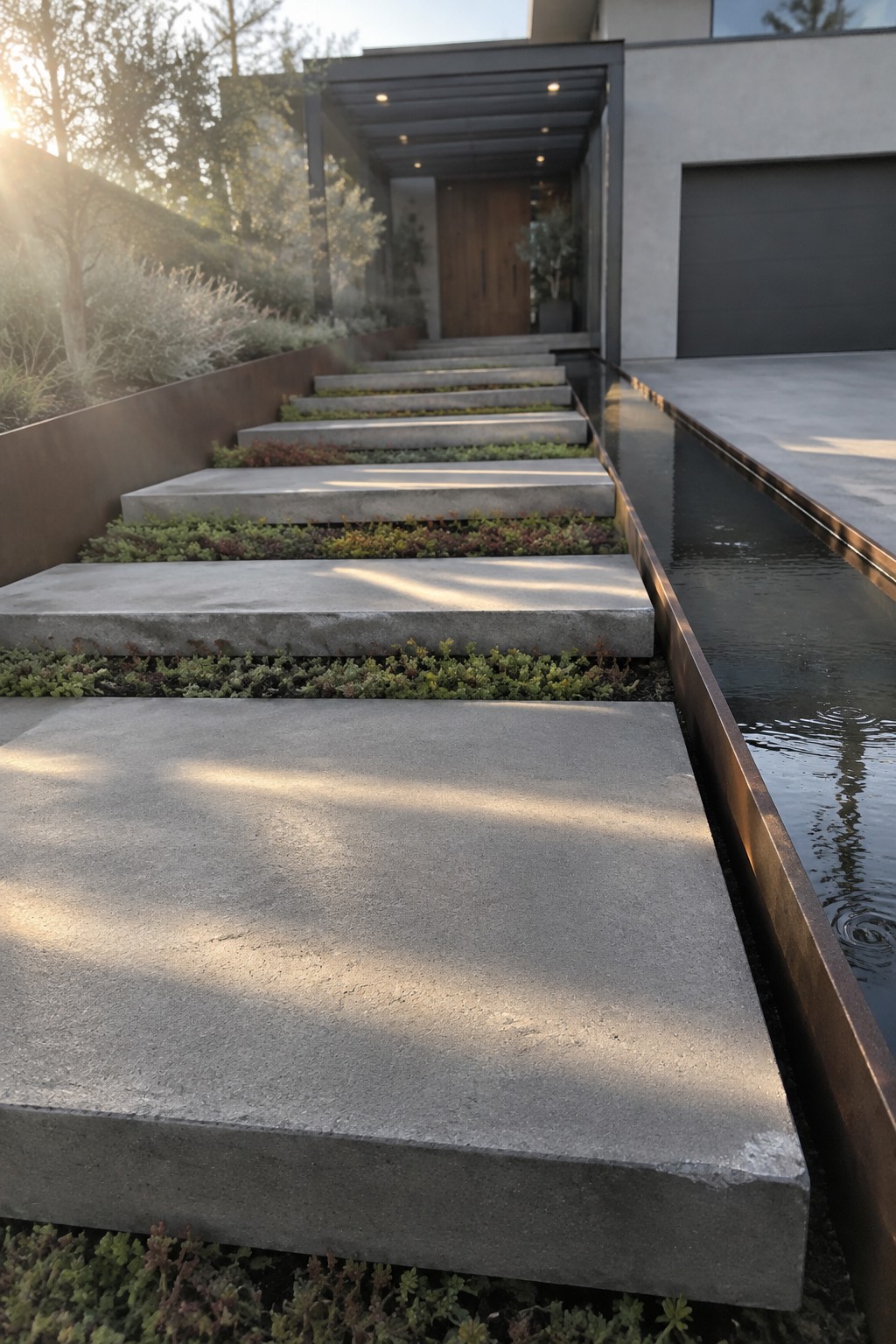
Oversized concrete slabs can turn the route to a front door into a clear, steady path. Their straight edges give the approach a modern look, while planting in the gaps keeps the hard surface from taking over.
This layout works well beside a contemporary home, especially where there is room for wide slabs and low groundcover between them. Keep the gaps consistent and choose a durable, slip-resistant concrete finish for a path used every day.
Use Wide Concrete Panels to Shape the Entry Walk

Large concrete panels make an entry path feel orderly without needing a decorative pattern. Here, the narrow joints mark out each section and carry the eye toward the front door.
This approach suits a modern home where a simple, direct walkway fits the architecture. Keep the panels consistent in size, and make sure the joints are even so the path looks intentional rather than busy.
Use Large Geometric Slabs Around a Pool

Large concrete slabs can give a poolside path a clear, modern layout without making the area feel busy. Angled joints add interest to the broad paving, while the simple shapes keep the focus on the space itself.
This approach works well in a courtyard or along a narrow pool edge, where a consistent surface helps the area feel connected. Choose outdoor-rated concrete with a slip-resistant finish, and leave enough room between the pool and any steps for easy walking.
Use Wood Inlays to Break Up a Concrete Driveway

Wood strips set across broad concrete panels create clear geometric lines and give a driveway a less plain look. The contrast works especially well when the rest of the design stays simple.
Use durable, exterior-rated wood and plan for regular upkeep, since it will weather differently from concrete. This approach suits a modern home, though the wood sections should be placed where vehicles will not put excessive wear on them.
Frequently Asked Questions
Q: Will geometric concrete lines make a small driveway look too busy?
A: Not if you keep the pattern simple. A few large rectangles or a clean border can add interest without crowding the space.
Q: Can I add geometric lines to an existing concrete driveway?
A: You can cut lines into sound concrete, but the surface needs to be in good condition first. If it’s cracked or uneven, repairs may be needed before the pattern goes in.
Q: How do I keep weeds from growing between concrete sections?
A: Use a stable, well-installed joint filler and clear out dirt and leaves regularly. Weeds need very little soil to take hold, so don’t let debris build up in the gaps.
Q: Do geometric patterns need to line up with the front of the house?
A: They don’t have to, but a pattern that echoes the home’s angles or entry path usually feels more intentional. Try laying out the lines before the concrete work begins so you can check the view from the street.
