

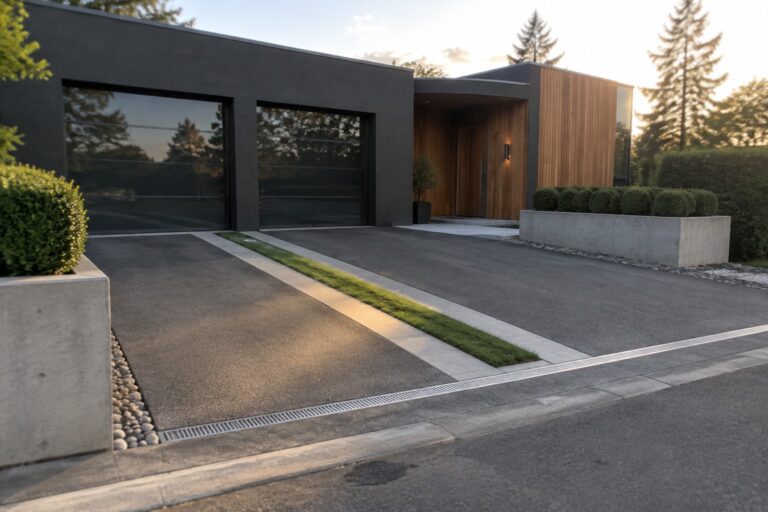
An asphalt driveway is often one of the first things I notice from the street, and its shape can change how the whole front of a home reads.
Clean lines help the surface feel intentional, especially when the driveway meets a walkway, garden bed, or garage without awkward angles.
I find that the best designs balance a crisp look with the way people actually park and move around the property.
A simple edge or a well-placed curve can make a practical surface feel more considered.
Some ideas are worth adapting to your own layout rather than copying exactly.
Use Clean Borders To Define The Driveway
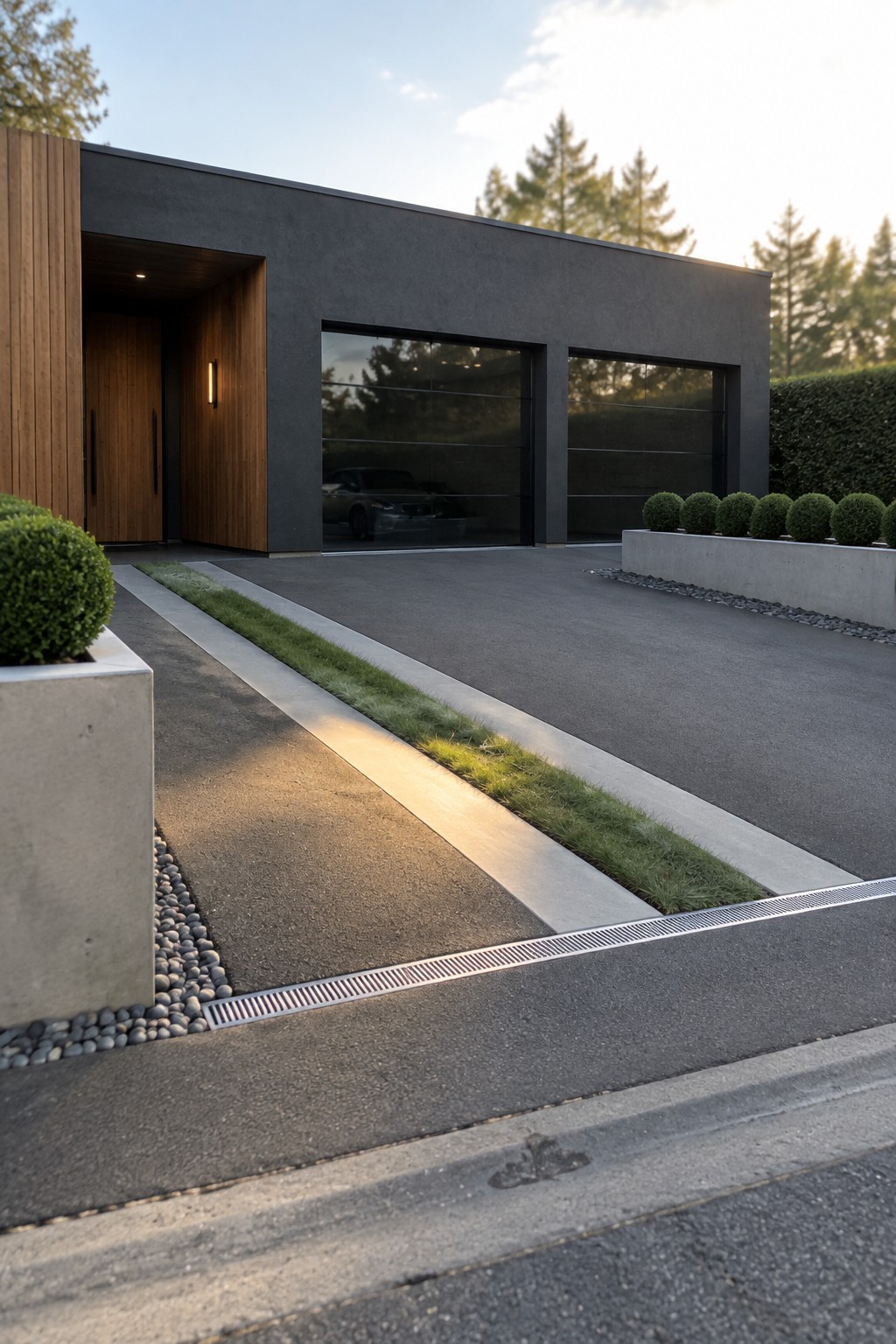
A narrow strip of grass and concrete edging can give an asphalt driveway a neater, more deliberate shape. The borders make the paved area feel clearly defined without adding a busy pattern.
This approach works well for modern homes with simple lines. Keep the edging straight and make sure the grass strip is wide enough to maintain; a strip that is too narrow can be difficult to mow.
Clean Lines for a Modern Asphalt Driveway
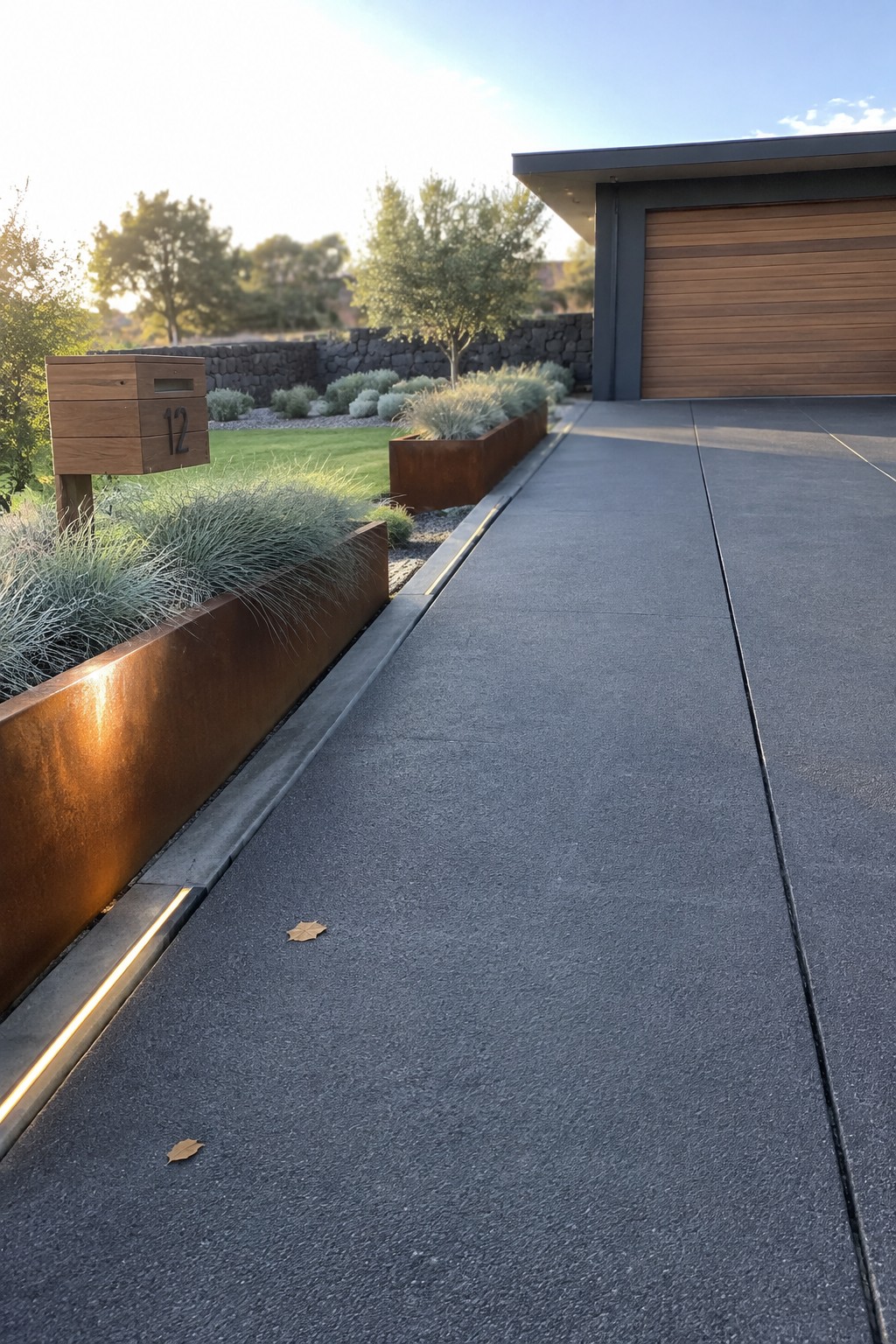
A smooth asphalt driveway can give a modern home a simple, uncluttered approach. Straight joints and a narrow linear light at the edge help define the paving without adding extra pattern.
This idea works well when the house has a pared-back facade and the driveway is a main part of the front yard. Keep the surface and joints neatly finished, and use a restrained border so the asphalt stays the focus.
Use Curved Edges to Break Up an Asphalt Driveway

A curved concrete path around a planted island gives an asphalt driveway a softer, more considered layout. The change in shape adds interest without relying on extra colors or decorative patterns.
This approach works well for a broad driveway or front entry where there is room for a planted area. Keep the curve generous so cars can move through comfortably, and use a clear edging material to separate the asphalt from the path and planting.
Use Grass Strips to Break Up an Asphalt Driveway

Grass strips can make a wide asphalt driveway feel less like one solid expanse. They add a simple change in texture while keeping the clean, straight layout that suits a modern home.
This approach works best where there’s enough room for the grass to grow without making the paved lanes too narrow. Keep the strips easy to mow, and choose a hardy grass that can handle the local climate.
Use Pavers To Create A Clear Driveway Layout
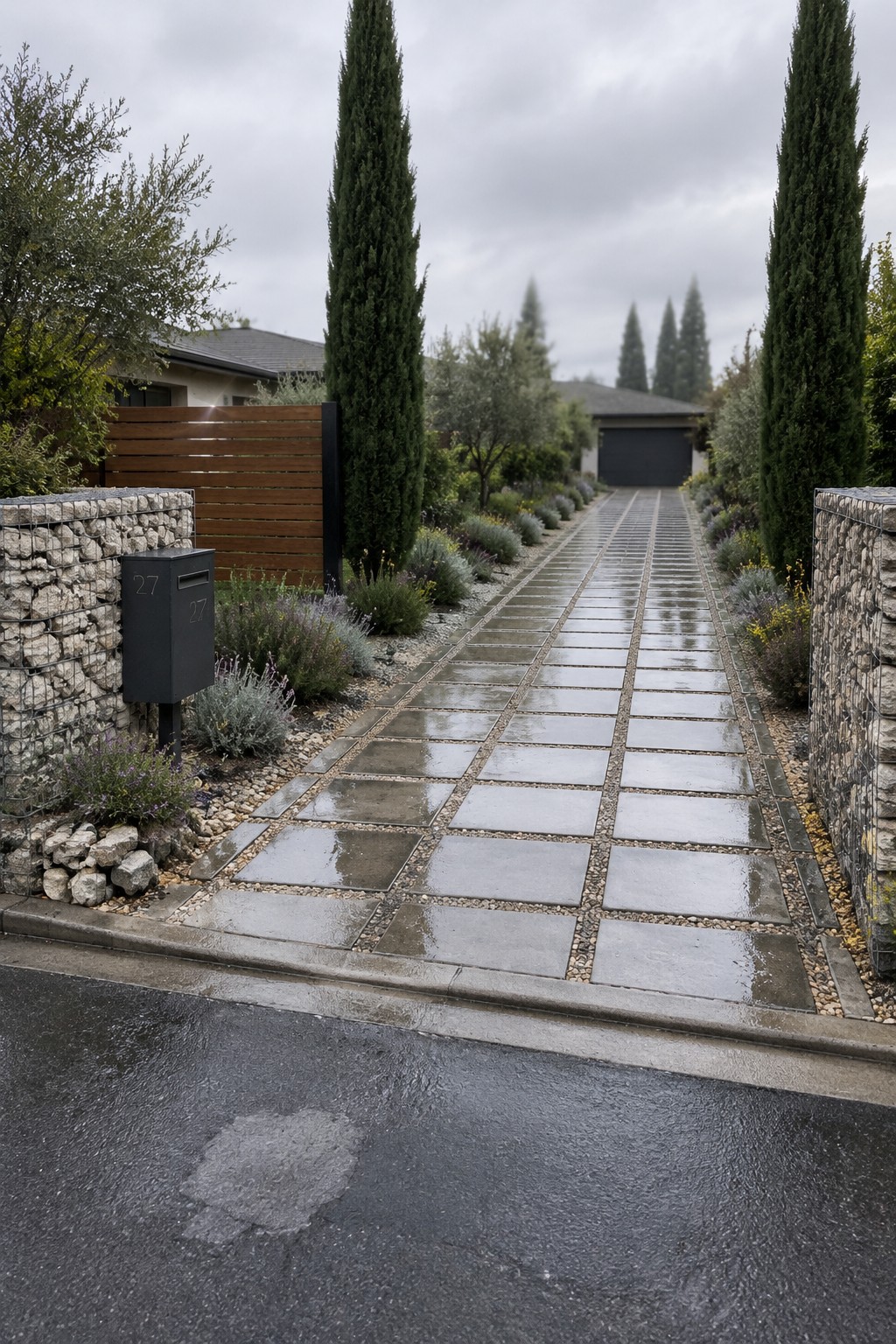
Large rectangular pavers set in gravel give a driveway a neat, orderly look while still letting planting run along the edges. The repeating pattern is easy to follow, and the open joints keep the surface from reading as one broad slab.
This approach works well for a modern home where you want a defined route to the garage without paving the entire yard. Choose pavers suited to vehicle traffic and keep the gaps even so the layout stays tidy over time.
Add Subtle Lighting Along the Driveway
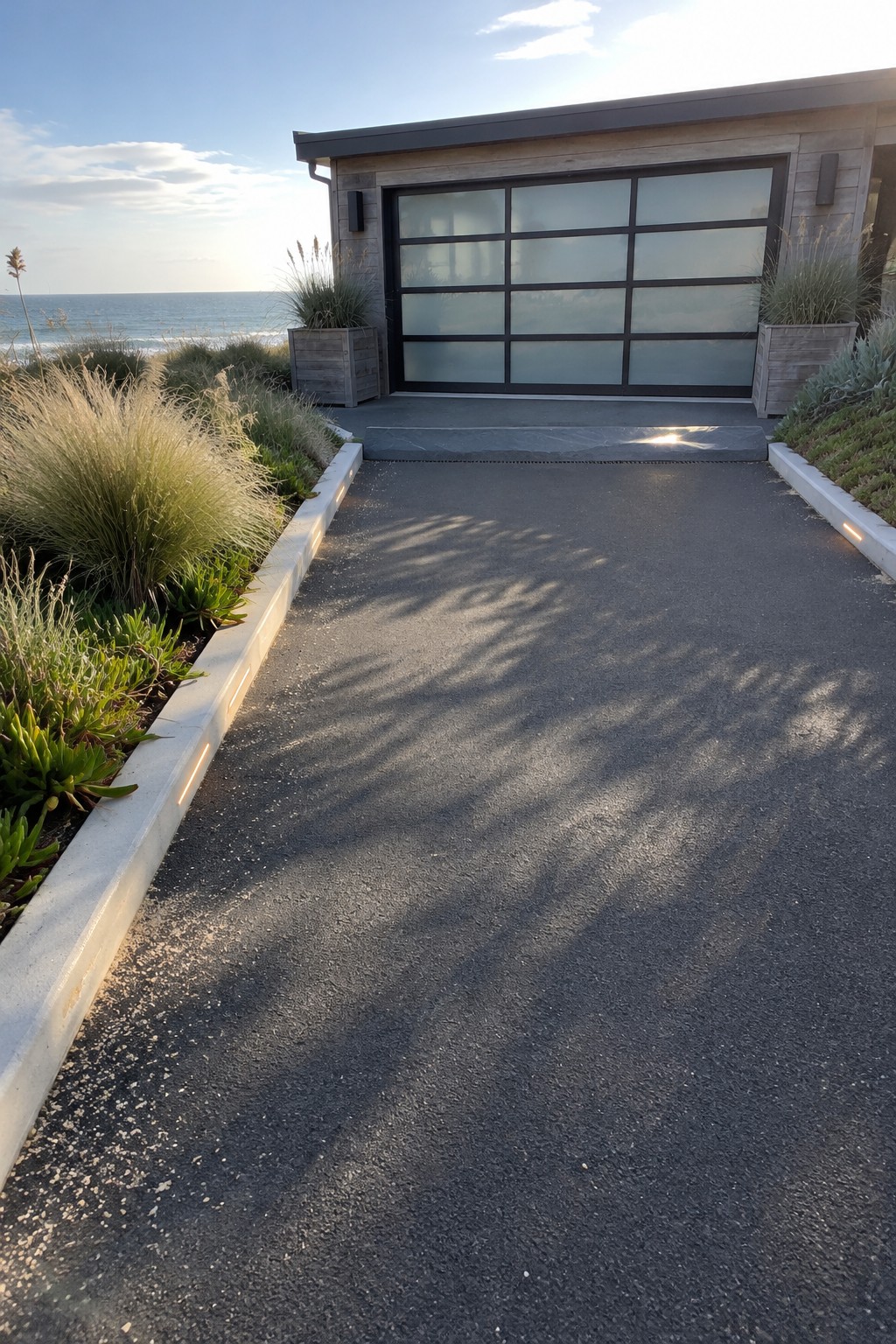
Small lights set into the driveway edging make the route to the garage easier to follow after dark. They also suit the clean, simple look of an asphalt driveway without adding a row of bulky fixtures.
Use low-profile lights along one or both edges, keeping them spaced evenly and aimed down toward the pavement. They work especially well on long or slightly sloped driveways, but should be placed where cars and snow-clearing tools are unlikely to hit them.
Use Stone Bands To Divide Asphalt

Light stone bands can break a wide asphalt driveway into clear sections without changing its simple, practical surface. They give the paving a more finished look and make the layout easier to read.
Use narrow bands to mark parking spaces or create a border near the entrance. Choose a durable stone that suits the home, and keep the lines straight so the driveway still feels orderly.
Keep the Driveway Approach Simple

A clean, paved approach can make an asphalt driveway feel like part of the home’s design rather than just a place to park. A straight edge between the dark pavement and lighter paving gives the driveway a tidy, finished look.
This approach suits modern homes where simple lines carry through the facade and entry. Keep the border consistent and avoid adding too many materials, so the transition stays easy to maintain.
Use Wood Strips to Add Rhythm to Asphalt

Wood strips set across an asphalt driveway break up a long, dark surface and give it a more considered layout. The repeated bands are a simple way to add visual interest without changing the main driveway material.
For this look, use sturdy, weather-resistant boards and set them flush with the asphalt so they do not catch tires or become a tripping hazard. They work best as occasional accents rather than close-set stripes.
Add White Gravel Joints Between Asphalt

White gravel strips break up a broad asphalt driveway into clear, orderly sections. The contrast gives the surface a cleaner look without adding a busy pattern.
For a similar effect, keep the strips straight and consistent in width, and use a firm border to stop the gravel from spreading. This approach suits modern homes and works best on a fairly level driveway.
Use Large Pavers To Mark The Walkway
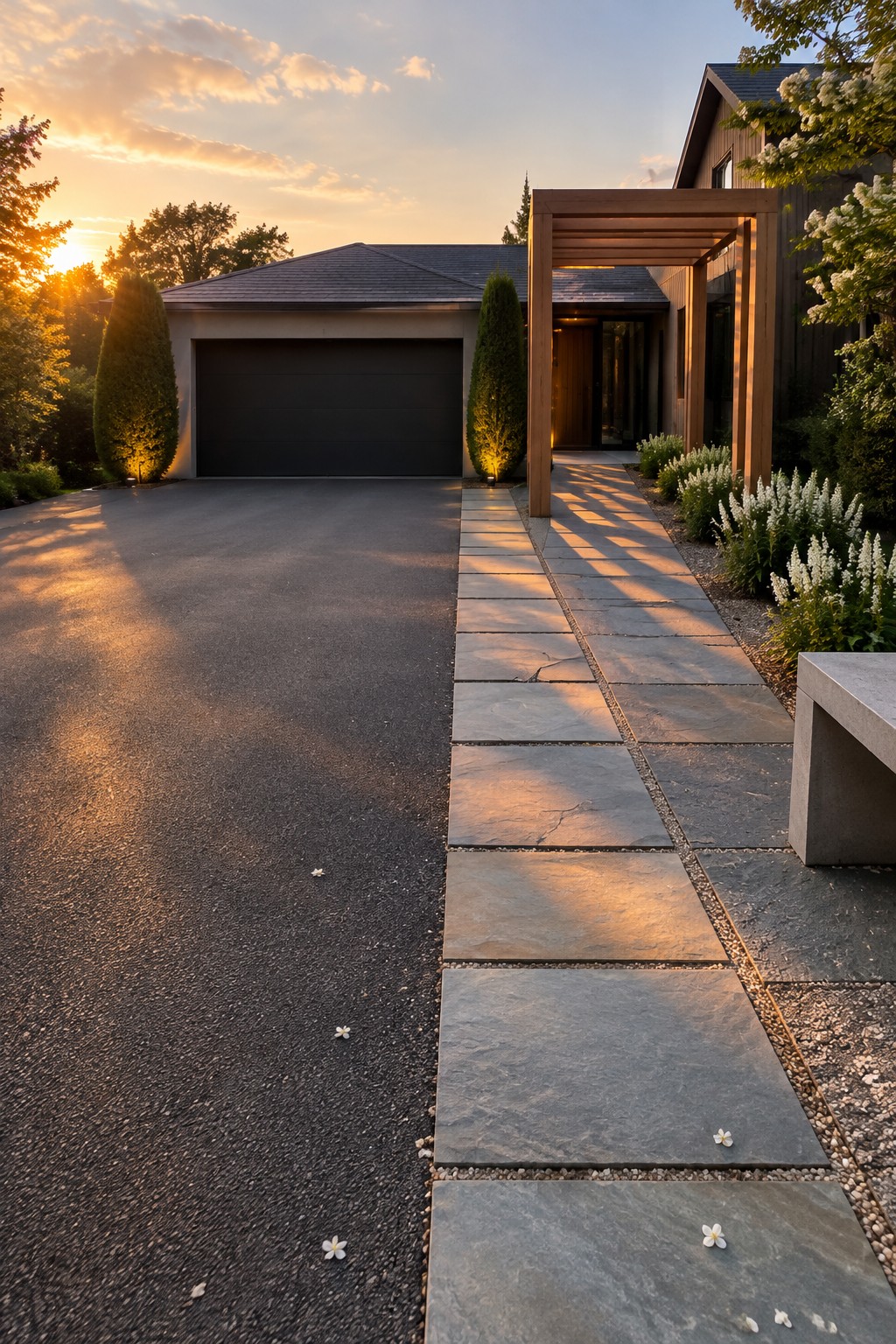
Oversized stone pavers can make a clear path beside an asphalt driveway without making the whole approach feel busy. Their simple shape gives the entrance a defined route, while the dark asphalt stays open and practical.
Use this idea where the front door sits apart from the driveway, especially on a modern home with straightforward lines. Leave a narrow gravel joint between the pavers for drainage and a neat finish.
Use a Planted Border Along the Driveway
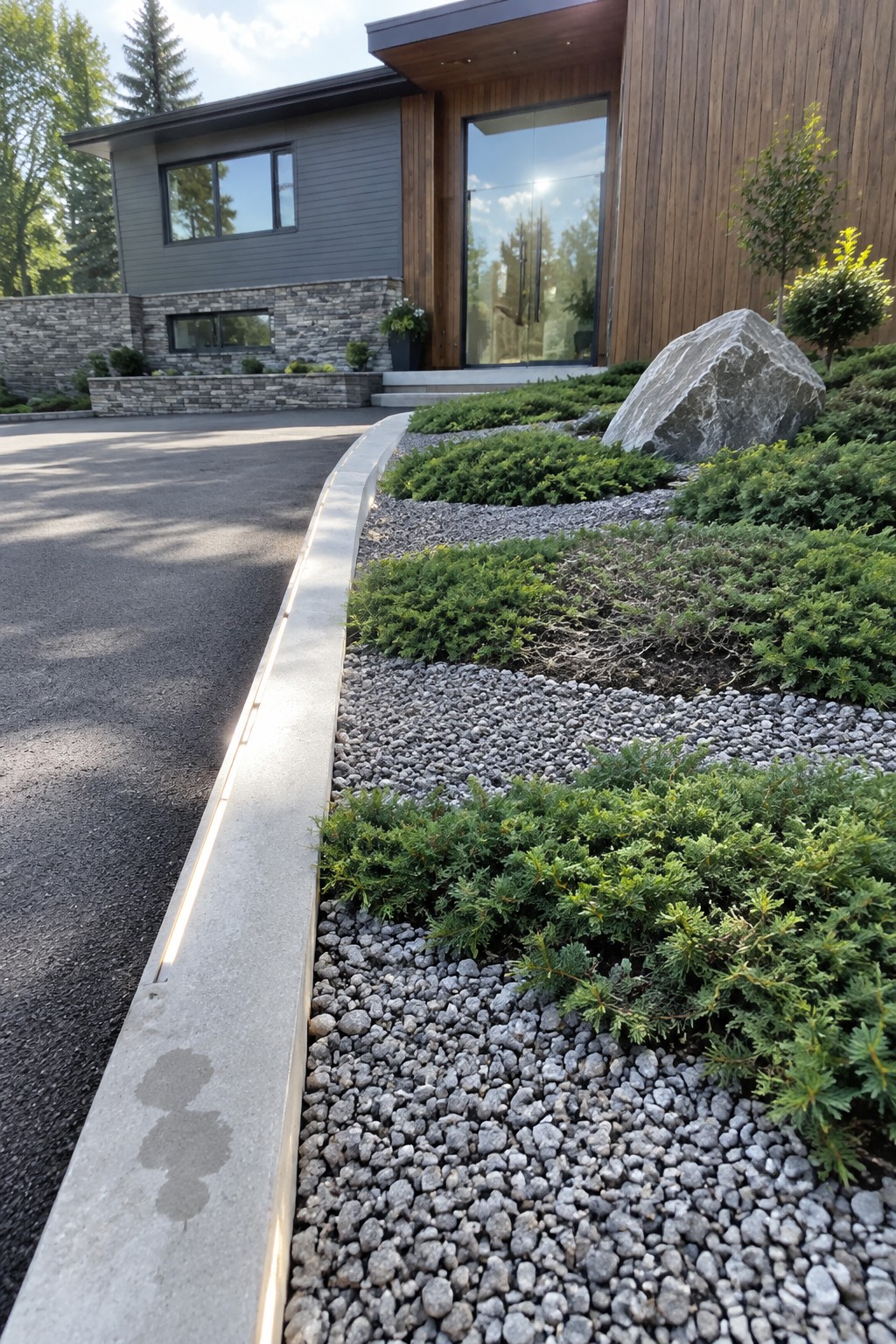
A planted border can make a wide asphalt driveway feel more considered without changing the paving itself. Here, the curved concrete edge gives the driveway a clean outline, while low shrubs and stone keep the planting bed neat.
This approach works well where the driveway meets an entry garden or front walk. Keep plants low near the pavement so they do not spill onto the driving surface, and use a sturdy edge to keep gravel and soil in place.
Use Oversized Pavers to Break Up Asphalt
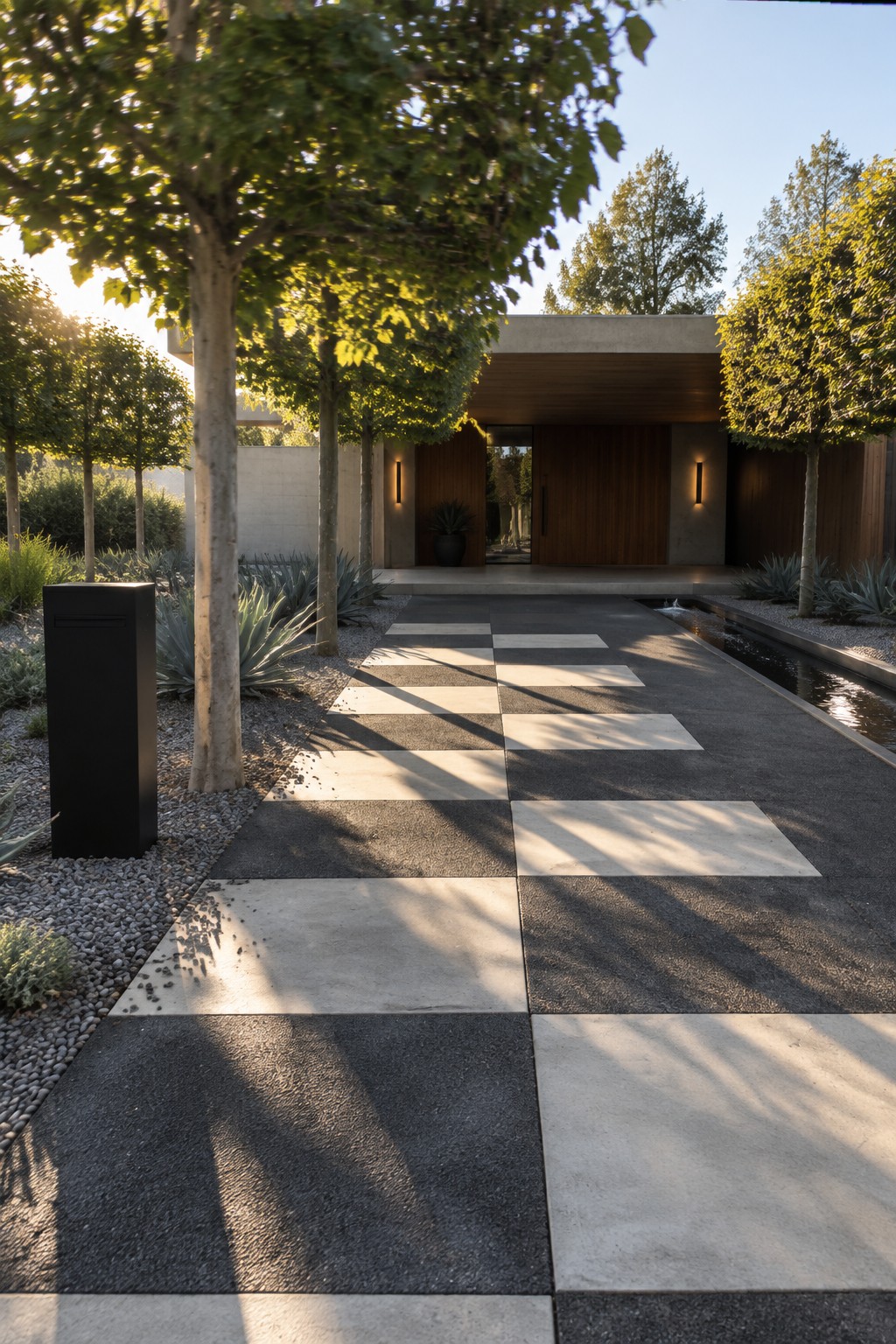
Large pale pavers set into an asphalt driveway create a clear walking route without paving the whole area in one material. The contrast helps the path stand out and gives a broad driveway a more orderly feel.
This approach works well near a front entrance, especially where people need a comfortable path from the street to the door. Keep the pavers level with the asphalt and leave enough room between them for an easy step.
Use Planting To Shape A Narrow Driveway

A narrow asphalt driveway can feel more considered when planting beds break up its hard edges. Clumps of ornamental grass bring greenery alongside the path without taking much room from the driving surface.
Keep the beds contained with simple edging and leave enough clearance for cars and walking. This approach suits a modern home where a full-width garden border would make the driveway feel cramped.
Use a Straight Paver Walkway Beside the Driveway

A separate walkway helps give an asphalt driveway a clear, orderly layout. Here, a straight band of large pavers runs along the drive, making the route to the garage easy to follow without breaking up the main paved surface.
This approach works well for modern homes with a long or wide driveway. Choose pavers that contrast gently with the asphalt, and keep the path wide enough for comfortable walking.
Use Floating Concrete Steps Beside the Driveway
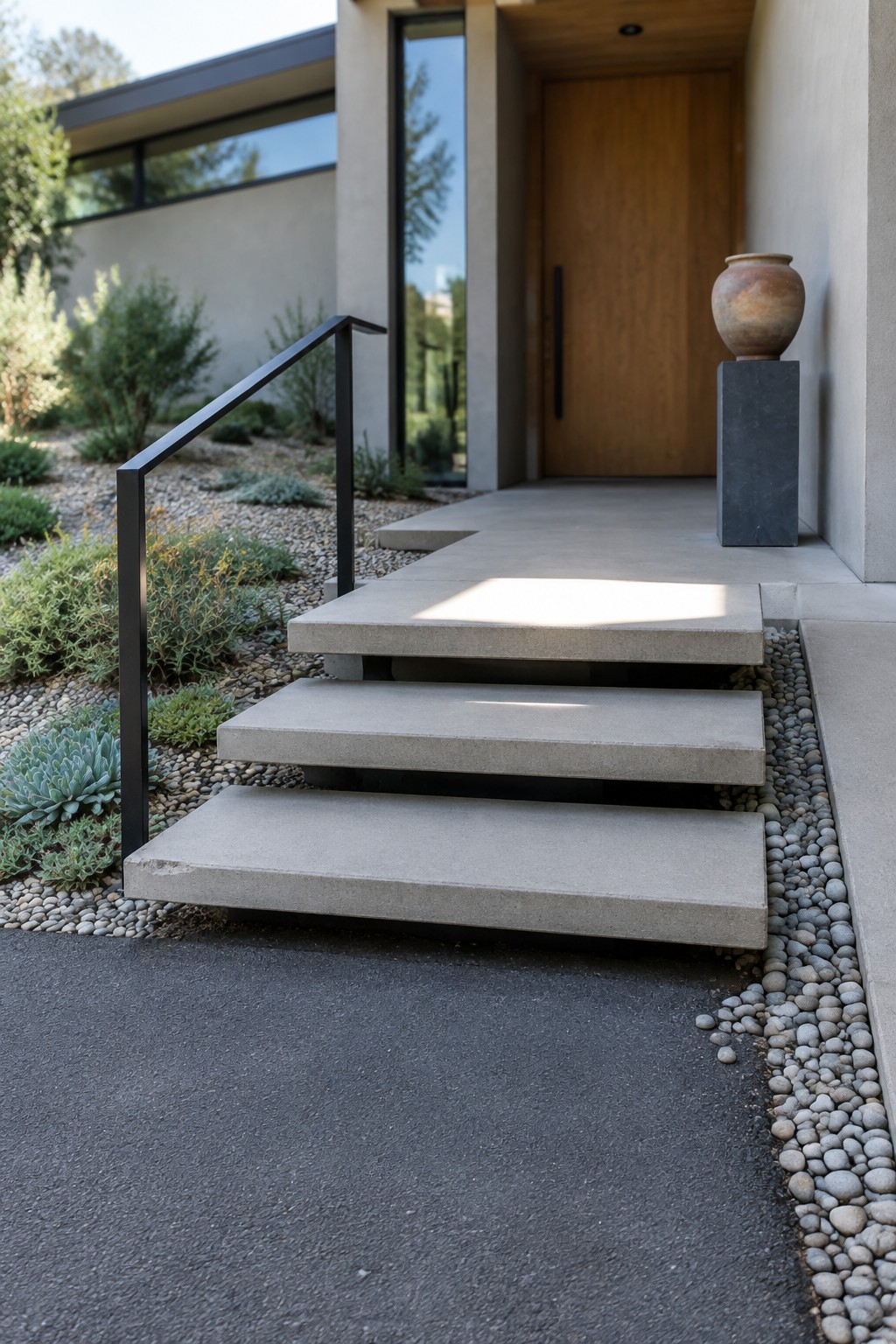
Oversized concrete steps make a practical way to connect an asphalt drive to a raised front entry. Their simple shape suits a modern home, and leaving gaps between the slabs gives the approach a lighter look than a solid staircase.
This works best where the entry sits above driveway level and there is room for a straight walking route. Keep the steps wide and evenly spaced, and add a handrail where the rise calls for one.
Let the Driveway Follow the Garden Path

An asphalt driveway can feel less stark when a simple path connects it to the garden. Here, spaced stone steps lead from the road to a wooden gate, making the entrance easy to find without adding much hardscape.
This approach works well where a driveway runs beside a garden or a country-style yard. Keep the path wide enough to walk comfortably, and choose stones that sit level so they are practical in everyday use.
Add Drainage Grates Across the Driveway

A narrow drainage grate can be built into an asphalt driveway to carry away runoff without interrupting its clean surface. It’s a practical detail that suits modern homes, especially where water tends to collect near the garage or at the edge of the drive.
Place the grate across the driveway at a natural low point, and make sure it connects to a suitable drainage outlet. A flush, well-fitted grate is less likely to catch tires or look out of place.
Frequently Asked Questions
Q: How often does an asphalt driveway need to be sealed?
A: Most driveways need a fresh coat every few years, but wait until the surface shows signs of wear rather than sealing on a strict schedule. A contractor can tell you when it’s ready, since sealing too soon can trap oils in the asphalt.
Q: Can I add a clean border without replacing the whole driveway?
A: Yes. Brick, stone, or concrete edging can give an existing asphalt driveway a sharper outline. Make sure the edge is installed securely so it doesn’t shift or leave gaps where water can seep in.
Q: Will a dark asphalt driveway make my front yard look smaller?
A: It can feel heavy if the driveway takes up most of the view. A light-colored border, planting beds, or a simple strip of grass can break up the dark surface and keep the entry feeling open.
Q: How soon can I park on a new asphalt driveway?
A: Follow your installer’s advice, since weather and the mix affect how quickly it firms up. Even after it’s ready for cars, avoid leaving heavy vehicles parked in one spot for long while the surface settles.
