

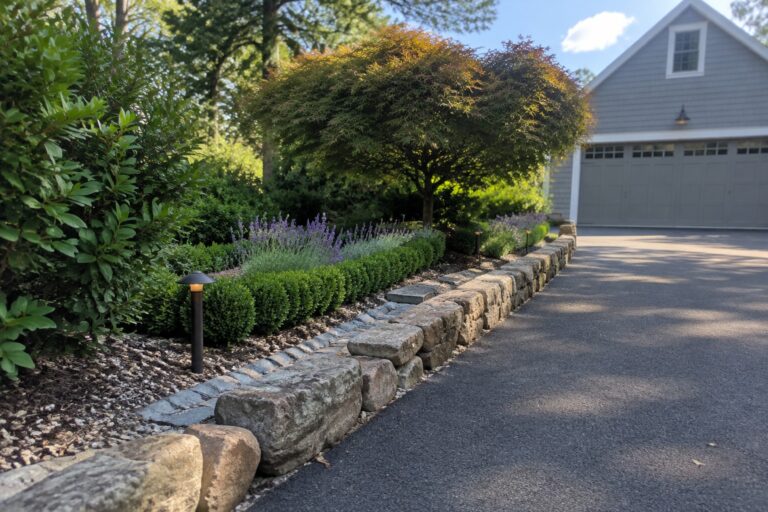
An asphalt driveway can look a little stark when it meets the lawn or garden without a clear edge.
I find that natural stone gives the border definition while helping the driveway feel connected to the rest of the yard.
The right choice depends on the shape of the drive, the home’s exterior, and how much contrast you want at the edge.
Smaller stones can create a tidy, understated line, while larger pieces make the transition more noticeable.
It also helps to think about upkeep, since loose or uneven edging can shift over time and make mowing harder.
These ideas offer details I’d consider adapting to the layout and materials already around the house.
Use Natural Stone to Edge an Asphalt Driveway
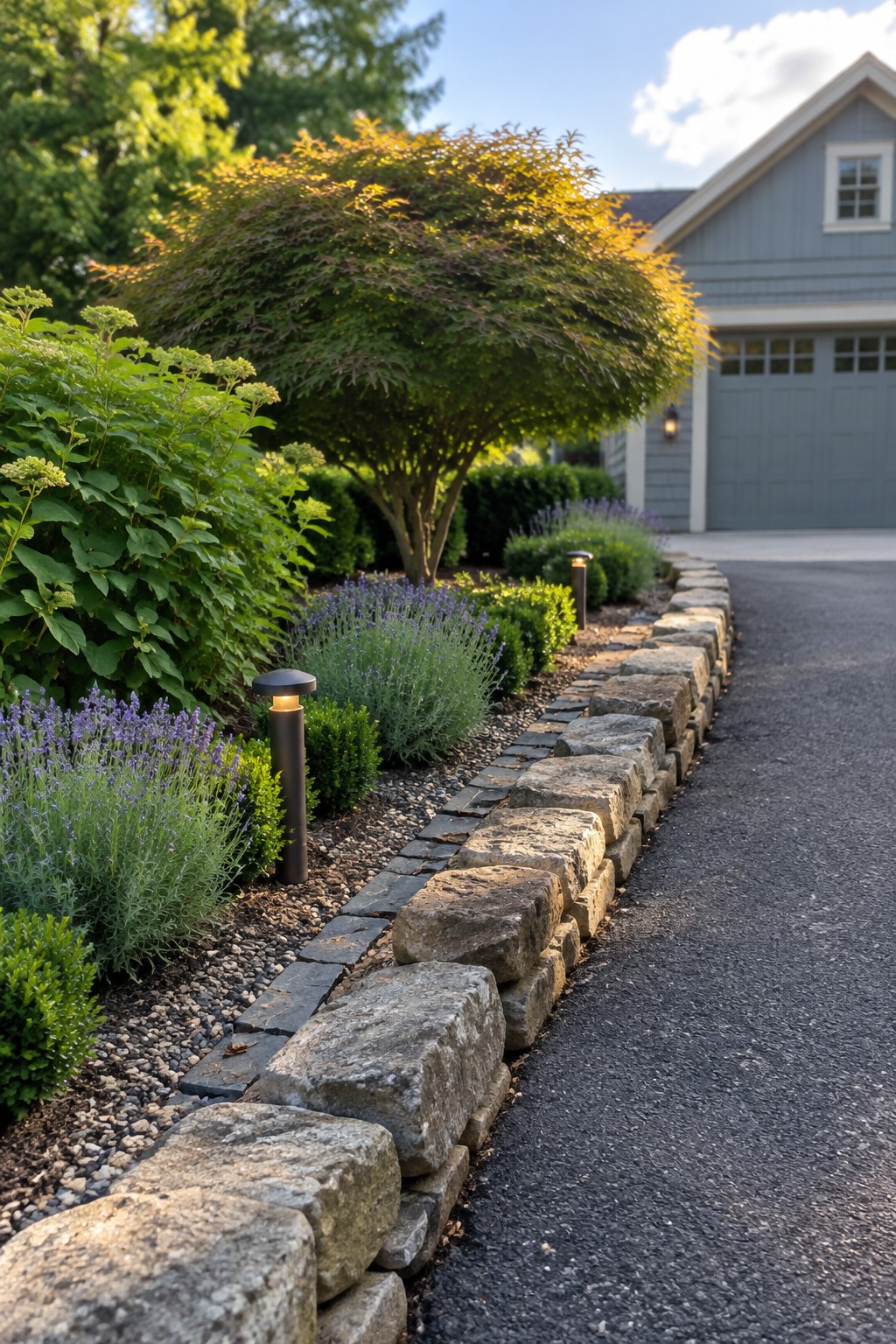
A low stone border gives an asphalt driveway a clear edge and keeps the planting bed neatly separate. The rough, varied blocks add a more natural look than a straight concrete curb.
This idea works well where a driveway curves past a garden bed. Choose stones with fairly consistent heights so the edge stays tidy, and set them firmly to help prevent shifting over time.
Define an Asphalt Driveway With a Stone Border
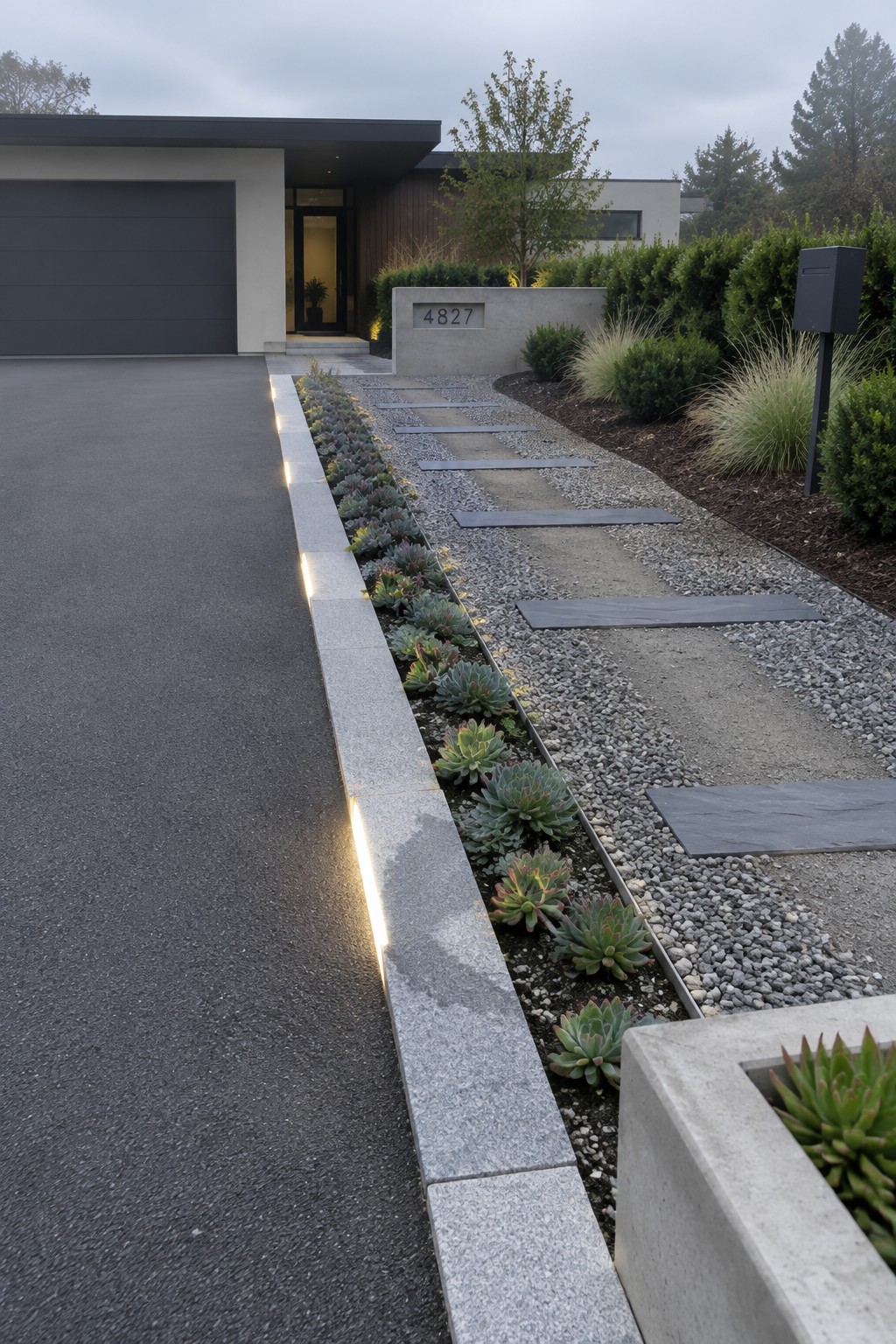
A narrow stone border gives an asphalt driveway a clean edge and helps separate it from nearby planting. It’s a simple way to make the driveway feel more considered without changing the main paving.
Use a durable natural stone that suits the house, and keep the border wide enough to hold its shape over time. Small plants can fit alongside it, but leave enough room so growth does not spill onto the asphalt.
Edge a Curved Asphalt Driveway With a Single Row of Cobblestones
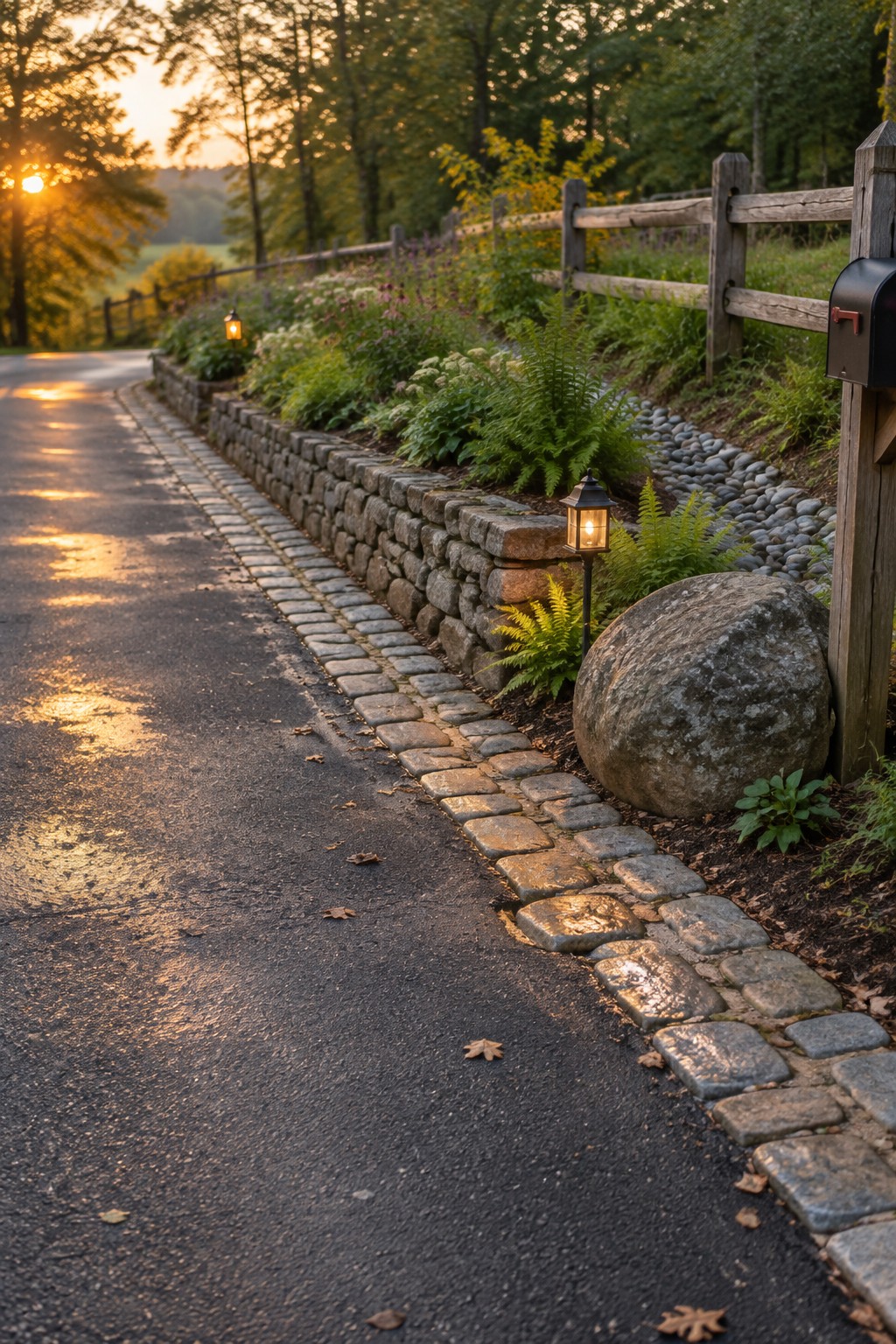
A natural stone border gives an asphalt driveway a more finished edge and helps it sit comfortably beside a garden. A single line of cobblestones is a simple choice that adds texture without making the driveway feel too formal.
For a similar look, set the stones in a consistent row and keep their tops fairly even with the asphalt so they are easier to walk or drive beside. This works especially well along a curving driveway next to a planted bed, but make sure the edging is firmly set to limit shifting over time.
Use Natural Stone to Edge an Asphalt Path
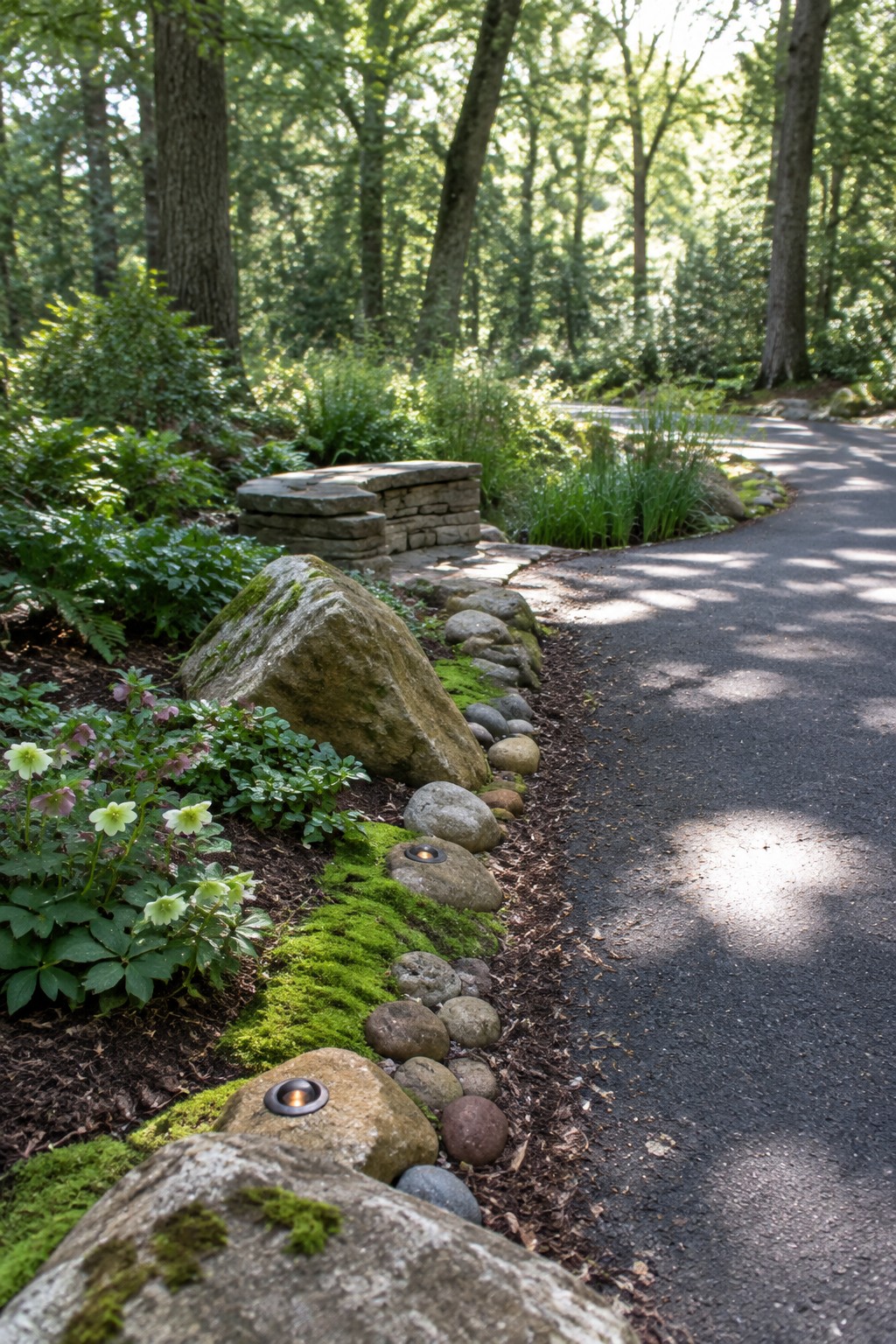
Natural stone gives an asphalt path a softer, more finished edge. A line of varied rocks beside the pavement feels less rigid than a uniform curb and helps the path sit naturally in a garden.
Use stones of a similar scale along the edge, leaving enough room to keep the asphalt clear of soil and plants. This approach works well on gently curving paths, where a loose stone border can follow the shape without looking too formal.
Add a Stone Edge to an Asphalt Driveway
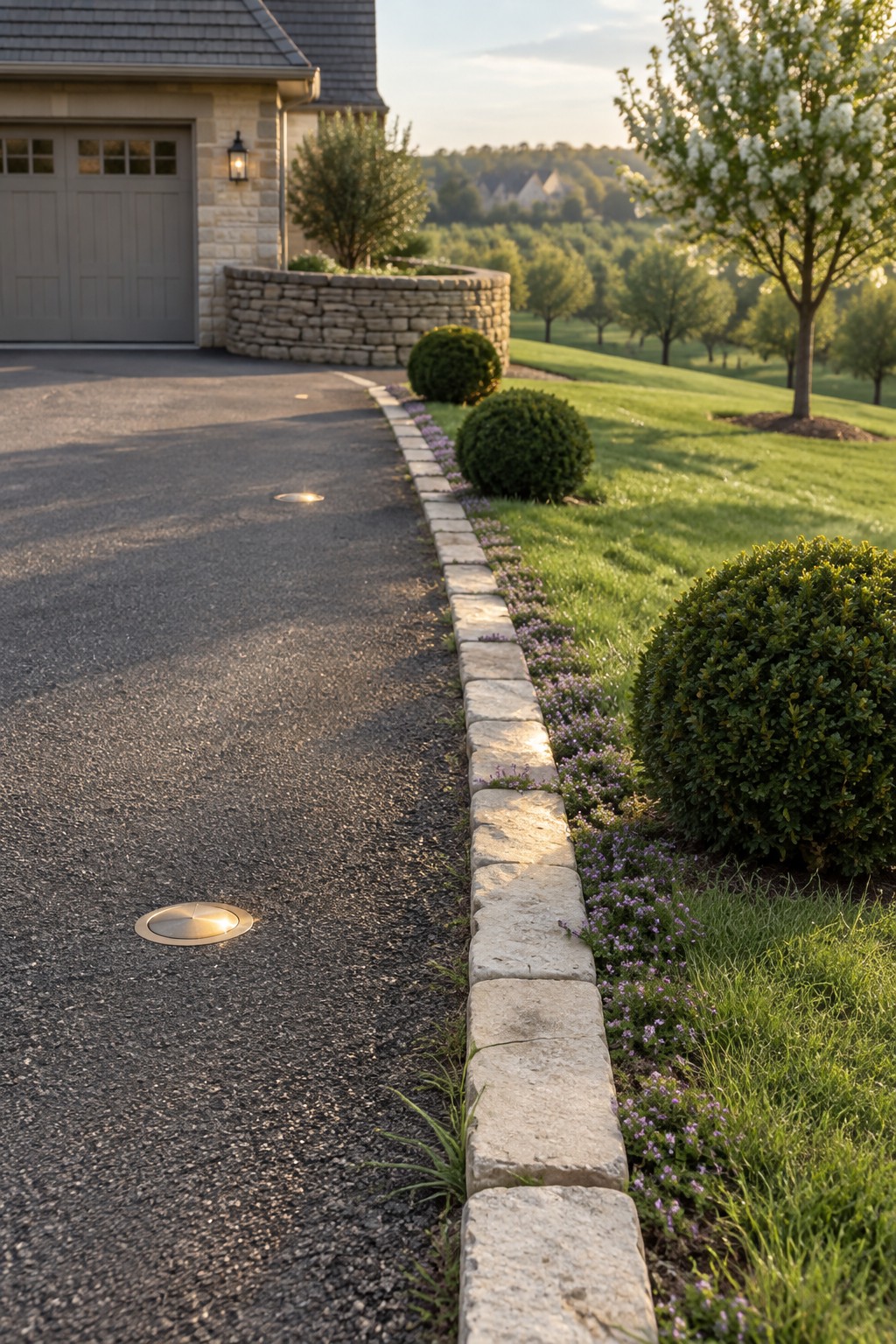
A low stone border gives an asphalt driveway a clear edge and keeps the planting bed from spilling onto the pavement. The pale, irregular blocks also bring a more natural look to an otherwise dark, simple surface.
This approach works well on sloped or gently curving driveways, where a defined boundary can help guide the eye and contain groundcover. Choose stones with fairly even tops so the edge is comfortable to walk beside and stays neat as the plants fill in.
Use a Curved Stone Border Along the Driveway
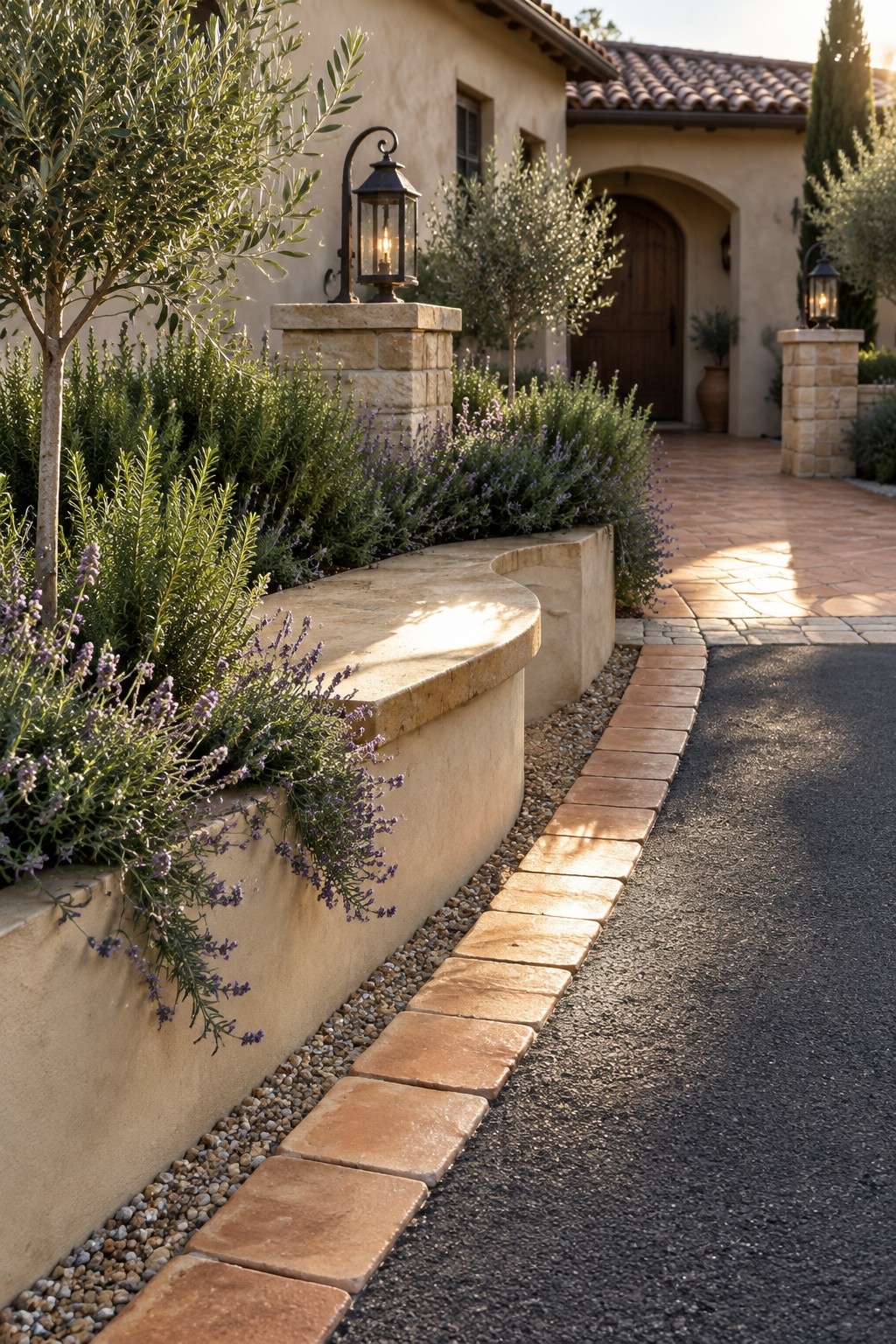
A gently curved stone edge is a good way to make an asphalt driveway feel less stark. Here, broad tan pavers follow the planting bed and give the driveway a clear, finished boundary.
This approach works well beside a curved garden wall or a planting bed that runs along the drive. Choose stones with enough width to stay put, and keep the curve gradual so the border is easier to lay neatly.
Use Large Stone Blocks Along the Driveway
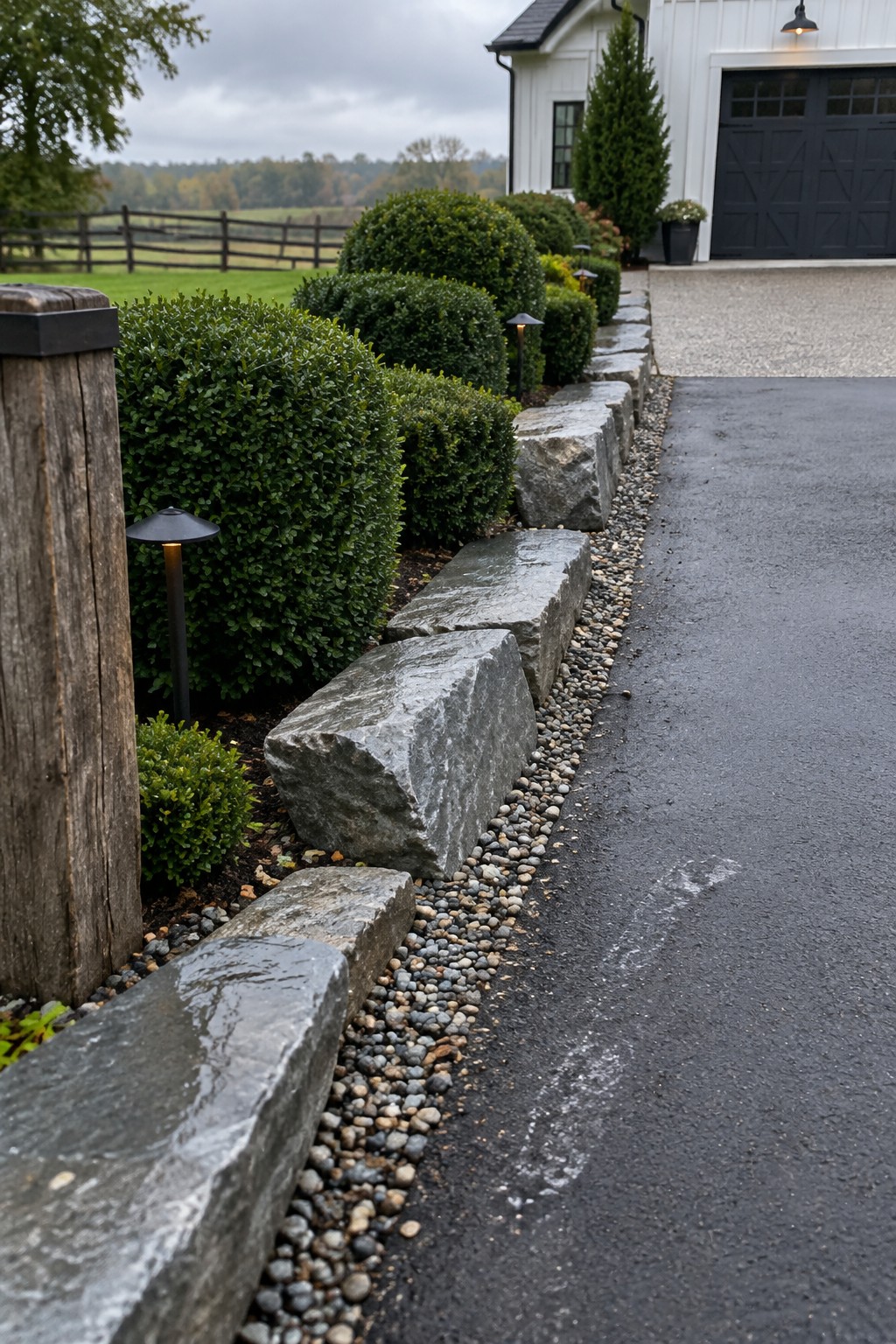
Large natural stone blocks make a sturdy border for an asphalt driveway and give the edge a clear, finished line. They also suit a more informal landscape, where smaller edging might look out of place.
Use stones with varied shapes and sizes for a natural look, and leave a narrow strip of gravel between them and the asphalt. Check that the blocks sit securely and do not narrow the driving area.
Add Planting Pockets Along a Stone Driveway Border
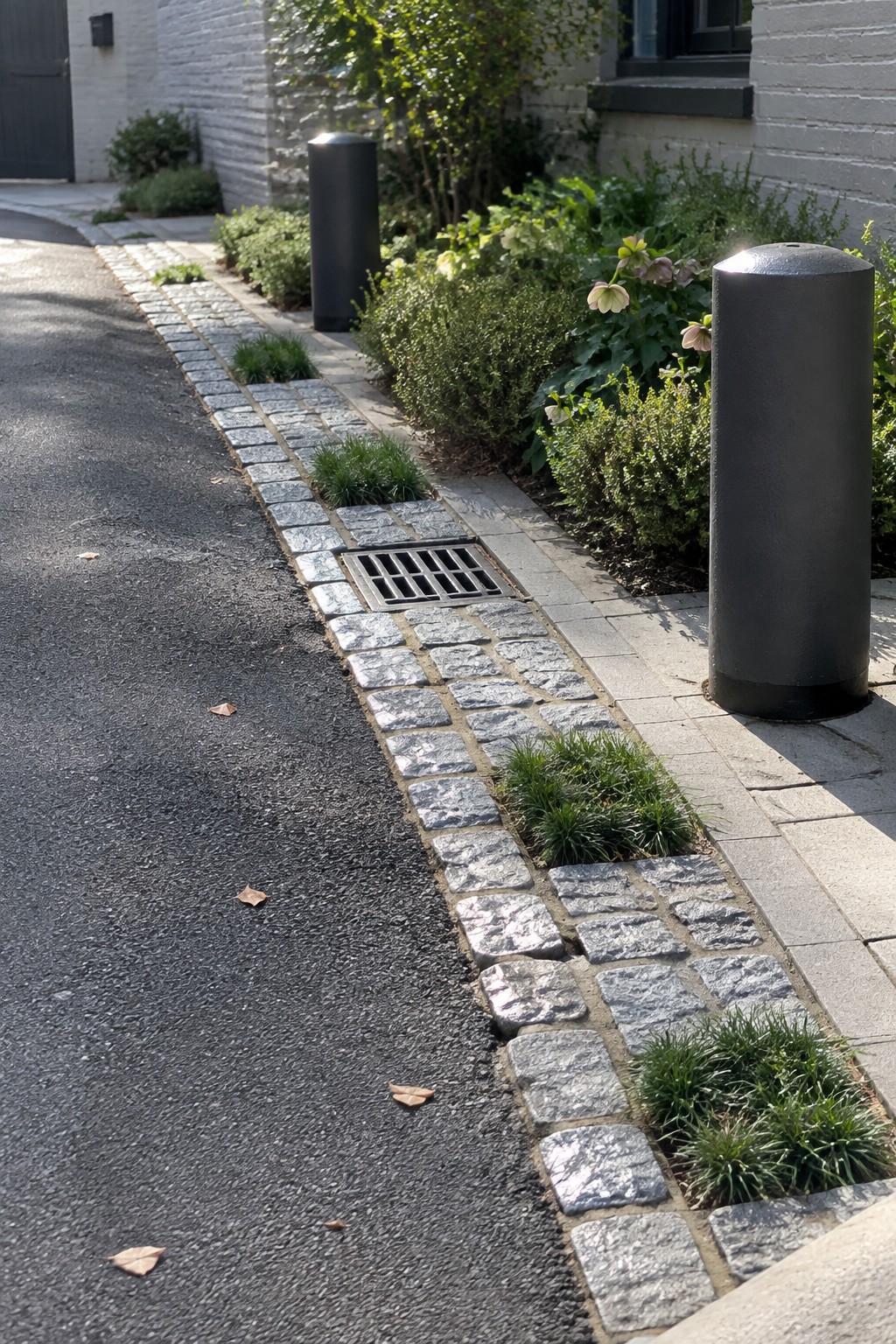
Small planting pockets break up a stone edge and give an asphalt driveway a more garden-like finish. Leaving a few gaps between the stones for clumps of grass adds a bit of green without changing the driveway’s basic layout.
This works well along a narrow driveway where space for a full planting bed is limited. Keep the openings wide enough for plants to grow, and choose sturdy, low-growing varieties that won’t spread onto the asphalt.
Add a Stone Step Across the Driveway Border
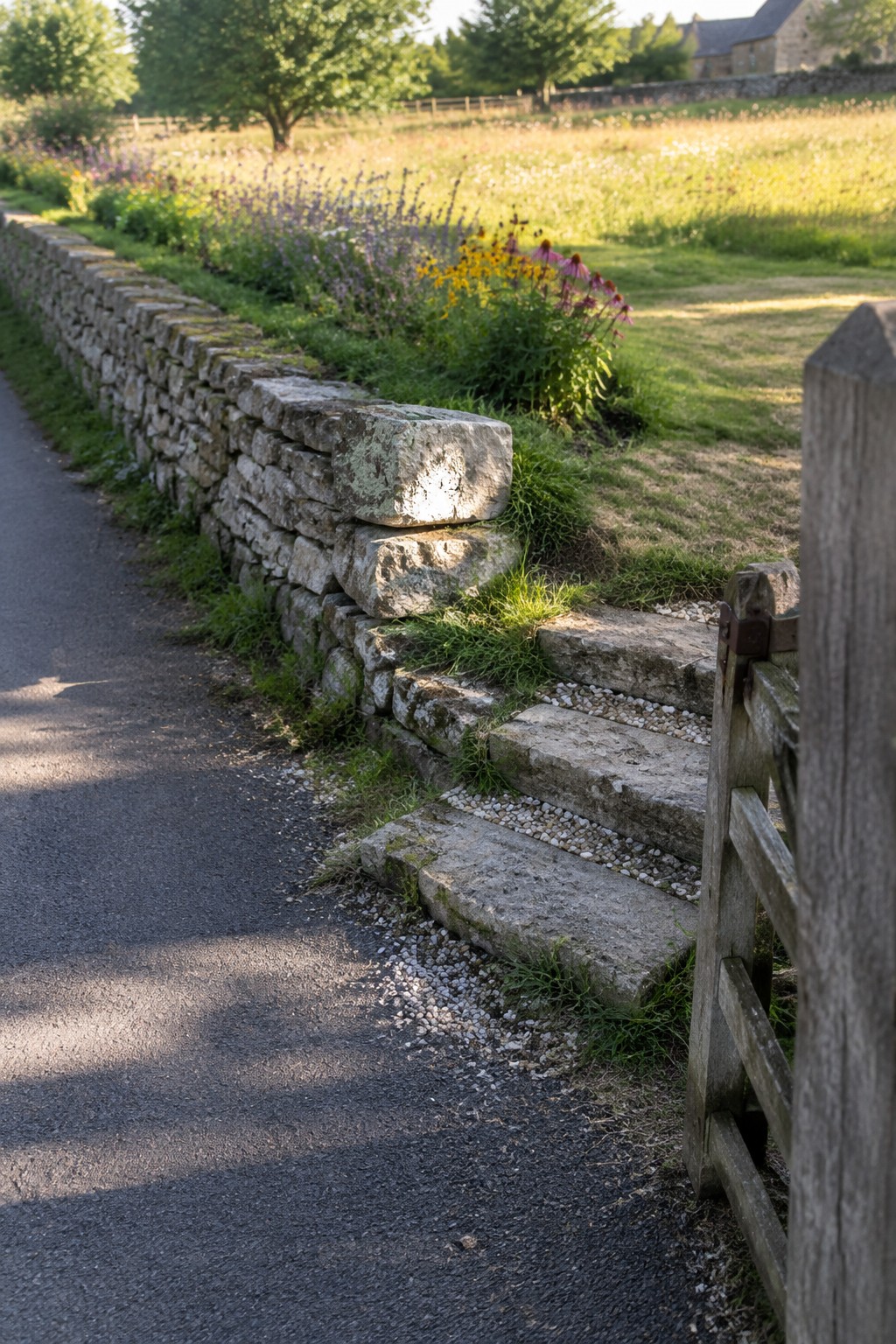
A short run of stone steps can make a break in a low stone border useful, rather than leaving it as a barrier. Here, broad slabs form a simple crossing beside the asphalt path.
This approach works well where a driveway or path meets a garden entrance. Choose sturdy, level stones and leave enough room for a comfortable step; loose gravel between the slabs can help mark the gaps.
Add a Gravel Strip Along the Asphalt Driveway
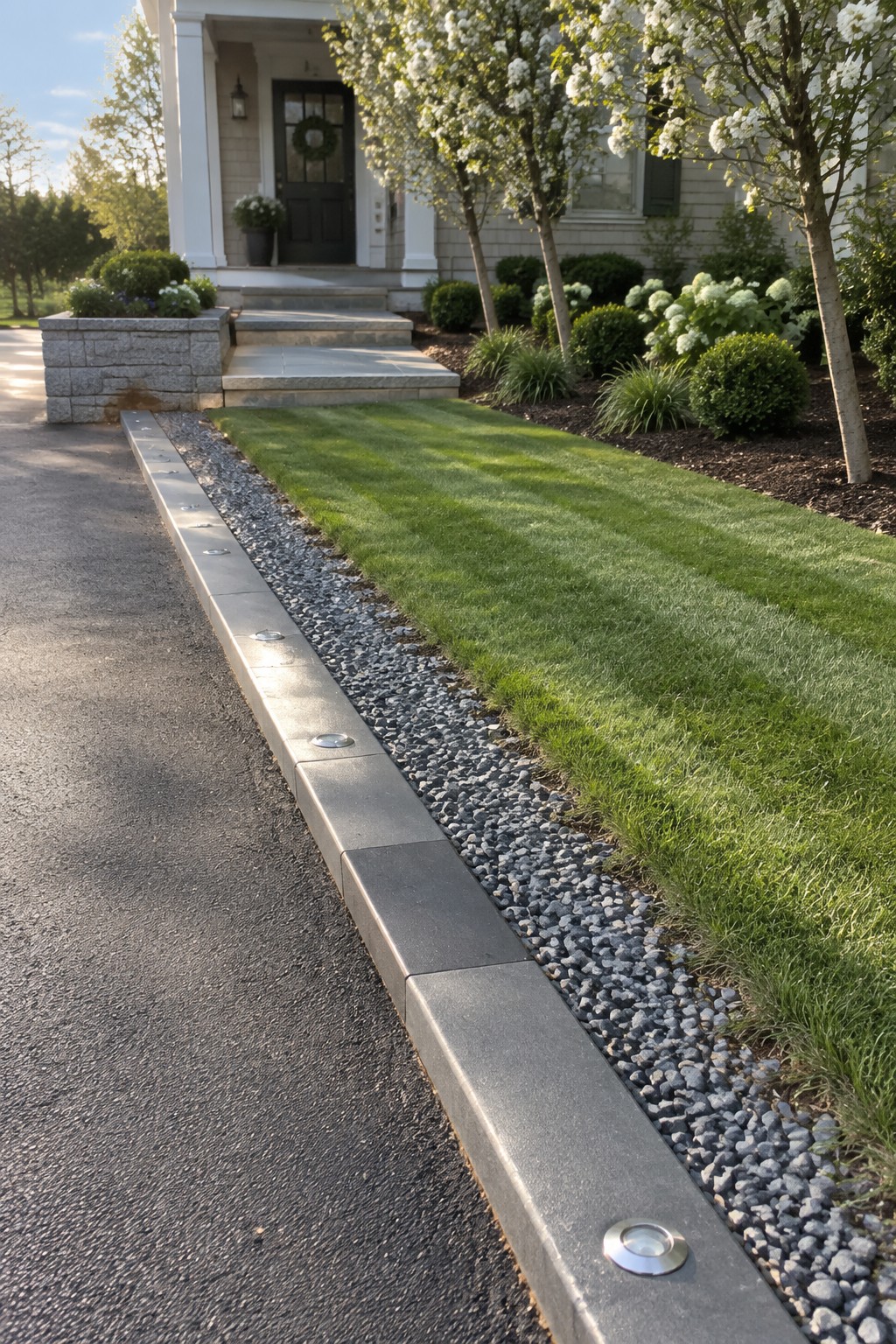
A narrow gravel strip can separate an asphalt driveway from the lawn and give the edge a more finished look. Here, a low stone border keeps the gravel in place, while small recessed lights make the driveway edge easier to see after dark.
This approach works well where a driveway runs beside a lawn or planting bed. Choose gravel that drains well, and use a sturdy edging material so it stays out of the asphalt and grass.
Use Stone Pavers to Mark a Curved Driveway Edge
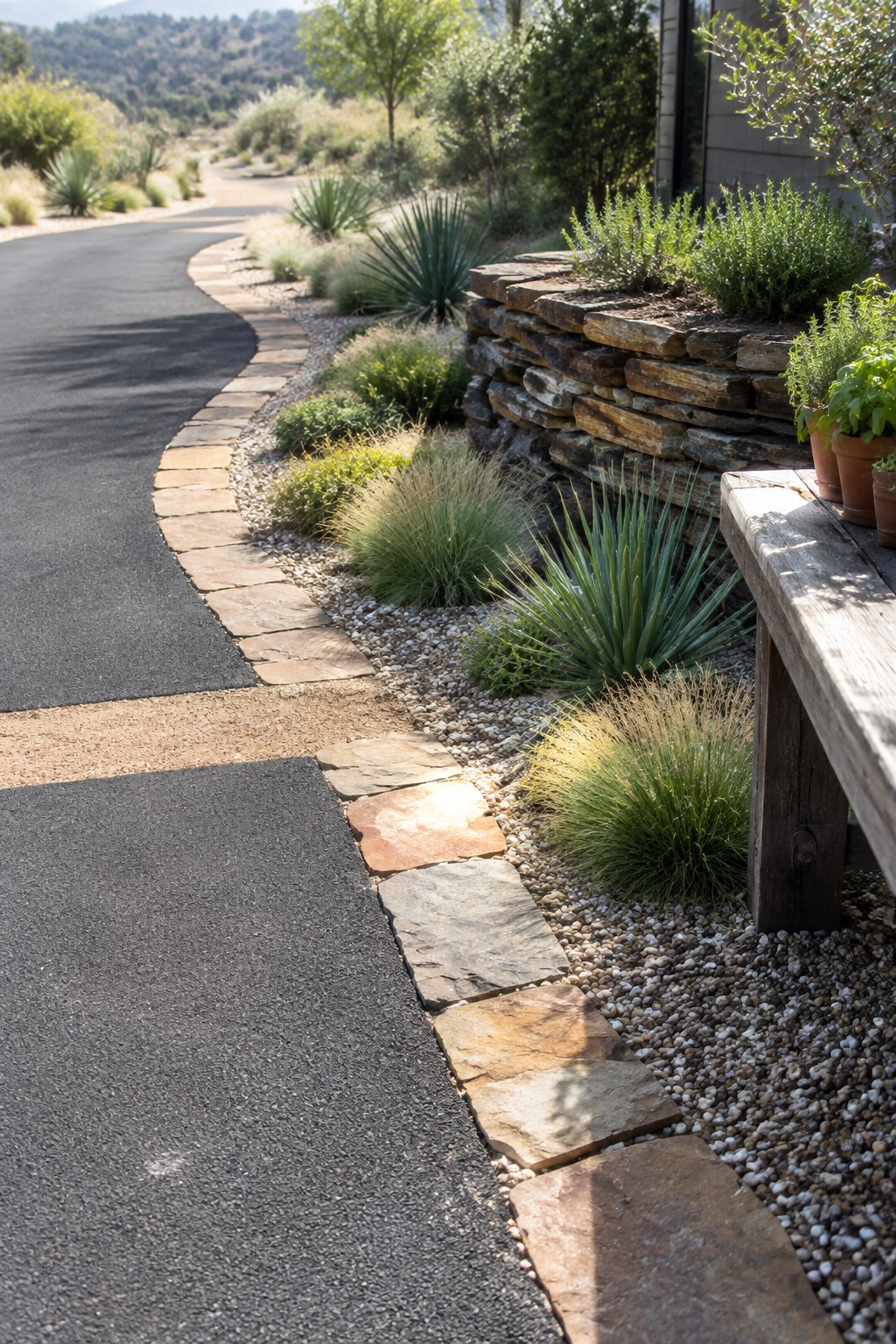
A row of natural stone pavers makes a clear edge along a curving asphalt driveway. The stone gives the boundary a finished look while helping separate the pavement from the gravel planting bed.
This approach works well when a driveway bends through a garden or follows the shape of the house. Choose pavers thick enough to stay in place, and set them evenly so the edge remains easy to maintain.
Use Repeating Stone Blocks to Edge an Asphalt Driveway
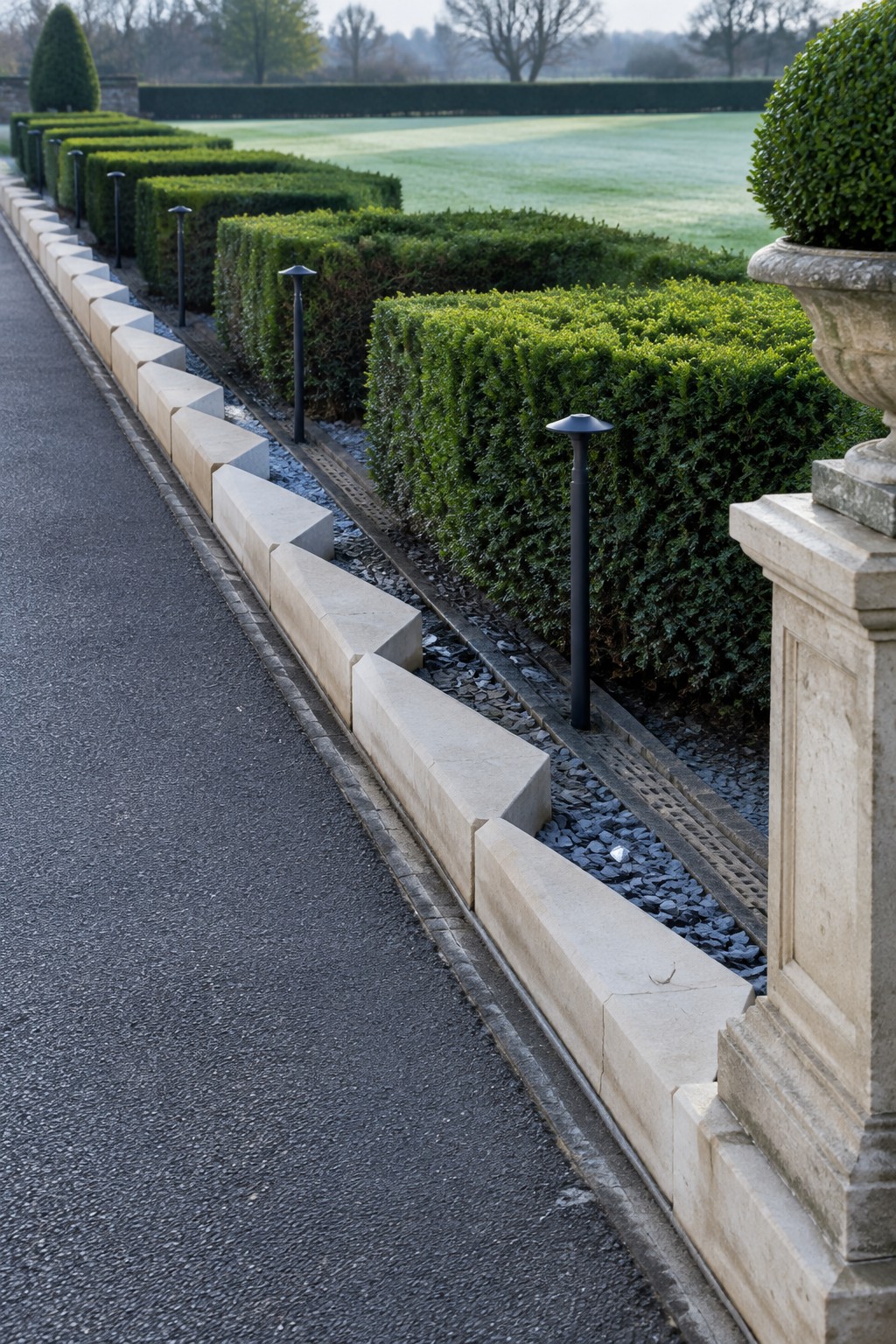
A low stone border gives an asphalt driveway a neat edge and keeps the planting bed separate from the pavement. Repeating blocks make the boundary easy to follow, while the pale stone stands out against the dark asphalt.
This approach works well beside clipped hedges or other orderly plantings. Choose blocks that are sturdy enough to stay in place, and keep their height consistent so the edge looks tidy without becoming a tripping hazard.
Add a Raised Stone Border Along the Driveway
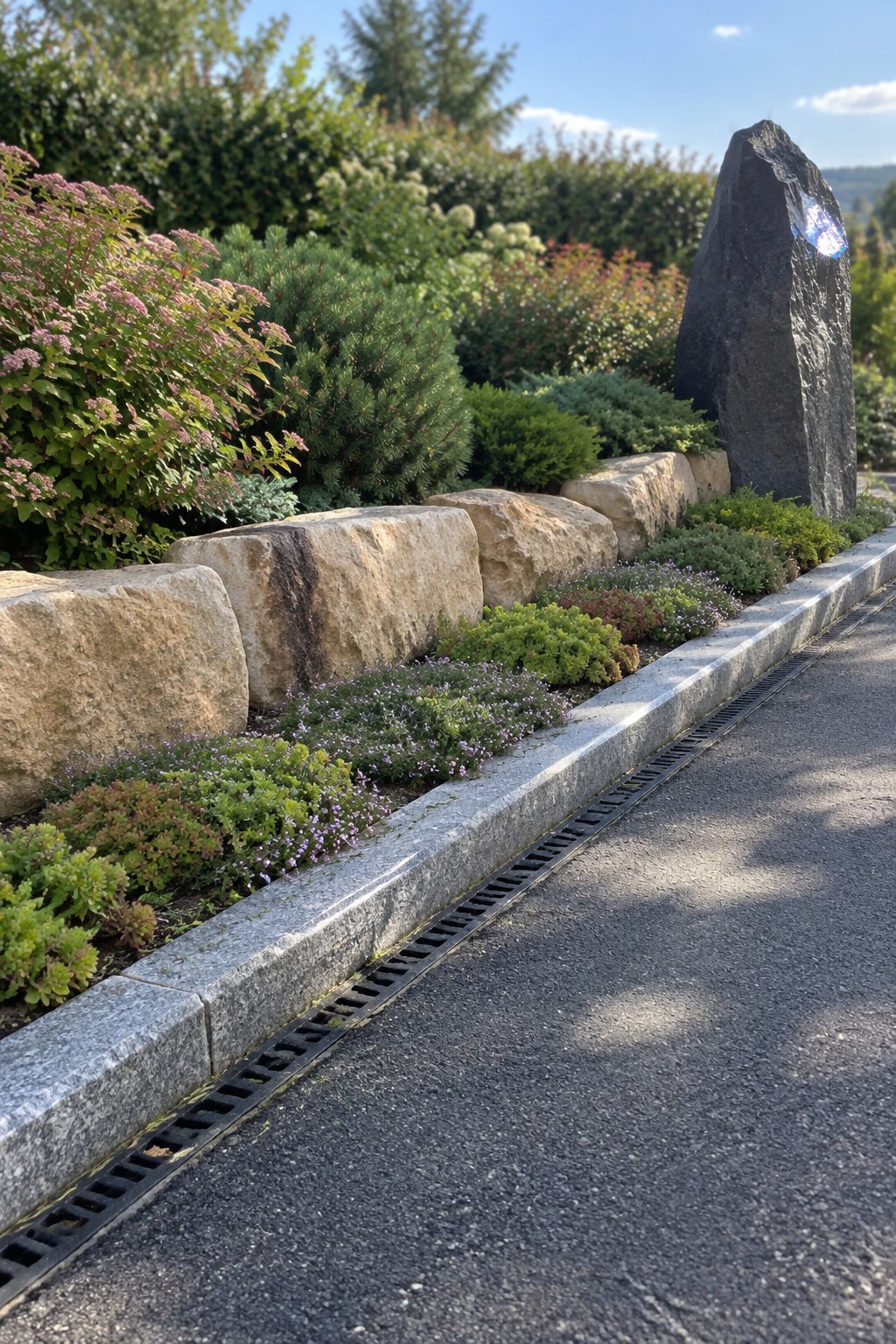
A low stone retaining edge can keep a planted bed neatly separate from an asphalt driveway. Large natural stone blocks give the border a sturdy look, and the raised bed makes room for layered shrubs and ground cover.
This approach works well where a driveway runs beside a garden bed or on a slight slope. Set the blocks firmly and keep the top edge even, so the border stays tidy and does not create a tripping hazard.
Use a Stone Border to Keep Driveway Planting Neat
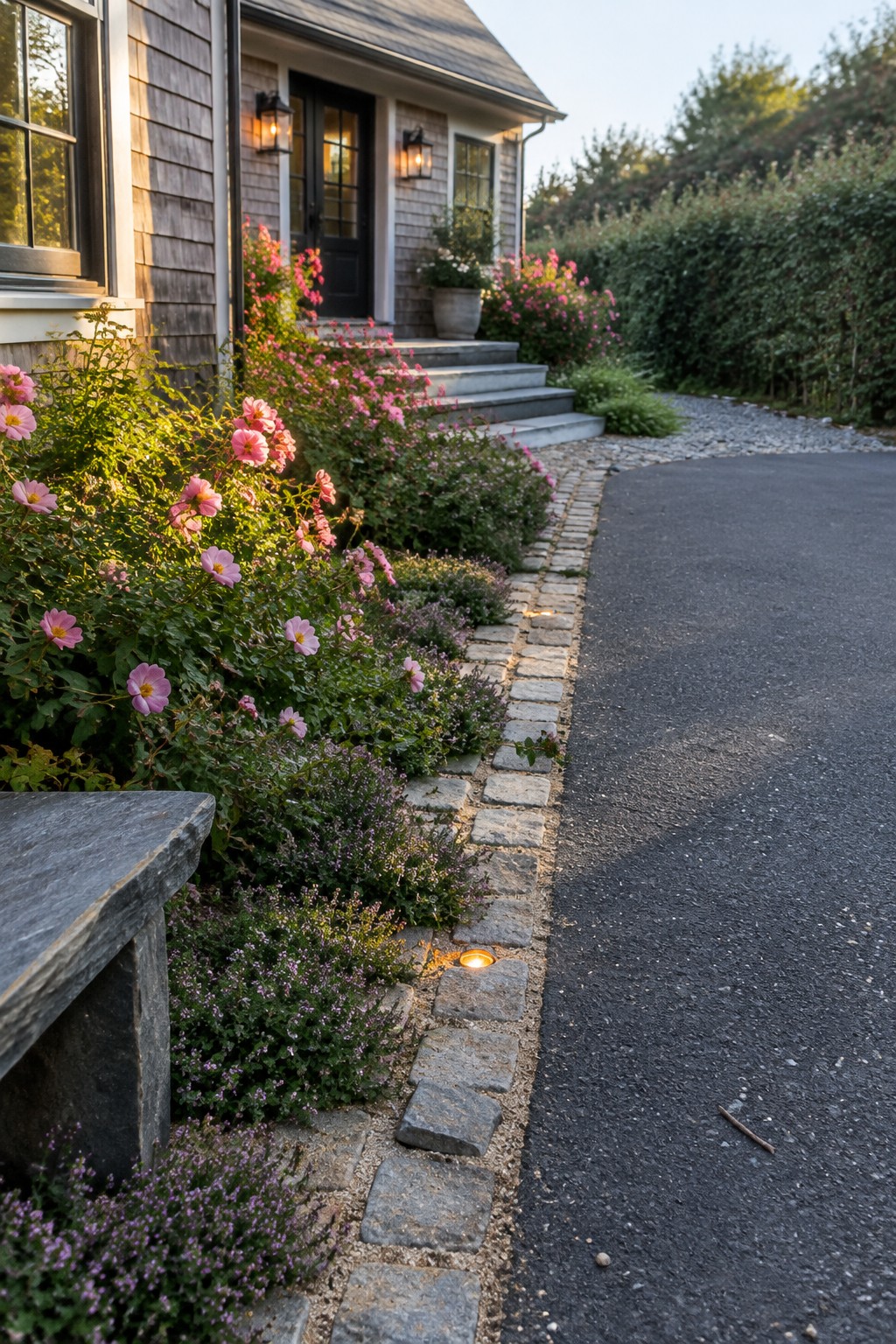
A natural stone edge gives an asphalt driveway a clear boundary while letting nearby flowers and shrubs grow close to the pavement. The change in materials makes the planting bed feel intentional, rather than as if it simply spills onto the drive.
Use sturdy, evenly placed stones along the edge, and keep the bed low enough that plants do not creep over the asphalt. This approach works especially well beside a curved driveway or a narrow garden bed.
Use a Planted Stone Border Along an Asphalt Driveway
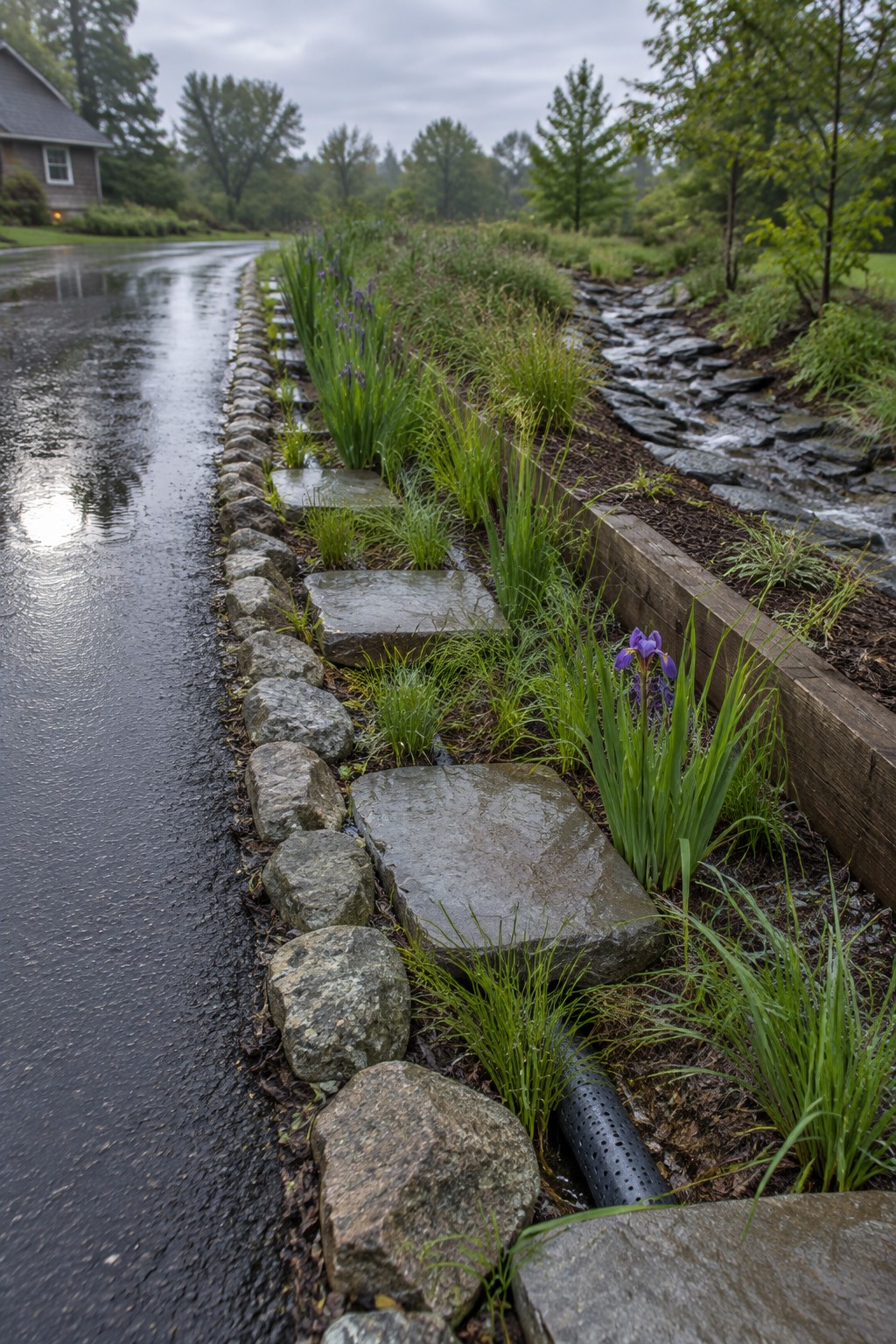
A stone edge can do more than keep an asphalt driveway distinct from the garden. Leave a narrow planting bed beside the stones, and the border becomes part of the landscape instead of a hard line.
This approach suits driveways with room for low grasses or other hardy plants. Keep the planting simple and leave enough clearance that it does not spill onto the driving surface.
Build Planting Pockets Into a Stone Driveway Border
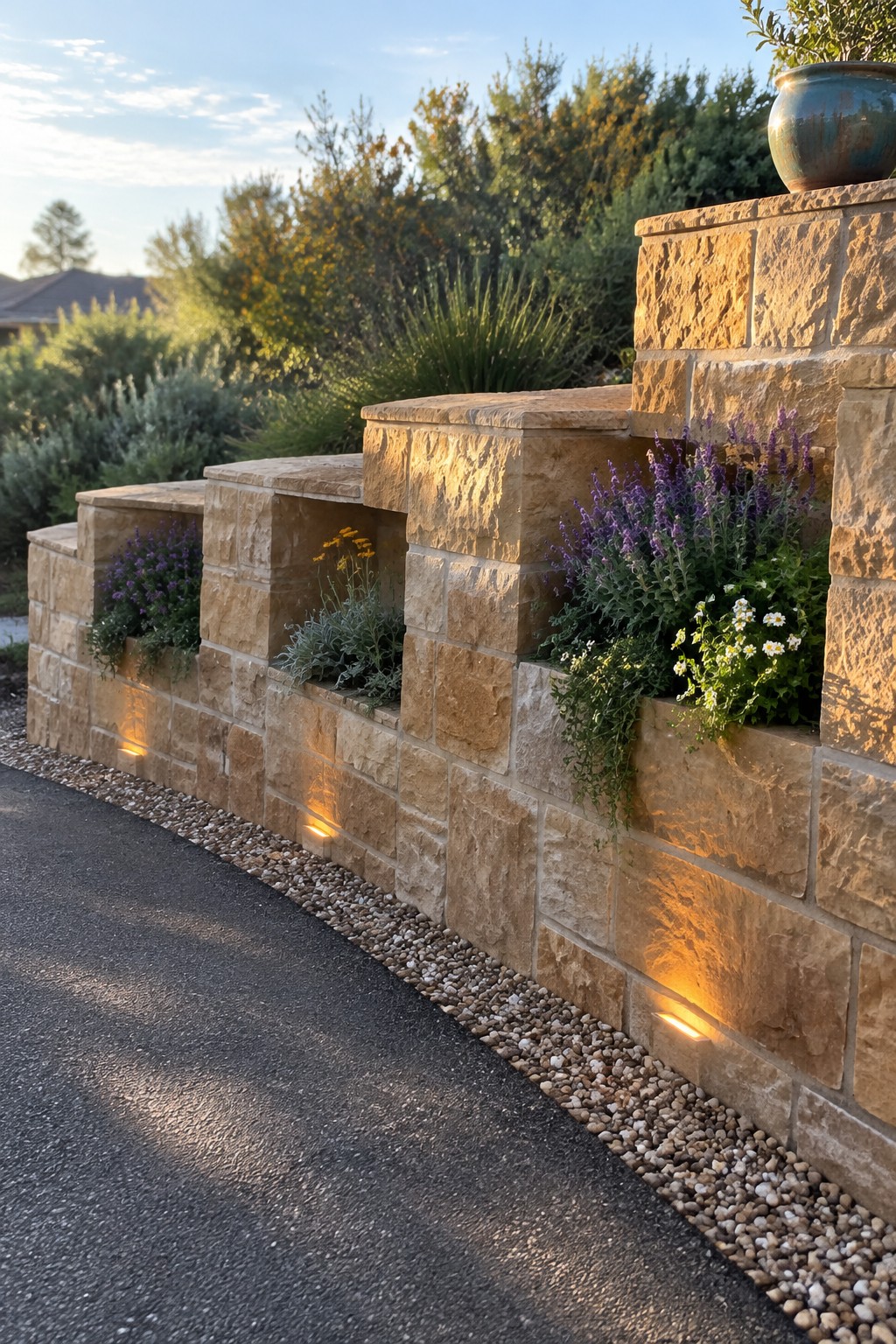
A low stone wall can do more than mark the edge of an asphalt driveway. Recessed planting pockets break up the stonework and give flowers and trailing plants a place to grow, making the border feel like part of the garden.
This approach works well where a driveway runs beside a planted yard, especially on a sloped or uneven site. Leave enough room in each pocket for soil and mature plants, and choose varieties that won’t spill into the driving surface.
Use Stone Blocks to Separate the Driveway From Planting
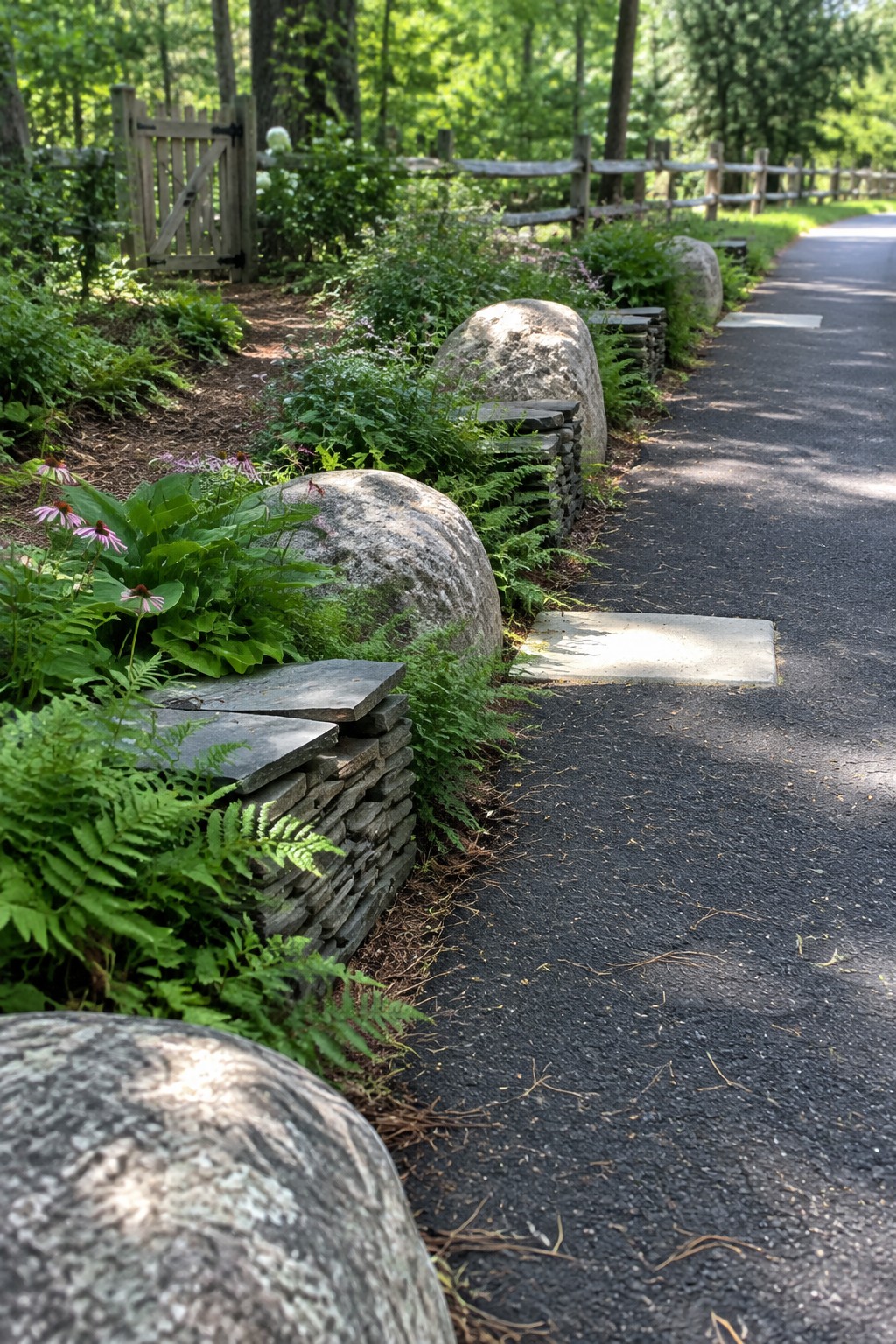
A row of large natural stones can mark the edge of an asphalt driveway while keeping the garden bed distinct. The blocks give the border a sturdy, informal look, and their size makes the boundary easy to see.
Use this approach where planting tends to spill toward the pavement. Set the stones consistently along the edge, leaving enough room for ferns or other low plants without narrowing the drive.
Add Lighting to a Stone Driveway Border
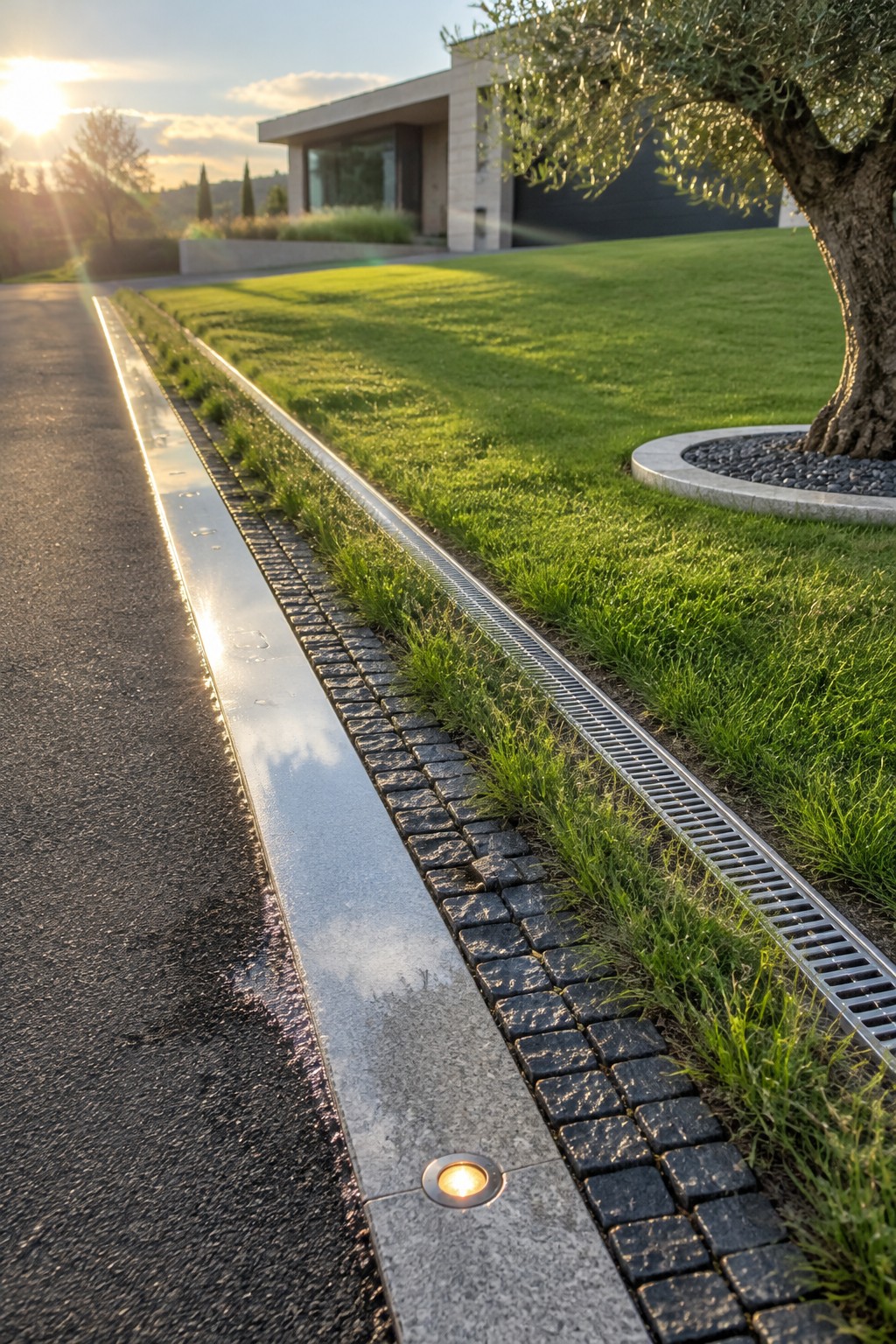
A narrow stone edge can help separate an asphalt driveway from the lawn, and small built-in lights make that border easier to see after dark. The lights also mark the driveway’s edge without needing tall fixtures.
For a similar look, place low-voltage lights at intervals along a stone curb, keeping them out of the path of car tires and mower blades. This works well on long driveways, but choose fixtures made for outdoor use and keep the light aimed downward.
Frequently Asked Questions
Q: Should the stone border sit flush with the asphalt?
A: Keep the top of the stone slightly above the driveway so it stays visible and helps define the edge. Make sure it does not stick up so much that it catches tires or becomes a trip hazard.
Q: What kind of natural stone works well along an asphalt driveway?
A: Cobblestones, fieldstone, and cut granite all make sturdy borders. Choose pieces with fairly even sides if you want a neat edge, or use irregular stones for a more relaxed garden feel.
Q: Do I need to install edging before laying the stone?
A: Yes, a compacted gravel base and a firm edge help keep the stones from shifting over time. This matters especially where cars turn or drive close to the border.
Q: Can I add a stone border to an existing driveway?
A: Yes. You can install one along an existing asphalt edge, but you may need to trim back loose or crumbling asphalt first. A clean, stable edge makes it easier to set the stones neatly.
