

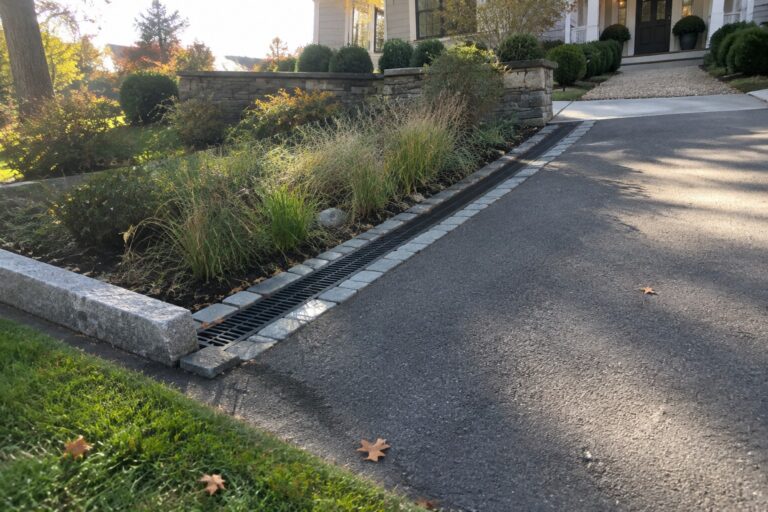
A sloped driveway can give a home a clear, welcoming approach, but heavy rain quickly shows whether the water has somewhere sensible to go.
I’ve found that drainage works best when it is planned alongside the driveway’s edges, nearby planting, and the path to the front door.
Small changes in grading or runoff control can help prevent puddles, erosion, and water from collecting near the garage or foundation.
The right solution depends on the slope, soil, and space around the entrance, so it helps to compare options before choosing what to build.
Some ideas may be worth adapting to your own property, especially if water tends to rush down the drive after a storm.
Use a Channel Drain Along the Driveway
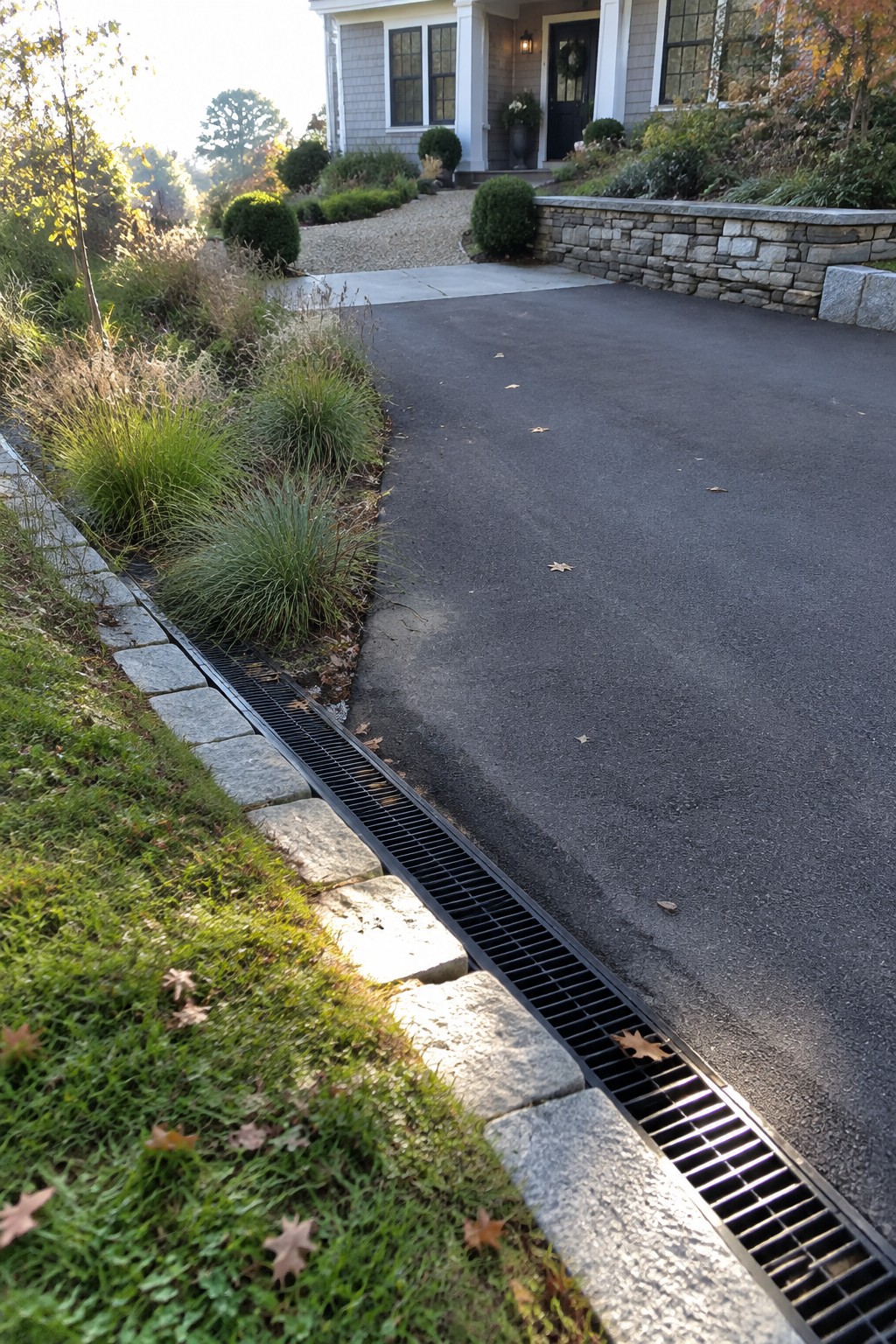
A channel drain can catch runoff as it travels down a sloped driveway, before it reaches the garage or lower part of the property. The long, narrow grate shown here runs along the asphalt edge, where it can collect water moving off the paved surface.
For a sloped entrance, place the drain across the direction of water flow and connect it to a suitable outlet. Make sure the grate is rated for vehicle traffic, and clear leaves and debris regularly so water can pass through.
Use Wide Stepping Stones for a Sloped Entrance
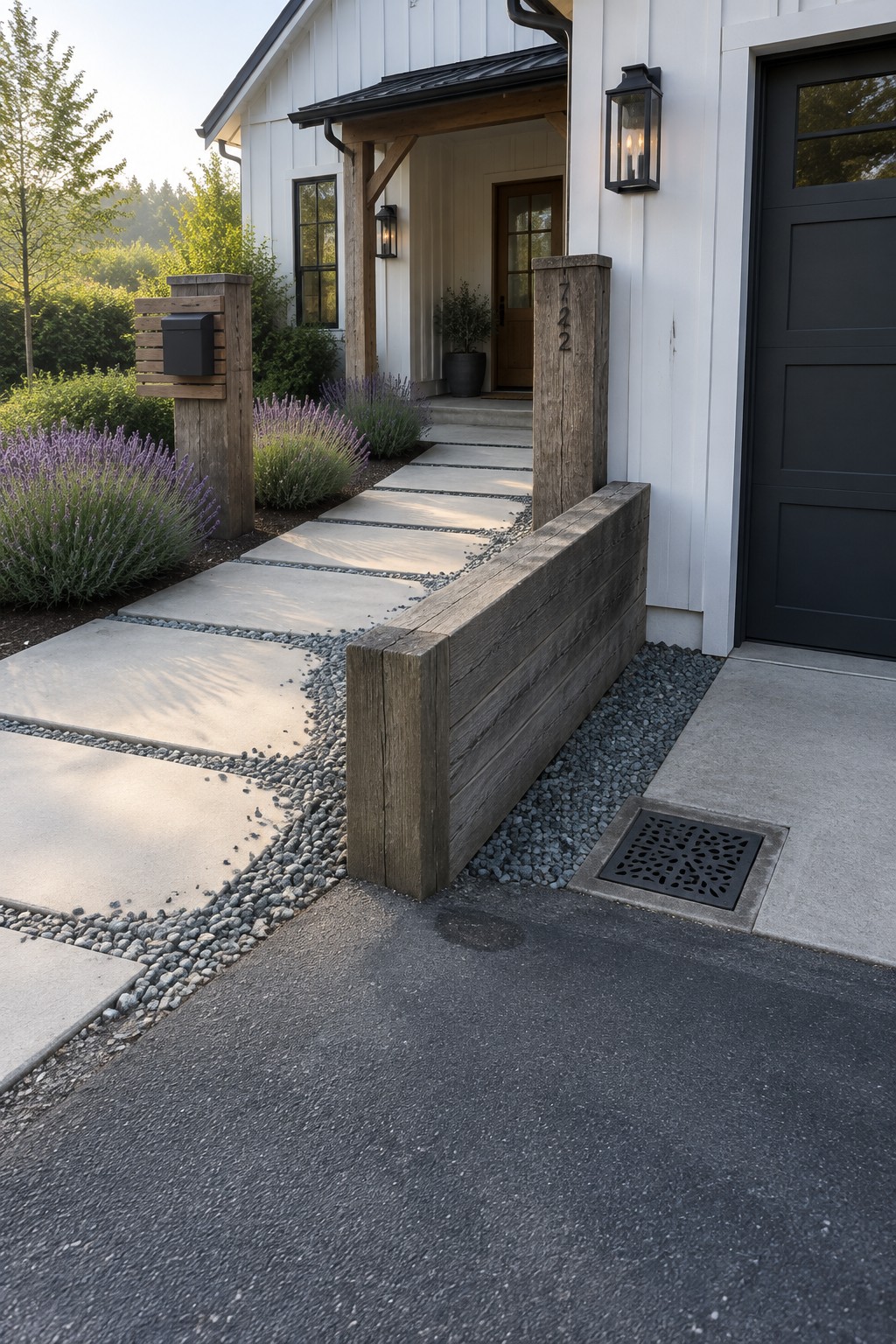
Large concrete stepping stones can make a sloped entrance easier to walk while letting gravel drain between them. The broad, evenly spaced slabs also give the path a clear, steady route to the front door.
For an asphalt driveway, this approach can work where a walkway branches off toward the house. Keep the stones level and use compacted gravel in the joints, with a plan to direct runoff away from the entrance rather than letting it collect beside the path.
Use Linear Drains Across Sloped Driveways
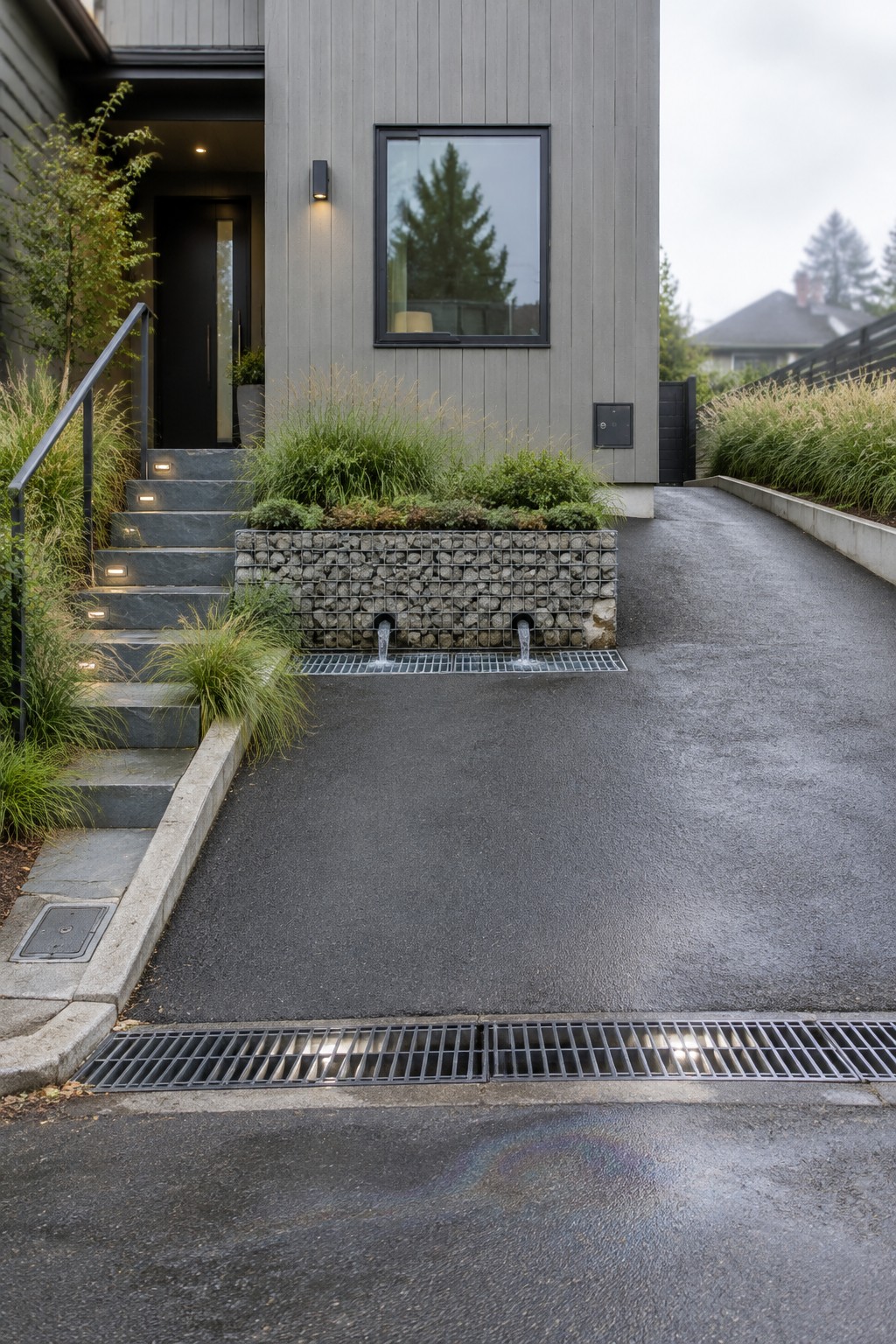
A linear drain can catch runoff before it reaches the street or collects at the bottom of a sloped asphalt driveway. A channel grate spanning the driveway offers a simple way to intercept water across its full width.
Place the drain where water naturally gathers, often near the driveway entrance, and make sure it connects to a suitable outlet. Keep the grate clear of leaves and grit so water can flow through it.
Add a Center Drain at the Driveway Entrance
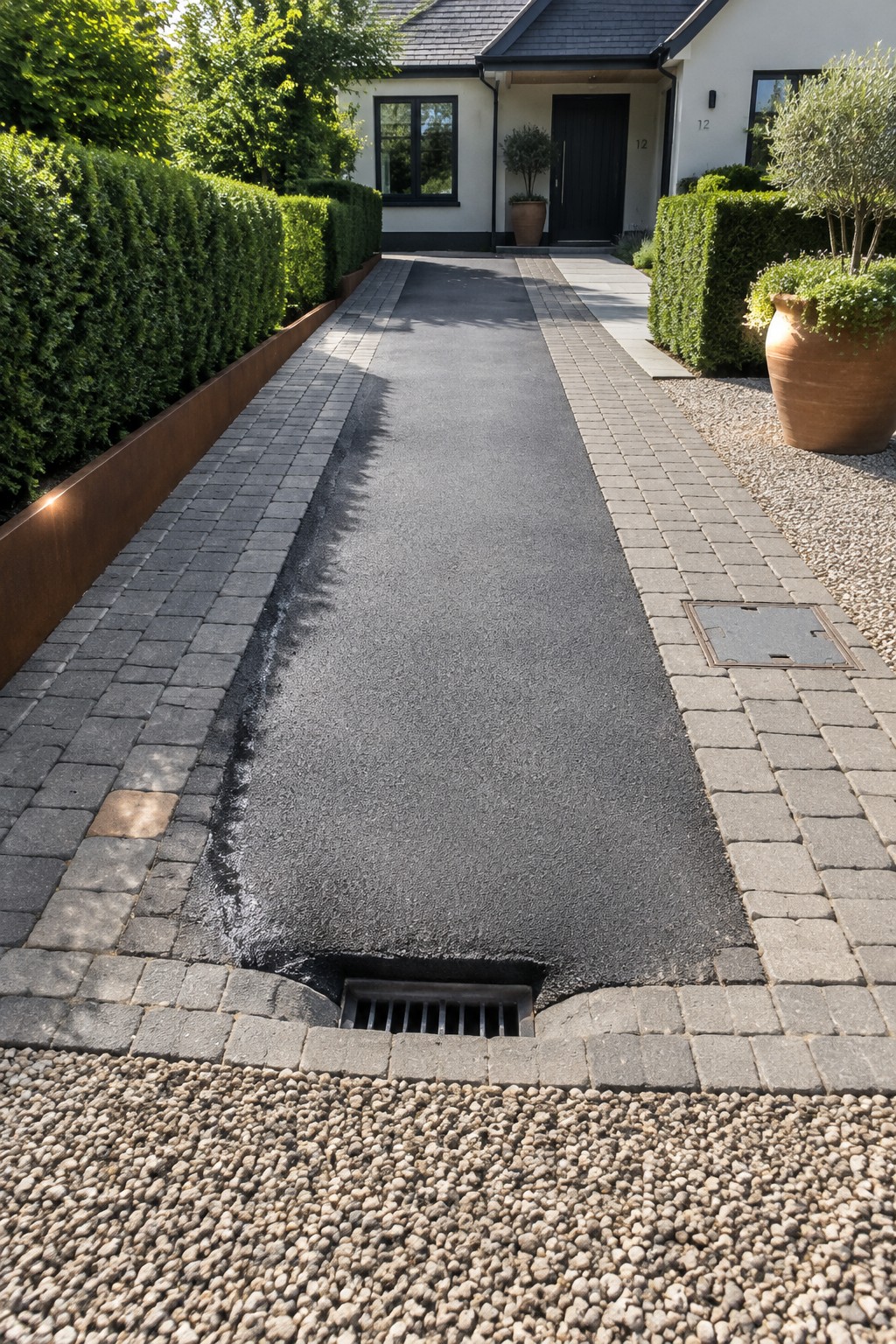
A drain at the low end of a sloped driveway can catch runoff before it reaches the street or pools near the house. Here, the asphalt surface directs water toward a grated drain across the entrance.
This setup works well when the driveway slopes toward a road, walkway, or garage. Make sure the drain is sized for the amount of runoff and connected to a safe outlet, and keep leaves and grit from clogging the grate.
Use a Pebble Swale Along the Driveway
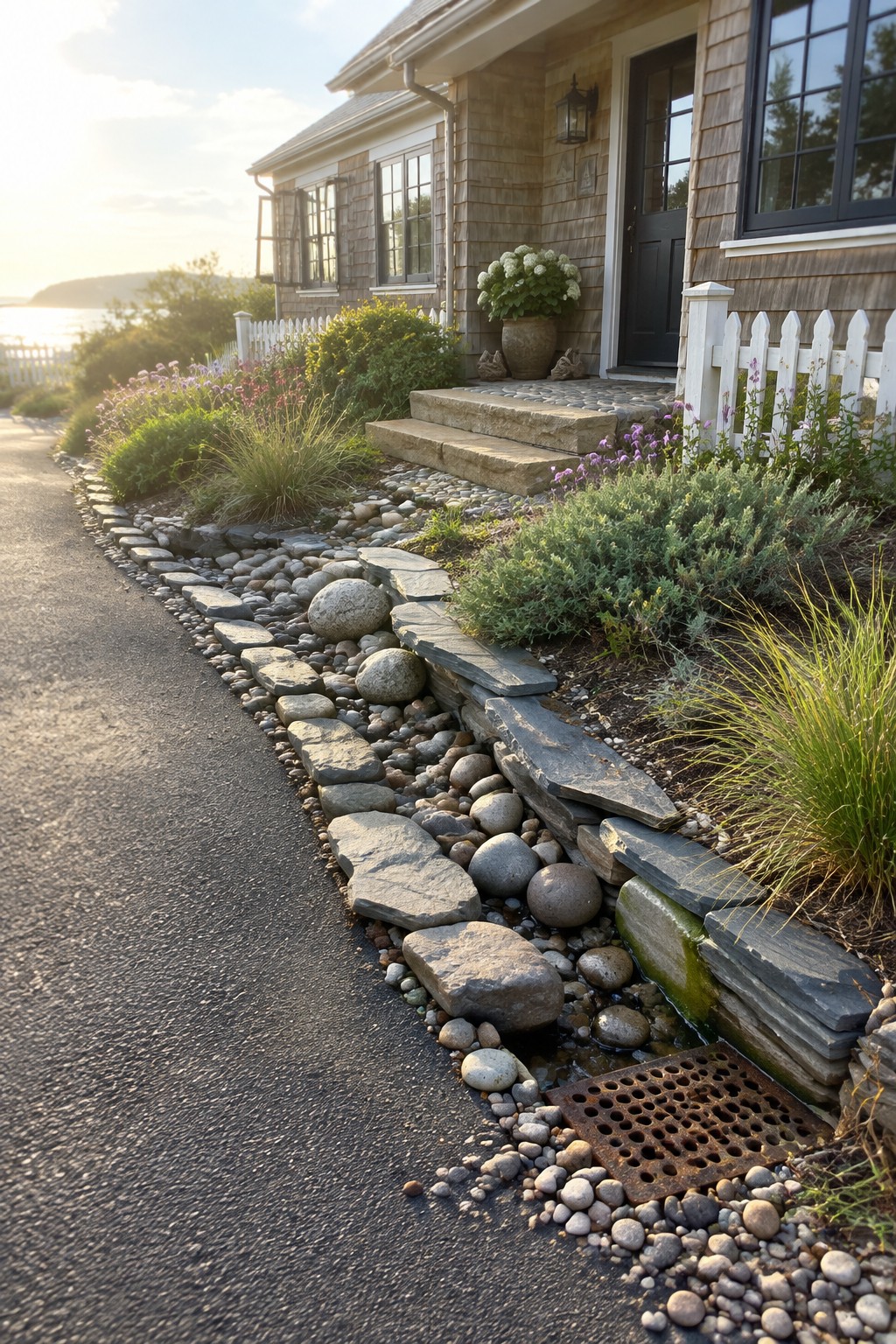
A shallow swale filled with rounded stones can guide runoff along a sloped driveway instead of letting water spread across the pavement. It also gives the edge a more finished look, especially beside a planted garden bed.
Keep the swale’s path clear and make sure it slopes toward a safe outlet, such as a drain. Larger stones can help hold the edge in place, but avoid blocking the flow with dense planting.
Use Raised Planters to Guide Runoff
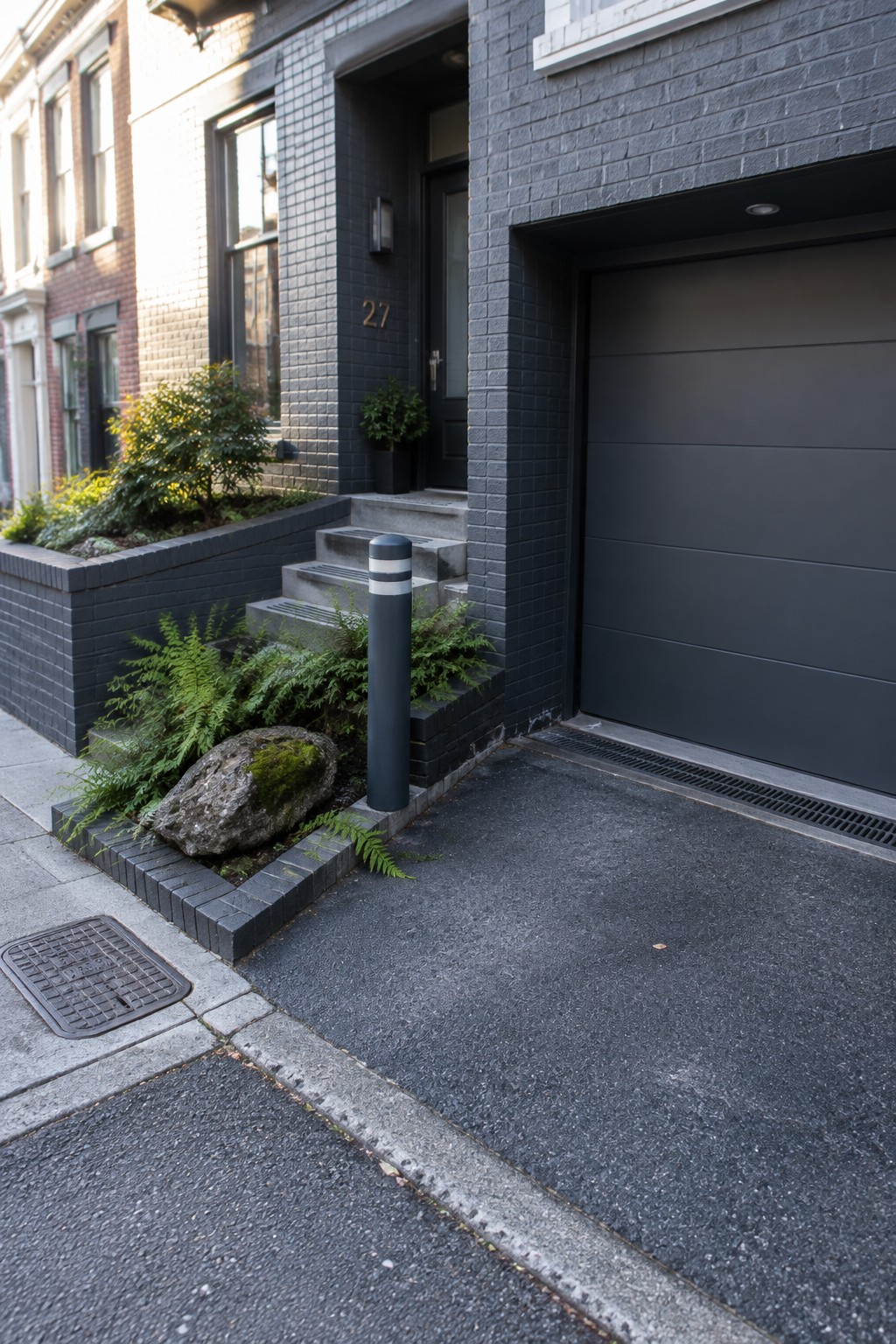
Raised planting beds can help define the edges of a sloped driveway entrance while keeping soil and plants contained. Here, low brick walls shape the planting area beside the asphalt, giving water a clearer route instead of letting it spread into the garden bed.
This approach works well where a driveway meets a walkway or front entry, especially when the grade needs a little structure. Keep the wall low and leave a clear drainage path so runoff can still reach a suitable drain or lower point.
Use a Long Drain Beside the Driveway
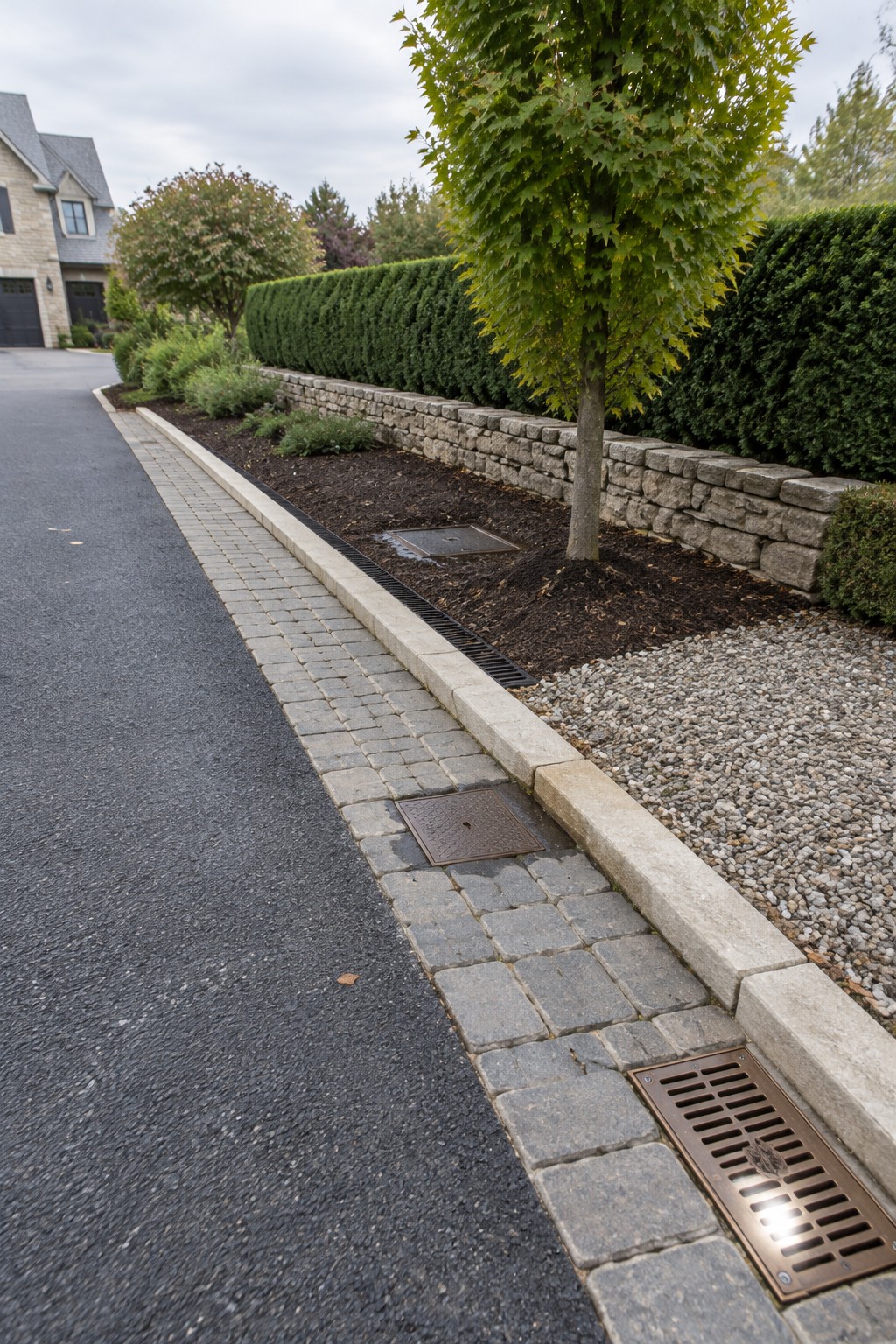
A narrow channel drain can catch water as it runs down a sloped entrance, before it spreads across the driveway or collects at the bottom. A long drain beside the paved edge is a practical option when runoff follows the side of the drive.
Place it along the low side, where the slope naturally carries water, and make sure it connects to a suitable outlet. Keep leaves and grit out of the grate so water can flow freely.
Add a Drain Along the Garden Wall
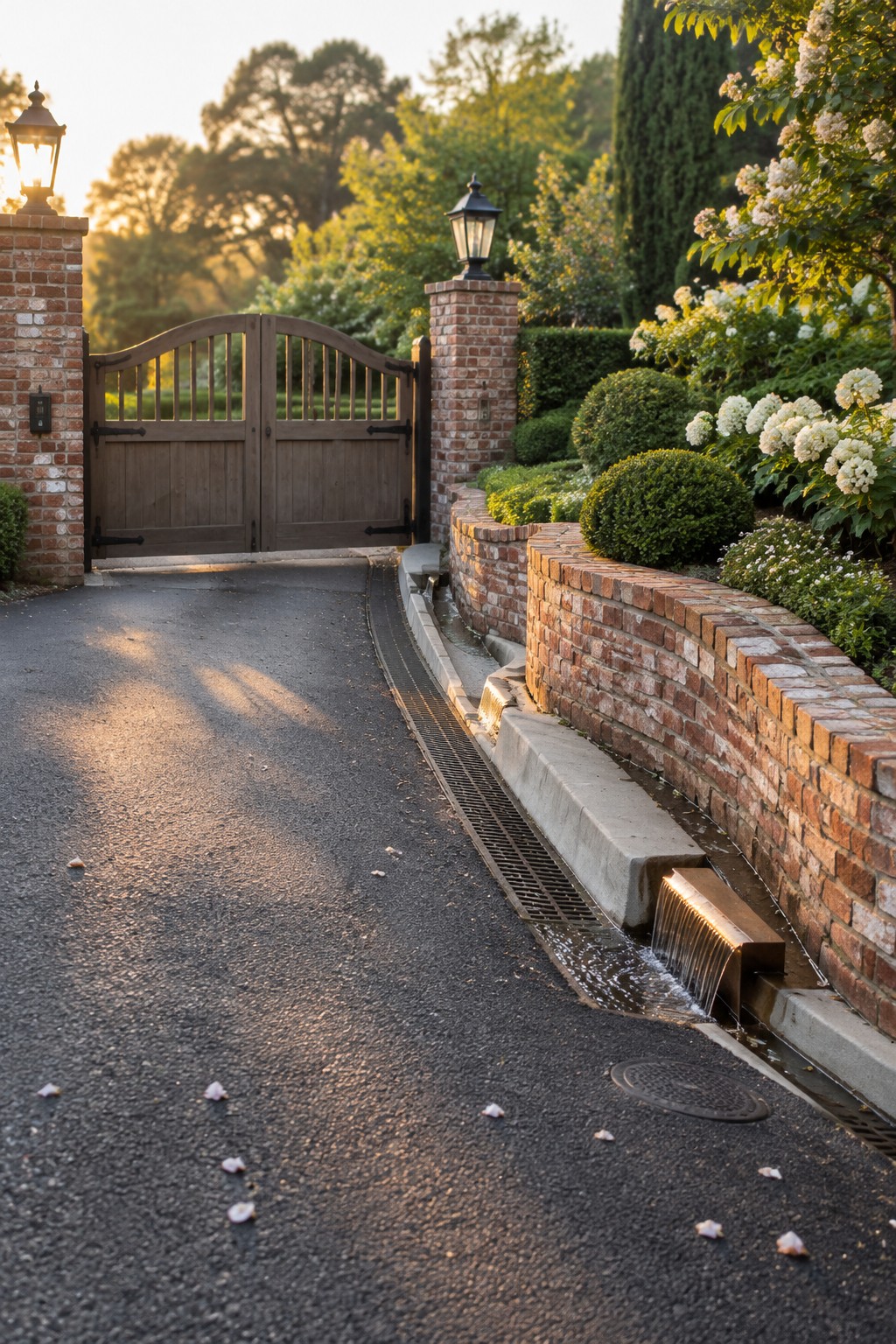
A narrow drain beside a sloped driveway can catch runoff before it spreads across the pavement. Here, the channel follows the brick garden wall, so water has a clear route toward a small outlet instead of collecting near the gate.
For a similar setup, place a grated drain along the low side of the drive and connect it to a suitable discharge point. Check that the slope carries water into the channel, and keep the grate clear of leaves and grit.
Add a Drainage Grate at the Foot of the Driveway
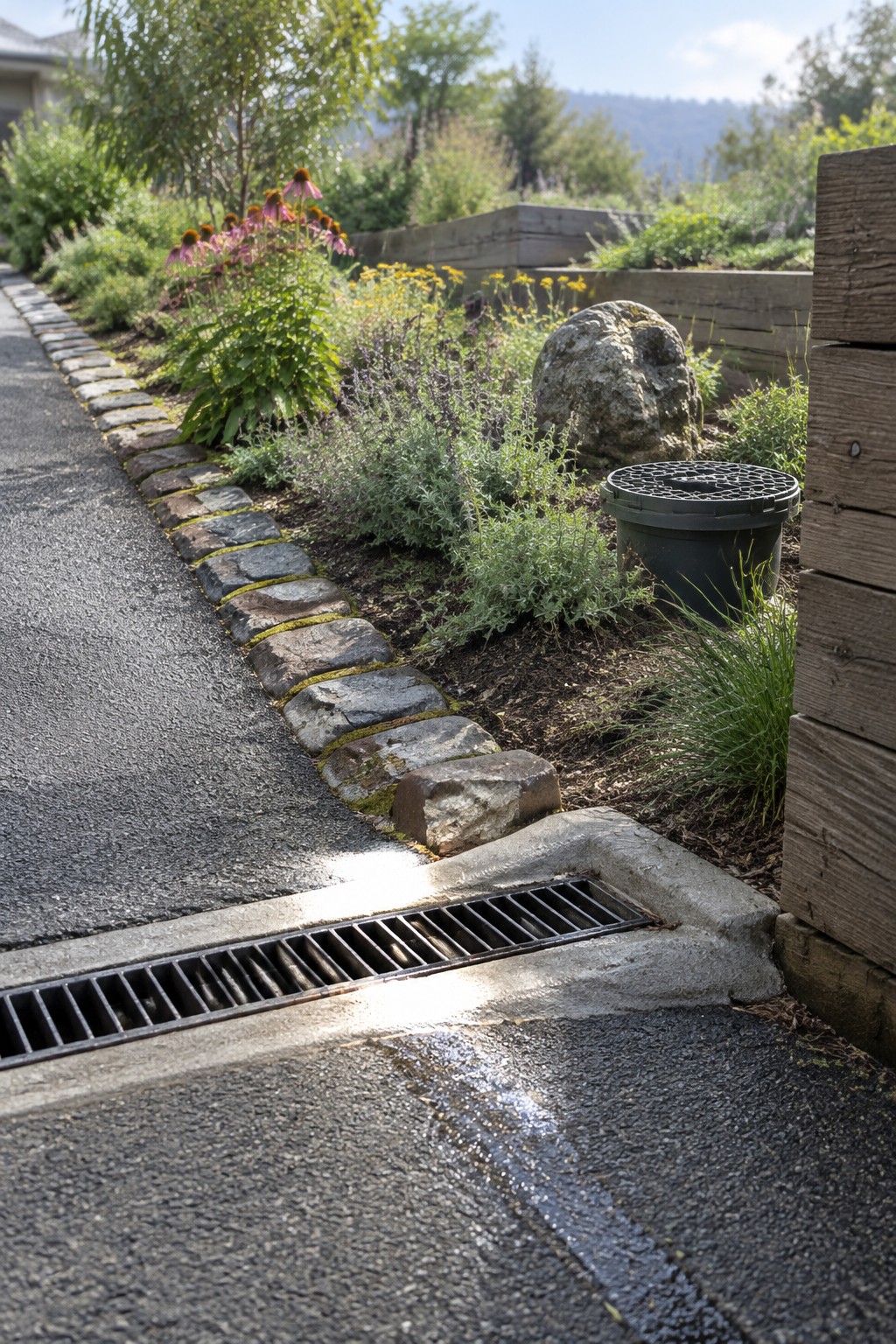
A channel drain across the low end of a sloped driveway can catch runoff before it spreads across the pavement or collects near the entrance. The grate shown here sits flush with the asphalt, making it a practical option where water naturally flows downhill.
Place the drain across the full width of the area where runoff gathers, and make sure it connects to a suitable outlet. Clear leaves and grit from the grate regularly so water can pass through.
Use Stone Edging to Keep Driveway Runoff in Check
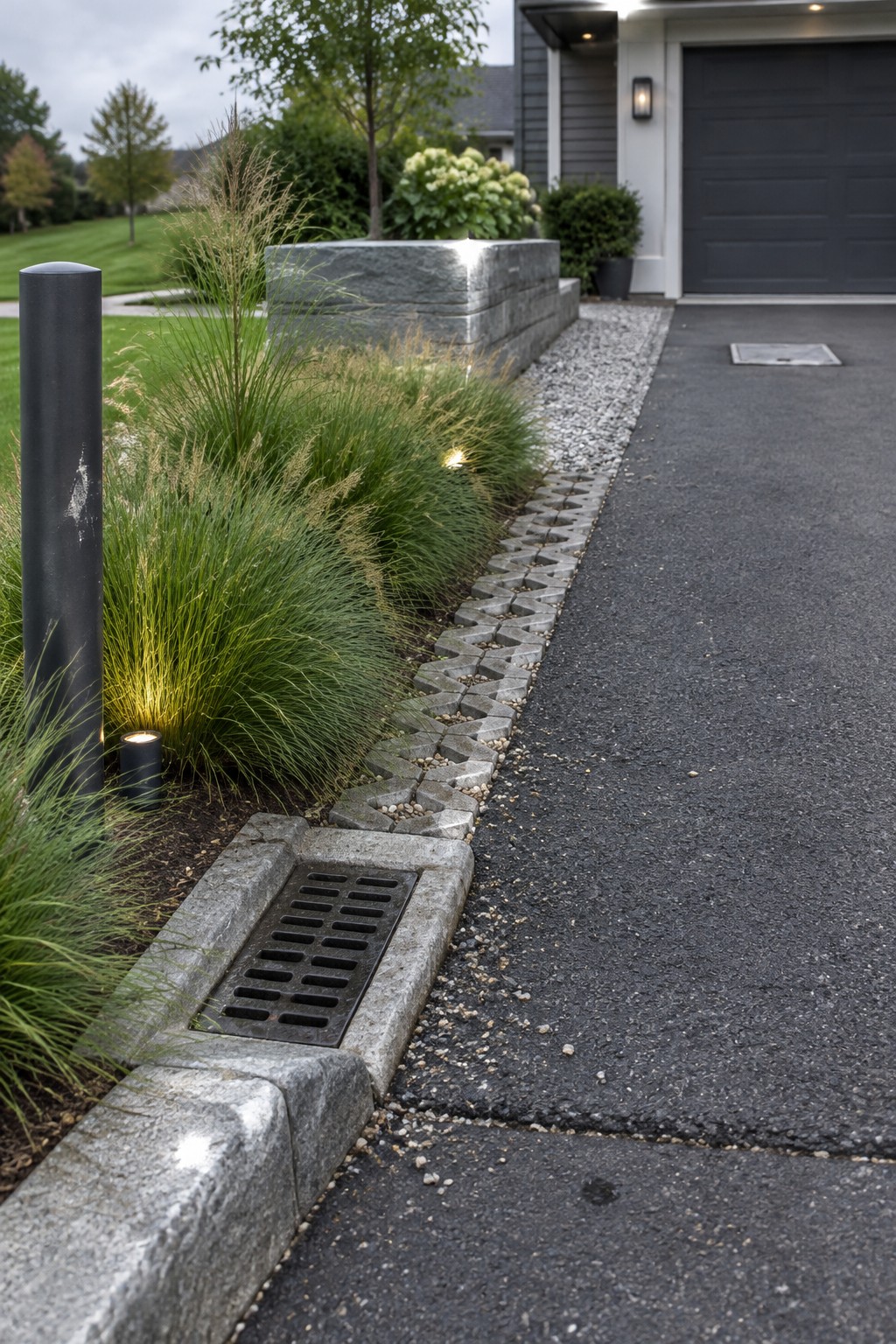
A defined stone edge can help guide water along a sloped driveway instead of letting it spread into the planting bed. Here, the edging sits beside a narrow drainage strip, giving runoff a clear route toward a grate.
This approach works well where a driveway borders a garden or lawn. Set the edge to follow the slope, and make sure the channel has a clear outlet so water does not collect along the drive.
Use a Planted Border to Slow Runoff
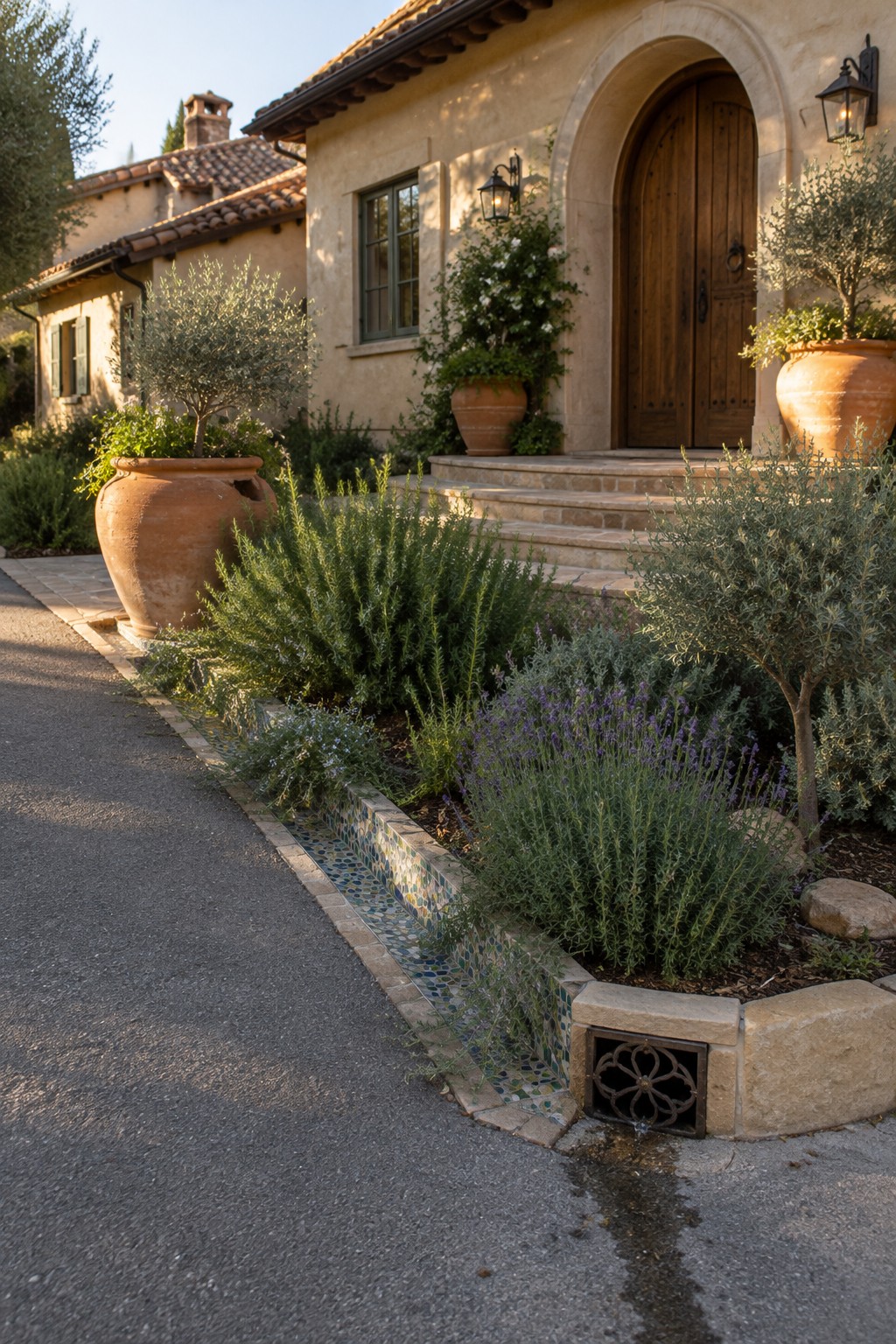
A planted border can help manage water along a sloped entrance while making the edge of an asphalt driveway feel more finished. A shallow bed set beside the pavement gives runoff somewhere to collect and soak in instead of letting it rush straight downhill.
Choose plants that tolerate both wet spells and dry weather, and keep the bed low enough that it does not block the driveway view. A small gravel or stone channel can help carry excess water toward a safe outlet during heavy rain.
Use Stone Check Dams to Slow Runoff
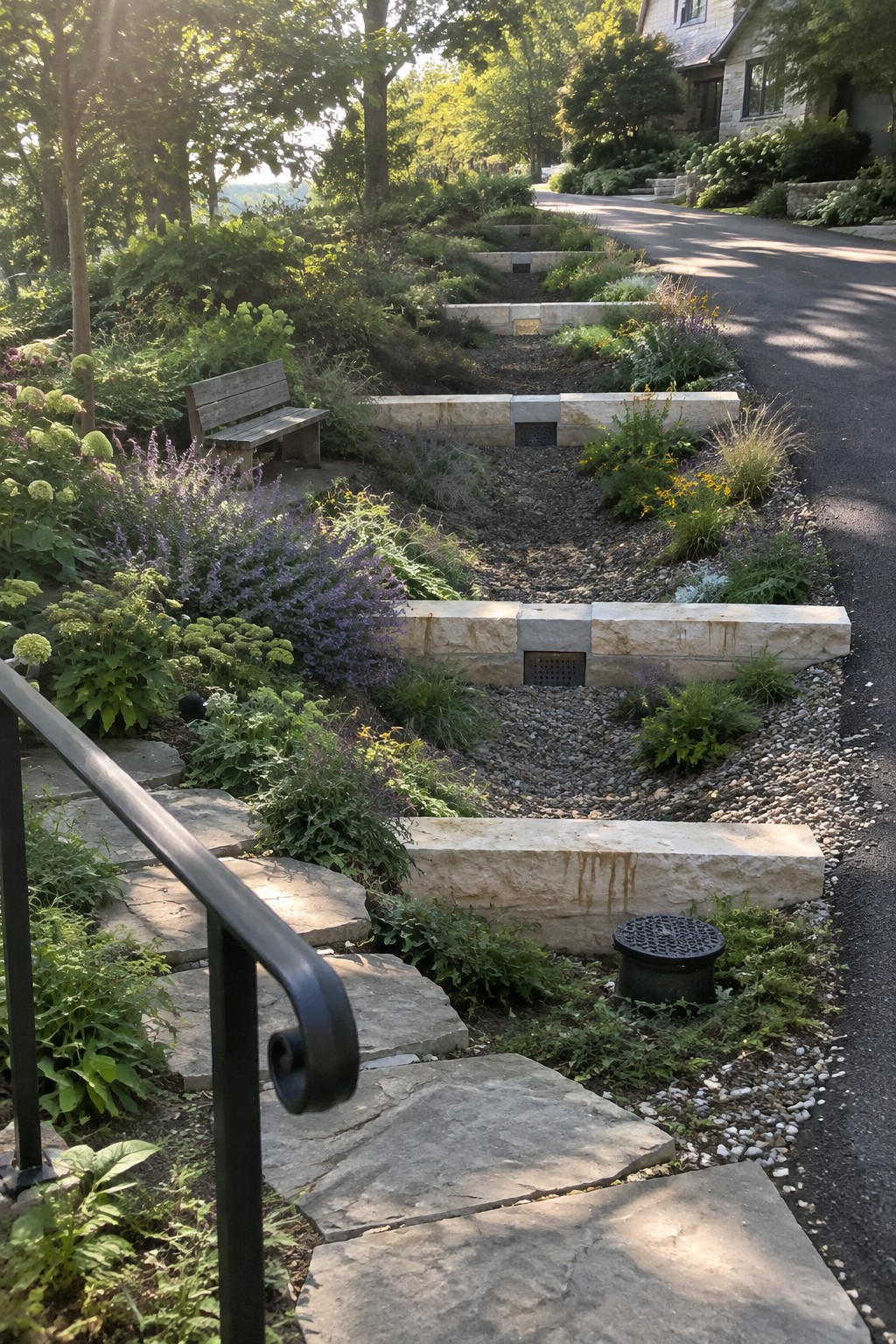
Low stone barriers can slow water as it travels down a sloped entrance, giving it more time to soak into the ground instead of rushing toward the street. In this landscape, the barriers cross a shallow, gravel-lined channel, with openings that let water pass through.
For an asphalt driveway, this approach can work in a planted strip beside the pavement. Keep each barrier low and make sure the gaps and drainage path stay clear, especially after heavy rain. A landscape professional can help set the spacing and grade for your slope.
Use a Raised Garden Bed to Direct Runoff
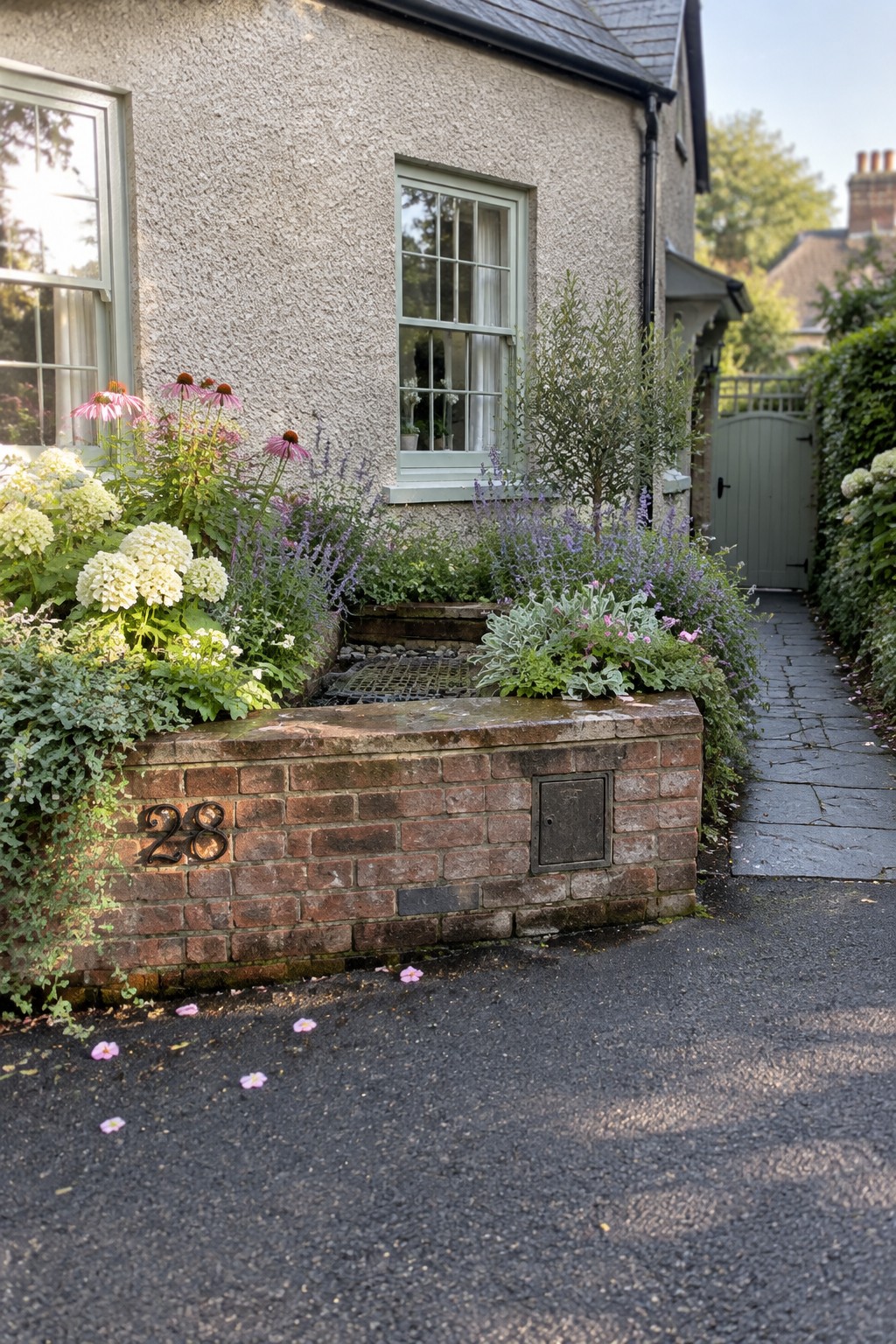
A low raised bed can help define the edge of a sloped entrance and keep soil and planting from spilling onto the drive. Here, a brick retaining wall holds the flower bed in place while giving the runoff a clearer boundary.
This approach works best where the bed sits beside, rather than across, the route water needs to take. Keep an open path for water to reach a suitable drain or lower area, and avoid letting the wall block the driveway’s natural drainage.
Use a Linear Drain Beside the Driveway
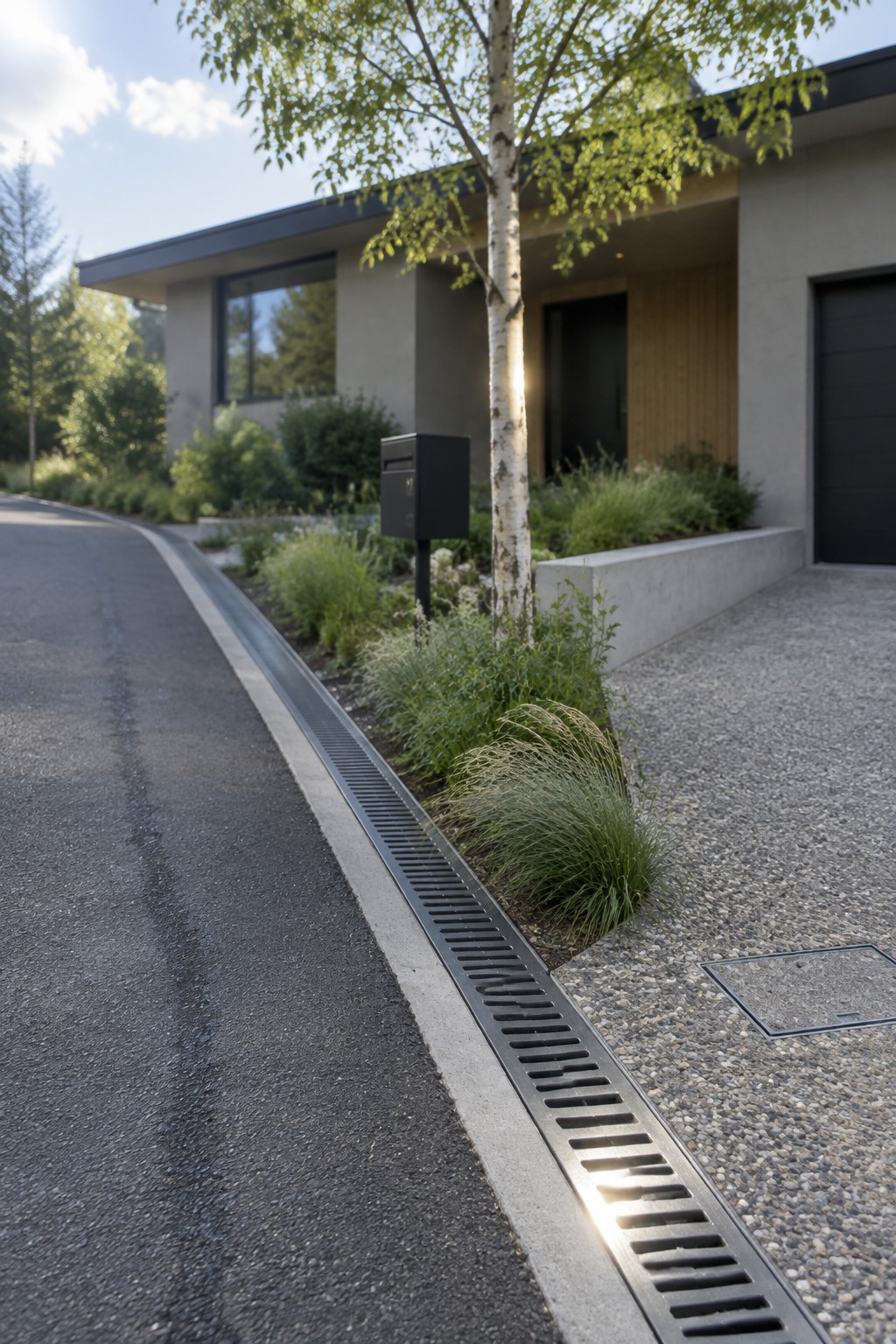
A channel drain along the edge of a sloped driveway gives runoff a clear route instead of letting it spread across the paving or collect near the entrance. It works especially well where asphalt meets a planted strip, as the drain can catch water before it reaches the garden.
Choose a grate rated for driveway traffic and set it level with the paving so wheels can cross it safely. Make sure the channel has a proper outlet, and clear leaves and grit from it regularly to keep water moving.
Frequently Asked Questions
Q: How do I tell whether water is draining toward my garage?
A: Watch where rainwater flows during a storm, especially near the garage threshold and along the driveway edges. If puddles linger or water runs toward the door, the slope or drainage system may need attention.
Q: Can I add a channel drain to an existing asphalt driveway?
A: Yes, a contractor can cut a channel across the driveway and install a drain that carries water to a safe outlet. The outlet matters just as much as the drain, so make sure water won’t end up pooling beside the house or spilling onto a neighbor’s property.
Q: Will sealing my driveway stop water from pooling?
A: No. Sealer protects the asphalt surface, but it won’t correct a low spot or change the driveway’s slope. Fix the drainage issue first, then seal the surface if it needs protection.
Q: What should I do if water keeps washing gravel or soil onto the driveway?
A: Add a stable edge or a shallow swale to slow and redirect runoff before it reaches the asphalt. If the water comes from an uphill slope, check that area too, since the source may be more useful to fix than the driveway itself.
