

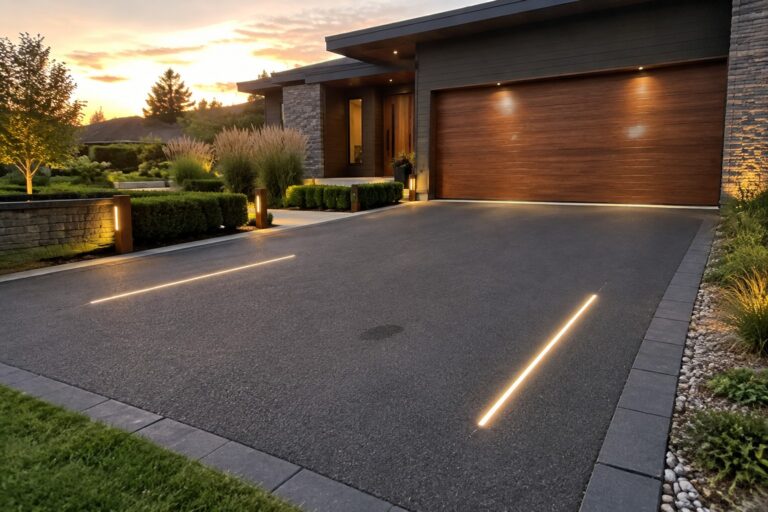
An asphalt driveway takes up a lot of the view from the street, so its edges and lighting can shape how the whole front of a home feels after dark.
I’ve found that lights work best when they guide the way to the entry while also picking out planting beds, trees, or changes in the driveway’s outline.
Too much brightness can make a yard feel harsh, while a few well-placed fixtures can add definition without competing with the house.
The most useful approach depends on the driveway’s shape, nearby paths, and how much maintenance you want to take on.
Some of these ideas are worth adapting to your own layout, especially if you want the front of your home to look considered both day and night.
Use Landscape Lighting Along The Driveway Edge
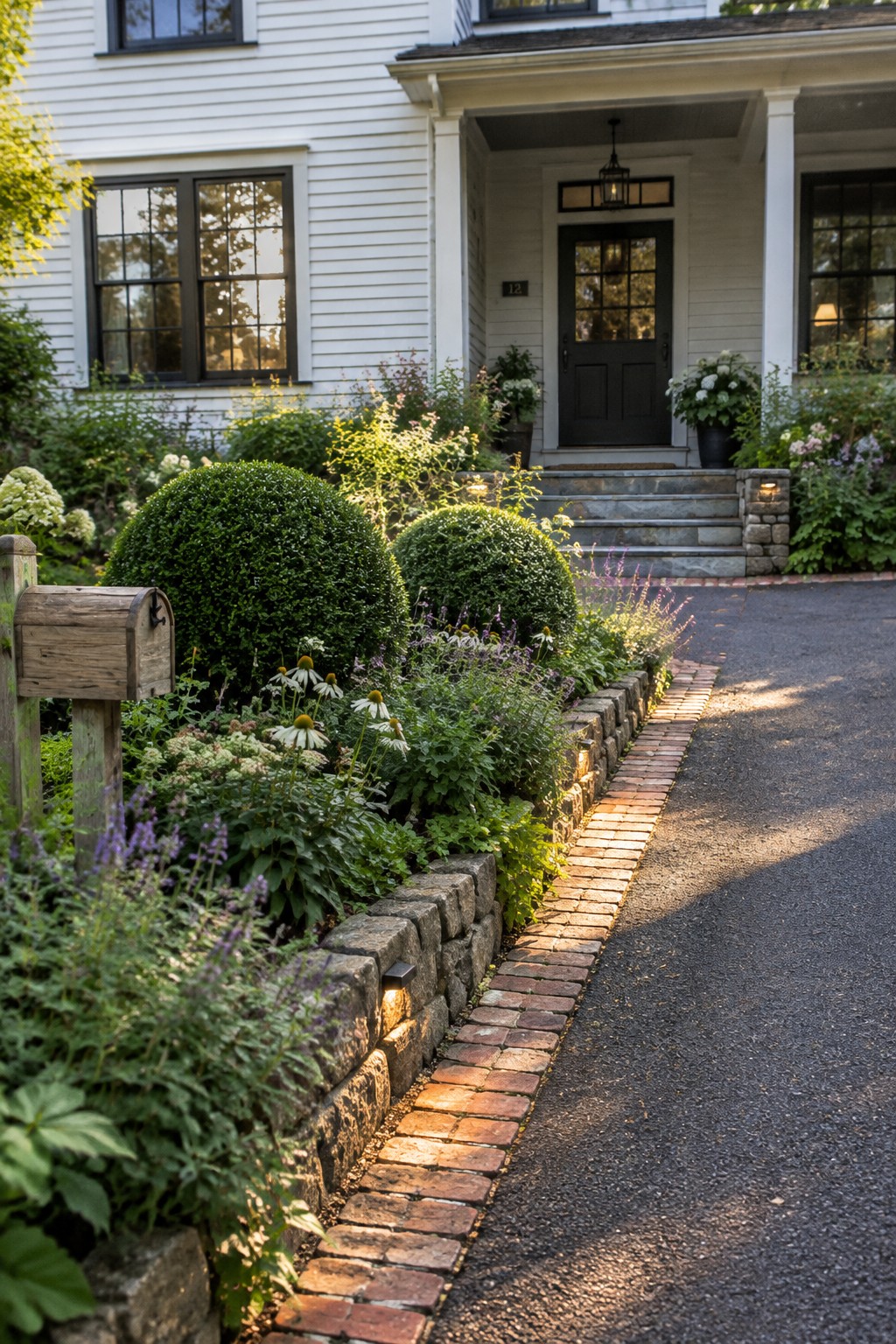
A low stone border can help define an asphalt driveway while keeping the planting bed neatly contained. Small lights set into the edging make the driveway’s curve easier to see after dark, without needing tall fixtures that block the garden.
This approach works well where a driveway runs beside a flower bed or entry path. Space the lights evenly and aim them down toward the pavement, so they guide the way without shining into the house.
Add Path Lights Along the Driveway
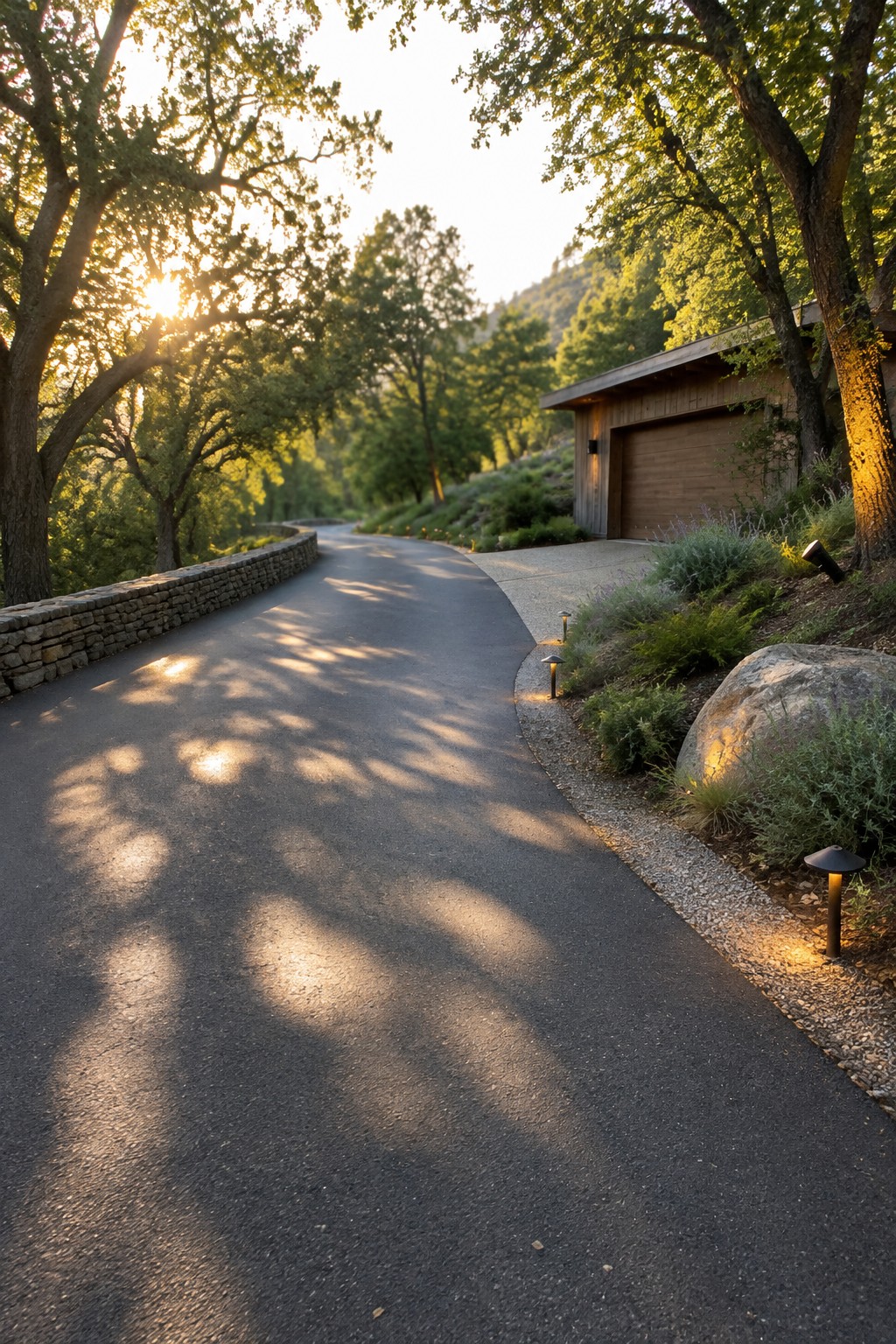
Low path lights can make an asphalt driveway easier to follow after dark without crowding the space. They also help connect the drive to the surrounding landscape in a simple, practical way.
Place the lights along one edge, especially near a curve or where the driveway meets a walkway. Keep them low and spaced evenly so they mark the route without shining into drivers’ eyes.
Add Lighting Along Asphalt Driveway Edges

Slim lights tucked beside concrete edging help an asphalt driveway stand out after dark without lighting the entire surface. The light also makes the driveway’s outline easier to see, which is useful near a front walk or garden bed.
For a similar look, choose outdoor-rated low-voltage lights and space them evenly along one or both edges. Keep the fixtures discreet, and make sure the glow doesn’t shine into the house or a neighbor’s yard.
Use Stone Edging to Define the Driveway
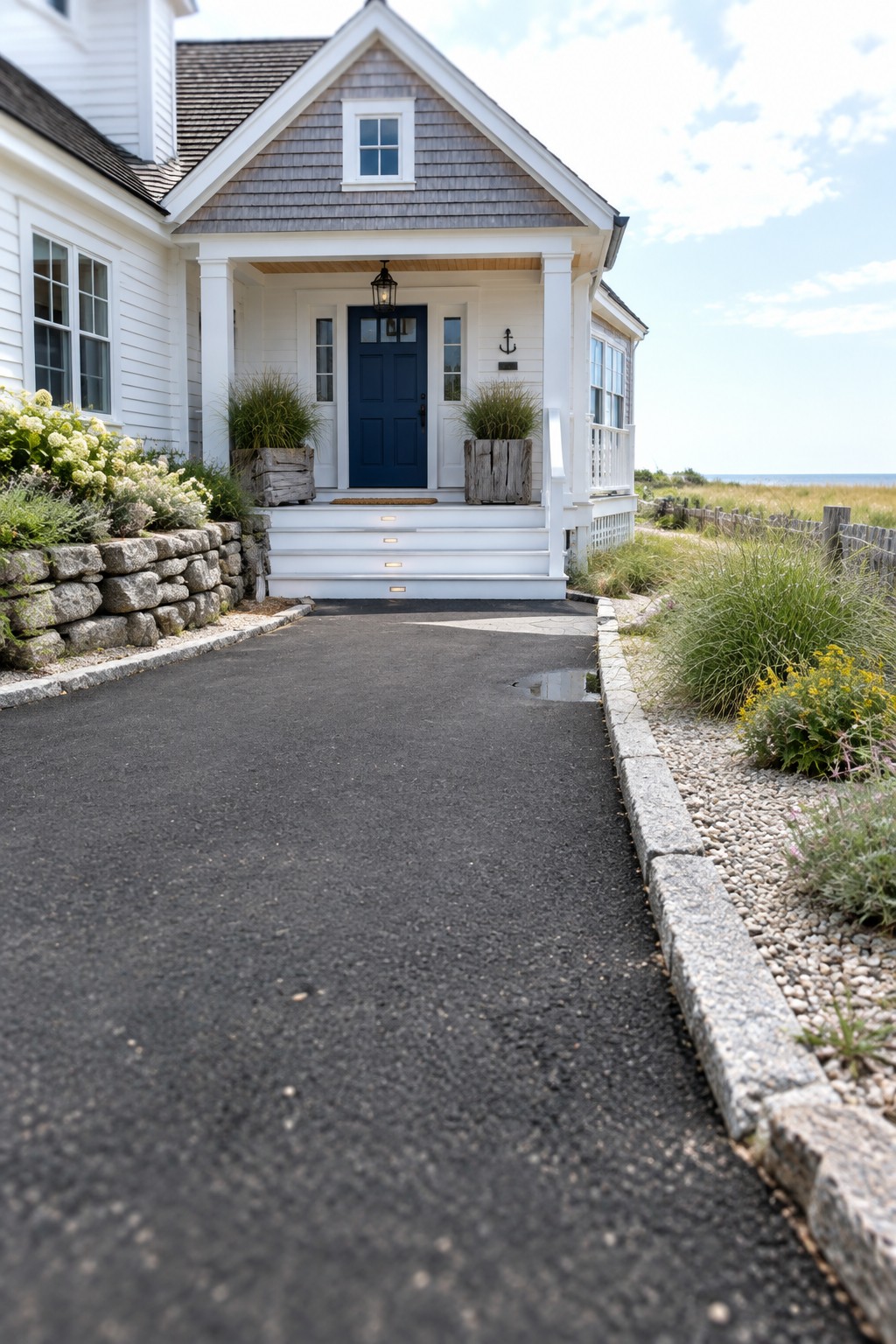
A low stone border gives an asphalt driveway a neat, finished edge. It also helps separate the paved area from nearby planting, which can make a simple driveway feel more intentional.
This approach suits homes with a natural or coastal look. Choose stones that sit securely and keep the border low enough that it won’t interfere with walking or snow clearing. Small landscape lights can be tucked into the planting beside it to make the edge easier to see after dark.
Use Low Lights to Highlight Driveway Edging
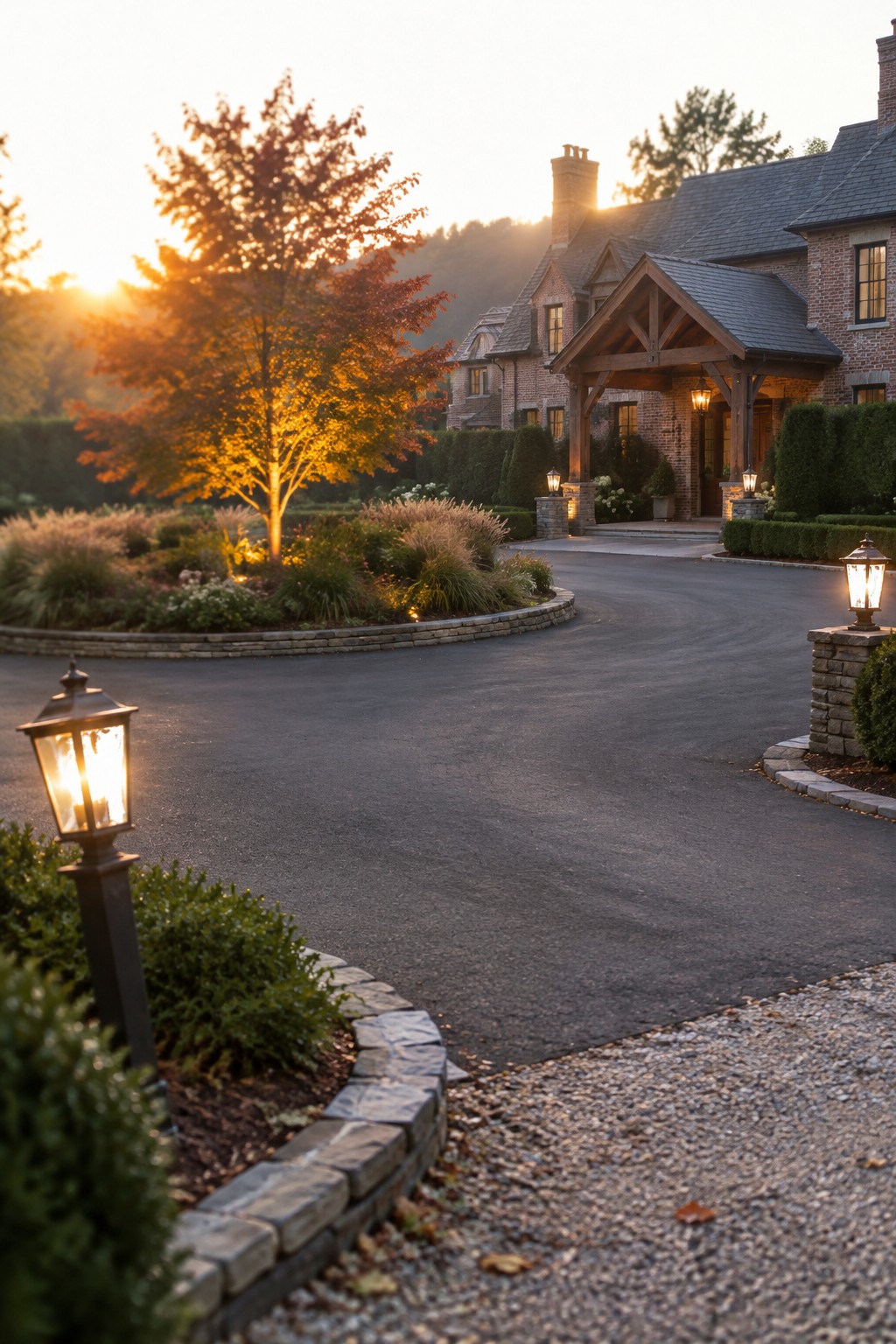
Low landscape lights can make an asphalt driveway easier to follow after dark while showing off the shape of a planting bed. Here, lantern-style fixtures sit beside a curved stone border, giving the driveway edge a clear outline.
Place lights just outside the driving surface, spaced far enough apart to guide the way without crowding the edge. This approach works well where a driveway curves around a garden bed, but keep fixtures clear of tires and choose a steady, low-glare beam.
Use Planting Beds to Define the Driveway

A planted border can make an asphalt driveway feel like part of the landscape instead of a bare strip beside the house. Low landscape lights tucked into the bed also help mark the driveway edge after dark.
Keep the plants low near the pavement so they do not spill onto the driving area, and place lights where they guide cars without shining into windows. This approach works especially well when the driveway runs alongside a flower bed.
Use a Curved Brick Border Along the Driveway

A curved brick edge gives an asphalt driveway a clear shape without making the boundary feel harsh. It also helps separate the pavement from nearby planting beds, so the shrubs and flowers have a tidy place to meet the drive.
This approach works well when a driveway bends toward the front entrance or garden. Choose brick that suits the home’s exterior, and keep the curve wide enough for easy turns and routine maintenance.
Use Bollard Lights to Guide the Walk to the Door
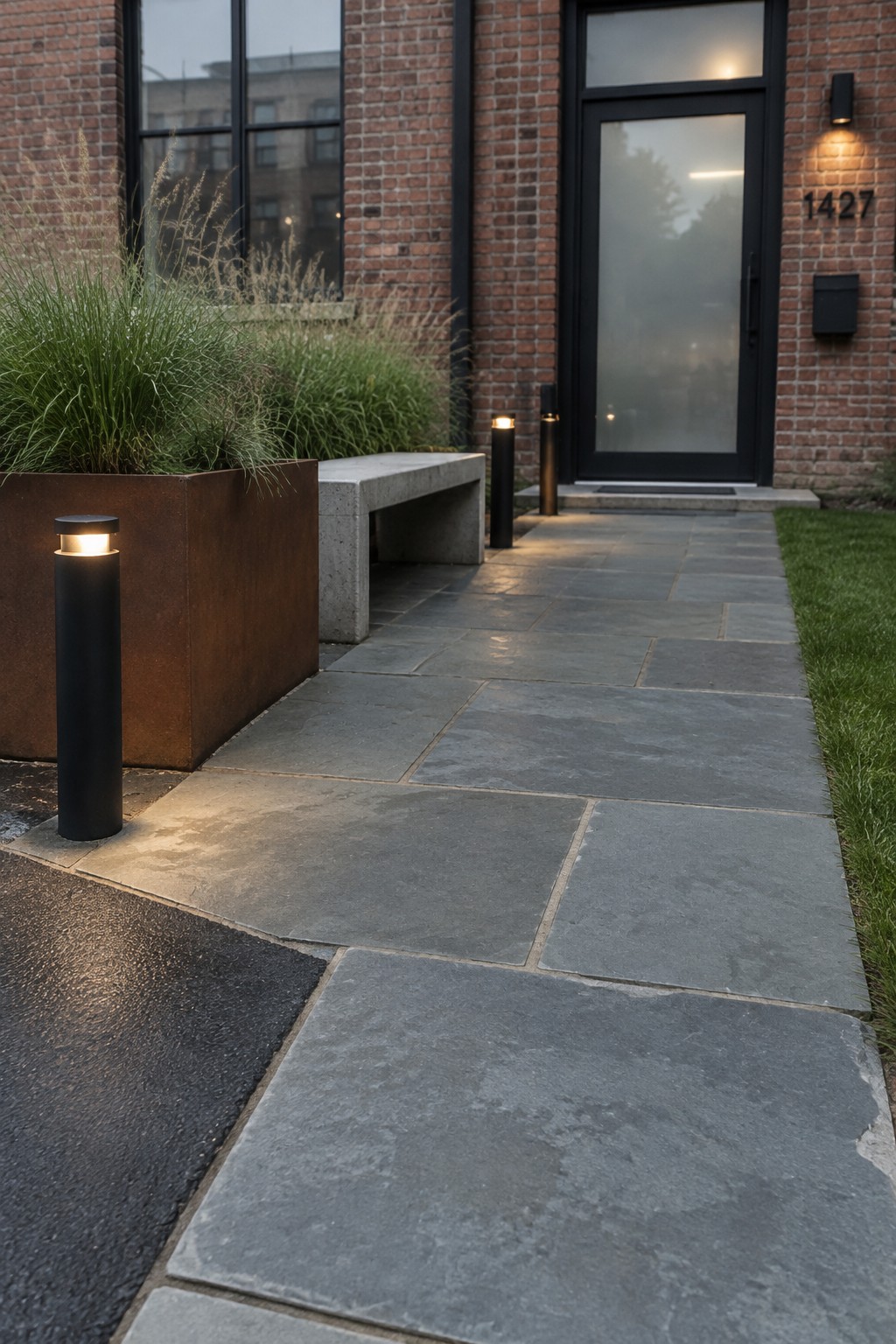
Low bollard lights can make the route from an asphalt driveway to the front door easier to follow after dark. They give off light close to the ground, so the path stays visible without needing bright overhead fixtures.
Place them along the edge of a walkway, keeping their spacing even and leaving enough room for people to pass comfortably. This approach works well near a simple, modern entry, like the brick facade and stone path shown here.
Use a Planted Island to Shape the Driveway
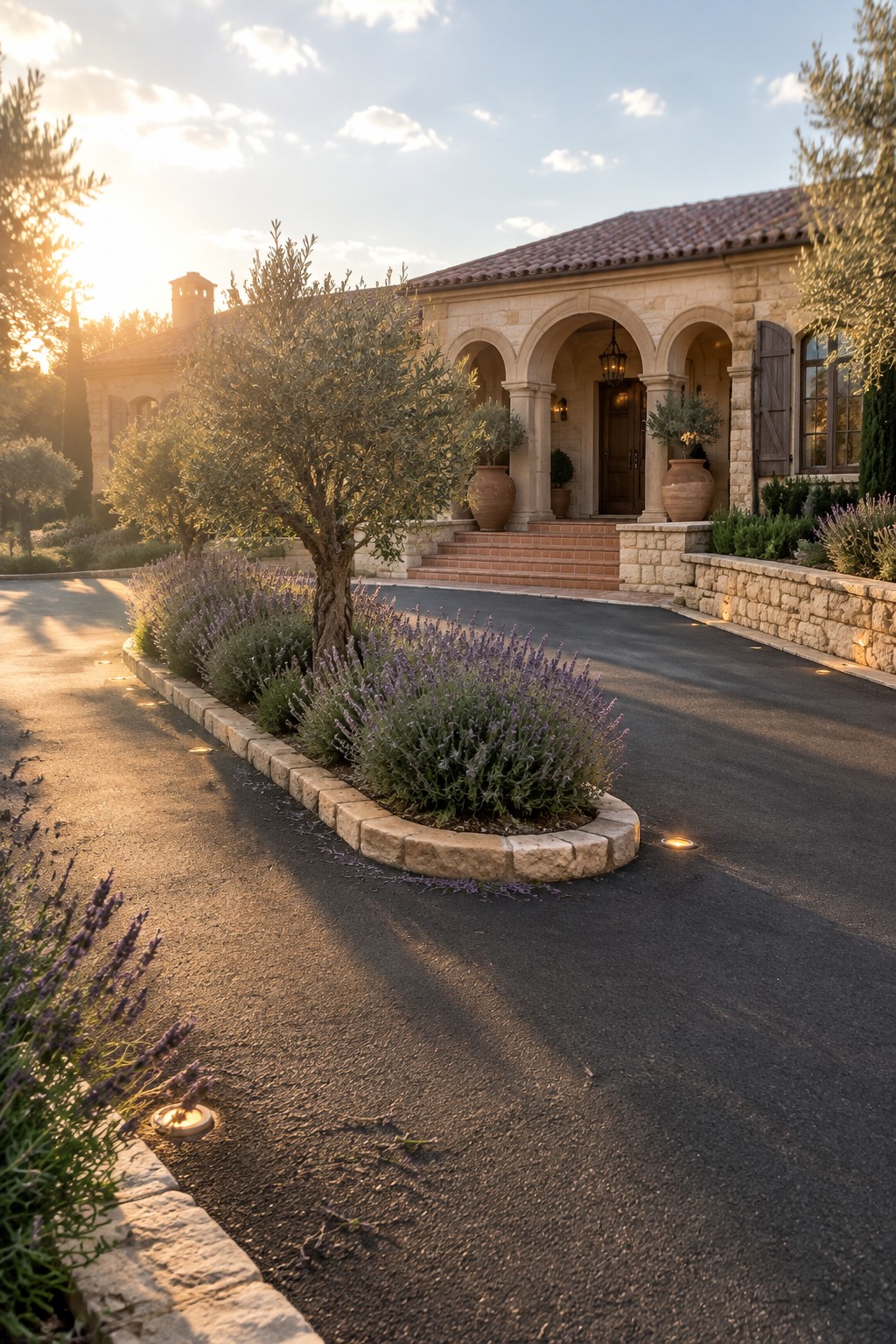
A planted island can break up a wide asphalt driveway and give its layout a more deliberate look. Here, a low stone border holds lavender around an olive tree, making the center of the drive feel like part of the garden rather than leftover pavement.
This approach works best where there is enough room for cars to pass comfortably on both sides. Keep the edging low and choose plants that won’t spread into the driving area. Small ground lights can help mark the island after dark.
Add a Light Strip Along the Driveway

A narrow strip of warm lighting set into the driveway edge makes the boundary easy to see after dark. It gives a long asphalt drive a clean, finished look without relying on a row of bright fixtures.
This approach works best when the driveway has a clear, straight edge and the lights are rated for outdoor use and vehicle traffic. Keep the glow low and even, and check that it does not shine toward the house or neighboring windows.
Use a Garden Path to Connect the Driveway and Entry
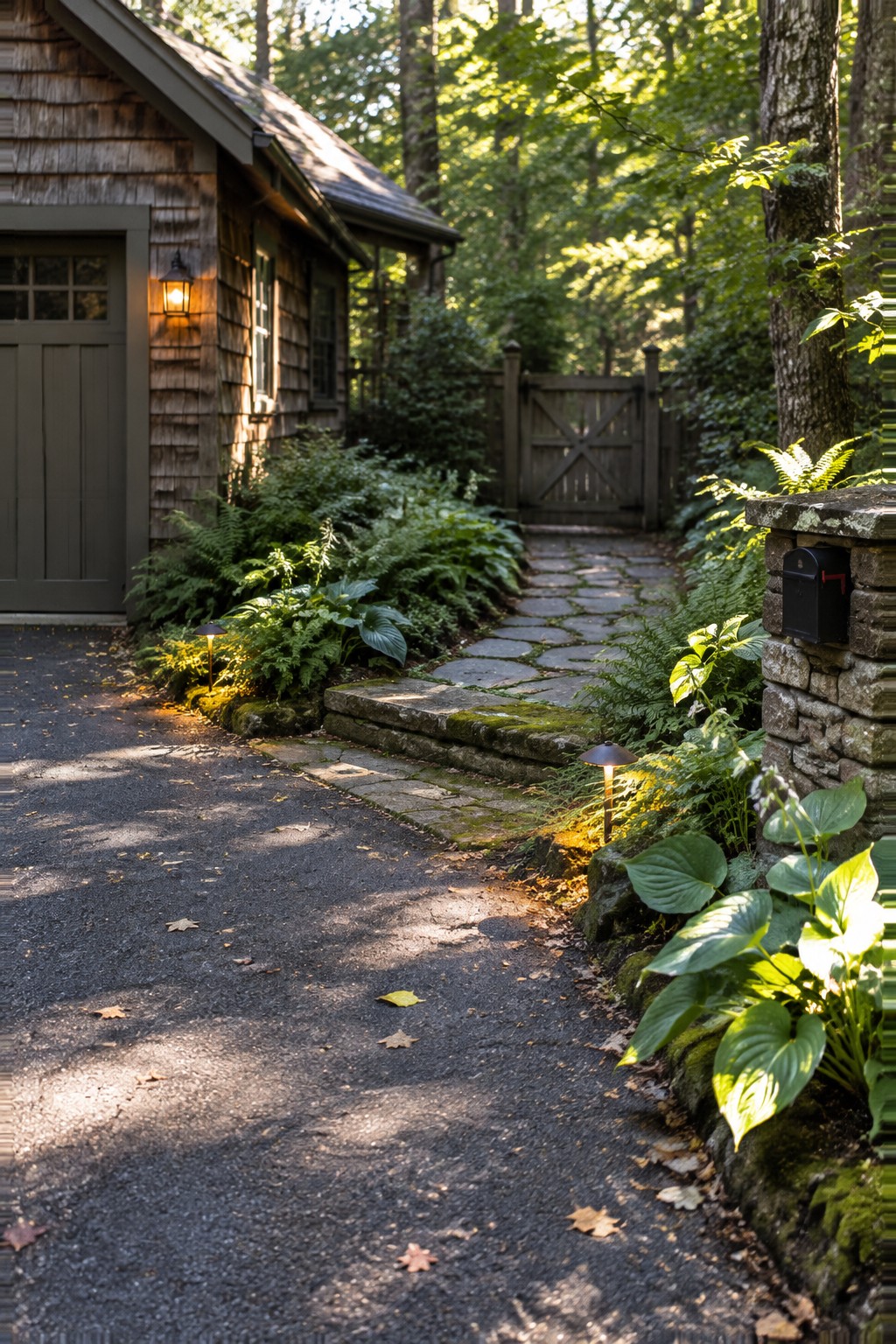
A stone path can make the walk from an asphalt driveway to the entrance feel like a natural part of the landscape. Setting the stones among low plantings gives the route a clear shape without making it look like a separate strip of paving.
This idea works well where the driveway sits beside a garden or side entrance. Keep the stones level and easy to walk on, and use low path lights to make the route visible after dark without lighting up the whole yard.
Frequently Asked Questions
Q: Will landscape lights make my asphalt driveway look cluttered?
A: Not if you keep the fixtures simple and space them evenly. Low-profile path lights along one edge can guide the way without competing with the driveway or your landscaping.
Q: Where should I put lights so they don’t shine in drivers’ eyes?
A: Aim fixtures down toward the ground, and place them beside the driveway rather than facing approaching cars. Shielded lights help keep the glow on the path and out of people’s line of sight.
Q: Can I add lighting without digging up my asphalt?
A: Yes. Put the lights in planting beds along the driveway, or use solar fixtures that stake into the soil. Avoid cutting into the asphalt just to run wiring.
Q: What color light works best with a dark asphalt driveway?
A: Warm white usually feels welcoming and shows off nearby plants without looking harsh. Stick with one color temperature so the lighting feels consistent from the street to your front door.
