

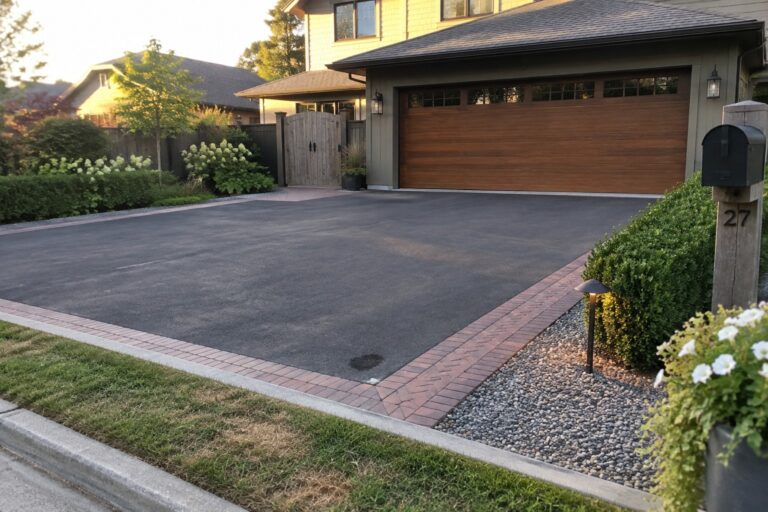
A driveway can shape the first impression of a home, but it also needs to handle the everyday shuffle of cars, guests, and deliveries.
I find that a wider parking pad works best when it feels like a natural part of the front approach rather than an oversized stretch of pavement.
The placement of the extra space, the driveway’s shape, and the way its edges meet the lawn or planting beds all affect how the home reads from the street.
Some layouts make room for several vehicles without crowding the entry, while others show how simple borders can keep the asphalt from feeling too stark.
I’d save the ideas that suit the lot and test their dimensions against how your household actually parks.
A Wide Asphalt Driveway for Extra Parking
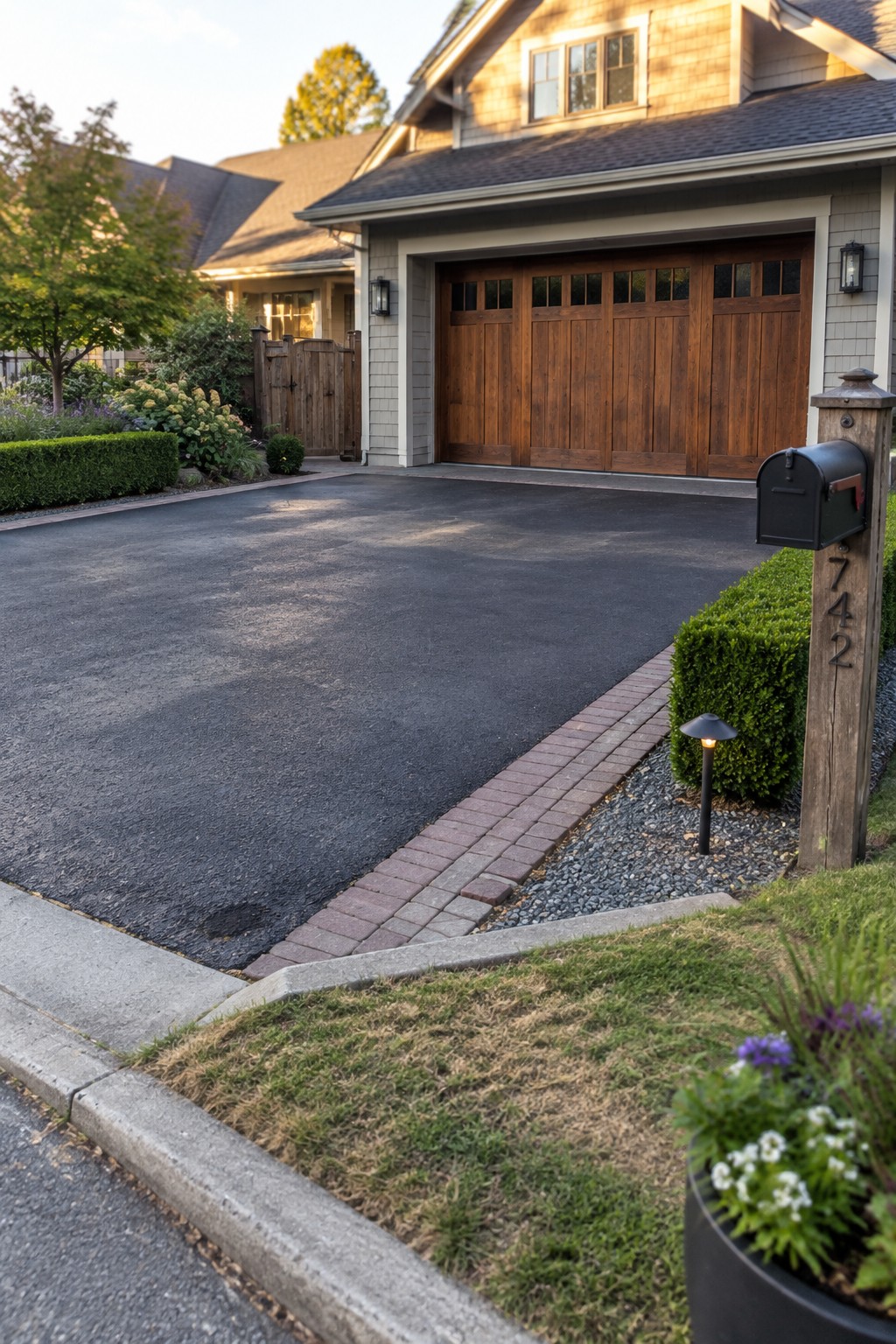
A broad asphalt driveway gives multiple vehicles room to park without making the front approach feel crowded. The dark, even surface also keeps the parking area simple and practical.
For homes with a two-car garage, extending the paved area beyond the garage doors can make everyday parking easier and leave space for guests. A brick edge can mark the driveway’s boundary, but keep the expanded section wide enough for cars to pull in and out comfortably.
Use an Expanded Asphalt Pad for Extra Parking
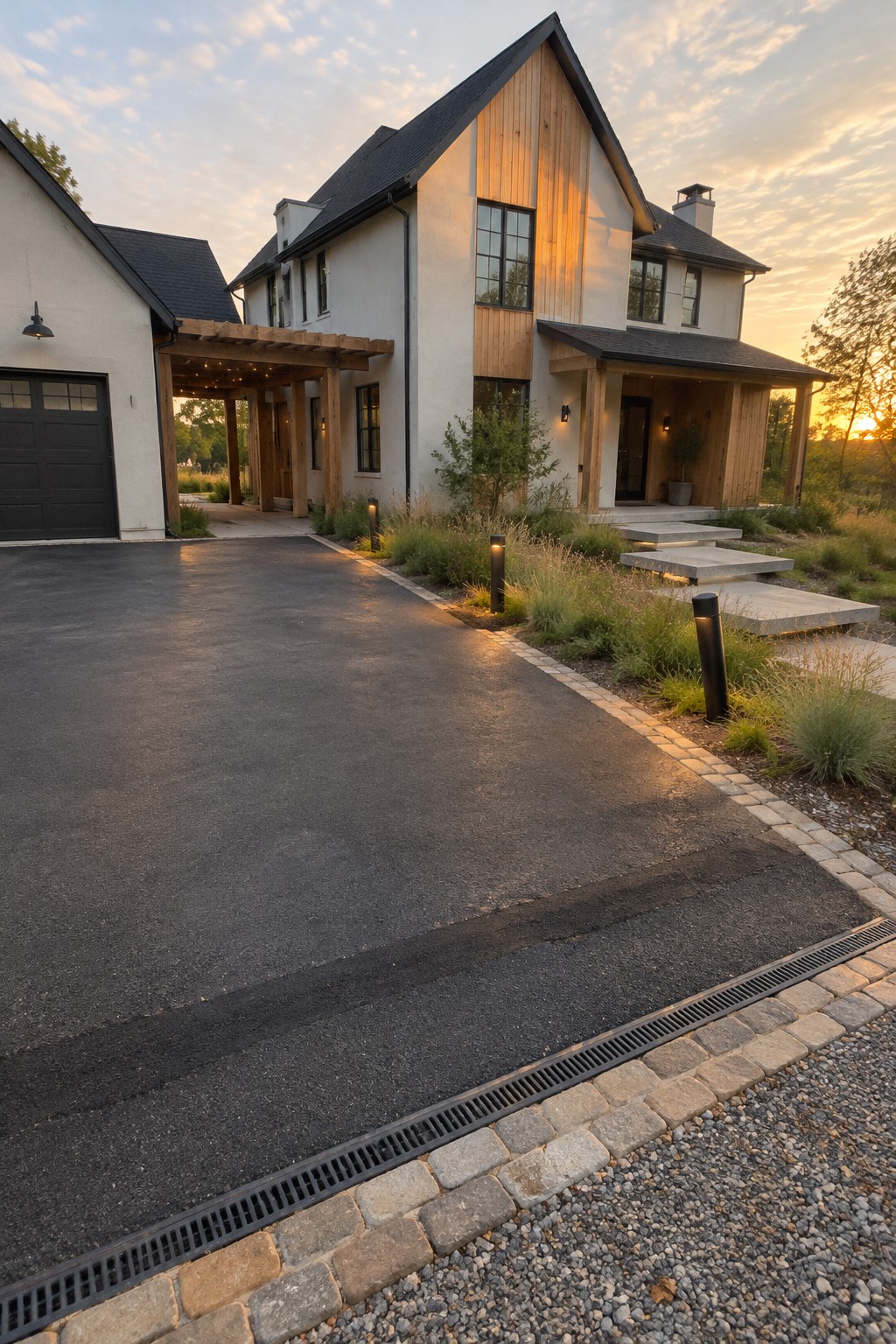
An asphalt driveway can provide a broad, practical area for parking several vehicles. The wide paved space here keeps the main approach open, while a stone border gives the edge a clear finish.
For a similar setup, extend the paved area beside or in front of the garage, leaving enough room to park and maneuver without blocking the entrance. A defined edge can help separate the asphalt from gravel or planting beds.
Use Wide Asphalt Pads for Easier Parking
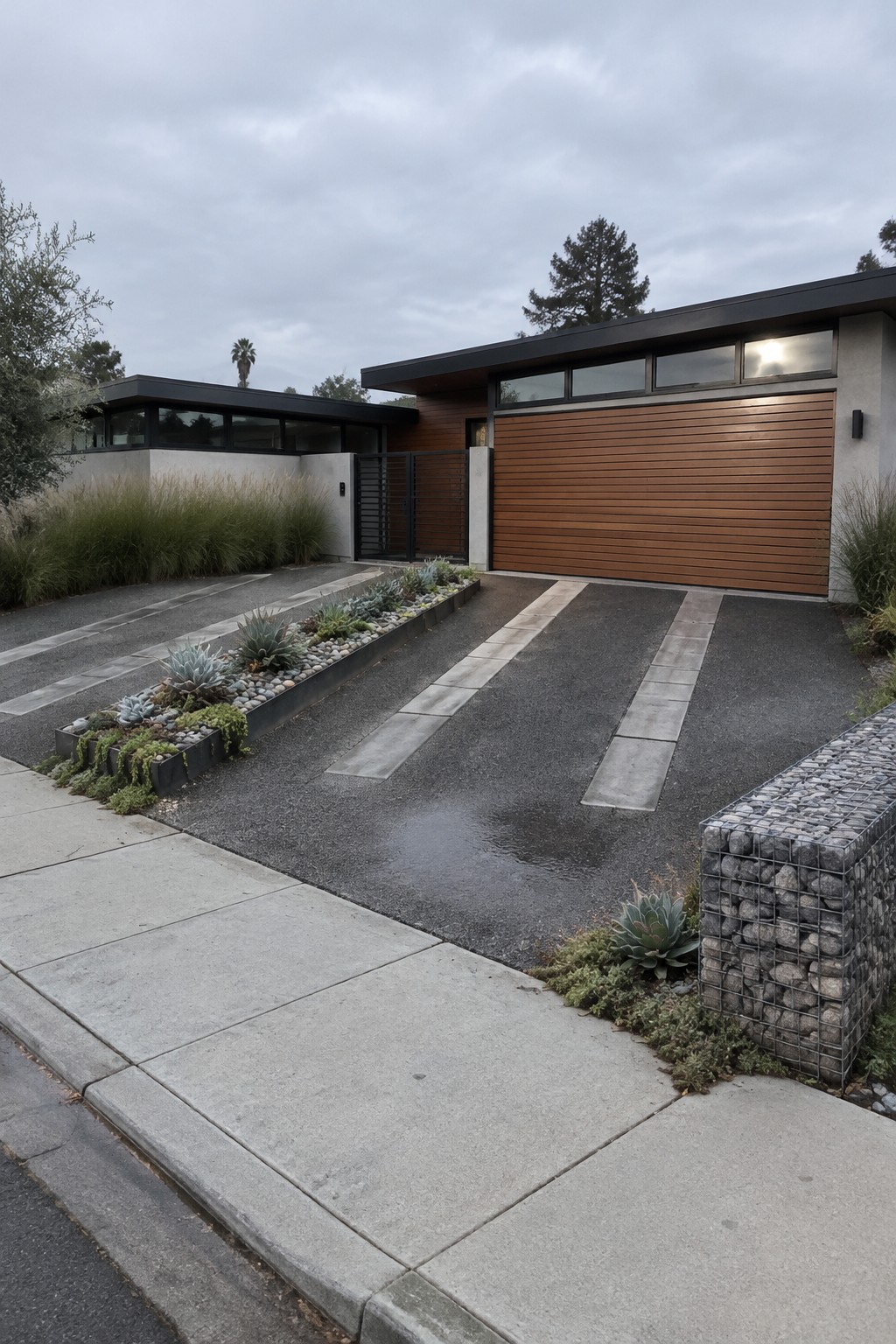
A wide asphalt parking area can make room for more than one vehicle without requiring a full paved frontage. Here, concrete strips mark the drive lanes, leaving the asphalt to form the main parking surface.
This approach suits homes where cars need to park side by side or pull in and out easily. Plan the pad around the vehicles you own, and leave enough space near the garage and walkway for doors and foot traffic.
Use Asphalt for a Clean, Practical Driveway
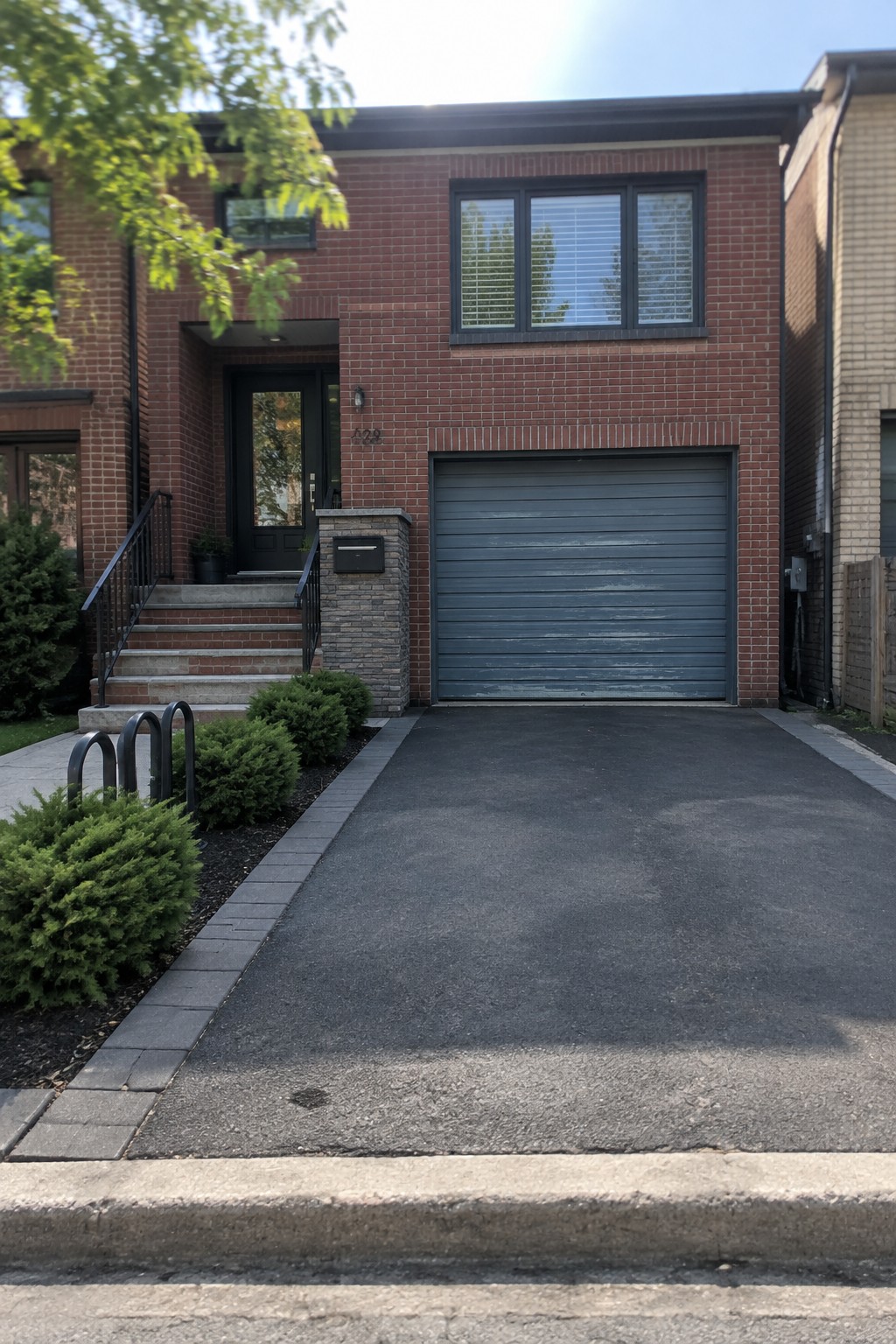
A simple asphalt driveway suits a brick home because it gives the front of the house a neat, understated approach. Its dark surface also makes a clear contrast with lighter edging, which can help define the parking area.
For a wider parking pad, extend the asphalt beside the main driveway while keeping the edges clearly marked. This can provide room for another vehicle without making the front approach feel cluttered. Check that the extra width still leaves space for safe access to the entry and garage.
Use Stone Edging to Define an Asphalt Driveway
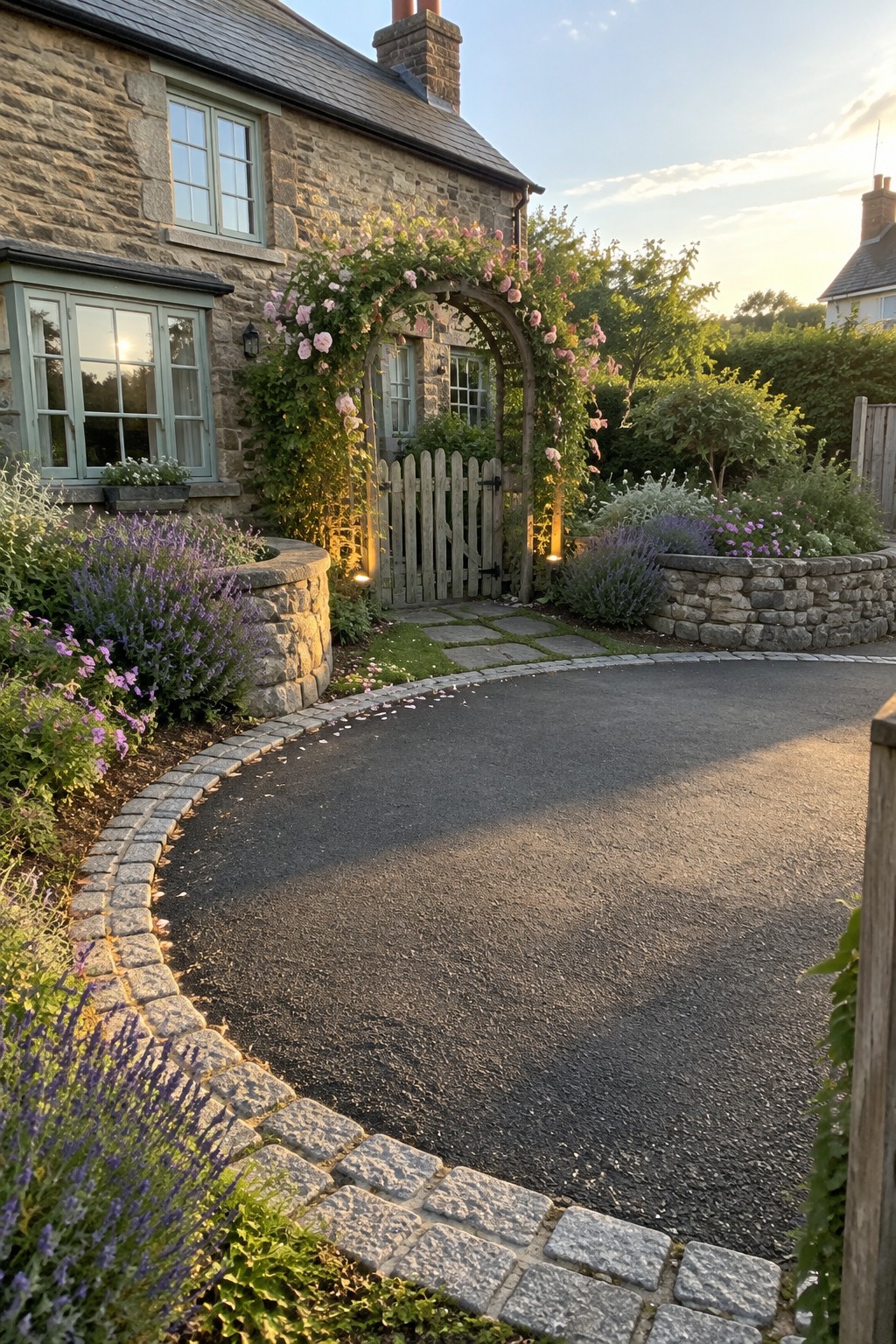
Stone edging gives a broad asphalt parking area a clear, finished border. It also helps separate the driving surface from nearby planting beds without making the driveway feel like a stark strip of pavement.
Use a low, sturdy edge where the driveway curves or meets a garden bed. Matching the stone to the home’s masonry can help it look at home, but keep the border wide enough to withstand occasional tire contact.
Keep The Asphalt Driveway Open And Simple
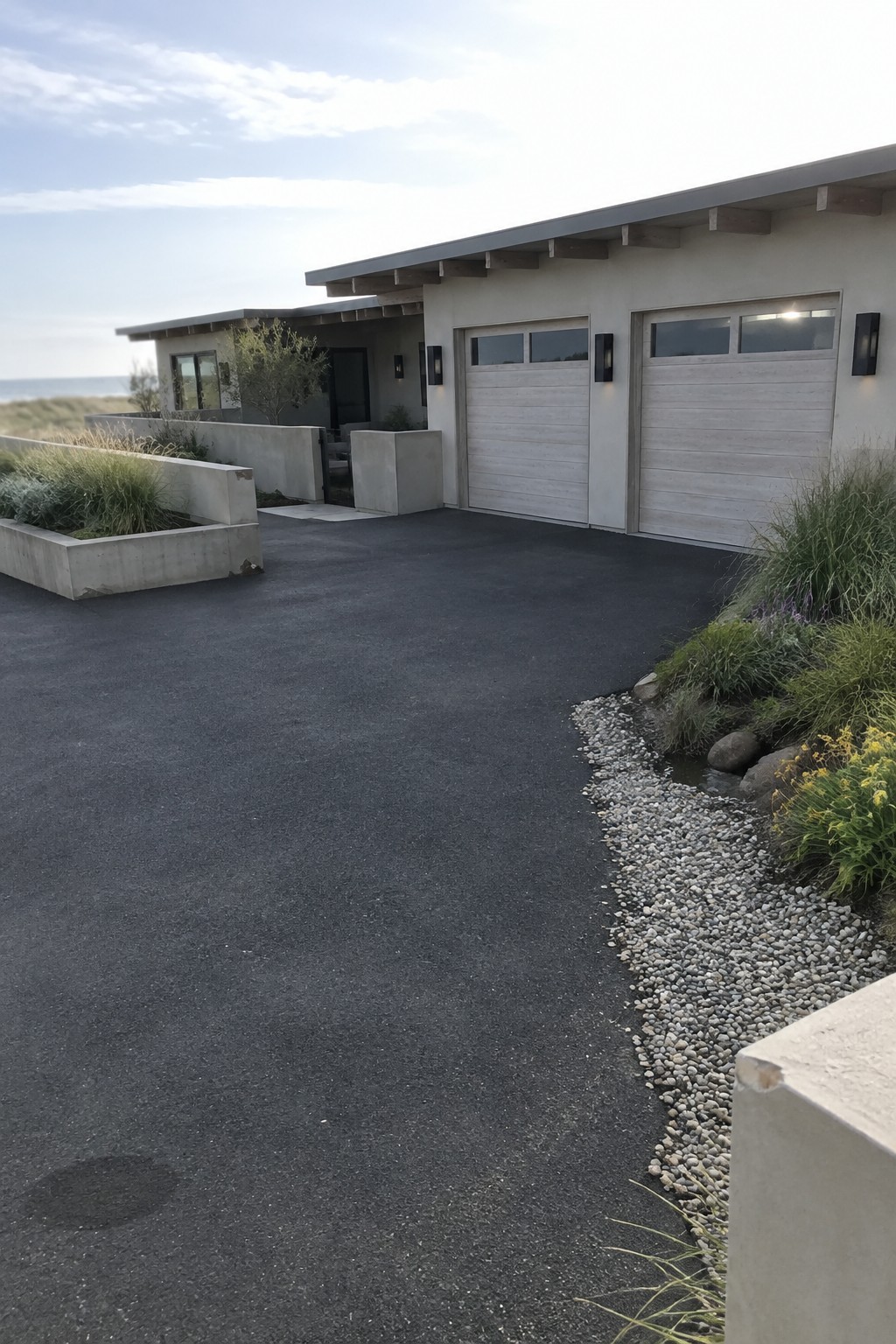
A broad asphalt driveway gives several vehicles room to park without adding a separate parking area. Its simple, uninterrupted surface suits a modern home and keeps the approach easy to use.
This layout works well when a household needs everyday parking or space for guests. Keep the driveway wide enough for cars to maneuver, and use planting beds along the edge to mark the boundary without narrowing the paved area.
Add a Wood Parking Pad Beside the Driveway
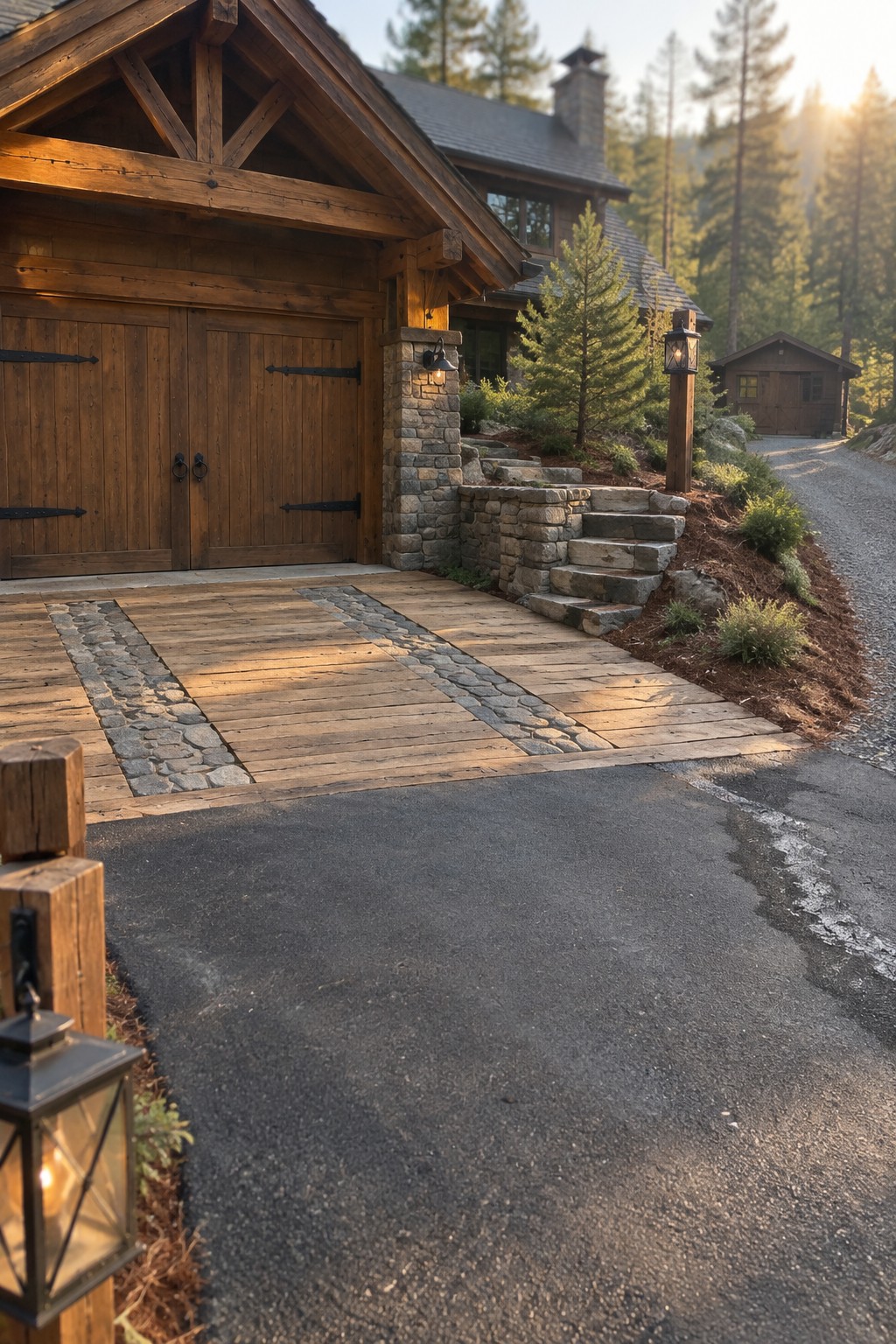
A parking pad does not have to use the same material as the driveway. A wood section edged with stone can give a wide parking area a more finished look while making it easy to distinguish the extra space from the asphalt.
This approach suits a cabin or rustic home, especially when the pad sits near a garage. Keep the wood rated for ground contact and plan for drainage, since standing water can shorten its life.
Use a Rounded Driveway Pad to Make Room for Parking
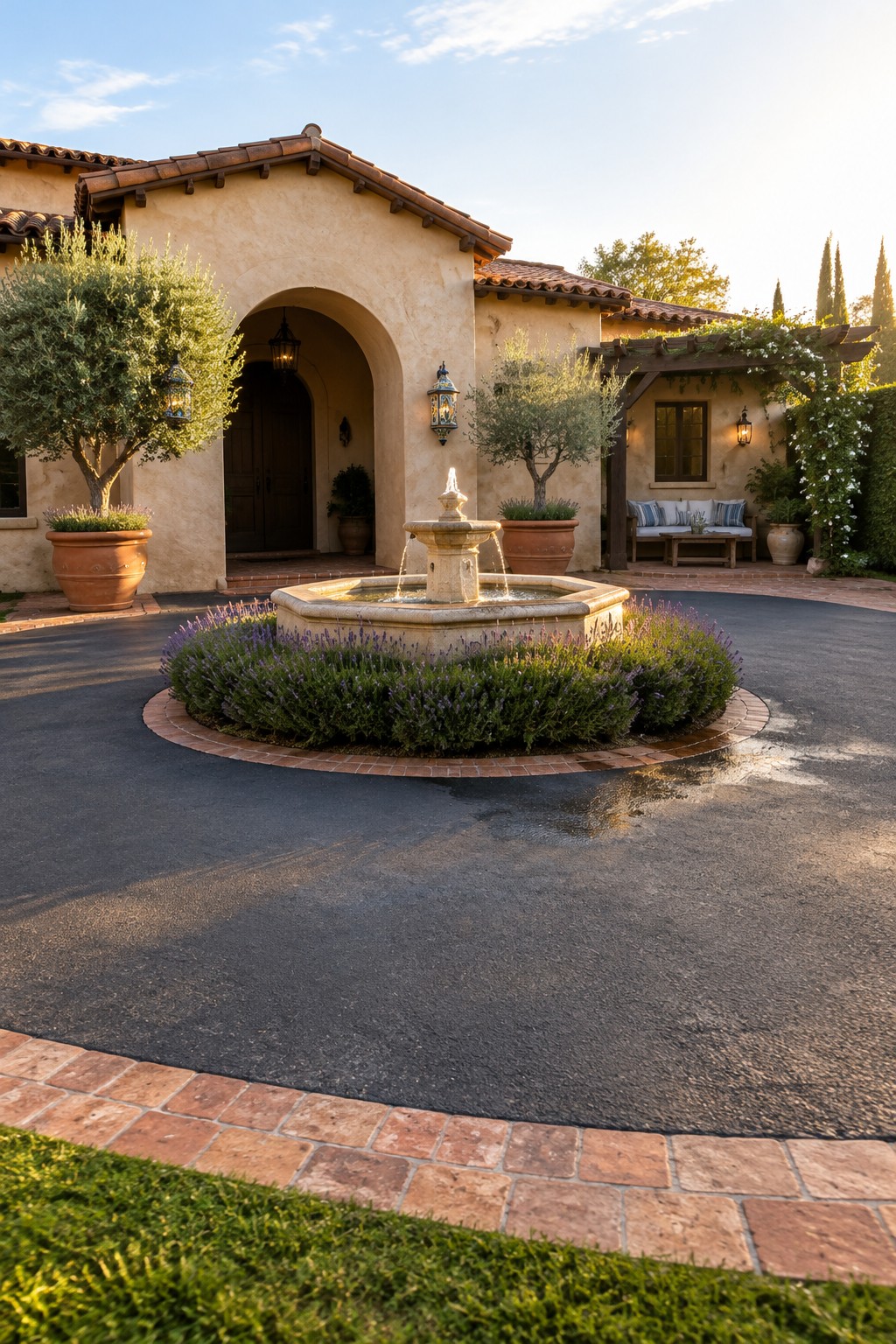
A wider driveway pad can provide extra space for several vehicles while keeping the main approach simple. A rounded edge, like the one around this central fountain, can also help define the parking area without making it feel like a large, plain slab.
For an asphalt version, keep the main parking surface broad and use a contrasting border to mark the curve. This approach suits homes with enough front yard to allow for turning and parking, but plan the shape around how cars will enter and leave.
Use a Simple Asphalt Driveway for Everyday Parking
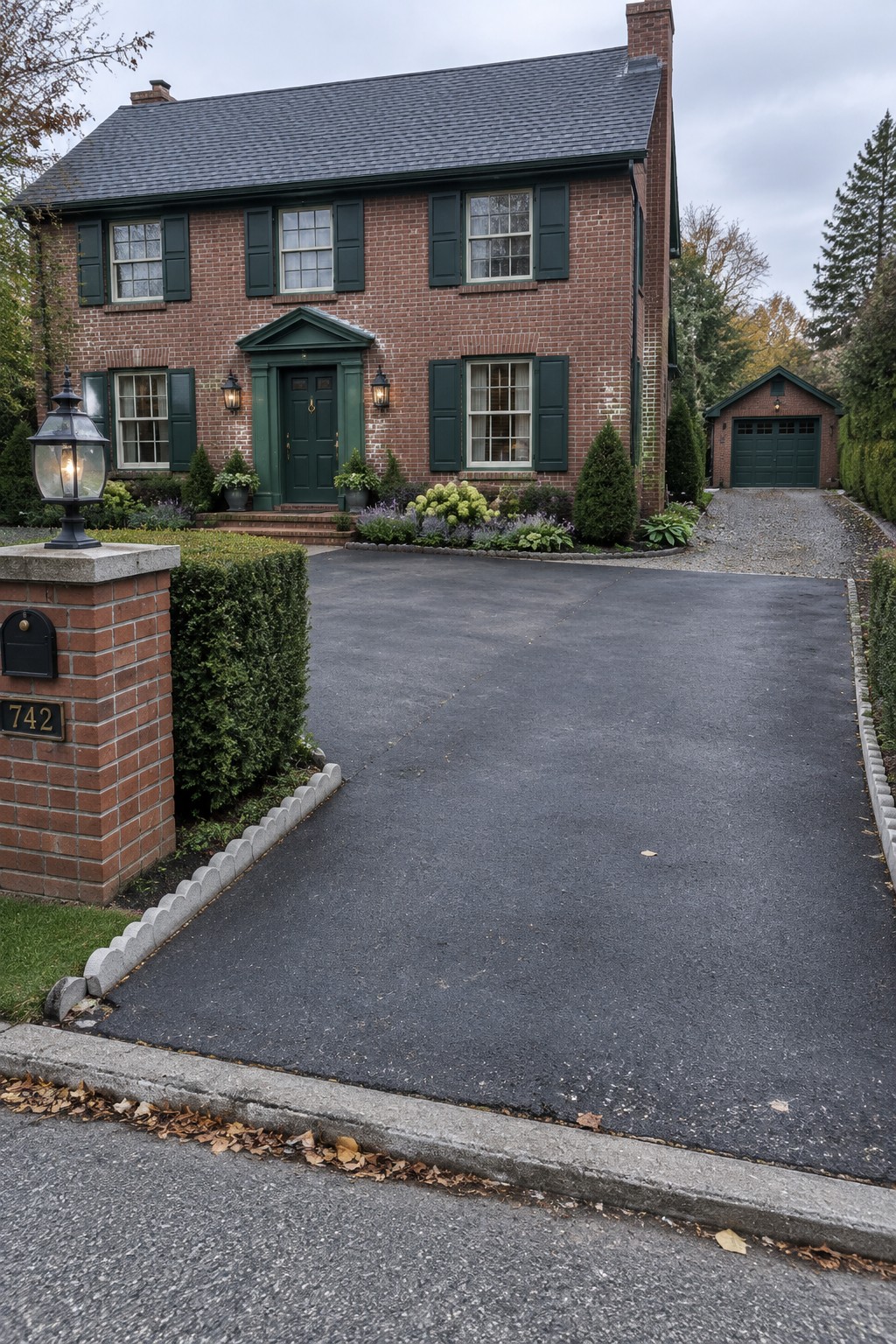
A broad, uncomplicated asphalt driveway gives cars room to pull in and turn without making the front of the house feel crowded. It suits a traditional home like this one, where the dark pavement keeps the approach practical and lets the brick facade remain the focus.
For a similar setup, size the paved area for the vehicles you actually use, leaving enough clearance to open doors and reach the garage. A gravel side drive can provide an extra parking route, but keep its edge clear so the asphalt remains easy to maintain.
Use Path Lighting Along the Asphalt Driveway
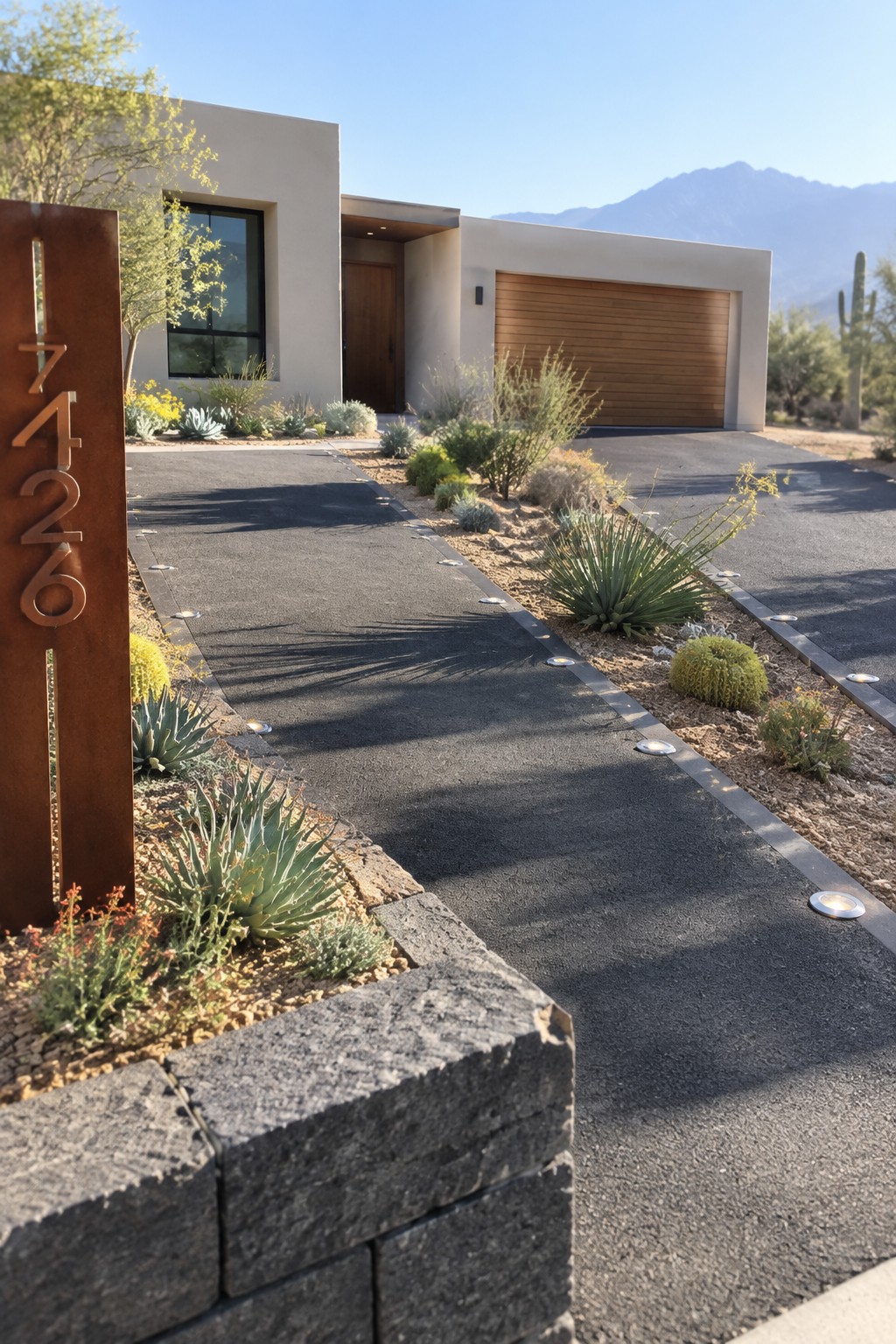
Small in-ground lights along an asphalt driveway help define the edges and make the route easier to follow after dark. They’re a practical choice when the drive includes a wide parking area or a longer approach to the house.
Space low-profile fixtures evenly along the edges, keeping them clear of spots where tires will regularly pass. Simple lighting works well with a clean driveway layout and won’t take up room needed for parking.
Use a Long Asphalt Driveway for Vehicle Access
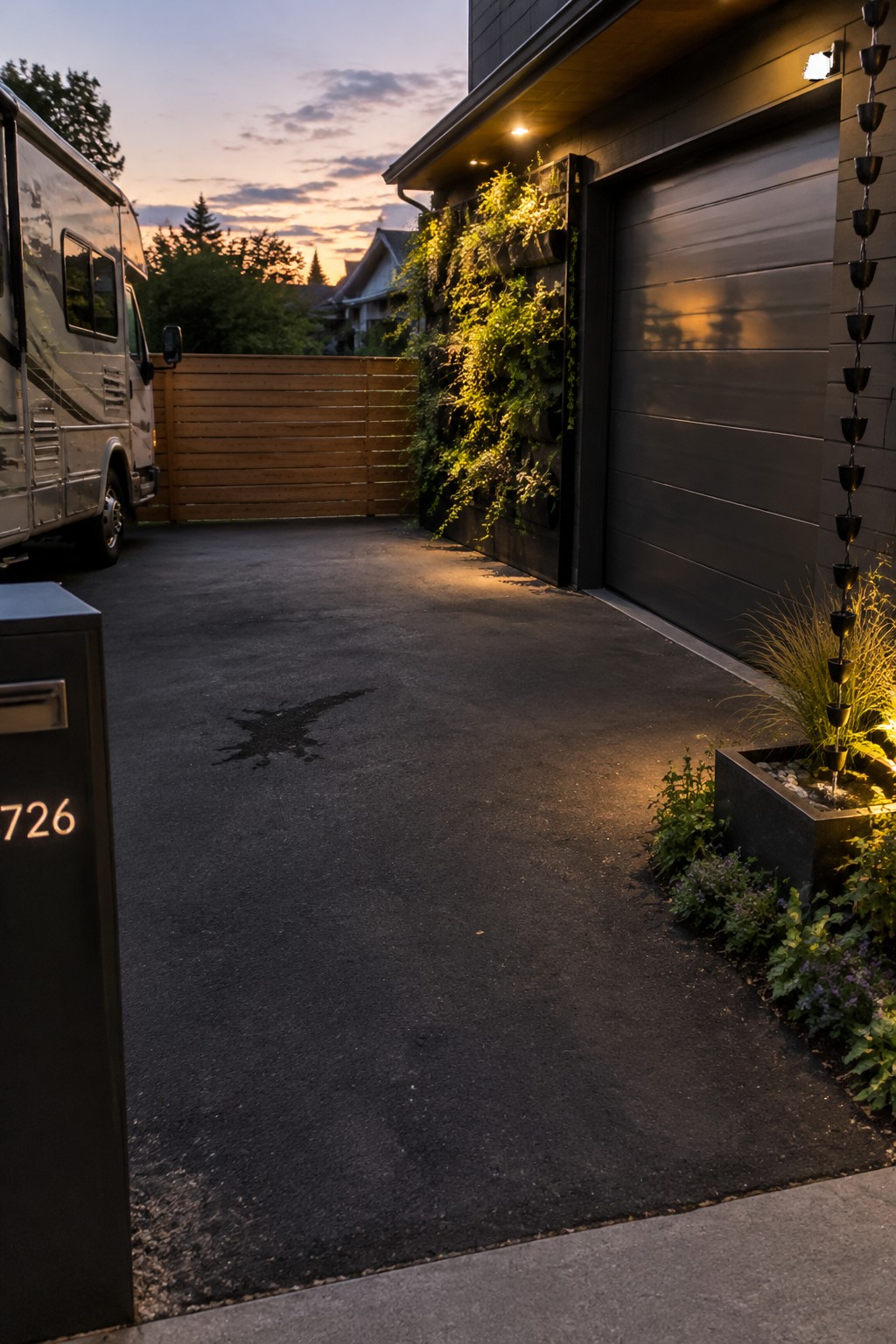
A long asphalt driveway can make it easier to park a large vehicle close to the house without blocking the garage. The open paved area also gives you room to turn around or unload, which is useful when space is tight.
For a similar setup, plan the paved width around the vehicle you own and leave a clear route to the garage. A planted edge can keep the driveway from feeling too bare, but avoid letting beds or planters narrow the path.
Use Paver Edging to Define the Driveway
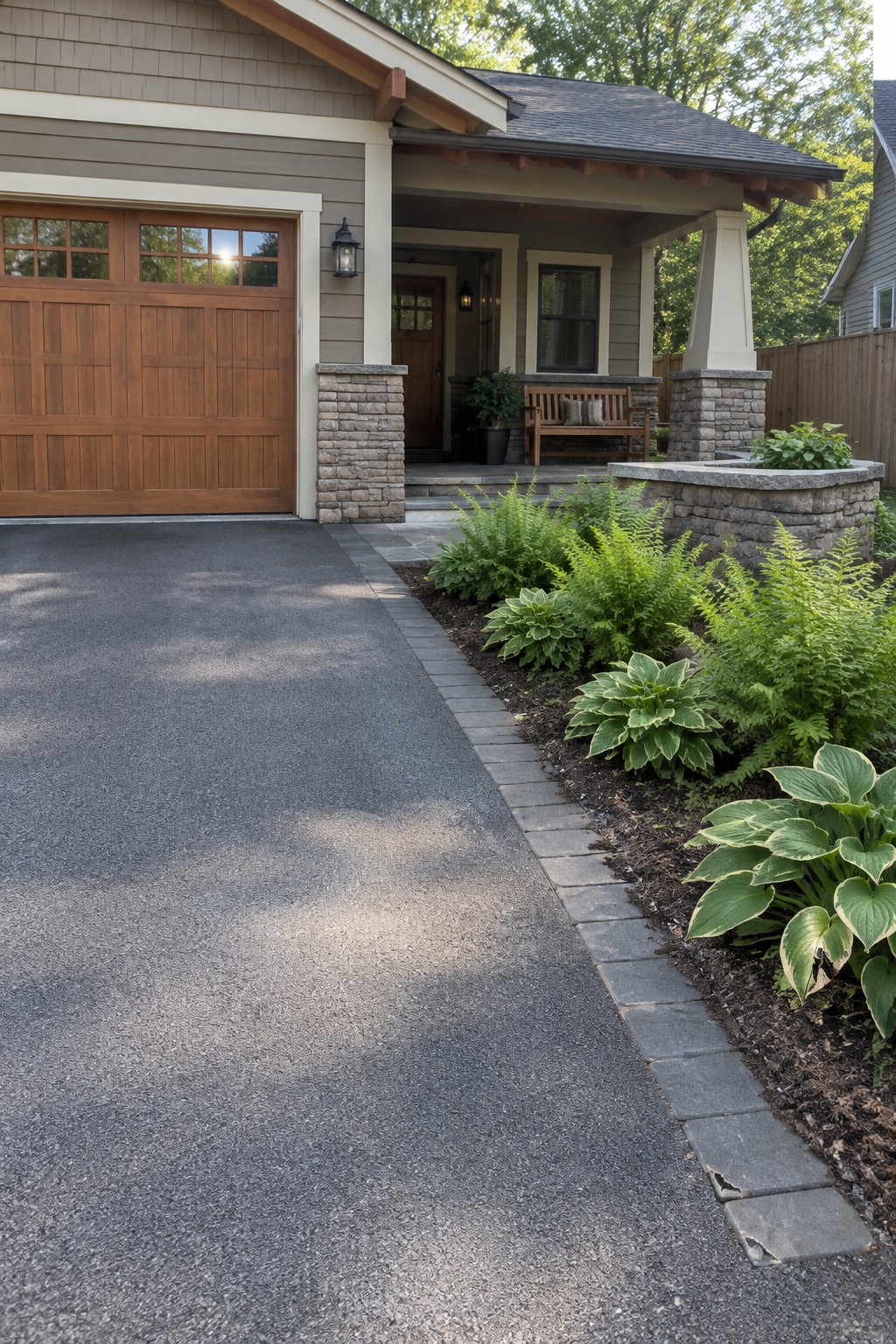
Paver edging gives an asphalt driveway a neat, finished border. It also marks a clear line between the paved area and the planting bed, which helps the driveway feel intentional without adding more asphalt.
This approach works well when you want to keep the main parking surface simple and use the edges to tidy up the layout. Choose pavers that can handle vehicle traffic, and set them firmly so they stay level over time.
Use Grass Strips to Break Up a Paved Driveway
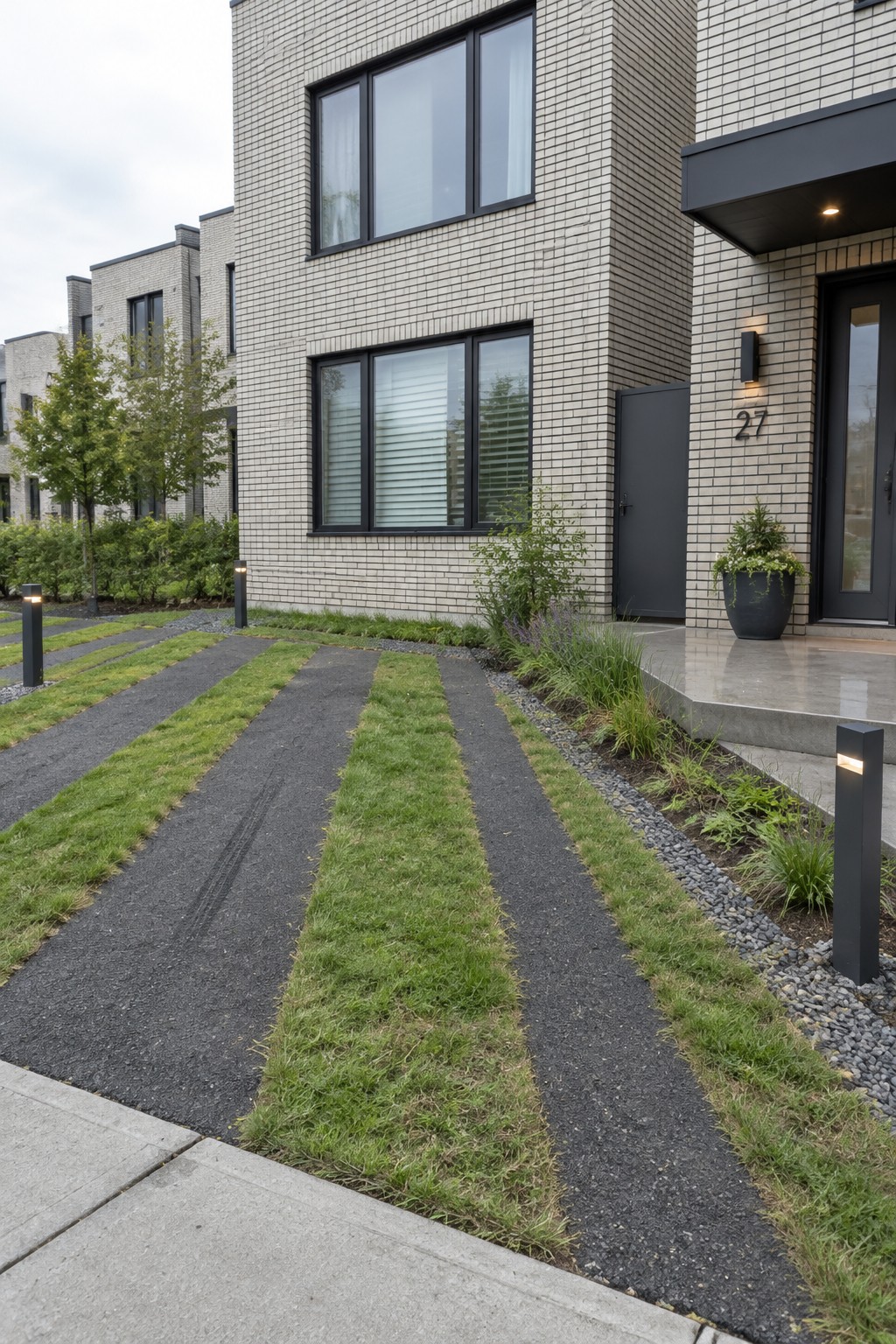
Grass strips between narrow asphalt lanes let the driveway feel less like one large paved surface while still providing vehicle access. It’s a useful approach for a modern home where a broad, continuous driveway might feel out of place.
For a larger parking area, keep the paved lanes wide enough for easy maneuvering and use durable grass or ground cover in the gaps. This layout works best where the ground drains well and the strips won’t be worn down by frequent turning or parking.
Use Brick Edging to Define the Asphalt Driveway
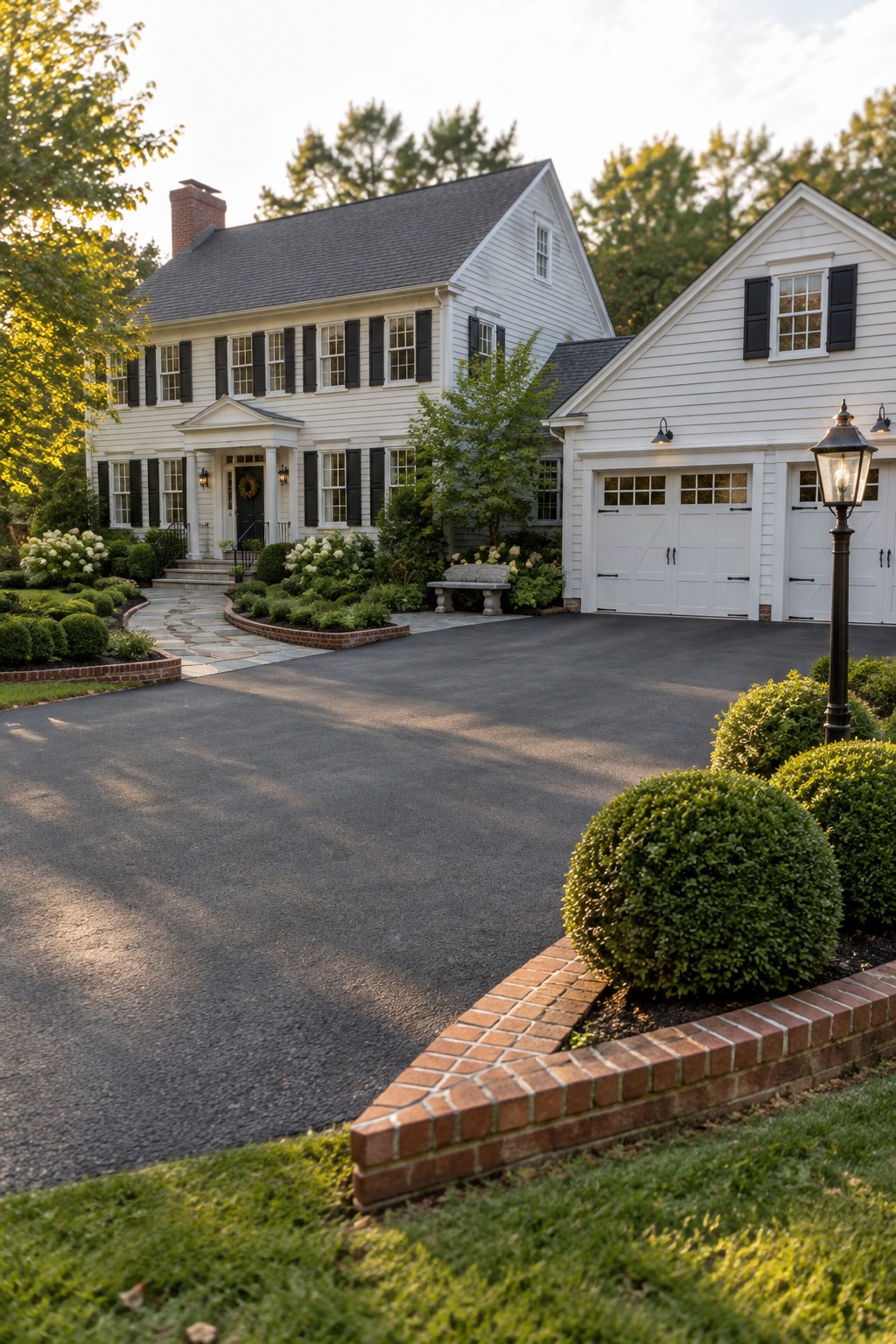
Brick borders give a wide asphalt driveway a finished edge and help separate the parking area from the garden beds. The contrast works well on a traditional home, where the brick can echo other masonry without taking over the view.
Use a low, gently curved border to shape the driveway edge while keeping the parking area open for several vehicles. Make sure the bricks sit securely and do not create a sharp lip where cars enter or turn.
Use a Curved Planting Bed to Shape the Driveway
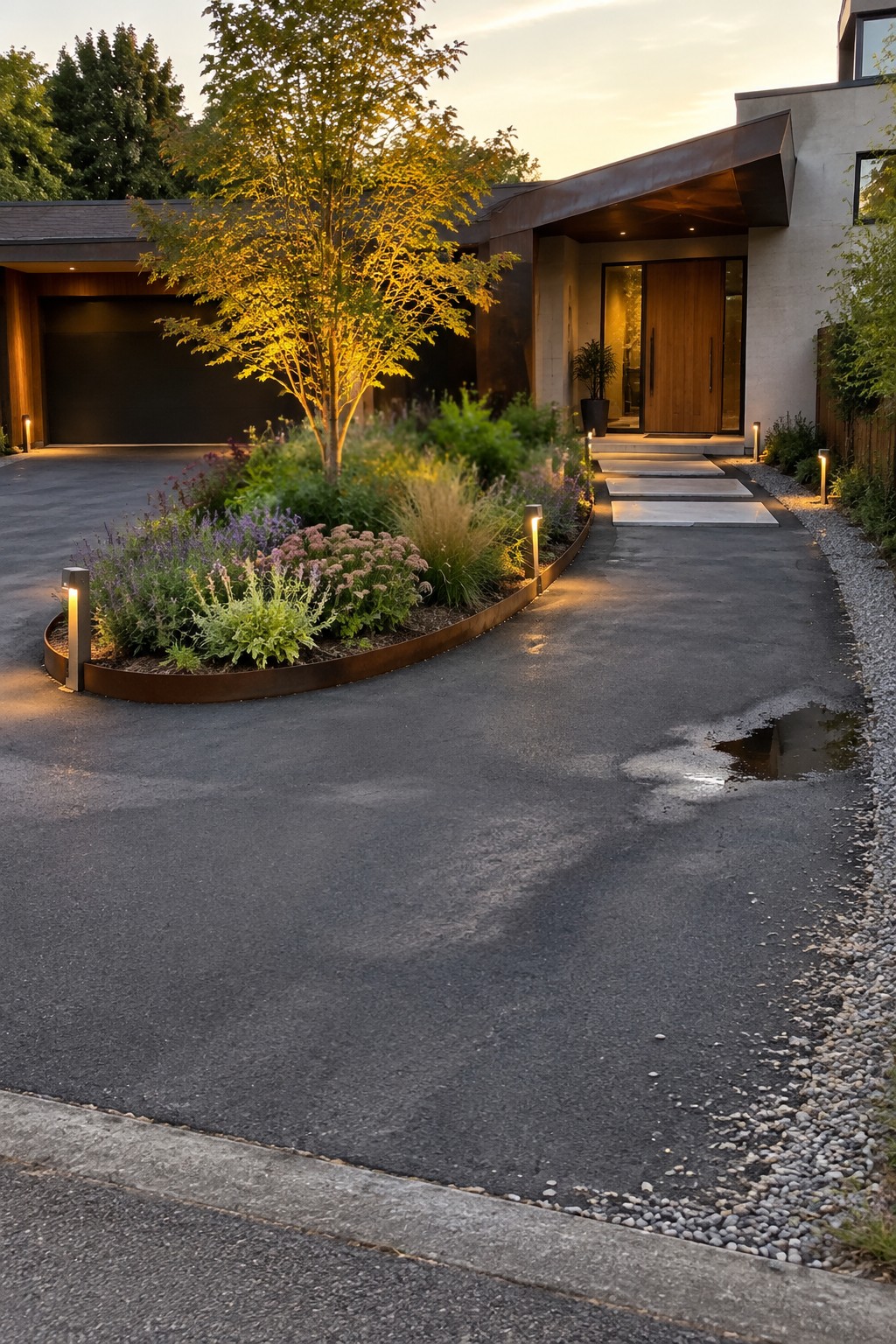
A curved planting bed can break up a broad asphalt driveway and give the parking area a more planned layout. Here, the rounded bed sits within the paved space, leaving room to drive around it while adding a clear edge to the parking area.
This approach works best when the driveway is wide enough to leave comfortable turning and parking space on both sides of the bed. Keep the planting low near vehicle paths, and use a sturdy border so soil and mulch stay in place.
Add Paver Bands Across the Asphalt Driveway
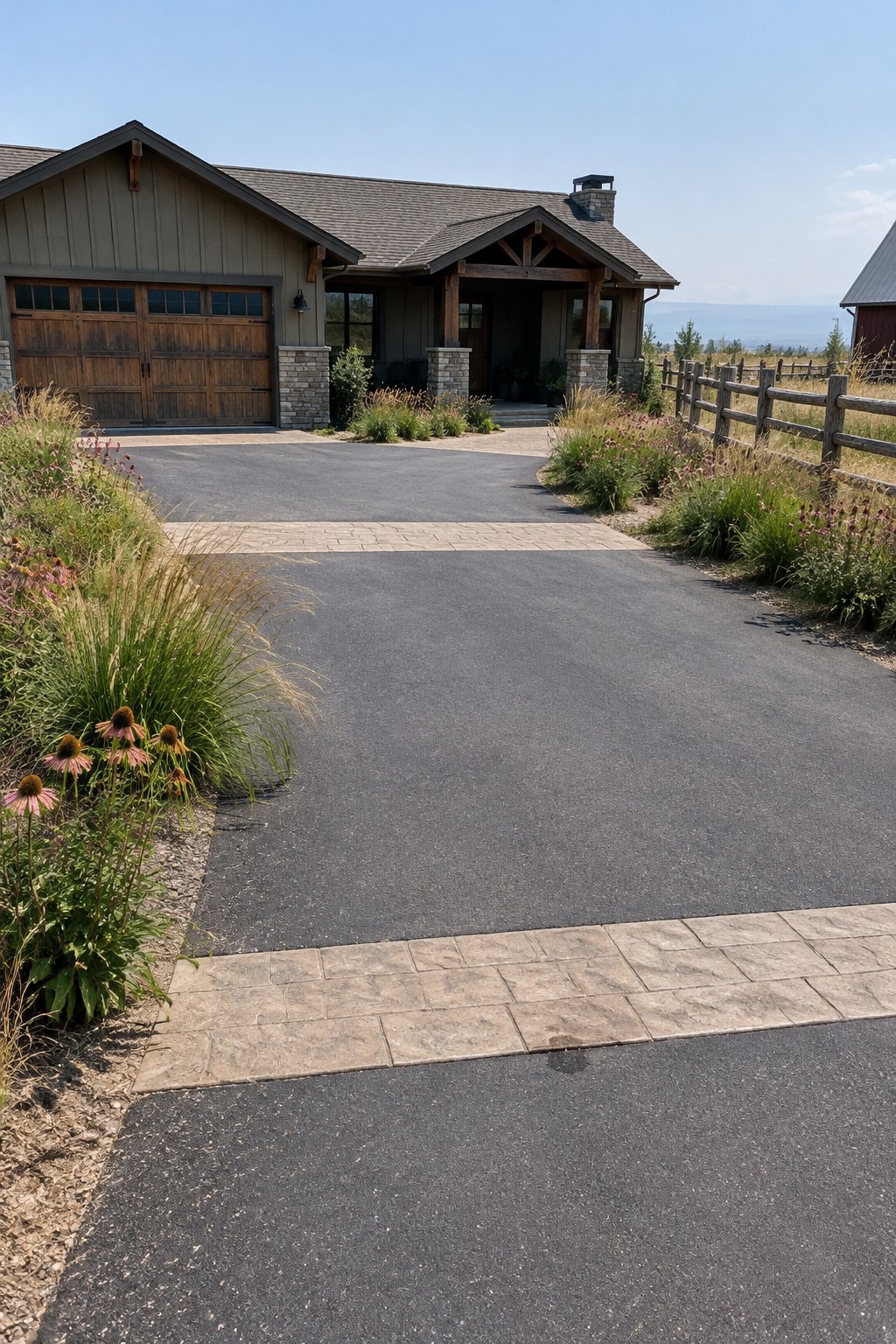
Paver bands break up a broad asphalt driveway and give the surface a more finished look. They can also help mark where the driveway widens, making the parking area easier to read.
Use bands where you want to separate parking zones or mark a transition near the house. Choose pavers that suit the home’s exterior, and keep them level with the asphalt to avoid creating a bump for vehicles.
Use a Planted Strip to Separate Parking Areas
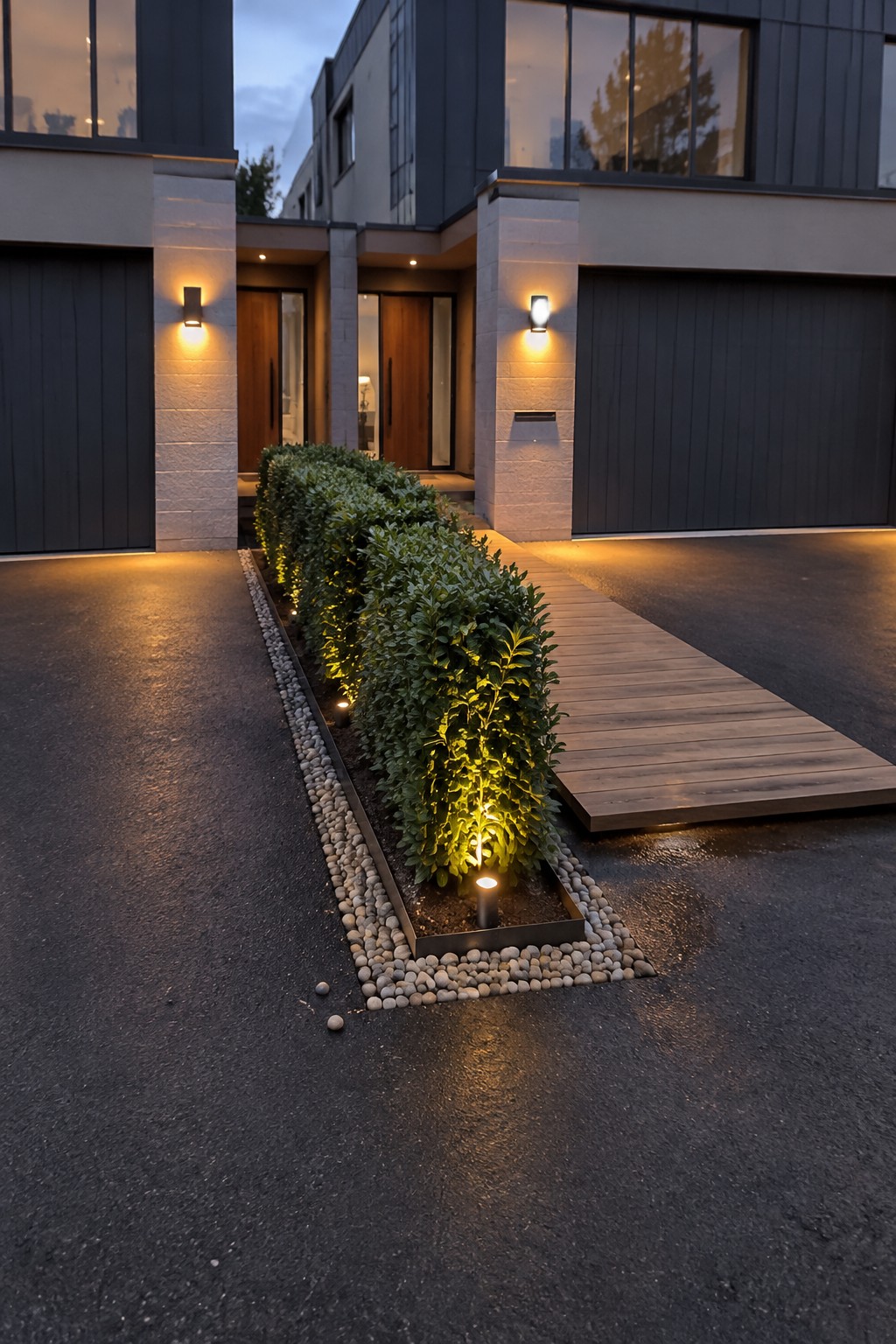
A narrow planting bed can break up a broad asphalt driveway and make separate parking areas easier to see. Here, a row of shrubs runs between the paved surfaces, while a wood walkway crosses the bed to reach the front door.
This layout works best where there is enough driveway width to keep the planting strip clear of vehicle doors and turning space. Choose shrubs that stay manageable, and leave room for the walkway so people can reach the entry without cutting through the plants.
Use Brick Bands to Break Up a Paved Driveway
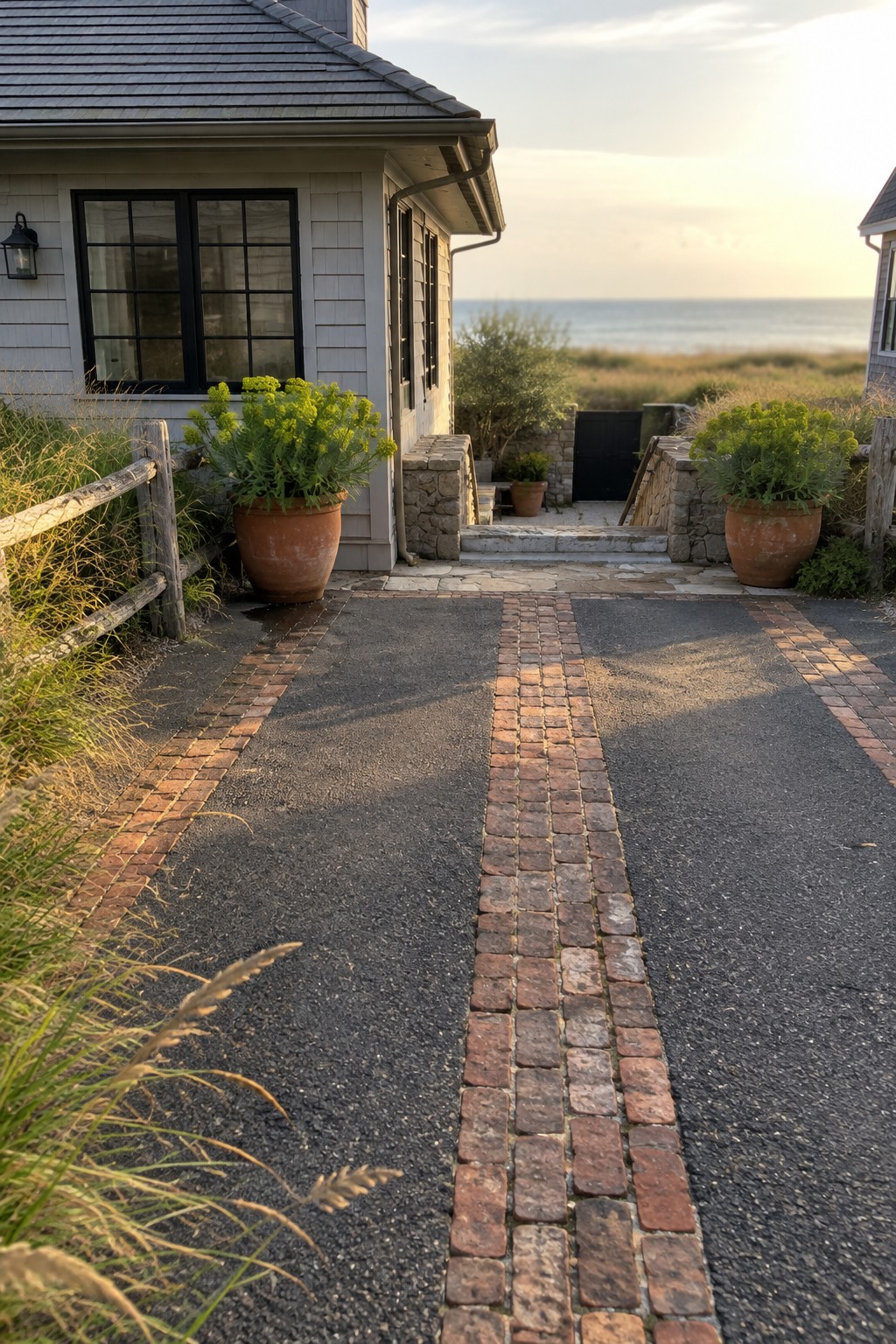
Brick bands running through the asphalt give a driveway a little definition without covering the whole surface in pavers. The repeated lines also make a long paved area feel more organized.
This approach works well for a driveway that needs room for several vehicles but still benefits from a clear visual pattern. Keep the brick bands wide enough to notice, and use pavers rated for driveway traffic so they hold up under cars.
Use a Broad Driveway Apron for Extra Parking
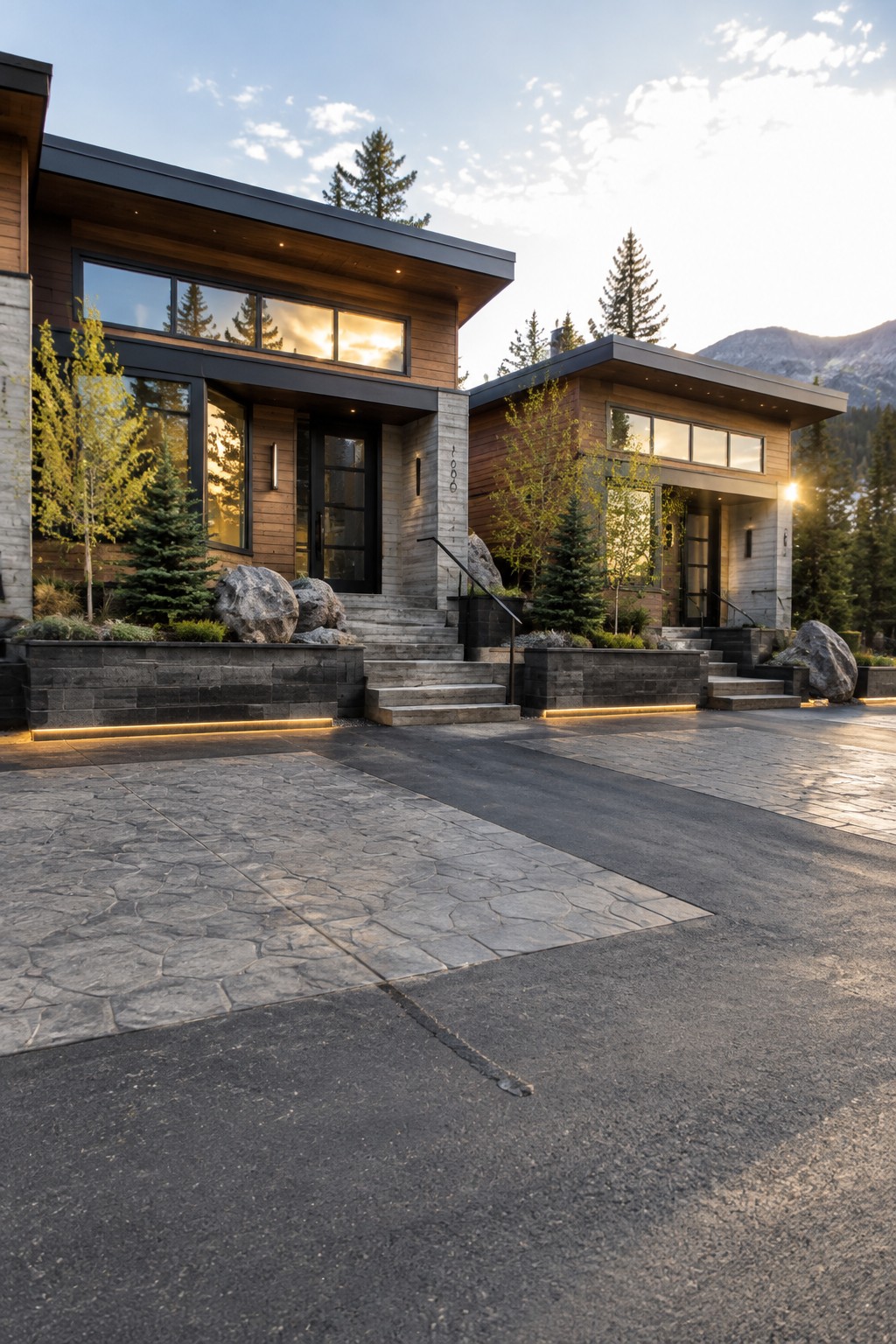
A wide paved area in front of the home gives drivers more room to pull in, turn, and park without crowding the entrance. Here, the asphalt meets a larger stone-paved apron, making the approach feel less cramped while leaving space for more than one vehicle.
This layout works well when a home has several drivers or guests who need occasional parking. Keep the expanded area broad enough for doors to open and cars to maneuver, and choose a durable surface that handles regular use.
Use Paver Bands to Break Up a Wide Driveway
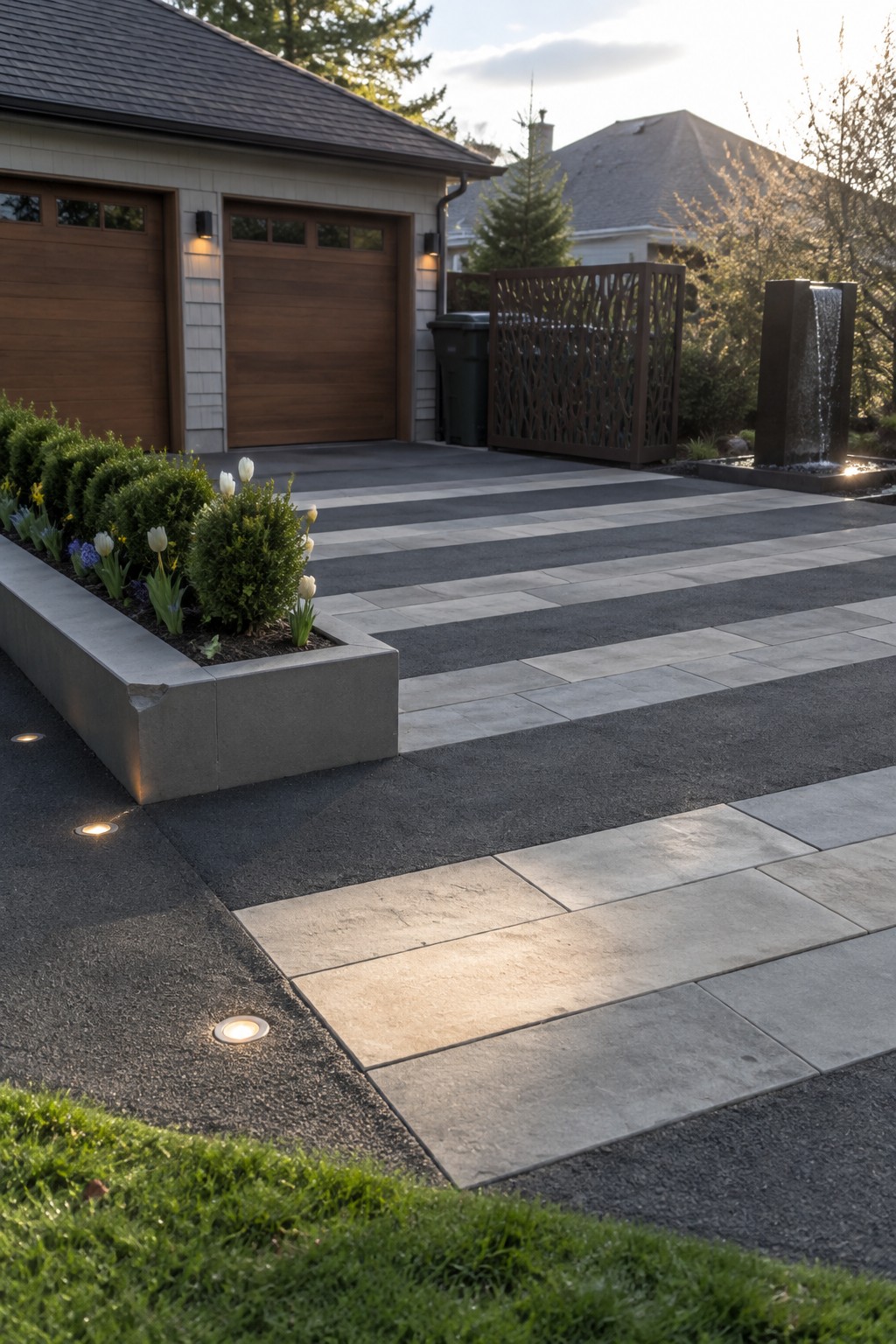
Paver bands can give a broad asphalt driveway a more considered look without giving up a large, practical parking area. Here, wide bands of light-colored pavers mark out the surface and add a clear pattern.
This approach works well when you want room for several vehicles but find a full asphalt surface too plain. Keep the bands wide enough to read from the street, and choose pavers rated for vehicle traffic.
Frequently Asked Questions
Q: How wide should an expanded asphalt driveway be for two cars side by side?
A: Plan for about 18 to 20 feet of clear width so both cars have room for doors and a little breathing space. If you also want space to walk around parked vehicles, a wider pad will feel much less cramped.
Q: Can I add a parking pad to my existing asphalt driveway?
A: Often, yes. A contractor can check the base and drainage, then connect the new section to the old pavement. If the existing driveway is cracked or settling, fixing that first can help prevent problems along the join.
Q: How do I keep a larger asphalt parking area from looking like a big black slab?
A: Break up the pavement with planting beds, a strip of lawn, or a defined walkway. Even a small landscaped edge can soften the look without taking away useful parking space.
Q: Should the parking pad slope toward the house or the street?
A: It should direct water away from your home and garage, usually toward the street or a suitable drainage area. Ask your installer to check where runoff will go before the asphalt is laid.
