


A narrow driveway has to do more than provide a place to park; it also shapes the first impression of the house and how easily people get to the front door.
I’ve found that the best designs make careful use of every inch without making the entrance feel cramped or cluttered.
Asphalt gives a clean, practical surface, while edging, curves, and thoughtful transitions can help it sit naturally alongside the facade and garden.
Small choices, such as where the driveway widens or how it meets a walkway, can make a tight approach feel much easier to use.
I’d save the ideas that suit your home’s layout, then adapt the details to make the entrance work in everyday life.
Keep Narrow Driveways Simple

A narrow driveway can feel more practical when it uses two paved tire strips instead of one wide paved surface. The grass center keeps the layout from looking like a large block of asphalt, while the strips still provide clear places for car tires.
This approach works best on a straight drive where the strips can stay consistent in width. Use durable edging to keep the grass defined, and allow enough room for the vehicle you use most often.
Define A Narrow Driveway With Garden Edging
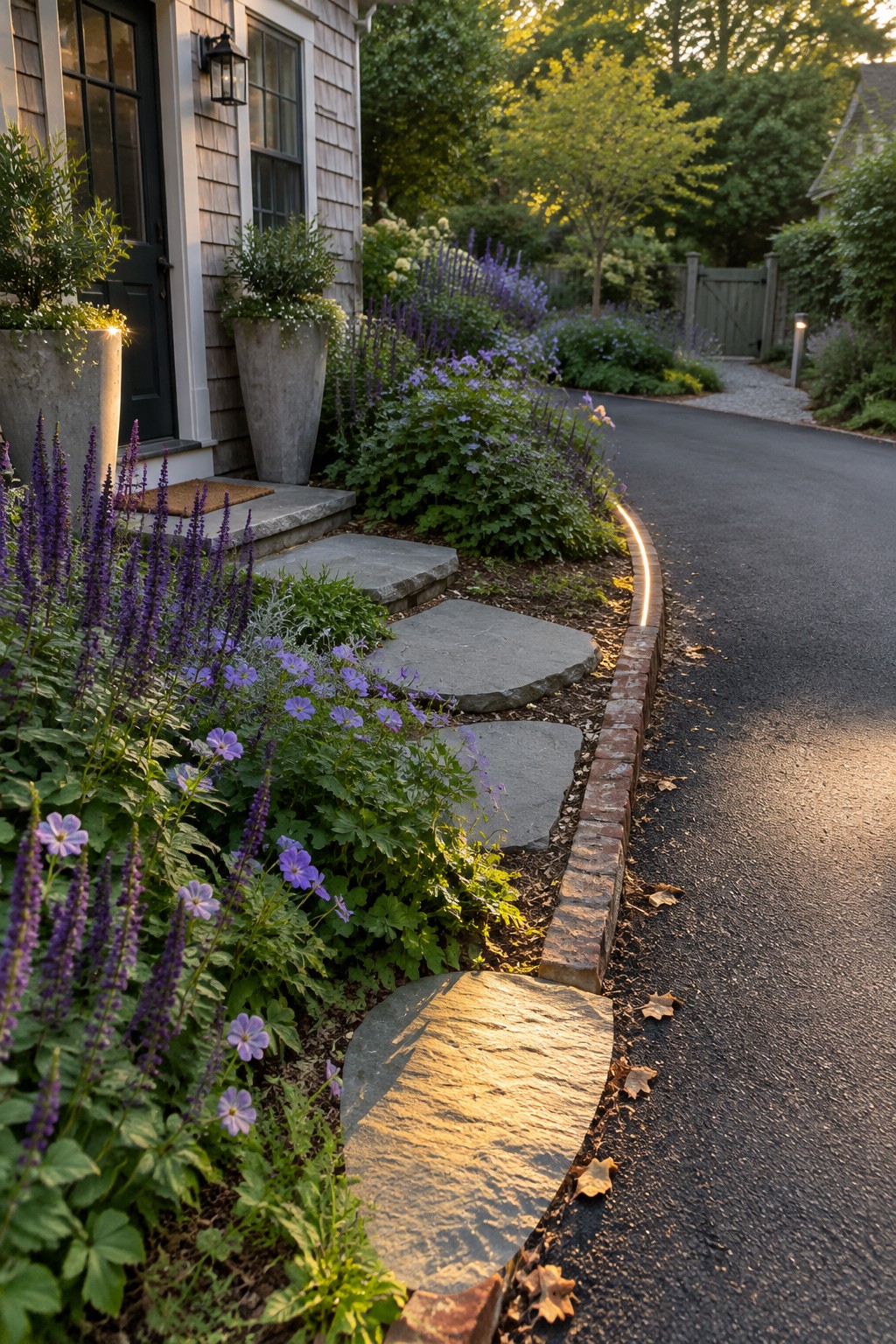
A slim brick edge gives a narrow asphalt driveway a clear boundary without taking up much room. It also makes the transition to a planted bed look intentional, rather than leaving soil and pavement to meet abruptly.
Use a low edging course along a gentle curve to guide the driveway toward the entrance. Keep the border close to the pavement so the usable driving surface stays wide, and choose materials that suit the home’s exterior.
Use Stepping Stones to Guide a Narrow Entrance
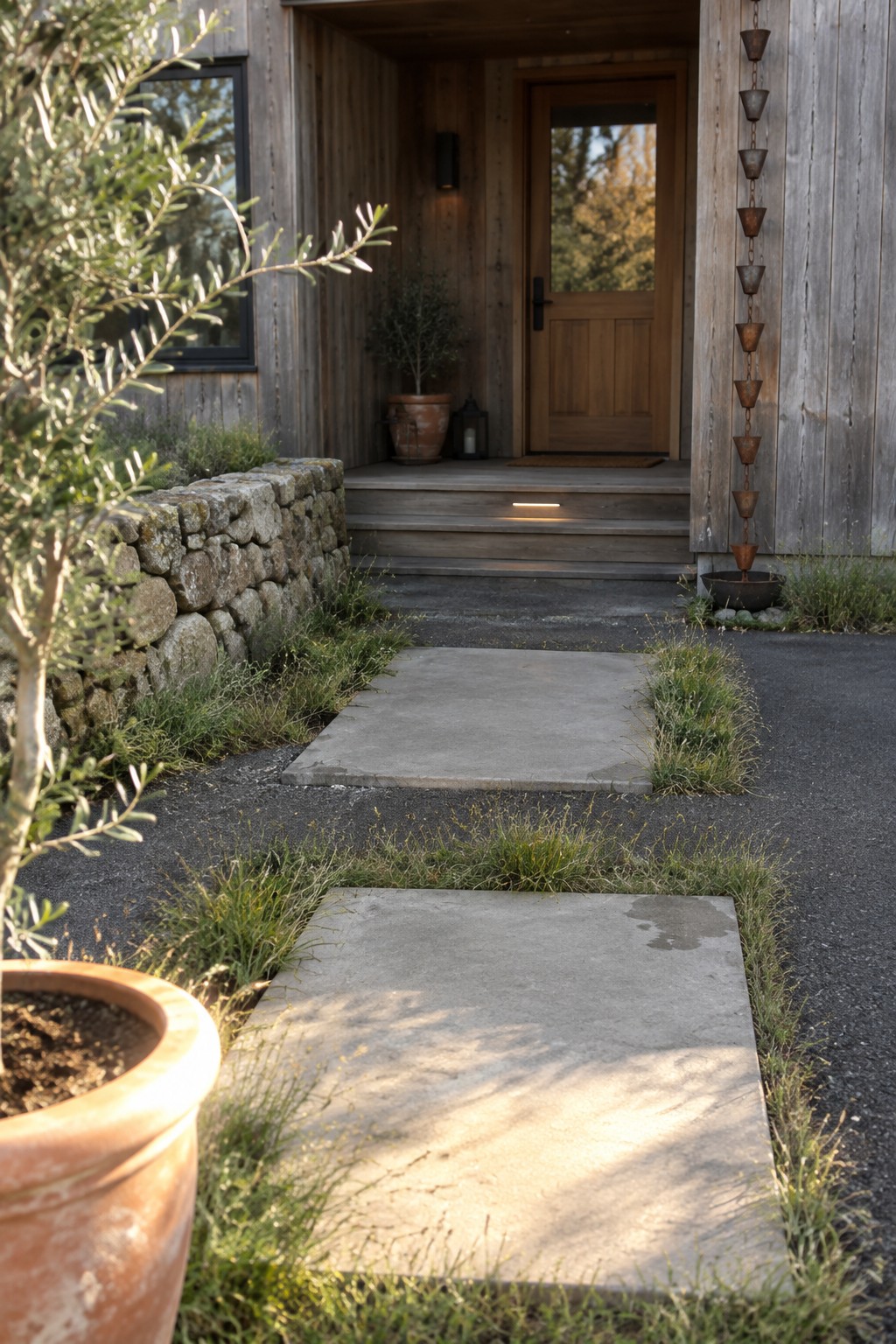
Large concrete stepping stones create a clear walking route from the street to the front door without paving the whole entrance. The open spaces between them leave room for planting and can make a narrow approach feel less crowded.
This layout works well beside an asphalt driveway, where the stones can mark a separate footpath. Keep them broad and evenly spaced so the route feels comfortable to walk, and leave enough room for plants without letting them spill onto the surface.
Use Asphalt to Keep a Narrow Entrance Open
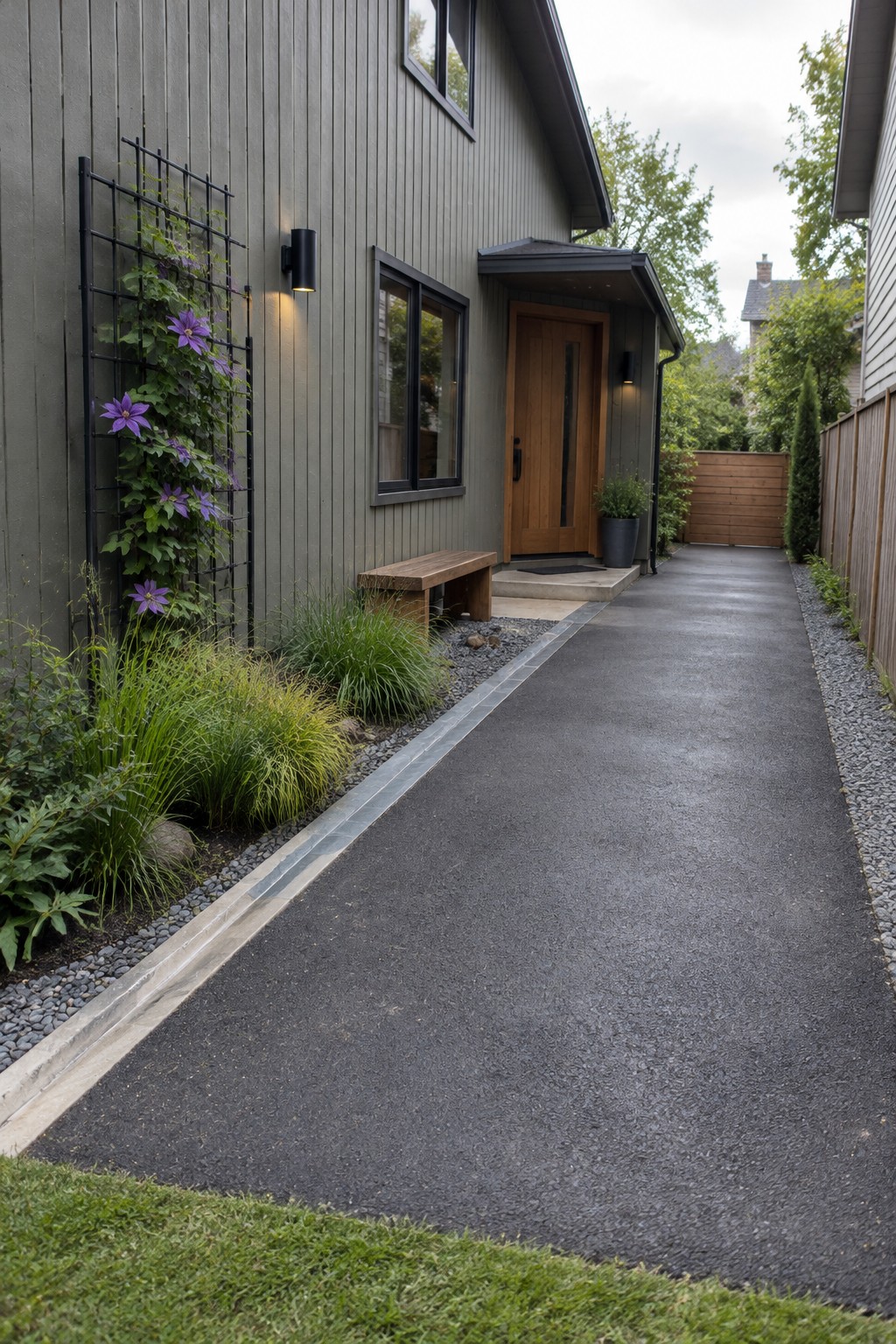
A narrow entrance can feel less crowded when the driveway stays as one simple asphalt surface. It gives a car a clear route to the door without adding separate paving patterns that compete for space.
Keep planting beds along the edges rather than narrowing the driving area, as shown by the slim garden strip beside this path. This approach suits side entrances and compact lots, where a straightforward surface is easier to use and maintain.
Add a Planted Strip to Divide a Narrow Driveway
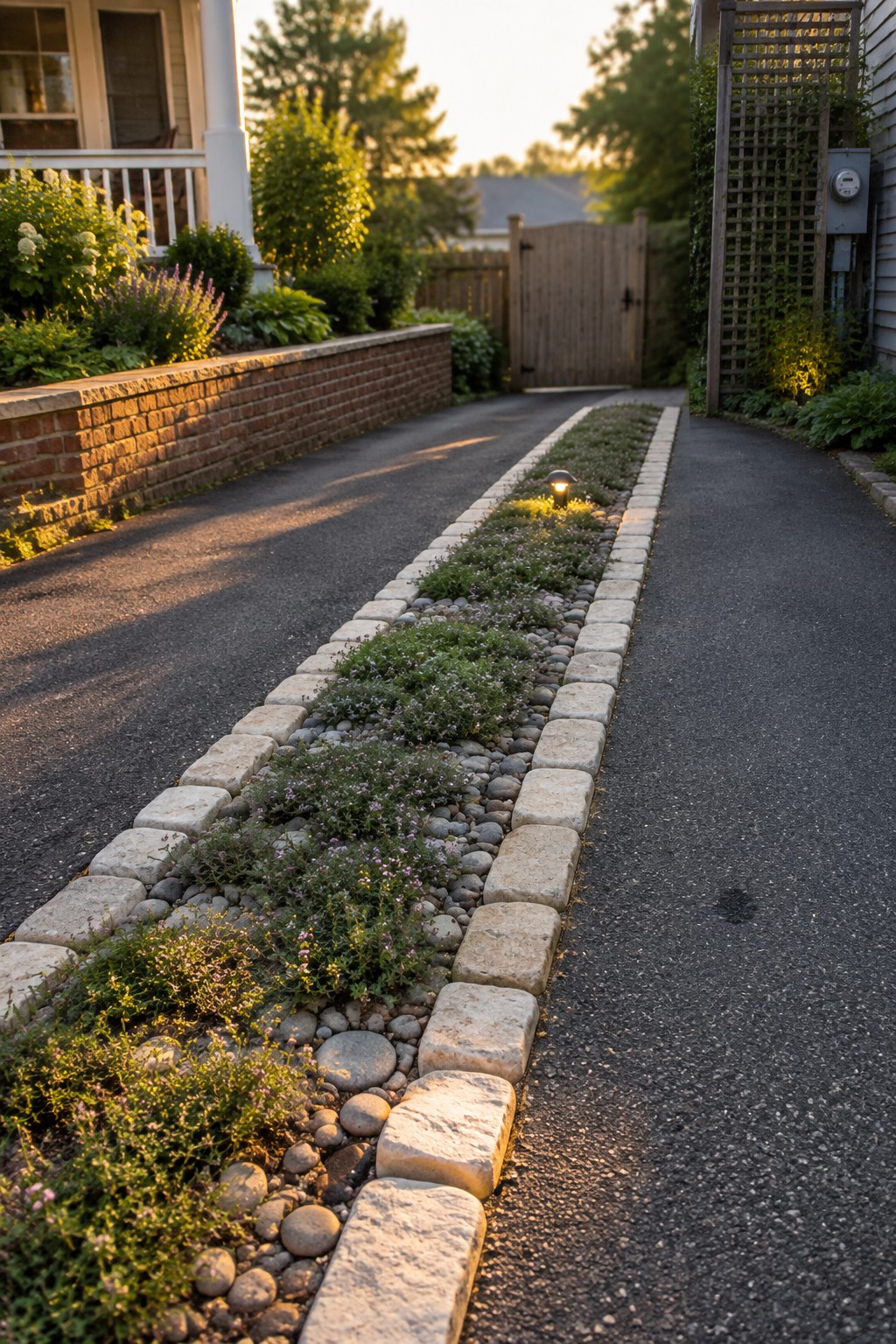
A slim planting bed can break up a narrow asphalt driveway without taking away much usable space. Here, pale stone edging keeps the bed contained and makes the two paved lanes easy to read.
This approach works best when the entrance is wide enough for vehicles to pass on either side of the strip. Keep the plants low and the edging sturdy so the divider stays neat and does not get in the way of tires.
Use Planters to Separate the Driveway From the Entry
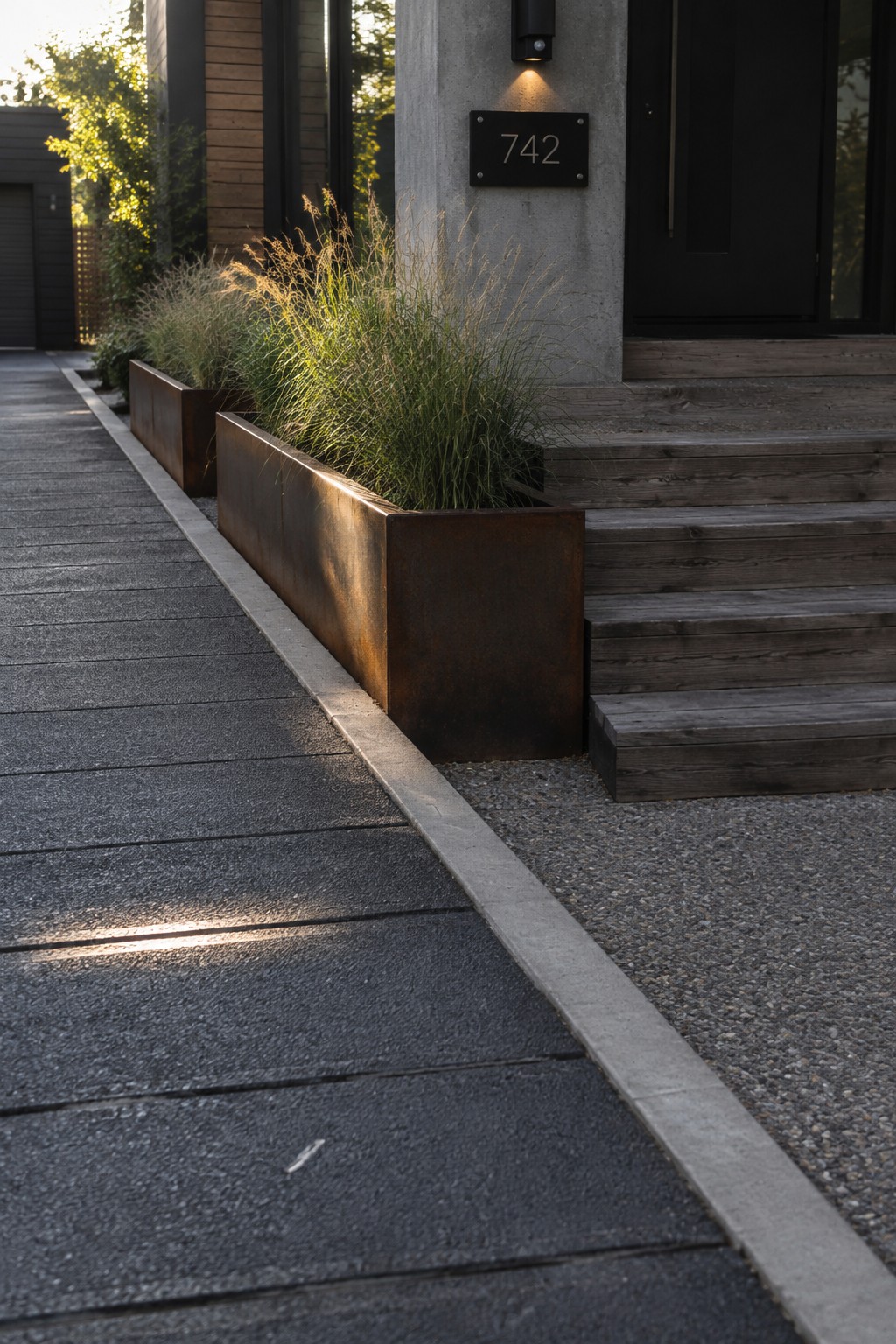
A narrow entrance can feel clearer when a slim planting bed separates the walking route from the steps. Long metal planters give the grasses a defined place, so the path stays open without needing a wide border.
This approach works well beside an asphalt driveway where space is limited. Keep the planters narrow and set them along one edge, leaving enough room for people to walk comfortably and for a car to pass.
Use Exposed Aggregate for a Narrow Driveway

An exposed-aggregate surface gives a narrow entrance more texture than plain asphalt while keeping the layout simple. Here, the dark paving forms most of the drive, and two pale concrete bands mark the route to the door.
This approach works well when you want a clear path without adding bulky borders or taking up extra room. Use a restrained color contrast, and keep the bands straight so the entrance still feels easy to navigate.
Add Built-In Planters Along a Narrow Driveway

Raised planters can make a narrow entrance feel more organized without taking up much of the driving surface. Here, the long concrete beds sit beside the asphalt and brick paving, giving the edge a clear boundary.
This approach works well in a side driveway or tight entry where there is little room for wide garden beds. Keep the planters slim and leave enough clearance for cars and walking, then choose plants that won’t spill into the path too much.
Add a Decorative Tile Walkway Beside the Driveway
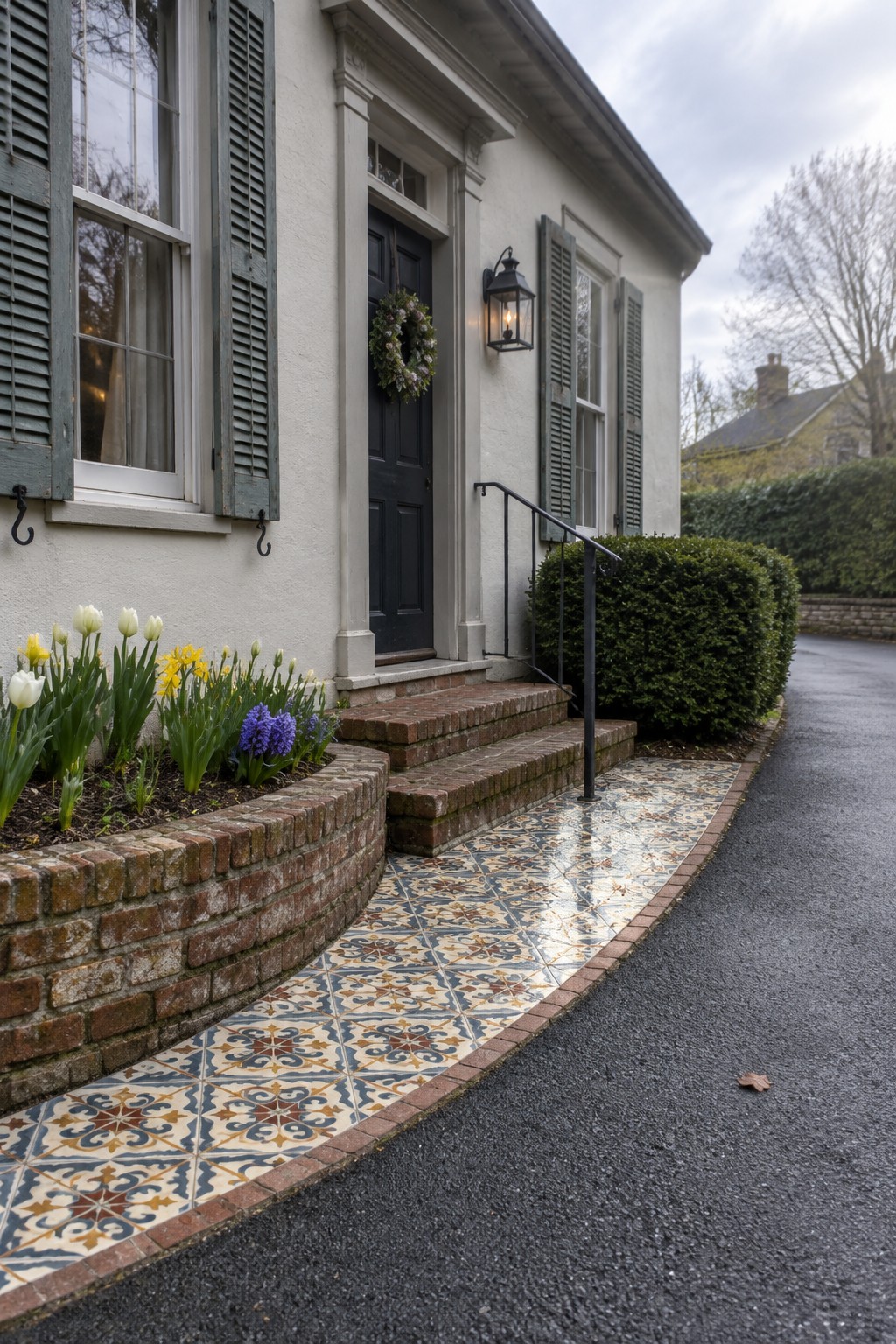
A tiled walkway can give a narrow driveway a more finished entrance without taking up much space. Here, patterned tiles follow the curve of the asphalt, making the route to the front steps easy to pick out.
This approach works well where a separate path can run along the edge of a driveway. Choose outdoor-rated, slip-resistant tile, and make sure the walkway drains properly so it stays practical in wet weather.
Add a Small Garden Feature Beside the Driveway
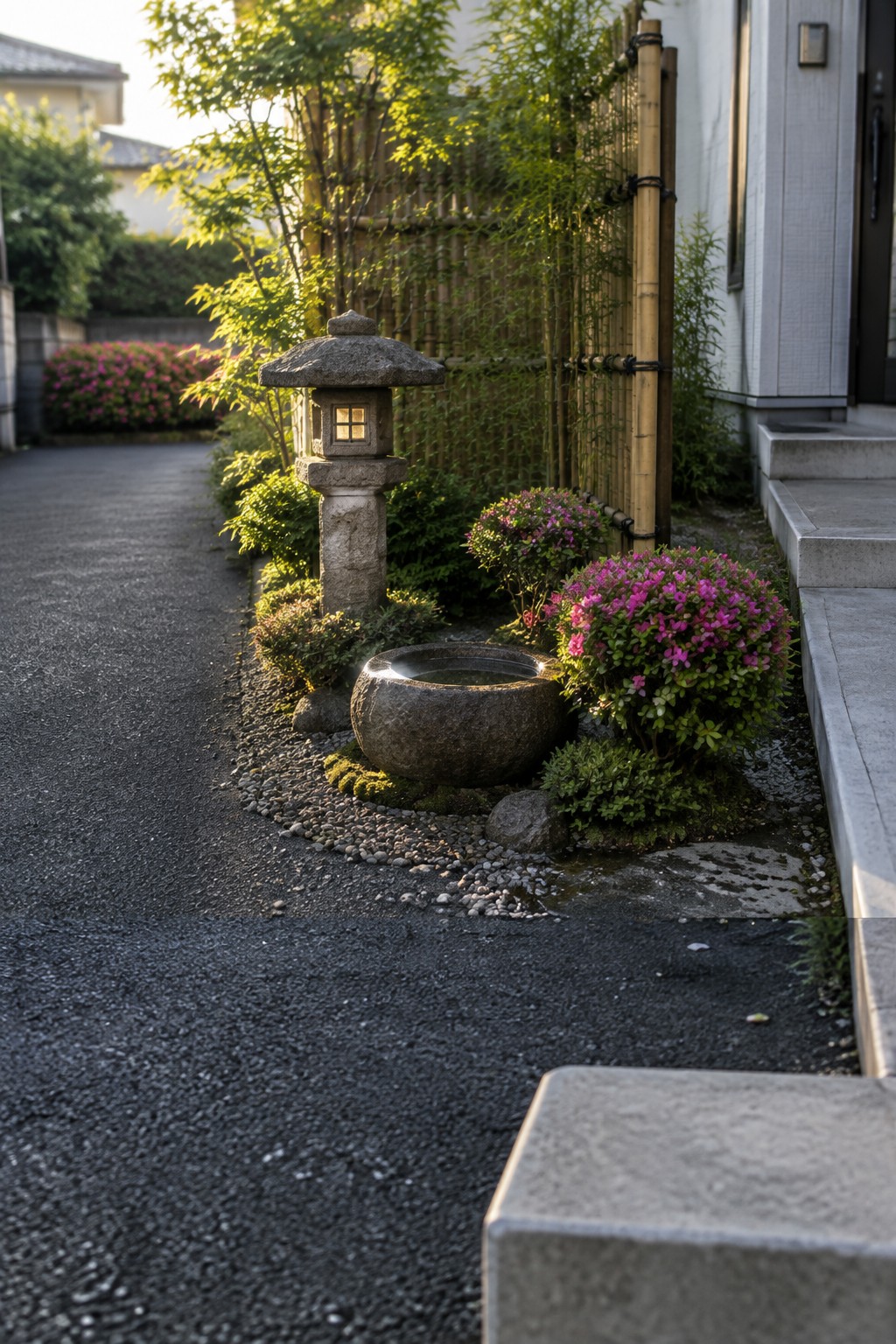
A narrow asphalt entrance can feel less like a plain strip of pavement when a small garden feature marks the edge. A stone lantern beside a shallow basin gives this entry a clear focal point without taking up much of the driveway.
This idea works best where there is a little extra space near the house or along a driveway bend. Keep the feature tucked into a planted bed so cars still have room to pass, and choose a sturdy piece that can handle outdoor conditions.
Use Planting to Shape a Narrow Garden Path
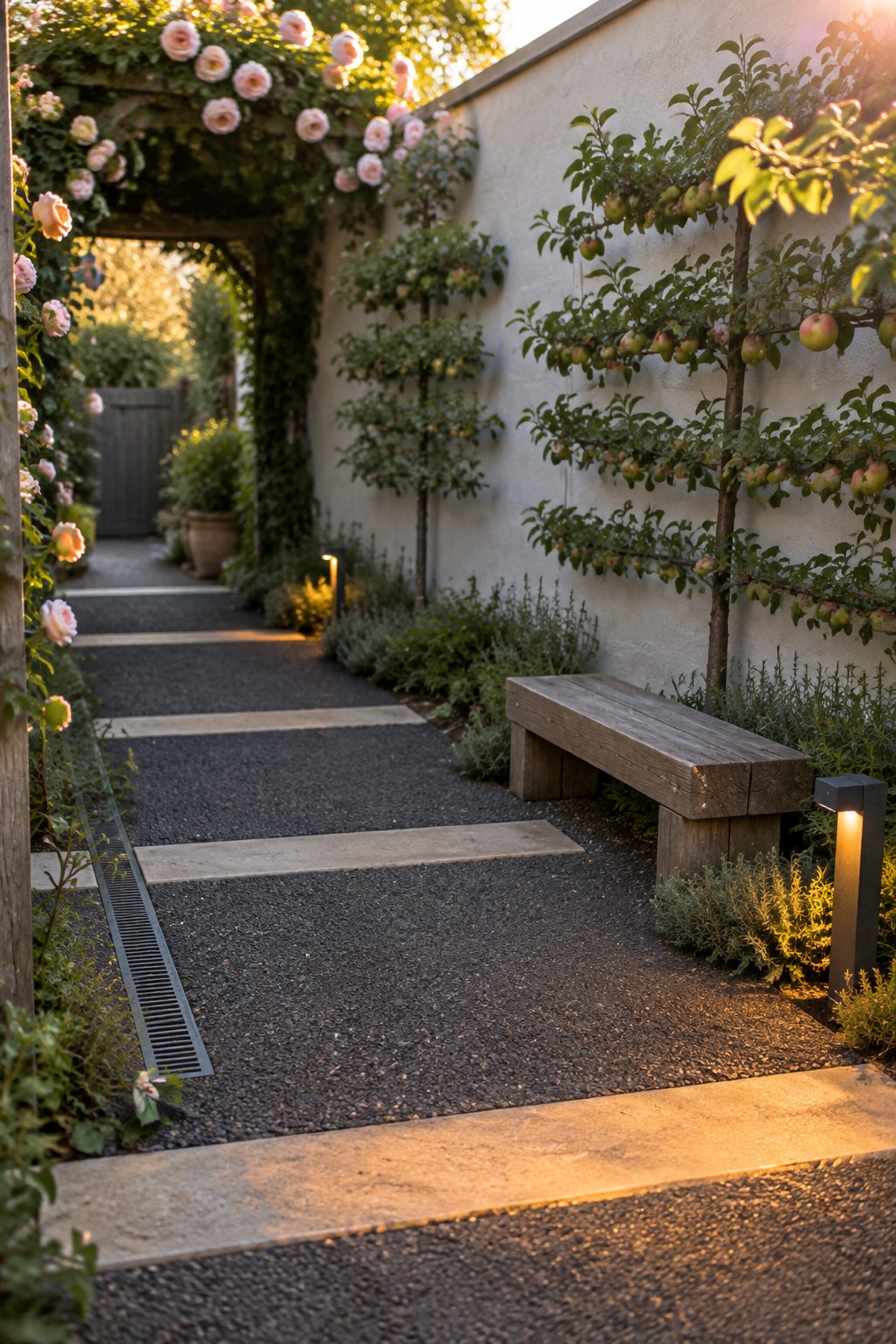
A narrow path feels more finished when planting gives it a clear edge. Here, a dark gravel surface and pale stone crossing strips keep the route easy to follow without taking up much room.
This approach can also work for a narrow driveway entrance, especially where space for wide borders is limited. Keep plants low beside the driving surface, and use a firm, even edge so greenery does not spread onto the asphalt.
Frequently Asked Questions
Q: What’s the best way to make a narrow asphalt driveway feel wider?
A: Keep the driveway edges simple and clearly defined. A lighter border or a strip of gravel along one side can make the asphalt stand out without taking up more space.
Q: Can I add a parking area without widening the whole driveway?
A: Often, a small pull-off near the entrance or beside the garage is enough for an extra car. Check that it leaves room to turn and doesn’t block the sidewalk or street.
Q: How much space should I leave for turning?
A: Leave a clear area near the entrance so you can pull in and back out without riding over the edges. If space is tight, sketch your car’s path before paving to catch awkward turns early.
Q: Is asphalt a good choice for a steep, narrow entrance?
A: Yes, but the surface needs proper grading so rainwater drains away instead of running down the driveway. A rougher asphalt finish can also give tires a better grip.
