

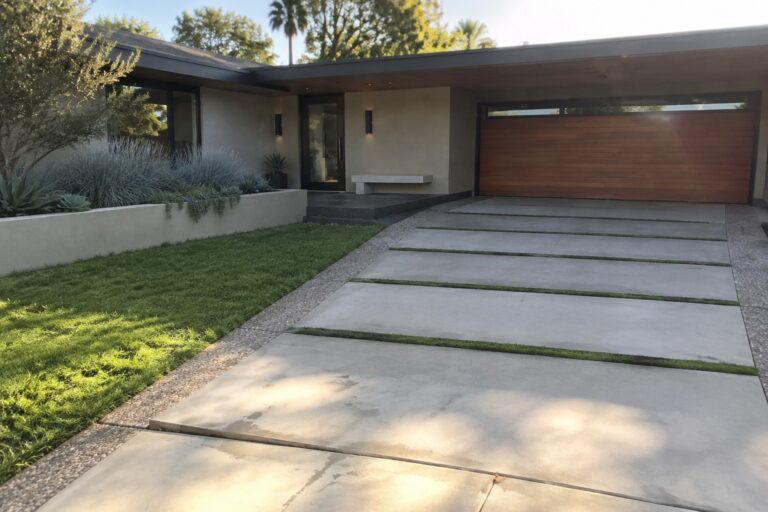
A driveway shapes the first impression of a home, so its pattern and finish matter as much as its durability.
I like how linear scoring brings order to concrete without making the surface feel overly formal.
The lines can echo a mid-century home’s clean rooflines and simple facade, while also guiding the eye toward the entry.
Scale is important, since grooves that feel too dense or too bold can compete with the house instead of complementing it.
I’d save the ideas that suit the home’s proportions and test how their scoring, color, and edging might look at the curb.
Use Linear Scoring to Break Up Concrete Driveway Slabs
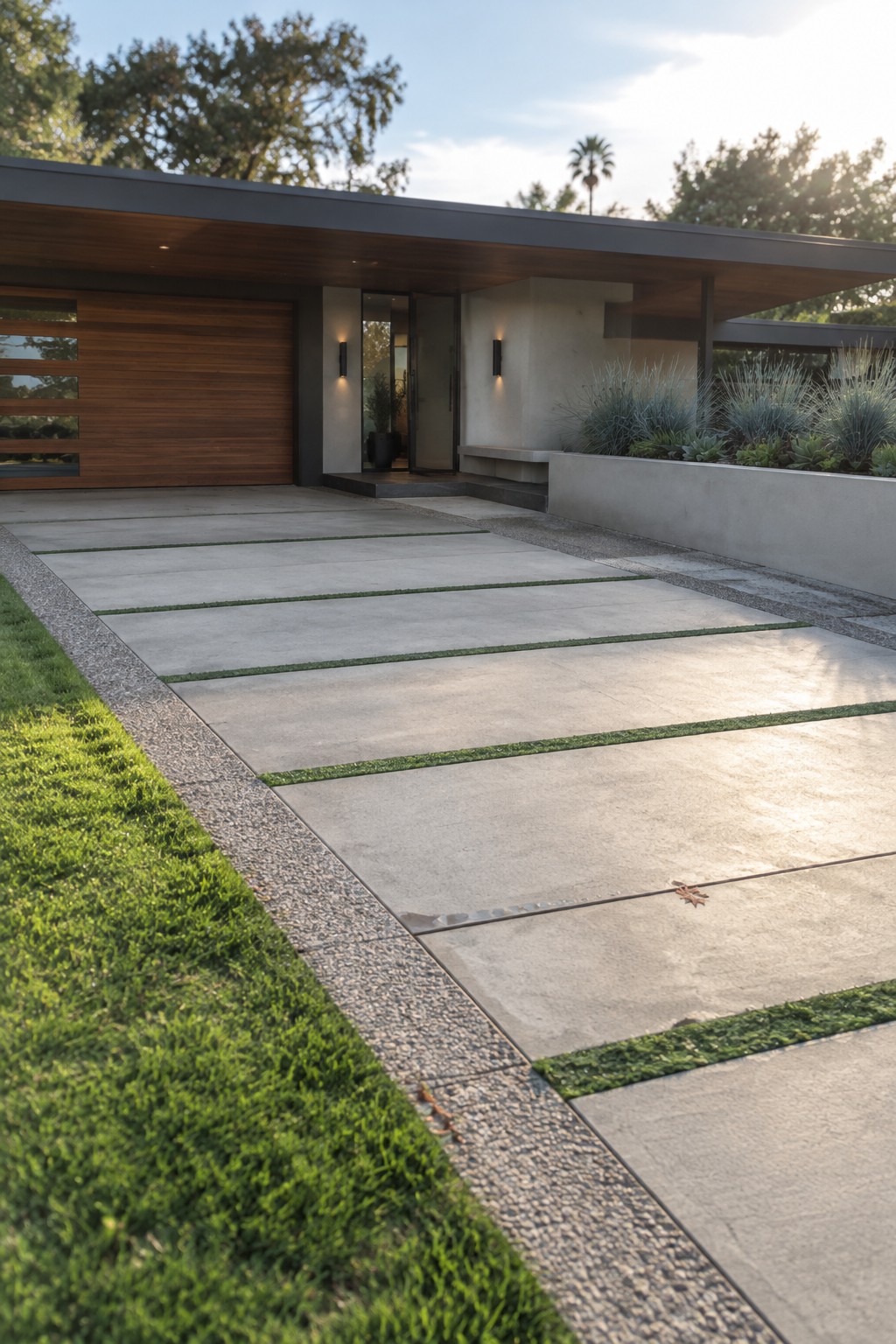
Large concrete slabs can make a driveway feel orderly without looking too plain. Narrow green joints between the sections add a simple rhythm, while the broad surface still feels clean and practical.
This layout suits modern homes where a straight, uncluttered approach works best. Keep the scoring consistent and plan the joints before pouring; grass between slabs needs occasional trimming and may be harder to maintain in shaded or high-traffic areas.
Use Linear Scoring to Define a Concrete Driveway
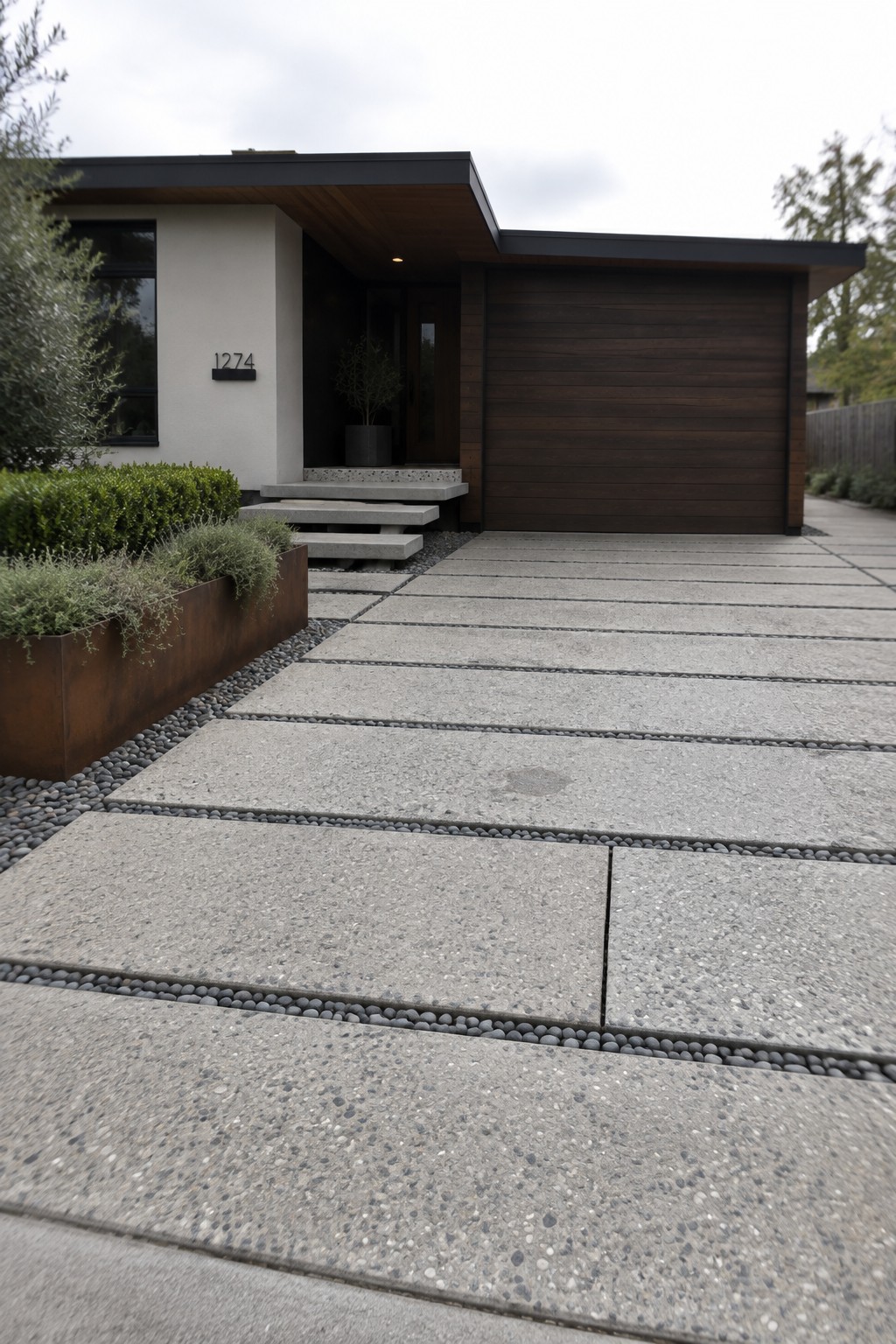
Linear scoring gives a concrete driveway a clear pattern without relying on added color or decoration. Here, long rectangular slabs are separated by narrow pebble joints, making the surface feel orderly and giving each section a distinct edge.
This approach suits a modern home, especially when the driveway leads straight to the garage or entry. Keep the joints consistent and plan their spacing before pouring, since uneven lines can make the finished surface look messy.
Use Scored Concrete to Shape the Driveway
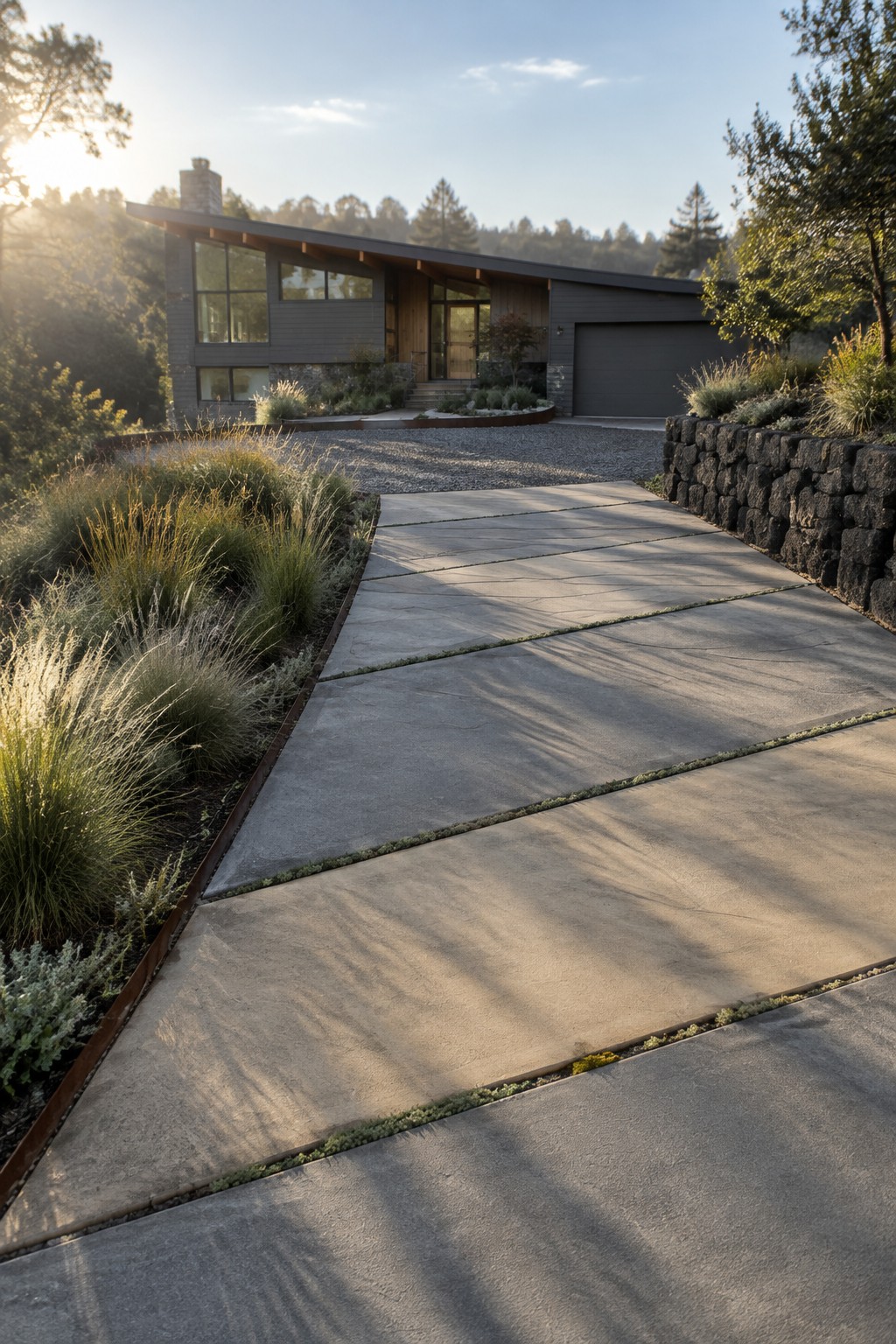
Linear scoring gives a broad concrete driveway a more considered look without changing its simple, practical surface. Long diagonal joints break up the pavement and bring a little movement to the approach.
This idea suits modern homes where a plain slab might feel too stark. Keep the scored sections generous, and use narrow joints so the pattern stays easy to read rather than becoming busy.
Add Wood Strips Between Concrete Driveway Sections
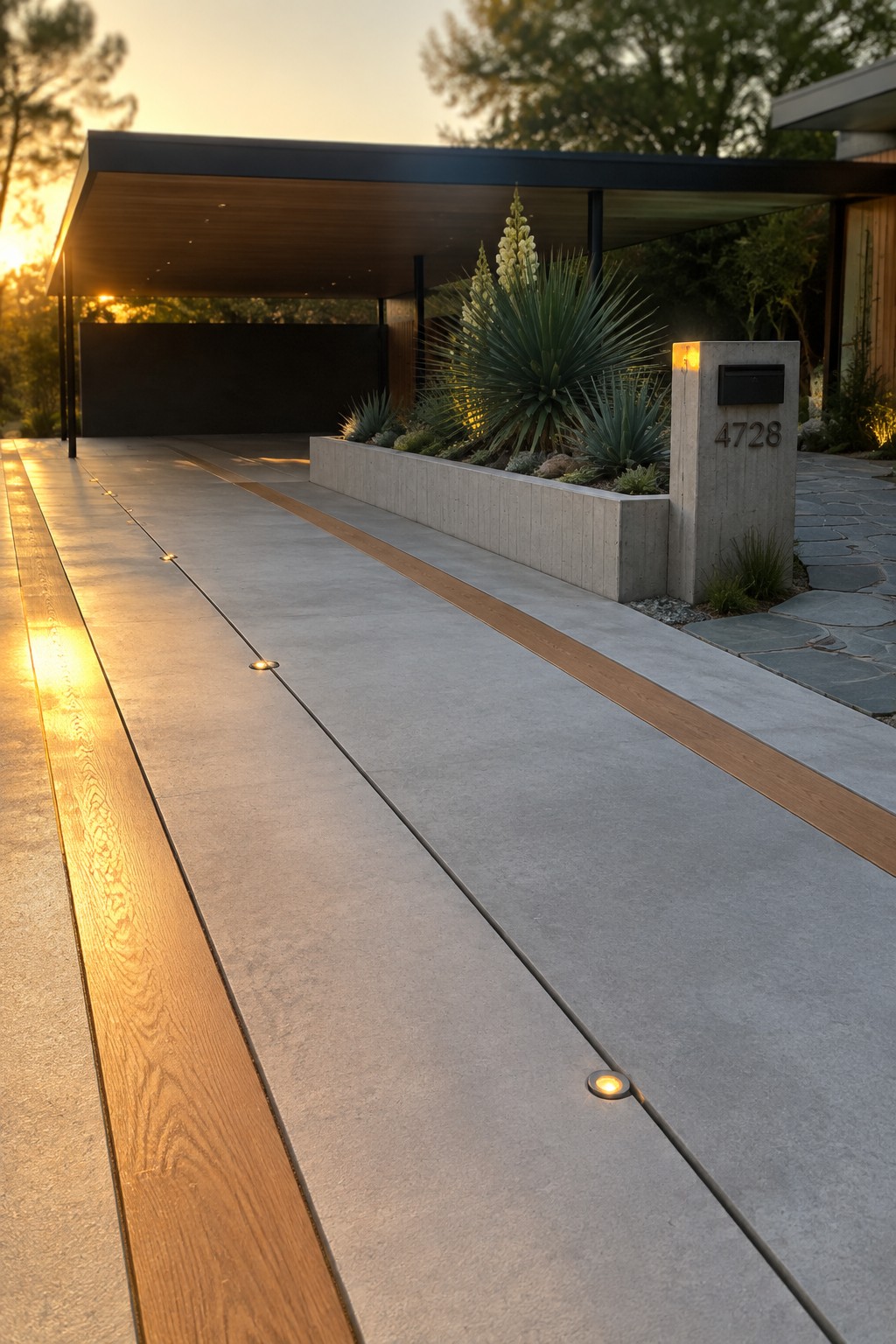
Long, narrow wood strips can give a concrete driveway a more finished look while emphasizing its straight layout. Here, they run alongside the concrete slabs, making the scoring feel like part of the overall design rather than just a series of joints.
This approach suits modern homes where clean lines are already part of the exterior. Use durable wood or a wood-look material, and plan for drainage and upkeep so the strips stay neat over time.
Use Long Concrete Slabs for a Clean Approach
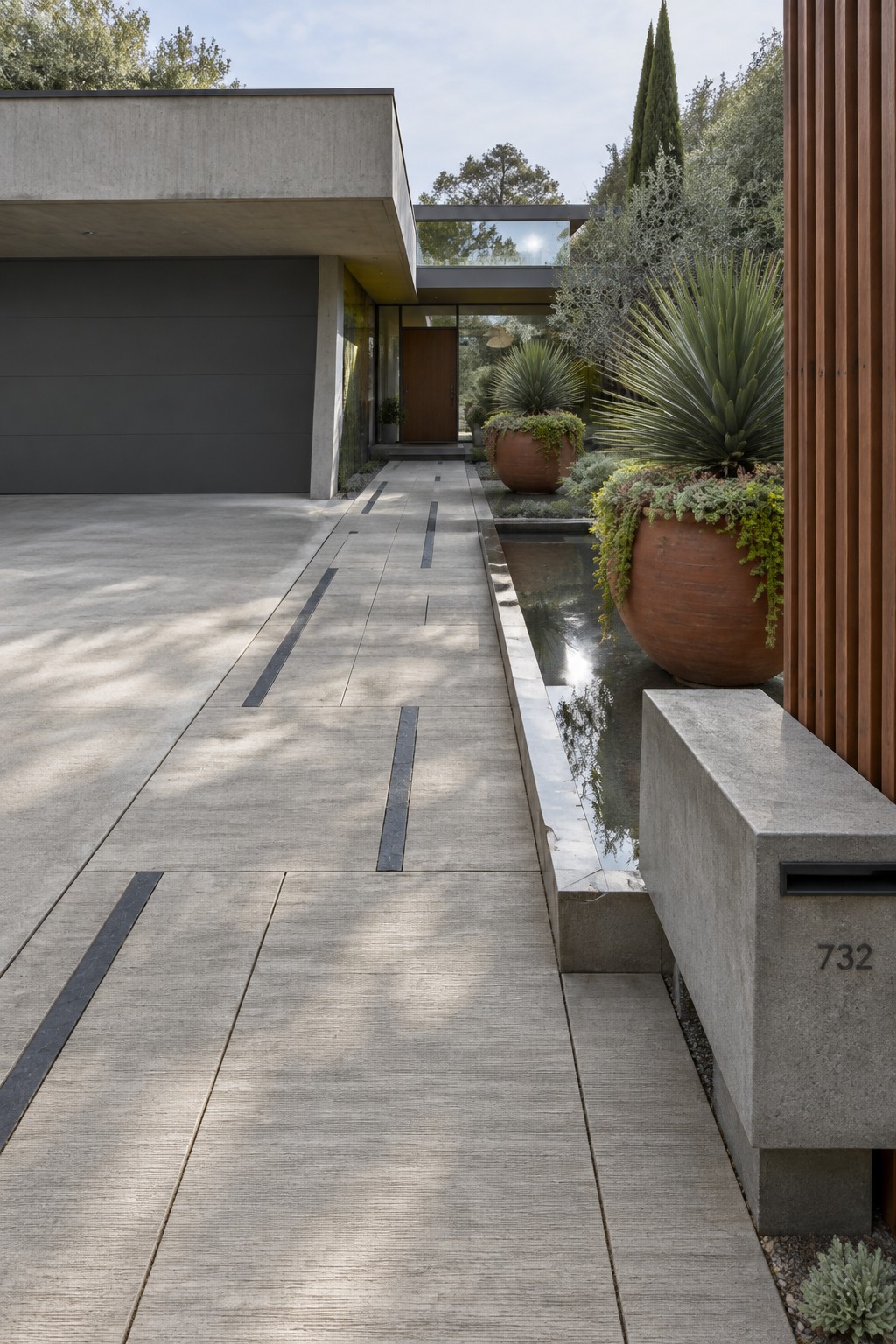
Long concrete panels can make a driveway feel orderly without adding decorative patterns. Narrow dark scoring lines bring a little structure to the surface while keeping the overall look simple.
This approach suits modern homes with straightforward architecture. Keep the lines aligned with the direction of travel, and use a restrained layout so the scoring feels intentional rather than busy.
Use Large Concrete Panels for a Clean Driveway Layout

Large concrete slabs give a driveway a simple, orderly look, while linear joints keep the broad surface from seeming like one unbroken expanse. This approach suits a mid-century modern home, where clear lines and restrained materials often feel right.
Use long, straight score lines to divide the driveway into generous sections, and keep the joints consistent from one slab to the next. A narrow stone strip can mark the edge, but avoid adding too many competing patterns.
Use Wide Concrete Slabs for a Modern Driveway
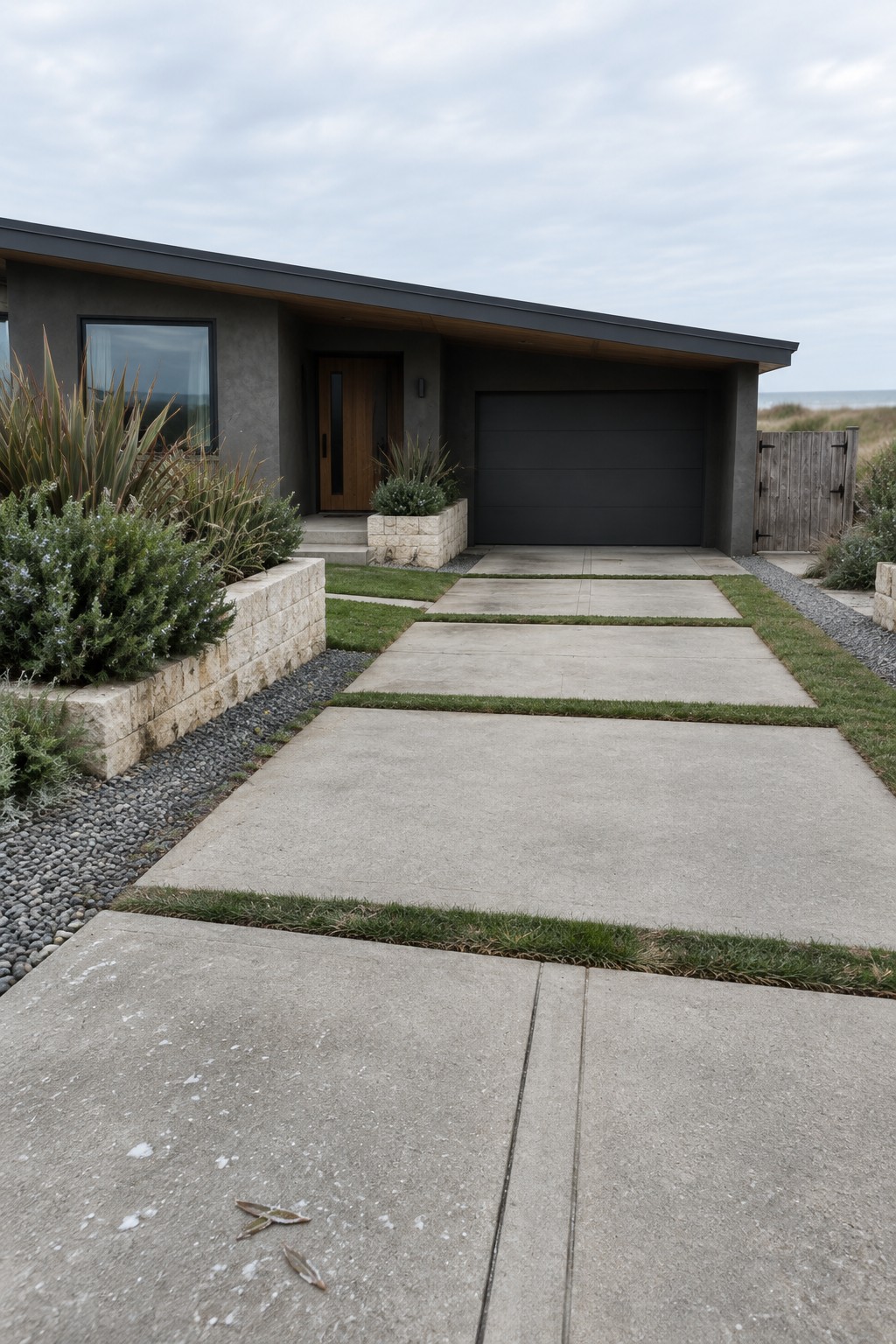
Large rectangular concrete slabs give a driveway a clean, orderly look. The grass strips between them bring in a bit of green while keeping the concrete layout easy to read.
This approach suits a modern home with a simple facade. Keep the joints straight and consistent, and make sure the slabs are wide enough for comfortable foot and vehicle traffic.
Use Concrete Slabs to Make a Clear Garden Path
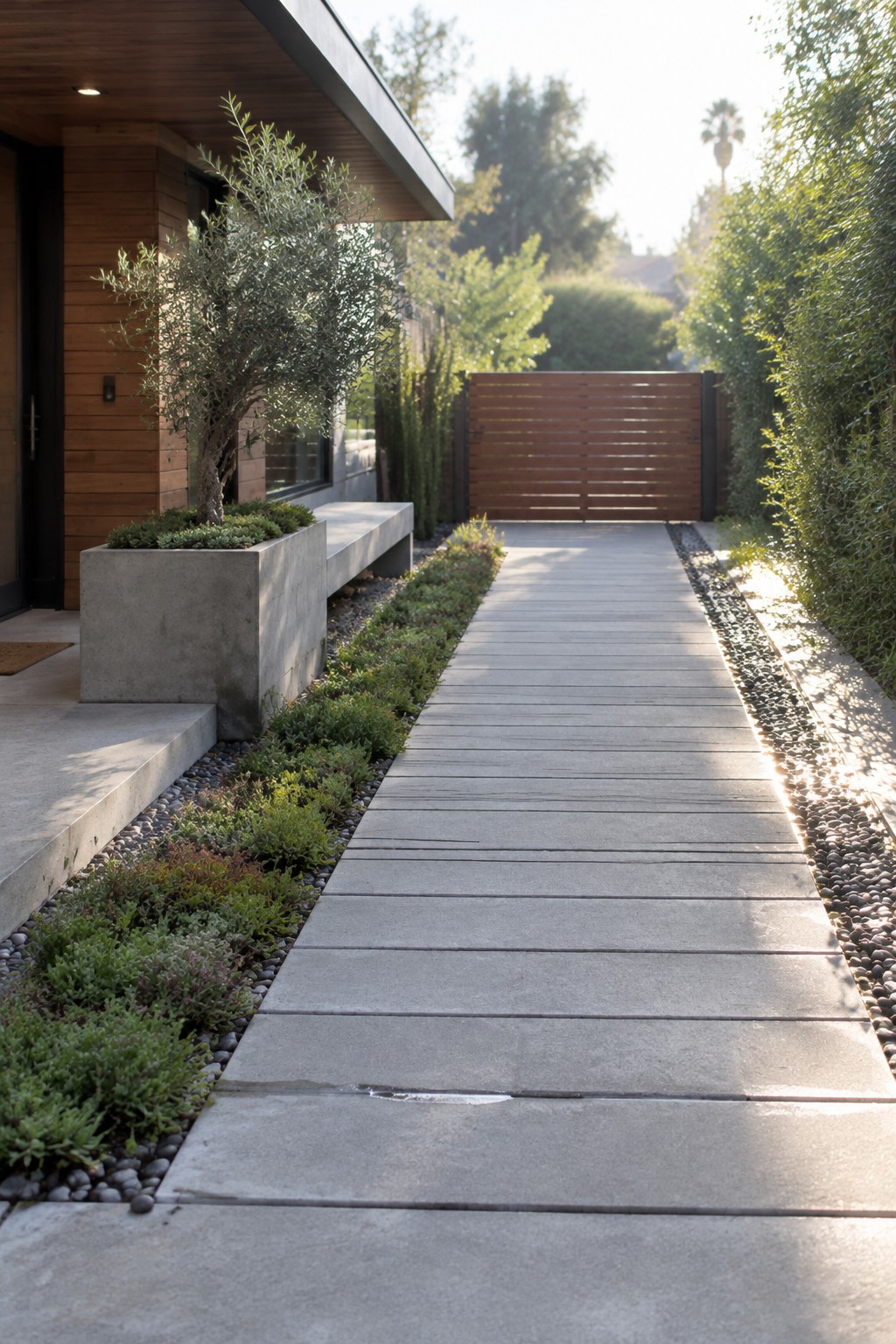
Large concrete slabs create a simple, easy-to-follow route through a landscaped entry. Their straight edges give the planting beds a neat outline without making the path feel fussy.
This approach works well beside a modern home, especially where a direct walkway is more useful than a winding garden path. Leave narrow gravel joints between slabs for drainage, and make sure the surface is level and wide enough for comfortable walking.
Use Curved Scoring to Mark a Concrete Driveway

Curved scoring gives a concrete driveway a softer, more custom look than a grid of straight joints. Here, broad circular lines break up the large paved area while keeping the overall design simple.
This approach works best where there is enough open space for the curves to read clearly. Keep the scoring shallow and plan the lines before pouring so they complement the driveway’s shape rather than interfere with practical slab joints.
Continue Linear Scoring Along the Entry Walk
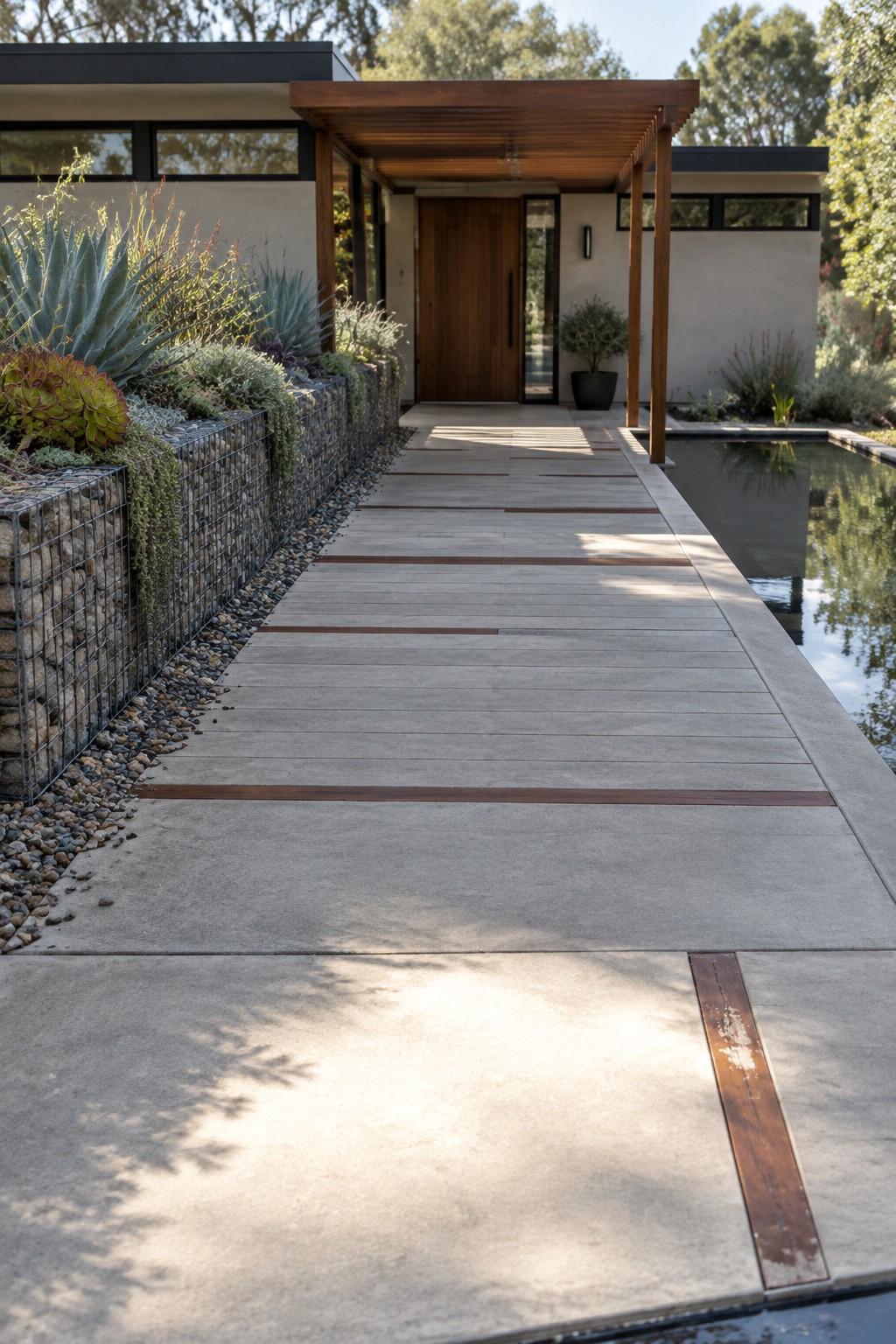
Linear scoring can carry a concrete driveway’s clean pattern right up to the front door. Here, narrow wood strips break up the broad walkway slabs, giving the approach a clear direction without making the surface feel busy.
This idea works well on a long path leading to a home with simple, modern lines. Keep the score lines consistent and plan them before pouring so they align neatly across the slabs.
Use Concrete Walkways to Connect the Driveway and Garden
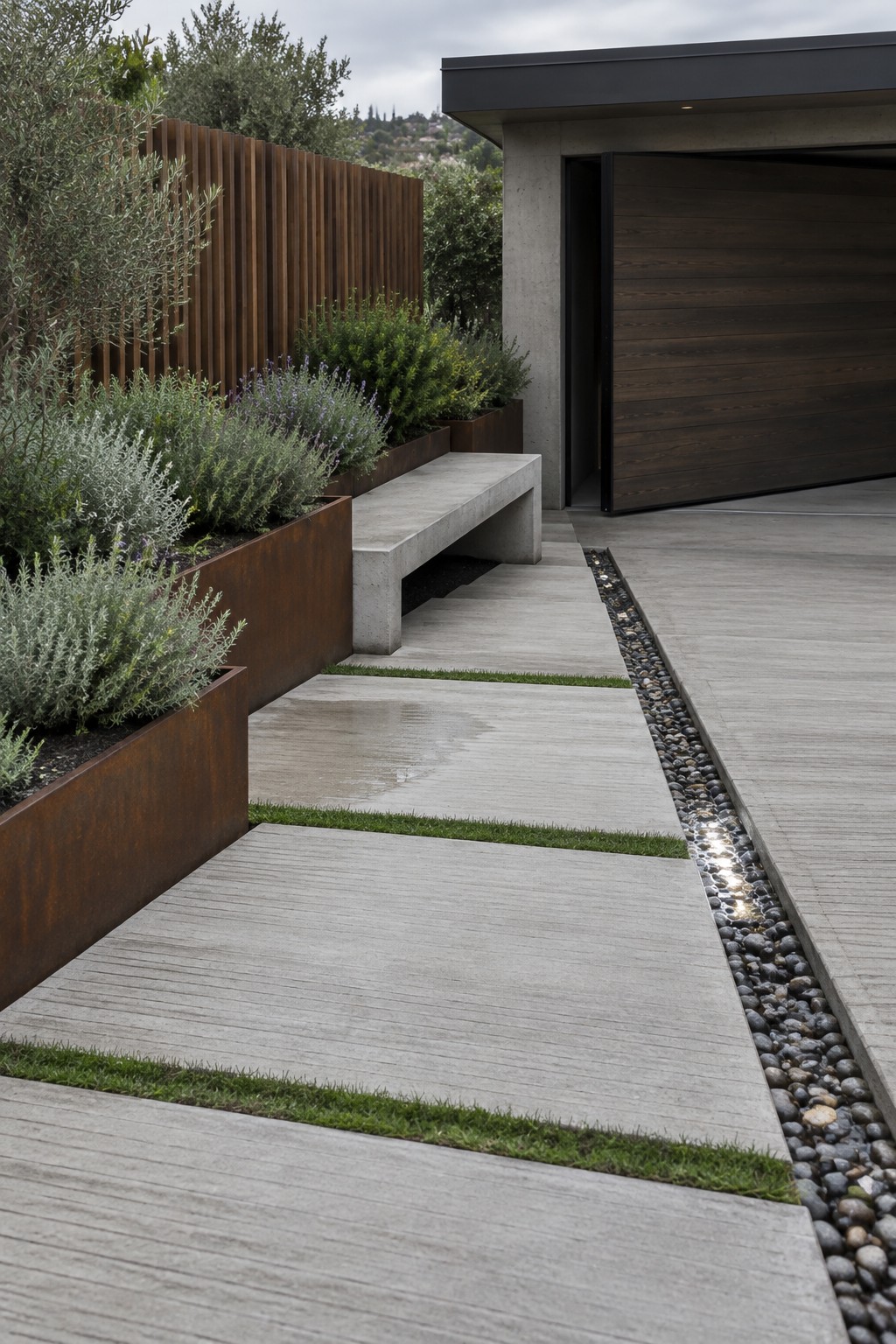
A concrete path can make the route from the driveway to the front door feel clear and easy to follow. Here, broad slabs and narrow grass joints give the walkway a steady rhythm, while keeping the layout simple.
This approach works well beside modern homes, especially where planting beds run along the path. Keep the joints consistent, and leave enough room for comfortable footing. Linear scoring on the slabs can carry the same visual order through to a concrete driveway.
Use Planting Strips to Break Up Concrete Paving
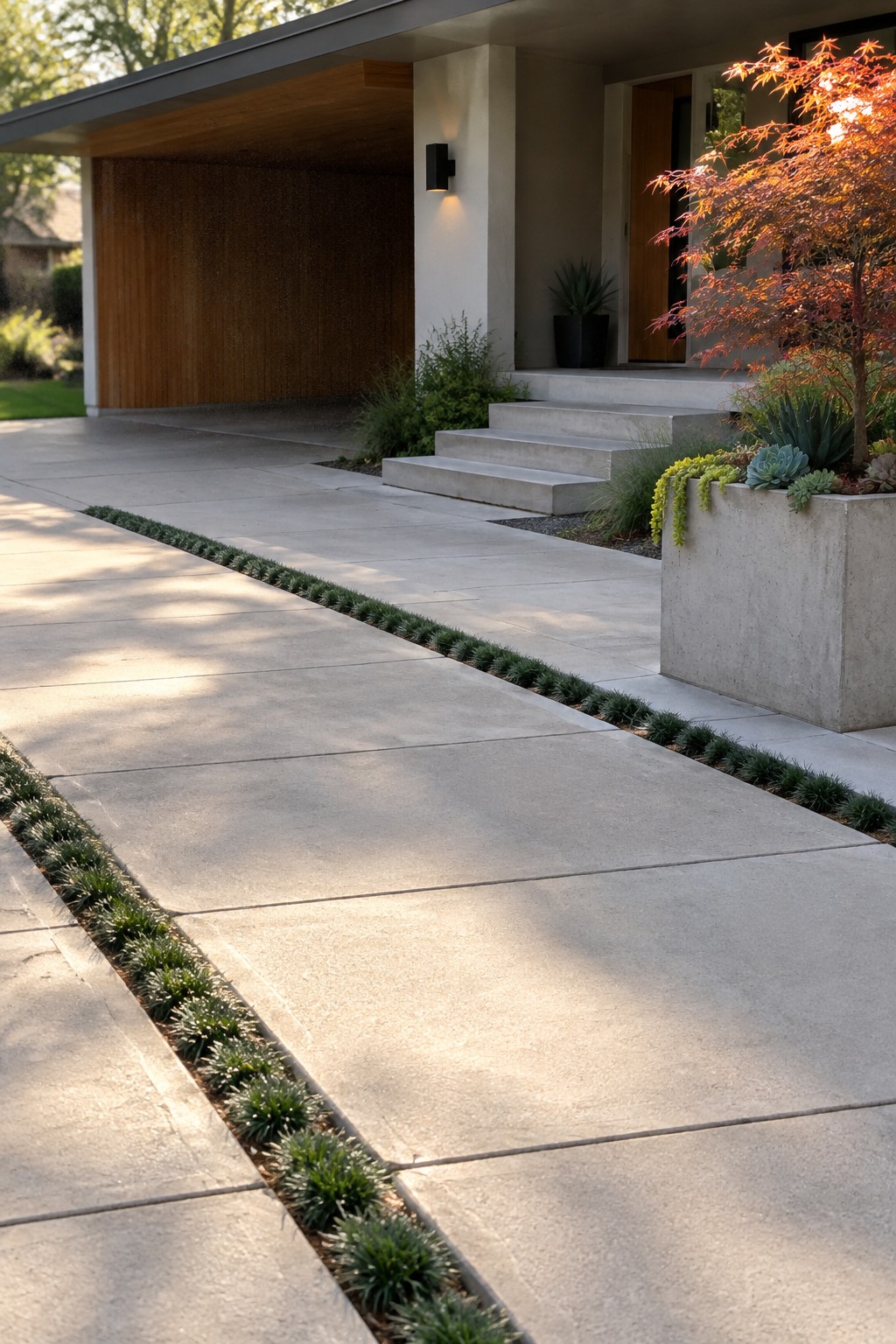
Narrow planting strips can bring a little greenery into a broad concrete driveway without giving up a clean, practical surface. Repeating the same low plants along the joints also gives the paving a steady rhythm.
This approach suits modern homes where large slabs might otherwise feel too plain. Keep the strips narrow and choose compact plants that can handle the site, so they do not spread across the concrete or make the driveway harder to maintain.
Use Contrasting Concrete Panels for a Modern Driveway
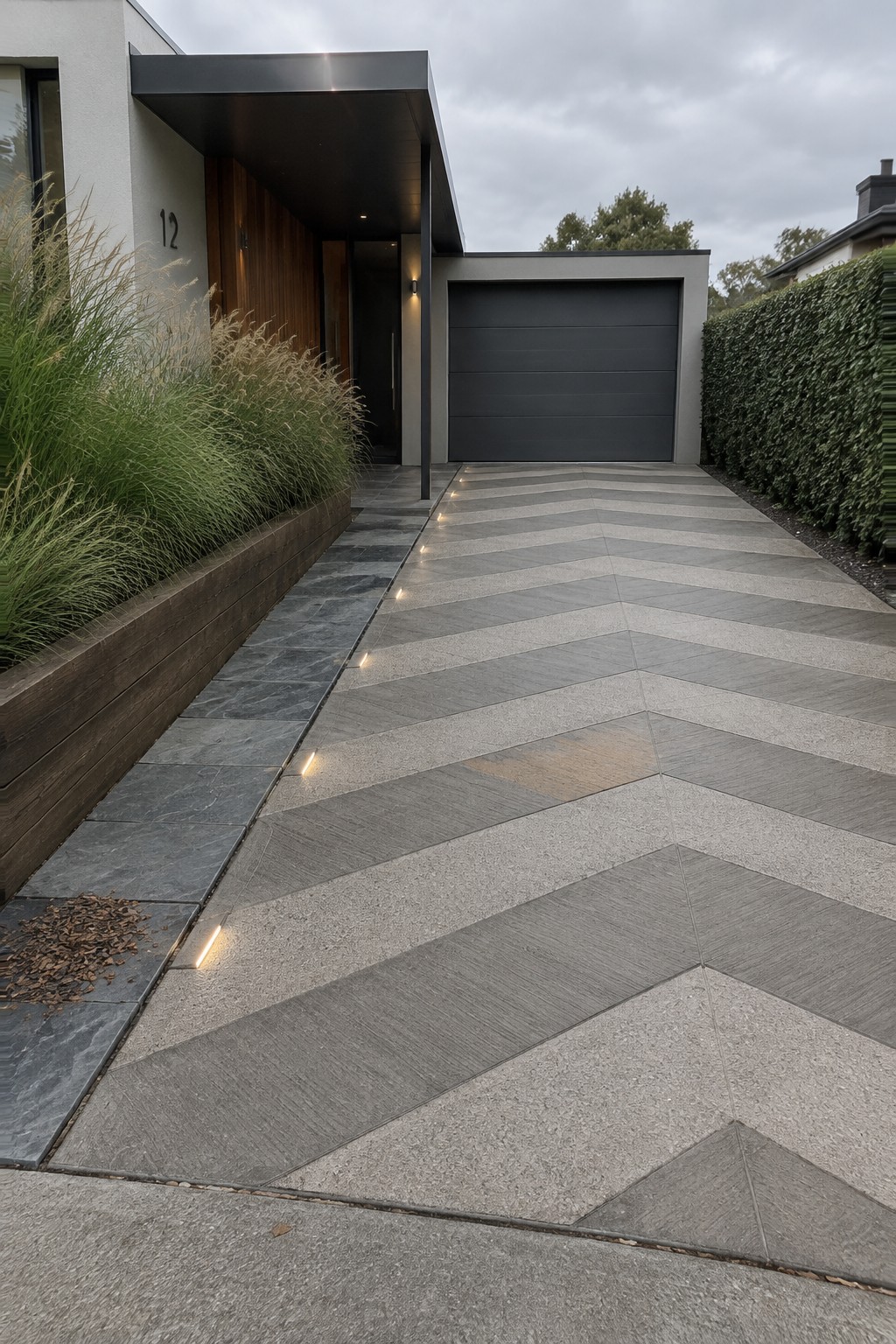
Using two concrete finishes in alternating diagonal bands gives a driveway a clear pattern without relying on decorative add-ons. The change in tone and texture makes the scoring easy to notice and helps a broad expanse of paving feel more considered.
This approach suits a contemporary home, especially where the driveway leads directly to the entry. Keep the panel sizes consistent and choose finishes with enough contrast to read clearly, but not so much that the pattern competes with the house.
Keep the Planting Bed Beside the Driveway
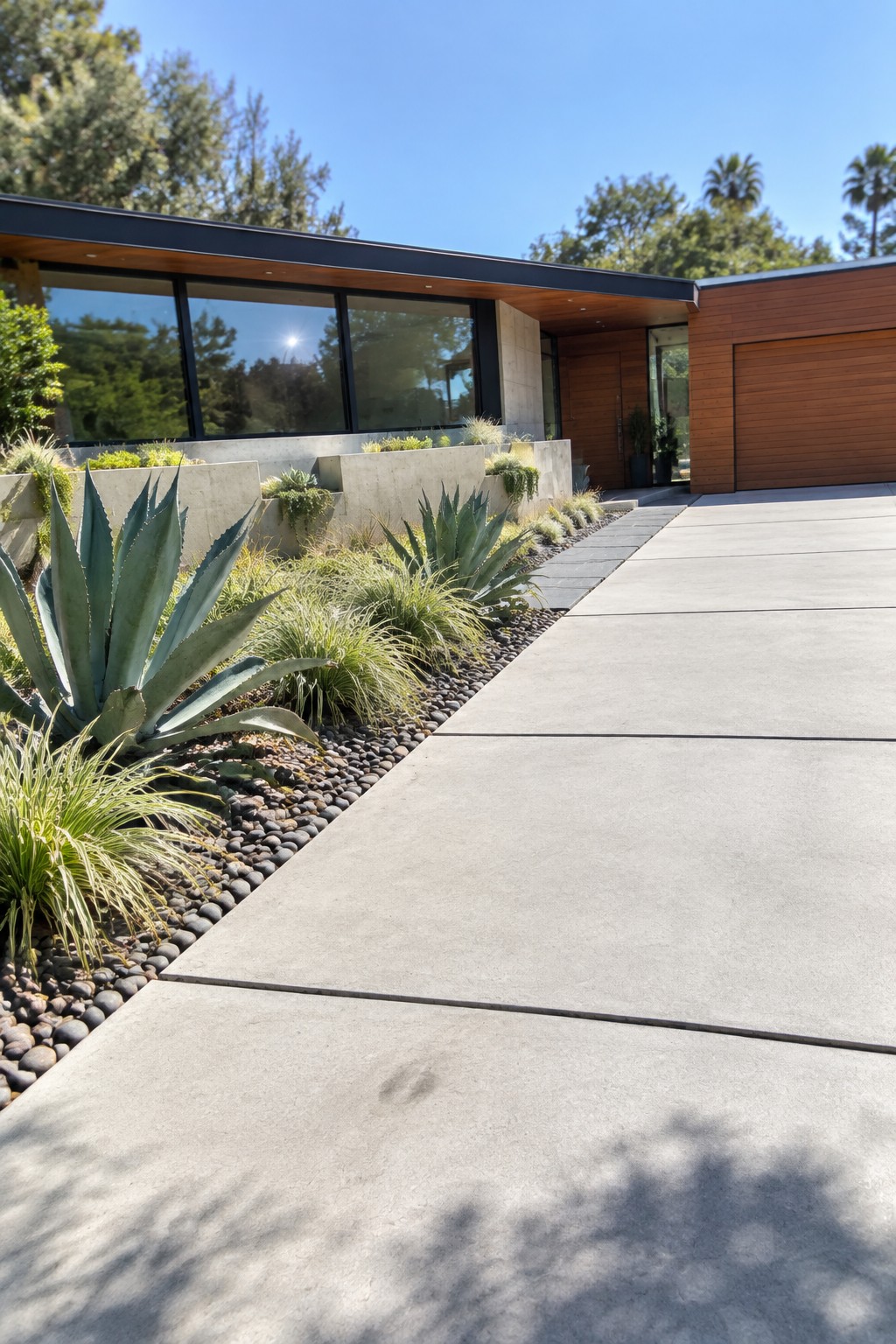
A narrow planting bed can keep a broad concrete driveway from feeling like one large paved area. Here, a line of smooth stones separates the paving from drought-tolerant plants, giving the driveway a clear edge without adding a tall border.
This approach works well along a straight driveway where there is room for a planted strip. Choose hardy plants that suit the local climate, and keep them low enough to leave the concrete edge easy to see and maintain.
Carry Linear Scoring Through the Entry Walk
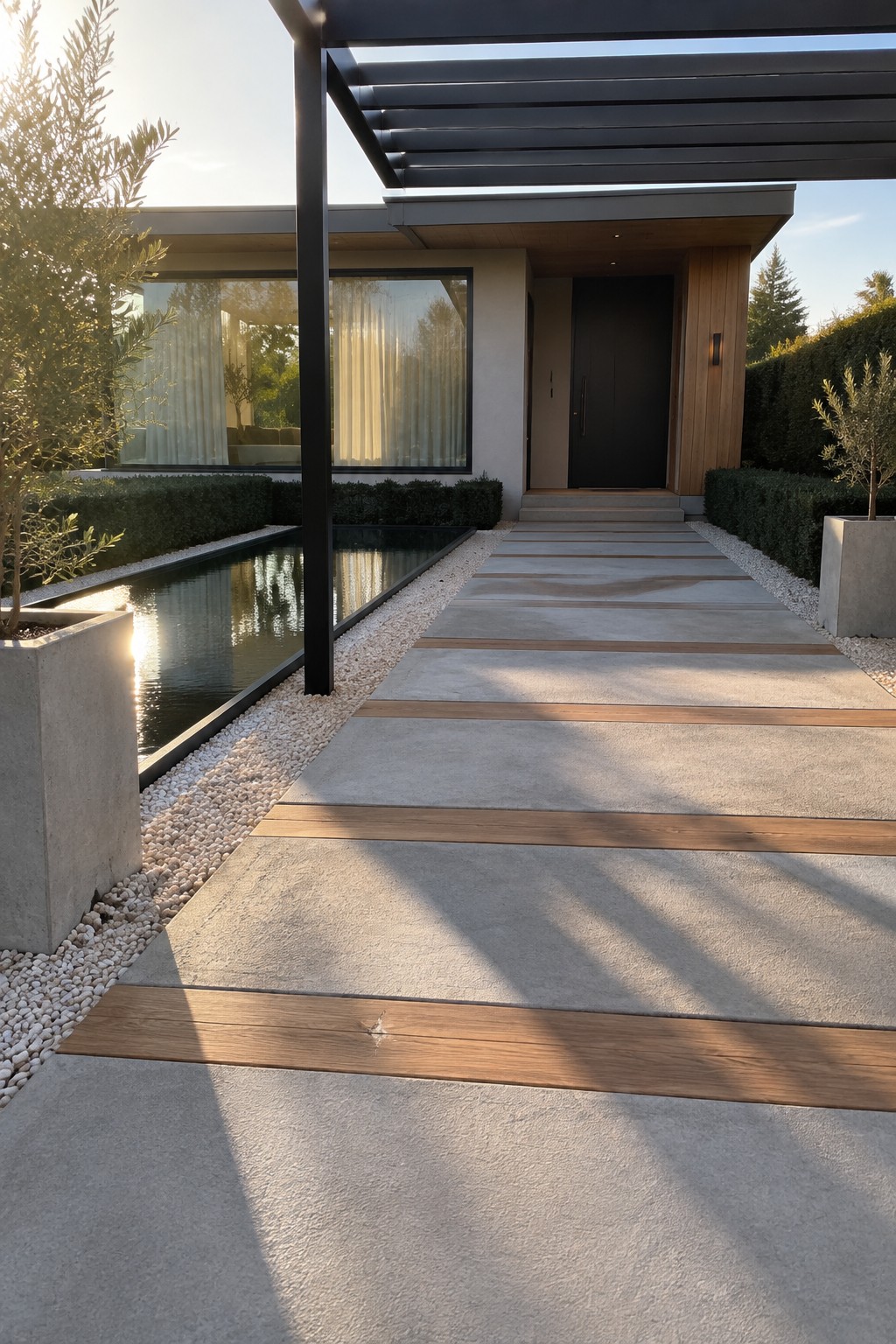
Linear joints and narrow wood strips divide the concrete approach into long, clear sections. Carrying that pattern from the driveway toward the front door helps the entry feel connected rather than like a separate path.
This approach suits a modern home with simple lines. Keep the joints consistent and the strips level with the concrete so they remain easy to walk on and do not collect water or debris.
Use Large Concrete Slabs for a Modern Driveway
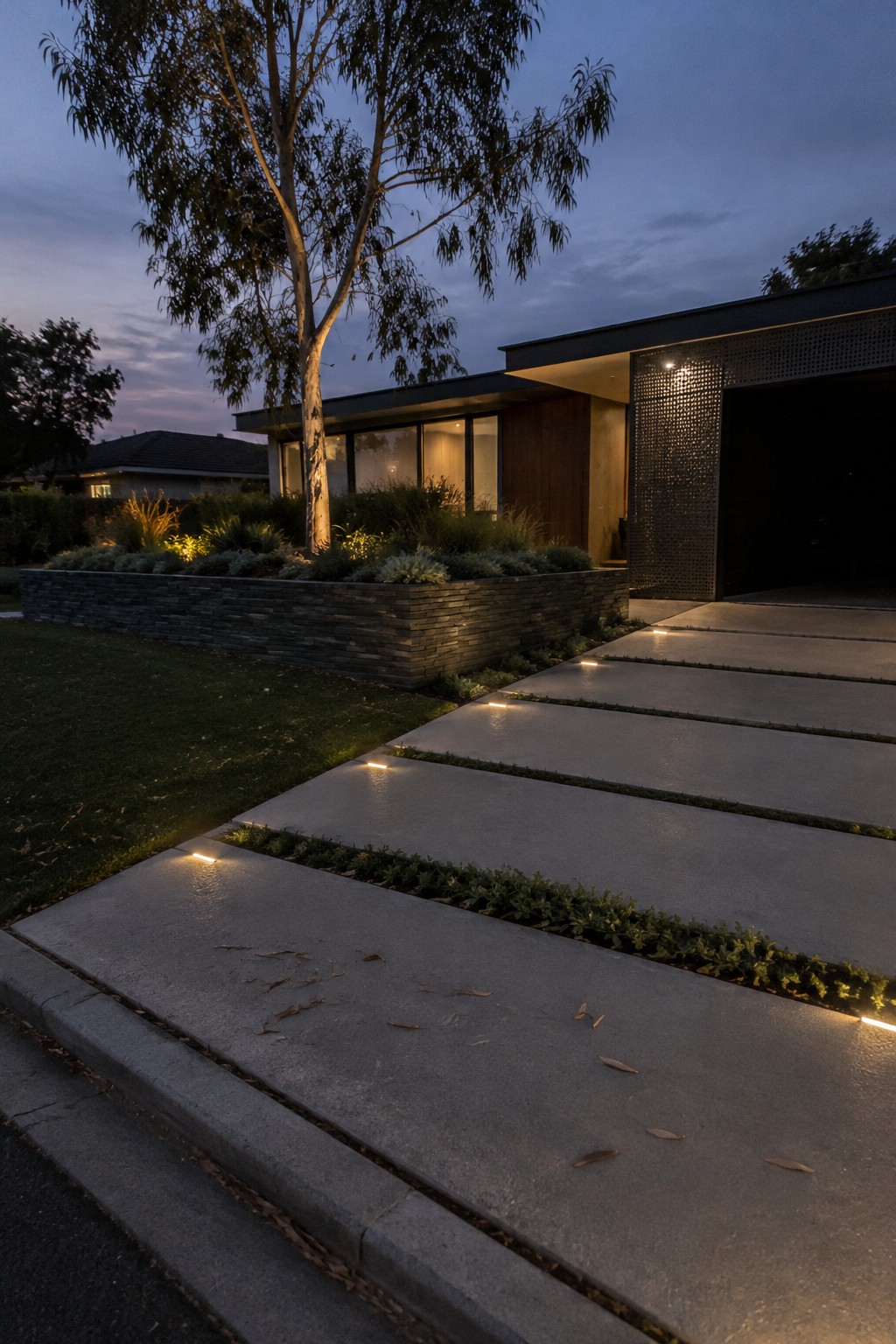
Large concrete panels give a driveway a simple, orderly look. Here, narrow planted joints and small inset lights help mark the slab edges without making the paving feel busy.
This approach suits a modern home where the driveway is part of the overall design. Keep the joints straight and evenly spaced, and use planting that stays low so it does not crowd the walking surface.
Use Long Concrete Slabs for a Modern Entry
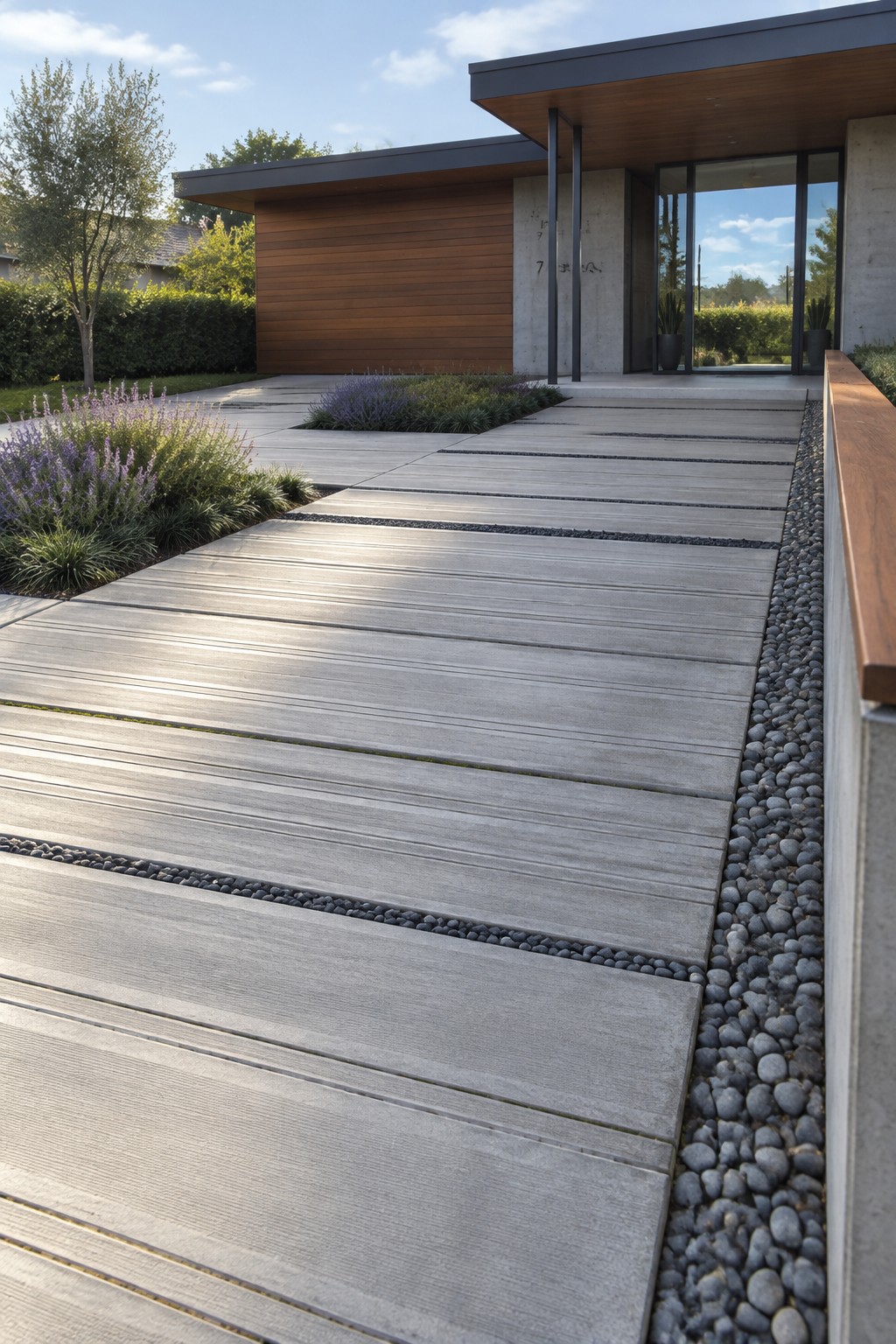
Long concrete slabs create a clear, orderly route to the front door. Their linear joints give a broad paved approach a little rhythm without adding a busy pattern.
This approach works well for modern homes where a simple walkway can continue the clean lines of the architecture. Leave narrow gaps between the slabs for gravel, and make sure the surface has a gentle slope so water drains away from the house.
Frequently Asked Questions
Q: How wide should I make the scored lines in a concrete driveway?
A: Keep the grooves wide enough to read from the street, but not so dominant that they take over the surface. A simple, evenly spaced pattern usually suits the clean geometry of a mid-century home.
Q: Will linear scoring make my driveway less slippery?
A: Scoring adds texture, but it does not guarantee a slip-resistant surface, especially when the concrete is wet or icy. Ask your installer about a suitable finish, and avoid grooves so deep that they collect water or debris.
Q: Can I add linear scoring to an existing concrete driveway?
A: It may be possible to cut lines into sound, uncracked concrete, though the result can look different from grooves formed during a new pour. Have a concrete contractor check the slab first, since scoring a damaged driveway can make its flaws more noticeable.
Q: How do I keep the lines looking sharp over time?
A: Sweep out dirt and leaves before they build up in the grooves, and rinse the surface now and then. A concrete sealer can help protect the finish, but follow the product’s care instructions.
