

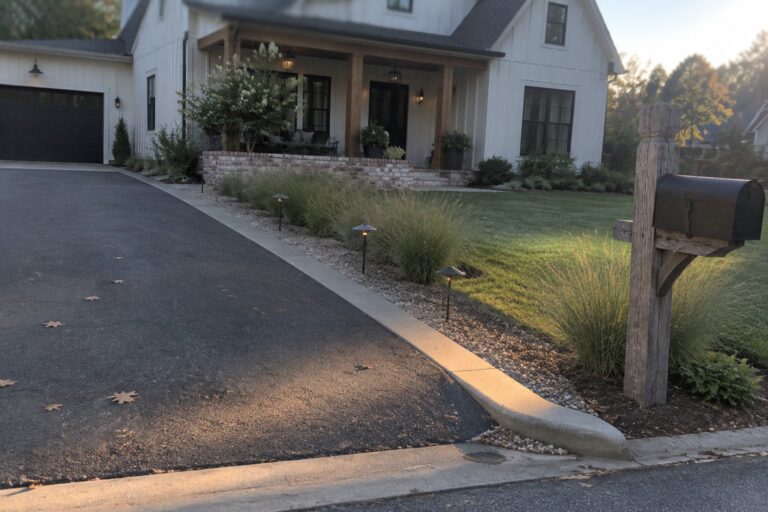
A clear edge can make an asphalt driveway look more finished while keeping gravel, soil, and plants from creeping onto the pavement.
I’ve found that the best edging choices are the ones that suit the driveway’s shape and the amount of upkeep a homeowner can manage.
Stone, brick, timber, and other materials each create a different boundary, so it helps to consider how they’ll look beside the house and hold up to weather and vehicle traffic.
Some approaches are simple enough to test along a short section before committing to the whole drive.
I’d save the ideas that fit your yard’s layout and budget, then adapt the details to make the perimeter feel tidy and practical.
Define the Driveway With a Curved Planting Bed
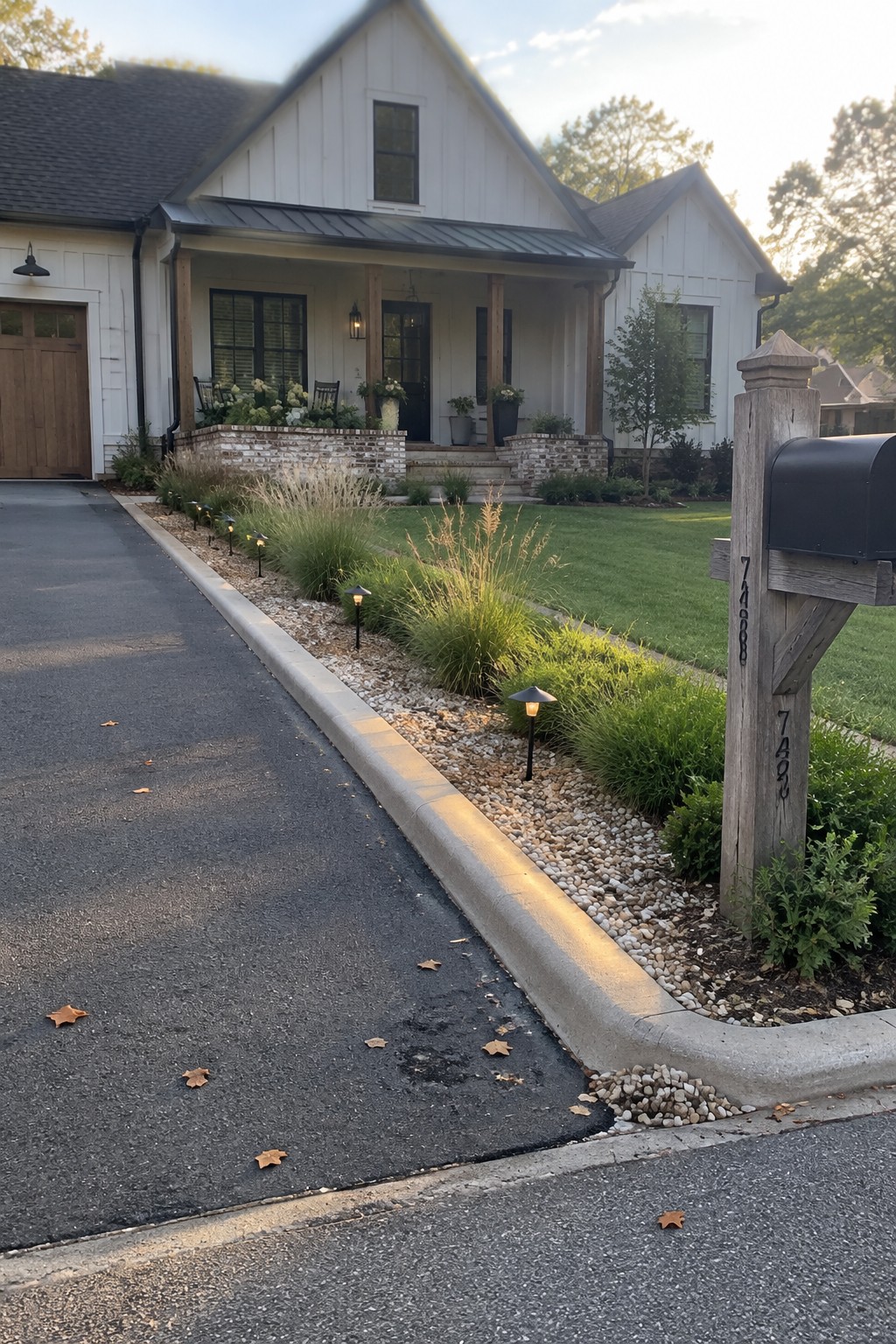
A narrow planting bed can give an asphalt driveway a clear, finished edge without making the yard feel overly formal. A concrete curb keeps the white gravel and grasses in place, while the gentle curve at the entrance makes the transition to the street feel natural.
This approach works well where a driveway meets a lawn or garden. Use a durable curb that follows the bed’s shape, and choose plants that won’t spread onto the pavement. Keep enough room to maintain the edge and clear leaves or gravel from the asphalt.
Use Brick Edging to Define the Driveway
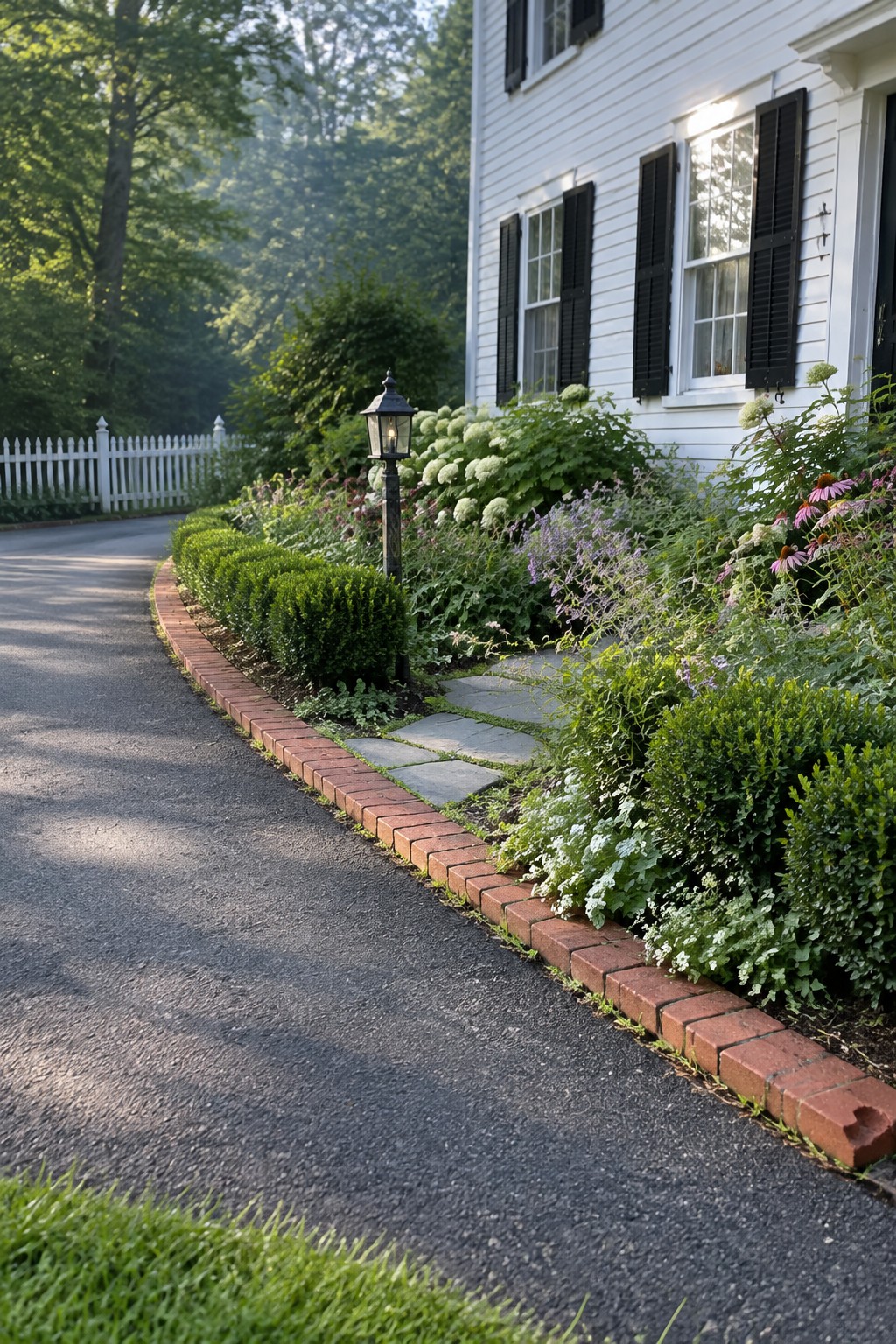
A low brick border gives an asphalt driveway a clear edge and keeps the garden bed from spilling onto the pavement. It also makes a curved driveway feel more intentional without needing a major change to the surface.
For a similar look, set the bricks firmly along the driveway’s curve and keep the top edge even. This works well beside planted beds, but leave enough room for water to drain and check that the border won’t catch tires.
Use Metal Edging To Define The Driveway
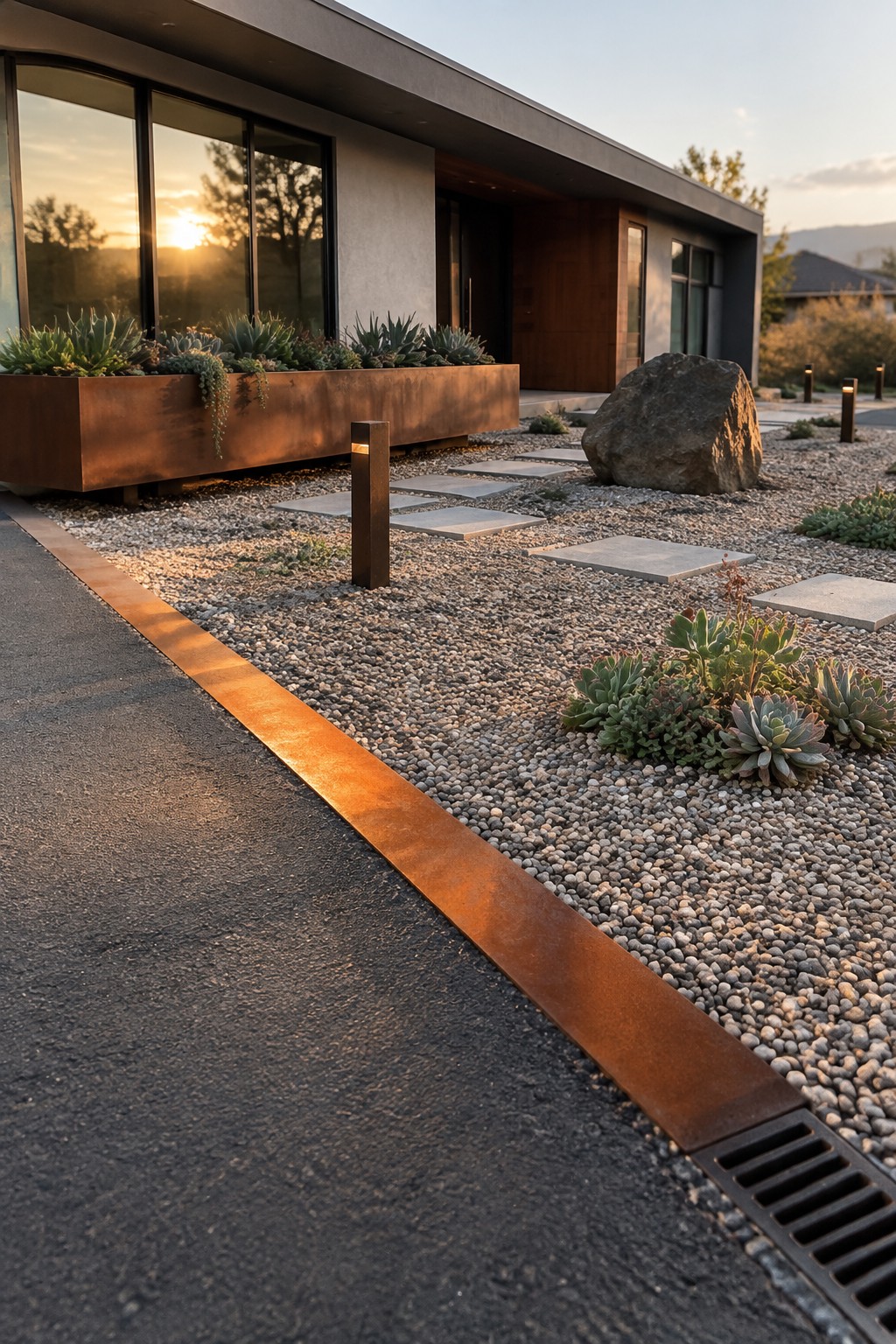
A metal strip can give an asphalt driveway a clean, finished edge and keep the boundary between pavement and gravel easy to see. Here, the rust-colored edging makes a simple line between the dark driveway and the stone landscaping.
For a DIY project, choose edging rated for outdoor use and install it securely along the driveway’s curve or straight edge. Make sure it sits level and does not create a raised lip that could catch a tire or become a tripping hazard.
Use Stone Edging to Define a Garden Bed
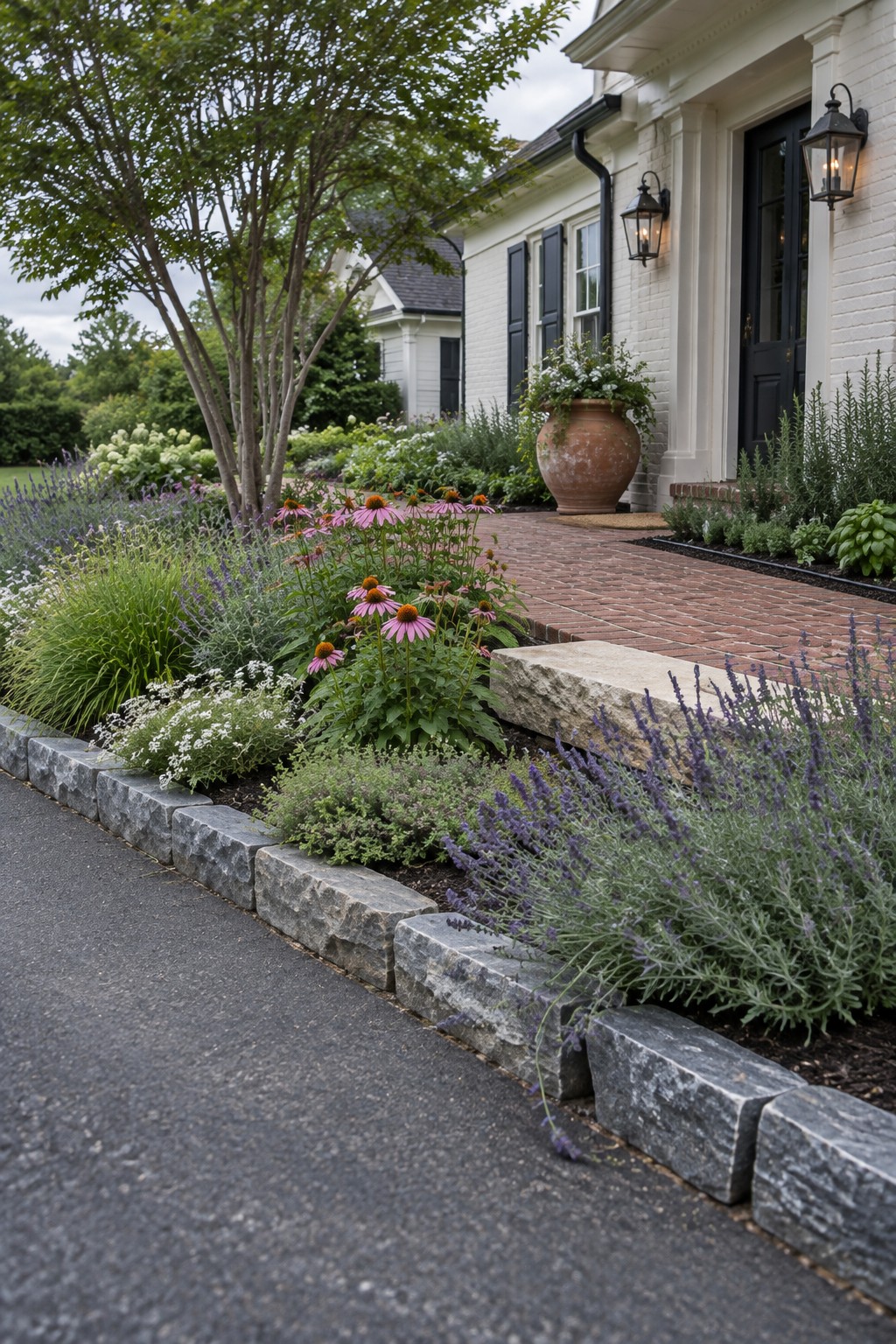
Stone edging gives a planting bed a clear border and keeps soil and plants from creeping onto the driveway. The sturdy blocks also make a neat transition between a paved surface and softer garden planting.
For an asphalt driveway, choose stones that suit the home and set them in a stable, level line. Keep the edge low enough to avoid creating a tripping hazard, and leave room for plants so they do not spill across the pavement.
Use Timber Edging Along the Driveway
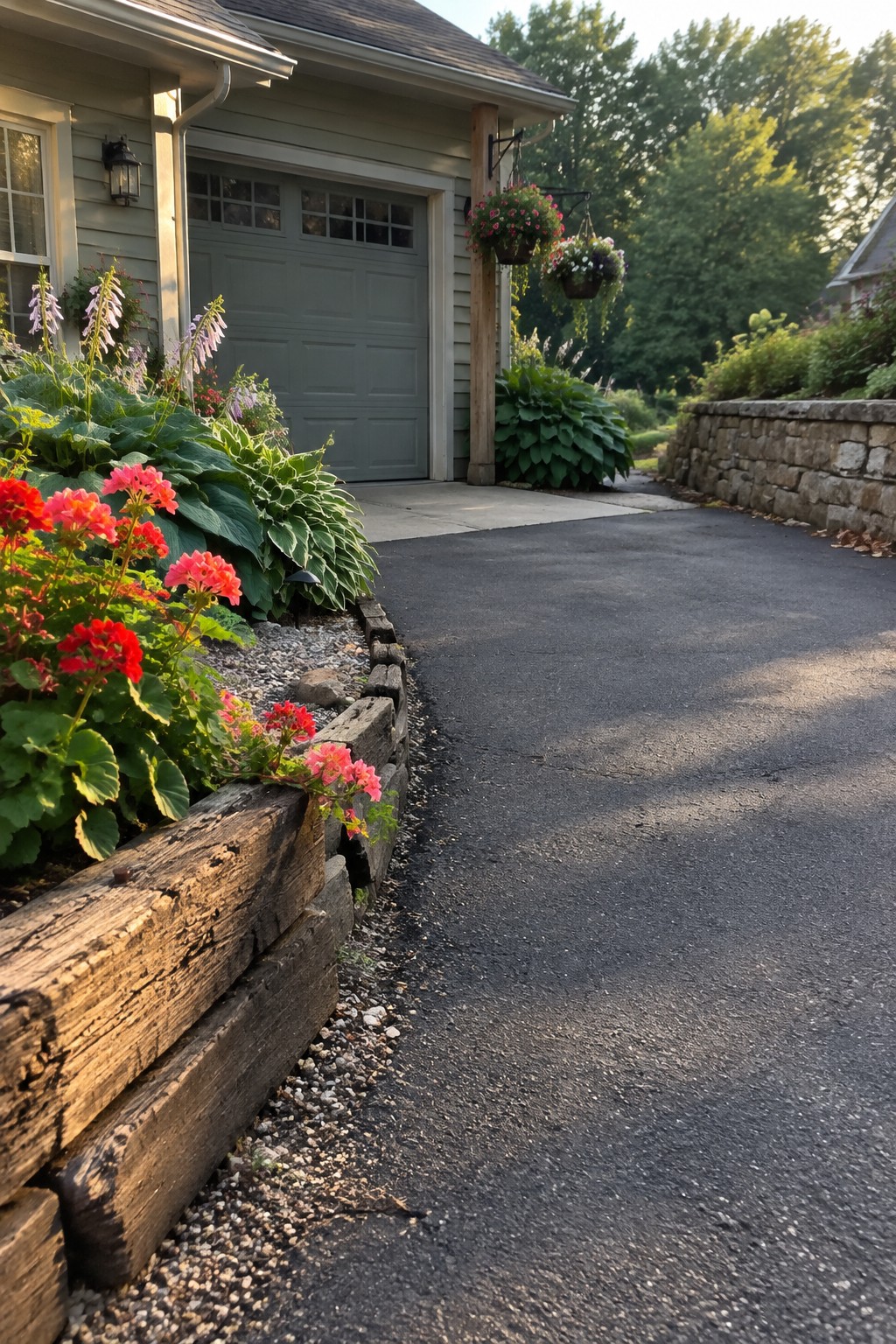
Timber edging gives an asphalt driveway a clear boundary while keeping the edge of a planting bed in place. It is a practical choice for a cottage-style yard, especially when you want a softer look than stone or metal.
Use sturdy, ground-rated timbers and secure them well so they do not shift under pressure from soil or foot traffic. A low timber border works best beside a garden bed, where it can define the edge without narrowing the driveway.
Use a Stone Border to Separate the Driveway
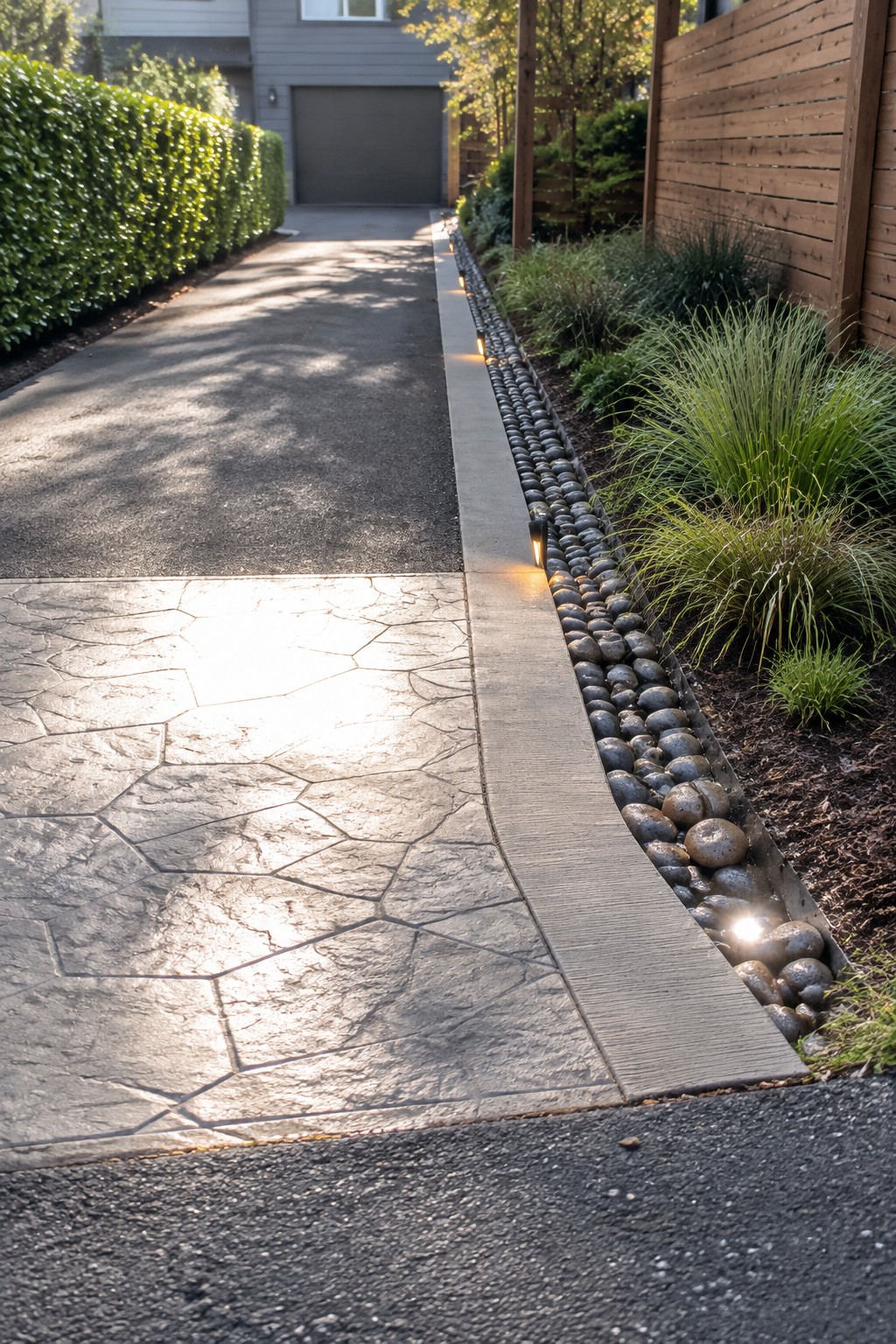
A narrow strip of rounded stones makes a clear edge between an asphalt driveway and a planting bed. This kind of border helps keep soil and mulch off the pavement while giving the driveway a neat, defined line.
For a similar look, set the stones in a shallow channel beside a concrete edging strip. It works well where a driveway meets a garden, but keep the border stable and the stones contained so they do not spill onto the driving surface.
Use Large Rocks to Edge an Asphalt Driveway

Large stones make a clear border along an asphalt driveway while giving nearby grasses and flowers room to grow. This is a practical choice when you want a defined edge that feels at home in a natural-style yard.
Set the rocks in a gentle line and leave enough space between them for maintenance and drainage. Choose stones that are heavy enough to stay put, and keep their height low near driveways where they could get in the way of tires or snow removal.
Use a Raised Bed Along the Driveway
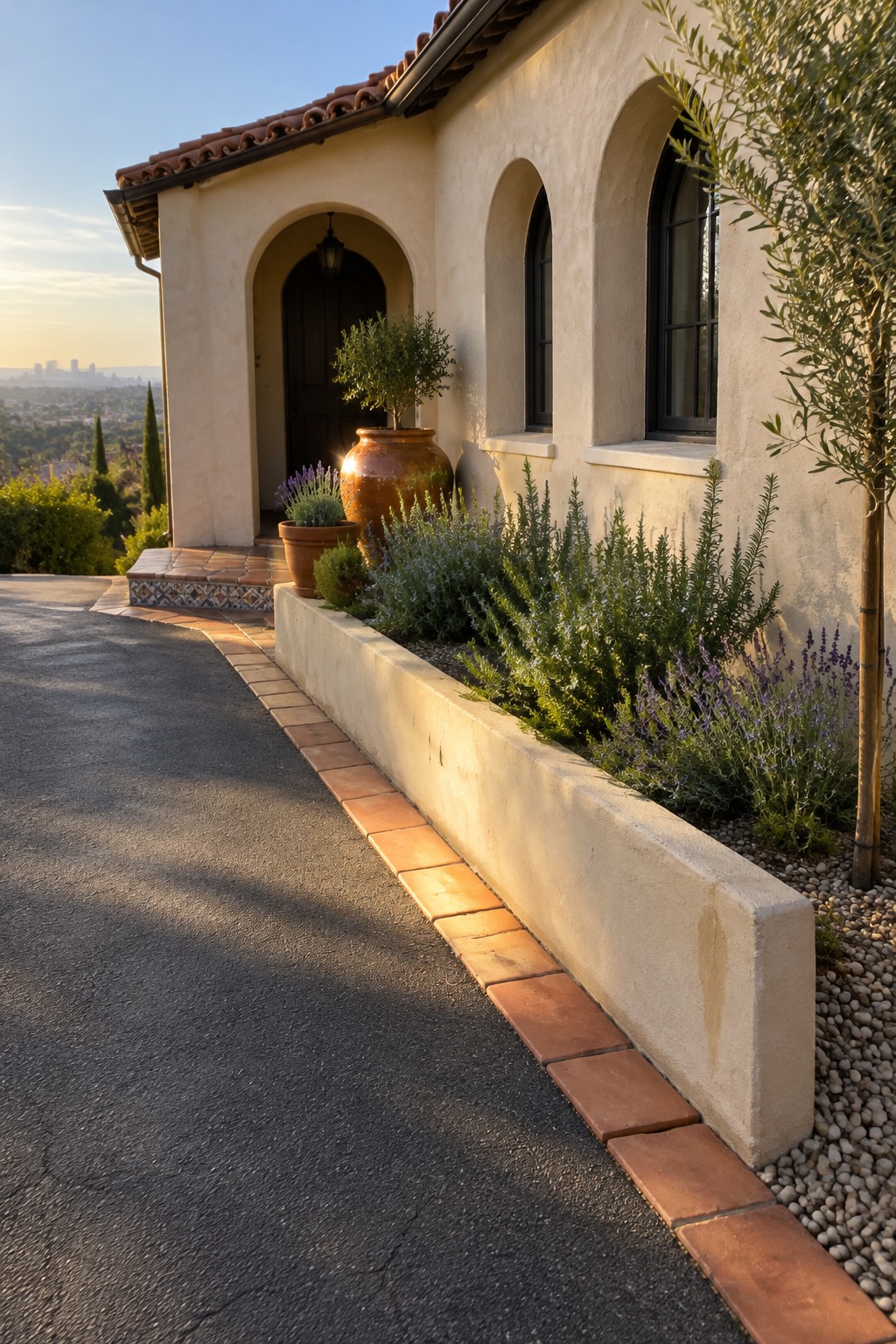
A low raised bed can give an asphalt driveway a clear edge while making room for plants. Here, the pale stucco wall forms the bed, and a row of terracotta pavers marks the line between the planting area and the pavement.
For a DIY version, build a short retaining edge from concrete blocks or landscape stone, then cap it with pavers for a tidy finish. Keep the bed low enough to see around when pulling in, and check that it won’t interfere with drainage.
Use a Gravel Swale Along the Driveway

A gravel swale can give an asphalt driveway a clear edge while helping direct rainwater away from the paved surface. Rounded stones and a few larger rocks make the channel easy to distinguish from the driveway without needing a solid raised border.
This approach works well on sloped or coastal properties where water needs somewhere to drain. Keep the swale wide enough to hold runoff, and choose stone that stays in place rather than washing onto the asphalt.
Use Cobblestones to Edge the Driveway
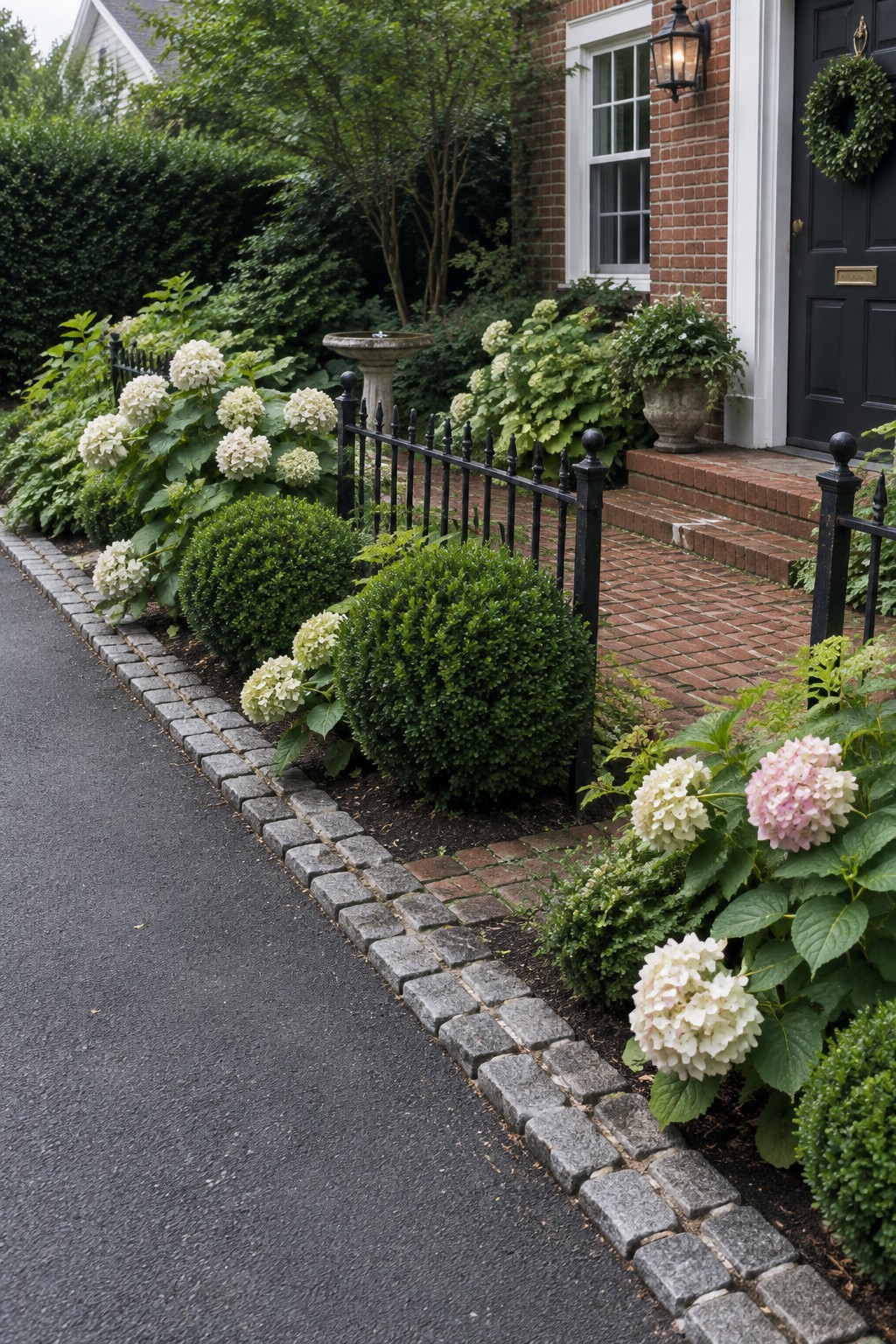
A low border of cobblestones gives an asphalt driveway a clear edge and helps separate it from nearby planting beds. The rough, varied stone also suits older brick homes, where a perfectly uniform edge might look out of place.
Set the stones in a steady line along the driveway, keeping them level so they do not become a tripping hazard or interfere with runoff. This approach works well where a driveway meets a garden, but leave enough room for cars to pass without clipping the border.
Use a Low Concrete Planter to Mark the Driveway Edge

A low raised planter gives an asphalt driveway a clear, tidy boundary. The solid concrete edge keeps the planting bed separate from the pavement, while leaving room for a simple mix of grasses and groundcover.
This works well along a straight driveway where you want a defined edge without a tall wall. Keep the planter low enough to see over when pulling in, and leave a narrow strip of gravel between the concrete and asphalt to help keep the border neat.
Use Stepping Stones to Mark the Driveway Edge
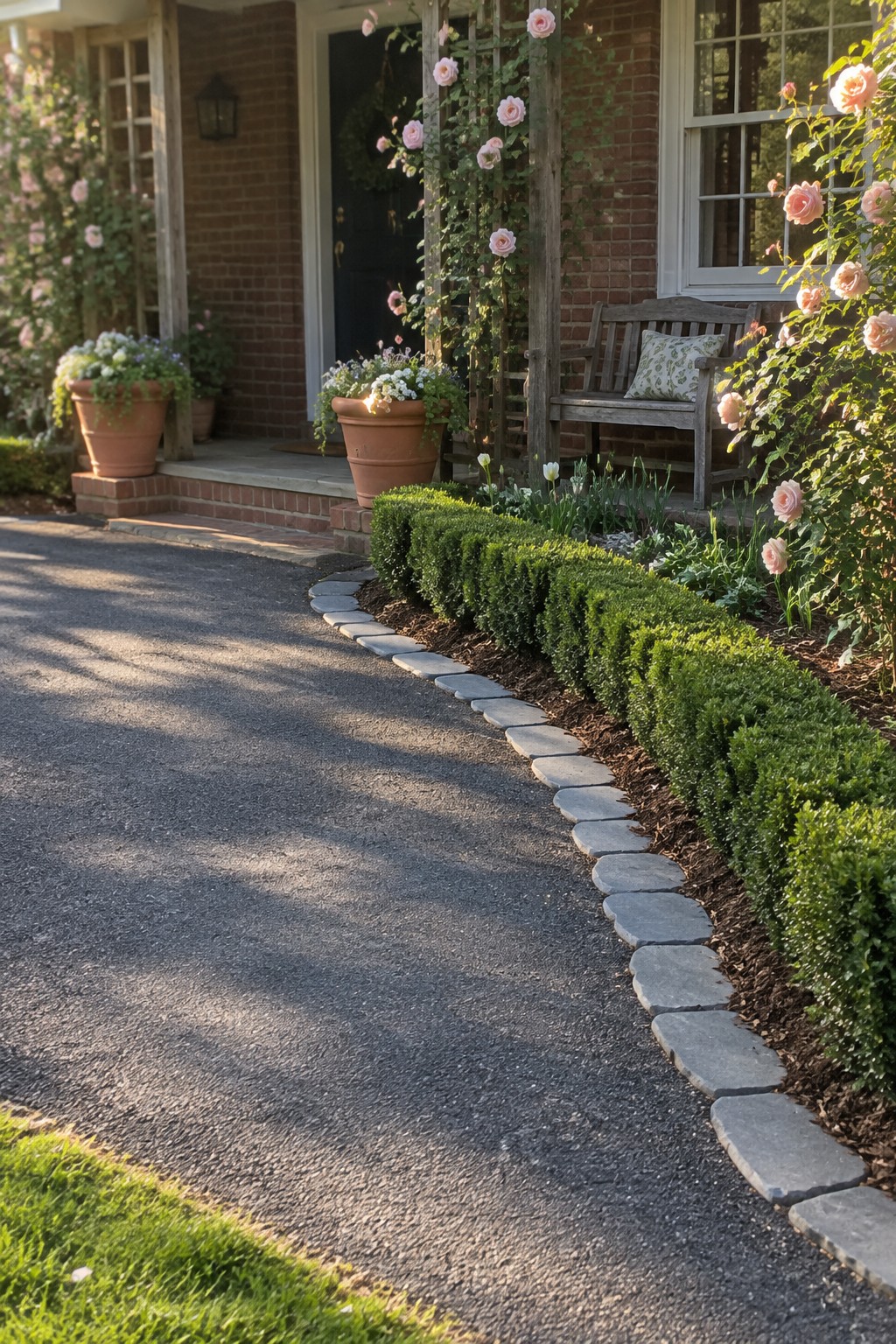
A line of flat stepping stones gives an asphalt driveway a clear, tidy boundary. The irregular shapes keep the edge from looking too formal, while still separating the pavement from the garden bed.
Set the stones close together along a gentle curve, and keep them level so they are easy to maintain around. This works well beside a planted border, but leave enough room for water to drain and avoid placing stones where cars need to turn.
Use Concrete Curbing to Keep Gravel in Place
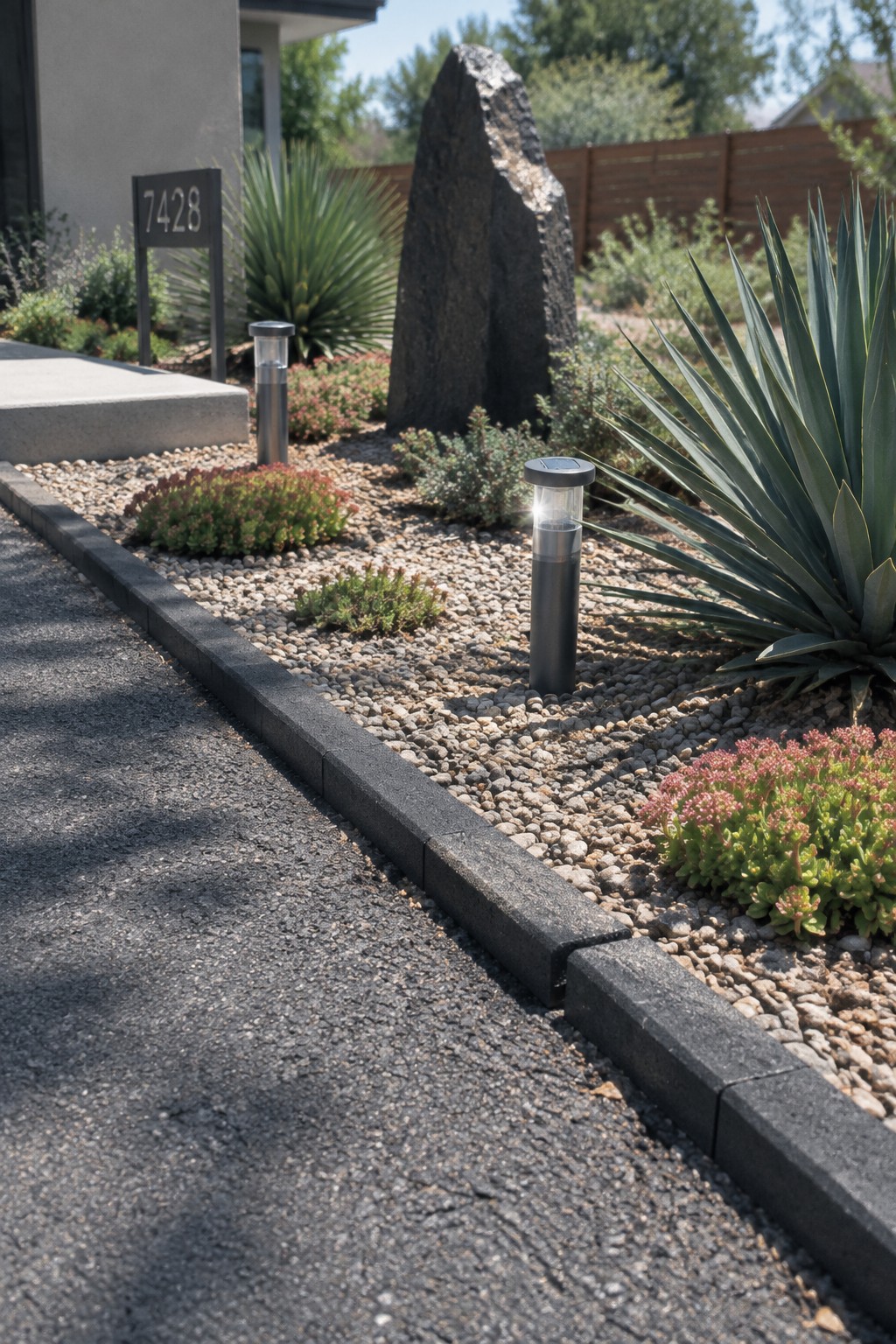
A low concrete border gives an asphalt driveway a clear edge and helps keep loose gravel from spreading onto the pavement. It is a simple, sturdy choice that also makes a planting bed look more defined.
Use straight sections for a clean perimeter, or follow a gentle curve where the bed changes direction. Choose a curb height that holds the gravel without creating an awkward step at the driveway.
Use Pavers to Create a Defined Driveway Edge
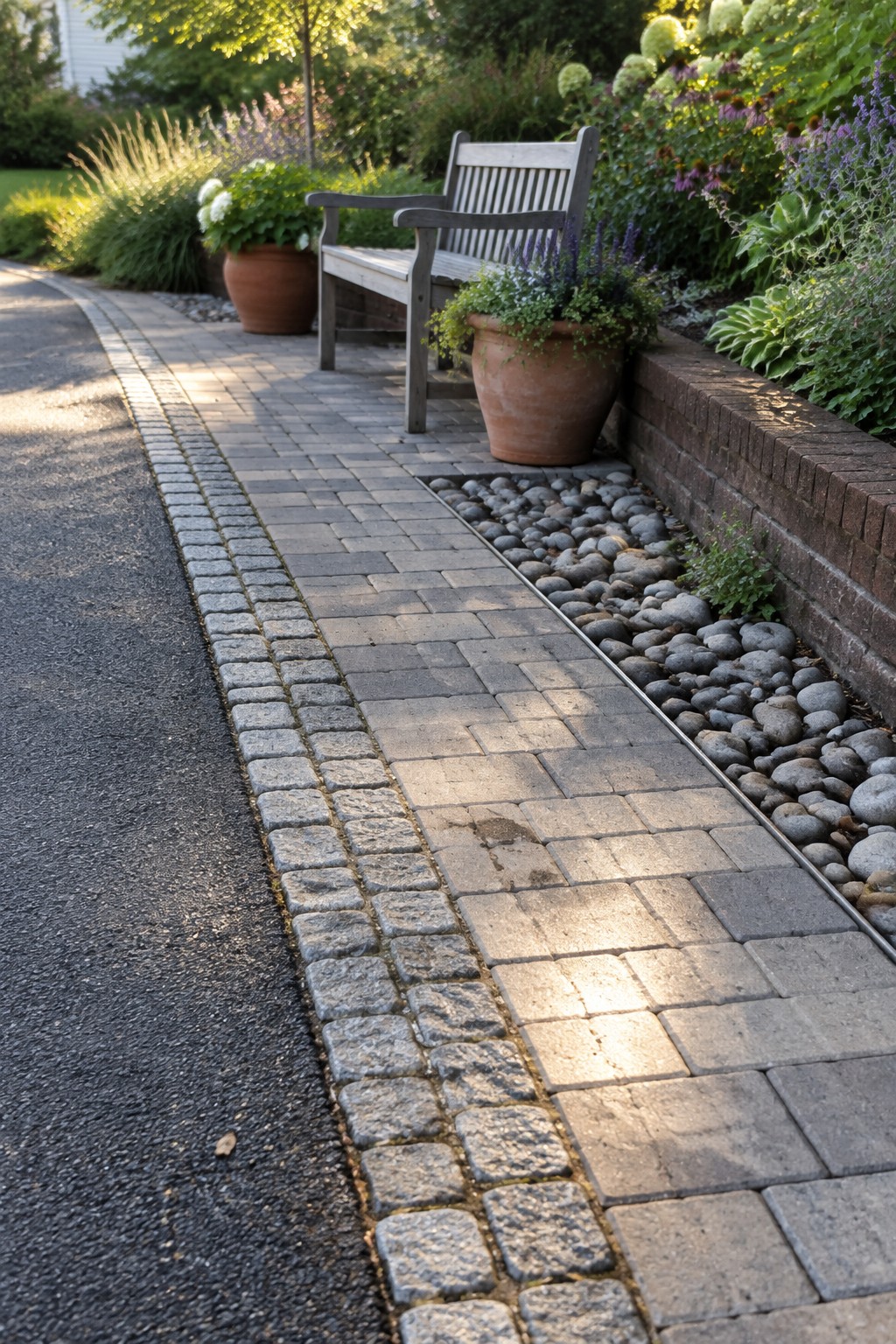
A paved walkway beside an asphalt driveway gives the edge a clear, finished line. The two surfaces are easy to tell apart, and the pavers make a durable border that can stand up to regular foot traffic.
For a similar look, lay rectangular pavers in a simple pattern and use smaller cobbles along the asphalt side. Keep the border level and firmly set so it stays neat over time. This approach works well where a driveway runs beside a path or garden.
Use Rounded Rocks to Mark the Driveway Edge
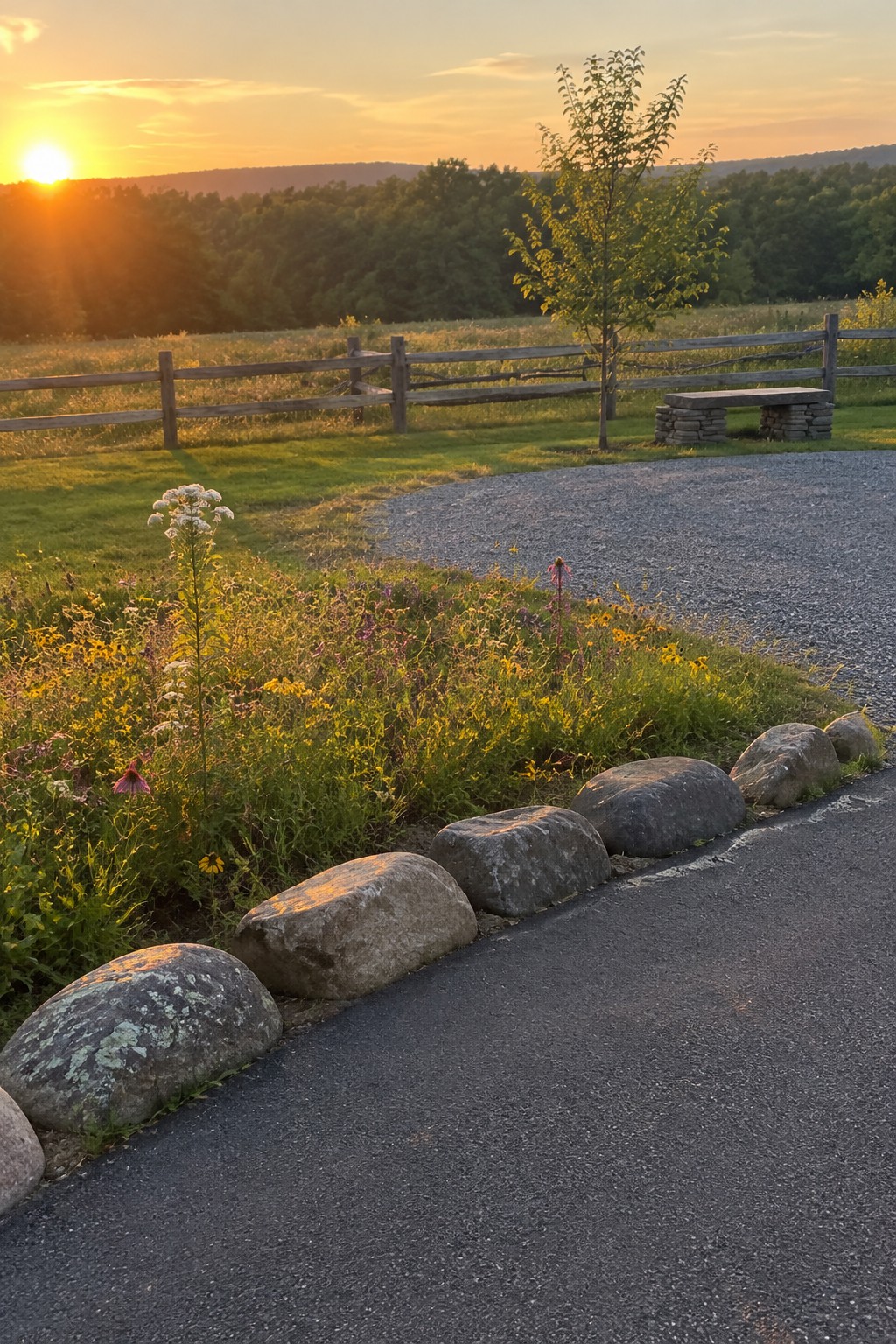
Large rounded rocks make a clear, sturdy boundary between asphalt and a planted area. They help keep the driveway edge defined without needing a continuous strip of edging material.
Set the rocks in a gentle line, keeping their spacing and size fairly consistent so the border is easy to follow. This approach suits a country-style yard or a naturalistic garden, but leave enough room beside the asphalt for drainage and occasional maintenance.
Use a Paver Strip to Mark the Driveway Edge
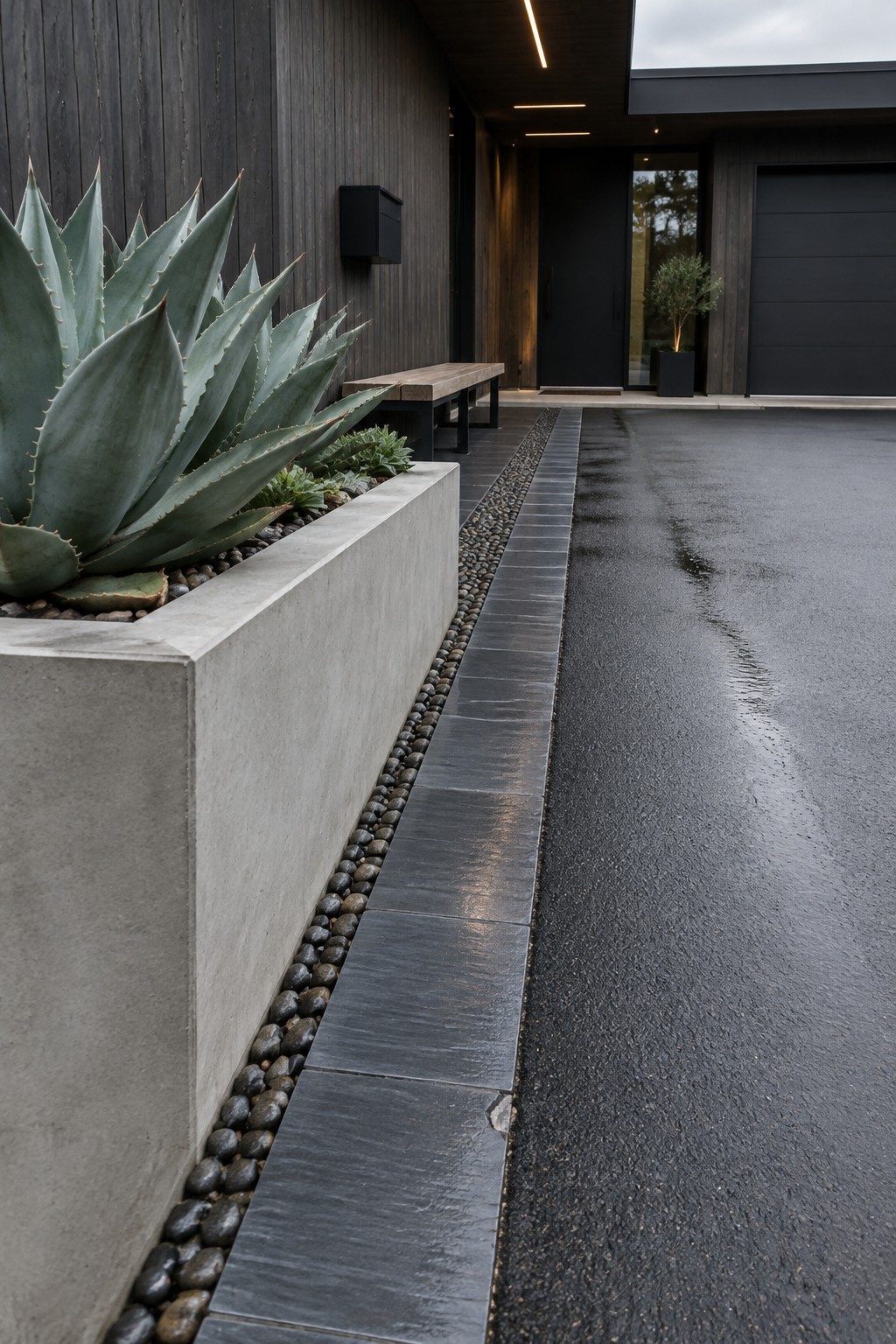
A narrow strip of pavers makes a clear, durable boundary between asphalt and a planting bed. It also gives the driveway edge a finished look while helping keep loose stones and soil from spreading onto the pavement.
For a similar setup, choose pavers rated for outdoor use and set them on a stable, well-drained base. A straight strip works well beside a raised planter, but make sure it sits level with the driveway so it is easy to walk or roll across.
Use Stone Curbing to Separate the Driveway
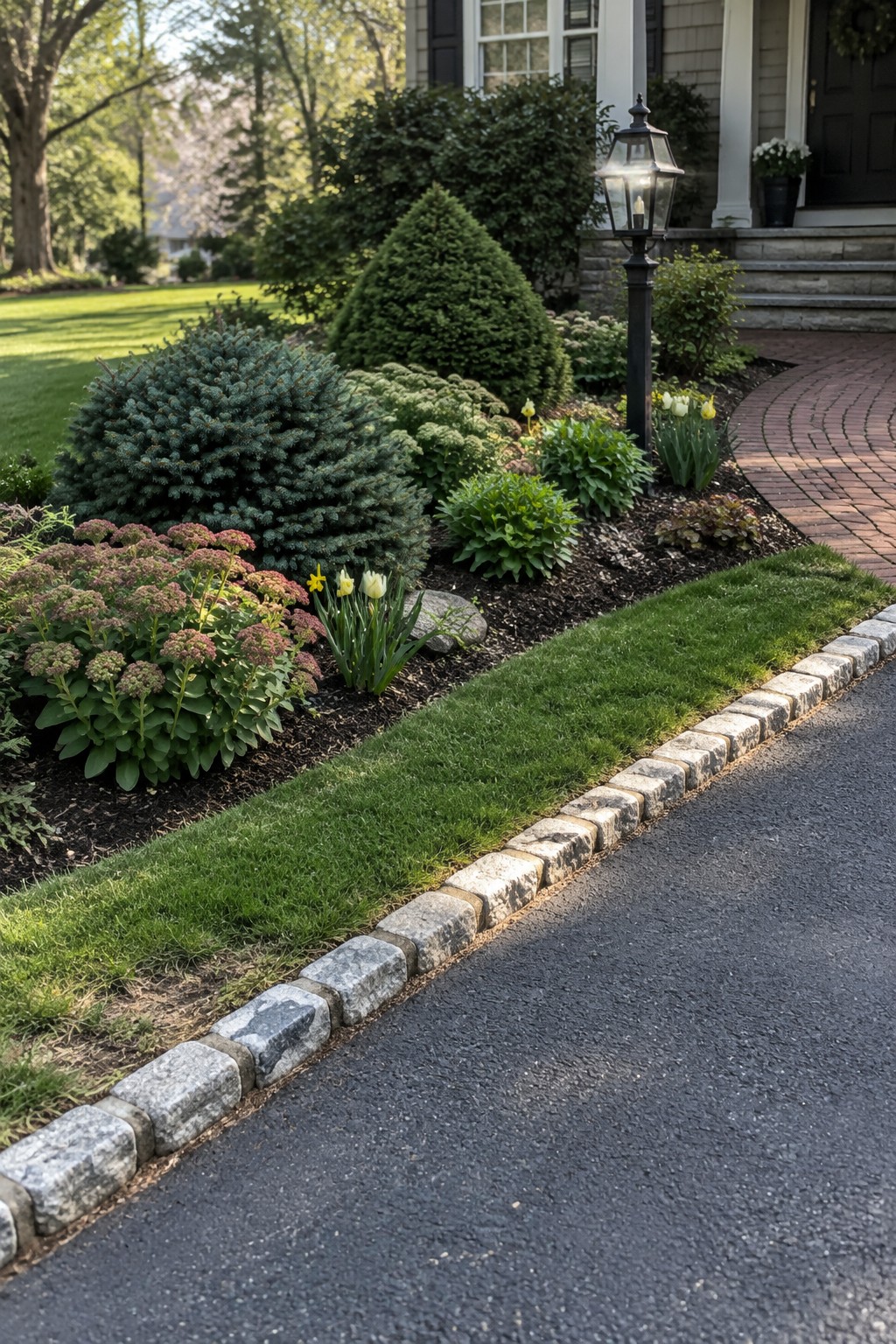
A low stone curb gives an asphalt driveway a clear edge and helps keep the lawn from creeping into the pavement. It also makes the planting bed look like a defined part of the yard rather than a loose strip beside the drive.
For a similar look, choose stones with a fairly consistent height and set them securely along the driveway curve. Leave enough room behind the curb for plants and mulch, and keep the top edge low enough that it won’t catch tires or interfere with snow clearing.
Add a Brick Border Along the Asphalt

A narrow brick border gives an asphalt driveway a clear edge and a more finished look. The herringbone pattern adds interest without needing a wide band of paving.
For a similar project, set the bricks flush with the driveway so the edge is easy to maintain and doesn’t catch tires. This approach suits traditional homes, but the border should be installed on a firm base to help prevent shifting.
Use a Stone Border to Define the Asphalt Edge
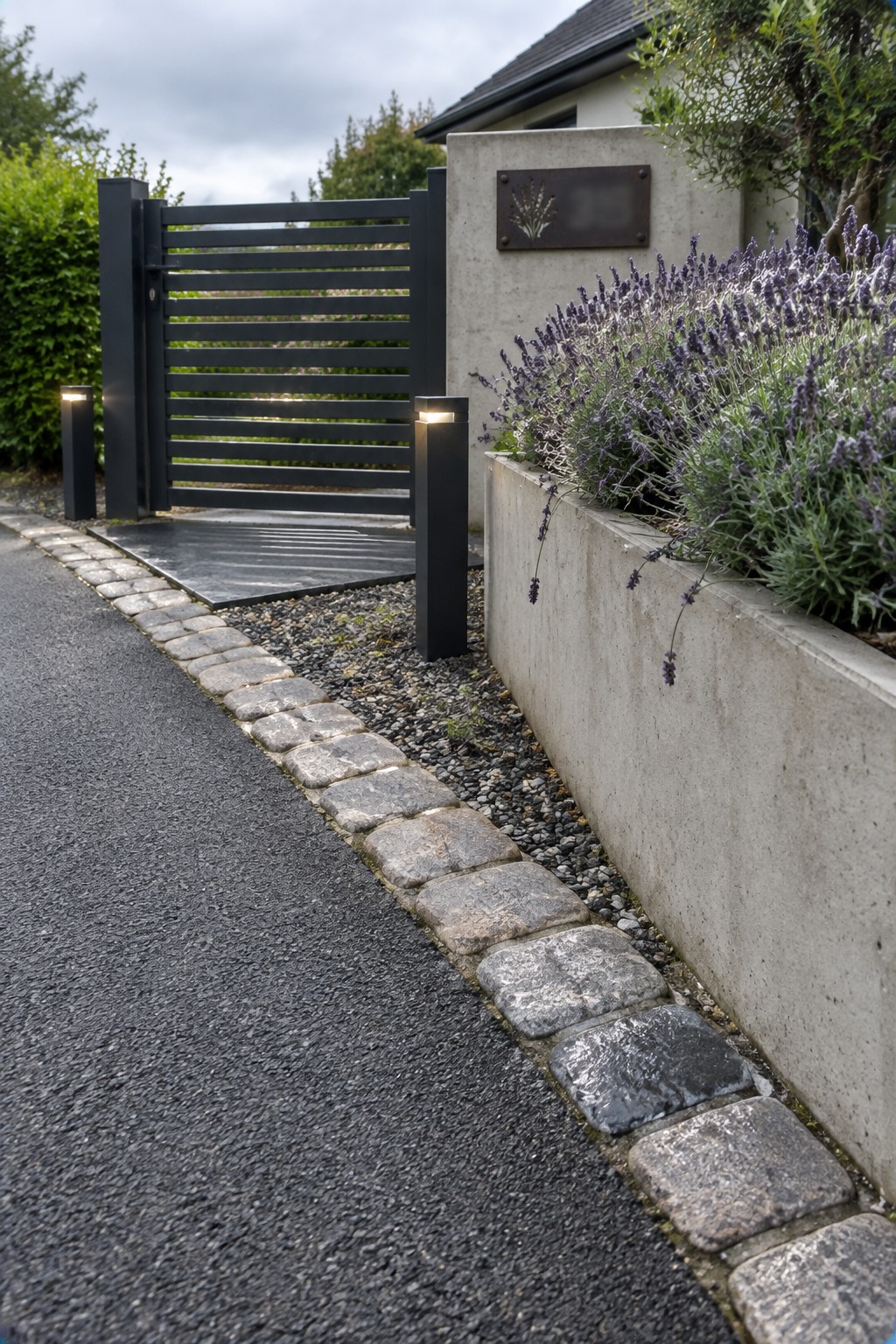
A row of substantial stone blocks can give an asphalt driveway a clear, finished edge. The border also helps keep loose gravel and soil from creeping onto the pavement, while making the transition to a planting bed feel intentional.
Choose stones with fairly consistent heights so they sit securely along the curve. Set them firmly on a compacted base, and leave enough room beside the asphalt for drainage rather than letting the stones trap water.
Use a Stone Border Along the Driveway
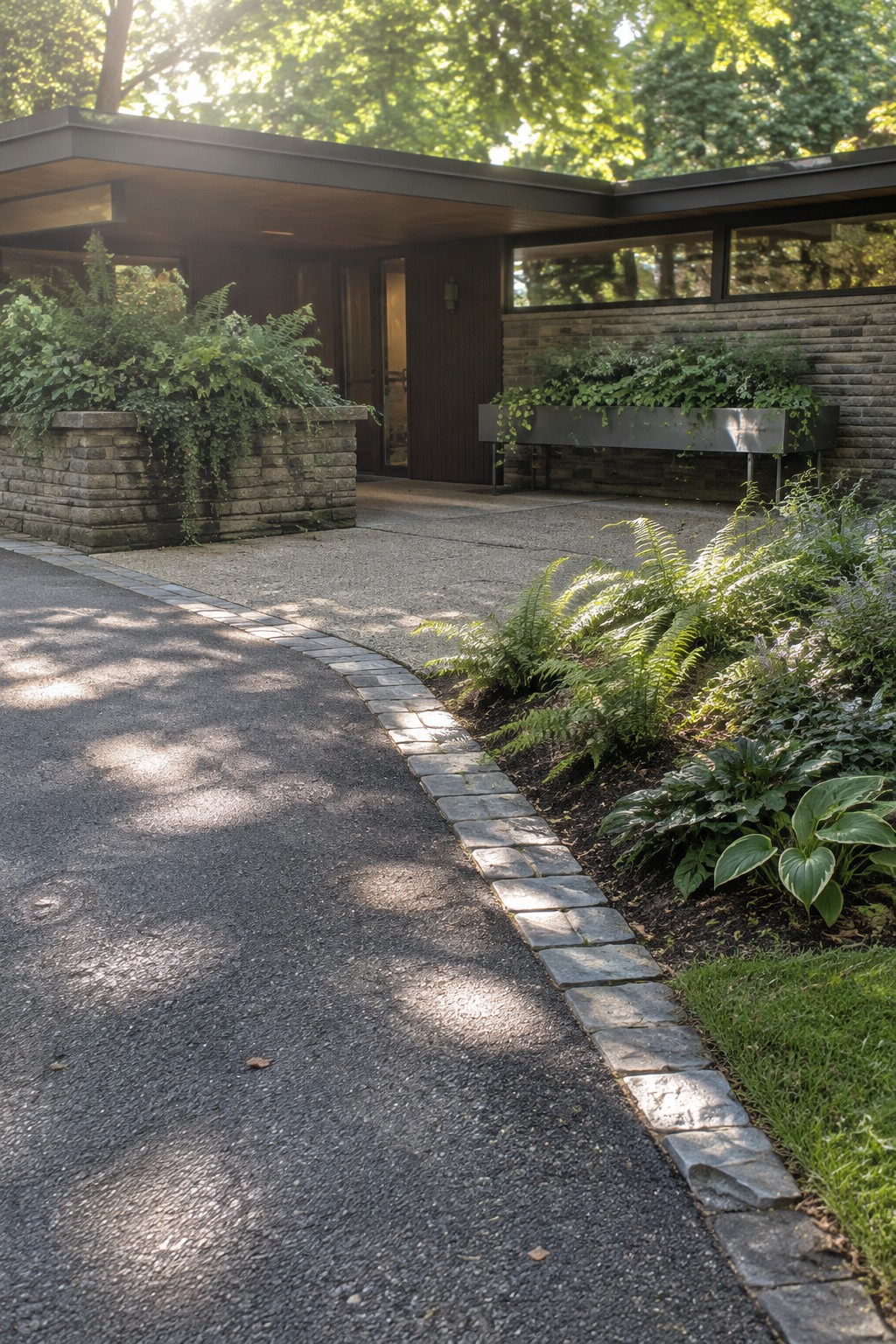
A narrow stone border is a simple way to give an asphalt driveway a clear edge. It marks the transition to the planting bed and helps the driveway look more finished without needing a large curb.
Choose stones that sit securely and are comfortable to drive beside, especially along a curve. Set them on a firm base so they stay in place, and keep the border low enough to avoid catching tires or making yard maintenance awkward.
Use a Stone Edge to Define the Path
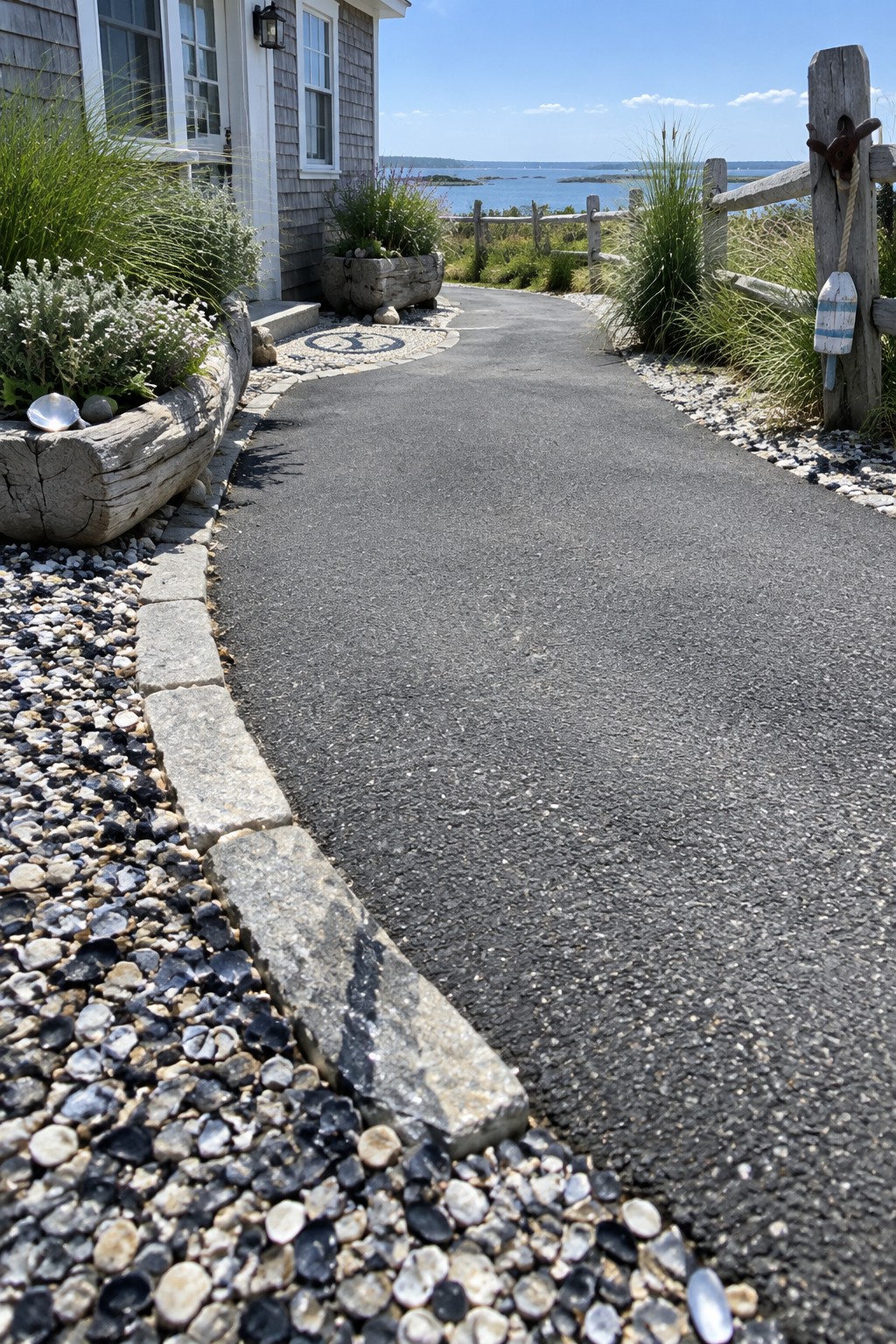
A firm stone border gives an asphalt path a clear edge and keeps the surrounding gravel from spilling onto it. The contrast also makes the path feel more finished without adding much visual clutter.
Use a similar approach along a driveway, choosing stones that sit securely and are easy to maintain. A neat, continuous edge works best where gravel or planting meets the asphalt.
Add Lighting to the Driveway Curb

Warm recessed lights set into the curb make the edge of an asphalt driveway easier to see after dark. They also give a clear boundary between the driving surface and the planted bed, without needing a tall or bulky border.
For a similar setup, choose outdoor-rated fixtures made for installation in concrete and space them along curves or places where drivers need extra guidance. Make sure the lights sit flush with the curb and won’t be struck by tires or snow-removal equipment.
Use a Raised Planter to Define the Driveway

A raised planter can make the edge of an asphalt driveway feel intentional while giving grasses and shrubs a clear place to grow. Here, the rust-colored planter stands just inside the stone curb, so the planting bed has a distinct boundary.
This idea works well beside a modern home, especially where there is room for a long bed along the drive. Choose a planter material that suits the house, and leave enough space between the curb and plants to keep driveway maintenance manageable.
Frequently Asked Questions
Q: Can I add edging to an asphalt driveway that’s already in place?
A: Yes, as long as the asphalt edge is in decent shape. Clear away loose debris and plan the edging so it won’t trap water against the driveway.
Q: How much space should I leave between the edging and the asphalt?
A: Keep it close enough to define the edge, but not so tight that it presses against or covers the asphalt. A small gap also makes it easier to clear leaves and weeds.
Q: Do I need to dig a trench for driveway edging?
A: Not for every project. Lightweight edging may sit on the surface, while stone or brick usually needs a shallow, level base so it stays put.
Q: What’s the easiest way to stop weeds from growing along the edge?
A: Remove existing weeds and roots before installing the edging, then keep the strip beside it clear. Landscape fabric can help under gravel or stone, but it won’t stop weeds if soil and debris collect on top.
