

A driveway is often the first part of a home that people notice, so its color and pattern can shape the whole approach to the house.
Stamped asphalt adds texture without changing the practical role of the surface, but the pattern needs to suit the home’s facade, entry, and surrounding paths.
I’d pay close attention to how a design looks beside brick, siding, or stone, since a bold finish can feel out of place if those details compete.
Some patterns stay subtle enough to blend in, while others create a clear border or focal point near the entrance.
The ideas ahead offer useful details to save and adapt to the proportions and style of your own home.
Stamped Asphalt for a Stone-Look Driveway
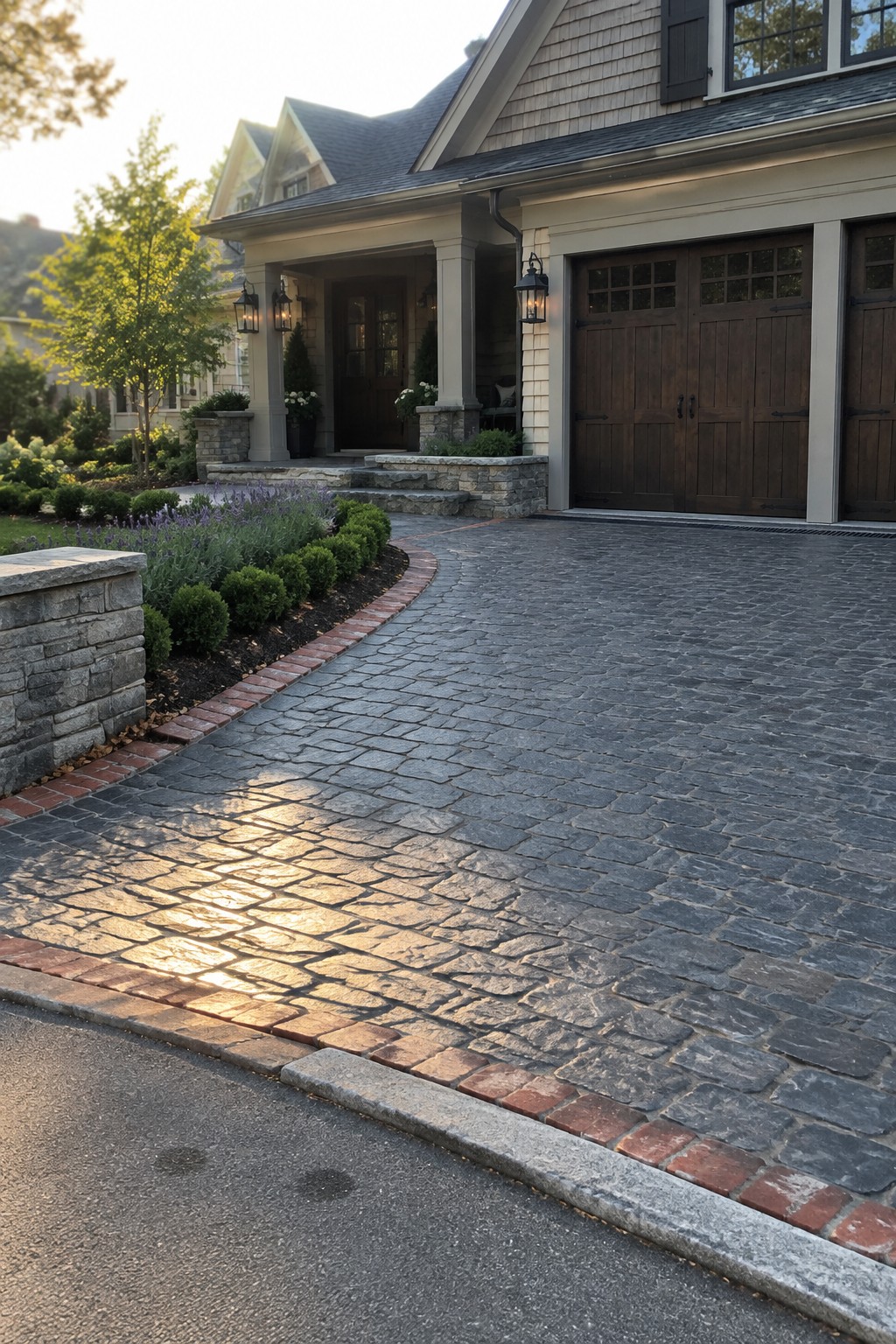
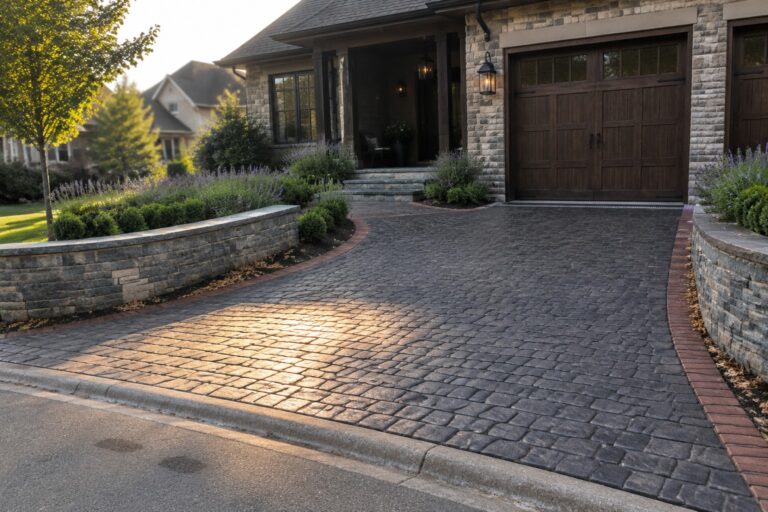
Stamped asphalt can give a driveway the irregular stone look of paving without using individual stones across the whole surface. A dark, varied pattern suits a traditional home and makes the approach feel more finished.
Use a brick border to define the driveway’s edge and help the pattern look intentional. This idea works well for curved or wide driveways, but choose a pattern and color that complement the home rather than compete with it.
Use Stamped Patterns to Define a Driveway
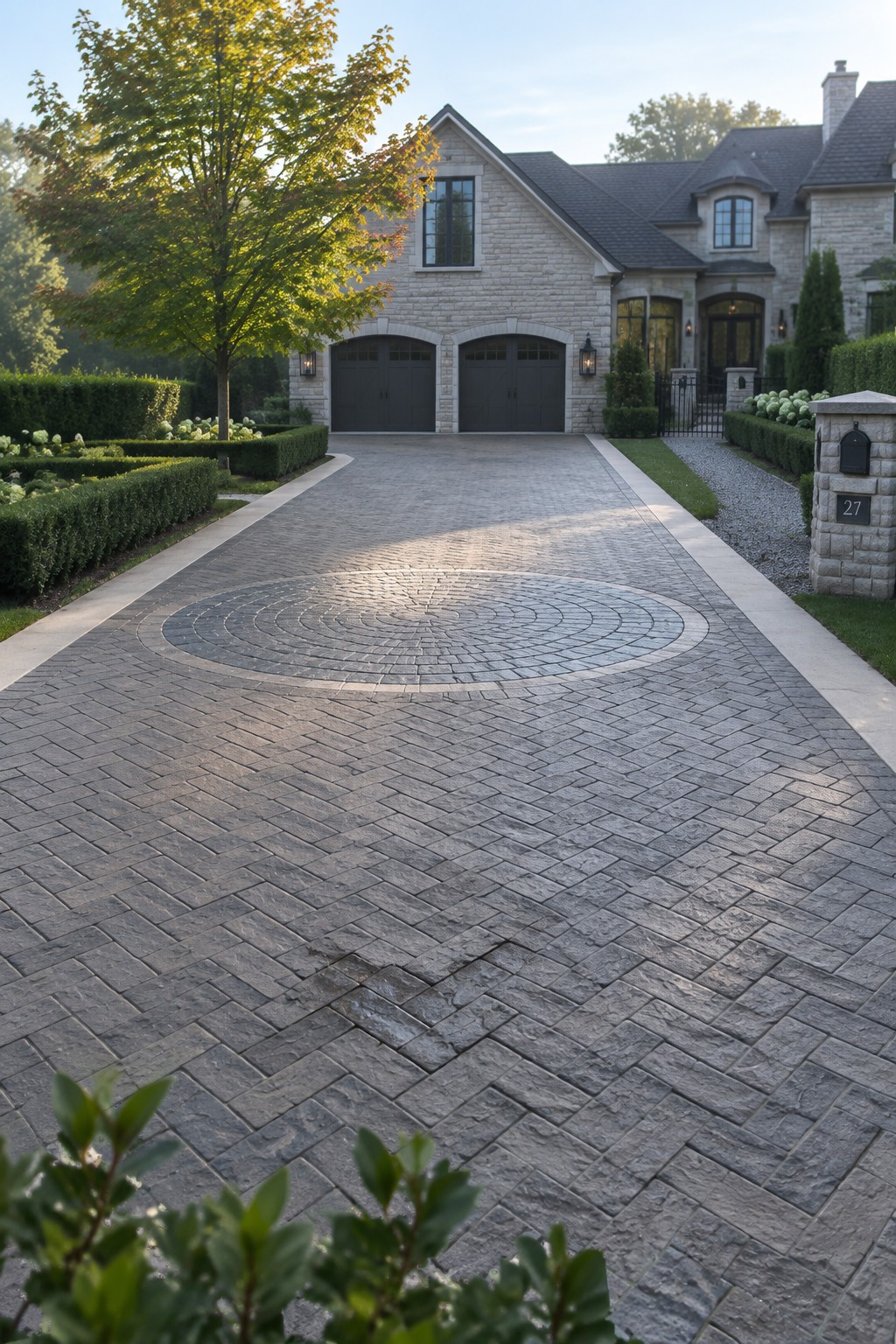
A stamped asphalt driveway can give a broad paved area more character without changing its practical purpose. Here, a circular pattern breaks up the repeating blocks and gives the entrance a clear focal point.
This kind of detail works best on a wide driveway where the pattern has room to show. Keep the main surface and border simple so the stamped section stands out without making the paving feel too busy.
Use Large Pavers for a Clean Driveway Pattern
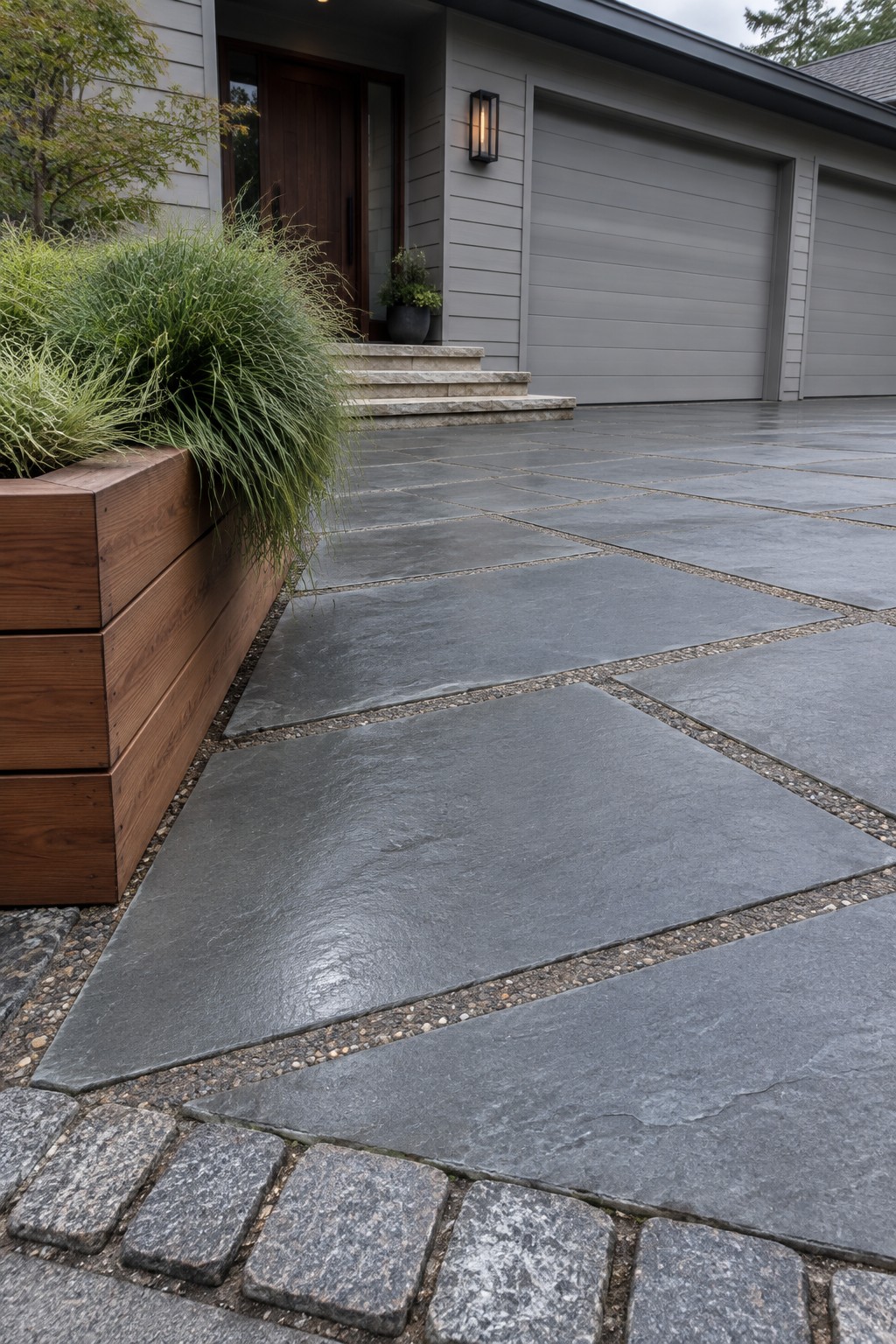
Large concrete pavers create a simple, orderly surface that feels more distinctive than a plain driveway. Narrow gravel joints outline each slab and give the paving a clear pattern without making it look busy.
This approach suits modern homes and works best where the driveway has room for broad pavers. For an asphalt driveway, stamped patterns can suggest a similar grid, while gravel-filled joints between separate slabs offer a closer match to the look shown here.
Use Stamped Asphalt to Create a Clear Garden Path

Stamped asphalt can give a driveway the look of laid stone without using separate pavers. It’s a practical option for a long approach, where a repeating pattern helps define the route and gives the surface more character than plain asphalt.
Choose a stamp pattern that suits the home and keep the edges simple so the driveway doesn’t feel too busy. This idea also works for paths through planted areas, though the surface needs proper drainage and a finish suited to local weather.
Choose Stamped Asphalt for a Traditional Driveway
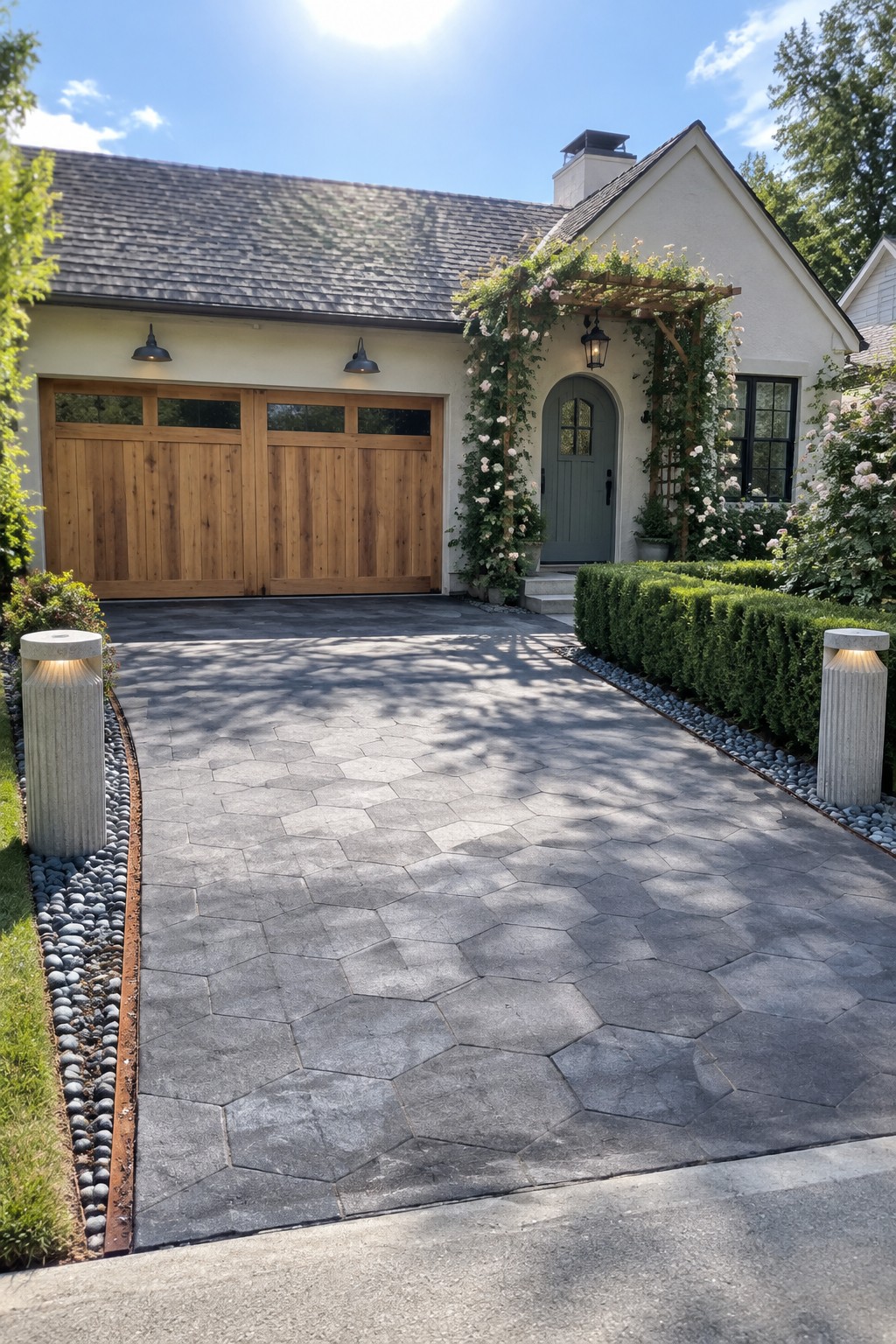
Stamped asphalt can give a driveway the look of irregular stone without the shifting joints of individual pavers. The varied shapes suit a traditional home, while a gray finish keeps the pattern from competing with the facade.
This approach works well on a broad driveway where the pattern has room to show. Use a restrained color and ask the installer to plan the stamping carefully, since uneven or overly dark marks can make the surface look busy.
Use a Curved Border to Shape the Driveway

A curved brick edge gives a stamped asphalt driveway a clear outline and helps it feel more considered than a plain paved surface. It also makes the change from driveway to planting beds easy to see.
This approach works well where a driveway bends toward an entrance or wraps around a garden bed. Keep the border wide enough to hold its shape, and choose a contrasting edge color that suits the stamped pattern without competing with it.
Use Wood-Look Stamped Asphalt for a Warm Driveway

A wood-grain stamp can give an asphalt driveway the look of broad timber boards without using wood outdoors. It suits homes with natural materials, such as the stone garage surround shown here, and gives a large paved area a more distinctive finish.
This pattern works best across a wide, simple driveway where the long lines have room to show. Choose a muted brown or gray and make sure the sealer offers good traction, especially where cars turn or the surface gets wet.
Choose Brick-Pattern Asphalt for a Curved Driveway

A brick pattern can give an asphalt driveway the look of traditional paving without using individual bricks. The repeating pattern suits a curved approach, where it follows the shape of the drive and makes the surface feel more considered.
This style works especially well on homes with classic details. Use a warm brick tone and a simple border to define the edges, but keep the pattern consistent so the driveway does not look too busy.
Use Stamped Asphalt to Connect the Driveway and Garden

A stamped asphalt driveway can feel more considered when its pattern relates to the garden path. Here, broad gray paving gives the approach a consistent look, while the stepping stones show how a change in paving scale can guide people toward the front door.
For a similar effect, use one stamped pattern across the main drive and keep the walkway simpler or more widely spaced. This works especially well where the driveway runs beside planting beds, but leave enough room for water to drain away from the house.
Use a Brick Pattern for a Welcoming Driveway
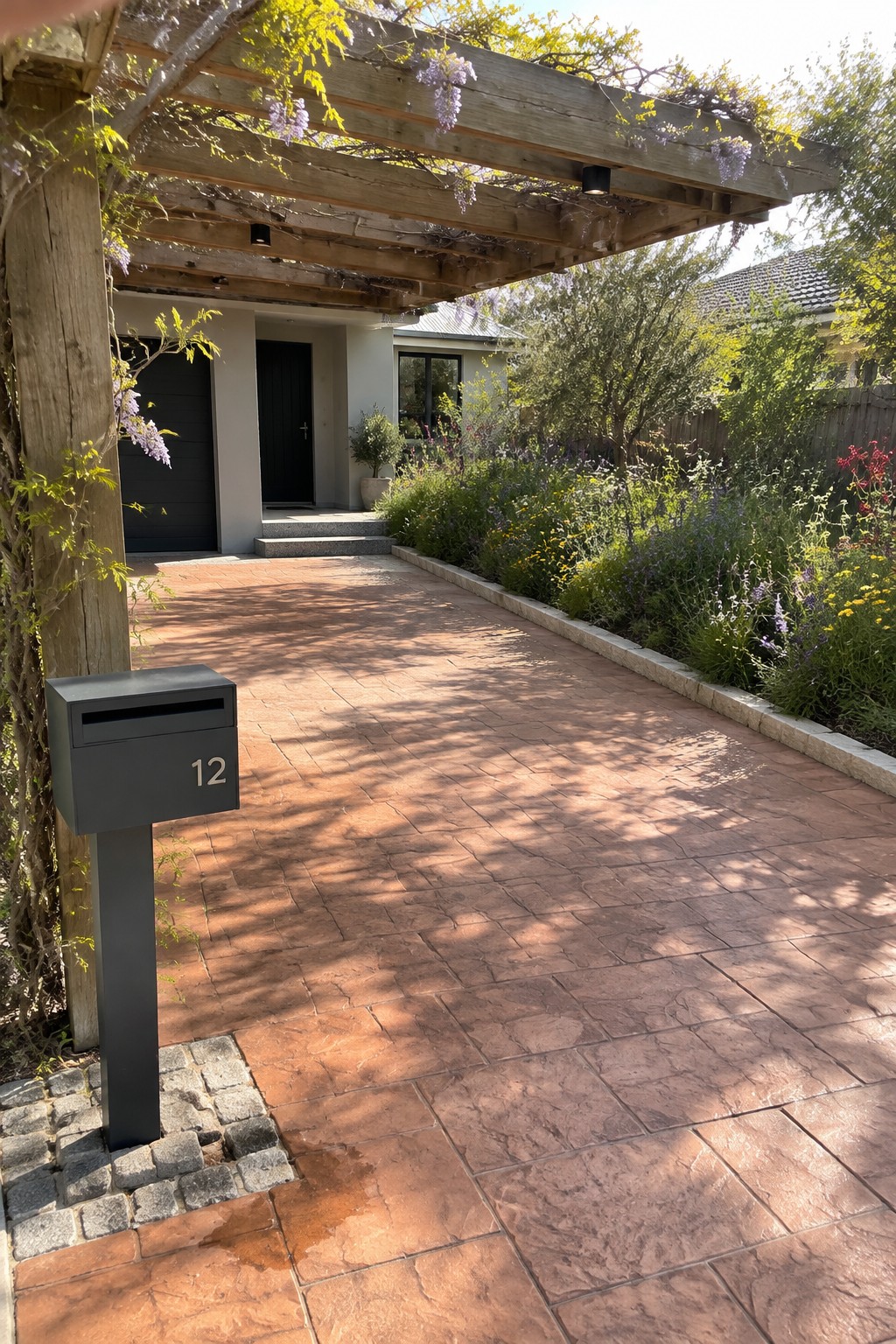
Stamped brick-pattern asphalt gives a driveway the familiar look of brick paving without needing individual bricks. The warm, varied surface suits a traditional home and makes a long driveway feel more considered.
This pattern works well on straight or gently curved drives leading to an entry. Choose a tone that sits comfortably with the house, and make sure the surface is sealed and maintained so the pattern stays clear.
Use a Stone Path to Connect the Garden
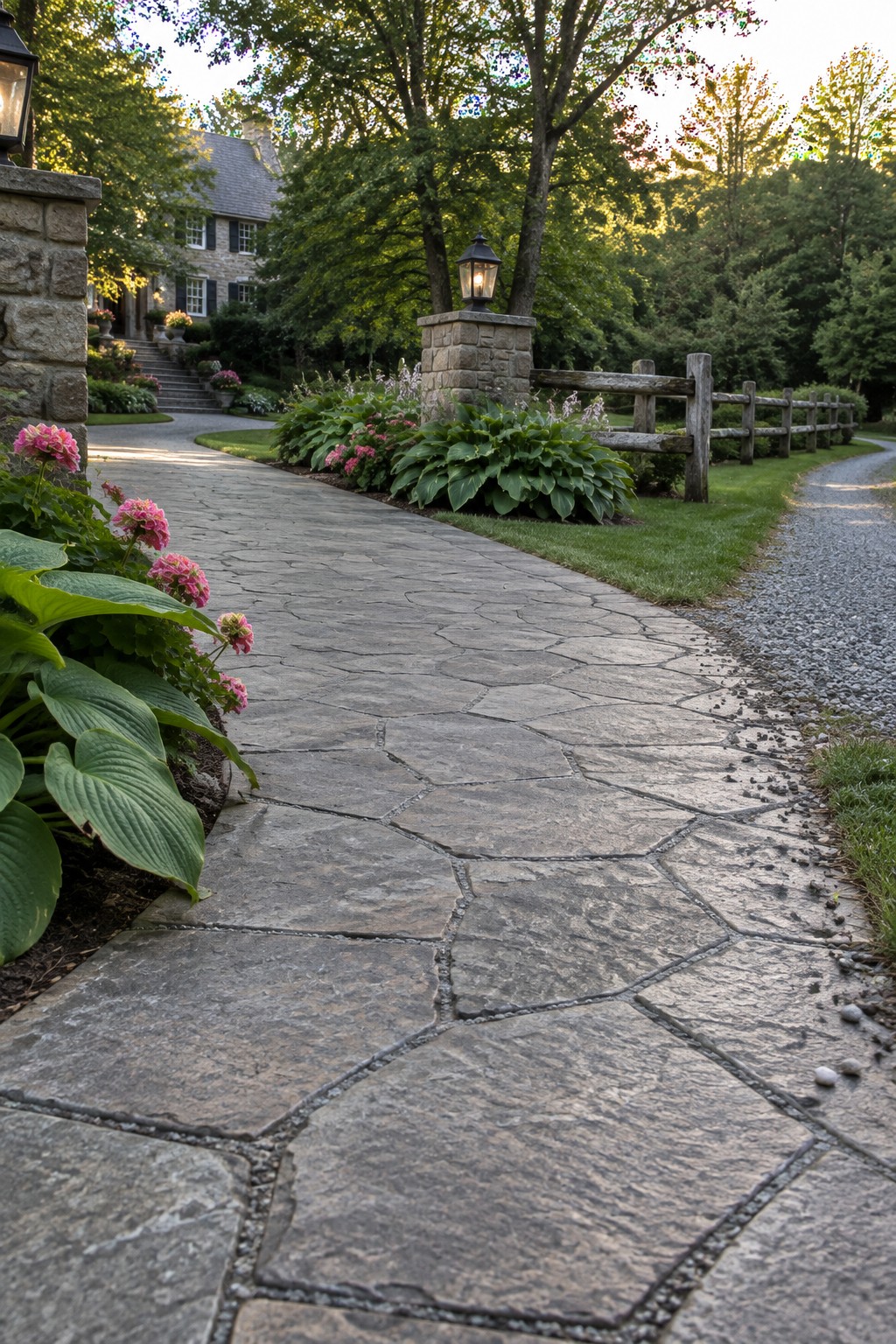
A stone walkway can make a garden feel easier to move through while giving the planting beds a clear shape. Large, irregular slabs have a relaxed, traditional look that suits homes with mature landscaping.
For a similar effect, choose a durable surface stamped to resemble stone and keep the path wide enough for comfortable walking. A curved route works well through garden beds, but leave room along the edges so plants do not crowd the walking area.
Use a Circular Stamped Pattern for the Entry Walk
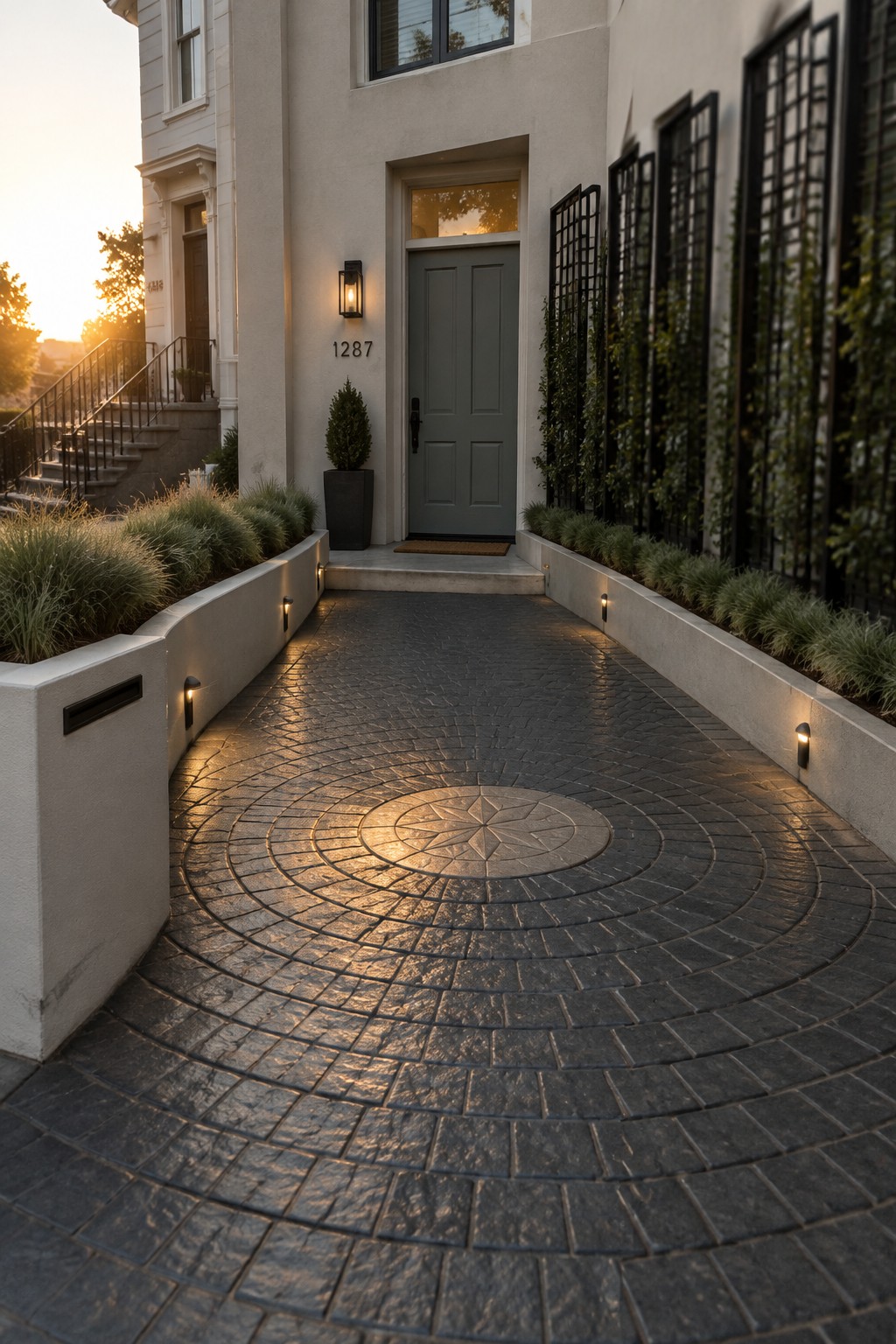
A circular detail in stamped asphalt can give a front approach a clear focal point without changing the overall layout. It works especially well on a straight walk leading to the door, where the pattern breaks up a long stretch of paving.
Keep the surrounding asphalt simple so the circular design stands out. A compass-style center, like the one shown here, suits a traditional or classic home, but make sure the paving stays even and slip-resistant.
Use a Cobblestone Pattern for a Classic Driveway
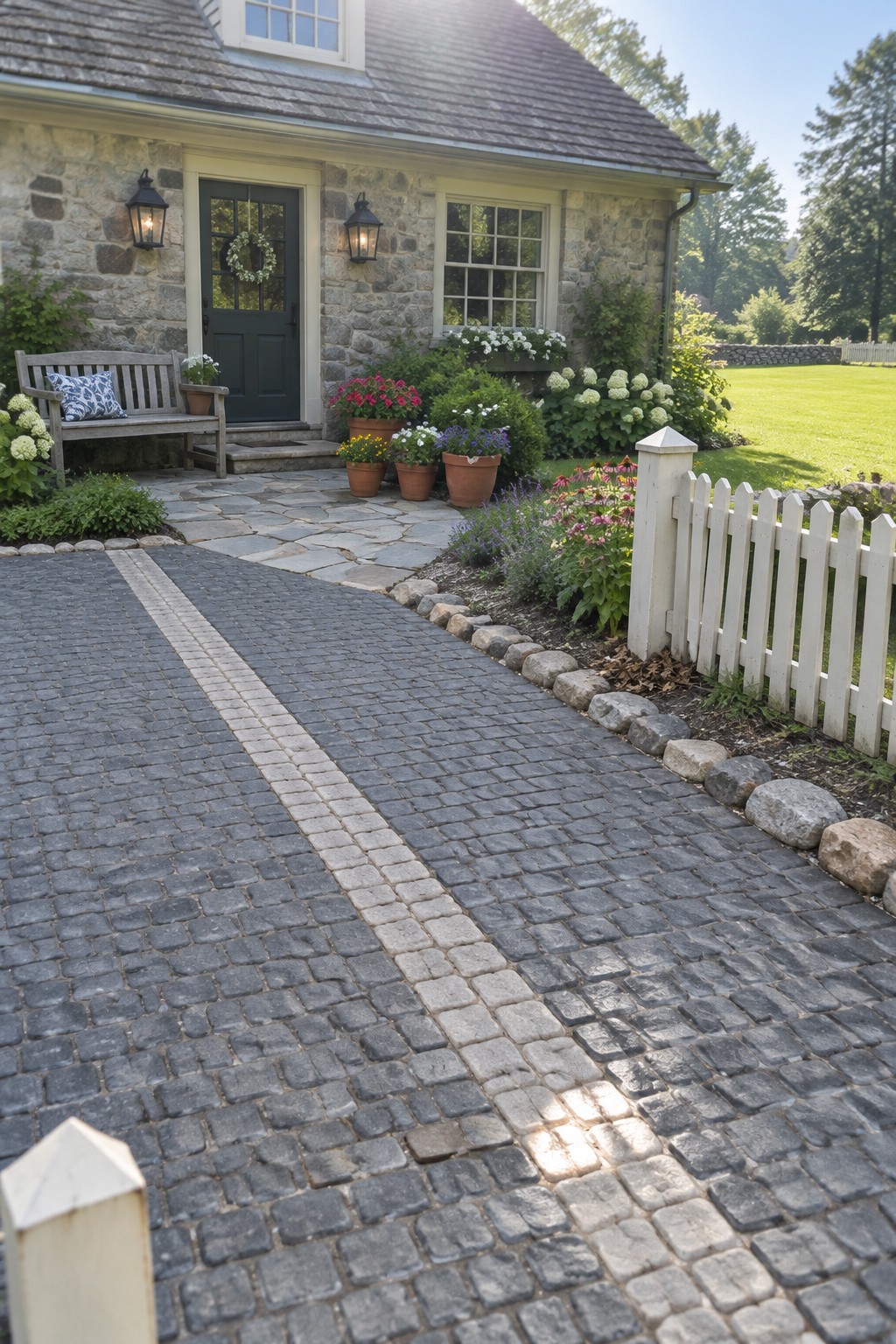
Stamped asphalt can give a driveway the irregular look of old cobblestones without the fuss of laying individual stones. A narrow, lighter strip through the paving adds a simple way to mark the route to the front door.
This approach suits traditional homes, especially those with stone walls or a cottage-style entry. Keep the pattern easy to follow, and choose colors that sit comfortably alongside the house.
Use Stamped Asphalt to Tie the Driveway Into the Landscape

A stone-style stamped surface can make a driveway feel like part of the garden instead of a separate strip of pavement. The irregular pattern suits a sloped yard, where it echoes the natural shapes of the retaining walls and planting beds.
This approach works well when a driveway curves past garden beds or leads to a garage. Choose a pattern with enough texture to look like stone, but keep the surface even and easy to clear. A dark stamped finish can also help the driveway sit comfortably beside stone walls.
Use Stamped Asphalt for a Courtyard Walkway

A stamped pattern can give a garden walkway the look of individual stone pavers without the shifting joints that can come with loose stones. A dark, irregular pattern also suits a traditional courtyard and gives the path a clear route through the space.
For a similar effect on a driveway, choose a pattern and color that work with the home’s exterior. Keep the finish consistent across the main driving area, and use a border if you want to make the edges easier to see.
Use a Pebble Strip to Divide a Paved Walkway
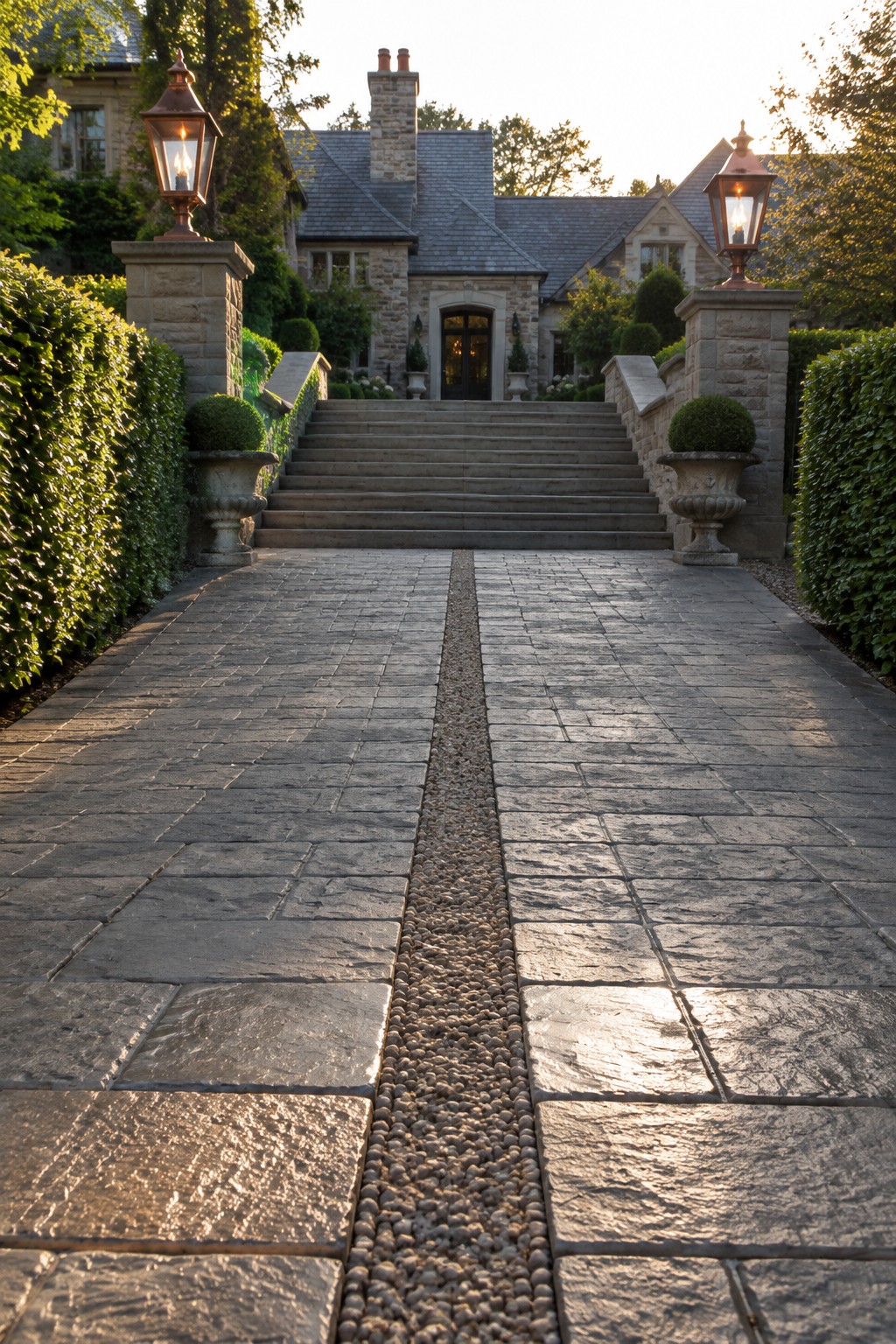
A narrow pebble strip running through a paved walkway is a simple way to break up a broad expanse of hardscape. It gives the path a clear center line without requiring a change in the main paving material.
This detail can work along a front walk or driveway, especially where large rectangular pavers might otherwise look plain. Keep the strip narrow and make sure its edges are well contained so the stones stay in place.
Use Brick-Pattern Paving for a Welcoming Walkway
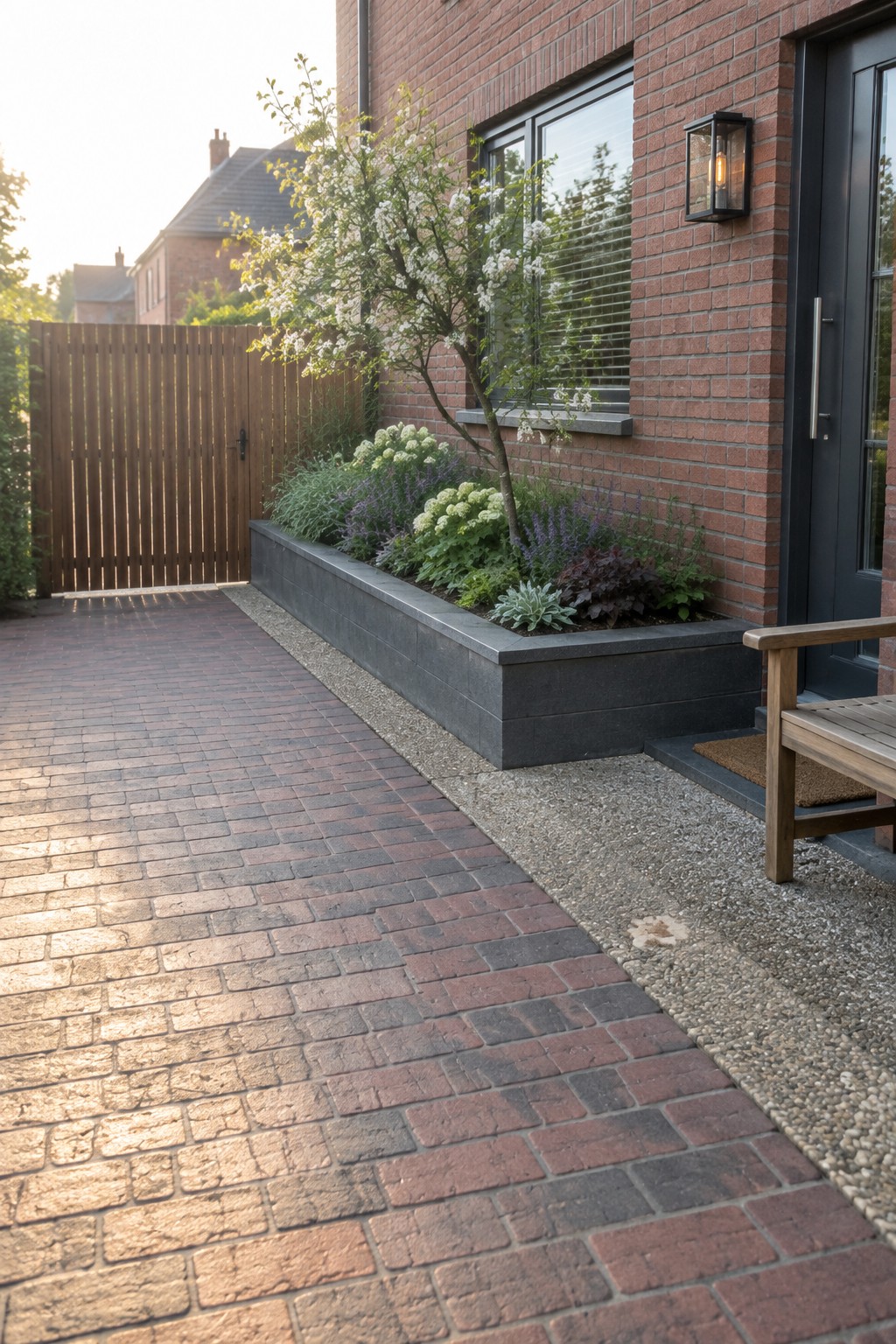
Brick-pattern paving gives an entry walk a familiar, orderly look. It can suit a traditional home, and the varied brick tones keep a broad paved area from looking too plain.
For a similar effect, choose a repeating pattern and keep the edges neat where the paving meets a garden bed or the house. Stamped asphalt can offer the same brick-style appearance with a continuous surface, which may be useful for a front walk or driveway.
Use Stamped Asphalt to Make an Entry Path Feel at Home in the Garden

A stamped asphalt path can give a garden entrance the look of laid stone without making the approach feel separate from the planting. The curved pattern here follows the path naturally, while its textured surface suits a country-style setting.
This idea works well for a front walk or a path leading through a garden gate. Choose a stamp pattern that complements the home and keep the edges neat, so flowers and gravel do not spread onto the walking surface.
Frequently Asked Questions
Q: How long will a stamped asphalt driveway keep its pattern?
A: The pattern is pressed into the asphalt while it’s warm, so it won’t peel off like a surface coating. It may soften or fade over time, especially where cars turn or park often, but routine sealing can help keep it looking sharp.
Q: Can stamped asphalt work with an existing driveway?
A: Sometimes. If the old driveway is in good shape, a contractor may be able to add a new asphalt layer and stamp it, but cracks or drainage problems usually need attention first. Ask for an on-site inspection before choosing a pattern.
Q: Does a stamped pattern make the driveway more slippery?
A: Most stamped patterns don’t add much slipperiness on their own, but a smooth finish can feel slick when wet. Ask about a textured sealer, and make sure the driveway slopes well so water doesn’t pool.
Q: Which patterns hide tire marks and everyday dirt best?
A: Patterns with smaller, varied shapes tend to disguise dust and tire marks better than broad, uniform designs. Darker colors can help too, though they’ll still show light-colored dust.
