

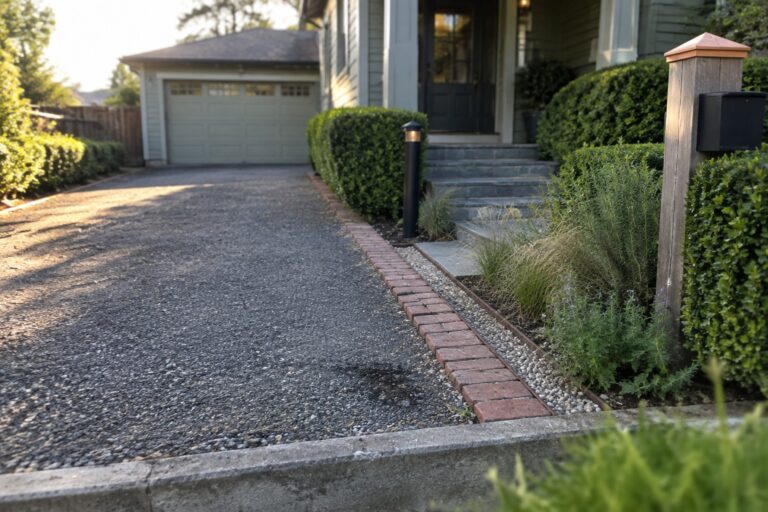
A driveway shapes the first impression of a home, but it also has to handle daily traffic, weather, and the occasional delivery truck.
I like crushed asphalt for projects where a paved look matters but a full asphalt installation stretches the budget.
The surface can feel practical and tidy, though the edges, drainage, and surrounding landscaping make a big difference in how finished it looks.
Some layouts suit long rural drives, while others work better for compact entrances or parking areas.
I’d save the ideas that fit your site and budget, then check how each one might hold up through your local seasons.
Use Brick Edging to Define a Crushed Asphalt Driveway
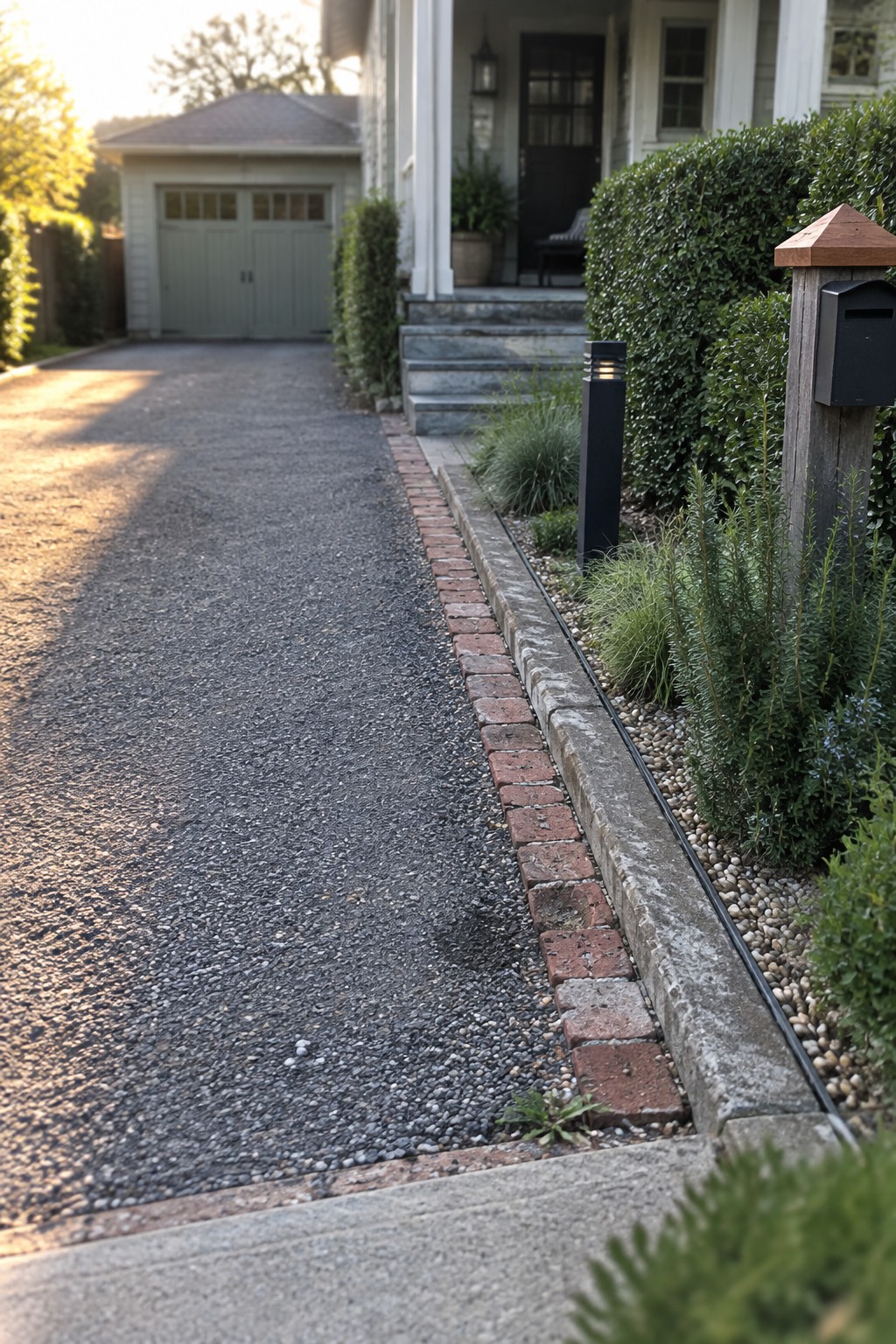
Brick edging gives a crushed asphalt driveway a neat, finished edge without changing the simple surface. It also helps separate the driveway from nearby planting beds, so the boundary stays easy to see.
Set the bricks in a straight, stable line and keep them level with the driveway surface. This approach suits traditional homes and can work well on a budget, though the edging needs a firm base to help prevent shifting.
Use Crushed Asphalt Around a Planted Island
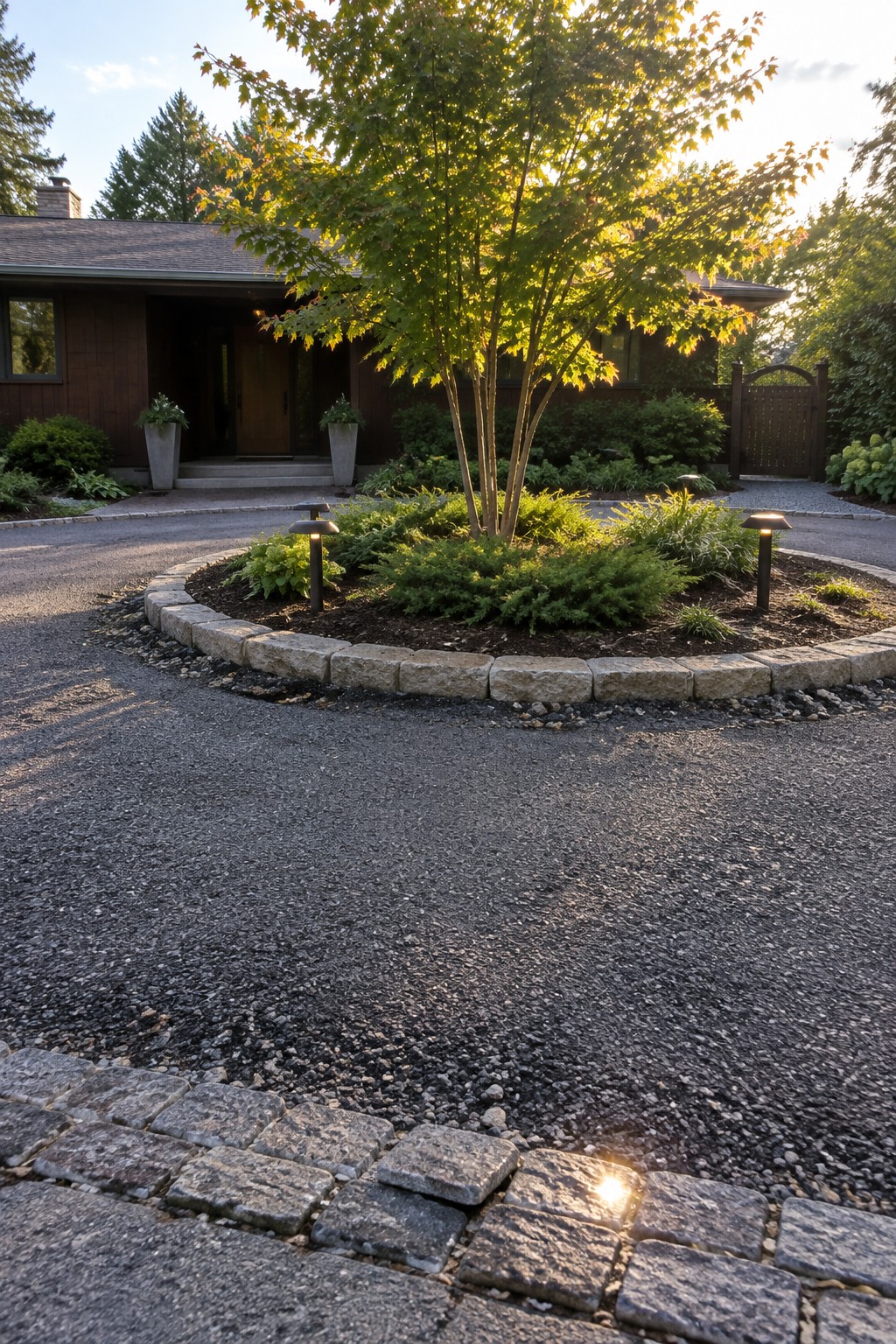
Crushed asphalt can make a practical driveway surface while leaving room for a planted island in the middle. A simple stone border keeps the loose material in place and gives the planting bed a clear edge.
This approach works well on a broad driveway where a central bed won’t block access or make turning awkward. Keep the bed modest in size, and use a firm, well-compacted asphalt surface around it for easier driving and upkeep.
Use Crushed Asphalt For A Simple, Budget-Friendly Driveway
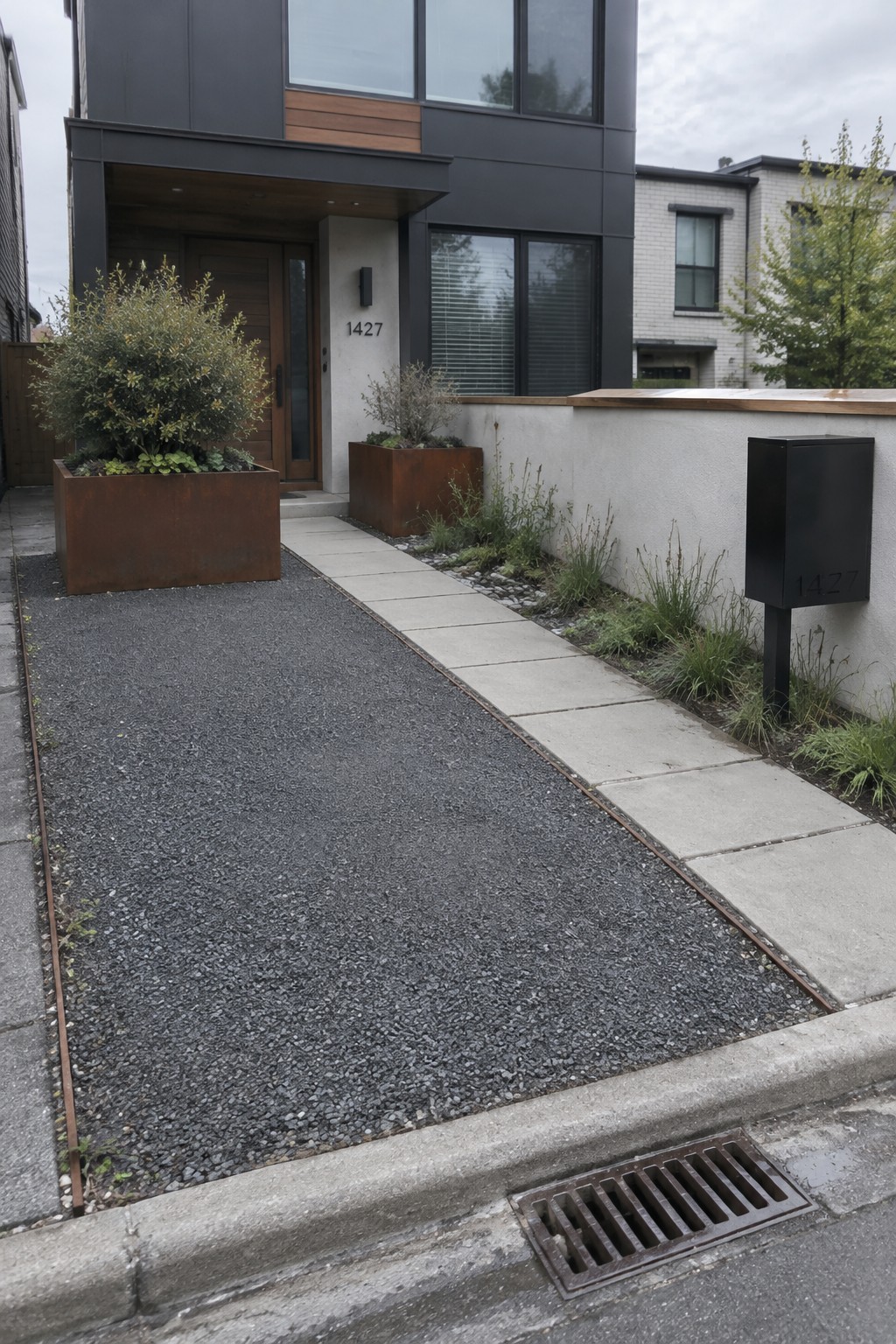
Crushed asphalt makes a practical driveway surface when you want to keep costs down without leaving the area as plain dirt. Its dark, compacted finish suits a modern home, and simple metal edging can help keep the material in place.
It works well for a straightforward parking area or long approach. Have the base graded and compacted properly, and plan for occasional topping up, especially where cars turn or water runs across the surface.
Use Crushed Asphalt for a Long, Clean Driveway Edge
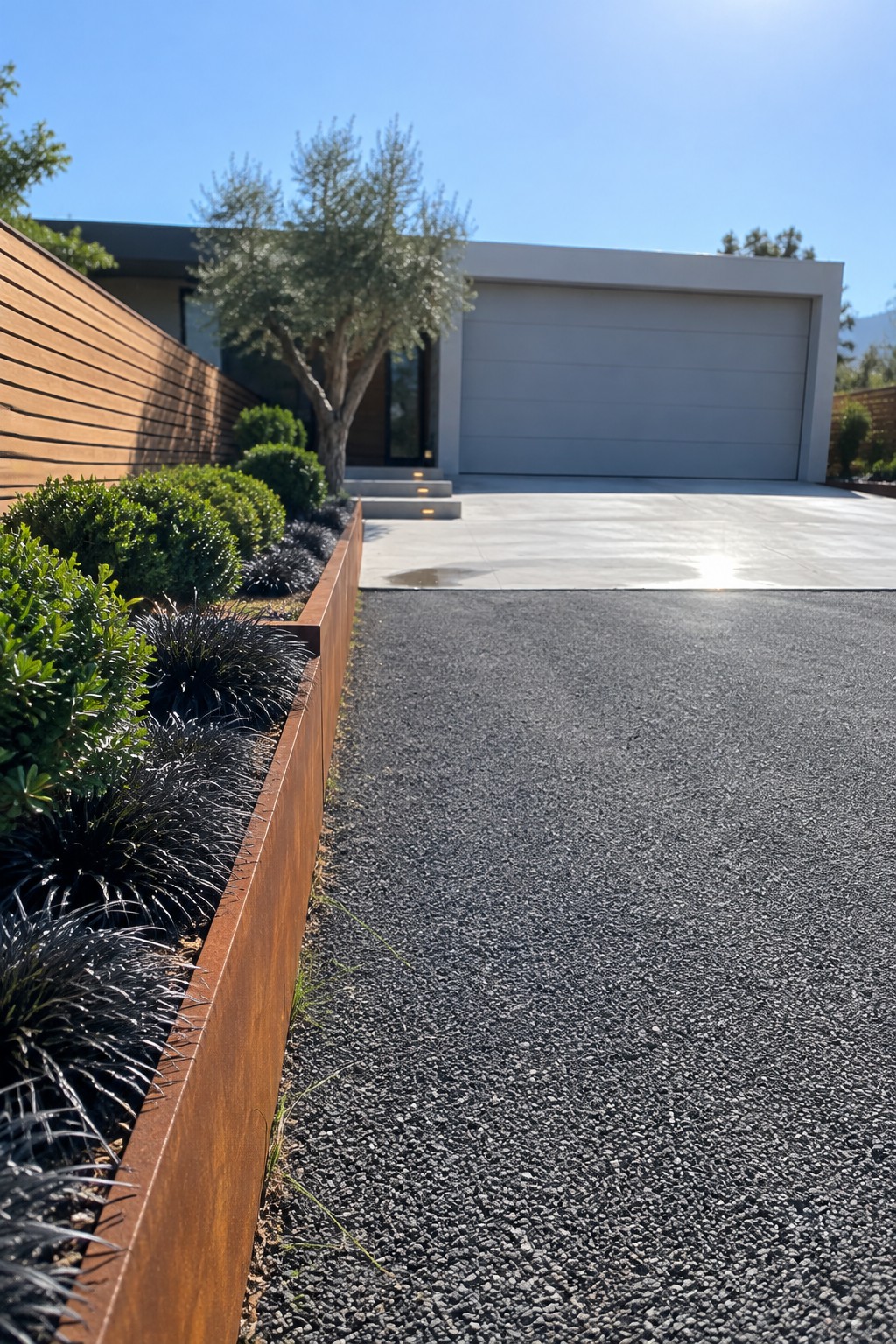
A long driveway can feel neater when its edge runs alongside a defined planting bed. Crushed asphalt gives the driving area a dark, practical surface, while a straight metal border keeps the garden soil and gravel from spreading into it.
This approach works well on a sloped or narrow lot where the driveway meets a raised bed. Keep the bed edge sturdy and leave enough clearance for cars; crushed asphalt can shift at the edges, so a firm border helps it stay in place.
Use Crushed Asphalt for a Coastal Driveway
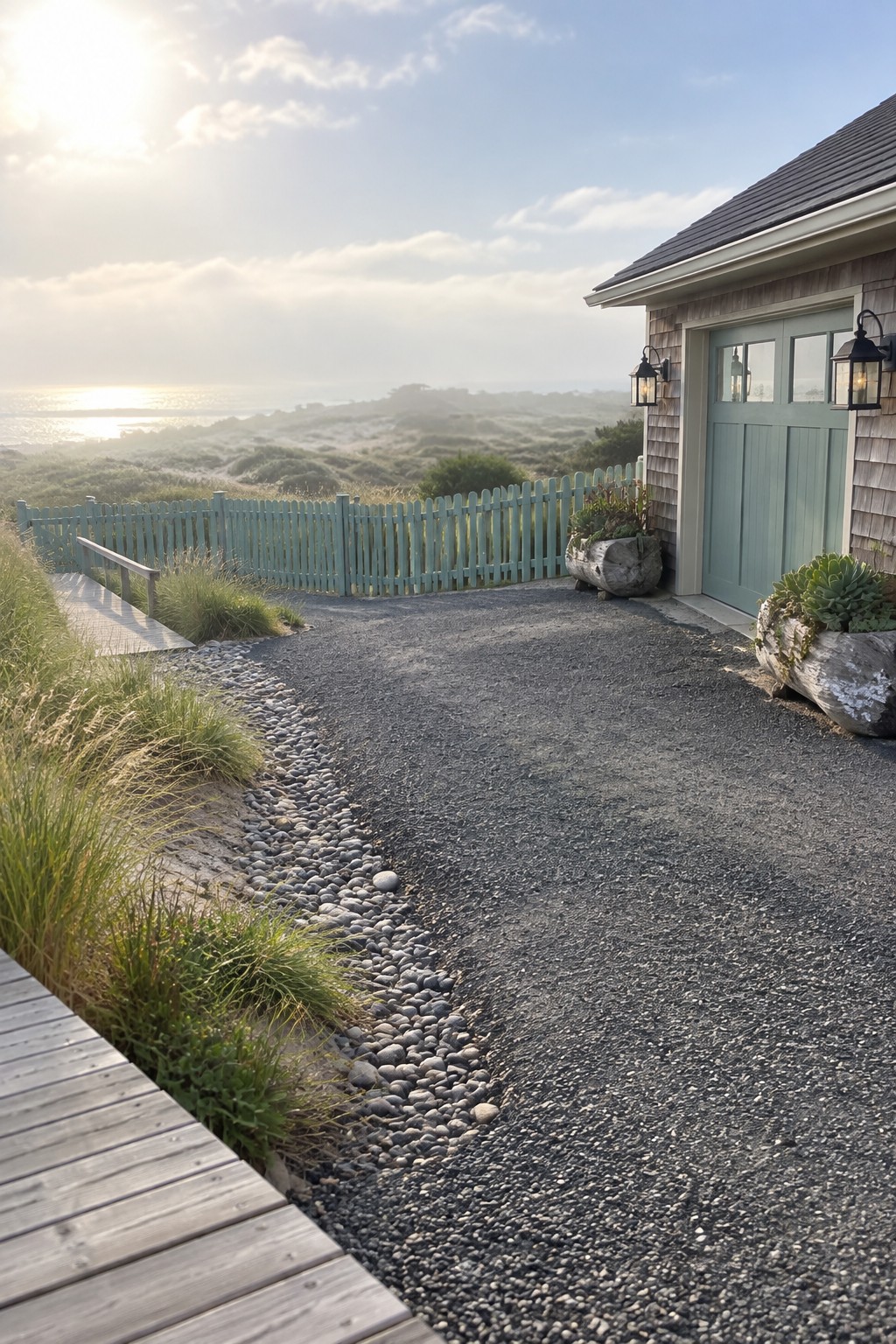
A crushed asphalt driveway can be a practical choice for a coastal home, where sand and salt-tolerant plants often suit the setting better than a formal paved surface. Its dark, textured finish also gives a clear route to the house without taking over the yard.
Use it for a driveway or approach that gets regular foot and vehicle traffic, and edge it with smooth stones to help keep loose material in place. A compacted base and good drainage matter, especially in areas exposed to rain and runoff.
Add a Stone Border Along the Driveway
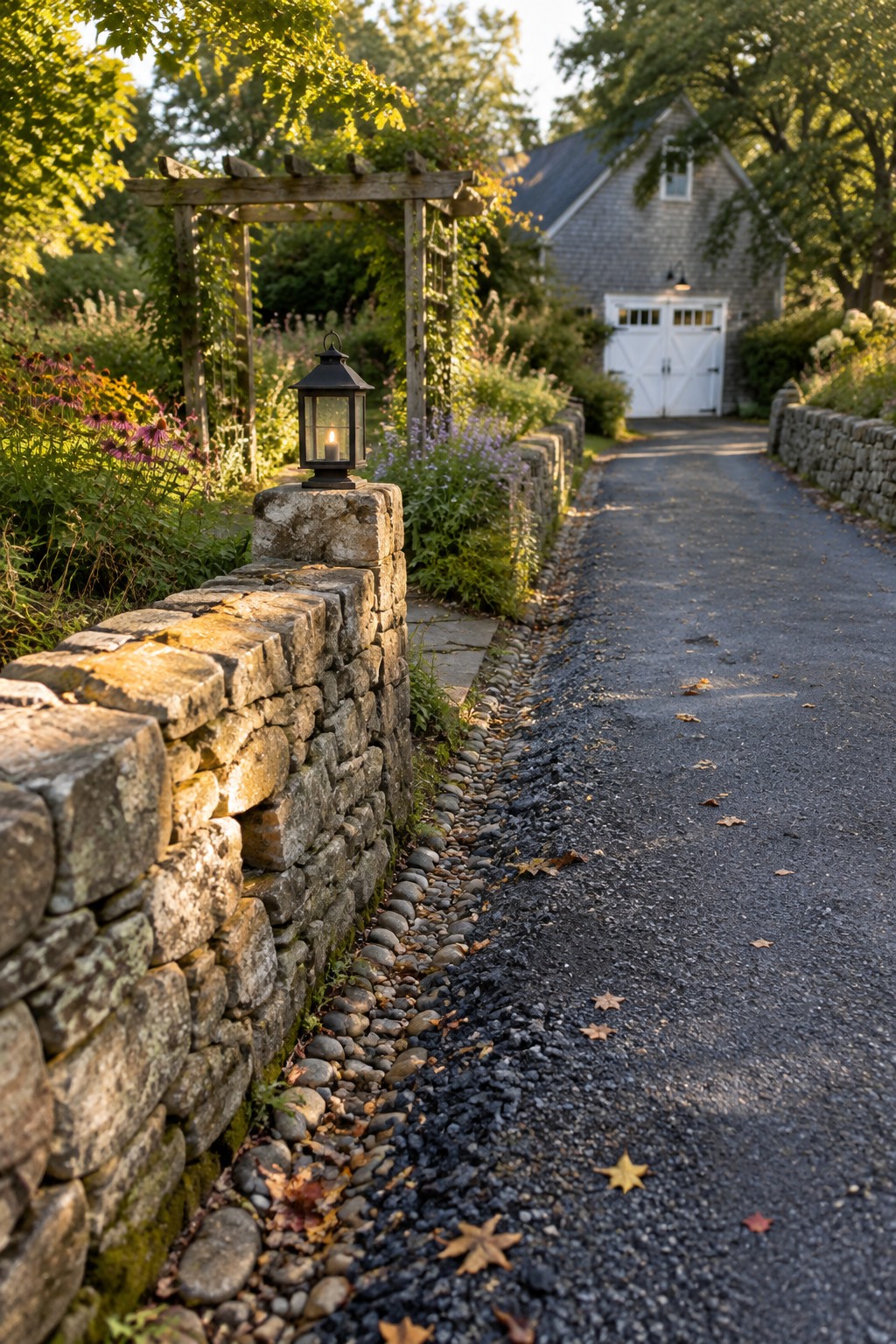
A low stone border helps keep a crushed asphalt driveway neat where it meets a garden. It gives the loose surface a clear edge and keeps gravel from spreading into the planting beds.
Use this approach where a driveway runs beside a path or planted area. Choose sturdy stones and set them firmly so the border stays in place as cars pass.
Use Crushed Asphalt for a Curving Garden Path

A gently curving path can make a narrow side yard easier to walk through and less like a service corridor. Crushed asphalt is a practical surface for this kind of route, and its dark color works well beside simple stone edging.
Keep the curve gradual so it feels natural and remains easy to maintain. A firm, well-compacted base helps the path hold up, while sturdy edging keeps loose material from spreading into nearby plants.
Edge a Crushed Asphalt Driveway With River Stones
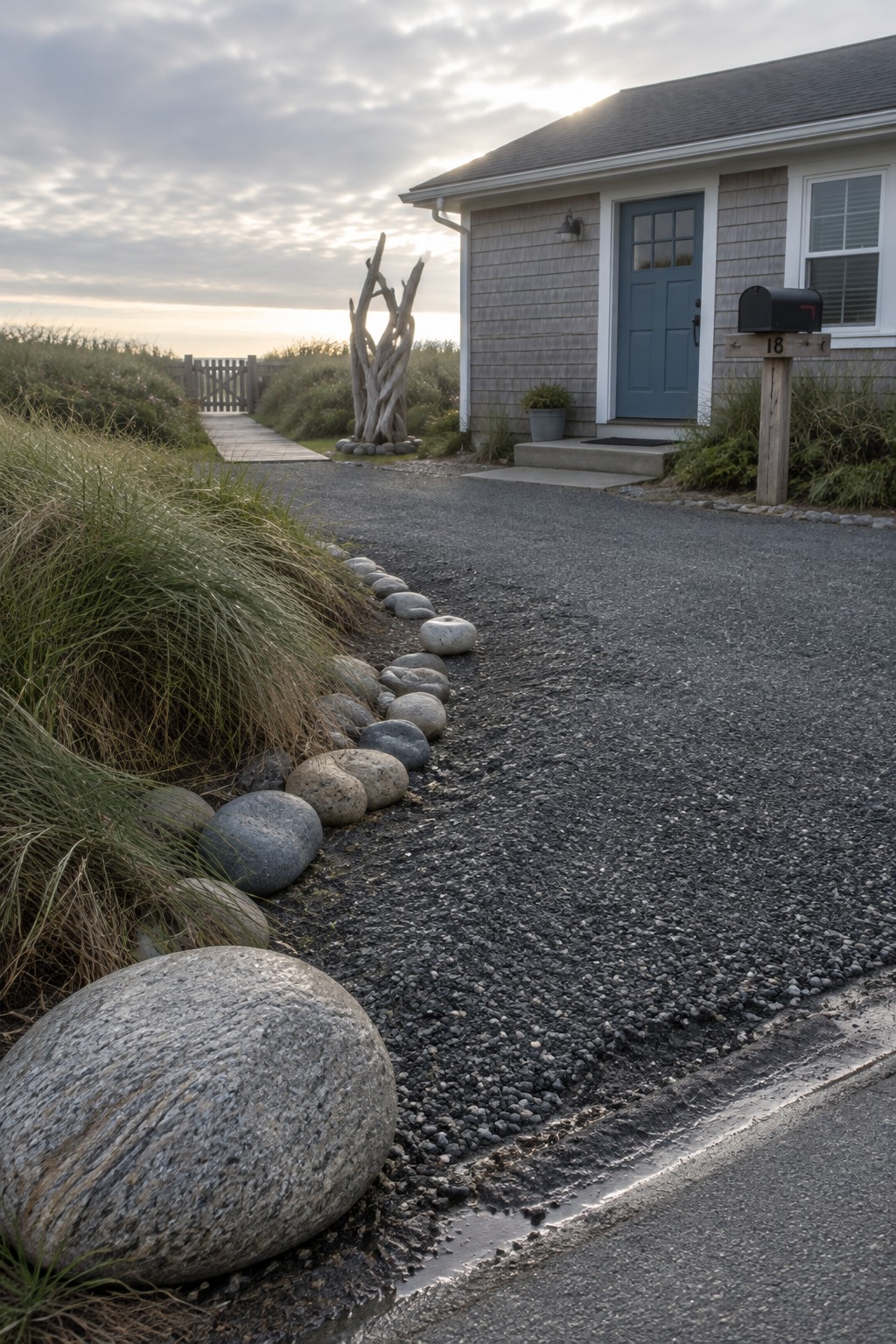
Large, smooth stones make a practical border for crushed asphalt, helping keep loose material from spreading into nearby grass and planting beds. The rounded shapes also give the driveway edge a softer look than a straight strip of concrete.
Use stones of a few different sizes along a curved or uneven driveway edge, setting them firmly so they stay in place. Leave enough room between the border and the driving surface for easy maintenance and runoff.
Add a Brick Strip to Break Up the Driveway
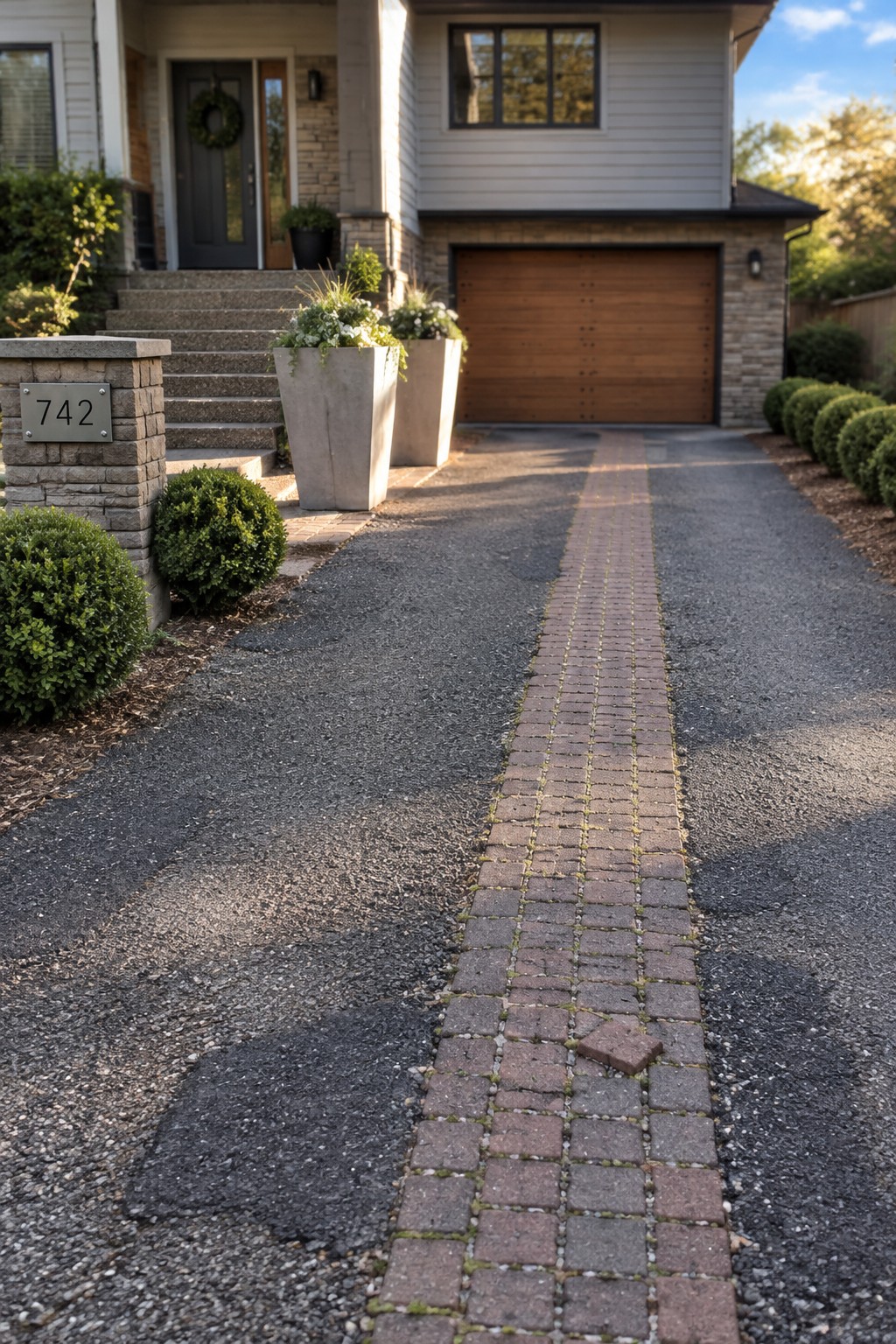
A narrow brick strip can give a crushed asphalt driveway a more finished look without covering the whole surface in pavers. It also creates a clear visual line leading toward the garage, while keeping most of the driveway simple and affordable.
This works well on straight driveways where you want a little definition without adding a formal border. Set the bricks on a stable, well-compacted base, and keep them level with the asphalt so they don’t become a tripping hazard or catch tires.
Use Brick Edging to Set Off Crushed Asphalt
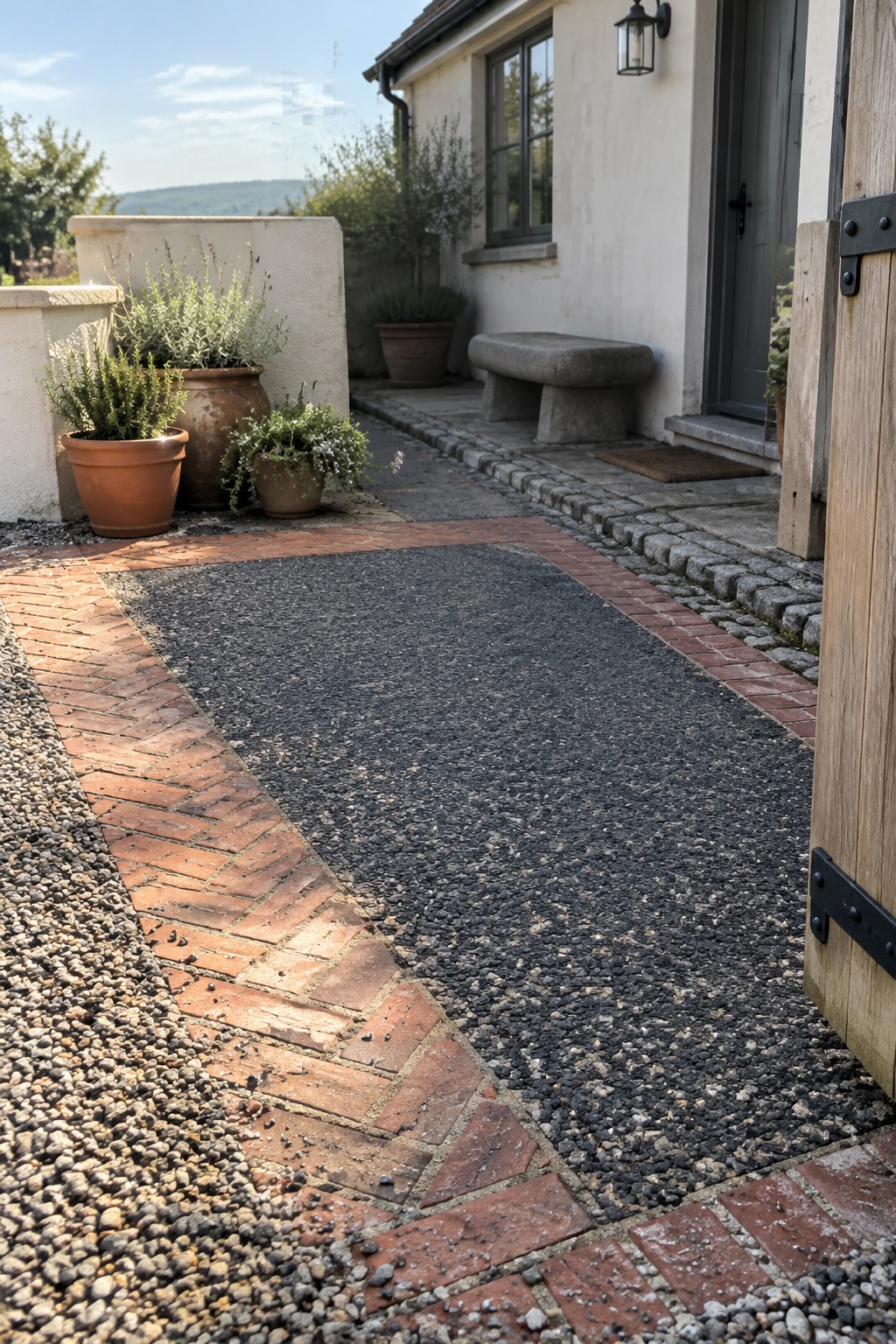
A brick border gives a crushed asphalt driveway a finished edge without requiring a full paving job. The contrast makes the dark surface look more intentional and helps define where the driveway ends.
Use reclaimed or standard pavers along a straight run or a gentle curve, and set them firmly so they stay in place under foot and vehicle traffic. This approach suits cottage-style homes, but make sure the border sits level and does not create a tripping edge.
Use Crushed Asphalt for a Driveway Beside a Planting Bed

A crushed asphalt driveway can look neat without needing a solid paved edge. A sturdy timber border keeps the material in place and gives the adjoining planting bed a clear line.
This approach suits a country home or a simple outbuilding, especially where grasses and other informal plants fit the setting. Use pressure-treated or naturally durable timber, and make sure the driveway is graded so water does not collect along the edge.
Use Stepping Stones to Add a Walkway Beside Crushed Asphalt

A stepping-stone walkway can make a crushed asphalt driveway easier to use without paving the whole surface. The separate slabs give people a firm place to walk, while the dark, compacted driveway remains a practical choice for parking and access.
Set the stones into a narrow strip along the edge, leaving enough room for comfortable steps. This works well for a cottage entry or a driveway leading to a side door. Keep the stones level and stable so they do not rock or collect water.
Use Crushed Asphalt to Keep a Planting Bed Neat

Crushed asphalt can make a practical driveway surface while leaving room for a generous planting bed along one side. A clear edge between the dark driveway and the flowers helps keep the garden from spreading into the driving area.
This approach works well beside a front walk or entry, especially where you want a softer look without paving the whole yard. Use a firm border to hold the asphalt and stones in place, and choose plants that won’t flop too far over the driveway.
Use Crushed Asphalt for a Shared Courtyard Path

Crushed asphalt can make a practical path through a shared courtyard without the cost of paving the whole area. It suits spaces where residents need a firm route between buildings and bike storage, while leaving room for planting beds and concrete pads.
For a similar layout, keep the path wide enough for everyday foot traffic and use concrete where bikes or bins need a steadier surface. A low border can help keep the asphalt contained, especially beside planting.
Add a Log Border to a Crushed Asphalt Driveway
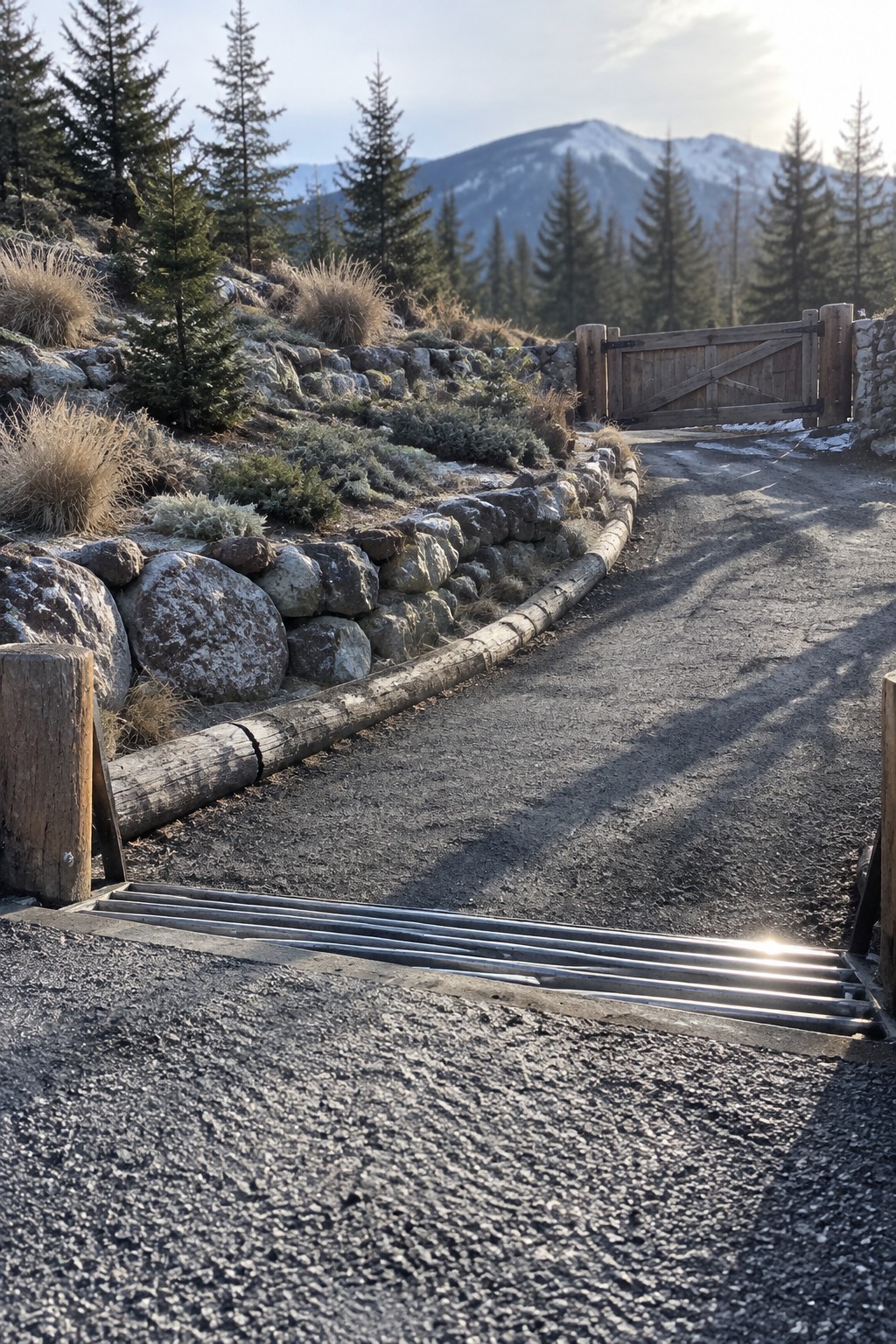
A timber border can keep a crushed asphalt driveway neatly separated from a sloped planting area. Here, a long log follows the curve of the drive, giving the loose gravel edge a clear boundary.
This approach suits a rustic or wooded property where timber feels at home. Set the border firmly and check that it will stay in place as gravel shifts or water runs downhill.
Frequently Asked Questions
Q: How thick should a crushed asphalt driveway be?
A: For a typical residential driveway, aim for about 3 to 4 inches after compaction. If the ground is soft or the driveway will carry heavier vehicles, a thicker, well-compacted base can help prevent ruts.
Q: Can I put crushed asphalt right over my existing driveway?
A: You can spread it over a firm, well-drained surface, but fill deep holes and fix drainage problems first. Loose or broken areas underneath may keep shifting and make the new surface uneven.
Q: Will crushed asphalt get muddy or dusty?
A: It can be dusty when dry and may soften after heavy rain, especially if it hasn’t been compacted well. Good drainage and occasional grading help keep the surface in shape.
Q: Does crushed asphalt need to be sealed?
A: Usually, no. Compaction does most of the work, and the asphalt in the material may bind the surface over time.
