


When I approach a house the gate often shapes my first sense of what the rest of the exterior might hold.
The grill needs to work with the facade materials and the way light hits the entry throughout the day.
I usually sketch a few options on paper first because some patterns that look balanced in drawings feel too busy once the gate is built.
Weather exposure matters more than most people expect so I check how the metal will hold up before committing to anything intricate.
A gate that feels right from the street can still fall short if it blocks the natural flow of the walkway or driveway.
Mixing Metal And Wood In Gate Grills
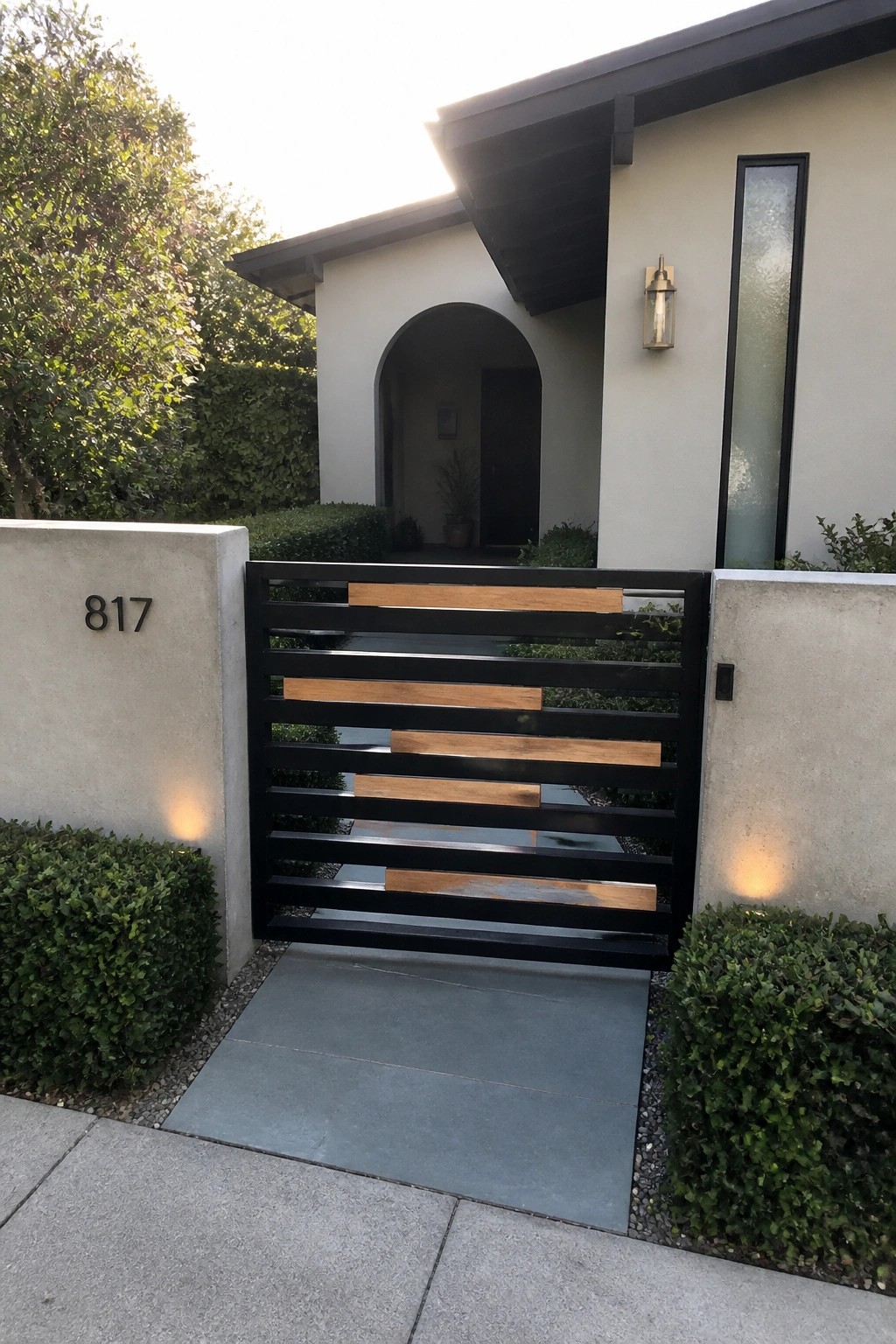
A metal gate with wood accents can give an entry more warmth while still looking clean and modern. The horizontal layout keeps the design simple and lets the two materials play off each other without feeling busy.
This works best on homes with straight lines and neutral colors. Keep the wood tones light so they stand out against the darker frame, and make sure the spacing between the slats stays even for a balanced look.
Wrought Iron Gates With Stone Pillars

Wrought iron gates with detailed scrollwork bring a clear focal point to a garden entrance. The open patterns keep the gate from blocking the view while still marking the boundary in a strong way.
This approach works best on properties with stone walls or pillars already in place. The metal holds up well outdoors and pairs easily with climbing plants that soften the look over time.
Geometric Metal Gates

A metal gate with a repeating geometric pattern gives an entry a clear sense of character while still feeling open. The cutouts let light and views pass through, so the gate marks the boundary without closing off the space.
This approach works best on modern homes with simple lines and materials like concrete or wood siding. Keep the rest of the entry fairly plain so the pattern on the gate stays the main feature.
Perforated Metal Gates

A perforated metal gate brings texture and depth to an entry without adding bulk. The pattern keeps the gate from feeling solid and closed off, and the weathered finish blends nicely with stone and natural surroundings.
This style works best on homes with straightforward architecture. Use it where the gate can be seen from the street, and keep nearby planting low so the pattern stays clear. Make sure the metal is sealed well if you want the rust to develop evenly.
Circular Motifs In Metal Gate Designs

Gates with bold circular patterns in the grillwork give an entry a clear focal point. The curves stand out against the straight lines of stone and masonry, and they make the gate feel more personal than a plain rectangle.
This works especially well on homes with arched openings or textured walls. Keep the rest of the hardware simple so the circles remain the main feature, and add a strip of lighting along the arch if you want the pattern to show up at night.
Vertical Bar Gates For A Clean Entry

A gate made from simple vertical bars gives an entry a light feel while still marking the boundary. The thin lines keep the space from feeling closed off, and they let light reach the path beyond.
This style works best on modern or minimalist homes where you want the gate to blend with straight lines and simple materials. Keep the surrounding plants tall and soft so the bars stay the main detail without competing with too much else.
White Wooden Gates With Black Hardware

A simple white gate with black hinges and latches gives an entry a clean, traditional look that still feels welcoming. The contrast between the painted wood and dark metal stands out nicely against brick posts, and it works especially well on homes that already have some classic details.
This approach suits older houses or any property where you want the gate to feel like part of the architecture rather than an afterthought. Keep the wood painted and the hardware simple so the gate stays easy to maintain and does not compete with the rest of the front yard.
Grid Gates That Keep the Entry Open

A grid gate works well when you want security without making the front feel closed in. The open metal pattern lets light and views pass through, so the path and garden stay visible from the street.
This approach suits homes that mix wood, stone, and darker siding. It pairs best with simple posts and natural materials rather than heavy walls or solid panels.
Frosted Glass Panels In A Metal Gate

A gate built with a simple black metal frame and frosted glass panels gives an entry a lighter look while still offering privacy. The horizontal divisions break up the surface so the gate does not feel like a solid block, and the glass lets in soft light during the day.
This approach works best on homes that already use stone or wood nearby, since the contrast keeps the gate from overpowering the rest of the front. It suits smaller entries where you want to avoid a heavy metal grille but still need a clear boundary.
Cutout Patterns On Metal Gates

A gate with an open cutout pattern brings light and movement to an entry without needing extra decoration. The design lets sunlight pass through in interesting shapes, which then land on the path or ground beyond. This keeps the gate from feeling like a solid barrier and adds a quiet bit of character that changes with the time of day.
This approach works well on homes with simple walls or narrow side entries where you want some privacy but not a blank wall of metal. It suits gardens that already use natural shapes in the planting, since the pattern can echo the leaves or branches nearby. Just make sure the cutouts are not too fine or they may collect debris over time.
Vertical Wood Gates That Blend With Garden Paths

A gate built from plain vertical boards works well because it feels more like part of the planting than a hard barrier. The narrow gaps let light and air move through, so the garden on either side still reads as one space.
This approach suits homes with established trees and mossy ground cover. Set the gate between simple stone columns and let a stepping stone path lead up to it so the whole entry stays low key and easy to maintain.
Sunburst Iron Gates For Entry Character

A sunburst pattern on an iron gate gives the front entrance a clear focal point. The spokes pull the eye toward the center and keep the design from feeling flat or plain.
This approach works best on homes with stone or masonry pillars where the gate can stand out against greenery. Keep the rest of the entry simple so the pattern does the main job.
Perforated Metal Gates Let Light Through

A perforated gate gives an entry some visual movement without needing extra decoration. The small openings catch light during the day and create a soft pattern on the ground or wall behind it, which keeps the gate from feeling like a solid barrier.
This approach suits modern homes that want privacy but still need some connection to the street. Pair it with simple walls and low planting so the pattern does the work. Just check the hole size if security is a concern, since very open patterns can reduce the sense of enclosure.
Organic Patterns In Metal Gate Grills

One way to give a main gate more personality is to choose a grill with flowing organic shapes cut into the metal. The design here uses curved lines that look like plants or waves, which softens the look of the solid pillars around it.
This kind of gate works best on homes where you want the entry to feel a little artistic without going over the top. Pair it with plain walls and simple landscaping so the pattern has room to stand out.
Patterned Gates That Give An Entry More Character

A gate with a repeating geometric cutout pattern brings a lot more interest to a front entrance than a plain solid panel. The design lets some light and views through while still feeling secure, and it turns what could be a basic barrier into something that feels intentional.
This approach works especially well on modern homes with concrete or masonry walls. Keep the pattern bold but balanced so it does not overwhelm the rest of the facade, and match the gate frame color to other dark accents like the mailbox or light fixtures.
Cutout Patterns On Metal Entry Gates

A cutout pattern in a metal gate gives the entry a bit more life without needing extra decoration. The wave shape here lets light pass through in a simple way and leaves soft shadows along the path as the day moves on.
This style suits homes with a garden or coastal setting where you want the gate to feel connected to the surroundings. Keep the design simple and match it to the local landscape so it adds interest without drawing too much attention.
Tile On The Gate Adds Interest

A simple gate can feel much more personal when you fill the panels with a strong tile pattern. The herringbone layout in shades of blue and green gives the entrance a clear focal point without needing extra trim or hardware.
This works best on homes with plain walls and clean lines, where the pattern can stand out on its own. Keep the frame dark and the surrounding planting low so the tile does the talking.
Rope Weaving In A Gate Frame

Thick rope woven through a gate adds texture and a handmade quality that plain metal often lacks. It softens the look of the frame while still keeping the structure strong and secure.
This approach works best on homes with a coastal or rustic feel where natural materials already show up in the landscape. Use weather-resistant rope and fasten it well so it stays tight over time.
Mix Wood And Metal On Your Gate

A gate made with horizontal wood slats and black metal grilles gives the entry a solid look while still letting some light through. The simple geometric patterns in the metal keep things interesting without making the gate feel heavy or closed off.
This style works best on homes with clean lines or a modern touch. Stick to one or two repeating shapes in the metal so the overall design stays easy to live with day to day.
Geometric Metal Gates For A Bold Entrance

A gate built with flat angled panels gives the front of a property a strong modern shape. The metal surface catches light across the different planes, so the gate itself becomes the main feature instead of blending into the wall.
This approach works well on homes with simple stone or masonry columns. Keep the rest of the entrance fairly plain so the angles stay the focus. Avoid adding too many extra patterns or the design can start to feel crowded.
Lattice Pattern Gates For A Welcoming Entry

A gate with a lattice pattern brings some visual interest to an entry without closing it off completely. The open grid keeps the front feeling lighter while still giving a clear sense of separation from the street.
This style works best with stucco walls and simple brick paving. It fits homes that lean Mediterranean or Spanish and pairs easily with basic pillar lights.
Frequently Asked Questions
Q: How do I pick a grill design that fits my house without clashing? A: Walk around your front area and note the shapes already there like curves on windows or straight lines on the door. Match those in the grill pattern so it feels like it belongs. Simple repeats work better than trying to stand out too much.
Q: Will a fancy grill make the gate harder to open and close every day? A: Heavy designs add weight so test the hinges first and swap them if they feel weak. Keep moving parts clear of extra bars near the latch. That keeps daily use smooth.
Q: What if the grill starts to rust after a year or two? A: Wipe it down a few times a year and touch up any chips in the paint right away. Steel holds up longer than raw iron in most spots. Skip the cheapest options if your air stays damp.
