

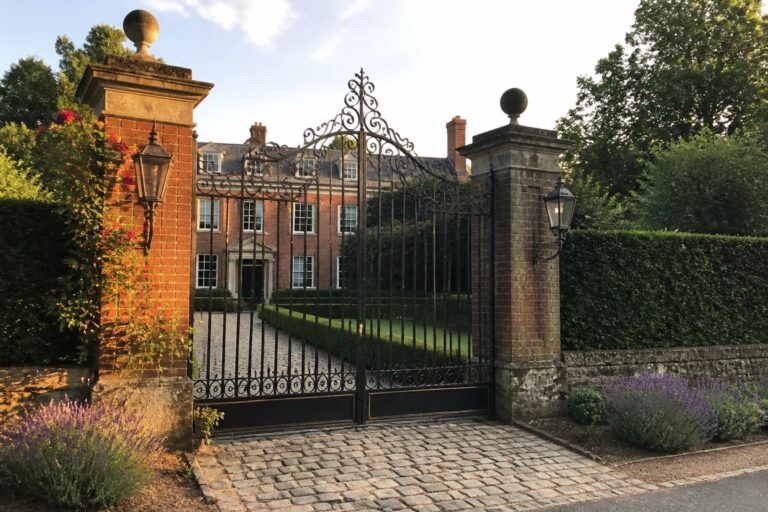
When I drive through older neighborhoods the iron gates at the front often catch my eye first because they shape how the whole house feels from the curb.
The material holds up through weather and time in a way that many newer options do not, which is why I keep noticing the same patterns on homes that still look solid decades later.
I have found that the best ones sit quietly with the rest of the facade instead of trying to draw attention on their own.
Small choices in the scrollwork or the height make a bigger difference than most people expect.
Testing a few classic options against the actual entry and driveway usually shows which ones will feel right once they are installed.
Classic Iron Gates At The Entry
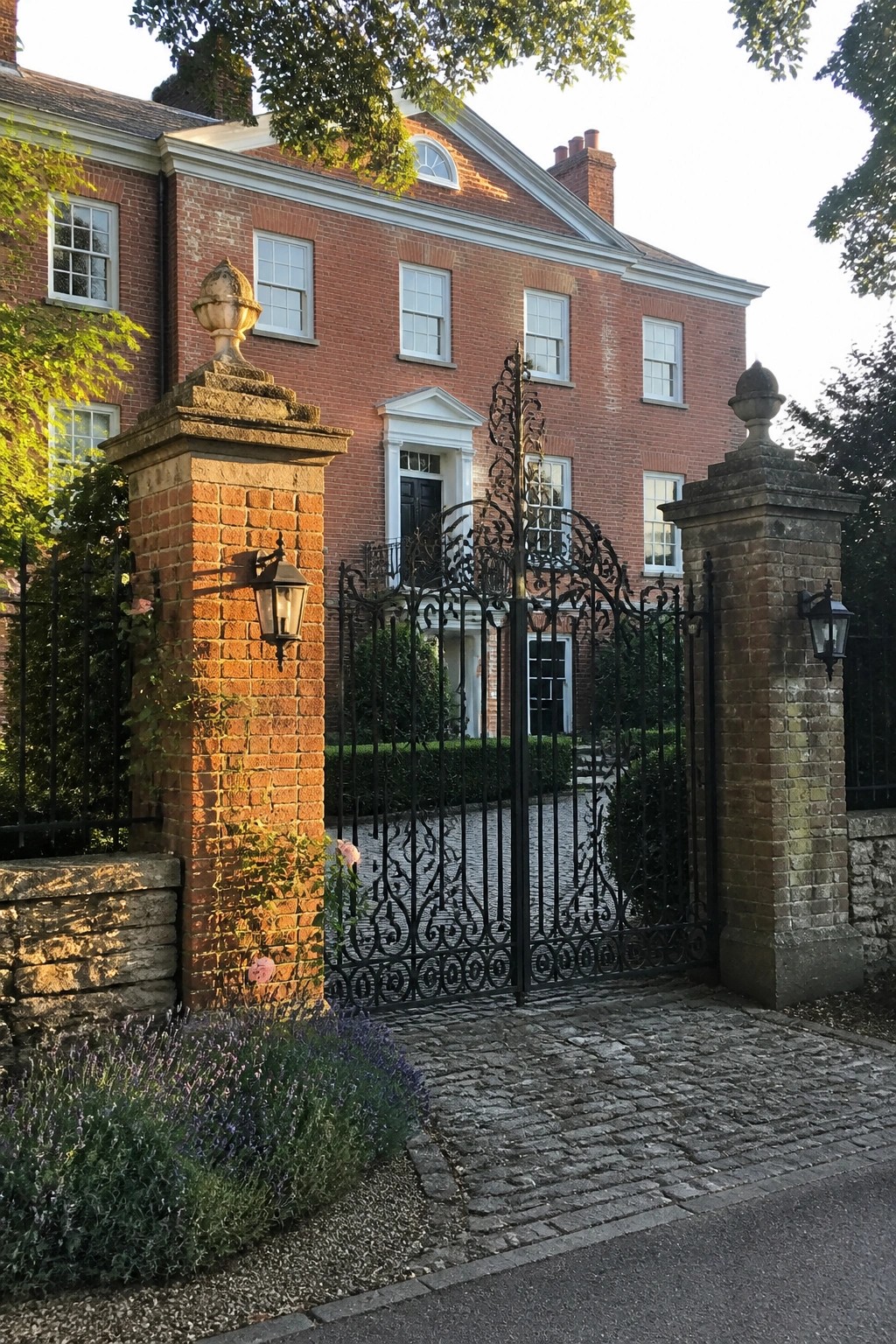
A solid iron gate gives an entrance a finished look that holds up for decades. It adds structure without needing constant upkeep, and the open pattern lets the house stay visible from the street.
This works best on homes with clear symmetry and traditional materials like brick. Match the gate color to other dark metal accents on the property, and keep the scrollwork restrained so the gate feels like part of the architecture rather than the main focus.
Arched Wrought Iron Gates

A black wrought iron gate with a rounded top and simple scrollwork at the base still feels right at home on many houses. It gives a clear sense of entry without blocking the view, and the dark finish holds up well against sun and weather.
This approach suits stucco homes or any place where you want a bit of structure at the front without heavy doors. Paint the iron black, add a latch that actually works, and let nearby plants soften the edges over the years.
Iron Gates With Horizontal Slats

Many homeowners turn to horizontal slats when they want an iron gate that feels current but still holds up over time. The lines create a steady rhythm that looks orderly from the street without blocking everything behind it.
This approach suits homes with simple facades and straight rooflines. It pairs easily with wood or stone posts and keeps the entry feeling open rather than closed off.
Classic Iron Gates For The Front Entry
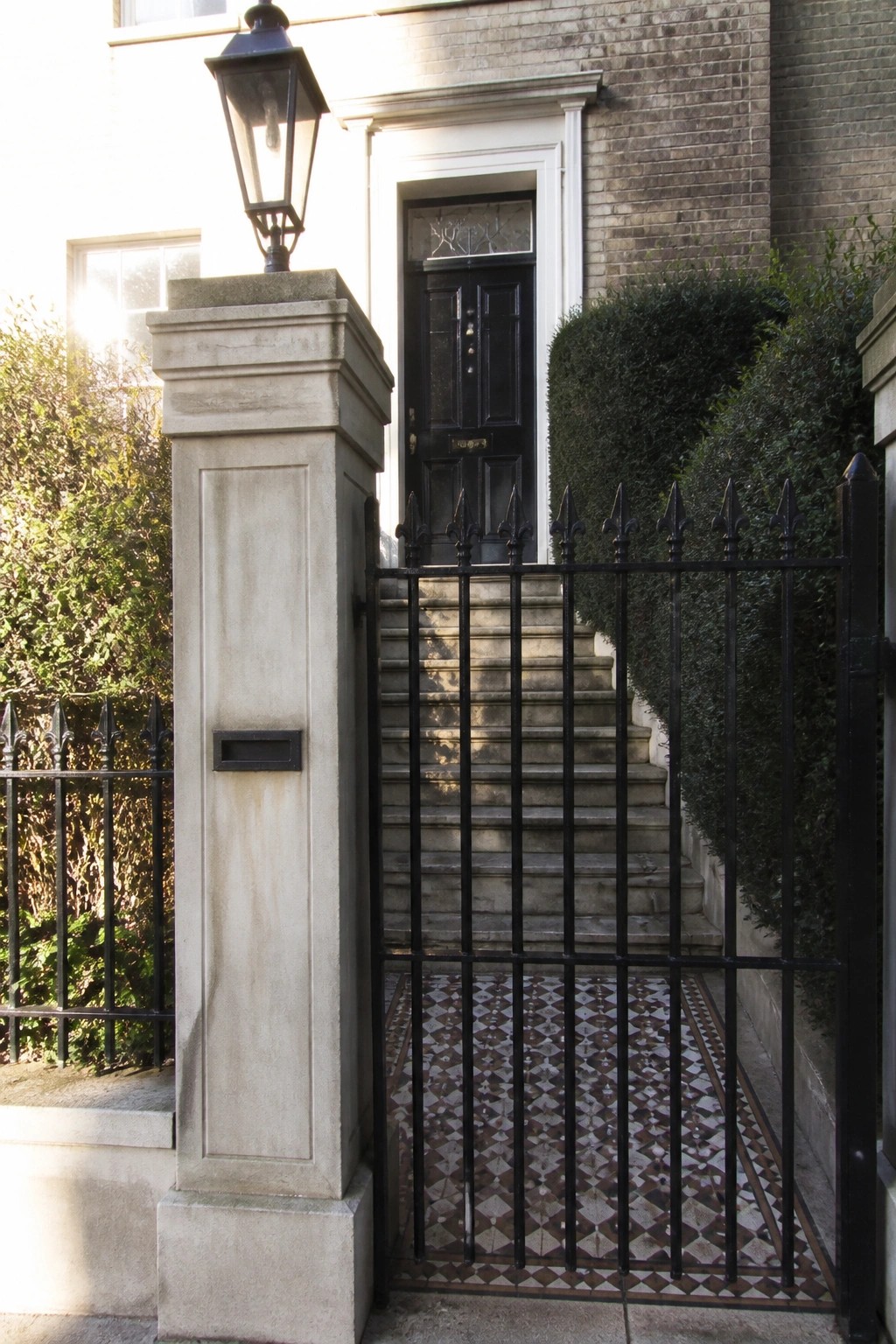
Many homes keep coming back to iron gates because they add a clear boundary without blocking the view. The vertical bars and simple tops create a neat separation between the street and the steps, and the dark finish helps the gate stand out against lighter stone and brick.
This approach works best on houses with a small front setback where you want some security and structure. Choose a pattern that stays fairly plain so the gate ages well and does not fight with the door or the rest of the facade.
Iron Gates Set Between Stone Posts
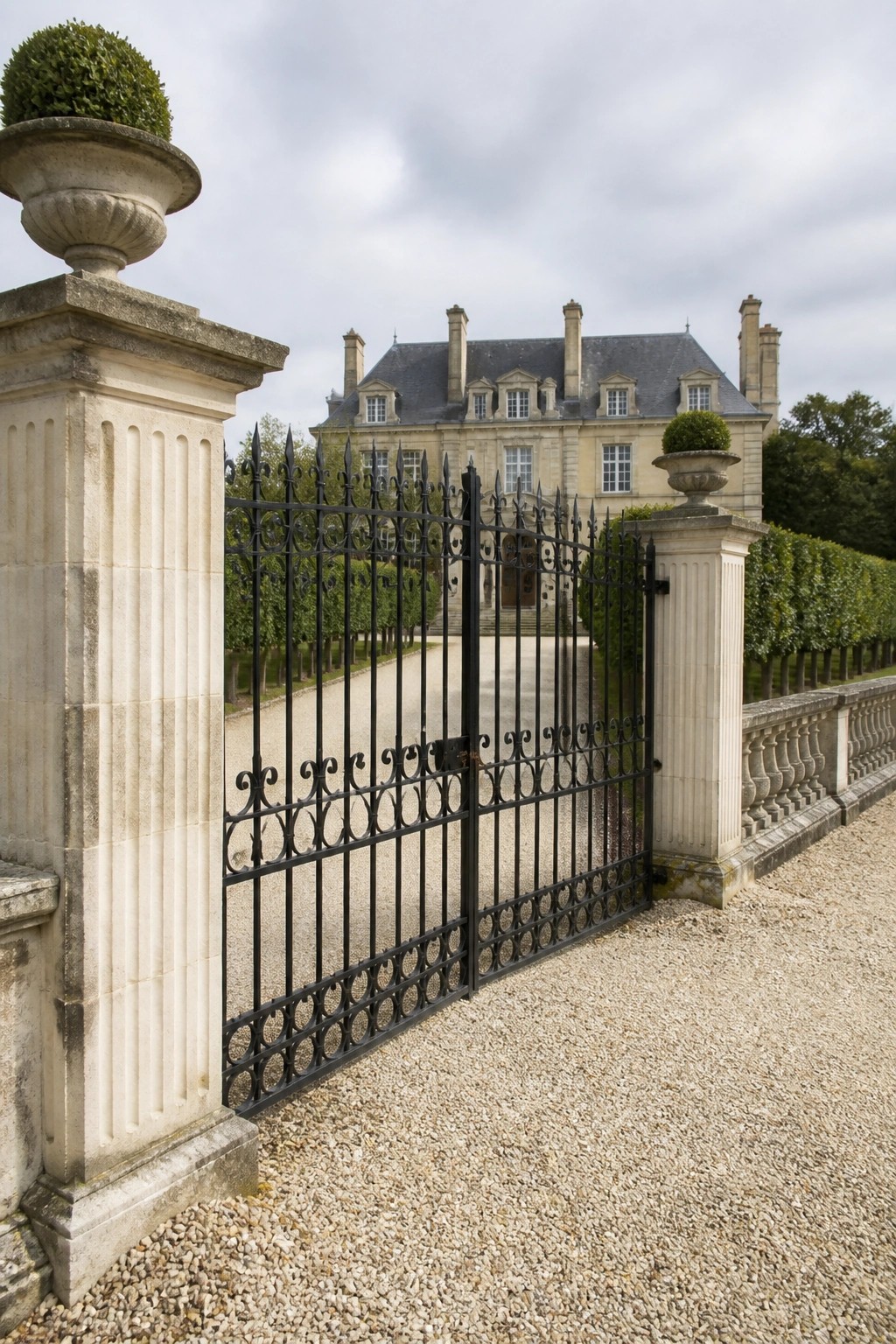
An iron gate with some scrollwork and pointed tops gives an entry real presence without feeling heavy. The dark metal stands out nicely against lighter stone, and it creates a clear boundary that still feels open when the gates are swung back.
This works best on homes with formal lines or larger lots where you want a bit of separation from the street. Match the stone on the posts to any other masonry on the house so the whole entrance feels like one piece instead of separate parts.
Iron Gates With Overhead Rose Arches
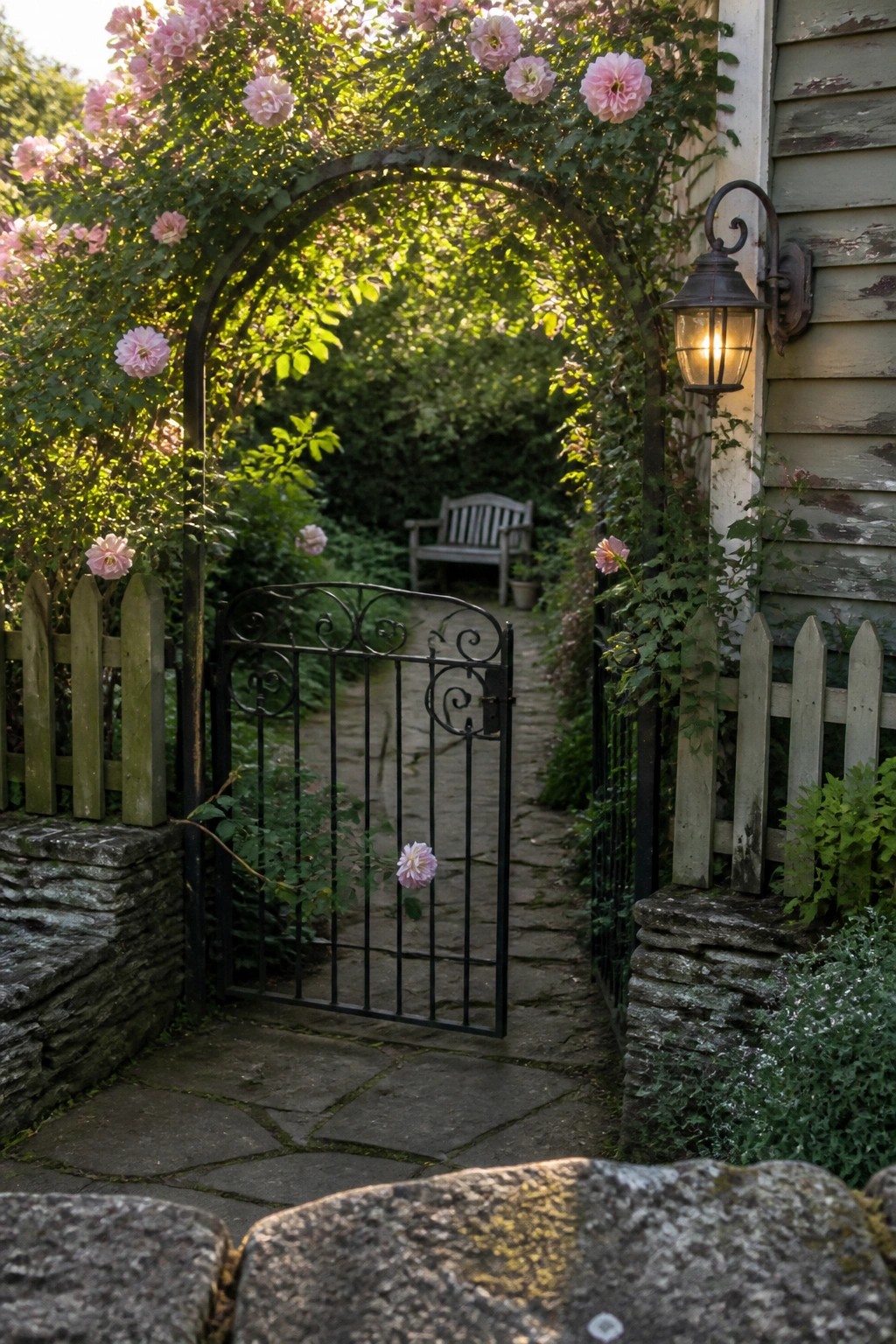
An iron gate gains a lot when you run an arch over the top and let roses climb across it. The metal keeps its classic shape and strength, while the flowers add color and a softer outline that makes the entrance feel more settled.
This works well on homes that already have some garden space near the front. Keep the arch simple in shape so the gate remains the main feature, and choose roses that bloom over a long season.
Vertical Slats For Main Gates
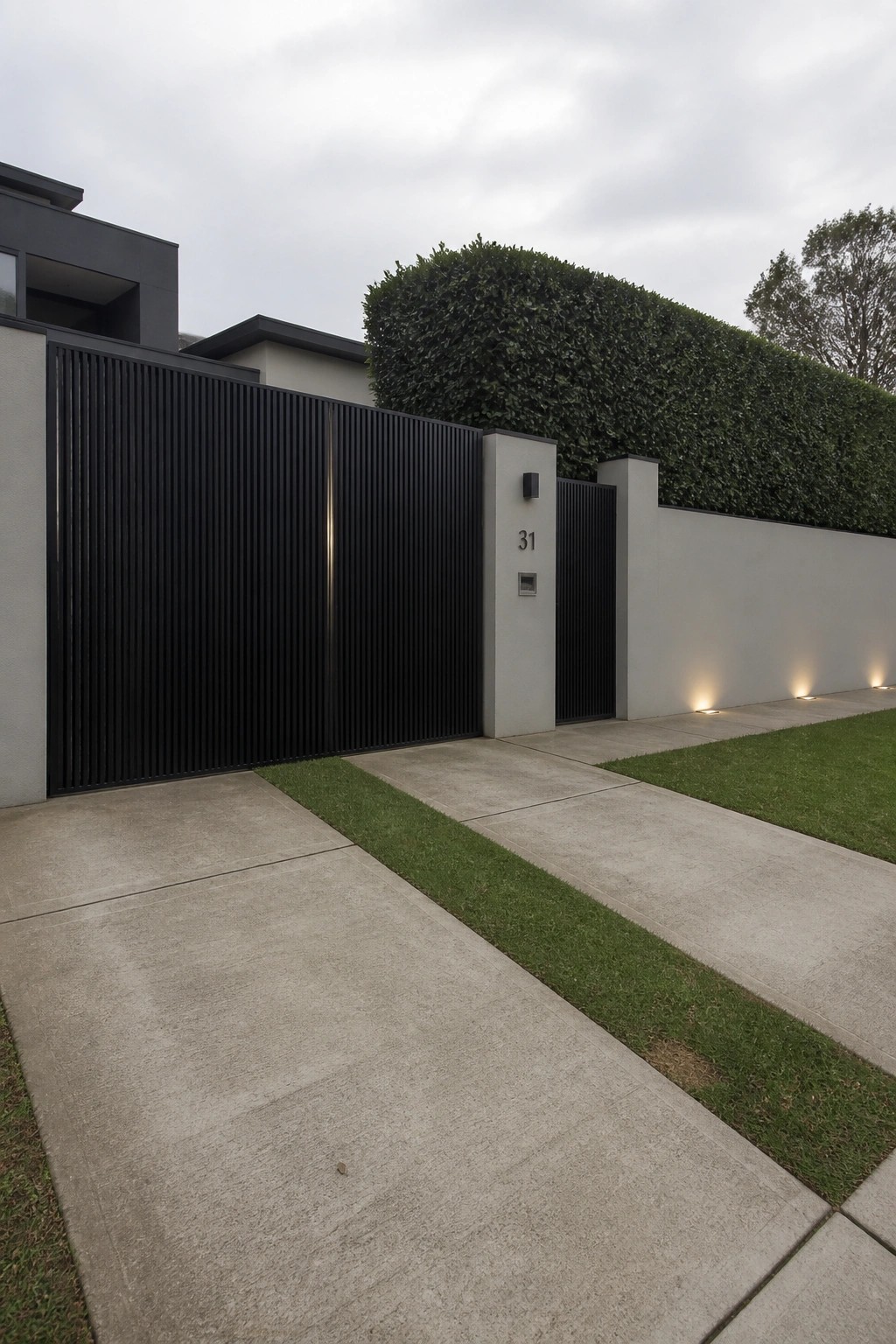
Vertical slats give an iron gate a lighter look while still blocking the view from the street. The lines run straight up and make the gate feel taller without adding extra bulk or heavy panels.
This style works best on homes with simple front walls or concrete edges. It pairs cleanly with light colored masonry and keeps the entry from feeling closed in. Just make sure the spacing stays even so the gate stays easy to maintain over time.
Classic Iron Gates With Stone Posts

A simple wrought iron gate gives an entry a finished look that holds up over the years. The dark color and light scrollwork add just enough detail without feeling busy or trendy.
This approach suits homes with gravel paths or low planting beds around the entrance. Stone posts on each side help the gate feel grounded and make the whole front feel more defined.
Stone Entries With Iron Gates
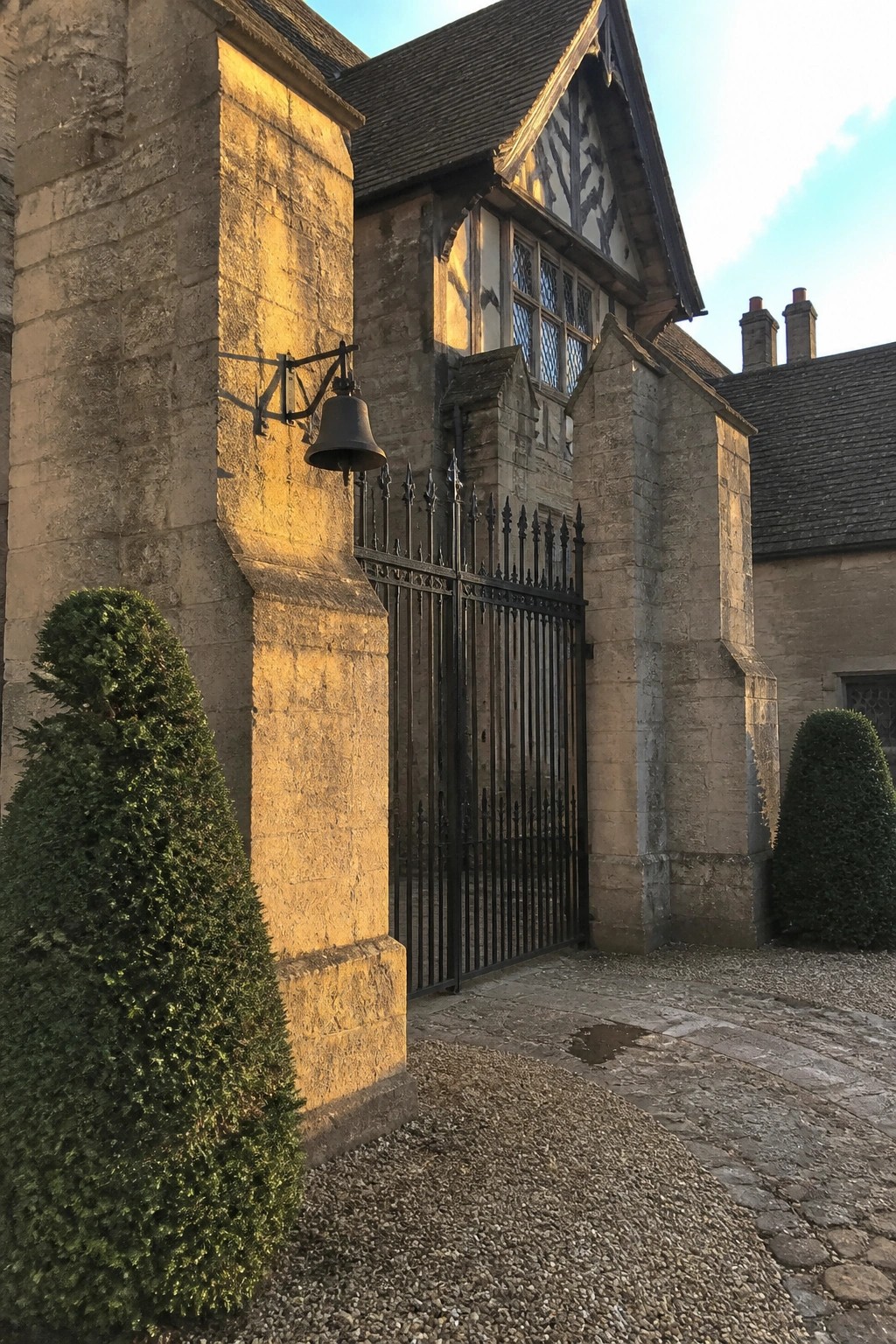
An iron gate set between stone pillars gives an entry a solid, settled look that works on many older homes. The dark metal stands out against the lighter stone without fighting it, and the whole setup feels like it belongs rather than something added later.
This approach suits houses with masonry walls or columns already in place. Keep the gate simple in pattern and finish so it ages well with the stone, and make sure the hinges and latch are heavy enough to handle daily use.
Mixing Iron With Wood On A Gate
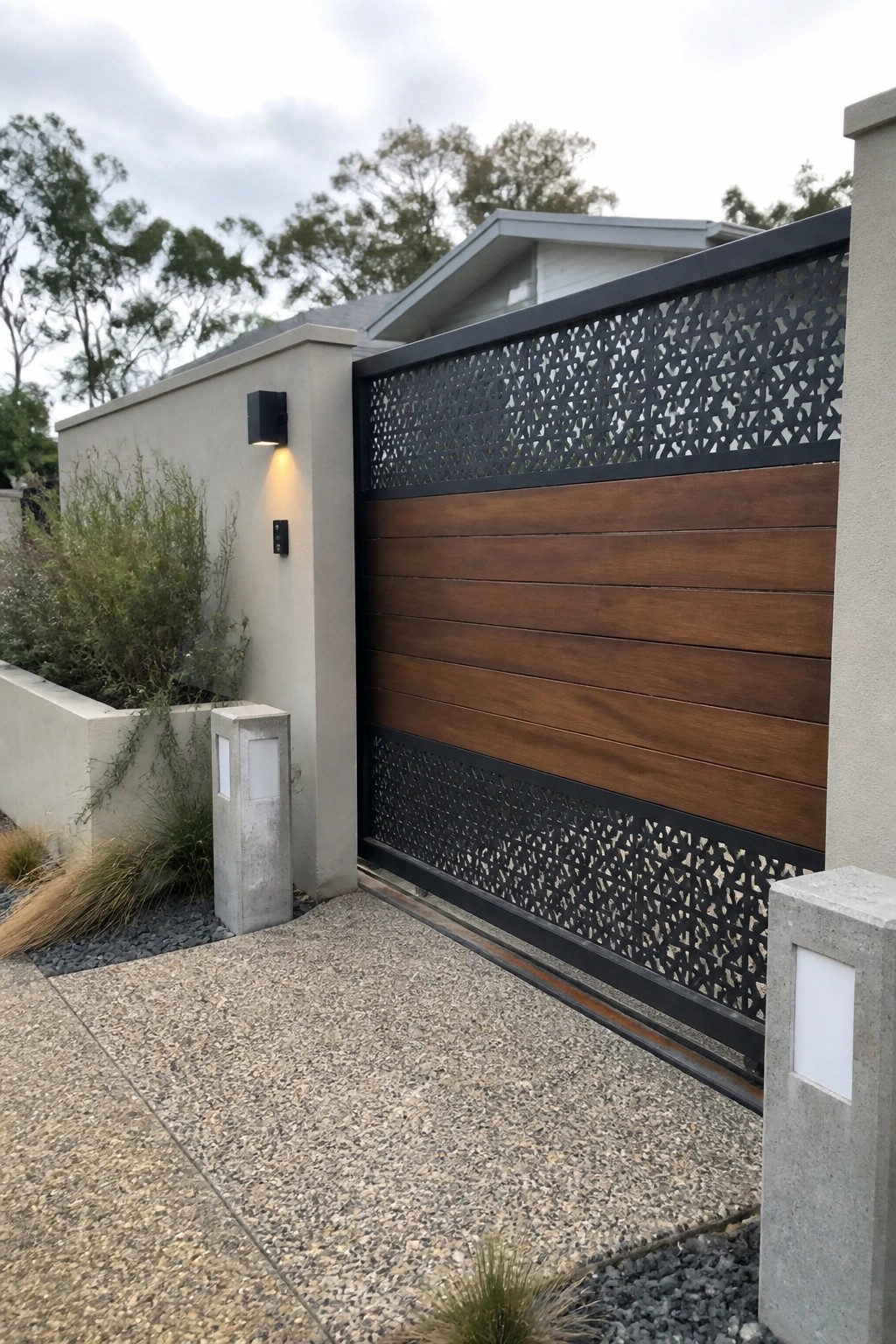
Many homeowners choose gates that combine iron patterns with wood because the iron gives structure and detail while the wood softens the overall look. The result feels solid without appearing heavy or overly modern.
This style works best on homes with simple facades and neutral colors. Keep the ironwork open enough at the top and bottom to let light through, and match the wood tone to other exterior elements so the gate blends in rather than stands out.
Classic Iron Gates at the Front Entry
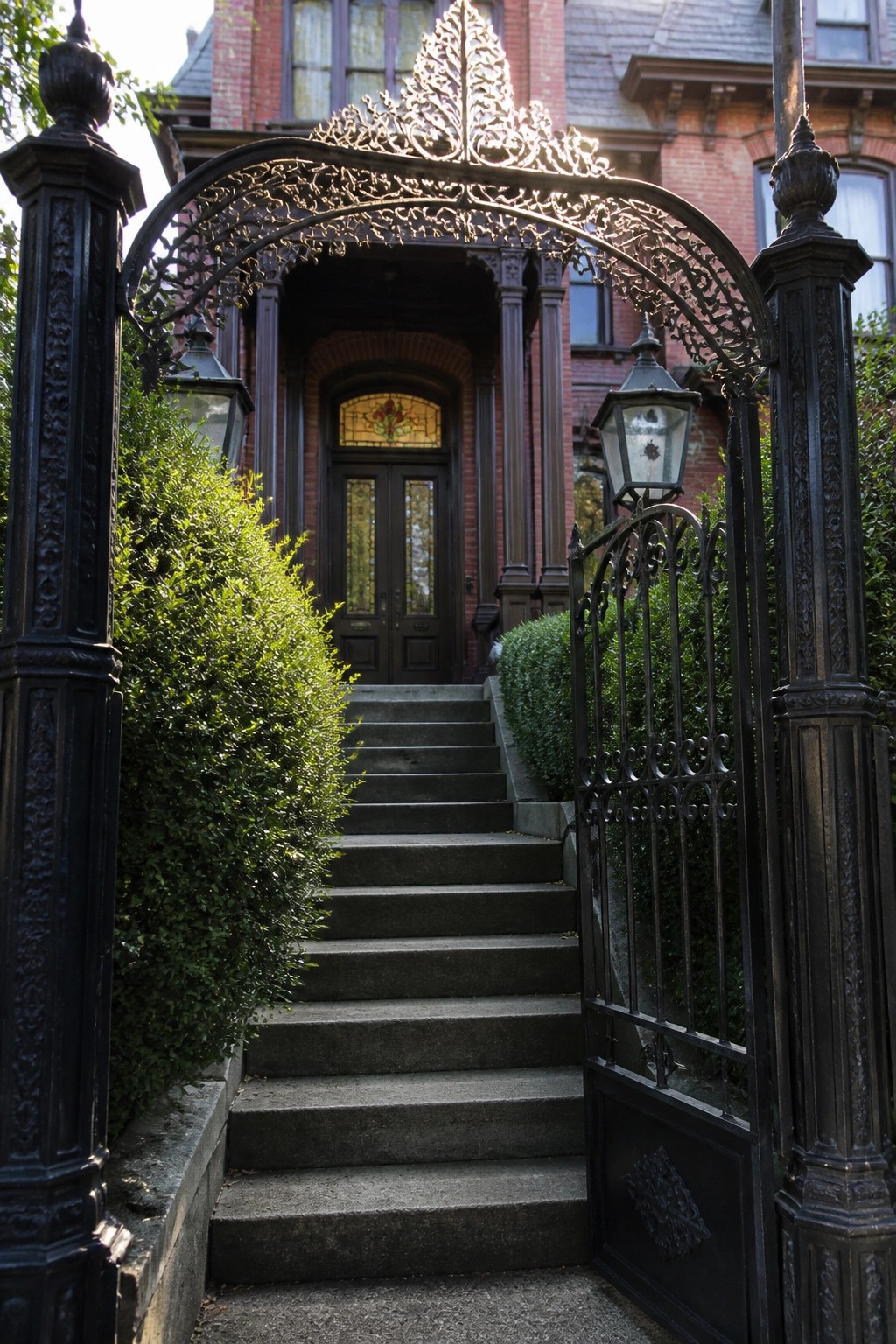
An iron gate gives the entrance a finished look and helps separate the street from the house. It works especially well when the gate has some scrollwork but stays open in feel so the front door remains visible.
This approach suits brick homes with a short flight of steps and simple landscaping. Match the gate color to any existing ironwork like railings or lanterns, and keep the width in proportion to the stairs so it frames the walk without crowding it.
Iron Gates With Stone Pillars

An iron gate set between stone pillars gives an entry a solid, lasting look that works across many home styles. The metal stays light enough to let light and views through, while the stone adds weight and texture that grounds the whole front.
This setup suits houses with brick walks or stucco walls. Choose a simple gate pattern so it does not fight with the stone or the plants that often grow along the top of the pillars.
Horizontal Slat Gates
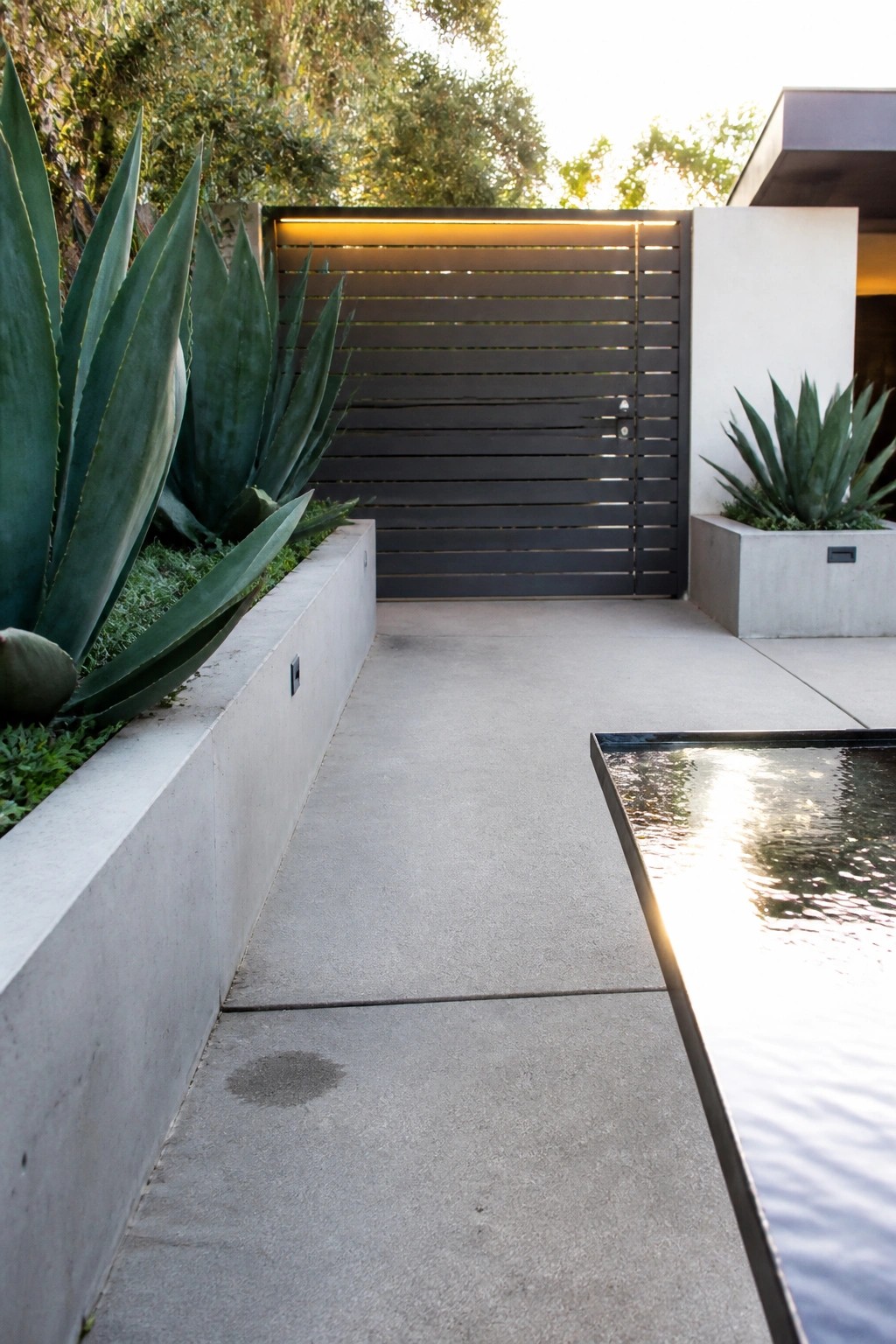
Horizontal slat gates have a straightforward look that stays useful over the years. The even lines keep the gate from feeling heavy, and the dark finish helps it sit quietly against concrete and planting.
This approach works well on homes that already use clean materials and simple shapes. Keep the spacing consistent and match the gate color to nearby hardscape so the whole entry stays balanced instead of busy.
Iron Gates for Garden Entries

An iron gate gives a garden path a clear starting point. It feels solid and traditional, and it works especially well when the gate sits between stone walls or low hedges that already define the space.
This approach suits older homes or properties with winding paths and established planting. Let vines or flowers grow around the frame so the gate blends in over time rather than standing apart from everything else.
Stone Pillars and Iron Gates

An iron gate set between stone pillars gives a property a clear sense of arrival without looking overly formal. The dark metal stands out against the lighter stone, and the open scrollwork keeps the whole entrance from feeling closed off. Many older homes use this combination because it ages well and needs little upkeep beyond occasional painting.
This setup works best on homes with brick or gravel drives where the gate can sit at the property line. Keep the pillars simple in shape so the iron details stay the focus. Avoid adding too many plants right up against the base, since they can hide the lower part of the gate over time.
Iron Gates With Stone Pillars
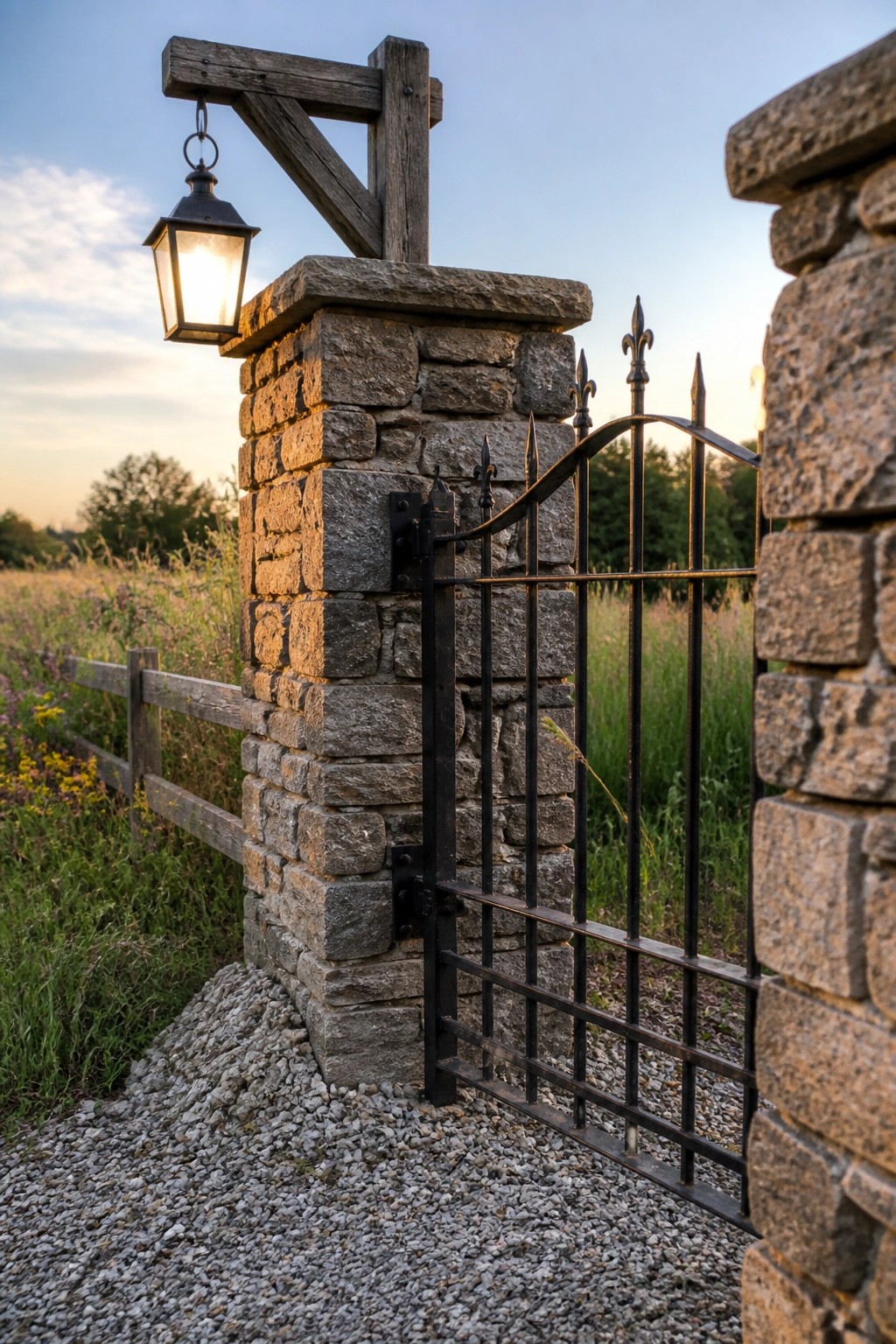
Iron gates hold up well over time and keep a straightforward look that suits many homes. Setting them into stone pillars gives the entry more weight and makes it feel lasting rather than temporary.
This approach works best on driveways or property entrances where the gate needs to feel anchored. Stone gives a solid base for the hinges and helps the iron stand out without extra decoration.
Iron Gates With Geometric Accents
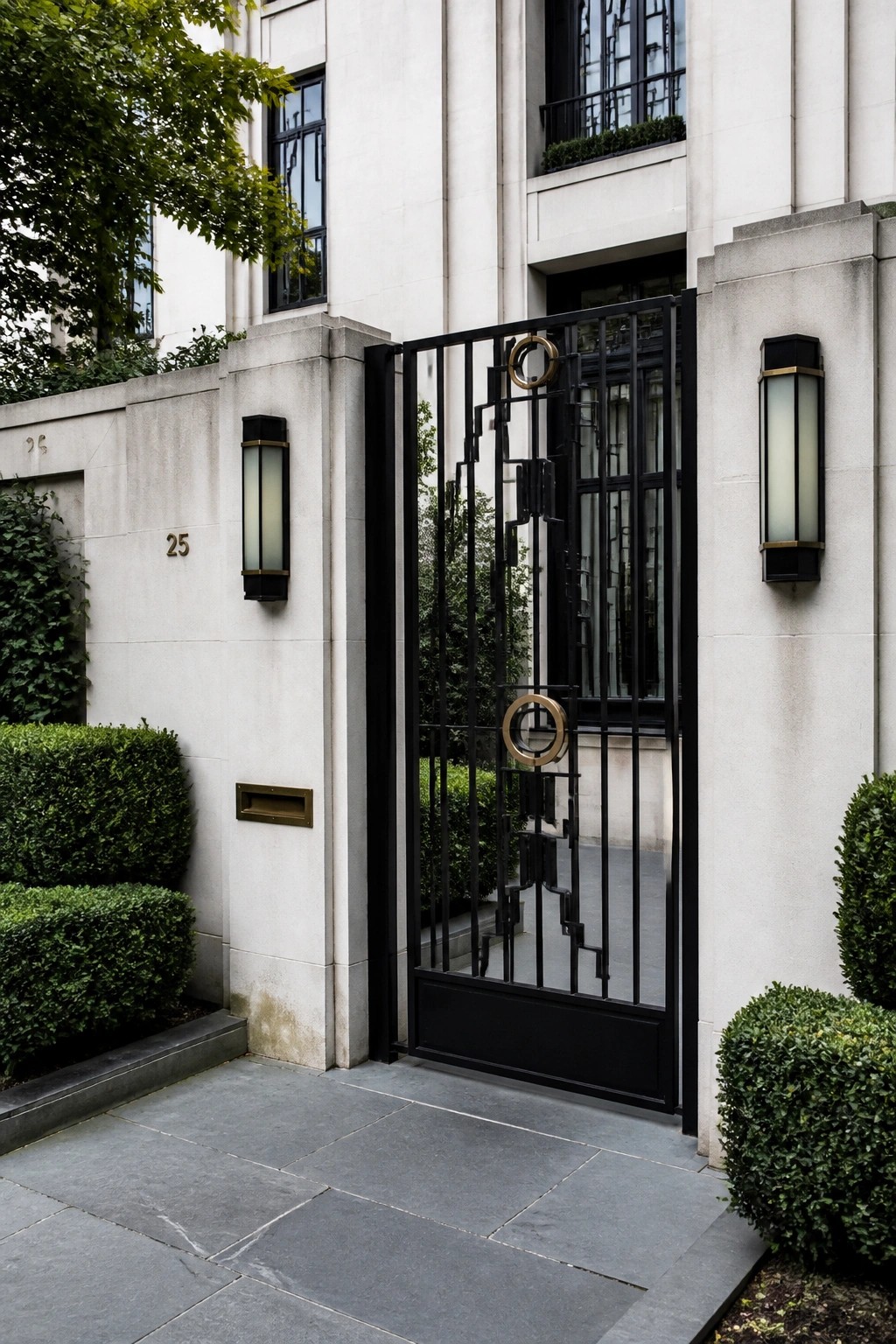
Many homes gain a lasting look from an iron gate that relies on straight lines and a few simple shapes rather than heavy scrollwork. The contrast between dark metal and lighter stone helps the entry feel both solid and open at the same time.
This style suits houses with masonry walls or clean architectural lines. Keep the pattern restrained so the gate reads as part of the overall entrance rather than a separate statement piece.
Perforated Iron Gates

A perforated iron gate gives you texture and pattern without needing extra decoration. The holes let some light pass through while still keeping the entrance private, and the weathered finish adds character that improves as the metal ages. Many people like this look because it feels substantial but not heavy or closed off.
This style works best on homes with simple lines or modern details. Pair it with low landscape lighting so the pattern shows up at night, and keep the surrounding walls dark so the gate stays the main feature. Just make sure the metal is properly sealed if you live in a wet climate.
Traditional Iron Gates For The Main Entry
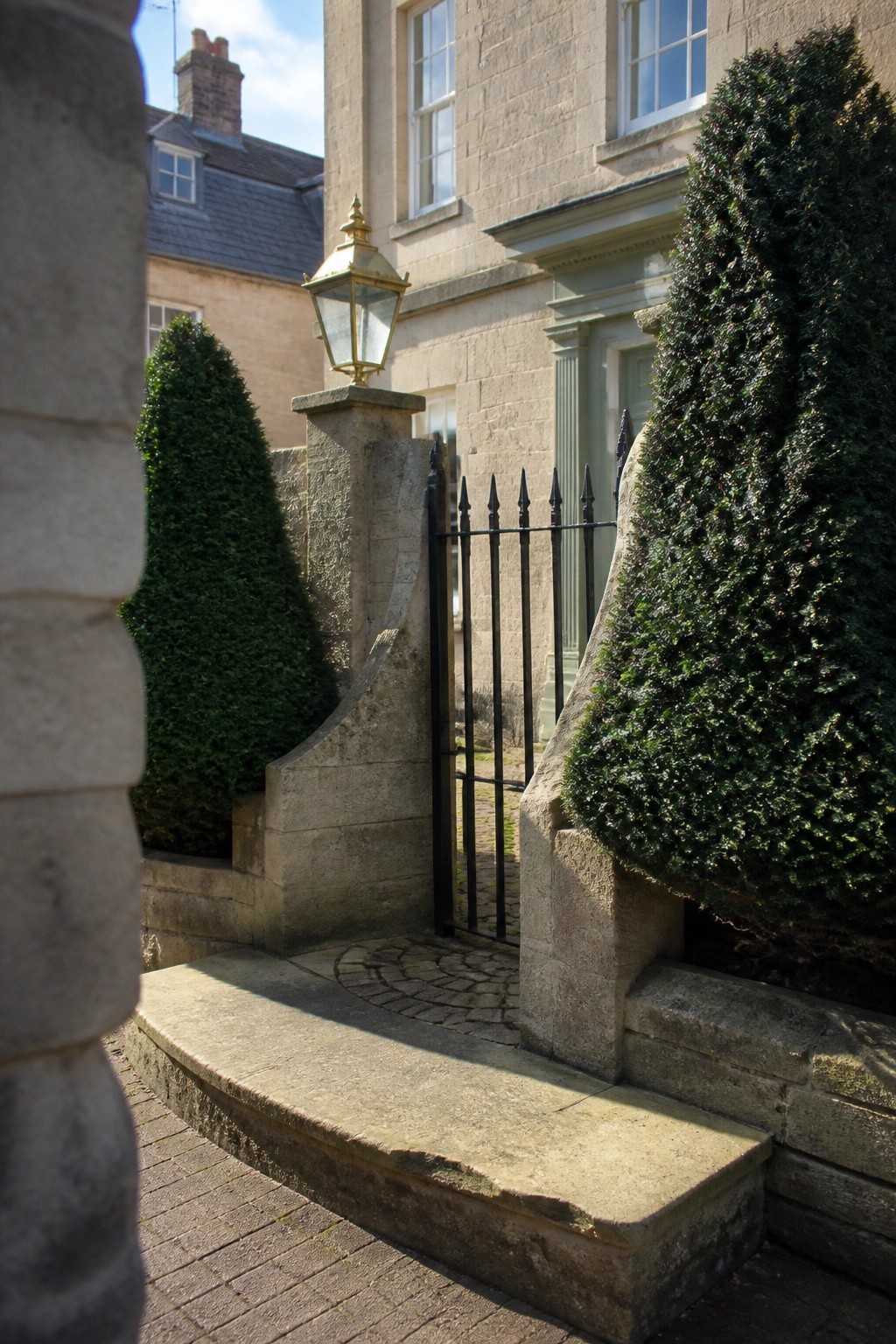
A simple black iron gate with vertical bars and pointed tops still works as one of the most reliable choices for a front entrance. It gives a clear boundary while keeping the view open, and the dark metal holds up well against stone or masonry posts.
This style suits older homes or any house that already uses natural stone around the entry. Stick to clean lines and skip extra scrollwork if you want the gate to look current rather than dated in a few years.
Iron Gates With Cutout Patterns
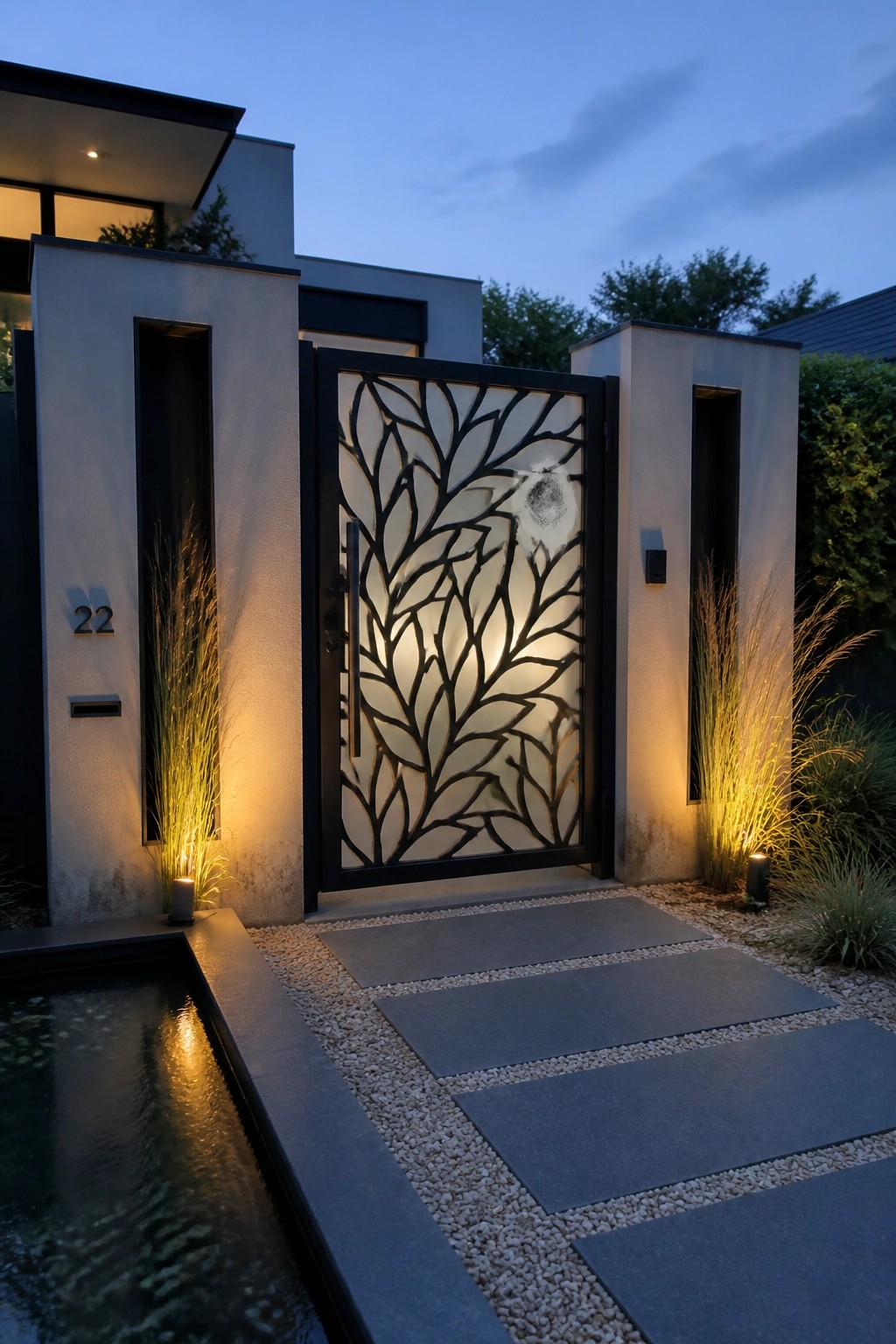
Many homeowners like iron gates that use cutout patterns because they add interest without looking heavy. The open design lets light pass through at night and creates a soft glow along the walkway. It also gives a bit of privacy while still feeling open.
This style works best on homes with clean lines and simple walls. It pairs well with gravel paths and low plantings that do not compete with the gate itself. Just make sure the pattern is not too fine or it can collect debris over time.
Iron Gates Between Stone Pillars

Iron gates work well when they sit between simple stone posts because the contrast keeps the whole entry from feeling heavy. The open pattern in the metal lets you see through to the path and house beyond, which softens the boundary without removing it.
This approach suits older homes or any place where you want the gate to last for decades with little upkeep. Match the stone to the house walls so the posts feel like a natural extension rather than an add-on.
Classic Iron Gates For Front Entries

A basic iron gate with a simple cross pattern can give an entry just enough definition. It sets a clear boundary while still letting light and sightlines pass through to the house and garden.
This approach suits homes with white siding or light trim where you want the gate to feel part of the architecture rather than a separate feature. Match the posts to the house color and keep the metal dark so the gate ages gracefully without needing much upkeep.
Frequently Asked Questions
Q: How do I stop rust from showing up on my new iron gate?
A: Wipe it down with a dry cloth after rain or snow. Touch up any scratches right away with matching paint.
Q: Which design holds up best if I live near the ocean?
A: Go for simpler patterns with fewer small details. The salt air hits hard on fancy scrollwork so fewer spots trap moisture.
Q: Can these gates match my wooden fence without looking odd?
A: Pick a gate with straight vertical bars. They blend in better than curved ones next to wood.
