


I have always thought that the first thing people see when they approach a house sets the tone for everything else.
Choosing a gate that feels simple yet balanced can make the whole front look more put together without needing big changes to the rest of the property.
In my own place I tried a basic metal option once and noticed how it shifted the way the facade read from the street in ways I had not expected.
Materials matter here because they have to hold up to weather while still looking intentional over the years.
Some of these stand out for that reason.
Stone Pillars with a Metal Gate
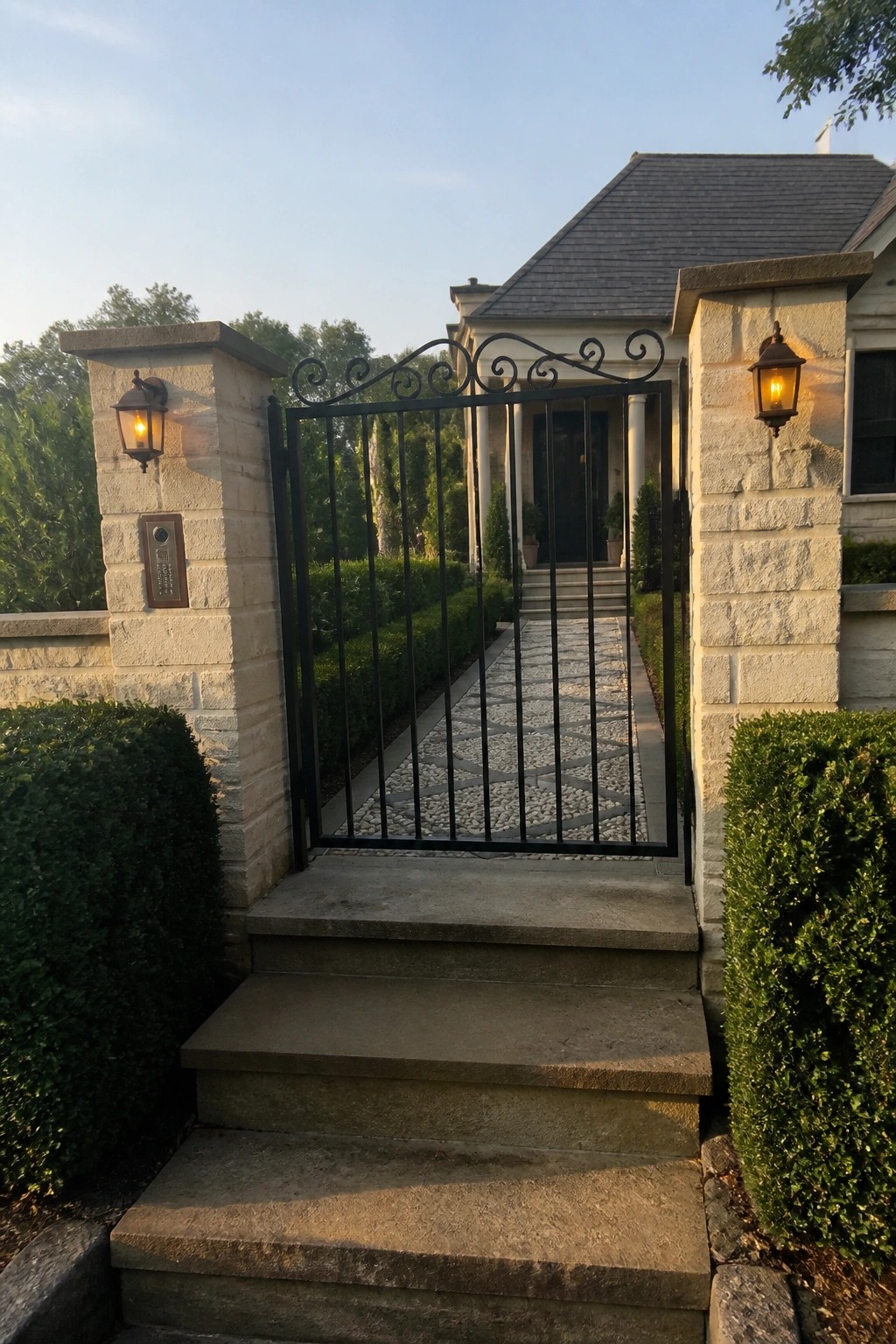
A metal gate set between stone pillars gives an entrance a clear boundary without making it feel closed off. The stone adds weight and structure while the gate keeps the look light and open. This combination works especially well when you want the front to read as neat and finished rather than plain or overly grand.
It suits homes with traditional or transitional styles and pairs best with simple gate patterns rather than heavy ornament. Keep the pillars in a light stone tone and choose a dark metal gate so the two materials balance each other. Avoid adding too many extra details around the base or sides or the clean effect gets lost.
Horizontal Slats for a Clean Gate
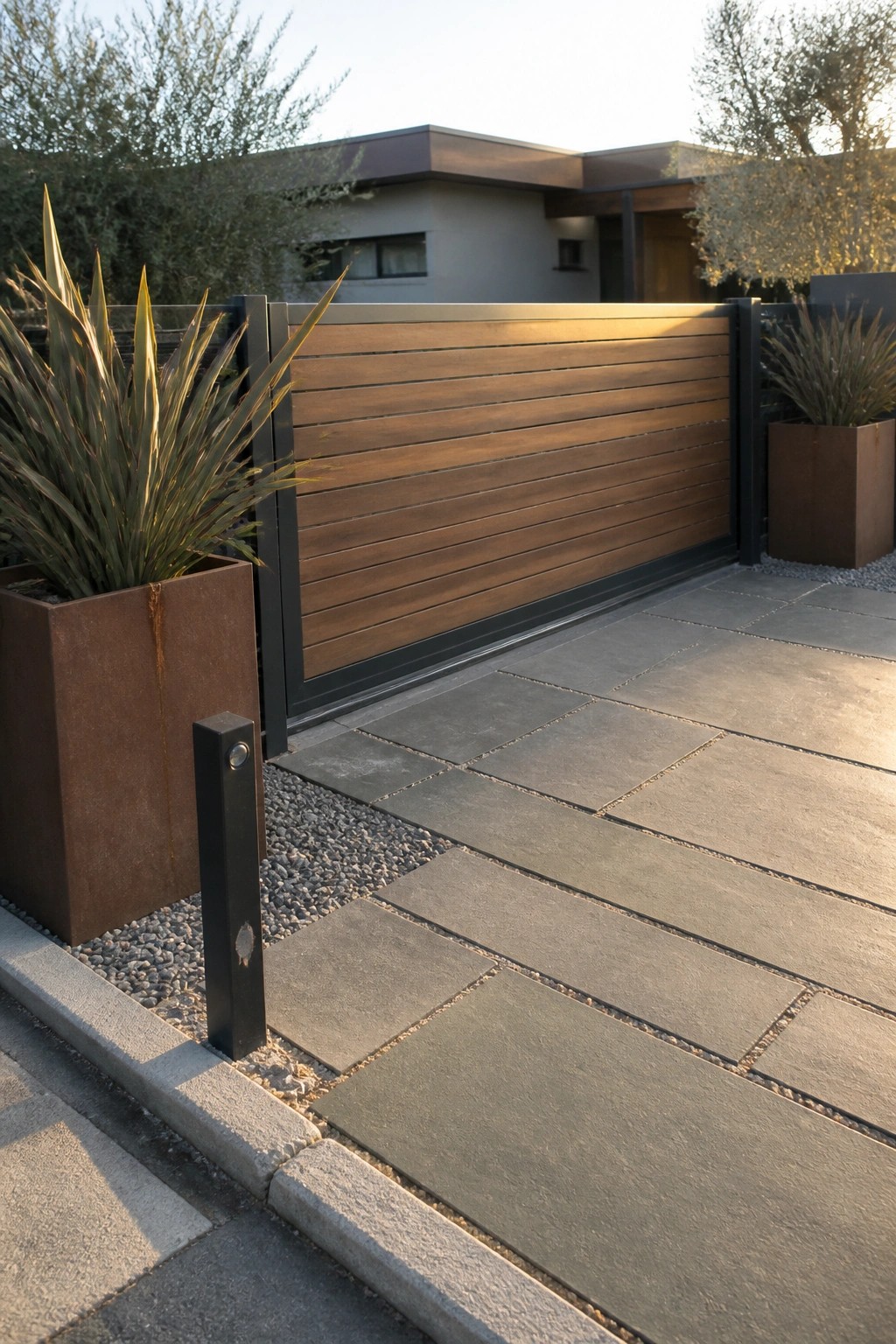
Horizontal slats give a gate a steady, simple look that feels modern without extra fuss. The lines run straight across and keep the whole entrance from feeling busy or overdone.
This works well on homes with straight lines and flat surfaces. Use a dark frame around the wood to make the slats stand out, and keep any side planting low and contained so the gate stays the main focus.
Arched Gateways Keep The Entrance Simple
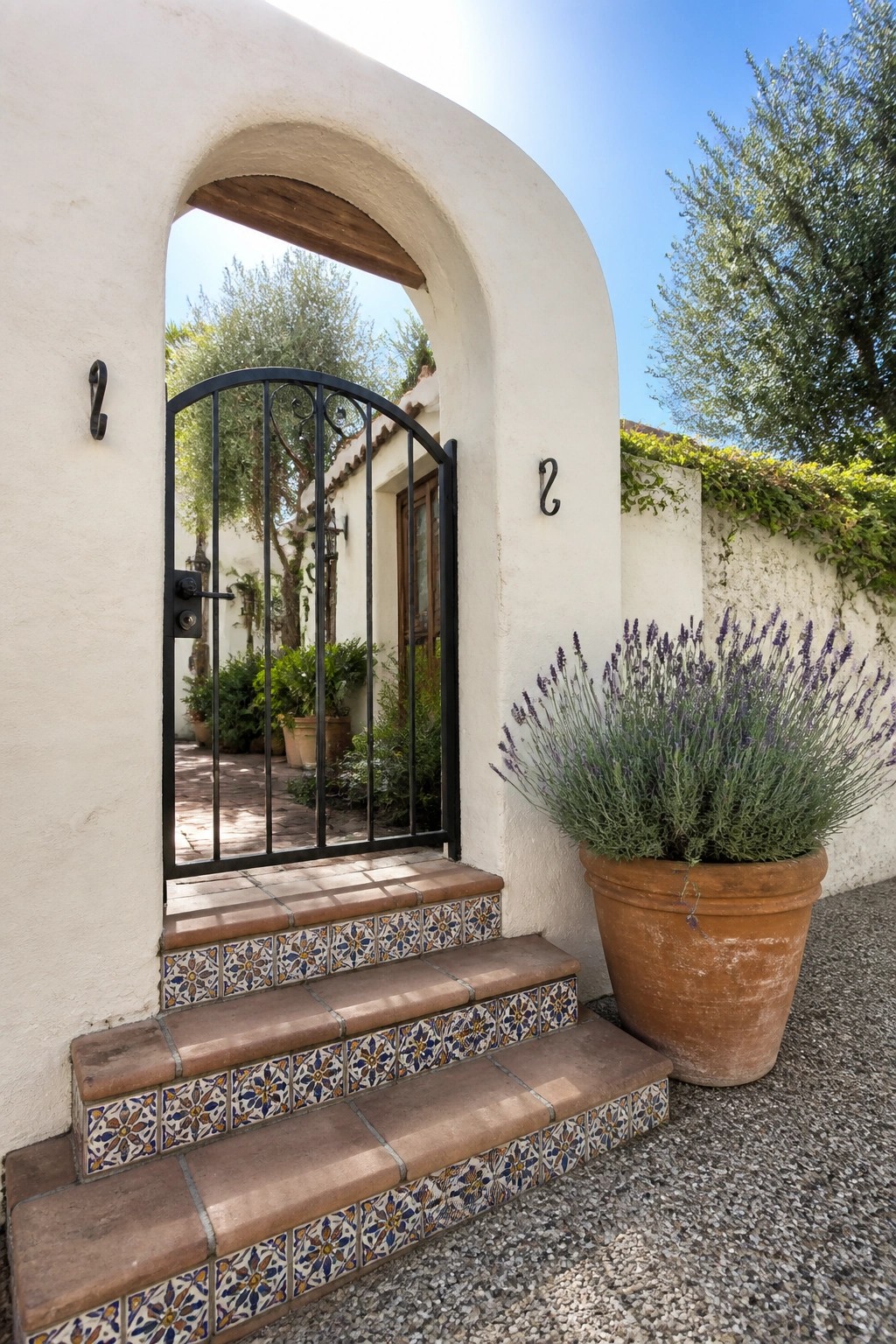
An arch above the gate softens the whole entrance and gives it a clean shape that still feels welcoming. The black iron gate stays plain so the curve does the main work without adding extra trim or hardware.
This setup works well on stucco homes or any exterior with thick walls. It suits smaller properties best because the arch adds height and interest without taking up much ground space or needing constant upkeep.
Vertical Slats for a Main Gate
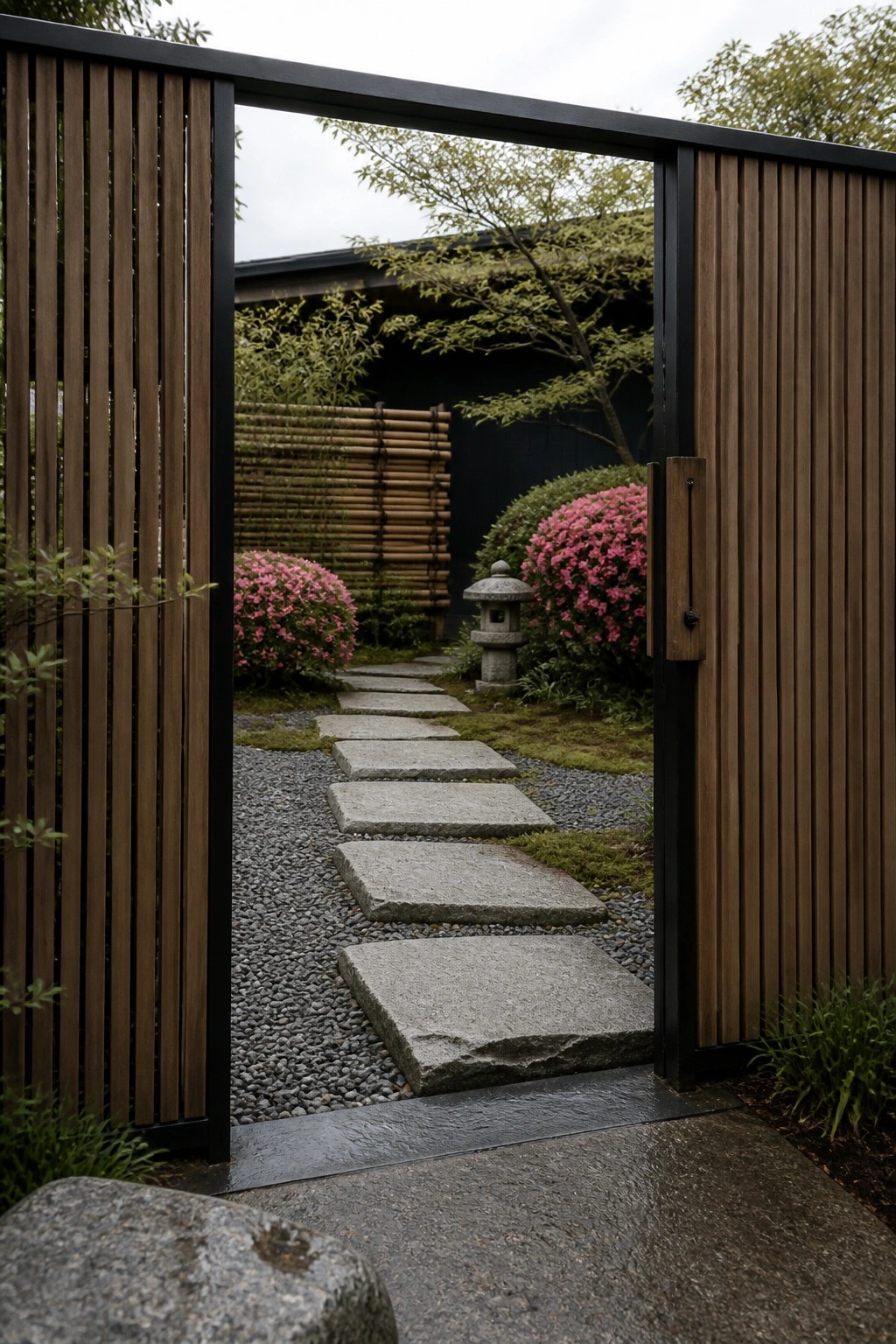
A gate built with vertical wood slats offers a straightforward way to get a clean entrance. The upright lines keep the design simple, while the wood brings in a natural feel that pairs well with garden paths and planting.
This approach works best on homes where the gate sits between the street and a planted area. Use a dark frame to make the wood stand out, and keep the slats close enough for privacy but not so tight that the gate feels heavy.
White Wooden Gates Between Brick Pillars
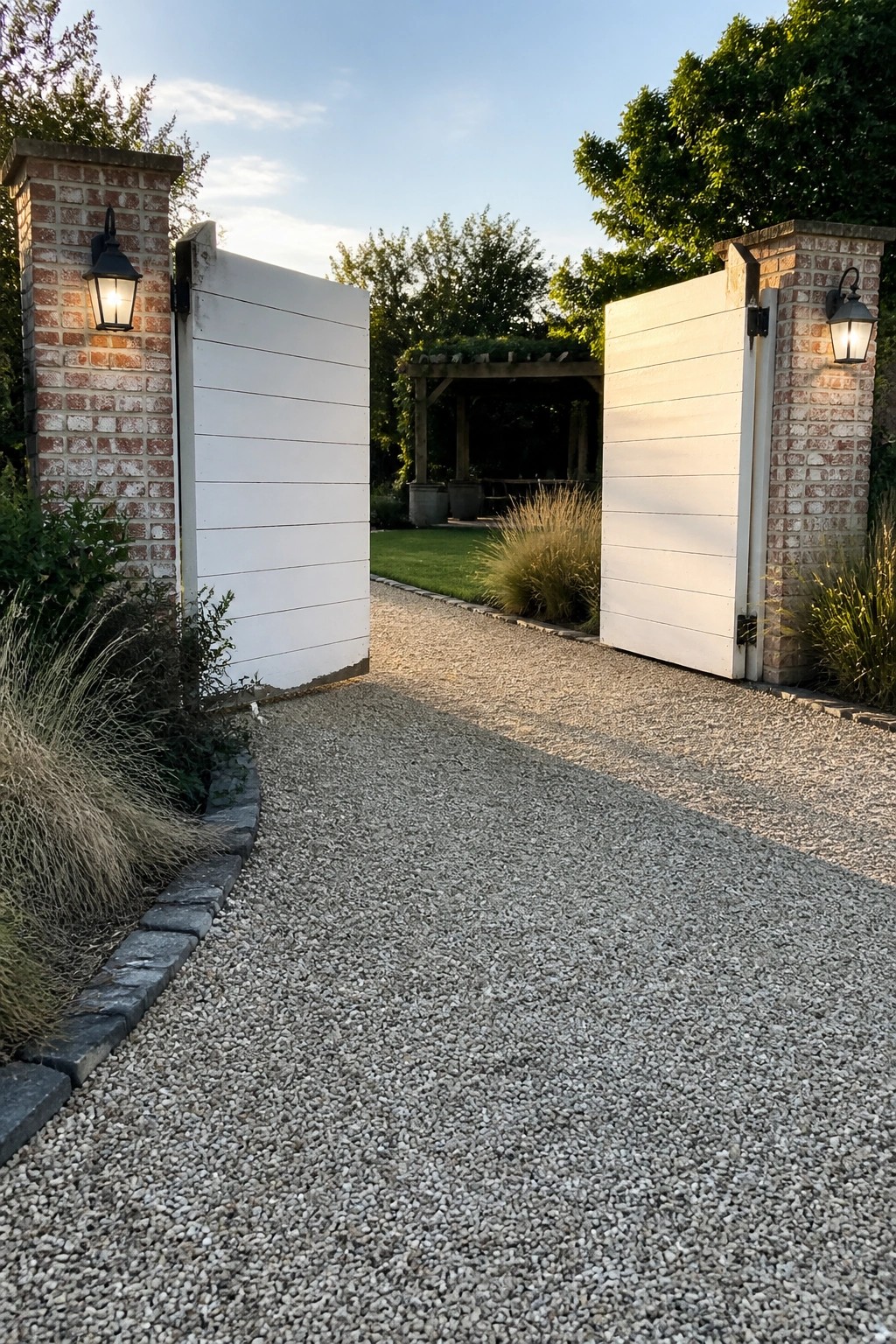
Many homes look better with gates that stay plain and straightforward. These white painted gates use simple horizontal boards and sit right between solid brick posts, which keeps the whole entrance looking neat and balanced.
This setup works best on properties with gravel drives or modest landscaping. The white paint reflects light and the brick gives enough weight without needing extra trim or hardware. Just make sure the posts are wide enough to match the scale of the gates.
White Picket Gates With Rope Fencing
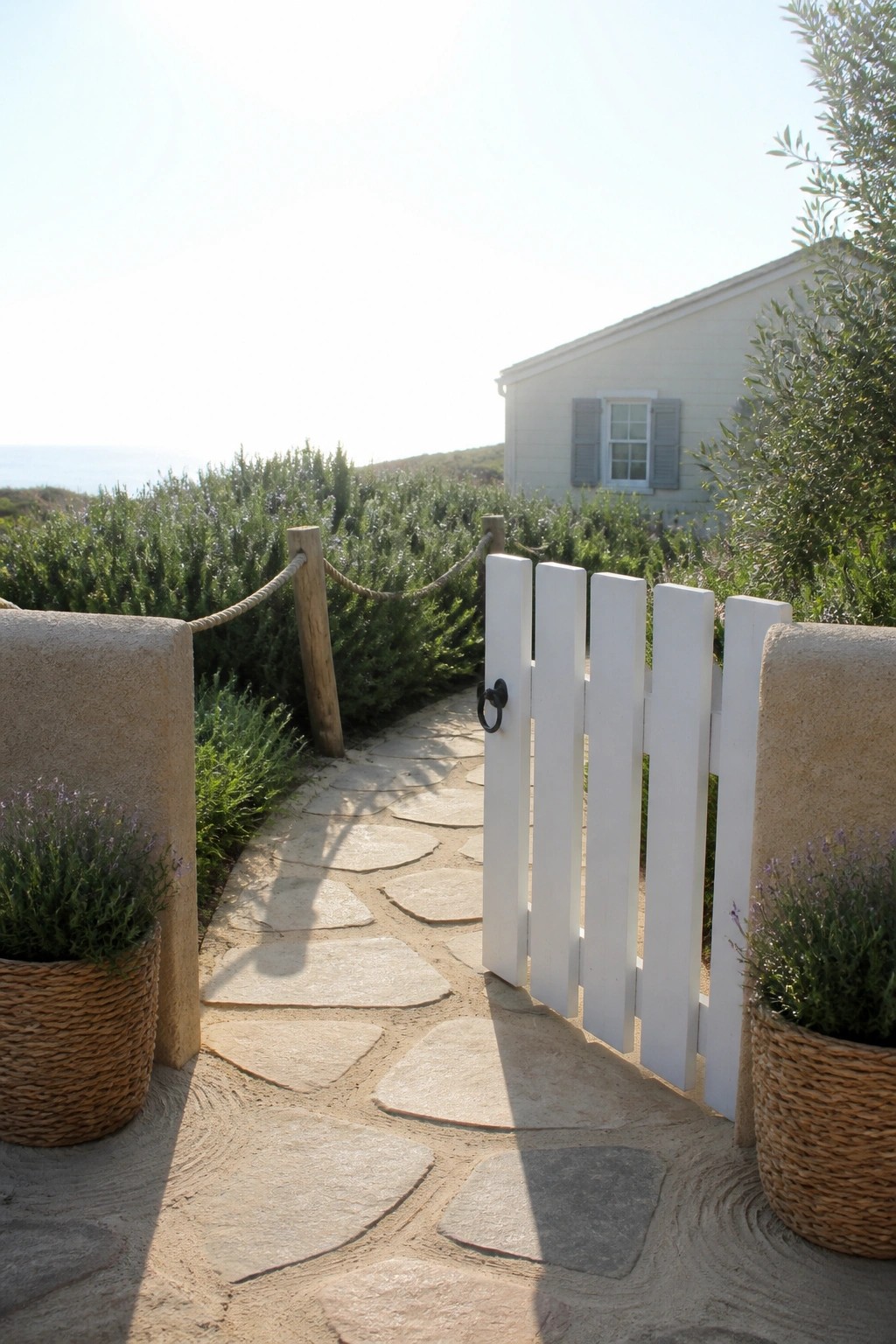
A white picket gate paired with simple rope fencing gives an entrance a clean look without much fuss. The rope keeps the sides open and light while still marking the boundary, and the gate itself stays the main focus.
This works best on homes with a cottage or coastal style where you want the path to feel welcoming rather than closed off. Use it where the ground is fairly level so the rope stays taut and the posts do not shift.
Black Framed Gate With Frosted Glass
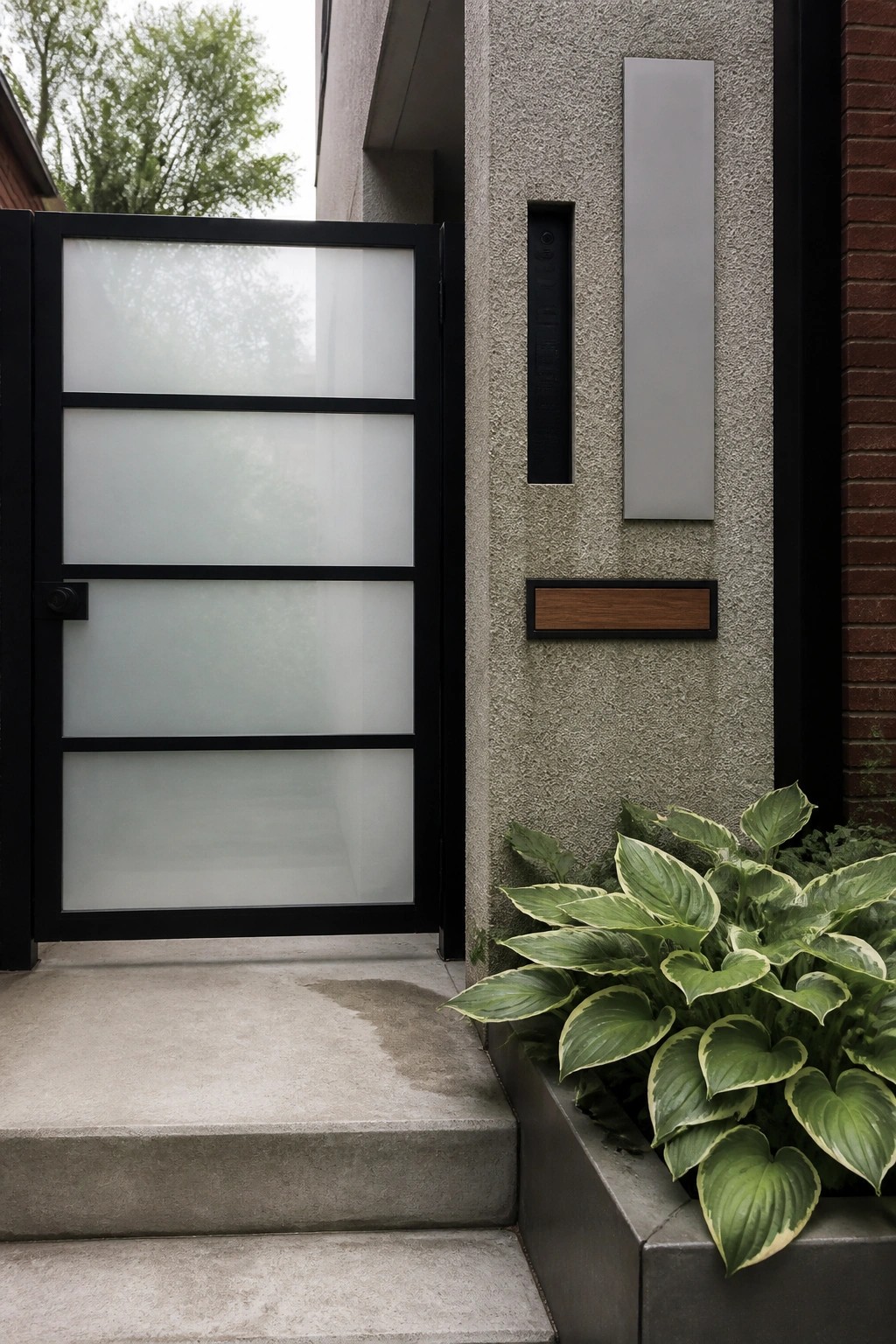
A gate like this keeps things simple and neat. The frosted panels let light through without giving a clear view inside, and the black frame adds a clean outline that does not compete with the rest of the house.
This style works well on homes that already use dark trim or metal accents. It stays low maintenance since the glass does not need much beyond occasional wiping, and it suits smaller front areas where you want the entrance to feel open but still private.
Stone Pillars with Lanterns Frame the Gate
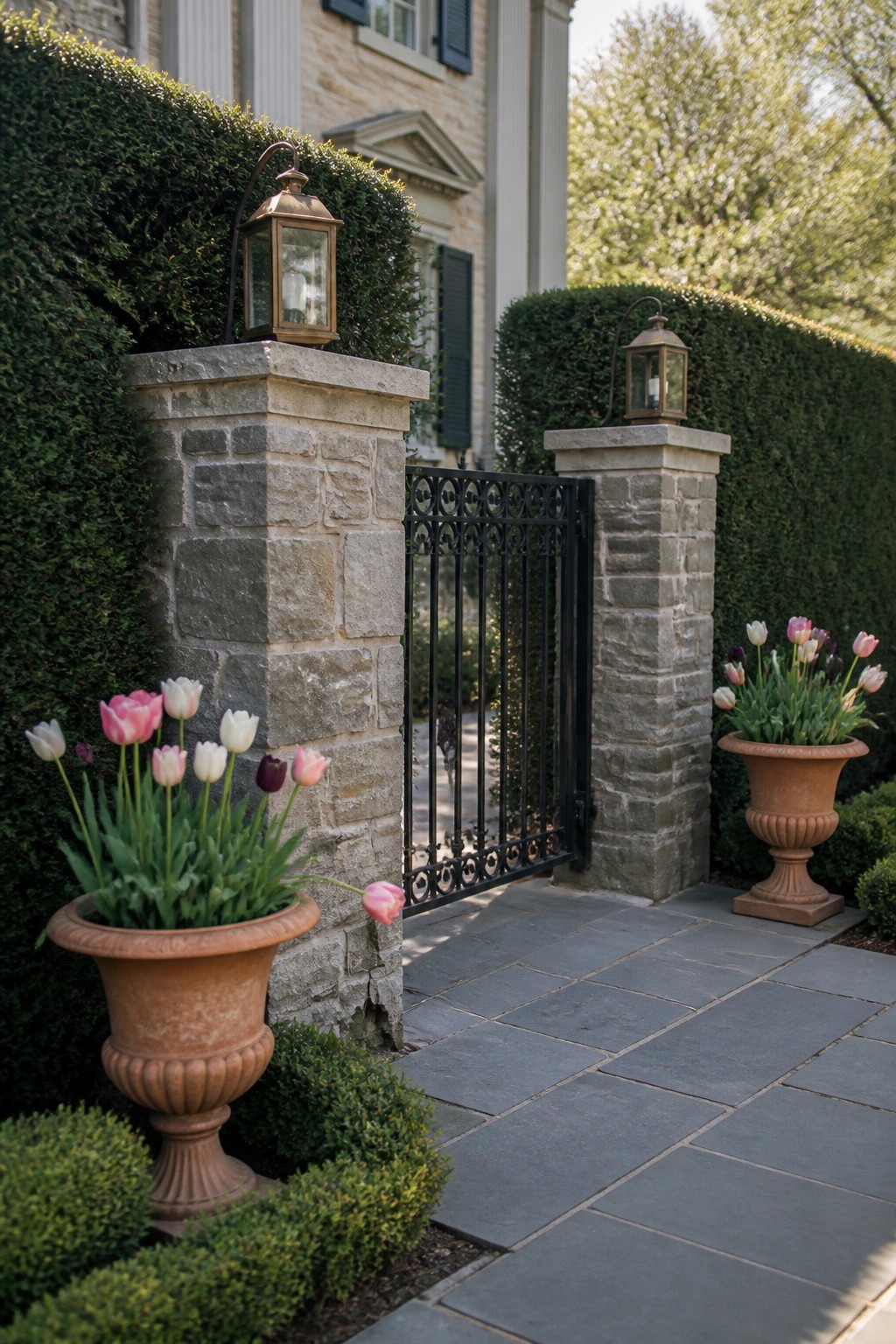
A simple black gate gains more presence when it is set between solid stone pillars that carry lanterns on top. The pillars give the entrance a clear structure while the lanterns add a bit of light and detail without extra fuss.
This approach suits homes that already use stone or brick on the exterior. Keep the gate design plain so the pillars do the main work, and choose lantern sizes that match the pillar width rather than competing with it.
Perforated Metal Gates
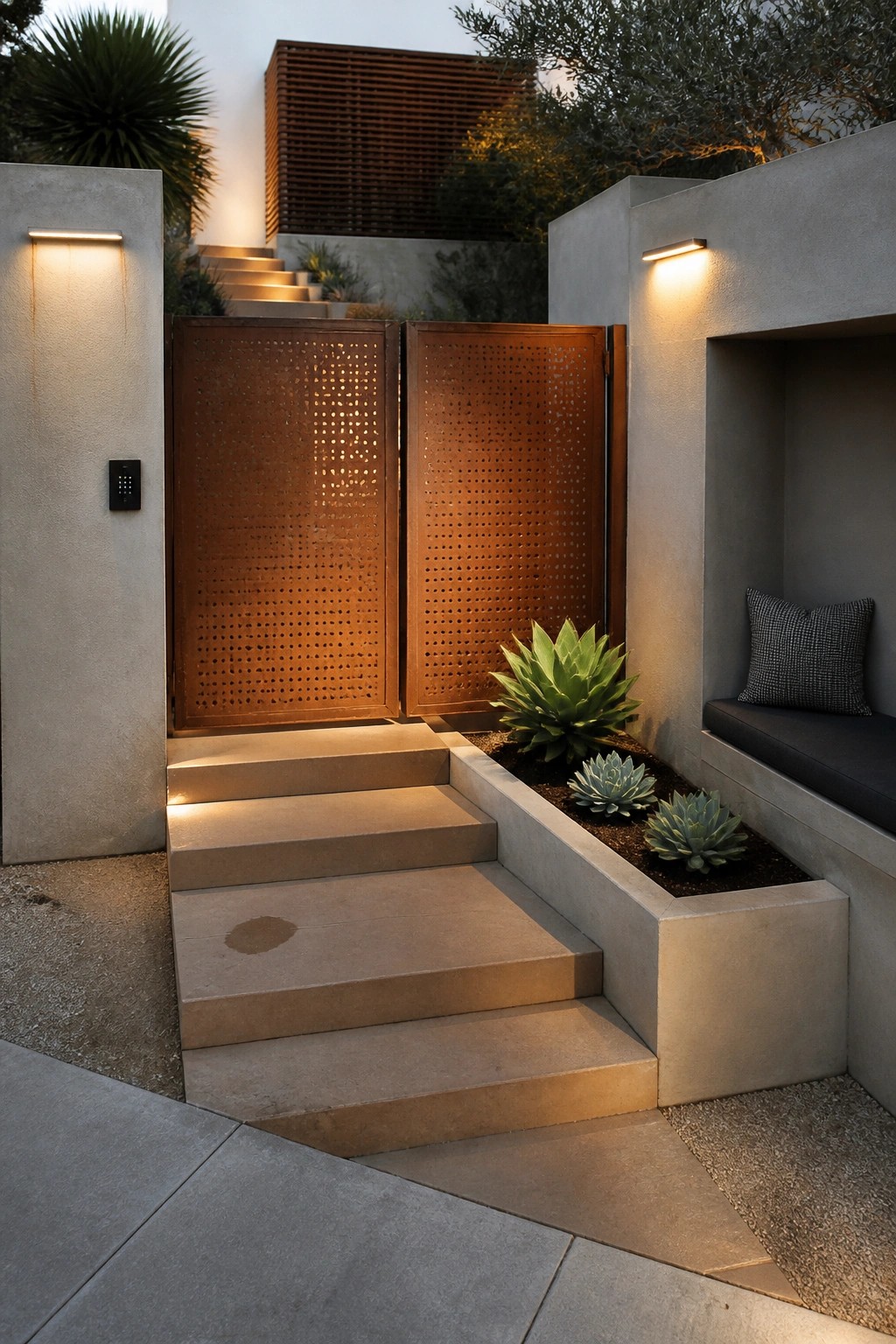
A perforated metal gate gives an entrance just enough pattern without looking busy. The small openings let light filter through at night, which softens the look of the gate while still keeping the space private. It works especially well when the gate sits between solid walls, since the light coming through the holes breaks up the solid feel of the structure.
This style suits homes that already lean modern or minimalist. Keep the rest of the entry simple, with plain walls and basic lighting on either side, so the gate stays the main detail. Avoid filling the pattern with too many different sizes or shapes, or the clean effect gets lost.
Vertical Wood Gate in a Concrete Wall
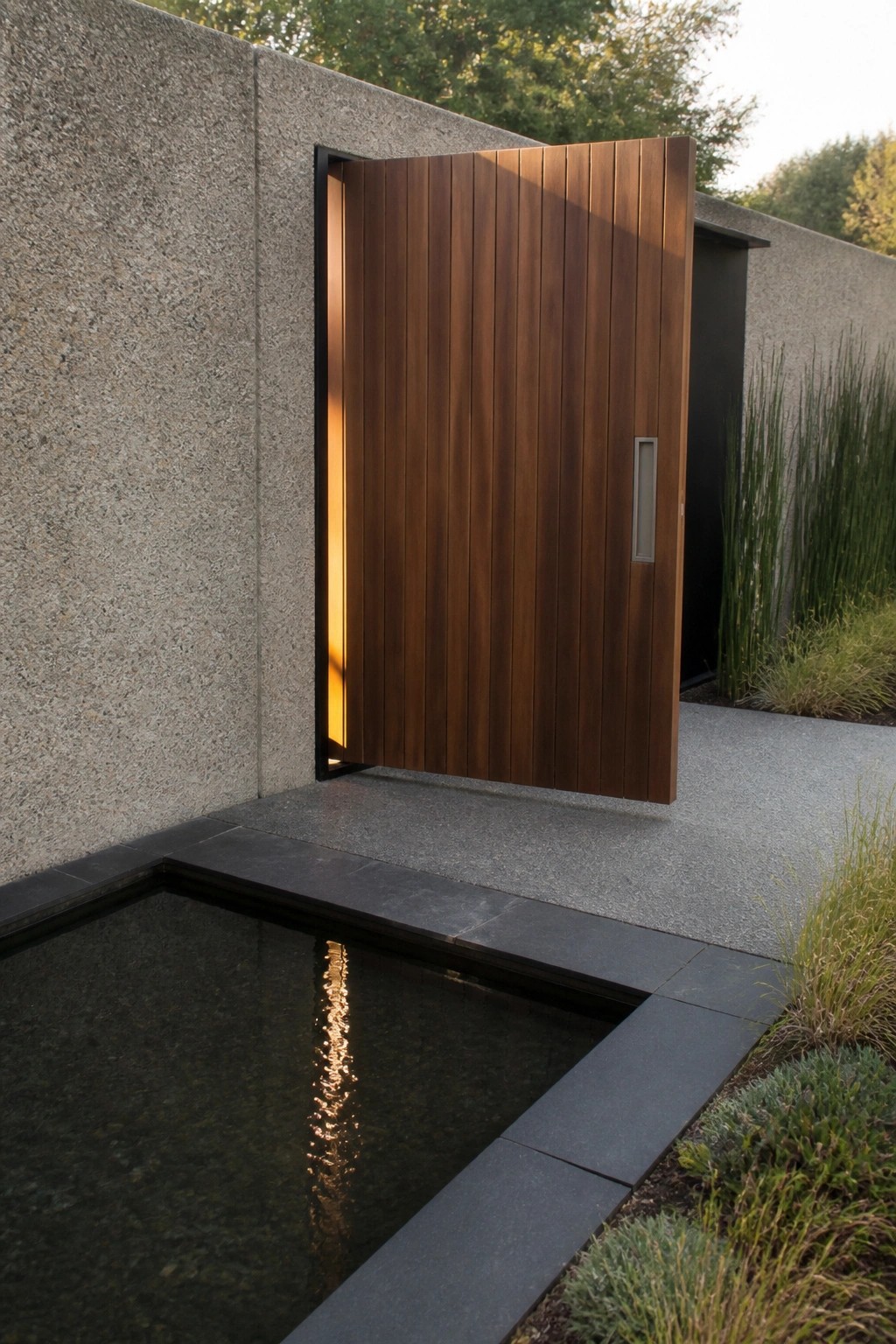
A gate built with simple vertical wood slats gives an entrance a clean look without extra trim or hardware. The wood adds some warmth next to the rough concrete, and the narrow lines keep the surface from feeling too flat or heavy.
This style works best on homes with solid masonry walls where you want the gate to feel like part of the structure rather than an add-on. Use it where the entry needs to stay simple but still stand out from the street.
Wooden Gates With Stone Pillars
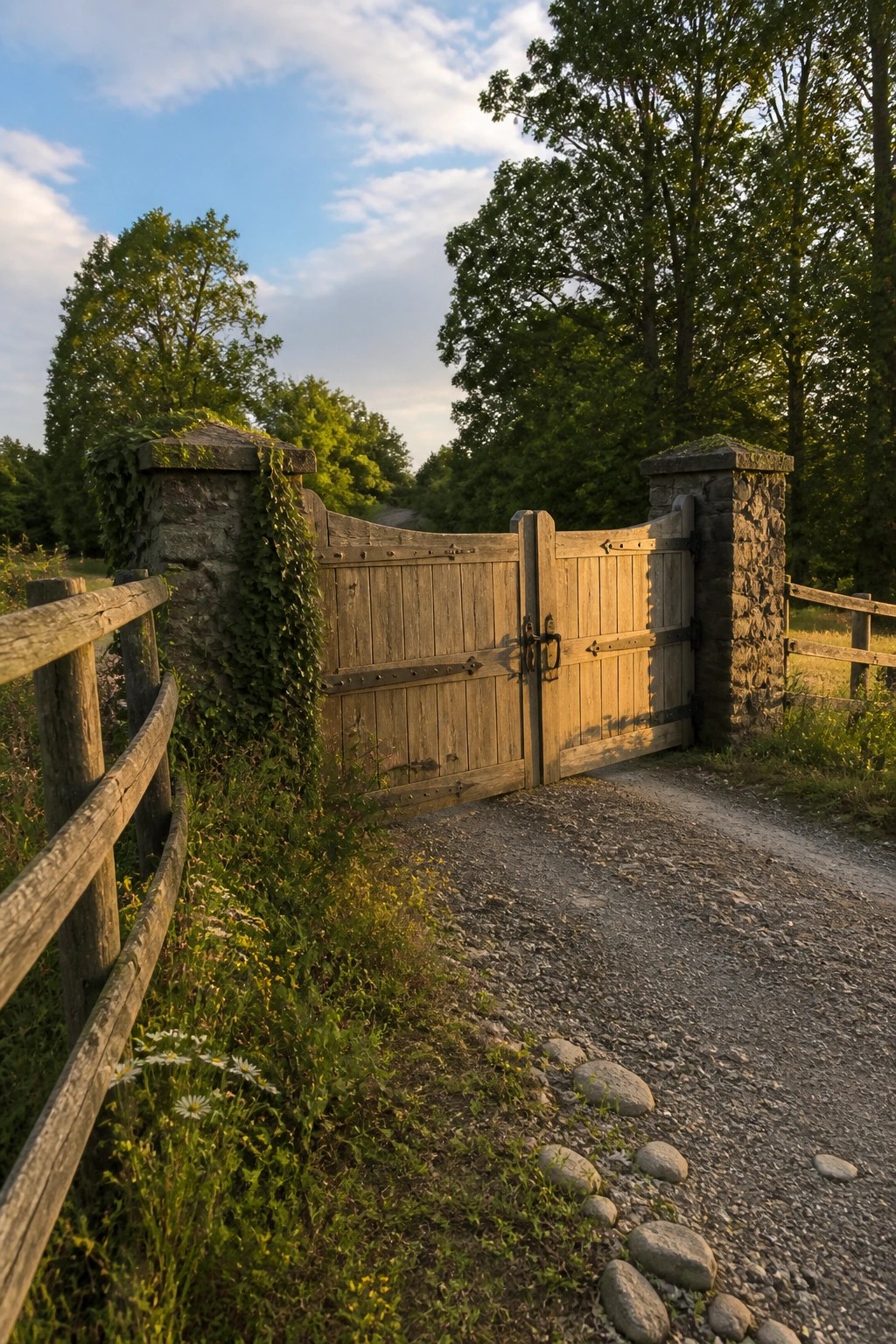
A wooden gate set between stone pillars creates a simple entrance that feels solid without looking heavy. The wood brings a natural warmth that stone alone often lacks, and the contrast keeps the whole thing from feeling too plain or too formal.
This approach works best on homes with open yards or gravel drives where you want the gate to blend into the landscape rather than stand out as a big statement. Use weathered wood and local stone so the materials age together and stay low maintenance.
Vertical Bars Keep a Gate Feeling Open
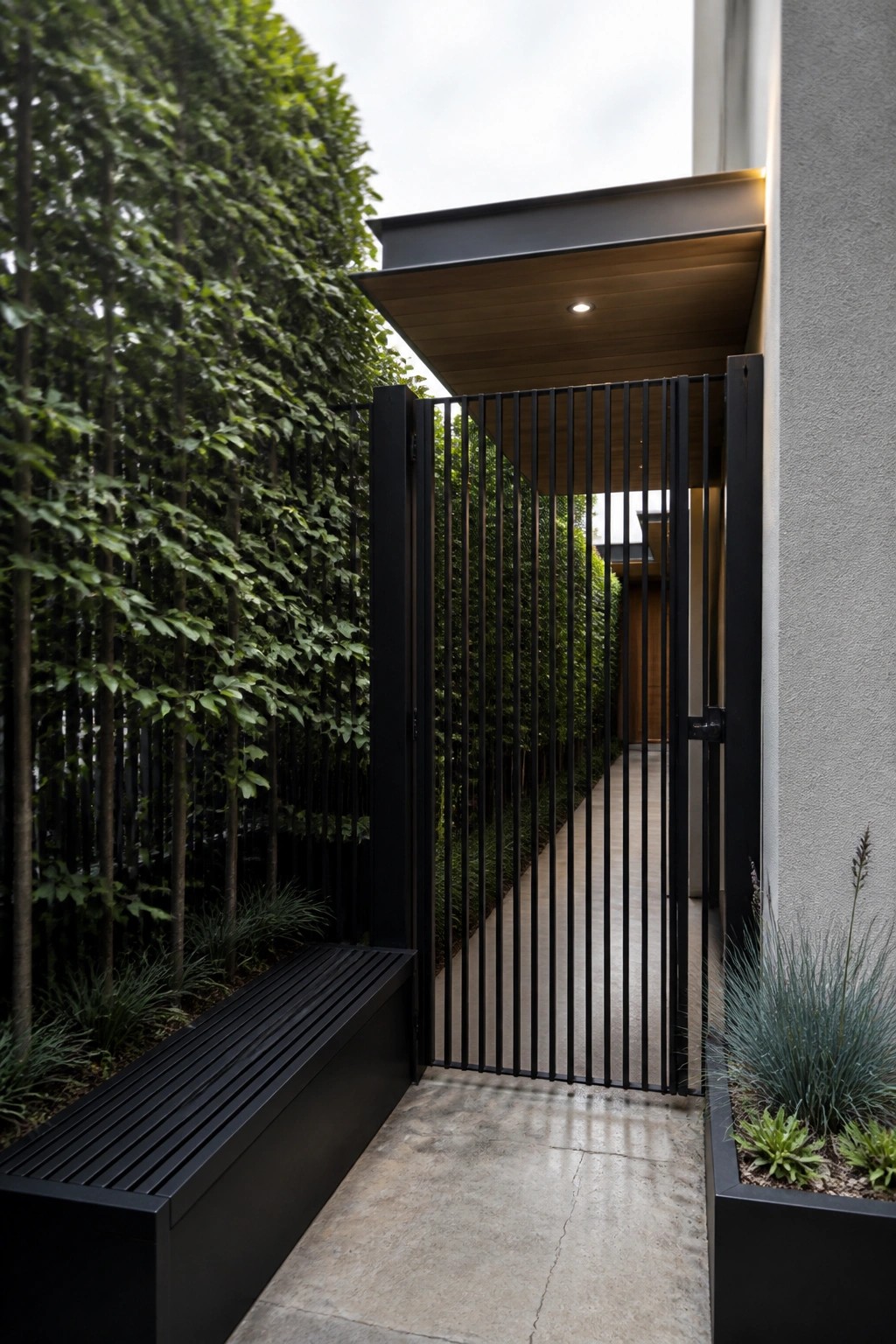
A gate made of thin vertical bars gives an entrance a lighter look than a solid door or wide panels would. It lets light and views pass through, so the space beyond never feels fully blocked off even when the gate is closed.
This works best on homes that already have strong hedging or simple planters on either side of the path. The bars create contrast with the greenery and keep the whole entry looking neat and straightforward. Just space the bars evenly and match the frame color to nearby metalwork so everything stays consistent.
Arched Gateways With Tile Thresholds
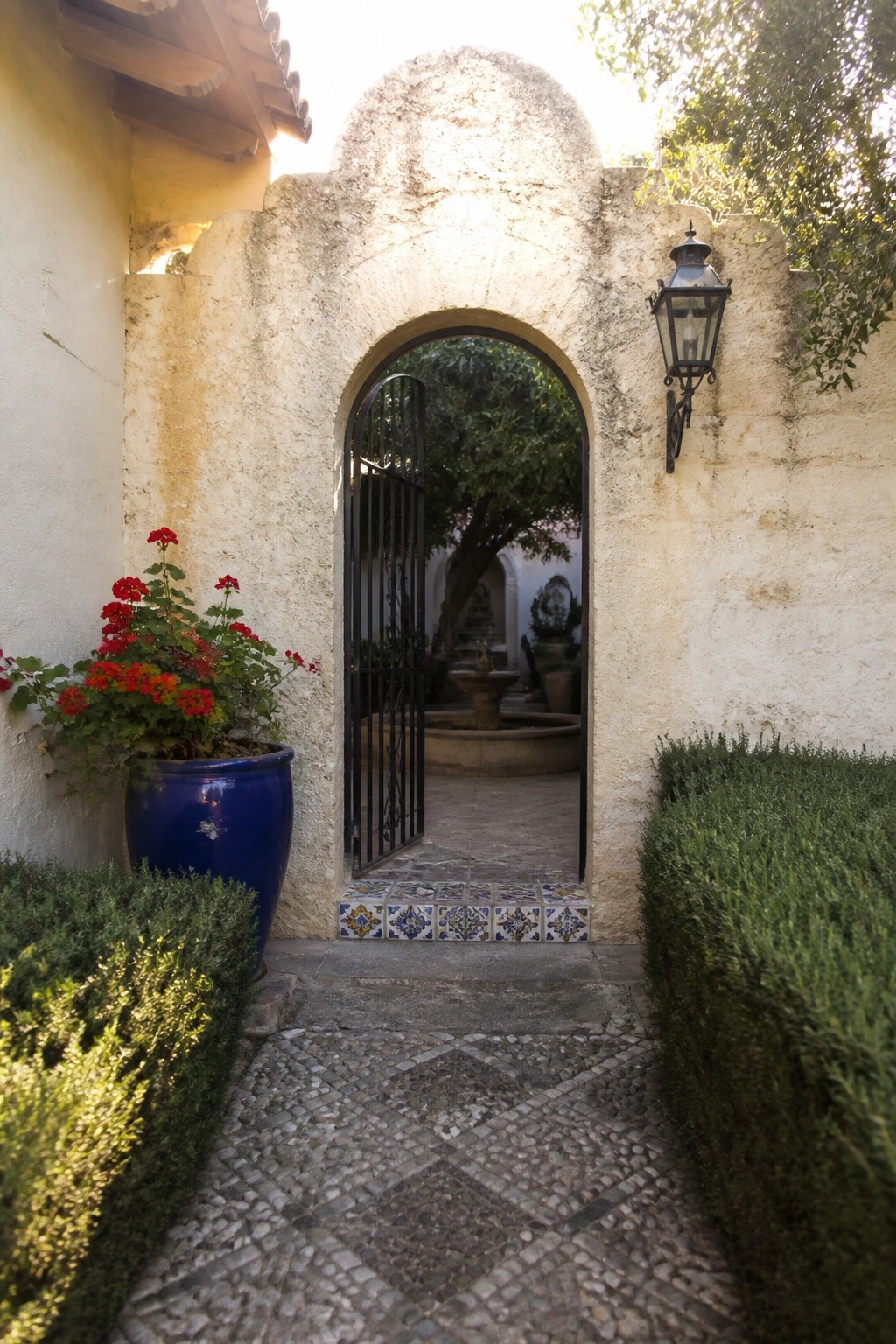
An arched opening keeps a gate looking clean and finished even when the design stays very simple. The curve softens the wall and gives the entrance a clear focal point without extra trim or hardware.
This approach works well on stucco or plaster walls where you want a bit of character but still need the gate to stay low maintenance. A single row of patterned tile at the base is enough to add interest while the rest of the entry stays plain.
Vertical Slat Gates For A Clean Entrance
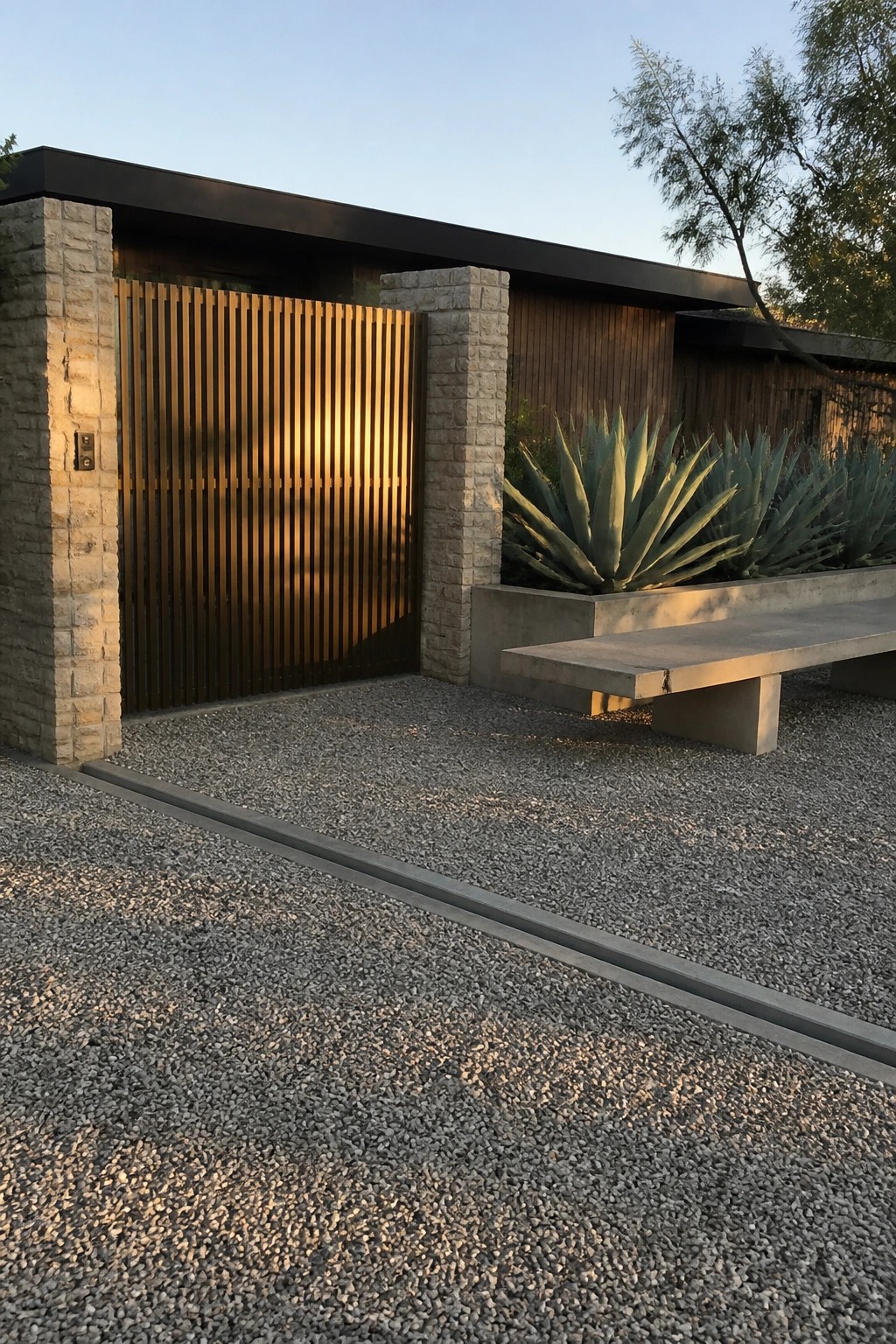
Vertical slat gates give an entrance a simple modern look that still feels open. The narrow gaps let light pass through while keeping the boundary clear and the overall design from feeling heavy.
This approach works best on homes with gravel driveways or stone accents. It suits modern or minimalist houses and pairs well with low plantings that do not compete with the gate itself.
Concrete Pillars with Built-In Lighting
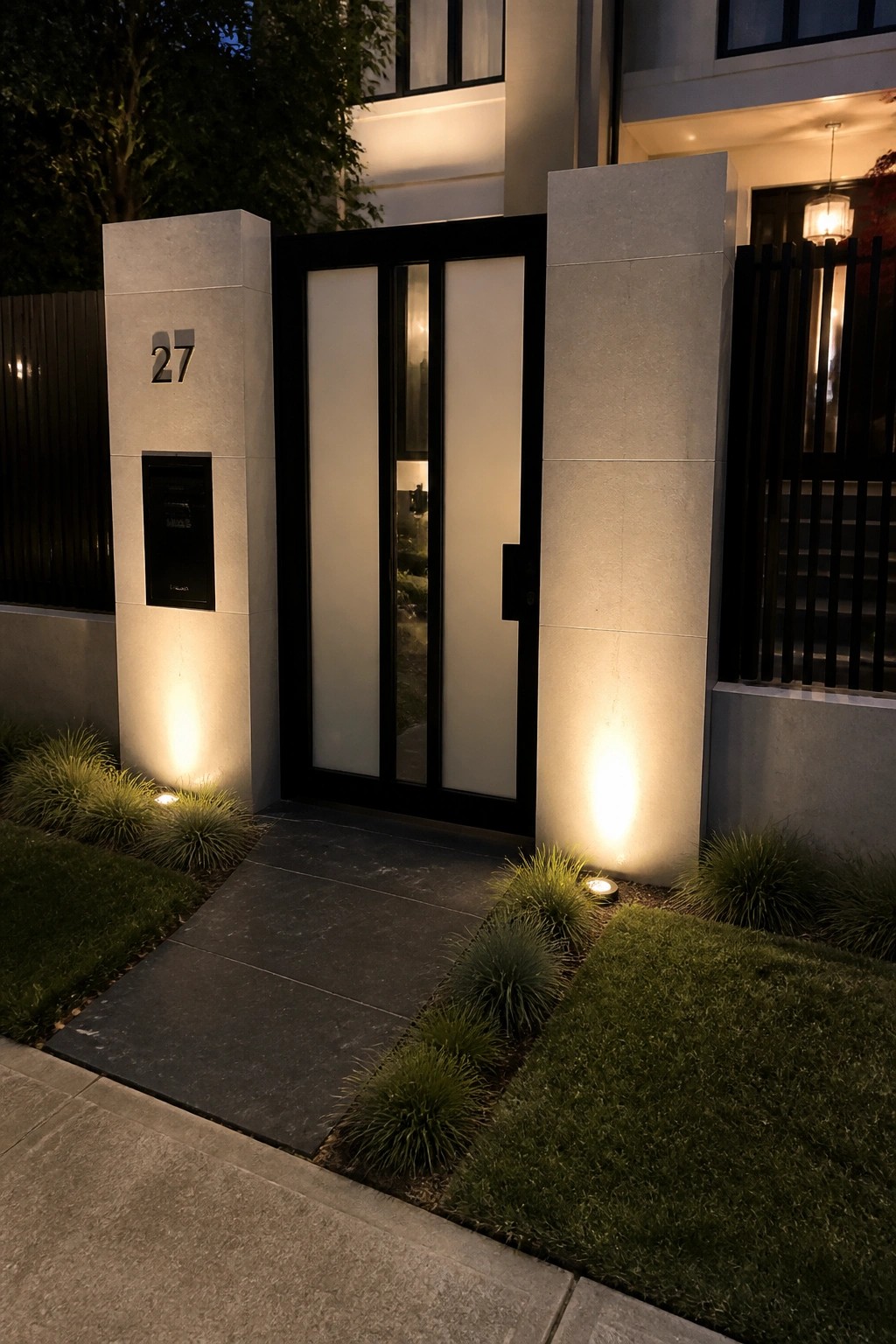
Concrete pillars on either side of the gate give the entrance a solid frame without adding extra trim or decoration. The lighting at the base keeps the path visible at night and highlights the simple material.
This approach works best on modern homes or any property that already uses clean lines and minimal details. Keep the pillars fairly plain and make sure the lights sit low so they do not create glare.
Frequently Asked Questions
Q: How do I choose between swing and sliding gates for a small front yard?
A: Swing gates take up more space when they open out. Go with a sliding option if your driveway sits close to the house. It keeps the entrance clear for daily use.
Q: Will a simple gate design still keep my dog from wandering off?
A: Add a latch that clicks shut firmly at the bottom. Most basic designs let you install one without much trouble. Your dog stays safe while the look stays clean.
Q: What maintenance does a painted gate need after a year or two?
A: Touch up any chips with matching paint right away. This stops rust from starting on metal. Check the hinges too and tighten them if they feel loose.
