

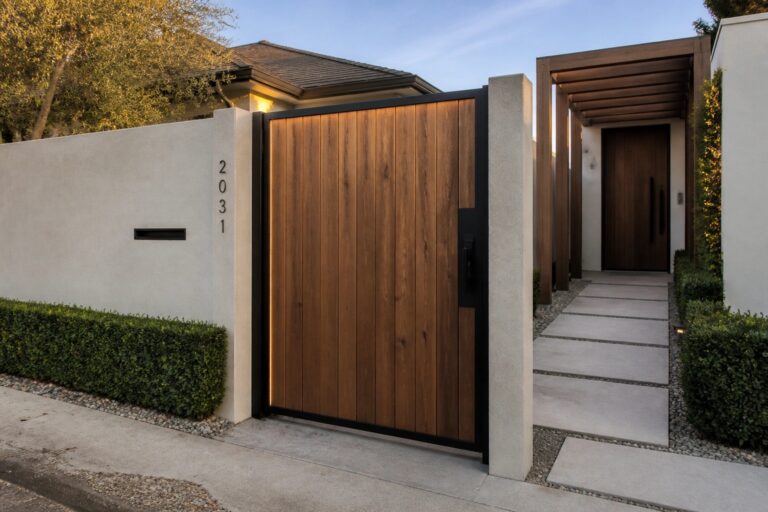
The main gate often becomes the first thing visitors register when they approach a house, and that initial read shapes their sense of the whole property.
I have found that simple lines and solid materials tend to age more gracefully than fussy details when exposed to weather and daily use.
The gate matters more than most people expect.
I like to imagine how each option would frame the walkway and front door in real life before committing.
That way the choice supports the overall exterior rather than fighting it.
Vertical Wood Slat Gates

A gate made of vertical wood slats gives a modern entry a softer look than solid metal or full concrete. The thin vertical light built into one side adds a quiet glow at night without extra fixtures.
This style works best on homes that already use concrete or stucco walls. Keep the wood tone natural and let the light stay narrow so the gate still reads as simple and clean.
Metal Gate With Horizontal Slots

A metal gate cut with simple horizontal slots adds a clean contemporary touch to an entry without feeling heavy or closed off. The lines keep the surface interesting while still providing a solid barrier, and the warm tone of the metal works against stone or concrete in a natural way.
This approach suits homes that already lean modern or minimalist. It works best when the gate sits between matching pillars and the rest of the entry stays simple, so the slots become the main detail instead of competing with other patterns.
Concrete Wall With a Black Slatted Gate

A tall concrete wall paired with a simple black gate gives an entry a clean, modern feel without extra decoration. The solid surface keeps things private and quiet, while the dark vertical bars on the gate add just enough detail to break up the flat look. This approach works especially well when you want the gate itself to feel like part of the architecture rather than an afterthought.
It suits homes with simple stucco or concrete exteriors that already lean contemporary. Keep the gate narrow and the hardware minimal so the whole entrance stays understated. The main thing to watch is scale. Make sure the wall height and gate width feel balanced with the house behind it.
Perforated Gates Let Light Through While Keeping Things Private
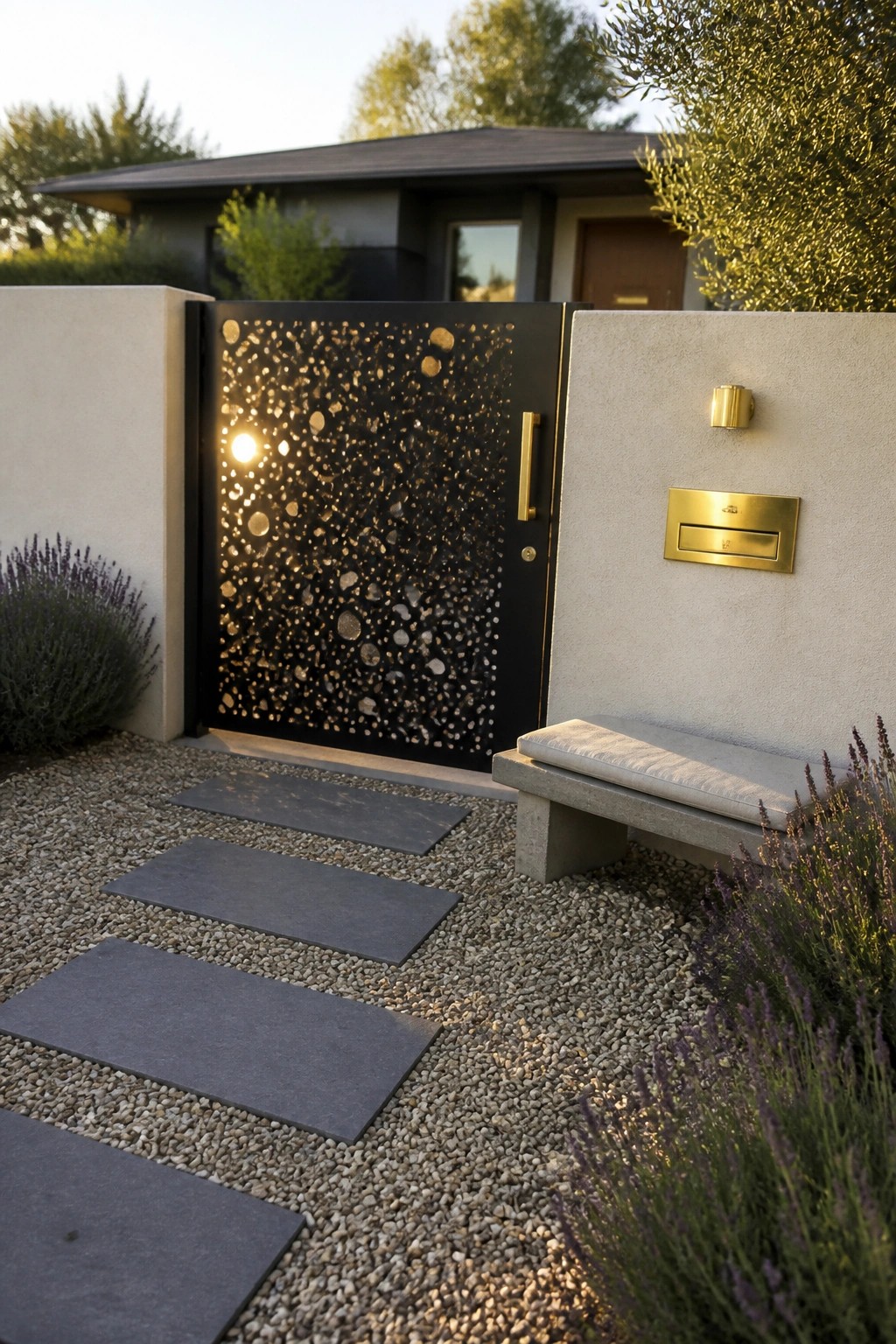
A gate with cutouts like this one works well because it breaks up the solid look of a tall barrier. Sunlight comes through the holes and creates moving patterns on the path, which softens the whole entry without making it feel exposed.
This style suits modern homes that sit close to the street. It gives enough privacy for daily use but avoids the heavy feeling of a blank metal panel. Just check the size of the openings if you need stronger screening from passersby.
Ribbed Glass Panels Keep Entries Bright and Private

Many homes use this style because the ribbed glass softens the gate without making it feel heavy. It lets light pass through while still blocking a clear view, which helps the entry feel open even when the gate stays closed.
This approach works best on homes with simple lines and minimal trim. Keep the frame dark and the surrounding walls plain so the glass becomes the main feature instead of competing with extra details.
Horizontal Slats for a Cleaner Gate Look

Many people like horizontal slats on a gate because they give a simple, modern line without extra detail. The dark finish helps the gate blend into the background rather than stand out as a heavy barrier, and the spacing lets in just enough light while keeping the view blocked.
This works best on homes that already lean contemporary, especially when the gate sits between stone or concrete columns. Keep the rest of the entry simple so the slats stay the main feature, and avoid adding too many plants or ornaments right next to it.
Patterned Metal Gates Add Modern Entry Detail

A metal gate with a bold geometric cutout gives the front entrance a clean contemporary feel right away. The open pattern lets light pass through and creates interesting shadows on the walkway, which keeps the whole entry from looking flat or closed off.
This idea works best on homes with simple fencing and dark siding. Keep the gate material consistent with any nearby posts and add low ground lights so the design shows up after dark. It suits modern houses that want a little visual interest without extra ornamentation.
Perforated Metal Gates With Built-In Planters

A perforated metal gate gives you privacy without making the entry feel closed off. The small holes let light through and keep the look light, while the built-in planters add a bit of greenery right on the gate itself. It works especially well when you want something modern that still feels connected to the plants around it.
This approach suits homes with clean lines and gravel or concrete entries. Keep the planters fairly deep so the plants have room to grow, and choose trailing varieties if you want them to soften the metal over time. Avoid overcrowding the gate with too many boxes or it can start to feel busy.
Wood Doors Set In Stone Walls

A tall vertical wood door looks sharp when it sits right inside a stone wall. The contrast between the smooth wood grain and the rough stone gives the entry a clean modern feel without needing extra trim or decoration.
This works especially well on homes that already use natural materials. Keep the hardware minimal and add a couple of recessed lights above the door so the entrance stays visible at night. The stone should stay the same height on both sides so the door remains the clear focal point.
Frame the Entry With Tall Planters

Tall narrow plants in matching dark planters give a modern door a more finished and balanced look. They add height without taking up much space, and the dark containers blend right into the wall color so the focus stays on the door itself.
This works best on homes with clean lines and darker exteriors. Keep the planters the same size and shape on both sides, and choose plants that stay narrow as they grow so the walkway stays clear.
Dark Metal Gates With Horizontal Cutouts

A dark metal gate like this one works well because it feels solid and private without looking heavy. The narrow horizontal openings let in just enough light and air while keeping the surface mostly closed, which gives the whole front a simple, modern shape that still feels welcoming.
This approach suits homes with straight lines and minimal trim. Keep the metal finish matte and pair it with low planting right in front so the gate stays the main feature. Avoid adding too many extra details or bright hardware that would break up the clean plane.
Horizontal Wood Gates in Gabion Walls

A gate built with wide horizontal wood slats keeps the entry looking simple and modern. The flat lines sit nicely against the rough stone of a gabion wall, so the design stays clean without needing extra trim or hardware.
This works best on homes that want a contemporary gate without going full metal. Use a dark frame to match the wire, add low path lights for safety, and keep nearby planting low so the gate stays the main focus.
Vertical Slats For The Main Gate

Vertical slats give a gate a sharp, modern look without adding extra detail. They create clean lines that feel current and keep the entry from looking busy or heavy. The dark finish on these slats also helps the gate blend into the house rather than stand out as a separate piece.
This approach works best on homes with simple facades and straight architecture. It gives some privacy while still letting light through, so the front does not feel closed off. Just make sure the spacing stays even and the material matches the door or trim color.
Horizontal Slat Gates For A Light Modern Entry

A low white gate with simple horizontal slats gives a clean way to mark the entry without blocking views or light. It feels open and straightforward, which helps the whole front approach stay relaxed rather than closed off.
This gate style works best with matching concrete walls and gravel or stone paths. It suits homes that want a contemporary look but still need a visible boundary at the front.
Horizontal Lines on a Modern Gate
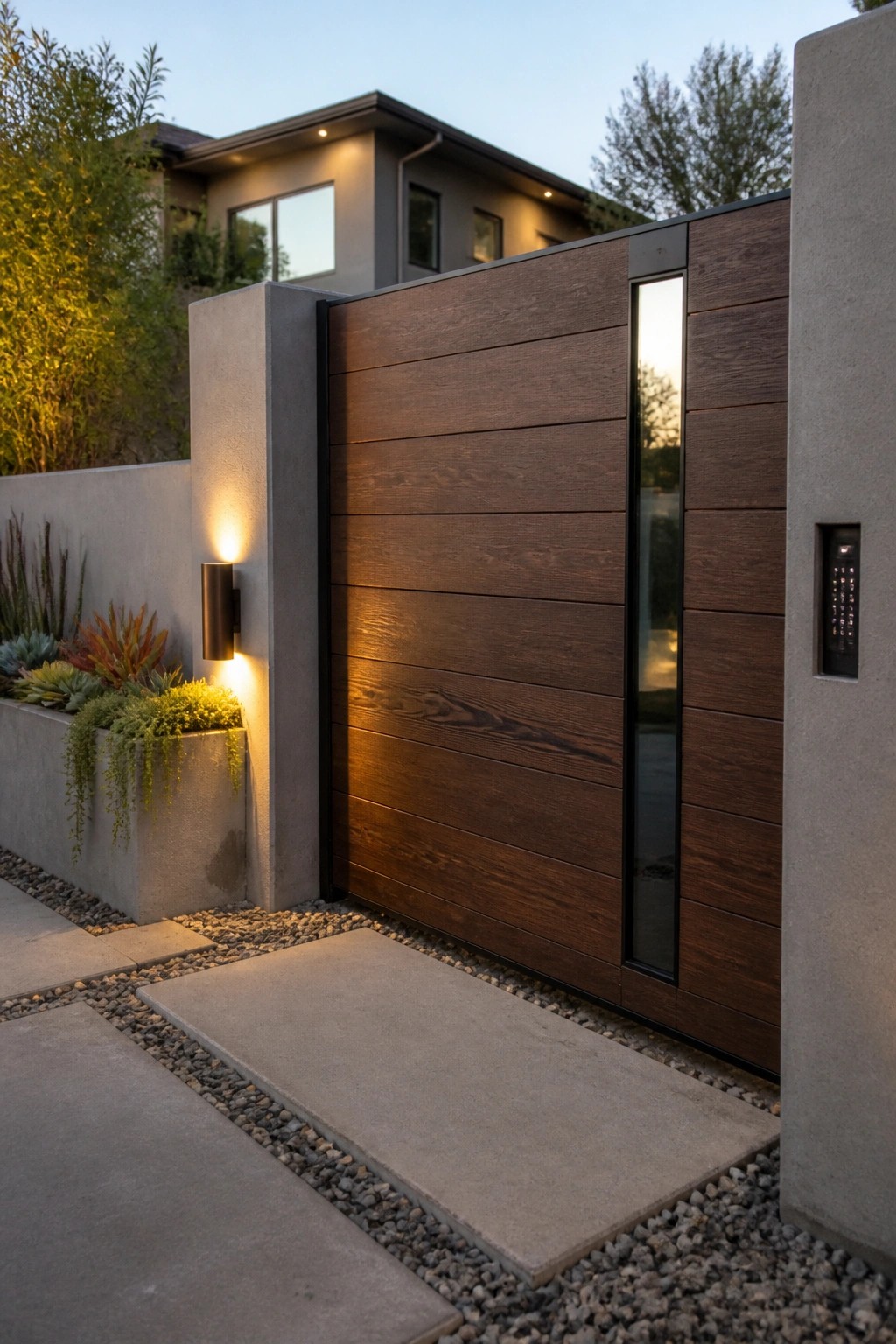
Horizontal wood slats give a gate a calm, orderly look that fits right into contemporary homes. They stretch across the surface without any extra trim or patterns, so the eye moves smoothly from one side to the other. A narrow vertical glass panel adds just enough light and depth without breaking the clean shape.
This approach works best on homes with simple concrete or stucco walls. Keep the wood tone dark and matte so it contrasts with the lighter surroundings. Avoid adding handles or hardware that stick out too far, since any extra detail can make the whole gate feel busier than it needs to be.
Frequently Asked Questions
Q: Will a sleek gate still give me enough privacy from the street? A: Go with vertical panels that sit close together near the bottom. This blocks the main view while keeping the clean lines you want. You can always add a row of shrubs behind it for extra cover if needed.
Q: How do I keep the gate from clashing with my brick house? A: Match the gate color to your window frames or trim instead of trying to copy the brick. A matte black or dark gray usually blends in without fighting the older texture. Test a small sample panel in different lights first.
Q: Do these gates need much upkeep over time? A: Hose them off every few months to clear dust and pollen. Most powder-coated finishes hold up well without extra treatments. Skip anything with moving parts that you cannot reach easily for lubrication.
Q: What width works best for a normal driveway entrance? A: Measure the full opening and plan for at least ten feet of clear space. This lets cars pass without scraping mirrors. Double gates make sense if your drive curves or you park larger vehicles.
