

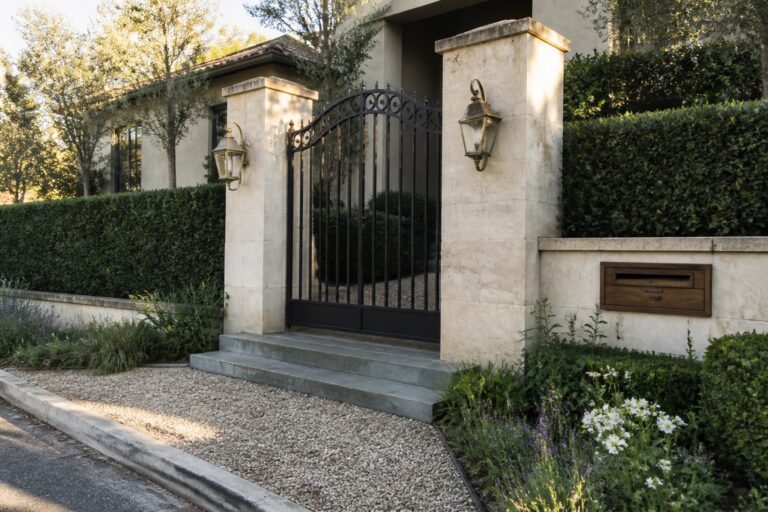
I have noticed over time that the gate at the front of a property shapes the first sense of the whole house long before anyone reaches the door.
When materials and proportions line up with the rest of the facade, the entrance feels intentional rather than added on later.
A gate can quietly change how balanced a home looks from the street.
I often find myself wondering how certain styles would age with weather and daily use instead of just how they appear in renderings.
Paying attention to those details usually leads to choices that feel more settled once they are installed.
Stone Pillars with a Wrought Iron Gate
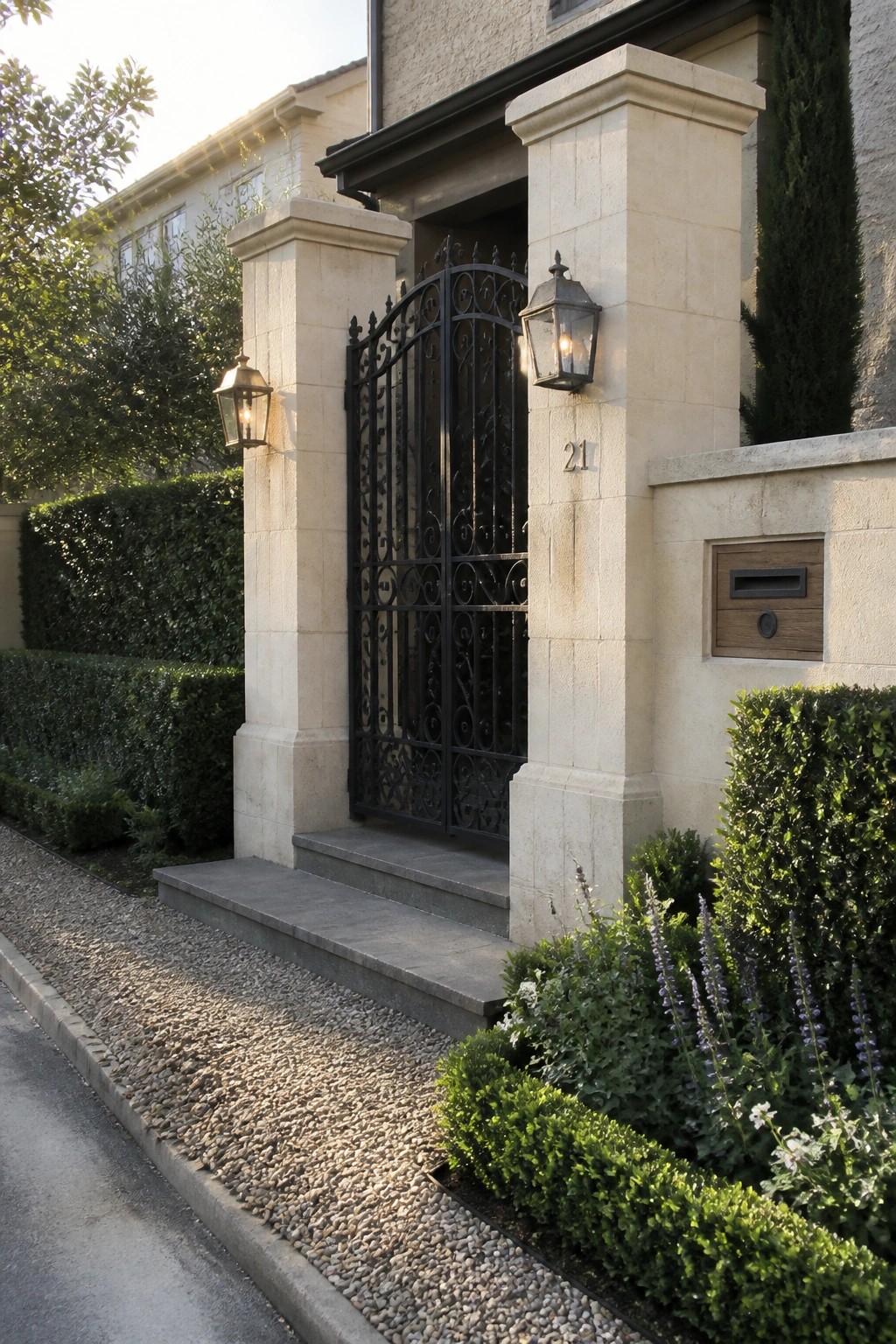
Stone pillars give a main gate a more permanent and grounded feel. They frame the opening clearly and make the entrance look like it belongs with the house rather than just sitting at the edge of the property.
This approach works best on homes with a traditional or classic style. Use a light stone that matches other exterior materials and keep the gate itself dark so the contrast stays simple and easy to maintain.
Horizontal Slats on a Wood Gate
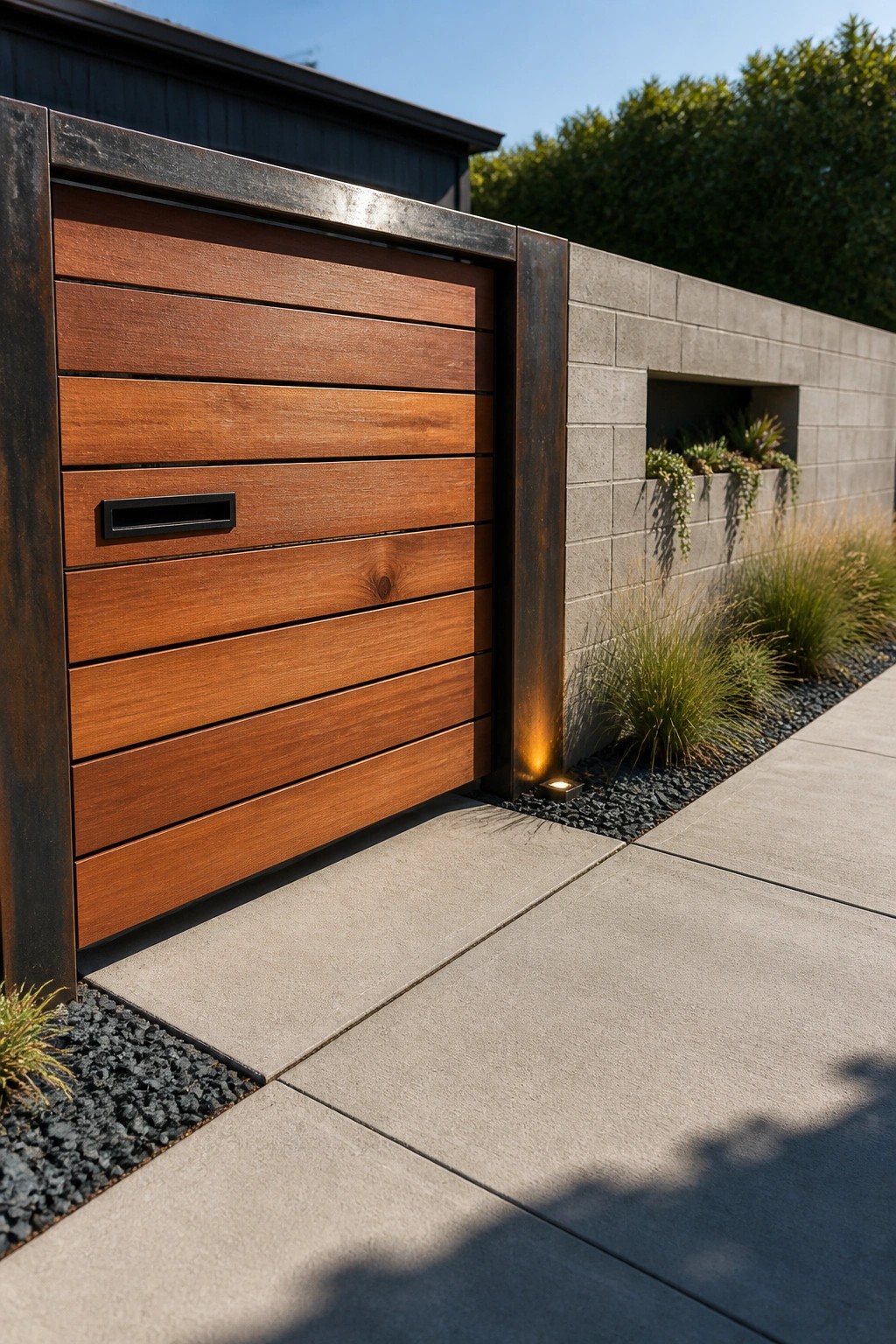
A gate built with wide horizontal wood slats gives an entry a simple modern look that still feels solid. The boards run straight across and break up the height without adding extra trim or patterns that can start to feel busy.
This style works best on homes that already have clean lines and some concrete or stone nearby. Keep the hardware dark and add one low light at the base so the gate stays visible after dark without needing overhead fixtures.
Stone Arches with Dark Gates
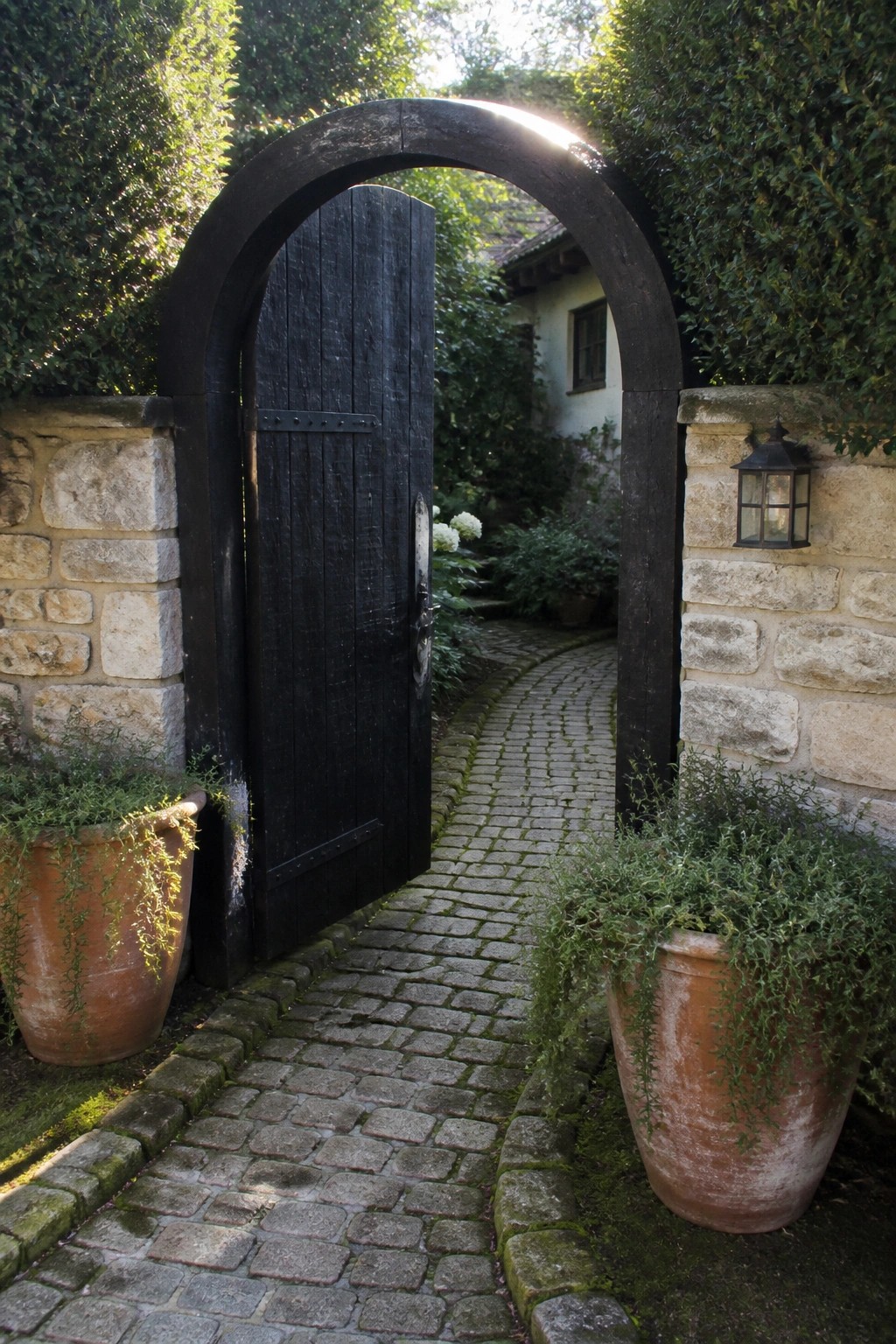
A dark wooden gate set inside a stone arch makes the entrance feel solid and lasting. The contrast between the deep black wood and the rough stone gives the whole front a grounded look that still reads as welcoming.
This works best on homes with natural materials already in place or on properties where the gate needs to blend into the garden rather than stand apart from it. Match the wood tone to any nearby fencing or shutters and keep the stone simple so the arch stays the main feature.
Black Framed Doors for a Clean Entry
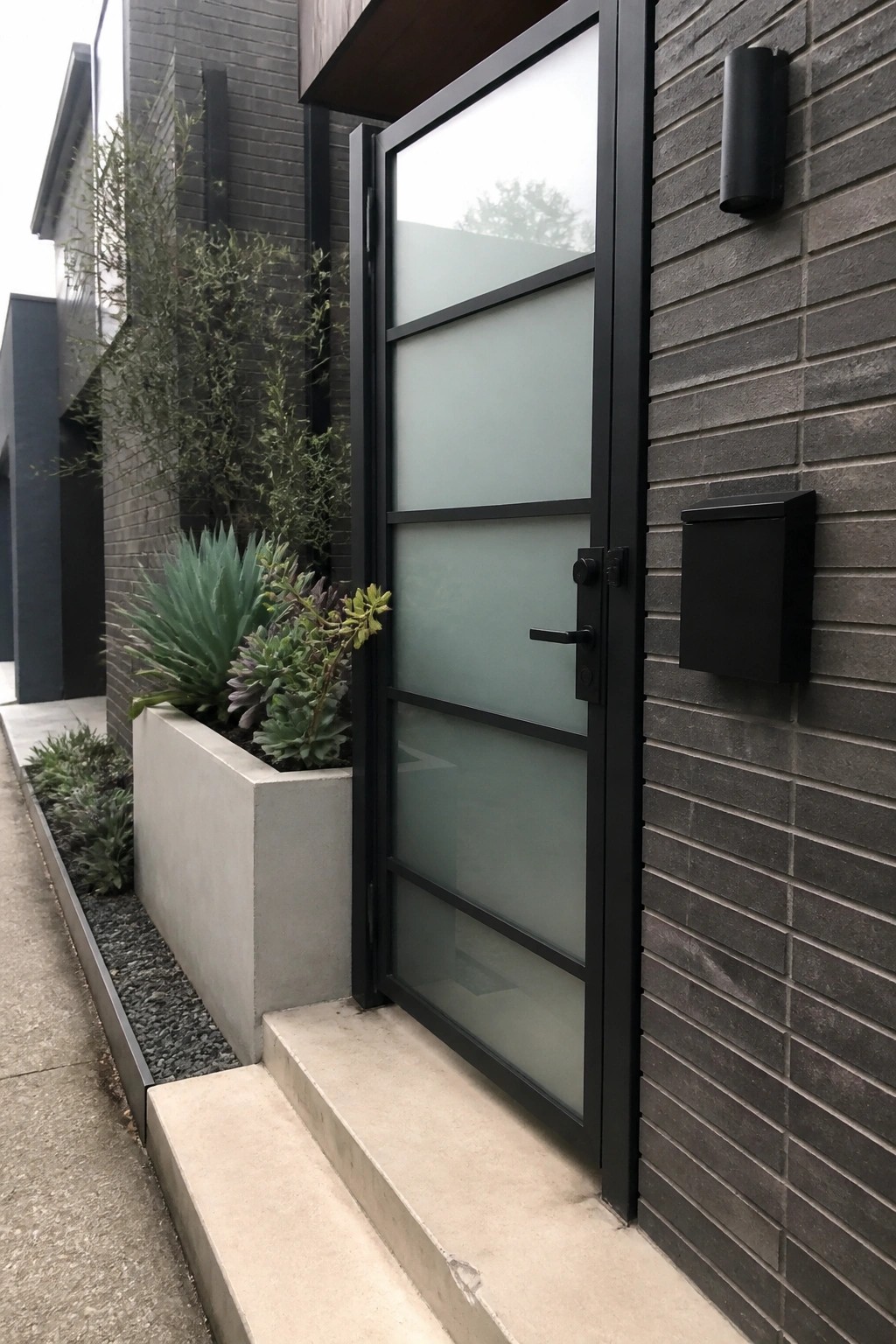
A black metal door with frosted glass panels gives an entry a sharp look that still feels straightforward. The dark frame stands out against the brick without adding extra detail, and the glass lets in some light while keeping the inside private.
This approach suits homes with simple lines and darker exteriors. Match the hardware to the frame and avoid crowding the area with too many plants or decorations so the door stays the main feature.
Classic Wrought Iron Gates
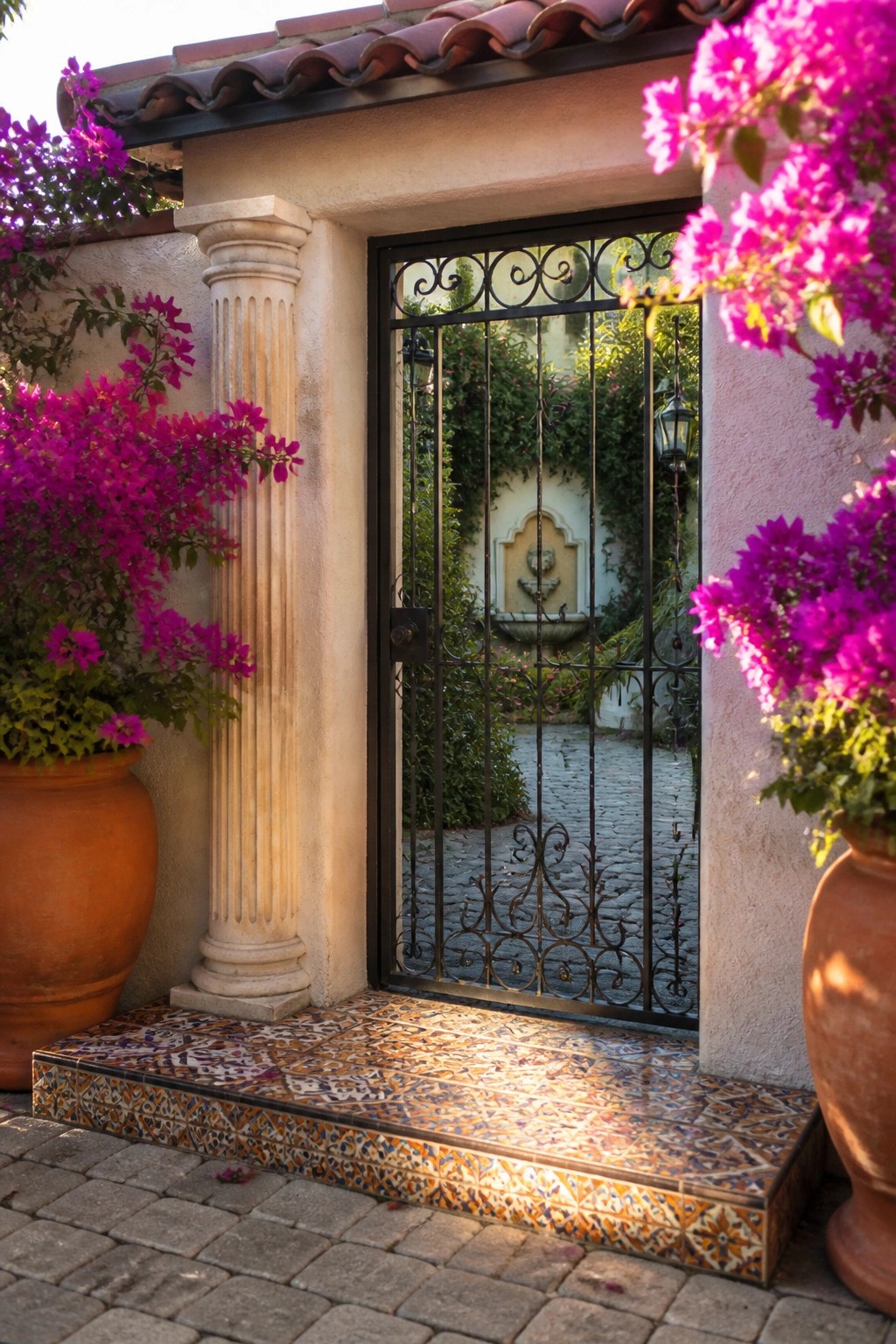
An ornate wrought iron gate can turn a simple entry into something that feels more finished and welcoming. The open pattern lets you see through to the space beyond while still giving a clear sense of boundary and style. Many homes use this approach when the goal is to keep things light rather than closed off.
This works especially well on homes with stucco or plaster walls and a few classic details like columns or patterned tile. Keep the gate color dark so the scrollwork stands out, and make sure the surrounding paving or steps match the level of detail. It suits older homes or any place where you want the entrance to feel intentional without looking heavy.
Stone Pillars With Built-In Lights
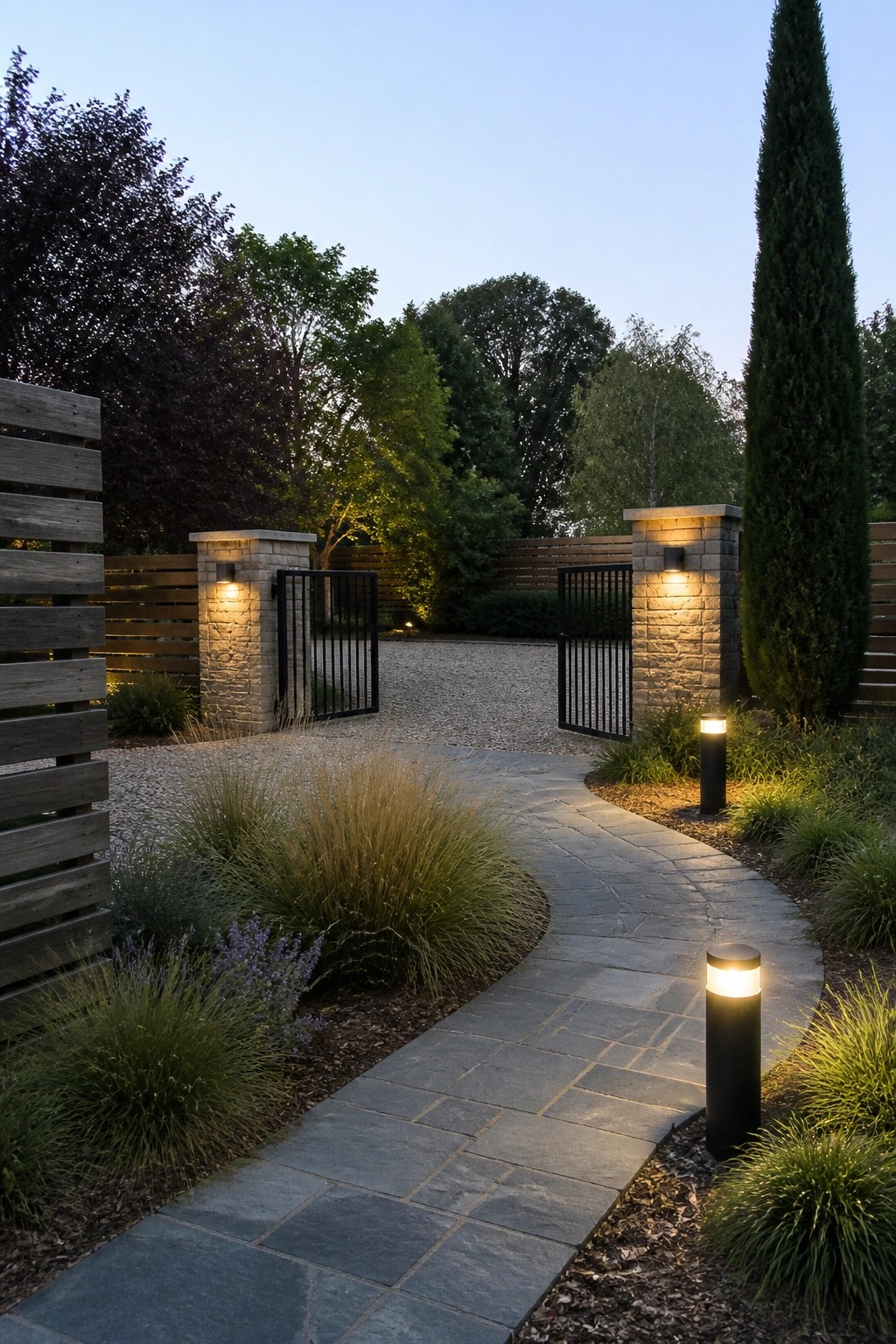
Stone pillars with lights built right into them give a gate a finished look without extra fixtures. The light washes over the stone and marks the entrance clearly at night, which helps the whole front feel more put together. Many people like this because it keeps the gate area simple while still making it easy to see from the street.
This approach works well on homes that already use stone or brick on the exterior. Keep the pillars fairly low and match the light color to any other outdoor fixtures you have. Just be sure the lights point down so they do not glare into the driveway or the neighbor’s yard.
Horizontal Cables In A Front Gate
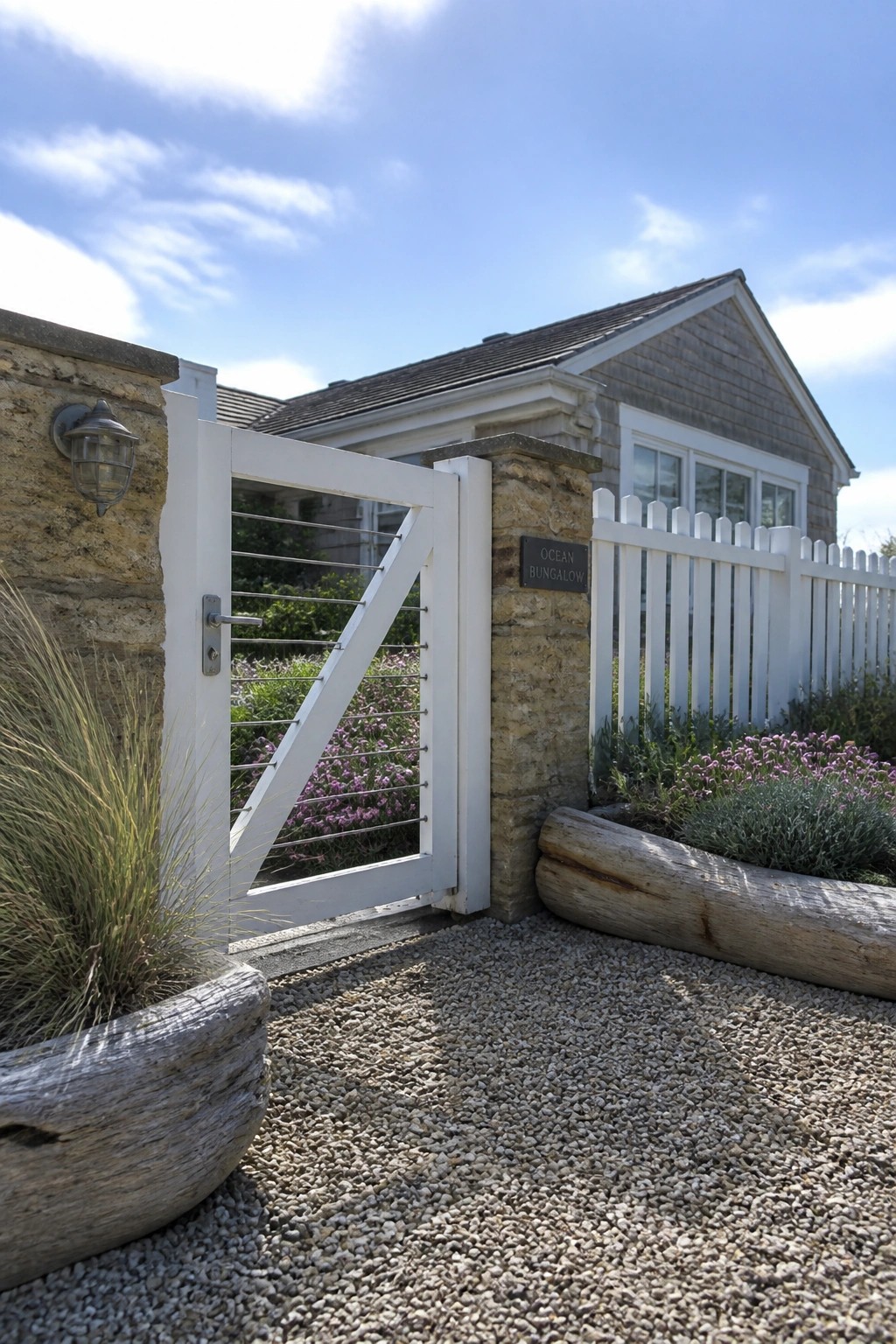
A gate built with horizontal cables keeps the entry feeling open while still marking the boundary clearly. The thin lines let light and views pass through, which helps the whole front look less closed off than a solid panel would.
This works best on homes that already use stone or wood details. Match the gate frame color to nearby fencing and keep the cables evenly spaced so the design reads as intentional rather than busy.
Stone Pillars With Lanterns
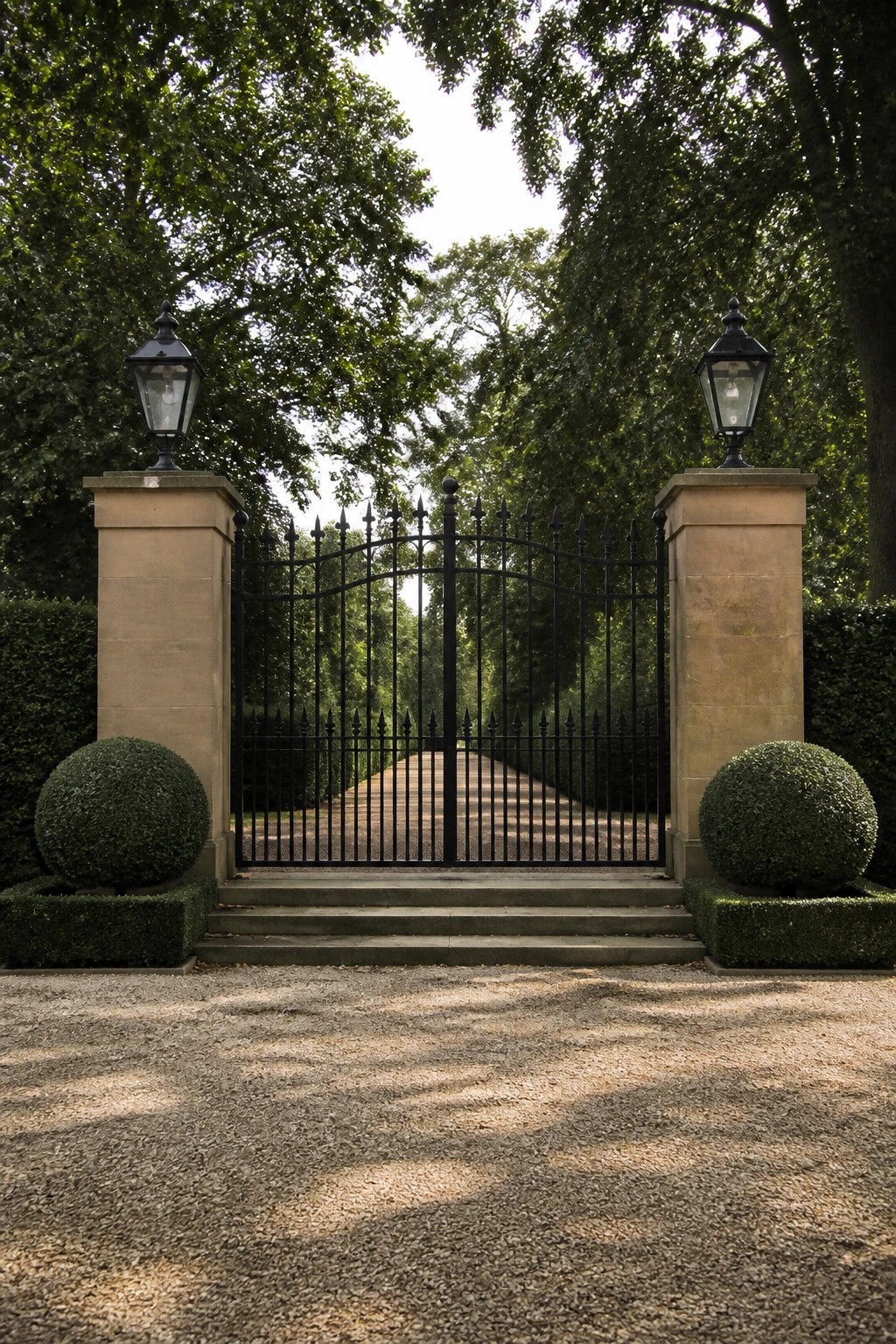
Stone pillars topped with lanterns give a gate real presence without needing anything fancy. They anchor the entrance and make the whole setup feel more permanent and balanced, especially when the gate itself is black iron. The light fixtures also add a bit of height and shape that works well against trees and hedges.
This approach suits homes with longer driveways or larger lots where the gate sits back from the street. Keep the pillars in a natural stone tone and match the lanterns on both sides so the look stays even. It works best with simple planting on either side rather than anything too busy.
Wood And Stone For A Simple Gate

A wooden gate held between stone posts gives an entry a solid, lived-in feel that still looks clean. The mix of materials keeps things from feeling too formal or too plain, and it settles into the landscape as the wood and stone age together.
This works best on properties with open fields or long gravel drives. Match the path to the gate with the same simple materials, and let wildflowers or grass grow right up to the edges instead of adding formal beds.
Stone Columns for the Gate Entrance

Stone columns give a main gate real weight and presence. They frame the opening clearly and make the whole entry feel more finished, especially when the gate itself is simple black iron.
This setup works well on larger lots where the entrance sits back from the road. Pair the columns with low planting so they stay visible, and make sure the steps or path align with the gate for easy flow.
Water Features Along the Entry Path
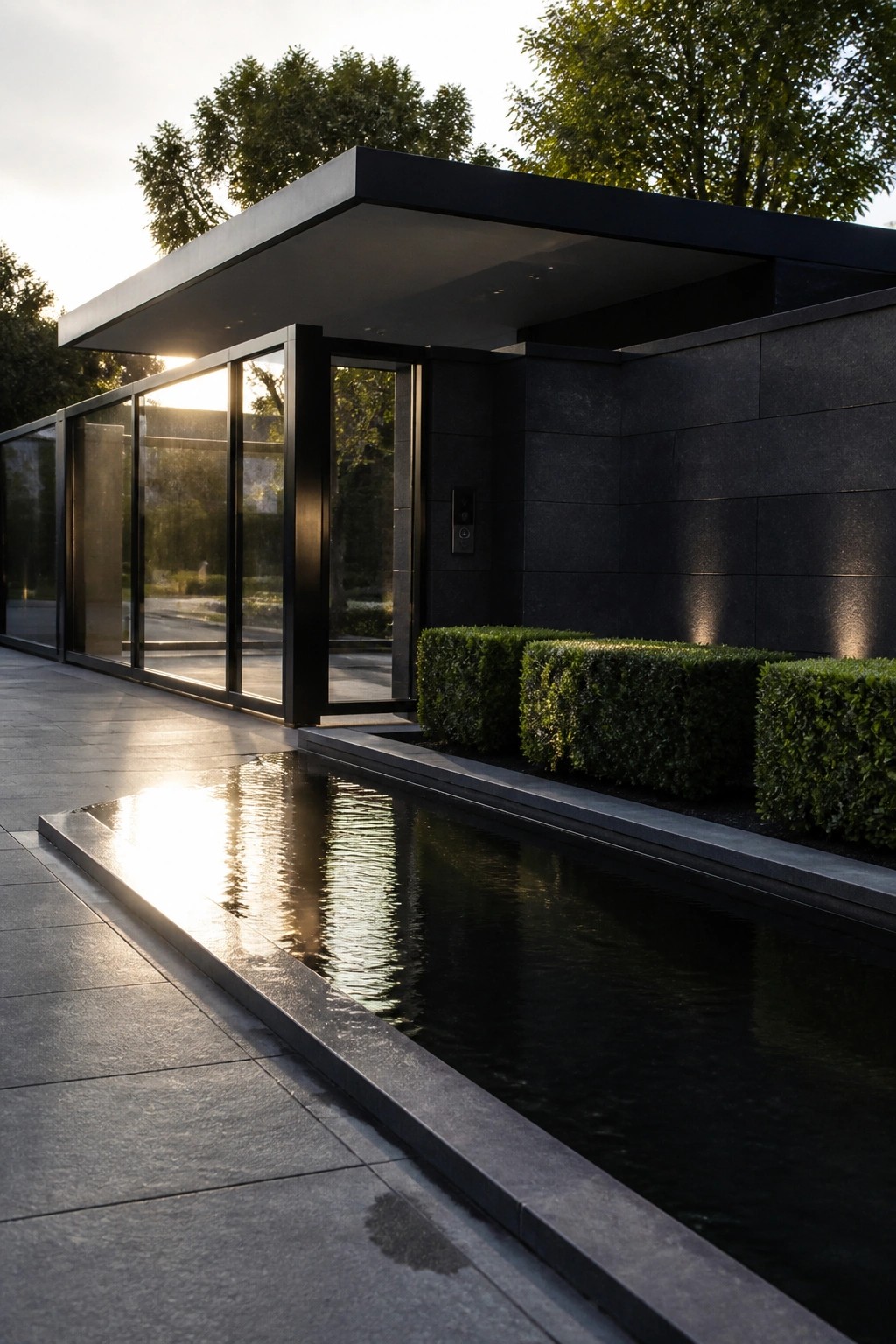
A long water channel running toward the door gives the entrance a calm, deliberate feel. It turns the walk from the street or driveway into something more than just pavement, and the reflection adds light without needing extra fixtures. Many modern homes use this because it works with clean lines and dark materials.
This approach suits homes with enough front space to keep the water at a safe width. It looks best when the channel stays narrow and straight rather than trying to curve or widen into a full pond. Pair it with simple planting on one side so the water remains the main line of sight.
Metal Scrollwork On The Garden Gate
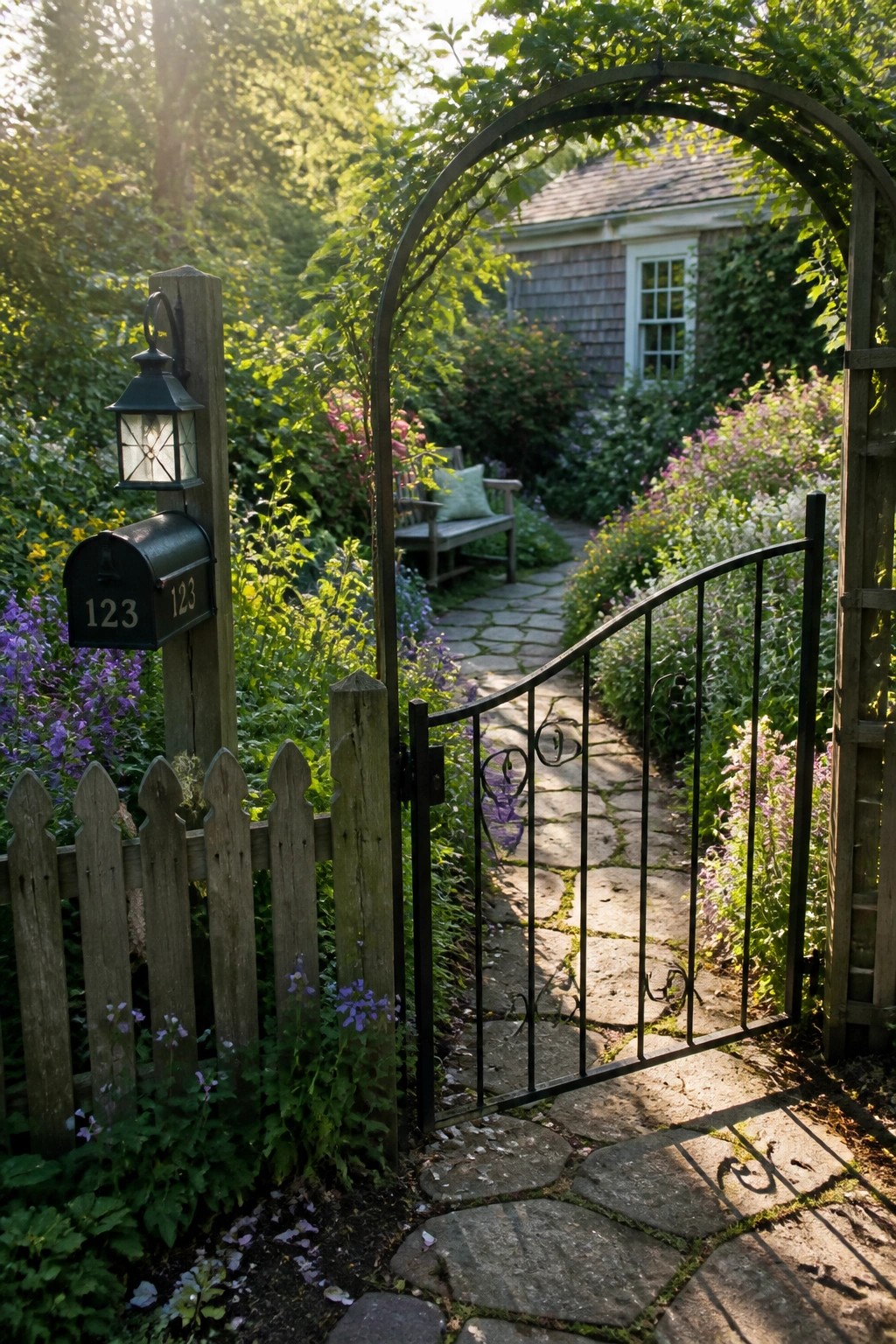
A gate with some metal scrollwork can give an entry more interest without making it feel busy. The details catch the eye as you approach and help the gate stand out against the fence and plants on either side.
This style works well on smaller properties or homes with a cottage feel. Keep the rest of the fence simple and let the path materials stay low key so the gate remains the main point of focus.
Black Gates Against White Pillars
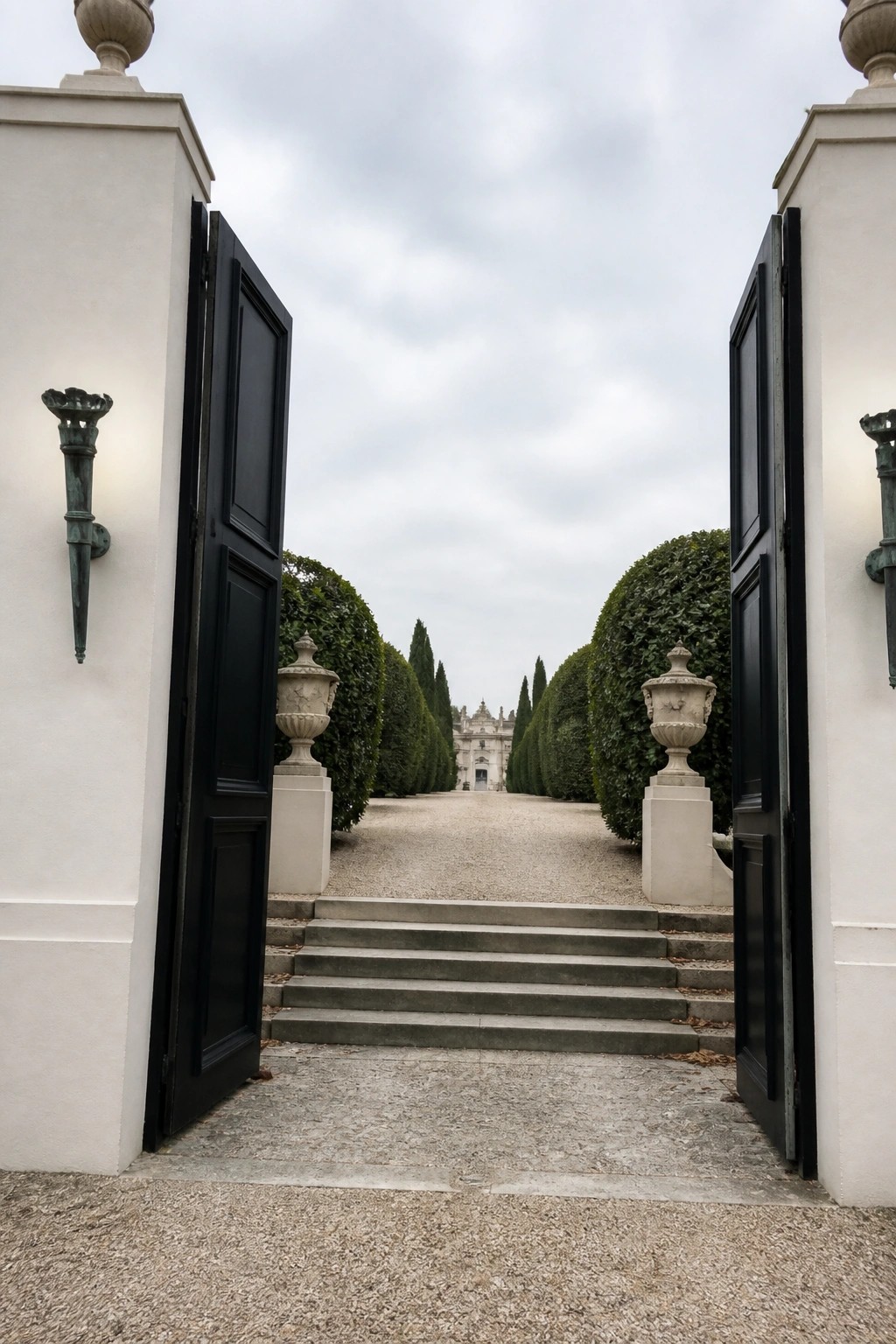
A strong color contrast at the gate helps the entrance read clearly from a distance. Black gates stand out against light stone pillars without needing extra decoration, and the simple pairing keeps the whole approach feeling orderly.
This works best on properties with straight lines and some symmetry already in place. Keep the pillars plain so the gate color does the main job, and make sure the steps and path stay neutral so they do not compete.
Built-In Mailbox And Light On The Gate Post
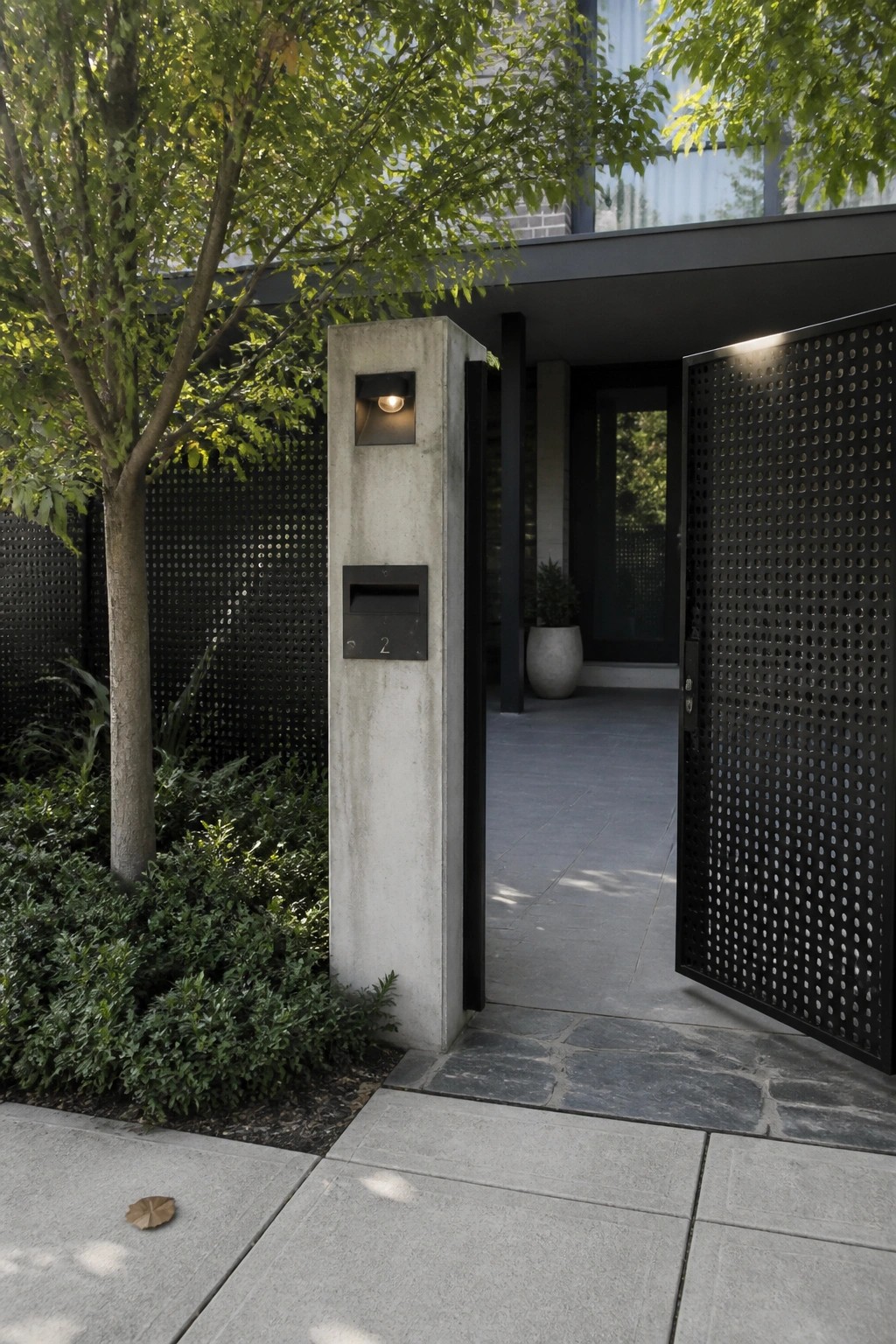
Many people want the front gate area to stay clean without extra poles or boxes scattered around. Putting the mailbox and a small light right into the gate post keeps everything in one spot and cuts down on visual clutter.
This approach works best on modern homes with simple materials like concrete or dark metal. It suits entryways where you want the gate to feel like part of the architecture rather than something added later. Just make sure the post is tall enough and the light is positioned so it actually lights the path at night.
Wrought Iron Gates In Arched Entries

An iron gate set inside a simple arch gives an entry real presence without making it feel heavy. The open pattern lets light and views pass through while still marking a clear boundary between the street and the home.
This works best on stucco or plaster walls where the dark metal stands out against the lighter surface. Pair it with a basic wall-mounted light nearby so the gate remains visible at night, and keep the surrounding planting light so the gate stays the main feature.
Perforated Metal Entry Gates
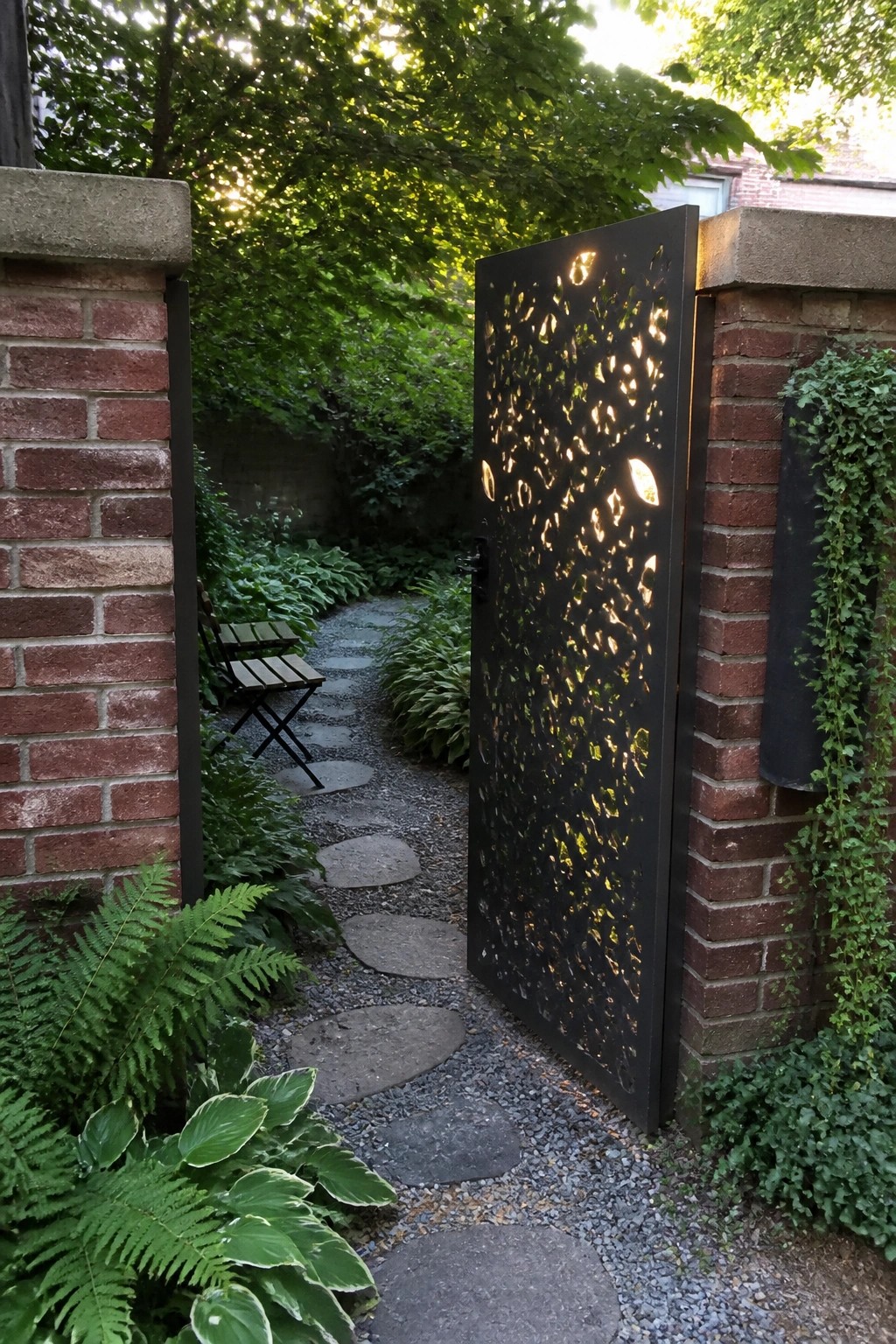
A gate with irregular cutouts lets light filter through while still marking a clear boundary. The pattern keeps the entrance from feeling closed off and adds a bit of texture without extra decoration.
This style works well on garden paths or side entries where full privacy is not needed. Keep the cutouts spaced enough to avoid a heavy look, and match the frame color to nearby metal or stone details so it blends in.
Vertical Slat Gates for a Clean Entry
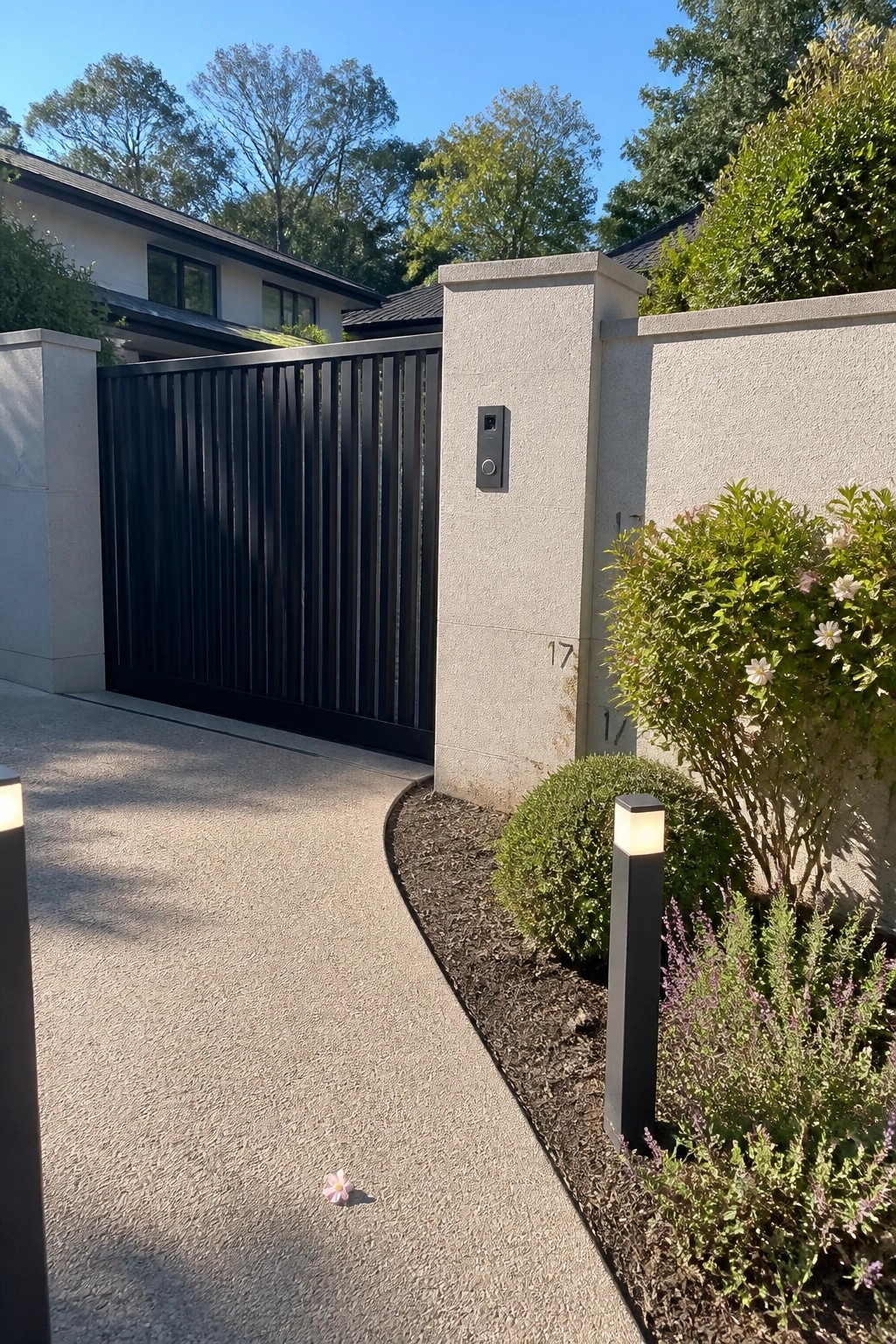
A vertical slat gate gives the front a modern edge without looking heavy or closed off. The narrow lines let some light and air through while still marking a clear boundary, which works especially well on homes with simple stone or concrete details around the entry.
This style suits newer builds or updated older homes where you want the gate to feel like part of the architecture rather than an add-on. Pair it with matching pillars and keep nearby planting low so the gate stays the main feature.
A Painted Picket Gate for the Front Path
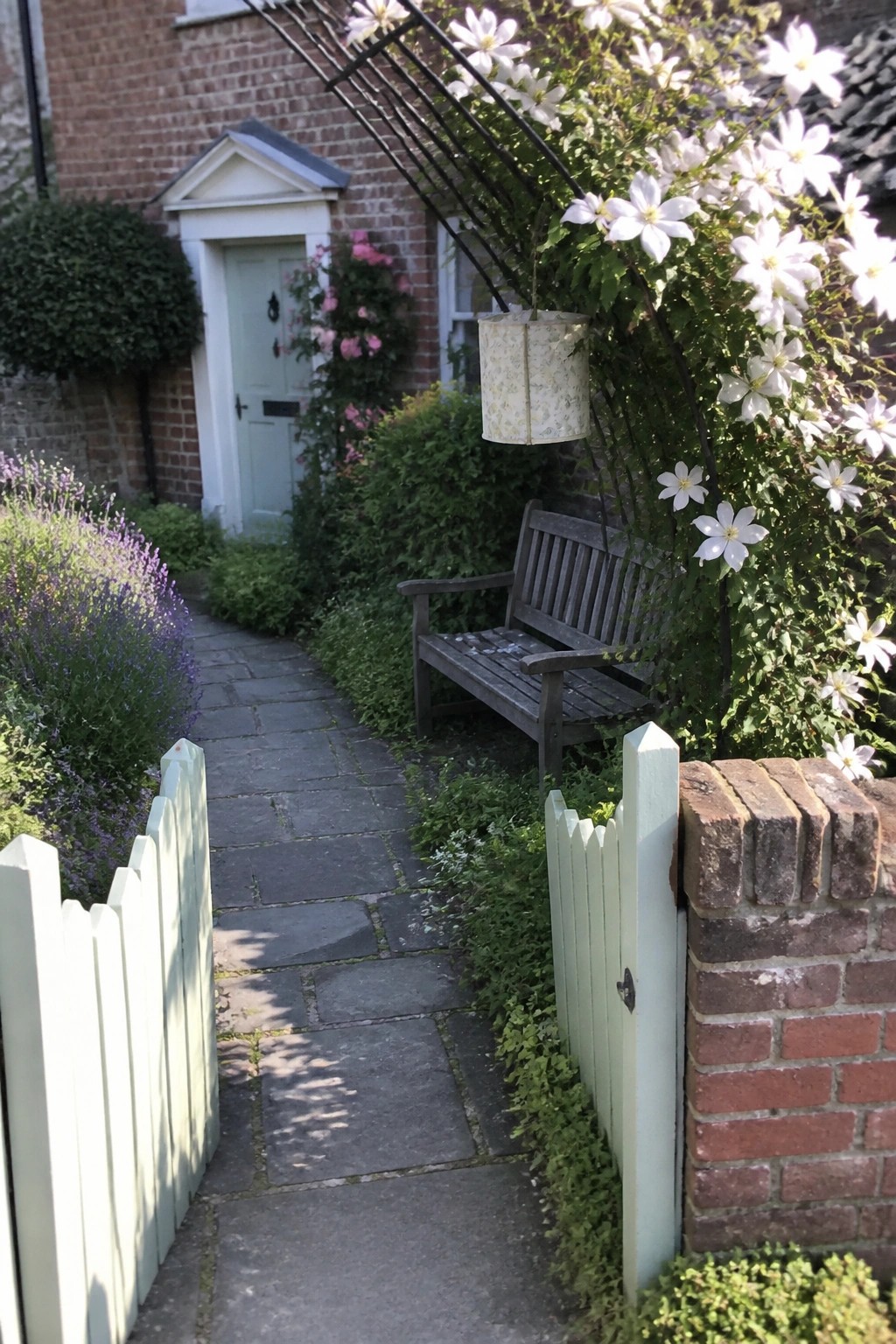
A painted picket gate gives the start of a garden path a clear and friendly boundary. It marks the entrance without making the space feel closed off, and the light color keeps everything looking fresh against brick and greenery.
This works best on homes with a short walk from the street or sidewalk. Keep the gate simple, match the fence color to nearby trim, and let a few plants grow nearby so the whole entry feels natural rather than stiff.
Vertical Metal Slats For A Strong Entry Gate

A gate made from tall vertical metal panels can give the front of a house real weight without feeling closed off. The slats let a bit of light and air move through while still creating a clear boundary that feels deliberate and solid.
This works best on homes with simple lines where you want the entry to stand out on its own. Keep the rest of the approach plain, like concrete steps and low planting, so the gate stays the main feature instead of competing with too many other details.
Brick Columns with a Metal Gate
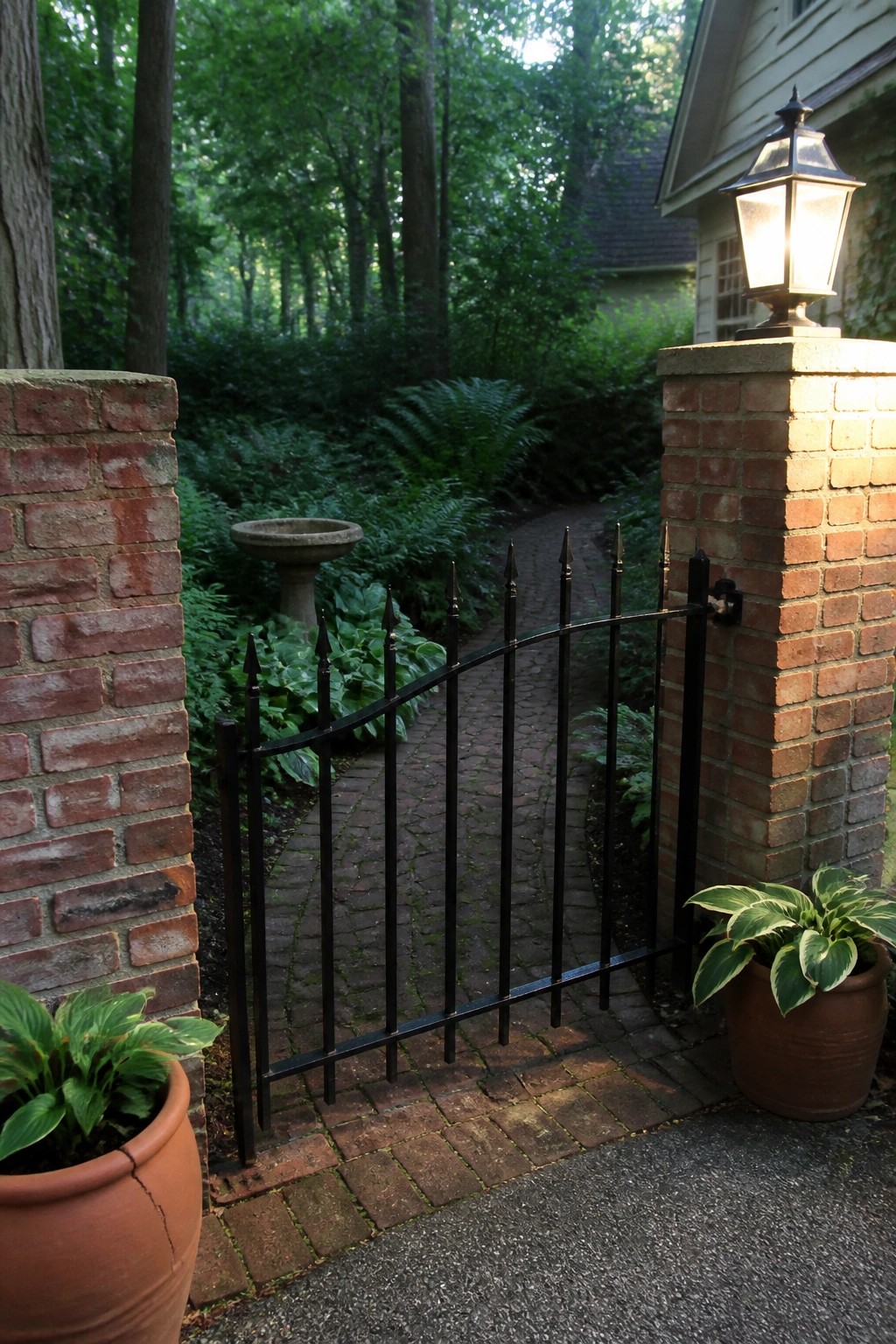
Brick columns give a gate real presence at the front of a property. They add weight and structure that makes the entrance feel more defined, especially when paired with a straightforward black metal design.
This setup suits homes with traditional or cottage gardens best. Place the columns at the edge of the driveway or path and keep the gate pattern simple so it does not compete with the surrounding planting.
Horizontal Wood Slats for the Gate

A gate built with clean horizontal wood slats gives a simple, direct look that still feels natural. The wood warms up the dark stone around it and keeps the entry from feeling too heavy or closed off.
This style works best on homes that already use natural materials and garden paths. Keep the slats evenly spaced, match the tone of the wood to nearby decking or fencing, and let the stone carry most of the structure so the gate stays light.
Frequently Asked Questions
Q: How do I pick a gate that matches my house without looking out of place?
A: Walk your property at different times of day and note the main colors and lines of your home. A simple metal gate with clean bars often works next to stucco walls while wood panels suit brick better. Test a small sample piece against the front wall before ordering.
Q: What happens if my driveway slopes down right at the gate spot?
A: Measure the drop over the gate width and ask your builder to adjust the bottom rail so it clears the ground evenly. A slight curve at the base keeps the look clean and stops dragging. Skip fancy patterns that might highlight the tilt.
Q: Do these elegant gates hold up once the weather turns rough?
A: Pick finishes made for outdoor use and check the welds or joints before you commit. A quick wipe with mild soap a few times a year keeps most metals and treated woods looking sharp. One solid coat of sealant each spring handles most rain and sun without extra fuss.
