

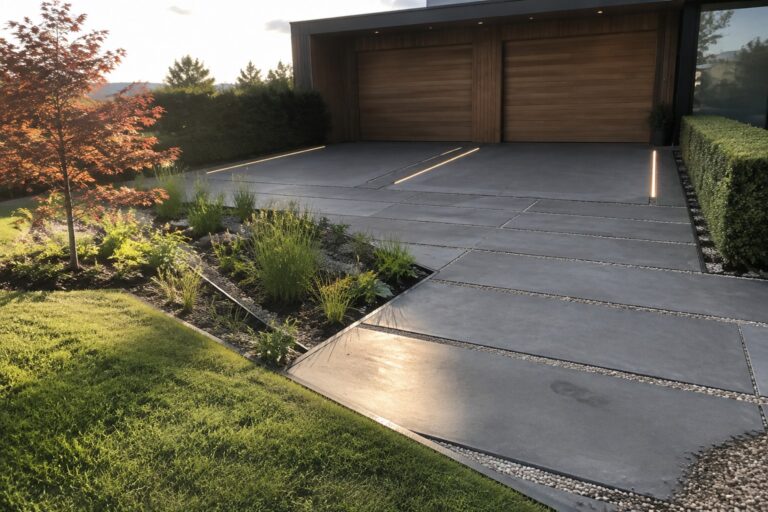
A driveway shapes the first impression of a home, but it also has to handle daily parking without feeling awkward to use.
I find that the best designs make the pavers and concrete pads feel like parts of one plan, rather than separate surfaces added at different times.
Color, pattern, and the edges where materials meet can tie the driveway to the facade while keeping the parking areas easy to navigate.
Some layouts keep things simple and orderly, while others use curves or contrasting borders to soften a broad expanse of paving.
I’d save the ideas that suit your home’s approach and lot shape, then adapt the details to the way your household actually parks.
Use Large Concrete Pads for a Clean Driveway
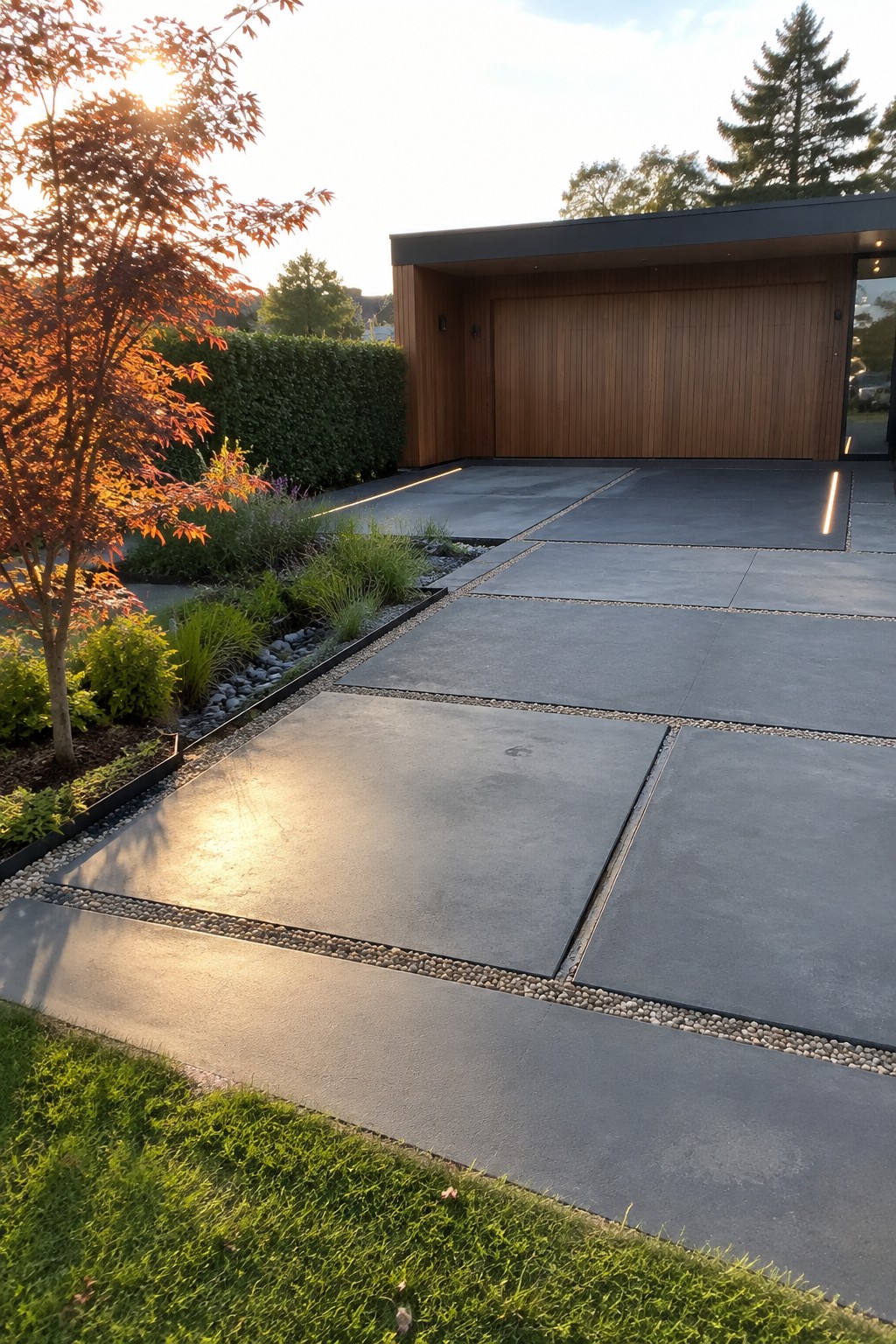
Large concrete pads give a driveway a simple, organized look while the narrow gravel joints help break up the broad paved surface. This layout also creates a clear approach to the garage without relying on one uninterrupted slab.
For a similar driveway, keep the pads large enough for easy parking and leave consistent gaps for gravel or another small, permeable fill. It works especially well with modern homes, but plan the joints carefully so they stay neat and easy to maintain.
Use Concrete Pads Between Paver Sections
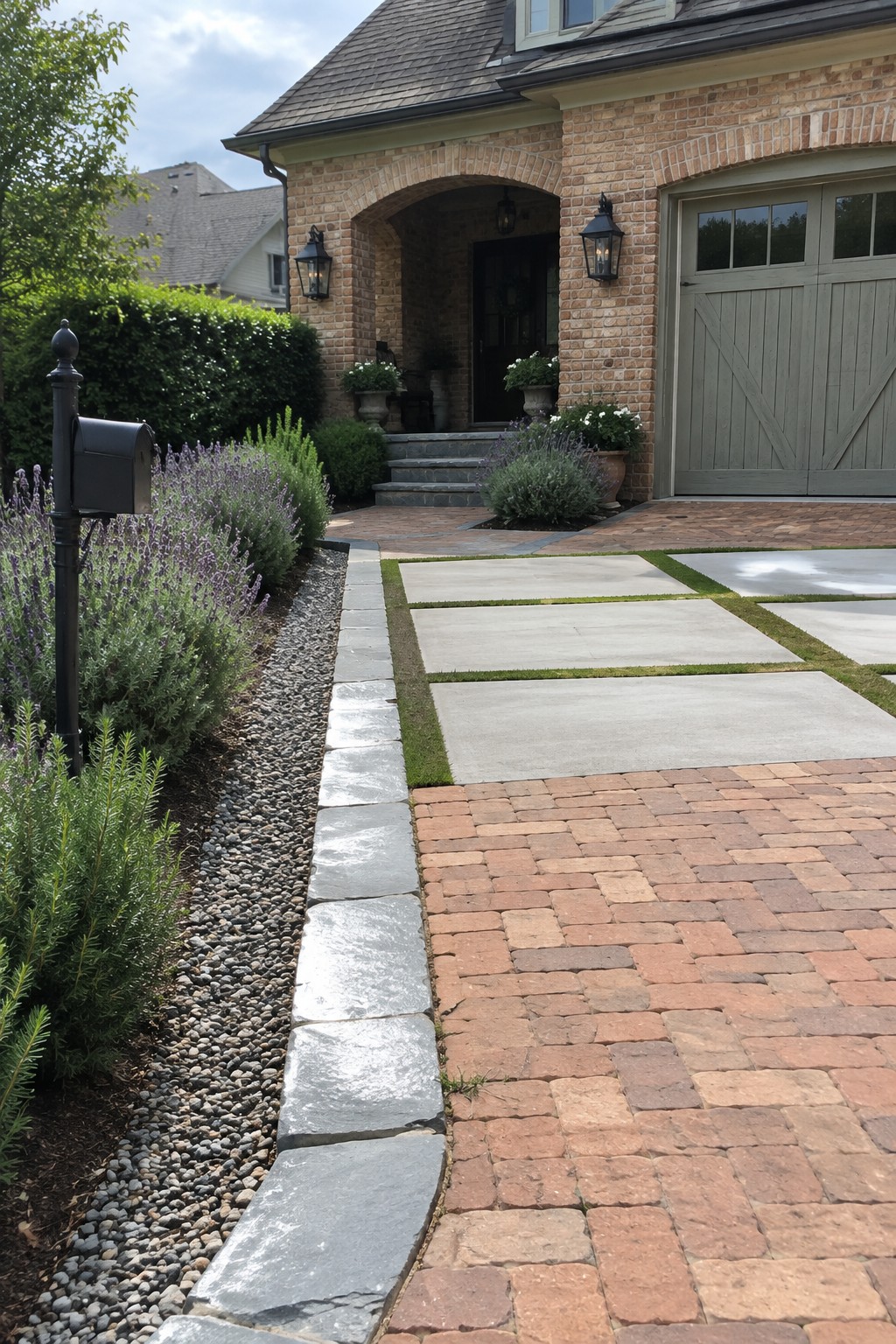
Breaking up a brick paver driveway with concrete parking pads gives the surface a more planned look without making the whole driveway feel like one large slab. The broad, simple pads create a clear place to park, while the smaller pavers add texture around them.
This approach works well for a wide driveway where you want to define parking spots without adding painted lines. Keep the pads sized for the vehicles that will use them, and leave enough space between sections for consistent strips of grass or another suitable joint material.
Use Large Concrete Pads for a Clean Driveway Layout
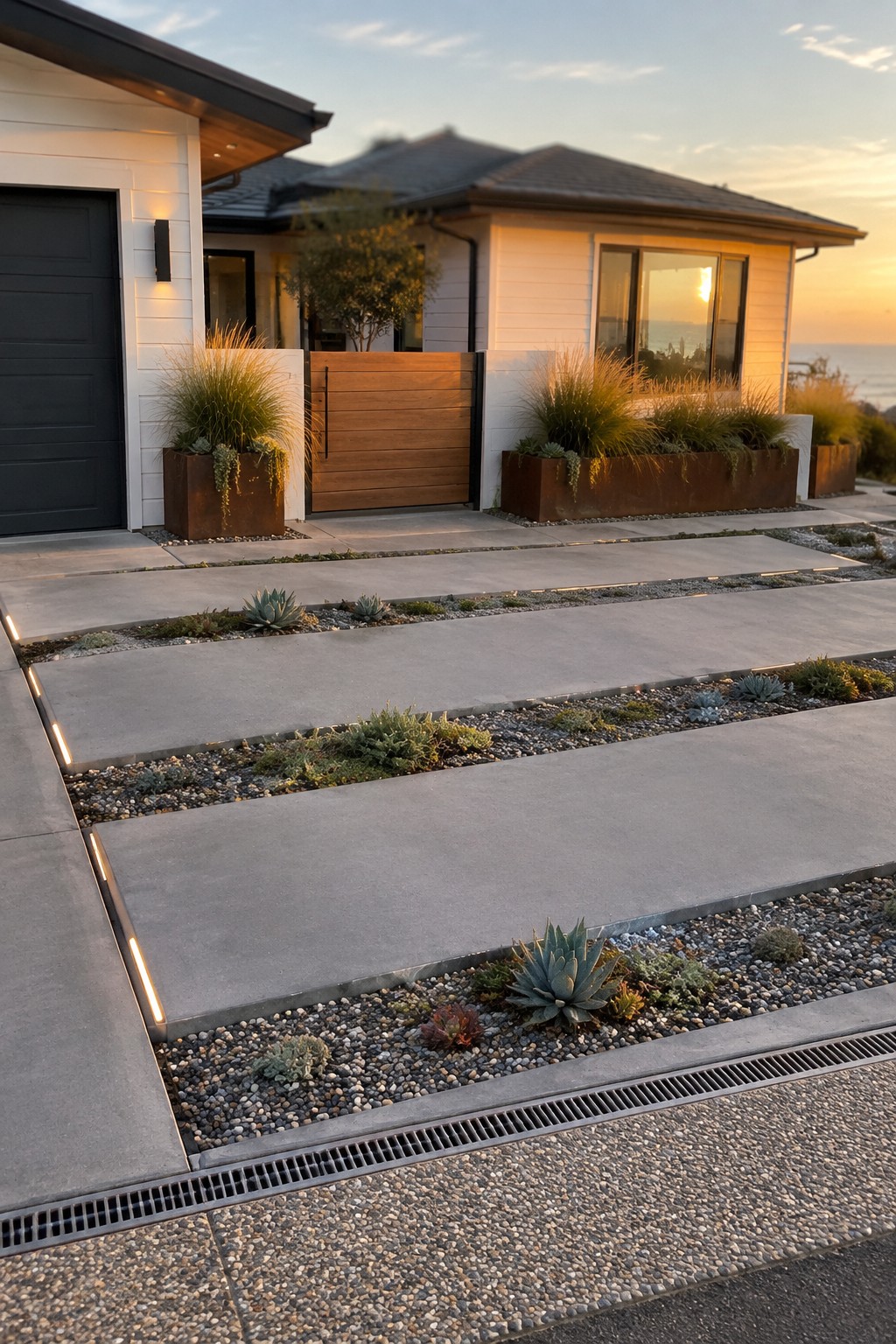
Large concrete pads create a simple, orderly driveway while leaving room for narrow planted strips between them. The breaks make a broad paved area feel less solid, and the straight layout suits a modern home.
For a similar look, use evenly spaced pads and keep the gaps wide enough for gravel and low-growing plants. This works well in a front yard where you want a clear route to the garage without paving every inch.
Use Paver Sections To Define The Driveway

Breaking a broad concrete driveway into clear sections can make it feel more considered without changing its practical purpose. The large paver-like panels here give the paved area a quieter, more finished look than one uninterrupted slab.
This approach works well for a driveway that also includes a parking pad or walkway. Keep the sections consistent, and plan the joints so they fit the shape of the space rather than looking like an afterthought.
Use Concrete Slabs to Continue the Driveway to the Entry
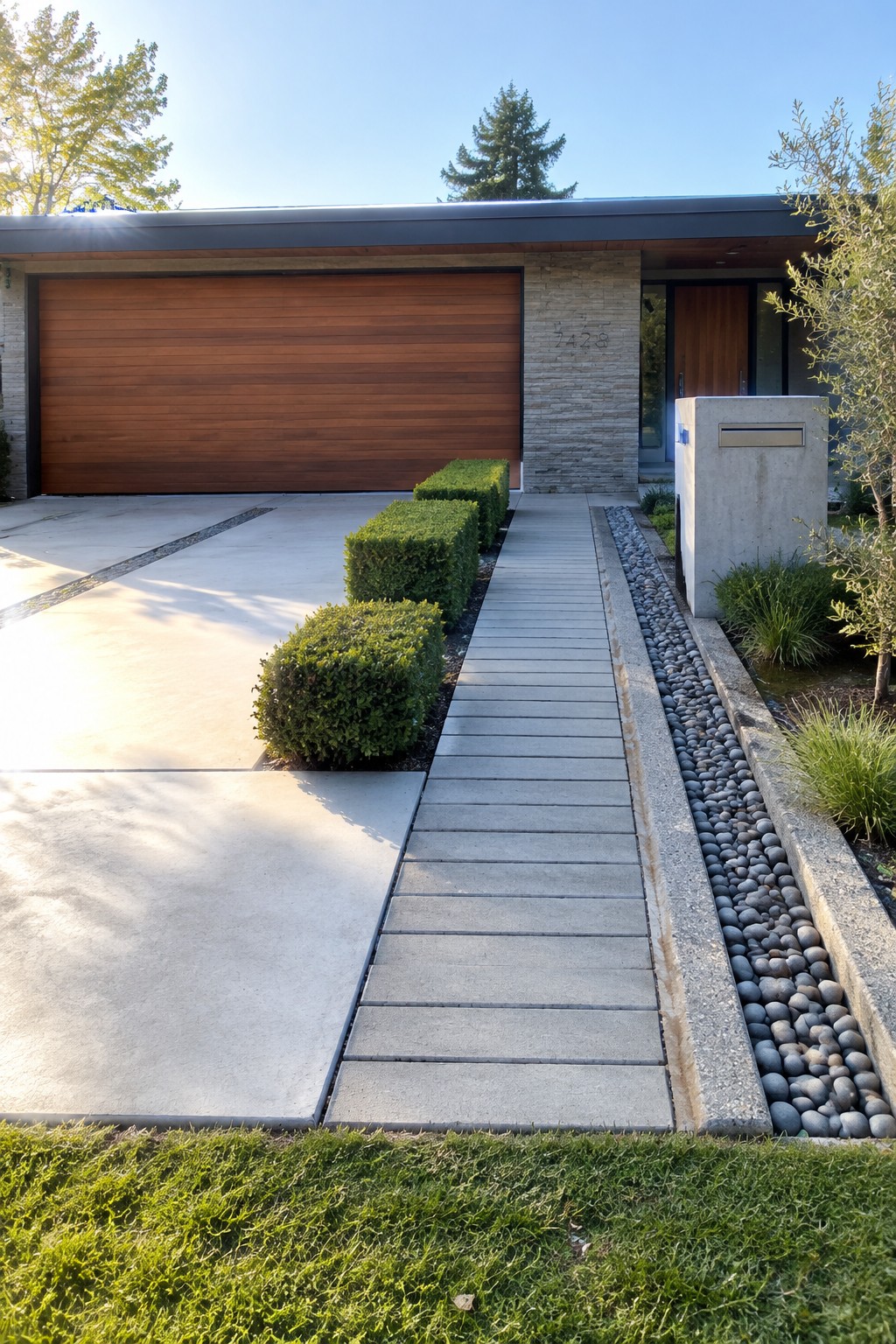
A narrow concrete walkway can carry the same simple paving style from the driveway to the front door. Here, long rectangular slabs create a clear route beside the larger parking surface, so the entrance feels connected without turning the whole area into one solid expanse.
This approach works well when the front door sits off to one side of the garage. Use consistent slab spacing and keep the path wide enough for comfortable walking; a strip of gravel or planting alongside it can help separate the walkway from the driveway.
Use a Paver Border to Define a Concrete Pad
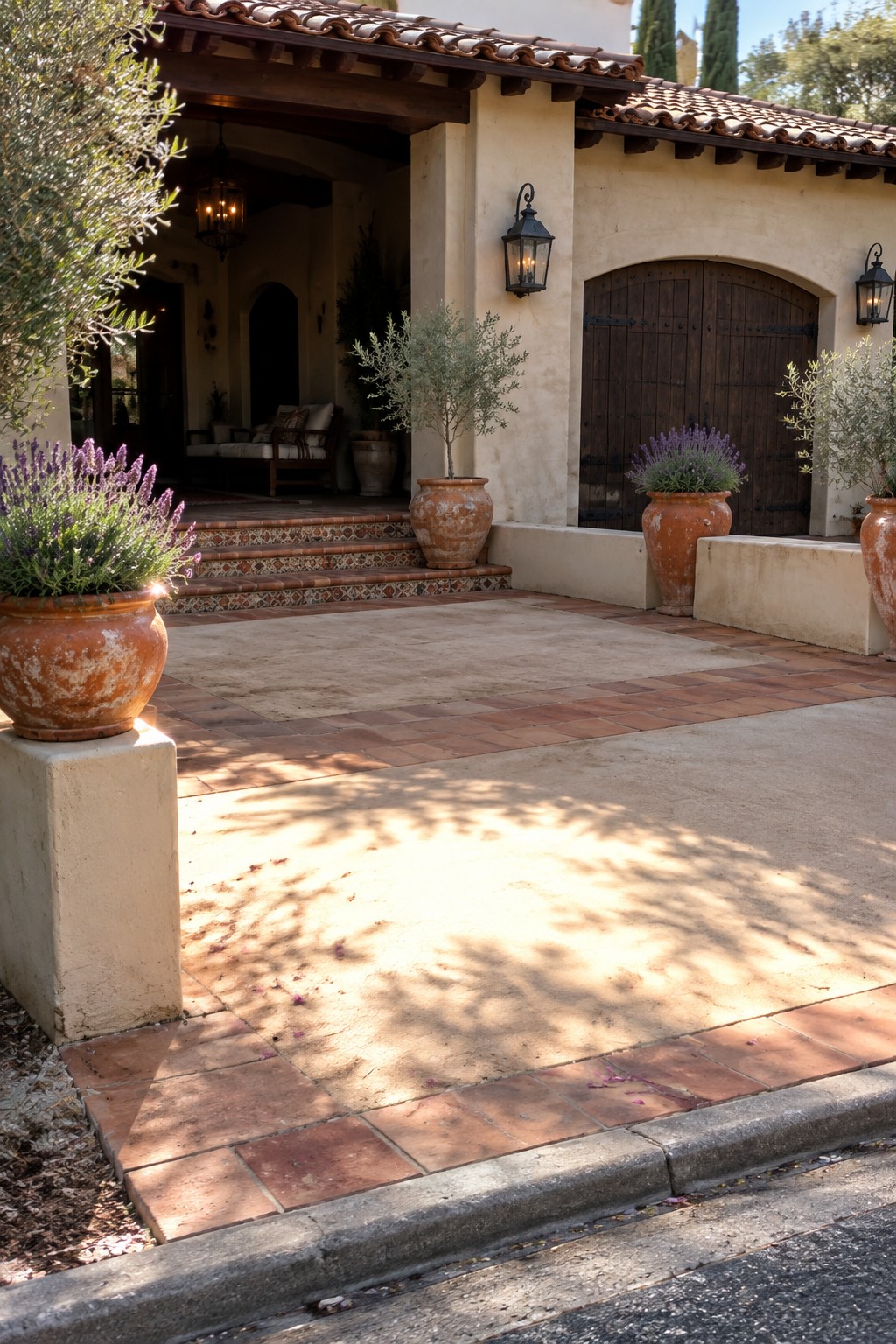
A broad concrete surface can feel more finished when terracotta pavers mark its edges. The paver band gives the pad a clear outline and breaks up a large, plain area without making the layout complicated.
This approach works well for a driveway apron or parking pad beside a stucco home. Choose pavers that suit the house, and keep the border wide enough to read clearly from the street. A restrained layout helps the concrete remain the main surface.
Use Concrete Pavers to Make a Clear Entry Path

A path of large concrete pavers can give a driveway a more defined route to the front of the property. The open joints filled with gravel keep the surface from reading as one broad slab, while still making the approach easy to follow.
This layout works well beside drought-tolerant planting, where a few durable slabs can guide foot traffic without covering the whole yard in concrete. Keep the pavers level and leave consistent gaps so the path feels comfortable to walk on.
Use Concrete Pads for a Neat Driveway Layout

Large concrete panels form the main parking surface here, while dark pavers mark out the edges and divide the drive into clear sections. It’s a practical way to give a wide driveway a more finished look without covering every inch in pavers.
This approach works well for modern homes and long, open driveways. Keep the concrete panels broad enough for easy parking, and use pavers to define the borders or add simple cross-lines.
Use Large Concrete Slabs for a Simple Driveway
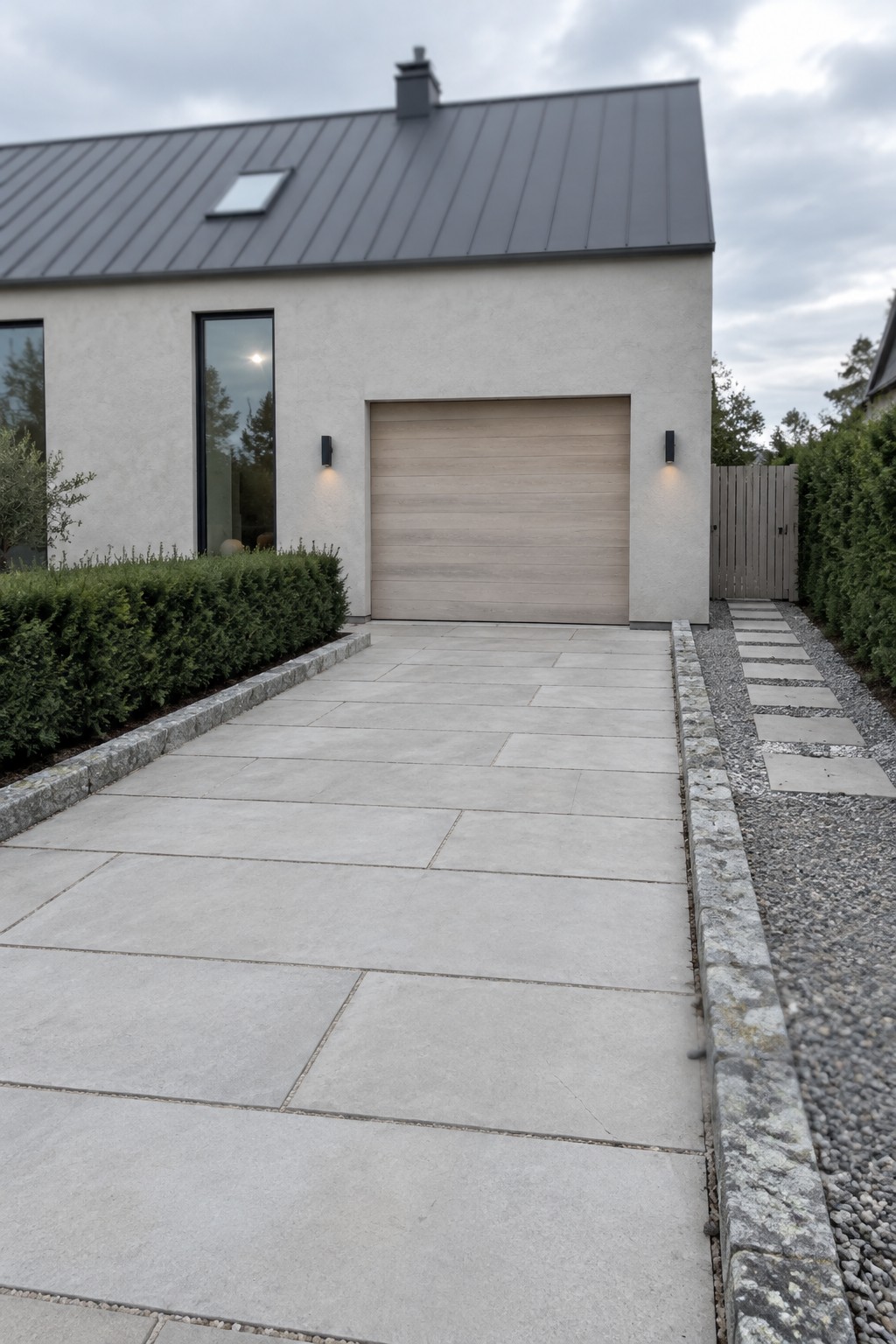
Large concrete slabs give a driveway a tidy, uninterrupted look. Their broad format suits a modern home, and narrow joints keep the surface from looking too busy.
This approach works well for a straight driveway leading to a garage. Choose slabs rated for vehicle use, and have the base prepared carefully so the panels stay level over time.
Use Narrow Planting Strips Between Driveway Pads
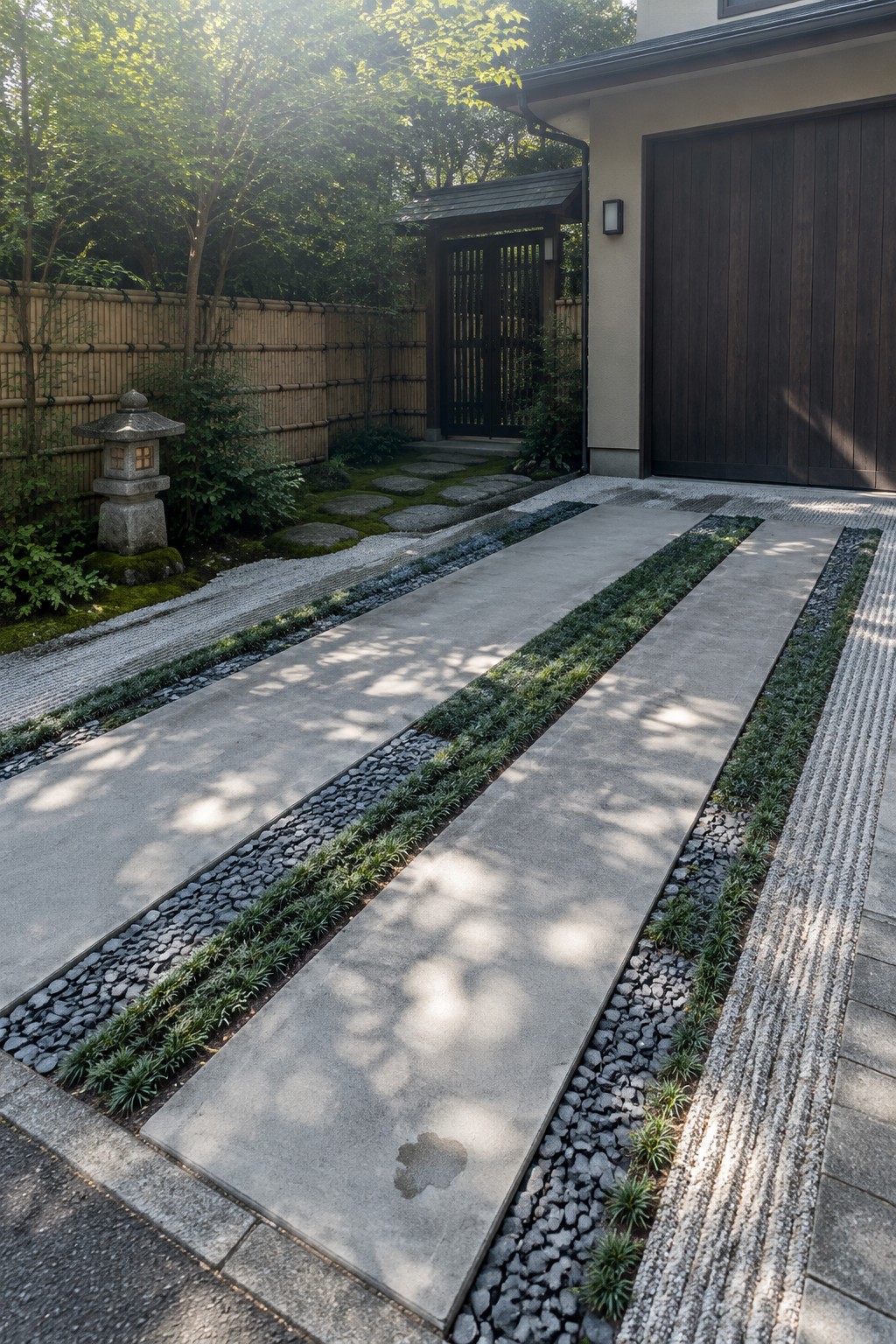
Concrete driveway pads can feel less stark when narrow planting strips run between them. This layout keeps the broad parking surfaces practical while adding a bit of greenery along the route to the garage.
For a similar look, leave enough room between pads for low, tidy plants that can handle occasional foot traffic and limited soil. It suits a modern driveway, but avoid plants that spread quickly or grow tall enough to narrow the parking area.
Use Concrete Pavers to Create a Checkerboard Path

Alternating concrete slabs and grass make a path feel less like one large paved surface. This layout is a useful option when you want a defined route to the front door but still want some green between the hard surfaces.
For a driveway, the same approach can work in a side lane or along a narrower approach, where the pavers help guide foot traffic. Keep the slabs large enough for comfortable steps, and choose a durable ground cover that can handle the site’s sun and foot traffic.
Use Concrete Pavers to Separate Lawn Areas
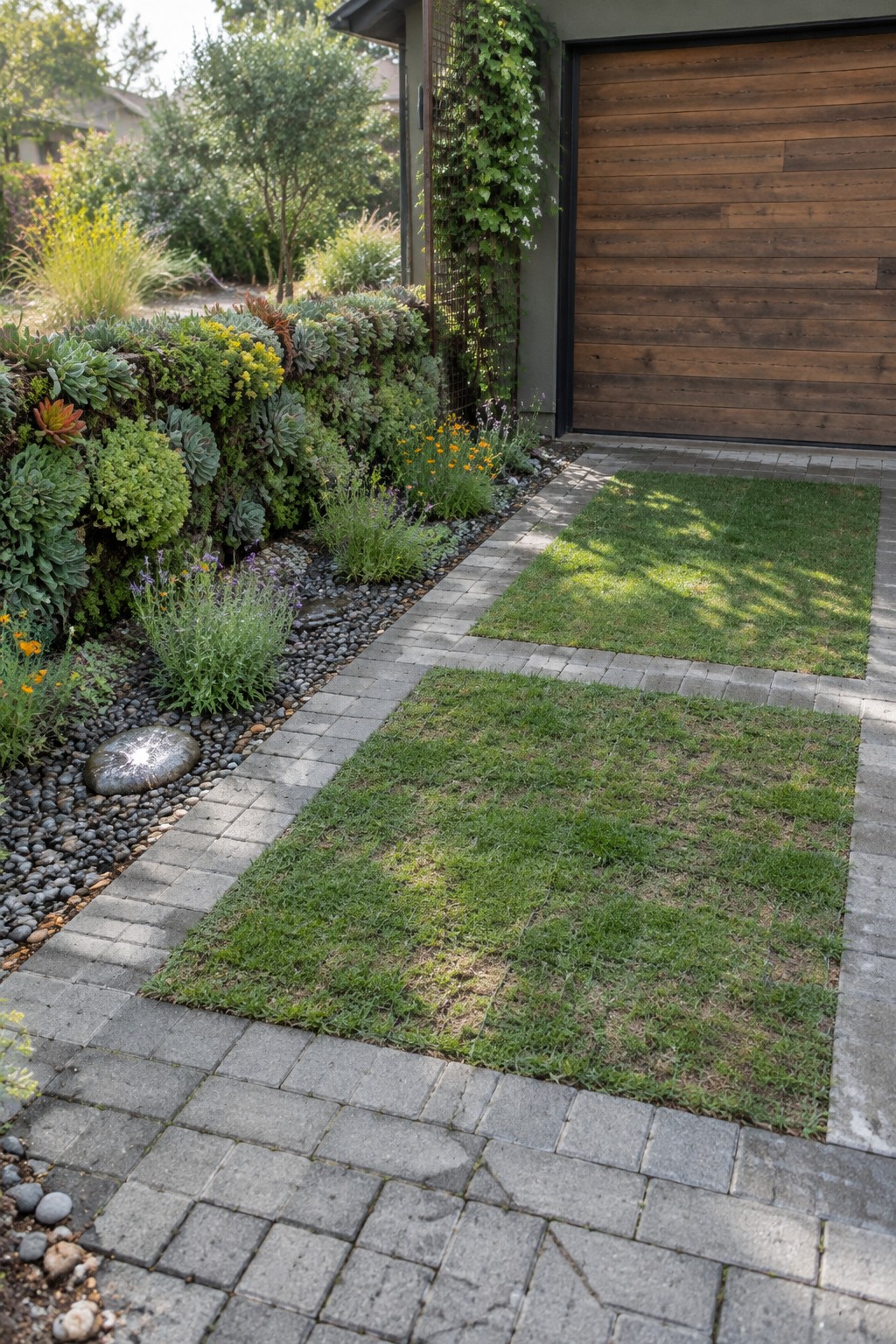
Breaking a small lawn into clear sections with paver paths makes the yard easier to navigate and gives the grass a tidy shape. The same idea can help a driveway feel more organized, especially when concrete pavers mark the edges of a parking area.
Use straight paver lines to define each section, and keep the layout simple so cars can move in and out comfortably. A narrow planting bed beside the paving can soften the edge, but leave enough room for doors and walking paths.
Use a Straight Concrete Strip to Break Up Gravel

A narrow concrete strip can make a gravel drive easier to use without covering the whole area in paving. It gives tires a firm, predictable track while the gravel keeps the driveway from feeling like one large slab.
This approach works well for a long, relatively straight drive, especially beside a cottage or other informal home. Keep the strip wide enough for the vehicles that use it, and make sure the gravel is contained so it does not spill onto the concrete.
Use a Concrete Walkway to Connect the Driveway and Entry

A broad concrete walkway can make the route from the parking area to the front door feel clear and easy to use. A pebble-finish surface also gives a simple path more texture than plain poured concrete.
This approach works well when the entry sits beside the garage. Keep the walking surface wide enough for two people to pass, and use a consistent finish so it reads as one connected route.
Use a Paver Walkway to Break Up a Concrete Driveway

A broad concrete driveway can feel easier to manage when a paver walkway runs through the center. It gives the surface a clear route toward the garage and adds a change in texture without making the driveway complicated.
This approach works well for wide, formal driveways where a plain expanse of concrete might look bare. Choose pavers that can handle vehicle and foot traffic, and keep the walkway wide enough to use comfortably. Here, the gray pavers continue toward the wooden garage doors.
Use Concrete Pads for a Gravel-Edged Driveway

Large concrete pads make a driveway feel orderly without paving every inch. Gravel joints between the slabs give the surface a bit of texture and let the pads stand out clearly.
This approach works well for a modern home where a broad, simple driveway is more useful than a busy paver pattern. Use a firm, well-prepared base beneath the pads, and keep the gravel joints narrow enough to avoid making the surface awkward to walk or drive across.
Frequently Asked Questions
Q: Can I mix concrete pavers with a poured concrete parking pad?
A: Yes. A poured pad gives you a smooth, sturdy place to park, while pavers can define the driveway edges or add a patterned approach. Keep the surfaces at compatible heights so the transition feels comfortable to drive and walk across.
Q: Will weeds grow between the pavers?
A: They can, especially if soil or debris settles into the joints. A proper compacted base and joint sand help limit growth, and an occasional sweep or spot treatment keeps things tidy.
Q: How do I keep the pavers from shifting where cars turn?
A: Use a firm, well-compacted base and a secure edge restraint, especially near the street and parking pad. Turning tires put extra pressure on pavers, so avoid tight turns right at an unsupported edge.
Q: Is a permeable paver driveway a good choice?
A: It can help rainwater drain through the surface instead of pooling, which is useful on a sloped or runoff-prone driveway. The base and drainage plan matter, though, so the pavers need proper installation to work as intended.
