

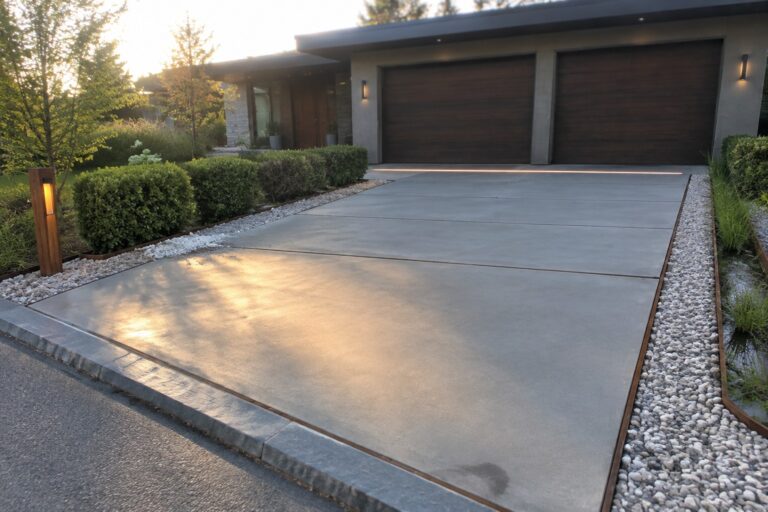
A driveway shapes the first impression of a home, and its edges can make the whole approach feel either tidy or unfinished.
I find gravel borders work best when they frame the concrete without making the entrance feel too busy, especially where the driveway meets a path, lawn, or planting bed.
A clear edge also helps define where cars belong and keeps loose gravel from spreading into nearby areas.
Some designs keep the contrast subtle, while others use wider stone bands to give a plain stretch of concrete more character.
I’d save the ideas that suit your home’s exterior and test the border width against the space you actually have.
Define the Driveway With Gravel Borders
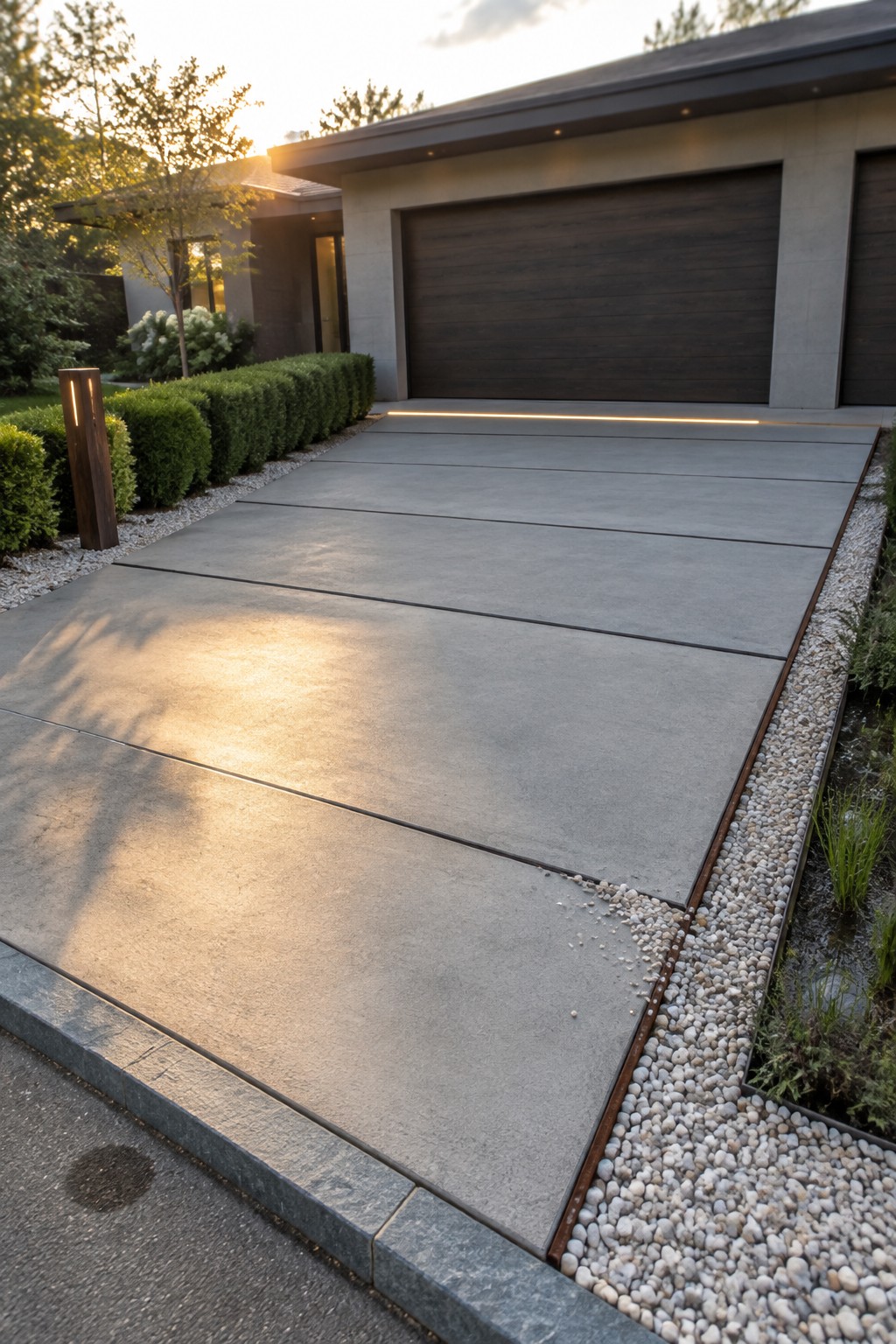
A gravel border gives a concrete driveway a clear edge and keeps the paving from looking like one broad, unbroken surface. Here, the narrow strips of pale stone sit beside large concrete slabs, making the driveway’s shape easy to read.
This approach works well for modern homes and is especially useful where a driveway meets planting beds or a walkway. Leave enough room for the gravel to stay in place, and use a firm edge to keep stones from spilling onto the concrete.
Define a Driveway With Clear Borders
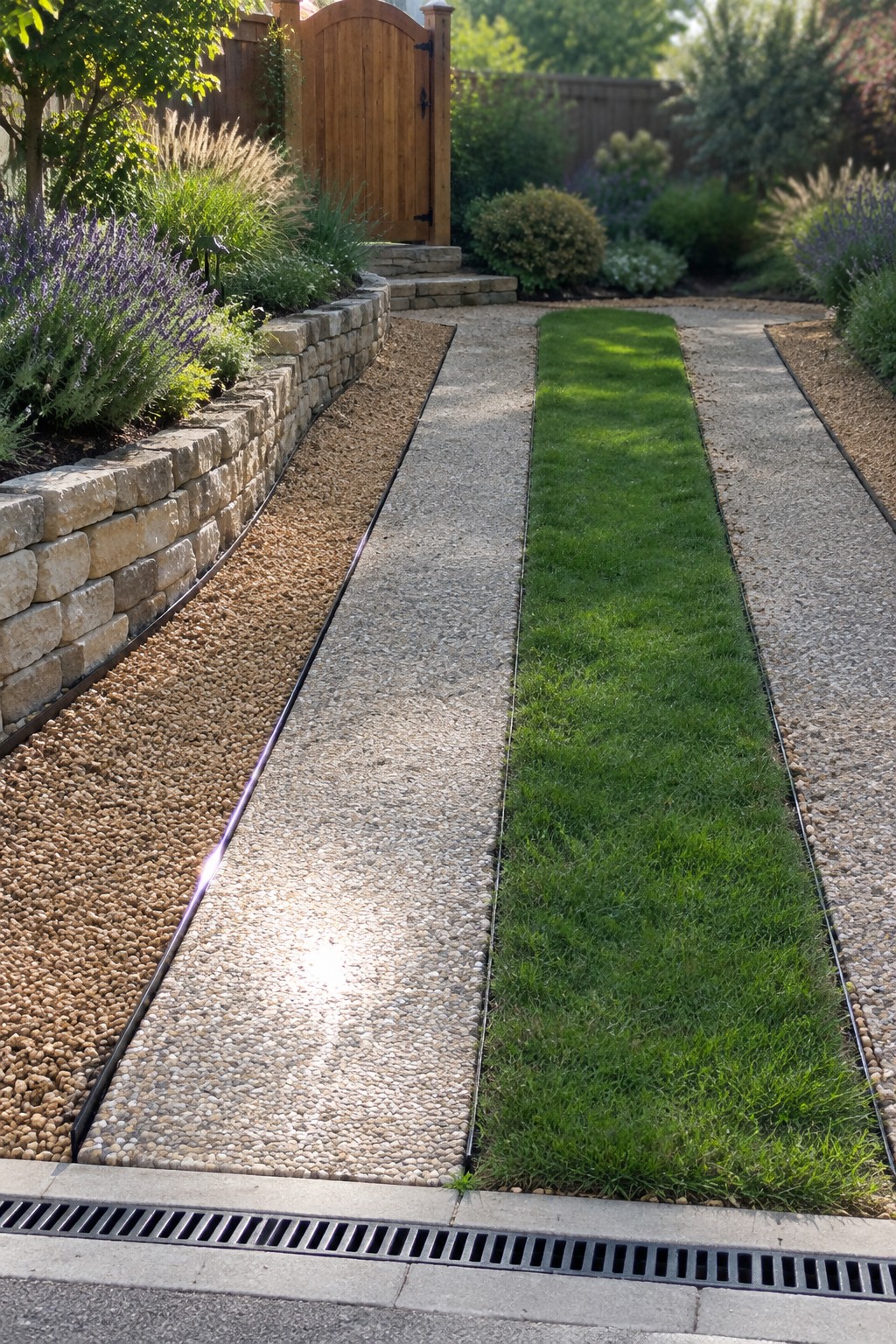
A narrow strip of grass between gravel-flecked concrete paths gives this driveway a clear, organized layout. The defined edges help keep the materials separate and make the route to the entrance easy to follow.
This approach suits a long driveway or garden path where you want a softer look than a single solid surface. Keep the grass strip wide enough to mow, and use sturdy edging so gravel stays in place.
Use Gravel Borders to Define Concrete Driveway Sections
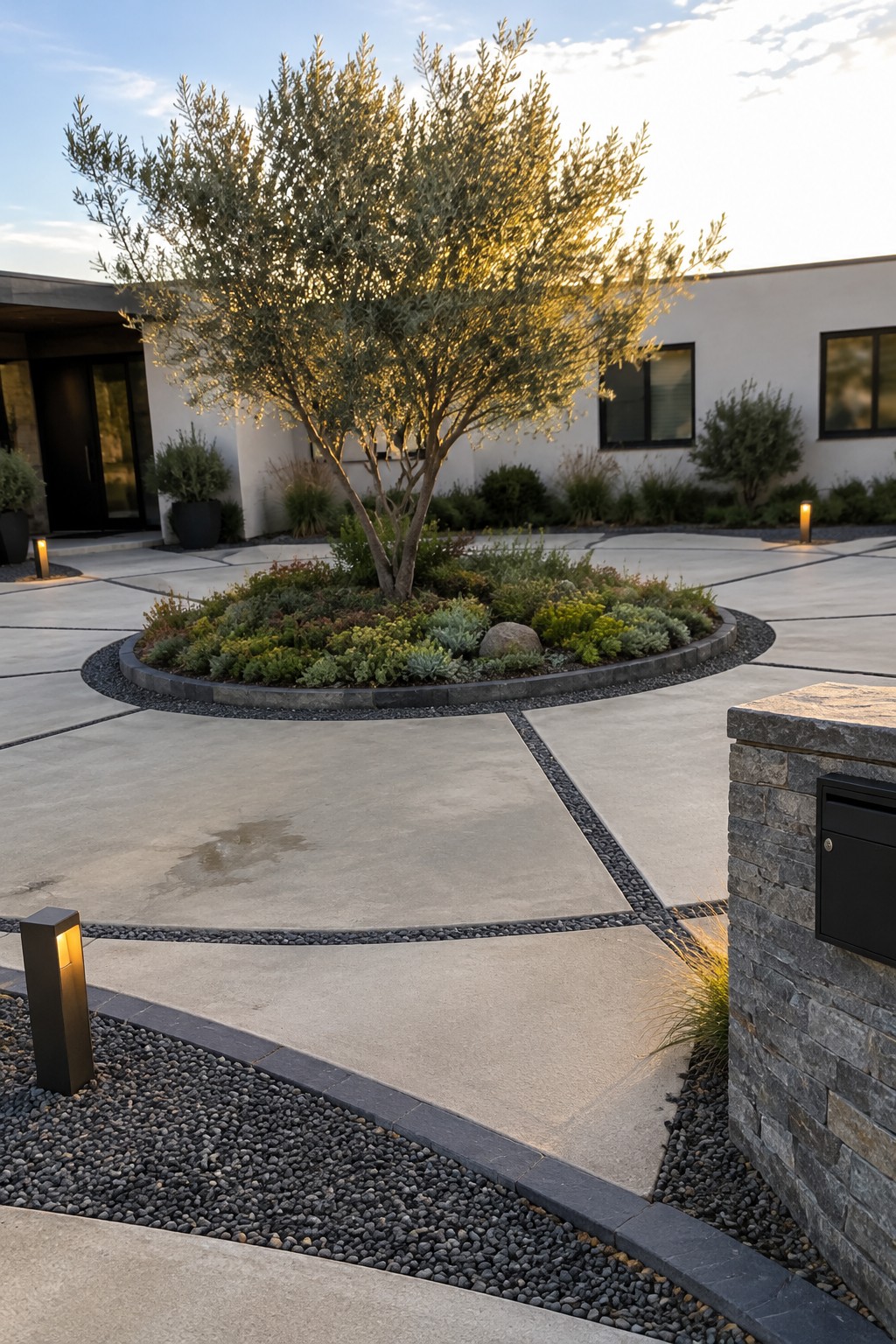
A gravel border can give a concrete driveway a clearer shape without making the surface feel busy. Here, dark stone strips separate the large concrete sections, while a gravel-edged planting bed breaks up the paved area.
This approach works well for a wide driveway or courtyard where plain concrete might look like one unbroken expanse. Keep the gravel strips consistent in width, and use edging to hold the stone in place and keep it from spreading onto the concrete.
Use Gravel Borders to Define a Concrete Driveway

A gravel strip along the edge of a concrete driveway gives the paving a clear boundary and keeps the overall layout from feeling too plain. It also provides a simple way to incorporate planting without interrupting the broad, usable driveway surface.
For a similar look, set gravel between the concrete and a low retaining wall or planting bed, and keep the edge straight or gently angled to suit the driveway. Choose stones that stay in place and are easy to maintain, especially where cars turn or walkways meet the drive.
Use Gravel Edges to Keep a Concrete Path Neat
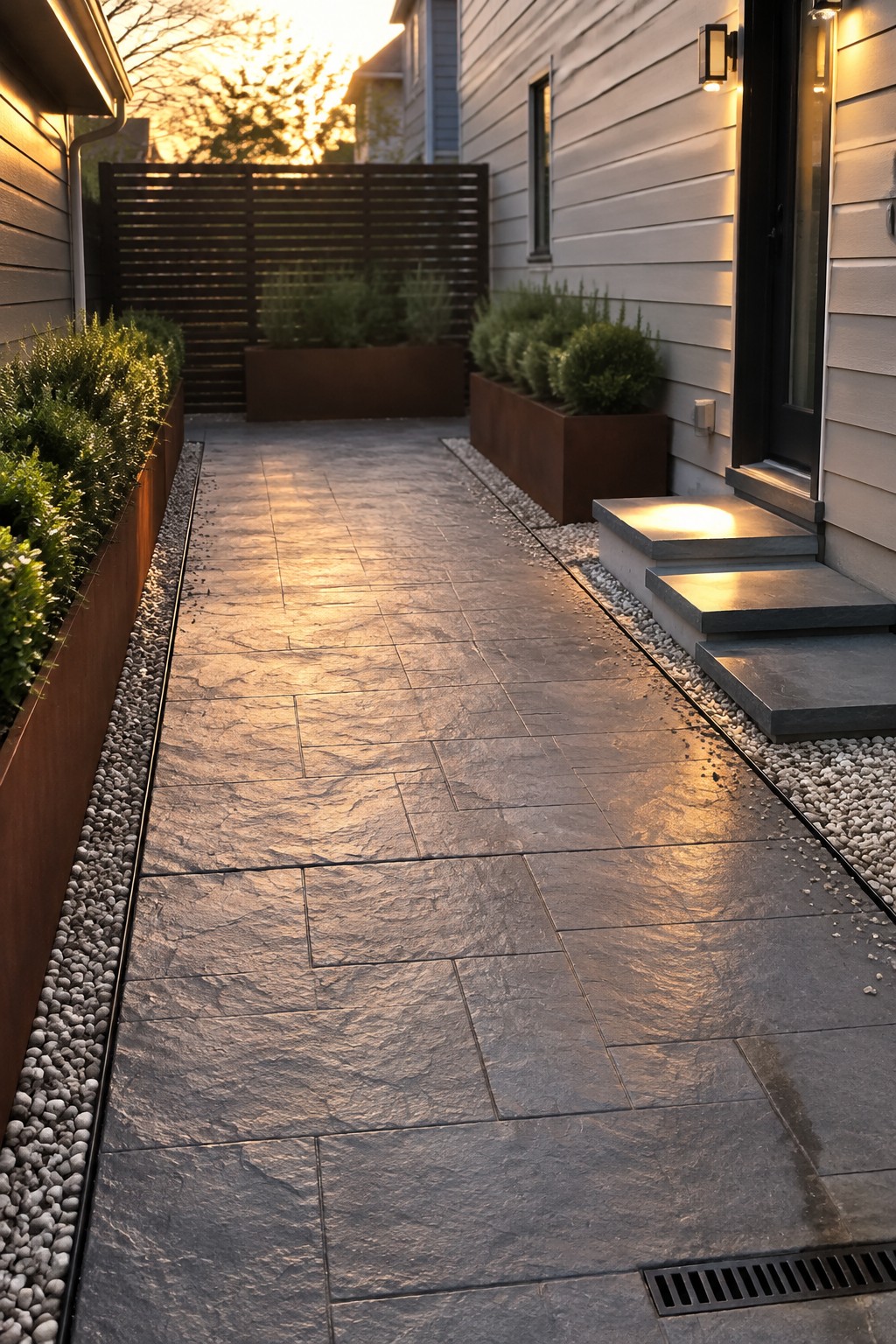
A narrow gravel border gives a paved path a clear edge and keeps the planting beds from spilling onto the walking surface. It is a simple way to make a small side yard feel more orderly.
Use the same idea along a concrete driveway, especially where it meets planting or a wall. A firm edging strip can help keep the gravel in place, and a drain may be useful where water collects.
Use a Curved Gravel Border Along the Driveway

A narrow gravel strip beside a concrete driveway gives the pavement a clear edge and makes a broad drive feel more considered. The gentle curve also works well beside a planting bed, where it lets the border follow the shape of the landscape.
This approach suits country-style homes and other yards with room for a planted edge. Use a firm brick or stone line to keep gravel from spilling onto the concrete, and choose a border shape that still leaves enough space for cars to turn comfortably.
Use Gravel Borders Along Concrete Walkways

Gravel borders give concrete paving a clear edge and keep the path from looking like one large slab. They also make it easier to define separate sections, as the narrow bands of small stones between the walkway panels show.
This approach works well for an entry path or side walkway where you want a tidy route without a fully paved surface. Choose gravel that contrasts with the concrete, and use a firm edge so the stones stay in place.
Use Concrete Slabs for a Garden Path
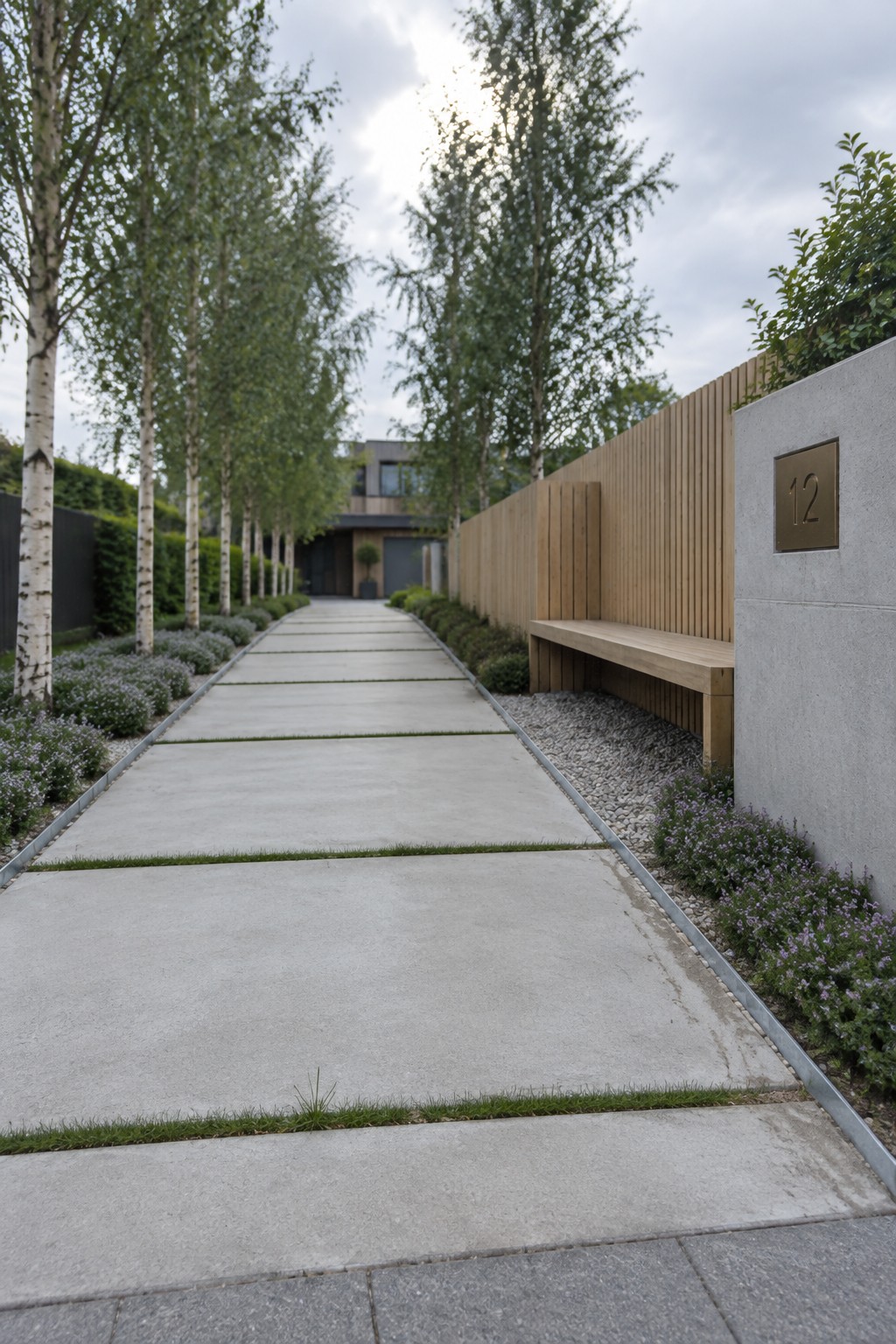
Large concrete slabs can make a path feel tidy and easy to follow without covering the whole yard in hardscape. Narrow joints between the slabs leave room for grass, while gravel along the sides helps keep the edges clear.
This approach works well for a straight route to a front door or garden entrance. Keep the slabs level and the gaps consistent, and choose gravel that stays in place rather than spilling onto the walking surface.
Add a Pebble Channel Through a Concrete Walkway

A narrow strip of rounded pebbles can break up a broad concrete walkway and give it a clear center line. Here, the channel runs between large slabs, while dark brick edging keeps the paving distinct from the gravel beds.
This detail works well on a straight path leading to a front entrance, especially when the surrounding garden is fairly simple. Choose smooth stones that are easy to rinse clean, and make sure the channel is contained so pebbles do not spill onto the walking surface.
Use Gravel Channels Along Concrete Edges
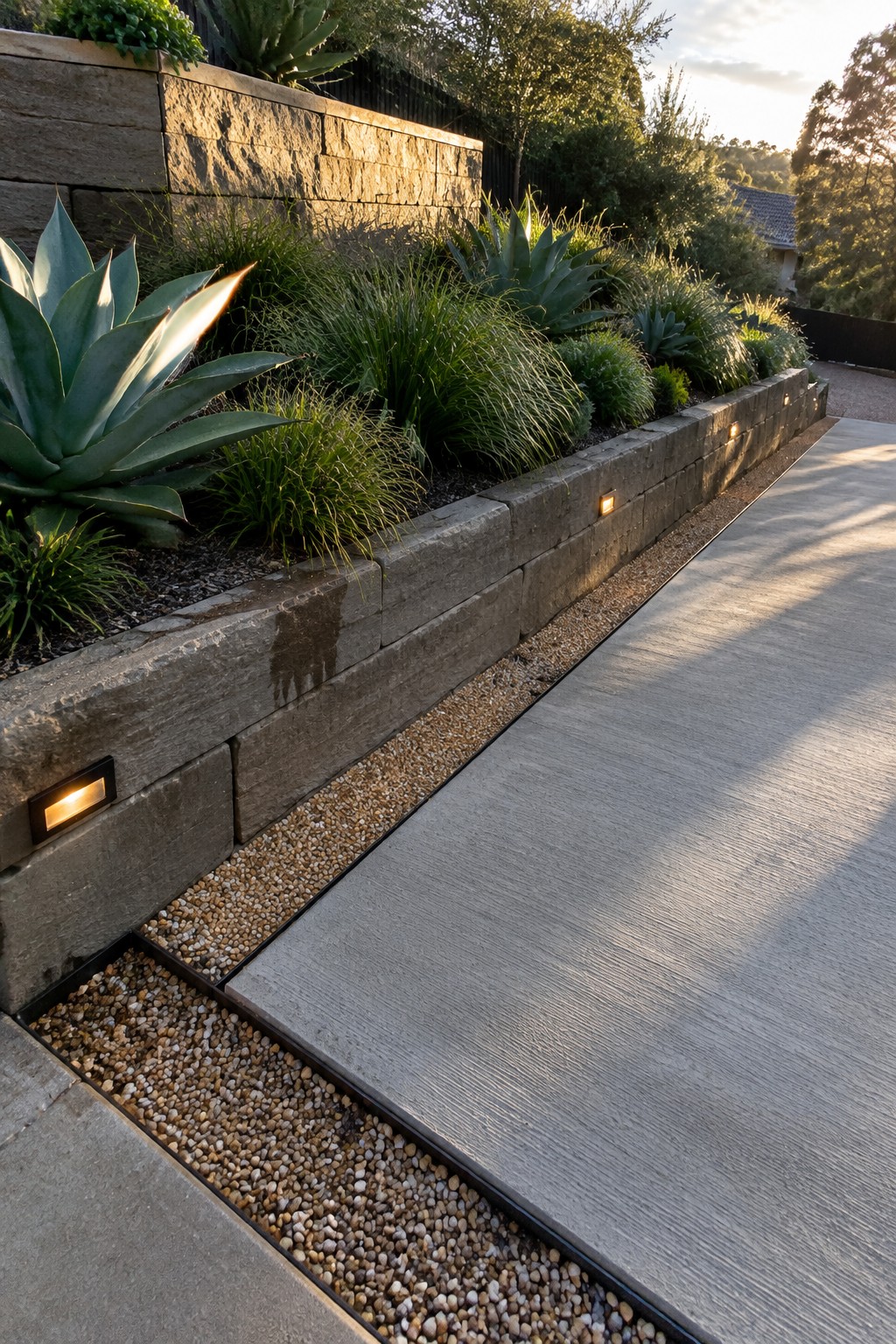
A narrow gravel channel beside concrete gives a driveway edge a clear, finished line. It also provides a simple transition from the broad paved surface to a raised planting bed, without needing a solid curb along the whole border.
For a similar look, keep the gravel strip consistent in width and use edging to stop stones from spreading onto the concrete. This approach suits a sloped or gently curving drive, and the gravel can help with drainage along the edge.
Use Wide Concrete Slabs for a Garden Path
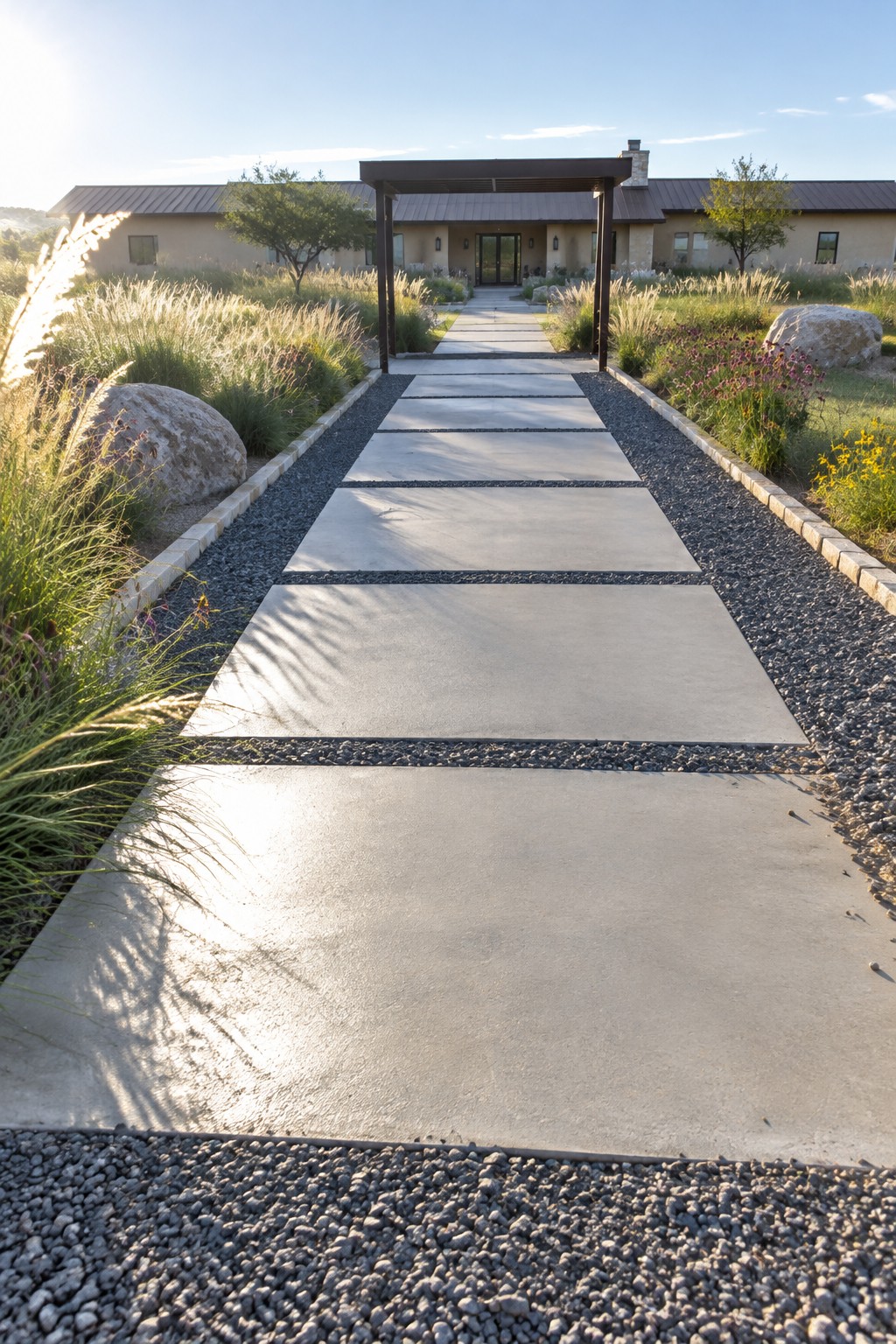
Large concrete slabs make a garden path feel clear and easy to follow. The gravel joints give each section a defined edge, while keeping the walkway from reading as one long, unbroken strip of concrete.
This approach works well for a front entry where you want a sturdy walking surface without losing the garden feel. Leave enough room between slabs for gravel, and use a consistent width so the path stays comfortable to walk on.
Use Stone Edging to Separate a Garden Path

A clear stone edge helps a paved path stay distinct from the planting beside it. Here, irregular stone slabs mark one side of the concrete walkway, while a narrow strip of gravel keeps the border tidy.
This approach works for garden paths where plants might otherwise creep onto the paving. Choose stones with fairly even tops so they’re comfortable to walk beside, and keep the gravel strip narrow enough to maintain easily.
Use Planting Strips to Break Up Concrete
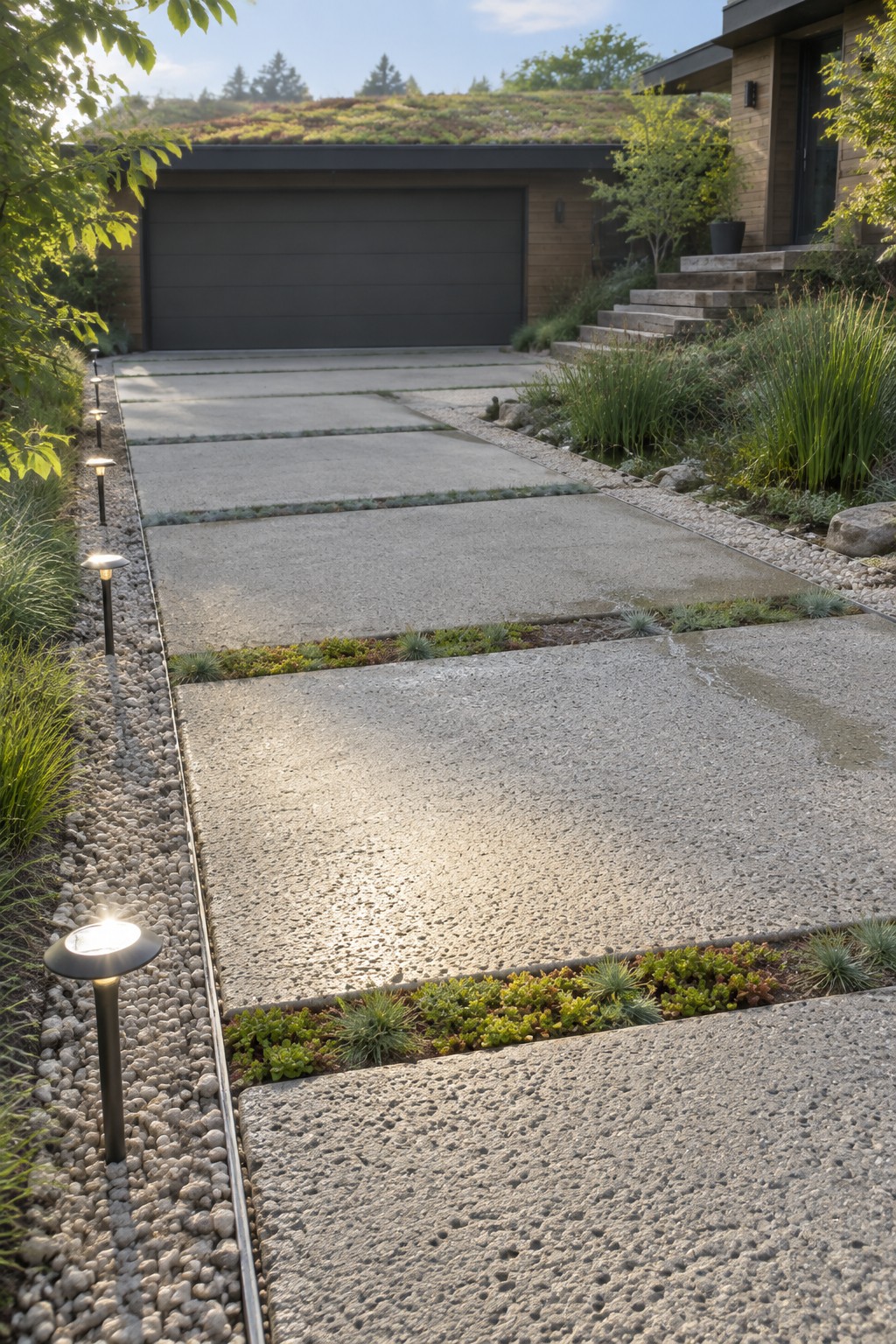
Narrow planting strips between broad concrete slabs give a driveway a softer, more finished look. Low-growing plants add color and texture without taking away from the clean, simple layout.
This approach works well on modern homes where a large paved area might otherwise feel stark. Choose hardy, compact plants that can handle heat and occasional foot traffic, and leave enough space between slabs for easy upkeep.
Separate Concrete Slabs With Gravel Channels

Gravel channels between wide concrete slabs give a driveway or path a clear, orderly layout. The change in texture defines each slab and adds a practical place for water to drain.
For a similar look, use evenly spaced slabs and keep the gravel channels consistent in width. This approach works especially well on a straight approach to a home, though the gravel may need occasional topping up to stay neat.
Use a Gravel Path With Defined Concrete Edges
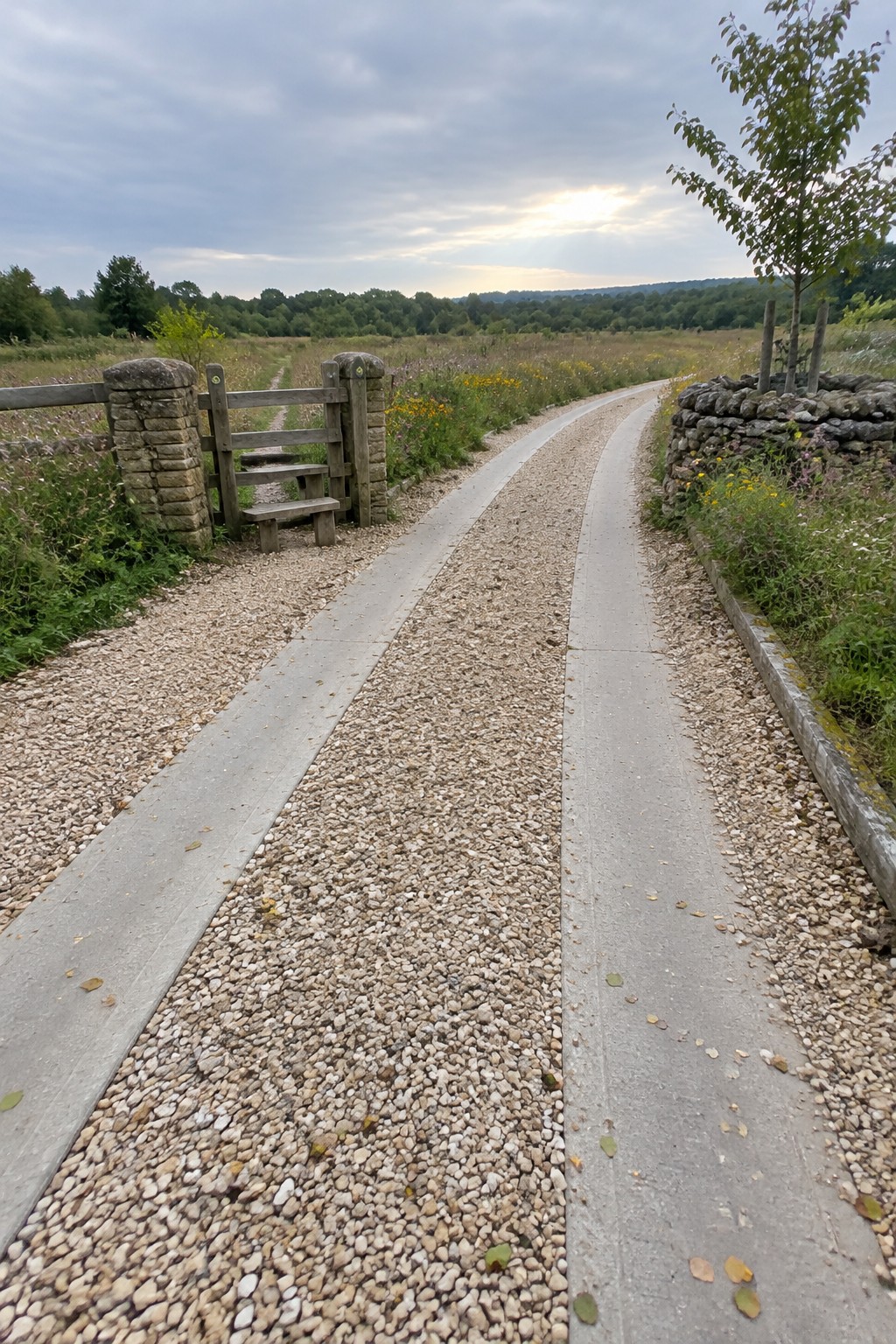
Concrete strips can make a gravel route easier to follow and more comfortable to walk or drive on. The clear edges help keep the loose stone in place, while the gravel gives the path a softer, more natural look than a solid paved surface.
This approach works well for a garden drive or a long path through a yard. Keep the concrete strips wide enough for the intended use, and plan for occasional raking to tidy the gravel.
Frequently Asked Questions
Q: How wide should the gravel border be next to a concrete driveway?
A: A border about 12 to 24 inches wide gives gravel room to show without taking over the driveway. If you want it to handle occasional tire traffic, make it wider and use a sturdy edging material to keep the stones in place.
Q: What keeps gravel from spilling onto the concrete?
A: Install a firm edge between the gravel and the slab, such as steel, concrete, or stone edging. A slight height difference also helps keep stones where they belong, while still making the driveway easy to sweep.
Q: Can I add a gravel border to an existing concrete driveway?
A: Yes. You can dig a narrow strip beside the slab, add a compacted base, and top it with gravel. Check that water will drain away from the concrete before filling the strip.
Q: Which gravel is easiest to walk and drive over?
A: Angular crushed stone tends to stay put better than smooth, rounded gravel. Choose a smaller size for a neater edge that’s easier to walk across.
