

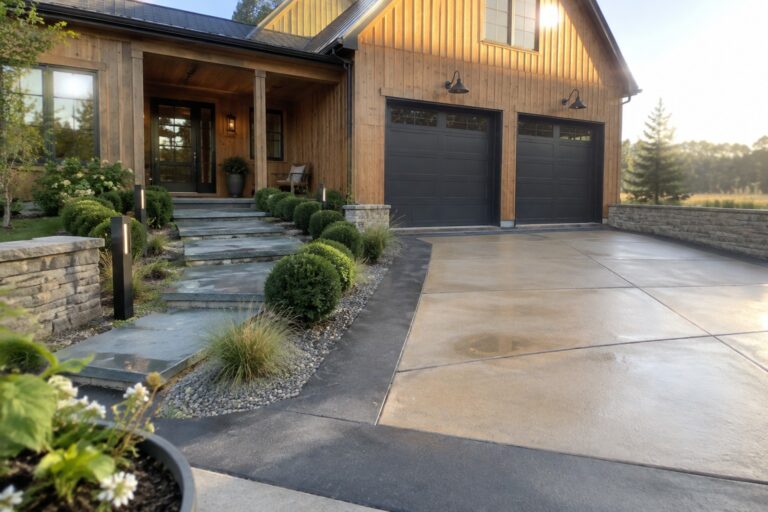
A driveway is one of the first parts of a home people notice, and its color can shape how the whole exterior feels.
I find that two-tone concrete works best when the contrast suits the facade and gives the driveway a clear, considered look without competing with the entry or landscaping.
Some combinations define borders, while others use color to break up a broad expanse of concrete.
The finish matters too, since texture and pattern can make a subtle color shift feel more pronounced in daylight.
I’d save the ideas that seem practical for your home’s style and test the colors against its siding, brick, or stone before deciding.
Use Two-Tone Concrete to Define the Driveway

A broad concrete driveway can feel more finished when its main surface and border use different colors. Here, warm-toned concrete sits inside a darker gray edge, giving the driveway a clear outline without relying on a complicated pattern.
This approach works well for homes with stone or wood details because the colors can echo the exterior. Keep the border wide enough to read clearly, and choose shades that sit comfortably beside the house rather than competing with it.
Use Two-Tone Concrete to Define the Driveway

Two-tone concrete gives a driveway a clear pattern without relying on extra color or decoration. Here, broad light slabs run alongside dark aggregate strips, making the approach feel more considered than one uninterrupted surface.
This approach works well in a modern home’s entry drive or front walk. Keep the pattern simple, and choose finishes that differ enough in tone to show the divisions clearly without making the surface feel busy.
Use Two-Tone Concrete to Define the Entry
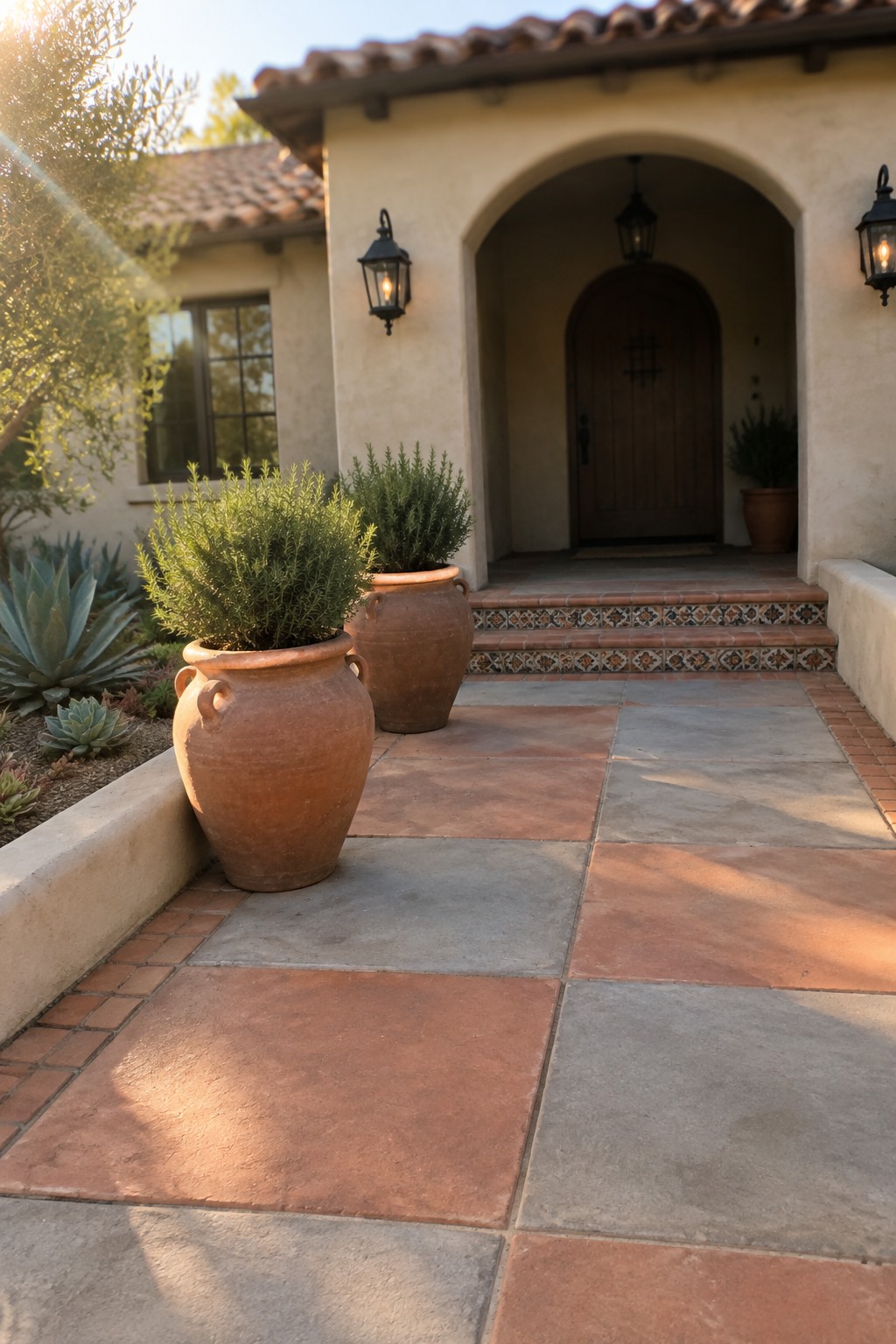
A two-tone concrete walkway can give a front entry a clear path without relying on one solid color. Here, warm terracotta and gray paving create a simple pattern that suits a home with traditional stucco and tile.
For a similar look, use the warmer shade to mark the main walking area and keep the second color in larger, steady sections. Test samples beside the house first, since concrete can look quite different in sun and shade.
Use Dark Bands to Break Up a Concrete Driveway
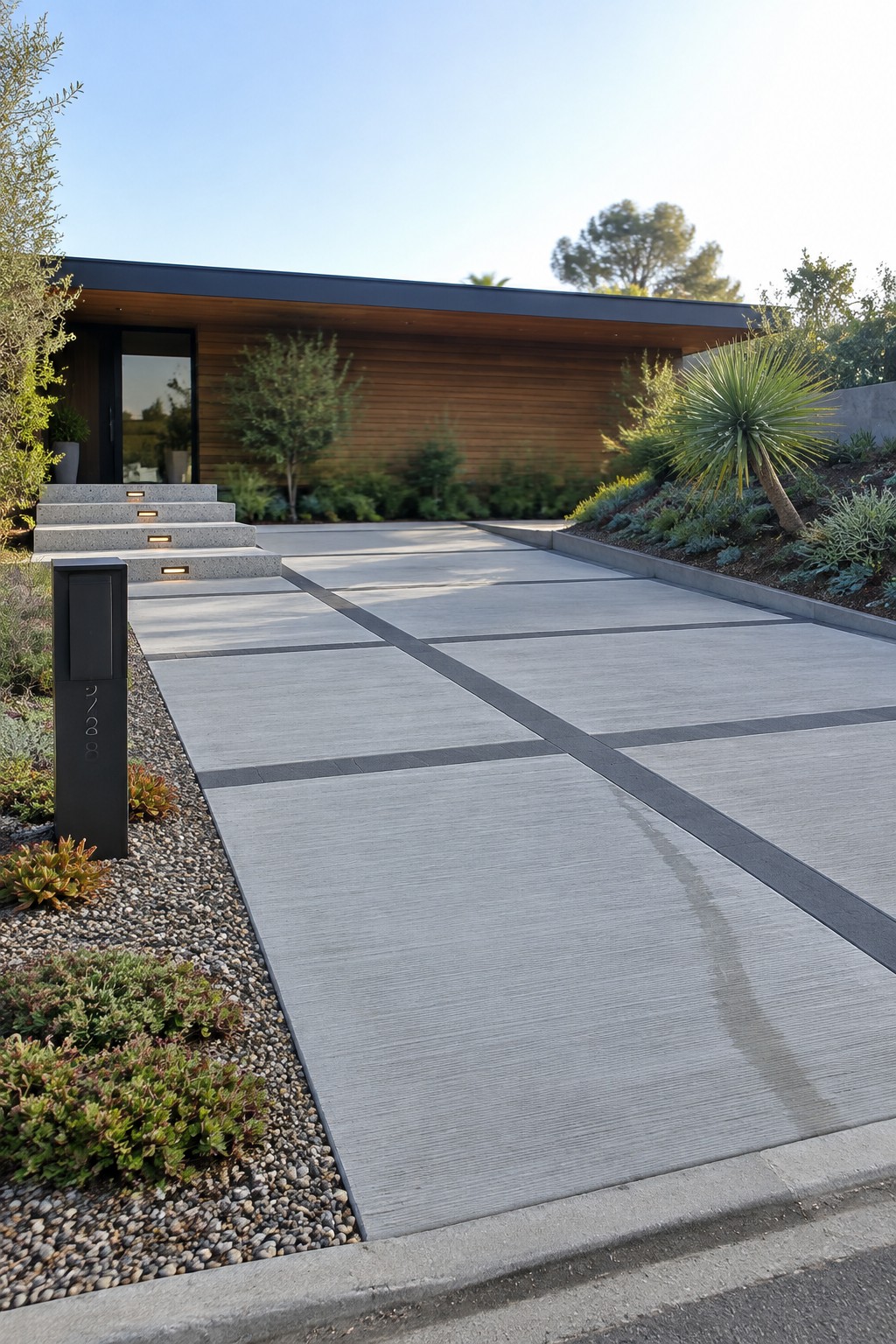
A broad concrete driveway can feel more considered when darker bands divide the surface into large sections. Here, the charcoal lines add a clear pattern while keeping the lighter concrete as the main field.
This approach suits a modern home, especially where the driveway also serves as the front path. Keep the bands consistent in width and layout, and choose a dark tone that works with the house’s trim or other exterior finishes.
Add a Contrasting Border to the Driveway
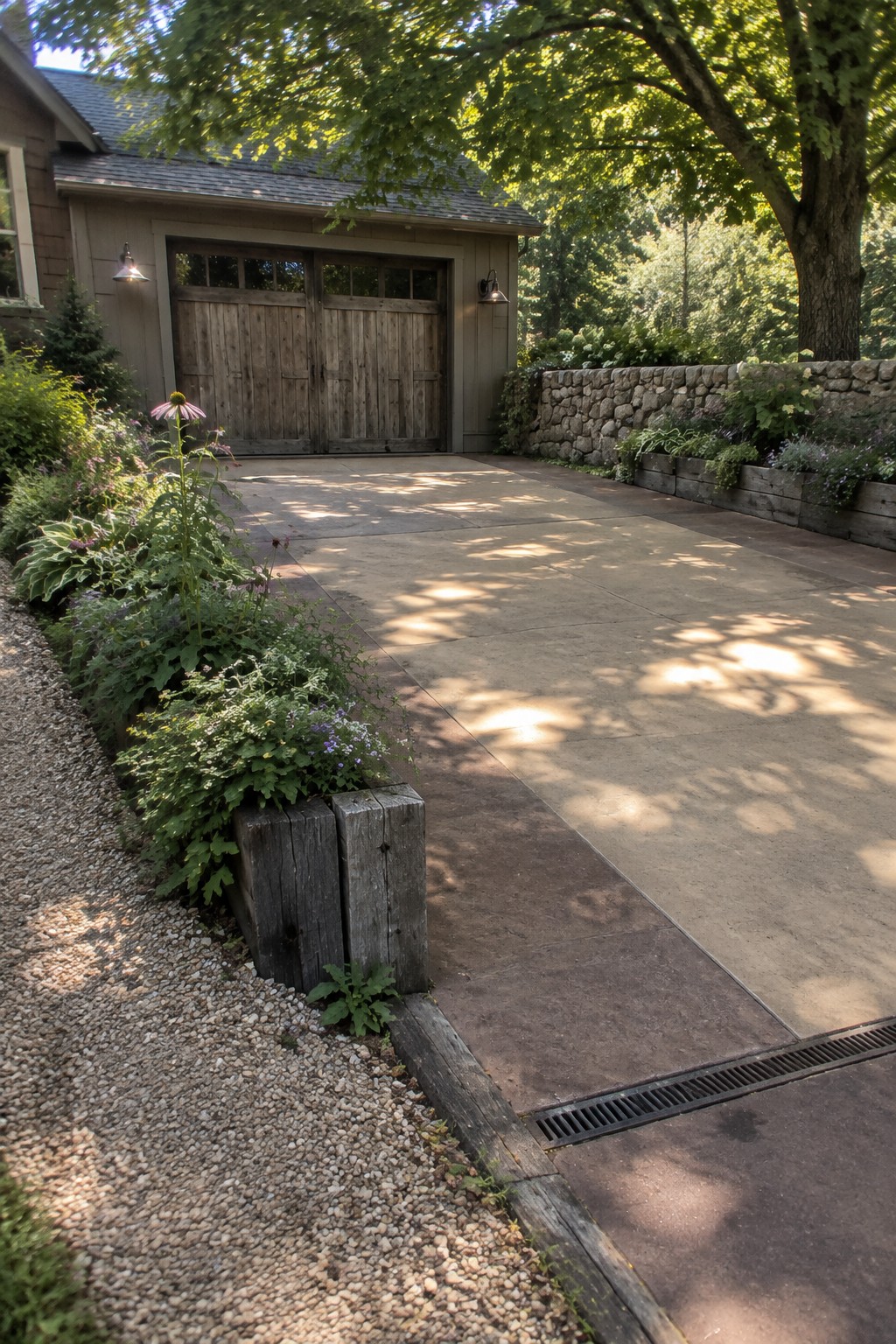
Two-tone concrete can make a driveway feel more considered without adding a complicated pattern. A darker band along the edge gives the main slab a clear outline and helps separate it from nearby planting or gravel.
This approach works well on wide, simple driveways where a border can follow the shape of the paving. Choose shades that suit the house and keep the band wide enough to read clearly, as a very narrow strip may look like an afterthought.
Use a Curved Concrete Driveway to Shape the Entry

A curved section of lighter concrete can make a driveway feel more like part of the entry rather than a plain route to the garage. The two-tone finish gives the curve a clear outline without needing extra edging.
This approach works well when a driveway widens near the front door or bends around a planting bed. Keep the color change simple and make sure the curve leaves enough room for cars to turn comfortably.
Use a Contrasting Border Along the Walkway

A darker concrete border can give a front walk a clear edge and make a simple path feel more finished. It also helps distinguish the walking area from nearby planting beds without adding another material.
Use this approach on a walkway leading to the front porch, especially where the path runs beside a garden. Choose a border shade that works with the home’s brick or trim, and keep it wide enough to read as a deliberate part of the design.
Use Stone-Look Concrete for the Entry Walk

A stone-look concrete walkway can give a modern entry a more finished feel without relying on a plain, uninterrupted slab. Here, the large gray pavers are set off by a darker cobblestone-style border, which makes the path easy to read as it leads to the front steps.
This approach works well for a front walk or driveway apron where you want a bit of contrast but still prefer a restrained palette. Keep the border consistent, and choose a concrete finish that is durable and slip-resistant for everyday use.
Use Earthy Concrete Bands to Define the Driveway
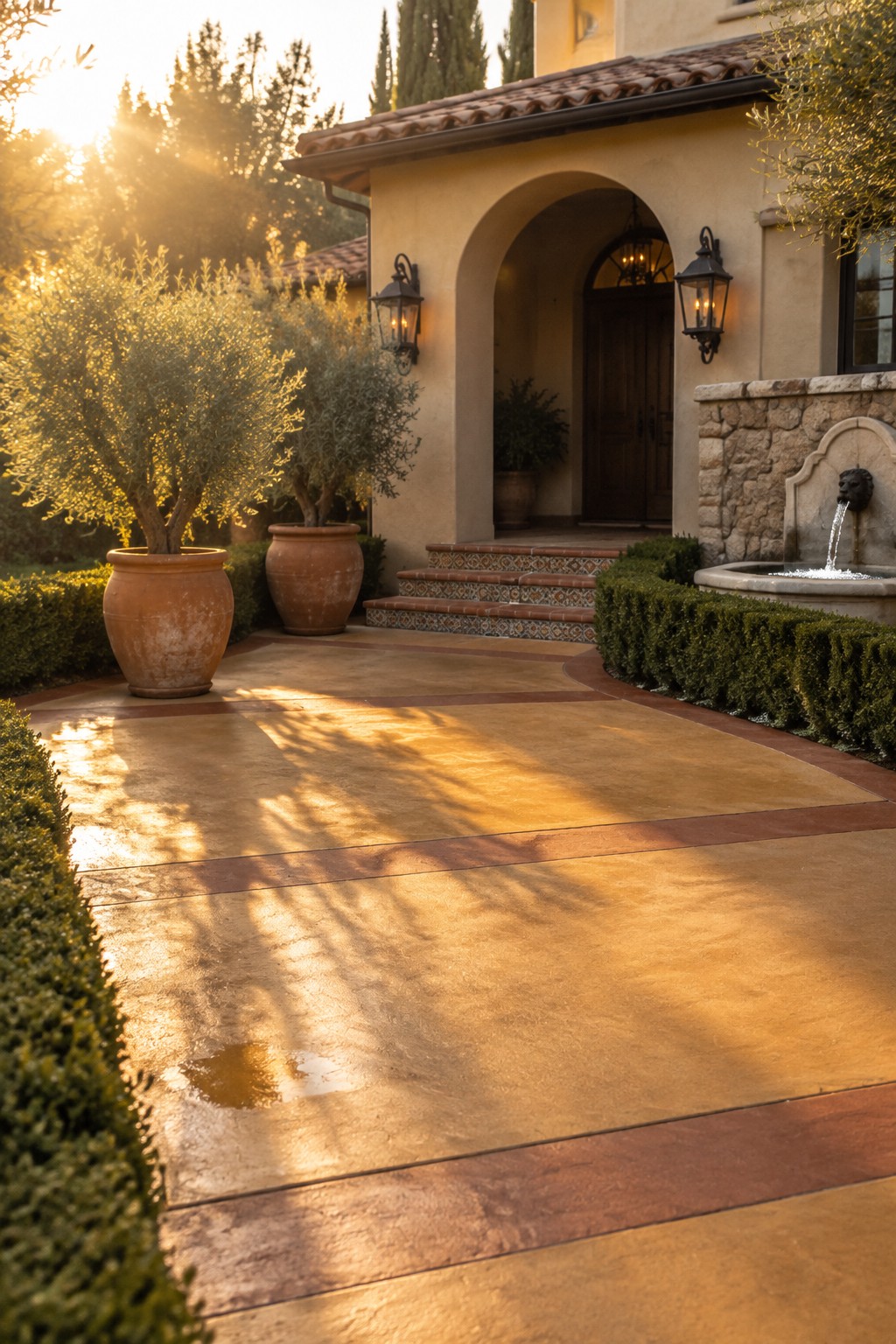
A two-tone finish can make a concrete driveway feel more considered without adding a complicated pattern. Here, broad terracotta-colored bands break up the warm tan surface and give the entrance a clear, orderly look.
This approach works well on long driveways or wide entry courts, where a single color can feel plain. Use a contrasting shade for simple bands or borders, and keep the main concrete color light enough to show the difference.
Use a Pebble Finish to Add Color to the Driveway

A two-tone concrete driveway can use exposed pebbles to bring in color and texture without relying on a bold surface pattern. Here, a warm-toned section stands out against a dark border, giving the broad driveway a clear edge.
This approach suits homes where a simple change in concrete color can help define the driveway. Keep the contrast easy to follow, and choose pebble colors that work with the house and nearby paving.
Use Dark Bands to Break Up Large Concrete Slabs

Dark bands can make a wide concrete driveway feel more considered without adding a complicated pattern. Here, narrow charcoal lines divide the pale surface into broad sections, giving the driveway a clear rhythm.
This approach works well on long, open driveways where a single uninterrupted slab might feel plain. Keep the bands straight and consistent, and choose a dark tone that relates to the garage door or other exterior details.
Use Brick Borders to Define a Concrete Entry Walk
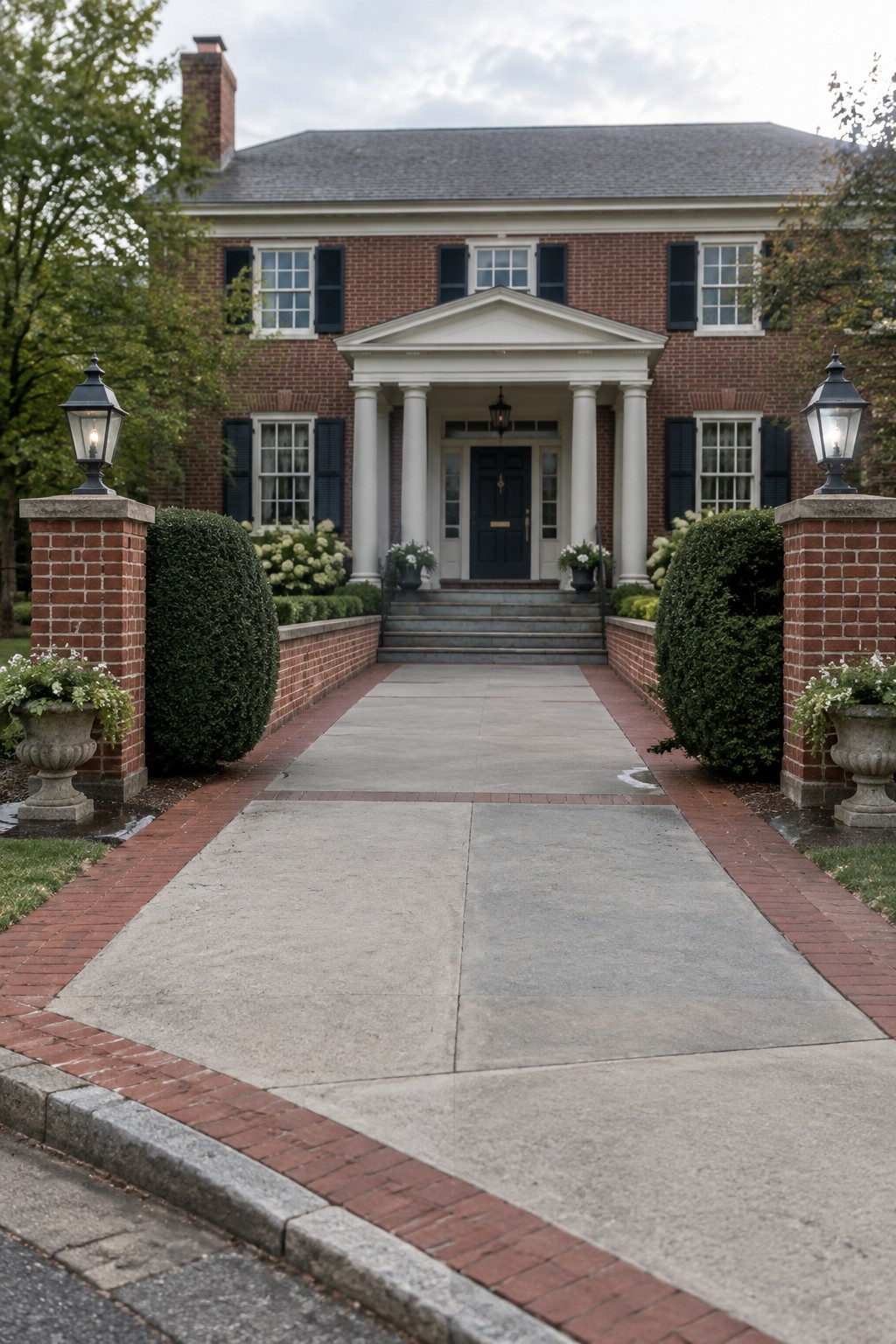
A simple concrete walk can feel more finished when brick marks its edges. The contrasting materials give the approach a clear shape and help connect the path to a brick home.
This idea works well for a front entry where you want a neat, traditional look. Keep the concrete a calm gray and use brick as a border rather than covering the whole path, so the walkway stays easy to maintain.
Use a Dark Concrete Strip to Separate the Driveway
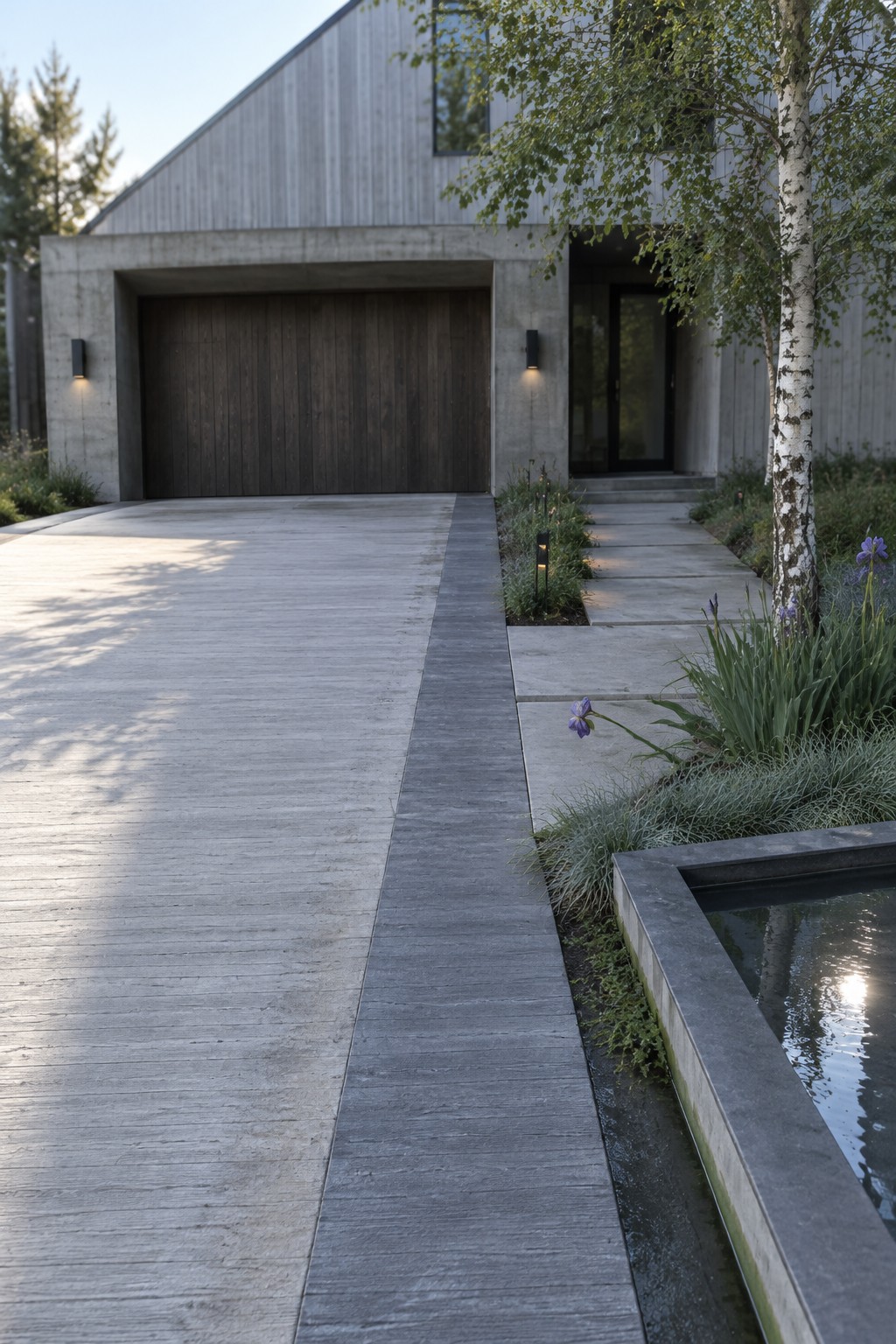
A narrow band of darker concrete can break up a broad, pale driveway without adding a busy pattern. It gives the surface a clear edge and makes a two-tone finish feel purposeful.
Keep the strip straight and run it along one side of the drive, or use it to mark a route toward the entry. This works especially well with simple modern homes; choose a durable finish with enough texture for traction.
Use Two-Tone Concrete to Mark the Entry Walk
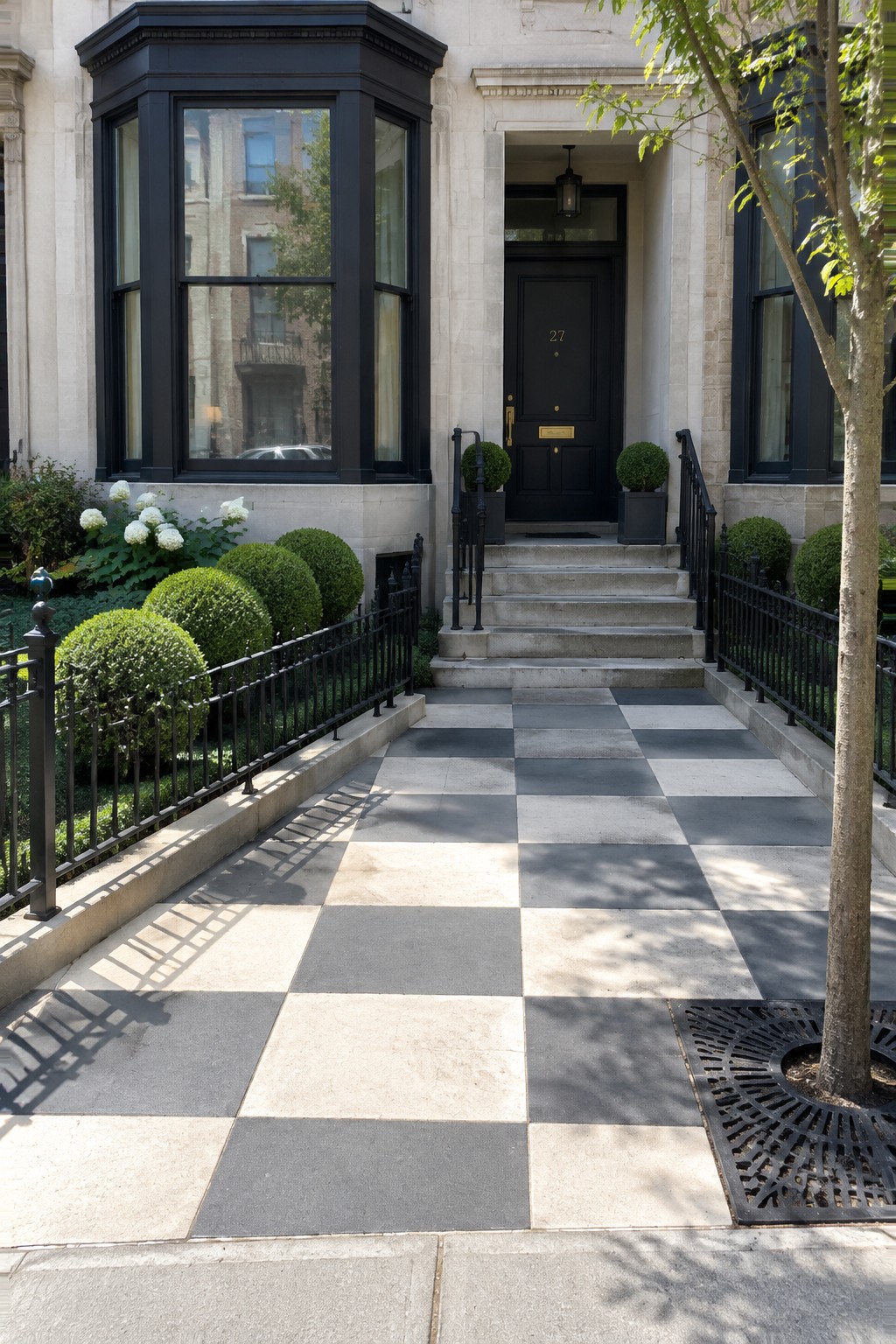
Two-tone concrete can make a front walk feel more intentional without adding a complicated pattern. Here, alternating light and dark square slabs give the path a clear rhythm as it leads to the steps.
This approach works well on a straight entry walk where the paving can guide visitors to the door. Keep the colors close enough to suit the house, and use a simple repeating layout so the pattern stays easy on the eye.
Use Two-Tone Concrete to Shape the Entry Walk

A two-tone concrete pattern can make an entry walk feel more considered without adding extra materials. Broad light and dark bands give the path a clear direction and help distinguish the approach from the rest of the driveway.
This works well on a modern home with simple exterior finishes. Use a restrained contrast and plan the pattern around the path’s shape, so the bands feel intentional rather than busy.
Use a Curved Concrete Edge to Shape the Driveway

A curved border can give a concrete driveway a softer outline and make room for a planting bed beside it. Here, the dark edging follows the bed’s shape, so the driveway feels more considered than a broad, straight slab.
This approach suits homes where a driveway meets a garden or front walk. Keep the border wide enough to read clearly, and choose a contrasting concrete color that works with the house and nearby paving.
Use a Pebble Finish to Add Color to the Driveway

A pebble-finish concrete surface brings natural color to an entry without relying on paint or a bold stain. Here, a warm reddish-brown field sits beside a narrow dark strip, giving the driveway a clear two-tone pattern that suits a modern home.
This approach works well for a long driveway or entry walk where a plain slab might feel too uniform. Use the darker concrete as a simple border or divider, and keep the main pebble finish consistent so the pattern stays easy to read.
Frequently Asked Questions
Q: Can I use two colors without making the driveway look too busy?
A: Yes. Keep one shade as the main field and use the second for a simple border, band, or set of panels. Colors that sit close together usually feel calmer than a strong contrast.
Q: Which color combination hides tire marks and dirt best?
A: Mid-tone browns, warm grays, and muted terra-cotta shades tend to disguise everyday grime better than very light colors. A darker border can also help keep dust and splash marks from standing out near the edges.
Q: Will the two-tone color fade in the sun?
A: It can fade over time, especially if the color comes from a surface stain or finish. Ask your installer how the color is applied and what upkeep it needs, then plan to reseal it on the recommended schedule.
Q: Can I add a two-tone finish to an existing concrete driveway?
A: Often, yes, if the slab is sound and has no major cracking or flaking. A contractor can check whether the surface is suitable for staining or coating before you settle on a design.
