


An asphalt driveway can shape the first impression of a home, but it also needs to handle the everyday shuffle of cars, bikes, and deliveries.
When parking feels tight, widening the drive may help, though the new edge should look intentional beside the house and yard.
I’d start by considering where cars need to turn and how people will reach the front door.
A wider surface can solve one problem while creating another if it crowds a walkway, tree, or planting bed.
The most useful approaches balance extra parking with clean borders, sensible drainage, and a finish that suits the existing driveway.
Widen the Driveway for More Parking
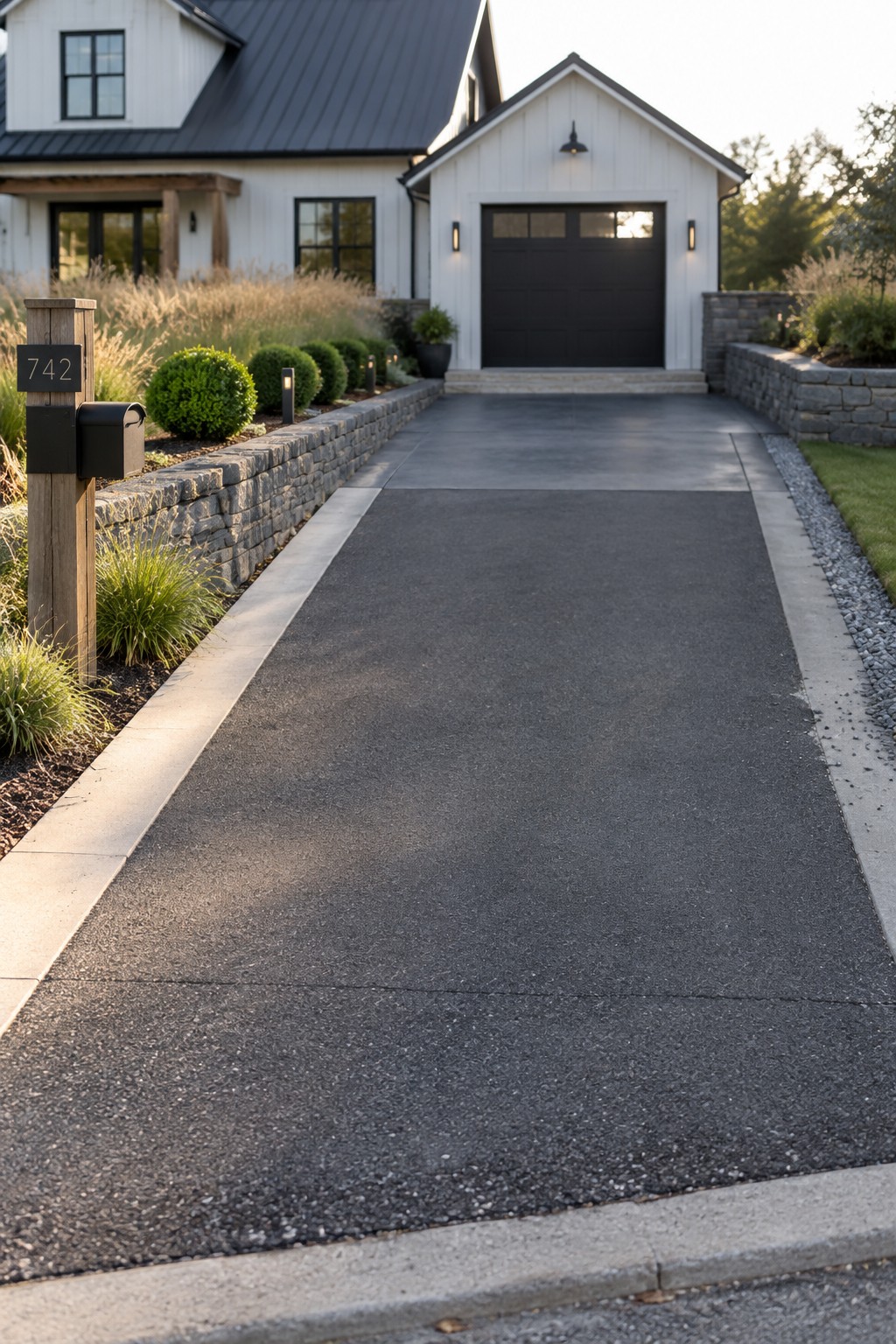
Widening a driveway can add useful parking without changing the basic layout. This one keeps a broad asphalt surface and uses a light concrete border to give the edges a clear finish.
This approach works well when a narrow drive makes it hard to park two cars or pull in comfortably. Keep the added width practical, and check local drainage and setback rules before extending the paved area.
Widen the Driveway With Paver Strips
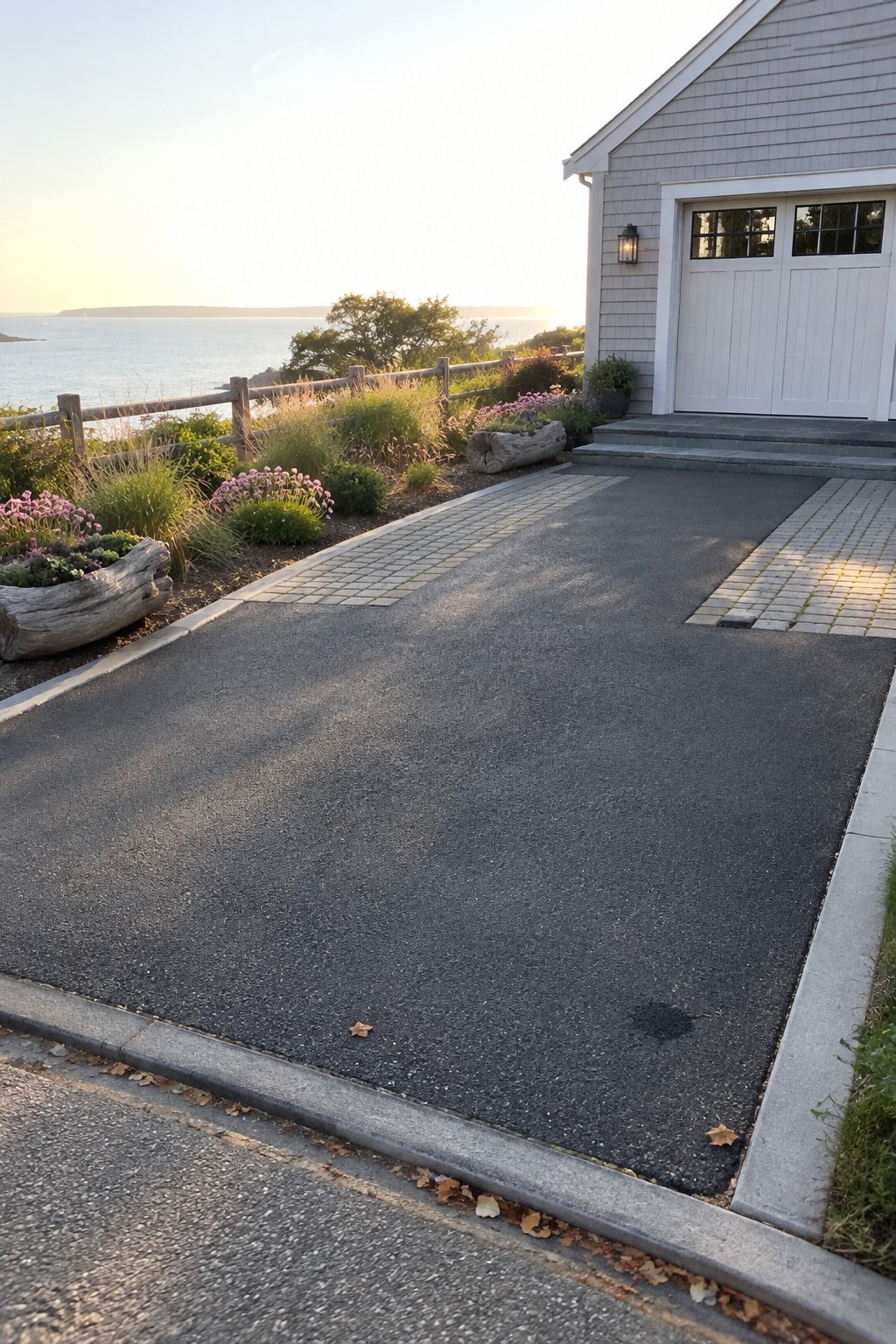
Paver strips along the sides of an asphalt driveway can create extra parking space without replacing the whole surface. They also give the widened area a clear edge, so it feels planned rather than like an add-on.
This approach works well when you want room for a second car or occasional guest parking. Choose pavers that can handle vehicle weight, and make sure the base is properly prepared so the strips stay level beside the asphalt.
Widen the Driveway With a Paved Side Strip
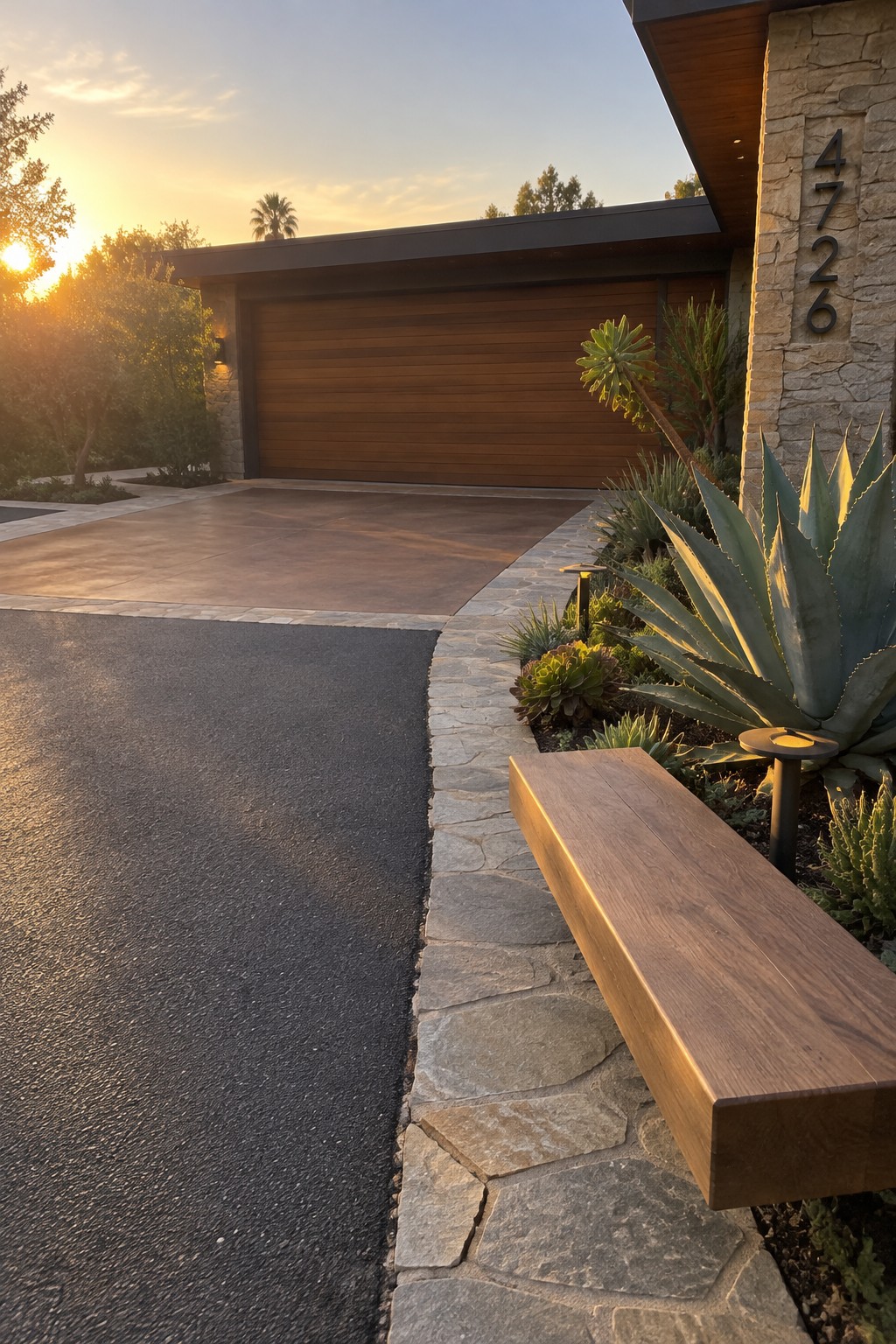
A narrow paved strip beside an asphalt driveway can create useful extra room for parking without replacing the whole drive. Using stone pavers for the widened section also gives the edge a clear, durable finish.
This approach works well when there is space along one side of the driveway and the ground can be graded to drain properly. Keep the new parking area wide enough for a car, and make sure the transition between paving and asphalt is stable.
Extend Asphalt With a Gravel Parking Strip
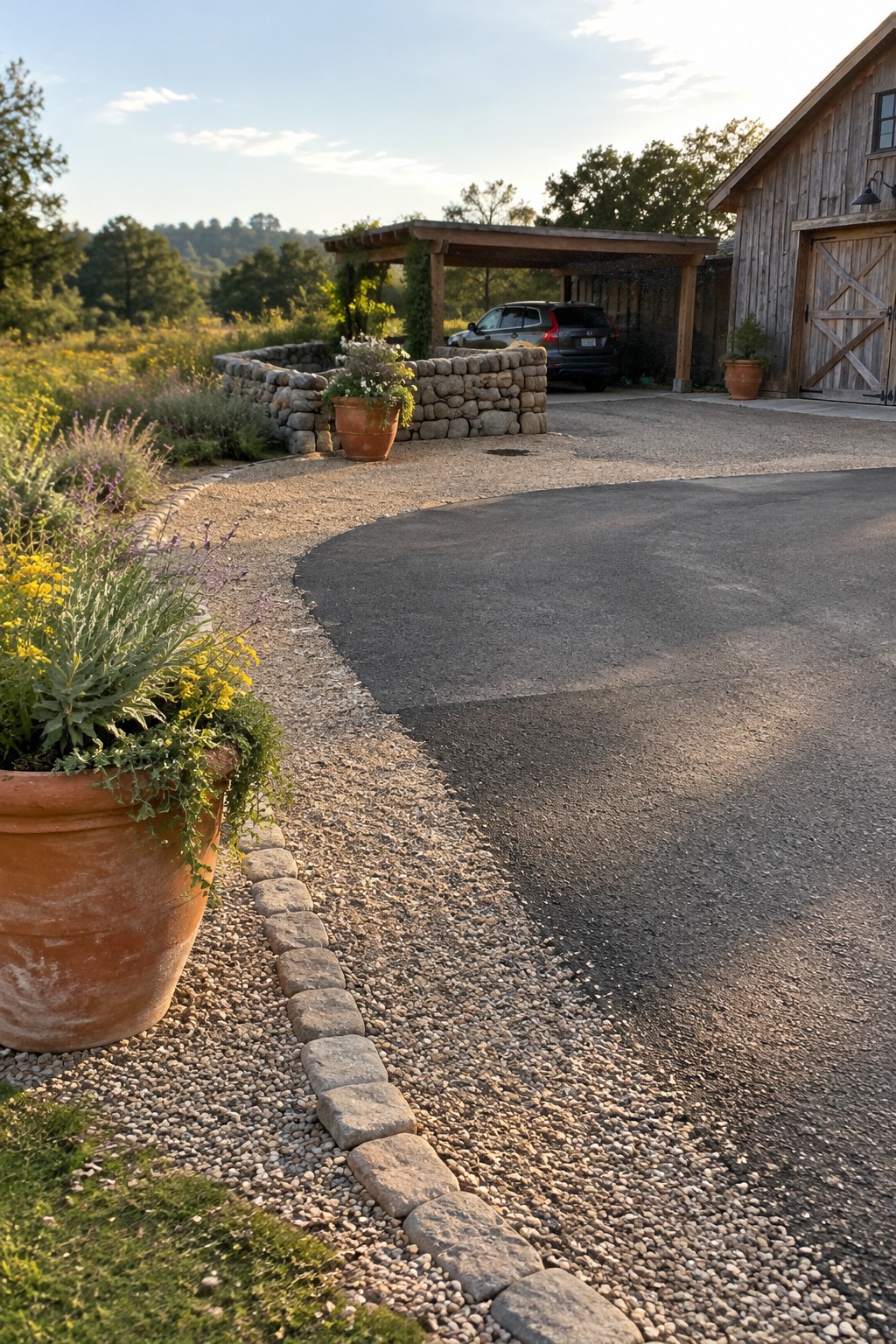
Adding a gravel strip beside an asphalt driveway is a simple way to make room for an extra parked car. It gives the pavement more usable width without requiring the whole driveway to be resurfaced.
Use compacted gravel and a firm stone or paver edge to help keep the material in place. This approach suits rural homes and informal driveways, but the added area should be wide and level enough for a car to park safely.
Use a Curved Paver Edge to Widen the Driveway
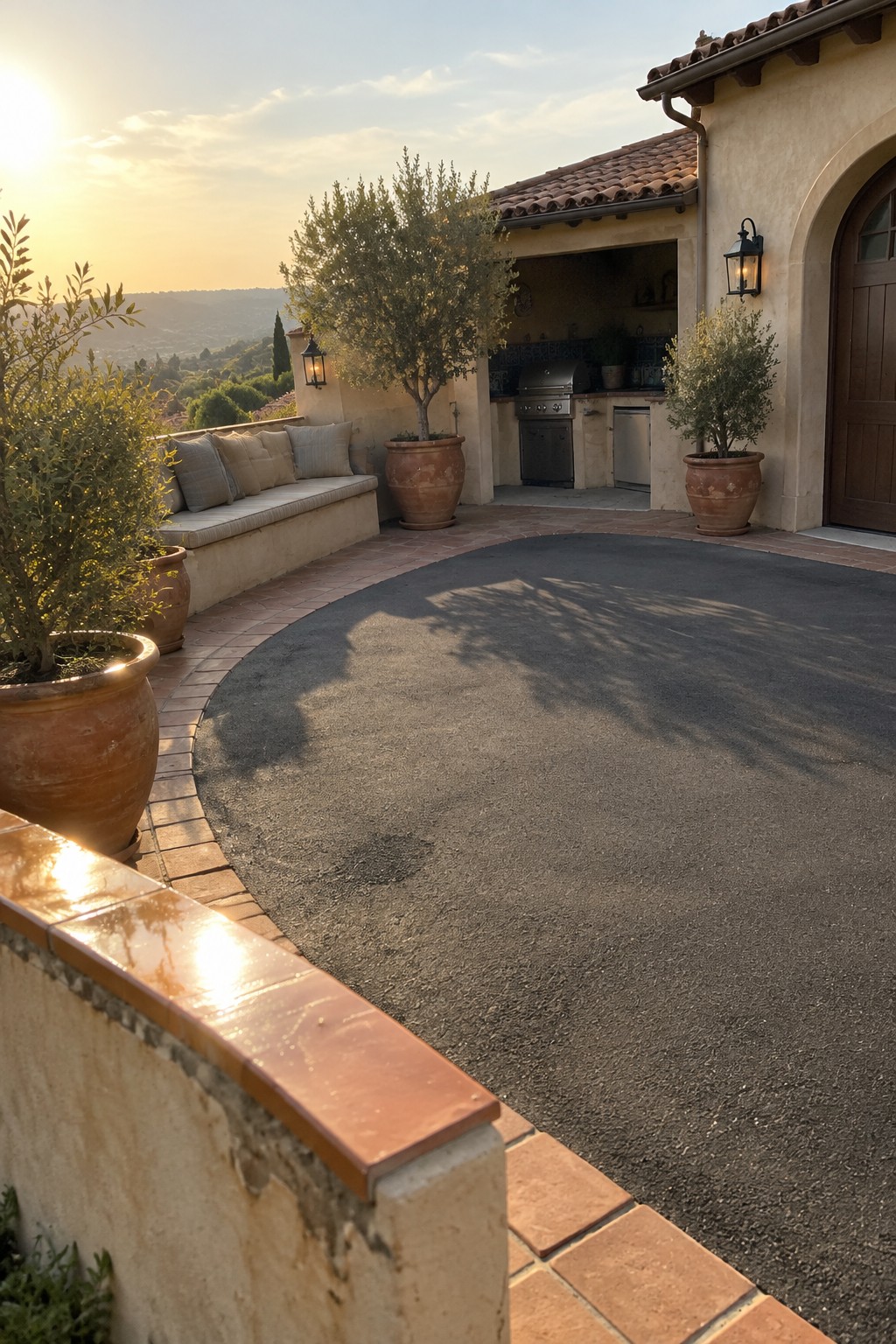
A curved paver border can make a widened asphalt driveway feel like it belongs with the rest of the yard. Here, terracotta pavers follow the driveway’s edge and give the dark surface a clear, finished boundary.
This approach works well when you want extra parking without leaving a plain asphalt edge beside the house. Keep the curve wide enough for cars to turn and park comfortably, and choose pavers suited to vehicle traffic.
Use a Brick Band to Mark the Parking Area
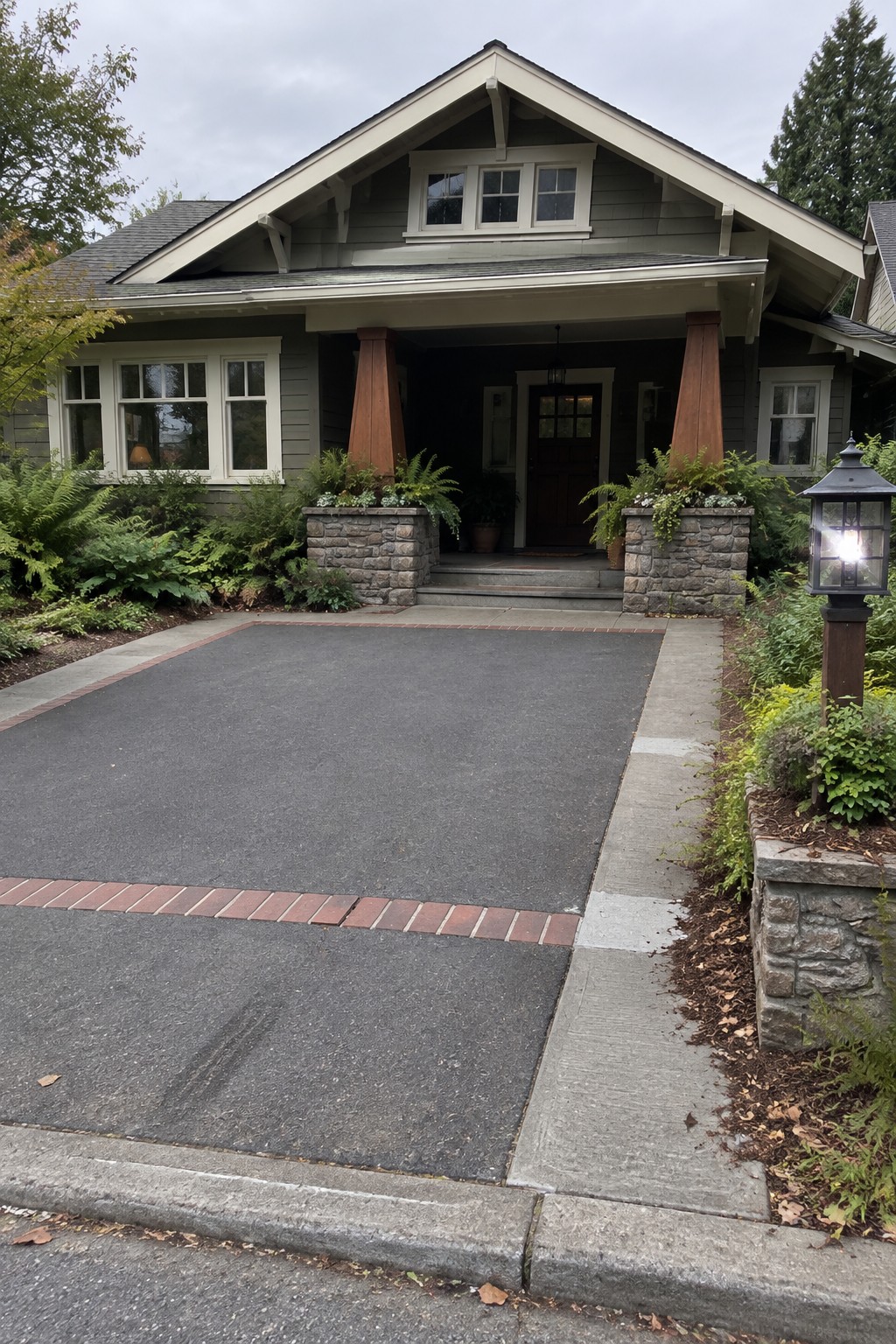
A narrow brick band can break up a wide asphalt driveway and make the parking area feel more deliberate. Here, the brick crosses the driveway near the house, giving the plain surface a clear visual boundary.
Use a band like this to mark where a widened parking space begins or ends. Choose bricks that suit the home’s exterior, and keep the band flush with the asphalt so it does not catch tires or create a tripping edge.
Use a Tapered Asphalt Widening
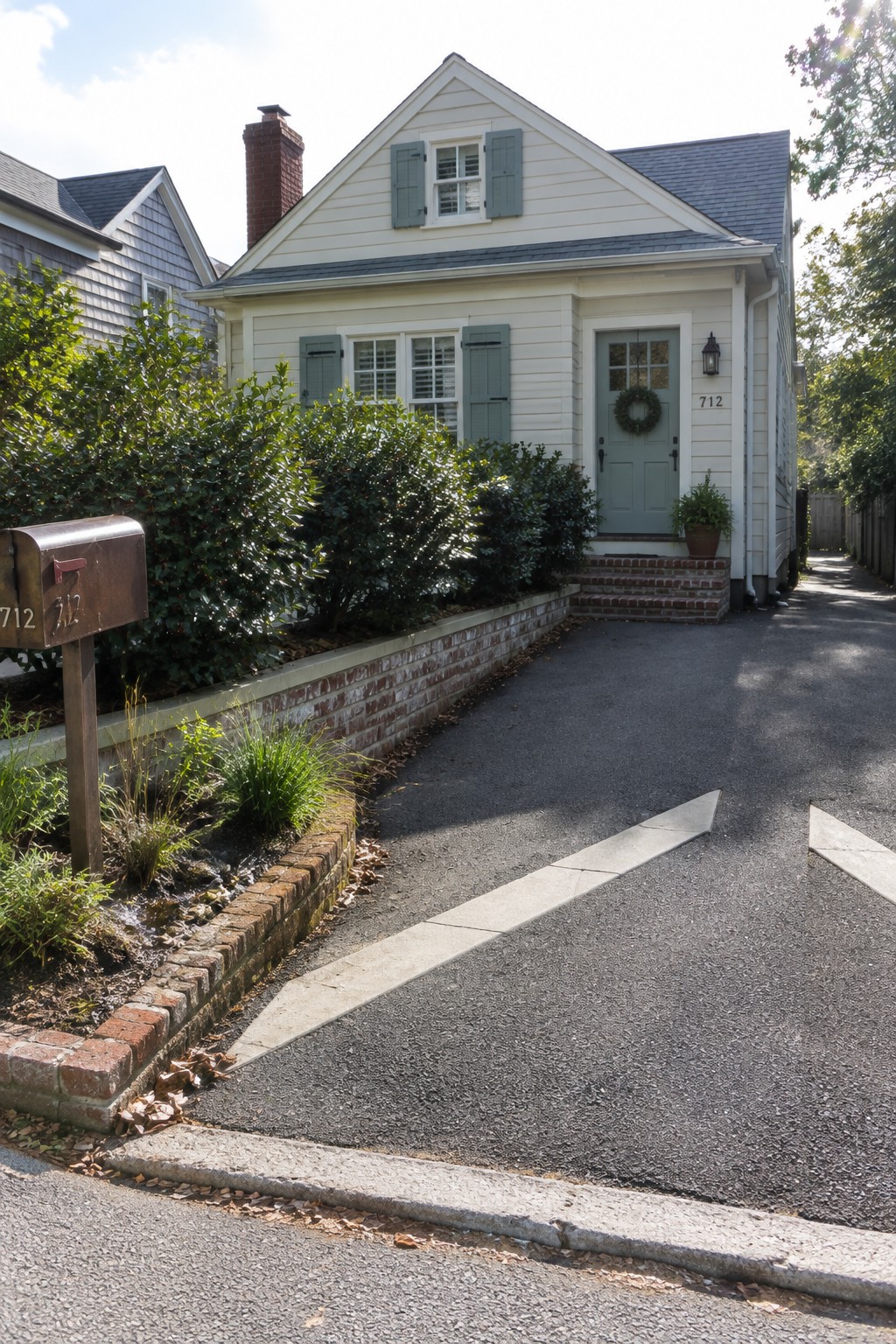
A wider section near the street can make an asphalt driveway easier to enter and provide a little extra room for parking. A tapered edge feels less abrupt than a square extension and can work well beside an existing planting bed.
Use paving stones or concrete edging to define the widened area and keep the transition neat. Check that the added space stays clear of the walkway and gives cars enough room to turn.
Add a Curved Planting Island Beside the Driveway
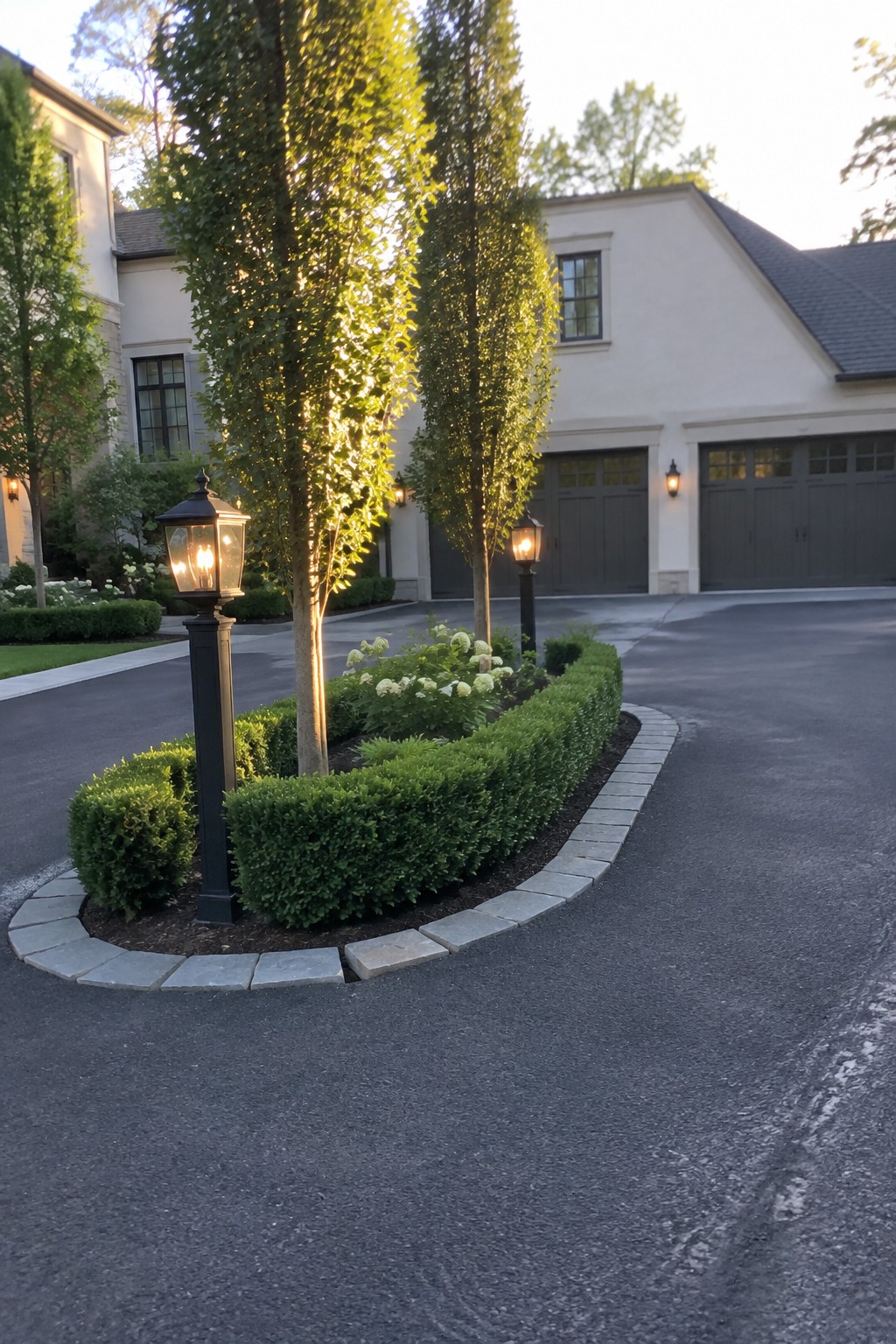
A narrow planting island can make a wide asphalt driveway feel more organized while preserving room for cars. The curved stone edge in this example defines the island clearly, and the low hedge keeps the planting from spilling into the parking area.
This approach works well where a driveway has extra width or a broad turning area. Keep the island compact and leave enough clear pavement around it for parking and maneuvering.
Add a Stone Border Along the Driveway
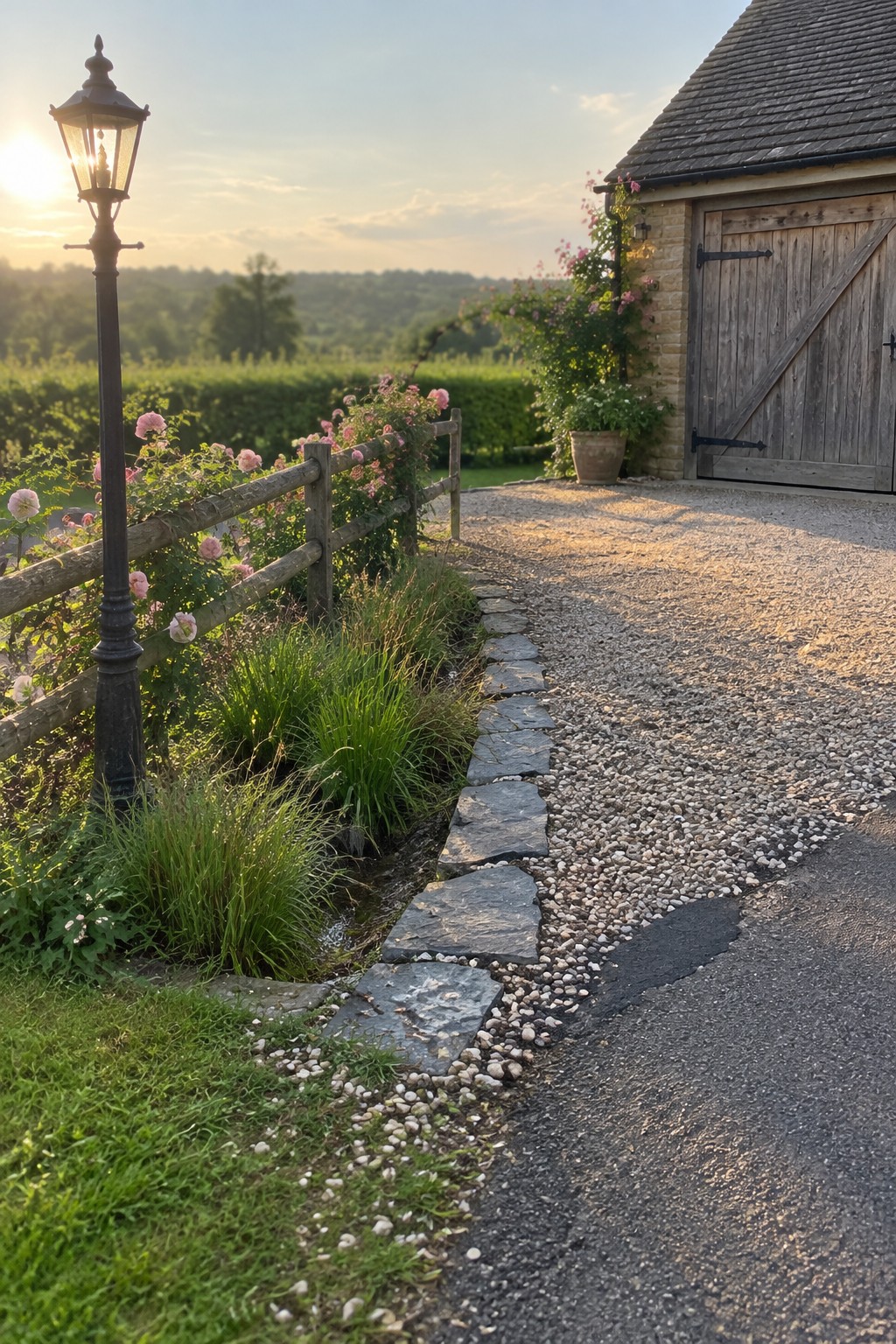
A narrow stone edge can give an asphalt driveway a cleaner boundary and make a little extra room for parking feel more intentional. The irregular paving stones here create a firm transition between the gravel and the planted area.
Use a similar border where the driveway meets a lawn or garden bed, especially if you want to widen the parking area without paving the whole space. Set the stones securely and keep them level so they are easy to drive over.
Add a Defined Parking Lane Beside the Driveway
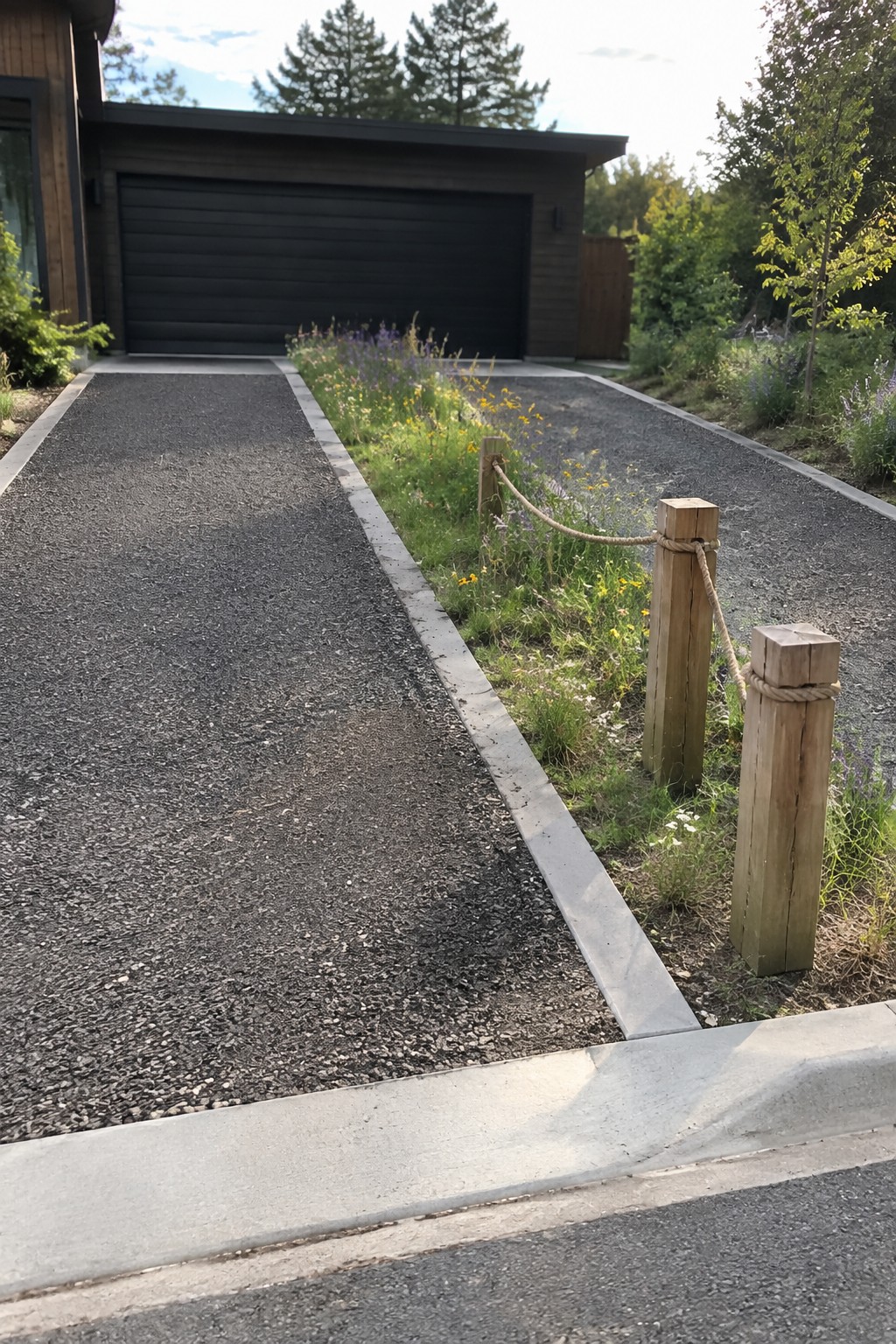
A narrow paved lane can give a driveway extra room for parking without turning the whole front yard into hard surface. In this layout, a planted strip separates the two gravel lanes, making each parking space easy to see.
This approach suits homes with enough width for two vehicles and a central planting bed. Keep the strip narrow enough to preserve usable parking space, and choose low plants that won’t spread onto the pavement.
Use Planting to Define the Driveway Edge
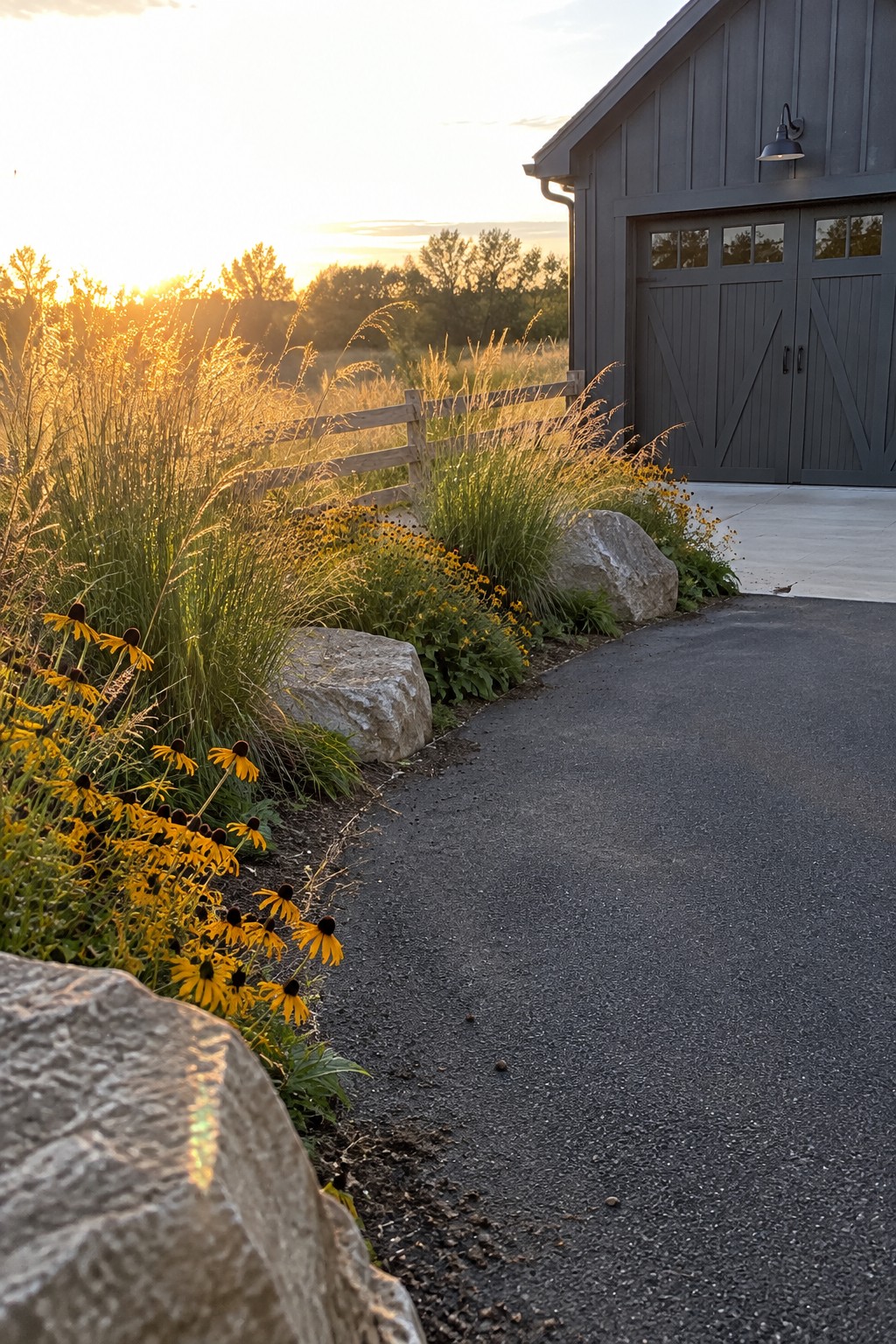
A planted border can make a widened asphalt driveway feel like part of the landscape rather than a large stretch of pavement. Here, tall grasses and black-eyed Susans mark the edge while leaving the driving surface open.
This approach works well when you want extra parking without paving the entire yard. Keep plants low near the areas where cars turn or back out, and leave enough room for the plants to spread without creeping onto the asphalt.
Add a Paver Parking Area Beside the Asphalt
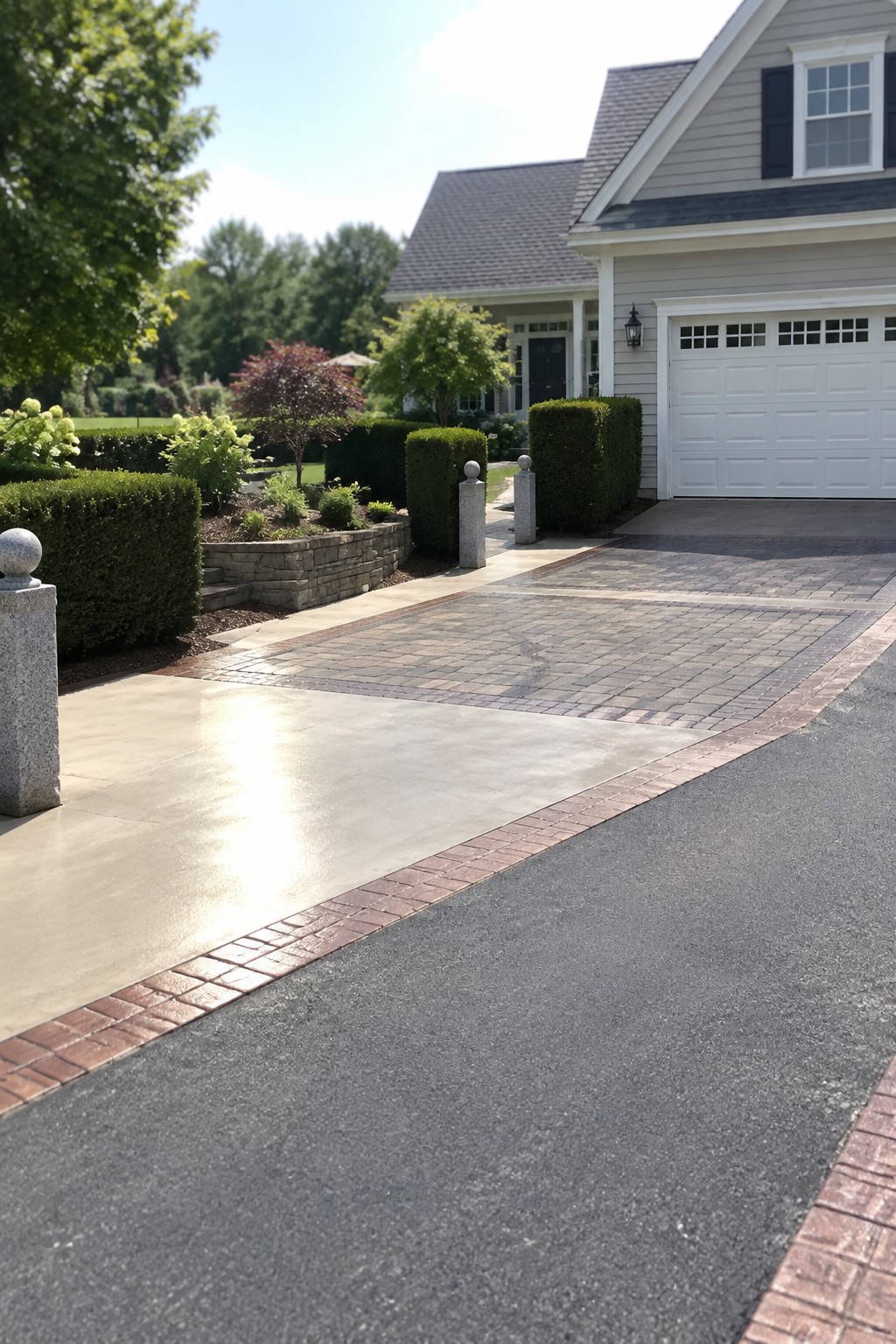
A paved section beside an asphalt driveway can provide extra room to park without replacing the whole drive. Here, the rectangular paver area sits next to the garage, while a brick border helps distinguish it from the asphalt.
This approach works well when you want a defined parking space that also suits the home’s existing hardscape. Keep the pavers level with the driveway and use a solid base so the added area stays stable under parked cars.
Add a Paved Apron Beside the Driveway
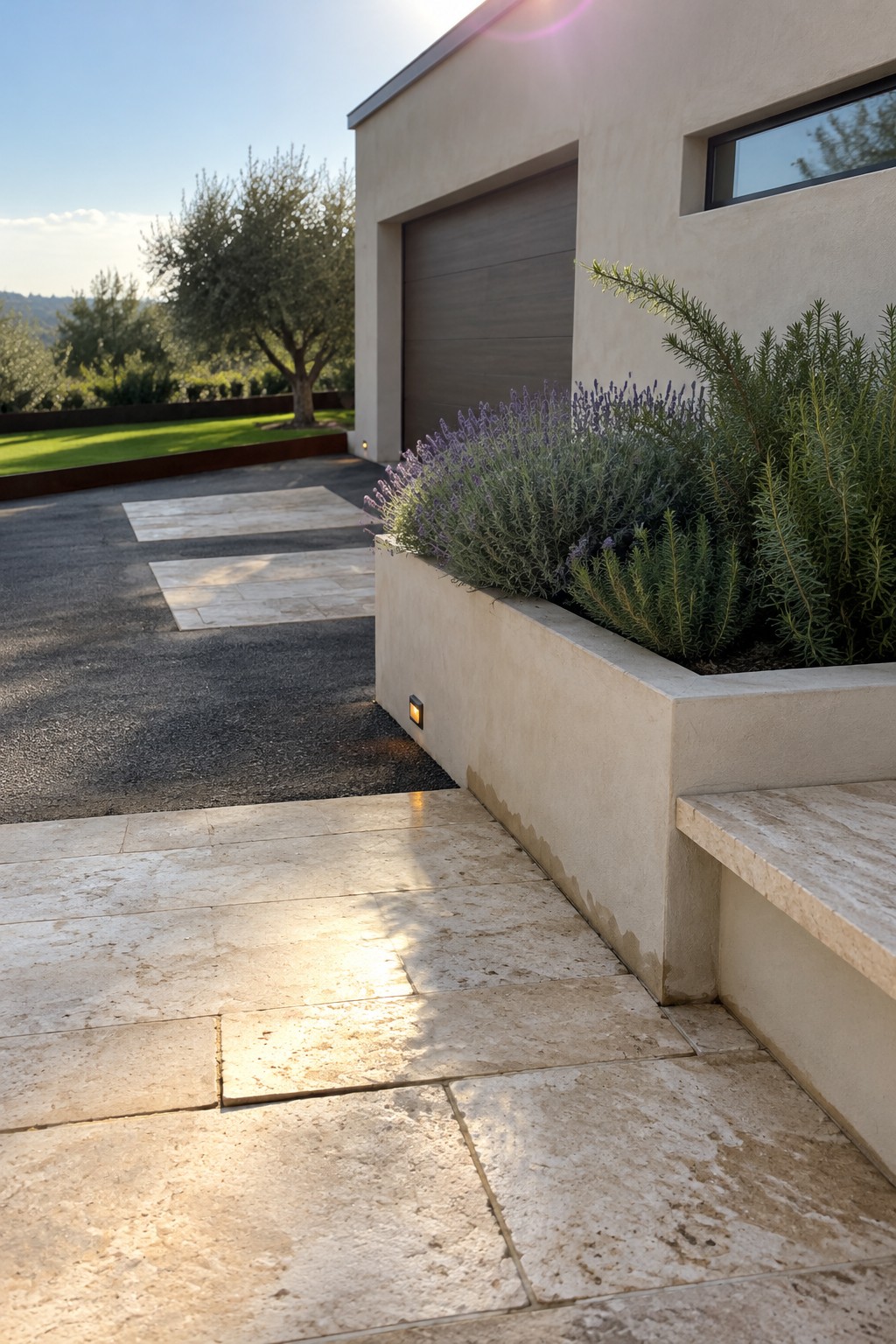
A paved apron can make the area near a garage easier to use and give a driveway a little extra room for parking or turning. Large stone slabs beside the asphalt offer a clear, sturdy surface without extending the asphalt across the whole approach.
This idea works well where a driveway meets a garage or side entrance. Choose paving that can handle vehicle weight, and keep the surface level with the asphalt to avoid an awkward bump.
Add a Rain Garden Strip Beside the Driveway
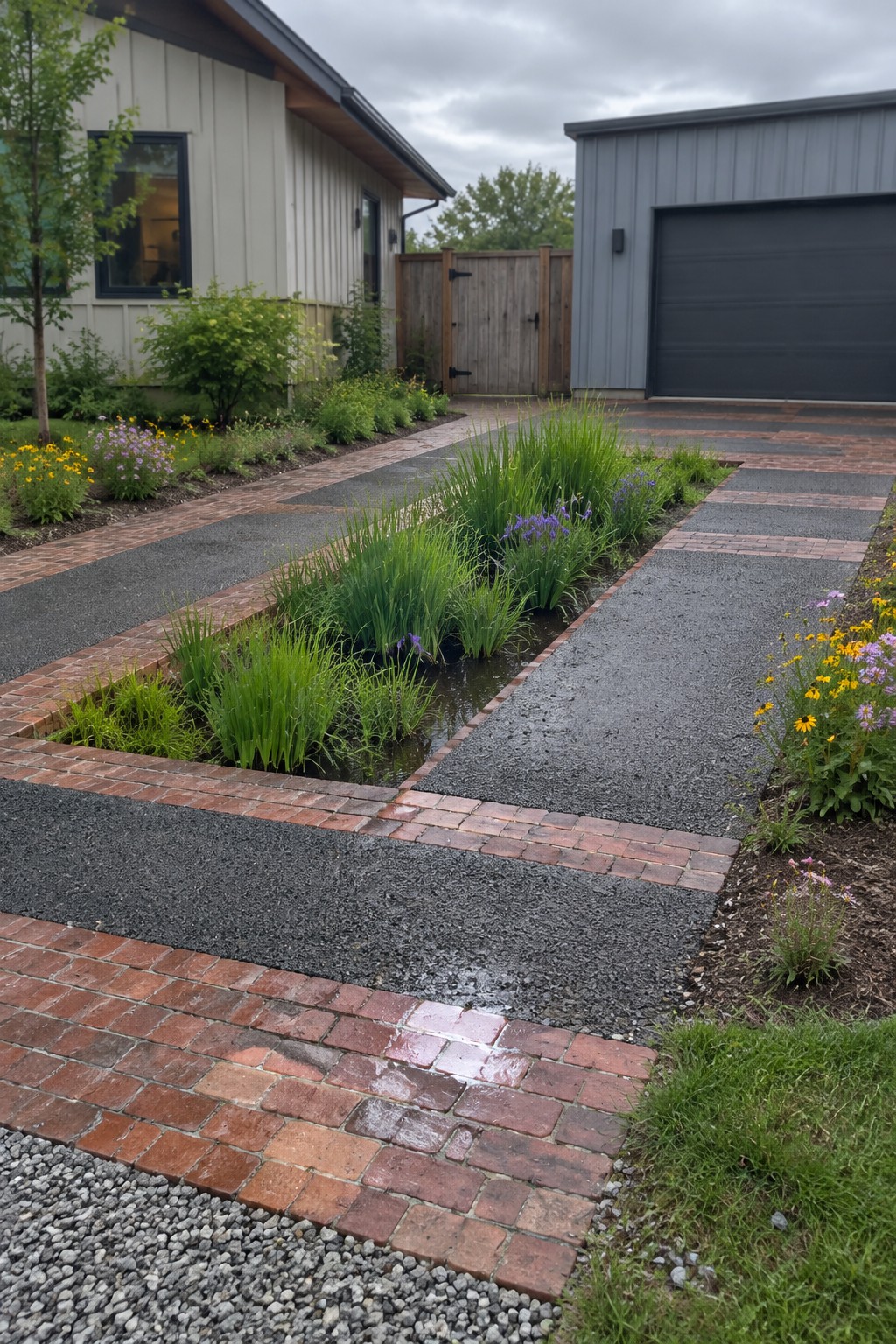
A planted drainage strip can make extra driveway space more practical. Here, brick borders define a narrow bed between the asphalt lanes, where tall grasses and flowers help manage runoff while keeping the parking layout clear.
This approach suits a driveway that needs widening but has room for a planted channel. Use plants that can handle occasional standing water, and make sure the strip drains properly so water does not collect on the asphalt.
Frequently Asked Questions
Q: How wide should I make an asphalt driveway extension for another car?
A: Measure the car and leave enough room to open the doors and walk around it. If the extension connects to a garage or street, check that the turn into it feels comfortable before choosing the final width.
Q: Can I widen my driveway with asphalt next to the existing pavement?
A: Yes, but the new section needs a firm, well-compacted base and a clean, supported edge where it meets the old asphalt. A weak seam can crack or settle, so have the installer check the condition of the existing driveway first.
Q: Do I need a permit to widen my driveway?
A: You might, especially if the work changes the curb, sidewalk, drainage, or amount of paved space near the street. Check with your local building or public works department before starting.
Q: How can I keep water from pooling on the wider driveway?
A: Make sure the added pavement slopes away from the house and gives rainwater a clear path to drain. Don’t let the new section direct runoff onto a neighbor’s property.
