


An asphalt driveway can make the front of a home feel stark, especially when the edges are left bare.
I find that planting beds work best when they soften the dark pavement without narrowing the space for parking or walking.
Low-maintenance plants, clear edging, and a layout that follows the driveway’s shape can make the whole entrance feel more considered.
The first thing people notice is often the contrast between the black asphalt and the greenery, so even a simple planting plan can change how the home reads from the street.
I’d save ideas that suit your climate and leave enough room for easy upkeep.
Use Stone Edging To Keep Planting Beds Neat

A narrow border between the driveway and planting bed helps keep loose gravel and soil from spreading onto the asphalt. Here, a slim metal edge gives the bed a clear line without taking up much space.
This approach works well along straight or gently curved driveways, especially with low-growing shrubs and ornamental grasses. Choose edging that sits securely in the ground, and leave enough room for plants to grow without spilling over the driveway.
Shape Asphalt Driveways Around Low-Maintenance Beds

A gently curving driveway gives planting beds room to follow its edge, so the garden feels planned rather than squeezed beside the pavement. Here, a narrow metal border keeps the gravel and plants in place while making the curve easy to maintain.
Use this approach where there is enough space for a broad, gradual bend. Choose hardy, drought-tolerant plants and keep them low near the driveway so they do not spill onto the asphalt or block visibility.
Use a Curving Driveway Path to Shape the Planting Beds
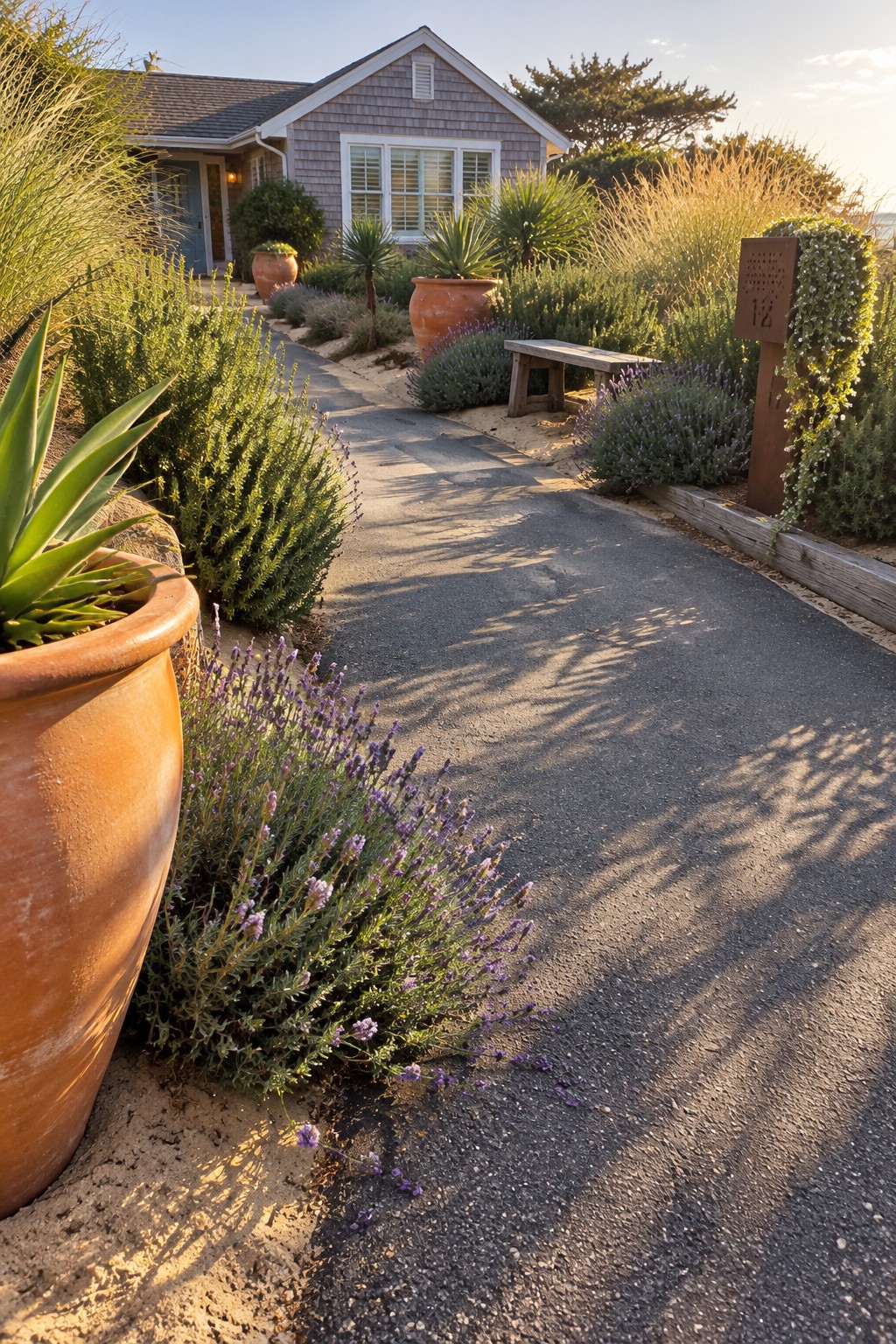
A gently curving asphalt path gives planting beds a clear shape and makes the walk to the front door feel less like a stretch of pavement. The planted edges make good use of space along the driveway without needing a large lawn.
Keep the bed easy to care for by choosing hardy, drought-tolerant plants and leaving enough room to reach the pavement for trimming. Lavender and other compact shrubs can follow the curve, while a few larger pots add interest near the entrance.
Use Stepping Stones to Connect Garden Beds
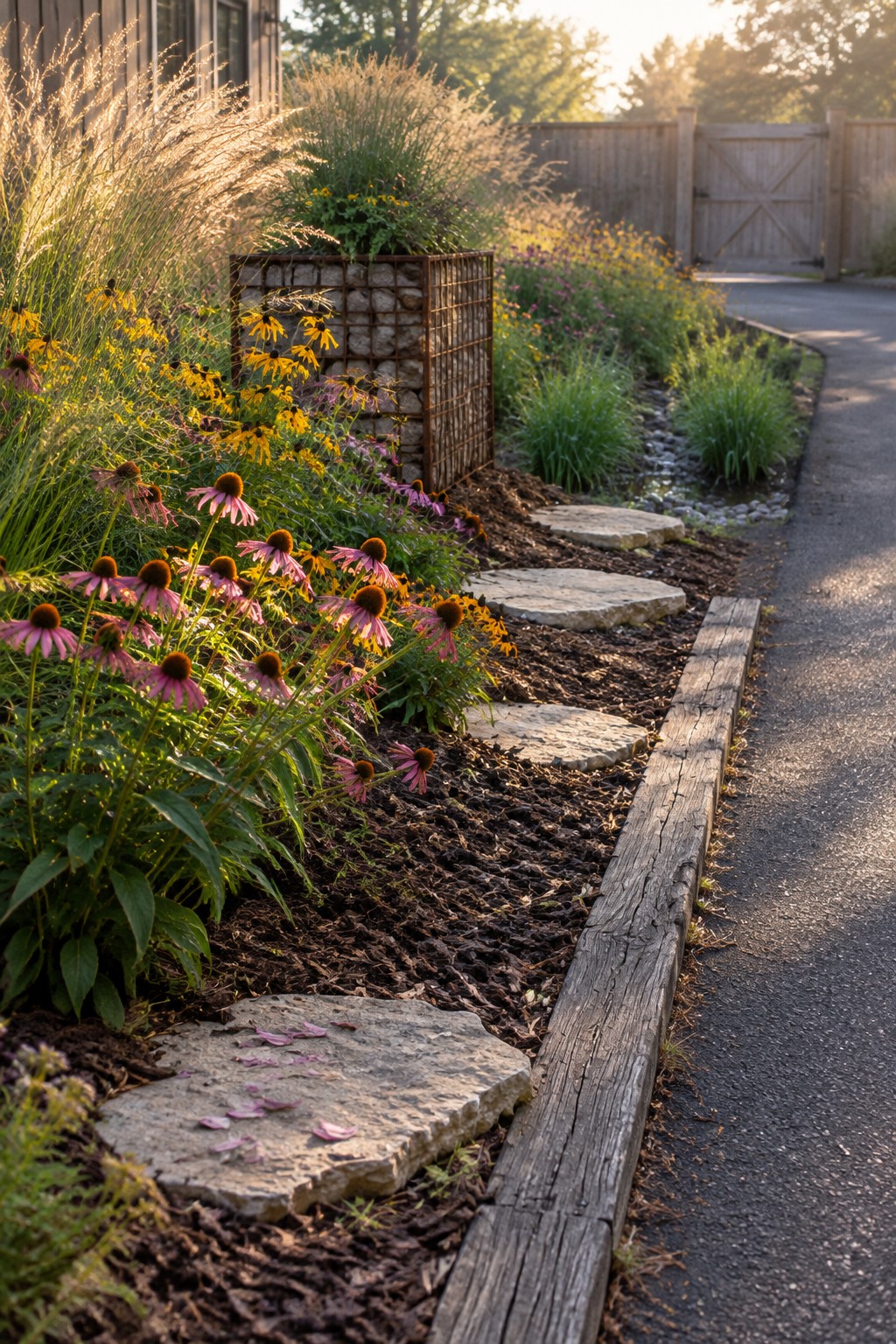
Stepping stones make a planted border easier to cross without cutting a narrow path through the flowers. They also give a long bed a little structure while keeping most of the ground planted or mulched.
Place broad, stable stones where you need to reach plants for trimming or weeding. In a bed beside an asphalt driveway, leave enough room between the stones and the pavement so the planting does not spill onto the driving surface.
Use Gravel Mulch for Easier Care
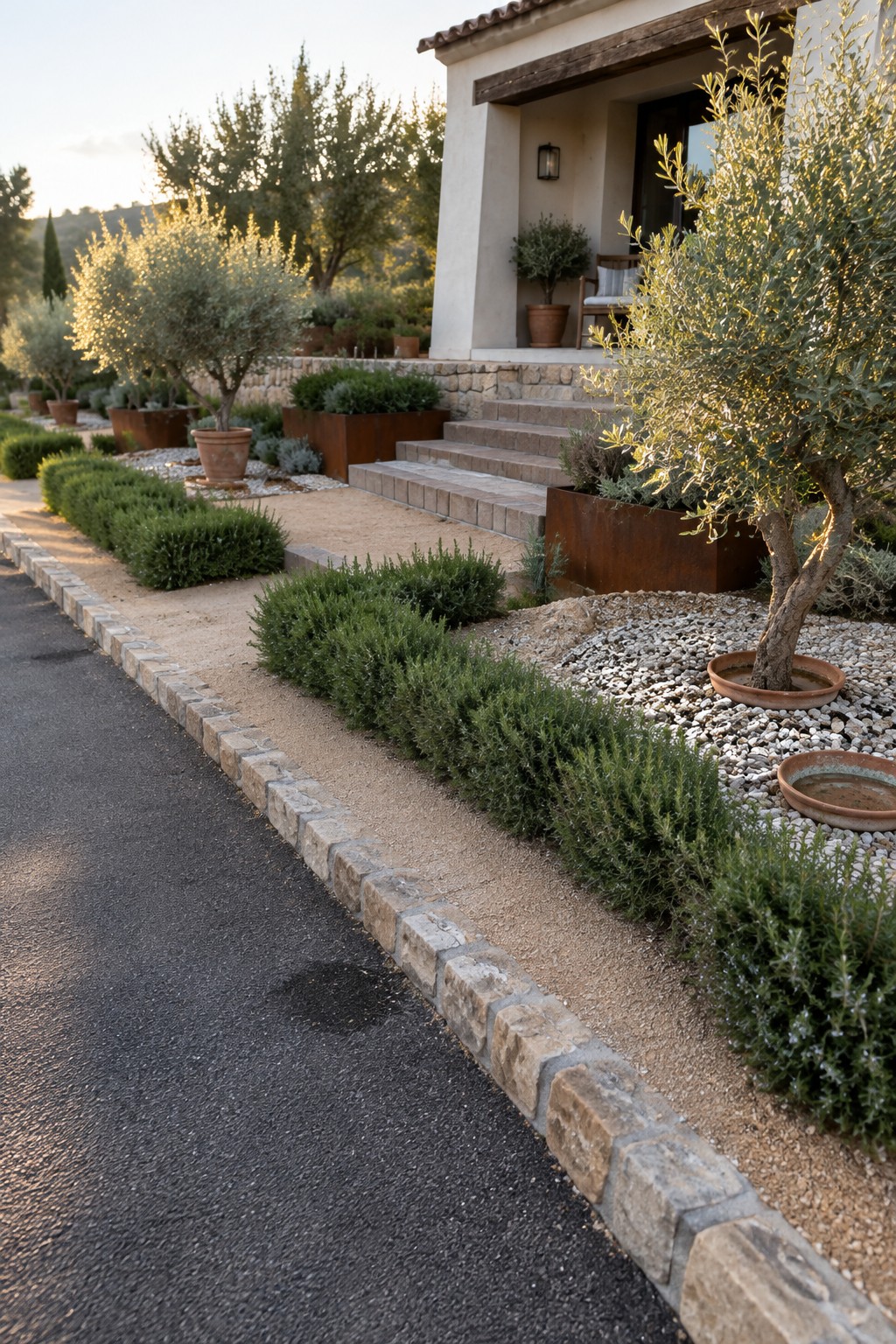
A gravel-covered planting bed is a practical choice along an asphalt driveway. It helps limit bare soil and gives low-maintenance shrubs and small trees a tidy place to grow.
Use a layer of gravel around drought-tolerant plants, leaving enough room around stems and trunks. A simple stone border can keep the gravel from spilling onto the driveway, and the approach suits homes where regular watering and weeding need to stay to a minimum.
Use Tall Hedges for Driveway Privacy

Tall, closely planted hedges can give a driveway a private, orderly feel without taking up much ground space. Their vertical growth also leaves room for a neat row of low shrubs along the edge.
This approach works well beside a narrow asphalt drive, especially where nearby homes or a street are visible. Choose a hedge that suits your climate, and plan for occasional trimming to keep it contained.
Use a Rock-Filled Drainage Strip Along the Driveway
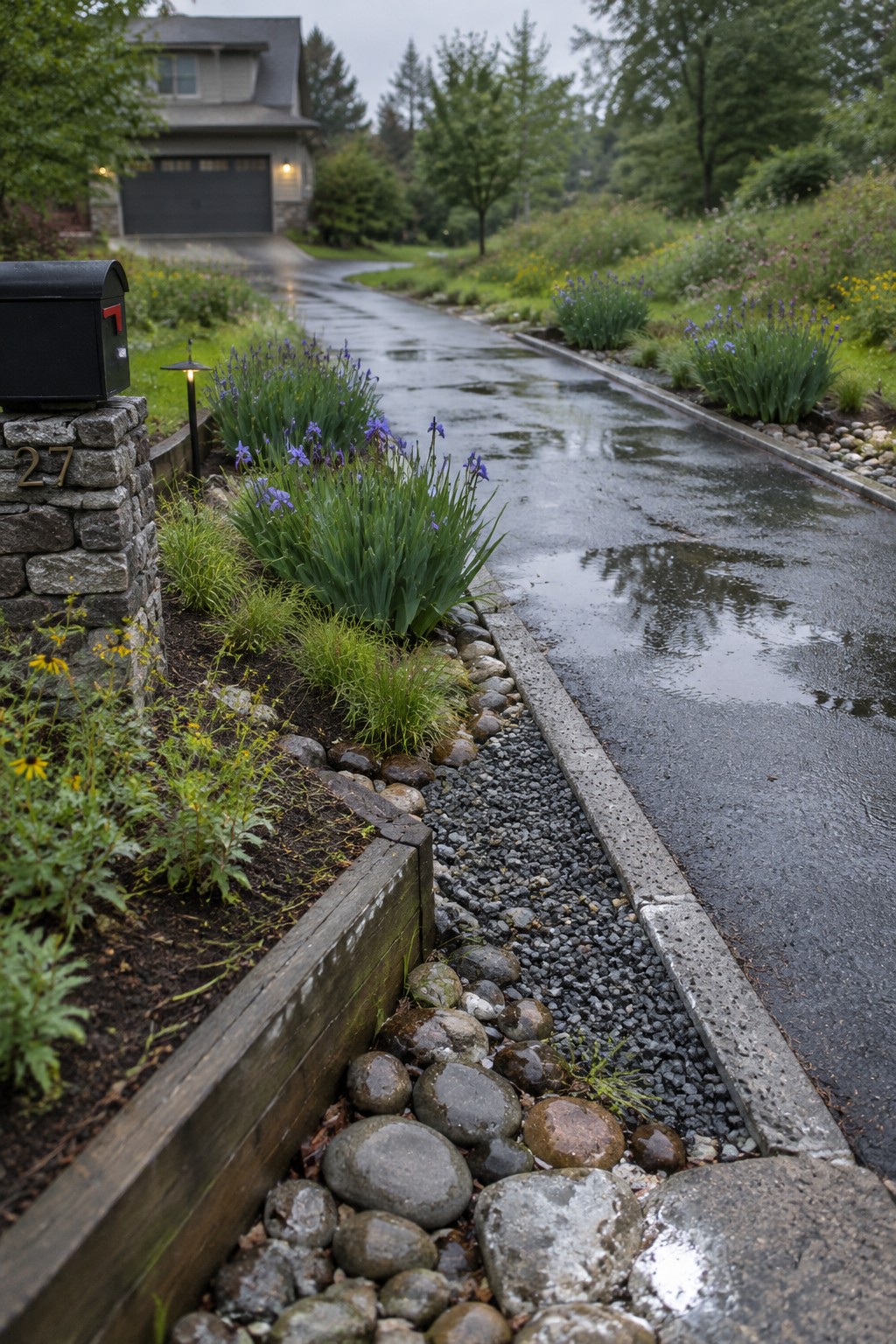
A narrow strip of gravel and river stones beside an asphalt driveway gives rainwater a place to drain while keeping soil and plants away from the pavement. It also makes a tidy edge for a low-maintenance planting bed.
Use a mix of stone sizes to help the strip feel natural, and keep the bed’s plants set back from the driveway so they do not spill onto the pavement. This approach works well where runoff collects along a sloped or frequently wet drive.
Use a Planted Island to Break Up the Driveway

A planted island can make a wide asphalt driveway feel less bare without adding much upkeep. A few sturdy boulders and clumps of ornamental grass give the bed shape and interest while leaving plenty of room for cars to pass.
Keep the planting simple, and use a clear edge between the bed and the pavement so it stays tidy. This approach works especially well in a broad driveway turnaround, where a central bed can guide traffic and give the yard a defined focal point.
Use a Dry Creek Bed to Manage Runoff
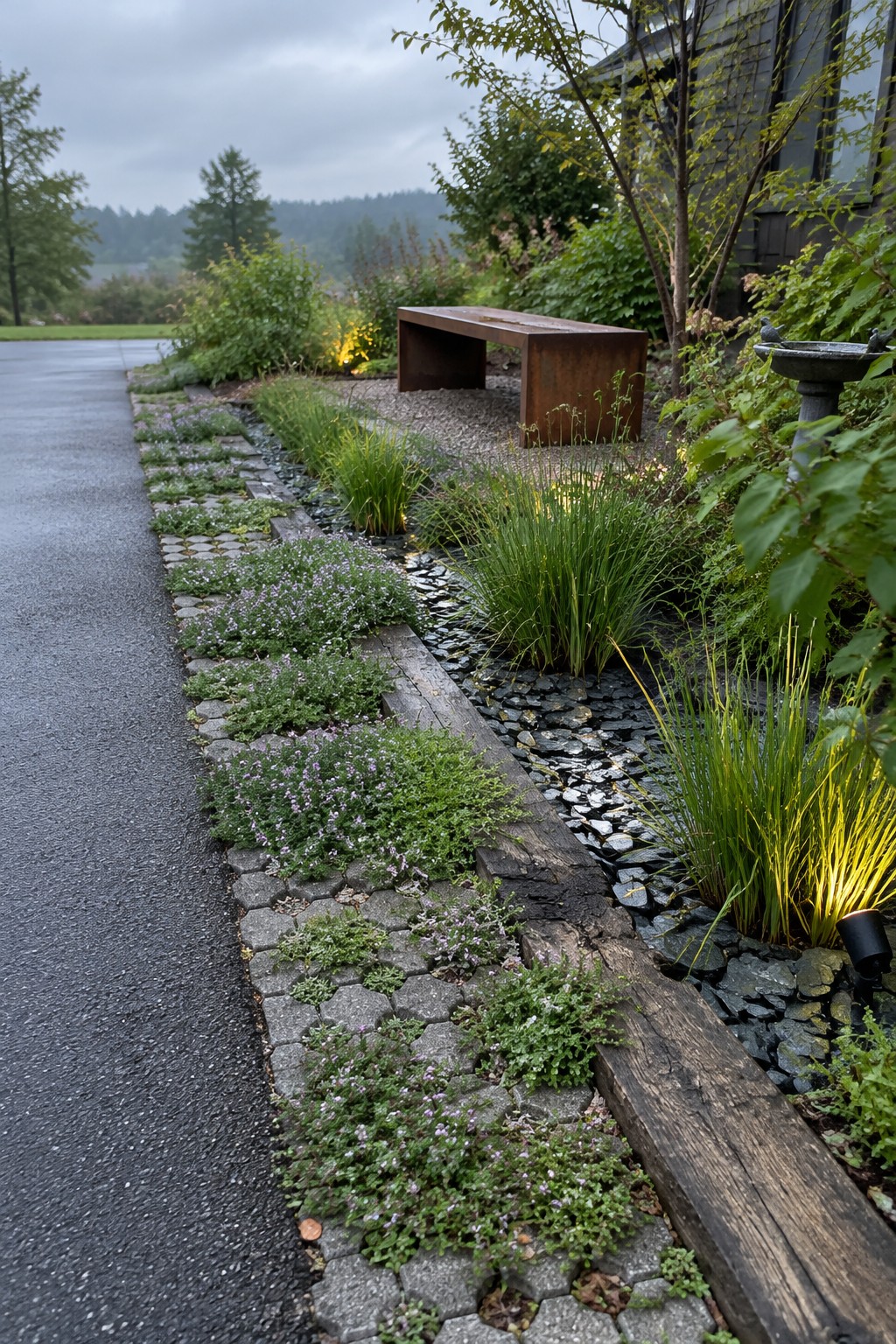
A shallow rock-lined channel can give rainwater a place to flow instead of letting it collect along an asphalt driveway. It also makes a useful border for grasses and other plants that can handle occasional wet conditions.
Place the bed where water naturally runs, and use stones in varied sizes to slow the flow. Leave enough room for the channel to drain freely, and choose plants that won’t flop across it or block the path of water.
Use Raised Beds to Organize Driveway Planting
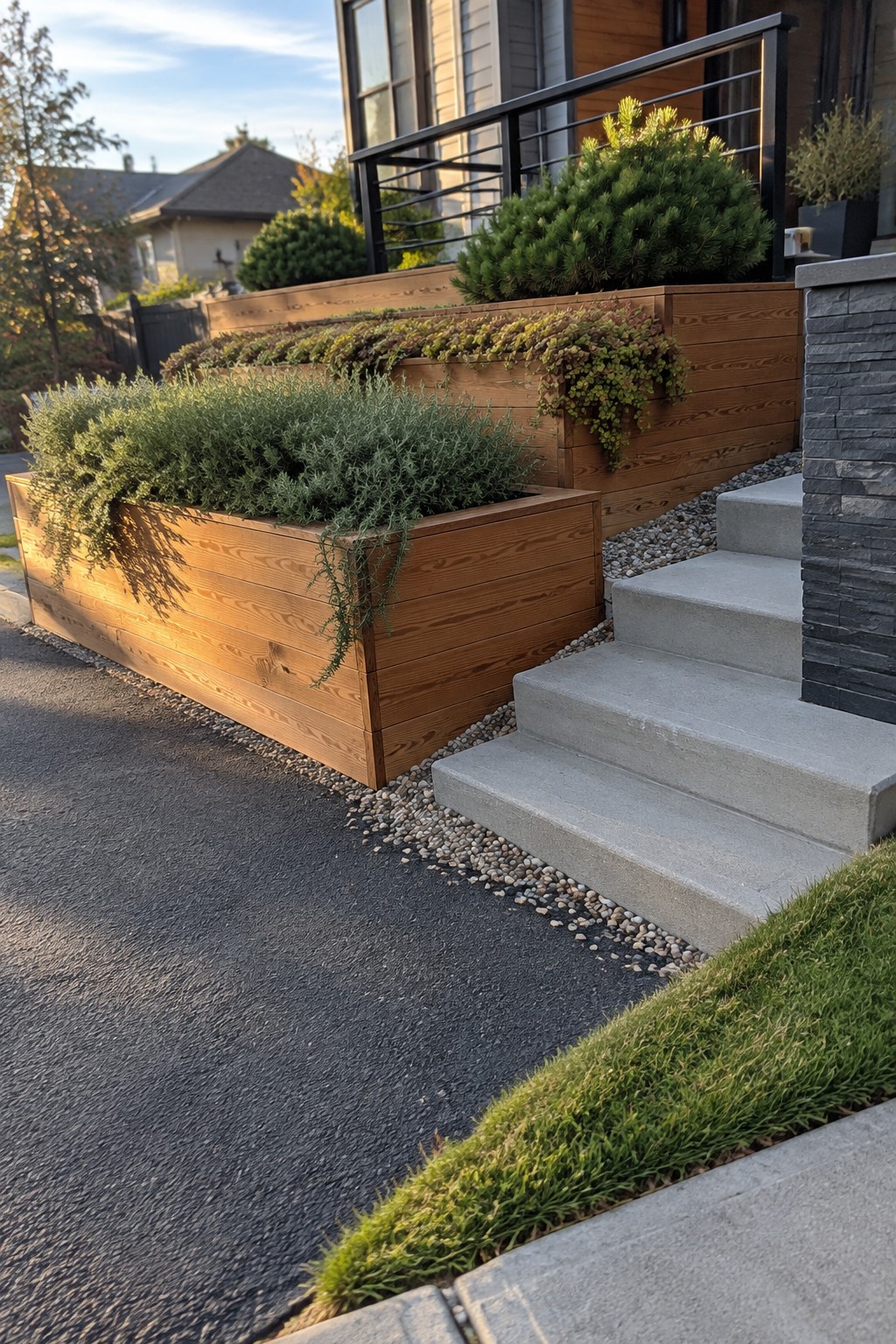
Raised wooden beds give driveway landscaping a clear shape and keep planting contained along the edge of the asphalt. The built-up structure also makes a sloped entry easier to manage, while trailing plants help the beds look less boxy.
Use this approach where the driveway meets steps or a change in grade. Choose durable, rot-resistant lumber, and leave enough room around the beds for cars and foot traffic.
Layer Plantings Along the Driveway Edge
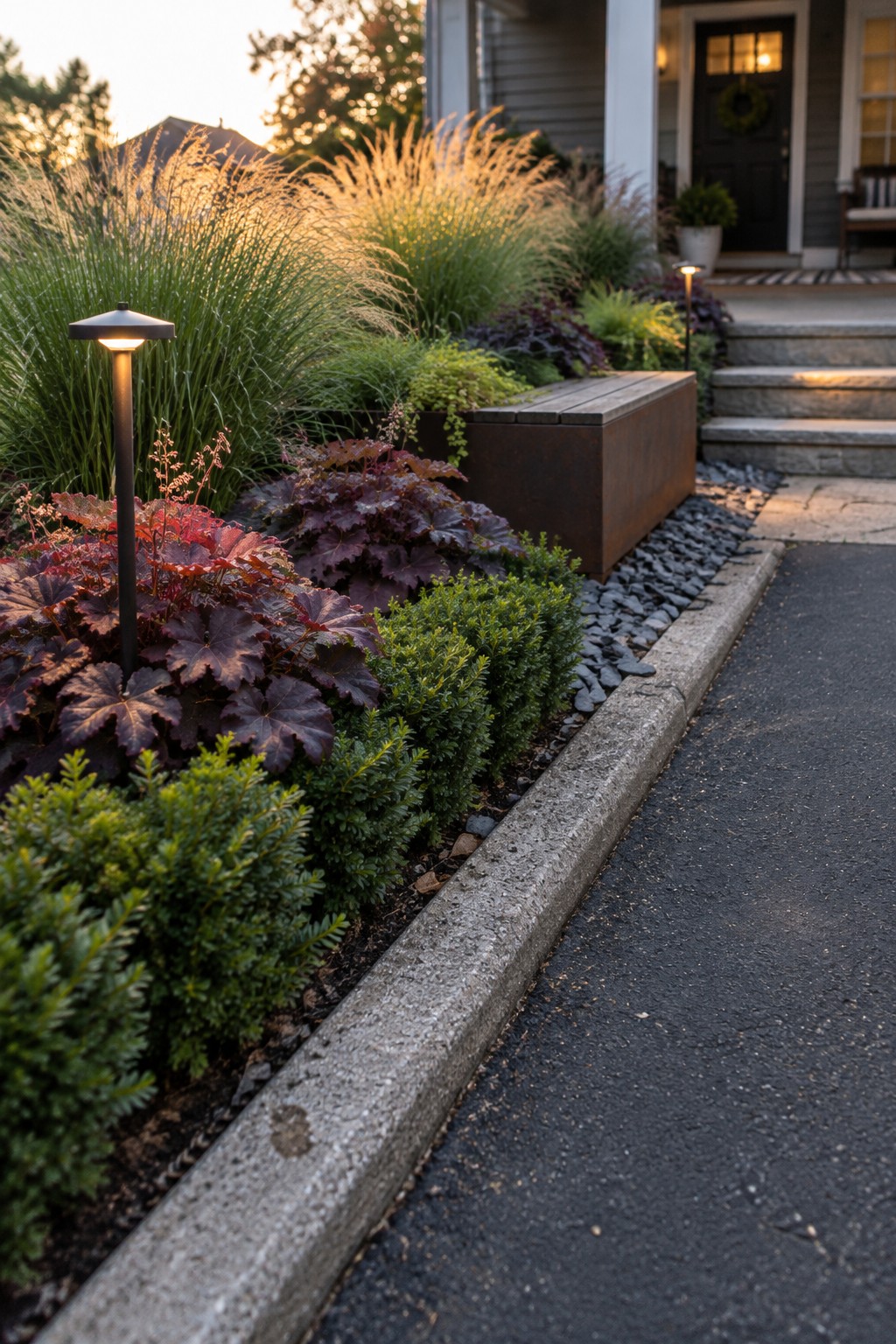
Layering different plant heights makes a driveway bed feel full without needing a complicated layout. Low shrubs at the front and taller ornamental grasses behind them give the planting a clear shape, while the grasses add height without taking up much ground space.
For an easier-care bed, choose plants suited to your climate and leave room for them to reach their mature size. Keep taller growth away from the driveway edge so it does not spill onto the pavement or block the view when backing out.
Add Stepping Stones Beside the Driveway
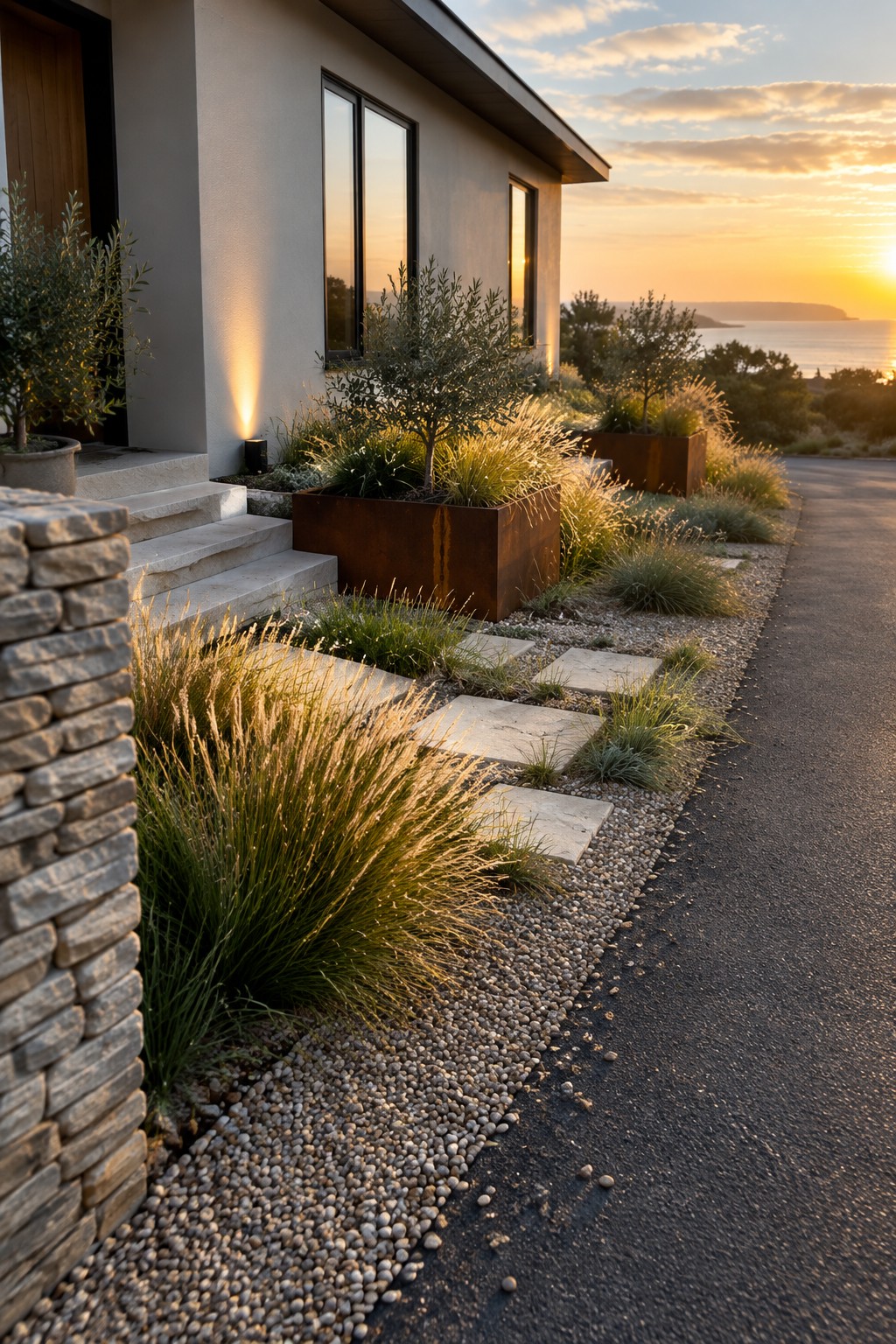
Stepping stones make a simple path through a gravel planting bed, so you can reach the front entry without walking through the plants. They also help connect the driveway edge to the house in a practical way.
Use large, stable stones and leave enough room between them for easy steps. Low grasses and other drought-tolerant plants can fill the spaces around the path without needing much attention.
Use Paver Edging to Separate the Driveway From Planting Beds
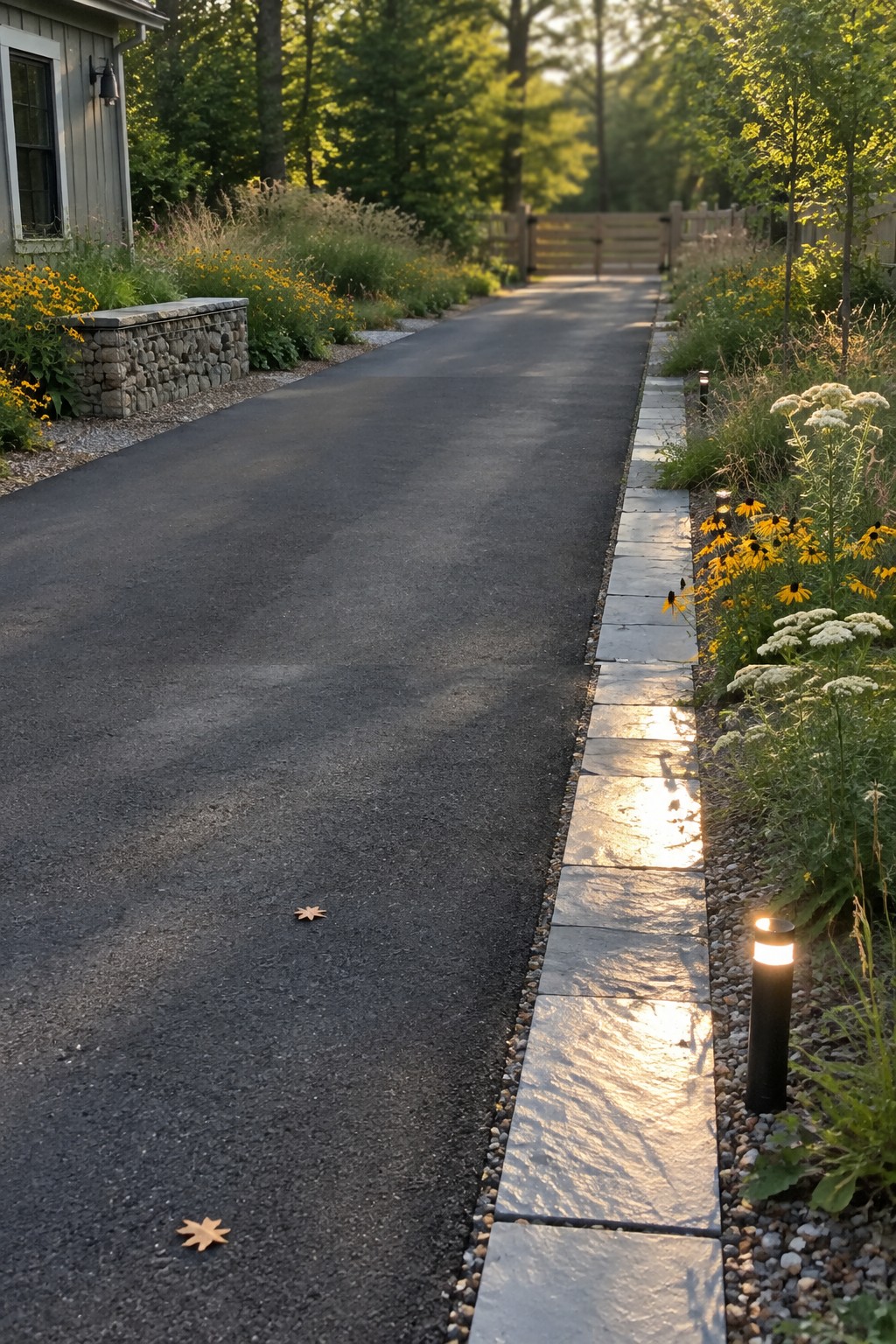
A narrow strip of pavers gives an asphalt driveway a clean edge and keeps nearby planting beds distinct. It’s a practical way to add definition without needing a wide border or a lot of extra hardscape.
Use large, sturdy pavers set level with the driveway, and leave enough room beside them for gravel or low-maintenance plants. This approach works well along a straight drive, but make sure the edging is stable so it won’t shift under foot traffic or maintenance.
Frequently Asked Questions
Q: How far should planting beds sit from an asphalt driveway?
A: Leave enough space that plants won’t spill over the edge or catch car doors. A narrow gravel or mulch strip between the asphalt and bed also helps keep soil and water off the driveway.
Q: What low-maintenance plants can handle heat near the driveway?
A: Look for drought-tolerant plants suited to your climate, such as ornamental grasses, sedum, or lavender. Driveway edges can get hot, so check that a plant can handle reflected heat before planting it there.
Q: How do I keep weeds down in a driveway planting bed?
A: Clear the bed, add a layer of cardboard or landscape fabric if appropriate for your plants, then cover it with mulch. Keep mulch a few inches away from plant stems, and pull small weeds before they settle in.
Q: Will tree roots damage my asphalt driveway?
A: They can, especially when a large tree grows close to the pavement. Choose smaller trees with less aggressive roots and give them plenty of room from the driveway.
