

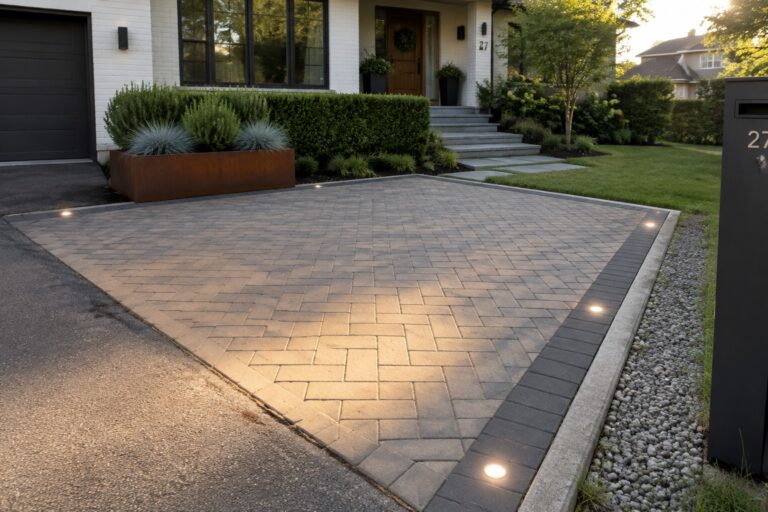
A driveway extension can make parking easier, but it also changes how the front of a home looks and how people move through the space.
I find the best results come from treating the asphalt and pavers as parts of one layout, rather than letting the new parking area feel like an afterthought.
The color, edge lines, and connection to the walkway can all affect whether the addition feels settled beside the house.
Some designs keep the transition simple, while others use pavers to define extra parking or add a clear border.
I’d save the ideas that suit your home’s facade and driveway shape, then check that they leave enough room for turning, walking, and everyday use.
Use Pavers To Extend an Asphalt Driveway
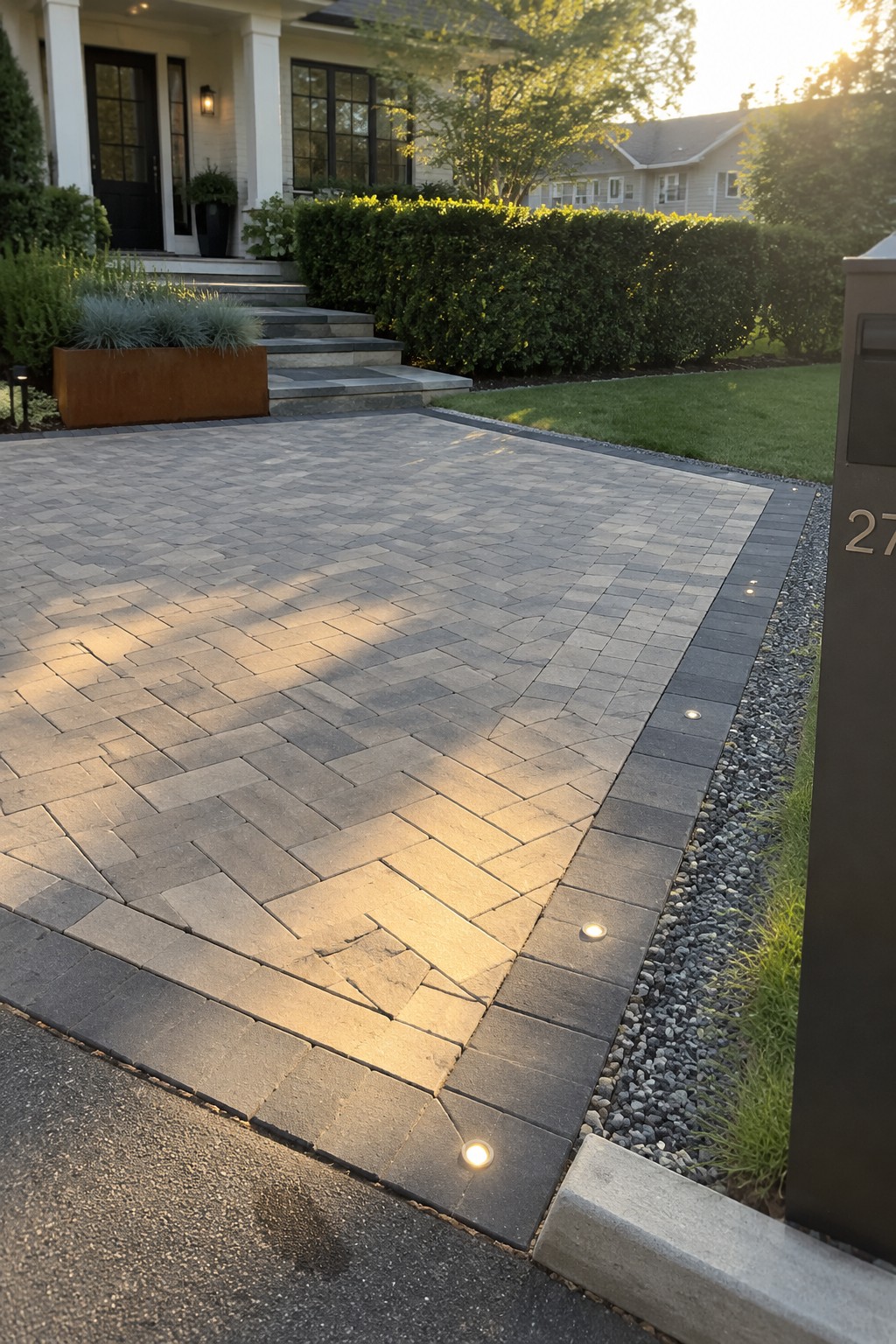
A paver parking area is a practical way to give an asphalt driveway extra room without paving the whole space in asphalt. The change in surface helps define the parking area, while the pavers offer a range of colors and patterns that can suit the house.
For a clean transition, use a darker paver border around the main paved area. This approach works well near an entry, where the added space can also serve as a path to the front steps. Plan for a firm, well-prepared base so the pavers stay level with the asphalt.
Extend Asphalt With A Paver Parking Area
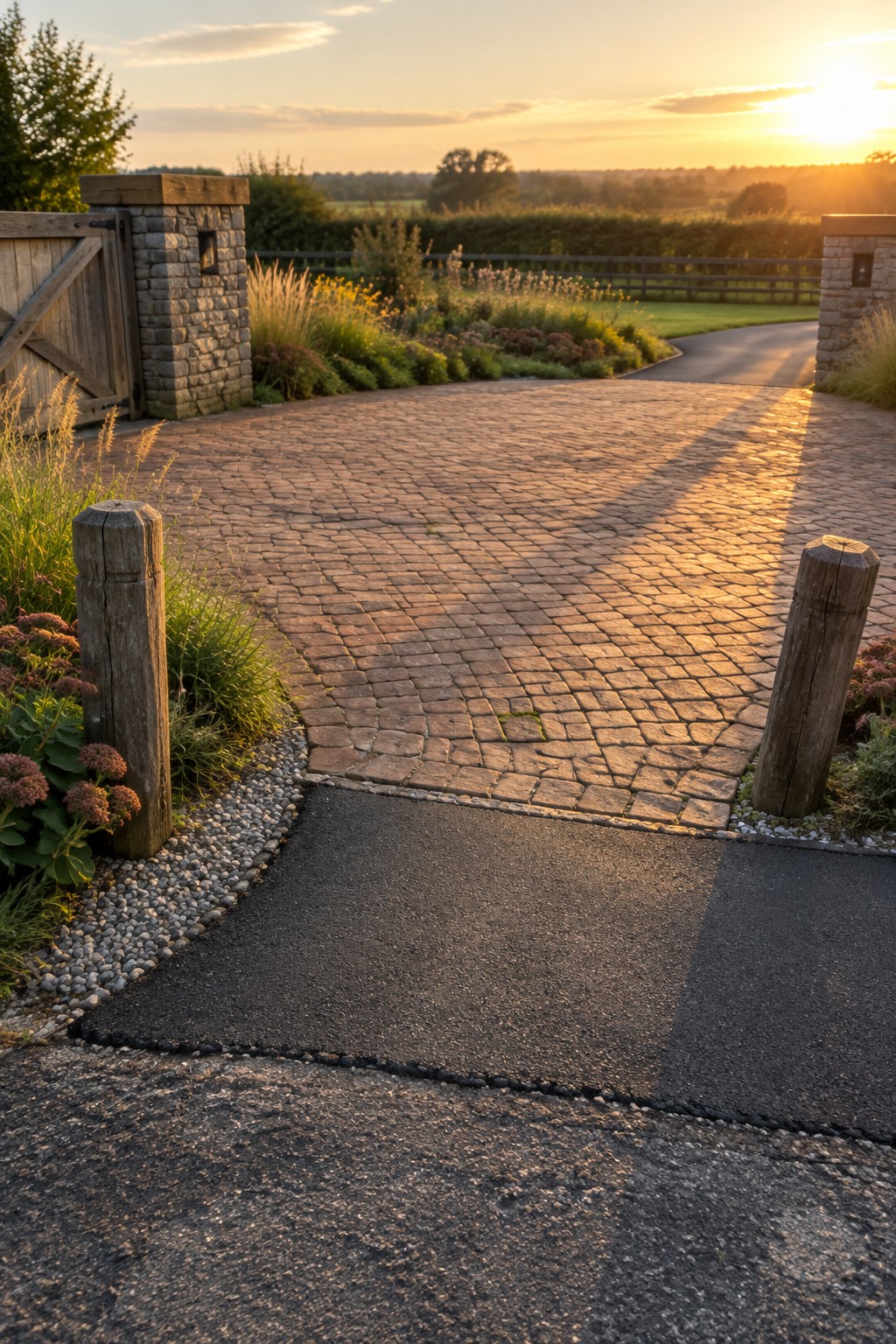
A paver section can make an asphalt driveway feel more finished while giving cars a defined place to park or turn. The change in surface is practical, too, since pavers are easy to repair one section at a time.
Use a broad paver area where the driveway meets a gate or parking space, and keep its edge clean where it meets the asphalt. A cobbled pattern, like the one shown here, suits a traditional property, but choose pavers that can handle regular vehicle traffic.
Define the Parking Area With Paver Borders
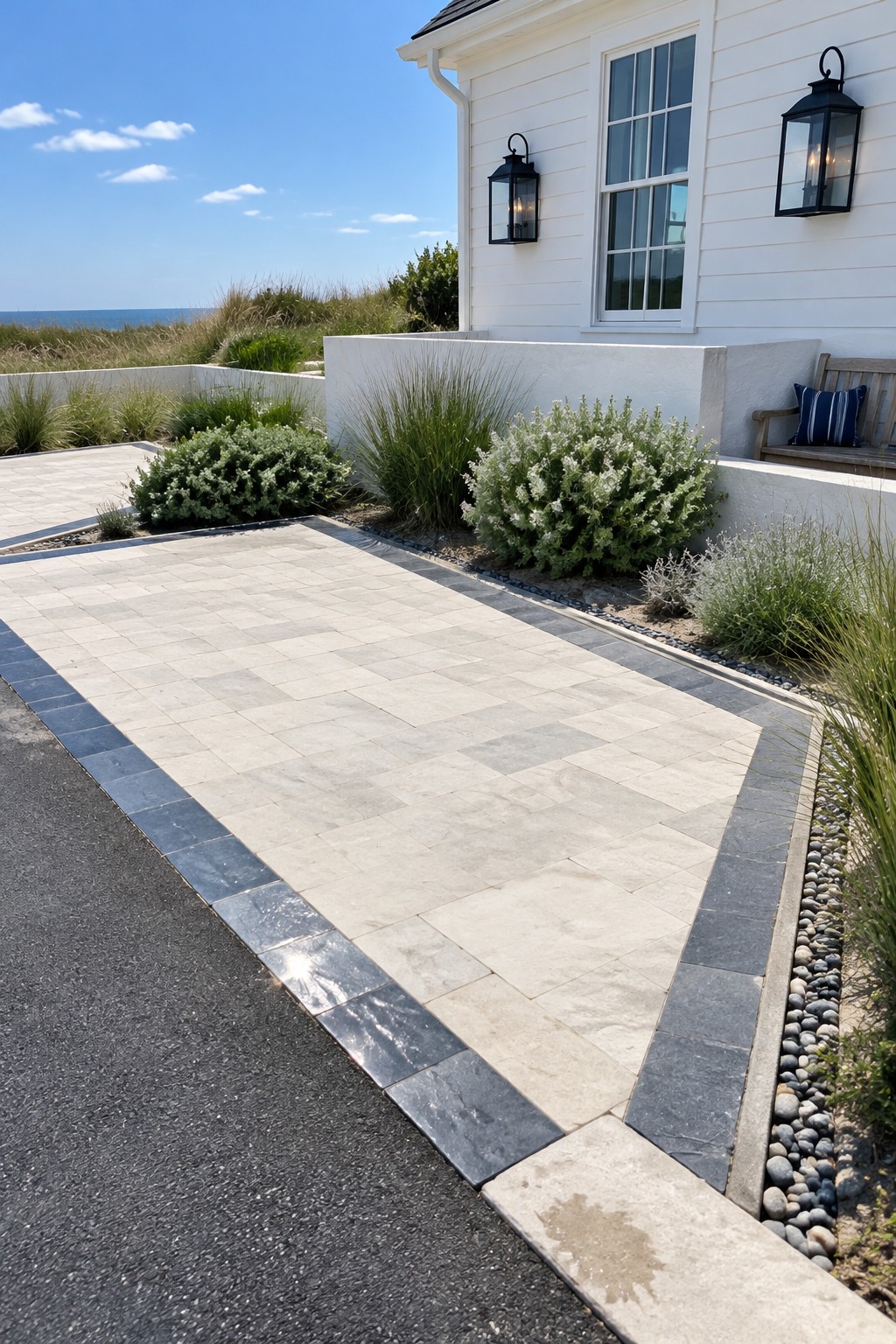
A paver border gives an asphalt driveway extension a clear edge and makes the parking area feel like a planned part of the yard. Using lighter pavers in the main area and darker ones around the perimeter is an easy way to set it apart.
This approach works well where asphalt meets a front walk or planting bed. Choose pavers rated for vehicle traffic, and make sure the base is prepared to handle the weight of parked cars.
Use Paver Bands to Break Up a Long Driveway
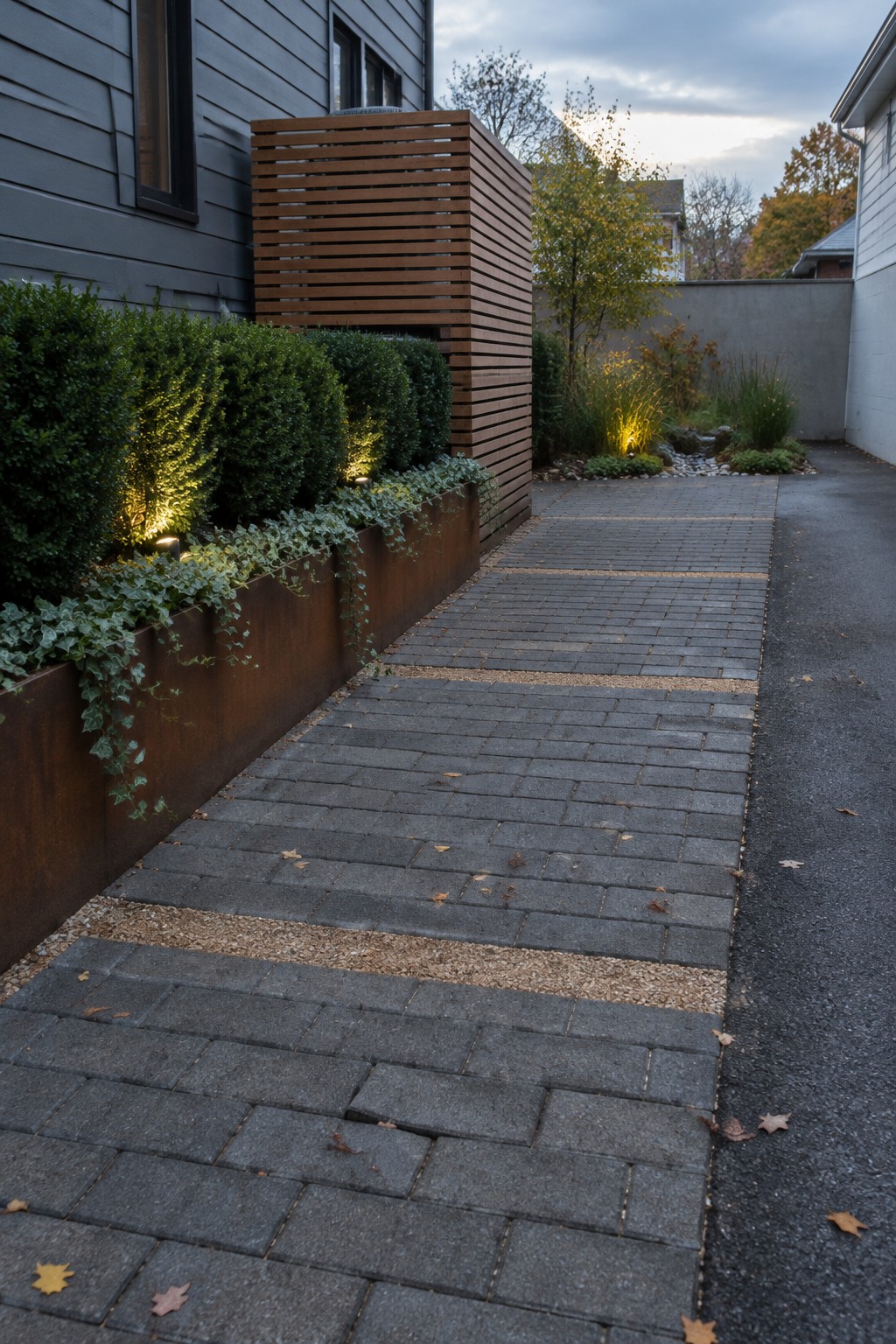
Paver bands can give a long asphalt drive a more finished look without replacing the whole surface. They also make a clear transition into a paver parking area, as shown by the contrasting strips across this walkway.
Use the bands where a driveway extension meets a parking pad or at intervals along a wide paved area. Keep them level with the asphalt so they’re easy to drive over, and choose a durable paver that can handle vehicle weight.
Use Brick Pavers To Mark a Parking Area
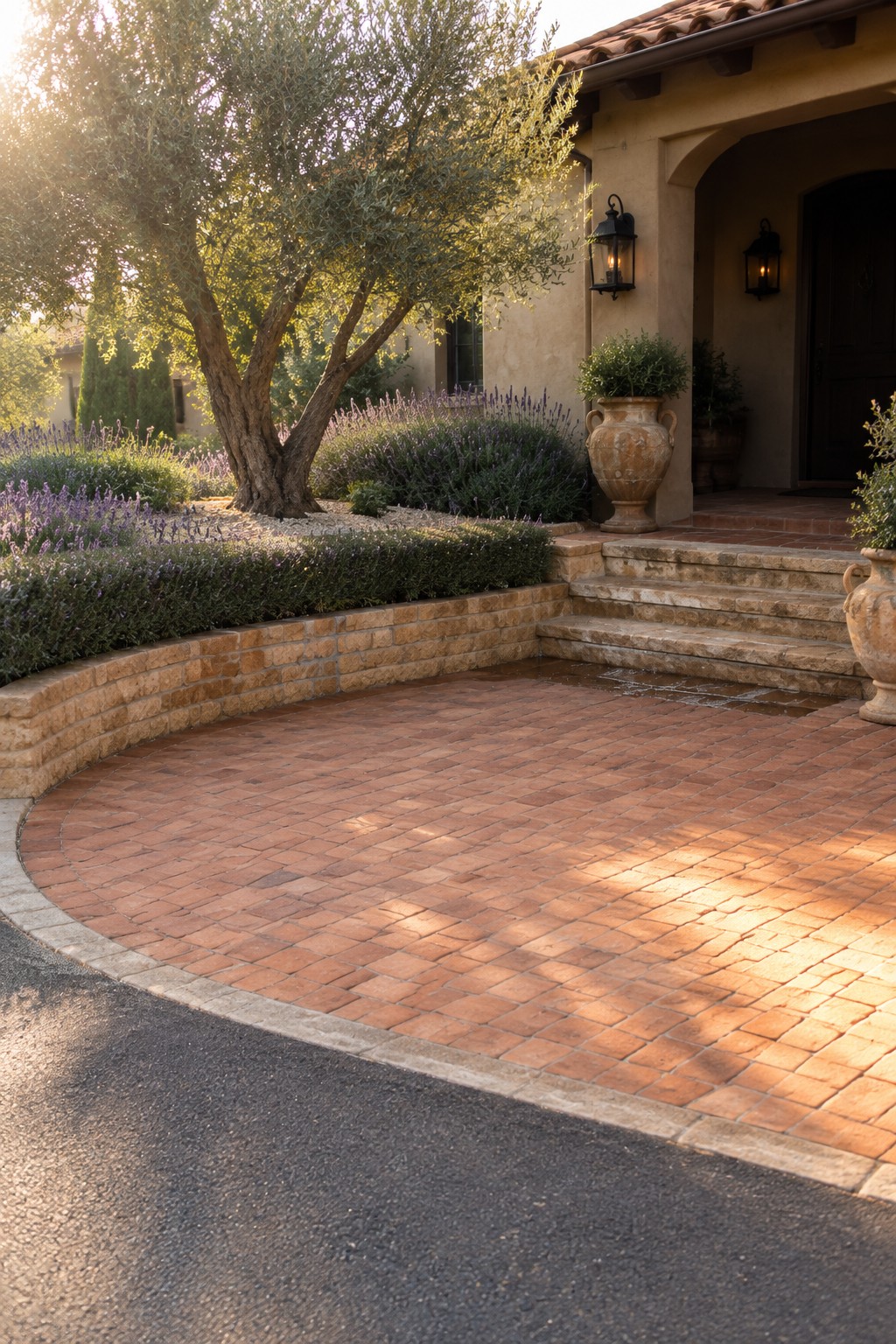
A brick-paver area can give an asphalt driveway a more finished look while providing a clear place to park. The warm brick surface and curved stone edge shown here also suit homes with traditional stucco exteriors.
For a similar setup, use pavers to create a defined parking bay beside or at the end of an asphalt drive. Keep the edge neat and make sure the paver surface is properly graded so water drains away from the house.
Add a Paver Walkway Beside the Parking Area
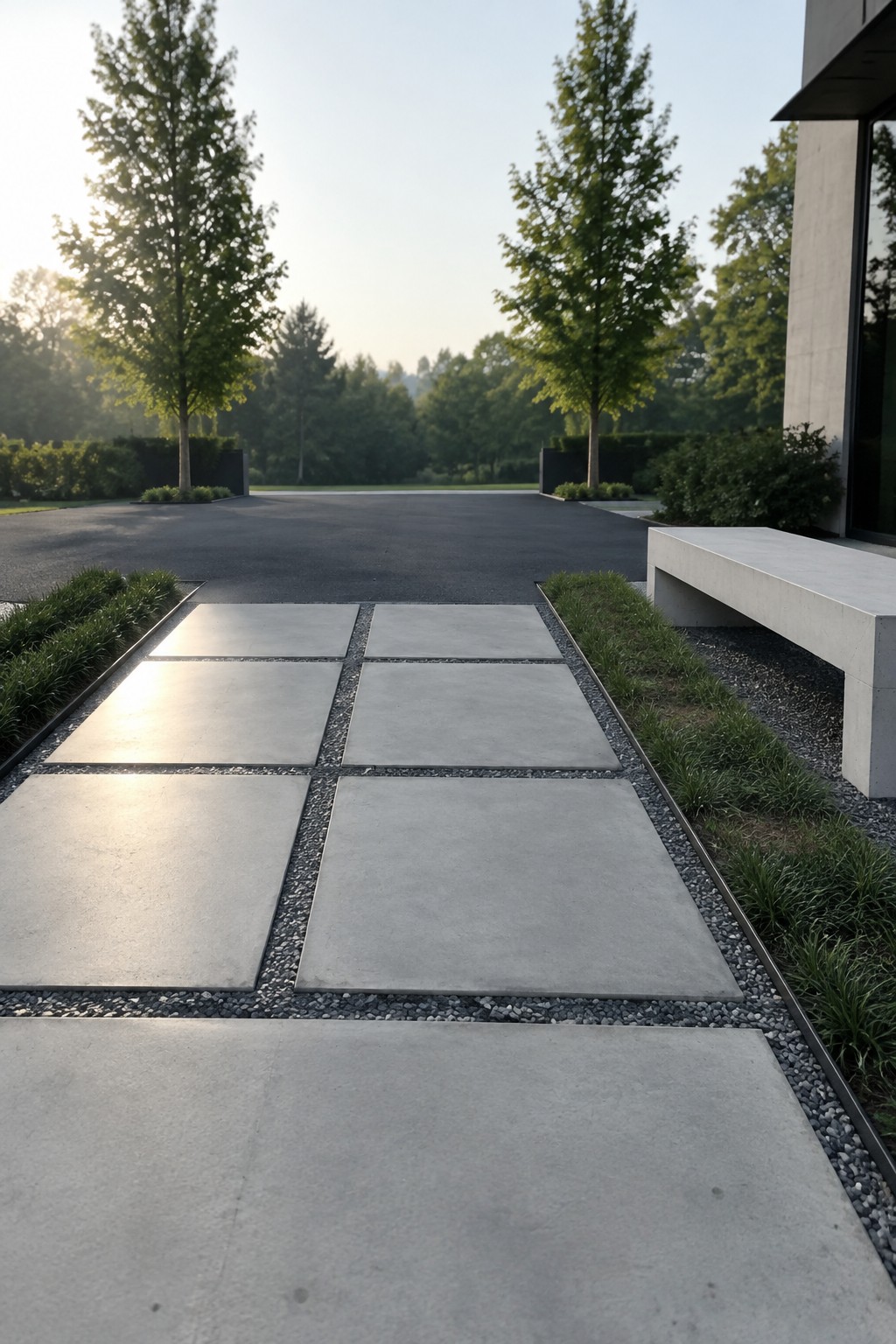
A paved walkway can give an asphalt parking area a clear pedestrian route to the front entrance. Large concrete slabs set in gravel keep the path simple and practical, while making it easy to see where people should walk.
Keep the walkway wide enough for comfortable foot traffic and use a surface that sits level and drains well. This layout suits a modern home, especially when the path runs directly from the driveway toward the entry.
Add a Paver Apron Near the Garage
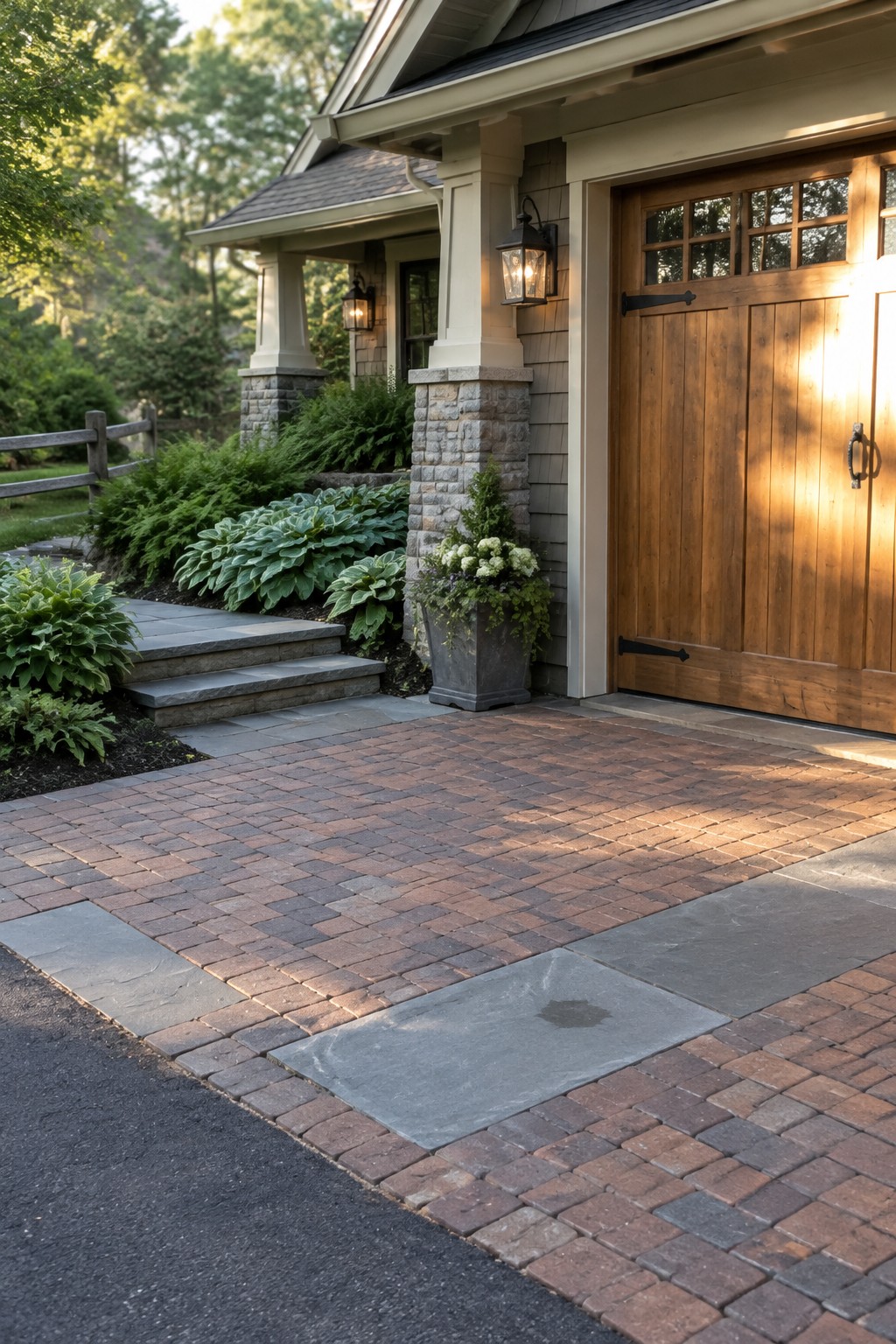
A paver area at the garage can give an asphalt driveway a more finished transition and provide a useful spot for parking or turning. The large stone inserts break up the smaller brick pattern and mark the approach to the door.
For a similar layout, keep the pavers level with the asphalt and use a clean, sturdy edge where the materials meet. It works well when you want to extend parking without paving the whole driveway in one material.
Use Pavers To Define a Garden Path
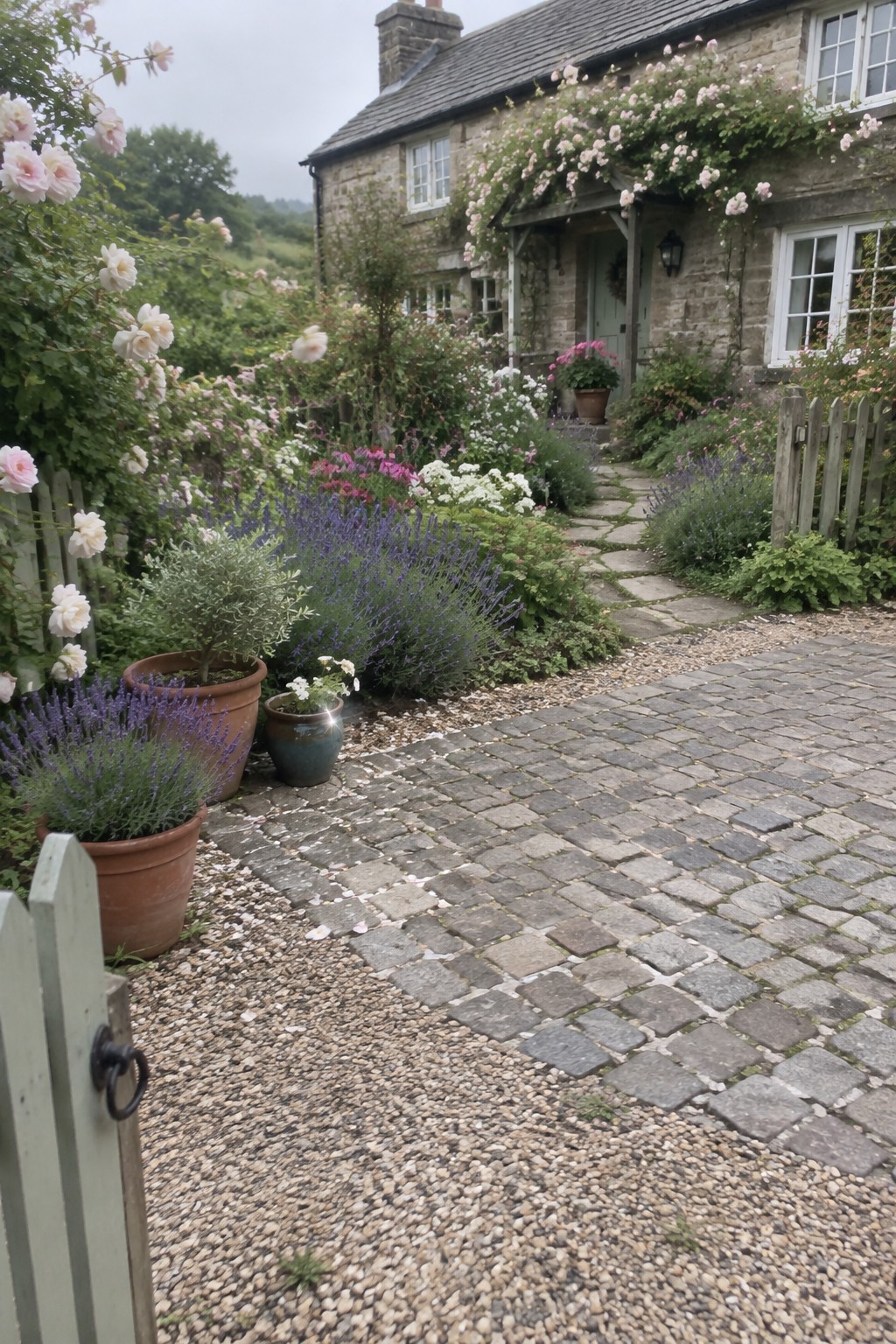
A clear path makes a planted garden easier to move through and keeps foot traffic from wearing down the beds. Here, large stone slabs lead toward the cottage, while a cobbled surface marks the approach.
For a similar effect, lay stepping stones through a flower bed or along the edge of a paved area. Leave enough room between plants and stones to keep the route easy to maintain and comfortable to walk on.
Use Grass Joints Between Large Pavers
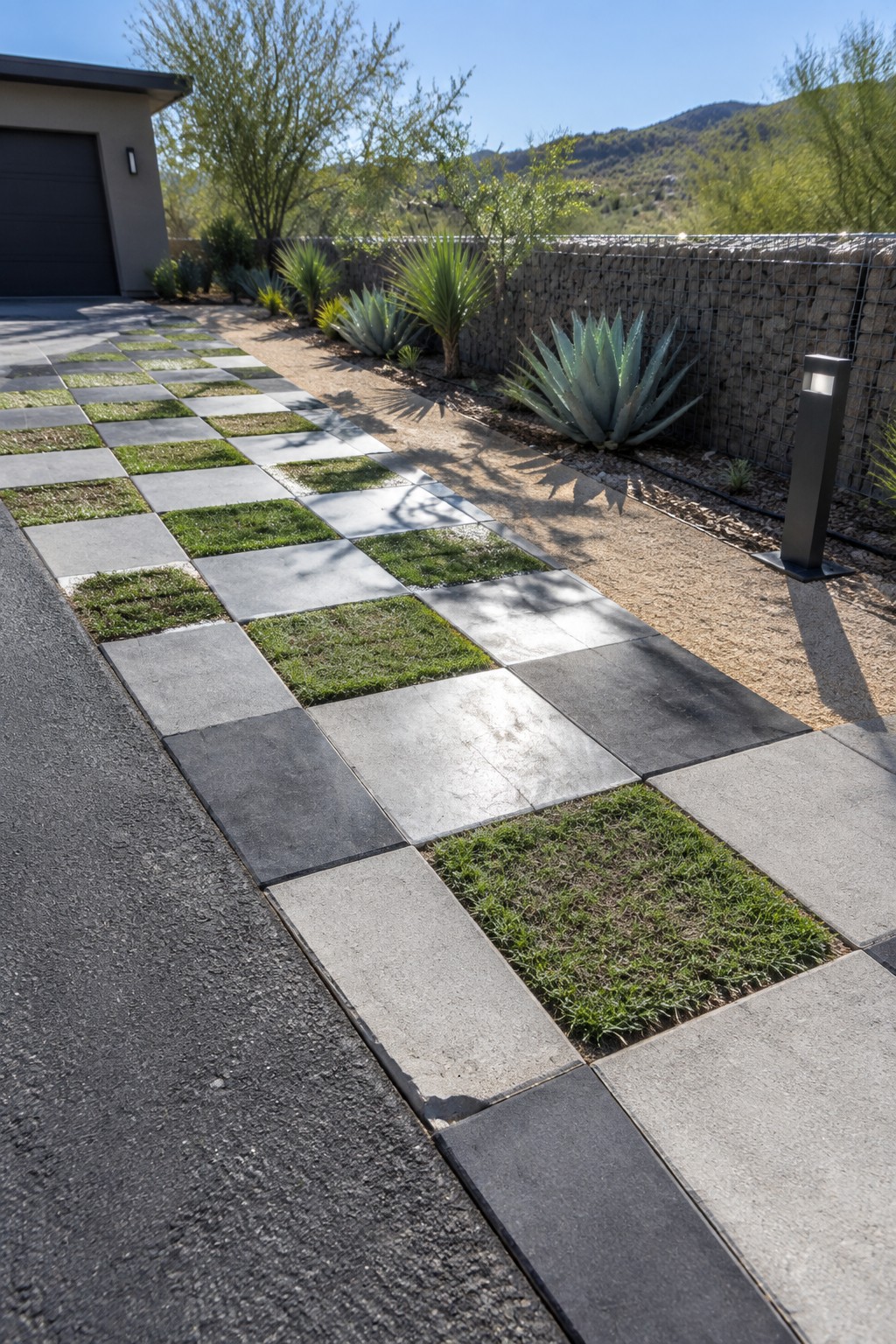
Large concrete pavers set into an asphalt driveway can mark out a useful parking area without making the whole surface feel paved over. The strips of grass between them give the layout a softer, more open look while still providing a firm place to park.
This approach works best on a level area where cars can roll smoothly across the pavers. Keep the gaps narrow enough to manage, and choose grass or a tough low-growing ground cover that can handle some wear.
Use Stone Pavers To Create a Parking Pad
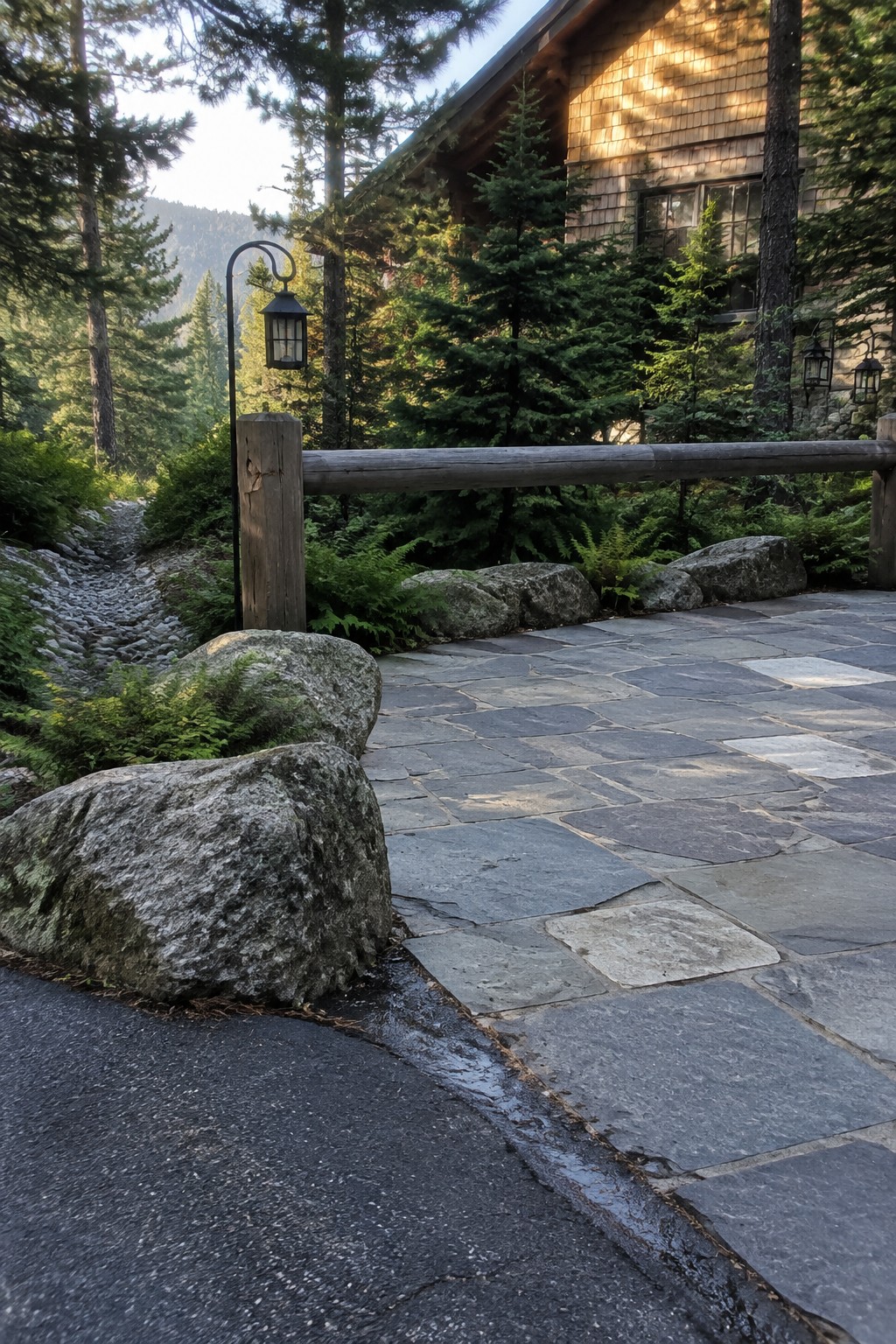
A stone-paver pad can make an asphalt driveway feel like part of a planned entry rather than a strip of pavement. Large, irregular pavers give the parking area a more natural look, especially near a wooded or rustic home.
For a practical extension, lay the pavers on a well-prepared, compacted base and keep the surface even where cars will turn or park. This approach suits homes where a broad paved area needs to blend into existing stonework.
Add Drainage Channels Along the Paver Parking Area
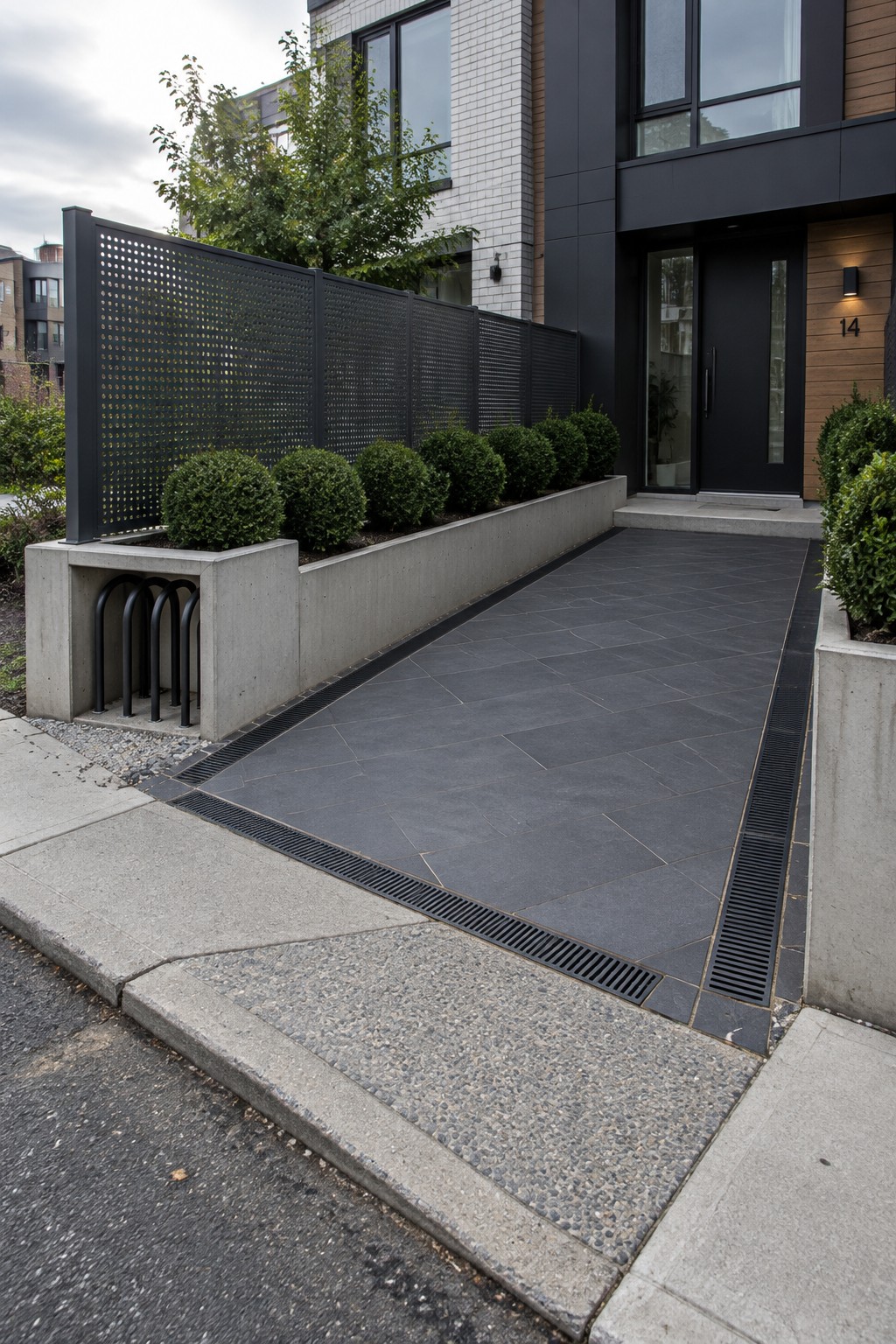
Linear drains can help manage runoff where a paved parking area meets the street and entry. Here, narrow metal channels sit along the edges of the dark pavers, keeping drainage built into the hardscape rather than leaving water to collect on the surface.
This approach can work well for a sloped driveway extension or a parking area beside the house. Plan the drain placement before laying the pavers, and make sure the channels connect to a suitable outlet.
Add a Small Seating Area Near the Driveway
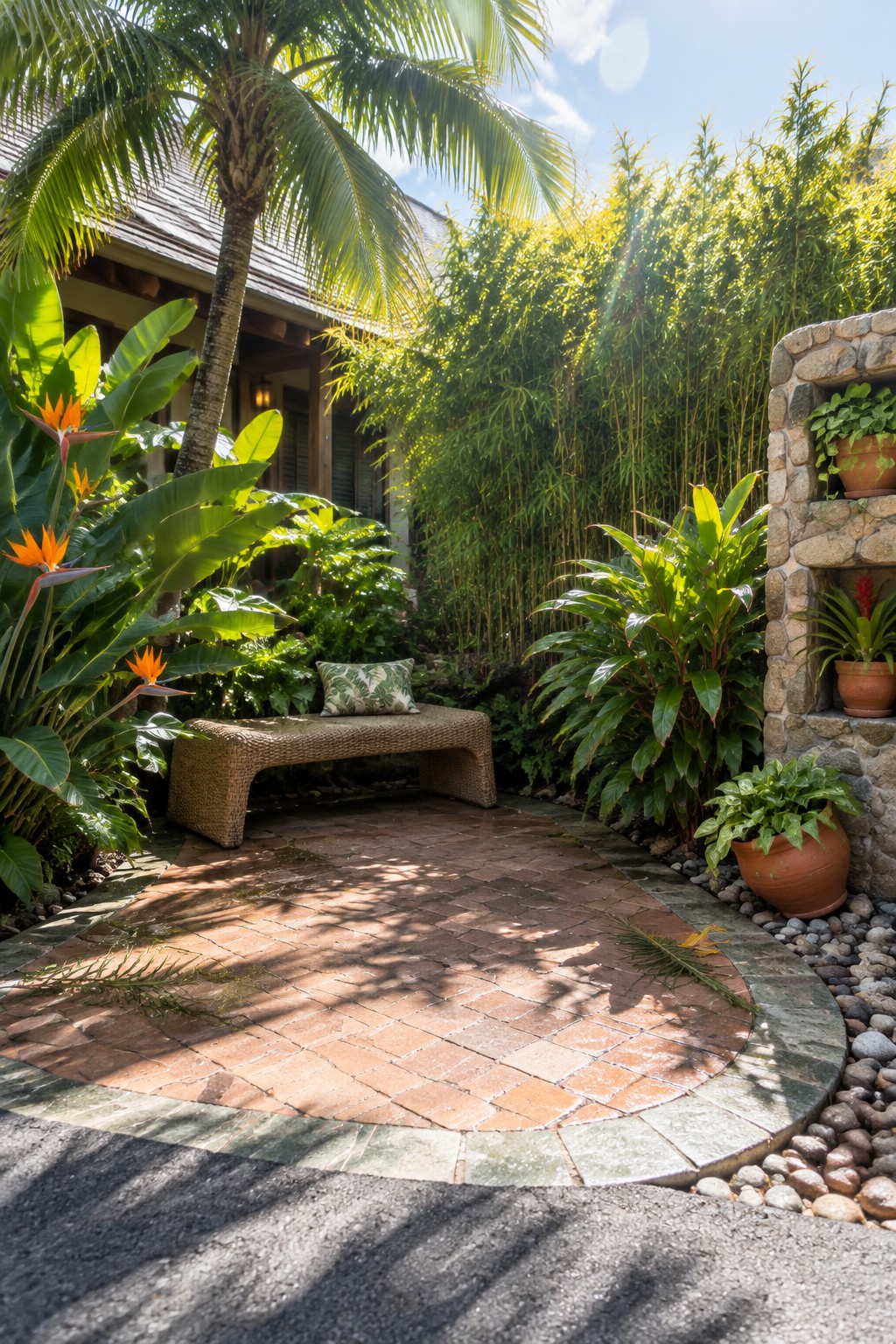
A small paved sitting spot can make an otherwise plain driveway edge feel more useful. A circular section of brick pavers creates a clear place to pause, without needing to pave the whole yard.
This idea works best where there is enough room to keep seating separate from cars and foot traffic. Use pavers that complement the driveway surface, and leave space around the edges for planting or drainage.
Use a Curved Paver Edge Beside the Parking Area
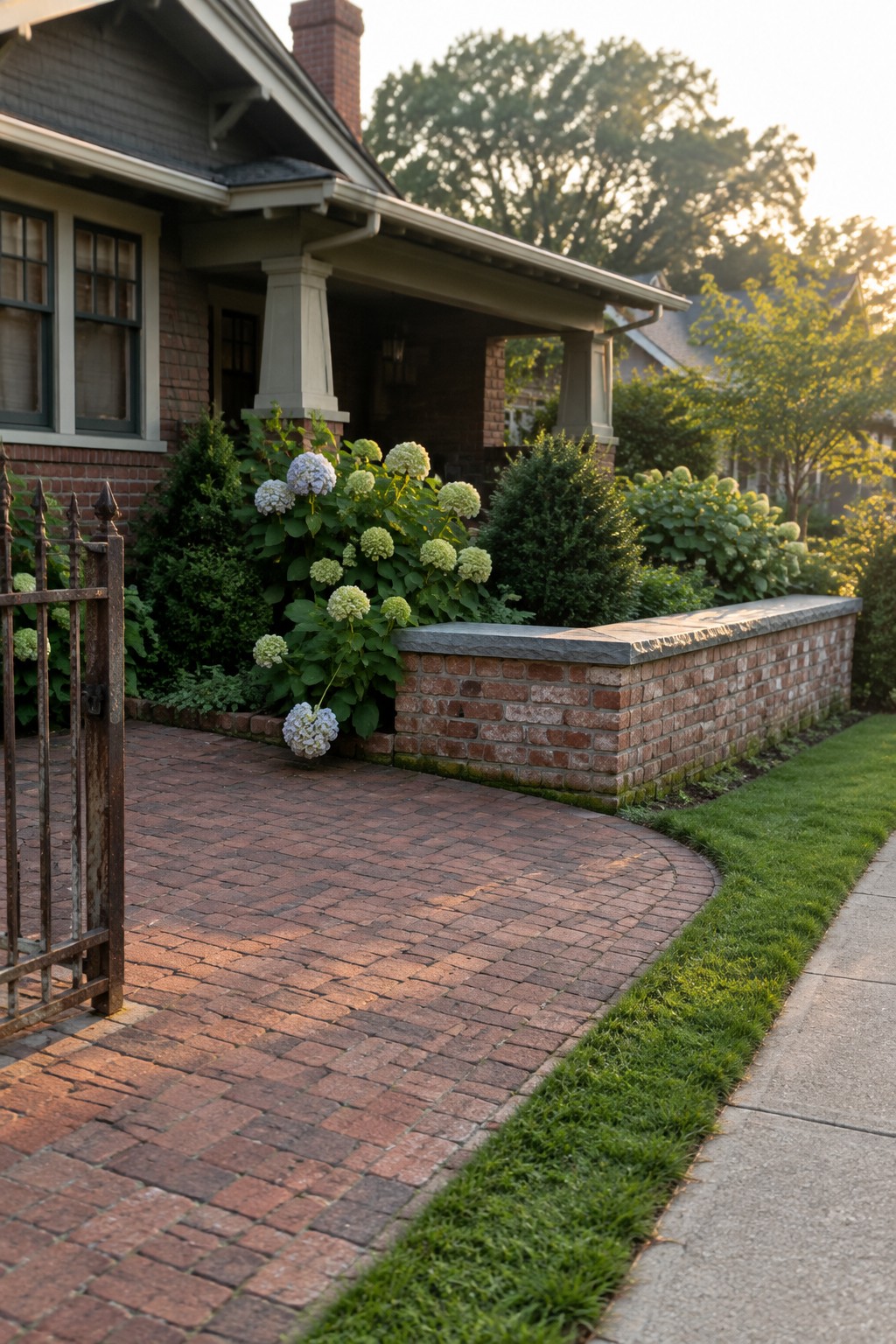
A curved paver edge can make a parking area feel less like a plain slab and help it meet a lawn or planting bed neatly. The rounded line shown here also gives the hard surface a more natural shape.
This approach works well where a driveway extension meets a front garden or sidewalk. Keep the curve wide and easy to follow so cars can turn in comfortably, and use a clear border to keep the pavers from shifting.
Use Large Pavers To Mark a Parking Strip
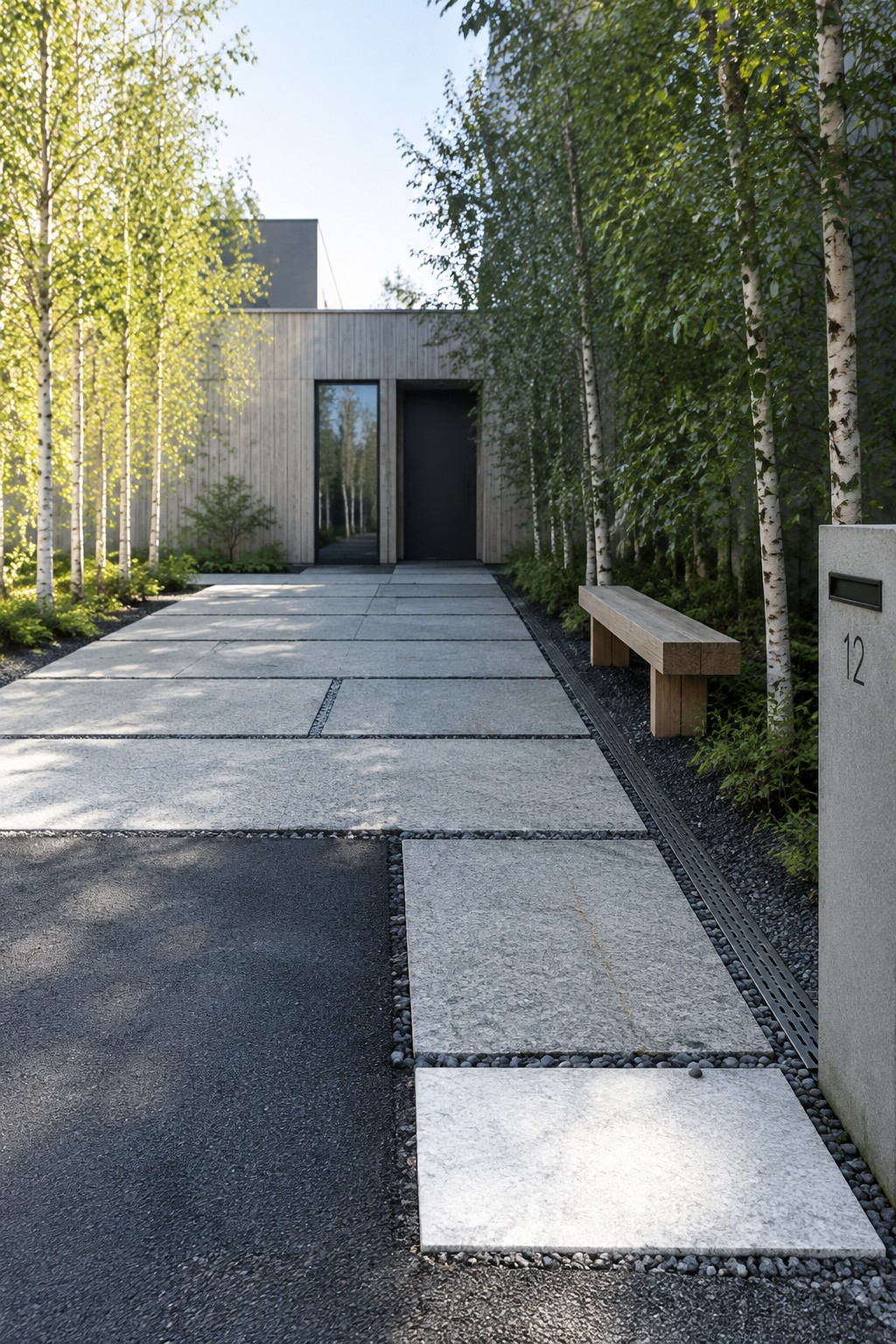
Large concrete pavers can extend an asphalt driveway while keeping a separate parking strip easy to see. The change in surface gives the paved area a clear edge without needing a raised curb.
This approach works well beside a narrow driveway or along the side of a house. Leave small gravel joints between the pavers for drainage, and make sure the stones sit level so they are comfortable to walk and park on.
Use a Grass Strip Between Paver Parking Lanes
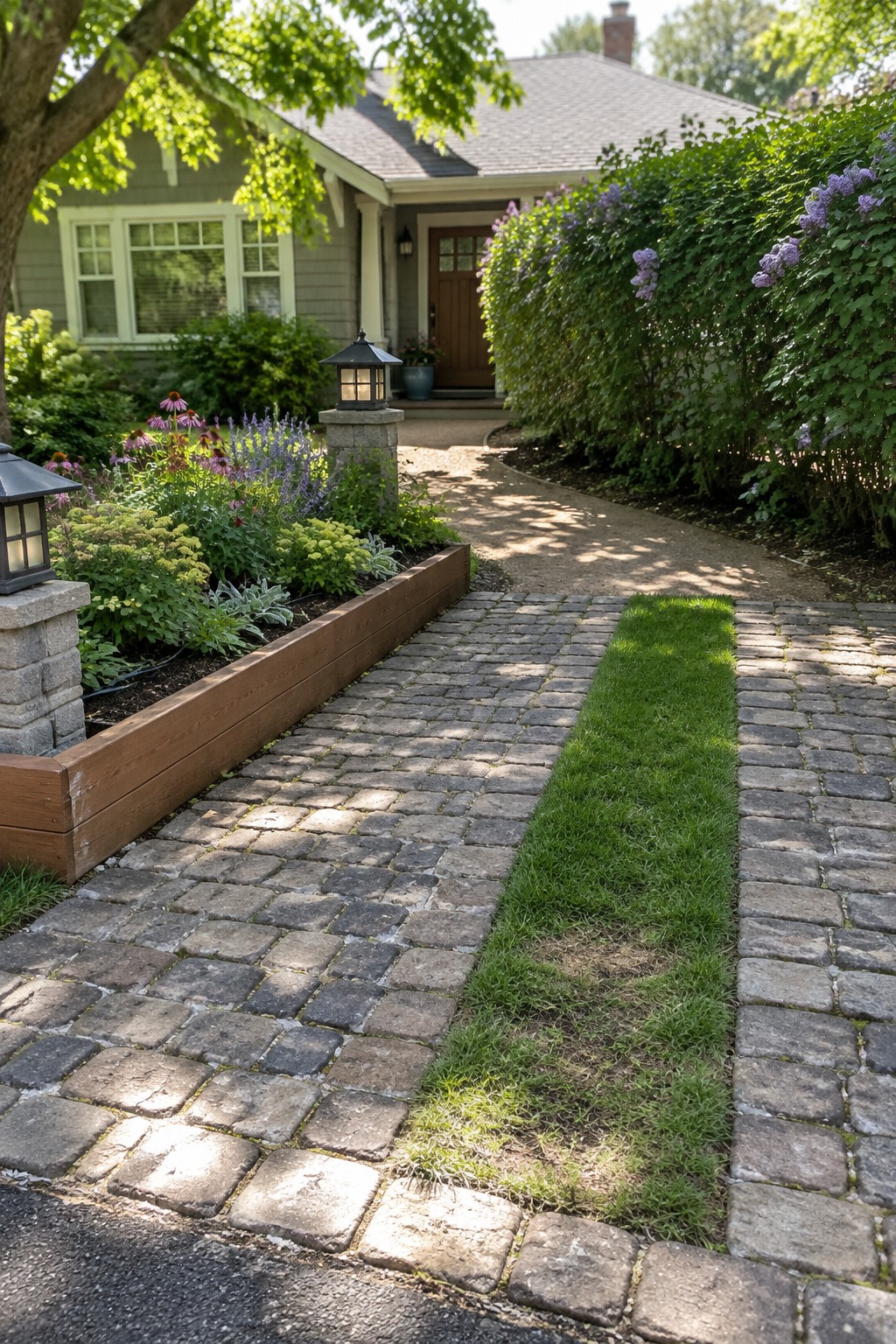
Splitting a paved area with a narrow grass strip can make a parking space feel less like one large slab. The green center adds a softer look while keeping firm paving on either side for tires.
This layout works best where there is enough width for two usable paver lanes and room for the grass to stay healthy. Keep the strip modest, and plan for easy mowing and drainage so it does not become a muddy rut.
Use Permeable Pavers Near the Driveway
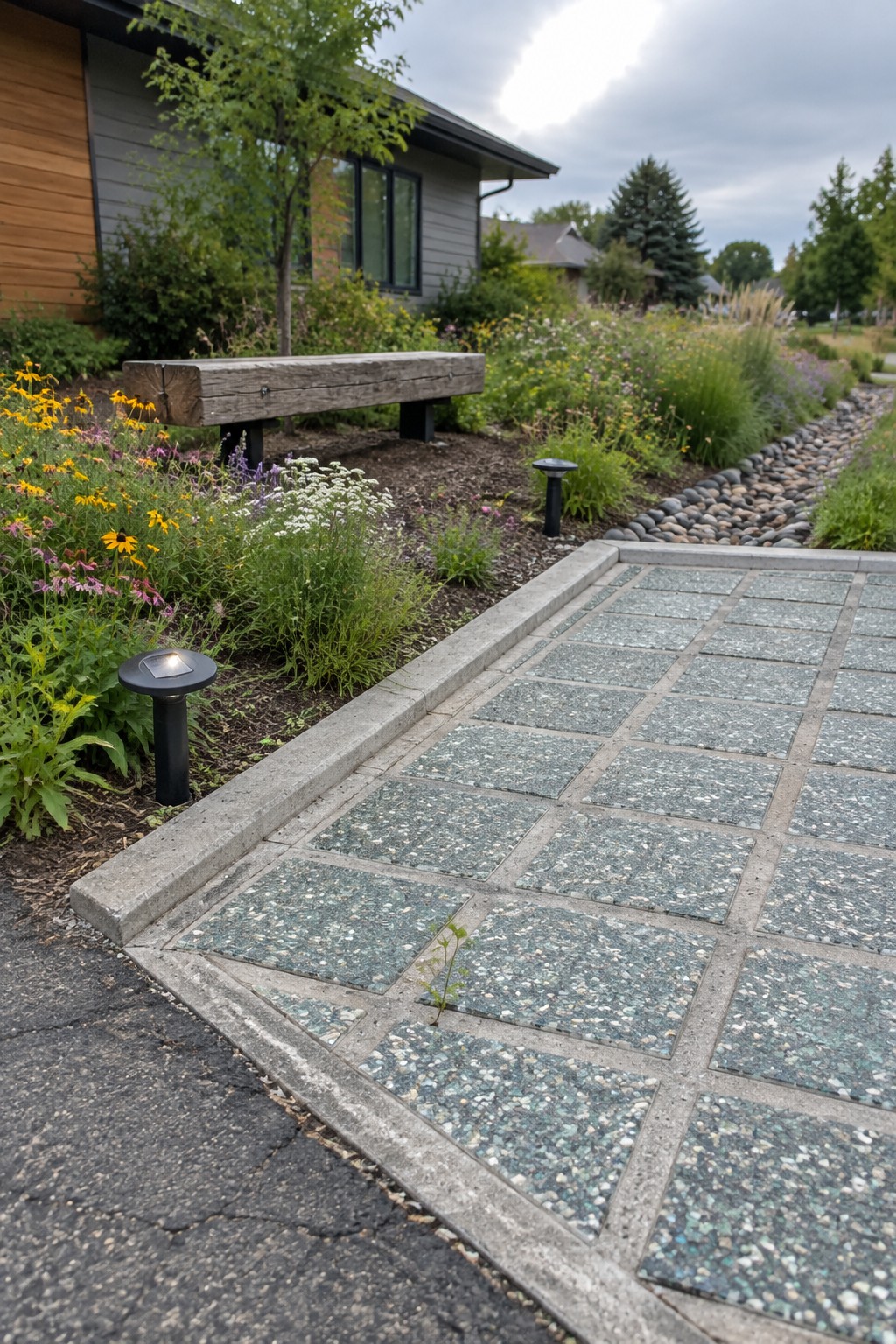
Permeable pavers can be a useful choice for a parking area or driveway extension where runoff needs somewhere to go. Their joints let water drain through instead of sending it all toward the street or garden beds.
For a similar look, use pavers with open or gravel-filled joints beside an asphalt drive, and keep the surface level and easy to walk on. A narrow strip of rounded stones can help guide water, but it should not create a tripping edge.
Frequently Asked Questions
Q: Can I add pavers to an existing asphalt driveway without replacing the whole thing?
A: Often, yes. A paver parking area can sit beside sound asphalt, but the edge needs solid support so the pavers don’t spread or settle. If the asphalt is badly cracked or sinking, fix that first.
Q: How do I keep the pavers from shifting where they meet the asphalt?
A: Use a firm edge restraint along the paver side and make sure the base is compacted well. A clean, supported joint helps keep both surfaces in place and makes the transition easier to drive over.
Q: Should the paver parking area be level with the driveway?
A: Keep the surfaces close to level, with a gentle slope for water to drain away from the house. A noticeable lip can catch tires or trip people, while a flat spot may leave puddles.
Q: Can I use pavers for a spot where I park a heavy vehicle?
A: Yes, as long as the base is built for the vehicle’s weight and the pavers are rated for driveway use. A thin or poorly compacted base can lead to ruts and uneven spots.
