


A brick border can give an asphalt driveway a more finished edge, but its shape and scale matter just as much as the brick itself.
I find that edging works best when it follows the driveway’s natural lines and relates to the home’s exterior, rather than looking like an afterthought.
The color, pattern, and width of the bricks can change how the entrance reads from the street, while practical details like drainage and mowing access affect how well the border holds up.
Some designs feel formal and defined, while others soften the transition between pavement, planting beds, and lawn.
I’d save the options that suit your home’s style and driveway layout, then adapt the details to fit your yard.
Brick Edging Gives an Asphalt Driveway a Finished Look
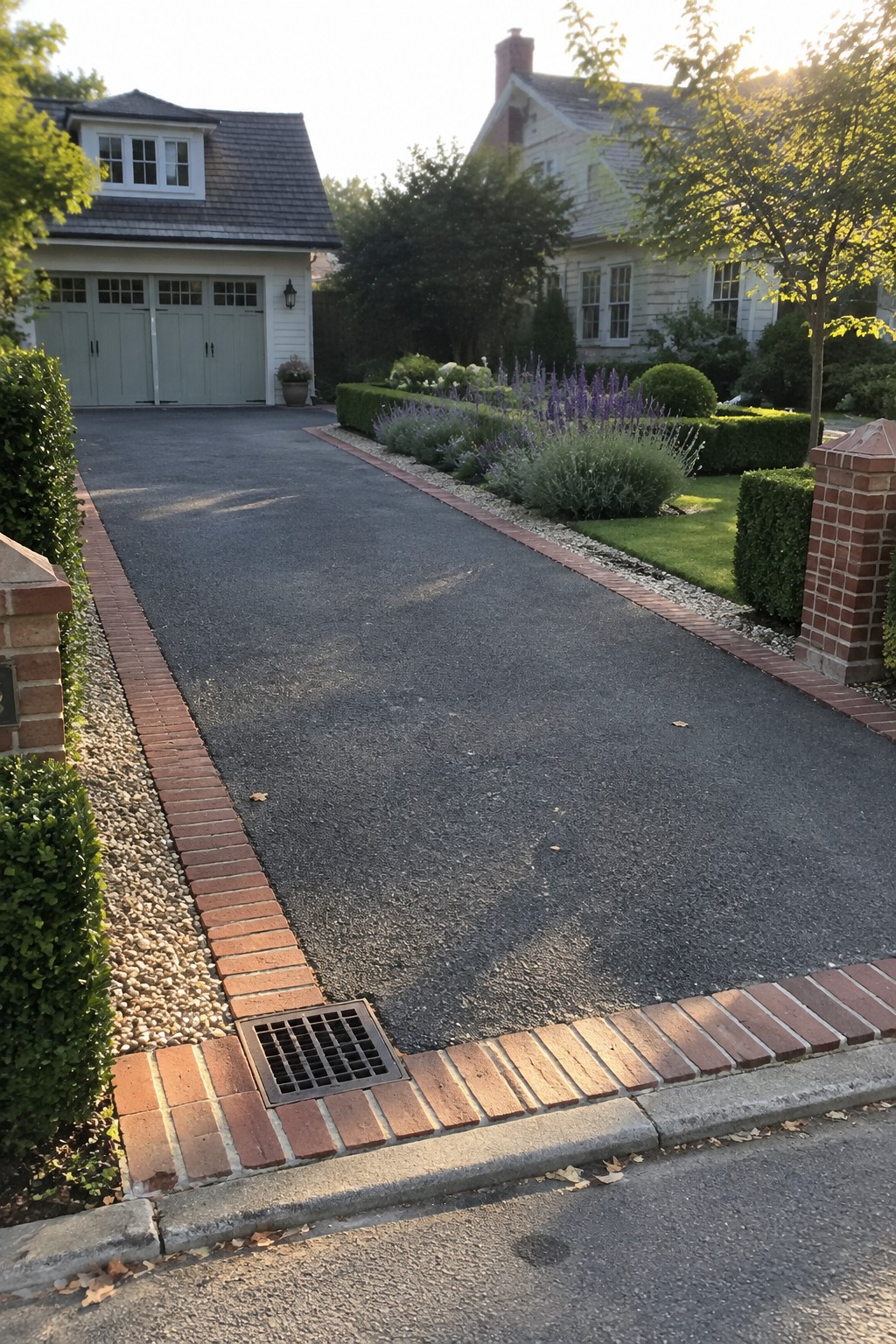
A narrow brick border is a simple way to give an asphalt driveway a more defined edge. It adds a traditional touch and helps separate the dark pavement from nearby garden beds and lawn.
This approach works well on straight or gently curving drives, especially at a classic-style home. Set the bricks firmly and keep the border even so it stays neat and can handle regular traffic.
Use a Curved Brick Border Along the Driveway

A curved brick border gives an asphalt driveway a clear edge while making its route feel less severe. Here, the brick follows the bend beside a low stone wall, so the driveway edge looks considered without taking over the landscape.
This approach works well where a driveway curves past garden beds or a front entry. Keep the border wide enough to show clearly, and make sure its base is stable so the bricks stay even over time.
Use a Raised Brick Border Beside a Flower Bed
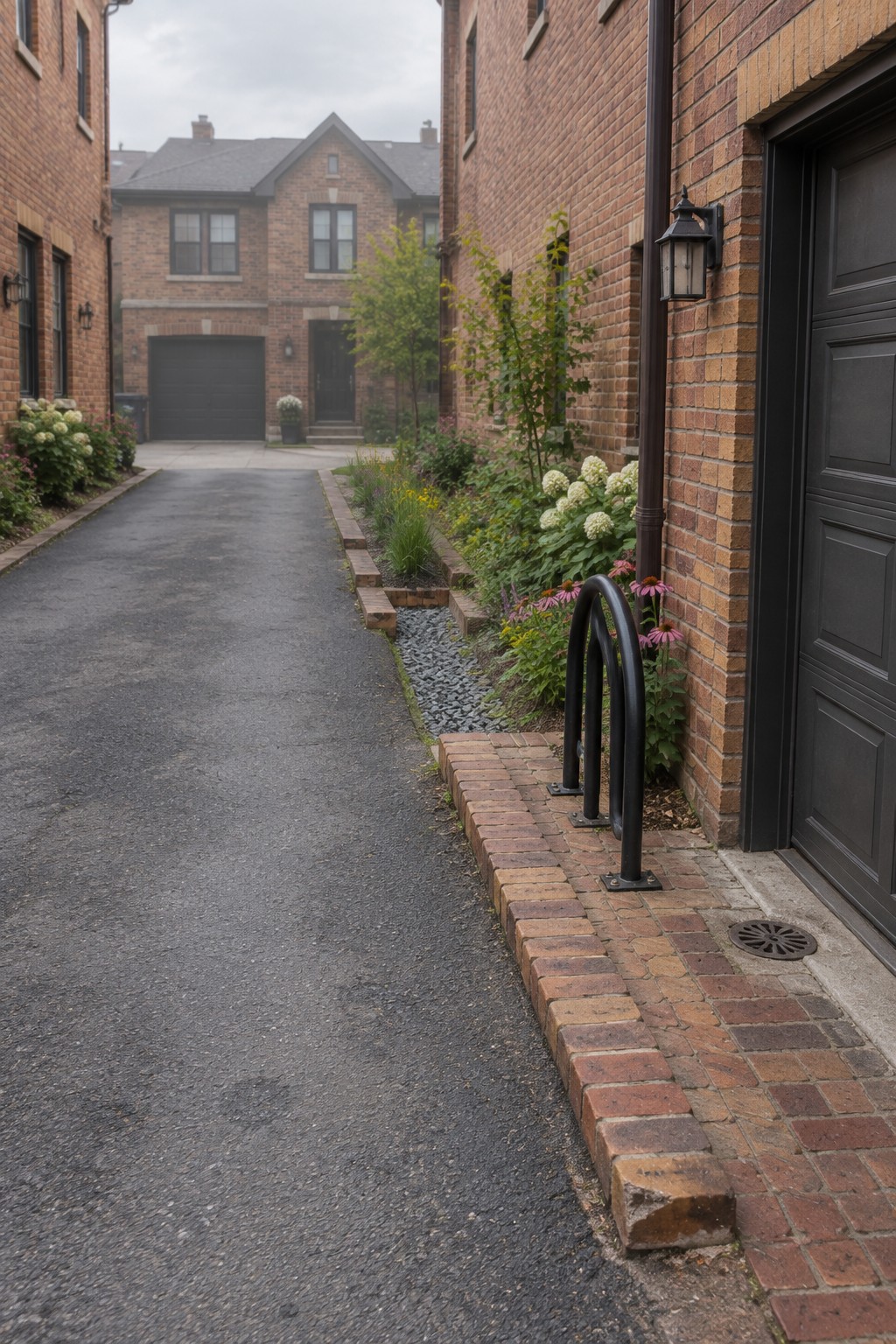
A brick border gives an asphalt driveway a clear edge and helps separate the paving from nearby garden beds. It’s a practical choice when you want the driveway to look finished without replacing the asphalt itself.
Use bricks along the sides of a straight or gently curved drive, keeping the border level and firmly set so it holds up to everyday use. A narrow planting bed beside the edging can add color, but leave enough room to keep plants from spilling onto the pavement.
Pair a Straight Brick Driveway Edge With a Linear Drain
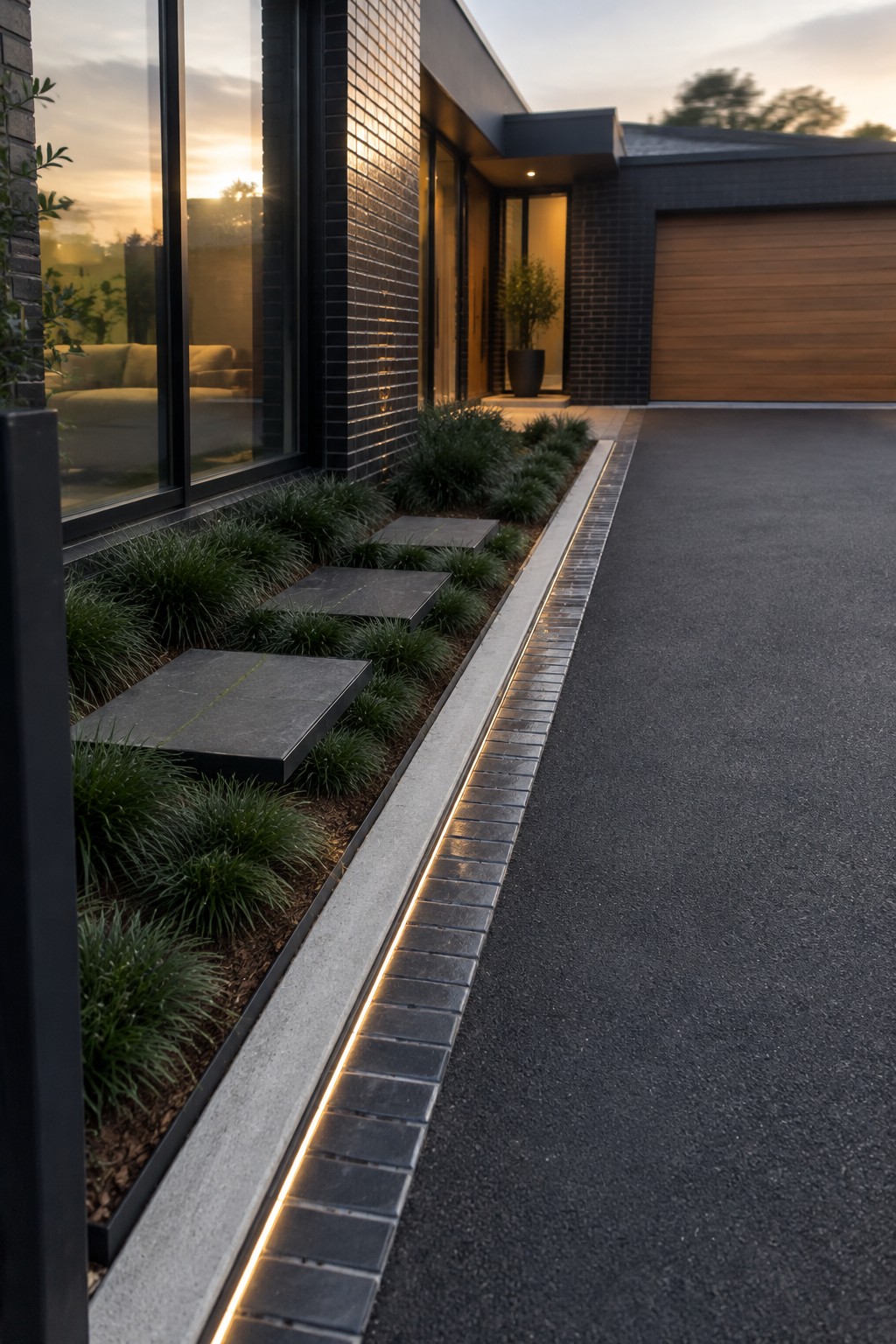
A narrow brick border can give an asphalt driveway a cleaner edge and help separate it from the planting bed. It’s a simple way to make the transition between pavement and garden feel planned.
Use bricks that suit the house, and keep the border wide enough to stay visible and stable. A straight line works well for a modern home like this one. The image also shows a slim drain beside the border, a practical detail to consider where water tends to collect.
Use Brick Edging to Continue a Garden Path
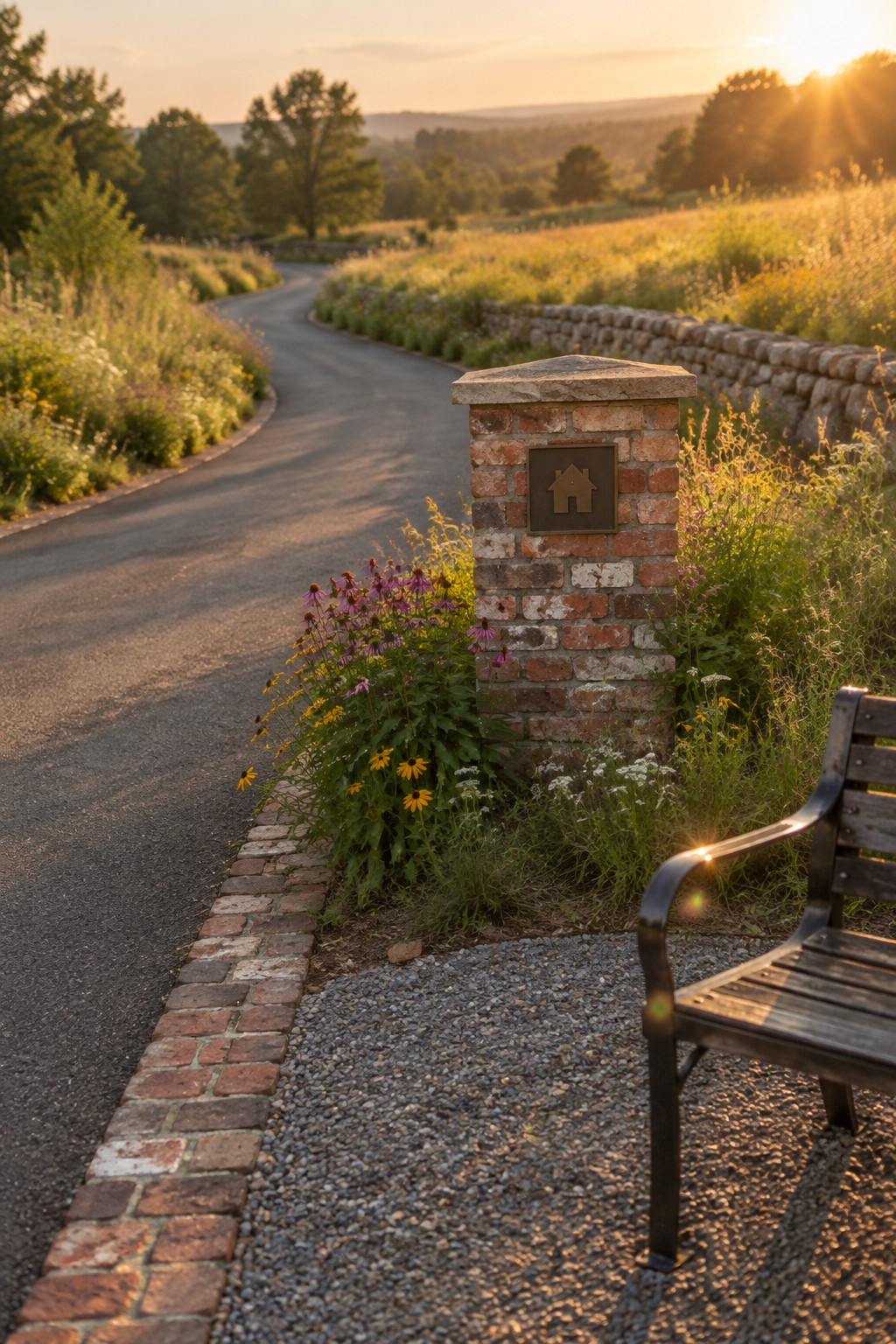
Brick edging can help an asphalt driveway feel connected to the rest of the landscape. A narrow brick strip beside the pavement gives the path a clear edge and carries the same material into the garden.
This approach works well where a driveway curves past planted beds. Keep the bricks level and securely set so they stay in place as cars pass nearby.
Use Light-Colored Brick Edging Around a Curved Garden Bed
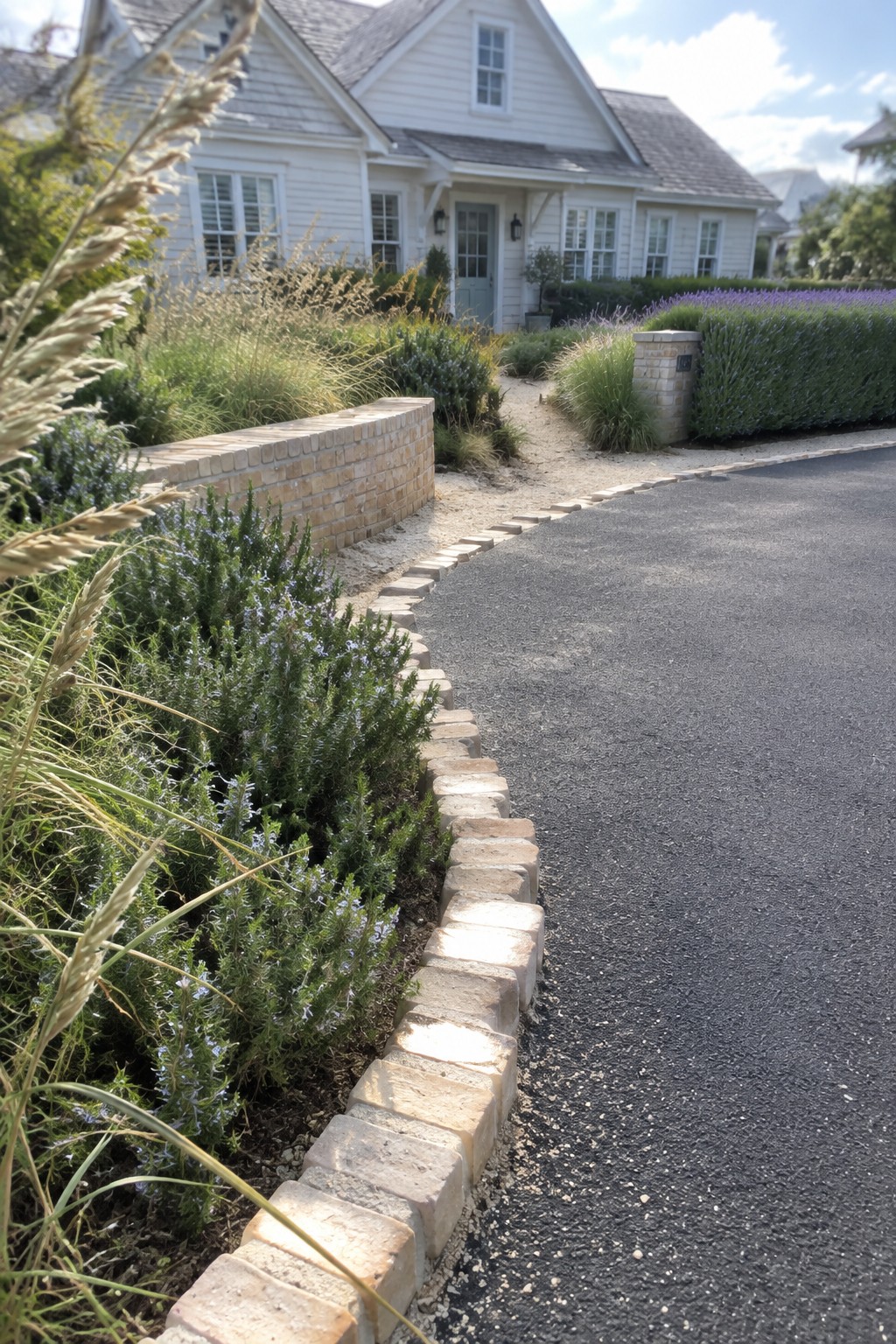
A low brick edge can guide the shape of an asphalt driveway while keeping the planting bed in place. A gentle curve feels less abrupt than a straight boundary and gives the driveway a more considered outline.
This approach works well where a driveway bends toward the house or meets a garden path. Choose sturdy bricks that sit securely at the edge, and keep the border low enough that it does not interfere with cars or create a tripping hazard.
Use Brick Edging to Shape a Circular Driveway
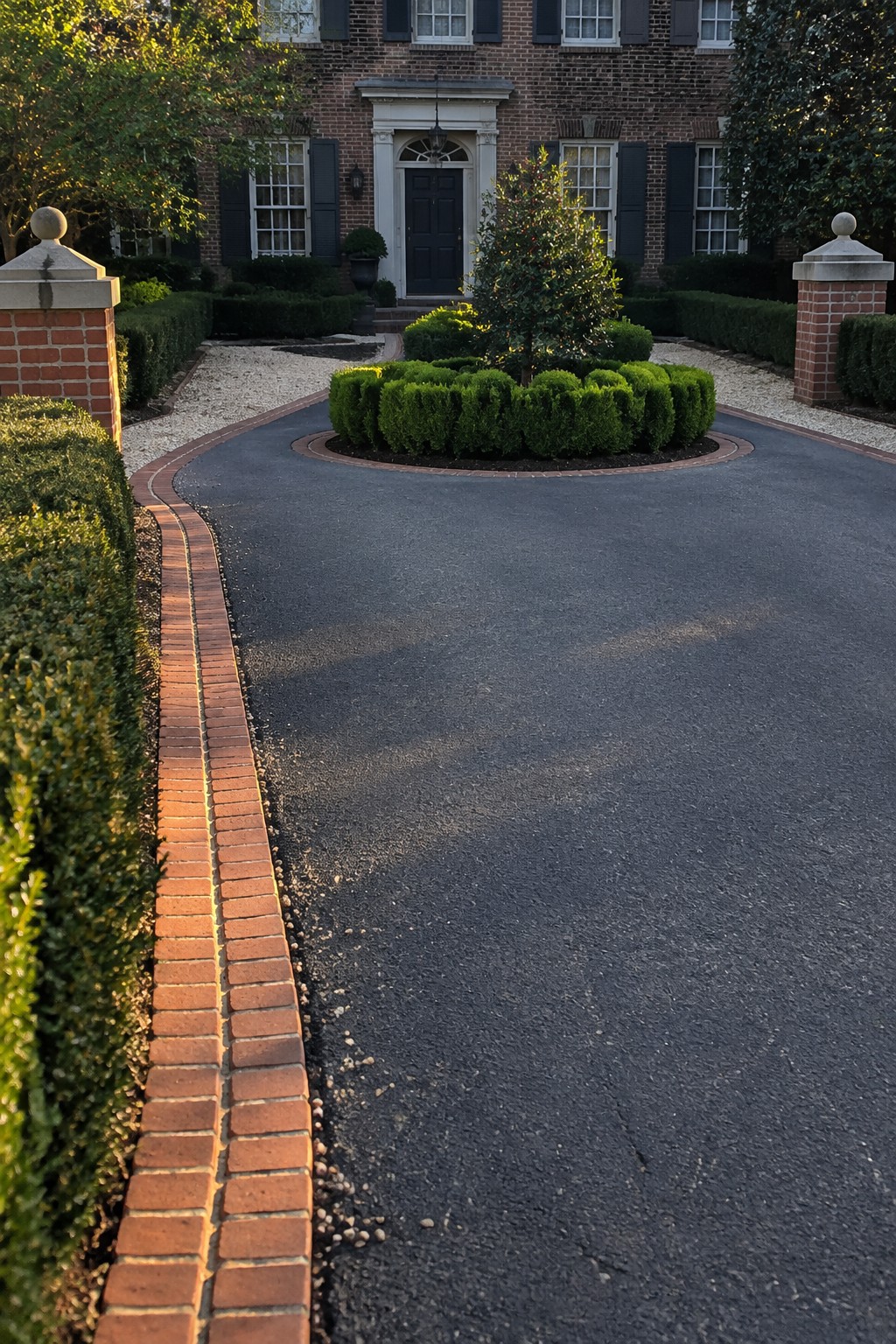
A brick border can give an asphalt driveway a clear, finished edge, especially where the pavement curves around a planted island. The circular layout makes the edging feel intentional rather than like a simple strip along the side.
This approach works well for a larger front yard with room for a turning area. Keep the brick courses even around the curve, and choose a border width that defines the asphalt without taking over the drive.
Use Brick Edging to Shape a Planted Border

Brick edging can give a garden bed beside an asphalt driveway a clear, tidy outline. Here, a low brick wall also raises the bed slightly, making the planting feel like a defined part of the driveway design.
This approach works well where a driveway borders a sloped or raised garden. Keep the wall low enough to see the plants, and use a consistent brick pattern so the edge looks neat rather than bulky.
Add a Stepping-Stone Path Inside a Brick-Bordered Driveway
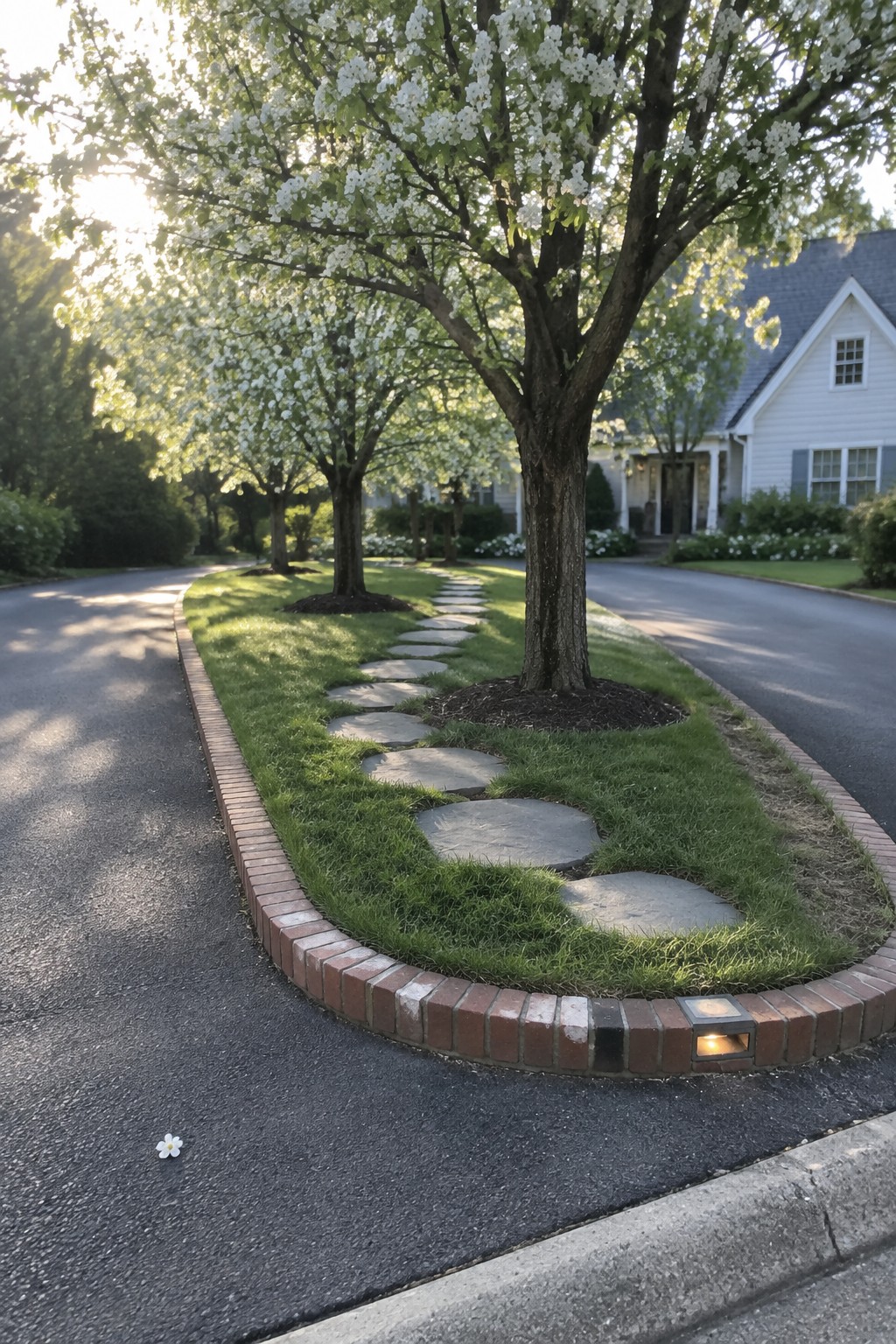
A brick border can do more than mark the edge of an asphalt driveway. Leaving a strip of lawn inside the border gives you room for a stepping-stone path, making it easier to walk between the street and the house without crossing the grass.
This works well on a wide driveway with a landscaped island or curved edge. Set the stones firmly and leave enough space around them for mowing and tree roots.
Use Brick Edging Along a Narrow Driveway
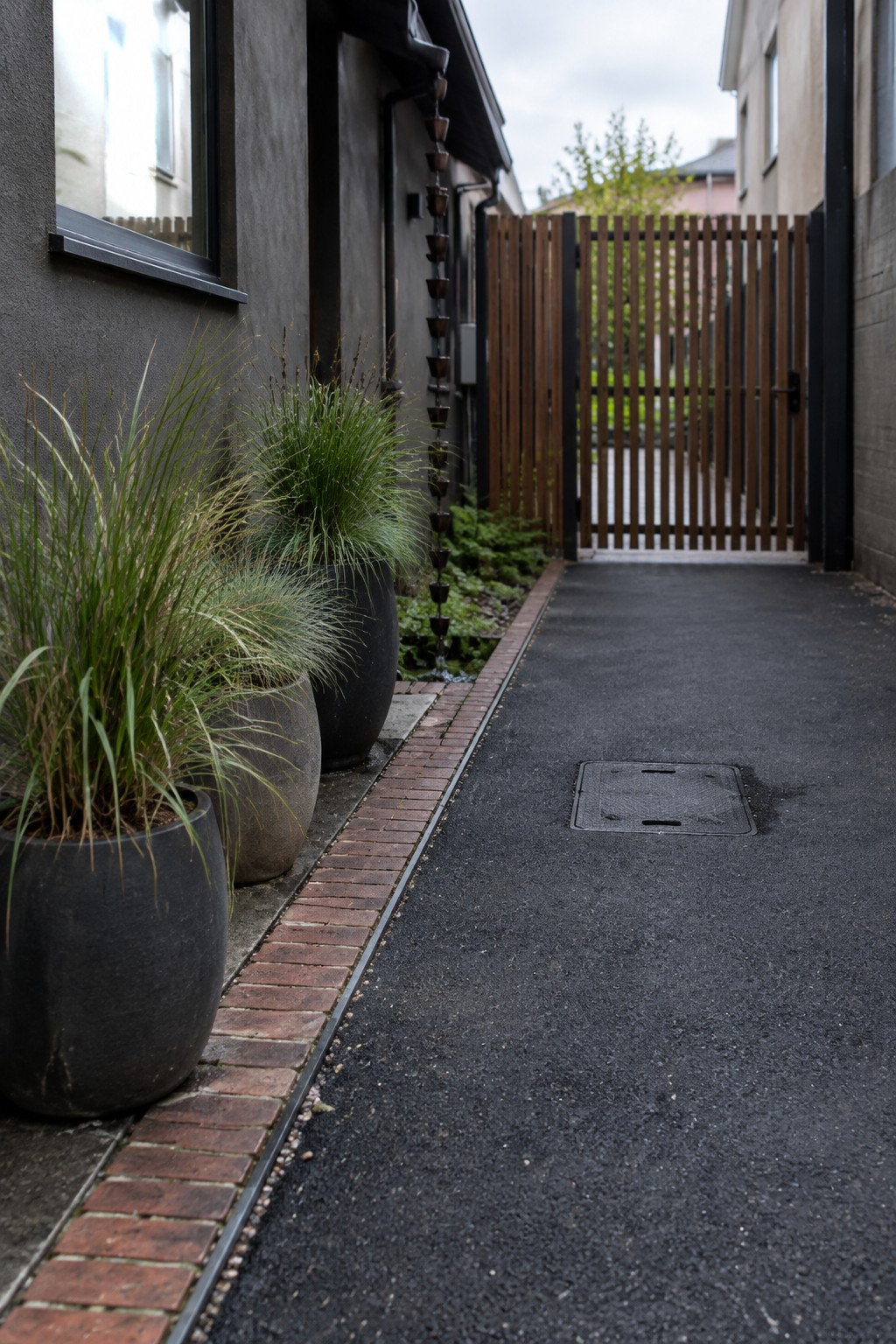
A narrow asphalt driveway can feel more orderly when a brick strip marks its edge. The bricks give a clear boundary between the pavement and the planting area without taking up much space.
For a similar look, lay bricks in a straight line where the driveway meets a garden bed or walkway. Keep the border level and secure so it stays neat under regular use.
Use Brick Borders to Connect the Driveway to the Entry
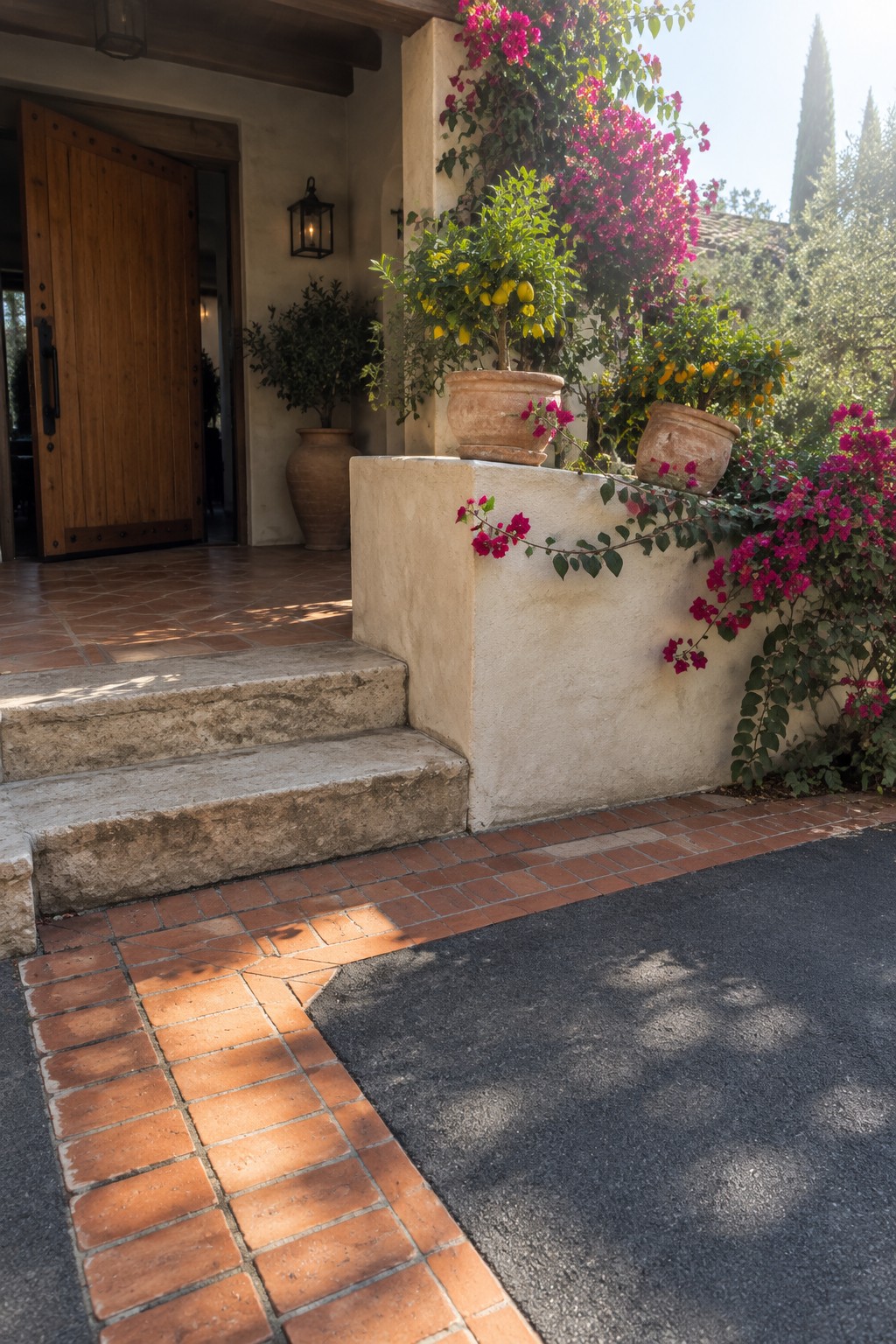
A brick border can help an asphalt driveway feel like part of the home’s entry instead of a separate stretch of pavement. Carrying the same brick toward the steps gives the approach a clear, connected route.
This idea works especially well at homes with brick or terracotta paving near the front door. Keep the border simple and consistent, and make sure it sits flush with the asphalt so it does not become a trip edge.
Use Brick Edging to Separate a Planting Strip From the Driveway
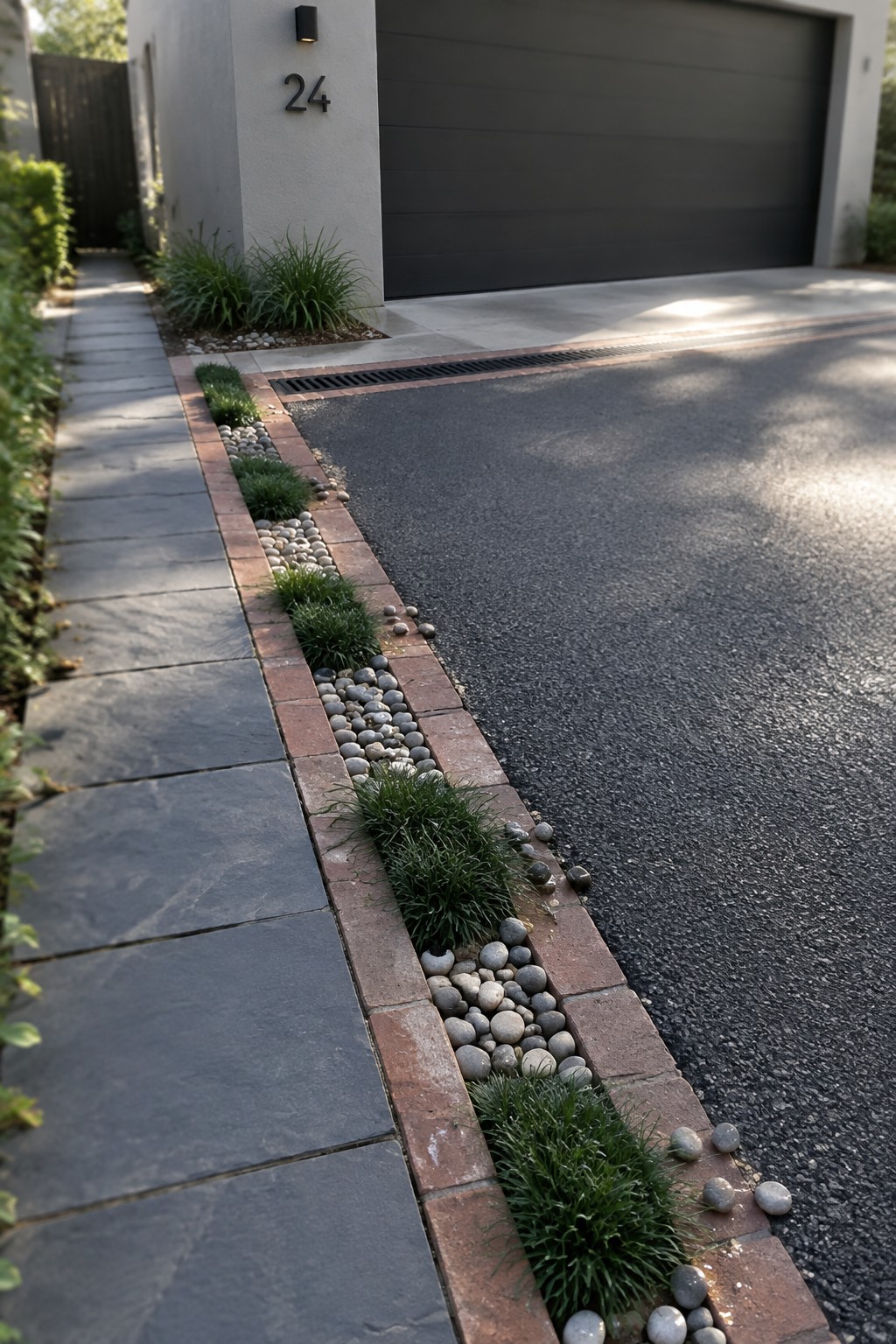
A narrow planting strip can make the edge of an asphalt driveway feel more intentional. Here, brick borders the strip and keeps its river stones and small grasses from spilling onto the pavement.
This approach works well where a driveway runs beside a walkway or garden bed. Keep the planting strip wide enough to maintain, and choose plants that stay compact so they do not crowd the path.
Use Brick Edging to Mark the Driveway Entrance
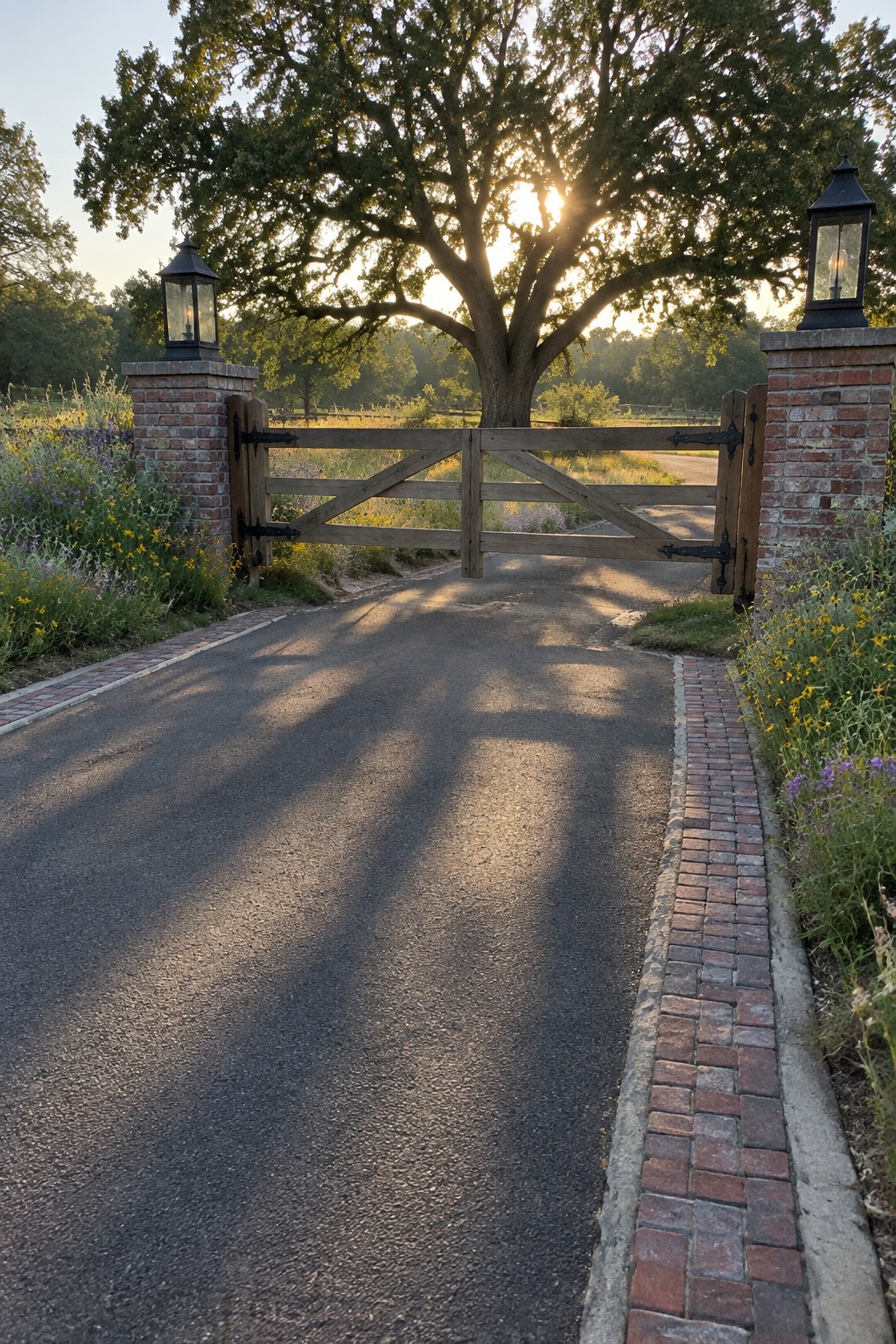
Brick edging can make a long asphalt driveway feel more considered right from the entrance. Here, brick paving runs along the sides and leads the eye toward a simple wooden gate.
For a similar look, use a narrow brick border where the driveway meets the road or entry gate, then continue it along the drive if you want a consistent edge. Keep the brick level with the asphalt so the border is easy to drive over and maintain.
Build a Low Brick Retaining Wall Beside Entry Steps
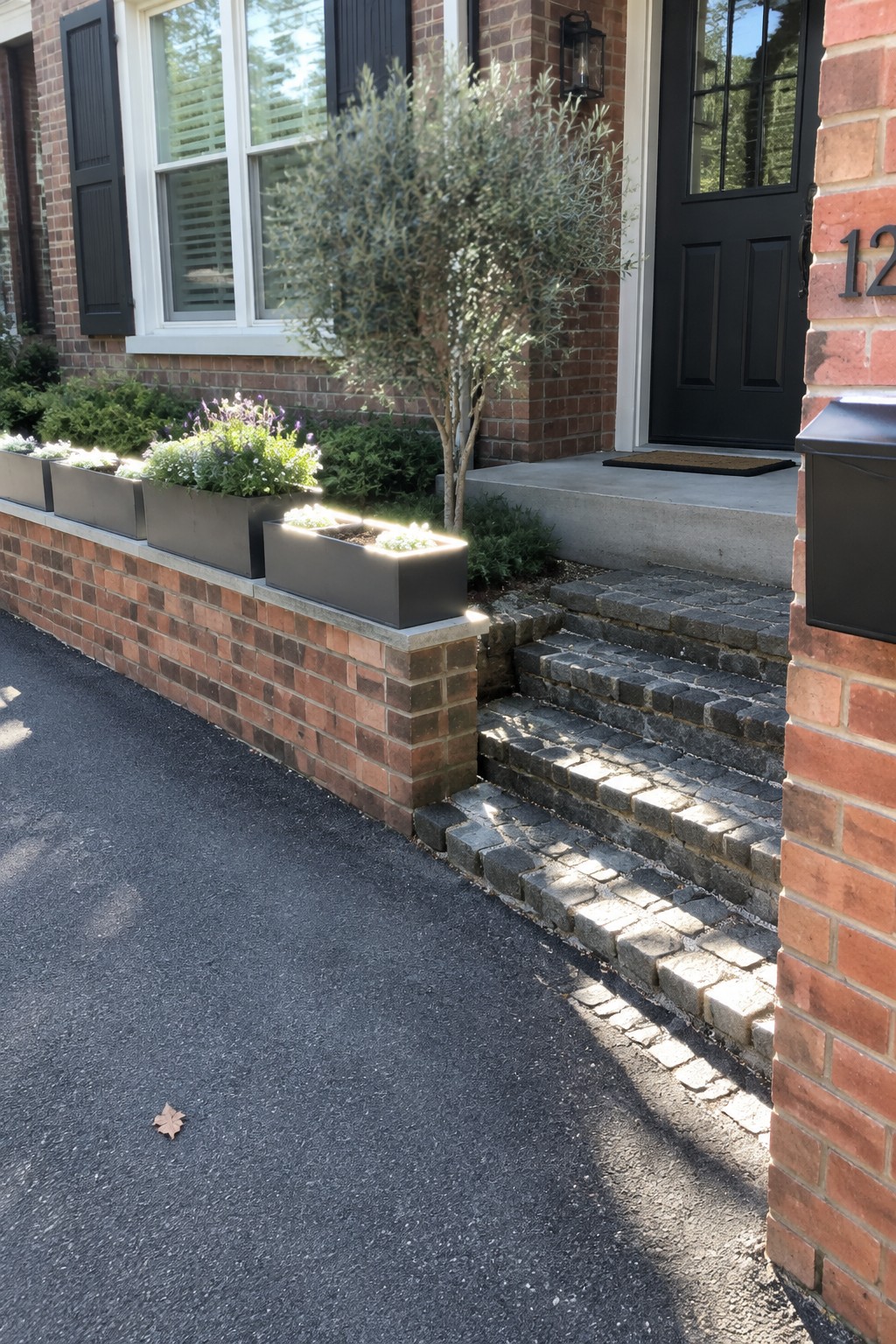
A low brick wall can give an asphalt driveway a clear edge while making room for a narrow planting bed. It’s a useful approach when the driveway sits below the front entry, since the brickwork helps separate the paved area from the garden.
Keep the border low enough to preserve sightlines and make sure it doesn’t narrow the space needed for cars or walking. A few planters can add color, but leave a clear route from the driveway to the steps.
Use a Brick Walkway Beside the Driveway
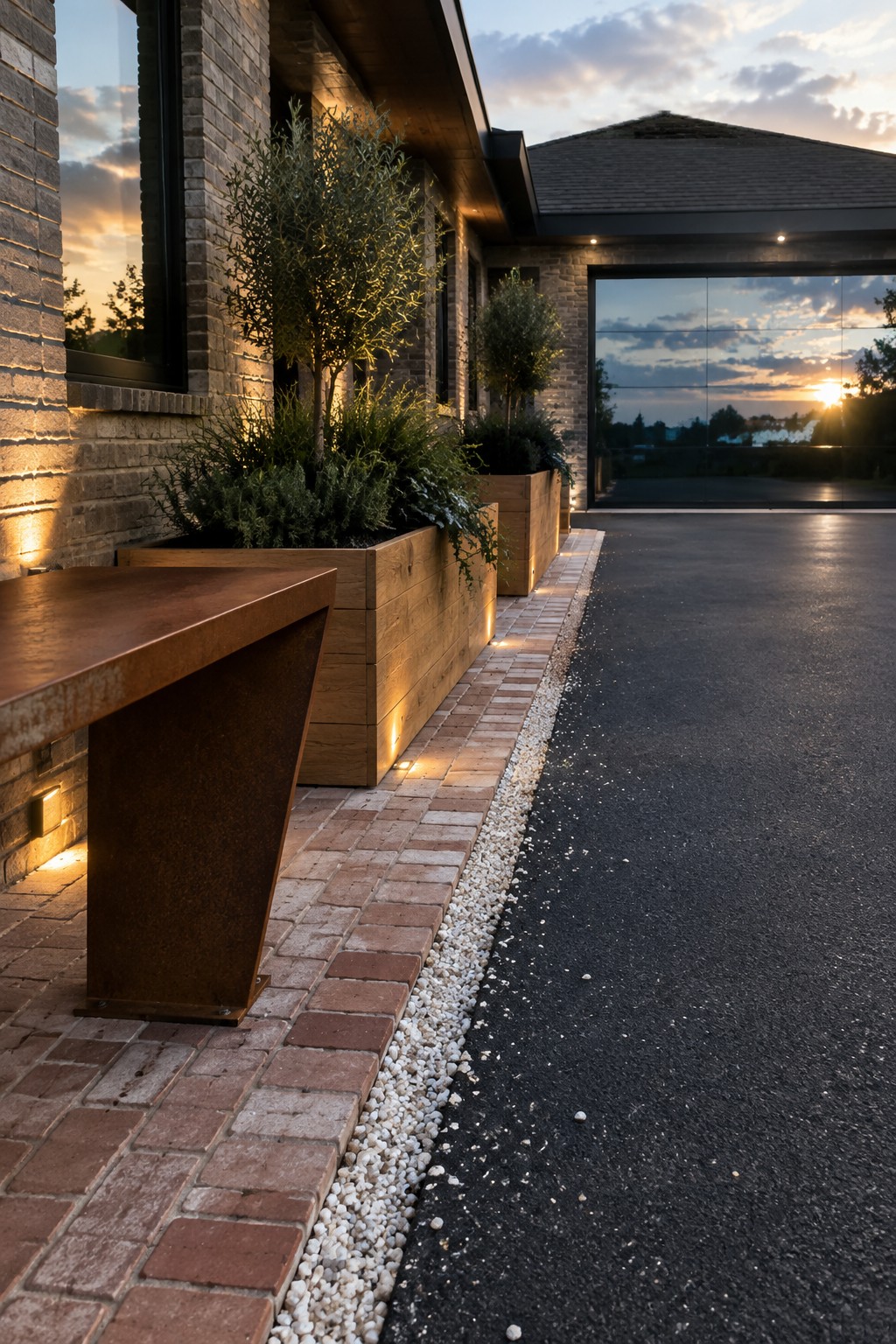
A brick walkway can make the edge of an asphalt driveway feel more planned and easier to follow. Here, the brick strip runs beside white gravel, giving a clear transition between the paved drive and the house.
This approach works well when you want a practical walking route without widening the driveway. Keep the bricks level and choose a border that can handle foot traffic and water runoff.
Use Brick Edging to Guide Water Away From the Driveway
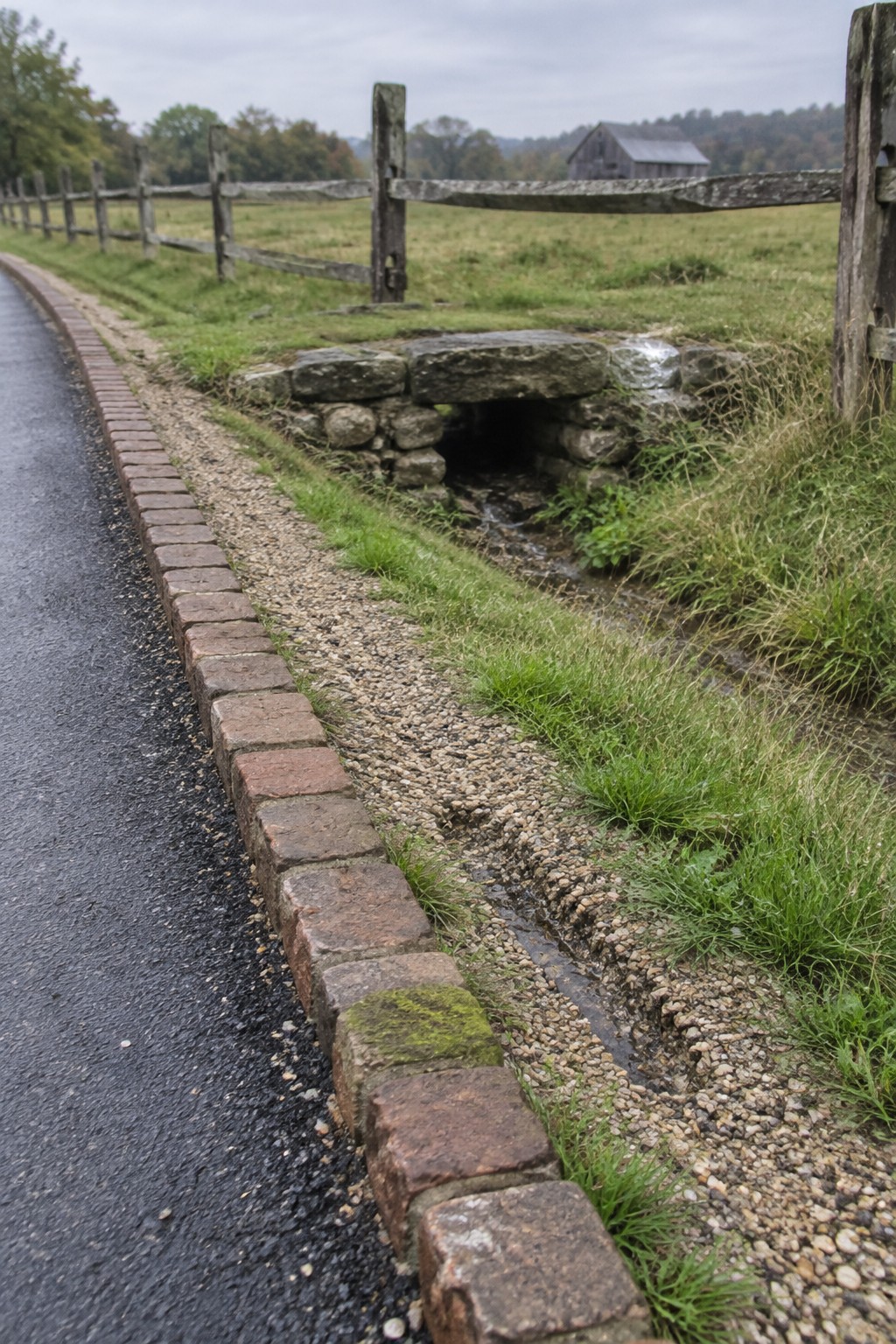
A brick edge can do more than mark where an asphalt driveway ends. Set slightly above a gravel drainage strip, it can help direct runoff away from the pavement and toward a shallow channel.
This approach suits a driveway beside a sloping lawn, especially where rainwater tends to collect. Keep the channel clear of leaves and make sure it drains to a safe outlet rather than toward the house.
Add a Drainage Channel Along a Brick Driveway Border

A narrow drainage channel can make a brick-edged driveway more practical by giving rainwater a clear route away from the paved surface. The brick border also marks a neat transition between the driveway and a planting bed.
This detail works well where a driveway runs beside the house or garden. Choose a channel rated for vehicle traffic, and make sure it slopes toward a suitable drain rather than letting water collect along the edge.
Pair Brick Driveway Edging With a Stone-Filled Channel

A narrow brick border can give an asphalt driveway a clear, tidy edge without taking up much space. Here, a slim strip of brick separates the pavement from a stone-filled channel, making the transition feel intentional.
This approach works well where a driveway runs beside a garden or path. Keep the brick course even and choose a durable edging material so the border stays neat through regular use.
Extend Brick Edging Along a Lavender-Lined Garden Path
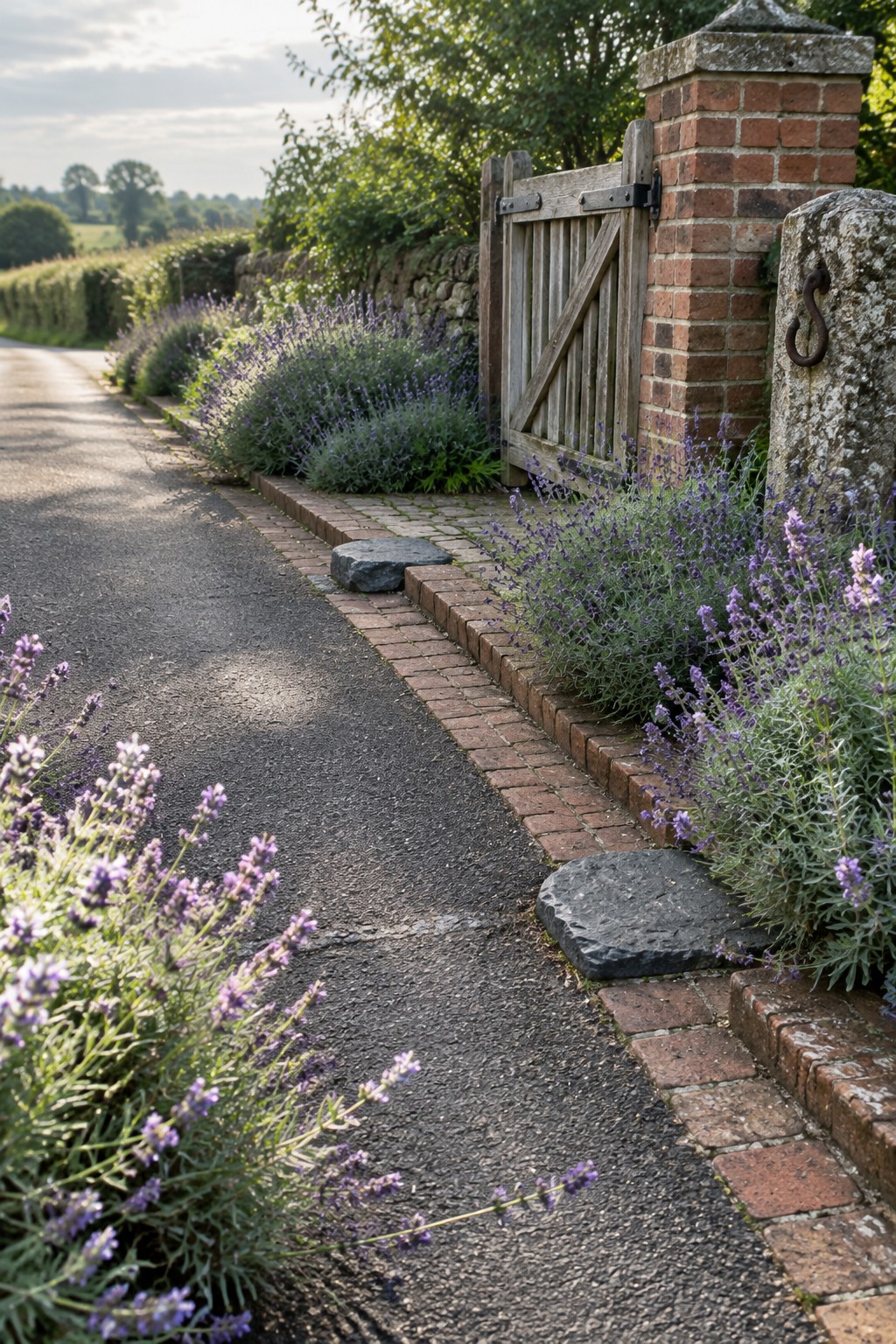
A brick edge can do more than mark the side of an asphalt driveway. Letting it continue along a garden path makes the hardscape feel connected and gives the planting bed a clear boundary.
This works especially well where a path meets a driveway entrance. Use matching brick for the border and path, and keep the edge low enough to avoid becoming a trip hazard.
Finish a Raised Brick Garden Wall With a Stone Cap
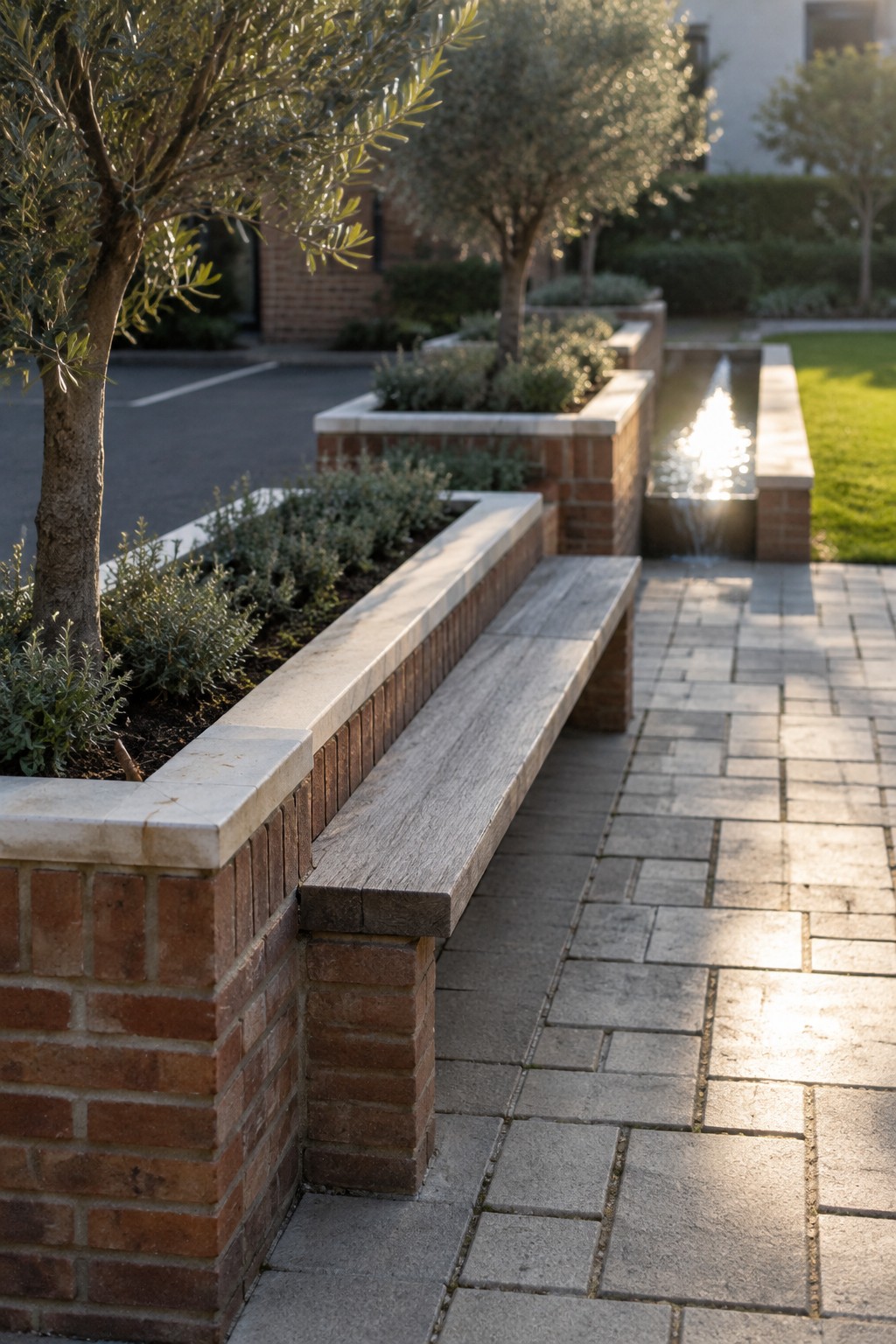
A low brick retaining wall can make a planting bed feel orderly beside a paved driveway or walk. Its solid edge keeps soil and plants in place, while a pale stone cap gives the border a neat finish.
This approach works well where a garden bed sits slightly above the paving. Keep the wall low enough to preserve clear sightlines, and choose brick that suits the home and nearby hardscape.
Frequently Asked Questions
Q: Can I add a brick border to an asphalt driveway that’s already in place?
A: Yes, you can add edging beside an existing driveway. The bricks need a firm, level base, and the edge of the asphalt may need trimming so the border sits neatly against it.
Q: Should the brick edging sit flush with the driveway?
A: Keep the top close to the asphalt’s height, or just slightly lower, so it won’t catch tires or snow shovels. A small, consistent gap can also help keep the brickwork from pressing against the asphalt.
Q: Will brick edging stop weeds from growing between the driveway and lawn?
A: It can make that edge easier to maintain, but it won’t block every weed. Tight joints and a stable base help, and you may still need to pull occasional weeds.
Q: What brick color works best with black asphalt?
A: Red brick gives the driveway a classic contrast, while charcoal or brown brick looks more understated. Bring a sample outside, since the color can look quite different in daylight.
