

A driveway border can make the whole approach to a home feel more considered, especially when it gives the paving a clear edge without competing with the facade.
Brick is a practical choice because it can echo details on the house while helping define where the driveway ends and planting or lawn begins.
I’d pay attention to the scale and color of the bricks first, since a border that feels too heavy can make a narrow drive look even tighter.
The right edging can also keep gravel, soil, and plants from spilling into the driving area as the yard changes over time.
These ideas offer useful details to adapt, from simple straight lines to borders that bring a little more shape to the approach.
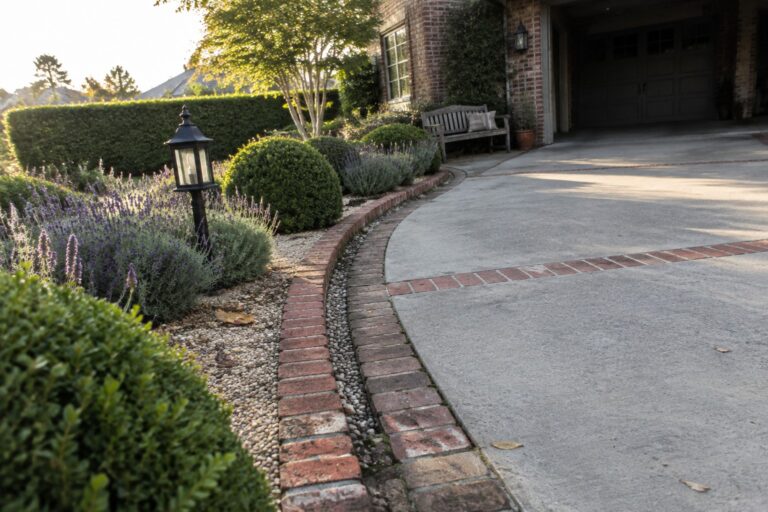
Use Brick Edging to Define a Curved Driveway

Brick edging gives a driveway a clear boundary while letting the path curve naturally through the landscape. It also helps keep gravel and planting beds separate from the concrete, so the edges stay tidy.
For a similar look, lay bricks along the driveway’s curves and repeat them around nearby beds for a consistent finish. This works especially well in traditional gardens, but the border needs a stable base so the bricks do not shift over time.
Use Brick Edging to Define the Driveway

A narrow brick border gives a concrete driveway a clear edge and helps it feel more connected to the front walk. The change in material is simple, but it makes the boundary easier to see.
For a similar look, run brick along the driveway’s sides and keep the pattern consistent where it meets a path. Choose pavers suited to vehicle traffic, and make sure they’re set firmly so the edge holds up over time.
Use Brick Edging to Define a Gravel Driveway

Brick edging gives a gravel driveway a clear, tidy edge and helps keep loose stones from spilling into nearby planting beds. It also adds a traditional look that suits a country-style home.
Set the bricks firmly along the driveway’s curve, keeping the top level with or slightly above the gravel. This works well beside a flower bed, but a solid base matters so the edging stays in place over time.
Use Grass Pavers for a Garden Path

Grass pavers give a path a firm walking surface while leaving room for grass to grow through. The result feels less solid than a fully paved walkway, and it can suit a narrow side yard where a broad stretch of hard paving would look out of place.
For a similar look, use pavers designed for grass and keep a clear paved border along the edges. This works well for light foot traffic, but the grass may need extra care in shaded spots or where people walk often.
Use Brick Edging to Build Raised Driveway Beds

Brick edging can do more than mark the edge of a driveway. A low raised wall helps hold planting beds in place and gives the driveway a neat, finished border.
This approach works well on sloped or uneven front yards, where a raised bed can also define a clear route toward the front door. Keep the wall low enough to see over from the drive, and use sturdy materials behind the brick to help manage soil and drainage.
Use Brick Edging Along a Driveway
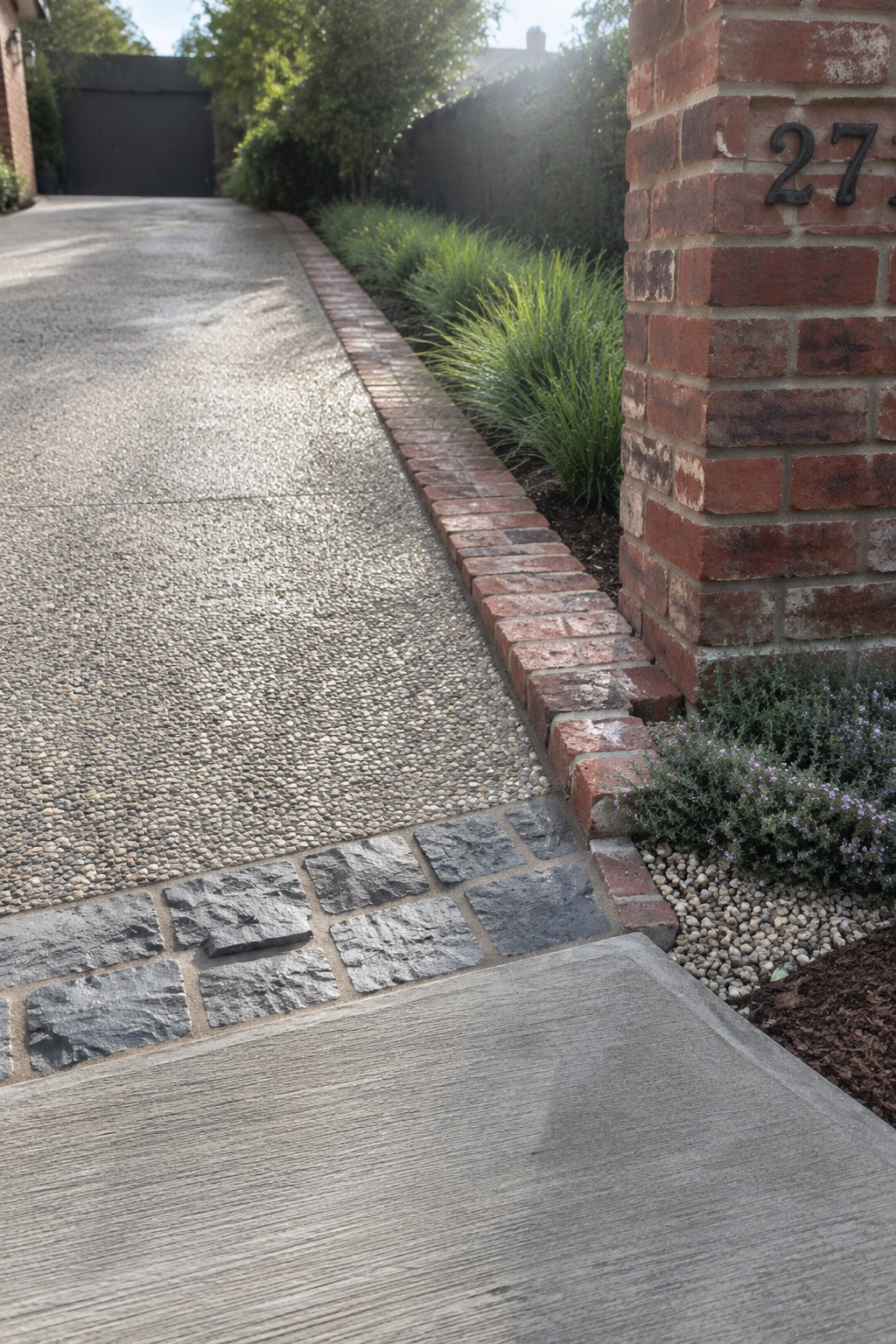
A low brick border gives a driveway a clear edge and keeps the planting bed separate from the driving surface. It’s a practical way to make a wide expanse of paving feel more orderly without adding a tall wall.
For a similar look, lay bricks in a single, consistent line along the driveway, then repeat the brick near the entrance to tie the edges together. This works well beside gravel or textured concrete, but set the bricks firmly so they stay level under foot and vehicle traffic.
Use Brick Edging to Separate Paving and Planting

A narrow brick border can make a paved drive or walkway feel more defined without adding a tall barrier. It also gives the planting bed a clear edge, so gravel and soil are less likely to spill onto the paving.
This works well where a path curves around a garden bed or meets a driveway. Choose bricks that suit the paving, and set them firmly so the border stays neat and even over time.
Use Brick Edging Along a Garden Border

Brick edging can give a driveway a clear boundary while keeping nearby planting beds in place. Here, irregular bricks follow the edge of the asphalt, making the transition to the garden easy to see.
For a similar look, set the bricks securely and keep the border low enough to avoid catching tires or creating a trip hazard. This works especially well where a driveway runs alongside a planted bed.
Use a Brick Curb to Finish a Driveway Border

A low brick curb gives a driveway edge a clear, finished line while keeping the lawn from creeping into the paving. Here, it also outlines a narrow strip of grass down the center, showing how brick edging can help organize more than just the outer edge.
Use a similar detail where a driveway meets turf or a planted strip. Keep the bricks level and the border wide enough to mow along without catching the mower on the edge.
Use Brick Edging to Keep a Gravel Path Neat

Brick borders help loose gravel stay within the path instead of spreading into nearby planting beds. They also give a gravel surface a clear, tidy edge without making the path feel too formal.
This works well in garden paths and narrow driveways, especially where plants grow close to the route. Set the bricks level and secure them firmly so they stay in place as people walk or vehicles pass.
Use a Brick Retaining Wall for a Raised Driveway Border

A low brick wall can hold a raised planting bed in place while giving the edge of a driveway a clear, sturdy boundary. The stone caps make a practical top edge, and the plants keep the wall from feeling too stark.
This approach works well where a driveway sits lower than the garden bed. Choose durable brick and make sure the wall has proper drainage behind it, especially if it needs to retain much soil.
Add Recessed Lights Along the Driveway Border

A narrow row of lights set into the brick edging helps mark the driveway’s edge after dark. It is a practical detail that also makes a long stretch of paving feel more considered.
This works well along a straight driveway beside a planting bed, especially where the edge might be hard to see at night. Choose outdoor-rated fixtures and space them evenly; keep the light low so it guides drivers without shining into the house.
Use Brick Edging to Shape a Curved Planting Bed

A curved brick edge gives a planting bed a clear boundary while letting it follow the line of a driveway or path. It looks more finished than a sharp, straight edge, and the bricks help keep soil and plants from spreading onto the paving.
This approach works well in small front gardens where space is tight. Set the bricks securely and keep the curve gentle so the edge is easier to build and maintain. A mix of flowering shrubs and lower plants can fill the bed without hiding the brickwork.
Use Brick Edging to Separate a Gravel Driveway From Planting

A low brick edge gives a gravel driveway a clear boundary and keeps the planting bed from spilling onto the path. The bricks also add a solid, traditional border without taking attention away from the garden.
This approach works well where a driveway curves past planted beds. Set the bricks firmly and keep the edge low enough to avoid catching tires; a narrow strip of rounded stones beside the border can help keep loose gravel in place.
Use Brick Edging to Mark a Formal Driveway Entrance

Brick borders can make a driveway feel more finished while clearly separating the driving surface from the garden. Here, the brick strips follow the straight approach and curve around a small paved detail, giving the entrance a tidy, deliberate look.
For a similar effect, run matching brick edging along both sides of the drive and keep the lines consistent near the entrance. It works especially well with traditional homes and formal gardens. Choose durable pavers, and make sure the edge is set firmly so it holds up to tires and seasonal changes.
Use Grass Pavers for a Green Driveway

Grass pavers let a driveway stay firm while leaving room for greenery between the stones. The planted gaps make a broad paved area feel less hard, and a brick edge gives the surface a clear boundary.
This approach works well for a driveway or parking area that gets occasional vehicle use. Choose pavers rated for the weight they’ll carry, and keep the joints wide enough for plants to grow without making the surface difficult to walk or drive on.
Add Raised Planters Along the Driveway

Raised planters can make a driveway border feel like part of the garden, rather than just an edge. Here, low brick walls and stone-topped planters give the planting a clear place to grow while keeping the gravel drive distinct.
This approach works well where there’s room beside the drive for a planting bed and a low retaining wall. Use sturdy materials that suit the home, and keep the planters low enough that they don’t get in the way of sightlines or parking.
Use a Brick Retaining Wall to Raise the Driveway Border

A low brick retaining wall is a useful way to keep a planting bed above driveway level. It gives the garden a clear edge, and the raised soil can make room for fuller planting without spreading onto the concrete.
This approach works well where a driveway slopes or the garden needs a little more height. Choose sturdy brickwork and keep the wall low enough to preserve a clear view from the driveway.
Frequently Asked Questions
Q: How wide should brick edging be along a driveway?
A: A single row of bricks gives a neat, subtle border, while two or more rows make a stronger visual edge. Leave enough room beside the driveway for the bricks to sit securely without narrowing the driving space.
Q: Can I install brick edging next to an existing driveway?
A: Yes. Dig a narrow trench along the edge, then set the bricks on a firm, level base so they stay in place. Check the line as you go, since small gaps or uneven bricks are easy to spot along a long driveway.
Q: What type of brick works best for driveway edging?
A: Choose paving bricks made for outdoor ground use rather than standard wall bricks. They’re better suited to foot traffic, weather, and the occasional tire brushing the edge.
Q: How do I keep weeds from growing between the bricks?
A: Fit the bricks closely and sweep fine jointing sand into the gaps. Pull any small weeds early, before their roots settle in.
