


A sloped driveway can make the whole approach to a home feel a little awkward, especially when the edges wash out or seem unfinished.
I find that a good border does more than frame the pavement; it helps guide the eye and gives the slope a clearer, more settled shape.
Stone, planting, and sturdy edging can each work well, but the right choice depends on the grade, drainage, and how much upkeep you want to take on.
Some solutions are simple enough to adapt to an existing driveway, while others can make a bigger difference during a full landscape update.
I’d start with the ideas that fit the slope and the way you use the drive, then save a few options to discuss with a landscaper or test in your own yard.
Use a Raised Border Along a Sloped Driveway

A raised border can keep a sloped driveway edge neat while giving the planting bed a clear boundary. Here, a rust-colored steel edge follows the slope beside large concrete pavers, so the change in level feels intentional rather than unfinished.
For a similar look, use sturdy edging that can handle soil pressure and follow the grade without abrupt steps. A narrow bed of drought-tolerant grasses can fit well beside the driveway, but leave enough room for plants to grow without spilling onto the paving.
Use Stone Edging to Define a Sloped Driveway

A stone edge can keep a sloped driveway’s gravel and planting areas neatly separated. Here, a low retaining wall follows the path and helps make the change in height feel more orderly.
For a similar setup, use sturdy stones along the uphill side and make sure the base is stable, especially where the grade changes. A narrow paved strip beside the gravel can also help keep the edge tidy.
Use a Curved Border to Guide a Sloped Driveway

A curved border can help a driveway feel easier to follow on sloped ground. Here, a raised timber edge holds the planting bed beside the path, while the curve keeps the boundary from looking too rigid.
For a similar setup, follow the natural line of the slope and choose sturdy materials that can handle soil pressure. A low retaining edge works well for a modest grade, but steeper slopes may need proper drainage and stronger support.
Use Raised Stone Beds Along a Sloped Driveway

Raised stone beds can follow a slope while giving a driveway a clear, sturdy edge. Here, low retaining walls hold the planting areas beside the steps, making the changes in level feel planned rather than abrupt.
Use this approach where loose soil or planting might spill toward the drive. Keep the wall height modest, and make sure the base and drainage are suited to the slope. Stone caps can provide a neat finish.
Use a Dry-Stone Wall to Hold a Sloped Border
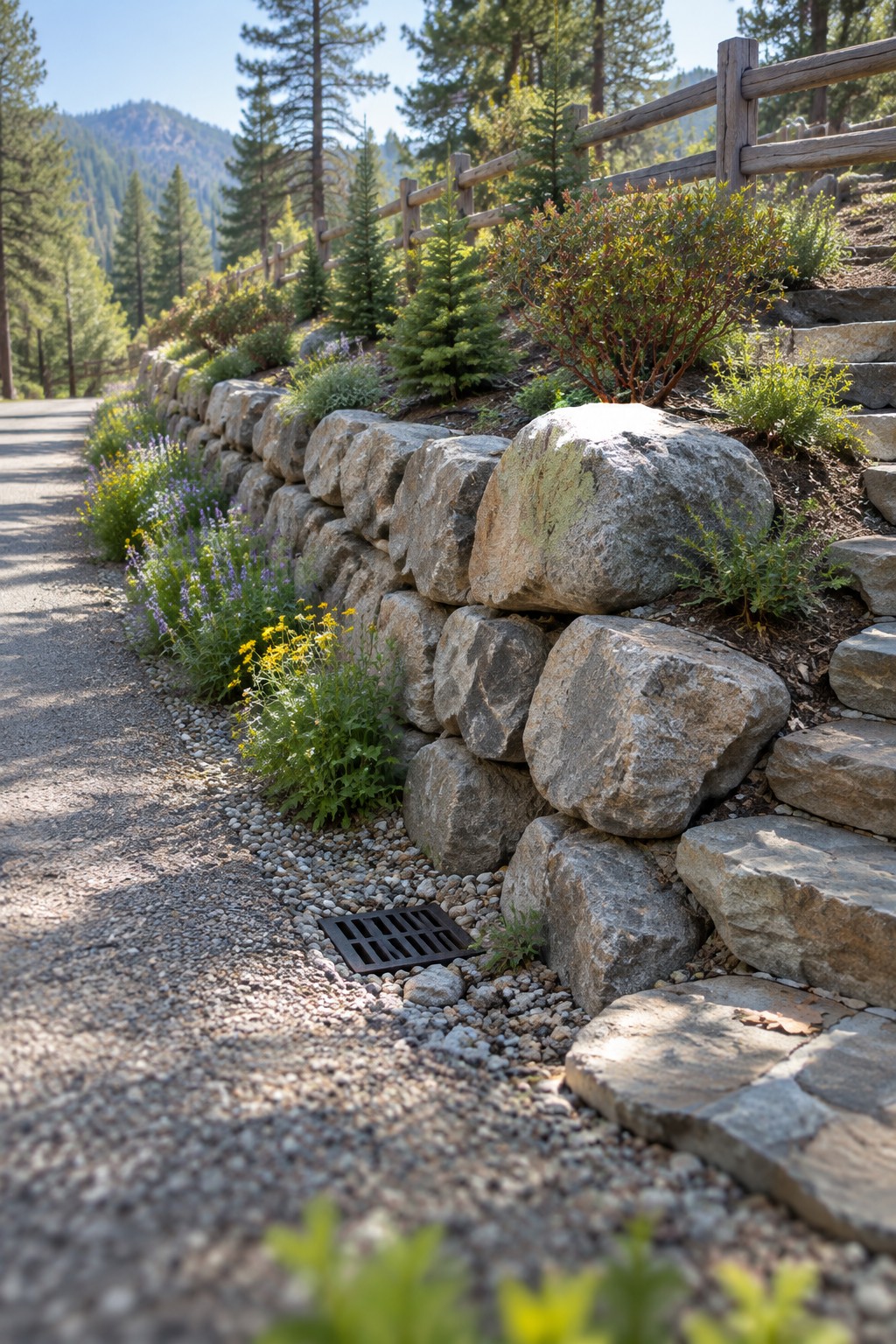
A dry-stone retaining wall can keep soil and planting in place beside a sloped driveway without making the edge feel too formal. The large, irregular stones suit a natural setting, while the wall gives the drive a clear boundary.
For a similar look, use stones sized to fit securely and make sure the wall is built to handle the slope and drainage. Low plants along the edge can fill in the border without blocking the driveway.
Use Metal Edging to Shape a Sloped Driveway Border

A narrow metal edge can keep a planting bed in place alongside a sloped driveway. Its clean line also gives the gravel a clear boundary, so the bed and driving surface feel organized rather than blended together.
For a similar setup, choose sturdy edging and secure it well, especially where runoff could shift soil or gravel. A gently curved bed can follow the driveway without making the border feel too rigid.
Use Gabion Walls to Hold a Sloped Driveway Edge

A wire gabion wall filled with stone can help keep a sloped driveway’s edge in place while giving the border a solid, practical finish. The open metal baskets let water pass through, which can be useful where runoff collects along a slope.
Use this approach where the grade needs more support than simple edging can provide. Keep the wall low or have a professional plan taller sections, and make sure the base is stable before filling the baskets.
Use a Retaining Wall to Hold a Sloped Driveway Border

A low retaining wall can keep a planting bed in place along a sloped driveway, instead of letting soil and mulch spill onto the drive. It also gives the border a clear edge that follows the grade.
Use sturdy masonry and make sure the wall has proper drainage behind it, especially where the slope is steep or holds water. A narrow strip of brick and stone paving beside the wall can help separate the garden bed from the driveway.
Use a Low Stone Wall Along a Sloped Driveway

A low stone wall can keep the edge of a sloped driveway neat while helping hold the soil in place. Its solid, simple construction suits older homes and gardens where a softer-looking border feels more at home than a sharp modern edge.
For a similar effect, follow the driveway’s slope with a wall that steps or gradually changes height as needed. Keep it low enough to avoid blocking sightlines, and make sure it is built to handle the pressure of the soil behind it.
Use Stepped Planting Beds Along a Sloped Driveway

Stepped planting beds make a sloped driveway edge easier to manage and give the garden a clear shape. Short stone retaining walls hold the soil at different heights, while the plants keep the hardscape from feeling too bare.
This approach works well where a driveway rises beside a walkway or garden. Use sturdy wall blocks and choose compact plants that won’t spill onto the driving surface; keep the border low enough to preserve a clear view when backing out.
Use Concrete Edging Along a Sloped Driveway

A raised concrete edge can help define a sloped driveway and keep loose gravel from spreading onto the paving. Here, the broad poured border also gives the planting bed a clear edge without relying on a tall wall.
This approach works well where a driveway meets a lower garden bed. Keep the border sturdy and well supported, and make sure it does not narrow the drive or obstruct drainage.
Use a Gravel Channel Along a Sloped Driveway

A gravel channel can give a sloped driveway a clear, tidy edge while helping guide runoff away from the paved surface. The small stones also make a useful transition between the driveway and a planted border.
For a similar setup, place a drain beneath a slotted grate and use gravel and stepping stones alongside it. Check that water can flow freely, especially where the driveway meets a lower path.
Use a Gravel Path Beside a Raised Garden Border

A gravel path can make a sloped driveway easier to navigate while giving rainwater a place to drain. A raised timber edge helps keep the planting bed from spilling onto the route, and the contrast between wood and stone is practical as well as tidy.
For a similar setup, keep the path wide enough for daily use and choose compacted gravel that is less likely to shift on a slope. A shallow channel of larger stones along the border can help guide runoff, but make sure it does not create a tripping edge.
Build a Planting Ledge Into the Driveway Wall

A stone border can do more than hold back a slope. Shallow planting ledges built into the wall give shrubs and small trees a place to grow without taking up much driveway space.
This works well where a driveway runs beside a raised garden bed. Keep the ledges wide enough for the plants and soil, and use drought-tolerant choices if the area is exposed to sun. A lemon tree in a pot can provide a similar look where building into the wall is not practical.
Add a Drainage Swale Along the Driveway

A planted drainage swale can carry runoff along a sloped driveway while keeping the edge green. The shallow channel gives water a clear route downhill, and sturdy plants help the area look like part of the garden rather than a bare ditch.
Use stone edging to define the channel and keep the driveway surface separate from the planting. Choose plants that tolerate both wet spells and dry periods, and make sure the swale has a safe outlet so water does not collect near the drive.
Set Stepping Stones Into a Gravel Border
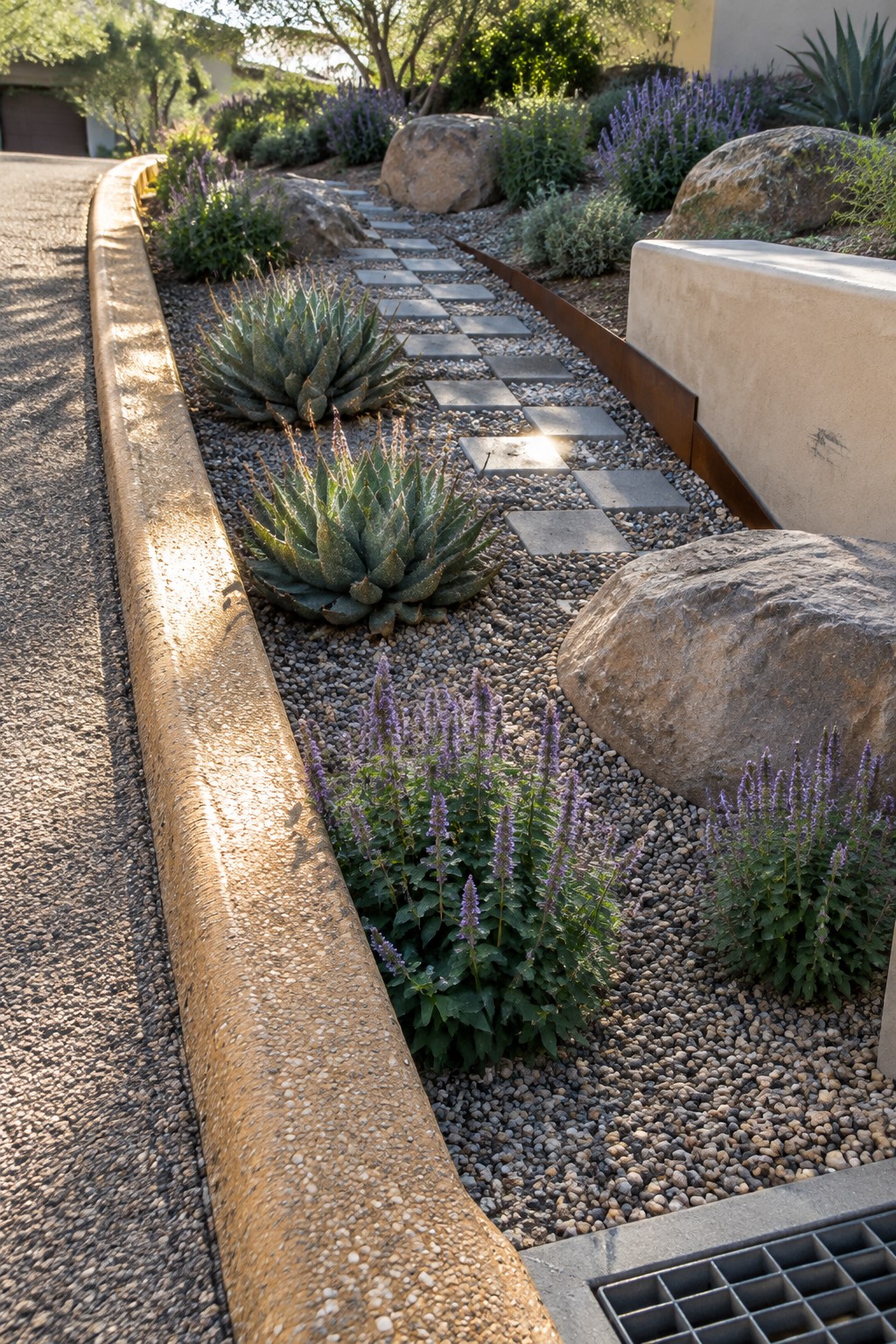
A stepping-stone path can make a sloped driveway border easier to cross while keeping the planting bed neat. Here, square pavers sit in gravel, giving the route a clear line without paving the whole area.
For a similar setup, place the stones at an even stride and keep them stable on the slope. Gravel allows water to drain through, but it needs a firm base so the pavers do not shift over time.
Frequently Asked Questions
Q: What’s the best border for a steep driveway that gets heavy rain?
A: Choose a sturdy edge, such as stone or properly anchored concrete, and make sure water has a clear path to drain. A border that traps runoff can cause puddles or wash away soil along the driveway.
Q: Can I add a driveway border without widening the driveway?
A: Yes. A narrow row of pavers, gravel, or low plants can define the edge without taking up much space. Check that the border won’t narrow the driving or walking area where the slope is steep.
Q: Will plants stay in place along a sloped driveway?
A: Low-growing plants with spreading roots can help hold soil, but freshly planted ones may need mulch or temporary edging while they settle in. Avoid placing loose mulch where rain or car tires could carry it onto the driveway.
Q: Should the border run straight up the slope or follow the driveway?
A: Following the driveway usually looks natural and is easier to maintain. If the slope is uneven, small level sections can help keep stones or pavers from shifting.
