


A driveway edge can make the whole front yard feel more orderly, especially where paving meets grass that tends to spread or thin out.
I’ve found that the best borders define the lawn without making the driveway feel boxed in, and their material should suit both the home and the way the yard is used.
Stone, brick, metal, and planted edges each create a different look, but they also vary in upkeep and how clearly they hold their shape over time.
The first thing I notice is whether the border makes the route to the house feel tidy and connected to the rest of the landscape.
Some of these approaches are easy to adapt, so I’d save the ones that fit your yard’s layout and test their scale before committing.
Use a Curved Brick Border to Define the Lawn
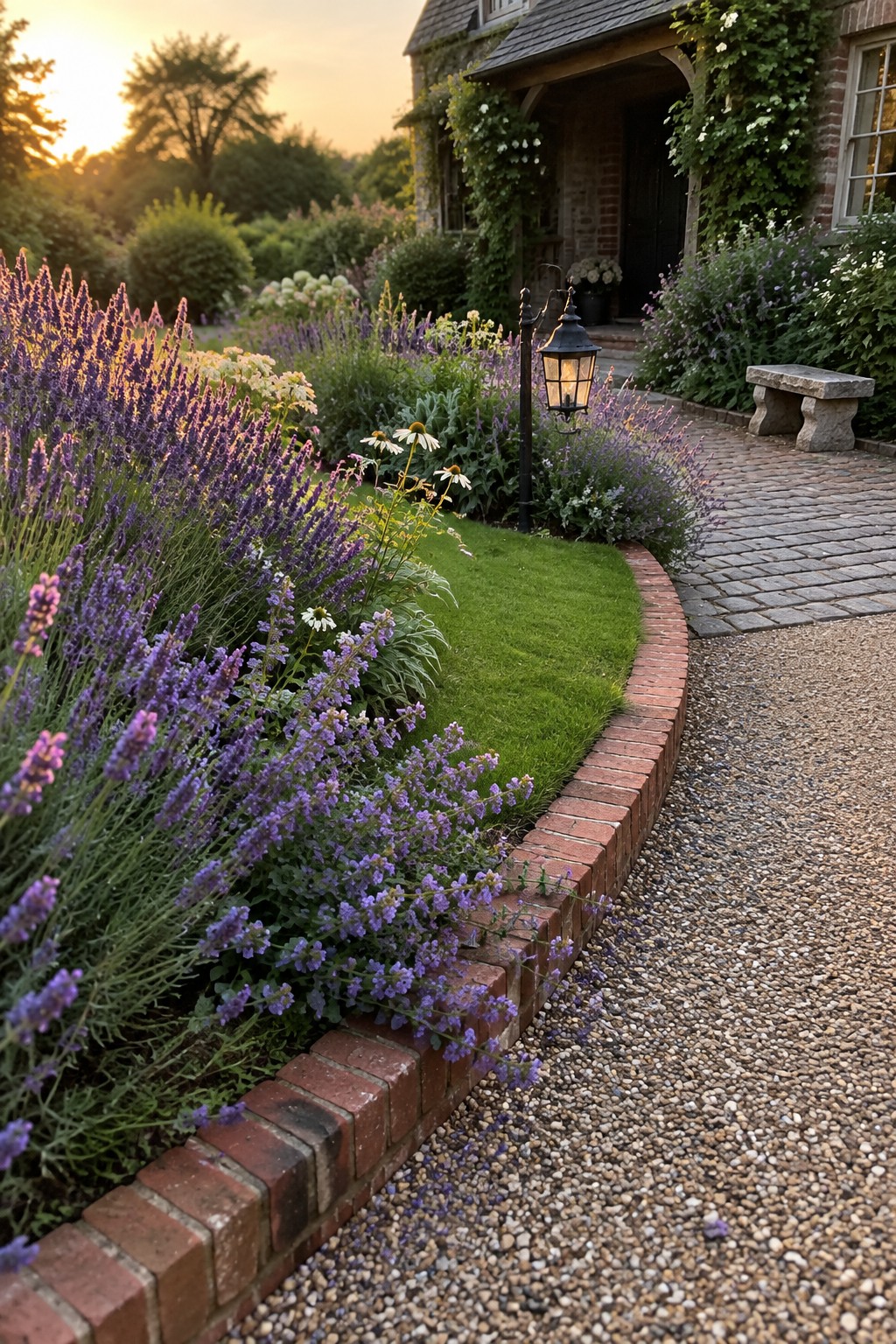
A low brick edge is a simple way to separate a lawn from a planted bed. The gentle curve here gives the border a softer outline, while the brick makes the edge easy to see and helps keep grass from creeping into the flowers.
This idea works well along a driveway or path, especially where a straight edge would feel too rigid. Keep the bricks low and set them firmly so the border is easy to mow beside and does not become a tripping hazard.
Use a Raised Bed to Define the Lawn Edge

A low raised bed makes a clear boundary between lawn and planting without needing a tall fence or formal edging. Here, weathered timber holds the soil in place and gives the garden a tidy outline beside the gravel path.
This approach works well where a lawn meets a path or garden bed, especially on a slight slope. Use durable, rot-resistant wood, and leave enough room for mowing and walking along the edge.
Use a Stone Wall to Separate Lawn and Driveway
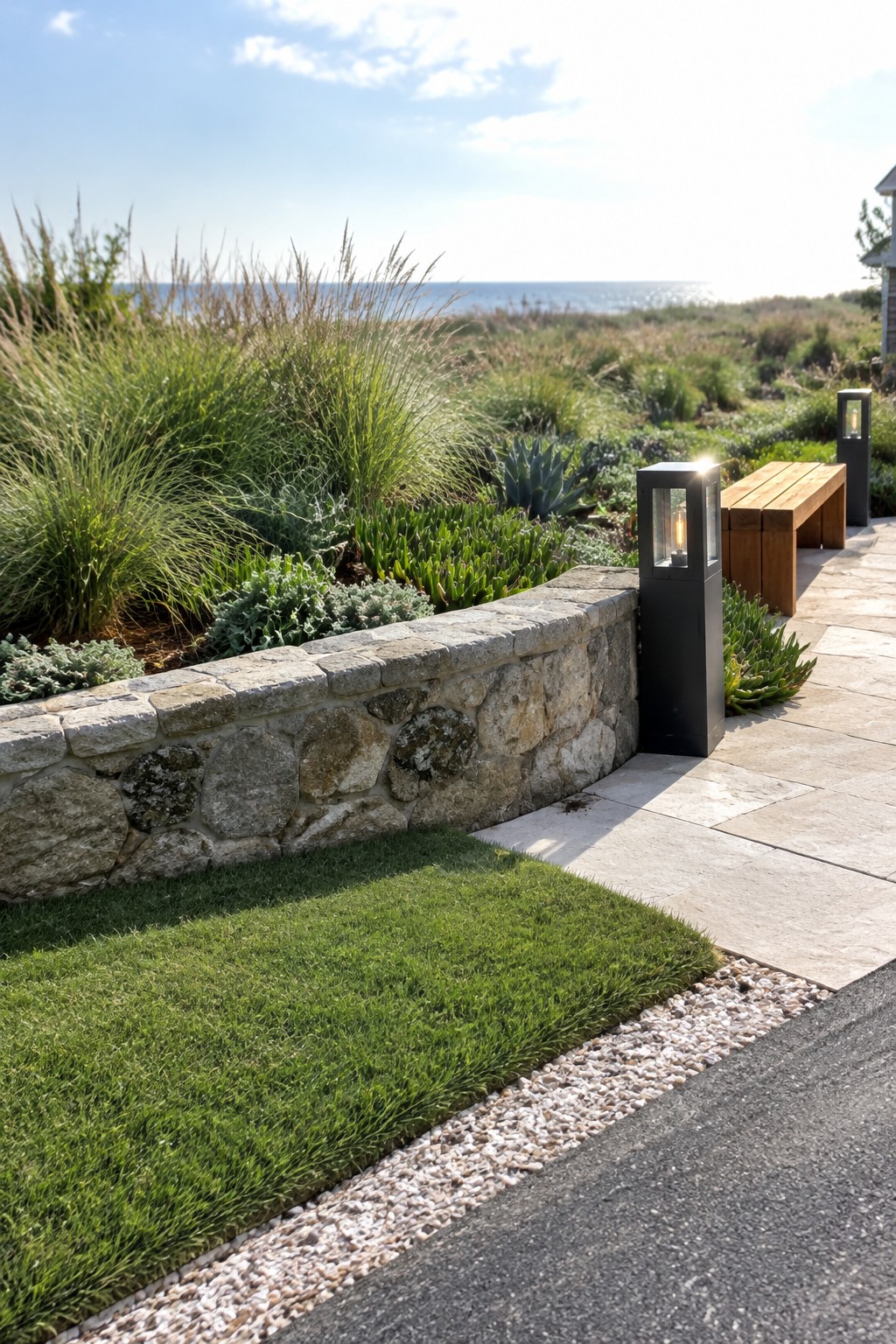
A low stone wall makes a clear edge between the lawn and the driveway while giving the planting bed a defined shape. It also works well on a sloped or coastal property where loose soil and plants might otherwise spill toward the paved area.
Use a wall height that keeps the border easy to see without blocking the garden. Natural stone suits informal landscaping, but leave enough room beside it for grass trimming and routine upkeep.
Use a Brick Curb to Separate Lawn and Driveway
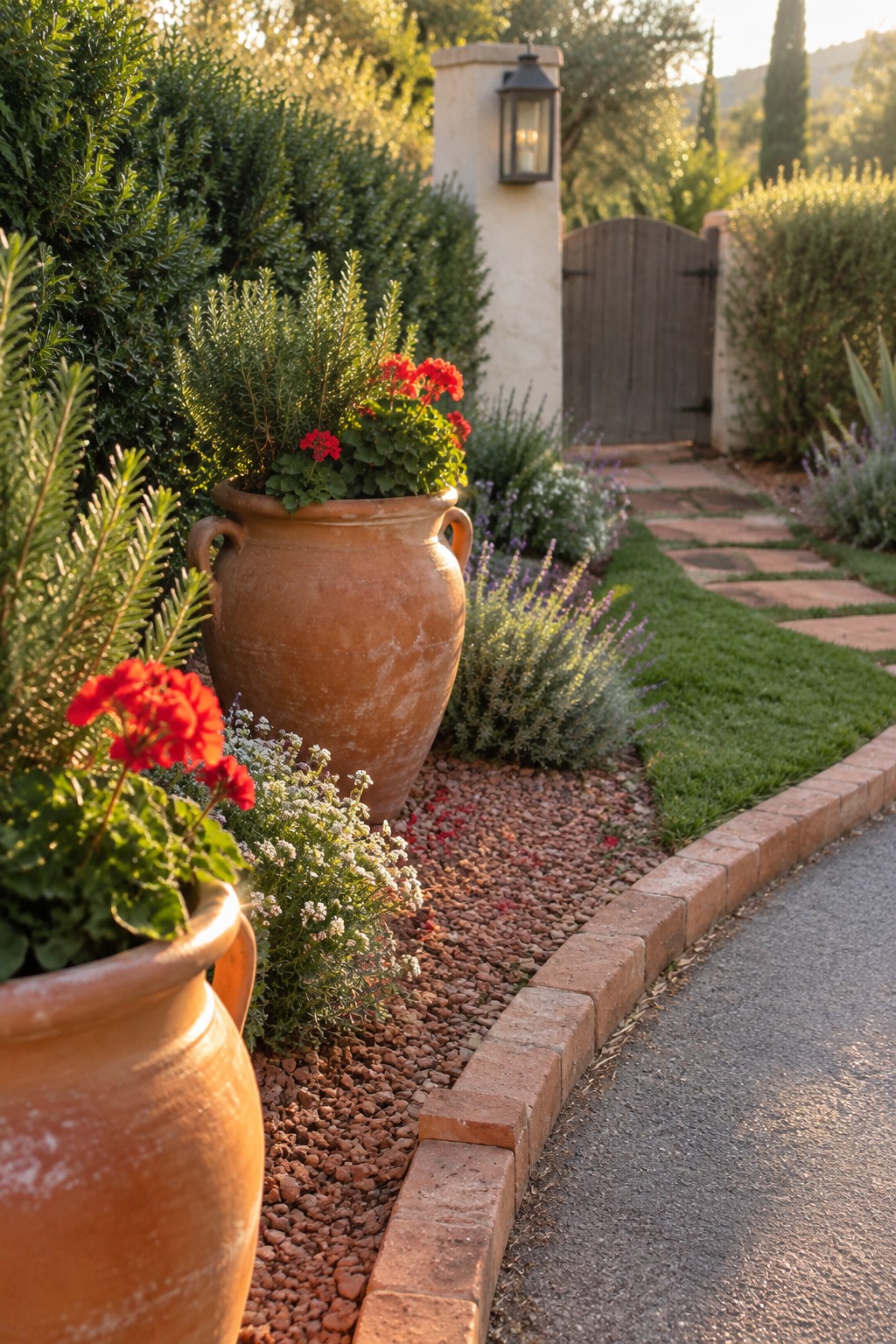
A low brick curb gives the lawn a clear edge and keeps it separate from the driveway. It also helps hold gravel and planting beds in place, so the border stays tidy.
This works well where a driveway runs beside grass or a garden bed. Set the bricks in a gentle curve to follow the lawn’s shape, and keep the curb low enough to mow along comfortably.
Use a Low Stone Wall Along the Lawn

A low stone wall can keep a lawn edge neat while giving a driveway border a more substantial finish. It works especially well beside a paved path, where the change in height clearly separates the grass from the planting bed.
Use a simple, straight wall for a tidy look, and keep it low enough that it does not block the view of the garden. A pale stone edge can suit traditional homes, but the same idea works with other masonry that matches the nearby paving.
Use Stepping Stones to Mark the Lawn Edge

A row of large stepping stones can define the edge of a driveway without making it feel like a hard barrier. Here, the stones sit beside the gravel and help separate the driving surface from the planted lawn.
This approach works well where a driveway meets a garden bed or grassy verge. Set the stones level and leave enough room between them for plants to grow, while keeping the gravel clear for easy maintenance.
Use Grass Strips Between Lawn Pavers

Pavers separated by narrow strips of grass make a clear, walkable border without turning the lawn edge into one solid band of stone. The green joints keep the paving connected to the yard and help the path feel less formal.
This approach works well for a front walk or a side path where you want a firm surface but still want greenery between the stones. Use pavers large enough for comfortable steps, and leave strips wide enough to mow or trim easily.
Use Succulents to Mark the Driveway Edge

A planted border can make the edge of a driveway feel more considered without needing a tall wall or fence. Large agaves give the bed a clear shape, while smaller succulents and grasses fill the space between plants.
This approach suits dry, sunny areas where drought-tolerant plants are practical. A metal edge can keep gravel and soil in place, but leave enough room for agaves to spread and keep their pointed leaves away from the path.
Use a Wildflower Bed Along the Driveway
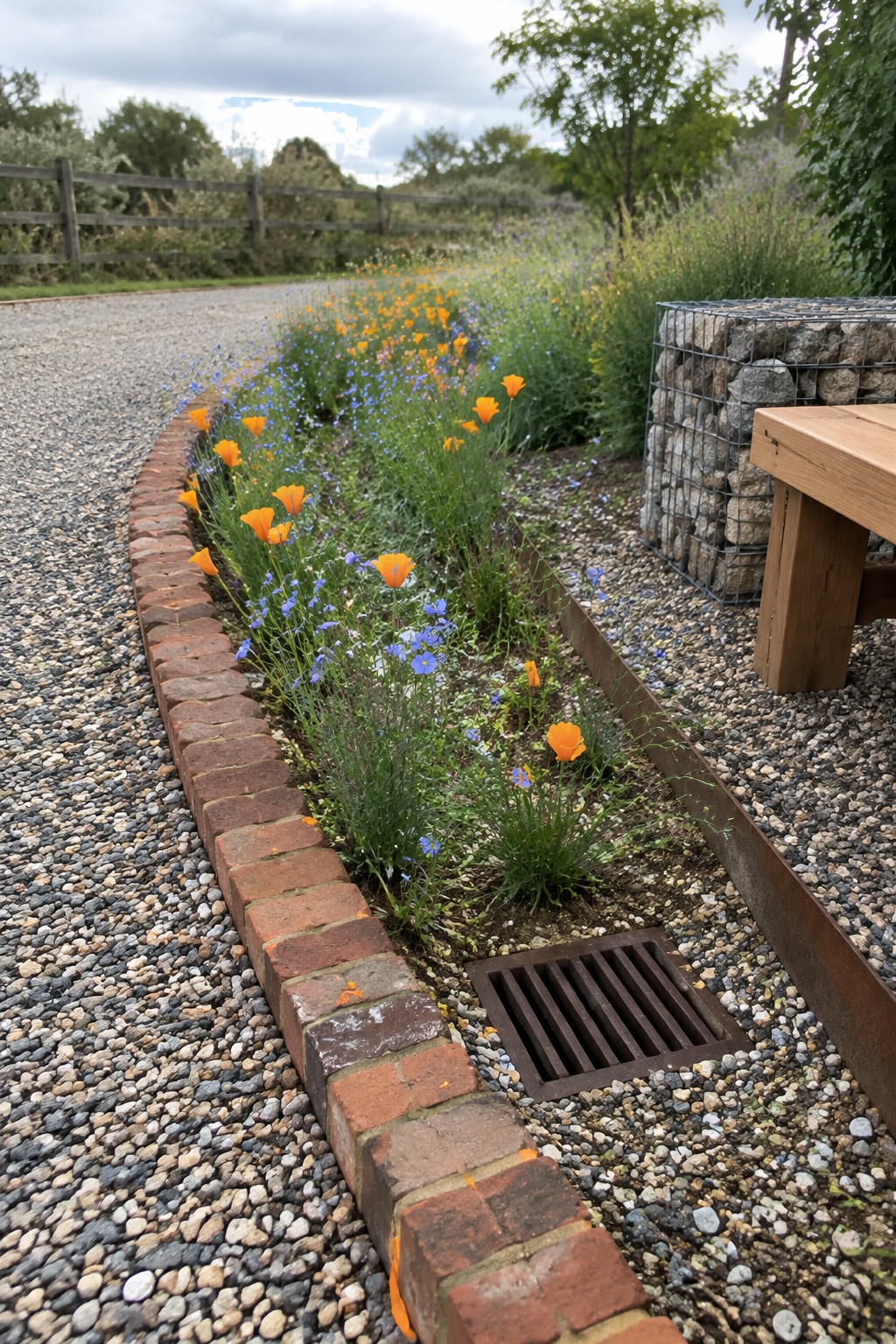
A narrow wildflower bed makes a driveway edge feel less stark while giving the planting a clear boundary. Here, a brick border keeps the gravel in place and separates it from poppies and smaller blue flowers.
This idea suits gravel drives and informal gardens where a neat lawn edge is not the main goal. Choose flowers that fit your climate, and leave enough room for plants to spread without spilling into the drive.
Use Landscape Lighting to Mark the Driveway Edge

A narrow light tucked along a raised planting-bed border makes the driveway edge easy to follow after dark. It also gives a clear visual break between the gravel drive and the garden without needing a tall or bulky barrier.
This approach works well where a driveway curves past a planting bed or changes level. Choose outdoor-rated low-voltage fixtures, and keep them shielded so the light stays on the path rather than shining toward the house or neighbors.
Use Alternating Pavers to Mark the Driveway Edge

Mixing concrete and wood-look pavers gives a driveway border a clear path without making it feel like one long strip of pavement. The change in materials also helps the edge stand out, while small ground lights built into some pavers make the route easier to follow after dark.
This approach works well beside a planting bed where a continuous curb might feel too heavy. Keep the pavers level and leave narrow gaps for grass or another low ground cover. That keeps the border tidy and helps prevent loose edges from becoming a tripping hazard.
Use a Gabion Wall to Mark the Lawn Edge

A low gabion wall makes a clear border between the lawn and a gravel driveway while keeping the garden bed neatly contained. The wire baskets filled with stone give the edge a sturdy look without needing a solid masonry wall.
This approach works well along a curved drive or beside a broad planting bed. Keep the wall low enough that it does not block the view, and use stones that suit the home and surrounding landscape.
Use a Pebble Swale Beside the Path

A shallow channel filled with rounded stones can give a garden path a clear edge while helping manage runoff. It works especially well where a hard path runs beside dense planting, since the stones make a neat transition without needing a raised curb.
Keep the channel wide enough to hold the stones in place, and use a stable base so they do not shift underfoot. This approach suits informal, leafy gardens; along a driveway, it can help separate the pavement from the lawn while giving rainwater somewhere to drain.
Use a Low Stone Wall Along the Driveway

A low stone wall makes a clear, lasting edge between a driveway and the lawn. The uneven stonework feels at home in a rural garden, while the wall helps keep gravel and grass from mixing.
Use this approach where there is enough room for a sturdy wall beside the drive. A few plants tucked along the stones can make the border feel settled, but leave the driveway edge easy to maintain.
Use Boulders to Mark the Driveway Edge

Large boulders make a natural-looking border between the driveway and a planted bed. Set among ornamental grasses, they give the edge a clear shape without making it feel too formal.
Use a few stones of different sizes and leave enough room for plants to fill in around them. This approach suits a curved driveway and works especially well when you want a low-maintenance border that feels at home in a natural-style landscape.
Frequently Asked Questions
Q: What’s the easiest driveway border to maintain?
A: A simple strip of gravel or stone is easy to keep tidy and doesn’t need trimming. Add a solid edge to keep the stones from drifting onto the lawn.
Q: How wide should the grass edge be between the driveway and border?
A: Leave enough room for a mower wheel to roll without slipping onto the driveway. If the strip is too narrow, it can be easier to replace it with gravel or a row of pavers.
Q: Will plants along the driveway get damaged by car tires?
A: They can if they grow right against the pavement or sit in the path of a turning car. Keep low plants just beyond the tire line, and choose sturdy varieties that can handle heat and road splash.
Q: How do I keep a paver border from shifting?
A: Set the pavers on a firm, level base and lock the outside edge in place. A little prep underneath saves you from having to straighten them later.
