


A curved driveway can soften the approach to a home, but its edges need to hold their shape without making the layout feel rigid.
I find that flexible gravel edging works best when it follows the curve naturally and keeps loose stones from creeping into planting beds or onto the path.
The right choice depends on the driveway’s radius, the gravel depth, and how much the edge needs to stand out against the surrounding landscape.
Some designs keep the border nearly hidden, while others use a clear line to give the driveway a more defined shape.
I’d save the options that seem easiest to adapt to your own yard, then compare how they might look alongside its plants, paving, and overall layout.
Use Gravel to Follow a Curved Driveway

A narrow gravel bed can make a curved driveway edge easier to define than a straight border. Here, the gravel follows the bend beside the asphalt, giving the lawn a clear stopping point without making the edge feel rigid.
This approach works well when a driveway curves around a planting bed or sloped lawn. Use flexible edging to keep the gravel in place, and choose a material that contrasts with the pavement enough to make the curve easy to maintain.
Use Gravel To Follow A Curved Driveway Edge

A curved gravel border can make a driveway feel less rigid and give the planting bed a natural shape. A narrow strip of pale stone also makes a clear transition between the concrete and the plants.
Flexible edging helps hold the gravel in place as the border bends. It works well along a walkway or driveway, but keep the curve broad enough to mow or maintain easily. In this example, low plants and path lights sit within the gravel bed without crowding the edge.
Use a Curved Edge to Guide a Gravel Driveway

A flexible edging strip can help a gravel driveway follow a smooth curve instead of a straight line. The curved border gives the path a clear shape and keeps loose stones from spreading into nearby planting beds.
This approach works well where a driveway bends around a garden or along a low wall. Choose edging that can follow the curve without kinking, and secure it firmly so the line stays neat over time.
Shape Gravel Paths Around Garden Beds

A gently curving gravel path can make a garden feel less formal and help guide people toward an entry. A clear edge keeps the gravel in place as the path bends around the planting beds.
For a similar look, use flexible edging to hold the curve, then keep the path wide enough for comfortable walking. A mix of gravel sizes or colors can make the edge easier to see, but a simple, consistent border is usually easier to maintain.
Shape the Driveway With a Rounded Gravel Border

A curved gravel border can make a wide driveway feel more deliberate without requiring a straight, formal layout. The rounded edge follows the turn of the drive and gives loose stone a clear boundary.
Use flexible edging to hold the gravel in place along curves, especially around a planted island. Keep the border low and choose a material that suits the driveway, so it guides the shape without becoming a distraction.
Use Flexible Edging to Shape Gravel Curves

A flexible metal edge can guide gravel around trees and planting beds without forcing the driveway into a straight line. The curve feels natural, and the edging helps keep loose stones from spilling into the garden.
This approach works well where a driveway bends around an established tree or meets a planted area. Choose sturdy edging that can hold its shape, and set it securely so the gravel stays contained over time.
Shape Gravel Beds Along a Curved Driveway

A curved edge can give a gravel driveway bed a more natural shape than a straight border. Flexible metal edging is useful for following the bend while keeping loose gravel and planting soil in their own areas.
Use a dark edging strip to define the curve, then keep the bed fairly simple so the line stays easy to see. This approach suits modern homes and works especially well where a path turns around a planted area.
Continue the Driveway Curve Along a Garden Bed
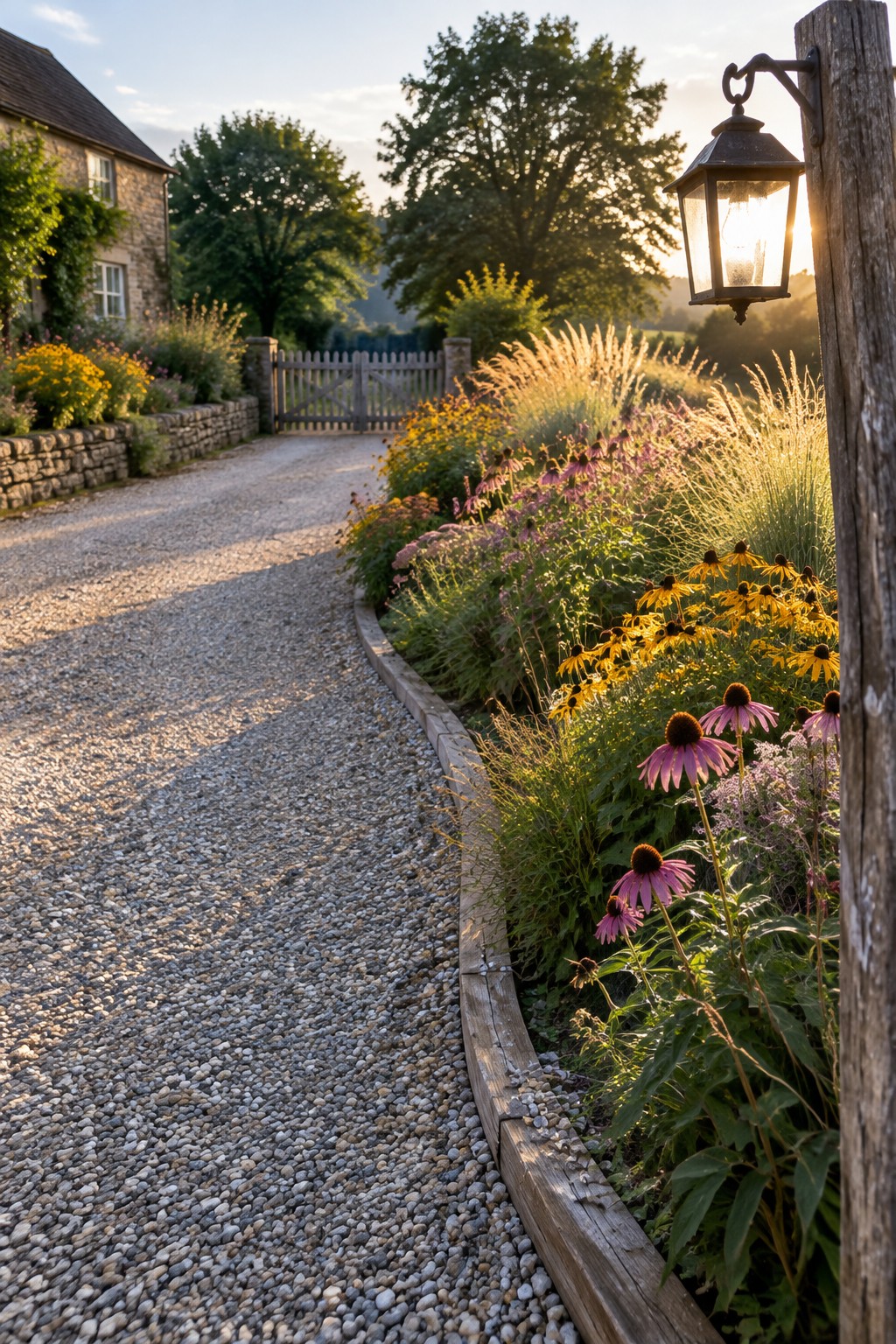
A curved gravel driveway looks more settled when its edge follows the shape of a nearby planting bed. The rounded line gives the garden a clear boundary while keeping the route to the house from feeling too rigid.
Flexible edging makes it easier to carry that curve through a long stretch, especially where the driveway bends around flowers or grasses. Choose edging that holds gravel in place, and set it low enough that it does not become a visual barrier.
Use a Curved Walkway Edge to Shape the Gravel

A gently bending path can make a narrow side entrance feel less like a straight corridor. Here, the smooth concrete walkway curves through dark gravel, giving the route a clear shape while keeping the planting area neat.
For a similar look, use flexible edging to guide gravel along a curved path or driveway border. It works well where a straight line would feel too rigid, but set the edging firmly so it holds its curve and keeps stones in place.
Use Curved Edging to Shape Garden Beds

Curved edging gives planted beds a softer outline and makes them easier to fit around a sloping yard. Here, rust-colored metal borders hold the planting in distinct bands, while the curves keep the garden from feeling too rigid.
This approach can work beside a gravel drive or path, especially where the ground changes level. Choose flexible edging that can follow the intended shape, and keep the curves broad enough to mow or maintain without fuss.
Let Gravel Follow a Gentle Curve

A sweeping driveway edge can make a gravel approach feel planned rather than loosely spread across the yard. Here, the pale border follows the curve and keeps the gravel neatly contained beside the planting bed.
Use flexible edging to set the shape, then finish it with a durable border material that can follow the bend. This works especially well on longer driveways, where a gentle curve helps guide the approach without making the route feel cramped.
Let Gravel Paths Follow the Garden Beds

A gently curving gravel path feels more natural than a straight run, especially when it bends around planted beds. Flexible edging helps hold the gravel in place while keeping the curve neat.
This approach suits cottage-style gardens and narrow side paths. Mark the curve before installing the edging, and keep it wide enough for comfortable walking. Lavender borders make a tidy edge, but leave room for the plants to spread.
Use a Curved Border to Shape a Gravel Bed

A curved gravel bed can break up a wide driveway and give the planting area a clear shape. Flexible edging follows the bend neatly, keeping loose stones from spilling onto the concrete.
This approach works well beside a driveway or walkway where a straight bed would feel too rigid. Set the edging firmly in place before adding gravel, and choose a curve that leaves enough room for plants and for people to walk comfortably.
Use a Curved Border to Separate Gravel and Planting

A curved metal edge gives a gravel driveway a neat boundary while letting the planting bed follow a softer shape. It keeps gravel from spreading into the garden and makes the edge feel deliberate rather than rigid.
This approach works well where a driveway bends past a path or planted area. Choose flexible edging that can follow the curve, and secure it firmly so the border stays in place over time.
Frequently Asked Questions
Q: How do I keep gravel from spilling over a curved edge?
A: Choose flexible edging that follows the curve without leaving gaps, then anchor it firmly with stakes. Keep the edging slightly higher than the gravel so loose stones stay in place.
Q: Can I install flexible gravel edging around a tight curve?
A: Yes, but check the product’s minimum bend radius before you buy. For a tight turn, make a gradual curve rather than forcing the edging into a sharp angle.
Q: What should I put under the gravel along the driveway edge?
A: A layer of landscape fabric can help limit weeds while still letting water drain through. Smooth and secure it before adding gravel so it doesn’t bunch up along the curves.
Q: How do I make a curved gravel edge look neat over time?
A: Rake the gravel back from the edge now and then, and pull out any weeds before they spread. A quick touch-up is easier than waiting until the curve loses its shape.
