


A driveway border may seem like a small detail, but it can make the whole approach to a home look more considered.
With gravel, the challenge is keeping the edges neat while choosing materials that sit comfortably with the house and yard.
I’d start by thinking about how the border will hold up to tires, rain, and regular trimming, not just how it looks on day one.
Some simple choices can define the driveway without adding much cost or making the space feel overworked.
I’d save the ideas that seem easy to adapt to your layout and try them one section at a time.
Use Brick to Edge a Gravel Driveway

Brick edging gives a gravel driveway a clear boundary and helps keep loose stones from spilling into the garden. It also adds a simple, finished look without requiring an expensive paving project.
Set the bricks in a shallow, well-prepared bed so they stay level and secure. This idea works especially well beside planting beds, but check that the border is sturdy enough for the traffic and drainage around your driveway.
Use Concrete Stepping Stones Through a Gravel Driveway
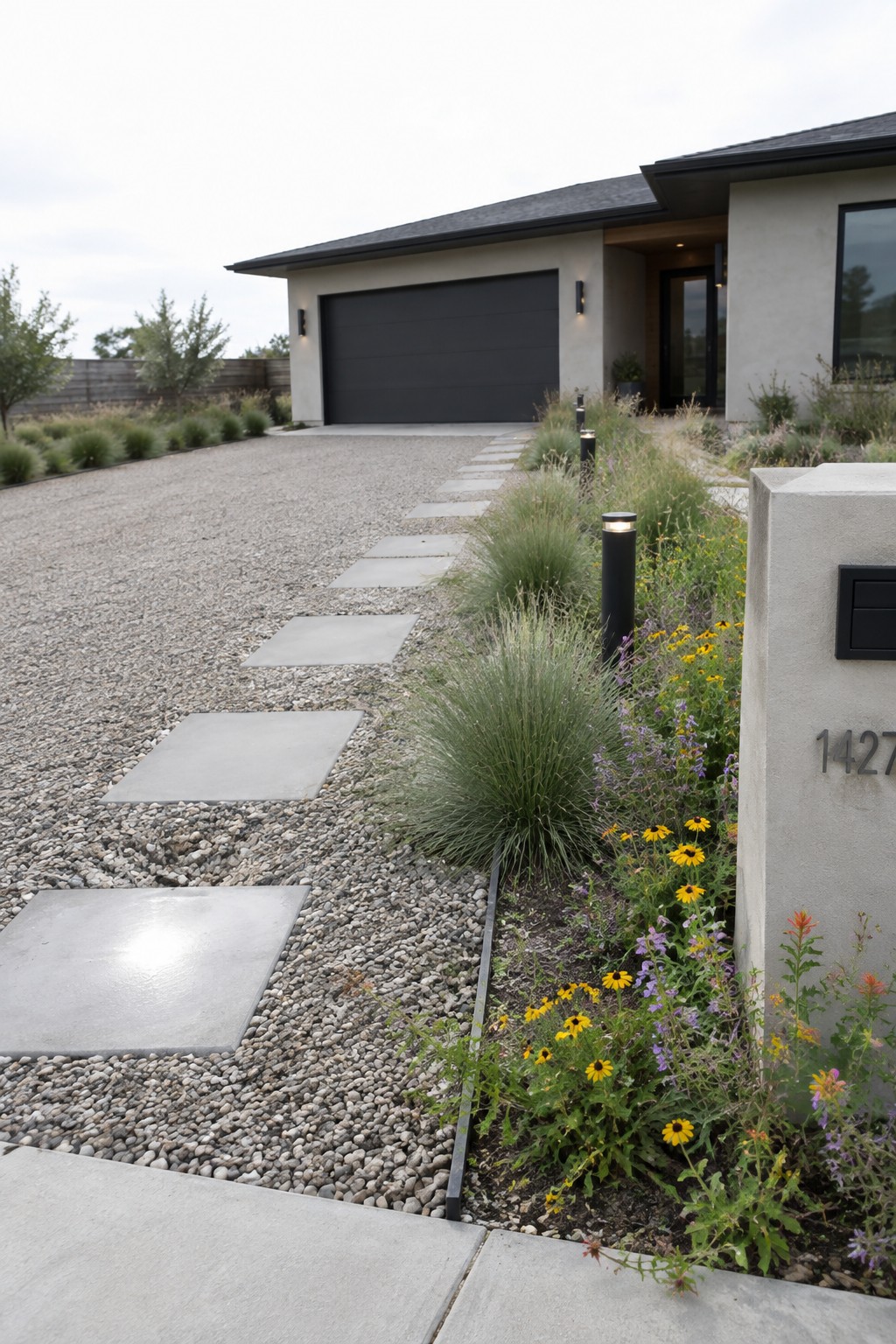
A gravel driveway can be easier to walk across when concrete stepping stones mark a clear route to the front door. They break up the loose surface without requiring a fully paved path, and the gravel stays as the main, lower-cost material.
Set the stones far enough apart for a comfortable stride, and keep them level with the gravel so they are easy to use. This approach works well along a driveway edge, especially when you want a simple path beside a planted border.
Use a Stone Edge to Keep Gravel in Place

A low stone border gives a gravel driveway a clear edge and helps keep loose stones from spilling into the planting bed. It also makes a simple gravel surface feel more finished without paving the whole drive.
For a budget-friendly version, use reclaimed stone or locally available rocks and keep the border low. Set the stones firmly on a compacted base so they stay in place, especially along curves or sloped sections.
Use a Pebble Border to Separate a Gravel Path

A narrow strip of smaller pebbles can make a gravel path feel more finished and help mark where the planting bed begins. It’s a simple way to add a clear edge without building a raised border.
Use a contrasting pebble color along the sides of a gravel driveway or garden path. Keep the strip consistent in width, and set an edging material beneath it if you need extra help keeping the stones from spreading.
Use Log Sections to Edge a Gravel Driveway

Short log sections make a simple, low-cost border for a gravel drive. Set upright, they mark the edge clearly and help keep loose stones from spilling into nearby garden beds.
Place the logs close together along the curve of the drive, and set them firmly so they do not shift. This approach suits country-style yards and informal paths. For longer stretches, reclaimed wood can help keep costs down, but check it now and then for rot.
Use a Planting Bed to Edge a Gravel Driveway
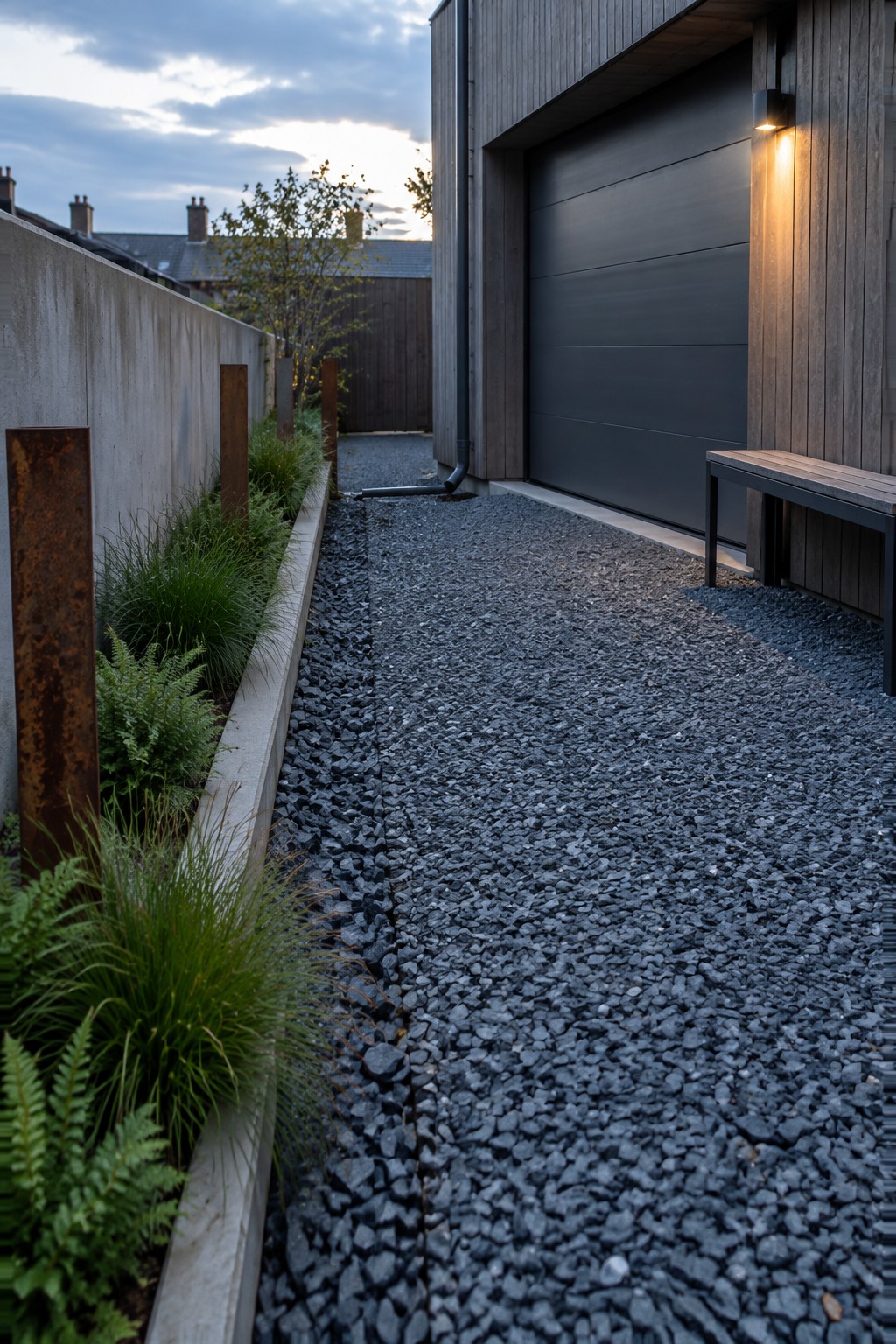
A narrow planting bed can make a gravel driveway feel more finished while helping define its edge. Here, a raised concrete border keeps the plants separate from the loose stone, so the driveway has a clear line without needing an elaborate edging material.
This approach works well in a side yard or along a house where space is limited. Use tough grasses or other low-maintenance plants, and leave enough room for them to grow without spilling onto the gravel.
Use Planting Beds to Edge a Gravel Driveway
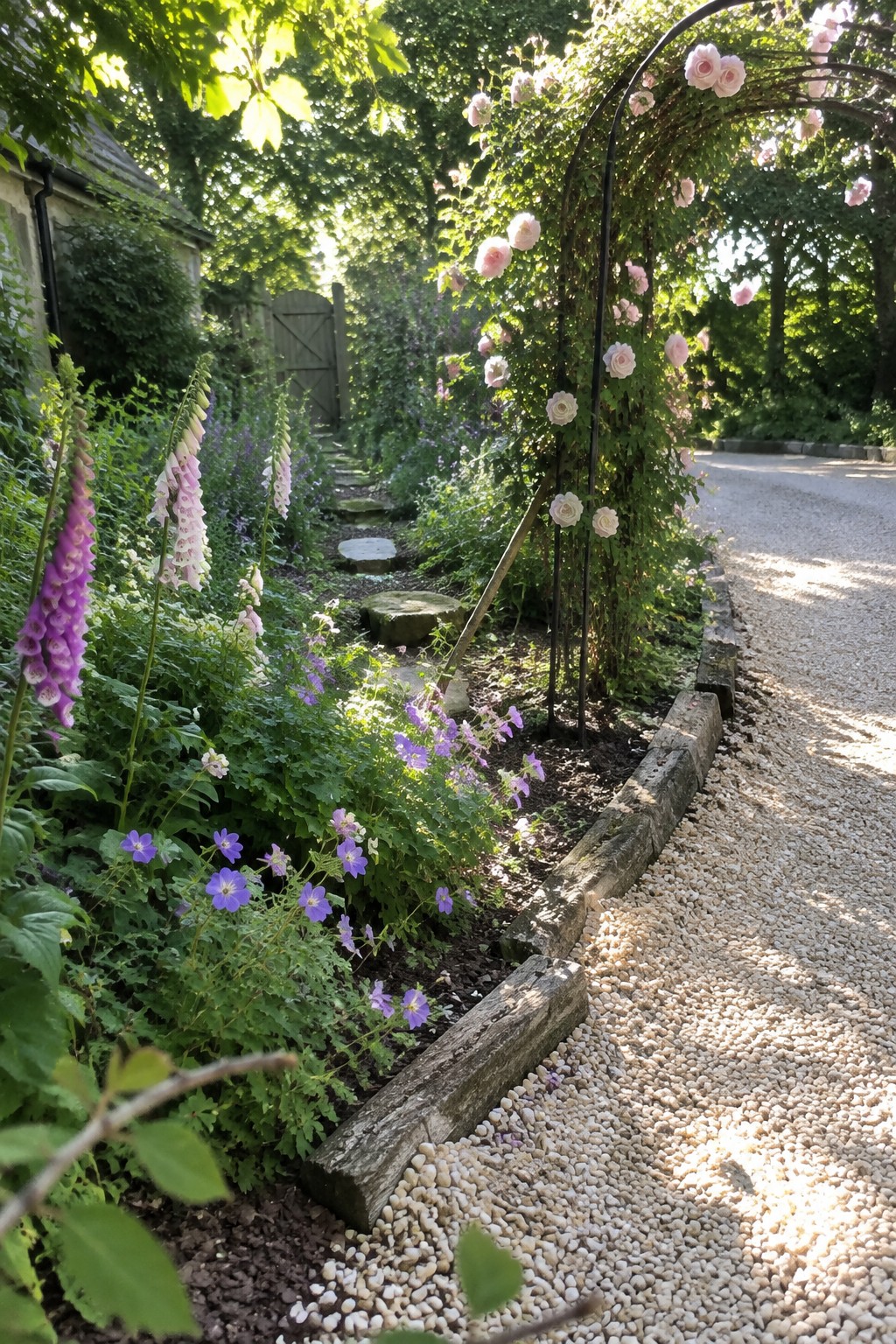
A planted border can give a gravel driveway a softer edge while helping define where the gravel ends. Here, a timber edging strip separates the pale stones from a flower bed, but the planting is what makes the boundary feel like part of the garden.
This approach works well along driveways beside existing beds or fences. Keep plants set back enough that they do not spill onto the gravel, and choose varieties suited to the amount of sun and upkeep you can manage.
Use Large Stones to Edge a Gravel Driveway
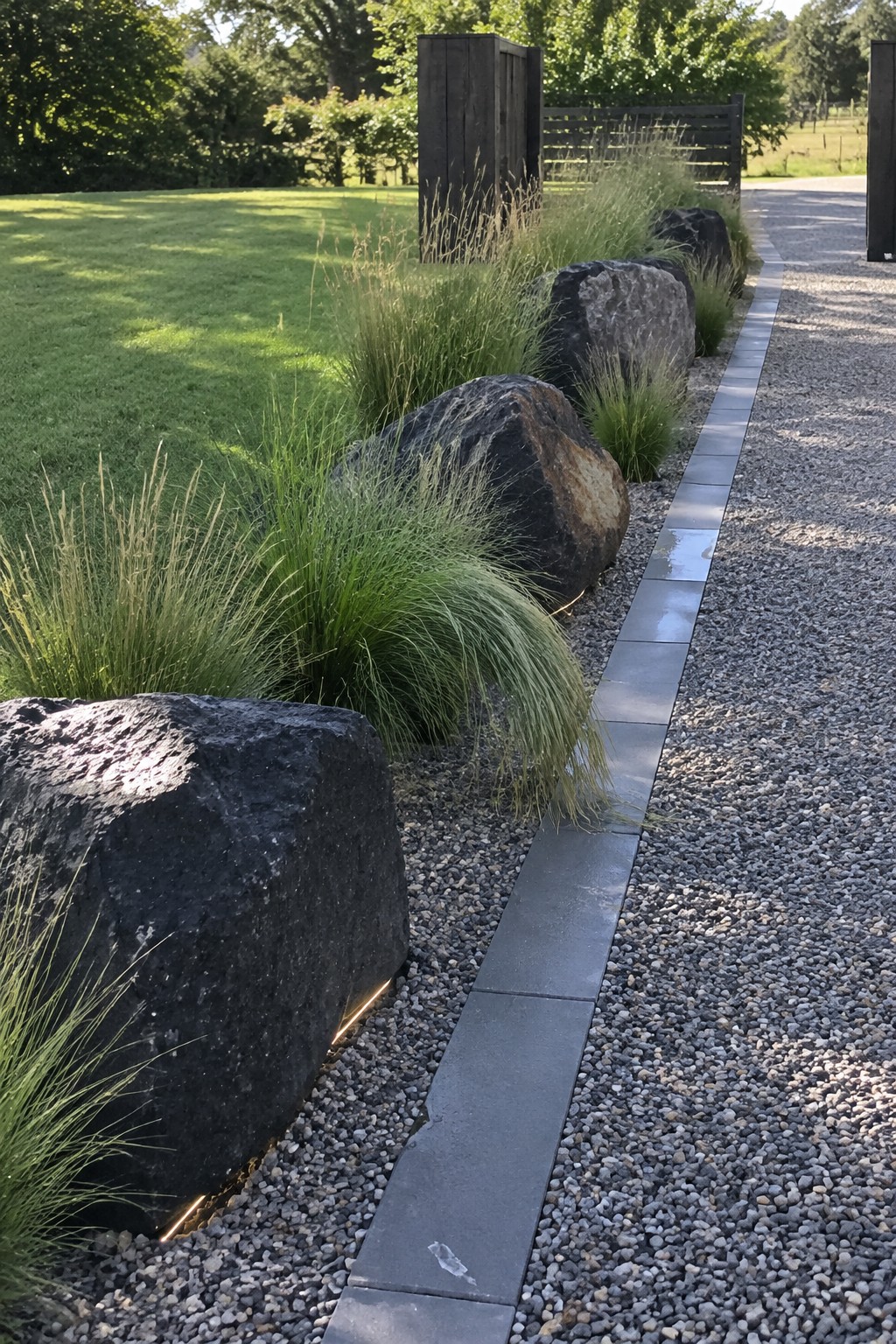
Large natural stones can give a gravel driveway a clear, sturdy edge. Set along one side, they help define where the gravel ends while adding a simple landscape feature.
Choose stones with enough weight to stay in place, and set them partly into the ground for a steadier border. Tufts of ornamental grass can fill the gaps, but leave enough room to keep plants from spilling onto the driving surface.
Use Timber Posts to Edge a Gravel Driveway
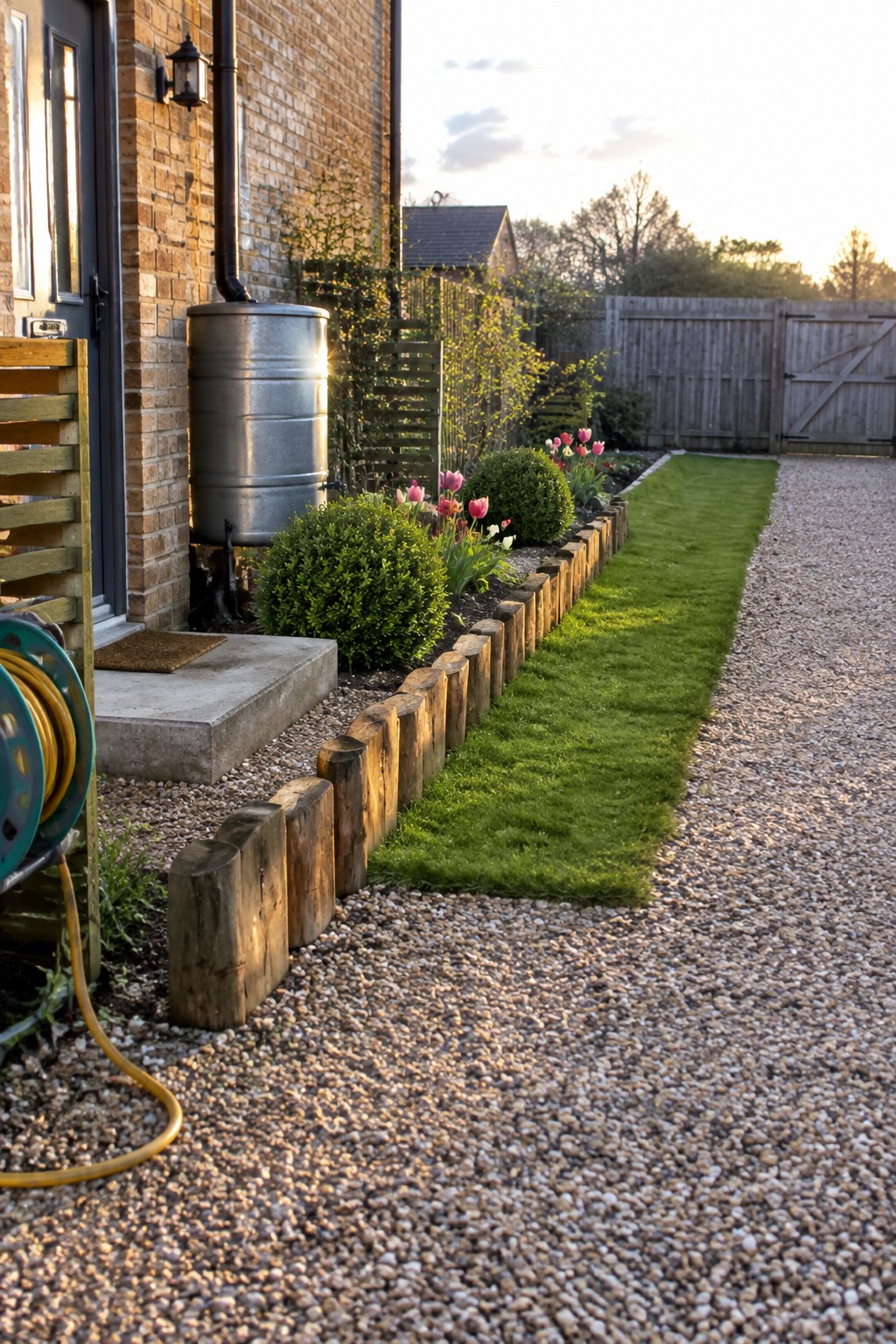
Short timber posts make a sturdy, low-cost border for a gravel driveway. Set close together, they help keep loose gravel from spilling into the lawn and give the driveway a clear edge.
This approach works well for a straight or gently curving drive. Use treated timber rated for ground contact, and set the posts deep enough to stay steady over time. A narrow grass strip beside the gravel keeps the border easy to see and maintain.
Use Brick Edging to Define a Gravel Driveway

A low brick border gives a gravel driveway a clear edge and helps keep loose stone from spreading into nearby planting beds. It is a simple way to make the boundary look deliberate without using an expensive material.
Set the bricks in a straight or gently curved line, and keep the top edge low enough that it does not interfere with parking or walking. This approach suits informal and modern gardens alike, especially where the driveway meets drought-tolerant plants.
Use Steel Planters to Edge a Gravel Driveway
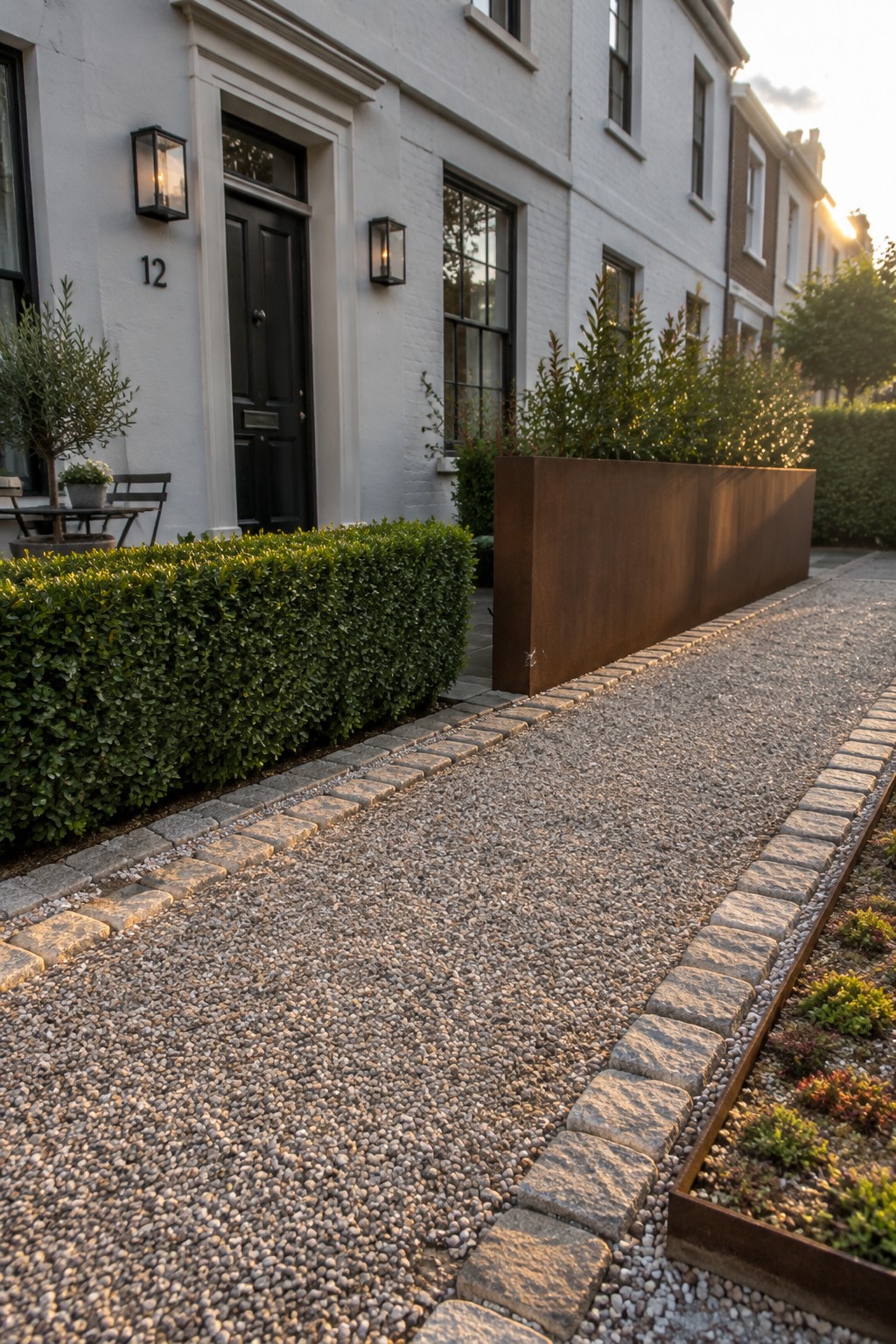
A long metal planter can give a gravel driveway a clear, tidy edge while holding back the stones. The straight sides also make a simple border feel intentional, especially beside a clipped hedge.
For a lower-cost version, use a narrow steel bed or reclaimed metal edging rather than a deep custom planter. Keep the border secure and leave enough room for the gravel to drain freely.
Use a Low Stone Curb Along a Gravel Driveway
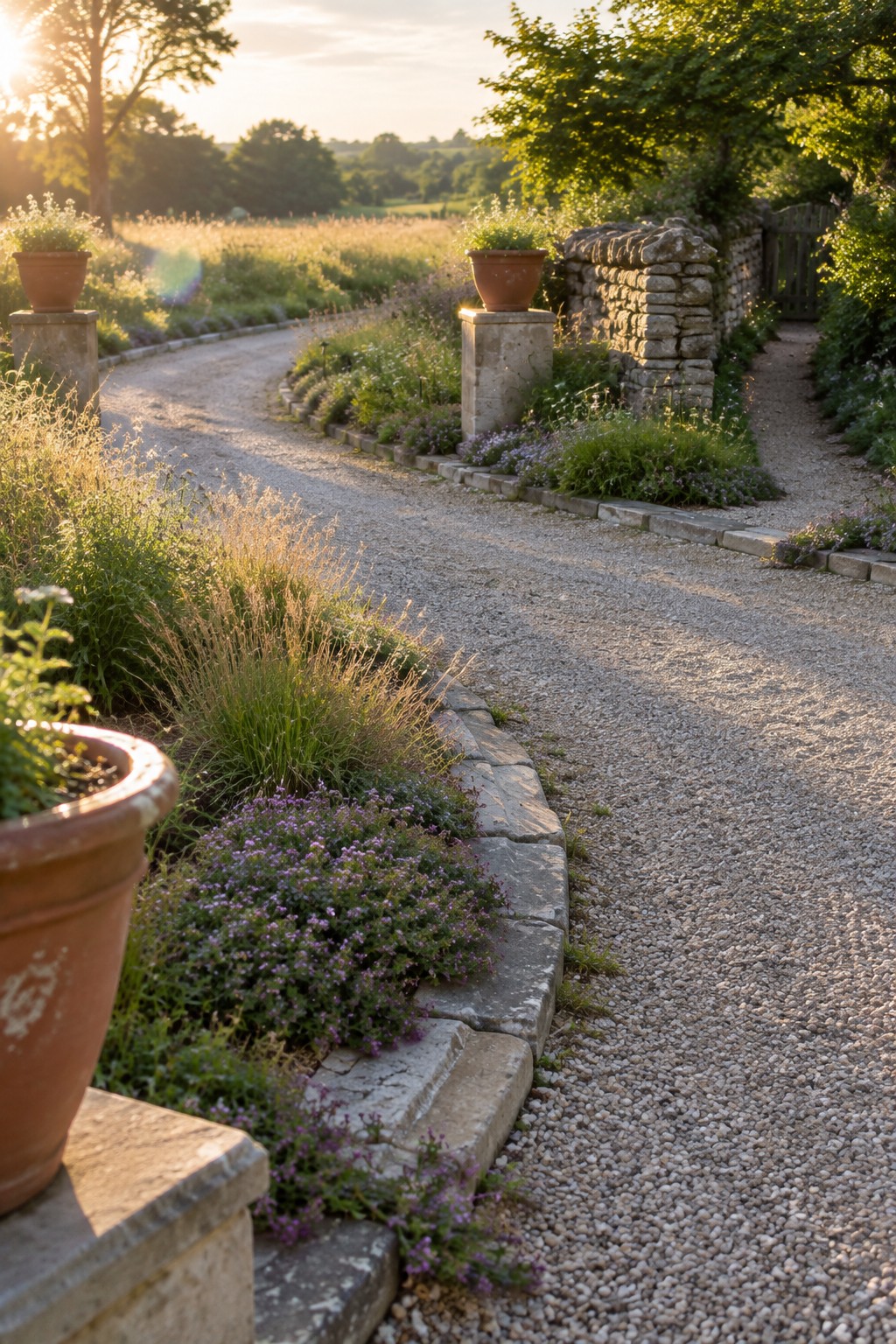
A low stone curb gives a gravel driveway a clear edge and helps keep loose stones from spilling into nearby planting beds. It also works well in a garden where a simple, natural-looking border suits the setting.
Use reclaimed stone or less expensive local stone to keep costs down, and set the pieces firmly so they stay in place. A narrow curb is usually enough to define the drive without making the border feel bulky.
Use a Rope Border to Keep Gravel in Place
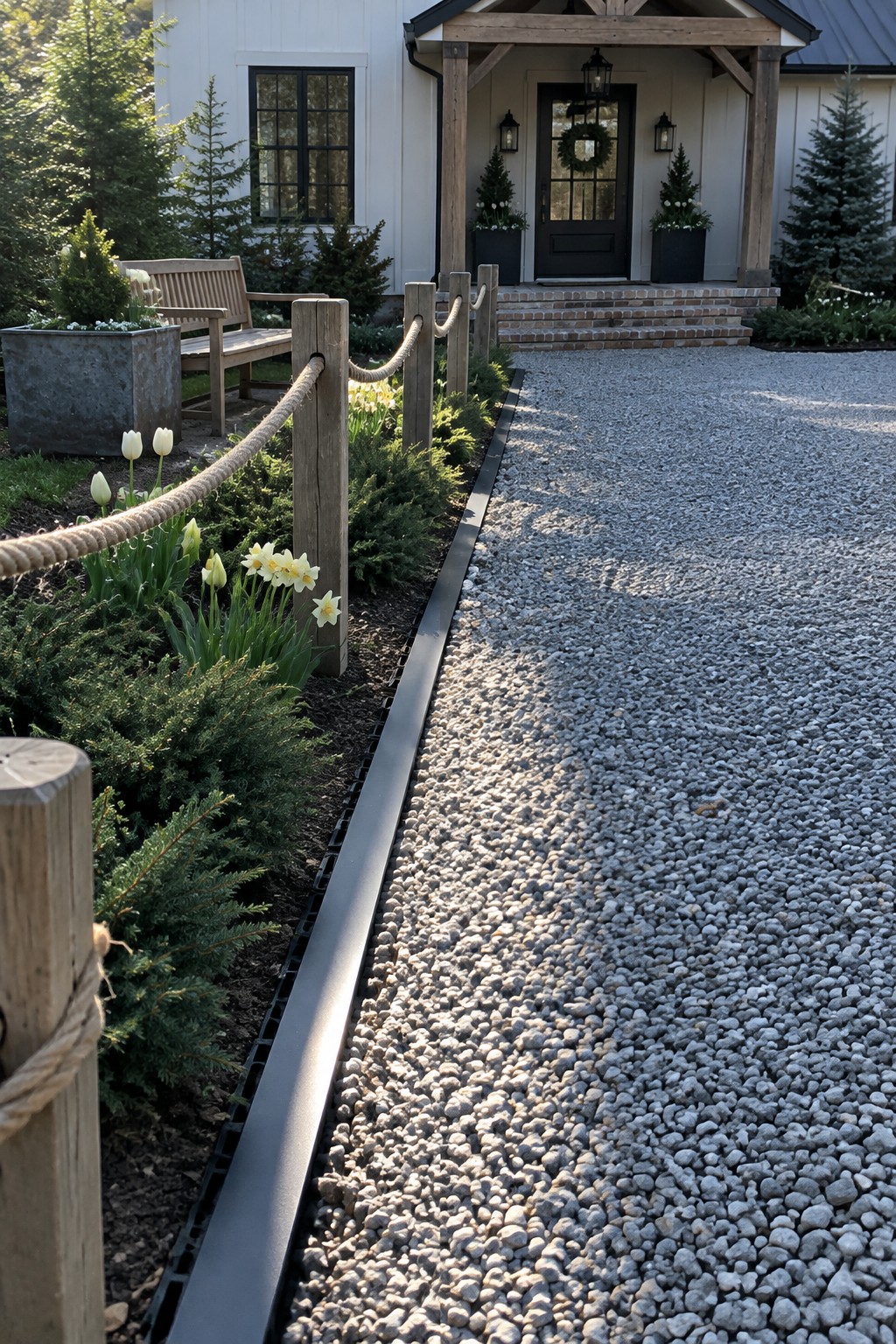
A simple rope-and-post edge gives a gravel driveway a clear boundary without needing a continuous stone or brick curb. It also suits a cottage-style entrance, where a softer border feels more at home than a hard edge.
Set sturdy wooden posts along the planting bed and run rope between them, keeping the line low and consistent. This works best where cars won’t need to cross the border, and it won’t hold gravel as firmly as a solid edging material.
Use Steel Edging to Separate Gravel From Planting
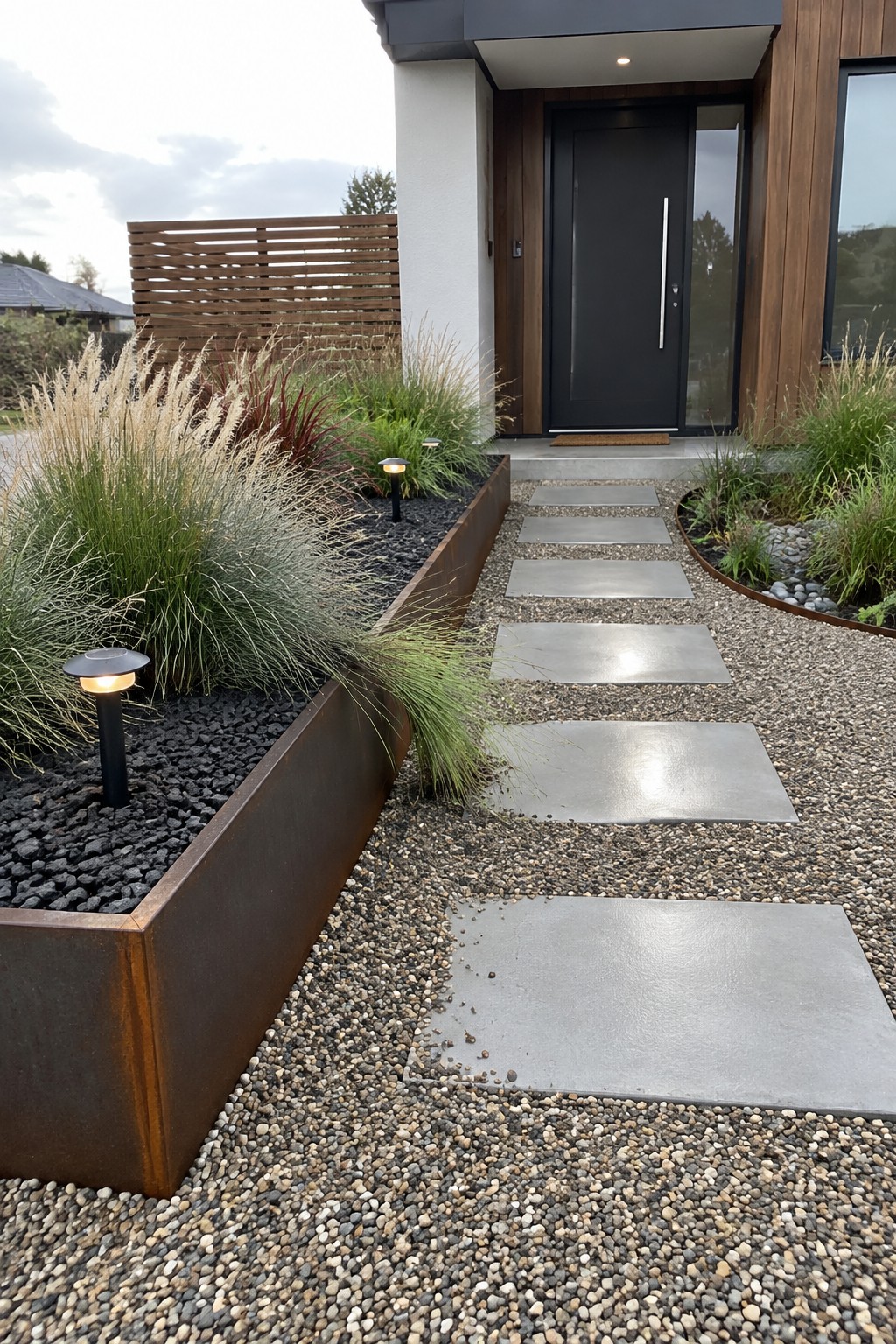
A low steel edge can keep a gravel path tidy where it runs beside a planting bed. Here, the raised metal border holds the dark stone mulch in place and gives the path a clear edge without needing a wide curb.
This approach suits entry paths and driveway edges where loose gravel tends to spread into nearby plants. Choose durable edging and set it firmly into the ground so it stays straight and does not become a trip hazard.
Use a Stone Path Beside a Gravel Driveway

A narrow stepping-stone path can give a gravel driveway a more useful edge, especially where people need a clear route through a planted area. The stones mark a walking line without requiring a poured walkway.
Use flat stones set firmly into the ground, leaving enough room between them for comfortable steps. This works well beside a garden bed, but keep the path level and avoid placing loose gravel where it could spill over the stones.
Use Stepping Stones to Define a Gravel Walkway
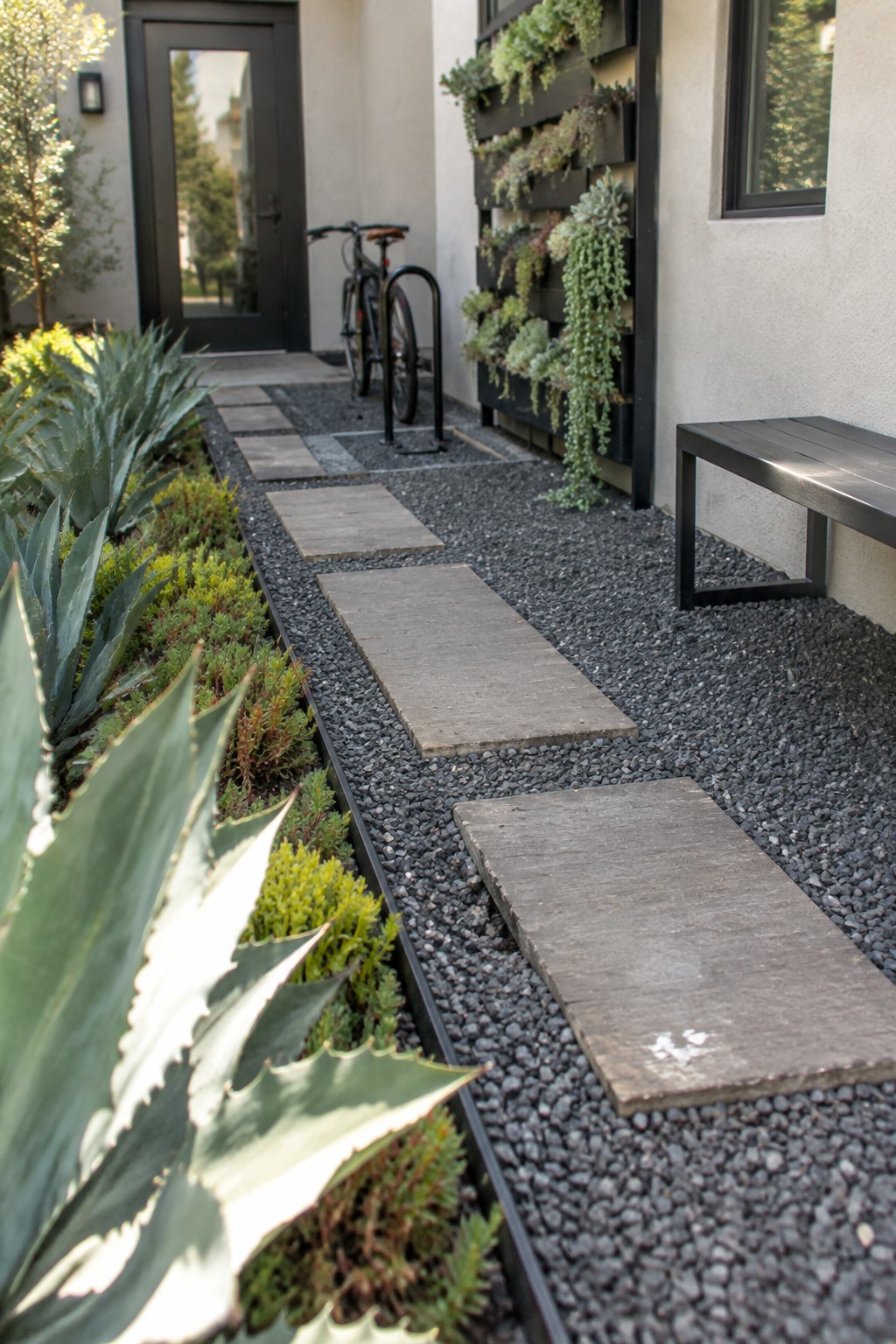
Large stepping stones make a gravel path easier to follow and give it a clear route to the front door. The gravel can stay as the low-cost main surface while the stones provide a firm place to walk.
Set the stones far enough apart for a comfortable stride, and keep them level so they do not wobble. This approach works well for a narrow entry path or as a smaller-scale idea for a gravel driveway border.
Use White Pebbles to Mark the Edge of a Gravel Driveway
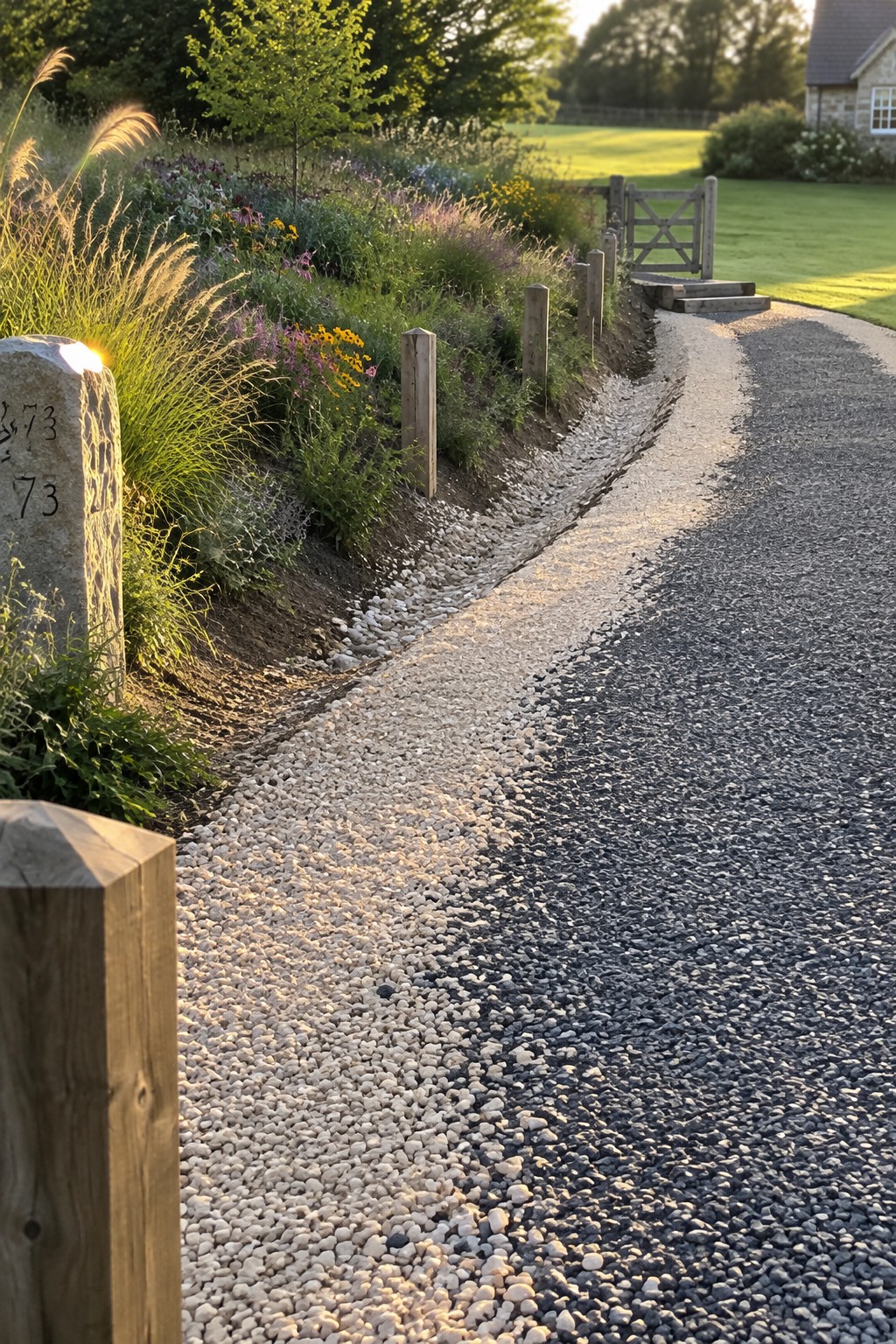
A narrow strip of white pebbles can separate dark driveway gravel from a planted border without the cost of a more formal curb. It also makes the driveway edge easier to see and gives loose gravel a defined boundary.
Keep the pebble strip modest in width and set it on a firm base so the stones stay put. This approach suits a country-style driveway, especially beside a garden bed, but it may need occasional raking to keep the two gravel areas from mixing.
Frequently Asked Questions
Q: What’s the cheapest way to keep gravel from spilling onto the lawn?
A: A shallow trench along the driveway edge can hold gravel in place without much cost. Fill it with larger stones or set inexpensive pavers along the border to make the edge easier to maintain.
Q: Can I use leftover bricks as a driveway border?
A: Yes, as long as they’re in decent shape and you set them on a firm, level base. Lay them tightly together so gravel doesn’t wash through the gaps.
Q: How wide should a gravel border be?
A: About 6 to 12 inches is enough to create a visible edge and catch loose gravel. Make it wider if you want room for plants or larger decorative stones.
Q: Will a gravel border need much upkeep?
A: It needs a quick rake now and then, especially after heavy rain or snow. Pull weeds early, before they take hold.
