


A driveway edge can make the whole front yard feel more considered, especially when it gives the paving a clean boundary without making the landscape feel stiff.
I find steel borders useful because they define a path clearly while leaving room for gravel, grass, or planting to soften the look.
The best choice depends on the shape of the drive, the home’s exterior, and how much upkeep you want along the edges.
Some designs feel crisp and minimal, while others use curves or layered materials to make the transition into the yard gentler.
I’d save the ideas that suit your site and test how their lines would work with the planting and paving you already have.
Use Steel Borders to Define a Front Walk

A steel border can give a front walk a clean edge and keep the path separate from nearby planting. Here, the narrow metal strip runs beside large concrete pavers, making the walkway feel orderly without needing an elaborate pattern.
This approach works well for modern homes and long, straight paths. Choose a durable steel edging made for outdoor use, and set it firmly so it stays aligned over time. Keep the border low and simple if you want the paving and garden to remain the main focus.
Use Steel Borders to Define a Driveway Edge

A slim steel border gives a driveway a clean edge and keeps the planting bed separate from the paving. It’s a simple way to make the boundary look tidy without adding a bulky curb.
This approach works well along straight or gently curving driveways, especially when the edge meets gravel or low planting. Set the steel securely and choose a finish that suits the paving, then keep plants from spilling over the border too much.
Use Steel Edging to Shape a Gravel Walkway
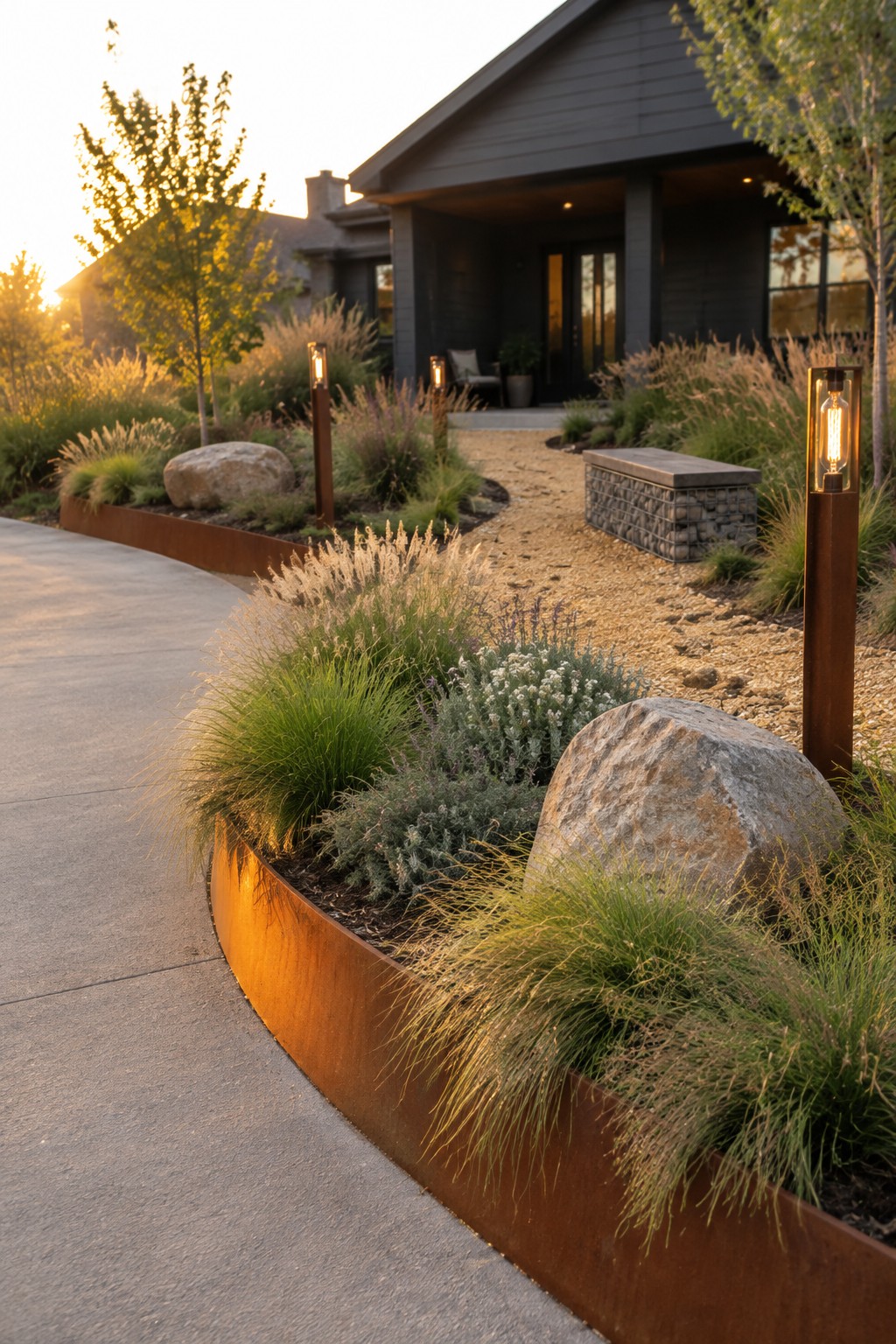
Steel edging gives a gravel path a clear boundary and helps keep loose stone from spreading into nearby planting beds. It also works well alongside grasses and shrubs, where a clean edge makes the planting feel intentional without making the garden look too formal.
Use it to follow a gentle curve toward the front door, and choose a height that holds the gravel in place without standing out too much. A rust-colored steel border is a natural fit for gravel and stone, though it may look less at home beside a very traditional facade.
Use Steel Borders Along a Front Walk

Steel edging can keep a front path looking tidy while separating it from nearby planting. Here, large stone pavers sit in gravel beside a narrow metal border, giving the walkway a clear edge without making it feel overly formal.
This approach suits modern homes and works well where a path runs beside a driveway or planted bed. Choose a durable steel edging that holds its line, and set it securely so gravel and soil stay in place.
Use Steel Borders Along a Curved Driveway

A curved steel border gives a driveway a clear edge while letting the planting bed follow a softer shape. It works especially well when a straight boundary would feel too rigid beside a winding approach.
Use a narrow metal edge to separate asphalt from mulch and flowers, and keep the curve gradual so it is easy to maintain. This approach suits sloped or irregular front yards, but the border should be sturdy enough to stay in place beside the driveway.
Use Steel Borders To Separate Gravel From a Walkway

A steel border gives gravel and a concrete path a clean, lasting division. It keeps loose stones from spilling onto the walkway and makes the change between the two surfaces feel intentional.
This approach works well on narrow side drives and front paths where space is limited. Choose a sturdy border and secure it firmly, especially where cars will pass, so it stays straight and holds the gravel in place.
Use Steel Borders Along a Curved Gravel Driveway

Steel edging helps a gravel driveway follow a gentle curve without the stones spilling into nearby planting beds. It gives the route a clear edge while still letting the path feel relaxed and natural.
This works well for a country home or any driveway that winds through a garden. Use flexible steel edging to shape the curve, and set it firmly so it stays in place as cars pass over the gravel. Keep the border low and simple.
Use Steel Edging To Shape a Gravel Entry Path

Steel edging can give a gravel path a clear shape while keeping loose stones from spreading into the planting beds. A curved border also makes the route to the front door feel more considered than a straight strip of gravel.
For a similar look, use steel along both sides of an entry path and keep the curves wide enough to mow or maintain easily. It works especially well where gravel meets shrubs or flowers, but secure the edging firmly so it stays in place over time.
Use Steel Borders to Define a Gravel Driveway Walk

Steel edging can separate a gravel strip from the walking surface and give a long driveway a clear, tidy layout. The metal borders also help keep loose stones from spreading onto the concrete.
This approach suits a modern entry where gravel and paving meet. Choose sturdy edging and secure it well, especially along a route that gets regular foot or vehicle traffic.
Use Steel Borders to Separate Lawn From Paving

Steel edging can keep a paved driveway or walkway distinct from the lawn beside it. The crisp boundary gives the hardscape a tidy outline without needing a wide strip of concrete.
For a similar look, use slim steel borders to hold the paving in place and keep grass from creeping across the edges. This works well in modern landscapes with long, simple paths, though the border should sit flush enough to avoid catching feet or mower blades.
Use Steel Edging Along a Garden Path
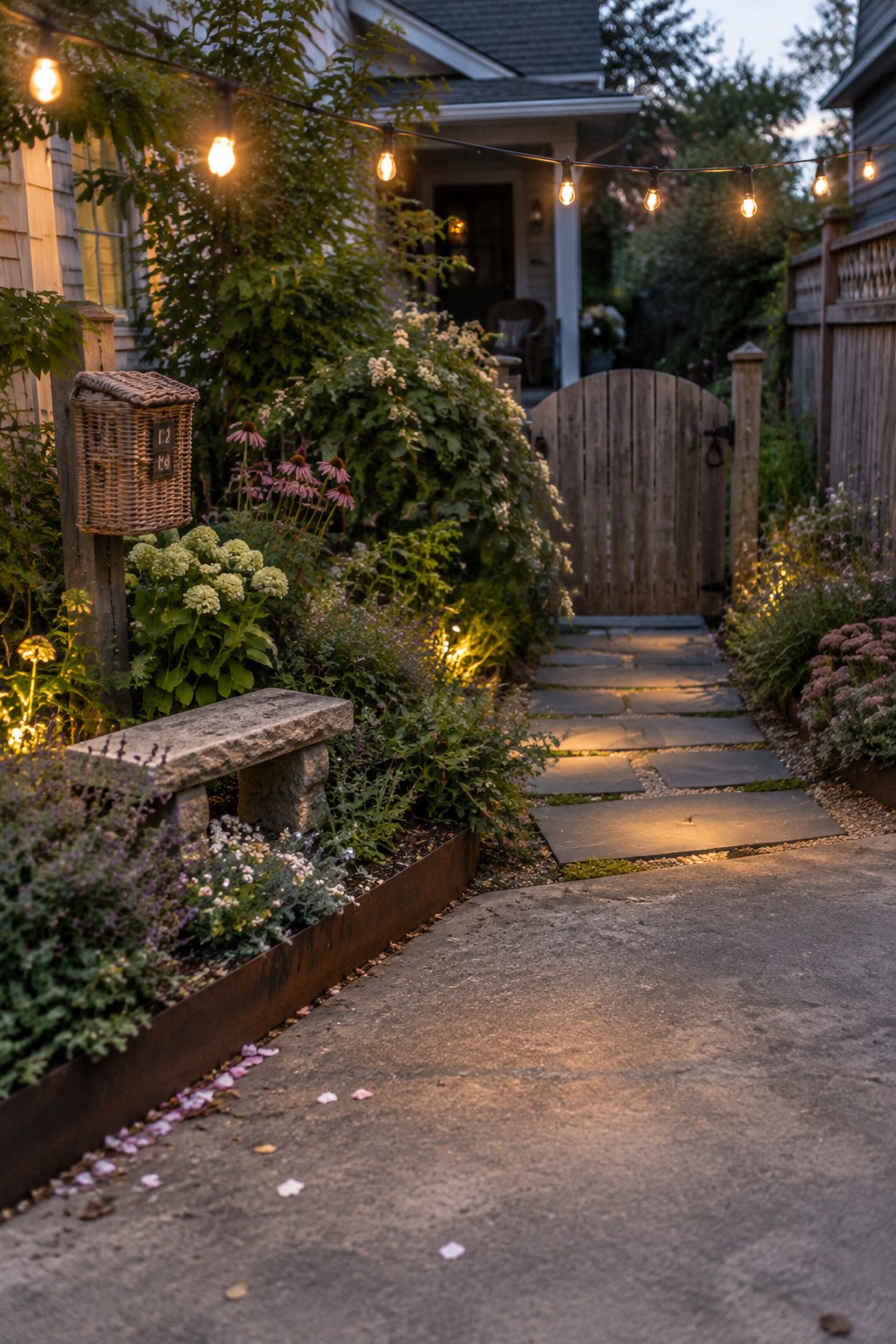
Steel edging can give a garden path a clear outline while keeping gravel and planting from spilling onto the paving. It works especially well where a walkway runs through a flower bed, as it does beside the stone slabs here.
Choose a border height that holds the path material in place without hiding nearby plants. A dark steel edge suits informal garden paths and helps keep the line tidy as the planting fills in.
Use Steel Borders to Separate Concrete and Gravel

Steel edging can separate a solid walkway from a narrow gravel planting strip, giving an entry path a neat, finished look. The clear division also keeps loose stone from spreading across the concrete.
This approach works well beside a front walk or driveway, especially where you want to tuck in low-growing plants without making the path wider. Choose sturdy edging and set it securely so it stays straight and level over time.
Frequently Asked Questions
Q: Will steel edging hold up in a driveway that gets driven over?
A: Yes, if you choose a sturdy steel border and anchor it firmly. Keep the top edge flush with the driveway so tires don’t catch it.
Q: Can I install steel edging next to an existing driveway?
A: Usually, yes. Dig a narrow trench along the edge, set the steel in place, then backfill and tamp the soil so the border stays upright.
Q: Will steel edging rust?
A: Untreated steel will develop rust, which some people like for its weathered look. If you want a cleaner finish, choose a coated or weather-resistant option.
Q: How do I keep weeds from growing along the border?
A: Clear the strip beside the edging and add mulch or gravel. The steel defines the edge, but it won’t stop weeds on its own.
