

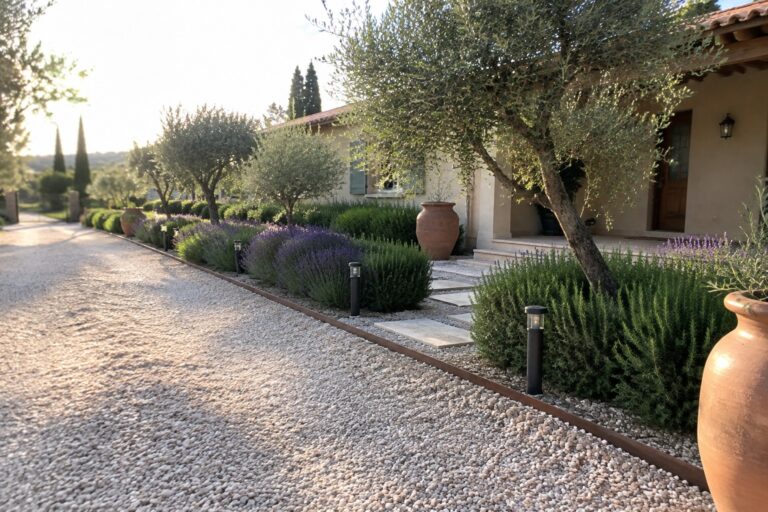
A driveway border can shape the whole approach to a home, especially when the gravel, plants, and entry feel like they belong together.
I find that the best designs balance loose, natural planting with a clear edge, so the driveway stays easy to use and the garden does not feel overgrown.
Mediterranean-style choices such as pale gravel, silvery foliage, and drought-tolerant grasses can bring texture and warmth without demanding constant attention.
The details matter in real yards, from leaving enough room for car doors to choosing plants that can handle reflected heat and dry soil.
Some of these combinations are worth saving and adapting to your own layout, climate, and the look of your home.
Use Gravel Paths to Define Garden Beds

A gravel driveway can feel more settled when its edge follows a clear line beside the planting. Here, metal edging keeps the pale gravel in place while marking a tidy border for lavender and other drought-tolerant plants.
This approach works well for Mediterranean-style homes and long driveways where you want planting without a thirsty lawn. Choose plants that suit your climate, and leave enough room for them to grow without spilling across the path.
Use a Gravel Path to Shape the Planting

A narrow strip of rounded river stones can give a gravel driveway border a clearer shape. Set stepping stones through it, and the planting feels like part of the route rather than a separate bed.
This approach suits dry-climate gardens where agaves and ornamental grasses can handle limited watering. Keep the stones contained so they do not spread into the driveway, and leave enough open gravel for easy access.
Use Brick Edging to Define a Gravel Driveway Border

A narrow brick edge gives a planted driveway border a clear shape and helps keep gravel from spilling into the garden bed. It also suits Mediterranean-style planting, where informal shrubs and lavender can grow alongside simple, practical materials.
Use brick edging to separate a gravel drive from a low-water planting bed, and repeat the same material along the path for a consistent look. Set the bricks firmly and keep the border low enough that cars and foot traffic can pass comfortably.
Use Raised Gravel Borders for Mediterranean Planting

A raised planting bed makes a gravel border feel intentional and keeps drought-tolerant plants neatly grouped. Here, the pale stone edging gives the planting a clear boundary, while rosemary and lavender bring a familiar Mediterranean look.
This approach works well beside a driveway or along a narrow path, especially where space for planting is limited. Choose a sturdy edging material and leave enough room for plants to spread without spilling too far into the gravel.
Use Stone Edging to Shape a Gravel Driveway Border

A low stone edge gives a gravel driveway a clear boundary and keeps the planting from spilling into the driving area. It also makes a simple border feel more established, especially alongside drought-tolerant plants such as lavender.
Use the edging to follow the driveway’s curve or separate it from a raised planting bed. Choose stone that suits the house, and keep the border low enough to avoid making the driveway feel narrow.
Use Brick Pavers to Break Up a Gravel Garden Border

Brick pavers can give a planted driveway border a little structure without making it feel too formal. Set among gravel and drought-tolerant plants, they create small breaks in the planting and tie the garden edge to the paved drive.
Use a few pavers as stepping spots or simple accents rather than lining every bed with them. They suit Mediterranean-style gardens, especially where gravel helps reduce watering, but leave enough space for plants to grow without covering the path.
Use Stone Edging to Shape a Gravel Garden Border

A low stone edge gives a gravel border a clear shape and keeps the planting bed separate from the path. It suits a Mediterranean-style garden, where the rough, natural finish looks at home beside terracotta pots and drought-tolerant plants.
Use stones of similar size for a tidy line, or vary them slightly for a more informal feel. Set the edge firmly so gravel stays in place and the border is easy to maintain.
Use Gravel to Set Off Drought-Tolerant Planting

Gravel makes a practical surface for a Mediterranean-style driveway, while a planted border keeps it from feeling bare. Here, pale gravel sits beside raised beds filled with succulents and low-growing lavender.
This approach suits homes where water-wise plants are a good fit. Keep the gravel contained with a clear edge, and leave enough space for plants to spread without spilling into the driveway.
Use a Stone-Edged Gravel Path
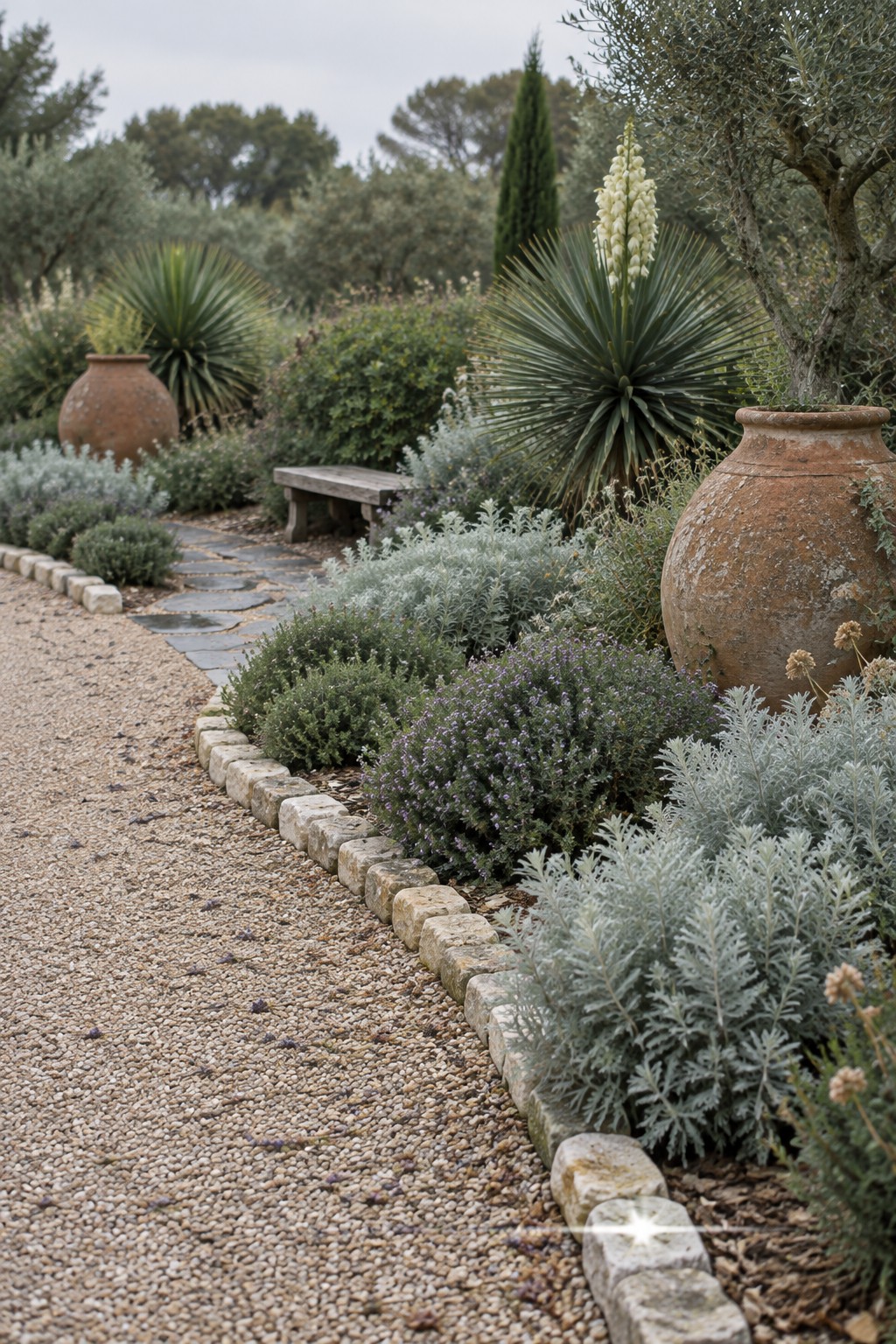
A gravel path feels more finished when a low stone border keeps the edges in place. It also gives drought-tolerant planting a clear boundary without making the garden feel too formal.
Use sturdy, irregular stones along a gently curving path, and leave enough room for plants to spread without spilling onto the walking surface. This approach suits Mediterranean-style gardens and works best when the stones sit firmly and the gravel is topped up as needed.
Use a Gravel Path to Keep Garden Borders Simple

A gravel path is an easy way to give a garden a clear route without paving the whole area. Here, the planting sits in a narrow bed along the path, and a low stone edge keeps the gravel and soil in their places.
This approach suits Mediterranean-style gardens and other dry, sunny spaces where drought-tolerant plants do well. Use a firm base beneath the gravel, and choose edging that can handle foot traffic so the border stays neat over time.
Use Raised Planters to Organize Driveway Borders

Raised planters give a gravel driveway border a clear shape while keeping the planting in its own defined area. Here, rust-colored metal beds hold lavender and other low-water plants, making the garden edge feel orderly without needing a solid wall.
This approach works well beside Mediterranean-style homes, especially where the ground slopes or the driveway needs a crisp edge. Choose sturdy, weather-resistant planters and leave enough room for plants to spread without spilling across the gravel.
Use a Gravel Path Beside Layered Planting

A pale gravel path can make a Mediterranean garden feel easy to move through while giving the planting beds a clear edge. The mix of gravel, brick edging, and low drought-tolerant plants feels relaxed but still organized.
This approach suits a driveway or garden path where you want a defined route without a solid paved surface. Use sturdy edging to keep the gravel in place, and choose plants that can handle dry conditions and won’t quickly spill across the path.
Use Curved Stone Edging to Shape Planting Beds

A low stone edge gives a gravel driveway border a clear shape while keeping the planting bed distinct from the path. The gentle curve here feels more natural than a straight, rigid line, and it suits drought-tolerant plants that can spill slightly over the stones.
Use this approach where you want to separate gravel from groundcover without building a tall wall. Choose sturdy stones that sit firmly in place, and keep the curve easy to mow or maintain.
Use Low Wall Lighting Along a Gravel Border

Small ground lights set into a low retaining wall can make a gravel driveway edge easier to follow after dark. The wall also keeps the planting bed neatly separated from the path, while lavender and other drought-tolerant plants suit the dry, sunny setting.
Use this approach where a raised garden bed meets a driveway or walkway. Choose shielded, low-glare fixtures and space them far enough apart to mark the route without lighting every inch.
Use Rounded Shrubs to Structure a Gravel Border

Rounded, drought-tolerant shrubs give a gravel border a tidy rhythm without needing a formal hedge. Their repeated shapes make the planting feel organized, while smaller flowers can fill the gaps without crowding the path.
Use this approach along a curved walkway or driveway edge, spacing shrubs so they have room to mature. A few compact mounds of bright green foliage are enough to make the border feel planned; avoid planting them too close together.
Use a Gravel Path to Lead to a Garden Bench
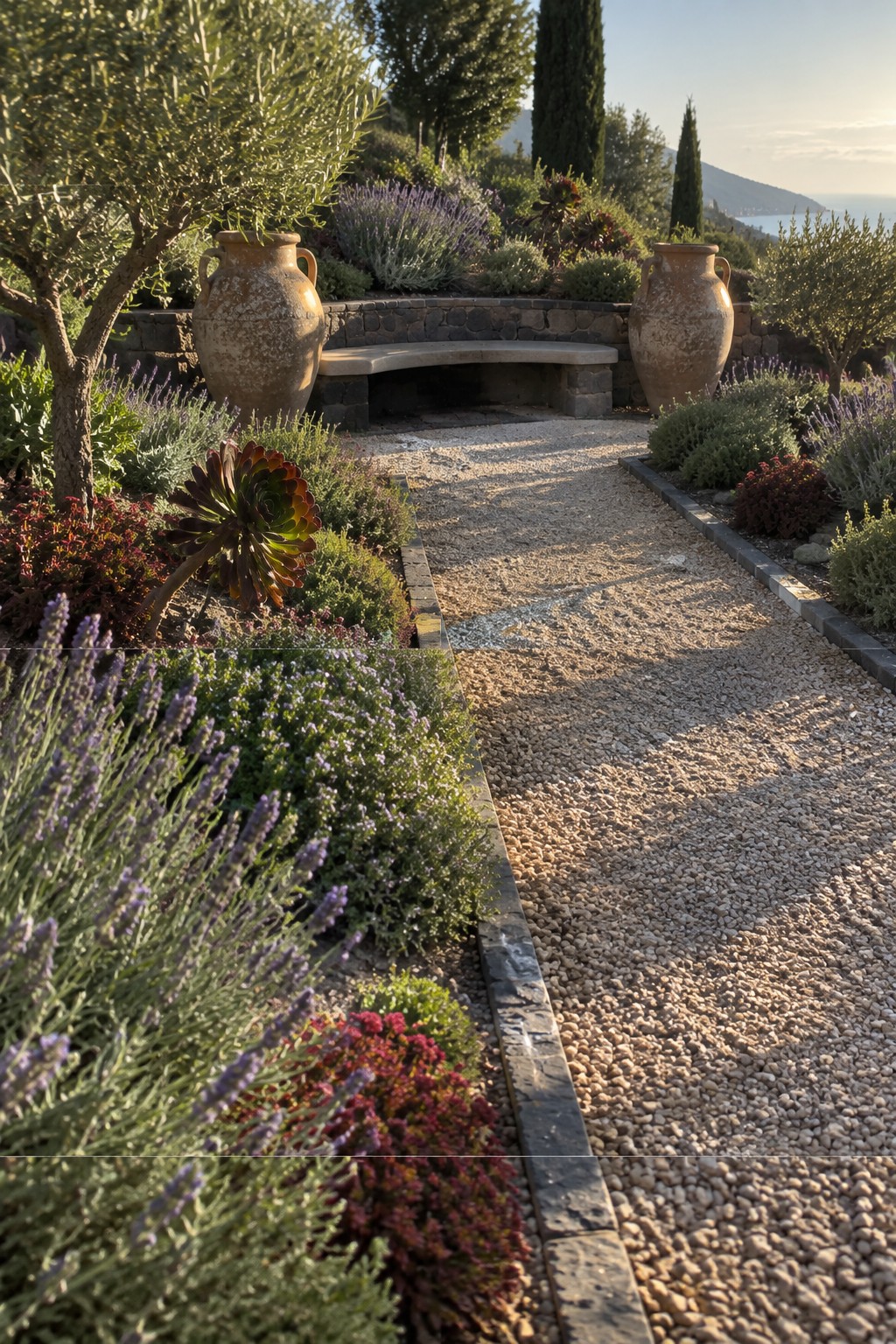
A gravel path can do more than provide a firm route through a garden. Here, its clear line leads to a small stone bench, giving the planting a useful destination and making the space feel organized.
This approach suits Mediterranean-style gardens where gravel and drought-tolerant plants are already part of the plan. Keep the path wide enough to walk comfortably, and use a solid edge to stop loose gravel from spilling into the beds.
Use Low, Rounded Plants Along Gravel Borders

Rounded shrubs and flowering perennials give a gravel driveway border a clear shape without making it feel formal. Here, clipped green shrubs sit among lavender and grasses, showing how varied plant forms can make a dry garden bed feel full.
Use compact, drought-tolerant plants where a driveway needs a tidy edge but there is little room for thirsty lawn. Leave space between plants for gravel and mature growth, so the border stays manageable rather than crowded.
Use Rusted Steel Planters Along Gravel Borders

Large rusted steel planters give drought-tolerant plants a clear place along a gravel path. The raised edge keeps the planting contained, while the weathered metal suits a relaxed Mediterranean garden.
Use this approach where a driveway or path needs a defined border without a continuous wall. Fill the planters with hardy succulents, and leave enough room around them for gravel to stay easy to maintain.
Use Large Stones to Edge Gravel Borders

Large natural stones give a gravel driveway border a clear edge and help keep loose gravel from drifting into the planting bed. Their irregular shapes suit a Mediterranean-style garden, where a neat line of small, uniform pavers might feel too formal.
Set the stones close together along the bed, keeping their tops at a similar height so the border stays easy to walk beside. This approach works especially well with drought-tolerant plants, but leave enough space between larger stones to clear leaves and weeds.
Use Stepping Stones to Break Up a Gravel Border

Large stepping stones make a gravel path easier to walk while giving the planting bed a clear rhythm. The simple layout suits a narrow side yard, where a full paved walkway could feel too heavy.
Leave enough space between stones for a comfortable stride, and set them level with the gravel so they stay steady underfoot. Low-growing, drought-tolerant plants can fill the border without spilling across the path.
Frequently Asked Questions
Q: Will gravel make a mess on the driveway?
A: It can spill onto the paving, especially where cars turn or tires cross the border. A sturdy metal, stone, or brick edge helps keep it in place, and an occasional quick rake takes care of strays.
Q: Which drought-tolerant plants work well beside a driveway?
A: Lavender, rosemary, and low-growing thyme pair naturally with gravel and can handle dry conditions once established. Check how much sun the border gets before choosing, since even drought-tough plants need the right spot.
Q: Do I need to put fabric under the gravel?
A: Landscape fabric can slow weeds, but it won’t stop them completely, and it can make it harder for plants to spread. A thick gravel layer over well-prepared soil is often easier to maintain around planted borders.
Q: How do I keep the plants alive while they’re getting established?
A: Water them regularly during their first growing season, even if you plan to keep the border low-water later. Once roots settle in, you can water less often.
