


Driveway edges can make a yard feel tidy, but they also need to work with the way cars, foot traffic, and garden beds use the space.
I find that evergreen shrubs are most successful when they soften the hard line of pavement without narrowing the driveway or hiding sightlines.
A simple layout and plants suited to the local conditions can keep the border looking cared for with less pruning and watering.
The best choices also leave room for shrubs to grow, since a neat edge can quickly feel crowded if plants outgrow their space.
I’d start by testing an idea against the driveway’s width, sunlight, and overall garden shape before planting.
Use Repeating Shrubs Along the Driveway

Evenly spaced evergreen shrubs give a driveway a neat, consistent edge without needing a lot of different plants. Their rounded shape also makes a gravel planting strip feel orderly beside a wide concrete drive.
Choose compact varieties that stay within their space, and leave enough room between plants for mature growth. A narrow gravel bed can help with drainage and make upkeep simpler, but keep shrubs trimmed back from the driveway.
Use a Gravel Driveway With a Narrow Planting Border

A narrow bed along the driveway gives evergreen shrubs a clear place to grow without taking over the gravel. Repeating rounded shrubs and tufts of ornamental grass makes the edge look orderly, while the gravel keeps the broad driving area simple to maintain.
This approach works well for long driveways with enough room for a planted strip. Use sturdy, slow-growing shrubs and keep them trimmed away from the driving surface. A slim metal or stone border can help keep the gravel in place.
Use Brick to Edge a Paver Driveway

A narrow brick border gives a paver driveway a clear, tidy edge while adding a little color against the larger stones. It also helps the transition between different paving materials feel intentional rather than abrupt.
This approach works well beside evergreen shrub beds, where a firm edge can keep mulch from spreading onto the driveway. Choose bricks that suit the pavers, and set them securely so the border stays even over time.
Use Gravel Strips to Edge Evergreen Shrubs

A narrow gravel strip makes a practical border between evergreen shrubs and a driveway or walkway. It gives the planting a clear edge and keeps soil and mulch from spilling onto the paving.
For a similar look, set the shrubs in a raised bed and leave enough room for a band of gravel beside the hardscape. Concrete edging can hold the stones in place, while compact, slow-growing shrubs help reduce trimming.
Use a Stone Border Along the Driveway
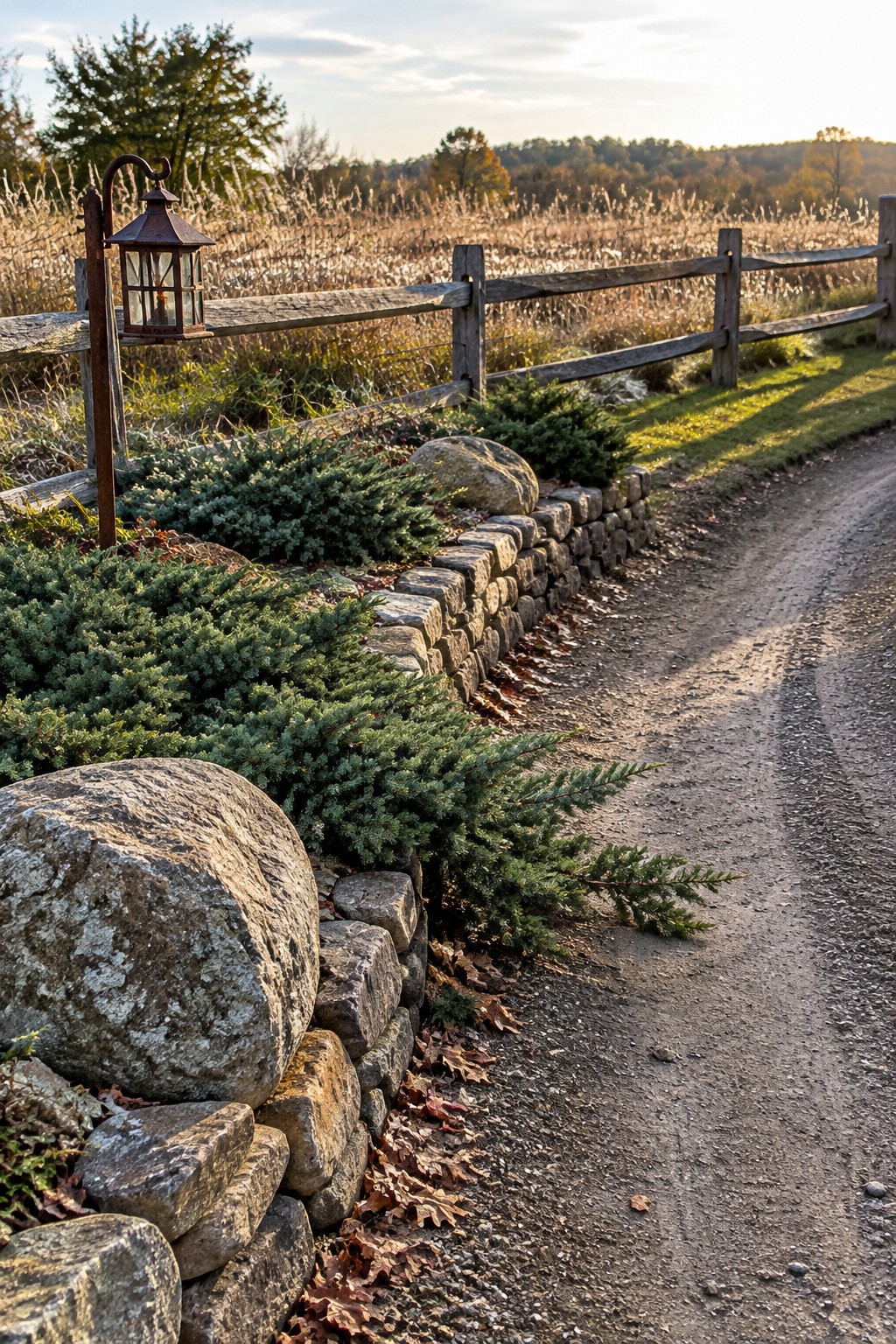
A low stone edge can keep evergreen shrubs tidy beside a gravel driveway. The stones give the planting bed a clear boundary, so gravel is less likely to spill into the greenery.
Choose sturdy stones that sit securely and follow the driveway’s curve without leaving large gaps. This works well for an informal country-style yard, but keep the border low enough that it does not interfere with tires or make routine trimming harder.
Use a Raised Planter to Define the Driveway Edge
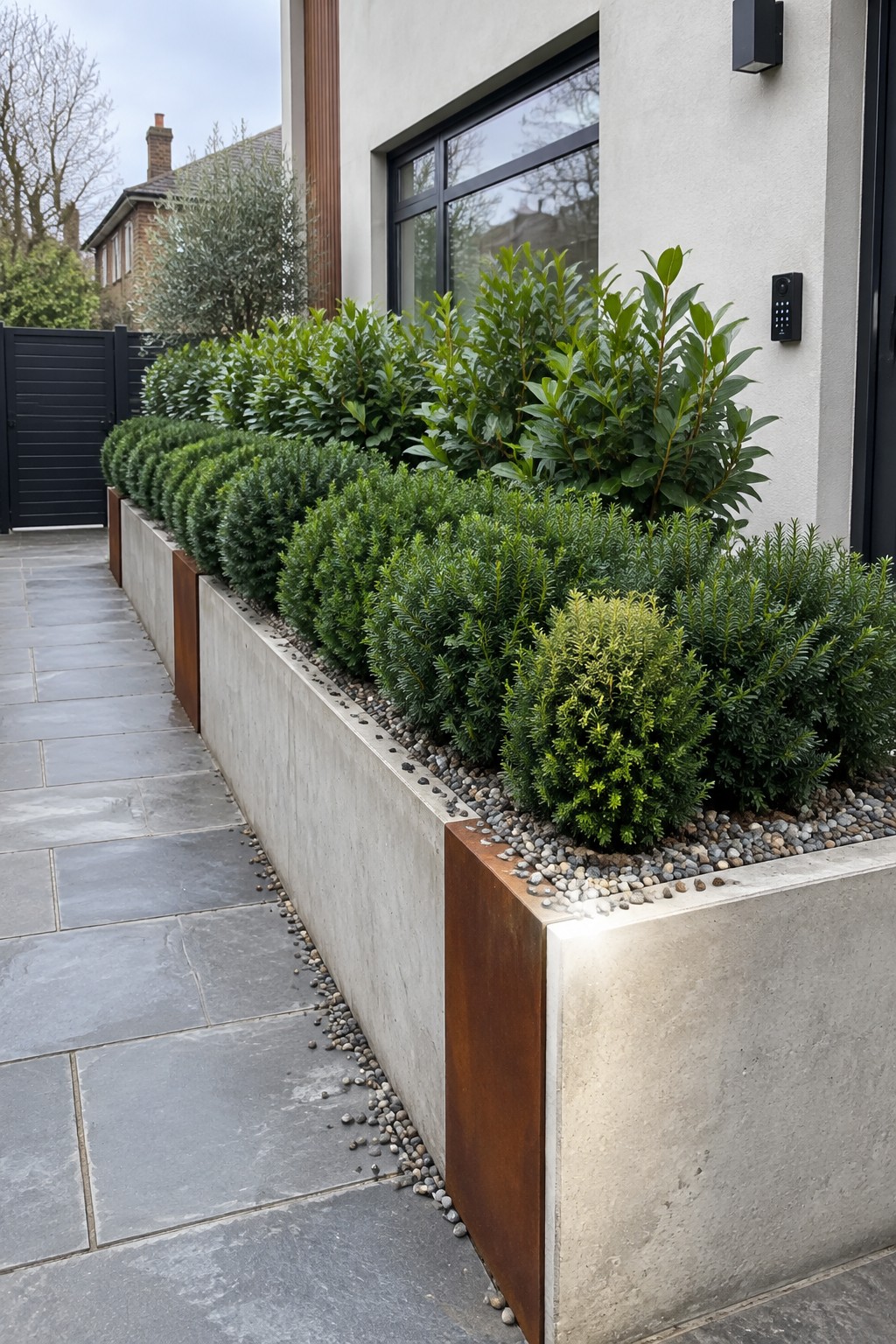
A raised planter gives evergreen shrubs a clear boundary and keeps the planting neatly separate from the paved area. The low concrete wall also makes the edge easier to maintain than a bed that meets the paving directly.
This approach works well beside a modern home where you want a strong, tidy line along the driveway. Choose shrubs that stay in scale with the planter, and leave enough room for them to grow without spilling onto the path.
Add a Stone Retaining Edge Along the Driveway

A low stone retaining wall can give evergreen shrubs a clear border while holding back a sloped planting area. The stones suit a traditional landscape and make the edge feel substantial without needing a row of small edging pieces.
This approach works well where the driveway runs beside a change in grade. Keep the wall low enough to preserve sightlines, and choose shrubs that will not quickly grow over the stonework.
Use a Stone Curb to Separate Shrubs From the Driveway
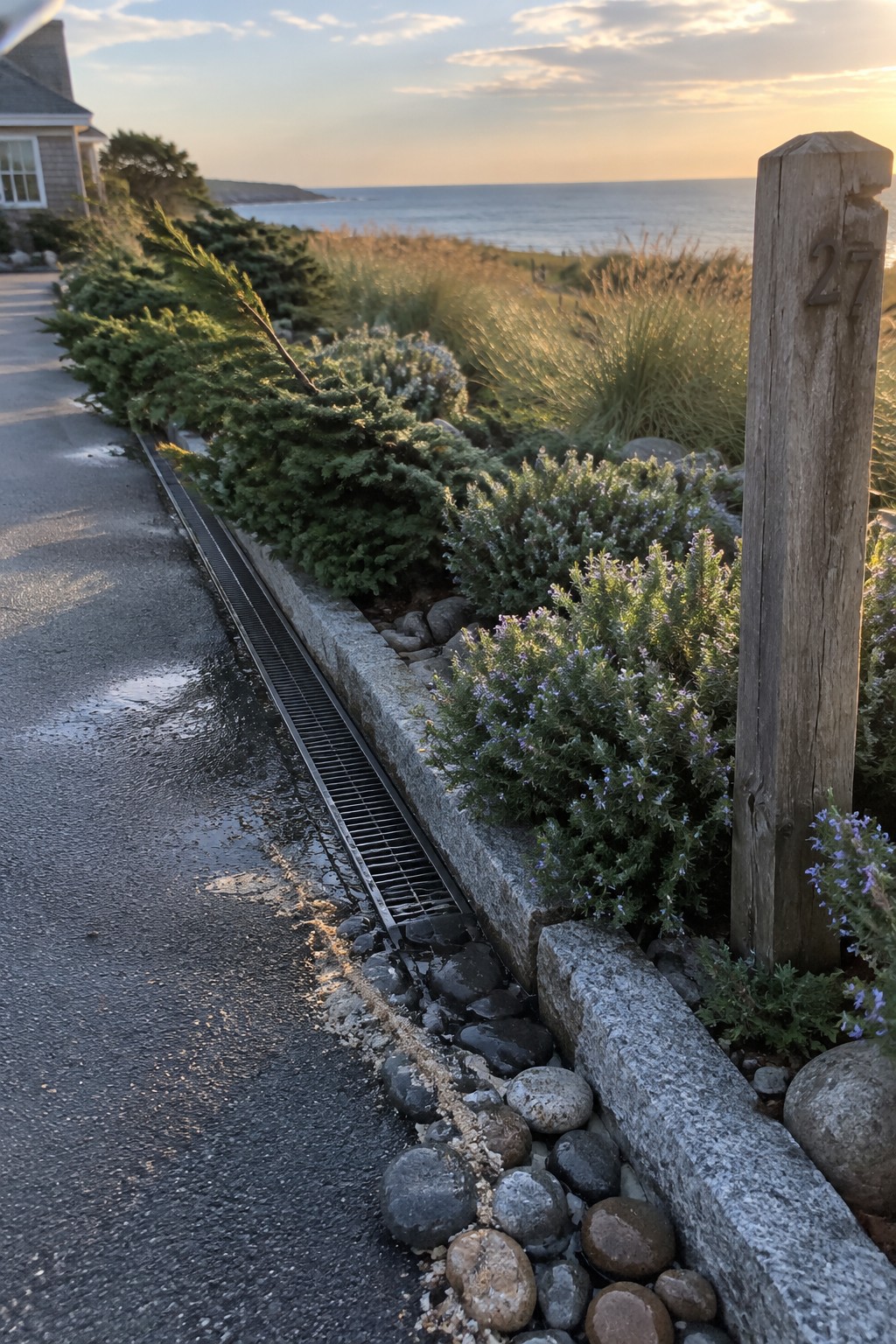
A low stone curb gives an evergreen planting bed a clear edge without making the driveway feel boxed in. Here, the rough stone keeps soil and plants back from the pavement, while the shrubs fill the space behind it.
This approach works well beside a sloped or narrow driveway, especially where rain can wash soil onto the pavement. Set the stones firmly and leave enough room for the shrubs to grow without spilling over the curb.
Add Low Lights Along a Raised Driveway Edge

A raised stone edge can keep evergreen shrubs neatly separated from driveway paving. Built-in lights make that border easier to see after dark, so the edge serves a practical purpose as well as containing the planting.
This approach suits a sloped or slightly raised planting bed beside a paved drive. Choose weatherproof fixtures and space them far enough apart to mark the edge without creating glare.
Use Timber Edging Along the Shrub Bed

A simple timber border gives an evergreen bed a clear edge beside a gravel driveway. It helps keep the gravel and mulch from mixing and makes the planting area look tidy without adding much upkeep.
Use treated landscape timbers for a practical, straightforward border, and secure them well so they stay in place. They work especially well for long, gently curving beds, but check for rot over time and replace any sections that begin to break down.
Use a Gabion Wall to Hold the Shrub Bed
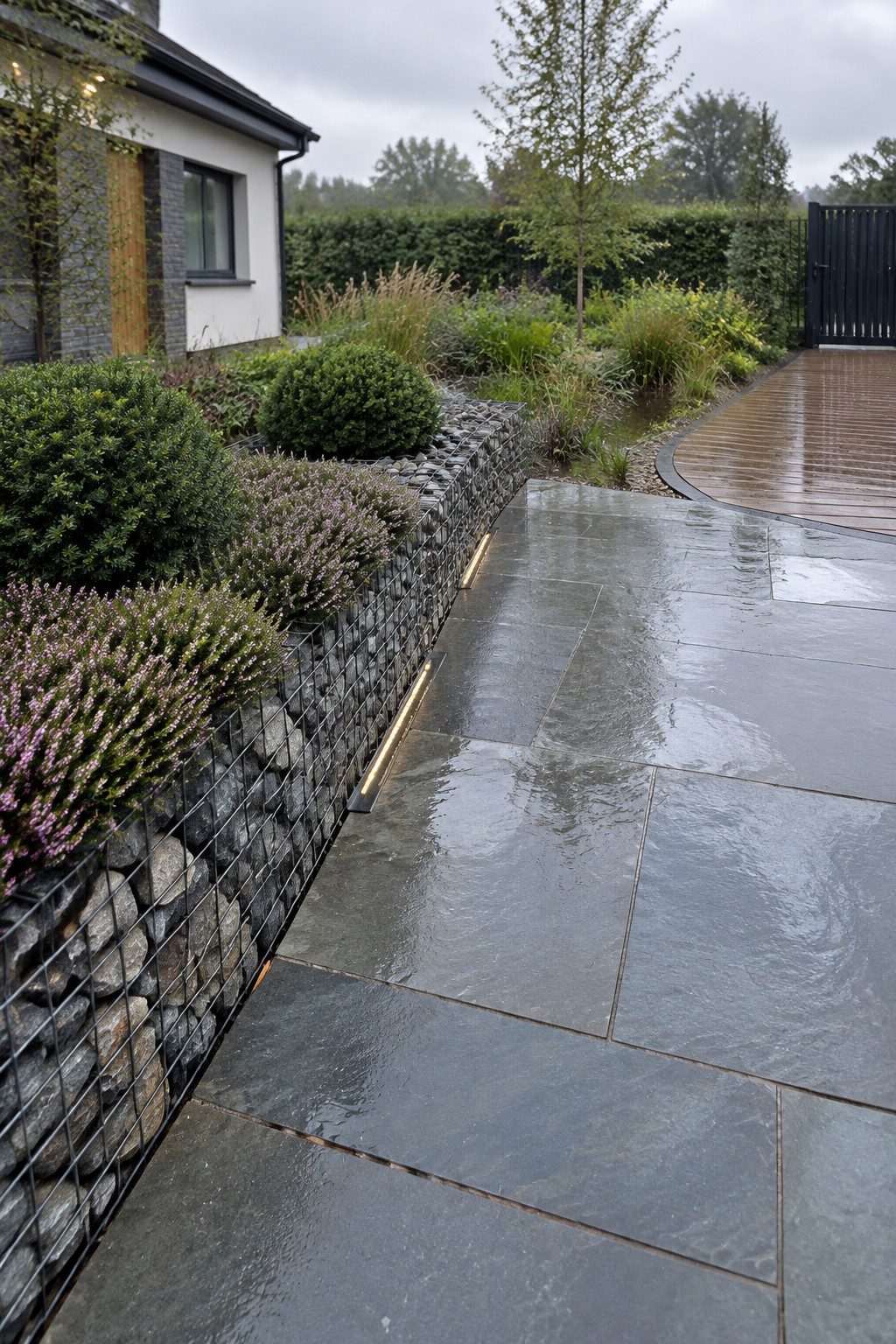
A low gabion wall gives a driveway planting bed a clear edge while helping keep soil and stones in place. The wire baskets filled with rock add a sturdy border, and the evergreen shrubs and flowering groundcover soften the hard surface.
This approach works well where a path or driveway sits below a raised garden bed. Keep the wall low enough for easy access to the plants, and choose stone that suits the paving nearby.
Use a Curved Concrete Curb to Shape the Planting Bed
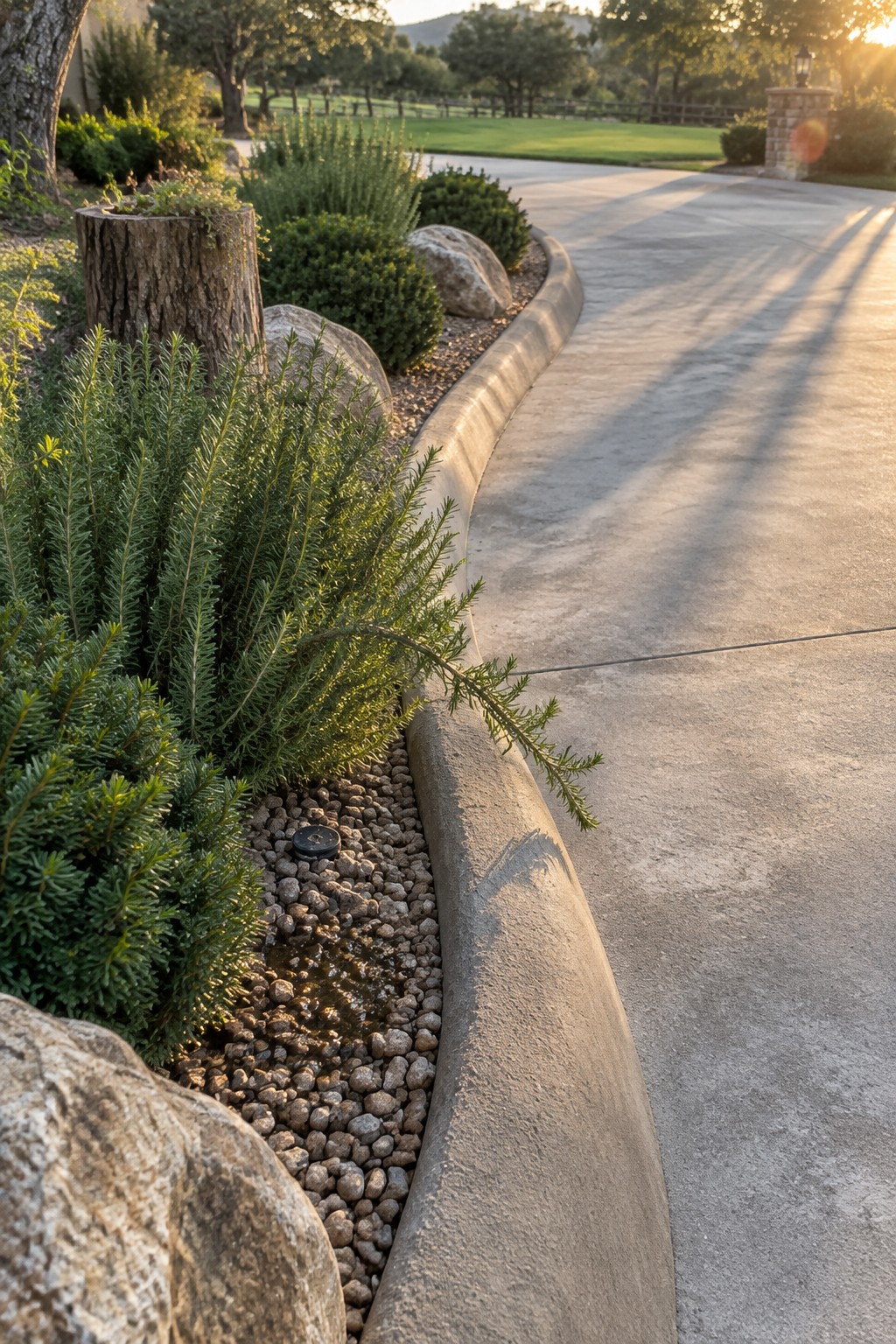
A curved concrete curb gives the driveway edge a clean, lasting boundary while letting the shrub bed follow a softer line. It also helps keep gravel and soil from spilling onto the pavement.
This approach works well where a driveway bends around an evergreen bed. Choose a curb height that is easy to see but does not make it awkward to step over, and leave enough room behind it for shrubs to grow without leaning over the pavement.
Use Low Grasses to Edge Evergreen Shrubs
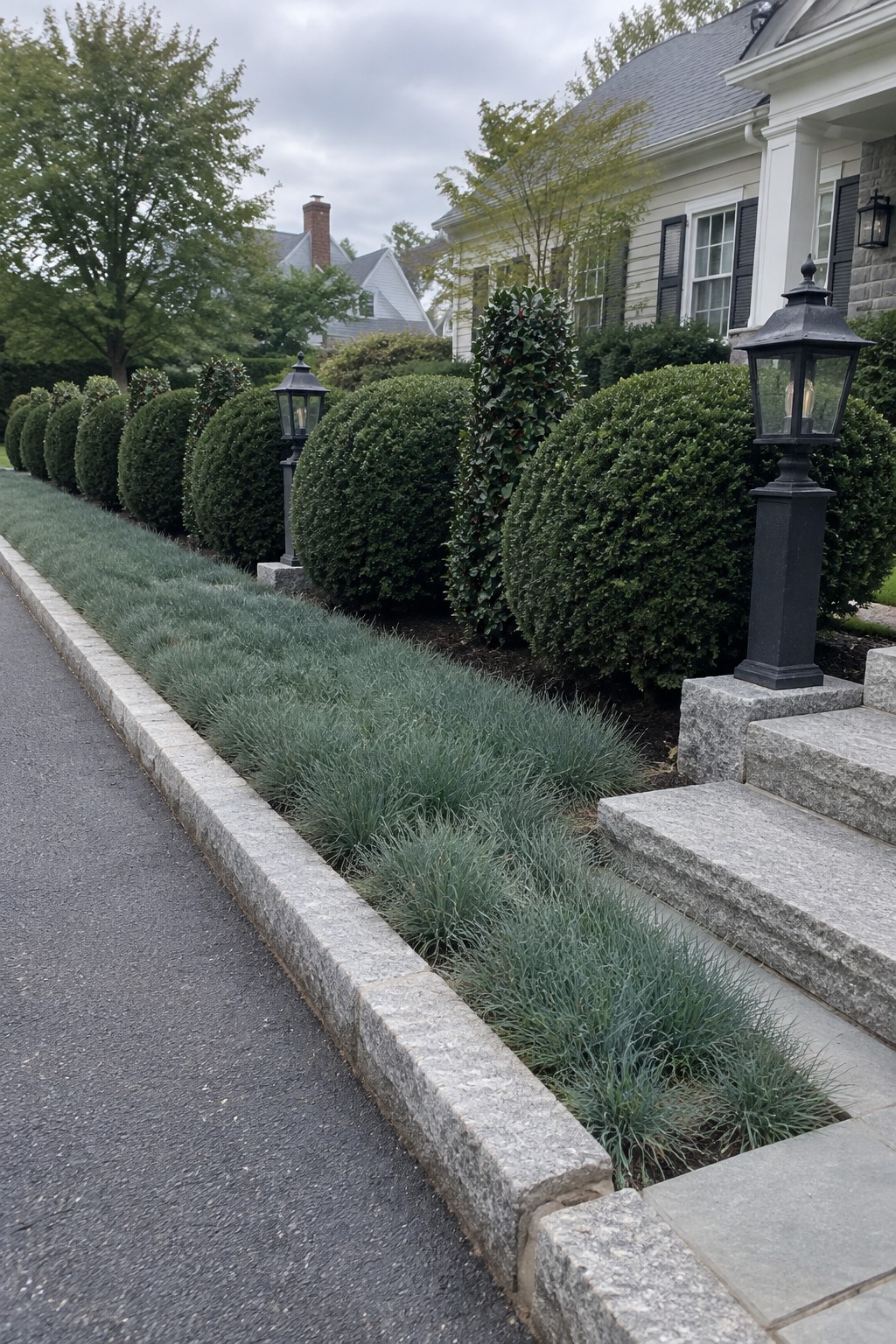
A narrow strip of low ornamental grass makes a practical transition between a driveway and a row of evergreen shrubs. It keeps the planting edge clear without competing with the shrubs, and the stone curb helps contain the bed.
This approach works well along a long driveway where you want a tidy, consistent border. Choose grasses that stay low and suit your climate, and leave enough room for them to spread without spilling onto the pavement.
Add a Drainage Channel Along the Shrub Bed

A narrow drainage channel can help keep runoff from collecting beside a driveway while giving the edge a clear, practical line. Here, the metal grate runs through a gravel bed among evergreen shrubs and large rocks.
This approach works well where a sloped drive or nearby planting bed sends water toward the pavement. Keep the channel accessible for clearing leaves and grit, and choose a grate that sits level with the surrounding surface.
Add Lighting Along a Brick Driveway Edge

A narrow line of low lighting can make a brick driveway border easier to see after dark. It also highlights the edge without needing tall fixtures or a complicated setup.
Place weather-rated lights along the inside of the edging, keeping them low and evenly spaced. This works well beside evergreen shrubs, but leave enough room to trim plants and clear leaves from the lights.
Use a Concrete Planter Edge for Evergreen Shrubs

A raised concrete planter gives evergreen shrubs a clear boundary beside a driveway. It also holds the planting bed neatly in place, so the edge stays tidy without needing frequent trimming or repairs.
This approach works well for a modern home with a wide paved drive. Choose a durable material and leave enough room for shrubs to grow without spilling onto the pavement. The image shows a low concrete border that keeps the greenery separate from the driveway.
Use a Stepping-Stone Path Through Evergreen Plantings

A stone path can give a garden a clear route without making the planting feel too formal. Broad, irregular slabs set into the lawn leave room for evergreen shrubs to soften the edges and keep the path from looking like a solid strip of paving.
This approach works well for a garden entrance or a long side yard where a full paved walkway would feel heavy. Set the stones at comfortable walking intervals and keep the nearby shrubs trimmed enough that they do not crowd the route.
Use a Gravel Strip to Edge a Raised Shrub Bed
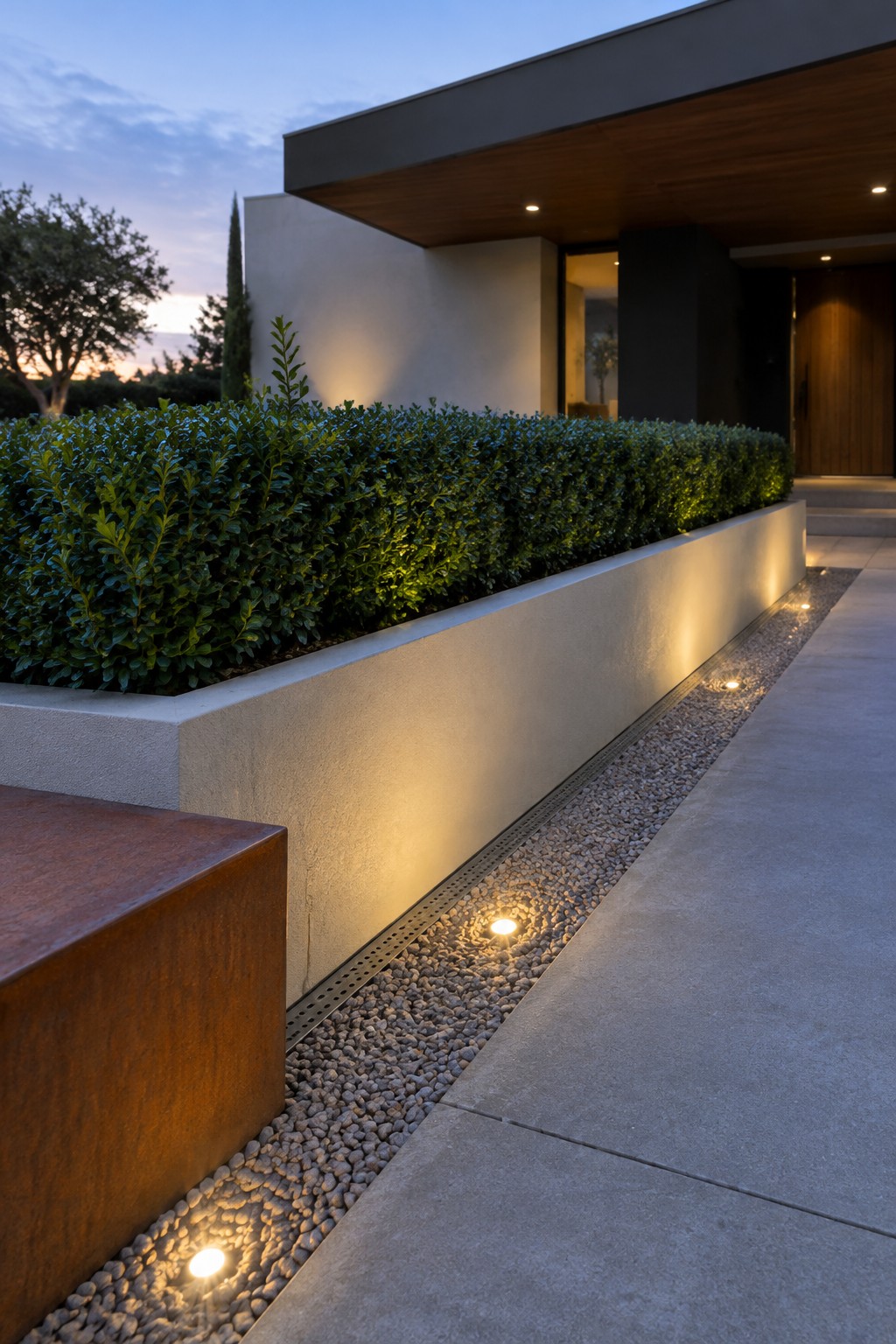
A narrow gravel strip gives a raised evergreen bed a tidy, practical boundary. It separates the planting from the walkway and leaves room for small ground lights without crowding the shrubs.
This approach works well beside a driveway or front path, especially where water needs a clear route away from the bed. Choose gravel that suits the nearby paving, and keep the strip wide enough to stay easy to clear of leaves.
Frequently Asked Questions
Q: How far should I plant evergreen shrubs from the driveway edge?
A: Leave enough room for the shrubs to reach their mature width without spilling over the pavement. Check the plant label, and give extra space if snowplows or parked cars come close to the edge.
Q: Which evergreen shrubs need the least pruning along a driveway?
A: Look for naturally compact varieties that stay close to the size you want. Slow-growing junipers and small boxwoods are popular choices, but make sure they suit your sunlight and soil.
Q: How do I keep driveway edging shrubs from getting buried in snow?
A: Plant them outside the area where plows pile snow, if you can. A low border can also make the planting line easier to see, so shrubs are less likely to get clipped during winter cleanup.
Q: Can I plant evergreen shrubs next to a gravel driveway?
A: Yes, but keep loose gravel away from the shrub crowns so it doesn’t trap moisture or bury the stems. A simple edging strip can help keep gravel in place and make mowing easier.
