


A gravel driveway can make a yard feel neat and welcoming, but the edge is often what keeps loose stone from spilling into the lawn.
I’ve found that a clear transition works best when it suits the shape of the drive and feels connected to the rest of the landscape.
Some edging options create a crisp boundary, while others blend more quietly with grass, planting beds, or natural stone.
The right choice can also make mowing and keeping gravel in place easier over time.
I’d save the ideas that fit your yard’s layout and materials, then adapt the details to how you use the driveway.
Use Stone Edging to Define a Gravel Driveway

Stone edging gives a gravel driveway a clear border where it meets the lawn. It helps keep loose gravel in place and makes the transition look tidy without needing a tall or formal edge.
Choose durable pavers or natural stone and set them firmly along the curve of the drive. A gently winding edge works well in a garden setting, but keep the stones level and stable so they remain easy to walk or drive beside.
Use Large Pavers to Break Up Gravel

Large concrete pavers set into gravel make a path easier to walk while keeping the surface open and simple. The repeated slabs give the route a clear direction without covering the whole area in solid paving.
This approach works well for garden paths and side yards. Leave enough space between the pavers for the gravel to show, and use a stable base so the slabs do not shift over time.
Use Brick Edging to Separate Gravel From the Lawn

Brick edging gives a gravel driveway a clear border and helps keep stones from spreading into the grass. It also makes the transition between the two surfaces look tidy without needing a tall barrier.
Lay the bricks in a steady line along the driveway, keeping their tops even and checking that they sit firmly in the ground. This approach suits informal garden paths and driveways, too. The image shows reddish bricks along one side of the gravel and a low stone wall farther up the drive.
Use a Drainage Channel to Separate Gravel

A narrow channel drain can give a gravel driveway a clean, practical boundary where it meets a paved walkway. It also helps collect runoff instead of letting water spread across the path or toward the house.
Place the drain across the driveway at a natural transition point, and make sure it connects to a suitable outlet. This detail works especially well where the drive slopes toward an entry. Keep the gravel level with the drain so the edge stays easy to cross.
Use a Low Stone Border Along the Driveway
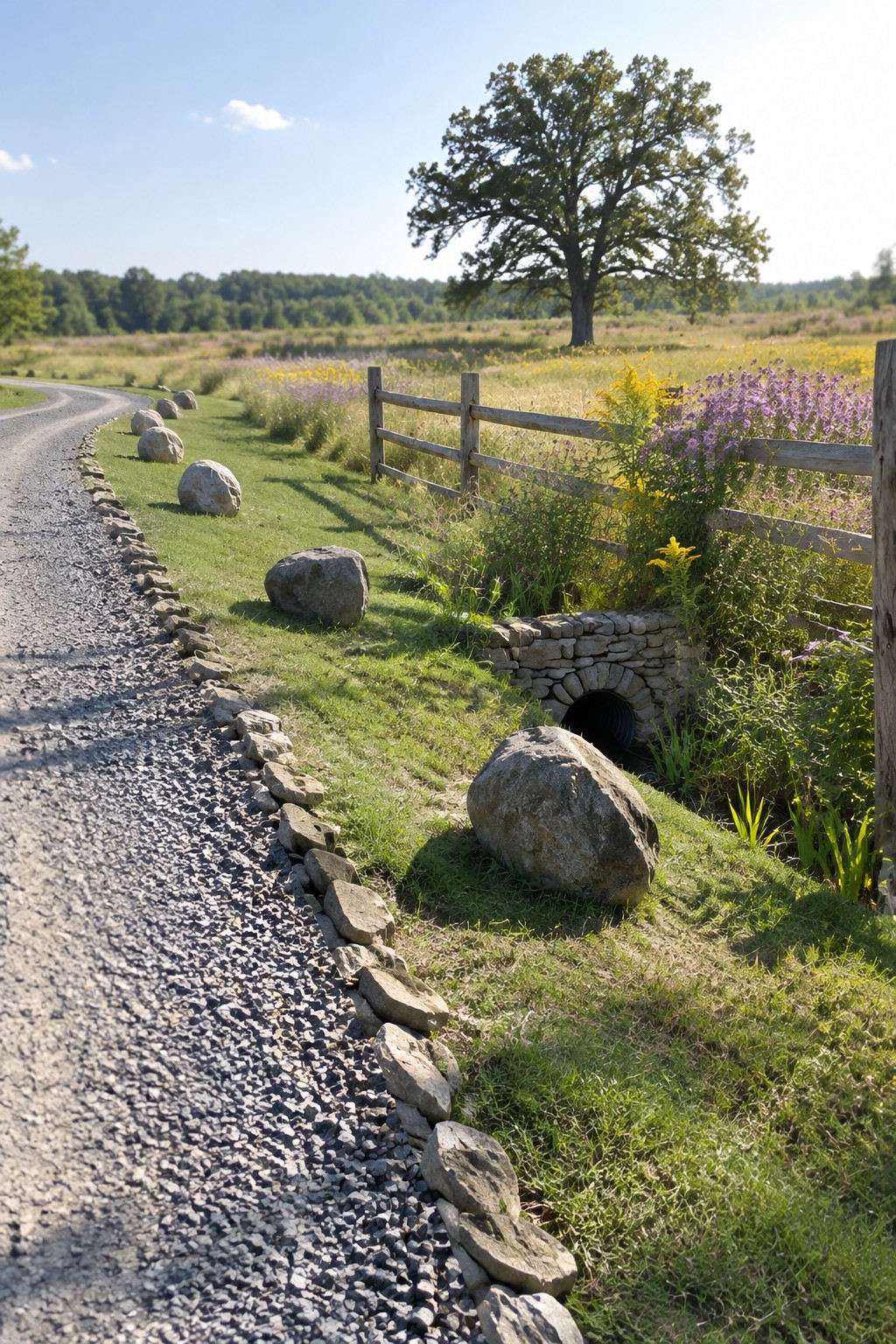
A row of natural stones can keep gravel from spilling into the lawn while giving the driveway a less formal edge. The varied shapes suit a country-style yard, especially where the drive curves through open space.
Set the stones firmly into the ground and keep their tops fairly even so mowing is easier. A consistent border works better than scattered rocks, which can leave gaps for gravel and grass to mix.
Use a Gravel Path to Connect the Entry

A gravel path can make the route to a front door feel clear and easy to follow. A narrow metal border keeps the loose stone in place and gives the path a tidy edge beside the planting.
This approach works well for a front garden or side yard where a simple walkway is needed. Set the gravel on a firm base, and choose an edging height that holds it without becoming a trip hazard.
Use a Shell Path to Mark the Driveway Edge

A shell-covered path is one way to give a gravel drive a clear, natural-looking edge. The pale shells stand apart from the planted bed, so the transition is easy to see without adding a tall border.
This approach works well near coastal homes, especially where the driveway leads toward an entry path. Set the shells in a defined strip and keep the edge tidy so they do not spread into the lawn or planting bed.
Use Stone Curbing to Keep Gravel From the Lawn

A narrow stone curb gives a gravel driveway a clear edge and helps keep loose stones from spilling into the grass. It also makes the transition to a front walk feel neat without needing a tall or bulky border.
This approach works well where a driveway meets a lawn or planting bed. Set the stones firmly and keep their tops even so the edge is easy to maintain and won’t catch a mower wheel.
Use Concrete Edging for a Clean Lawn Transition

Concrete edging gives a gravel driveway a clear boundary and helps keep loose stones from spilling into the grass. The simple, straight line also makes the edge easier to mow along.
Use long concrete blocks where the lawn meets the driveway, keeping them level and firmly set so they stay in place. A gravel surface like this works well for a modern home, but leave enough room for the edging without narrowing the drive.
Use a Stone Curb to Keep Gravel in Place

A stone curb makes a clear, sturdy edge between a gravel driveway and the lawn. It helps keep loose gravel from spreading into the grass, while giving the driveway a neat outline.
Choose stones that sit low enough to mow beside, and set them firmly so they do not shift underfoot or from regular use. A curved border can follow the shape of the drive, though straighter lines are easier to lay out.
Keep a Narrow Lawn Strip Between Gravel and the Walkway

A slim band of grass can make a gravel driveway feel more finished without adding a solid border. Here, it separates the pale gravel from the walkway and gives the two surfaces a clean transition.
This approach works well when a path runs alongside a driveway and there’s room for a narrow planting strip. Keep the edges straight and choose a grass type suited to the site so the strip stays tidy without constant trimming.
Use Pavers to Separate Gravel From the Lawn
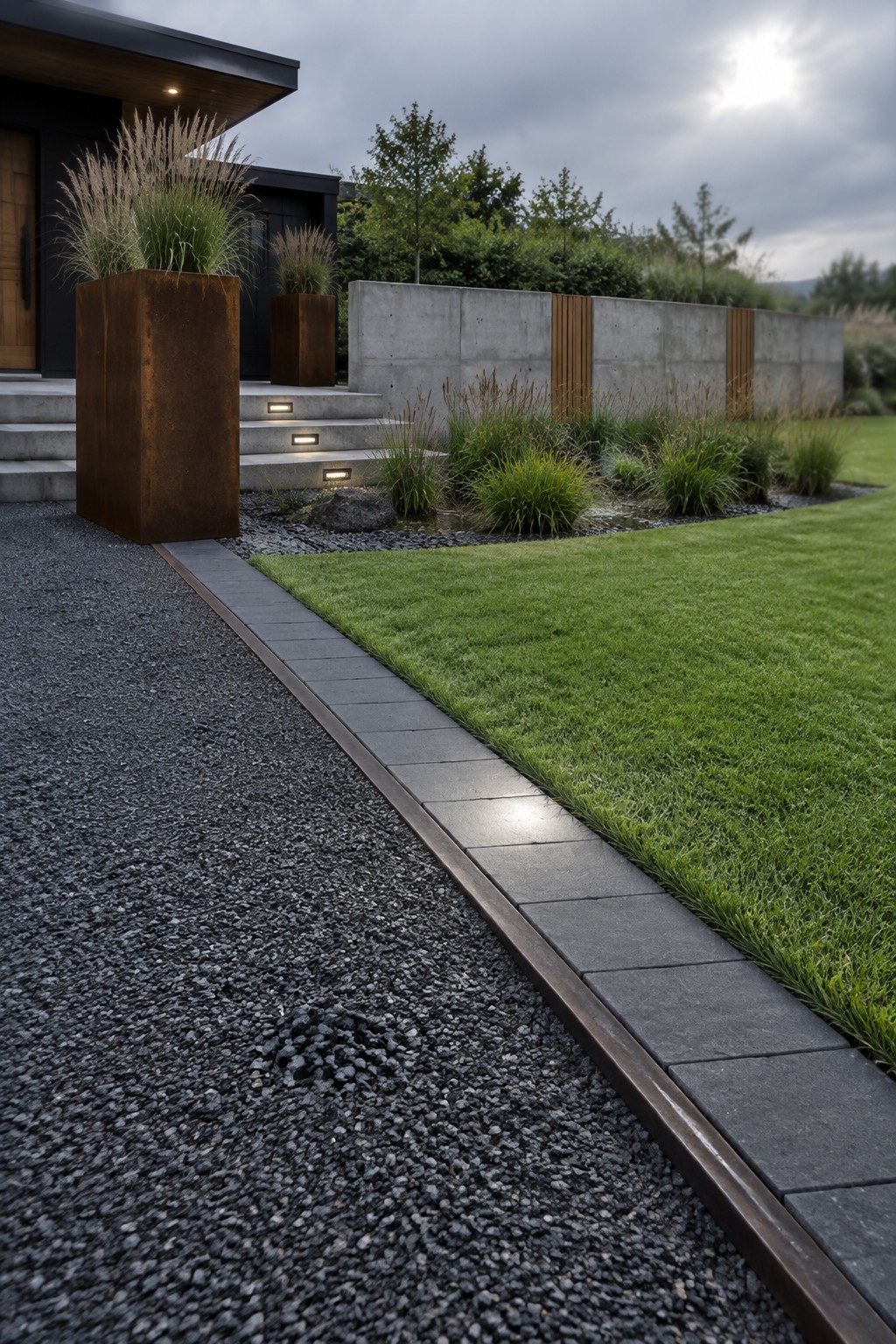
A narrow row of pavers makes a clear, tidy transition between a gravel driveway and the grass. It also gives the lawn a firm edge, so gravel is less likely to scatter into it.
Choose pavers wide enough to stay stable and set them level with the surrounding ground for easier mowing. This approach works well for long, straight borders, and a metal strip beneath the pavers can help keep them from shifting.
Use Timber Edging to Keep Gravel From the Lawn

A low timber border gives a gravel driveway a clear edge and helps keep stones from spreading into the grass. It also works well when the lawn sits slightly higher than the drive.
Use treated, rot-resistant timber and set it firmly in place so it stays level over time. This simple edging suits informal or modern yards, though it may need occasional maintenance as the wood weathers.
Use a Cobblestone Apron at the Gate

A short cobblestone apron gives a gravel driveway a firm, tidy transition at an entrance. It also helps keep loose gravel from spreading where cars turn or pass through a gate.
Use this approach where a driveway meets a gate, road, or walkway, then carry a stone curb along the lawn edge to keep the boundary neat. Choose stones that sit evenly so tires can cross without a bump.
Use a Planted Border to Separate Gravel From the Lawn

A narrow planting bed can make a gravel driveway feel more intentional while keeping a clear line between the hard surface and the lawn. Here, a metal edge holds the bed in place, and the gravel stays distinct from the grass.
This approach works well when you want a softer transition than a bare curb provides. Keep the bed fairly narrow and choose plants that suit your climate and won’t spread into the driveway or lawn.
Frequently Asked Questions
Q: How wide should the edging be between gravel and lawn?
A: A narrow border can keep gravel in place, but a wider edge is easier to see and mow along. Choose a width that suits your mower and leaves enough room for the edging material to sit firmly.
Q: What’s the easiest edging to install along a gravel driveway?
A: Metal or flexible plastic edging is usually straightforward to fit along gentle curves. For a more solid border, use pavers or stone, but plan on doing a bit more digging and leveling.
Q: Will edging stop gravel from spreading onto the lawn?
A: It helps, especially when the top of the edging sits slightly above the gravel. You’ll still want to rake stray stones back now and then, since tires and heavy rain can move them.
Q: Should the edging sit higher than the driveway?
A: Keep it close to the gravel’s height so cars won’t catch it, while leaving enough of a lip to hold stones in. A sharp raised edge can be a trip hazard along walkways.
