

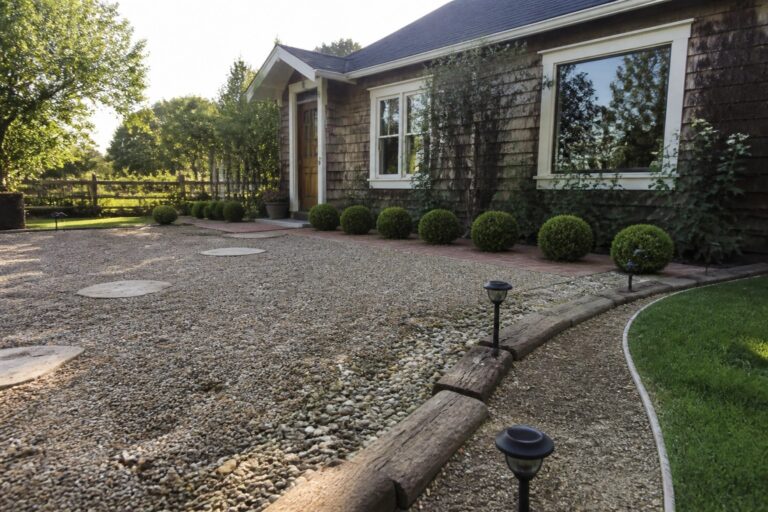
I have always noticed that the driveway sets the first impression of a house from the street more than most people expect.
Picking the right surface material can tie the entry to the rest of the facade without needing major changes.
In my experience a few simple additions like edging or a border can make the approach feel more intentional.
Some upgrades look fine on paper but wear out fast with regular use.
Testing one small change at a time helps show what actually fits the home and the way it is used.
Add a Grass Strip Down the Center
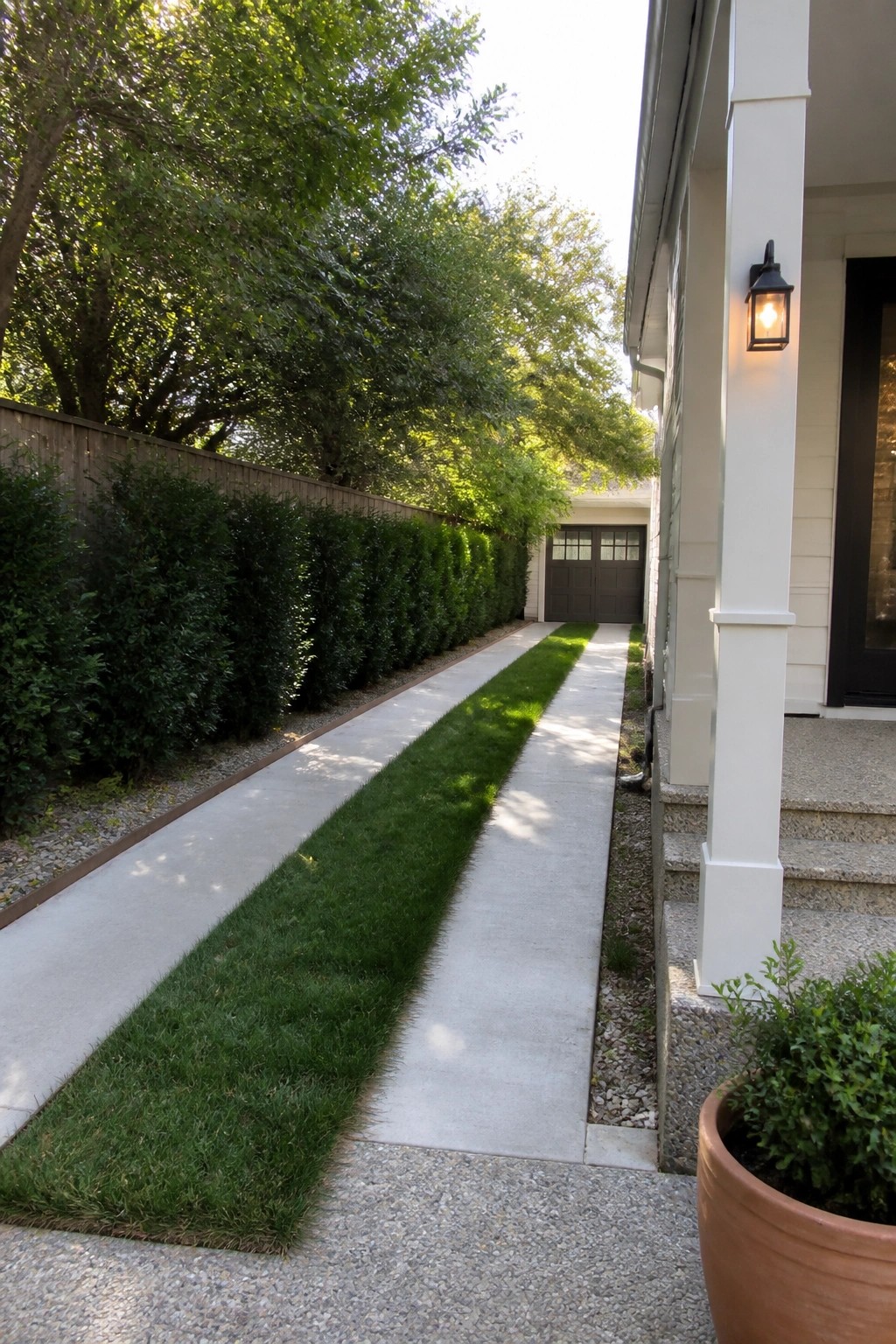
A narrow strip of grass running between sections of concrete breaks up the hard surface and gives the path a softer look without adding much work. It also helps with drainage since water can soak into the soil instead of pooling on the pavement.
This approach suits a side driveway or long walkway where cars do not pass every day. Keep the strip narrow enough to mow easily and pair it with simple edging so the grass stays contained.
Brick Pavers With Gravel Borders

A brick path set in a simple pattern and flanked by gravel gives the front approach a finished look without a big concrete job. The contrast between the pavers and the loose gravel adds some texture while still letting water drain away easily.
This setup works well on homes with a gently curving entry or a short driveway extension. Put down the brick first in your chosen pattern, then spread gravel on both sides and finish with a low stone edge to keep the gravel from spilling onto the lawn or pavement.
Add Edge Lighting to a Paver Driveway

A thin line of lights along the edge of a paver driveway gives the path a clear shape at night. It also makes the whole front look more finished without needing fancy fixtures or big changes.
This works best on straight driveways where you can tuck the lights into the gravel border or between the pavers. Keep the lights low to the ground so they stay out of the way and use fixtures made for outdoor use.
Edge a Paver Driveway With Gravel
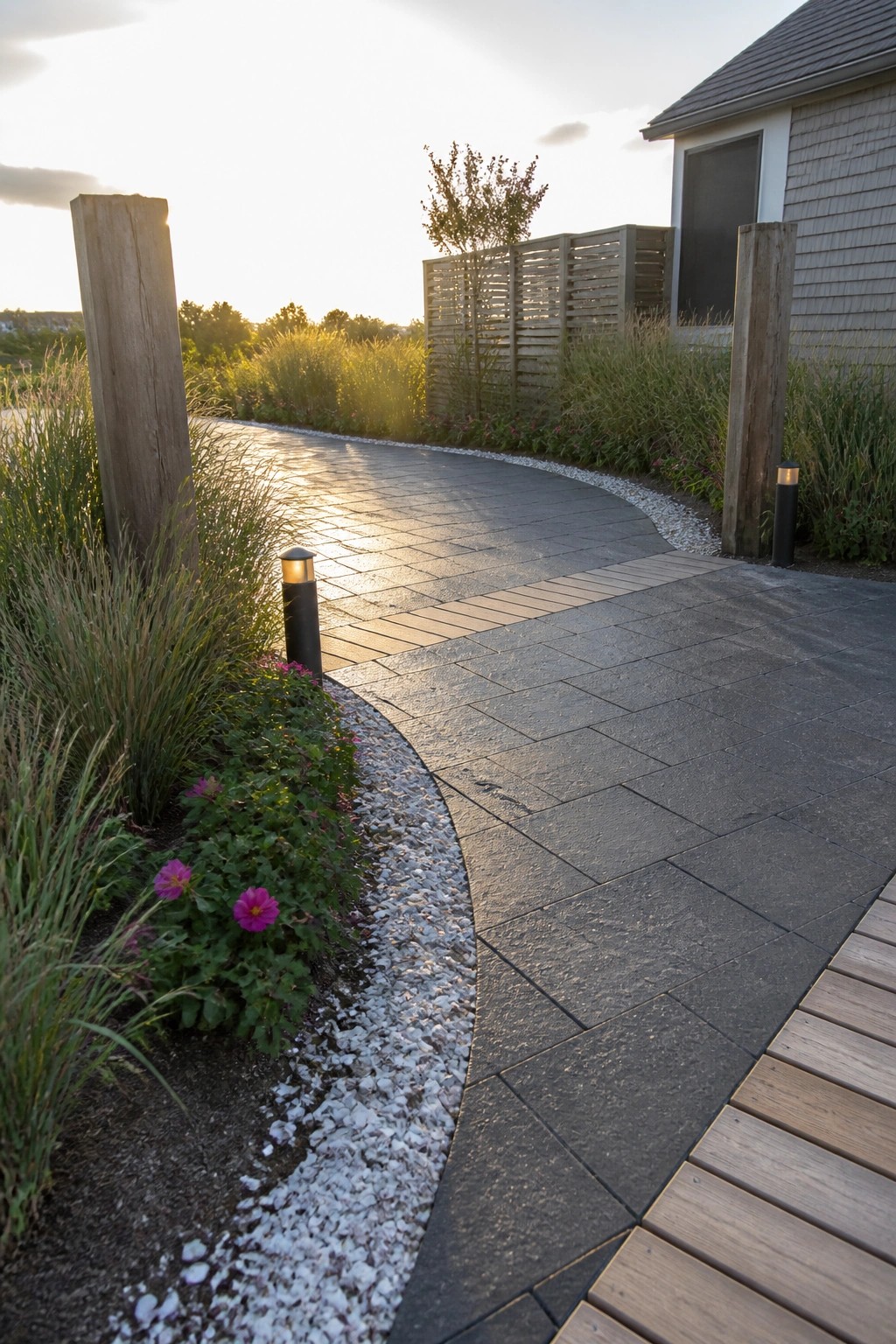
A paver driveway feels more finished when you add a gravel border along the sides. The light gravel softens the edge of the dark pavers and gives the planting beds a clean stop without needing a lot of extra trim work.
This setup suits homes where the drive has a gentle curve. Prep the base first, lay the pavers in the main path, then fill the border with gravel and set a few low lights or posts along the outside. It stays simple to maintain and works on most suburban lots.
Add a Checkerboard Pattern to Your Driveway
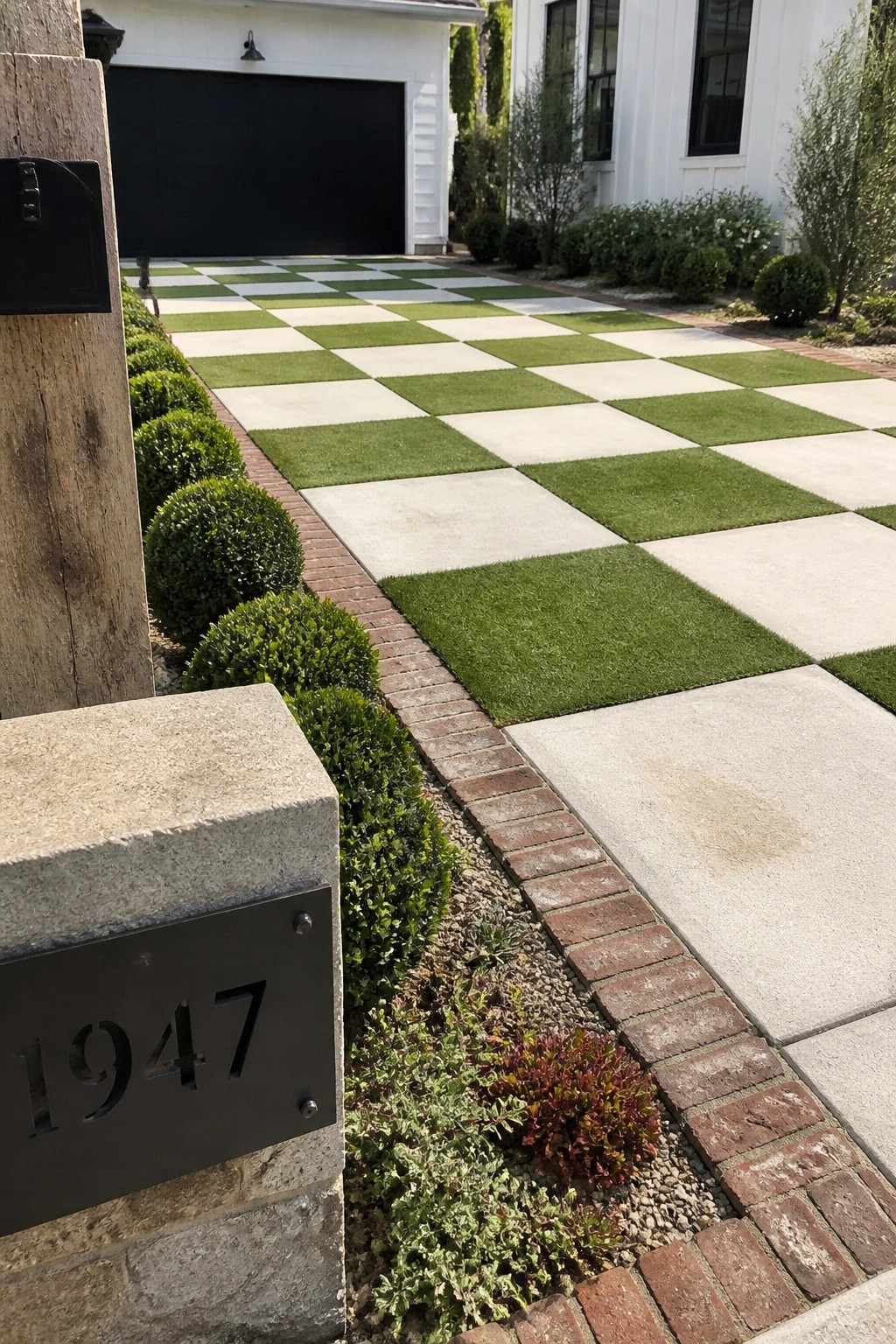
A checkerboard driveway uses alternating squares of turf and concrete to break up a wide paved surface. It softens the look of the whole front area and turns a plain driveway into something that feels more intentional.
This layout works best on homes with a fairly flat approach and decent drainage. Lay the squares over a prepared base, keep the grass sections narrow enough to mow easily, and add a simple brick edge to hold the shape.
Brick Edging For A Gravel Driveway

A gravel driveway gains a lot of structure when you add a simple brick border along both sides. The bricks hold the gravel in place and give the whole surface a clean edge that feels more finished than loose stones alone.
This approach works best on homes with a gentle curve or straight run in front, where you want something low cost but still tidy. Lay the bricks on a bed of sand or gravel so they stay level and let water drain away from the house.
Use Patterned Pavers for the Driveway
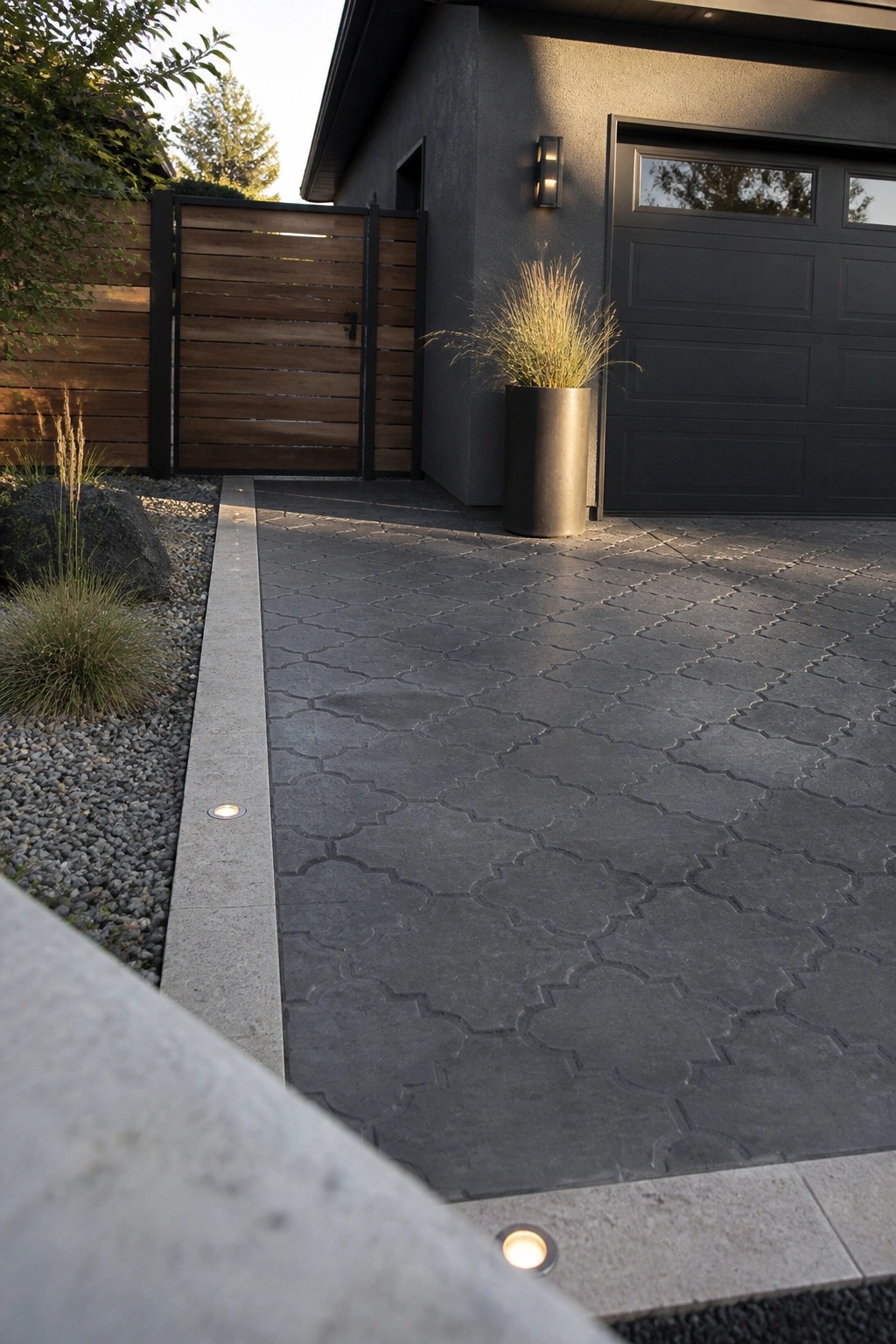
Patterned pavers give a driveway more visual interest than a plain slab of concrete. The repeating shape breaks up the surface and makes the whole area feel more finished without needing extra features.
This approach works best on smaller or mid-size driveways where the pattern stays easy to read. Lay the pavers over a solid base and keep a simple border to hold the edges in place. Darker tones help hide tire marks over time.
Brick Edging Along A Gravel Driveway

Brick edging gives a gravel driveway a finished border that holds the stones in place and keeps the edges tidy. It stops the gravel from spreading into the grass or garden beds and makes the whole entrance look more intentional without needing a big budget or heavy equipment.
This approach suits older homes or any property with a simple gravel surface where you want a quick weekend upgrade. Lay the bricks in a single row along the edge, set them slightly above the gravel so they act as a clear line, and keep the layout straight or gently curved to match the path.
Add Concrete Edging to Your Driveway
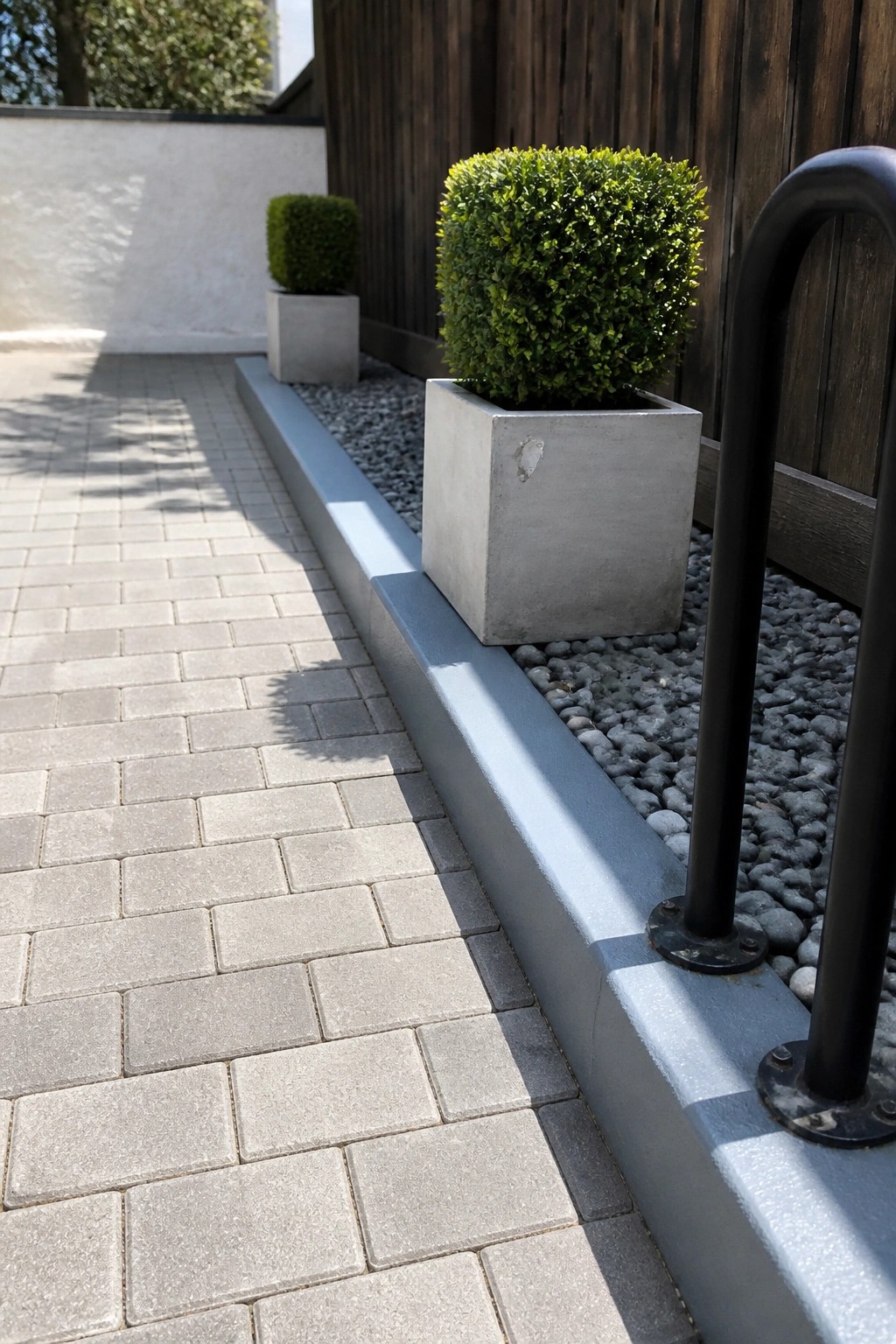
Concrete edging keeps a driveway looking tidy by creating a clear line between the paving and the gravel beds. It stops the stones from spilling onto the path and gives the whole edge a settled look that holds up over time.
This approach works best on straight or gently curved driveways where you want low maintenance. Pour the edging in sections, let it set, and seal it if the climate is wet.
Cobblestone Driveway With A Grass Border
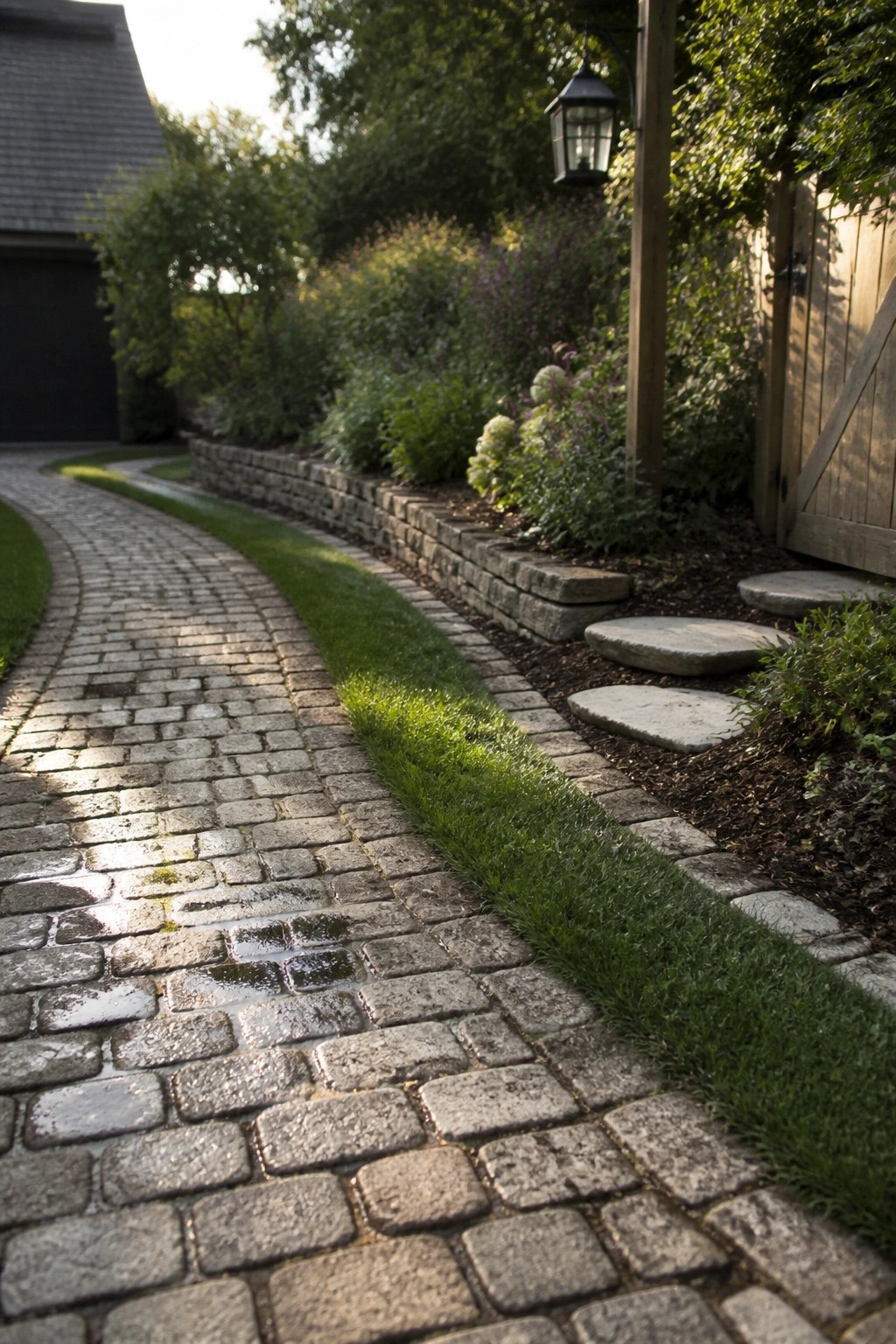
A narrow strip of grass next to cobblestone paving gives the driveway a softer look without losing the solid feel underfoot. The grass also helps with drainage along the edges so water does not pool on the stones.
This setup suits homes with gentle curves and older styles. Keep the grass strip narrow so it stays easy to mow and does not crowd the paving.
Mix Brick Paver Sections Into A Concrete Driveway
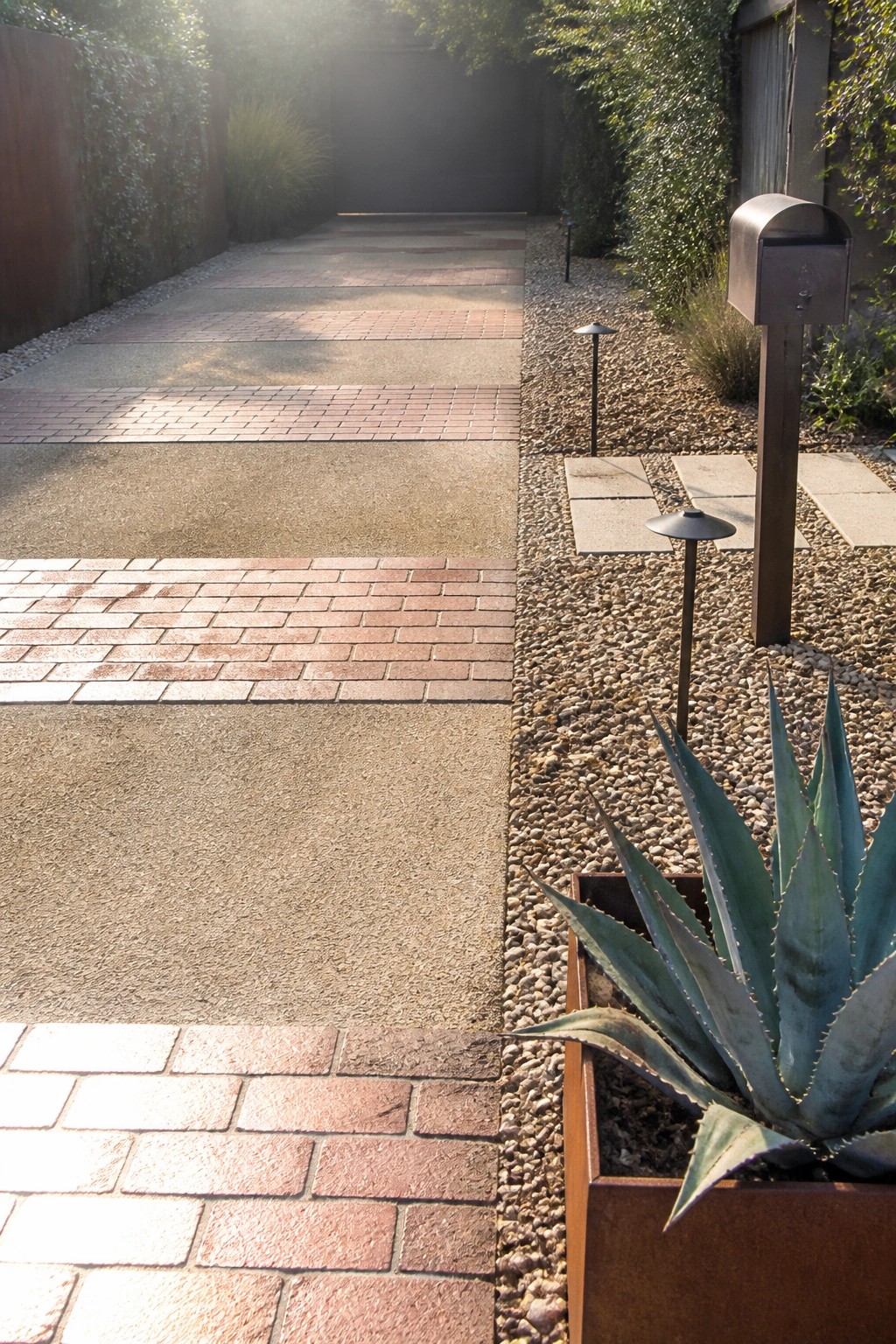
Many people like this approach because it breaks up a plain concrete slab without needing a full replacement. The brick bands add texture and color while still letting the driveway function as a solid driving surface. It works especially well on long, straight driveways where a single material can start to feel boring.
You can lay the pavers in simple bands every few feet or at the entrance and end points. This idea suits homes with existing concrete driveways that need a quick refresh, and it pairs nicely with gravel edges if you want to soften the sides. Just make sure the pavers sit at the same level as the concrete so cars and snow equipment move smoothly.
Stone Path With Plants Between The Pavers
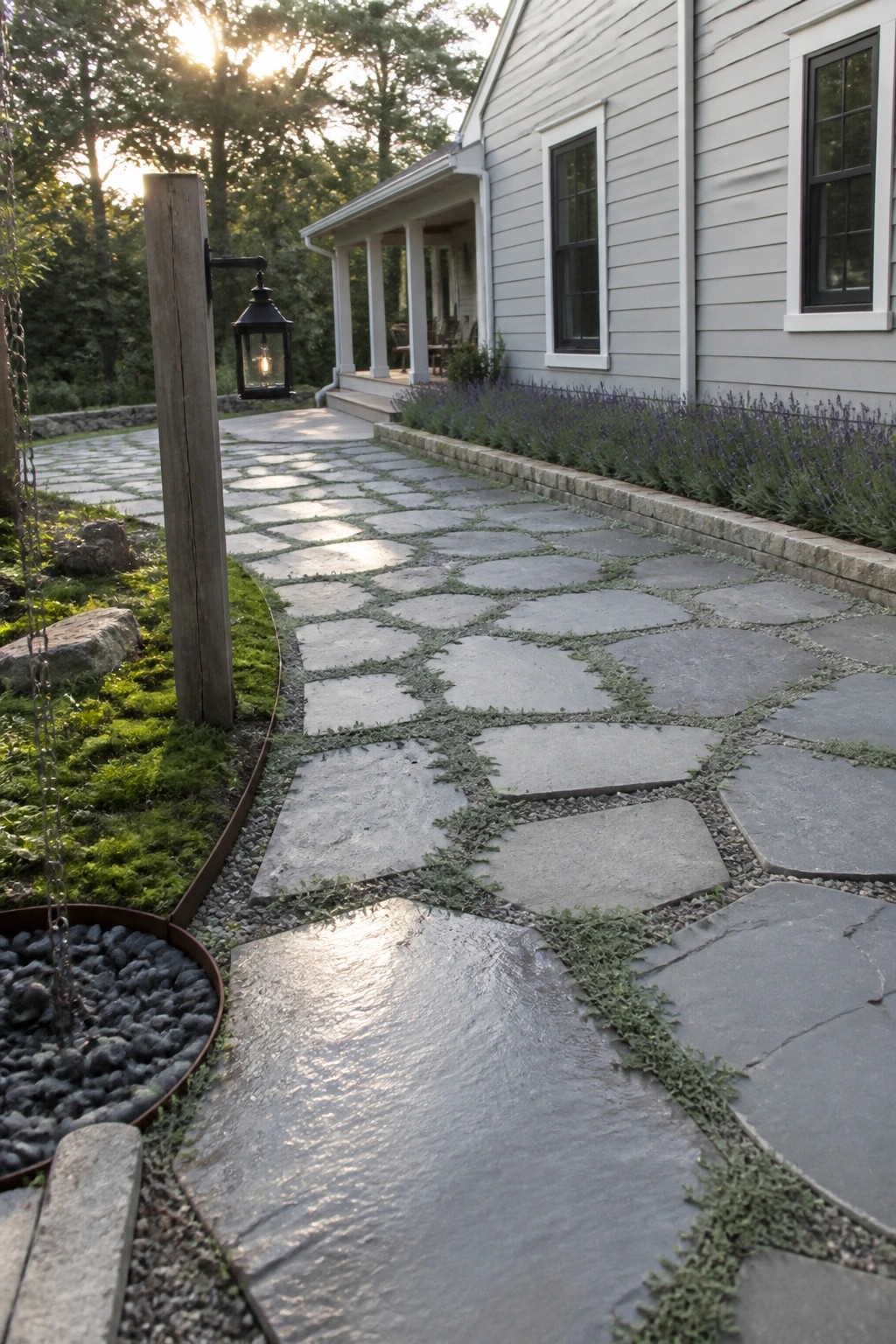
Large stone pavers set with low ground cover in the joints give a driveway or entry path a softer, more natural feel. The plants fill the spaces without taking over, and the stones stay easy to walk or drive on while letting water drain through.
This works best on homes with a casual style or plenty of garden space around the edges. Keep the plants low and tough enough for occasional traffic, and use a simple border to keep the gravel and growth from spreading into the lawn.
Flagstone Pavers For A Driveway

Flagstone pavers work well on driveways because the irregular shapes break up the surface and keep it from looking too flat or plain. The light grout lines between the stones add some contrast without making the whole area feel busy.
This approach suits homes that already have some garden beds or gravel edges along the drive. Keep the layout simple and make sure the stones sit level so water drains properly toward the sides.
Grass Grid Driveway Sections
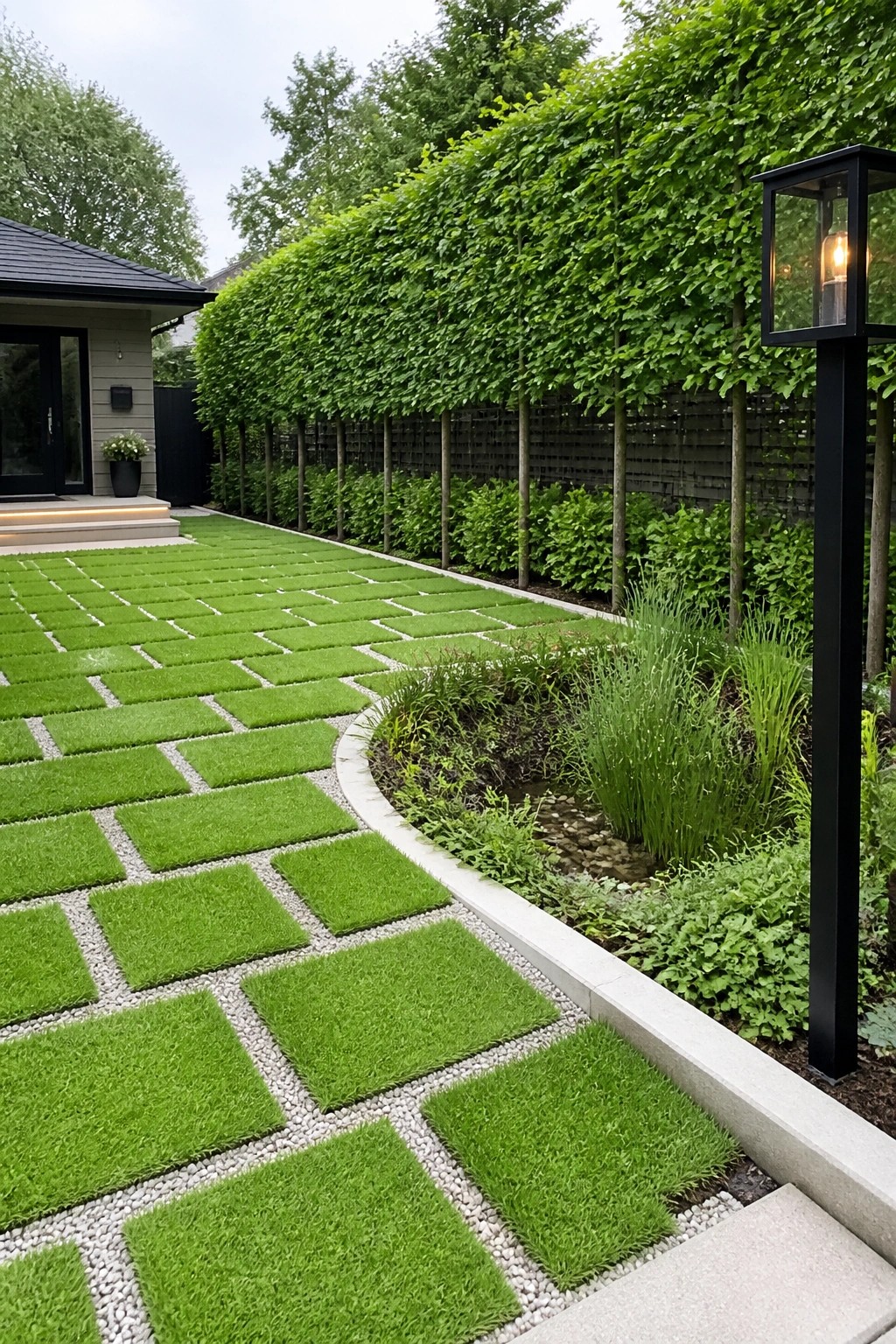
A grid of turf squares set into gravel creates a driveway that feels softer than solid pavement while still handling regular car traffic. The pattern lets rainwater soak through instead of pooling, and it keeps the surface from heating up as much in warm weather.
This setup works best on homes where the driveway sits next to garden beds or lawn. Lay a solid base first, then space the grass sections evenly so the gravel stays in place and weeds stay down.
Gravel Driveway With Stone Edging

A gravel driveway edged in stone gives a simple, finished look that works well on properties with trees and curves. The border keeps the gravel from spreading into the grass or garden beds, and it creates a clear path without needing heavy materials or a big crew.
This approach suits homes set back from the road or places where you want something softer than asphalt. Lay the stones in a single course along both sides, keep the gravel layer even, and add a few low lights if you want nighttime visibility. It stays practical as long as you refresh the gravel every couple of years.
Use Bound Gravel For The Driveway

A bound gravel surface gives the driveway a textured, natural look that still feels finished. It drains well after rain and avoids the stark feel of solid concrete or asphalt.
This works best on homes with simple brick exteriors. Lay it over a stable base and add a dark edge strip plus a few large planters to keep the whole thing neat and low maintenance.
Add a Mosaic Inlay to Your Driveway
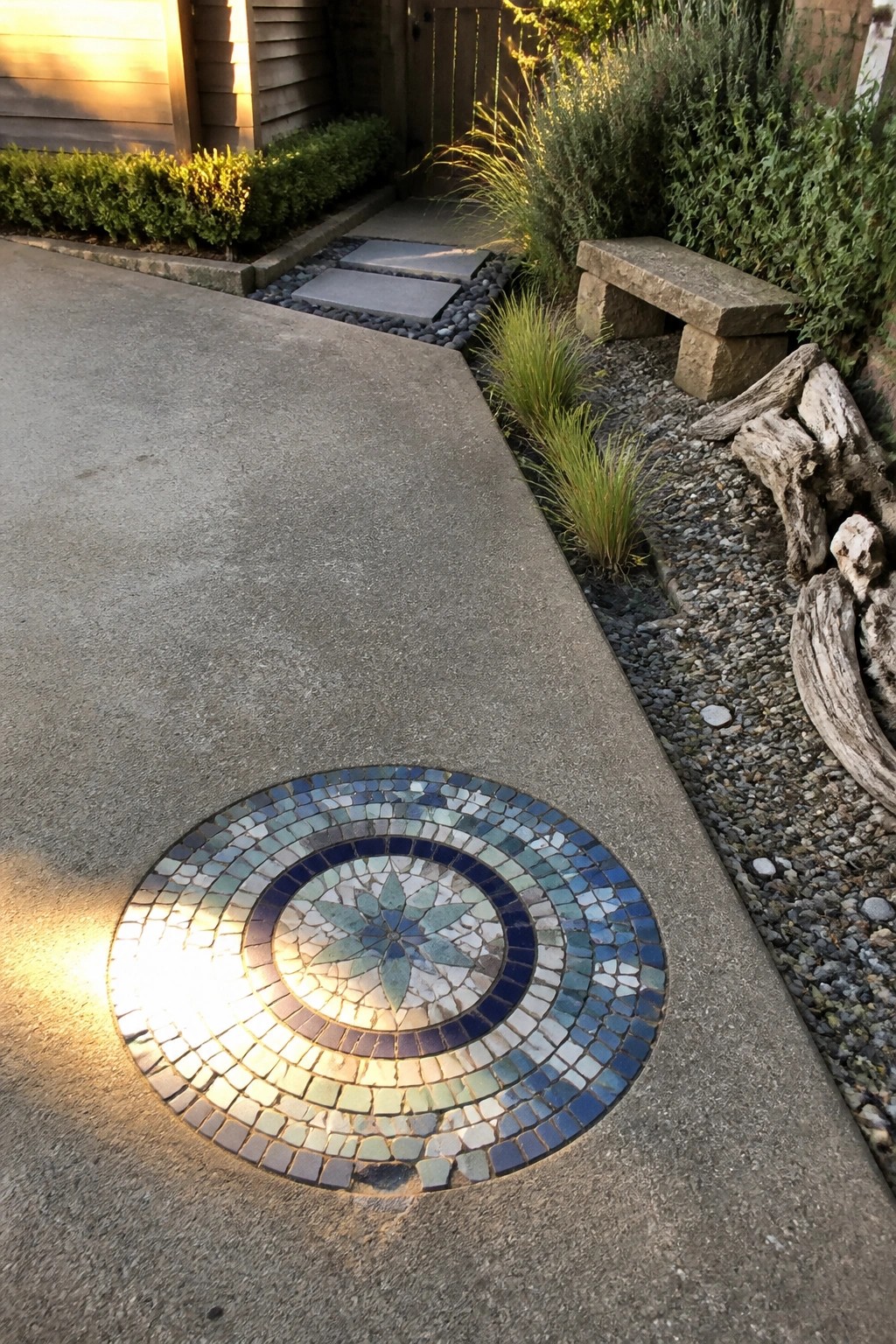
A simple mosaic circle set into plain concrete gives the driveway a finished look that feels more intentional. It breaks up the gray surface and creates a small focal point without changing the whole layout.
This works best on homes where the driveway is wide enough to spare a few feet for the pattern. Keep the design simple, use durable outdoor tile, and make sure the edges sit flush so tires pass over without trouble.
Frequently Asked Questions
Q: How do I keep weeds from growing in a gravel driveway?
A: Pull any weeds you see before they spread. Lay down landscape fabric under the gravel to block new growth. Top off the gravel every couple of years to bury any stragglers.
Q: Do I need fancy tools for laying pavers?
A: A shovel and a rubber mallet handle most of the work. Rent a plate compactor for the base if your soil feels soft. You can finish the job with stuff most people already own.
Q: What if my driveway has a slight slope?
A: Start paving or pouring from the lowest point and move uphill. This keeps the surface even as you go. Check the level often with a long board and a bubble level.
