

I have always thought that the main gate sets the tone for how the entire house presents itself from the street.
When choosing materials like steel, it helps to consider not just how it holds up over years but also how the lines and patterns interact with the rest of the facade.
Details matter more than I expected.
In my own experience, a gate that looks solid on paper can end up feeling too heavy once installed if the proportions are off.
Paying attention to finishes and hardware choices often makes the difference in whether the entrance ages gracefully or starts to show wear quickly.
Horizontal Slats On Steel Gates
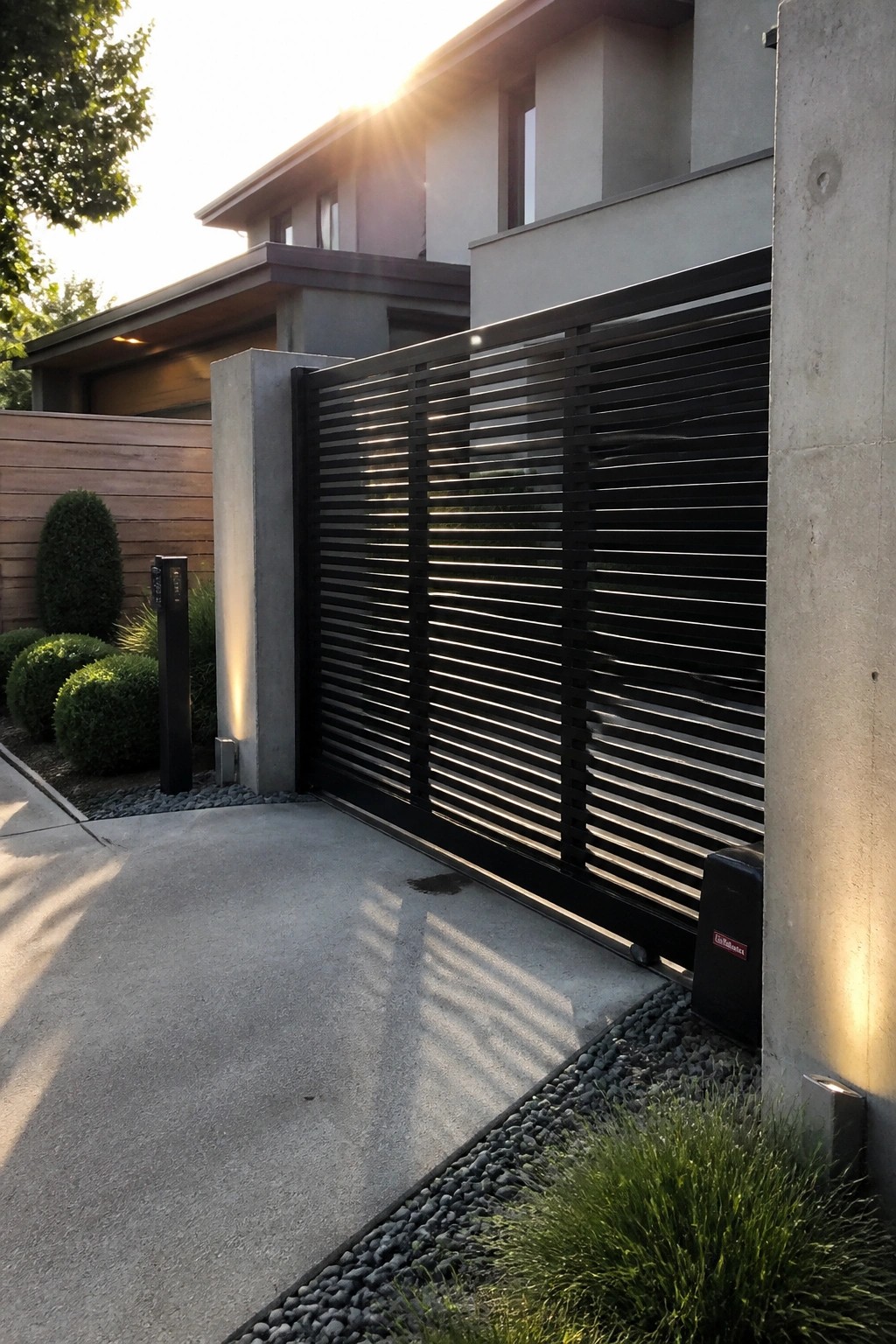
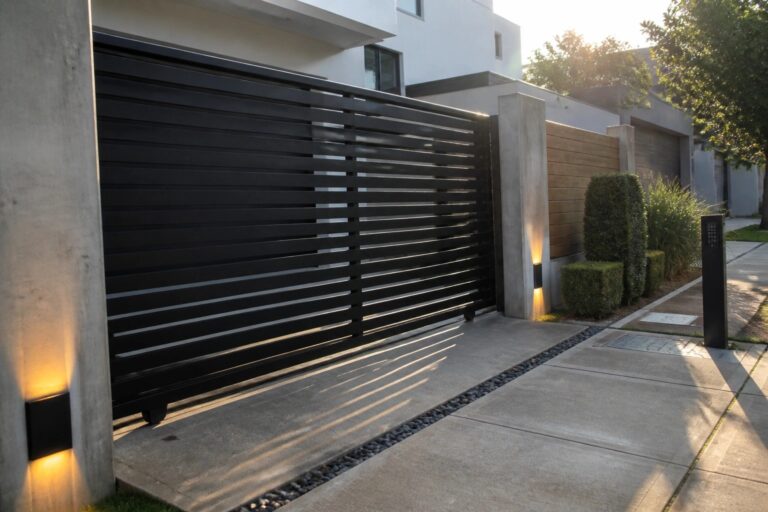
Horizontal slats give a steel gate a lighter feel without losing privacy. The lines break up the solid look and let some light and air through while still hiding the driveway from the street.
This approach fits homes with simple modern lines and pairs easily with concrete posts or wood fencing. Keep the rest of the entry planting low so the gate stays the main feature.
Rusted Steel For Durable Main Gates
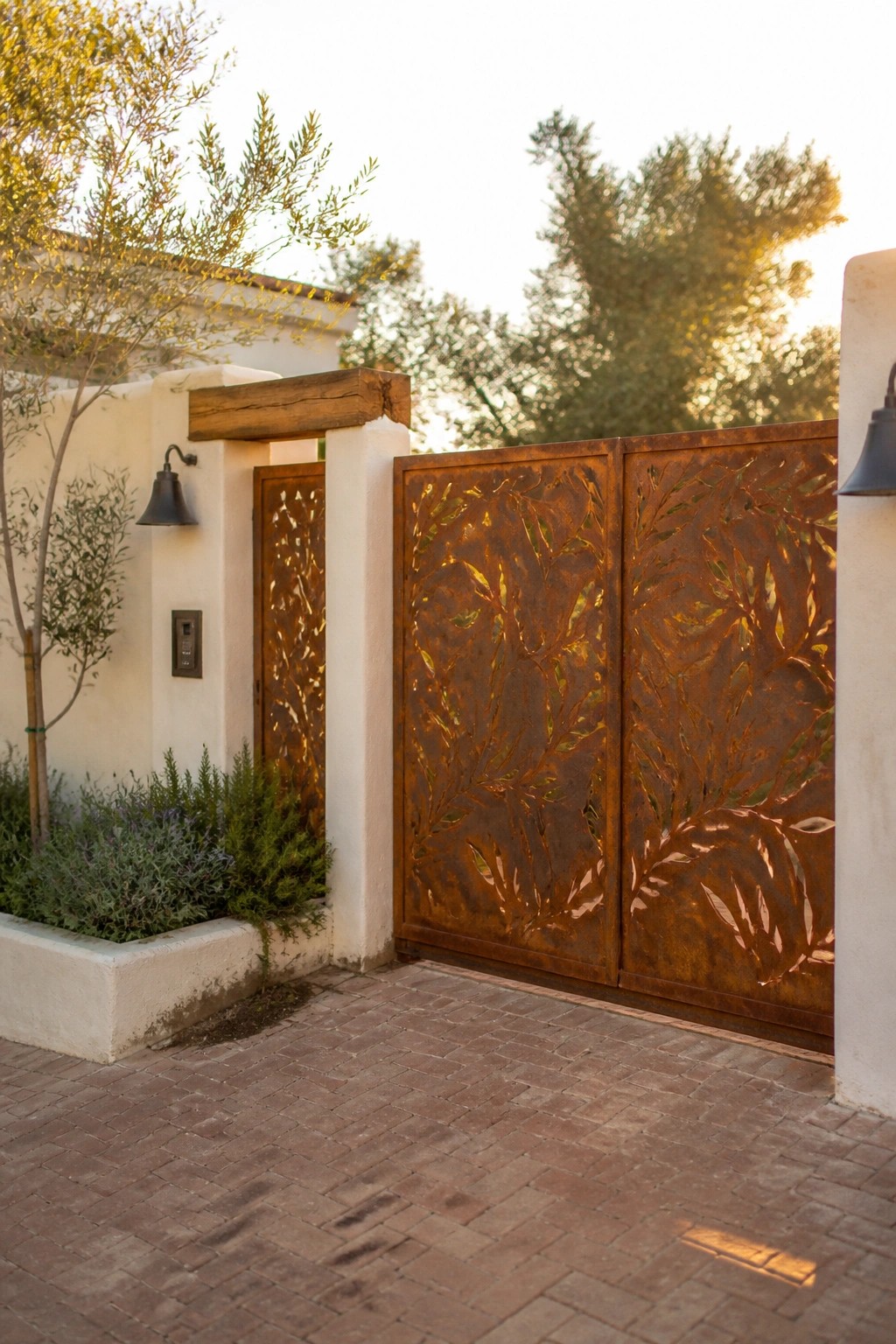
Rusted steel gates have a built-in advantage because the surface develops a stable layer that slows further wear. This finish handles sun, rain, and temperature swings without needing frequent paint or sealant, which makes it practical for a main entry.
It pairs well with stucco walls and simple paving since the warm tone contrasts the lighter surfaces without extra trim. Keep the cutout pattern open enough for light and views while keeping the overall panel strong.
Vertical Bar Steel Gates For Clean Entries
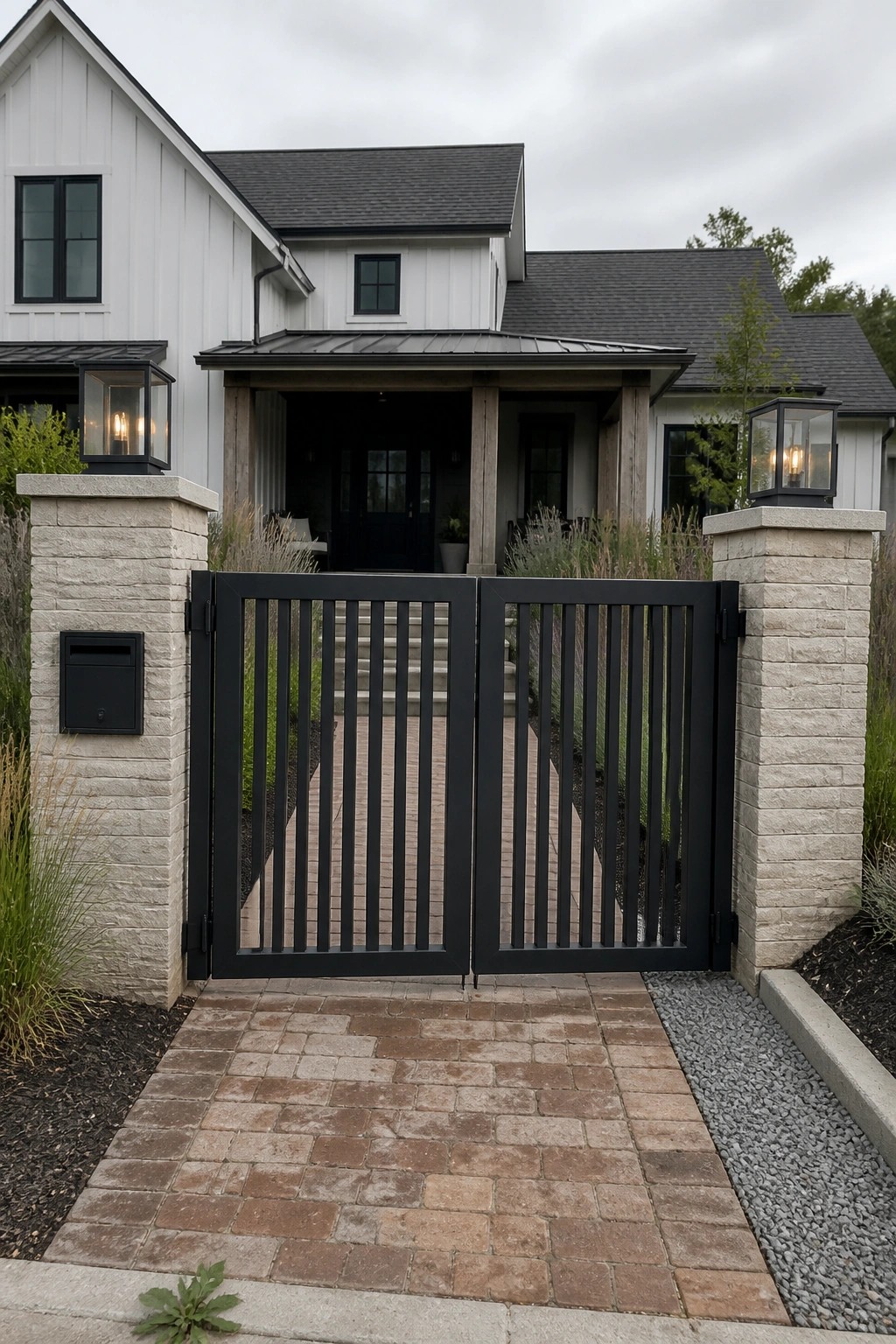
A vertical bar steel gate gives a front entry a crisp look that holds up over time. The simple lines keep the focus on the house while still creating a clear boundary that feels solid and secure.
This approach works best on homes with light siding or neutral tones, where the dark metal adds contrast without overwhelming the facade. Match the gate finish to other exterior hardware like light fixtures so everything feels pulled together.
Steel Main Gates With Cutout Designs
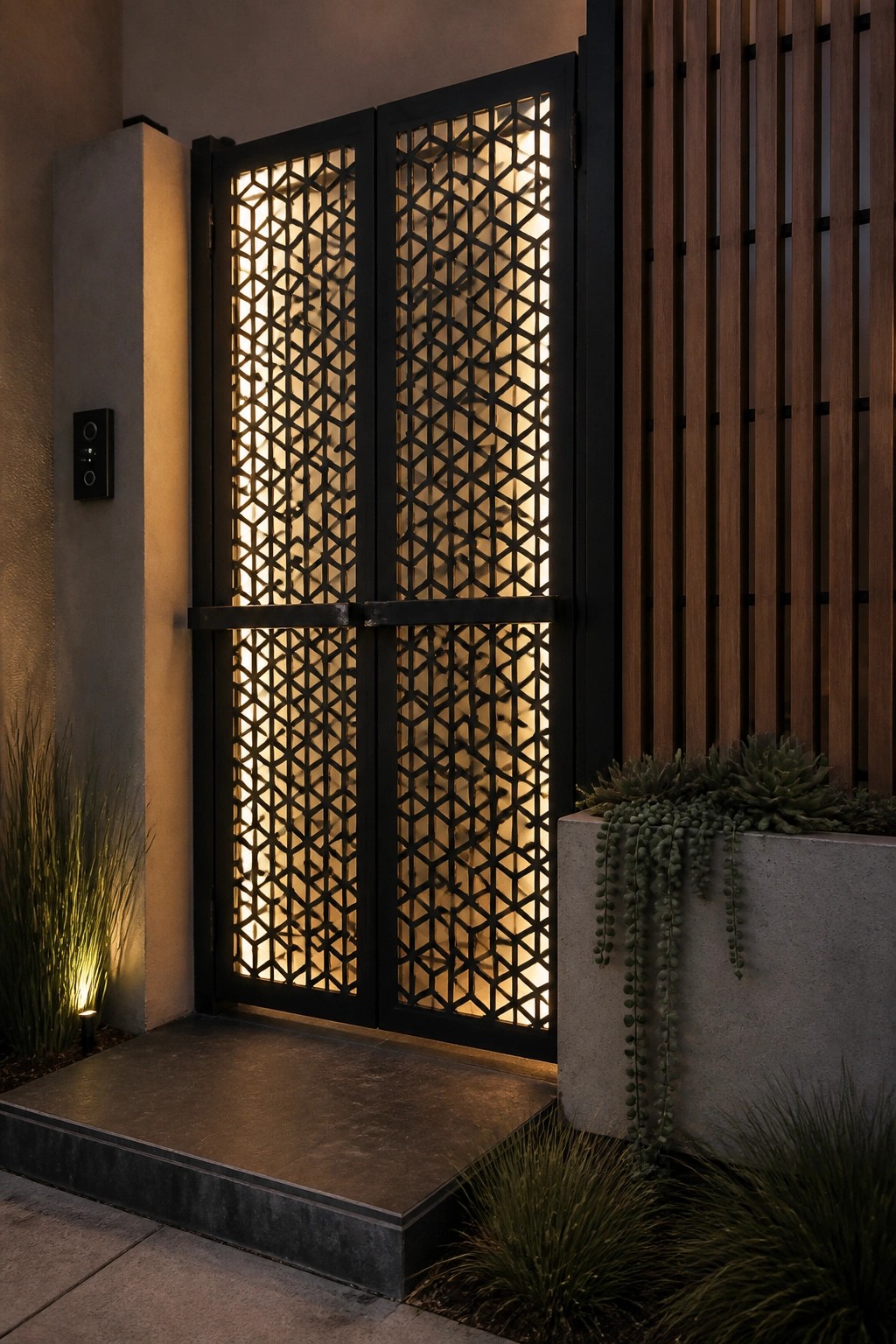
A steel gate with a cutout pattern gives an entry both security and a bit of light at the same time. The openings let the glow from inside show through without leaving the front completely open, which makes the whole approach feel less heavy.
This works best on homes that already use simple materials like concrete or wood siding. Keep the pattern fairly regular so it stays easy to clean and does not catch debris over time.
Steel Gates With Simple Vertical Lines
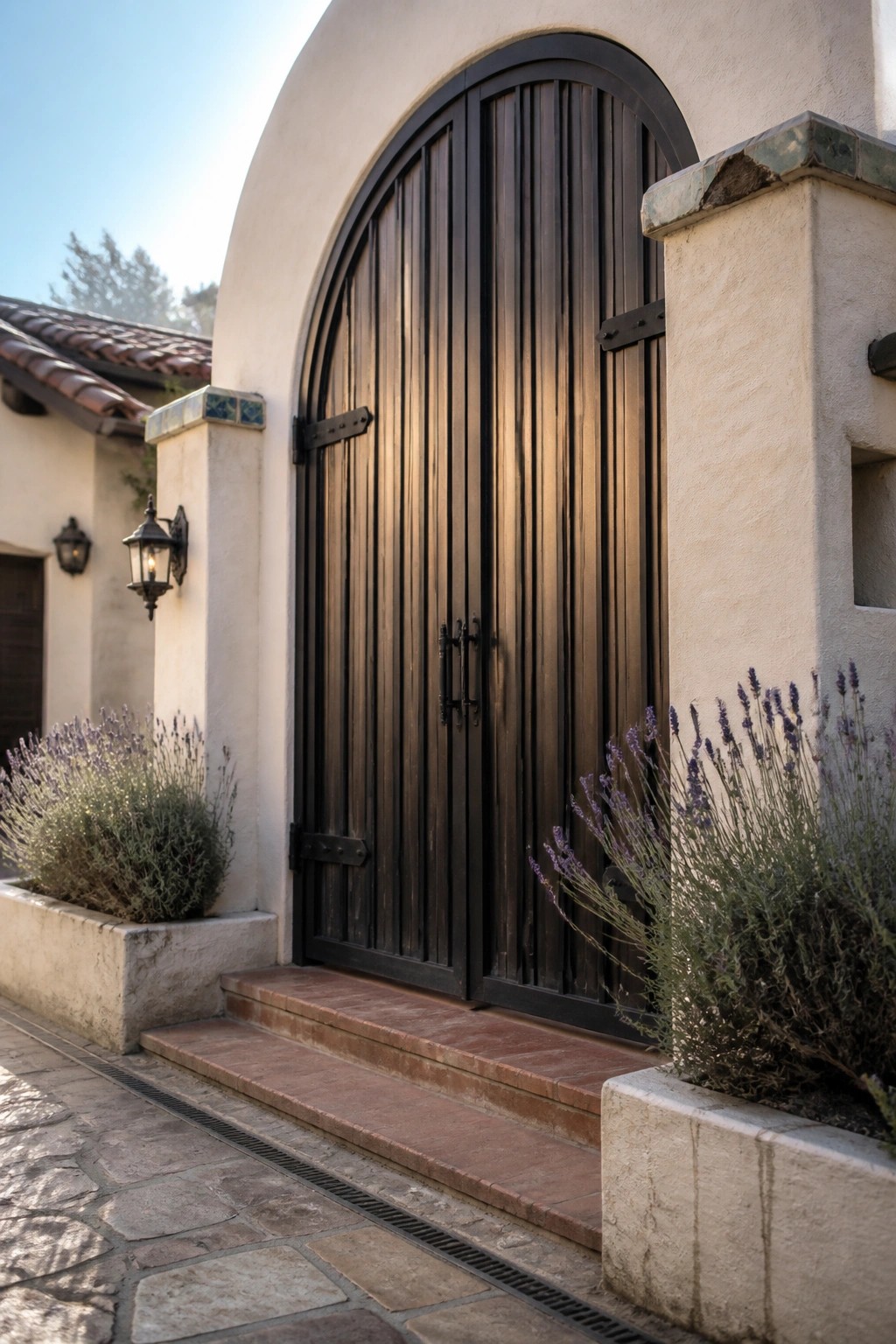
Steel gates with clean vertical bars hold up better than many other options because the material resists warping and the lines keep the whole thing from feeling heavy. This approach gives a front entry real presence without needing extra ornament or frequent upkeep.
It works best on homes that already use stucco or masonry, where the dark metal can contrast nicely with the lighter walls. Keep the hardware minimal and the finish matte so the gate ages evenly with the rest of the house.
Perforated Steel Gates For Main Entries
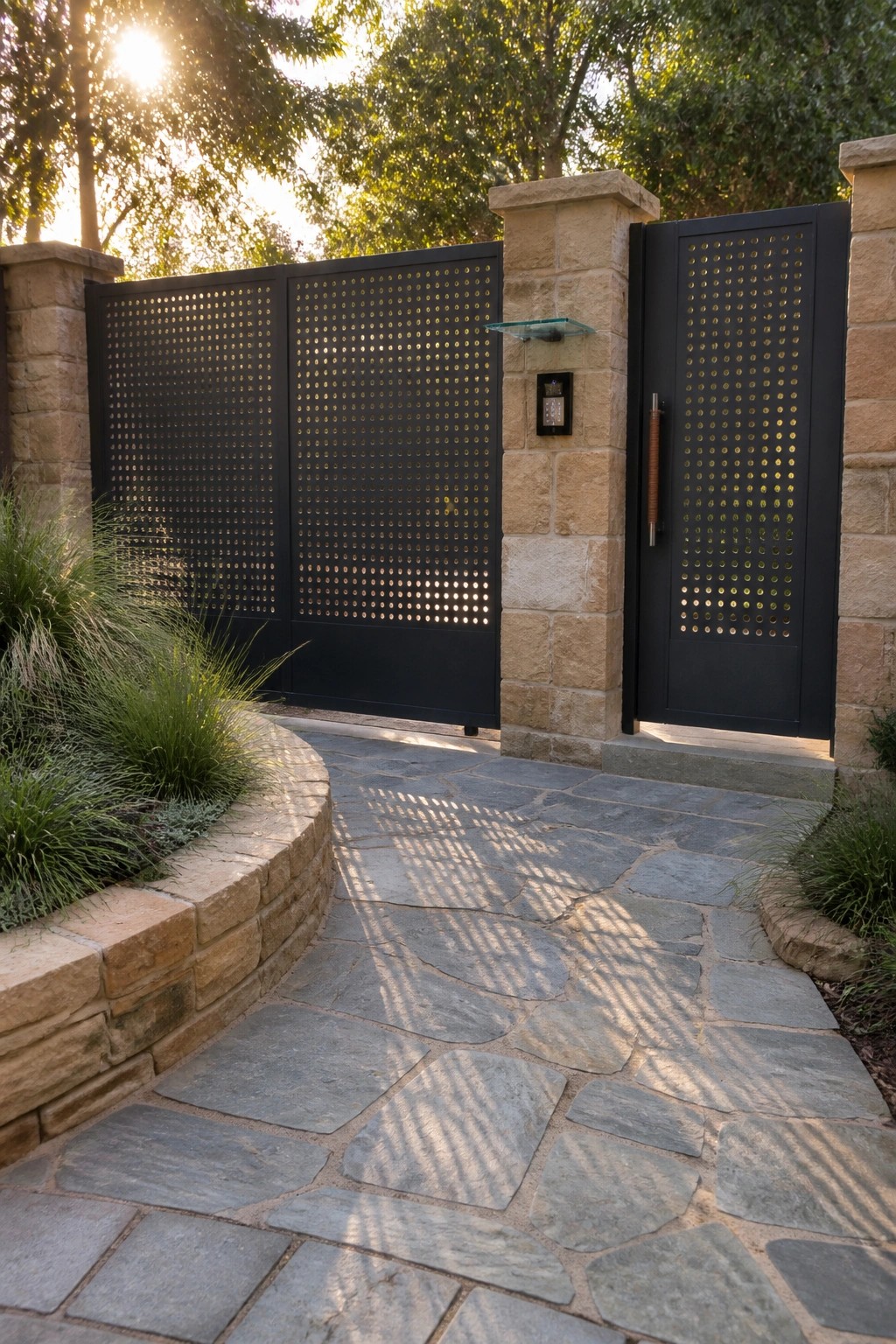
Perforated steel gates give you solid strength without blocking everything out. The pattern of holes lets light reach the path and plants while still keeping the entry secure. Many homeowners like this look because it feels sturdy but not heavy or closed off.
This style works best with stone or masonry pillars, and it suits homes that already lean modern or simple. If privacy is a concern, go with smaller holes or add some planting behind the gate so it does not feel too open from the street.
Louvered Steel Gates For Simple Privacy
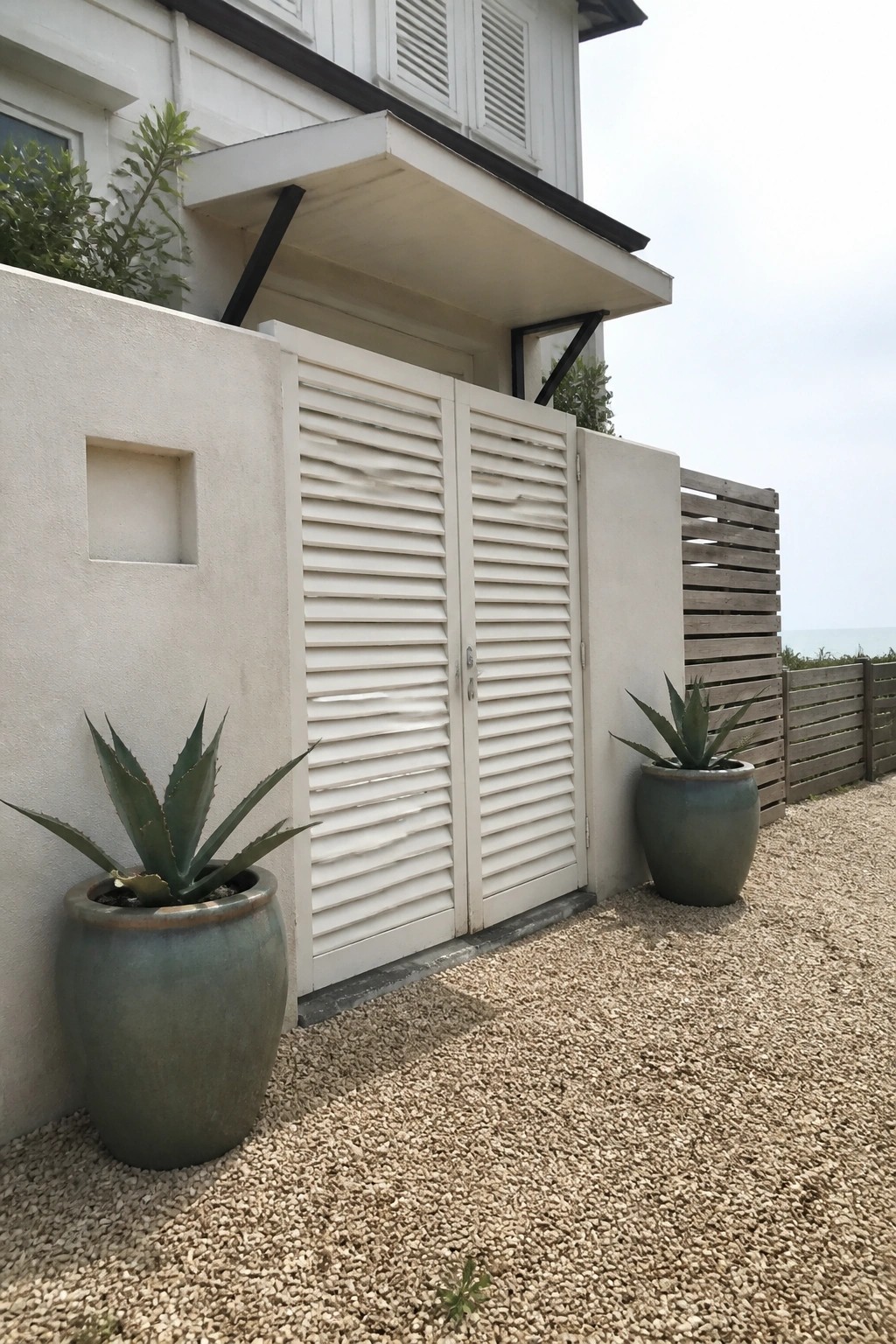
Louvered gates give a house entry both privacy and airflow at the same time. The horizontal slats block the view from the street while still letting breezes pass through, which keeps the space from feeling closed off.
This style works best on homes with clean wall lines and gravel or paved paths leading up to the gate. Steel holds the shape well over years of weather, so the gate stays straight and the paint lasts longer if you choose a light color that blends with the house.
Steel Gates With Simple Vertical Bars
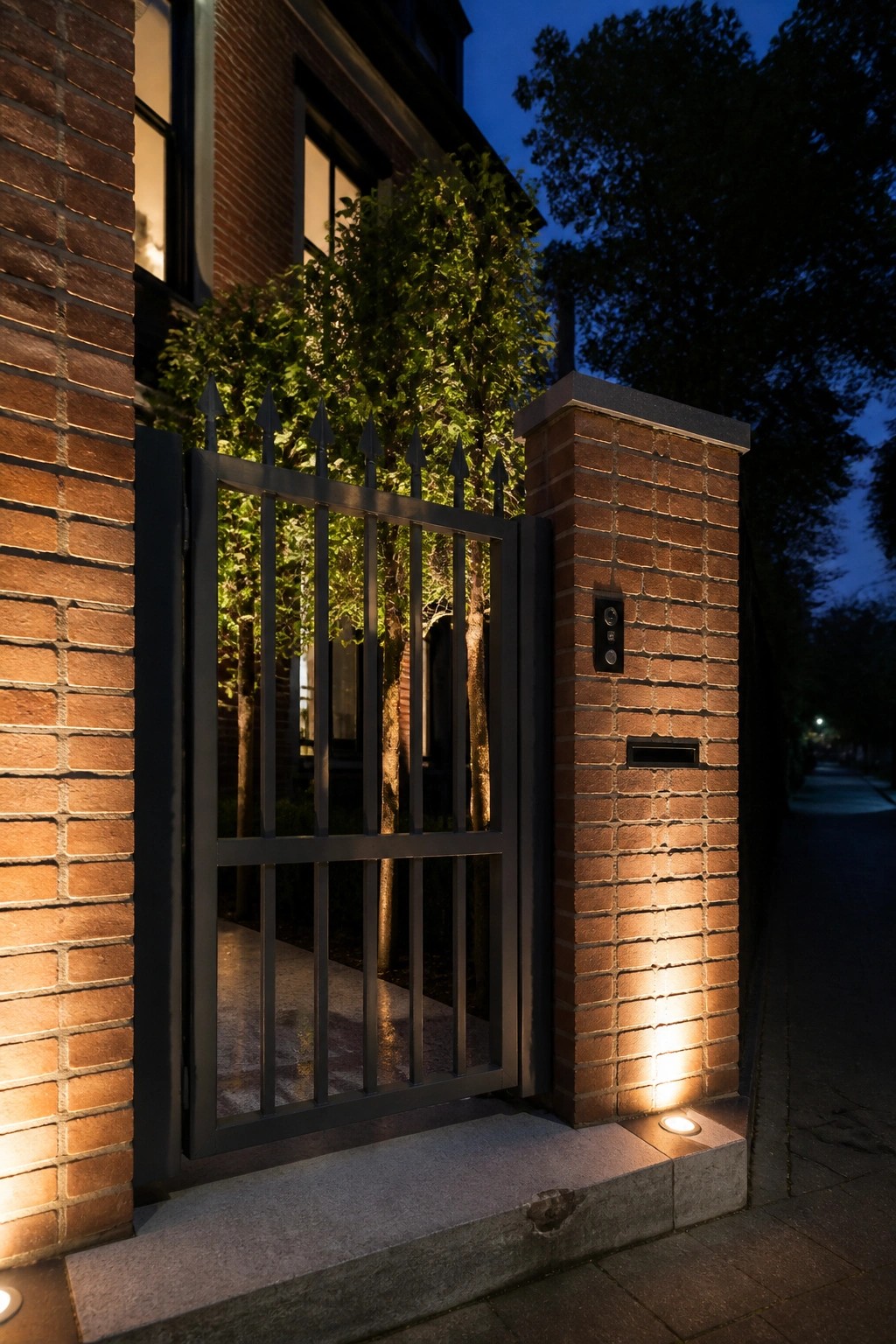
A steel gate built with plain vertical bars gives a solid look that still feels light and open. This style pairs naturally with brick because the straight lines do not compete with the texture of the masonry.
It works best on homes that want a classic entry without extra ornament. Keep the spacing tight enough for security and choose a dark finish so the gate stays easy to maintain over the years.
Vertical Steel Slats on Main Gates
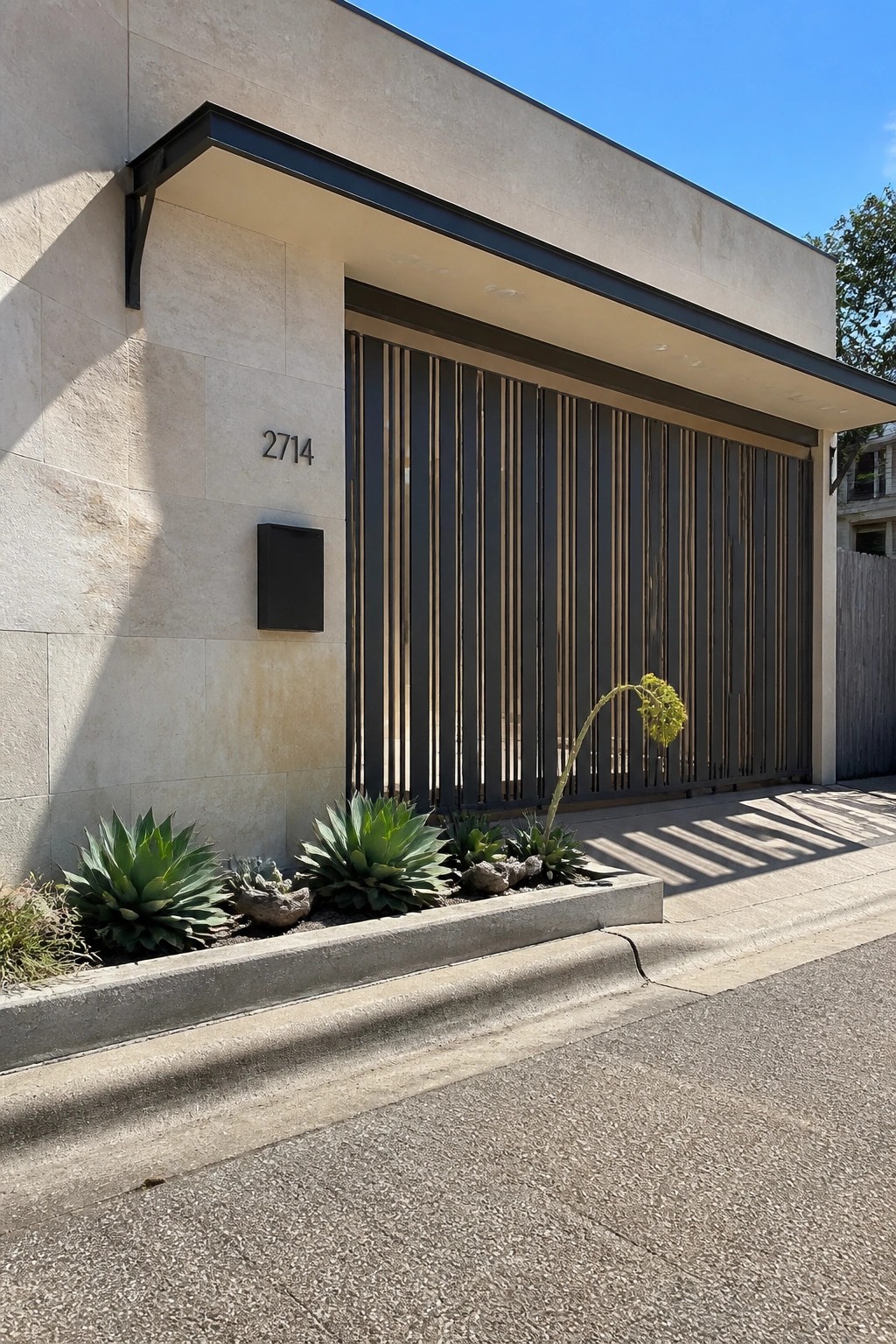
Vertical steel slats give a gate real strength while keeping the front of the house from feeling closed in. The lines add height and let light through, so the entry stays open even with a solid barrier in place.
This style works well on modern homes with simple stone or concrete walls. Keep the planting low and the rest of the facade plain so the gate remains the main feature without extra trim or hardware.
Steel Frames With Horizontal Slats
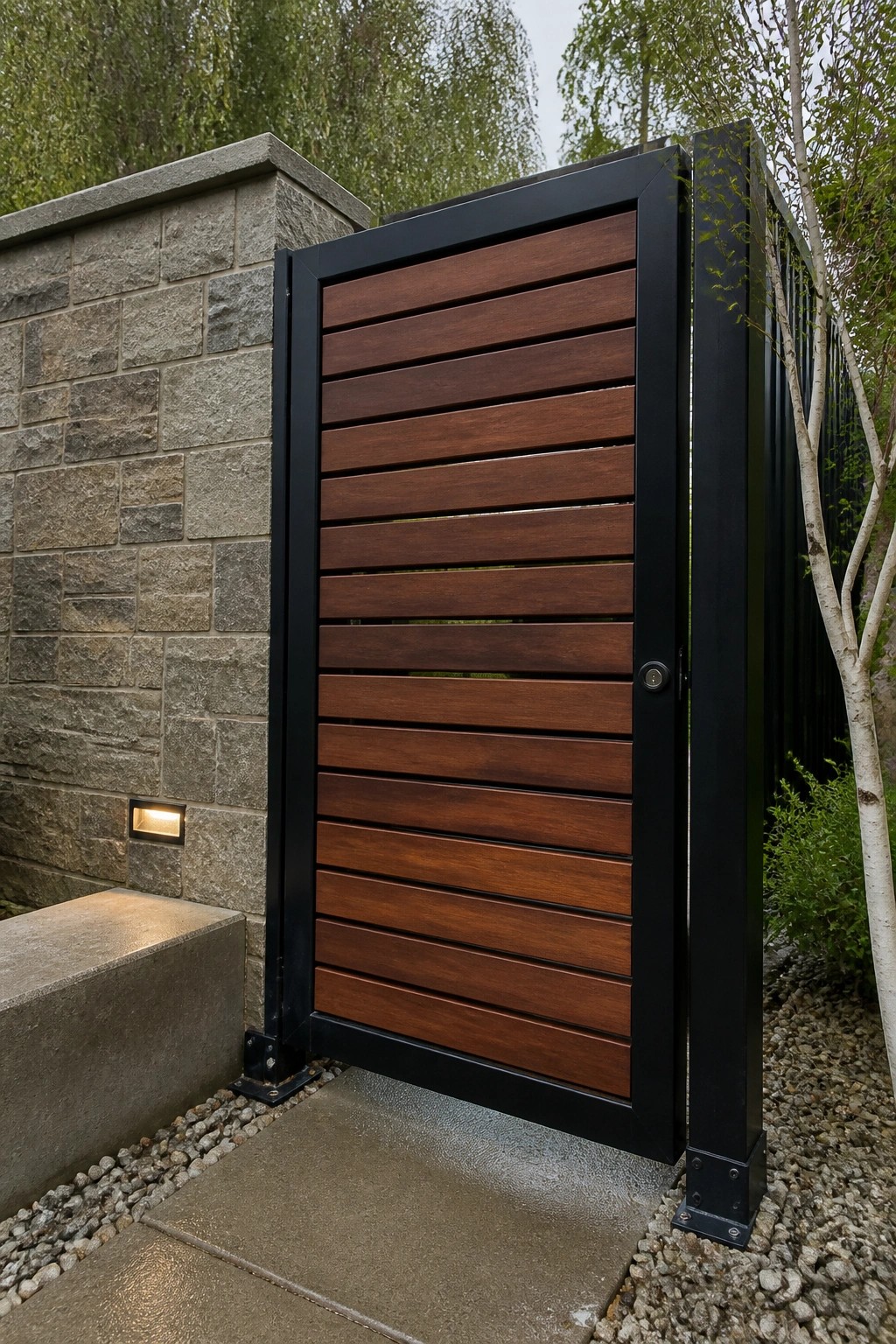
Steel gives a gate the strength it needs to last for years without sagging or warping. The horizontal slats keep the look simple and let some light and air through while still providing privacy.
This approach works well on homes that already use clean lines and mixed materials like stone. It needs little upkeep beyond an occasional wash and holds up better than an all-wood gate in most climates.
Steel Framed Wood Gates
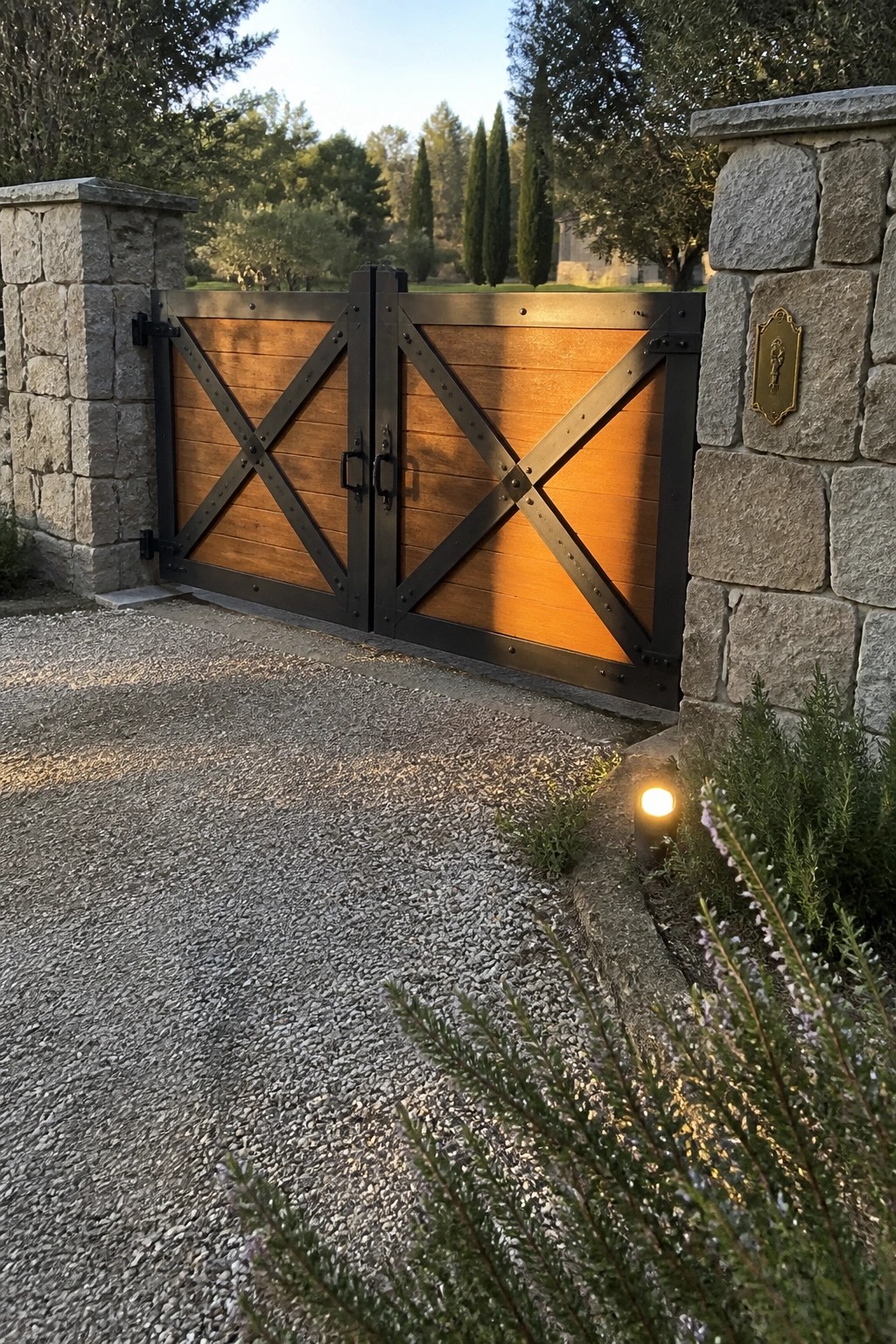
A steel frame around wood panels gives a gate real staying power without looking too industrial. The metal handles the weight, weather, and daily use while the wood keeps the look warm and simple. Many people like this mix because it avoids the cold feel of an all-metal gate yet still holds up for years.
This style works well on homes with stone walls or gravel drives where you want a bit of contrast. Keep the steel dark and the wood natural so the gate blends with the surroundings instead of standing out too much. Check the hinges and bracing every couple of years to make sure the wood stays secure.
Steel Gates With Mixed Solid and Perforated Panels
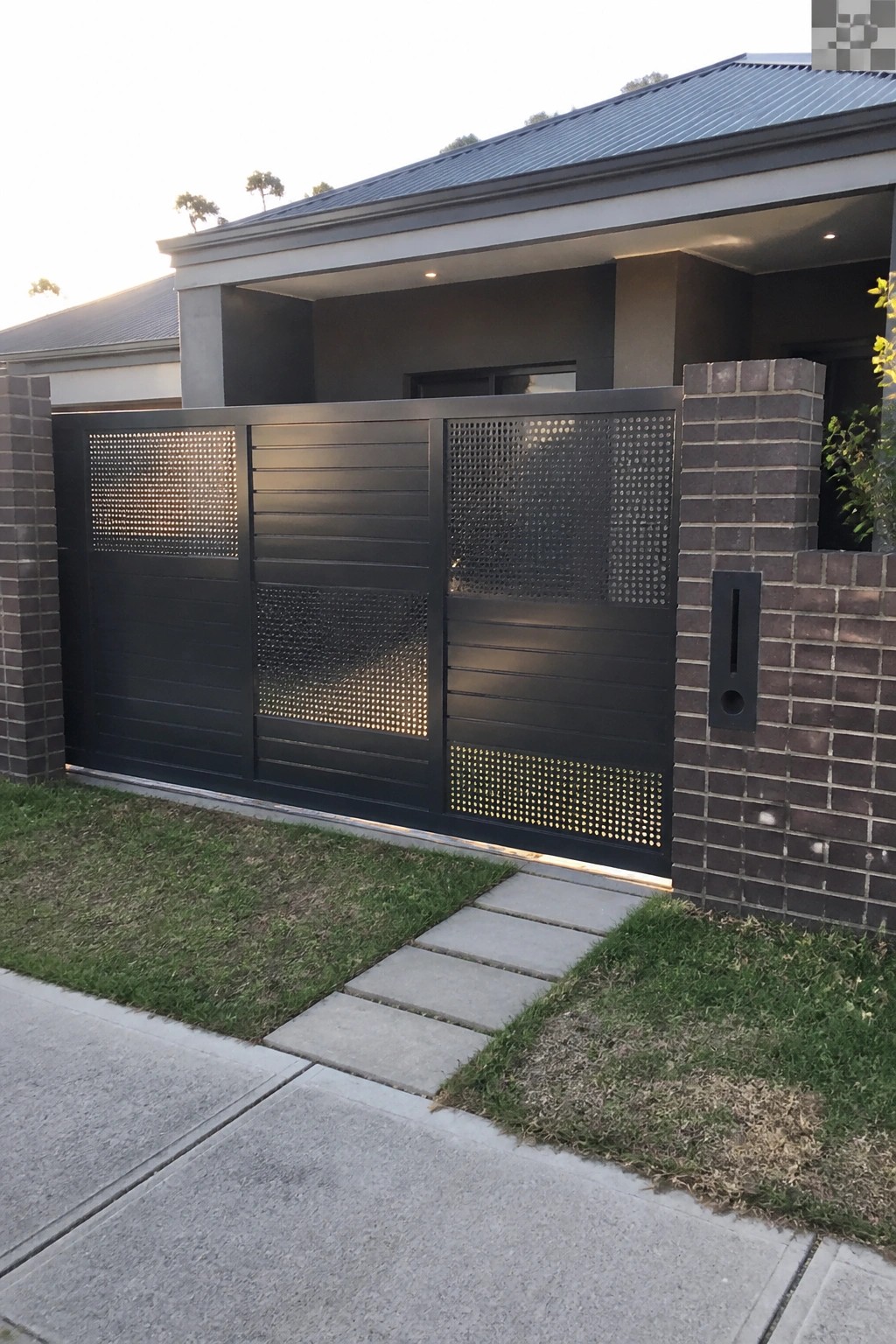
A steel gate that uses both solid sections and perforated areas gives you privacy without blocking all light or making the entrance feel too heavy. The solid parts handle the main screening while the dotted sections break up the surface and let some light pass through. This mix works especially well on modern homes where the gate needs to look simple but still interesting.
It suits properties with clean lines and dark color schemes. Steel holds up for years with almost no upkeep, so the design stays looking sharp even after weather exposure. Keep the pattern balanced across the full width so it reads as one piece rather than a collection of separate panels.
Steel Gates With Cutout Patterns
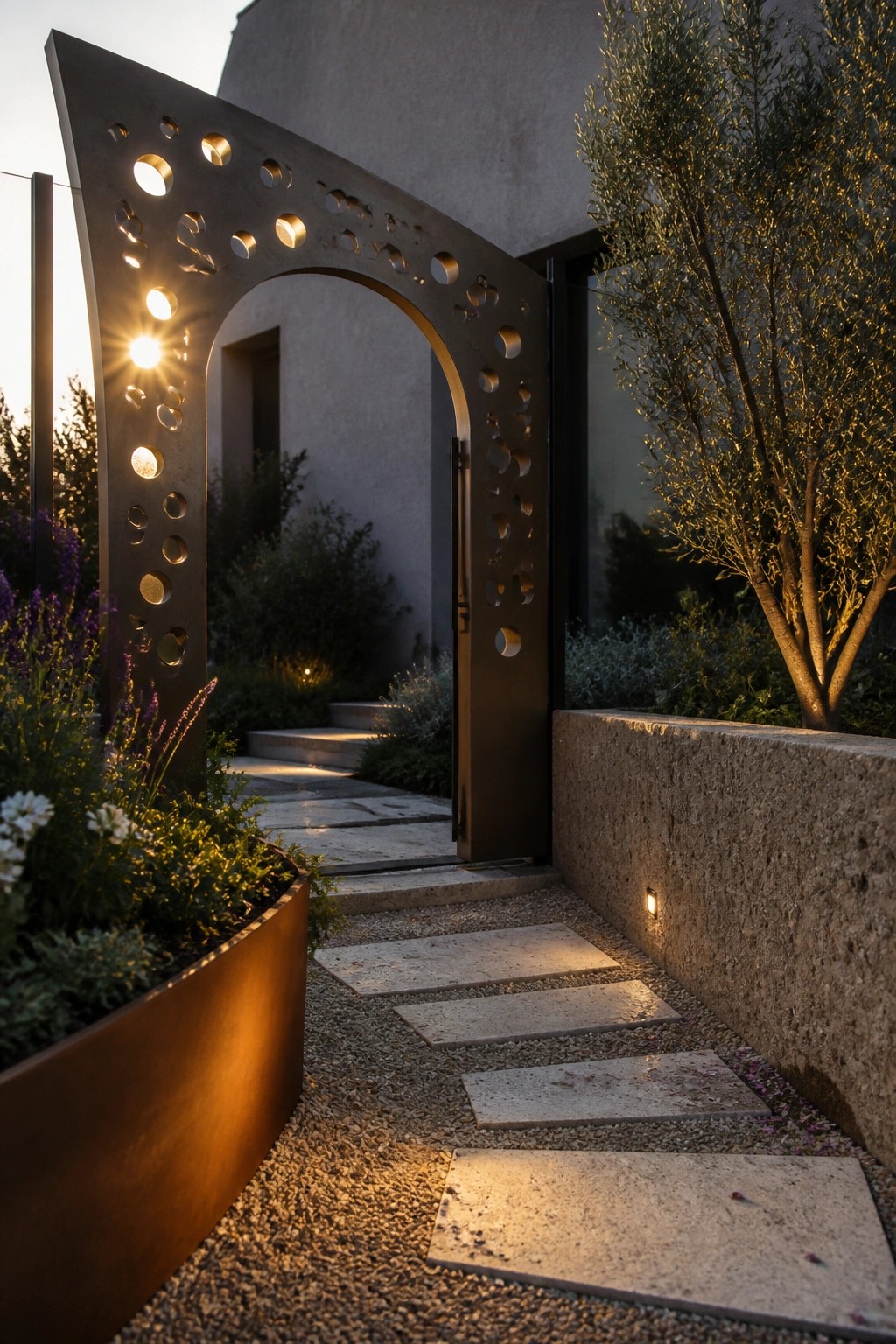
Steel gates with cutouts give an entry both structure and a bit of lightness. The pattern lets some light through without making the gate feel weak or thin, which helps it stay useful for years.
This style works best on homes with simple paths or low walls leading to the door. Keep the openings spaced evenly so the gate holds up well and still blocks the view enough for privacy.
Steel Gates With Bolted Hardware
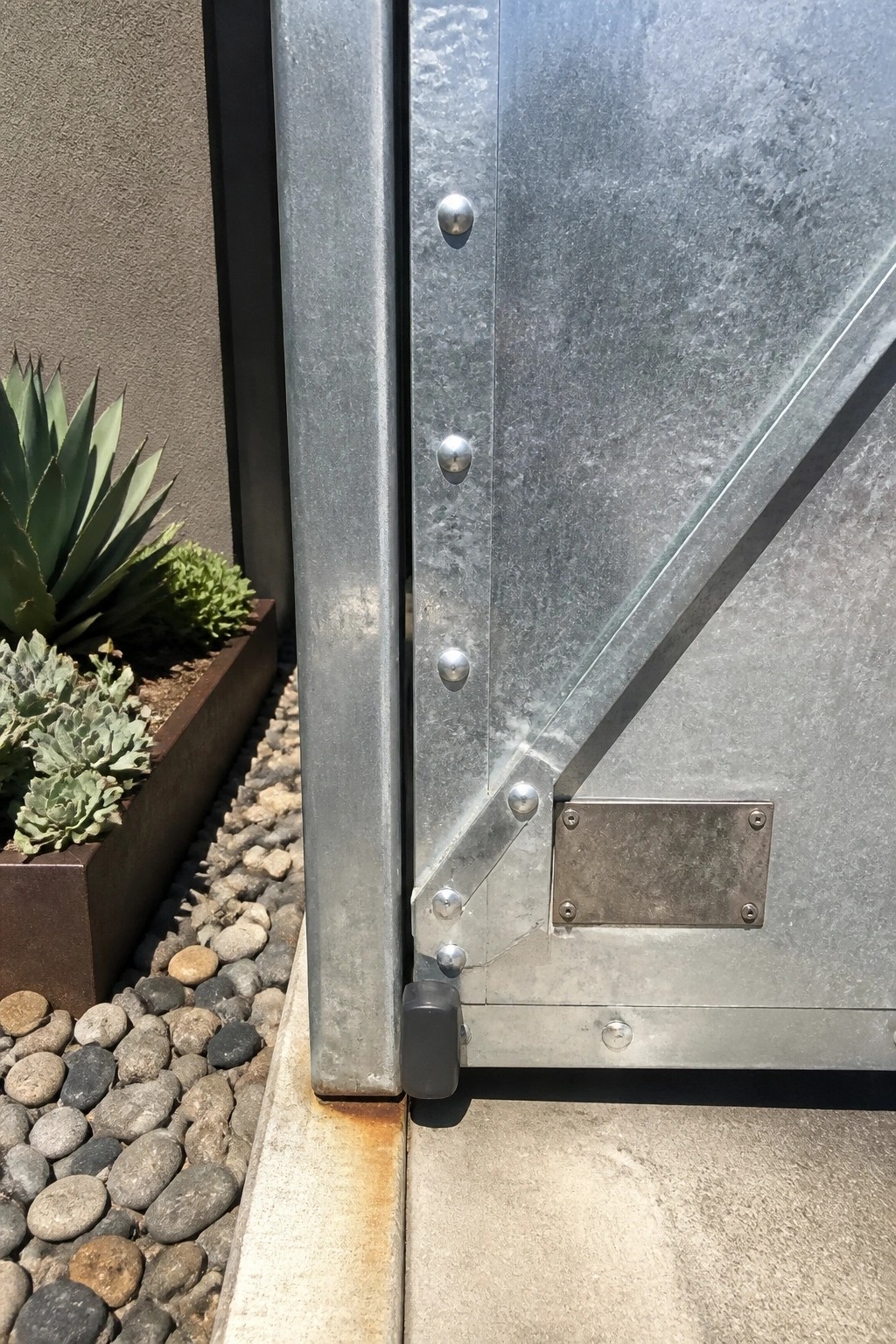
Steel gates that show their bolts and plates tend to hold up better over the years. The visible fasteners add strength right where it counts and keep the design straightforward.
This style suits homes that need a gate for regular use. It works especially well next to gravel paths and simple plantings since the metal needs little upkeep and still looks clean after time outdoors.
Steel And Wood Gate Designs That Hold Up Over Time
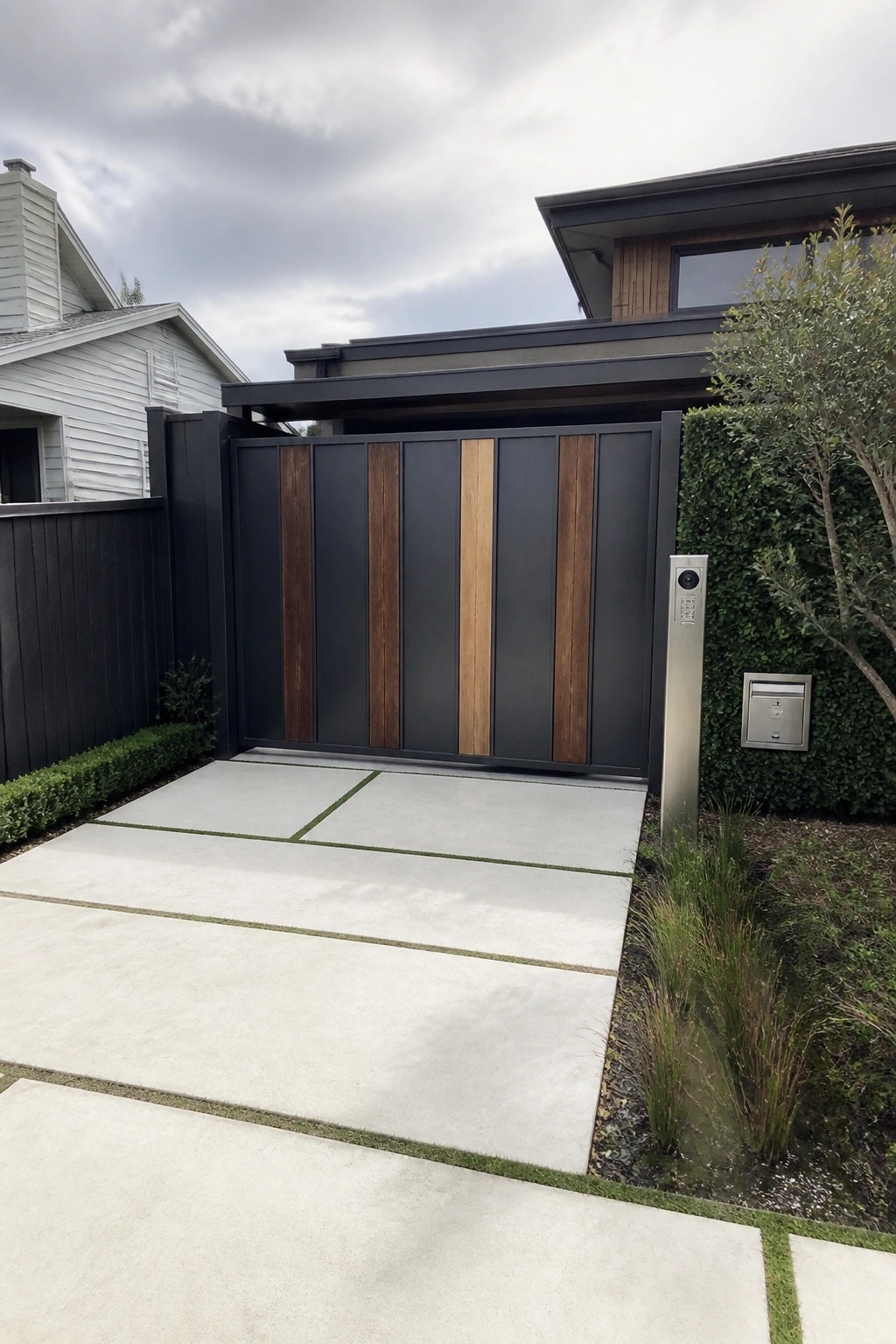
Many homeowners like pairing steel with wood on a main gate because it gives the entry a warmer look while keeping the strength that steel provides. The vertical wood strips break up the solid metal surface and add a bit of natural texture that ages well.
This mix works best on homes with simple modern lines where the gate needs to feel solid but not too heavy. It suits front entries that get regular use since the steel handles the weather and the wood adds interest without extra upkeep.
Perforated Steel Main Gates
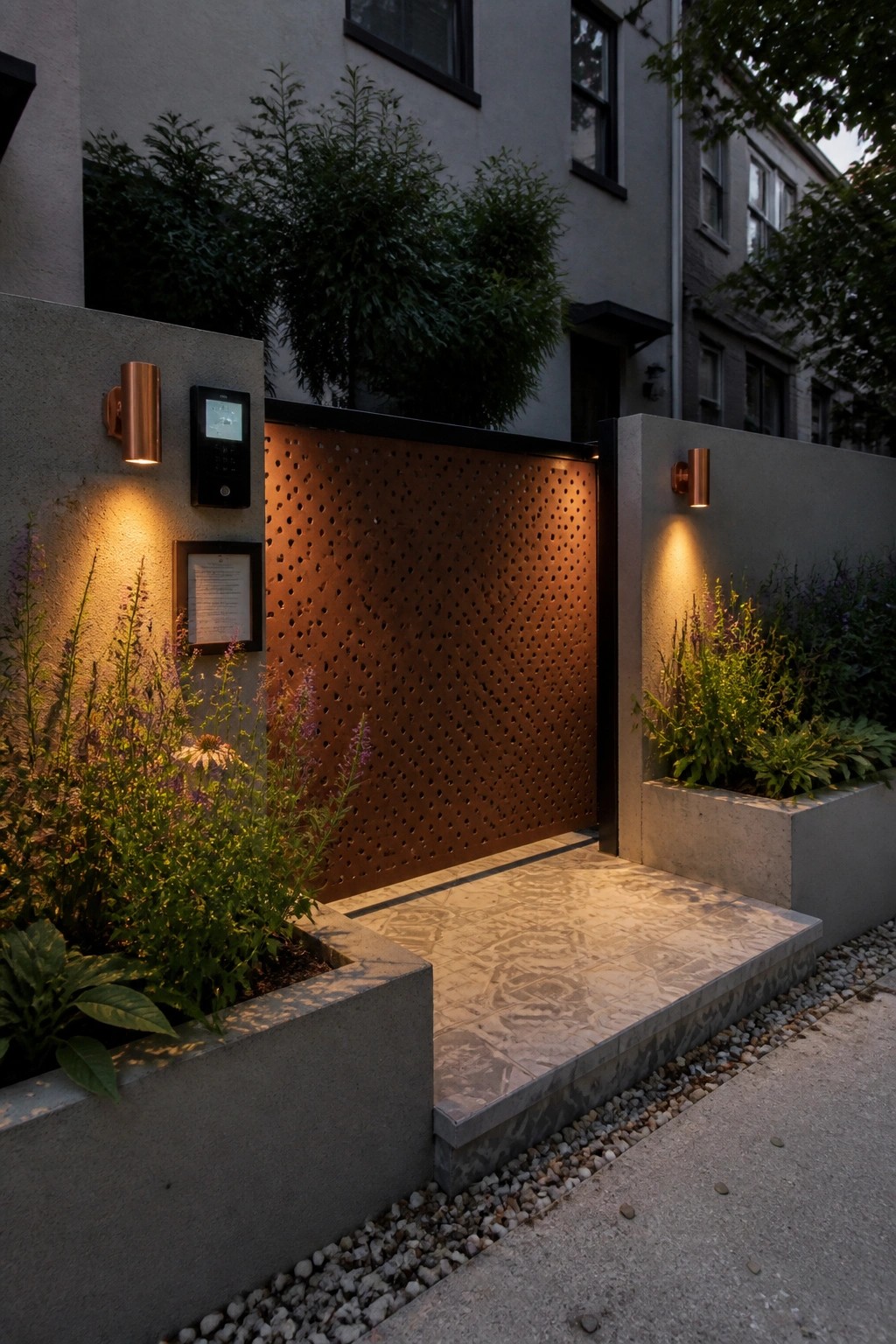
Perforated steel gives a main gate real presence without making the entry feel closed in. The holes let light pass through so the path stays visible at night, and the material itself holds up well against weather.
This approach fits homes with clean lines and simple materials. Keep the surrounding walls and planters low so the gate stays the focus, and use warm lighting to highlight the pattern instead of overpowering it.
Steel Gates With Cutout Patterns
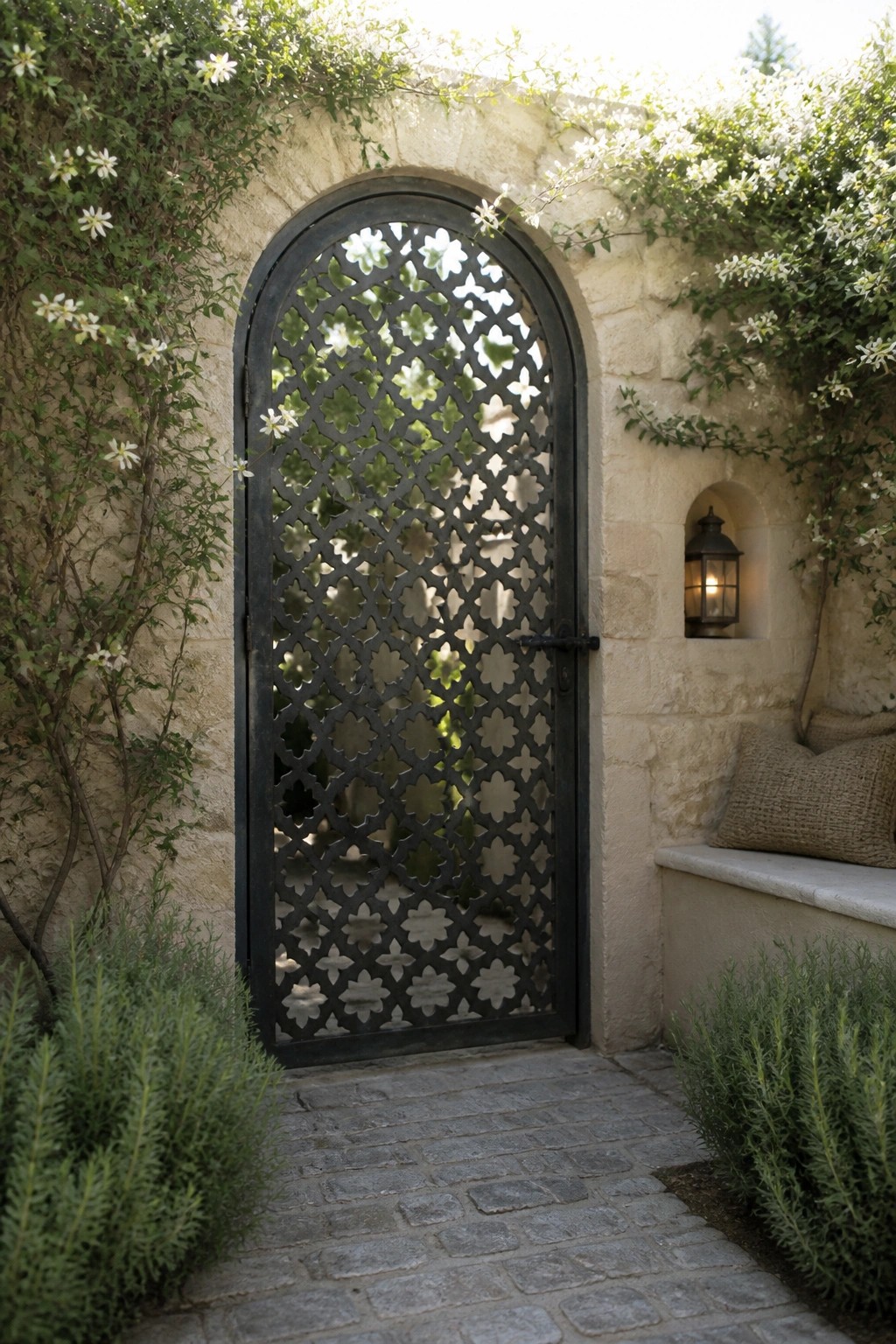
A steel gate with a repeating cutout pattern gives an entry both security and visual interest without extra pieces. The openings let light and air pass through while the metal itself stays solid for years.
This style works best on homes with stone walls or simple masonry. It adds texture to the entrance and pairs well with climbing plants along the sides.
Solid Steel Gates for Simple Lasting Style
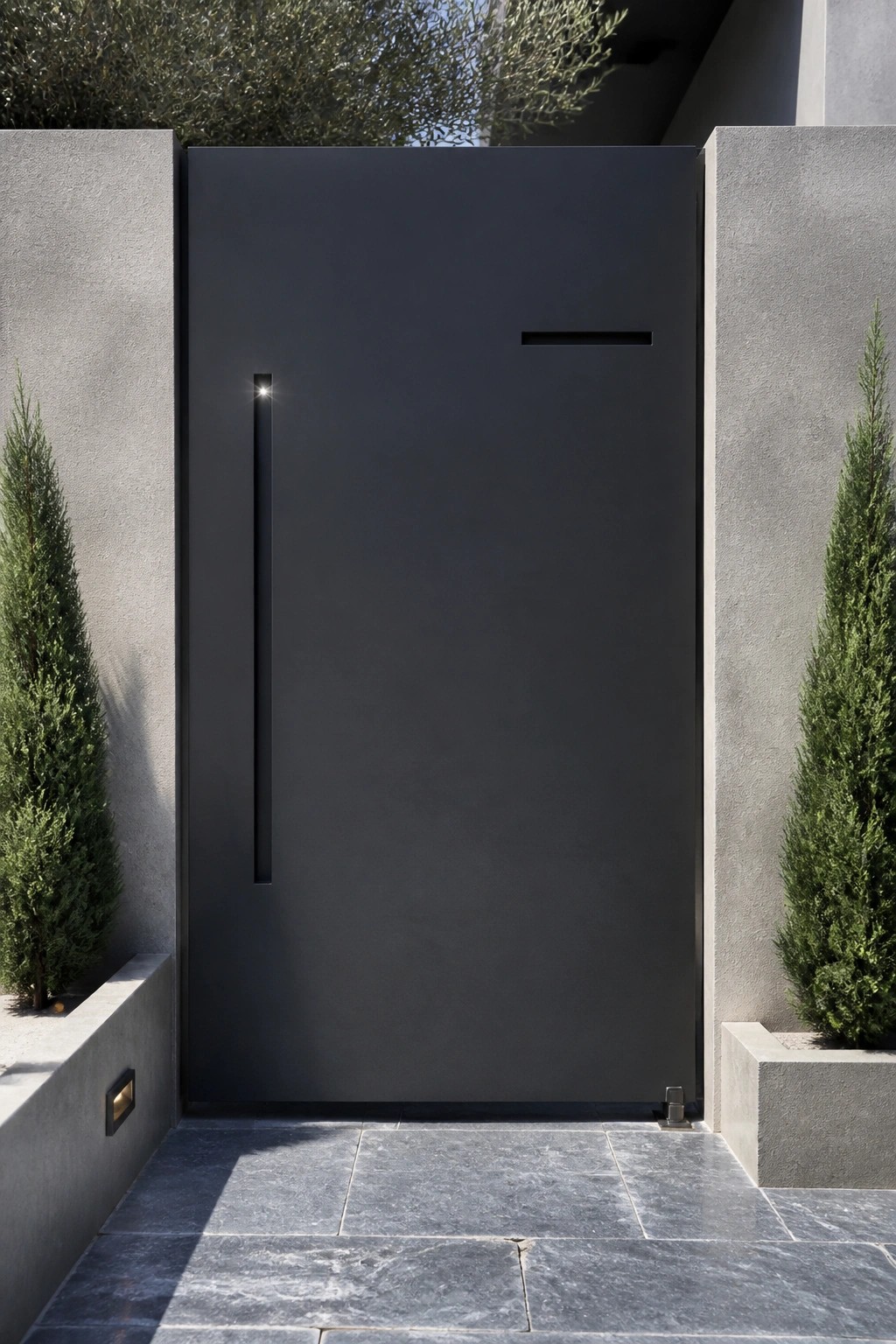
A solid steel gate keeps the entry looking clean and strong without extra details that can wear out. The flat surface and dark finish help it blend with concrete and stone, and the narrow vertical handle plus small slot keep the look simple while still giving access.
This approach works best on modern homes or any house where low maintenance matters more than ornament. Stick to matte colors and avoid adding trim or patterns that could catch dirt or need regular touch ups.
Steel Gates With Frosted Horizontal Panels

Steel gates that use frosted glass in horizontal bands give a clean look while still blocking the view from the street. The steel frame adds real strength, and the panels keep the gate from feeling too solid or closed off.
This style fits modern homes best, especially those with dark frames and simple lines. It holds up well outside and needs little upkeep beyond occasional cleaning.
Steel Gates With Classic Scrollwork
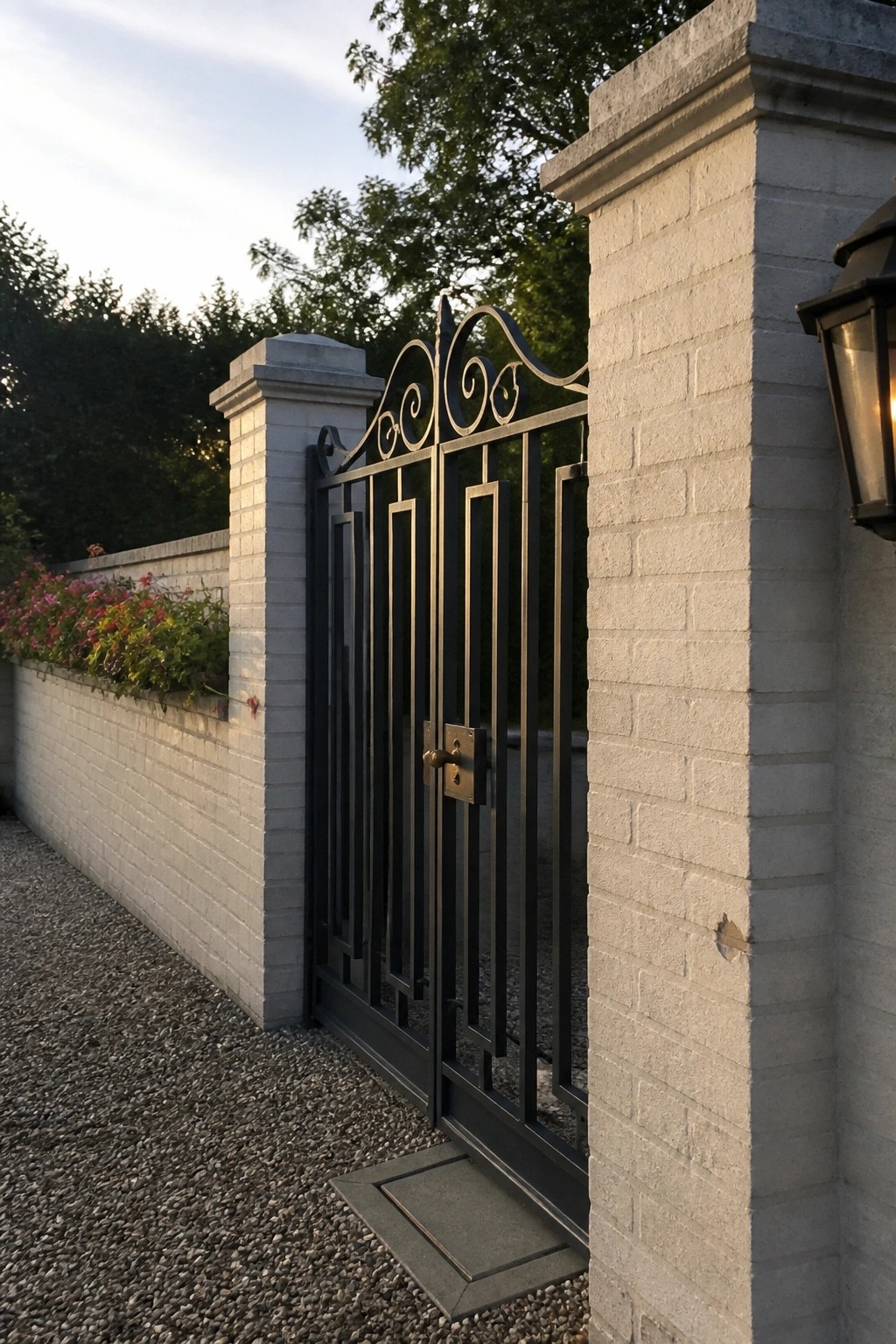
A steel gate with some scrollwork at the top can give an entry a polished look without feeling too fancy. The dark metal holds up well over time and pairs nicely with brick walls.
This kind of gate works best on homes that already have a bit of traditional character. It adds security while keeping the front looking open and approachable.
Frequently Asked Questions
Q: How can I keep a steel gate from rusting in wet weather?
A: Apply a good rust resistant primer before painting. Touch up any scratches right away so moisture does not get in. Regular checks help catch small spots before they spread.
Q: Is it hard to install a heavy steel gate on my own?
A: Two people can manage most designs with basic tools. Make sure the posts sit level before you hang the gate. That saves time on adjustments later.
Q: Should I add a lock to my new steel gate?
A: A sturdy padlock works well for most setups. It adds security without changing the design much.
