


A driveway often sets the tone for the whole yard, and its edges can look unfinished when the planting feels too loose or too crowded.
I like ornamental grasses for this spot because their height and movement can soften paving without blocking the view from the street or making the path feel narrow.
The key is to give each border a clear shape, then choose grasses that suit the driveway’s width, sun, and upkeep needs.
Some plantings stay neat with compact clumps, while others make a softer, fuller edge as they grow through the seasons.
I’d save the ideas that fit your layout and test how their spacing and height will work beside your own driveway.
Use Ornamental Grass to Line a Driveway
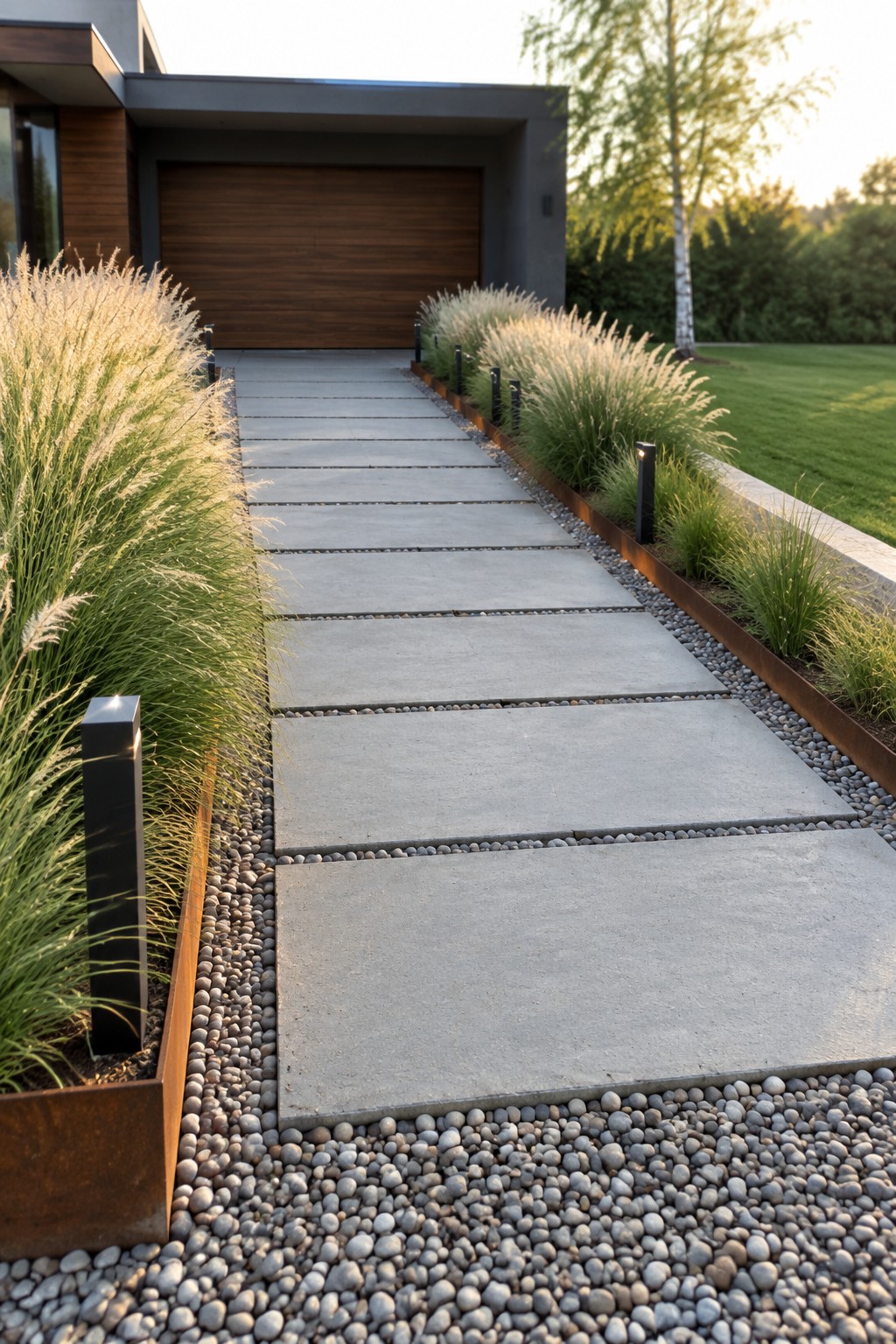
Ornamental grass makes a driveway border feel softer without taking away from the hardscape. Planting it in long, repeated beds gives the approach a clear edge, while generous concrete slabs keep the route easy to use.
This idea works well along a modern home or any driveway that needs a little structure. Keep the grasses contained with a simple metal edge, and leave enough room for them to spread without spilling onto the paving. A few low path lights can help mark the route after dark.
Use Ornamental Grasses Along a Curved Garden Path
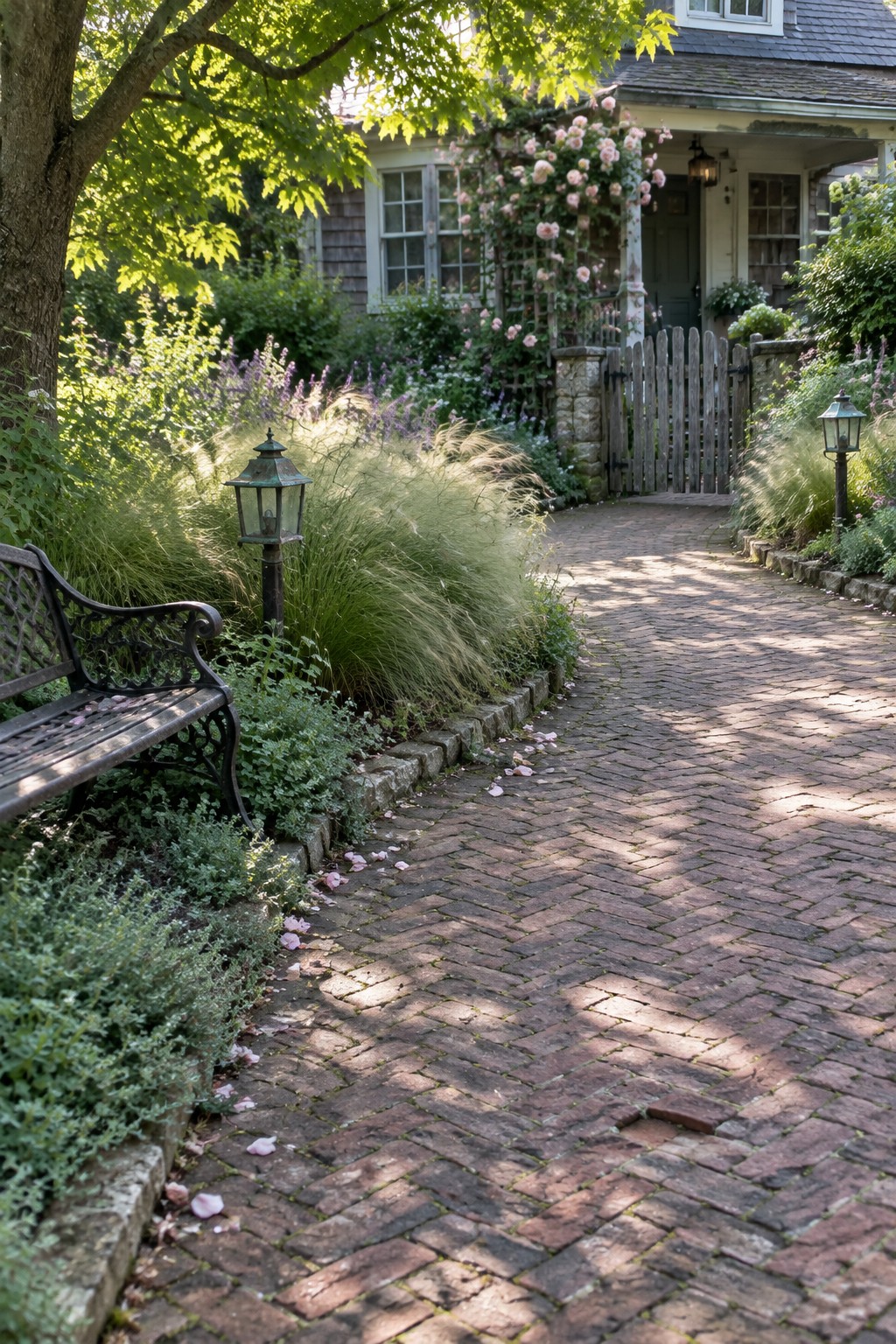
Ornamental grasses make a useful border for a winding path, where their soft, arching leaves help ease the transition between hard paving and planted beds. Here, feathery grasses follow the brick walkway and give its edges a looser feel.
Use grasses in small groups along the curve rather than placing single plants at regular intervals. Choose varieties that suit the path’s width, and leave enough room so their leaves do not spill across the walking surface.
Use Ornamental Grasses Along a Garden Path

Ornamental grasses make a useful border for a paved path, bringing movement and texture while keeping the walkway’s edges clear. Here, clumps of grasses mix with low purple flowers beside large stone pavers.
Use this approach along a driveway or entry walk, leaving enough room for plants to spread without leaning into the path. Choose grasses suited to your climate, and set them back from the paving so trimming and foot traffic stay manageable.
Use Ornamental Grass to Edge a Curving Driveway

Ornamental grasses make a natural border for a curving driveway, especially when the path winds through planted beds rather than cutting straight across the yard. Their fine leaves and airy flower heads give the edge a softer look, while still making the route easy to follow.
Plant grasses in loose groups along the driveway, leaving enough room for them to spread without spilling onto the driving surface. They work well beside gravel paths and stone edging, but keep taller varieties away from spots where they could block a driver’s view.
Use Ornamental Grass to Shape a Driveway Island
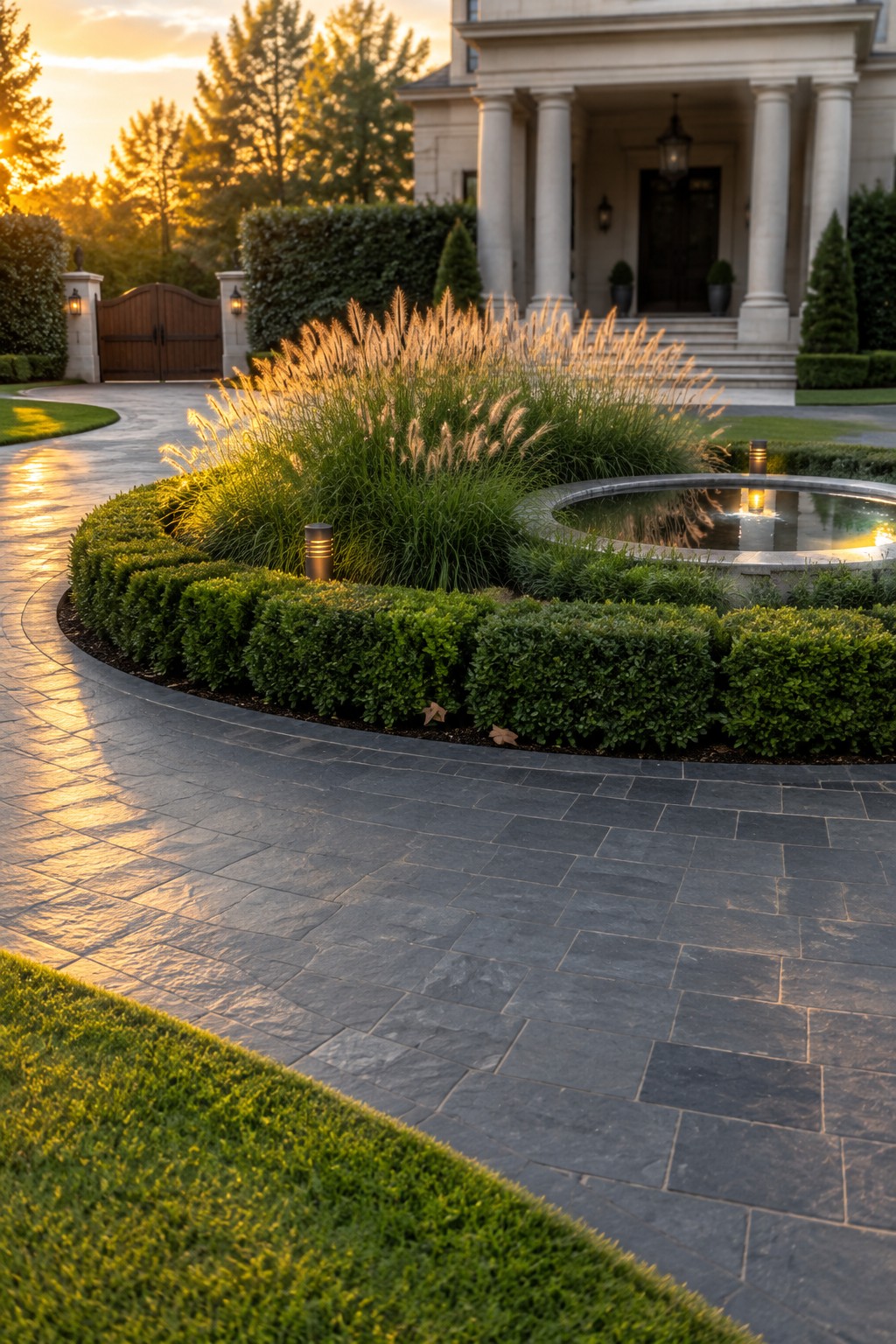
A rounded planting bed can break up a broad paved driveway and give the approach a more natural shape. Ornamental grass makes a good choice for the center because its loose form contrasts with the crisp edge of the paving.
Keep the grass in a defined island and use low shrubs along the border so the planting stays tidy. This works well in a spacious front yard, but leave enough room for cars to turn without cutting across the bed.
Use Ornamental Grass to Define a Gravel Driveway

Ornamental grass can give a gravel drive a softer edge without making it feel too formal. Here, the planting runs beside broad gravel sections, while narrow stone bands break up the surface and give the drive a clear rhythm.
This approach works well for coastal or cottage-style homes, especially where grasses already suit the landscape. Keep the planting slightly back from the gravel so it doesn’t spill into the driving area, and choose varieties that can handle the local conditions.
Add Planters Along a Gravel Driveway
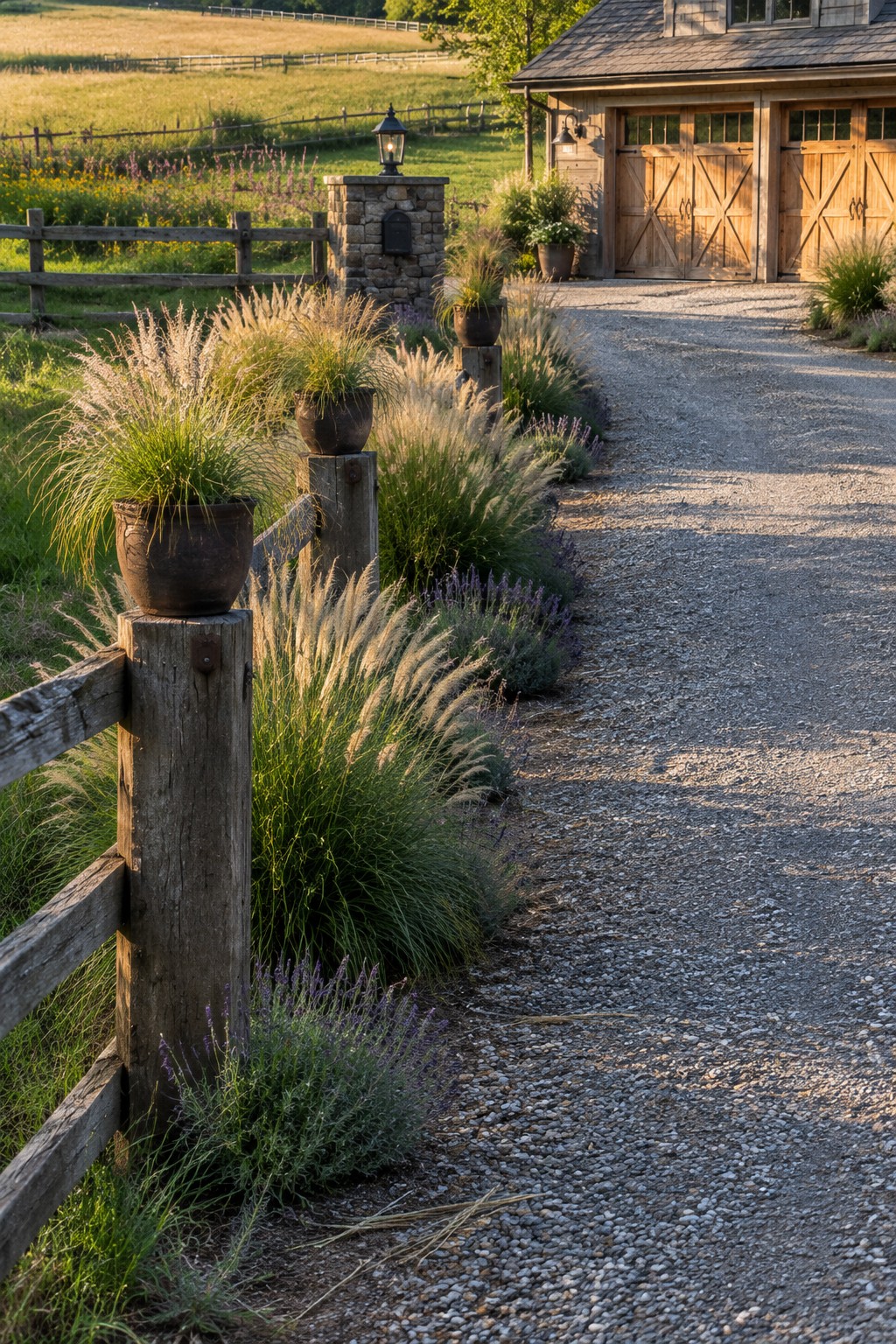
Ornamental grasses in pots can mark the edge of a gravel driveway without adding a formal border. Their loose shape suits a country-style home, and the containers give the grasses a clear place in the layout.
Set sturdy pots on posts or at intervals beside the drive, leaving enough room for cars to pass. Choose grasses suited to your climate, and make sure the pots have drainage holes so they do not stay waterlogged.
Use Raised Planters to Define a Driveway Walkway

Raised rusted-metal planters can give a driveway walkway a clear edge while keeping ornamental grasses in a tidy planting area. The grasses bring movement and texture without spreading across the path.
This approach works well in narrow side yards or along a long entry walk, especially where a wall already gives the planting a boundary. Leave enough room for the grasses to grow without brushing against the paving.
Let a Stone Path Set the Garden’s Direction

A gently winding stone path gives a garden a clear route without making it feel too formal. Small gaps between the stones leave room for moss and groundcover, which helps the path sit naturally among the planting.
This approach works well in a shaded garden or beside a traditional home. Keep the stones broad enough for comfortable footing, and use low plants along the edges so they don’t spread across the walking surface.
Use Ornamental Grass Along a Stone Garden Path

A stone path feels more settled when its edges blend into the planting around it. Ornamental grasses are a useful choice for this, since their loose shape makes a clear border feel less rigid.
Plant grasses in small groups beside the path, leaving enough room for them to spread without covering the stones. This approach works well on a sloped garden path, but keep plants low near steps so the walking surface stays easy to see.
Create a Planted Island Beside the Driveway
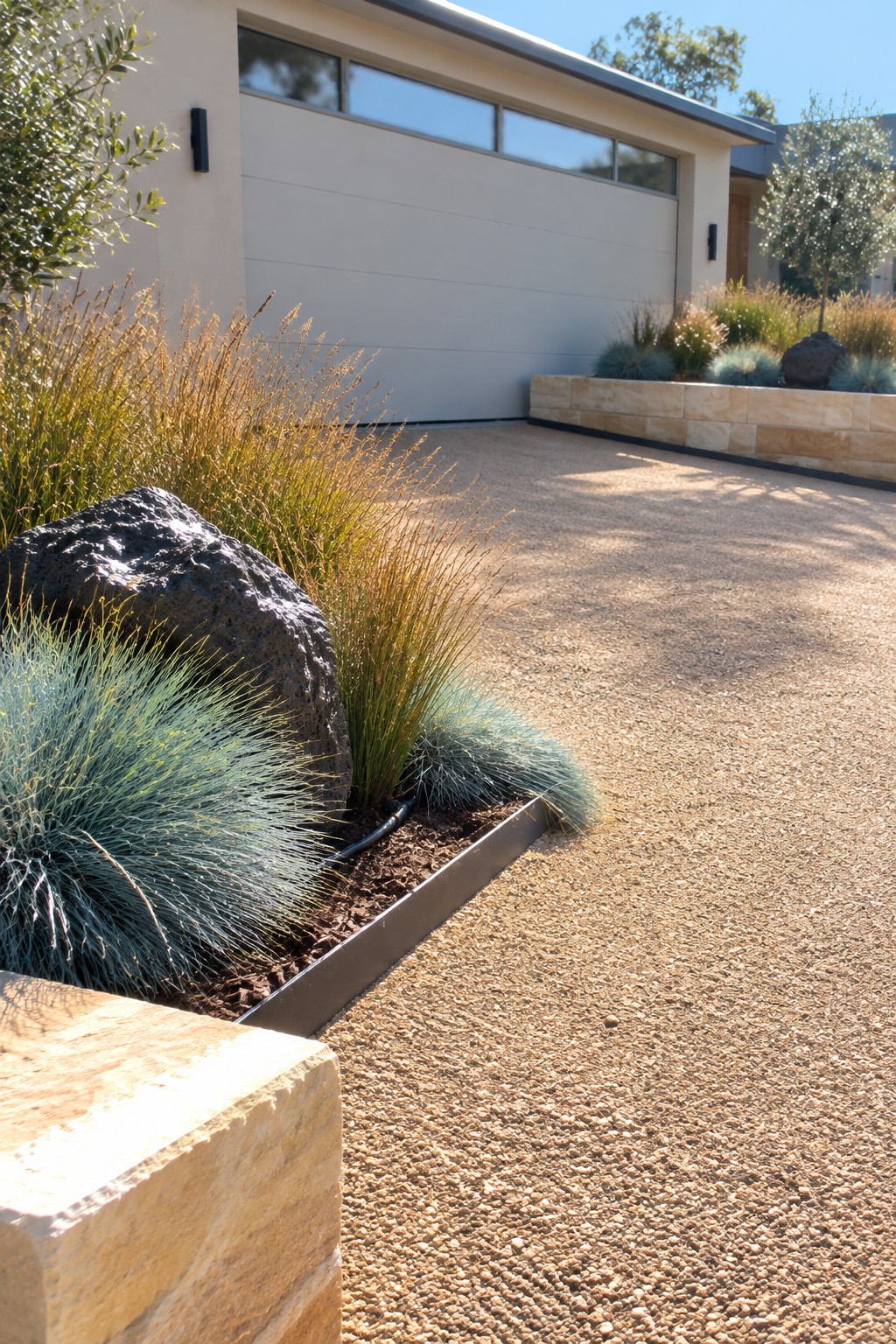
A planted island can give a wide driveway a more finished edge without adding a fence or formal border. Ornamental grasses bring movement and texture, while a large stone gives the planting a clear focal point.
This works especially well beside gravel or textured paving, where a simple bed helps define the driving area. Use grasses suited to your climate, and leave enough room around them so they do not spread into the driveway.
Use Lighting to Mark the Driveway Edge

Low path lights placed beside an ornamental grass border make a driveway easier to follow after dark. The grasses catch the warm light, while the stone edging keeps the planting bed separate from the gravel.
Space fixtures evenly along the drive, and aim them toward the path or plants rather than toward drivers’ eyes. This approach suits gravel driveways especially well, where a clear edge helps guide cars without needing a tall barrier.
Use Ornamental Grass to Mark a Curving Walkway

A gently curving stone path feels more settled when planting follows its edges. Ornamental grass gives the walkway a clear outline while keeping the look informal, and the gabion walls help hold the planting in place.
Use this approach where a path bends through a garden or leads toward an entry. Keep the grass low enough that it does not spill across the paving, and leave enough room for comfortable walking.
Use Brick Pavers for a Welcoming Entry Path

A brick path gives a front entry a familiar, settled look, and its warm color works especially well beside leafy ornamental grasses. The pavers also make a clear walking route through the garden without making the planting beds feel too formal.
For a similar effect, lay bricks in a simple pattern and let grass borders soften the edges. This suits cottage-style homes and traditional entries. Keep the path wide enough for comfortable walking, and check that the surface stays even over time.
Use Grass Joints Between Large Driveway Pavers

Large concrete pavers separated by narrow strips of grass make a driveway feel less like one broad slab. The green joints break up the hard surface and give the paving a steady rhythm.
This approach works well for a modern home with a simple driveway layout. Choose sturdy, low-growing grass that can handle occasional foot traffic, and keep the gaps narrow enough to mow and trim easily.
Use Ornamental Grass to Shape a Planted Driveway Bed
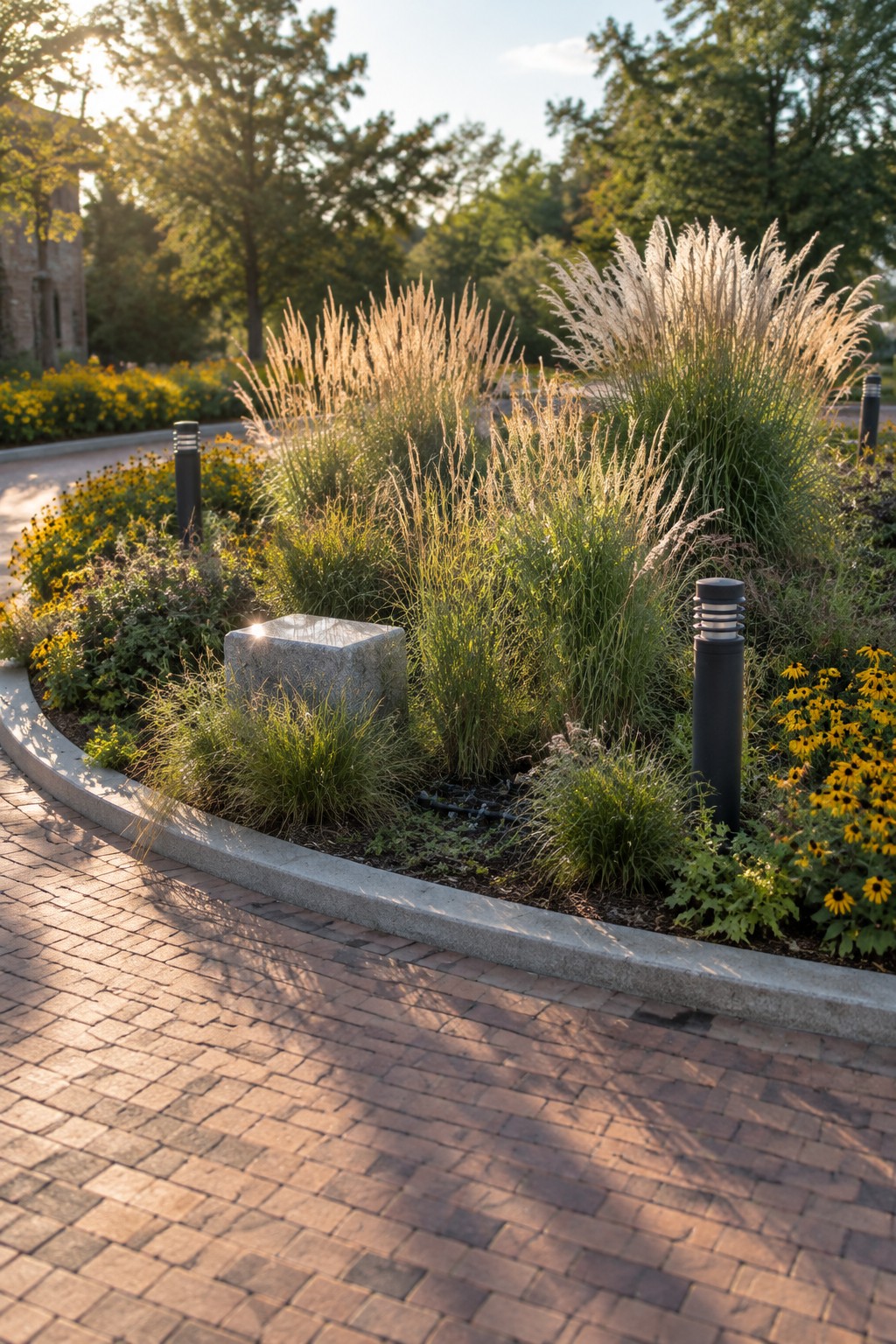
Ornamental grass gives a driveway planting bed height and movement without making the edge feel crowded. Here, tall grasses form the main structure, while lower flowers fill in around them.
This approach works well in a curved bed beside a paved drive or walkway. Leave enough room for the grasses to spread, and use a few shorter plants near the edge so they do not spill onto the paving.
Let Ornamental Grass Edge a Stone Garden Path
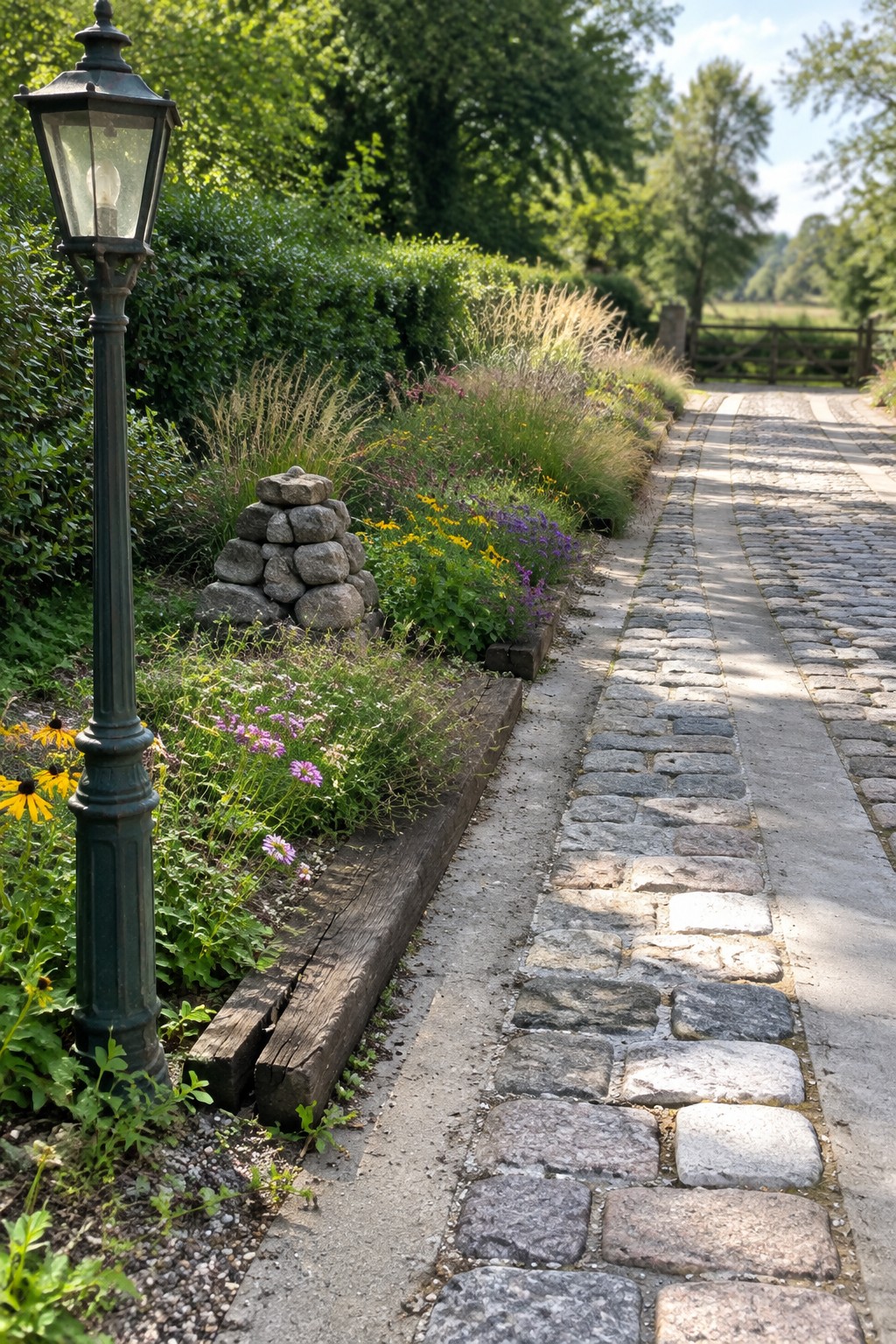
Ornamental grass makes a useful border for a stone path, giving the route a softer edge without hiding the paving. Here, fine grasses sit among flowering plants beside the cobbles, while a simple timber edge keeps the planting in place.
This approach works along garden walkways and can also suit a driveway path where there is room for a planted bed. Choose grasses that stay in scale with the path, and leave enough space so they do not spill over the stones as they grow.
Frequently Asked Questions
Q: How much space should I leave between ornamental grasses and the driveway?
A: Leave enough room for the mature plants to stay clear of cars and keep the edge easy to see. Check the plant’s expected width before planting, since a compact grass can spread more than it looks in a nursery pot.
Q: Which ornamental grasses are easiest to keep tidy along a driveway?
A: Compact, clump-forming grasses are usually a good fit because they’re less likely to spill over the pavement. Choose a variety suited to your sun and soil, and trim it back once a year before fresh growth begins.
Q: Will ornamental grasses make it harder to see when I’m backing out?
A: They can if you plant tall varieties near the driveway entrance. Keep that area low and open, then use taller grasses farther along the border where they won’t block your view.
Q: Can I plant ornamental grasses in a narrow strip beside the pavement?
A: Yes, as long as the strip gives the roots enough room and drains well. A narrow border also makes compact varieties easier to maintain, especially where snow, gravel, or car doors could damage wider clumps.
